Home Blog Page 94

Kerala: Class 9 Girl Narrowly Escapes Stray Dog Attack In Nadapuram

stray dog kerala

As public concern continues to rise over frequent stray dog attacks on children and pedestrians, a recent incident captured on video has gone viral, further fueling the debate. The video shows a schoolgirl being chased by stray dogs in Kerala’s Kozhikode district.

The incident occurred in Varikoli near Kallachi, Nadapuram, where a Class 9 student from Vattoli National Higher Secondary School had a narrow escape. On her way to school in the morning, she was suddenly charged at by a group of stray dogs.

Thinking quickly, the girl threw her school bag to distract the animals and fled. CCTV footage shows one of the dogs attempting to bite the bag while chasing her. Fortunately, she escaped unharmed. Residents of the area say this is not an isolated case. They report that stray dog attacks have become increasingly common in both Nadapuram and Kallachi, with several past incidents involving students and other locals. The growing number of such attacks has intensified calls for urgent action to manage the stray dog population and ensure public safety.

(With inputs from Zee News)

Subscribe to our channels on TelegramWhatsApp, and Instagram and get the best stories of the day delivered to you personally.

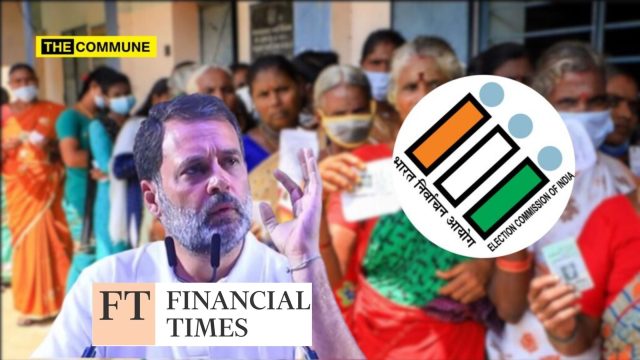
Rahul Gandhi Proves He’s An Anarchist In Financial Times Interview, Reveals His Nefarious Plot To Damage Indian Electoral System

In a recent interview with the Financial Times, Congress leader Rahul Gandhi claimed that India’s democracy is “under siege” from systematic vote-rigging by Prime Minister Narendra Modi’s government. He alleged that centralised manipulation of voter rolls, supposedly aided by the Election Commission of India (ECI), is being used to “steal elections.”

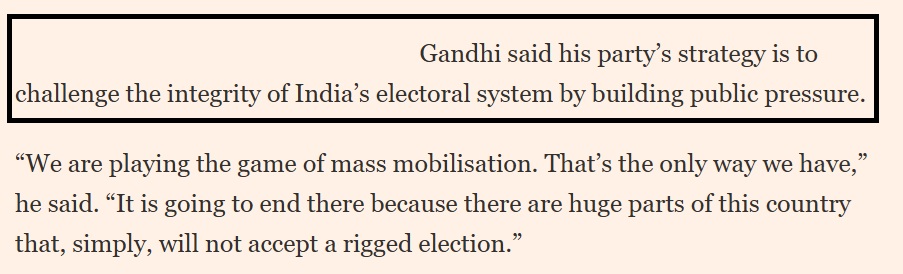
But a closer look at Gandhi’s statements reveals a disturbing pattern: instead of presenting evidence, the Congress chief is attempting to erode public trust in the very institutions that uphold Indian democracy. Gandhi himself admitted that the strategy behind these allegations is to “challenge the integrity of India’s electoral system by building public pressure.” In other words, the purpose is not to correct flaws, but to manufacture doubt and cover for the party’s own electoral failures.

Gandhi has offered no verifiable proof that vote manipulation occurred on a scale large enough to influence results. While he provided “sample evidence” from Karnataka and Maharashtra regarding deleted or duplicate voters and bulk registrations, independent verification by the Financial Times was impossible. His claims remain anecdotal, selective, and politically convenient.

This tactic is particularly striking given the Congress party’s recent track record. Under Rahul Gandhi’s leadership, the party has suffered repeated electoral defeats, losing around 90 elections in recent years. Instead of introspection or strategic reform, Gandhi appears intent on blaming India’s electoral machinery and Prime Minister Modi. By attacking the credibility of the Election Commission, he is effectively asking the public to distrust the democratic process itself.

Analysts have noted that Gandhi’s focus on Bihar’s upcoming state elections is a clear attempt to influence voters through fear and suspicion. By casting doubt on the impartiality of the ECI, Gandhi is attempting to pre-emptively delegitimise any potential losses, while presenting himself as a martyr fighting a “rigged system.”

India’s democracy is the world’s largest and one of the most robust, has mechanisms in place to ensure transparency and fairness. Allegations of voting irregularities have long existed across parties and elections – why, even Congress has a very long history of such vote chori, yet historically, political rivals have accepted results and participated in democratic processes. Gandhi’s strategy breaks with this tradition, undermining trust in an institution that is central to India’s democratic fabric.

In short, Rahul Gandhi’s recent statements are less about electoral integrity and more about political expediency. By creating a narrative of rigged elections without evidence, he seeks to shift attention away from Congress’ failures and weaken public faith in the democratic process. This is a dangerous precedent: when opposition leaders encourage distrust in foundational institutions, the damage is not limited to partisan politics, it erodes the very legitimacy of India’s democracy.

Subscribe to our channels on Telegram, WhatsApp, and Instagram and get the best stories of the day delivered to you personally.


Part-Time Politician Vijay Who Waxes Eloquent On Corruption Challenges ₹1.5 Crore Penalty In Undisclosed Income Case; IT Dept Says Extra Income Was Revealed Only After Raid

vijay high court income penalty

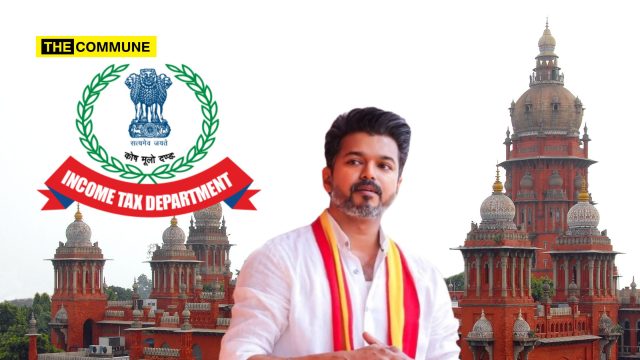
On 23 September 2025, the Income Tax (I-T) Department strongly opposed a writ petition filed by Tamilaga Vettri Kazhagam (TVK) president and actor C. Joseph Vijay in the Madras High Court. Vijay is challenging a ₹1.5 crore penalty imposed for failing to voluntarily disclose an additional ₹15 crore of income for the financial year 2015–16.

Representing the department before Justice C. Saravanan, senior standing counsel A.P. Srinivas argued that the penalty had been rightfully levied under Section 271AAB (1) of the Income Tax Act. He urged the court to dismiss the actor’s petition.

During the hearing, the actor’s counsel contended that the penalty proceedings were time-barred, stating they should have been initiated by 30 June 2019, but were only started on 30 June 2022. In response, the judge directed the petitioner’s lawyer to submit, by 10 October 2025, a copy of a judgment he had previously delivered in a similar case concerning limitation issues.

Providing context, Srinivas explained that a search and seizure operation had been conducted at Vijay’s premises on 30 September 2015. During the raid, evidence was found indicating that producers P.T. Selvakumar and Shibu of SKT Studios had paid the actor ₹4.93 crore in cash in addition to a ₹16 crore remuneration via cheque for the 2015 film Puli. Notably, TDS (Tax Deducted at Source) had only been applied to the cheque payment.

When confronted, Vijay reportedly admitted to receiving ₹5 crore in unaccounted cash and expressed his willingness to pay taxes on it. Although he claimed he hadn’t received any other unaccounted income over the prior six years, he agreed to declare an additional ₹15 crore for the 2015–16 financial year to resolve the matter amicably with the department.

On 29 July 2016, the actor filed his income tax return for assessment year 2016–17, declaring ₹35.42 crore as total income, which included the ₹15 crore additional disclosure. He also sought depreciation on assets worth ₹17.81 lakh and a deduction of ₹64.71 lakh for fan club-related expenses.

However, the tax authorities rejected these claims and issued an assessment order on 30 December 2017, determining the actor’s taxable income to be ₹38.25 crore. The order also observed that the additional income would not have been disclosed had the search operation not taken place.

Following this, penalties were imposed under Sections 271(1)(c) and 271AAB (1) of the I-T Act. While Vijay filed a statutory appeal against the assessment and the penalty under Section 271(1)(c), he approached the High Court via a writ petition solely to contest the penalty under Section 271AAB (1).

The writ was admitted on 16 August 2022, by Justice Anita Sumanth, who issued an interim stay on recovery of the penalty. This stay was extended from time to time, and on 21 February 2023, Justice Abdul Quddhose ordered that it remain in effect until further notice. After being last heard in December 2023, the case reappeared in the cause list on Tuesday as Justice Saravanan resumed hearings in long-pending income tax matters.

(With inputs from The Hindu)

Subscribe to our channels on TelegramWhatsApp, and Instagram and get the best stories of the day delivered to you personally.

“Is The Squirrel Issue Speeding Up?” TNCC President Selvaperunthagai Makes Tongue-In-Cheek Remark About Vijay On Meeting NTK Chief Seeman

selvaperunthagai seeman squirrel

While Naam Tamilar Katchi (NTK) Chief Coordinator Seeman has been relentlessly targeting actor-turned-politician Vijay with sharp jabs, Tamil Nadu Congress Committee (TNCC) President Selvaperunthagai has now added fuel to the fire with a mocking remark that has gone viral.

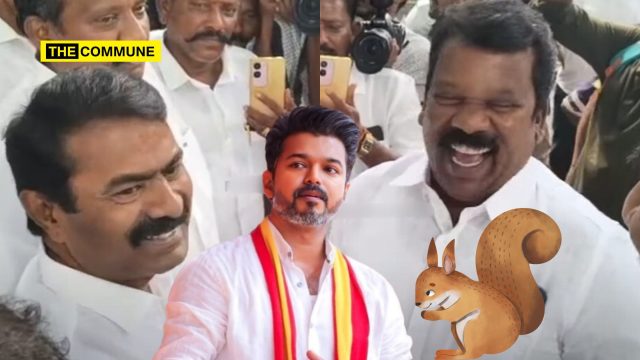
At a recent public event in Chennai, Seeman and Selvaperunthagai briefly met and exchanged greetings. During their interaction, Selvaperunthagai made a sarcastic comment, “Is the squirrel issue speeding up?” a reference that traditionally used linked to Vijay, whom Seeman has been ridiculing as a “squirrel” in his speeches.

Initially confused by the remark, Seeman paused before realizing the reference, after which he and others nearby broke into laughter. The moment, caught on video, is now making the rounds online and generating wide discussion.

In recent weeks, he has frequently mocked Vijay in press conferences and public meetings. At a Madurai press meet, Seeman sarcastically quipped, “The squirrel should shout ‘jungle, jungle’… now it cries ‘uncle, uncle.’” The jab appeared to question Vijay’s shift in political messaging.

In another event held in Thiruvallur, part of a tree-planting campaign by NTK, Seeman once again referred to Vijay indirectly, saying, “When tigers enter the forest, no squirrel to be seen. We’re also working to grow real forests, even for the squirrels in them.”

(With inputs from One India Tamil)

Subscribe to our channels on TelegramWhatsApp, and Instagram and get the best stories of the day delivered to you personally.


Roof Collapse At Trichy Govt School Triggers Outrage; Annamalai Slams DMK For Corruption And Negligence; Not The First Time TN Govt Schools Are Collapsing

In a deeply concerning incident, a portion of the roof at a government primary school near Thuraiyur in Trichy district collapsed on 22 September 2025, reigniting concerns over the crumbling state of school infrastructure in Tamil Nadu.

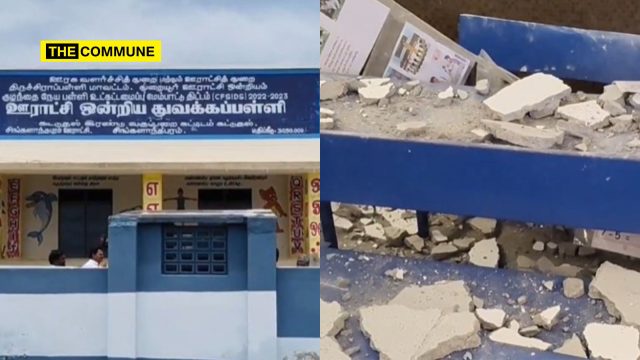
The incident occurred at Singalanthapuram Panchayat Union Primary School, which caters to students from classes 1 to 5. The school, with 34 enrolled students, operates from a building that was constructed at a cost of ₹30.05 lakh.

According to officials, the collapse happened early in the morning when the headmaster arrived to open the building. Chunks of concrete fell onto classroom benches and an LED TV. Fortunately, no students were present, as the school was closed for the weekend. Authorities admitted that had the incident occurred during class hours, it could have resulted in serious injuries or even fatalities.

Reacting strongly to the incident, former Tamil Nadu BJP President K. Annamalai launched a scathing attack on the DMK government, holding it responsible for the deteriorating condition of public infrastructure due to widespread corruption and lack of accountability.

Taking to X, Annamalai stated, “The roof of a government elementary school building, constructed at a cost of ₹30.05 lakh in Singalandapuram village panchayat, Thuraiyur union, Tiruchirappalli district, has collapsed, damaging benches and other items used by students. Fortunately, no students were harmed as the incident occurred before the school opened. Even government school buildings where our young children study have not escaped the corruption of this wretched DMK government. Since the DMK came to power, there have been countless incidents of school building roofs collapsing. To allow DMK functionaries to earn money, the safety of our children is being put at risk. This situation is stark right in the school education minister’s own district. Who is the contractor built this school building? On what basis was the contract awarded to him? What action has the DMK government taken so far against the contractors who have built these collapsing school buildings? When the student enrollment rate in Tamil Nadu’s government schools is already declining, what is the reason behind the continuous collapse of government school buildings? Is the Tamil Nadu School Education Department working to recruit students for private schools run by DMK members? To ensure the safety of poor and underprivileged students studying in government schools, the School Education Minister must provide an explanation for all of this.” 

Past Incidents

This is not an isolated incident; similar cases of government school ceilings collapsing on students have been recurring over the past few years under the DMK government.

1. On 7 April 2025, four students were injured when a portion of the roof collapsed at a government middle school in Sekalangiri village, near Thiruthuraipoondi in Tiruvarur district. The accident occurred shortly after the lunch break while regular classes were underway. Among the injured students, one sustained serious injuries and was rushed to Tiruvarur Government Medical College Hospital and other three students suffered minor injuries.

2. Seven students were injured on 7 March 2025 when the roof of a recently repaired fourth-grade classroom collapsed at Dindigul Corporation Middle School. The school, built in 2009 during the DMK government, has faced structural issues, prompting ₹1 crore worth of repairs, including the affected classroom. The incident sparked panic among parents and led to the suspension of Assistant Executive Engineer Thiagarajan. Former AIADMK Minister C. Sreenivasan blamed substandard construction, while DMK Minister I. Periyasamy defended government efforts, attributing the collapse to an older faulty repair.

3. On 3 March 2024, three students from a government school near Vaniyambadi were seriously injured when the roof of a newly inaugurated classroom gave way. The collapse occurred at a panchayat union primary school in Shankarapuram, Tirupattur district.

4. On 27 August 2024, three students were injured when a section of the ceiling plaster fell on them during class at a government-run school in Krishnagiri. The accident raised significant concerns about the safety and structural integrity of the building, which had only been opened two months ago with MPLADS fund.

5. In another similar incident July 2024, a ceiling of a newly constructed Panchayat Union Middle School near Kanchipuram collapsed, where the building, completed three months prior.

6. In August 2024, another ceiling of a classroom at a government school in Thiruporur collapsed, injuring five female students and sparking protests from parents who questioned the quality of the construction. 

7. Three students were seriously injured when the roof of a newly inaugurated classroom collapsed at a panchayat union primary school in Shankarapuram, Vaniyambadi, Tirupattur district, on 4 March 2025. The building, constructed in 2023–2024 at a cost of ₹21 lakh with funds from AIADMK MLA Senthilkumar, had been inaugurated in August 2024. The injured students Praneeth (Class 1), Sudarsan (Class 3), and Vishek were rescued and taken to a private hospital.

Subscribe to our channels on TelegramWhatsApp, and Instagram and get the best stories of the day delivered to you personally.

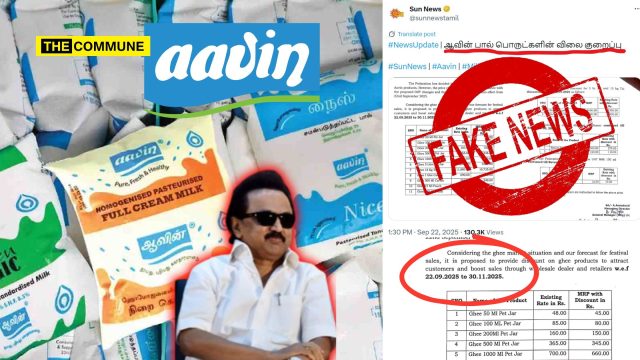
No, DMK Govt Is Not Passing On GST Cut Benefits To Aavin Consumers! It’s Only A Temporary Discount! Sun News Peddles Fake News

Once again, Sun News, one of the propaganda arms of the DMK’s first family, has been exposed for disseminating fake information in favour of the ruling party this time over the supposed price reduction of Aavin products, a government-run dairy cooperative.

The controversy stems from the recent move by the central government, which permanently reduced GST rates on a range of products, including dairy items. This relief, aimed at benefiting consumers and returning back the initial burden placed during the rollout of GST, was clearly meant to be passed on fully to end-users. However, the DMK-led Tamil Nadu government appears reluctant to follow suit.

Instead of implementing a permanent reduction in prices, Aavin has only offered a temporary festive discount, valid only until 30 November 2025. This limited-time offer has drawn sharp criticism for being a superficial gesture rather than genuine relief.

Despite this, Sun News presented the facts with vague headlines like “Reduction in prices of Aavin milk products,” conveniently omitting the fact that the so-called price cut is not permanent. This framing gave the misleading impression that the DMK government had generously slashed prices for the benefit of Tamil Nadu’s citizens when in fact, it has done no such thing.

This “reduction” is not a true price cut but merely a festival-time discount on Aavin ghee, not milk. The Modi government’s GST cut is permanent, meant to provide lasting relief to households. The DMK government has failed to revise Aavin’s MRPs accordingly, thereby effectively increasing the base price and passing the burden back onto consumers. Aavin’s ₹50/litre discount on ghee is nothing but a temporary smokescreen designed to divert attention from their refusal to implement the central relief.

This episode clearly reveals the double game played by the DMK refusing to pass on central benefits while using friendly media outlets to spin the story. The BJP has strongly condemned this deceptive move and demanded that the DMK government immediately reduce MRPs across all Aavin products to reflect the GST cut.

Subscribe to our channels on TelegramWhatsApp, and Instagram and get the best stories of the day delivered to you personally.

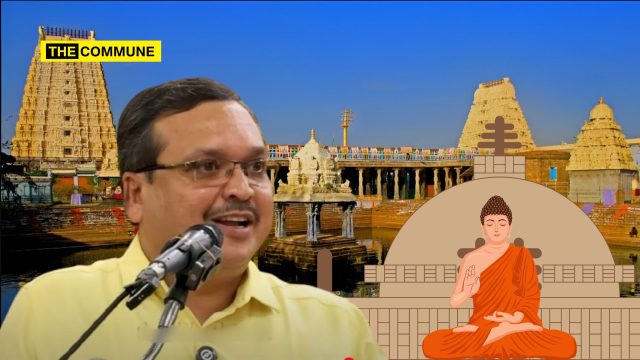
“Kanchipuram Not A Sangam-Era City” Says Alleged ‘Archaeologist’ And Dravidianist Propagandist Amarnath Ramakrishna At TN Progressive Writers & Artists Association Meeting That Organized “Eradicate Sanatana Dharma” Conference; Literary Classics, Temples Prove Otherwise

kanchipuram buddhist amarnath ramakrishna

Dravidian sympathiser and archaeologist K. Amarnath Ramakrishna has once again drawn severe criticism from Tamil scholars and historians after attempting to rewrite well-established history of ‘Kanchipuram’. In his latest controversial claim, Ramakrishna asserted that Kanchipuram, a city revered in Sangam literature and celebrated in ancient Tamil poetry was not a Sangam-era city. Instead, he labeled it a later Vedic and Buddhist settlement, pushing yet another narrative to please the Dravidian ideological ecosystem.

His comments were made during a lecture titled “Excavated and Unexcavated” at the centenary symposium on the Indus Valley Civilization, organized by the Tamil Nadu Progressive Writers and Artists Association a group notorious for pushing Dravidianist interpretations of history and the same outfit that hosted a conference with Deputy Chief Minister Udhayanidhi Stalin under the provocative banner, Eradicate Sanatana Dharma.”

Ramakrishna cited the University of Madras’ excavations at Kanchipuram (1975–1982), claiming that their full report was never published. Referring to Professor Gurumoorthy’s study, he pointed out the absence of Black and Red Ware pottery at the site, a common archaeological marker of Sangam-era settlements. According to Ramakrishna, this absence proves Kanchipuram was not a Sangam city, but a later development celebrated by “Vedic people” as Ghatikasthanam, or a center for Vedic learning. He further claimed that excavations near the Kamakshi Amman Temple uncovered a Buddhist stupa conveniently framing the city as primarily Buddhist, thus aligning with the Dravidianist disdain for Hindu heritage.

Speaking at the conference Amarnath Ramakrishna said, “If you look at the place called Kanchipuram, the University of Madras continuously excavated the site for almost seven years, from 1975 to 1982. But does anyone know what information about Kanchipuram was revealed? Does anyone know what they excavated? Only a handful of information, maybe a para, has emerged, but the full report has not yet been released. The complete excavation report for Kanchipuram has not been published by the University of Madras. No one has ever asked for it. Professor Gurumoorthy, who was part of that excavation team, wrote a book called Ceramic Traditions of South India. In that book, he specifically notes that while Black and Red Ware pottery sherds are found in many parts of India, from the Indus Valley Civilization onwards, and are prevalent in Tamil Nadu, they were not found in Kanchipuram. This is a crucial piece of information.

This significant finding suggests that Kanchipuram is not a city from the Sangam period but a later development. This is why Vedic people celebrate it, because Kanchipuram is referred to as Ghatikasthanam. Ghatikasthanam means a place where a school for Vedic traditions was established. The excavations also suggest that the city of Kanchipuram was built at a later time. If you consider the old Chengalpattu district around Kanchipuram, wherever excavations have been carried out, evidence of Black and Red Ware pottery sherds and megalithic burials are found. However, the Kanchipuram excavations revealed that not a single piece of Black and Red Ware pottery was found. This is a note made by Professor Gurumoorthy. Our history is incomplete because such important information remains unreleased. Similarly, Kanchipuram is also a Buddhist city. The trench for the excavation was dug near the Kamakshi Amman Temple. At that site, a Buddhist stupa was unearthed, indicating that a Buddhist stupa existed in Tamil Nadu and the temple was built on top of it. The excavation report has not properly released information about the site of the Buddhist stupa. Because the report has not been published, this information has not been widely disseminated.”

This narrative, however, has been roundly rejected by credible Tamil historians and scholars who accuse Ramakrishna of bending facts to fit ideological agendas. Critics argue that his theory not only ignores substantial literary evidence but also misrepresents the very nature of the Sangam period which was deeply intertwined with Vedic culture.

Take, for instance, the Sangam classic Perumpāṇāṟṟuppaṭai, which explicitly mentions Kanchipuram and its ruler Thondaiman Ilanthiraiyan, “Onnath Tholvar Ulayvidathu Aarthu Kachiyona Kaivan Thondral,” (ஒன்னாத் தெவ்வர் உலைவிடத்து ஆர்த்துக் கச்சியோனே கைவண் தோன்றல்) which translates to, “He who ruled from Kanchipuram roared in triumph when enemies dared defy him.”

The poem goes on to explain how the city got its name from the abundance of Kanchi trees and refers to it as a moodhoor  an ancient, prosperous city known for its festivals and cultural richness. These references make it indisputably clear that Kanchipuram was already a flourishing urban center during the Sangam era long before any Buddhist influence.

Even more telling is the poem that describes Karikala Chola, one of the most iconic kings of the Sangam age, halting at Kanchipuram’s Kamakshi temple to offer worship on his expedition to the Himalayas, “Kachi Valaikachi kaamakotangaval mechiyinithirikum meichathan kaichendu kamba kalitraan karikaalperuvalathaan sempon girithiritha sendu” (கச்சி வளைக்கைச்சி காமகோட்டங்காவல் மெச்சியினிதிருக்கும் மெய்ச்சாத்தன் கைச்செண்டு கம்ப களிற்றான் கரிகாற்பெருவளத்தான் செம்பொன் கிரிதிரித்த செண்டு) which translates to, “In Kanchi, at Kamakottam where Kamakshi adorned with bangles dwells, Karikala Chola worshipped her. With the sacred staff of Sastha in hand, he struck the golden peaks of the Himalayas.”

This verse alone shatters Ramakrishna’s attempt to write Kamakshi and Kanchipuram out of the Sangam-era spiritual landscape. It confirms both the temple’s existence and the continuity of goddess worship in the region, directly contradicting the idea that the site was primarily Buddhist.

Additionally, Perumpanatrupadai also praises the Thiruvehka Vishnu Temple, calling it the resting place of Mahavishnu on Adisesha further evidence that Kanchipuram was a vibrant hub of Vedic and Sanatana culture long before the period Ramakrishna suggests, “Kaandhal am silambil kaliru padinthaangu paambanai pali amarnthen aangan,” (காந்தள் அம் சிலம்பில் களிறு படிந்தாங்கு, பாம்பணைப் பள்ளி அமர்ந்தோன் ஆங்கண்) which translates to, “Just as an elephant rests peacefully in the mountain, the one who reclines on the serpent bed (Vishnu) rests there.”

Ramakrishna’s selective quoting, suppression of literary sources, and reliance on unpublished or partial excavation data has led many to accuse him of being less of a scholar and more of a mouthpiece for political propaganda. His eagerness to label everything “non-Vedic” or “Buddhist” while dismissing Tamil Hindu heritage reflects a broader agenda one that seeks to erase or reframe history to fit a Dravidianist narrative.

In trying to paint Kanchipuram as a non-Sangam, non-Hindu city, Ramakrishna isn’t just wrong he’s actively undermining centuries of Tamil history, literature, and identity. And all for what? To gain applause from a political ecosystem that thrives on historical distortion and selective memory.

Subscribe to our channels on TelegramWhatsApp, and Instagram and get the best stories of the day delivered to you personally.

Supreme Court Stays Madras High Court Order Disqualifying Panchayat Chairman Who Claimed Reservation After Converting To Christianity

Supreme Court Stays Madras High Court Order Disqualifying Panchayat Woman-Chairman For Claiming SC Reservation After Baptism

The Supreme Court on 22 September 2025 stayed a Madras High Court order that upheld the disqualification of a woman Chairman of a Panchayat for holding a post reserved for Scheduled Caste (General) category, citing her conversion to Christianity. A bench comprising Justices Vikram Nath and Prashant Kumar Mishra passed the order while issuing notice on a petition challenging the High Court decision.

The case pertains to the petitioner, elected to the Theroor Town Panchayat in Kanyakumari, whose status as a Scheduled Caste was challenged on the ground that she had embraced Christianity. The respondent argued that the petitioner, born in the SC category, lost her eligibility for reservation upon professing Christianity.

Opposing the plea, the petitioner contended that she had not abandoned her original faith, continued to be a Hindu, and was not professing Christianity. She denied misusing her community certificate as alleged.

The Single Bench of the Madras High Court examined the marriage register, which showed that the bans, a procedure for marriages among baptized Christians. were published three times. The Bench noted that the petitioner was baptized and admitted to the church at the time of marriage. It held that “even if the petitioner was never baptized, she could be considered only as a Christian.”

The High Court described the case as a “shameful field reality” highlighting how election officers were allegedly reduced to “sheer pawns by the ruling party during local body elections,” thereby undermining the vision of Panchayat Raj. It further observed that conferring SC status on a Christian was “nothing but fraud on the Constitution.” The bench stated that “when a person voluntarily submits himself/herself for conducting marriage under the Indian Christian Marriage Act, they would be considered Christian thereafter and their native religion is renounced automatically.” Consequently, it allowed the respondent’s plea, declaring the petitioner disqualified from her post, and upheld this decision in appeal.

The Supreme Court Division Bench, while staying the order, noted: “It is open to the appellant to embrace Christianity and profess the said religion. Article 25 of the Constitution guarantees such a fundamental right. But problem arises when post-baptism, the individual hides the new identity and for the purpose of enjoying the rights conferred by the Constitution pretends as if the erstwhile status continues.”

The court also observed, “The stand of the appellant is not that she reconverted to Hinduism. Her specific case is that she never embraced Christianity. Her claim stands belied by the production of baptism certificate by the learned Additional Advocate General in the open court.”

(With inputs from LawBeat)

Subscribe to our channels on TelegramWhatsApp, and Instagram and get the best stories of the day delivered to you personally.

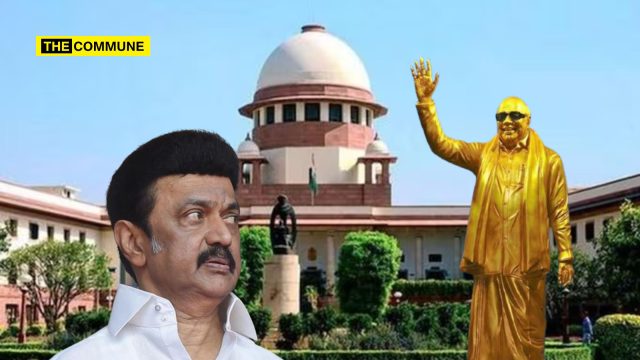
“Why Are You Using Public Funds For Glorifying Your Former Leaders?” Supreme Court Rejects DMK Govt Plea To Use Public Funds For Karunanidhi Statue

"Why Are You Using Public Funds For Glorifying Your Former Leaders?” Supreme Court Rejects TN Govt Plea To Use Public Funds For Karunanidhi Statue

The Supreme Court on 22 September 2025 rejected the Taamil Nadu DMK government’s plea to use public funds for installing a statue of former Chief Minister M Karunanidhi in Tirunelveli district.

A bench comprising Justices Vikram Nath and Prashant Kumar Mishra ruled that public money cannot be used to glorify former leaders. “It is not permitted. Why are you using public funds for glorifying your former leaders?” the bench observed.

The state had sought permission to place a bronze statue and name board near the public arch entrance of the Valliyoor Daily Vegetable Market on the Main Road. The apex court dismissed the plea, upholding the Madras High Court’s earlier decision, which had also denied permission for such installations.

The High Court had cited public inconvenience, including traffic congestion, as a reason for its ruling. It noted that permissions to erect statues in public spaces often create hardships for citizens.

Senior advocate P. Wilson, representing the state, requested clarification regarding the arch, which was not specifically challenged, but the Supreme Court declined to entertain the submission and dismissed the appeal.

The bench advised the Tamil Nadu government to withdraw its Special Leave Petition (SLP) and, if necessary, approach the High Court for appropriate relief.

(With inputs from The New Indian Express)

Subscribe to our channels on Telegram, WhatsApp, and Instagram and get the best stories of the day delivered to you personally.
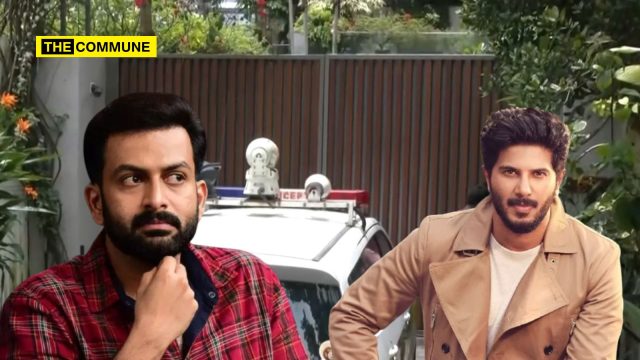
Kerala Customs Seizes Dulquer Salmaan’s Vehicles, Searches Prithviraj Sukumaran’s Premises In Luxury SUV Smuggling Raid

suv smuggling dulquer prithviraj

As part of Operation Numkoor, the Customs and Central Excise Department in Kerala carried out extensive raids across multiple locations targeting a network allegedly involved in smuggling and selling luxury SUVs into the state from Bhutan. The investigation reportedly involves film industry professionals, used car dealers, and business figures.

Officials confirmed that 11 vehicles were seized from seven locations in Kozhikode and Malappuram, including two belonging to actor Dulquer Salmaan. Raids extended to four showrooms, three private homes, and properties of industrialists, techies, and Malayalam film stars, including Dulquer Salmaan and Prithviraj Sukumaran. However, authorities clarified that individuals who may have unknowingly purchased the smuggled vehicles, such as actors or other end users, are not automatically considered suspects in the smuggling network.

According to customs officials, the operation targets a smuggling ring importing high-end pre-owned SUVs from Bhutan without paying taxes. These vehicles were then sold in Kerala after being routed through Indian border states. “Vehicles are either driven in or transported in containers to states near the border. With forged paperwork, they’re typically registered in states like Himachal Pradesh before reaching buyers in Kerala. We’ve identified vehicles with registration plates from Himachal, Karnataka, and Maharashtra,” an official said.

The seized vehicles include Land Cruisers, Land Rovers, Tata SUVs, and Mahindra-Tata trucks, some dating back to 1991. Sources explained that these vehicles are often acquired at minimal cost, refurbished, and resold at significantly higher prices, with many newer models entering the Kerala market in the past two years.

The vehicles confiscated during the raids have been transferred to the customs office at Karipur airport for further investigation. Authorities have collected documents and lists of people allegedly involved in the smuggling operation, which is believed to include second-hand car dealers, intermediaries, and agents.

The ongoing probe has attracted attention on social media due to the involvement of prominent film stars and the scale of the operation, which has seen over 20 locations across the state raided. Customs officials have announced that further details will be shared in a press briefing later in the day.

(With inputs from Times of India)

Subscribe to our channels on TelegramWhatsApp, and Instagram and get the best stories of the day delivered to you personally.