
Home Blog Page 901

Famous Malayali Travel Vlogger Shakir Subhan Accused Of Molesting Saudi Woman
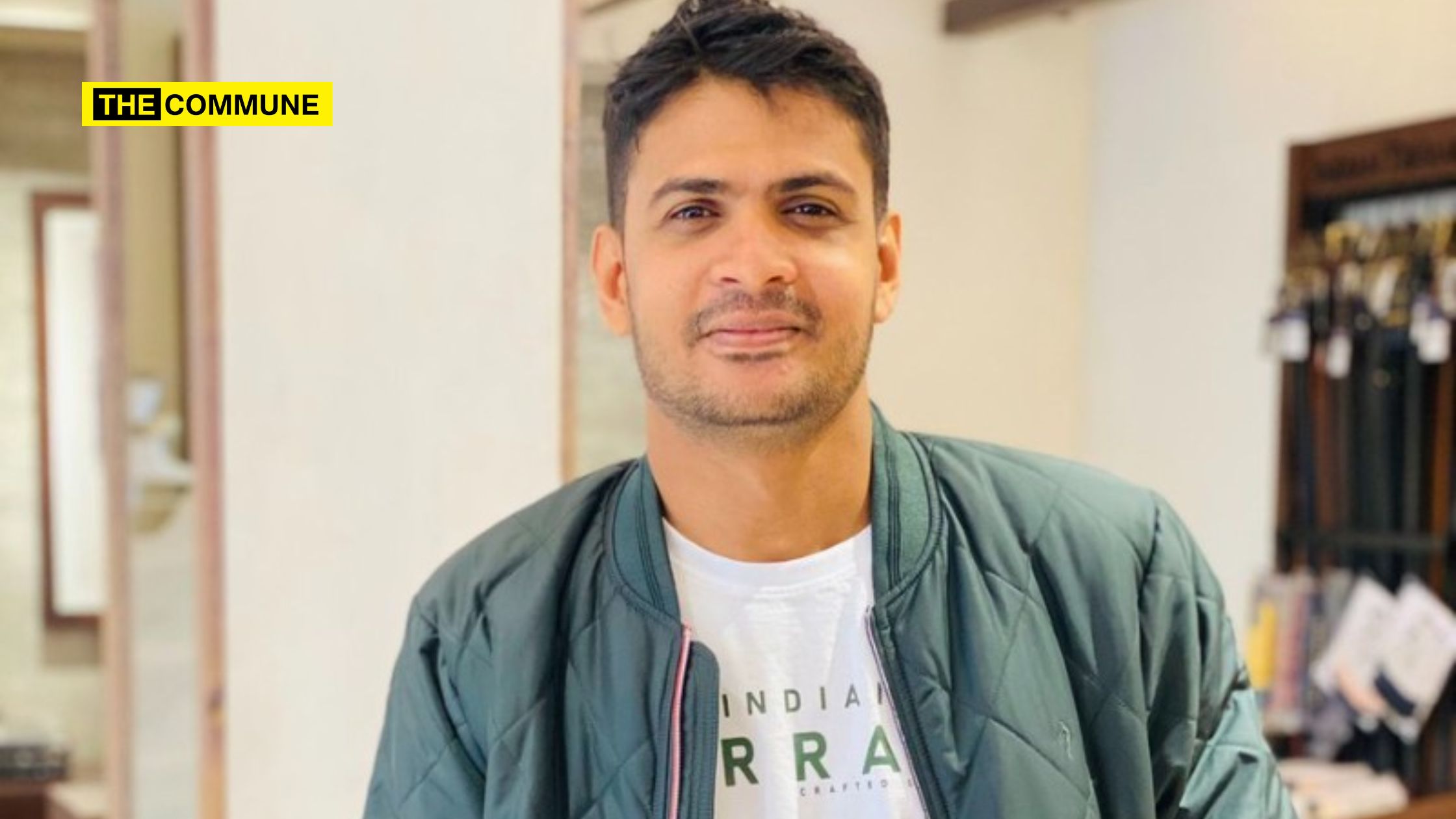
A female Saudi citizen was allegedly sexually molested recently by a famous Malayali vlogger Shakir Subhan who operates a social media channel called Mallu Traveller based out of Kannur and has 2.71 million followers on YouTube.

This assault had taken place in a hotel located on MG Road, Bangalore during Zakir’s stay on Tuesday night 12 September 2023. The vlogger who allegedly molested this Saudi National is currently abroad.

According to the victim, she was in a romantic relationship with the man who she had connected via social media and while they were in a hotel room, the assault on her took place. The victim said that as soon as her partner briefly left the room, Zakir saw that as an opportunity and molested her.

The woman and her partner were in Ernakulam for an event when they crossed paths with Shakhir at his hotel. According to her, Shakhir extended an invitation to their room, where the alleged incident took place. She detailed the sequence of events, explaining that they initially met Shakhir in the hotel lobby for a casual conversation, and subsequently, he invited them to his room. It was in his room that she asserted Shakhir molested her, a statement she made in a video later posted on YouTube.

In the video, she recounted how Shakhir persisted in molesting her despite her attempts to fend him off.

She also revealed that she refrained from immediately informing her partner about the assault due to concerns that it might lead to a confrontation with Shakhir. Instead, she chose to disclose the incident to her partner at a later time. Furthermore, she stated that she had reported the incident to the Saudi embassy in Delhi, as well as the Saudi consulate in Mumbai, and had also lodged a formal complaint with the police.

Expressing her gratitude for the prompt response of the authorities, she emphasized, “My father holds a government position, and I hold a Bachelor’s degree in Law. No one should have the right to touch another person’s body without their explicit consent.”

The female vlogger also expressed her astonishment that such an incident occurred in India, a country where she felt warmly embraced by the local culture and hospitality. She stressed that this was the first time anyone had violated her personal boundaries without her consent. She had a message for girls, especially those in Kerala: “If you have experienced any form of molestation by Shakhir or anyone else, I urge you not to hesitate to speak out and report the incident to the police.”

Initially, the victim was too traumatized to file a police complaint but later after she found support from her friends, she filed a complaint. A case under section 354 (Outraging the modesty of a woman) of the Indian Penal Code (IPC) has been registered against Suban.


However, in a video released on YouTube today, Shakir Subhan vehemently refuted the accusations lodged against him.

Shakir Subhan asserted that the complaint was unfounded. In a video posted on his widely followed YouTube channel, “Mallu Traveller,” boasting over 2.7 million subscribers, he clarified that the couple had initially reached out to him on Instagram, identifying themselves as devoted fans. He explained that they had contacted him while he was attending a gathering of social media influencers in Kochi, requesting a meeting. Following the influencer event, numerous individuals sought to meet him. Shakir mentioned that his brother was present during this time, and he was nearly asleep when the couple arrived at his room. Subsequently, his brother left the room. The couple, he alleged, informed him that they were in dire financial straits and asked for both monetary assistance and support with their social media promotions.

Shakir went on to state that the couple had arrived and departed together, directly contradicting the woman’s claims. He expressed suspicion that this might be an orchestrated scheme against him, referring to it as a potential “honey trap.” Additionally, he pledged to refute the allegations once he returns from Canada.

Click here to subscribe to The Commune on Telegram and get the best stories of the day delivered to you personally.
Greater Chennai Police Issues 11 Commandments On How Vinayagar Chaturthi Should Be Celebrated

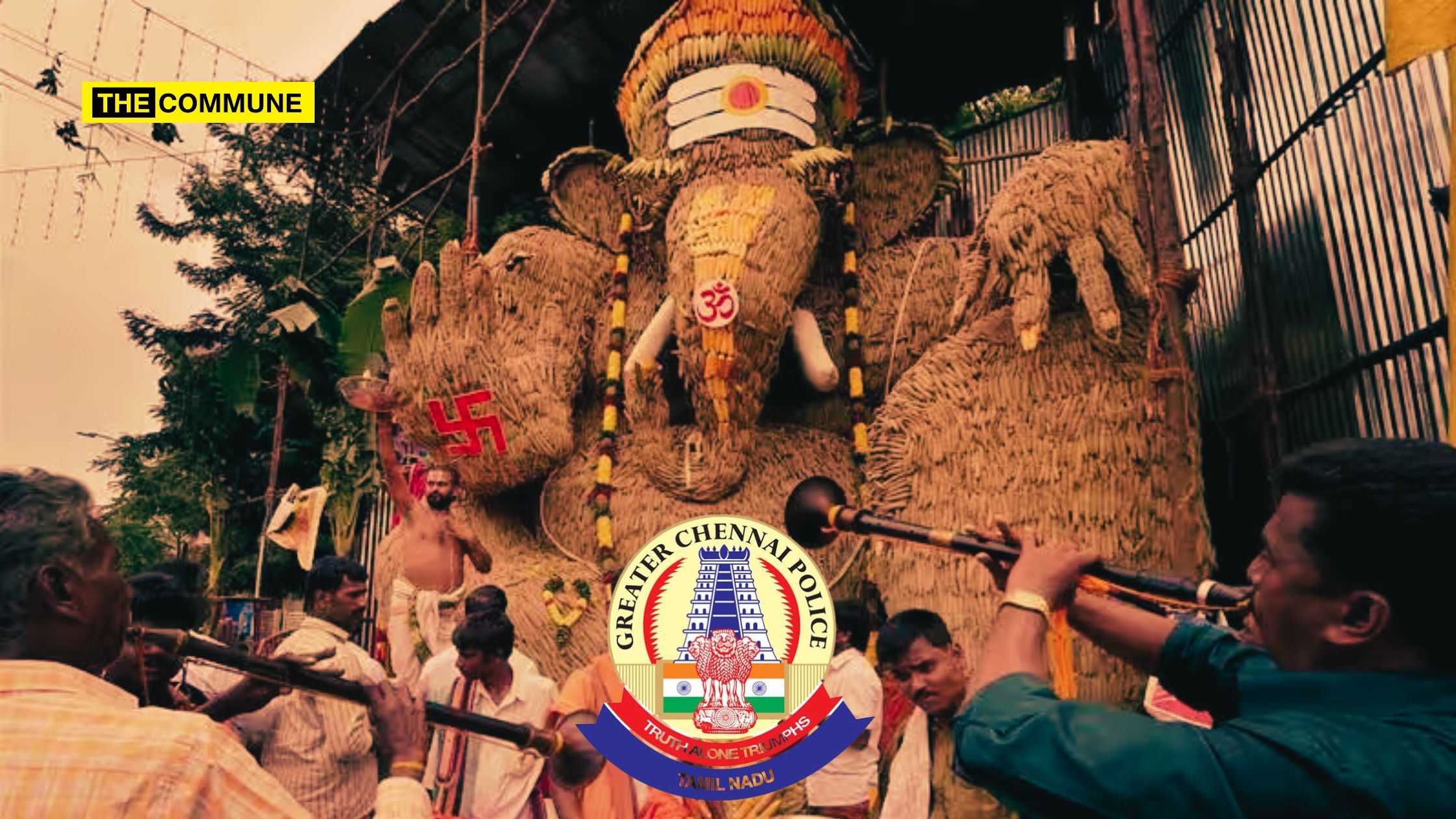
On the eve of the annual Vinayagar Chaturthi celebration, the Greater Chennai Police has issued a set of guidelines on how Hindus should celebrate the festival. 

The police have issued 11 sets of guidelines which is being considered as draconian by many making it very difficult for Hindus to celebrate Vinayagar Chaturthi.

A few Vinayagar Pandal organizers that The Commune spoke to said that the process of setting up Vinayagar Pandals has been made extremely bureaucratic, cumbersome and taxing so as to delay or prevent people from erecting one.

Here are some of the commandments issued by the police regarding installation of idols asking organizers to get 

1. Landowners where Vinayagar idols are going to be installed must have obtained permission from local bodies concerned, Highway Department or Government Department.

2. Must have obtained No Objection Certificate from Fire Department, Electricity Board, etc.

3. Obtain permission from the police station officer concerned by filling up the forms for installation of Vinayagar idols, undertaking to abide by the restrictions and conditions mentioned therein.

4. The height of the statue to be installed should not exceed 10 feet from the base of the platform.

5. Installation of idols near places of Worship, Hospitals, Educational institutions should be avoided.

6. Two volunteers should be deputed on a 24-hour rotation to ensure the safety of the idols.

7. Banners/billboards in support of any political parties or religious leaders should not be placed at the worship point.

8. Fire safety rules and regulations must be followed, electrical wire connections; Pandals should be monitored periodically to avoid accidents and mishaps.

On the other hand, the Greater Chennai police has given said that shouting slogans that incites “religious hatred” or “hurts the sentiment of other religions” is not allowed. This is being seen as a vague diktat to launch a crackdown on people aligned with a particular ideology as it comes at a time when the political climate is vitiated with even chants of “Jai Shri Ram” being construed as “hurting sentiments of other religion”. The is also a ban on bursting of firecrackers when Vinayagar idols are taken for immersion.


While it is good that the Greater Chennai Police is taking precautionary measures to ensure a smooth celebration of the festival, it has also raised questions about why they failed to show such concerns for AR Rahman’s recent concert in Chennai which turned out to be a nightmare due to crowd mismanagement with stampede like situations, women getting molested and traffic snarls.

Click here to subscribe to The Commune on Telegram and get the best stories of the day delivered to you personally.
What Makes Narendra Modi A Legend?

September 17th, 1950, was the year when Narendra Damodardas Modi was born, and I am writing this piece on his 73rd birthday today. Everyone bears witness to the fact that he is one of the strongest Prime Ministers Bharat has ever had post-independence, the most popular global leader today according to some recent surveys. He is set to match Jawaharlal Nehru’s record of serving three consecutive terms as Prime Minister, and he was the one who made Lok Sabha elections a presidential-style election for the first time in Bharat’s history, among other accomplishments. Let me delve into what makes this man a legend, who will be remembered for generations to come and who has left an indelible mark on Bharat’s political history by disrupting and redefining its politics.

First and foremost, it is Modi’s “nation first” outlook in everything that he does that gives him the clarity of vision to drive his decision-making. The fact that he doesn’t have any direct family whose interests he has to take care of makes him a credible and genuine nationalist leader in the eyes of Bharatiyas. Everyone is inspired by his personal success story, from a modest childhood to assuming the highest office in the country. Modi’s articulation skills are so impressive that his message penetrates the minds of every citizen of the country, albeit the majority are filled with admiration for him, and his critics can do little other than helplessly watch the magic he creates.

During the years of the recent Corona havoc, Modi’s request to the public to come out to their balconies and make sounds with their plates, bells, and whatever they can get their hands on to boost the morale of everyone, including the frontline workers, was immediately fulfilled to the letter by every single Bharatiya. This phenomenon cannot be created by anyone less than a legend. The way Modi sets the political narrative is unmatched by anyone else in the political arena today. Modi’s oratory skills, complemented by schemes and actions on the ground, have built such a rock-solid trust in the minds of the people that the opposition today is finding it hopelessly difficult to erase, no matter what they try to do. The right words, the right voice modulation, and the right expressions, mixed with the right blend of humor, keep everyone glued to his speeches and create a Pied Piper moment that keeps the voting machines ringing for Modi. Modi’s superb conversation-building skills shine bright when he meets film stars, scientists, sport personalities, business leaders, and others, leaving every one of them singing his praises. The fact that millions of people are proud to be called his “bhakts” today is a testament to Modi’s outstanding leadership attributes.

People who work closely with him say that he is a hard taskmaster, and that shows in the pace of implementation of projects. Modi is a rigorous and meticulous planner and administrator, and everyone has seen it even before his days as Gujarat CM during the Advani Rath Yatra. His no-nonsense attitude towards work keeps his team members on their toes. We can get an idea of how Modi would have operated by observing Amit Shah, Modi’s aide from his formative days in Gujarat. Modi never rests on his laurels. He is a 24/7 politician and gives his 100% to any election, no matter how small or big it may be. Due to this attitude, BJP, under his leadership, gained a reputation as an election machine. Once any election ends, Modi starts eyeing the next target, irrespective of the results of the last election. It’s evident that he follows what Lord Krishna says in the Bhagavad Gita – “you put in your effort and leave the results to me”. Modi is a master at strategy and loves to leave his opponents dumbstruck through intermittent masterstrokes which no one would have even thought about in their wildest dreams. His abolishment of Article 370 in Jammu & Kashmir and demonetization left the opposition in shock and the common people elated, converting them into his ardent bhakts.

Modi is full of disruptive ideas that no other leader has ever thought of in the history of independent Bharat. Which other Prime Minister earlier talked publicly about building toilets in his first year in power? The political elite thought that it was silly to talk about toilets and Swachh Bharat, but the common man and woman could completely relate to what he was saying and made everyone sit up. His idea to link bank accounts to Aadhar and send money directly to the accounts of the poor was a brilliant thought, and this was executed to perfection. While the opposition was busy creating memes on social media about him, Modi proved that his digital strategy was spot on, with digital transactions in Bharat leaping from 2,071 crore transactions in FY 2017-18 to 8,840 crore transactions in FY 2021-22. Developed countries in the world are now trying to emulate this, as Modi’s Bharat shines on the global stage. Modi’s engagement with world leaders has been phenomenal, as was superbly demonstrated in the recently held G20 Summit in Delhi, where the Delhi Declaration was unanimously accepted by all countries, earning Modi and Bharat praise from the international community.

The recent success of Chandrayaan – 3 brought Modi’s support to the development of space research in Bharat, which was again lauded by other countries. The opposition tried frantically to give credit to the scientists and not Modi, but the scientists themselves spoke very highly about the stewardship of this Pradhan Sevak. Modi seems to have his eyes on all the important milestones for the growth of his beloved nation and has appointed very competent ministers to drive them. It’s without a doubt evident that another of Modi’s big strengths is his uncanny skill in selecting the best people for the most complex jobs. His decisions sometimes raised eyebrows, but everyone later admits that Modi was absolutely right. Yogi Adityanath was once such prize pick for the CM of one of the biggest states of Bharat, Uttar Pradesh. Now, Yogi has won the hearts of everyone in his state through his flawless administration. People love their “bulldozer baba” and have voted him into power for a second term, much to the displeasure of the clueless opposition.

Modi’s decisive leadership has won the hearts of many. His bold decisions, such as the surgical strike and airstrike to send a strong message to a rogue neighboring country, have paid off. The fact that there has been no major terrorist attack outside of Kashmir in any other part of Bharat for the last 9 years is a testimony to the success of his efforts to keep terrorism in check. Again, the fact that no central minister has been accused of corruption speaks volumes about Modi’s zero-tolerance towards corruption. Modi checks all the important boxes and leaves the opposition with no other narrative to set except for ranting about unemployment, price rise, etc., which not many seem to care much about given the great things that they have seen Modi already deliver.

There are more such reasons why Modi is undoubtedly a legend in Bharatiya politics. I have consciously not used the name India anywhere, as I wouldn’t be surprised if Modi proposes Bharat as the official name of the country in the special session of parliament starting immediately the next day after his birthday today and on the eve of Vinayak Chaturthi. Lot of excited eyes and some nervous, tired eyes are watching closely to see what surprise Modi is going to throw again. Modi keeps his cards close to his chest, which has also helped him in his transformation from a politician and leader to a legend. I won’t be surprised if this legend brings up the abolition of the HR&CE act for discussion in parliament. Let’s wait and watch! Bharat hasn’t seen such a leader earlier and will not see another like him again. By wishing this legend a very happy birthday, I sign off for now.

Ananth Mahadevan is a political commentator based in Bengaluru.

Click here to subscribe to The Commune on Telegram and get the best stories of the day delivered to you personally.
DravidiaNazism? Self-Styled TN ‘Entrepreneur’ Says “Normal People” Use “RIP” Unlike “Sanghis” Who Use “Om Shanti”

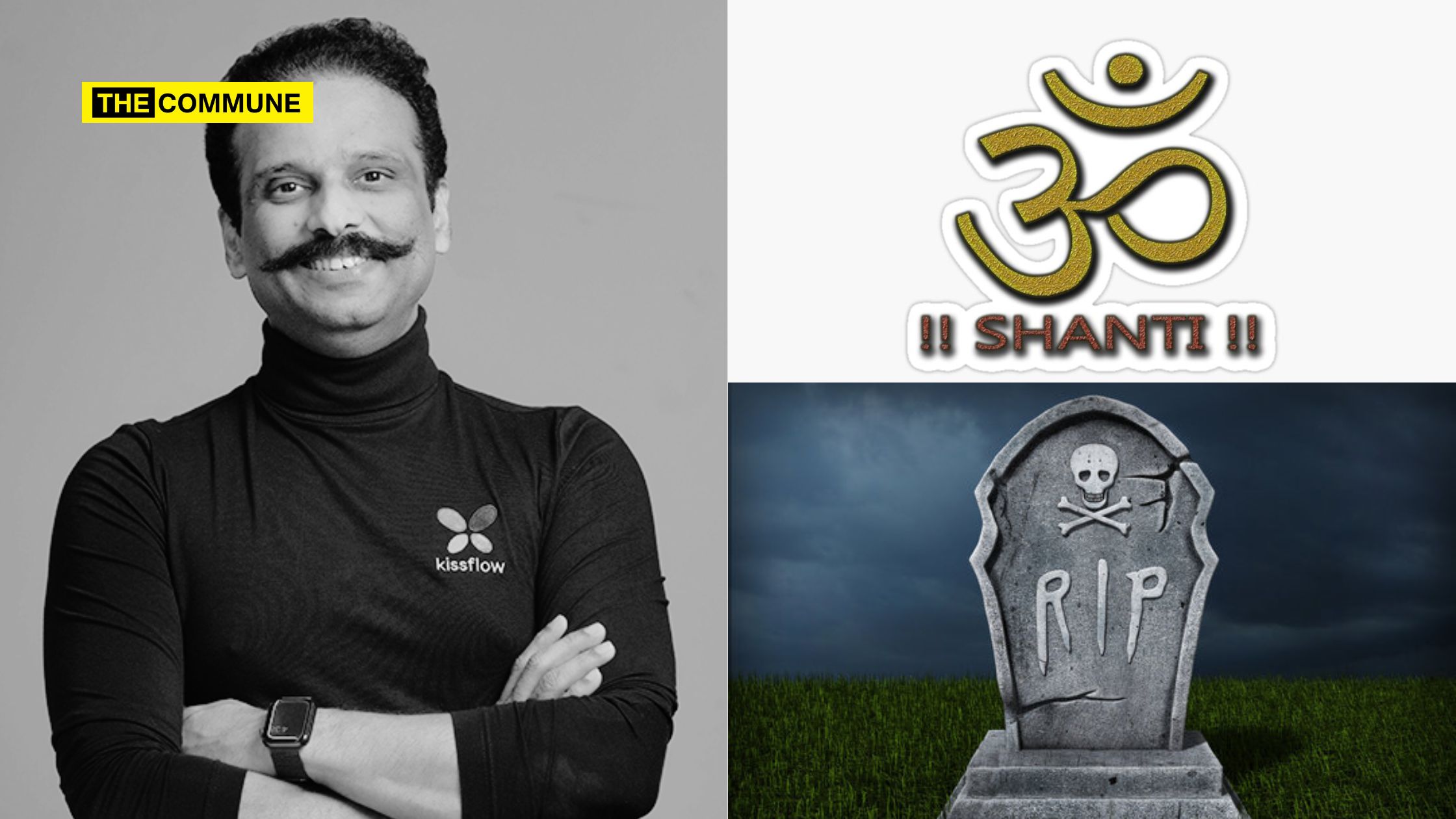
Suresh Sambandam, the CEO of a company named ‘Kissflow’ and someone who is popularly known for being DMK’s unofficial brand ambassador, took to his social media to take a dig at those who use “Om Shanthi” instead of “Rest In Peace (RIP)” for expressing condolences.

In an X post, the self-styled ‘entrepreneur’ took to disparage people for using the phrase “Om Shanti” saying that while “normal people” use the phrase RIP, “Sanghis” say “Om Shanti”.

He also went on to ask “What are the other examples to identify Sleeper Cell Sanghis?”

Sanghi is a colloquial term referring to a devout Hindu, a subscriber of Hindutva ideology, a support of BJP and Prime Minister Narendra Modi and everything in that spectrum. However, it is often used as a derogatory reference by leftists and Dravidianists.

Suresh Sambandam’s controversial post smacks of borderline Nazism as it goes on to incite hate towards a group using social markers. Many called out the problematic tweet as it comes across as inciting hate towards Hindus.

https://twitter.com/Neonteal1/status/1702997074311266774

Suresh Sambandan is known for pushing the Dravidian propaganda and has been caught peddling lies and half-truths several times. Earlier, he had fudged data about the number of doctors available in different states of India to its population.

Prior to that he exposed his shallow knowledge on history, politics and economy in an interview with ‘Neeya Naana’ Gopinath to Behindwoods YouTube channel.

During the farmers protest that happened in the outskirts of Delhi, he had peddled false news about the farmer empowerment laws where he said that Minimum Support Price would be scrapped and that key farm items would be removed from the ‘Essential Commodities’ which was busted by The Commune.

Click here to subscribe to The Commune on Telegram and get the best stories of the day delivered to you personally.
The Symbolism Of Vinayagar

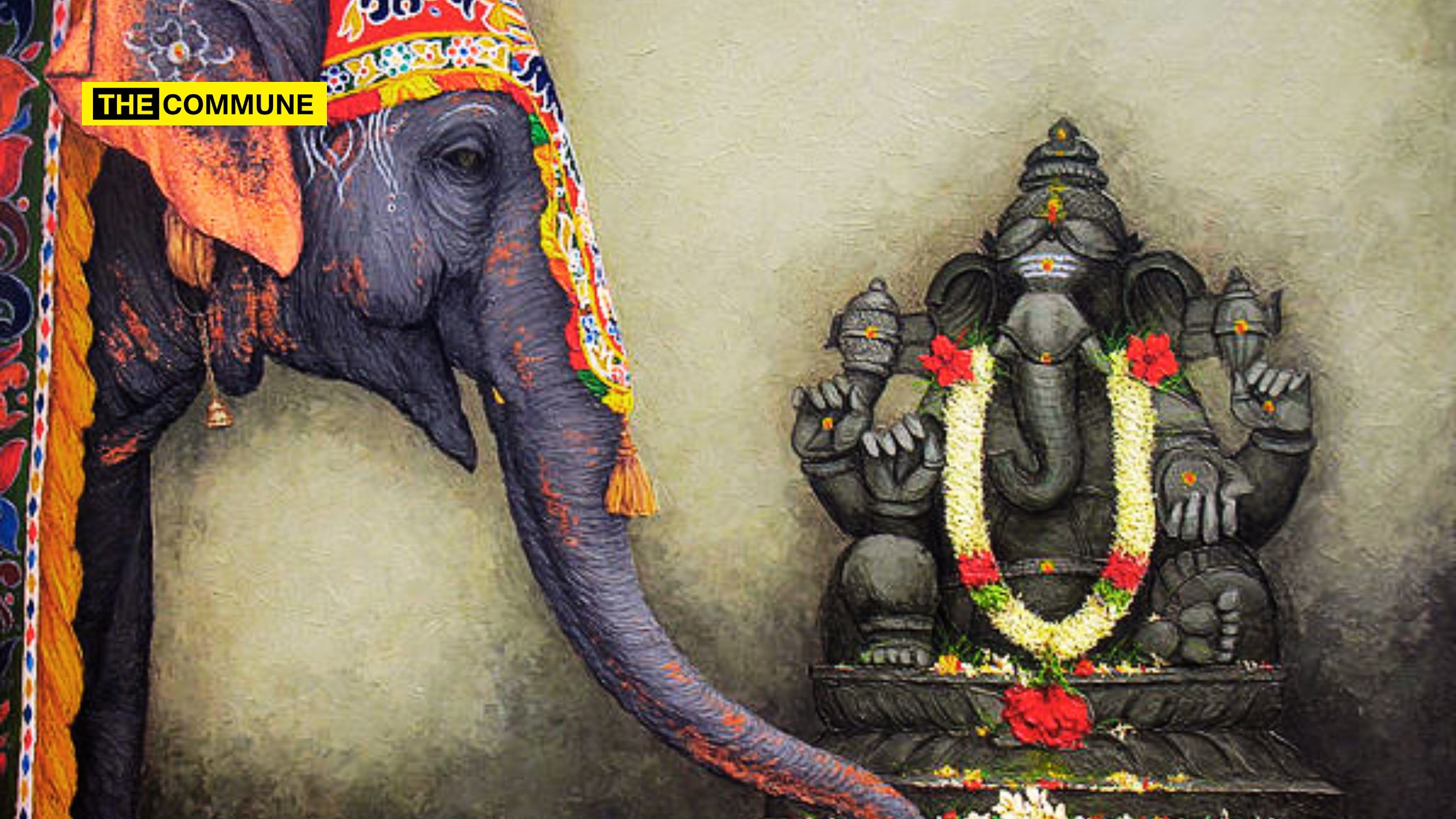
One of the simplest but yet a towering God in the Hindu pantheon is Vinayagar or Ganesha. He is celebrated not just across the lengths and breadths of India, that is Bharat, but is revered as far as Japan. He can be found adjacent to a stream of river under a banyan tree and also as Siddhi Vinayak at the bustling suburb of Dadar in Mumbai. He can be prayed to by just molding wet turmeric paste or by getting an elaborate clay mold. Ganesha or Vinayagar is not just a God but is personalized as a buddy to many, to whom people go whenever they find themselves in trouble. That’s why before commencing any auspicious work, it is Ganesh who is invoked first, because his name ‘Vinayagar’ means the remover of obstacles.

To understand the symbolism of Ganesha as the elephant- headed God, we will have to explore the elephant family in itself. Mammoths are hairy extinct mammals of the elephant family with very long tusks that curve upward. The etymology behind the word Mammoth comes from the Russian language that literally translates to Earth.

The symbolism of Ganesha’s elephant head is intriguing. Elephants, as mammals, share certain biological traits with humans, including mammary glands for milk production. However, the choice of an elephant head over a human one in Ganesha’s depiction may be attributed to the unique nature of elephant brains. Elephant brains are significantly larger and more complex than those of humans, containing three times as many neurons. Their pyramidal neurons have distinct structures, resembling long-legged spiders with few branches, which sets them apart from other mammals, including humans. Elephants do indeed exhibit remarkable behaviors, such as their ability to identify languages, mimic human voices, and possess an extraordinary memory. These qualities further emphasize the significance of Ganesha’s elephant-headed representation in Hindu mythology. This intricate symbolism highlights Ganesha’s exceptional wisdom and intellect in Hindu mythology.

The elephants have extraordinary behaviours like identifying languages, mimic human voices and also an extraordinary memory. A song by Papanasam Sivan goes like this

mUlAdhAra mUrti gaja |
mukhane sharanam unadhu ubhaya caraNam

Oh, embodiment of the root chakra (root cause), Oh, elephant faced I seek your refuge (I bow to your feet), I seek your refuge you with eagerness.

In the realm of yoga and spirituality, Ganesha is associated with the Mooladhara Chakra, also known as the root chakra, which is often depicted with four petals and associated with the color red. The Kundalini energy or the serpentine energy is set to reside in this chakra. This chakra is believed to be the residence of Kundalini energy, often symbolized as a serpent. The connection between Ganesha and the number four, as seen in Ganesh Chaturthi (the fourth day of the lunar month), underscores his connection to this chakra.Ganesh Chaturthi as the name suggests explains that Ganesha has a lot of connection with the number 4.

Ganesha can also be seen as a symbol of national unity because Bal Gangadhar Tilak, one of the leaders of Indian National Movement invoked Ganesha as the icon of nationalistic movement. But centuries before, Chhatrapati Shivaji Maharaj, founder of the
Maratha empire, began celebrating Ganesha, since he was the Kuladevta (family God) of the Peshwa Empire.

May this Ganesh Chaturthi indeed bring immense joy, wisdom, and abundance to our lives, drawing upon the symbolism and spiritual significance associated with Lord Ganesha.

Shruthee MS is a masters student at Vethathiri Maharishi College of Yoga, Thiruvanmayur.

Click here to subscribe to The Commune on Telegram and get the best stories of the day delivered to you personally.
Whose Lap Are Those Crying ‘Godi Media’ On? Shehzad, Abhijit Discuss

Day two of Pondy Lit Fest 2023 featured a series of engaging discussions and captivating book launches that enthralled the audience. The event showcased a diverse range of literary talents and thought-provoking conversations, adding to the festival’s vibrancy and intellectual richness. In the session, which focused on the topic “Godi Media: Supine, Constructively Critical, or Pointlessly Combative,“, Shehzad Poonawalla participated as the speaker, while Abhijit Iyer Mitra played the role of Contributing Moderator. Shehzad holds the position of National Spokesperson for the Bharatiya Janata Party (BJP) and is known for his active participation in news debates and his prominent presence on social media platforms. Abhijit Iyer-Mitra works as a Senior Research Fellow at the Institute of Peace and Conflict Studies. 

 The derogatory term “Godi Media” [meaning Media sitting on lap] was coined by Ravish Kumar to indicate the media houses that support the current government from 2014. This conversation coincides with the recent announcement made by the I.N.D.I Alliance, in which they declared a boycott of debates moderated by 14 journalists hailing from different media organisations. They have also advised their party leaders to abstain from participating in any debates featuring these particular journalists.

Hitlist, Not A Boycott

In his address, Shehzad Poonawalla explained that media houses, which once served the Congress’s “first family” but were subsequently rejected by the public, have resorted to discrediting media outlets with opposing ideologies. He argued that this term (Godi-Media) is primarily used to divert attention from their shortcomings. Poonawalla emphasised that the broader non-right media ecosystem has embarked on delegitimising the institutional processes of democracy. This involves dehumanising individuals and discrediting elements that, in reality, signify signs of fascism, which they attribute to the existing government. He expressed his opinion that although the list may initially seem like a mere boycott, it could also serve as a means to target individuals, potentially exposing them to various forms of attacks.

Positive Criticism Or Perpetual Faultfinding

When Mitra questioned Poonawalla as to why it was necessary to attack the “first family” when they are no longer relevant, instead of critiquing the government, he said that the role of a free press should not inherently be anti-establishment, nor should it appear to align with specific ideological ecosystems. Poonawalla identified a lack of balanced reporting in this media landscape, where one side is consistently critical of the government without acknowledging its positive policies and achievements. According to him, following the G-20 meeting, none of the media channels or social media accounts whom he referred to as “Supari Media” had published any content praising the successful outcomes of the meeting. He further noted that several sensational news stories aired were later proven to be factually incorrect. He asserted that the statement “The “first family” is no longer relevant” is a cliché. Shehzad also highlighted the hypocrisy of Rajdeep while discussing the incident of the opposition alliance boycotting reporters and anchors.

Can Congress Accuse BJP Of Restricting Media Freedom While Doing The Same?

Poonawalla highlighted that “journalists” like Rajdeep and others never raised questions about Sonia Gandhi’s de facto role in running the government. Instead, they often blamed individuals like Manmohan Singh and other ministers. He pointed to instances in Congress-run states where the government hounded journalists, such as the treatment of Sudhir Chaudhary (an anchor at Aaj-Tak) in Karnataka, and highlighted incidents like the attack on journalist Kamal Shukla by local Congress leaders in Chhattisgarh.

It should be noted that the Karnataka government recently unveiled a framework for a fact-checking unit aimed at combating misinformation. Nonetheless, concerns have arisen in light of past actions, raising questions about whether this initiative is designed to restrict press freedom and manipulate the narrative.

When inquired about the selection of specific media houses for the pre-election interview with the Prime Minister, Poonawalla clarified that preferring someone for effective engagement or delivery is not the same as imposing a boycott or creating a hit list. He also elaborated on instances of hit jobs, citing the case of Adani, where comprehensive investigative reports debunked the conspiracy. A similar scenario unfolded in the case of the Dwarka Expressway, where the media initially focused on a small portion of the CAG report, later revealing that the government had saved 12% of the total construction cost.

Is BJP Falling Behind In Setting The Narrative: A Pattern Of Delayed Responses

Abhijit then questioned why the BJP always seemed to lag behind in setting a narrative and instead frequently resorted to firefighting. Poonawalla replied saying that if the BJP actually wanted to win political brownie points, it had many opportunities, but the party had always considered the larger picture of running the country and trodden the path with care. He also criticised comments like “Sanathana Dharma should be eradicated” or “Inke (their) G-20” as poor examples of the opposition’s attempt to set a narrative. He clarified that in cases involving comments targeting a community or religion, the party would vehemently oppose and condemn such hate speeches.

Click here to subscribe to The Commune on Telegram and get the best stories of the day delivered to you personally.
Hindus In Hindu Rashtra – Book Launch & Discussion At Pondy Lit Fest 2023

pondy lit fest

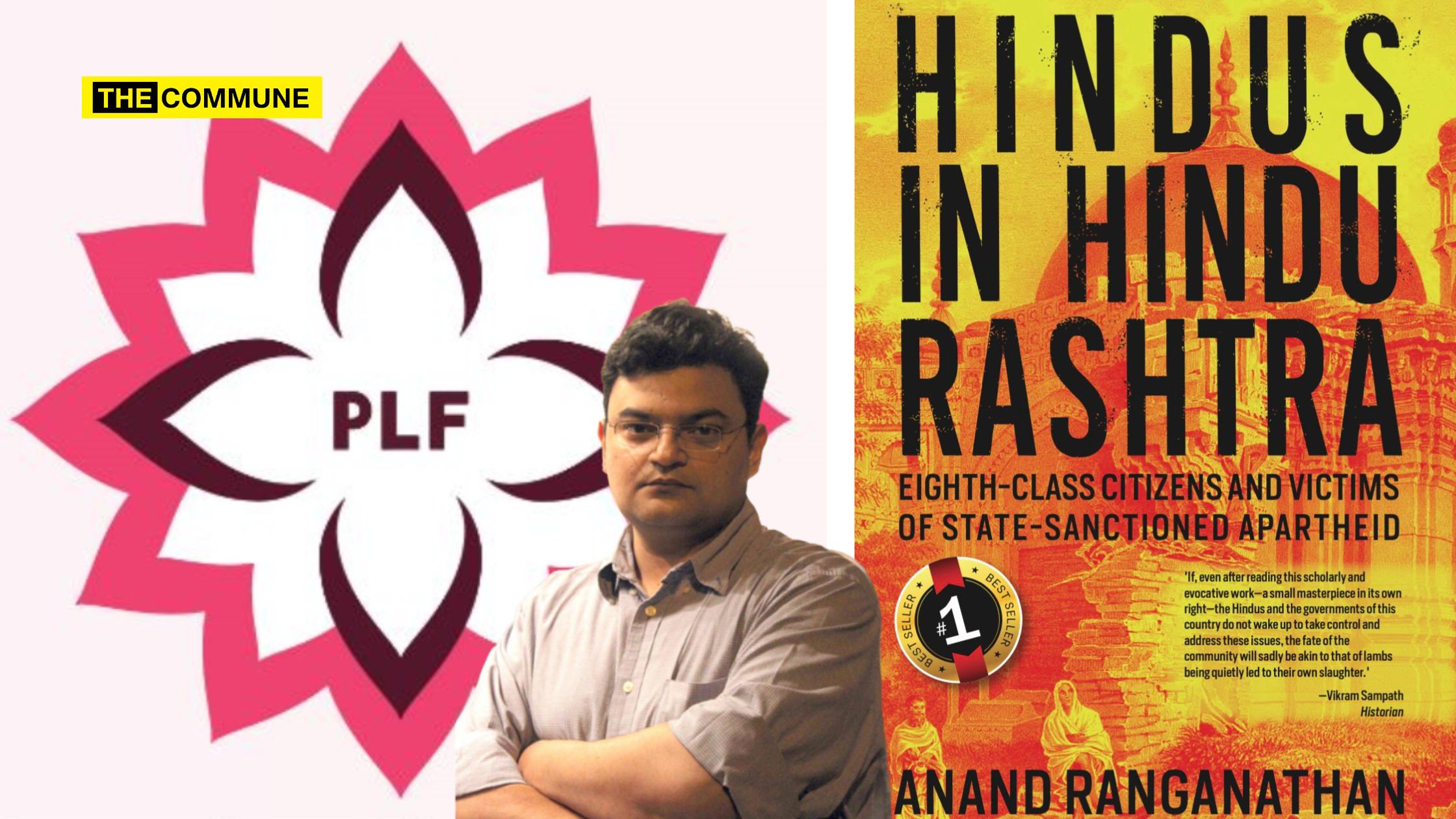
The first day of Pondy Lit Fest 2023 marked the launch of the book titled “Hindus In Hindu Rashtra – Eighth-Class Citizens and Victims of State-Sanctioned Apartheid,” authored by Prof. Anand Ranganathan. Remarkably, within just a month of its release, even without a formal launch event, the book went into its second print run. The author made a commitment to donate all the royalties from this book to organisations dedicated to the Hindu Refugee cause. To date, a total amount of ₹1.86 lakh has been donated to the Sewa Nyaya Utthan Foundation and Nimittekam on separate occasions. It’s worth noting that the book is published by BluOne Ink, which is also the Platinum partner for Pondy Lit Fest. The book currently ranks on top in the Politics category on Amazon India.

Book Discussion 

The book launch was followed by a discussion and the panel comprised of Anand Ranganathan, the author, renowned historian Meenakshi Jain, advocate in the Gyanvapi mosque case, Vishnu Jain, and Ratan Sharda, a prominent ideologue of the RSS, moderated by Alo Pal.

Historian Meenakshi Jain brought in the historical perspective of institutionalised temple control. She spoke about the origins of temple control dating back to the British. She mentioned that the East India Company officials were fascinated by Indian temples and rituals. Warren Hastings, the first governor-general, regularly visited the Kalighat temple in Kolkata. Early Englishmen attended Rath Yatras in Orissa and participated in temple rituals, even praying for rain.

After independence, she said that rulers were expected to continue the tradition of valuing temples, but this did not occur. Factors contributing to this change included the rise of atheism, rationalism, and specific ideologies in South India. The perception of temple wealth led to misconceptions; most temples relied on agricultural land revenue.

The challenges in the contemporary era include: temple income declined due to land reforms encouraging tenants to occupy temple-owned agricultural land; prominent temples, like Brihadeshwar Temple, faced financial crises in 1983, impacting the conducting of temple rituals.

Meenakshi Jain placed her discontentment that political parties with Hindu nationalist leanings have not effectively addressed these issues to date.

Anand Ranganathan’s Turning Point

When asked by RSS ideologue Ratan Sharda about the turning point in his life, especially as an atheist, Anand Ranganathan replied that as a scientist, he was blissfully unaware in the past but gradually became aware of the issues plaguing Hindus over the past six to seven years. Two significant moments stood out he said: firstly, the shocking realisation of seven lakh Hindu refugees in their own country, and secondly, the Places of Worship Act, which highlighted injustices to our ancestors.

He emphasised that civilisations endured by seeking justice for their forefathers. He spoke about Meenakshi Jain’s work which painfully illustrated how our ancestors hid idols from the invaders, passing on their legacy to successive generations. Anand stressed that these issues concern the whole of India, not just Hindus, and he found it puzzling why non-Hindus in the country weren’t equally concerned.

Around five years ago, he said he studied the Allahabad High Court’s Ram Temple judgment, which exposed baseless claims made by quack historians. Recent excavations at Ayodhya confirm its Hindu heritage, and Anand underscored the importance of passing on this knowledge to the younger generation for heritage preservation. He encouraged people to reflect on these issues when visiting Mathura and Kashi and to appreciate Vishnu Jain’s unwavering efforts.

Remove Government Control – Ratan Sharda

Ratan Sharda expressed his thoughts on the topic of temple control. He acknowledged that the issue of temple management in India is a complex one with various types of temples, each requiring a different approach. We have family temples, Kola temples, village temples, and sampradaya temples, as well as larger temples controlled by a few pujaris, and some under government control. He said that the Hindu society lacked a centralised hierarchy to dictate how temples should be run or specific rituals performed. The solution likely involves removing government control and implementing appropriate guidelines for temple management, creating a kind of manual SOP to ensure the efficient running of all temples. He said that private temples, despite being visited by thousands, can sometimes be in deplorable conditions when managed by families. Finding a suitable solution is challenging, and discussions have been ongoing for the past three to four years, involving various acharyas and pramukhs. Establishing an apex body to oversee temple management is difficult, as it risks secularisation, potentially turning pilgrimage centers into tourist spots. He stressed that this issue represents a long civilisational battle, requiring time and effort to resolve.  He also said that bringing Hindus together on a single point of agreement is quite challenging, even more than the 98 years of RSS’s existence. However, he noted that people are openly discussing these matters, reflecting the awakening within the Hindu samaj. Despite differences, when confronted with challenges to Sanatan Dharma, Hindus, including Jains (pointing to Vishnu Jain), unite, showcasing the resilience and unity of our ancient traditions.

Vishnu Jain On The Waqf Board’s Privileges

Advocate Vishnu Jain poured his heart out when asked about the Waqf Act in comparison with temple control by the government. He said that the issue of temple acquisition and the draconian provisions of the Waqf Act highlight the disparities in treatment between Hindu temples and other religious institutions in India. Regarding temple acquisition, he said that the government’s approach was flawed and that taking over temples was not a solution; instead, a common fund for offerings should be created to ensure transparency and accountability. He stressed that the government was taking over control mainly of the income that is generated by the sale of offerings. He stressed that government control only led to mismanagement and exploitation of temple resources.

The Waqf Act, on the other hand, grants significant powers to the Waqf Board, making it a parallel government. The amendments made by Rajiv Gandhi during his tenure allow for the declaration of properties as Waqf property without the affected parties’ knowledge – this was seen recently in a village in Tamil Nadu where an entire village including a 1000-year-old Shiva temple were announced as Waqf property. Vishnu Jain also heartbrokenly said that the Waqf Board also enjoys exemptions from limitations that apply to other citizens, enabling it to act without time constraints – something that is not given to Hindus in case of any legal disputes. He stressed that the unequal treatment of waqf properties compared to Hindu temples was unjust and discriminatory.

Meenakshi Jain intervened that it was essential to consider the historical context when discussing temple wealth and government control. In the medieval period, when temples were frequently demolished, there were instances where Hindus would visit the ruins and offer donations. However, the custodians (mutawalis) of these sites often allowed these offerings on the condition that they received all the donations, with no share going to the Hindu worshipers. This historical practice highlights that the issue of appropriation of temple wealth by custodians existed even when temple resources were relatively modest.

Anand Ranganathan reminded that PV Narasimha Rao, who despite all his successful measures, had brought two draconian laws Wakf Act and the Places of Worship Act. He remarked people like TR Ramesh (through Indic Collective Organisation), and J Sai Deepak were pioneers in this fight for breaking the control of the State over Hindu Temples. He added that though the donations are sizable amounts, the money through the land owned by Temple forms the lion’s share. He then posed a troubling question asking which is worse, “Controlling a temple or destroying a temple?”. He emphasised that all the issues addressed in the book should be widely read, as each of them serves as a clear indication that Hindus are treated as eighth-class citizens.

Click here to subscribe to The Commune on Telegram and get the best stories of the day delivered to you personally.
“It Is Only Strength That Attracts Strength And It Is Only Strength That Respects Strength” – Tejasvi Surya Recalling The Modi Regime At Pondy Lit Fest 2023

The Pondy Lit Fest 2023 is underway at Puducherry. As a part of the event, the SMaRT – Swarajya Awards 2023 were presented to eminent personalities. Lok Sabha MP Tejasvi Surya also delivered the keynote address at the opening ceremony. 

In his speech, Tejasvi Surya reflected on the remarkable progress our country has made in the past decade and emphasised the importance of the wisdom imparted by our ancient rishis, who encouraged us to strive for strength. He commended the festival organizers for bringing together discussions on various aspects of society, politics, and the economy onto a single platform and for their determination in hosting the event despite the challenges that came their way.

Bharat Shakti And Strategic Autonomy

During his address, Tejasvi Surya remembered the successful conclusion of the G-20 Presidency and its global implications, and that the present is an opportune time to engage in these discussions. He pointed out the achievements of the Chandrayaan-3 mission and the outstanding performances of Indian athletes in various sports. He emphasised that a consistent and strong political leadership was the foremost factor responsible for India’s remarkable progress in the social, economic, cultural, and political domains over the past nine years.

Quest For Strategic Autonomy

 He highlighted that the vision of our Rishis is to attain strategic autonomy and be free from foreign control. Then he quotes Sri Aurobindo’s words on strategic autonomy – “Our ideal is that of a Swarajya free from foreign control. We claim the right of every nation to live its own life by its own energies, according to its own nature and ideals. We reject the claim of aliens to force upon us from a civilization inferior to our own or to keep us out of our inheritance on the untenable ground of a superior fitness while admitting the stains and defects which long subjection has induced upon our native capacity. We are conscious of that capacity and energy reviving in us.”

Markers Of A Decade Of Achievements

Tejasvi Surya reminded that in the years before the NDA government, previous administrations faced significant challenges in effectively addressing terrorism, both domestically and at the borders. He underscored a notable achievement of zero terror casualties in the nation outside conflict zones. 

He also highlighted the government’s approach to quelling the efforts of Naxal outfits attempting to establish a corridor from Pasupati (in Nepal) to Tirupati (in AP), attributing this success to a departure from ideological constraints in political, economic, and cultural discourses.

Tejasvi also affirmed the need for acquiring strength and quoted Sri Aurobindo to emphasise this point: ‘The first thing and the last thing that we must seek, the one essential thing is strength.’

The 9 Years Of Modi

  • Tejasvi Surya reiterated the nation’s economic progress by stating that ‘13.5 crore people were lifted out of poverty in the last seven years.’ He highlighted that the current estimate of poor individuals in India is less than 60 million, which is half of what it was in 2017, a third of what it was in 2015, and less than a quarter of the number that existed in 2012. In addition, he pointed out how access to bank accounts, clean and safe energy, and housing has improved for the poor of India.
  • Numerous countries have expressed interest in adopting India’s Digital Public Goods (DPG) and Digital Public Infrastructure (DPI) systems. This system has undergone periodic enhancements and has demonstrated its reliability at India’s population scale.
  • He emphasised India’s significant progress toward achieving strategic autonomy by transforming it into a key player in manufacturing and a stable node in supply chain logistics. Tejasvi reiterated that we are no longer perceived solely as a market by the West.
  • Tejasvi Surya recalled how the country effectively managed the pressure from global pharmaceutical lobbies during the pandemic. The success of India’s vaccination drive and the handling of the pandemic now firmly exemplify our strength.
  • Another significant indicator of this is the recently passed Digital Data Protection Act. He pointed out how multinational corporations were attempting to prevent data localization in India and essentially establish India as their data colony.
  • He also highlighted India’s foreign policy evolution, which has transcended domestic pressures and enabled the country to engage on a multipolar level from a position of strength. During the recently concluded G-20 summit, the announcement of the India-Middle East-Europe Economic Corridor was made, a development poised to be a game-changer. He reminded us of India’s prudent economic decisions during the pandemic, in stark contrast to other nations that resorted to printing money and are now grappling with deep inflation.

 Threat to Sanathana Dharma 

In tune with the recent remarks made around “eradicating Sanathana Dharma” Tejasvi Surya warned that if we lose our political strength, we risk reverting to a colonial mindset, where demeaning our own culture becomes commonplace. He pointed out how a prominent leader from the ruling party in Tamil Nadu called for the eradication of Sanatana Dharma, which is the cultural essence of our nation. He also said that such lingering threats go back to the colonial era and it’s essential for Hindus to remain vigilant and protect cultural heritage.

Tejasvi Surya ended the address very aptly by quoting Sri Aurobindo on Sanatana Dharma – “When, therefore, it is said that India shall rise, it is the Sanathana Dharma that shall rise. When it is said that India shall be great, it is the Sanathana Dharma that shall be great. When it is said that India shall expand and extend herself, it is the Sanathana Dharma that shall expand and extend itself all over the world. It is for the Dharma and by the Dharma that India exists.” 

Click here to subscribe to The Commune on Telegram and get the best stories of the day delivered to you personally.
SMaRT – Swarajya Awards 2023 Presented At Pondy Lit Fest 2023

The Seventh Edition of the Swarajya Awards, presented in association with SMaRT, was announced/presented on the first day of the Pondy Lit Fest 2023. The Pondy Lit Fest 2023 is underway at Puducherry and will go on till 17 September 2023.

History And The Idea Behind The Awards

In 2015, Swarajya established the Swarajya Awards to recognize the outstanding contributions made by individuals and organisations in various fields. These awardees are prominently dedicated to promoting principles such as a free market, entrepreneurial freedom, the welfare of the nation, inventive thinking, business initiative, and the vibrant tapestry of India’s extensive cultural heritage. This annual event is named after illustrious individuals who have made significant contributions to economics, politics, society, and cultural spheres.

 In the past, notable figures such as Sri Parasaran, Sri Himanta Biswa Sarma, Sri Manohar Parrikar, Sri K Annamalai, Late Sirivennela Seetharama Sastry, Sri Amish Tripathi, and Sri Arvind Panagariya have received Swarajya awards.

Dr. S. P. Mukherjee Award 

  In the realm of politics, it will be conferred upon a practising politician who has consistently strived to uphold the principles that Dr. Shyama Prasad Mukherjee embodied: a dedication to constitutional values and insightful initiatives aimed at enhancing the standard of public life.

 This year, the prestigious award finds its deserving recipient in Devendra Fadnavis, the Deputy Chief Minister of Maharashtra. In his address, Fadnavis illuminated the imperative essence of good governance, reminding us that its impact may often remain hidden, yet its absence can cast a suffocating shadow over society. With profound admiration, he extolled the visionary leadership of Prime Minister Sri Narendra Modi and the enduring inspiration drawn from the legacies of Sri Deen Dayal and Sri SP Mukherjee. Fadnavis went on to draw our collective gaze towards the transformative measures undertaken by the state government, as they tirelessly strive to enhance our infrastructure at an unprecedented pace. Moreover, he revealed his keen anticipation of participating in the upcoming Pondy Literary Fest.

 Recently, Devendra Fadnavis undertook a five-day visit to Japan to strengthen partnerships for several significant infrastructure ventures within the state. It was also reported that the state budget for 2023 was presented with a focus on irrigation and infrastructure projects.

Sree Narayana Guru Award

 Named in honour of the eminent Hindu social reformer from Kerala, who championed social equality, spiritual liberation, and economic empowerment for the underprivileged, this award will be presented to individuals or institutions dedicated to transformative social projects, grassroots activism in rural education and healthcare, tribal welfare, marginalised community empowerment, and rural entrepreneurship. 

 This year, the award is presented to the Sewa Nyaya Utthan Foundation. The Sewa Nyaya Utthan Foundation is dedicated to establishing a comprehensive system of both local and centralised support to aid individuals in need, ensuring the seamless delivery of services and justice. Swati Goel Sharma, one of the founders of the foundation, addressed the gathering and highlighted the absence of support for victims even in high-profile cases. She explained how Naina Kaur was killed by her stalker, Shahrukh, in 2020, and how the foundation has been providing both financial and emotional support to Naina’s elderly parents ever since. She also highlighted how the foundation has started classes at a refugee camp in Jodhpur in the same camp where houses were demolished in April 2023.

Ustad Bismillah Khan Award

 Established in homage to one of India’s most eminent musicians, who personified the core of India’s cultural unity and rich shared heritage, this award will be annually bestowed upon an individual who has attained the pinnacle of achievement in domains such as arts, culture, literature, philosophy, and traditional folklore. 

This year, the award is presented to Sivasri Skandaprasad, a skilled performer in Bharatanatyam, Carnatic music, and Namasankeerthanam. She founded Ahuti to preserve the cherished traditions of Bhartiya Samskriti, including Carnatic music, Namasankeerthanam, and Bharatanatyam, all of which hold a significant place in our culture. During the event, she emphasised her determination to spread Bharateeya Kalachara, a treasure trove for budding artists and future generations. Kumari Sivasri has also embarked on Wari (Sangeeta yatra) in the past, visiting temples and sharing stories of celebrated seers and saints.

Dr. B R Shenoy Award

The award is named in honour of a prominent Indian free-market economist who challenged the Nehruvian dirigisme. It is bestowed upon an individual who has consistently advocated the value of the open market, advocated for a reduced government role in the enterprise, and thereby made a substantial contribution to advancing human freedom.

This year, the award is presented to K. V. Subramanian. In his message, he expressed his gratitude to Prime Minister Shri Narendra Modi for appointing a young individual to the position of Chief Economic Advisor (CEA). Subramanian, a leading expert in economic policy, banking, and corporate governance, holds the distinction of being the youngest Chief Economic Advisor to the Government of India. Subramanian, the former Chief Economic Advisor to the Government of India from 2018 to 2021, currently serves as an Executive Director at the International Monetary Fund (IMF).

During his tenure as Chief Economic Advisor, he played a pivotal role in shaping India’s economic policy amidst the COVID-19 pandemic. He successfully balanced supply and demand-side measures, prioritised public capital expenditures in fiscal policy, and introduced transformative reforms to tackle structural issues. His contributions have been commended by Prime Minister Shri Narendra Modi, who praised his academic brilliance and reformist zeal.

Click here to subscribe to The Commune on Telegram and get the best stories of the day delivered to you personally.
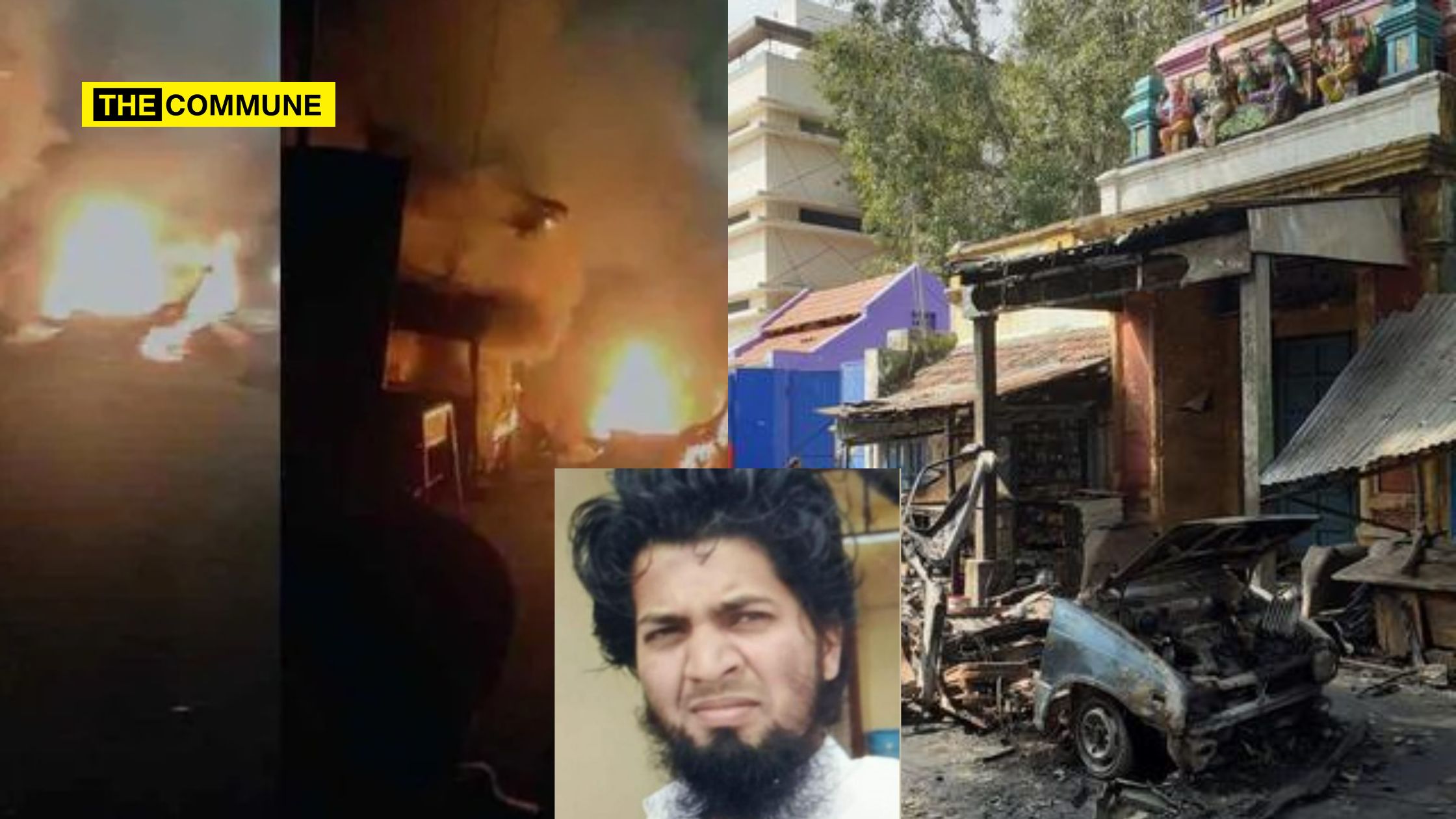
NIA Raids 30 Locations In Tamil Nadu In Connection With 2022 Coimbatore Car Bomb Blast Case

It has been reported that officials of the National Investigation Agency (NIA) is conducting raids at 30 places in Chennai in Coimbatore in connection with the bomb blast case that happened in Coimbatore last year.

The NIA has raided the houses of more than 20 people in Coimbatore. Similar raids are being conducted in Chennai and Kadayanallur of Tenkasi district. In total 30 places are being searched by the intelligence organization at places of people suspected to be associated with banned terror outfits. 

One Mohammed Idris of Coimbatore’s Ukkadam area was suspected to be involved in the case was arrested yesterday (15 September 2023) evening.

Idris is said to be a friend of Jamesha Mubeen who drove the explosive laden car and subsequently died as a result of the blast. His phone was apparently being monitored for 3 years.

Based on the information given by the arrested suspects so far, searches are being conducted at 22 places in Coimbatore.

Searches are being conducted at houses of people associated with banned outfits in Podanur, Ukkadam, Karumbukadai. The houses of Abu Tahir in GM Nagar, Suhail in Kuniyamuthur and Mansoor in Karumbukadai.

In Chennai, searches are being conducted at the house of one Buhari in Injambakkam near Neelankarai.

The NIA has arrested 13 people so far in connection with the bomb blast.

The 2022 Coimbatore Bomb Blast Terror Attack

The 2022 Coimbatore Bomb Blast is a terrorist attack where an LPG cylinder burst inside a Maruti 800 car at around 4.30 am on 23 October 2022, causing the vehicle to explode. The vehicle carrying the improvised explosive device was driven by Jamesha Mubeen. The blast happened outside the famous Kottai Eshwaran Temple. The explosion was initially believed to be an accident but a thorough investigation into the incident, revealed that the cylinder explosion was a terrorist attack committed by Islamic terrorists during the Diwali festival. Nails and ball bearings supposedly meant for inflicting maximum casualties were also recovered from the spot. Investigtors had recovered handwritten paper documents recovered from the house of Jamesha Mubeen listing the popular spots in Coimbatore that they had plans to recce or were already done. Chemicals used for making crude bombs were also found at his house.

Click here to subscribe to The Commune on Telegram and get the best stories of the day delivered to you personally.