Home Blog Page 858

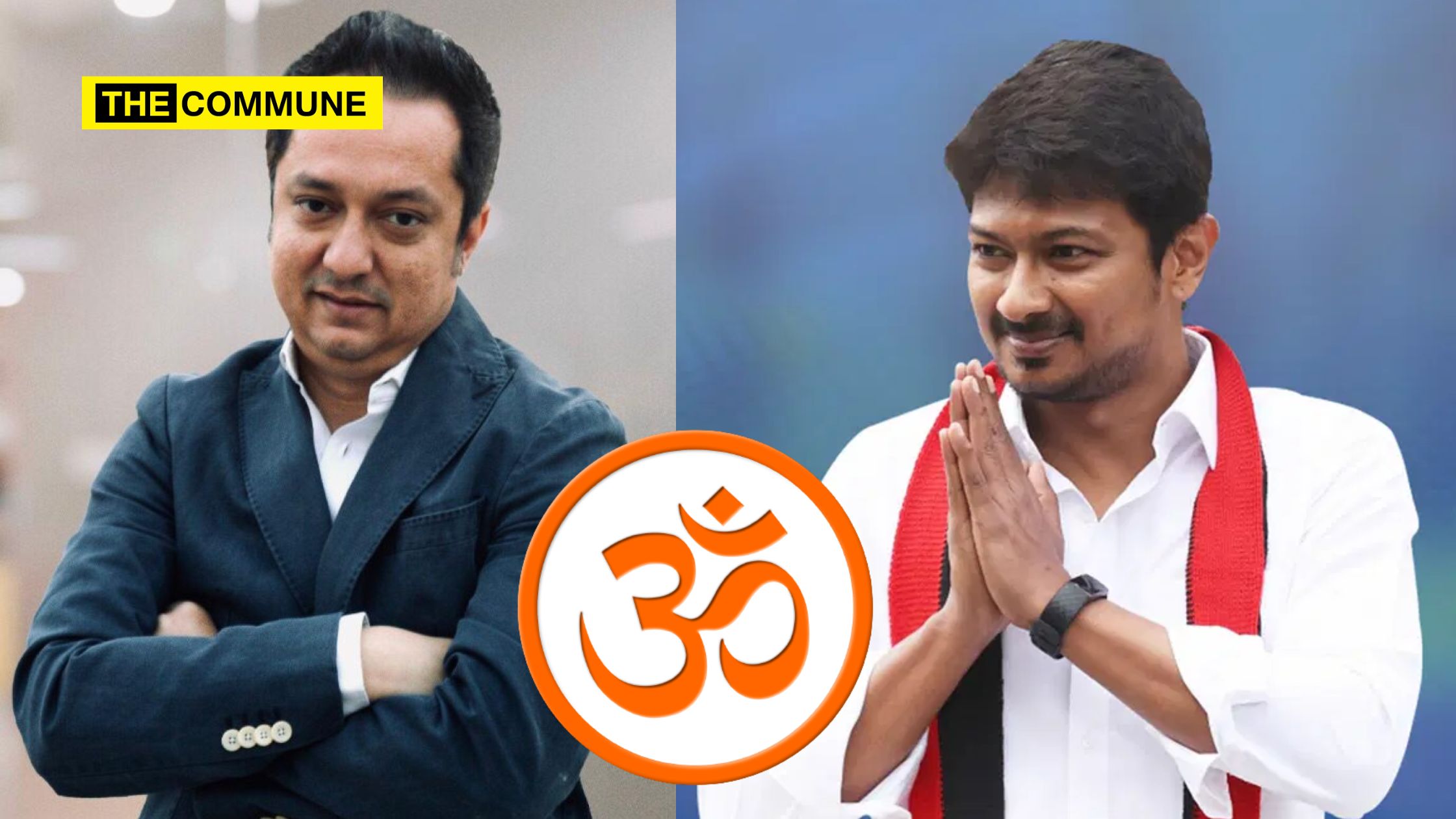
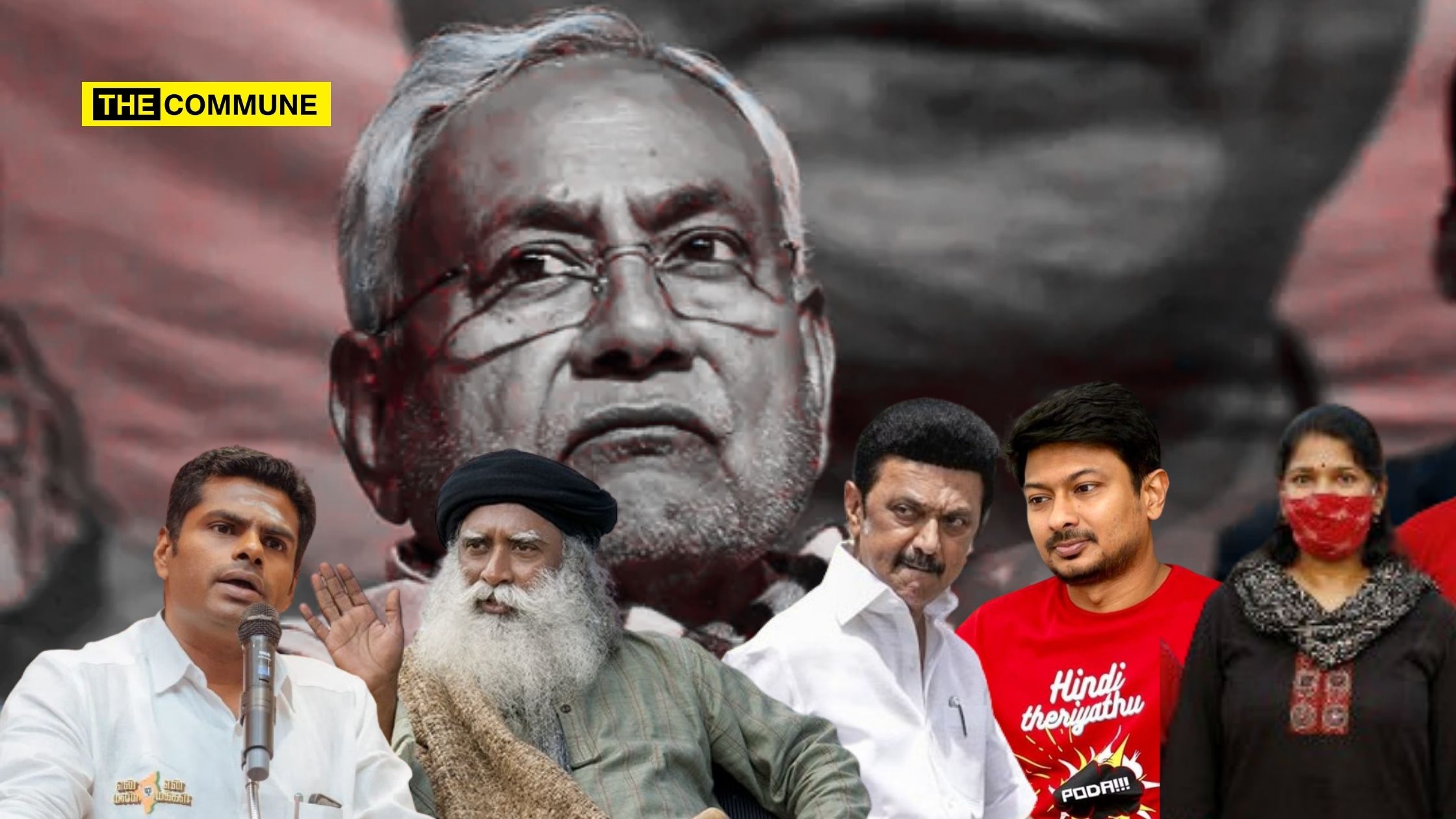
BJP TN, Sadhguru Slam I.N.D.I. Ally Nitish Kumar For Hindi Imposition While DMK And Other Dravidianists Have Their Mouths Zipped

Renowned spiritual leader Sadhguru Jaggi Vasudev has criticised Bihar Chief Minister Nitish Kumar for his outburst regarding the use of Hindi as the national language during a political meeting. Sadhguru emphasised that “Hindustan” refers to the land between the Himalayas and the Indu Sagara, signifying the land of Hindus and not the language of Hindi.

Taking to X (formerly Twitter), Sadhguru urged Nitish Kumar to respect India’s linguistic diversity and avoid making divisive statements. He stated that the linguistic division of states was implemented to ensure equal status for all languages in India, irrespective of the number of speakers. he wrote, “Respected Shri Nitish Kumar ji, Hindustan means the land that lies between the Himalayas and Indu Sagara or the land of Hindus not the land of Hindi language. Linguistic division of states was done with the wisdom that all languages in the country will have same status even though there may be big differences in the populations that speak them. Respectfully request you to avoid such banal statements as there are many states with their own language, literature and culture associated with it. -Sg”

The controversy unfolded during the I.N.D.I.A bloc meeting, where DMK leader TR Baalu requested a translation of Nitish Kumar’s Hindi speech. Nitish Kumar, asserting that “Hindi is our national language,” rejected the offer for translation, leading to a heated exchange. Rashtriya Janata Dal (RJD) MP Manoj Jha’s attempt to provide translation was rebuffed by Nitish Kumar, who insisted that everyone should know the language.

Sadhguru’s rebuke and Nitish Kumar’s assertion have added fuel to the ongoing debate over language politics in the country.

This comes at a time when the Dravidianists who pride themselves on their Tamil language went completely into mute mode over the matter. The Chief Minister who has been to challenge the centre over trivial things by stating “thottu paar, thatti paar” (touch me and see, hit me and see) has not responded with “Hindi Theriyadu Poda”, the preferred slogan of the Dravidianists whenever they encounter anything remotely Hindi.

Netizens called out the hypocrisy of the Dravidianists as well as the ruling Dravida Munnetra Kazhagam members.


“Those Who Doubt This Govt Will Be Proven Wrong”: Highlights From PM Modi’s Financial Times Interview

The Financial Times published an interview of Indian Prime Minister Narendra Modi on 21 December 2023 which covered a wide range of topics from foreign policy to the criticism levelled against him. The Prime Minister deftly navigated all the tricky questions, expressed confidence in India’s progress and dismissed concerns raised by critics. Here are some key quotes from the interview:

Asserting the evolving aspirations of the Indian populace, Modi stated that the nation stands on the brink of a transformative era. He highlighted the electorate’s confidence in his party’s ability to expedite India’s progress, especially after recent victories in state elections. The criticisms about “democratic backsliding” and alleged attacks on secular principles, were dismissed by the Prime Minister. He labeled such criticisms as insults to the intelligence of the Indian people, emphasizing their deep commitment to values like diversity and democracy.

Addressing concerns about constitutional amendments, Modi declared any talk of such changes as meaningless. He defended the transformative initiatives undertaken by his government, ranging from a nationwide toilet-building campaign to digital infrastructure development, asserting that these achievements were realized through public participation without amending the constitution.

Discussing India’s foreign policy, Modi emphasized the nation’s commitment to engaging with other countries based on mutual interests and an awareness of contemporary geopolitical complexities. Regarding India’s relationship with the United States, Modi described it as broader, deeper, and warmer than ever before.

On the economic front, Modi highlighted India’s progress from the “Fragile Five” to the world’s fifth-largest economy. Despite achievements, concerns about unemployment, corruption, administrative hurdles, and a perceived skills gap persist. Modi countered unemployment worries with data indicating a consistent decline in rates, emphasizing India’s acceleration in employment generation.

Responding to criticisms about potential threats to democracy in a third term, Modi expressed confidence that doubters would be proven wrong, drawing parallels with historical instances where predictions about India’s future proved false.

Subscribe to our channels on TelegramWhatsApp, and Instagram and get the best stories of the day delivered to you personally.

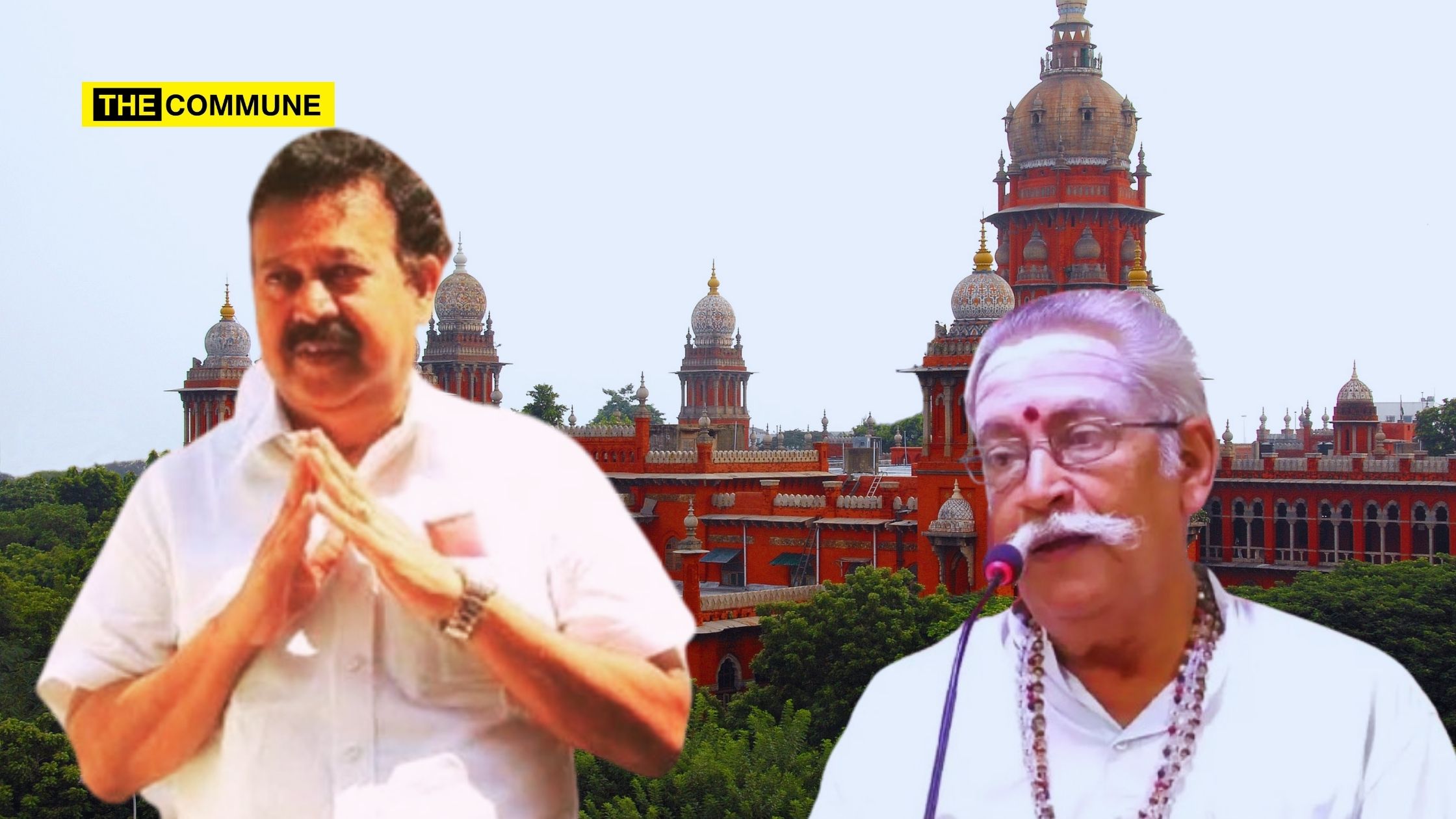
DMK Min Ponmudi Pleaded Court To Show Concern Considering Old Age & Health; Dravidianists Had Earlier Called For Jailing An Old Man For Comments On Ambedkar

Back in September 2023, after Tamil Nadu Chief Minister MK Stalin’s son, Udhayanidhi Stalin stirred controversy by likening Sanatana Dharma to mosquito-borne diseases and Corona, calling for its eradication during the “Eradicate Sanatanam Conclave” on 2 September 2023, a slew of arrests were made and several FIRs were issued on those critiquing the remarks.

Among those arrested inhumanely was RBVS Manian, a former Vishwa Hindu Parishad (VHP) leader, aged around 76, in the wee hours (around 3 AM) of 14 September 2023 for making “offensive remarks” against Dr. B.R. Ambedkar.

Following the speech, Dravidianists vociferously called for the arrest of the elderly RBVS Manian; these included so-called “journalists” as well as DMK members and supporters of the party.

Cut to the present. Tamil Nadu Higher Education Minister K Ponmudi, who has been sentenced to a three-year jail term in a disproportionate assets case, has pleaded with the court to consider his age and health.


Netizens call out the irony of the situation.

Many on social media lashed out at the apparent hypocrisy of the DMK leader whether asking whether his age didn’t matter when looting or deriding poor women as people who travel “OC”.


It is noteworthy that Ponmudi has been given 30 days to appeal before imprisonment.

Subscribe to our channels on TelegramWhatsApp, and Instagram and get the best stories of the day delivered to you personally.
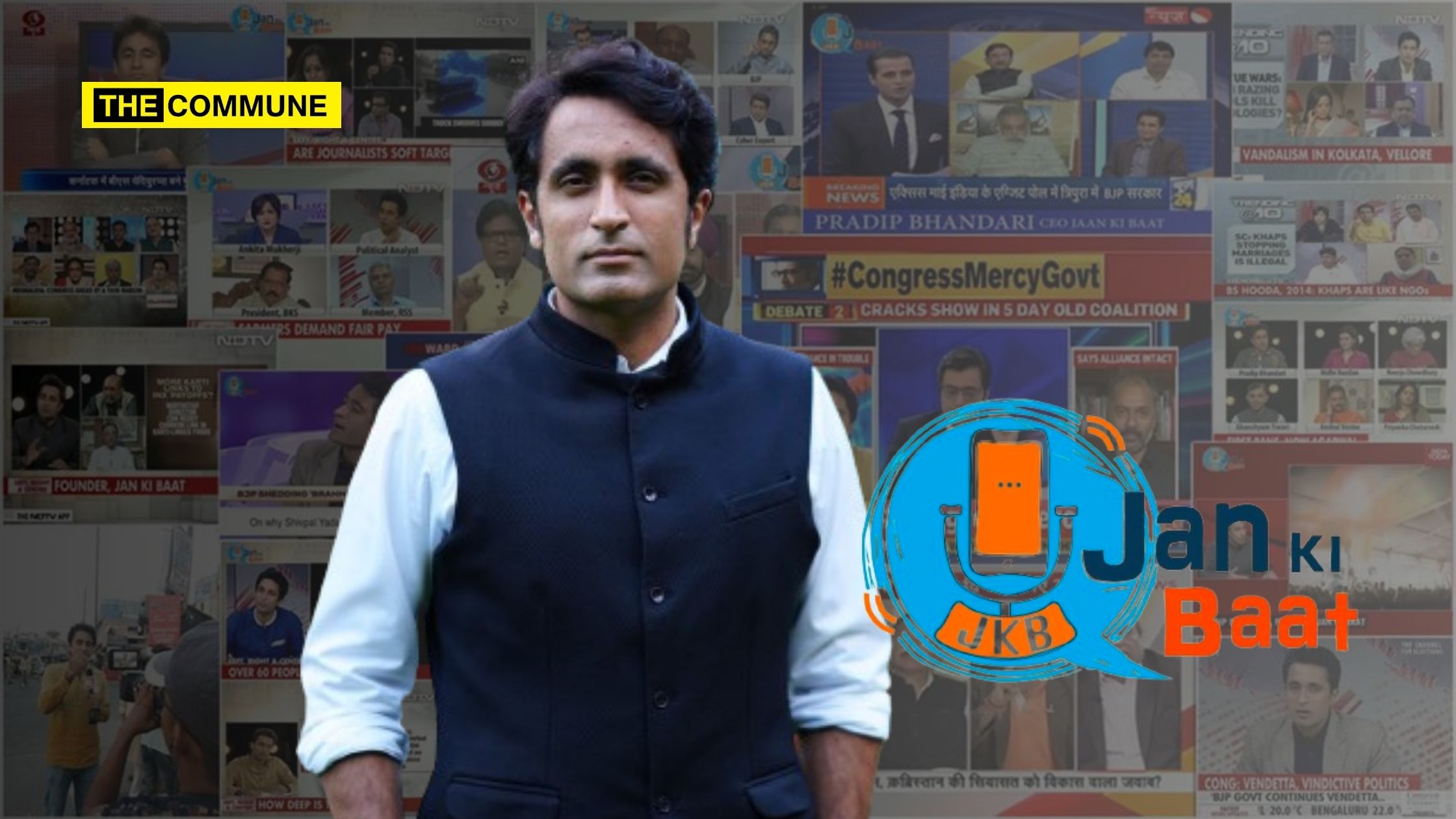
Beyond Numbers: Pradeep Bhandari’s Journey In Understanding The Pulse Of A Rising Nation

A young man who’s faced mockery, abuse, and applause – Pradeep Bhandari and his team have achieved an impressive track record in predicting election outcomes. His success lies in decoding the pulse of the average voter. What is it, you ask? The Commune delves into conversation with Pradeep Bhandari, who talks to us about the secret sauce and methods that make him the man of the moment in election forecasting.

Pradeep Bhandari’s journey from engineering to journalism is woven with threads of passion for societal impact and a genuine desire to shape narratives. From his formative years through engineering, public policy, and theatre studies, Pradeep’s focus remained on contributing to societal welfare. The shift occurred during his time with a Haryana-based think tank, leading to the founding of Jan Ki Baat in 2017.

As the founder, Pradeep embarked on a mission beyond traditional journalism, evolving Jan Ki Baat into a groundbreaking venture in election surveys. The accuracy of predictions, notably in the 2017 Uttar Pradesh election, highlighted not just statistical prowess but a deep understanding of the nation’s pulse.

Pradeep’s journey goes beyond numbers, marked by forming a dynamic team of 100 passionate youngsters dedicated to the cause. Covering an impressive one lakh kilometres by foot across 22 states, Pradeep and his team achieved unparalleled journalistic exploration in a diverse nation.

Pradeep’s tireless on-the-ground efforts set him apart at such a young age, emphasising a commitment to a nationalist perspective. This commitment echoes the voices he encountered during extensive travels. His roles at News X, India News, and Republic, where he served as a News Director and Consulting Editor, reflect his refusal to be neutrally complacent. Pradeep’s conviction lies in voicing opinions reflective of the pulse of a nation in transition, extending beyond reporting facts.

Jan Ki Baat

Pradeep Bhandari embarked on his Jan Ki Baat journey in 2017, facing scepticism about the impact of youth in media and politics. Supported by his family, he challenged the notion that age limits capability, advocating for a change in India’s risk appetite. The 2017 Gujarat elections marked a pivotal moment when Bhandari’s accurate predictions revealed the detachment of traditional psephologists from the ground reality. Jan Ki Baat’s methodology, centred on the Probability Map of Outcome, rejects the distant analysis of a nation’s pulse, emphasising on-the-ground insights. The young and dynamic Jan Ki Baat team, combining fresh perspectives with experience, contributes to nuanced election understanding. Pradeep’s firsthand experiences – from traversing villages to decoding Bengal’s 2021 elections – depict Jan Ki Baat as more than a forecasting agency—it’s a force unravelling Indian democracy intricacies. The methodology involves general questions, understanding ground sentiments, and decoding voter psyche. Pradeep acknowledges the complexity of predicting individual voting choices but believes in the magic of combining science, art, and behavioural science. Frustrated with the lack of standards and transparency in Indian psephology, he advocates for rewriting the narrative beyond speculation and satta baazi, aiming for informed analysis.

Success Rate

For Pradeep, the honesty and integrity that should underscore journalism similarly apply to psephology. He asserts that transparency should be non-negotiable, and his commitment to factual reporting is evident in Jan Ki Baat’s track record—39 out of 43 elections accurately predicted. 

Over the past eight years, he has consistently demonstrated his astute political forecasting by accurately predicting key elections across India. His track record includes successful predictions for major states like Uttar Pradesh, Gujarat, Delhi, Tripura, Nagaland, Meghalaya, Karnataka, Madhya Pradesh, Rajasthan, Odisha, Telangana, Maharashtra, Haryana, Assam, Tamil Nadu, Bihar, Punjab, Uttarakhand, Goa, and more. Additionally, he has successfully attempted and predicted results in crucial by-polls, including Gorakhpur, Bawana, Phulpur, Patkura, and Narela, showcasing a remarkable proficiency in anticipating electoral outcomes.

2024 – Who Will It Be?

Now, for the all-important question – the 2024 parliamentary elections! Pradeep Bhandari feels people have already made up their minds, unanimously echoing a desire to see Prime Minister Narendra Modi return for a historic third term. His analysis, rooted in the three pillars of ground-level progress, the revival of Sanatan culture, and the elevated global image of India, paints a vivid picture of the BJP’s dominance.

In 2014, he says, Narendra Modi secured a majority when fewer knew him; by 2019, his work had elevated his popularity. In 2024, Pradeep envisions a comfortable majority, emphasising that he will be able to predict the exact figures in the coming months closer to the elections. The anticipation is not just about seat shares but an undeniable surge in the BJP’s vote share eclipsing the 2019 results. Pradeep predicts a strengthened BJP in key states like Uttar Pradesh, Telangana, and Bihar, where Nitish Kumar’s influence wanes. 

On Annamalai & BJP In TN

When talking to someone like Pradeep, we surely must ask him about TN BJP and Annamalai. He offers a nuanced perspective on the BJP’s foray with Annamalai. Pradeep asserts that the BJP’s approach in Tamil Nadu signals a departure from divisive politics, emphasising consolidation over polarisation. He expresses measured optimism for the party’s prospects, highlighting the importance of allowing Annamalai the freedom to craft a narrative resonant with the people. In his view, Tamil Nadu is not just a political battleground; it’s a canvas where the BJP, led by Annamalai, is diligently establishing the foundation for a lasting political presence.

Impact Of Udhayanidhi Stalin’s Remarks

If you were wondering whether Tamil Nadu DMK’s Udhayanidhi Stalin’s “eradicate Sanatana Dharma” remarks had any impact on the lay voter, Pradeep contends that statements resonate far beyond their geographical origin in today’s interconnected age. He reveals a ground-level response that reverberated across the Hindi heartland. The candid critique of the INDI Alliance leaders becomes a tacit endorsement, leaving many questioning the political trajectory.

Will Sonia Gandhi Win Rae Bareli This Time?

Speaking of the “top” people of the Congress, Rahul Gandhi’s constituency choice and the potential shift of Sonia Gandhi from Rae Bareli hint at a strategic chess game. Pradeep boldly predicts, “I will not be surprised if Rae Bareli also, the Congress loses this time.” When asked whether the “South vs. North” narrative will have an impact, Pradeep dispels it as bunkum rhetoric, warning against its potential backfire. He repeatedly underscores the disconnect between political think tanks and the ground reality, portraying only Narendra Modi as a contender capable of challenging Narendra Modi. 

His Journey Through The NorthEast

Recalling his journey through the Northeast, where he was able to predict the 2018 Tripura polls to perfection, Pradeep recounts the month and a half he spent traversing every constituency, defying conventional narratives and predicting a BJP victory against widespread scepticism. The indomitable spirit of his reporting, marked by an attack from the opposition, became a beacon of accurate foresight, resonating across the nation. Venturing further into Assam, Pradeep becomes a witness to the transformative impact of BJP’s development initiatives. He paints a vivid picture of infrastructure metamorphosis, exemplified by the evolution of airports and roads, symbolic of a Northeast undergoing a developmental renaissance. For Pradeep, the Northeast, often overlooked in the past, emerges as an integral part of India’s developmental surge under Narendra Modi’s leadership.

Stories Close To His Heart

When we asked him about an experience or a story closest to his heart, Pradeep Bhandari shared a poignant story from Jhabua, Madhya Pradesh, illustrating the transformative impact of grassroots governance. Despite the political rhetoric, a 71-year-old Bhil Bhilala woman supported Modi in fulfilling his promise of providing her with a home. Anecdotes of a street food seller in Jharkhand embracing UPI payments to a cancer survivor benefiting from Ayushman Bharat in Chhattisgarh highlight the tangible changes under Modi’s governance. Beyond political affiliations, he emphasises the emergence of collective confidence, a belief Modi instilled that India is on the path to becoming a developed nation. He said, “It is not about BJP or Congress; it is about Modi.”  He recalls being the lone voice on television amplifying the grievances of post-poll violence victims in Bengal and standing with Arnab Goswami amid Maharashtra’s political turmoil. Despite criticism and FIRs, Bhandari remains steadfast, proud of his journalism anchored in genuine commitment to nationalism and professional excellence. He emphatically declares, “I’m not a commercial nationalist or an opportunistic nationalist. I’m a true nationalist by heart and also professional excellence, and we have proof of that.”

Vision For A Developed India

Pradeep Bhandari envisions Jan Ki Baat as the resounding voice for India’s 130 crore people, poised to shape the nation’s narrative. With a keen focus on the upcoming 2024 elections, he aims to impact millions, positioning the platform as the definitive voice of a developed India. Going beyond electoral predictions, Bhandari commits to expanding Jan Ki Baat into a multifaceted entity, exploring strategic narratives with a comprehensive 360-degree approach. He invites the youth to actively participate in building a media legacy that resonates for decades.

Pradeep has travelled to 22 states and expressed a keen interest in exploring Andhra Pradesh, Kerala, Tamil Nadu, and deep Jammu and Kashmir in the future. When asked about his vision for Indore, his hometown, he says he envisions transformative growth, aspiring for it to lead central India’s development, akin to Singapore’s ascent. Bhandari champions the idea that a developed Indore will significantly contribute to a developed Madhya Pradesh and India. 

For Pradeep, being a journalist means shaping the collective opinion of a nation on its path to development. As India stands at a critical juncture under Prime Minister Narendra Modi’s leadership, Pradeep sees his role as a professional, politically opinionated journalist and psephologist as a critical contribution to the ongoing narrative of a rising nation. His dream is to be the voice of 100 crore Indians, actively contributing to the vision of a Developed India by 2047. Journalistically, he aims to ensure that every person in India engages with the narrative of a Developed India.

Subscribe to our channels on TelegramWhatsApp, and Instagram and get the best stories of the day delivered to you personally.
“Historian” Ramachandra Guha And The Wire’s Karan Thapar Suffer Meltdown Over Ram Janmabhoomi Temple Being Built At Ayodhya

A recent interview of alleged historian Ramchandra Guha by leftist journalist Karan Thapar was published on 20 December 2023. The entire conversation is around “Hindu-fication of political discourse”, following an article Guha wrote in the Kolkata newspaper, Telegraph. 

Talking about the “tamasha” around the Ram temple construction, Guha says, “The tamasha around the Ram temple in Ayodhya should worry Indian citizens who believe in democracy and pluralism.” He also adds that the size and scale are signs of “megalomania” and the temple is “a monument to the supremacy of Hinduism”.

Describing the Babri masjid, Guha said, “The Babri Masjid was constructed in the 16th century, so it was a symbol of military and religious triumphalism consistent with the morales of the medieval period. The Ram temple is being constructed in the 21st century, it’s a symbol of religious and indeed political triumphalism inconsistent with constitutional values, I think that’s very very important to underline. When the Masjid was demolished, there were various, in my view quite honourable and creative alternatives offered. Someone said that given the enormous loss of life that had preceded the demolition of the masjid and all the riots in all, the India which we may talk about, some people said, there should be a hospital there for the poor. Others said there could be a children’s park, yet others said I think this was a proposal of the late philosopher Ramchandra Gandhi, that there should be a Ram Raheem Darwaza symbolising peace and harmony and fraternity between Hindus and Muslims. Now all those in my view quite admirable suggestions were rejected in favour of a temple for shall we say the victorious and the triumphant side uh and again the choice was, what do you do, you have a small shrine, you make it a public spectacle, you call thousands of people including as we are now seeing the richest industrialists, the most famous film stars, etc, you telecast it to all of India.”

Calling the reshaping of Hinduism for politics, he said, “This is an important point one must make. What the BJP and Hindutva are doing is the reshaping the nature of Hinduism. Hinduism is not a congregational faith. It is not, we do not have a holy text like the Bible, we do not have a holy city like Mecca. We don’t all have to congregate in our thousands to show how devout we are. Hinduism has been historically a disaggregated decentralized faith with people can worship in their homes, in their Puja room, in the local temple, to a local God, to a village deity, to a family deity. Now this is an attempt to make a consolidated Hinduism for the political benefit of the BJP.”

Guha surely is a Hindu in Name only, as he is unaware of the congregations of Hindus during Kumbh Mela in the north or the Mahamaham in the south or the recent festivals of Karthikai Deepam at Tiruvannamalai which saw lakhs of Hindus participate in the festivities or the Surasamharam festival at Tiruchendur.

Throughout the video, both Karan and Guha are seen melting down with Guha saying, “Hindu Faith does not require a huge monument worship”; Karan Thapar’s meltdown over the Ram temple being bigger than Jesus’s birthplace is very visible. He says, “Something else is very apparent about the Ram Temple, it’s going to be the biggest grandest monument to Ram ever built in India that is the clear expressed intention of the BJP and that is very different as I noticed to the Church of the Nativity which is the birthplace of Jesus in Bethlehem nothing is likely to outshine the ram temple in India but the Bethlehem Church is a small and architecturally unimpressive compared to say St Peter’s in the Vatican to the Hagia Sophia in Old Constantinople and indeed even to the Pisa Cathedral built in Yamoussoukro in far away Côte d’Ivoire. Those are huge monumental pieces but this will be even grander and very different to the Church of the Nativity where Jesus was born, so that’s another contrast, isn’t it? Jesus’s place is small inconspicuous and hardly noticeable; the Ram Temple will be very different.”

Guha “cautions” India, urging the nation to steer clear of the divisive majoritarian trajectory that has caused turmoil in Sri Lanka, where Sinhala Buddhists sought to establish dominance over Tamil Hindus. He said, “India’s example is somewhat akin to Sri Lanka. It had an educated professional class, it had very very high rates of literacy, low infant mortality, excellent indicators of health, education, fabulous destination for tourists, with its ancient sites as well as its coast and then the Civil War happened. Why the Civil War happened, because the Sinhala speaking and Buddhist afferring Buddhist faith afferring majority said, we must put the Tamils who are the Hindus in their place and imposed their language Sinhala, and their faith Buddhism on the whole of the island. If that Civil War had not happened, I am convinced that Sri Lanka would have become one other South Asian Southeast Asian tiger, it would have had the levels of high standards of living and a free society of the kind that South Korea and Taiwan now enjoy. It may even have been the case that the software boom that has occurred in my hometown Bangalore could have happened in Sri Lanka because of the high level levels of education, because of their high degree of gender equality. So that is really the cautionary example we should think about. “

Towards the end of the interview, Thapar quotes Guha’s article where Guha states that he cannot celebrate the new temple. He states: “As a Hindu myself, I cannot bring myself to celebrate this new temple.” The article cites two reasons for this – “he lived in North India during those bloody years when the Babri masjid was destroyed and thousands of innocent people, mostly Muslims, lost their lives in frenzied rioting.” When asked about it, Guha explains, “I lived in North India from 1988 to 1994. This was a time when the Ayodhya movement was at its most intense, its most active, its most passionate and it spawned a series of riots all across northern and western India. It polarized as you know families communities Villages and I visited Bhagalpur after the 1989 riots and that was, I think it remains the most troubling and traumatic experience of my whole life and I’ve had others too I mean I’ve been in Bastar in the midst of the civil war between naxalites and the Indian State and the kind of Insurgency and the suppression by the state. I’ve seen tribals squeezed by both sides and all the suffering and so on but that was really troubling and traumatic and the slogans during that the rioters who were wanted, the people who wanted the Ram temple built and angry young men were going around looking for Muslims to attack shouting Pakistan ya Kabristan. That was the slogan of that time. You run away to Pakistan or we will off with your heads. We will kill you, we will send you to the graveyard. Now this is the background to it. It, of course, it mystifies me how the Supreme Court could reward the party that had led to this bloodshed and mayhem, not just the destruction of a particular structure, I mean I don’t mourn that structure that’s evidently unmournable the Babri masjid but the thousands of lives lost, the hundreds of thousands of people displaced, families that poison suspicion hatred communal antagonism in the minds of millions of people tens of millions of people across Northern and Western India, that’s and what will this do to reconcile any of that so I can’t see it, I mean I can’t welcome it frankly.”

The second reason he wrote in the article as to why he would not celebrate the temple, was, “I do not believe that to affirm or proclaim my faith I must do so in front of, or inside, a colossal edifice costing thousands of crores of rupees to build.” In the interview, when asked about it, Guha said, “I think faith is a personal thing, but it comes not just from growing up in the family I did but being also from being a lifelong student of Gandhi and his ways and Gandhi was deeply religious.” He also adds an aesthetic reason for his not wanting to celebrate the temple, he says, “We go and visit the Brihadeeshwara temple a thousand years later for its beauty, for its architectural beauty, you don’t have to be Hindu. Will people be going to this temple a thousand years later? One can’t say, I won’t be around, my descendants won’t be around. And then I say it a democratic concern that this is not the country, this does not represent the country that the makers of our Constitution, that the leaders of our freedom struggle wished to build.”

As for Ramchandra Guha, it is ironic that someone with Bhagwan Ram’s name can have such bizzare thoughts about the temple being built itself, goes to show the rot leftist ideology can have on someone.

The entire interview gives the impression that Guha and Thapar used the platform to express their frustration and apprehension about the growing popularity of the temple and the Hindu awakening, evidently because they, as Hindus In Name Only (HINO), do not align with the more pronounced Hindu identity embraced by the majority of the country.

Subscribe to our channels on TelegramWhatsApp, and Instagram and get the best stories of the day delivered to you personally.
Money Looted From Perumal Temple Near Avinashi, Hindu Munnani Raises Concerns Over Temple Security Following String Of Robberies

Feature Image Credits: Janam TV

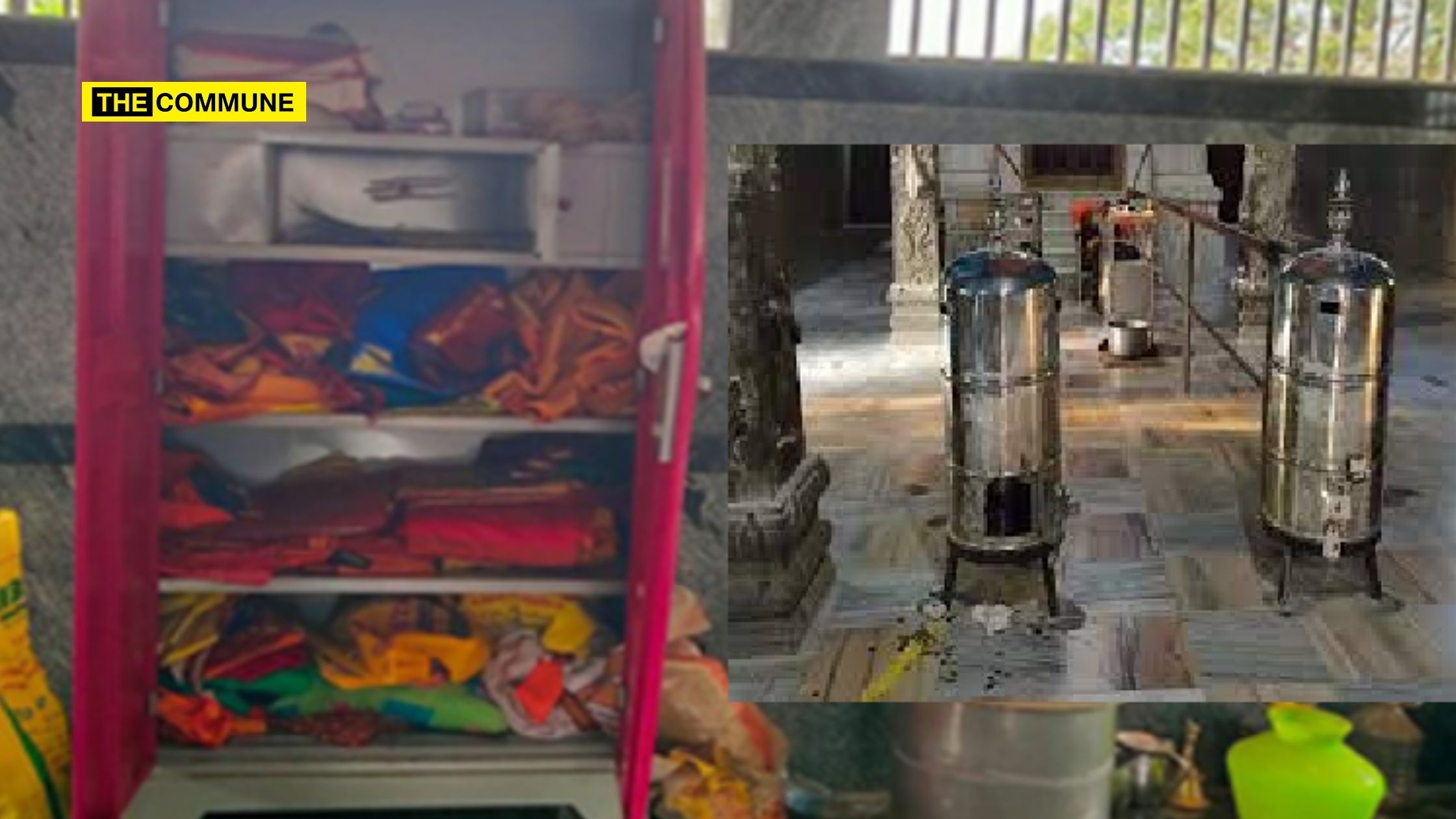
Miscreants targeted the Perumal temple near Avinashi, in Coimbatore, Tamil Nadu, breaking open its lock and making off with the funds from the hundi. The incident marks the latest in a series of temple-related crimes, with perpetrators attempting to rob the nearby Angalamman Makaliamman temple, the Pechi Amman temple, and the Tuluka Muttur Makaliamman temple.

The audacious thieves resorted to a brazen attempt at the Tuluka Muttur Makaliamman temple, using a soolayudham (spear) to break open the door. Fortunately, their plan was foiled as the tool became lodged in the door’s lock. Law enforcement is actively pursuing the culprits involved in these four temple incidents.

State president of Hindu Munnani, Kadeshwara C Subramaniam, issued a statement denouncing the rising tide of temple thefts. In his statement, he stated, “Over the past three years, incidents of temple thefts and vandalism have become distressingly commonplace, leading to growing concerns among the public.

The statement said, “The Hindu Religious and Charitable Endowments Department, tasked with safeguarding temples, is facing criticism for its perceived failure to enhance security measures. Private temples, too, have fallen victim to thefts, and the perpetrators often elude capture, leading to mounting frustration among devotees.

Recent instances of temple desecration further underscore the urgency of the situation. A disturbing incident on May 2023 saw an individual overnight at a major temple in Avinashi damaging the statue of 63 Nayanmars, branding him a psychopath by authorities.

The situation is not isolated to Avinashi; the Koniamman temple in Coimbatore fell prey to a hundi theft six months ago. Smaller temples are also grappling with security challenges, exemplified by the damaged statue of the Siruvachur Periyasamy temple on December 10.

The lack of police action in response to the damaged temple idols is unsettling. Authorities have attributed some instances to natural causes, such as rain, raising doubts about the effectiveness of temple protection.

The overall security apparatus in many Tamil Nadu temples is insufficient, leaving devotees in a state of shock. Questions are being raised about the commitment of the Hindu Religious and Charitable Endowments Department to temple safety, especially as reports of temple demolitions under the Dravidian model of rule persist.

The demolition of the 400-year-old Ammaniammal Mutt in Thiruvannamalai, coupled with ongoing injustices within the same temple, highlights the broader challenges faced by temples. The Hindu Munnani movement is calling for immediate action from the DMK government to safeguard temples and ensure stringent legal consequences for those involved in temple crimes.”

Police are on the lookout for individuals who stole money from the Perumal temple. Dinamalar reported that miscreants attempted to steal from three nearby temples, including the Angalamman Temple and MakaliAmman Temple (mentioned above) owned by the Hindu Charities Department in Avinasi Union, Madhucherry Panchayat. Another target was the privately owned Pachayamman temple in the vicinity.

Subscribe to our channels on TelegramWhatsApp, and Instagram and get the best stories of the day delivered to you personally.
DMK Minister Ponmudy Sentenced To 3 Years Jail In Corruption Case

Feature Image Courtesy: Vikatan

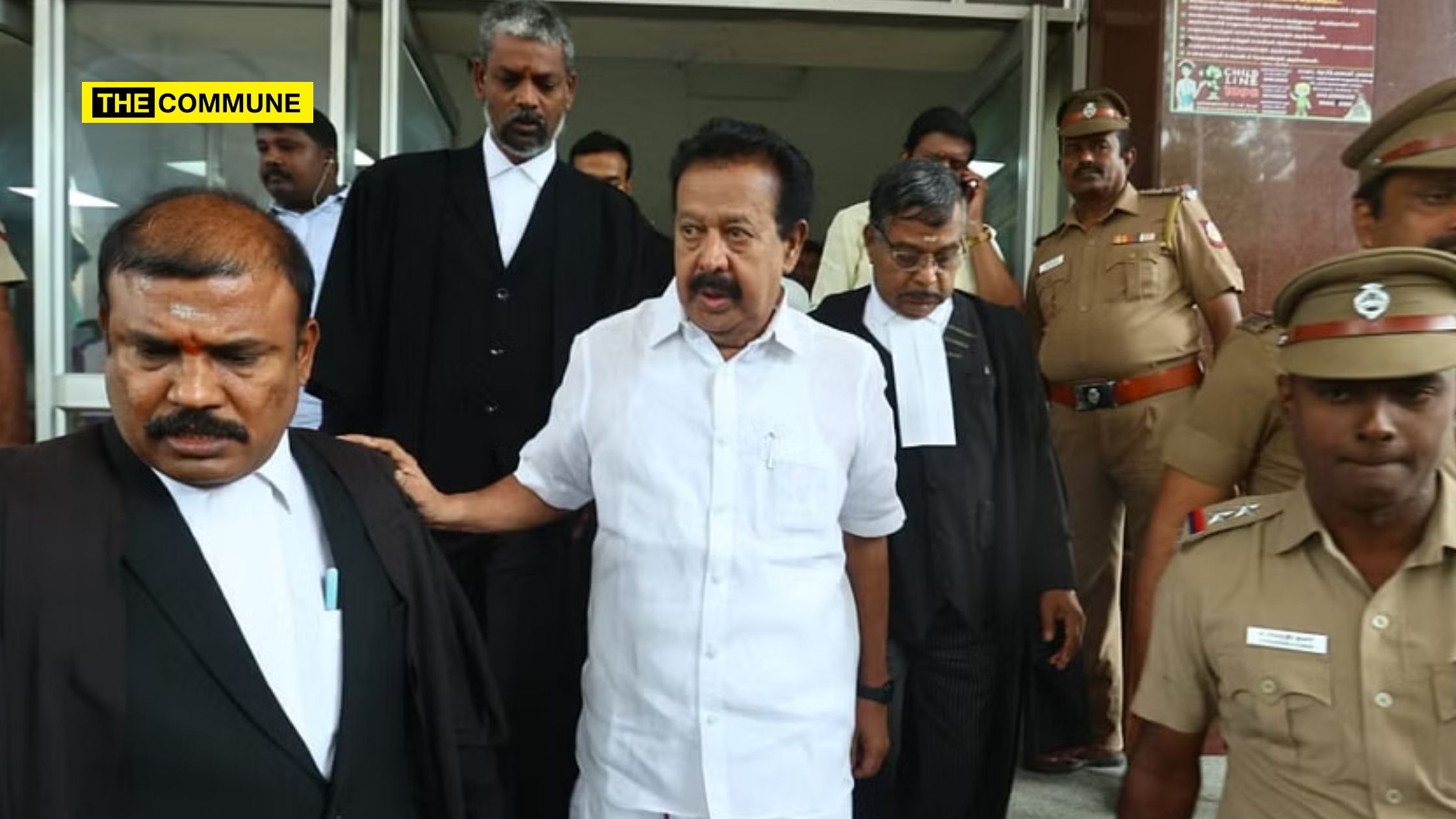
On Thursday (21 December 2023), the Madras High Court sentenced DMK minister K Ponmudy to three years in jail in a corruption case. A fine of ₹50 lakh has also been imposed on him However, he is not required to surrender immediately, as his jail term has been temporarily suspended for 30 days, providing him an opportunity to appeal his conviction in the Supreme Court.

Earlier on Tuesday (19 December 2023), the Madras High Court overturned a trial court’s decision to acquit DMK Minister for Higher Education K Ponmudi in the disproportionate case initiated against him.In response to an appeal by the Directorate of Vigilance and Anti-Corruption (DVAC), Justice G Jayachandran, determined that the DMK minister had accumulated assets exceeding his known sources of income by 64.9% during his tenure as Minister for Mines and Minerals in the DMK government from 2006 to 2011.

In 2016, a special court under the Prevention of Corruption Act (PCA) had acquitted Ponmudi and his wife P Visalatchi in the disproportionate assets case, initiated by the DVAC after the AIADMK assumed power in 2011.

The acquittal was based on the prosecution’s failure to establish the charges beyond a reasonable doubt. Challenging this acquittal, the DVAC filed an appeal in 2017 before the High Court, alleging that the DMK leader had amassed ₹1.36 crore in assets disproportionate to his known sources of income.

Subscribe to our channels on TelegramWhatsApp, and Instagram and get the best stories of the day delivered to you personally.

Lok Sabha Passes Bills To Replace IPC, CrPC And Evidence Act

Feature Image Credits: IASExam.com

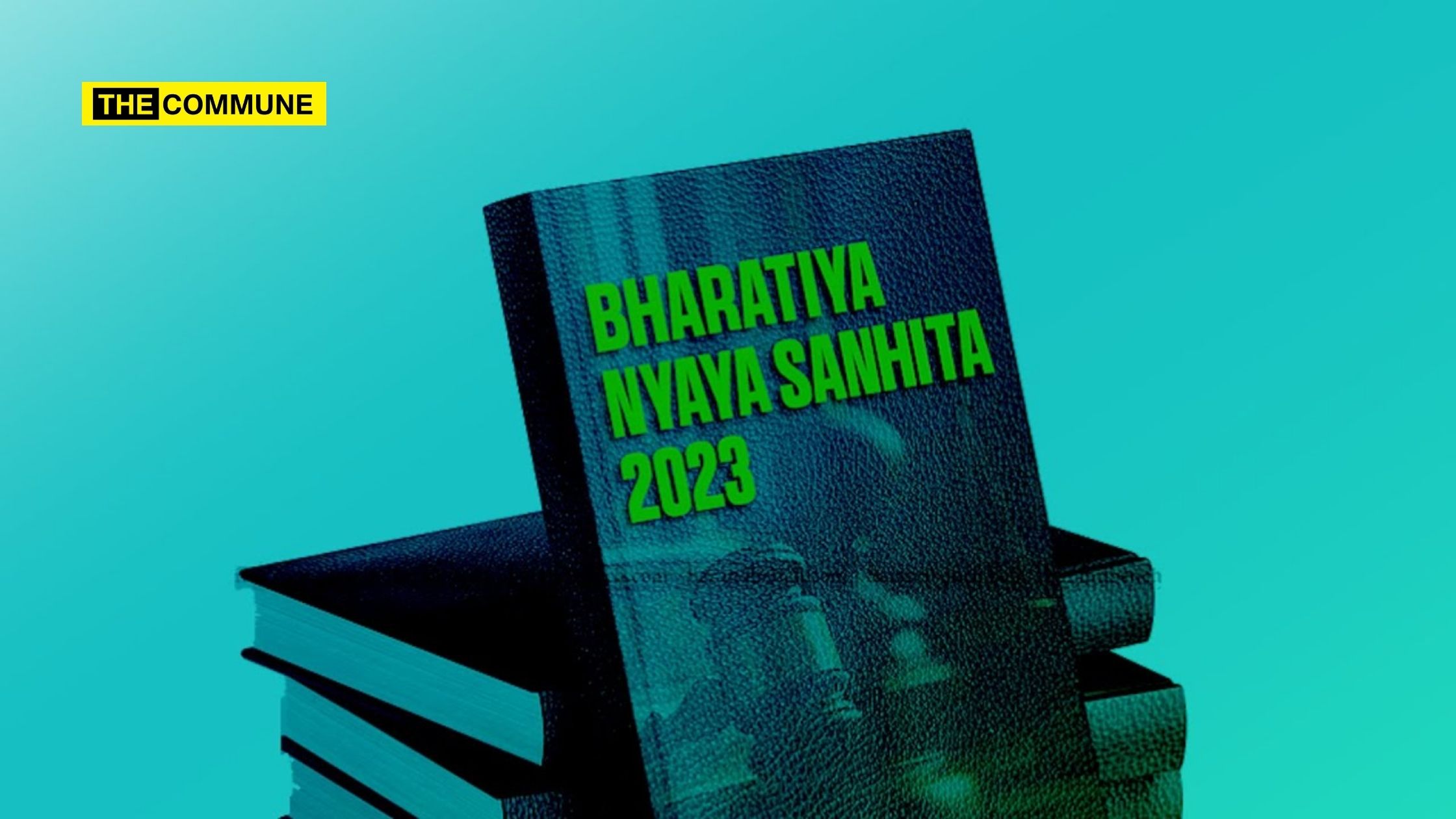
Presented in Parliament on December 12, the three revised bills, incorporating suggestions from a parliamentary committee, were successfully passed in the Lok Sabha through a voice vote on Wednesday. These bills, namely the Bharatiya Nyaya (Second) Sanhita, Bharatiya Nagarik Suraksha (Second) Sanhita, and the Bharatiya Sakshya (Second) Bill, are set to replace the colonial-era criminal laws—the Indian Penal Code (IPC), 1860; the Code of Criminal Procedure Act (CrPC), 1898; and the Indian Evidence Act of 1872. Initially introduced by Union Home Minister Amit Shah last week, a discussion was delayed due to the opposition’s focus on the Parliament security breach.

During the parliamentary debate on the bills, Shah emphasized that the existing criminal laws reflected a colonial mindset focused on punishment rather than justice. He asserted that the proposed laws aimed to establish a justice system rooted in Indian principles, aiming to free people from colonial influences.

The bills were discussed in the Lok Sabha on December 19, with some Members of Parliament stating that they would provide justice instead of mere punishment. However, others pointed out perceived “loopholes” in the proposed legislations that could grant discretionary powers to enforcement agencies.

A parliamentary standing committee on home affairs, led by BJP MP Brij Lal, had previously recommended changes to the bills, which were originally introduced in August. Dissenting notes from opposition members led to the withdrawal of the initial bills, and the redrafted versions were introduced earlier this month.

During the parliamentary debate, former Law Minister and BJP leader Ravi Shankar Prasad highlighted that the new bill reduced the number of sections from 511 to 356 in the IPC. While 176 sections were completely altered, eight new sections were added, and 22 sections were removed.

Concerns were raised by some MPs about perceived ambiguities in the sedition clause, suggesting that it could grant discretionary powers to enforcement agencies in interpreting terms like “separatist activities.” This, they argued, might be exploited as a political tool to suppress opposition parties protesting government policies.

The Bharatiya Nyaya Sanhita (BNS) is set to become the primary legislation governing criminal offenses, preserving certain sections of the IPC while excluding specific violations invalidated or modified by judicial rulings.

The new legislation introduces provisions for videographing search and seizure operations, defines terrorism, rationalizes remissions, and includes provisions for crimes related to murder based on race, caste, or community, with penalties ranging from seven years’ imprisonment to life imprisonment or death penalty.

The bills also aim to modernize language, removing colonial terms that have persisted post-independence. Electronic and digital records, as well as email and locational evidence, will be used to address challenges in the criminal justice system.

The bills received input from 18 states, six union territories, the Supreme Court, 16 high courts, five judicial academies, 22 law universities, 142 MPs, IPS officers, and state and central forces. The proposed legislation also aims to digitize the entire legal process, including the issuance and servicing of summons and warrants.

The motivation behind introducing these bills, according to officials from the Ministry of Home Affairs, is to address the “colonial imprint” on the criminal law process in India. The outdated British laws, enacted 160 years ago, prioritized protecting British interests over human rights, leading to complex procedures, high case pendency, delayed justice, and various socio-economic issues in the country.

Subscribe to our channels on TelegramWhatsApp, and Instagram and get the best stories of the day delivered to you personally.
TN Police Summons Journo Abhijit Majumder For The Second Time For His Article Criticising Udhayanidhi Stalin’s Comments On Sanathana Dharma

A few months ago, journalist Abhijit Majumder became the focal point of scrutiny by the Tamil Nadu Police. The law enforcement authorities went as far as reaching out to a media house in Noida, actively seeking Abhijit without the issuance of any prior summons. On the morning of 30 September 2023, Abhijit Majumder took to his social media platform, X, to share a disconcerting incident.

In an X post today (20 December 2023), Abhijit updated that he had been summoned by the Tamil Nadu police for the second time to Chennai, having already attended the first summons. Notably, this action came after an FIR was filed in September and four Tamil Nadu police officers were dispatched to Noida in search of him.

This police action against freedom of speech is a result of a piece authored by Abhijit in early September 2023 for FirstPost. In his analysis, he delved into the political implications of a controversial speech delivered by Udhayanidhi Stalin, the son of Tamil Nadu Chief Minister MK Stalin.

What Was The Article About?

Abhijit Majumder’s FirstPost article delves into the potential unintended consequences of Udhayanidhi Stalin’s contentious speech, suggesting that it might have inadvertently favored the Bharatiya Janata Party (BJP) in Tamil Nadu. The analysis, titled “Udhayanidhi Stalin’s call for Hindu genocide does BJP a big favour in Tamil Nadu,” seems to have sparked displeasure within the Tamil Nadu government, with the term “genocide” emerging as a focal point of contention.

In the article, he also wrote, “Udhayanidhi Stalin’s message has also gone out loud and clear. The innate bigotry and violence of it may gladden many of his supporters, but it will also polarise and consolidate votes against him,”.

“His own mother is a devout, practising Hindu. In that sense, his rant is not just anti-Hindu and anti-Bharat, but it is also in a sense matricidal. The DMK may not be able to live it down,”, he wrote further.

What Did Udhayanidhi Stalin Say At The Conference?

To provide context, in September 2023, Udhayanidhi Stalin addressed the Tamil Nadu Progressive Writers and Artists’ Association’s conference titled “Eradicate Sanathana Dharma Conference.” During his speech, he made incendiary remarks, stating, “The title of this conference has been excellently coined. You’ve named it ‘Abolish Sanatanam Conference’ and not ‘Oppose Sanatanam Conference’, so my best wishes to that.” He compared Hinduism to mosquitoes and diseases like dengue, flu, malaria, and coronavirus, asserting that these aspects should not be opposed but entirely eradicated. Udhayanidhi Stalin further criticised the concept of Sanatan Dharma, describing it as being opposed to equality and social justice. He questioned the meaning of “Sanatanam” and labelled it as something that cannot be changed or questioned.

He said, “Mosquitoes, dengue, flu, malaria, corona – we should not oppose these things. They’ve to be eradicated completely. The same is the case with Santanam (Hinduism). Our first work should be to abolish/eradicate Sanatanam instead of opposing it. So, my appreciation to you all for giving an apt title to the meeting“.

He also further went on to say, “What is Sanathanam? The name Sanatanam itself comes from Sanskrit. Sanathanam is opposed to equality and social justice. What is the meaning of Sanatanam? Eternal or something that can’t be changed. Something that can’t be questioned. That is the meaning of Sanatanam.”

Subscribe to our channels on Telegram and WhatsApp and get the best stories of the day delivered to you personally.
BJP TN Functionary Booked For Social Media Post Against DMK MP Gets Anticipatory Bail

The Madurai Bench of the Madras High Court on 20 December 2023 granted anticipatory bail to Pravin Raj, a Tamil Nadu BJP social media functionary who was booked for a social media post targeting Dharmpuri DMK MP Senthilkumar over the recent Parliament security breach incident.

A political activist and the social media in-charge for Bharatiya Janata Yuva Morcha (BJYM) Tamil Nadu had posted on his X “#SecurityBreach happened in Loksabha you know why? Because of irresponsible MPs like you were distributing “Visitor passes” via social media for publicity and without background verification. Take responsibility on this #ParliamentAttack; don’t blame. @DrSenthil_MDRD

Pravin Raj posted this on social media on December 13, 2023, but eventually removed it due to its widespread attention.

He was booked under sections 504 (deliberate insult to incite a breach of peace), 505(1)(b) (intent to instill fear or alarm among the public, possibly resulting in offenses against the State or public tranquility) of the Indian Penal Code (IPC), and section 66 (computer-related offenses) of the Information Technology (IT) Act.

The FIR was initiated by the Trichy Cyber Crime Police station in response to his tweet.

While Pravin Raj didn’t explicitly mention that DMK MP Senthilkumar was responsible for the Parliament attack, his comments were construed as attempt to spread fake news against the legislator.

He filed an anticipatory bail petition with the Madras High Court, Madurai Bench. The case, listed as item No.78, was heard on 20 December 2023 by Hon’ble Mr. Justice V. Sivagnanam.

Following arguments from both parties, the Hon’ble Court granted anticipatory bail on one’s own surety without imposing any conditions.

Subscribe to our channels on TelegramWhatsApp, and Instagram and get the best stories of the day delivered to you personally.