Home Blog Page 815

The BJP’s 2024 Strategy For The Telugu States
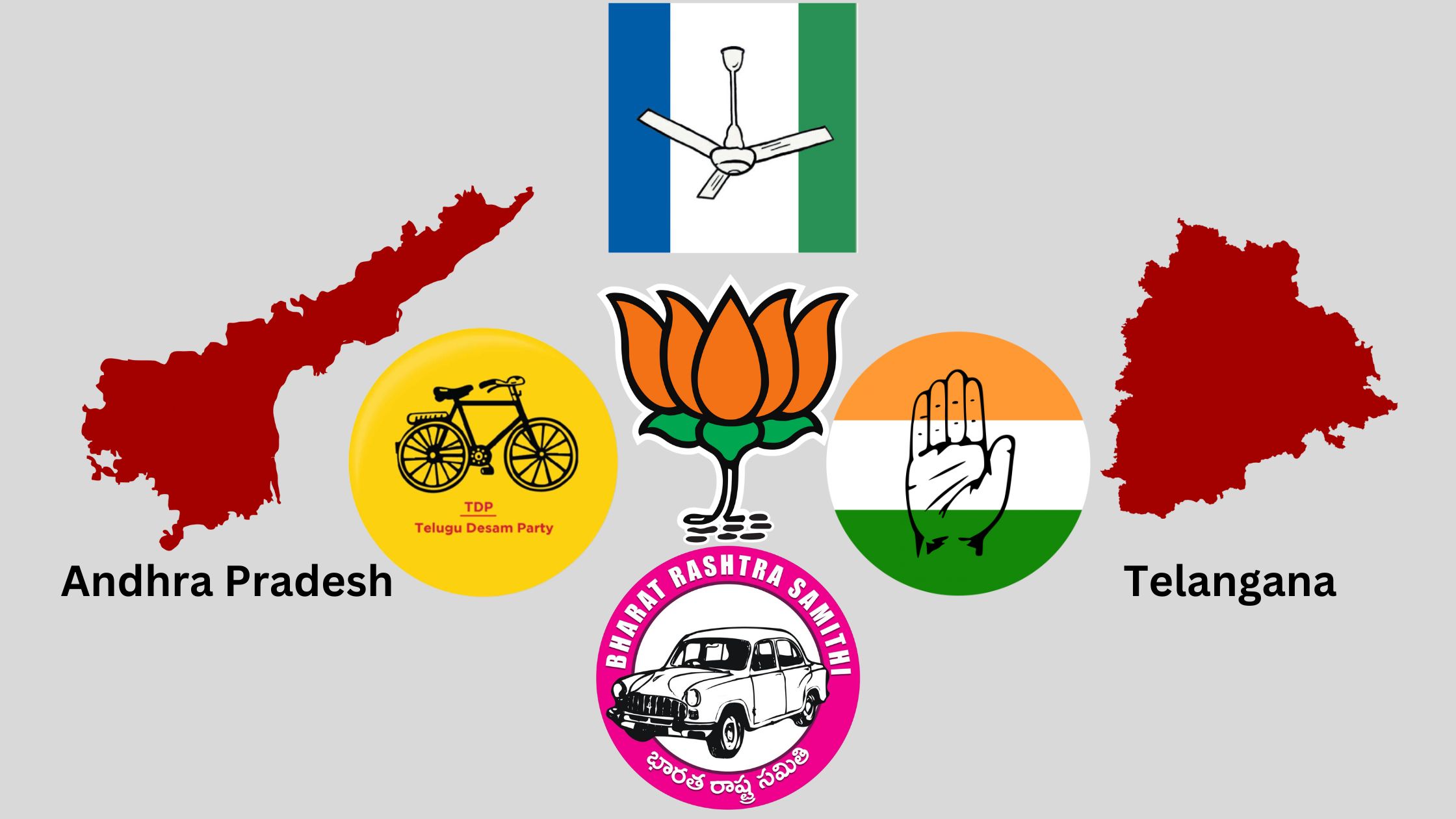
The BJP’s electoral strategy for the Telugu states of Andhra Pradesh and Telangana is an interesting mix of tact and compromise while maintaining its own distinct identity and position, in terms of what it stands for – a blend of Indian cultural pride reflecting the nation’s past and the right economic decisions reflective of the nation’s futuristic ambitions.

In both Telangana and Andhra, the BJP has a comfortable relationship with the current party leaders in power – the Congress’s Revanth Reddy and the YSRCP’s Jagan Reddy respectively. Its election strategy in both states is not one of confrontation with the current leaders. The BJP’s strategy appears to be one of reasonable understanding and agreement with the regional powers when and where possible, thus enabling an amicable working relationship beneficial to both the BJP and the state government. It will help the BJP grow its presence in these states slowly but steadily while also ensuring that the elected state governments do not oppose certain central government policies, just for the sake of opposing.

The current Chief Minister of Telangana, Revanth Reddy is an ex-BJP (youth leader) and ex-TDP leader. Revanth chose the Congress party instead of the BRS party, after certain circumstances forced him to resign from the TDP party in 2017. TDP’s Chandrababu Naidu had mentored him in the early days of his political career and Revanth continues to respect the senior leader.

He is reputed to maintain good relations with leaders of both the TDP and the BJP across the Telugu states. Many in the Telugu states, see his presence in the Congress party as one of “fate”, due to certain political circumstances.

Revanth had to fight an uphill battle to be accepted by the old guard of the Congress party and still faces opposition from several senior Congress leaders, although they have grudgingly accepted him after his significant contribution in helping the Congress win the closely contested 2023 elections, narrowly by four seats over the majority number. Post the recent electoral victory for the Congress in Telangana, it has often been said that the people had voted against the second-term incumbency of the BRS and for Revanth Reddy, the ex-TDP leader that they were already familiar with…it was not necessarily a vote for the Congress party.

As the current Telangana chief minister, Revanth seems to have gotten off on the right foot with his ex-party, the BJP. He appears to maintain cordial relations with the BJP’s top leaders, apart from enjoying a longstanding relationship with the TDP leadership as well. The BJP’s relationship with the previous BRS government in Telangana and its leader, Chandrasekar Rao was more complicated and prone to mistrust.

In Andhra Pradesh, the BJP enjoys external support from the incumbent Chief Minister, Jagan Mohan Reddy of the YSRCP party, an off shoot of the Congress party. The BJP and the YSRCP have a straight forward, business relationship based on the mutual benefits they agree upon, at the state and central levels. However, their political relationship is rather awkward as their ideologies are drastically different. The YSRCP being an off shoot of the Congress swears by a socialist, leftist agenda consisting of a disproportionately large number of welfare schemes, talks about “secularism” and indulges in typical minority appeasement policies. In addition, Jagan Reddy’s family are converted Christians and he is a chief minister on bail from a Hyderabad-based central jail.

Jagan continues to receive regular summons from both the CBI and the ED on a large number of financial and criminal cases, many of which the investigative agencies have been able to prove beyond reasonable doubt. It is well known in the Telugu states that Jagan Reddy would lend unconditional, unquestioned support to whichever party was in power at the Centre, as it would help him postpone his trial and the legal proceedings of his numerous court cases. Of late, Jagan and his party seem to be running out of luck, as most analysts do not predict positive results for him in the 2024 state elections.

Regardless of which party comes to power in A.P this year, the BJP is still in a favorable position in Andhra, as the main opposition party touted to have an electoral advantage in the upcoming elections, the TDP, is ready to extend support to them at the Centre. The TDP and BJP were previously allies and pre-poll electoral partners for the 2014 state elections. The TDP had won the elections that year but it’s relationship with the BJP turned sour over the issue of a special status for the newly divided state, including a purported financial package. The BJP is on good terms with the JSP party as well, which is currently working together with the TDP party for the 2024 elections.

The BJP’s strategy in the Telugu states accompanied by the reciprocation of the state governments and regional leaders, is in stark contrast to its position in the other three South Indian states. The current governments in Tamil Nadu, Karnataka and Kerala, spar with the BJP quite openly and show an irrational persistence in opposing almost every BJP policy at the central and state levels. This type of constant, vehement opposition to everything the BJP proposes, is an indication of the high levels of political insecurity that the regional leaders of these states feel at the growing presence and popularity of the BJP, among the Hindus….the single, largest voting block in the country, that all the self proclaiming national “secular” parties and most regional parties have woefully ignored, for decades.

In response to the often unreasonable attitude of the national and regional parties in Tamil Nadu, Karnataka and Kerala, the BJP leaders in these states do not hesitate to confront the regional governments and leaders, over their differences of opinion. The BJP in these states, stands its ground and is quite vocal about challenging the policies of Tamil Nadu’s DMK party, Karnataka’s Congress and Kerala’s LDF.

The twin Telugu states appear to be an exception in the South, for the BJP. While they continue to grow their presence in both states, they continue to strive for a friendly “working” relationship with all parties in both states regardless of ideological or political differences with the regional leaders of Andhra and Telangana reciprocating positively to the BJP’s balancing act between political tact and the promotion of its own regional goals.

In contrast, the BJP’s political issues in the other three South Indian states of Tamil Nadu, Karnataka and Kerala are entirely different, more aggresive and far more confrontational in nature. Further more, each state presents a unique challenge and entirely different dynamic. The party’s strategy of maintaining cordial relations with the opposition’s “friendly” leaders as well leaders of regional parties via some old fashioned diplomacy and a reasonable, mutually beneficial “give and take” policy in the Telugu states…. may not work in the other three south Indian states, each for its own unique reason!

Shivani is a freelance writer.

Subscribe to our channels on TelegramWhatsApp, and Instagram and get the best stories of the day delivered to you personally.
Disrupting Dravidian Model: 2026 Will Be The Year For Annamalai And Vijay

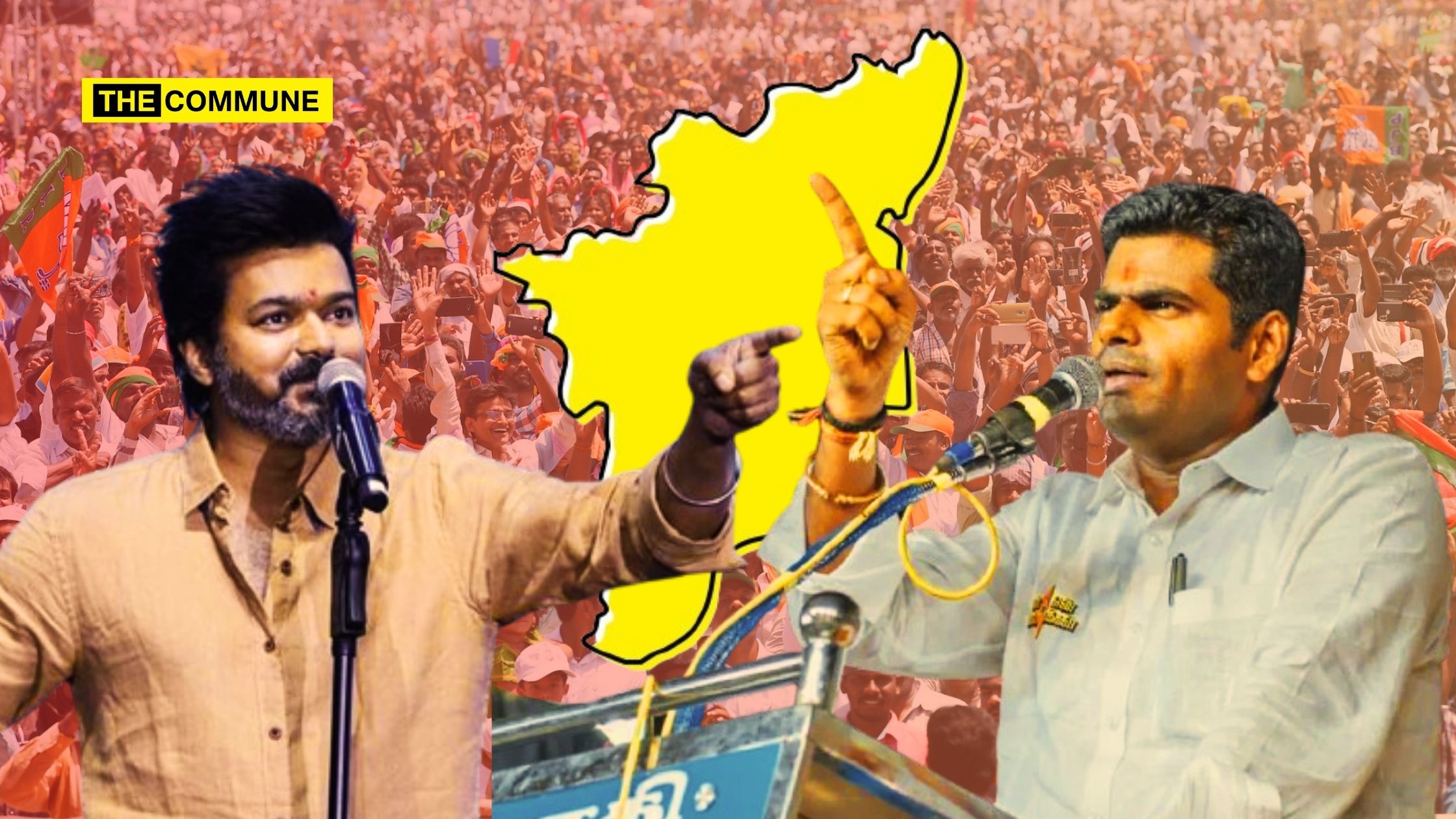
Actor Joseph Vijay finally took his leap into politics by formally announcing his new party Tamizhaga Vettri Kazhagam. Assuming he will not backtrack like Actor Rajinikanth did after dragging his feet for so many years and giving hope to the people of Tamil Nadu, Vijay will work very seriously in establishing his party organization for the next two years to be ready for the fight in 2026.

If we have to go with pure logic and if Vijay is serious in building his party to be a power to reckon with in Tamil Nadu in the future, he will have to take on the DMK and the issues he probably will raise are rampant corruption, poor administration, lack of good education, lack of real social justice and so on. The fact that he has named his party as a Kazhagam gives us a hint that he will also play the Dravida politics but with a modern tinge to it that youth will relate to. Consequently, he has to attack the DMK in which case he will have to share the political space with Annamalai’s BJP and AIADMK. The DMK will then have three rivals to deal with instead of just the one earlier which was the AIADMK. This will be very uphill task for the DMK which will be at that time mostly be led by the younger scion of their family, Udhayanidhi Stalin, going by the way he is already being projected as a Deputy CM probable. If Vijay like the other small parties like Kamal Haasan’s, ties up with the DMK, his party will be limited to a 4 seat party throughout which I don’t think he has entered for politics for. Therefore, it is a 90% probability that he will be an opponent to the DMK in the 2026 elections.

Going with the above inference, the two youngsters, Annamalai and Vijay will capture lot of the public mind space running up to 2026. Both will represent a change in the Tamil Nadu politics which Tamil Nadu people have been longing for so many years. Annmalai will represent double engine Sarkar led by Narendra Modi who is all set to come back as PM in 2024. He will also work towards Hindu consolidation, corruption-less clean politics, exponential development of Tamil Nadu, nationalism (desiyam). Minorities especially the Muslims and Christians will still shy away from BJP. A part of the DMK Christian votebank will not mind moving towards Vijay who will represent progressive and youthful Dravidam and AIADMK will eat into a part of the DMK’s Muslim vote bank. My guess is all these parties will not come together before the 2026 elections as they will all be most effective that way and based on results can come together post polls to form the government. Based on these dynamics, it is clear that the DMK’s chances to form a government in 2026 look bleak given Tamil Nadu already seeing a strong anti-incumbency as accepted by even some DMK leaning political analysts in around 3 years of the DMK rule.

If the Tamil Nadu youth has to choose between Annamalai, Vijay and Udhayanidhi they will most probably go for the former two as Udhayanidhi will find it very hard to shrug off his dynastic politics image in their eyes as well as he will not look that formidable pitted against Annamalai who has already proved his intellectual strength through his excellent oratory skills and has already captured the imagination of lot of the youth in Tamil Ndu and pitted against Vijay’s superstar image which the youth love. It is going to be tough times for Udhayanidhi running up to 2026 unless he comes up with something really different and eye catching. They don’t also have a Prashant Kishor now top help them as he has moved out of his political strategist work and is fighting his own battle in Bihar. Given these circumstances, the DMK might dump Congress and try wooing BJP but I don’t think BJP should tie up with DMK in which case all the hard work that Annamalai and team have put in so far will go down the drain.

I would like to reiterate that all the above are just my personal views on how the scenarios might look like with Vijay’s advent to politics. Whatever, I mentioned above might not even happen at all as in politics any unimaginable thing can happen and no one can predict for sure. However, one thing I can tell for sure is that Tamil Nadu will see drastic political changes in 2026. Annamalai and Vijay will be the disruptors and will shape the future politics of Tamil Nadu. Tamizhagam will emerge as the eventual winner and will prosper which is what nation loving people like me are excited about.

Jai Hind and Jai Shri Ram!

Ananth Mahadevan is a political commentator based in Bengaluru.

Subscribe to our channels on TelegramWhatsApp, and Instagram and get the best stories of the day delivered to you personally.
Video Of Dancers Dancing To ‘Item Song’ At Mylapore Kapaleeshwarar Temple Sparks Outcry, Dancers Apologize

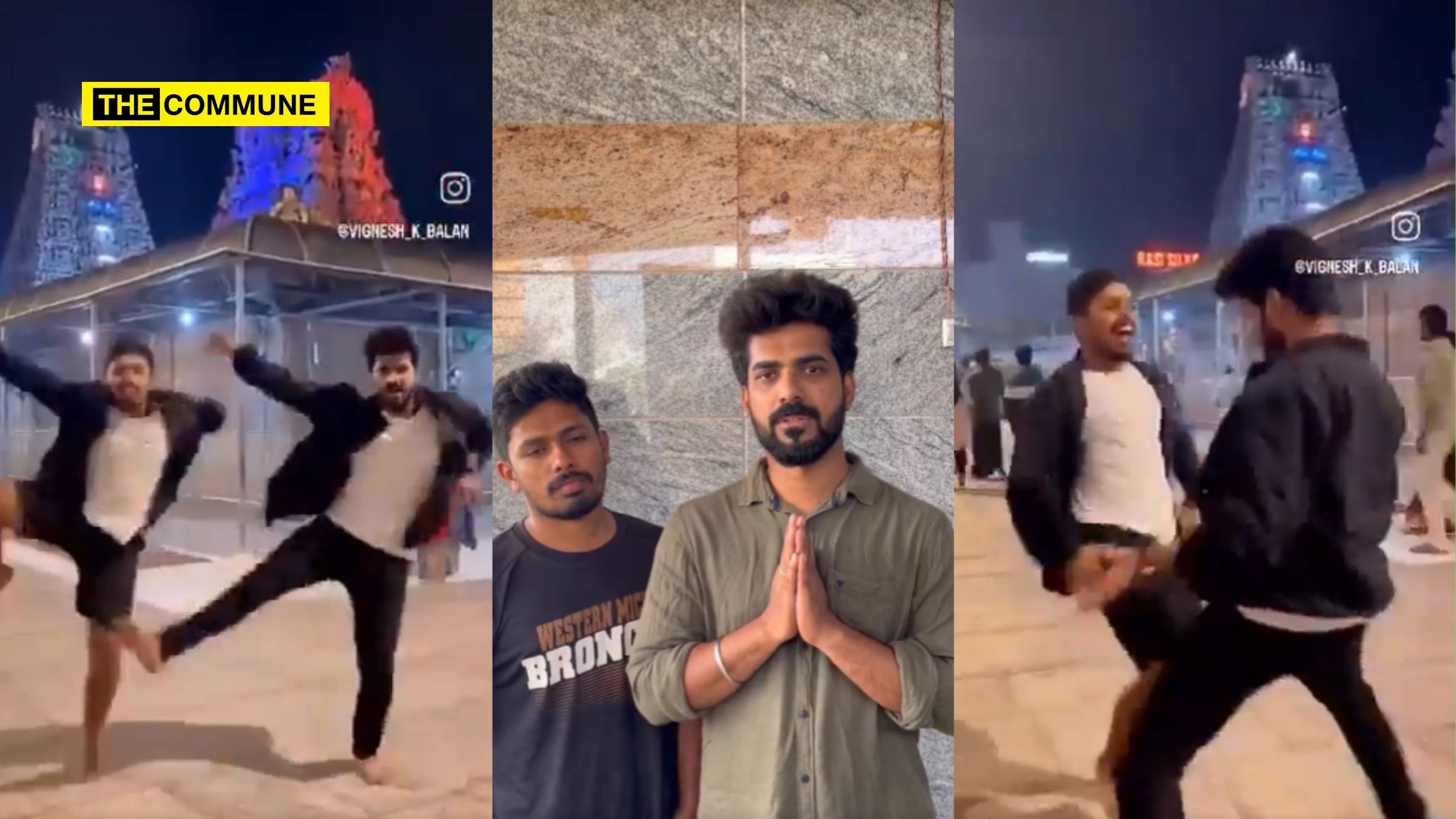
A recent viral dance video, which gained popularity on social media, featuring two dancers performing at the Mylapore Kapaleeshwarar temple in Chennai, has sparked controversy, drawing the attention and concern of spiritual seekers and Hindu organizations. Strong criticism were directed towards both the dancers and the DMK Minister of Hindu Religious & Charitable Endowments department, PK Sekar Babu.

The video went viral under the name Vignesh K Balan, a choreographer, dancer, and YouTuber who performed the dance with another guy to the song “Mylapore Mayile,” an item song from the movie Aai.

In a recent significant ruling by the Madurai Bench of the Madras High Court, it emphatically stated that “a temple is a place of worship, not a picnic spot“. Consequently, the act of dancing in trousers within the confines of a place of worship was distressing to the believers.

The official handle of Indu Makkal Katchi stated that they will file a complaint against the two dancers featured in the video. They also raised concerns about the DMK government’s refusal to live telecast Ram Mandir consecration in Tamil Nadu temples and questioned whether playing item songs and dancing for it is permissible.

An internet used expressed dissatisfaction by messaging Vignesh K Balan on Instagram, questioning why he appears biased by showcasing only Hindu temples. The user urged him to promote equality by also featuring dance performances in churches and mosques.


Another online user remarked that Sekar Babu seems to be consuming the proverbial mixture (savoury) suggesting that he is sitting idle like a doll with no activity.

Another online user sarcastically commented with a video featuring Chief Minister Stalin proclaiming, “This is only DMK, this is only DMK. Do not forget that. To those who are asking what is Dravidian model? The answer is this“.

After the video became viral, Vignesh posted a video issuing clarification while also apologizing for the act.

According to Vignesh, the video shot at the premises of Mylapore Kapaleeshwar Temple was posted by him on his social media last December.

We went to the Mylapore Kabaleeswarar Temple last December. We made a dance video there. I had posted that video in December. From yesterday we started getting lots of comments on that video. When we saw, we came to know that the video had reached the people in a wrong sense and immediately I deleted it. In Twitter also we saw and it has got projected very differently. Henceforth, we won’t make such videos. We won’t do such dance videos for songs like that in the temple. It’s entirely our mistake. We accept it. Because of us, the temple management and HR&CE department would’ve got problems. We apologize to them. I also ask sorry to those who have been offended on seeing that video. I will ensure that such instances won’t happen in the future.”, Vignesh said in an X post tagging the Tamil Nadu HR&CE department.

https://twitter.com/Vicky_offi/status/1754063669565227495

It is noteworthy to mention that in November 2023 Hindu Munnani activists and Yadav Maha Sabha members were apprehended by the police when they tried to offer prayers withe a supplication to God over the state of affairs in Tamil Nadu. Hindu Munnani activists led by Chennai City President AT Elangovan were prevented by the police when they were chanting Om Namah Shivaya and circumambulating the temple.

Subscribe to our channels on TelegramWhatsApp, and Instagram and get the best stories of the day delivered to you personally. 
Kerala Media Academy Honours Al Jazeera Journalist; Netizens Remind How Kerala CM Edited His Post Mourning Death Of Nurse After Hamas Attack

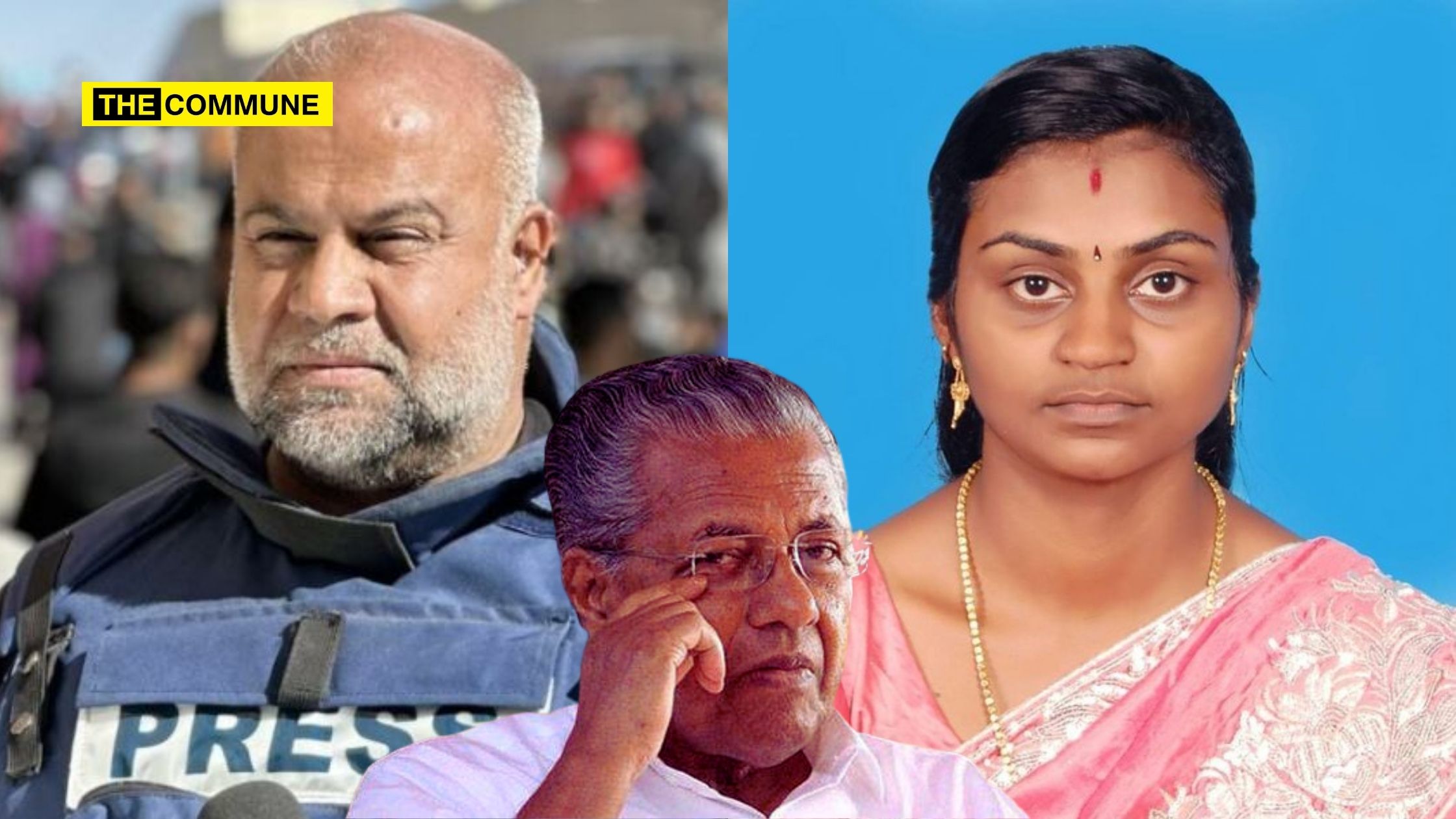
The Kerala Media Academy, a state-run higher education institution, has named Al-Dahdouh, the Gaza Bureau Chief of Al Jazeera, as the ‘Mediaperson of the Year.’ 

The selection of Al-Dahdouh was based on recommendations from the Investigative Journalists Association and the Editorial Board of Media Magazine’, according to a press release from KMA.

Al-Dahdouh, who lost his wife, two children, and a grandchild in an Israeli bombing of Gaza, was also injured and is currently undergoing treatment in a hospital in Qatar. Additionally, he also lost his cameraman to an Israeli missile attack.

The award, including a cash prize of ₹1 lakh, a citation, and a sculpture, will be presented by Chief Minister Pinarayi Vijayan, as announced by the KMA. Expressing his gratitude, Al-Dahdouh considered the award an invaluable honour.

Contrasting the recent recognition, two years ago, a Malayali nurse named Soumya, working in Israel, lost her life to a missile fired by the Palestinian terror organization Hamas. The response from the Kerala Chief Minister at that time has drawn attention.

Initially expressing sorrow for Soumya’s death, the Chief Minister later edited his Facebook post, removing the sad portion and replaced it with a new message. This move resulted in criticism for not strongly condemning the incident promptly or announcing relief funds for the deceased Soumya’s relatives.

Critics argue that the award bestowed upon Al Jazeera’s Gaza Bureau Chief, Wail Dahdood, raises discussions on the response of the Kerala government during the earlier tragedy and highlights concerns about the influence of minority votes and appeasement politics in the state.

Subscribe to our channels on TelegramWhatsApp, and Instagram and get the best stories of the day delivered to you personally.
The Divine Embrace Of Ram Lalla: My Euphoric Experience Of The Pran Prathistha Ceremony In Ayodhya

How Ram Mandir Pran Prathishta Has Changed The Fortunes Of Ayodhya

A birth is a time for celebration. The birth of a king, even more so. How about the birth of a God? Throughout the world, many civilisations have celebrated the birth of their Gods and the places they were born. That is also the story of Bhagavan Shri Rama and his Janmabhoomi (birthplace).

I was blessed with an invitation to the Pran Prathistha on the twenty-second of January. My initial astonishment at this blessing soon gave way to a festive mindset and by the time I started my journey from Chennai, I was in a full-blown celebratory mood. The saffron-clad sadhus who were my co-passengers, the numerous cutouts of Prabhu Rama in public spaces and the auspicious greeting of “Jai Shri Ram” that echoed in all conversations, bloomed a Diwali-like feeling in me. By the time I reached the welcoming arches of Ayodhya in the early hours of the day before the consecration, I was all but shaking with excitement.

As the fog gave way to the morning, the garlanded roads of the city, the bells from early morning darshan, and the smell of sweet tea from roadside chaiwallas greeted me with a joyful energy. Smiles and laughter hung on every single face. String lights and saffron flags hung from every single building. The soulful sounds of bhajans like “Ram Ayenge” reverberated through the air. My heart felt full and my feet light even as I lugged my duffle bag through little side streets to a small guest house; one of many which had opened the previous month in anticipation of the flood of devotees.

My first point of call was to the Janmabhoomi itself. I knew it was closed and in preparation for the next day’s events, but I had to go see for myself that place which so many had celebrated and sacrificed for. I wasn’t alone in my curiosity; hundreds had decided to visit the Janmabhoomi despite it being closed. We all stood together outside the gates and gazed up at florists busily hanging flower arrangements in place and awed at the expanse of the new driveway, the “Janmabhoomi Path”, that led up to the temple. Security personnel gazed back at us, their presence a grave reminder of what had passed before on this land. Unfortunately, Ayodhya which means “a place of no war” has witnessed much conflict. Countless souls have helped to carve a way for the events the next day. Some had moved pebbles, others mountains; they had tirelessly kept moving the issue for five hundred years and that is all we needed for the chance of a breakthrough: the chance for tomorrow.

But where was the temple? However much I craned my neck, I couldn’t spot the temple, not its capstone nor the sparkle of a flagstaff. As I walked away from the mass of people, I laughed at my own childish disappointment: our civilisation had waited a half millennia for this temple, and I could not wait for tomorrow!

Rama’s most ardent devotee can be found at the Hanuman Garhi Temple, a mere five-minute walk from the Janmabhoomi and that is where I headed next. The space was electric. Fellow devotees thronged the forecourt at the base of the temple. They welcomed us with Chandan and Kumkum, and friendly police officers guided us up the steps to the temple. As I squeezed through the crowds, it dawned on me how minuscule I was in the big picture. The bhaktas around me were the ones who kept Rama in their hearts, who fought for Rama, and for whom Rama was everything. I could see a unified spirit of fulfilment rising amongst the crowd even as they jostled each other around. Was it a coincidence that I felt this boundless devotion for Rama and all his followers at a Hanuman temple? Or was this what everyone was feeling? Affection for a stranger is an odd state of mind, but as I walked back down the steps of the temple, I couldn’t help but feel connected to the people around me and I couldn’t help but smile candidly at everyone, even if they looked back quizzically.

The volume of individuals around Ayodhya was truly astounding and so were its temples. Like seeds scattered over a field, temples can be found all over Ayodhya. Each temple had its own story, its own place in history, and something unique to awe at. Temples for Sitaji, Kaliji, Shivji, Ganeshaji, Hanumanji, and of course, Rama were nestled into every alley and they all had an infectious energy about them. I stumbled across countless Mathas and pop-up pandals too; all alive with prayer, kirtan, Ramayana recitation, or yagna. One particular yagashala that I had the fortune to visit held 1008 yagnas simultaneously. The structure was incredible: it was huge, traditional styled, and surprisingly smoke-free. I found myself congratulating our ancestors for achieving both beauty and function in all spaces. The more I walked around the city, the more there was to see and the more there was to reflect upon.

Watching everyone busy in their practice made me ponder over the power and the strength of faith. I introspected on my own faith as I walked through narrow snickets lined with old buildings, some quite tired and in need of repair, nonetheless all dressed with bright garlands and flags. The walls around me suddenly gave way to the sky and I found myself upon the banks of the mighty Sarayu River. The chill of the evening became apparent as I walked along various bustling ghats of the river to an area brightly lit with thousands of diyas and loud with life. The Naya Ghat with its water-filtering pump house and broad walkways is superbly designed and immaculately kempt. It certainly makes for easy access to the Sarayu’s waters and is a more palatable space for those with sensitive dispositions. Various media stations had set up along one side of the ghat and several interviews and debates were in full flow.

Some stood in the water deep in prayer whilst others splashed about merrily. It is said that you can never step into the same river twice: time and water carry only memories and the promise that they are ever-changing. The scene around me was a testament to that. I took my turn to step into the waters and mumble my shlokas, thanking the waters for blessing us with life, connecting us to each other, and for washing the land so that something could grow afresh. By late evening, I felt tired in my bones. My extensive trek around the city, the chill of the winter winds, and the hot aloo parathas that I had wolfed down, each did their part to put me into a quick and deep sleep. I’m told that the little city of Ayodhya (population around eighty thousand) managed to create 1200 rooms ahead of the consecration and miraculously housed an extra 1,50,000 people that night! But whether anyone slept for long that night is debatable.

On the morning of the Pran Prathistha, the sounds of divine bhajans woke me early. I couldn’t get ready fast enough. I gathered my essentials and ran through the crisp morning air to the Janmabhoomi. Cars stood bumper to bumper along the main road; a slow but sure procession inching its way towards the action. To say that security was tight would be an understatement. Policemen stood at posts twenty metres apart, diligently checking IDs and invitation cards. Few people managed to make it through the checkpoints and I felt a mixture of gratitude and the guilt of privilege as I was let through. The gates of the Janmabhoomi Path were much calmer than I expected: security protocols had worked some. I entered through the first gates quickly as machines verified my pass and finally stepped onto the Janmabhoomi path. The next few hundred meters were a blur. All the invitees walked fast through two more security checks and a bag scanner before meeting a wave of volunteers. These men and women laughed, danced, hugged us, and chimed “Jai Shri Ram” as they painted our foreheads with tilak and draped us in artfully embroidered yellow scarves. Volunteers removed our footwear insisting we should not touch our shoes and rosewater was sprayed onto our hands. The attention and respect for us as guests was overwhelming. Every detail had been considered with care. We crossed a final barrier and climbed up a small stairway only to glance up and see a most stunning structure rising up and around
us.

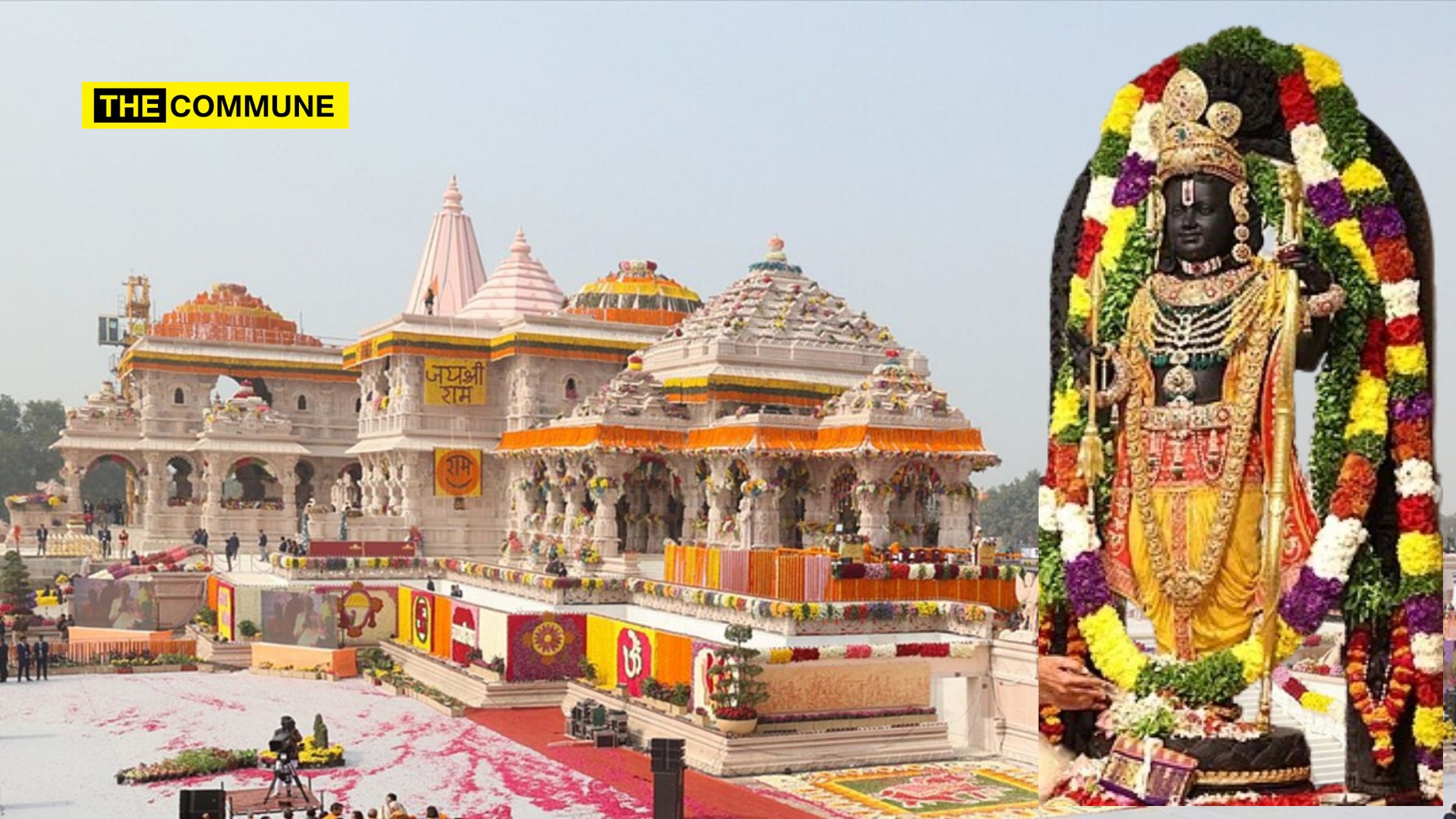
The size of the temple was hard to fathom at first glance. It looked both huge and modest from afar, but as I got closer, its gargantuan nature became indisputable. Colourful flowers adorned every window sill, every balustrade, and every roof line. Its stairways were festooned with floral peacocks, masts with saffron flags, and all surfaces embellished with carvings that drew one’s eyes in further. The grandeur of the edifice before me along with the hum from eager devotees set the scene for the momentous day ahead. Guides showed us to our allocated zones and we all peeped about trying to catch a glimpse of A-listers before settling into our seats. After brief introductions with my neighbours, there were but moments before the musical delights of the day proceeded, and what a day it proved to be!

Describing the Pran Prathishta ceremonies is almost redundant. Whether at the Janmabhoomi or in various corners of the world, thanks to superb live-streaming services, all of us could see and feel the first puja together. I know from subsequent conversations that so many of us, on first seeing him, admired our Ram Lalla through joyful tears. From the sacred patch of earth that I stood on, I could feel everyone come together as one. Hindus all over the world prostrated in front of Ram’s form, they danced and sang his glory that day. And they posted it all on social media. The innumerable statements of joy and pride shared on posts globally demonstrated, without doubt, the unifying omnipresence of Ram. The congratulations that poured in from friends and well-wishers was further evidence of this
divinity’s potential to unite.

The puja and the brilliant speeches that followed set the celebrations to fever pitch. As a blizzard of rose petals fell about us, we opened our arms up to the sky the way one opens up to hug a loved one. We chanted in unison and shared sweets. Then, we all waited in earnest for our zone to be called and our turn to see Ram Lalla face to face. As I made my way up the steps of the temple and through the various mandapas, I was astounded by the magnificence of the space. From this height, one could appreciate the vastness of the temple complex and the scale of the temple itself: it was humbling. The grand archways and intricately carved domes were bedecked with flowers of every kind and echoed with bhajans and shlokas. Despite the many unique sculptures and carvings to gape over, we queued impatiently. The large, exquisitely forged golden doors that stood ahead were all that stood between us and the main sanctum that housed the divine Murti of the young Rama.
When I finally had my chance to gaze up at the eyes of Ram Lalla, I was calm and in quiet adoration. I could only marvel at the beauty of his countenance and smile back as he smiled at me.

The stream of devotees that I was a part of moved me along quickly and in what felt like the blink of an eye, I was outside again. Small groups had gathered in conversation and all exclaimed at how familiar Ram Lalla looked, how proportionate his features were, and how he glowed. I know not what I thought during my time in the sanctum of Shri Ram. But I felt energised, the way one does after a long and restful sleep. My mind was jubilant and light. Whether it was group mentality or an odd mix of biochemistry I cannot say, but I was feeling a serene contentedness.

This happy high stayed with me as we all filtered out of the temple and back down the Janmabhoomi Path to the main road. It was late and the sky dark but a determined mass of people had collected outside the gates and it was nothing like I had ever witnessed before. News reports from that evening would state that more than five lakh people had been waiting to be allowed into the temple. This was bhakti true and pure. The roads were filled with music and processions that night. As I drove out of Ayodhya, I could feel the rhythm of devotion and I prayed that all my brothers and sisters would have as wholesome a darshan as I had been blessed with.

The Pran Prathistha marks a turn in time. Ayodhya has seen many empires come and go but the original history embedded in its soil has stood the test of time. The emperors who razed its hallowed buildings and the generals who chopped down its cherished trees could not squish the indomitable spirit of Ram we have carried in our hearts.

Hinduism, spread across the vast subcontinent of Bharath, is diverse and dynamic. Its followers have over millennia developed their own styles of prayer and gravitated towards their favourite avatars of the Brahman. However, all of us know Lord Rama. He who is synonymous with righteousness, he who overcame all struggles guided by dharma, he who as a son, brother, husband, father, and lord loved and is loved. We all know his story. We have all uttered his name. Is it any surprise that his divinity has the power to bring us together?

The Janmabhoomi and the reconstruction of a temple on this sacred patch of earth represents today more than a place of birth. It shines like light over darkness, as a testament to the fact that truth invariably triumphs, dharma always prevails, and that justice will find its place in history; just as karma does in the time continuum. In short, this place is hope. Hope that is to be shared by all of us…“everyone”. We call this hope “Rama”.

Vandhana is a medical doctor who is passionate about history and culture.

Subscribe to our channels on TelegramWhatsApp, and Instagram and get the best stories of the day delivered to you personally.
“Gandhi Was Shot In A Hindu Prayer Meeting To Attack Minorities Like Us”, Says DMK Leader Salma At Youth Congress Event In Kerala

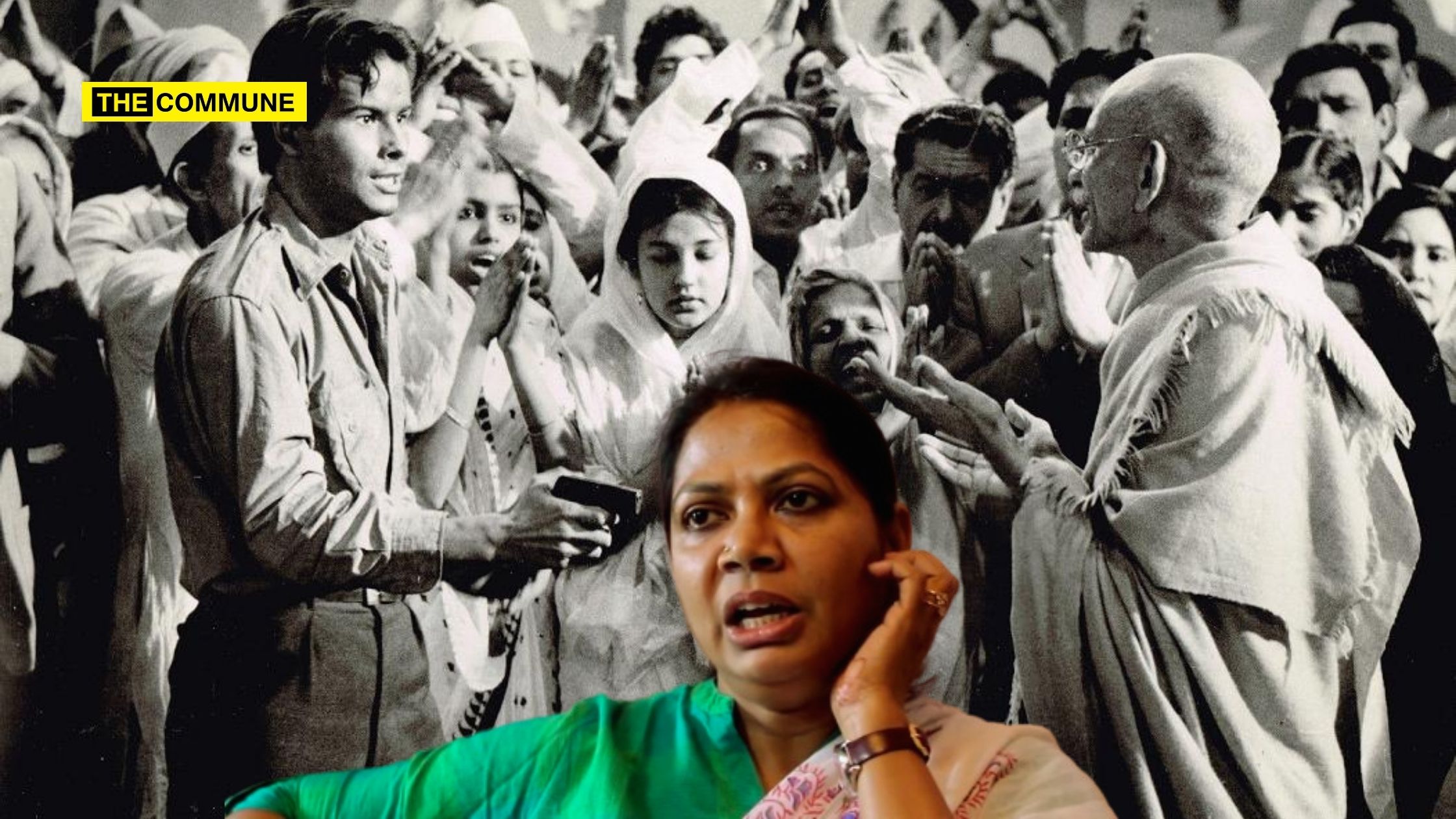
Controversy ensued when the Malappuram district committee of the Indian Youth Congress arranged an ‘Anti-Fascist Gathering’ in Kerala on 30 January 2023. The event’s posters, explicitly linking Mahatma Gandhi’s assassination to the Rashtriya Swayamsevak Sangh (RSS), generated widespread outrage.

The event was titled, “RSS Killed Gandhi”. DMK spokesperson Salma was also a part of the gathering. Despite Rahul Gandhi’s previous clarification on the ‘RSS killed Gandhi’ issue, the Congress party continues to play this card against the Bharatiya Janata Party (BJP), sparking concerns about the propagation of communal hatred and the deliberate targeting of an organization unrelated to the Gandhi assassination.

The poster, prominently featuring the claim “RSS KILLED GANDHI!!,” suggests that Congress is persisting with this narrative, potentially as a political strategy. 

One notable speaker at the event is Salma, a writer affiliated with the DMK (Dravida Munnetra Kazhagam), known for consistently criticizing the RSS at every platform she gets to speak. The collaboration between the Congress and Salma’s organization in spreading anti-RSS sentiments has raised concerns about the convergence of political agendas in targeting the RSS.

In the address, Salma expressed strong sentiments against the Bharatiya Janata Party (BJP) and the Sangh Parivar, particularly the Rashtriya Swayamsevak Sangh (RSS). Salma asserted that the RSS was responsible for Mahatma Gandhi’s assassination and highlighted various instances supporting their stance. She said, “RSS killed Gandhi – no doubt about that. If there is an organisation that can denigrate and destroy the sovereignty of a country then it is only the RSS.”

She went on to add, “When the whole country was fighting for freedom along with Gandhi, RSS Sangh Parivar Savarkar group wrote apology letters. When we took up arms, we joined Gandhi for the Dandi march, Savarkar was writing apology letters, history will not forget it.”

Mentioning the DMK chief and TN Chief Minister Stalin, Salma said, “DMK leader, our CM Stalin recently said the BJP was a social virus,” drawing parallels to the destructive impact witnessed during the COVID pandemic. Just as the virus affected and harmed us, she said the BJP and Sangh Parivar were doing the same through their actions. In response to this perceived face of fascism, she said, the I.N.D.I alliance was formed, with DMK actively participating. 

Speaking about Congress leader Rahul Gandhi, she said he was well-qualified to be the Prime Minister, emphasizing his ability to spread love and harmony and that is why people are thronging his yatra. She also added, “BJP Sangh Parivar wants to convert the nation into one language one religion one god – Ram. In TN there are many temples and many gods. In the different states of India, there are so many temples and gods. But they are creating a situation where there is only 1 god. This is fascism in its true form.”

She continued, “BJP is a symbol of fascist rule and we have to end it. Gandhi had conflicts with many leaders, Ambedkar, Netaji, Muslims. Everyone had differences with him but no one thought they must kill him. even if there were differences they wanted him to be there. but this Sangh Parivar wanted to kill Gandhi and are proud of it. They are doing it today also.”

She added, “We know what Pragya Thakur did. The fact that she shot at a photo of Gandhi and ‘killed’ him satisfied her frenzy. This is the kind of fascism we are dealing with.”

Salma then raised the issue of the Parliament breach and pointed out that it was a BJP MP who had given permission to the people who broke into the Parliament. She said the suspension of all the 140 Opposition MPs who sought justice and the lack of action against the particular MP (Pratap Simha) for the Parliament breach and also how several bills were passed in the absence of these MLAs, she said was a stark display of fascism. 

She went on to explain the many ways by which people can “understand fascism”. She spoke of a former Karsevak, Meghvanshi who had been a part of the RSS from a young age, who wrote a book about how RSS instilled values of hate towards fellow citizens. He is said to have quit the organisation after a few years. “Our challenge and duty lies in preventing the promotion of a singular god, a single religion, and one language.”

The speech then moved on to “explain” how fascism works: 

  1. Nationalism serves as their primary tool, asserting actions in the name of the country to further their agenda.
  2. Media control is firmly in their hands today, as they dictate what information people should see and hear.
  3. The education system is under their influence, with Vice-Chancellors predominantly aligning with Sangh ideology, creating a pervasive presence of RSS-affiliated individuals across educational institutions and universities. She adds, “All VCs are only Sanghis.”
  4. Control of corporates – Salma alleged that the BJP was consolidating power in the hands of corporates, leading to concerns that India has been handed over to big businesses, fostering an environment where all private organizations are perceived as having fascist tendencies.

Speaking about the latest controversy around Rajinikanth where he faced criticism and backlash for visiting the Ram Mandir, with people labeling him a “sanghi.” However, at the audio launch of Lal Salaam, his daughter addressed the accusations, asserting that her father is not a “sanghi” but a good man. Salma added, “That means sanghi is a bad word. She (Rajini’s daughter) is accepting that on the stage. Sanghi is an abusive word.” Salma alleged that these methodologies were the ways by which the Sangh/BJP were furthering their ideology. 

Historical anecdotes, including an incident involving Jawaharlal Nehru’s wife and the current government’s handling of hate against minorities, were cited by Salma to highlight what the speaker viewed as the deep-seated nature of fascism. The Bilkis Bano case and the alleged persecution of individuals who do not align with the ruling party were presented as further examples.

Comparing Sangh/BJP To Nazi Rule

Salma said the current surge of hatred against minorities was “alarming”, with this sentiment flourishing in the present environment. She drew parallels to historical instances like the atrocities committed against Jews by Nazis. Critics argue that figures like Modi and Amit Shah are reminiscent of Hitler and Mussolini, perpetuating troubles for minority communities. She also said this was leading to the erosion of democracy, as they are accused of fuelling and revelling in the creation of animosity towards minorities. 

“Targeting” Non-BJP Governments With ED

Salma alleged that those who resisted conformity with the agenda of the BJP found themselves pursued by the Enforcement Directorate (ED). She said states governed by the BJP seemed to remain unaffected by ED actions, while others, especially those not under BJP rule, faced scrutiny and pursuit.

EVM Hacking

Pointing out how Arvind Kejriwal revealed the bogus voting in Delhi Mayor elections and that the BJP helped them in this. She said, “This is how they will do to EVM also, and hack it. We have to fight against it and prevent them from coming back to power.”

On Gandhi

She added, “Their mindset is such that it killed a man like Gandhi, so they will be ready to do anything. Gandhi was born as a Hindu, lived as a Hindu, and was shot during a Hindu prayer meeting. They killed him in such a circumstance, so they will not hesitate to attack minorities like us.” 

Manipur

In Manipur, she said, the two communities remain divided, causing ongoing issues. When Rahul Gandhi visited, he was warmly welcomed, and the people appealed to him for salvation, acknowledging that they believed only he could address their concerns.

Delhi Wrestler Protest

Speaking about the wrestlers’ protest in Delhi, she said that all wrestling champions raised their voices against an incident of abuse by a BJP member. But the Prime Minister did not even acknowledge their concerns or turn to address them during the demonstration, and Salma said he was a PM who identified with fascism. She added, “They are going to lead the downfall. The death knell needs to be sounded for this election, this will be the last one.”

Ram Mandir

Salma added that the Prime Minister was engaging in daily temple visits, observed fasting, and participated in religious events like the Pran Prathista. She said this was concerning as he created fear among minority communities. She added that such practices were uncommon in other countries. She also said that they have been trying to declare the country as a Hindu Rashtra for several years now and Hindutva has crept into every nook and corner because of the Sangh Parivar working silently in villages. She said, “They will work silently, they don’t want any money or position for this. Then they will ensure the people are subjected to violence, sow seeds of hate, and destroy the country. The BJP government and the Sangh Parivar group are going to lead the downfall. The death knell needs to be sounded for this election, this will be the last one.”

With the completion of the Ram Mandir Pran Prathishta, she said, “There will be no dearth of Ram in this country. You don’t need anything else, this is what they are doing, politics with religion. Religion is most important for them, they can rule only with religion, we all saw it.”

On Splitting Alliances

She said that till recently Nitish Kumar was a part of the I.N.D.I alliance, but had gone missing. She alleged that the BJP engaged in horse trading to gain the support of MLAs and secure power in states. She added that this strategy has led to the fragmentation of various political parties, although the DMK has remained resilient while the ADMK is now divided into three factions. She also accused the BJP of breaking alliances in Maharashtra, dismantling two parties using money, without delivering tangible benefits to the people. 

 She concluded by saying, “We must show unity by bringing down the fascist forces by aborting their plans, by cutting the roots of RSS Sangh Parivar, otherwise they will be a danger for us at any point in time. They will create hate among us. In Kathua the girl was a Muslim, they closed the temple and gang-raped her she was a Muslim. That child was killed and they fought for these murderers and to protect them, the MLAs and ministers went on a procession, don’t forget it.”

She further added, “Gandhi was attacked by fascist forces whose identity is the BJP, we must fight them. Our only hope is the I.N.D.I. alliance and we must work together for them.”

She ended with a Faiz Ahmed Faiz poem and said, “We must work towards aborting the plans of this fascist BJP and the Sangh Parivar, the ones who killed Gandhi. We have to be victorious and live well in front of the BJP.”

Subscribe to our channels on TelegramWhatsApp, and Instagram and get the best stories of the day delivered to you personally.
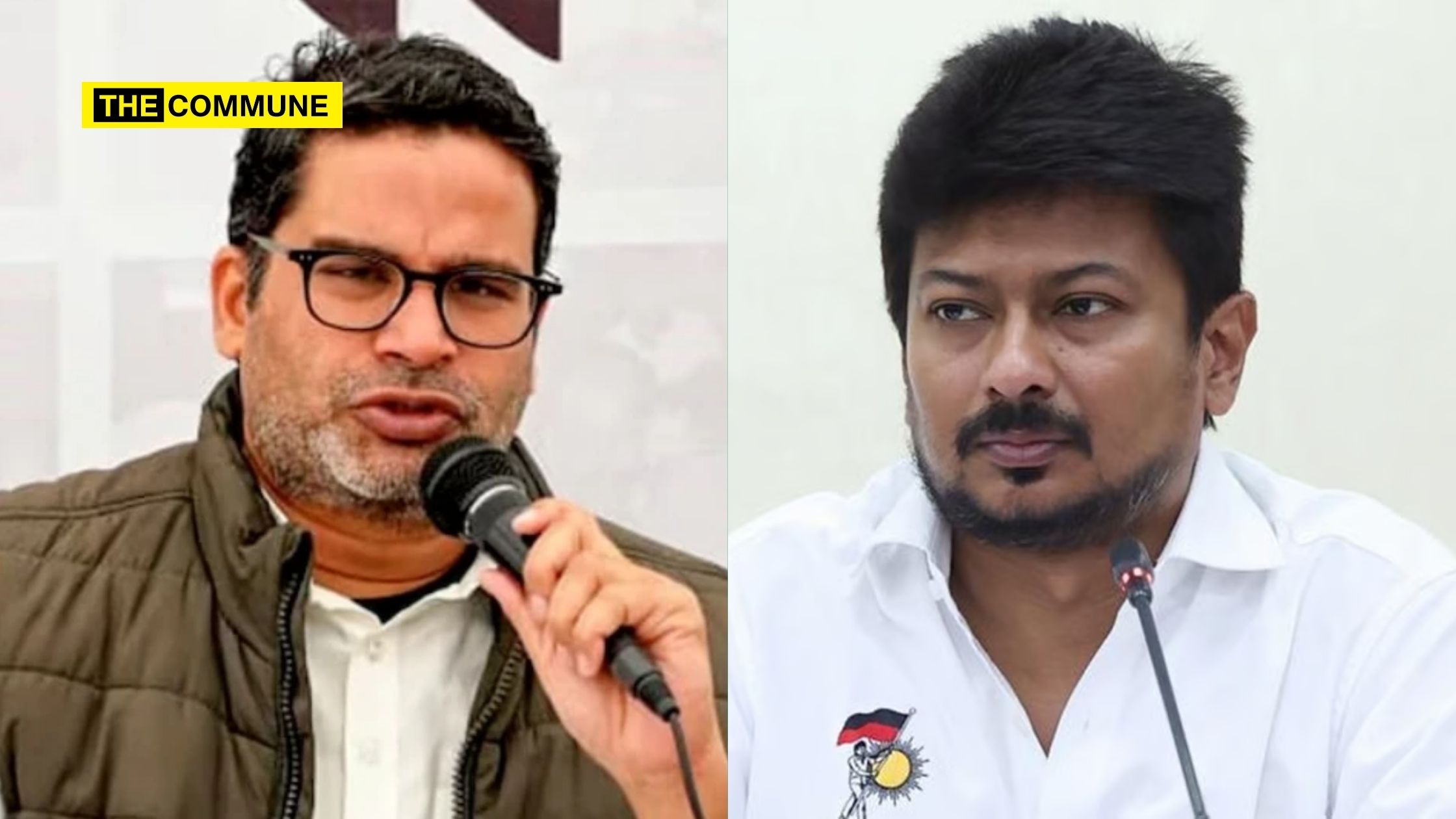
Dravidian Stock Udhayanidhi Stalin Is A Bad Stock As Per DMK’s Erstwhile Campaign Strategist Prashant Kishor

On 2 February 2024, Indian Express conducted an exclusive discussion with Prashant Kishor during the ‘Express Adda Inside Politics’ event. Kishor as the guest was engaged in a conversation with Anant Goenka, Executive Director of The Indian Express, and Vandita Mishra, National Opinion Editor of The Indian Express.

Prashant Kishor has extensive experience as a political strategist, having worked for various political parties, including the BJP, JD(U), INC, AAP, YSRCP, DMK, and TMC. His notable contributions include his work in the 2011 Gujarat Assembly Elections, where he assisted Narendra Modi in securing re-election as Chief Minister. Kishor gained widespread recognition when Citizens for Accountable Governance (CAG), an election campaign group he conceptualized, played a crucial role in helping the BJP, led by Narendra Modi, secure an absolute majority in the 2014 Lok Sabha election.

During his interview, he commented on various current political affairs. He expressed his perplexity at Rahul Gandhi embarking on a Yatra from Manipur two months before the Lok Sabha polls. Additionally, he noted that Nitish Kumar’s influence over voters seems to have diminished due to numerous policy reversals. Furthermore, he highlighted that from June 2023 to February 2024, the INDIA bloc has made minimal efforts to engage with the public.

However, Tamilnadu netizens expressed particular joy when they discovered interview questions related to the state’s politics. When Goenka asked Kishor about investments in a list of political leaders, Kishor sarcastically dismissed them as poor investments. This humorous exchange caught the attention of netizens, who used the video clip to engage in trolling and enjoy some light-hearted banter.

In a viral one-minute video, Anant Goenka playfully prompts Prashant Kishor to choose politicians as stocks, but Kishor declines, humorously labeling the mentioned politicians as “potted plants” destined for poor performance.

Anant Goenka: If you are a stock picker and these politicians were stocks (immediately the crowd and Kishor started laughing) who would you bet on, who would you bet on or shall I give you a list, you want to tell me who will you bet on?

Prashant Kishor: I will not

Anant Goenka: Okay’ll Akhilesh yadav, Adithya Thackrey, Chirag Paswan, KTR, Jegan Reddy, Raghav Chaddha, Omar Abbdullah, Udhayanidhi Stalin and Abhishek Banerjee

Prashant Kishor: Look what he is mentioning, all potted plants (crowd laughing) see he wants me to pick from 10 bad stocks which are going to be multi-badder. None.


Internet users began trolling and posting sarcastic comments directed at Udayanidhi Stalin, engaging in online criticism and mockery of his actions.

https://twitter.com/shelbyygun/status/1753642225345732977

During the same interview when Anant Goenka asks Prashant Kishor about the needed change in Dravidian politics, and Prashant Kishor expresses concern over the excessive influence of money, citing that elections in Southern states are becoming incredibly expensive, with spending surpassing even that of Northern India, calling it a worrisome trend.

Anant Goenka: The one thing that needs to be changed in Dravidian politics?
Prashant Kishor: Dravidian politics?
Anant Goenka: Yes
Prashant Kishor: Dependant on cash. It is a sad affair for some of the most prosperous and well-performing states, the influence of the money in politics is far greater and worrisome than what it is in Northern India. So, elections in Tamilnadu, Andra, Telangana, Karnataka to some extent now in Maharastra also are becoming so expensive, and the kind the money, which we hear and see is just unimaginable. An MP… member of parliament in Tamilnadu the money which they spent probably is good enough to fight the whole state in the north. It’s sad

Netizens, in response to Kishor’s remark, criticized Dravidian parties for their widespread use of money in politics, expressing their dissent.

https://twitter.com/ravicrab/status/1753682098282795050


Subscribe to our channels on Telegram and WhatsApp and get the best stories of the day delivered to you personally.
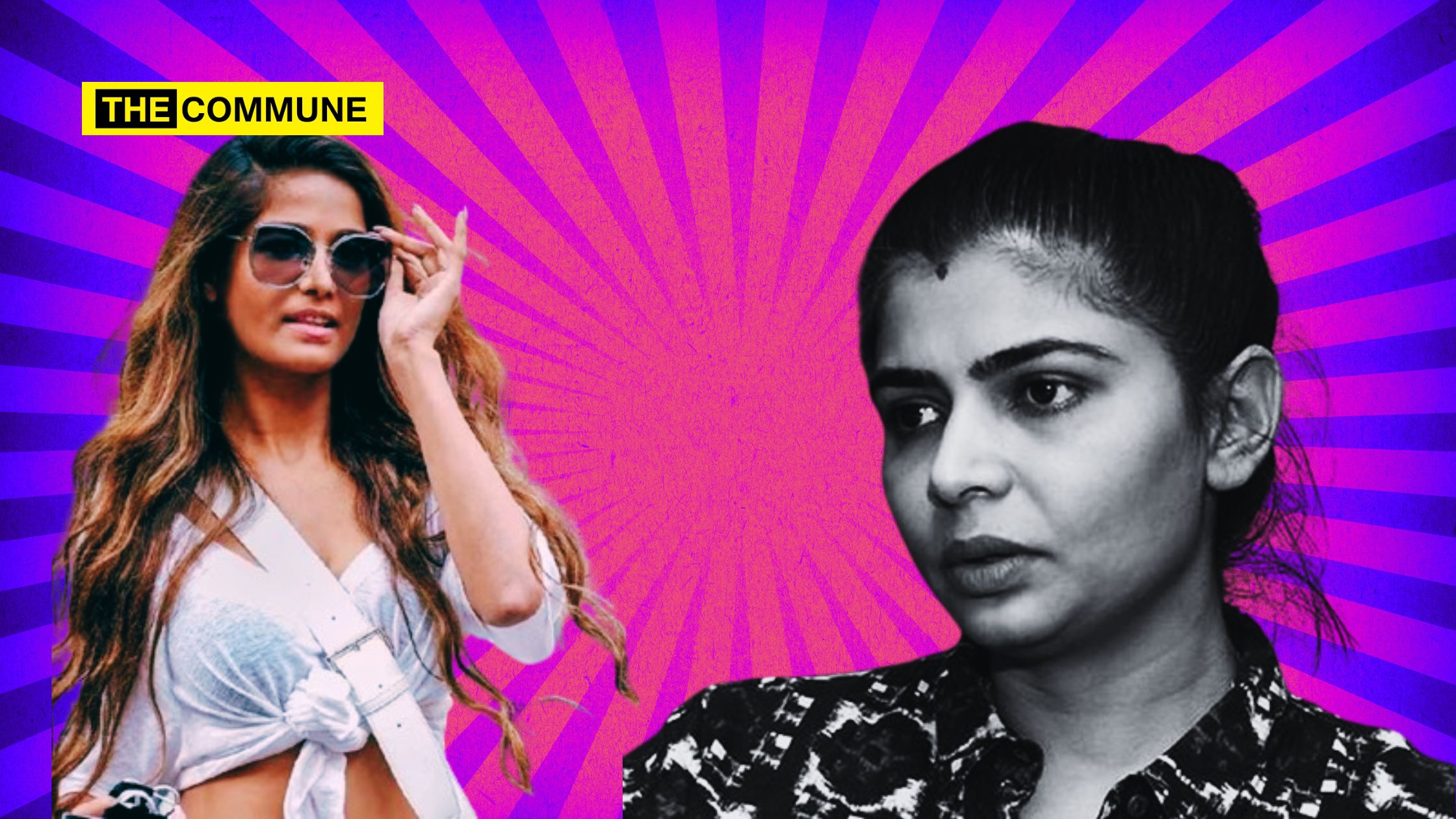
Singer Chinmayi’s Moye Moye Moment: Writes Eulogy For Poonam Pandey After News Of Her “Death”; Deletes After Stunt Is Revealed

In a bizarre turn of events, actor-model Poonam Pandey’s manager announced her death on 2 February 2024, leaving celebrities and social media users in shock. The announcement, which claimed Poonam had succumbed to cervical cancer, was later revealed to be a publicity stunt aimed at raising awareness about the disease. Poonam Pandey’s team posted on her official Instagram account, “This morning is a tough one for us. Deeply saddened to inform you that we have lost our beloved Poonam to cervical cancer. Every living form that ever came in contact with her was met with pure love and kindness. In this time of grief, we would request for privacy while we remember her fondly for all that we shared.” 

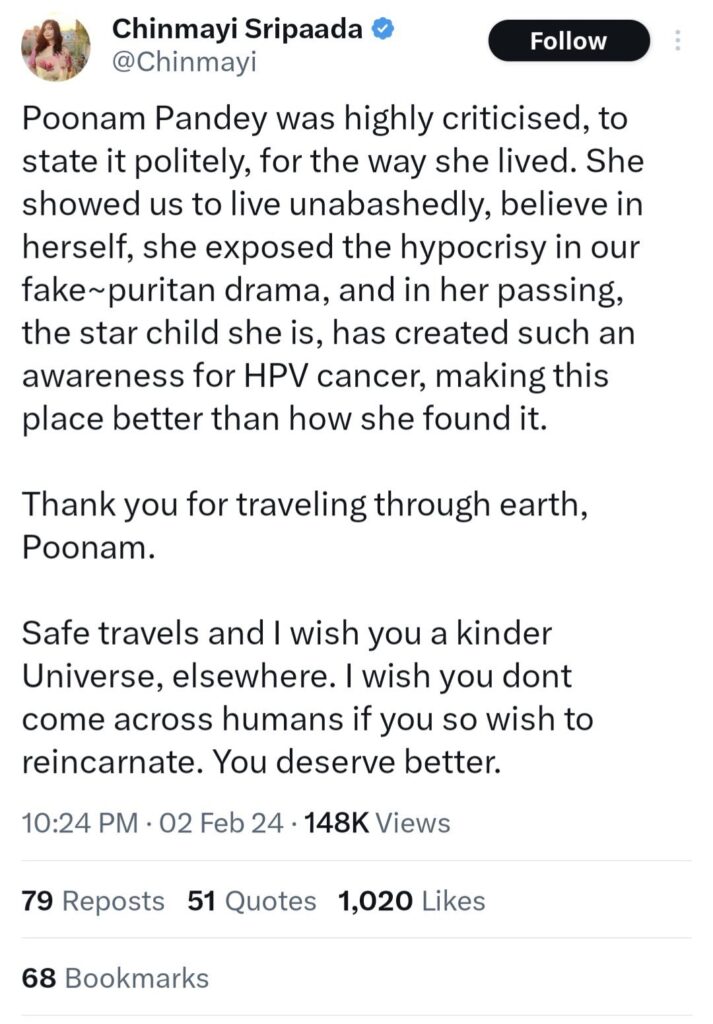
Singer Chinmayi Sripaada initially praised Poonam Pandey for what she believed was a noble thing to do – creating awareness of the disease through her death. Chinmayi, in a eulogy to Poonam, wrote on her X handle the admiration she had for Poonam. The singer commended Poonam for living unabashedly and exposing hypocrisy in societal norms.

Chinmayi wrote, “Poonam Pandey was highly criticized, to state it politely, for the way she lived. She showed us to live unabashedly, and believe in herself, she exposed the hypocrisy in our fake~puritan drama, and in her passing, the star child she is, has created such an awareness for HPV cancer, making this place better than how she found it.”

Expressing her farewell wishes, Chinmayi added, “Thank you for traveling through earth, Poonam. Safe travels and I wish you a kinder Universe, elsewhere. I wish you don’t come across humans if you so wish to reincarnate. You deserve better.”

The shocking revelation that Poonam Pandey’s death was a stunt prompted Chinmayi to delete her earlier eulogy. She expressed her dismay on her social media handle, stating, “Whoever thought faking a death to create awareness was a smart move 🤦🏽‍♀️🤦🏽‍♀️ Deleting the Eulogy. Most of what I said is still what I feel about her. But this is an incredibly horrible way to create awareness.” The incident has led to a moment of embarrassment for the feminist singer.

Critics wonder whether the universe will be kinder to people like Poonam after such a stunt. Some netizens made fun of Chinmayi’s knee-jerk reactions to everything under the sun.

https://twitter.com/AakilIshak/status/1753686798784774186

https://twitter.com/Lucifer26110/status/1753691812072722636


(with inputs from Hindustan Times)

Subscribe to our channels on TelegramWhatsApp, and Instagram and get the best stories of the day delivered to you personally.
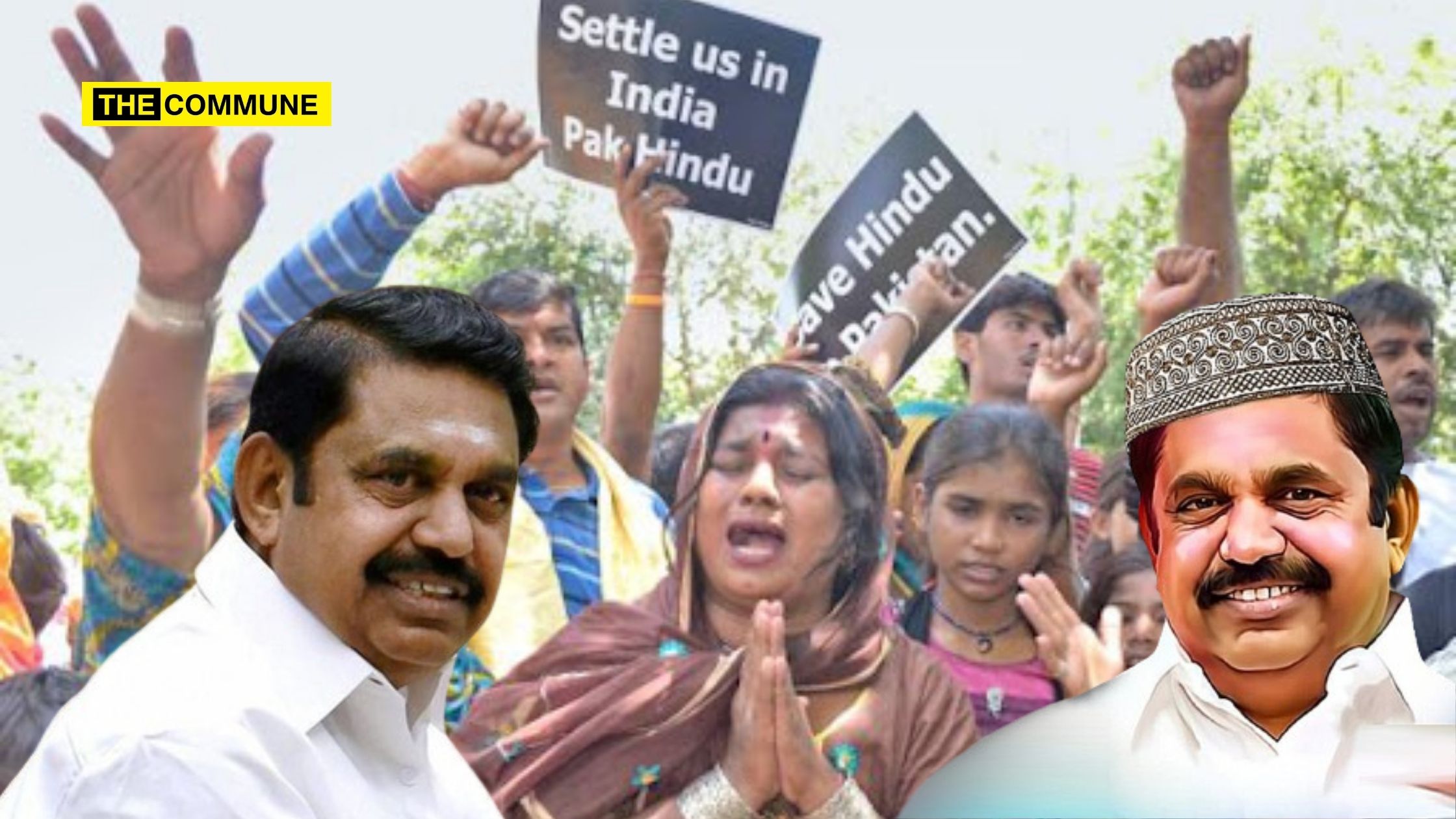
From Supporting CAA To Opposing Its Implementation, EPS Does A U-Turn To Appease Islamists

The All India Anna Dravida Munnetra Kazhagam (AIADMK), formerly an ally of the National Democratic Alliance, has undergone a substantial transformation, resembling them as new Dravida Munnetra Kazhagam (DMK). Recent posts from both Dravidian parties, DMK and AIADMK, indicate a shared focus on securing their respective vote banks, particularly within the minority communities. Notably, AIADMK seems determined to rebuild trust with these communities and is employing various strategies anticipating the upcoming elections.

On 31 January 2024, a significant development unfolded as both DMK President MK Stalin and AIADMK General Secretary Edappadi K Palanisami engaged in a sharp exchange on social media. The focus of their dispute was the Citizenship Amendment Act (CAA). Stalin accused Edappadi of being responsible for the CAA becoming an Act, claiming it adversely affects Sri Lankan Tamils and Muslims. Edappadi reverted these arguments slamming the DMK, accusing them of deceiving minorities by supporting the NIA and UAPA laws. This clash underscored the clear divergence in their approaches to securing votes.

In 2019, AIADMK’s official stance differed significantly from its current position in 2024. In that year, the official X handle of AIADMK stated, “Central Government has made it clear about Citizenship Act, Citizenship Act does not affect any religion in India – Hon’ble Edappadi K Palaniswami Interview.”

However, fast forward to 2024, and the same official X handle conveyed a contrasting message, quoting, “AIADMK will never allow minorities to be affected by CAA act – Hon’ble General Secretary of the party Edappadi K Palaniswami“.

Palaniswami too in his recent statement about CAA said “The DMK has been betraying the minorities by making a political capital of and doing drama over communal politics, while cooperate with the BJP when they are in power and opposing them when they are not in power. Having supported the NIA and UAPA laws which affects the minorities severely, people are watching the drama of the DMK, which only shows opposition to the BJP in statements and stage speeches.

Many on social media pointed out the hypocrisy and criticized Edappadi K. Palaniswami of pandering to Islamists for the sake of their votes.

Edappadi K. Palaniswami faced criticism for his party’s current stance in recent years. Since the passing of Jayalalitha, the party appears to be in a vulnerable position, often seen seeking electoral victories without a clear strategy, and seemingly inactive in the realm of politics.

He also faced criticism for his perceived approach towards minority appeasement, accompanied by images comparing him with and without the Hindu identity vibhuthi mark on his forehead.

While both Dravidian parties DMK and AIADMK historically vying for the support of minority communities, the current AIADMK has witnessed a noteworthy shift in their approach. This shift is seen as a response to the AIADMK’s decision to break away from the BJP, actively seeking new alliances, and revisiting their historical support from minority communities.  

AIADMK’s Strategy Of Courting Minorities

 It all began with a consultative meeting on 25 September 2023. Taking a bold stance, the party decided to sever ties with the National Democratic Alliance (NDA) following allegations of intentional defamation by the state BJP leadership. In an official press release, the AIADMK pointed fingers at the BJP, accusing them of intentionally tarnishing the party’s reputation and targeting leaders Annadurai and Jayalalithaa with hidden agendas. Notably, the state leadership, personified by Annamalai, was specifically accused of downplaying a significant public gathering in Madurai defaming Edappadi K. Palaniswami.

In a swift sequence of events following the accusation, AIADMK took a notable step in October 2023 by presenting a calling attention motion. The motion sought the release of Islamist terrorists who had been convicted in connection to the 1998 Coimbatore Bomb Blasts, emphasizing humanitarian considerations overlooking the severity of the actions committed, focusing instead on appeasement and securing votes for their respective vote banks. This action underscored the party’s strong dedication to minority rights, particularly in the aftermath of its separation from the BJP.

 Subsequently, Edappadi Palaniswami (EPS), the General Secretary of AIADMK, delivered a speech in Salem district in October 2023, explicitly declaring that the party had distanced itself from the BJP in response to the desires of the Muslim community. He passionately appealed to Muslims to rally behind the party in the forthcoming elections. Moreover, he urged party functionaries to proactively engage with the traditional voter base within minority communities, with a determined goal of regaining the trust that might have been lost, emphasizing AIADMK’s commitment as the authentic guardians of Muslim interests.

Subsequently, Edappadi Palaniswami made a significant appearance at the Social Democratic Party of India (SDPI) conference held on 7 January 2023 in Madurai. Notably, during this conference, he shared the stage with Nellai Mubarak, the SDPI state president, who had gained notoriety due to NIA raids conducted in July 2023 in connection with the Ramalingam murder case. Palaniswami, took this opportunity to strategically address the gathering and emphatically reassured minorities that the AIADMK, under his leadership, would stand as an unwavering defender of the rights and interests of minority communities. Even he went on to formalize an alliance with the Islamist party, which operates as an auxiliary outfit affiliated with the banned terror organization, Popular Front of India. This calculated move marked a clear departure from the party’s previous affiliations and served as a strategic step towards consolidating support from minority communities.

 At the latest, Edappadi Palaniswami attributed his non-participation in the Pran Prathishta ceremony to leg pain and concerns over the incomplete construction of the temple. This abstention is perceived as a strategic maneuver gearing up for the impending Lok Sabha elections, strategically showcasing unity and solidarity to appeal to minority voters.

All these efforts to form alliances with minority parties indicate a strategic move aimed at securing crucial constituencies in the upcoming elections. The impact of these outreach initiatives on electoral results remains uncertain. Critics suggests that parties may be driven by the fear of potential losses, lack effective strategies, or, as Rajinikanth suggested, acknowledge a political vacuum in Tamil Nadu that cannot be filled solely by minority votes but requires winning the hearts of all voters in a democratic setup.

Subscribe to our channels on Telegram and WhatsApp and get the best stories of the day delivered to you personally.
Modi Govt Confers Bharat Ratna On Veteran BJP Leader LK Advani

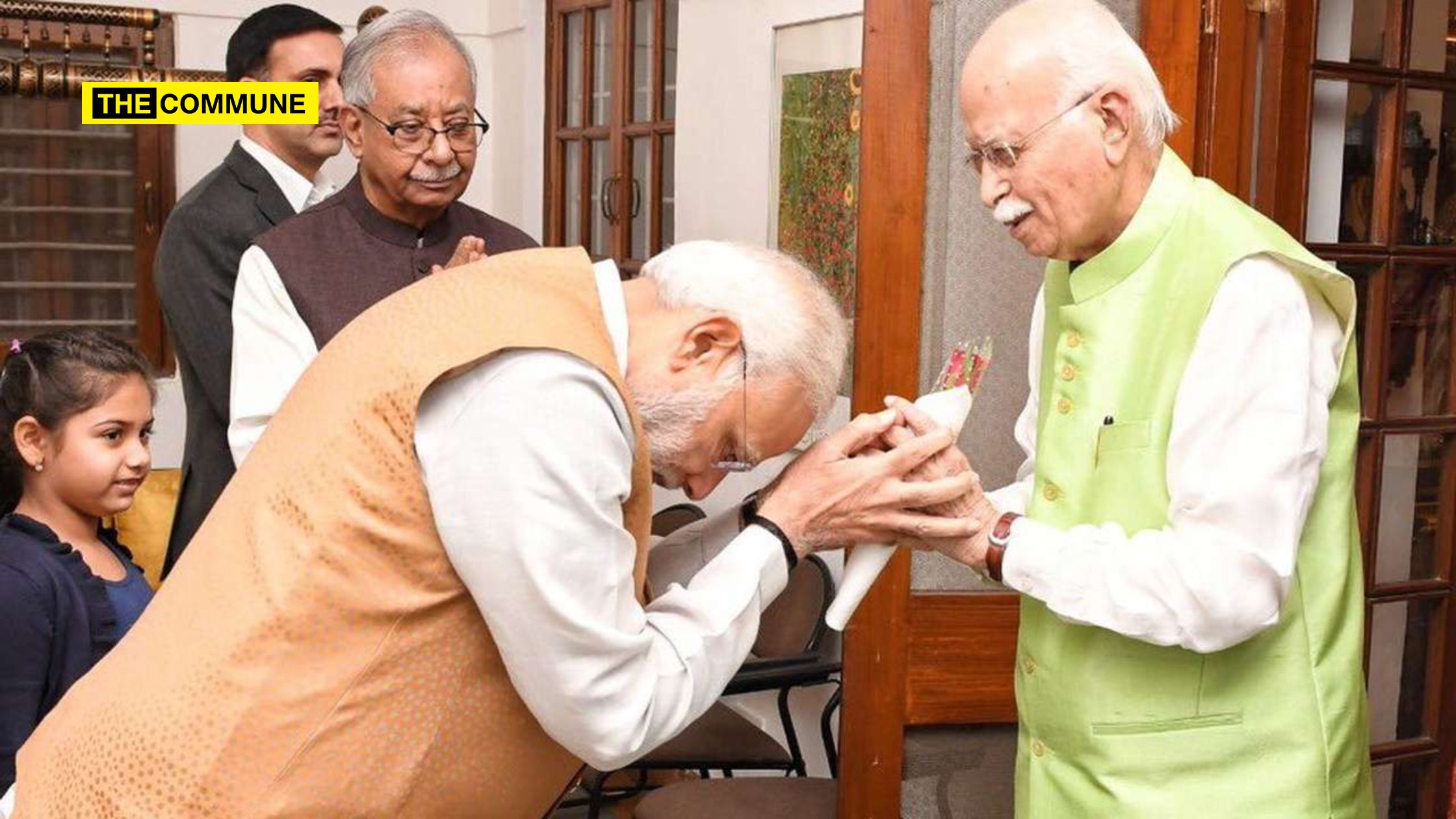
Lal Krishna Advani, one of the tallest political leaders of India the man behind the Ram Janmabhoomi movement, has been conferred the Bharat Ratna by the Narendra Modi Government.

Taking to X, Prime Minister Modi said “I am very happy to share that Shri LK Advani Ji will be conferred the Bharat Ratna. I also spoke to him and congratulated him on being conferred this honour.”

He added that Advani remains one of the most respected statesmen of our times and his contribution to the development of India is monumental.

“His is a life that started from working at the grassroots to serving the nation as our Deputy Prime Minister. He distinguished himself as our Home Minister and I&B Minister as well. His Parliamentary interventions have always been exemplary, full of rich insights.”, PM Modi said.

Subscribe to our channels on TelegramWhatsApp, and Instagram and get the best stories of the day delivered to you personally.