
Home Blog Page 808

Qatar Releases Indian Navy Veterans; Shuts Up The Likes Of Mohammed Zubair Who Questioned India’s Power
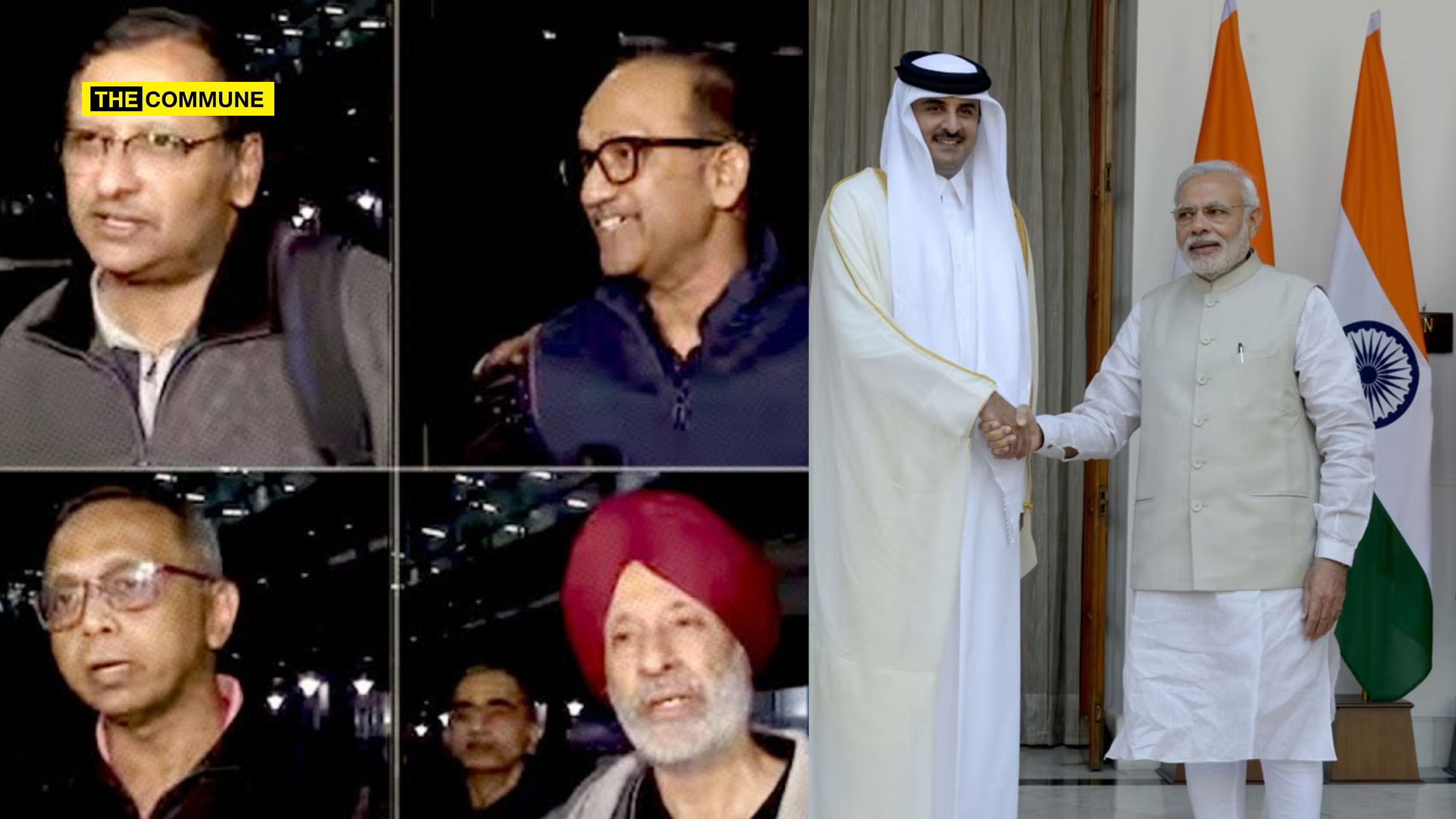
India achieved a diplomatic victory and successful resolution through back-channel negotiations as eight veteran Indian Navy officers and sailors, previously detained in the Gulf country of Qatar on charges of alleged espionage in the Al Dahra Global Case, safely returned to India.

In August 2022, the intelligence agency in Qatar apprehended Indian nationals working for the private company Al Dahra on suspicions of espionage. At that time, neither Qatar nor India publicly disclosed any formal charges. Subsequently, the Qatari authorities accused these individuals of spying on a submarine, leading to their imprisonment in the same month.

In March of the following year, the trial of the navy veterans commenced in compliance with Qatari law, with official charges being filed against them. In October 2023, the Court of First Instance in Qatar issued death sentences to the eight men. Expressing deep shock, the Government of India pledged to provide consular and legal assistance, exploring all possible avenues to secure the release of the veterans. In response, the Indian government lodged an appeal against the death sentences in a higher court in Qatar in November 2023. The Qatari court accepted India’s appeal against the death penalty, signaling a review of the case.

During the COP-28 summit in Dubai on 1 December 2023, Prime Minister Narendra Modi’s meeting with Qatar’s Emir Sheikh Tamim bin Hamad Al Thani influenced a change in the Qatari authorities’ position on the death sentences. Two days after this meeting, the Indian ambassador to Qatar obtained the first consular access to meet the eight imprisoned Indians. Subsequently, an appellate court in Qatar commuted the death sentences to prison terms for the eight Indian veterans. Doha finally released all eight veterans of the Indian Navy, with seven of them returning to India on 12 February 2024.
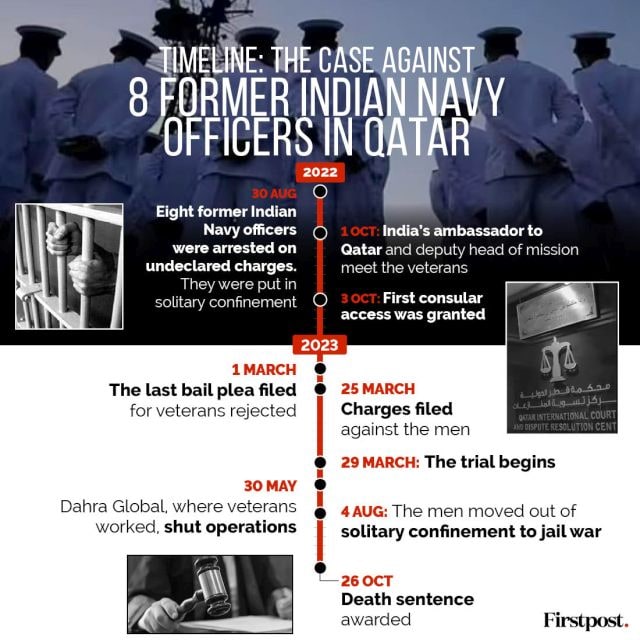
How Indian Navy veterans their families learnt about release from Qatar jail

(Timeline Credit: Firstpost)

 The eight Indian Navy veterans are Captain Navtej Singh Gill, Captain Birendra Kumar Verma, Captain Saurabh Vasisht, Commander Amit Nagpal, Commander Purnendu Tiwari, Commander Sugunakar Pakala, Commander Sanjeev Gupta, and Sailor Ragesh.

Bilateral Trade And Diplomacy

In 1973, India and Qatar established diplomatic relations. During a visit by Emir Tamim bin Hamad al-Thani in March 2015, under the leadership of the present NDA-led Narendra Modi government, five Memoranda of Understanding were signed to facilitate cooperation across diverse domains. Additionally, an agreement addressing the repatriation of prisoners was reached. According to this accord, individuals convicted and sentenced for a crime in either India or Qatar can be repatriated to their respective home countries to complete the remainder of their prison terms.

During the blockade imposed by Bahrain, Egypt, Saudi Arabia, and the UAE on Qatar over alleged support for Islamists and Iran, Qatar faced pressure to meet the Anti-Terror Quartet’s demands. Although admitting to aiding groups like the Muslim Brotherhood, Qatar denied supporting terror organizations like al-Qaeda and the Islamic State. In 2017, neighboring countries closed land and sea borders, disrupting Qatar’s food imports, and prompting the establishment of the India Qatar Express Service to alleviate the food crisis. India and Qatar also formed joint business ventures to enhance Qatar’s agricultural resources. Recently, India signed a $78 billion LNG deal with Qatar, extending imports till 2048 at lower rates, contributing to PM Modi’s vision of making India a “gas-based economy” and increasing natural gas’s share to 15% in the primary energy basket by 2030. The deal is expected to save $6 billion for India. Key exports between the two nations include LPG, chemicals, petrochemicals, and various commodities, highlighting the growing economic ties.

Criticism Gone Wrong, Only Silence Persists

On 6 April 2023, Congress leader Jairam Ramesh raised questions about the Indian government’s alleged inability to facilitate the return of retired Navy personnel detained in Qatar. In a social media post, he shared a lengthy statement, expressing concern over the prolonged detention despite the special relationship between India and Qatar. Ramesh questioned why the government had not been able to clarify the case details or provide reassurance to the ex-naval personnel and their families. He also raised the possibility of the Prime Minister’s reluctance to pressure Qatar due to the country’s significant investment in Adani Electricity Mumbai through its sovereign wealth fund. The statement urged the government to explain to the families and the public why the ex-servicemen were being treated this way. Will the Congress now recognize the efforts of Prime Minister Narendra Modi and External Affairs Minister Jaishankar in the release and issue a press statement? Sensationalizing a critical issue for political gains is regrettable for the grand old party.

Upon the veterans being sentenced to death, Mohammed Zubair of Alt News posted a sarcastic message on X expressing satisfaction, underscoring the Prime Minister’s statement referring to Qatar as his “second home.” It’s worth noting that Zubair had actively participated in a contentious campaign against former BJP spokesperson Nupur Sharma during diplomatic tensions between India and Qatar. The latter demanded an apology from India over remarks related to Prophet Muhammad, though the actual situation revealed a different reality. The MK Stalin-led DMK government of Tamil Nadu has granted the Kottai Ameer Communal Harmony Award to such propagandist and a pseudo-journalist. Moreover, he has not only stirred tensions within communities but has also escalated matters to the extent of creating friction between two nations while remaining cool with the burning fire. 

The NDA-led Narendra Modi government consistently emphasizes its commitment to nationalism, putting the nation first. A notable instance is the swift return of Wing Commander Abhinandan Varthaman to India, just 58 hours after being captured by Pakistan. His courageous walk through the Attari-Wagah border on the night of February showcased India’s resilience. Now, witnessing the safe return of 8 Indian veterans through diplomatic channels is another significant victory for the country.

 (With inputs from IndiaToday

Subscribe to our channels on TelegramWhatsApp, and Instagram and get the best stories of the day delivered to you personally.
Panchami Land Legal Battles: Madras High Court Asserts Scheduled Community Rights, Orders Annulment of Leases

Madras HC increased security in court campus after country bombs were exchanged among suspects in the Armstrong murder case.

The Madras High Court has mandated the annulment of land leases for those occupying Panchami land in Ariyalur, affirming that ‘Panchami land designated for scheduled communities cannot be utilised by other communities.’

The government originally allocated 1.12 acres of Panchami land to the grandfather of Kamaraj from Periyanagalur village in Ariyalur district. However, Kamaraj’s grandfather sold this land to a non-scheduled individual in 1963. Subsequently, the land changed hands multiple times from 2009 to 2021. In response, Kamaraj filed a petition with the district collector and other authorities, urging the cancellation of these sales agreements and the recovery of the Panchami land.

Faced with inaction on his petition, Kamaraj escalated the matter by filing a case in the Madras High Court, seeking an order for the concerned authorities to address his grievances. Justice P. Velmurugan presided over the hearing, with Advocate D. Gnana Banu representing the petitioner. The judge’s ruling stipulated that entering into an agreement to sell Panchami land allocated to a Scheduled Caste community to a non-Scheduled Caste is illegal, and such land cannot be converted.

The authorities were censured for their failure to monitor the situation, leading to the conversion of the land into residential plots and subsequent construction by various individuals. Upon learning of this development in 2022, the petitioner took legal action. The government has yet to respond to the case.

Documents obtained by the petitioner through the Right to Information Act unequivocally establish the land in question as Panchami land, designated for the Scheduled Caste community. The court stressed that this land cannot be used by other communities, and the government lacks the authority to alter its categorisation. Consequently, the judge ruled in favor of recovering the land from its current occupants, canceling land titles, and instructing the government to register it as Panchami land in the revenue records for allocation to eligible landless individuals.

Murasoli Land Case

It is noteworthy to revisit the Murasoli land case at this juncture. On 4 January 2024, the Madras High Court, under Justice SM Subramaniam, directed the DMK government to provide revenue documents related to the Murasoli Trust’s land in the Panchami land case. The Trust, representing DMK, aimed to restrain the National Commission for Scheduled Castes (NCSC) from hearing a complaint by Tamil Nadu BJP Secretary R Srinivasan. The government, on 5 January 2024, countered Panchami land claims, stating the Murasoli office land belongs to Anjugam Publications. The High Court, on 10 January 2024, directed NCSC to issue a new summons, invalidating prior ones. The judge urged an unbiased inquiry considering TN government documents and BJP’s complaint. The court emphasised the commission’s duty to investigate Panchami land issues and dismissed pleas to annul the previous summons. BJP leader K Annamalai called on DMK to cooperate with the investigation, emphasising their legal struggle to recover Panchami lands.

(with inputs from Dinamalar)

Subscribe to our channels on TelegramWhatsApp, and Instagram and get the best stories of the day delivered to you personally.
Chaos At Kilambakkam Continues, DMK Transport Min Says Plying Buses Past Midnight Is Not Safe

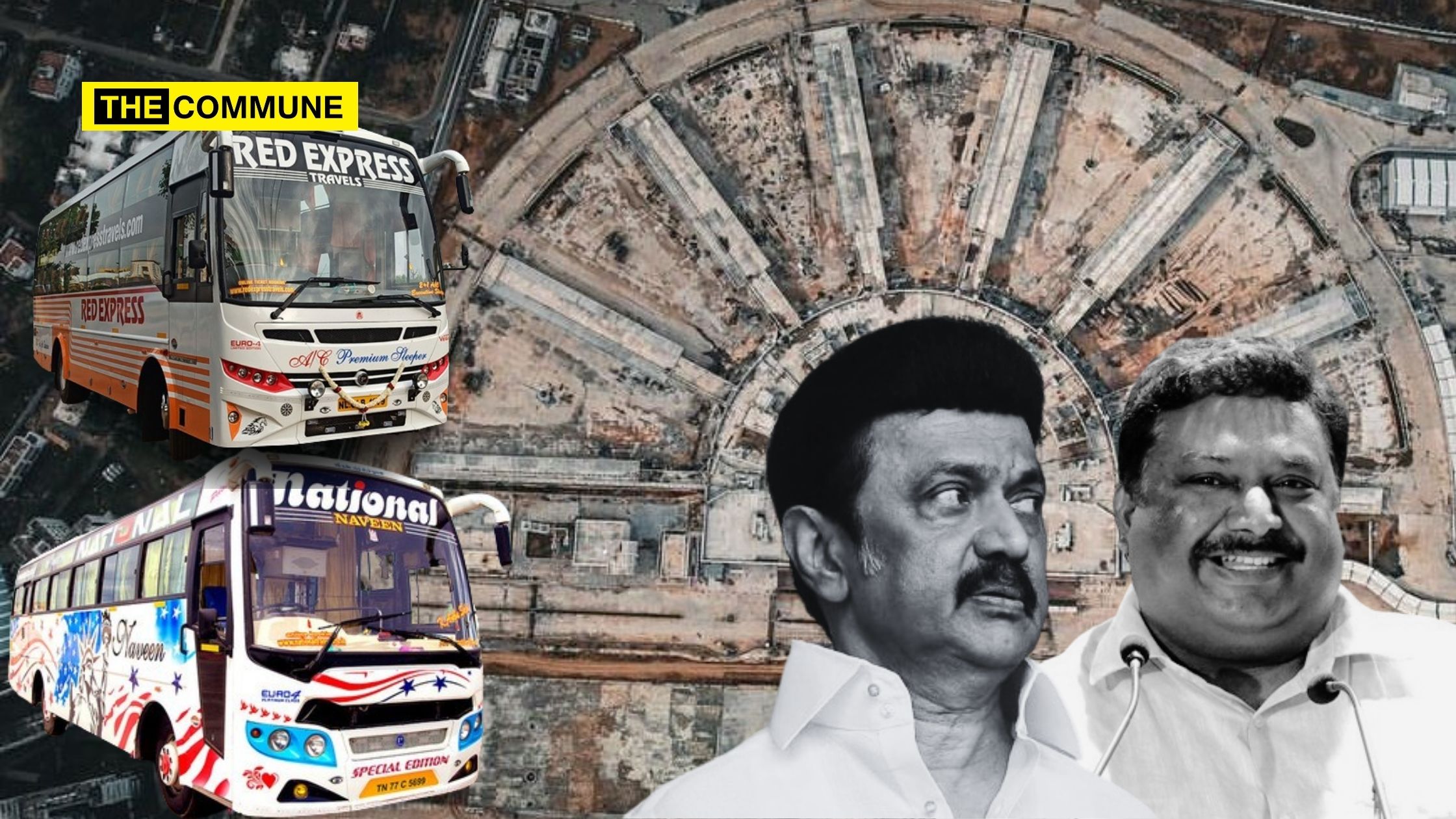
Over the past few days, Kilambakkam Kalaignar Centenary Bus Terminus (KCBT) has witnessed growing public discontent and protests due to the ongoing issue of operating a restricted number of buses. This has resulted in prolonged waiting periods, and with each passing day, the situation is intensifying, people are increasingly finding themselves stranded and facing inconvenience in their efforts to travel to their hometowns.

The demonstrations of ordinary citizens at the bus stand and GST road gained extensive coverage on various news channels through the night, notably on the DMK-affiliated Sun TV. The events were also widely circulated on social media with a hashtag trending #KilambakkamBusTerminus. However, when ministers visited KCBT, they downplayed the situation, asserting that there were no genuine concerns. During the subsequent press conference, they casually dismissed the protests as a supposed conspiracy orchestrated by opposition parties and some agitated omnibus owners.

Following the visit, Transport Minister SS Sivasankar and Hindu Religious and Charitable Endowments Department Minister PK Sekar Babu held a press briefing to elaborate on the situation.

There is a favorable situation which will definitely bring the omnibus station into use by the end of April. Therefore, we are informing you that the Omnibus bus stand will be fully completed by April and facilities will be provided to park the omnibuses“. – Minister Sekhar Babu said.

Transport Minister SS Sivasankar said “For the past two days, the Leader of the Opposition and some other party leaders have been spreading unnecessary rumors about the Kilambakkam Bus Stand and trying to create an appearance that the regular buses are not running. After the inauguration of Kilambakkam Kalaingar Centenary Bus Station, 20% of the buses are operated from the Madhavaram bus stand and 80% of the buses are from our Kilambakkam bus stand out of 100%. Rumours are being spread unnecessarily that some buses have already arrived and running are not running today.”

“Next, there was a problem that the bus did not come on these two days. It happened 12 o’clock and 1 o’clock in the middle of the night. In the evening, there is no such problem, regular buses are running and the people who come on the bus are leaving. Whether it is Koyambedu or Kilambakkam, there are only very few buses running after 11:30 PM at night. In other words, buses run only to Trichy and other buses will not be available. Why because it is not safe for those who are going to travel long distances to go beyond that time. Running buses from 12 o’clock till 4 o’clock means that it is not safe when traveling in NH where the traffic of lorries is heavy is a time-honored practice. But after twelve o’clock a hundred or two hundred people come, stand, and make this trouble, it seems they are doing it with some intention,” he further said.

Later during the press conference, he explained omnibus owners had approached the High Court and requested to run buses from Koyambedu. During that hearing, the judge directed to accept certain requests of the owners and issued direction to Transport department. Until Mudichur omnibus bus stand establishes they can carry on from their own bus depots and various pickup and drop points and also said that some omnibus stand owners were misguiding the judgement and twisting it as Koyambedu has reopened again and also blamed some omnibus owners that by creating fake news that government bus facility low in Kilambakkam so that the passengers will come to them.

Later during the press briefing, it was revealed that Omni bus owners had approached the high court, seeking permission to operate buses from Koyambedu. In the hearing of the two parties’ arguments, the judge directed the acceptance of certain requests from the owners. The judge issued instructions to the Transport department, allowing the bus owners to continue operating from their own depots, pickup, and drop points until the establishment of the Mudichur Omni Bus Stand. Additionally, he cautioned against misinformation, stating that some omnibus owners were misinterpreting the judgment to suggest that Koyambedu had reopened. Furthermore, he accused certain omnibus owners were spreading fake news about the government bus facility being inadequate in Kilambakkam, presumably to attract passengers to their services.

 After the briefing, when reporters questioned the ministers, they responded with anger, issuing threats and displaying disrespectful behavior. They spoke in singular disrespectfully, attempting to deter sharp questions from the journalists.

A reporter questioned, “People say traveling to Kilambakkam there is only one bus in an hour?” Immediately Transport Minister SS Sivasankar angrily replied, “Oh! People are saying, did you confirm it? Come let’s go, we will confirm it, let’s see.”

Immediately HR&CE minister Minister PK Sekar Babu jumped into the conversation saying, ” You ask us in a blaming tone… What can we do if question us in a blaming tone? 

Minister Sivasankar continued, “We are not accusing all the people.”

The reporter sadly said “Sir, the protest is happening for three days, for a day it’s okay to say a planned conspiracy but it is happening for 3 days.

Minister Sivasankar replied “On what time did it happen, tell me yourself, do you like only if Annamalai speaks?

Immediately HR&CE minister Minister PK Sekar Babu intervened and said, “Sir you should speak like a journalist you are speaking like on stage, stop with the question (singular Tone)… how many have asked questions, we are answering them all. You’re talking continuously like you’re on stage. If you ask a question we will answer, if you talk like on stage… you are talking like on stage ask only questions, I won’t answer if you talk like that.”

The Tamil Nadu government was aware of the traffic congestion on GST Road even before the construction of KCBT. Despite recognizing the road’s limited capacity to accommodate increased traffic, the government went ahead with building the terminus. This oversight is evident on two occasions – during Pongal and now on Friday nights for the weekends and special occasions like auspicious days, when there is a higher demand for buses. The lack of adequate pre-planning and subsequent disregard for the actual situation, coupled with an unwillingness to acknowledge faults, is disheartening. Moreover, the administration’s response, including threats to journalists and protesters, and the attribution of blame to omni bus owners, reflects poorly on the state’s governance.

https://twitter.com/SaffronSurge3/status/1756562557018783963


Subscribe to our channels on TelegramWhatsApp, and Instagram and get the best stories of the day delivered to you personally.
Kerala: Elderly Women Protest Non-Receipt Of Pension, Reports Suggest Pinarayi-Led Govt Owes ₹4,600 Crores To 58 Lakh Beneficiaries

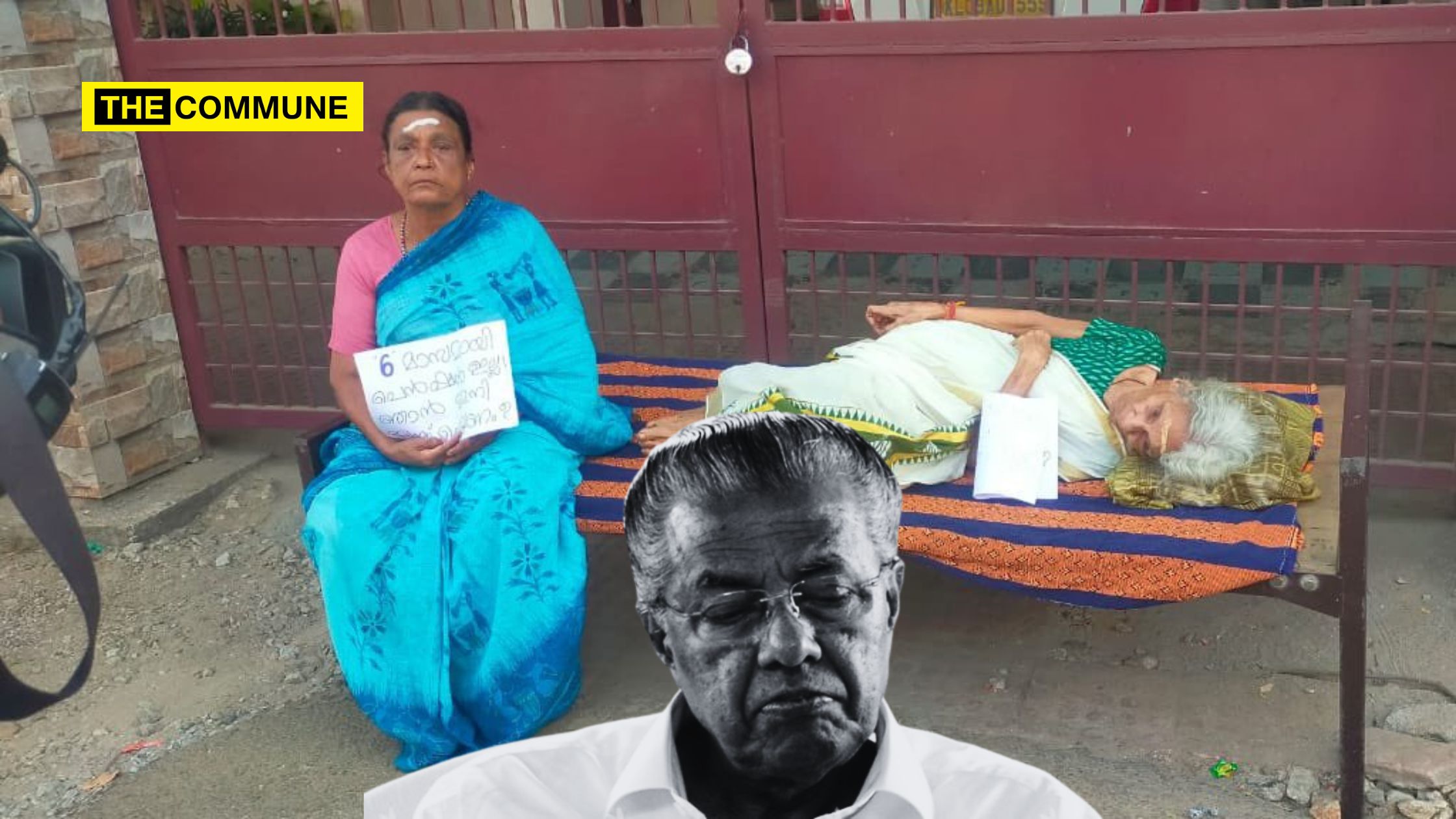
Protests by elderly citizens in Kerala, under the governance of the Communist party (Marxist), have become a recurring issue, highlighting a deviation from the claimed “Kerala model of governance” as the welfare policies face challenges and failures in implementation. The most recent incident took place in Palakkad, where two elderly women, Padmavathy (92) and her daughter Indira (67), staged a demonstration outside the Akathethara Panchayath Office near Palakkad city.

Their protest aims to draw attention to the Kerala government’s alleged negligence towards pensioners, demanding timely disbursement of welfare pensions to those in need. The duo began their protest early in the morning before Panchayath officials arrived, expressing frustration over not receiving social welfare pensions for the past six months. They emphasized their lack of alternative means of sustenance and vowed to continue the protest until the government addressed the issue.

This demonstration follows a similar protest on 8 November 2023, where Mariyakutty and Annakutty, elderly women from Idukki district, staged a compelling protest in Adimali, using a begging pot to highlight the Kerala government’s alleged role in forcing them into begging.

Despite mounting criticism and protests against the ruling Pinarayi government’s administrative failures, the government remains unresponsive to the demands of opposition leaders and BJP representatives, aiming to avoid excessive expenditures. VD Satheesan, Leader of Opposition in Kerala legislative assembly criticized the Pinarayi government, accusing it of deflecting blame onto the central government to conceal corruption, lavish spending, and mismanagement at the state level.

The Kerala government has failed to fulfill its commitment outlined in the budget, which promised the disbursement of pensions in the corresponding month of the next fiscal year. Currently, the welfare pension arrears have accumulated to ₹4,600 crores, impacting 58 lakh beneficiaries who have not received pensions for the past six months since September 2023. As the current financial year is set to conclude by 31st March 2024, and with Lok Sabha elections approaching, the government is attempting to maximize the utilization of planned funds. However, it is unlikely that the government will be able to clear the outstanding six-month pension arrears within this limited time frame.

According to reports from Manorama news, the Kerala government requires Rs 89.40 crore to provide pensions to 5.66 lakh members of various welfare fund boards, with a monthly pension cost estimated at ₹775 crore. Currently, the state government has allocated Rs 667 crore from its funds to disburse social security pensions to 45.11 lakh people, and an additional 7.42 lakh individuals have received pensions with the assistance of the central government. The state now needs to secure ₹19.15 crore to fulfill pension obligations. In his Budget speech, Finance Minister KN Balagopal disclosed that the state requires ₹9,000 crore annually for pension disbursement.

Instead of exploring long-term strategies to increase revenue for supporting pensioners, the government is allegedly considering raising the pension age from 56 to 57, a move proposed by the Pay Revision Commission, that could save ₹4,000 crore annually.

Reports from Mathrubhumi News highlight the suspension of three major government assistance measures for the differently-abled community, including pension payments. The monthly pension of Rs 1600 for differently-abled individuals has been discontinued for five months, resulting in pending arrears of ₹339.3 crores. The ‘Aswasakiranam’ scheme, offering ₹600 to bed-ridden or severely differently-abled persons, has been suspended for three years, with beneficiaries left without payments. Premiums for the Niramaya Health Insurance Scheme and annual renewal amounts for BPL category persons have not been paid for a year, leaving differently-abled individuals responsible for these expenses.

CK Abubacker, a Member of the Advisory Board on Disability, emphasizes the unfortunate denial or delay of benefits to differently-abled individuals and urges the government to make a sympathetic decision in this matter.

Key Statistics:

  • Number of differently-abled persons in the state: 8,64,316
  • Beneficiaries eligible for pension: 3,89,531
  • Current pensioners: 3,57,995
  • Niramay scheme beneficiaries: 1,08,952
  • Aswasakiranam scheme beneficiaries: 19,229
  • Arrears of disability pension: ₹311.62 crores
  • Aswasakiranam pension arrears: ₹27.68 crores

Below are critiques from some netizens regarding the current state of the state government run by the Communist party.

https://twitter.com/PonnappaCa91716/status/1756326300510273563


Previously in December 2023, twelve MPs from Kerala’s UDF sought a meeting with the Finance Minister in Parliament to address the state’s dire fiscal conditions and appeal for assistance. They expressed their concern over the instances of schools lacking funds for midday meals, pensioners, and MNREGA workers experiencing delays in receiving their dues. Additionally, they pointed out the predicament of KSRTC employees going unpaid for months, shedding light on the financial challenges faced by the Kerala government in meeting its fundamental financial commitments.

(with inputs from Janam News)

Subscribe to our channels on TelegramWhatsApp, and Instagram and get the best stories of the day delivered to you personally.
TN HR&CE Dept Allegedly Selling Expired Prasadam At Palani Murugan Temple, Refutes Accusations

Since the establishment of the DMK government in Tamil Nadu, there have been widespread complaints from the public and the devotees contending that the Hindu Religious and Endowments (HR&CE) Department is not functioning properly and is displaying a bias against the Hindu community.  The administration of the Palani Dhandayuthapani Swamy Temple by the HR&CE is consistently under scrutiny and encountering criticism and challenges.

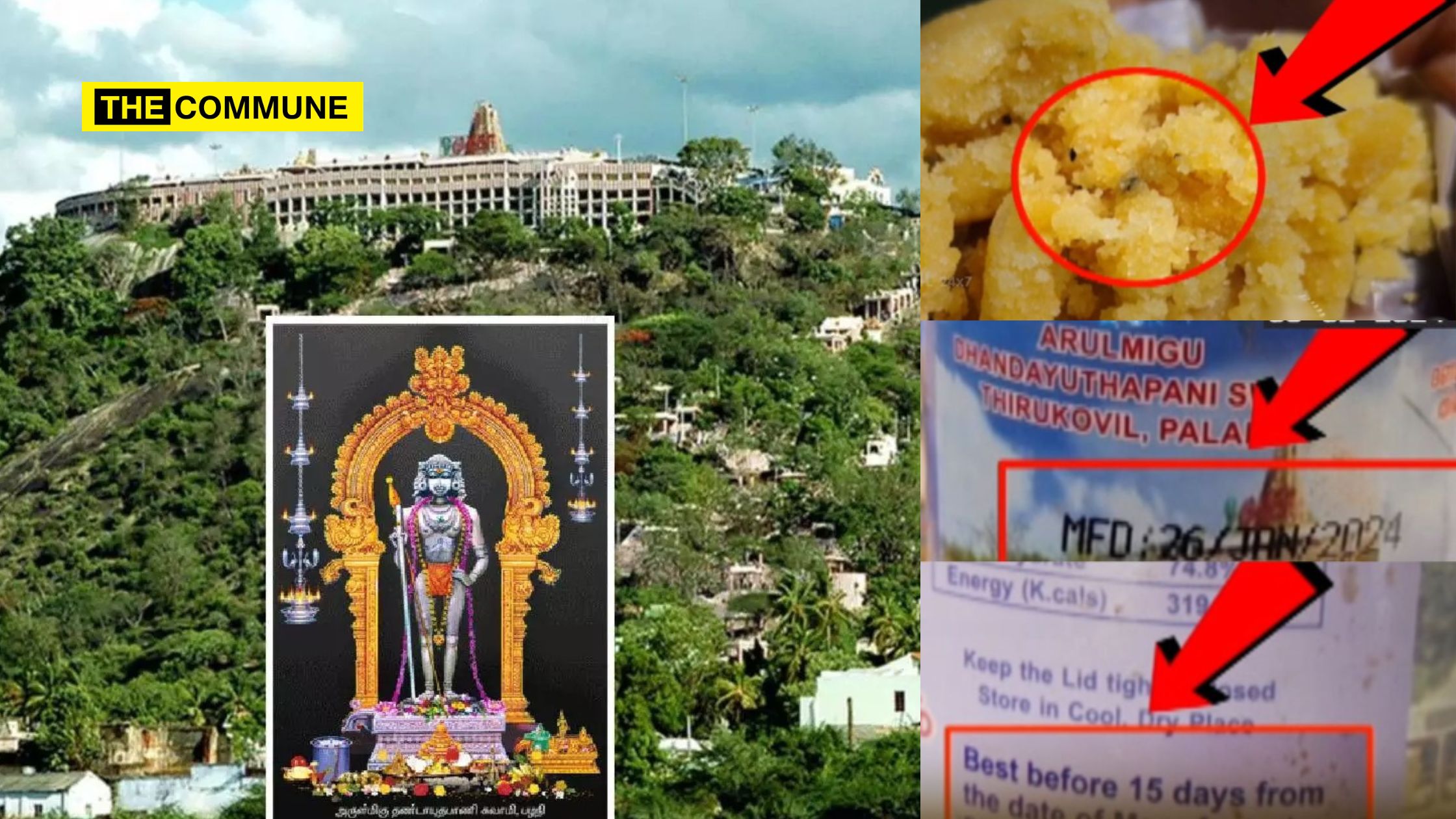
The distinguished Palani Dhandayuthapani Swamy Temple, one of the six abodes (Aarupadai Veedu) of Lord Murugan, draws in thousands of devotees on a daily basis, with an even larger influx during festivals such as Thaipoosam. In a recent incident, devotees visiting the Palani temple raised concerns that the prasadam sold by the temple administration were beyond their expiry date. Offerings like laddu, murukku, and athirasam were reportedly being sold with a noticeably spoiled odour.

Accusations arose that an excess of offerings was prepared during the Thaipoosam festival (25 January 2024) and were being sold in February 2024 without adequate supervision. This has led to devotees unknowingly buying spoiled items, with accusations emerging that prasadam without the production dates emitted a foul odour. In response to these concerns, the temple staff reimbursed devotees for their purchases. The deteriorated state of the prasadam gained widespread attention on social media, prompting the press to take notice. In response, the temple administration issued a press release, refuting the television reports.

Following this, the Dindigul District Food Safety Department officials, led by Officer Kalaivani, were summoned to inspect shops selling spoiled prasad and Panchamritham manufacturing facilities. The investigation uncovered the deterioration of oil in the laddoo, leading them to collect samples for laboratory analysis. The scrutiny was concentrated exclusively on the area where the offerings were produced, and journalists were not granted access. Subsequent to the inspection, the food safety officials recommended changing packing covers, filtering the oil, and ensuring the recording of expiry dates before the sale of the offerings.

During a press conference held at the temple office to address the allegations, the Trustee Chandramohan, Assistant Commissioner Bharathi, along with other members of the trustees Rajasekar and Manimaran, were present.

Trustee Chandramohan clarified that the sale of prasadam was not solely driven by profit motives. In response to reporters’ inquiries about the officials’ claim of oil in the laddu, he dismissed it, stating that it was merely the smell of oil. He mentioned that they had already ordered an oil dryer machine, and once implemented, even that scent would be eliminated.

When questioned about the absence of manufacturing and expiry dates on laddoo and murukku, despite being mentioned for Panchamritham, Chandramohan acknowledged the oversight and assured that they would address the issue based on the officials’ recommendations. Responding to concerns about the 15-day expiry period for Panchamritham, he explained that the product could actually remain consumable for an additional 15 days without spoiling. However, when pressed by reporters about the contradiction, he conceded that after 30 days, the product could not be consumed. The reporters countered this by pointing out that on the 16th day, even with a 15-day expiry label, the prasadam might not be suitable for consumption.

Instances Of Mismanagement By HR & CE Department At Palani

Reports from January and February this year reveal instances of arrogance and negligence from the temple authorities. They seem to have autocratically made decisions, issuing orders without adhering to the primary purpose of the department – serving the devotees, rather than assuming a ruling role.

On 30 January 2024 Chandran, a devotee from Edappadi, was allegedly dragged, beaten, and left with a fractured skull by temple guards and authorities. Both Chandran and his injured son were admitted to the Palani Hills Temple hospital for treatment. In response, over 500 devotees from Edappadi protested, urging action against the implicated security guards. The temple authorities assured the suspension of those responsible.

On 15 January 2024, Palani Murugan Temple administration especially Hindu Religious and Charitable Endowments (HR&CE) department faced criticism as worshippers were allegedly charged ₹1000 for mobile phone safekeeping, despite an initial notification stating a fee of ₹5. After completing the darshan, over 200 devotees confronted temple staff and engaged in a heated verbal exchange with temple staff over the high charges, resulting in a reduction to ₹500, with a warning that those unable to pay would be placed in the donation box.

https://twitter.com/SaffronSurge3/status/1747220023859699899

In another incident during the same month on 5 January 2024, disappointment struck devotees preparing for Pongal and Thaipoosam celebrations at Palani’s Dandayuthapani Swami Temple, as the HR&CE Department allegedly denied permission to play drums during the festivities. This decision caused dismay among worshippers, especially during the sacred Thaipoosam festival, known for strict moral codes and fasting. Assistant Commissioner Lakshmi clarified that drumming was prohibited on the hilltop temple premises.

Subscribe to our channels on TelegramWhatsApp, and Instagram and get the best stories of the day delivered to you personally. 
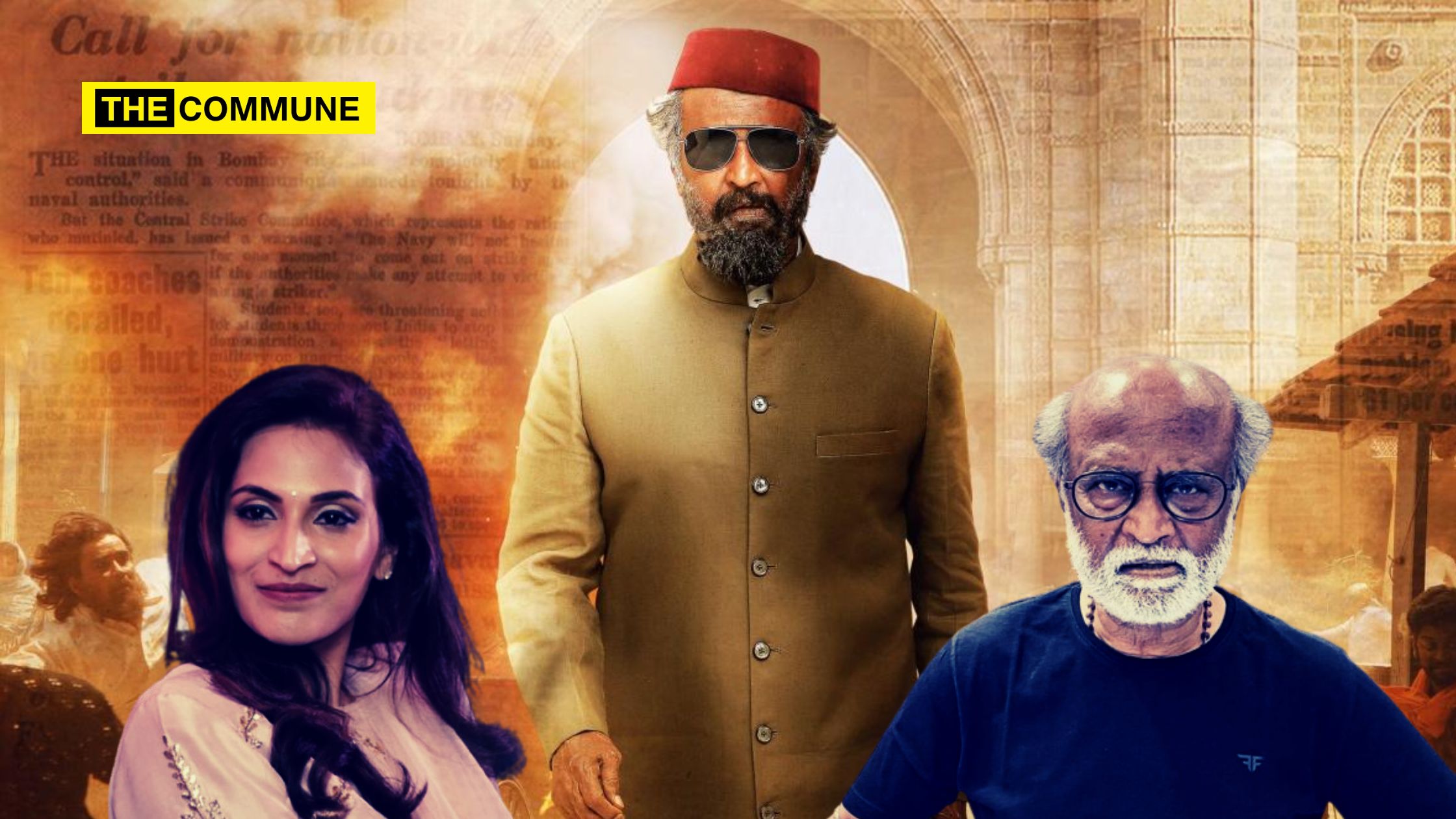
Aishwarya Rajinikanth’s Lal Salaam Is As Good As Her UN Dance Performance, Even Her ‘Non-Sanghi’ Father Rajini Can’t Save This Film

Why was the film named Lal Salaam? During the film’s audio launch speech, Rajini explains – “Red has many faces. Red is associated with communism. Red is also associated with danger. Red is used to symbolise violence. Red also represents revolution. Aishwarya utilises red as a symbol of revolution in her story. ‘Salaam’ means greetings. So ‘Lal Salaam’ is a greeting to revolution because the story itself is like that. A revolutionary tale!”

Towards the end of this review, you will find out which red the Lal in Lal Salaam denotes. 

The film begins with Aishwarya herself doing the narration. Her deep voice pops in here and there to explain the situation to the audience. 

The premise is that to secure votes, politicians divide a harmonious relationship in a fictitious village called Muradbad – wonder if there is some such village in Tamil Nadu. But after watching the film, one can only shout – “Lal Salaam Murdabad!”

By the first 30-odd minutes, we understand that the film is about cricket, Mariamman ther (chariot) festival, politics, riots, and communalism. What a heady mix! The story goes back and forth between the past and present, making it all the more confusing and tiring for the viewer.

Thirunavukkarasu, or Thiru, played by Vishnu Vishal, is sent to jail and is released on bail after six months; when he comes out, he is shown to wear the Taveez – you wonder why it is displayed; you will find the answer towards the end of the film. He comes back from jail but is shunned by everyone in the village. But our hero meets his love interest and sings songs right after this. You expect something to develop on that front, but no. There’s something else.

Cricket comes into the picture now – it is perhaps the most unconvincing aspect connected to a small village in Tamil Nadu. Well, it is fiction, so let’s see where this goes.

Rajinikanth makes his entry at about 25 minutes into the film in what one would see as one of the most underwhelming entries of all time. He makes his entry in the backdrop of the constipated screams of Jalali Jalali by AR Rahman. 

Moideen, the character that Rajinikanth plays, is shown to be the epitome of all virtues, and guess what? He speaks about halal (lawful) and haraam (forbidden) but also beats up people. Beating up people is halal or haraam?

There are too many characters in the film, and it is unclear if Aishwarya wanted to do justice to each of them, as half of the characters appear for a maximum of 5 minutes. Here is a list of those characters:

KS Ravikumar, who plays a politician, is shown for a few minutes in the beginning. He appears for a few seconds in the middle of the film – for what, god knows.

Thiru’s love interest also appears for a maximum of 5 minutes and then for one scene in the second half. She is nowhere to be seen for the rest of the film.

Nirosha, who plays Moideen/Rajini’s wife, also has very few dialogues to mouth; she stands there in scenes like a prop. 

Two villain characters in the Bombay scenes also appear for a few minutes each. 

At the film’s beginning, it is shown that the year is 1993. Guess what? Kapil Dev also enters into this already big confusion. He is shown as a cricket coach, but it was in 1994 that Kapil retired. So, what are they trying to establish here? God knows… 

There are some very cliched dialogues about Moideen’s love for his wife – he compares it with that of Shahjahan and Mumtaz. Or the one where Moideen preaches that Muslims who stayed back in India during partition did so out of love/patriotism for the country – ho-hum. These tropes have been debunked long back; please give us something new. 

This film has more enjoyable cricket than Blue Star, which was touted as a sports film. Thiru and Shamsuddin (Moideen’s son), played by Vikrant, play some great cricket. 

Politicians are shown to manipulate communal sentiments, toying with the people’s emotions. But they had to show them as Hindus. In today’s time and age, it is clear as crystal who makes inflammatory statements, calls for Sar Tan Se Juda, and who talks about the treatment of Kaffirs.  

Usual Secularist Tropes

The portrayal of the villain as a Hindu and the do-gooder as a Muslim in the narrative follows a seemingly calculated script of perfect secularism. The storyline accentuates a divisive depiction by illustrating Hindus as lacking unity while presenting Muslims as remarkably united. This deliberate narrative choice not only perpetuates stereotypes but also raises questions about the underlying motives and biases within the storytelling.

The two heroes are depicted in contrasting ways: Thiru, the Hindu protagonist, is portrayed as a drunkard who disregards his mother’s advice, engages in physical altercations, and embraces violence. On the other hand, Shamsu, the Muslim hero, is presented as highly focused, attentive to his parents’ guidance, and devoid of any detrimental habits.

The contrast between the Islamic festival, where all Hindus participate, and the Hindu theru festival reveals a notable disparity. The Hindu villains are shown as taking the guise of Muslims wearing skullcaps and are shown as instigators of riots. The narrative takes a distressing turn when the Hindu antagonist inflicts permanent harm on Moideen’s son. Was this the current “climate” Aishwarya mentioned in her speech? Real Hindus never indulge in such cowardly acts of pretending to be Muslims to start a riot. Such portrayals only perpetuate harmful stereotypes. 

Towards the end, the revelation about how the taveez saves Thiru feels like a predictable and overused trope. 

Some Other Observations

The Hindu festivals are portrayed with the right zeal, accompanied by a song that evokes the right celebratory emotions for just a few minutes. 

While discussing logic in cinema is probably incorrect, this one could not be overlooked. Shamsu, after losing his arm, tries to hang himself with one hand. The entire film is like this – zero cohesiveness and clarity. 

The person who played the character, Michael, speaks inspirational stuff much better than Rajini himself. Senthil and Thambi Ramaiah act with conviction. Thiru and Shamsu do their best to play their parts. The face of the film, Rajinikanth, fails at emoting in what could have been a heart-wrenching scene – when he hears about Shamsu losing his arm, Moideen/Rajini emotes poorly, while Nirosha does better. 

In fact, Thambi Ramaiah and the character depicting Mariamma show more profound emotion when the theru is burnt than Rajini when he learns his son has lost a hand. For a seasoned actor, he fails to bring out the emotions of a parent. 

This film could have been made into something entirely different, perhaps focusing solely on sports, but the communal element just had to be there to peddle the propaganda of political masters. With a runtime of 2.5 hours, the film feels excessively long, lacking any substantial content. 

Towards the end, Rajini performs some stunts, which will probably thrill the Rajini fans and frontbenchers, but that is all there is to this film. 

In the concluding scene, the theru (chariot) magically reappears (after it gets burnt, thanks to the villain in the previous scene), courtesy of Moideen, who actively participates in the festival and carries the idol to the theru. Now, is this haraam or halal? #JustAsking

As a viewer, as the film ends, one would indeed feel like Vivek as Emotional Ekambaram from the film Utamaputhiram – “Confusion of the constitution of the institution of the loose motion!”

Father & Daughter

This is Aishwarya’s 3rd directorial venture, and she still hasn’t gotten a grip on things. She fails miserably on all fronts. There are too many people in the mix – big names, small names, unnecessary characters – everything feels forced fit to go by the secularism playbook where Hindus are the villains. This film is much worse than her UN “dance” performance. 

Rajini seems to have taken up this film to save his daughter from misery – as per her speech at the Lal Salaam audio launch, where she confessed that no one came forward to be a part of this film or act in the Moideen role. To avoid looking like a failure, she spun it as “If Rajinikanth were a Sanghi, he wouldn’t have acted in the film Lal Salaam. A Sanghi cannot act in this film. Only a humanist can act in such a film. Only Rajini has that courage; no one else could have done it.” 

Only a fool would have taken up this project to show their “humanity” towards her – no one in their right mind would have taken up this completely rubbish script with poor screenplay and direction. And she said this role was worth a National Award? Who was she kidding? And a revolutionary tale? Yes, we are all laughing.

In her Lal Salaam audio launch speech, Aishwarya also mentioned, “My film will be on all your lists.” Yes, in the To-Avoid list. The meaning of Lal in Lal Salaam is, as mentioned by Rajinikanth – danger – take it as a warning to avoid the film at all costs; not even worth a watch on OTT, save yourselves the headache. 

If you happen to watch the film and get one, try to get some comic relief by watching the below video.

Subscribe to our channels on TelegramWhatsApp, and Instagram and get the best stories of the day delivered to you personally.

Nirmala Sitharaman Busts DMK’s Propaganda On Centre’s Devolution Of Funds To Tamil Nadu

The Dravida Munnetra Kazhagam and other I.N.D.I. allies continue their trope about the disparity in tax sharing. The Karnataka Congress-led government is also indulging in this propaganda. They led a protest at Jantar Mantar a few days ago with their alliance partners to protest the disparity.

During the Parliament session, DMK MP Tiruchi Siva questioned the Union Finance Minister Nirmala Sitharaman on this once again. He said, “Tamil Nadu is the largest contributor of direct taxes to this country whereas for ₹1 we pay to the union government, Tamil Nadu government is getting 29 paise whereas UP if they pay ₹1, they get ₹2.73 (₹2 and 73paise). What is this disparity? Why this discrimination? You say the country is one, you say everything all are equal but why this sort of treatment? By way of this GST regime, the Tamil Nadu government has last estimated to be around ₹20,000 crores.”

Union Finance Minister Nirmala Sitharaman befittingly answered all the questions for yet another time. She said, “I just want to highlight just five points, I won’t go into details. The five points are sir, we give so much but we don’t get. Doesn’t add up. States receive 100% of the state GST collected in that state, nobody touches it. 

About GST Share

Approximately 50% of the IGST which is collected for the transaction between states is given approximately 50 goes to the states and 41% of the central government share of the GST – CGST is also devolved to the states based on the finance commission’s recommendations. So tax Devolution which is suggested by the finance commission tells very clearly that 100% of what you collect in GST is with you, 50% of the IGST goes to you, 41% of the central GST also goes to the states.”

Tax Paid By Industries

The second point she spoke of was, “Industrialized states like Tamil Nadu have very many companies which are registered there, but which have pan-India operations and they have concurrent tax payments. For example, Tamil Nadu is one of the leading automobile manufacturing states, we all know that. Manufacturers make profits because these automobiles are sold across India, so you pay the tax, you pay the tax, all of us pay the tax and similarly, plantations from Kerala make profits selling their products all over India. This explains why the location of direct tax collection may not be on the fair and equitable because the money comes from everywhere but the taxes paid in the state in which they are registered. So if automobile companies are registered in Sriperumbudur in Tamil Nadu and they pay their tax from there, it’s not just that Tamil Nadu tax money is in it, all our tax money is in it. So when we say each state as I’ve contributed this much what have you given back? I want to say the tax is from all Indians, sir. Your company is registered there and you pay your tax. So let us think about it.”

Contributions Of Centre vs State

Going on to the third point she was making, Nirmala Sitharaman said, “Third, sir. There’s a proverb in Tamil – Thadukku la paanja, paai la paaiven, (தடுக்குல பாஞ்சா பாயில பாய்வேன்) meaning, I raise an issue and if you address that, I’ll jump to the next. There’s no end. This is answered N number of times in this house but N number of times it’ll always be raised. Third is Sir, physical infrastructure such as roads, rails, ports, airports are built by the centre, and expenditure on internal and external security is completely the centre’s. So we have to make comparisons taking these points into consideration.

Finance Commission Recommendations

She added, “The last two points sir I’m just giving this as an example. Tax devolution made to Kerala and tax devolution made to Tamil Nadu during the 13th, 14th, and 15th Finance Commissions. Kerala, sir, when that is 32% Devolution 13th Finance Commission had ₹33,368 crores. When I say 13th Finance Commission, its period was 2010/11 to 14/15 in that duration. Then when the 14th Finance Commission submitted its report and recommendation was accepted just as soon as Prime Minister Modi took charge in 2014 and that 2014 report came into effect from 2015/16  to 2019/20.

By that time, because the recommendation of the 14th Finance Commission was, 42% will have to be devolved to the states, so the 32 became 42 in the tax devolution. 15th Finance Commission, it became 41 because of Jammu Kashmir becoming a Union territory. So 15th Finance Commission, it is 41%, and the 15th Finance Commission term which is running now, from 2021 to 25/26, so I’m reading the numbers for those three Finance Commission terms. ₹33,368 crore for the 5-year period, ₹80,188 crore for the 14th Finance Commission period, and ₹1.1 lakh crore during the 15th Finance Commission. Tamil Nadu sir during the same time ₹70,825 crores during the 13th Finance Commission’s time, ₹1.29 lakh crore during the 14th Finance Commission which ended in 2020, and during the 15th Finance Commission ₹2.36 lakhs lakh crores. Just see the amount and where are we being told your money is not getting devolved, you are getting the money.”

Modi Govt Empowering States Financially

In her final point, she said, “The credibility of this government sir is to financially empower the states can also be gauged from the fact that an issue which was pending from 1996-97 till 2014-15 happened, nobody touched it that was actually money belonging to the states. Nobody touched it it was lying as a pending amount, and tax dues amounting to ₹81,645 crores was lying there. It was Prime Minister Modi who in 2015, talked to the ministry to the officials, to me, all of us worked together with the states. There was some money that the states owed, some by the centre, this money was owed by the centre to the states – ₹81,645 crores was then released, and reconciled amounts adjusted. The net-net amount which went to the States was ₹43,168 crores after adjusting what they owe the centre.”

Subscribe to our channels on TelegramWhatsApp, and Instagram and get the best stories of the day delivered to you personally.
Sivakarthikeyan’s Ayalaan Peddles Usual Dravidianist Tropes About Brahmins, Inserts Unrelated Brahmin Character To Mock

References to Brahmins can be found in the earliest Tamil literature, such as the praise for the sage Gautama in the Tamil work Silappatikaram, who served in the court of Senguttuvan’s predecessor. The Tolkappiyam, from an earlier era, speaks of the victorious Brahmin. Mulam Kilar of Avur, in a poem from Purananuru, lauds the learning and character of Brahmin Kauniyan Vinnam Thayan of Cholanadu, highlighting his efforts against the penetration of Buddhism in Tamil land and praising his faithful performance of sacrifices.

During the British Raj, anti-Brahmin sentiments were actively promoted by both British administrators and writers. Figures like J.H. Nelson portrayed non-Brahmins as superior, while Charles E. Gover’s “The Folk Tales of South India” contained anti-Brahmin rhetoric. Bishop Robert Caldwell, associated with the Dravidian Movement who seeded the thoughts of the narrative vehemently attacked Tamil Brahmins. The rise of EV Ramasamy (EVR) and the Justice Party from 1930 onwards intensified anti-Brahminism, with periodicals like Viduthalai and Justice launching scathing attacks on Brahmins. EVR’s works, along with CN Annadurai’s ‘Aryamayai,’ ridiculed Brahmin rituals and practices, accusing them of propagating casteism and superstitions. Although popular support for the anti-Brahmin tirade has waned over time, the Dravidar Kazhagam, founded by EVR, continues vehement anti-Brahmin rhetoric in its publications today.

When Annadurai left the Dravidar Kazhagam to form the Dravida Munnetra Kazhagam (DMK), they recognized mass media as a crucial tool to disseminate their ideology. This led to the production of films condemning what they perceived as Brahmin oppression and advocating social reform and atheism. The film “Parasakthi,” featuring a controversial scene of a temple priest attempting rape, marked the beginning of an era with more films supporting the Dravidian ideology. “Vedham Pudhidhu” by Bharathiraja portrayed a non-Brahmin boy learning music from a respected Brahmin and falling in love with the guru’s daughter.

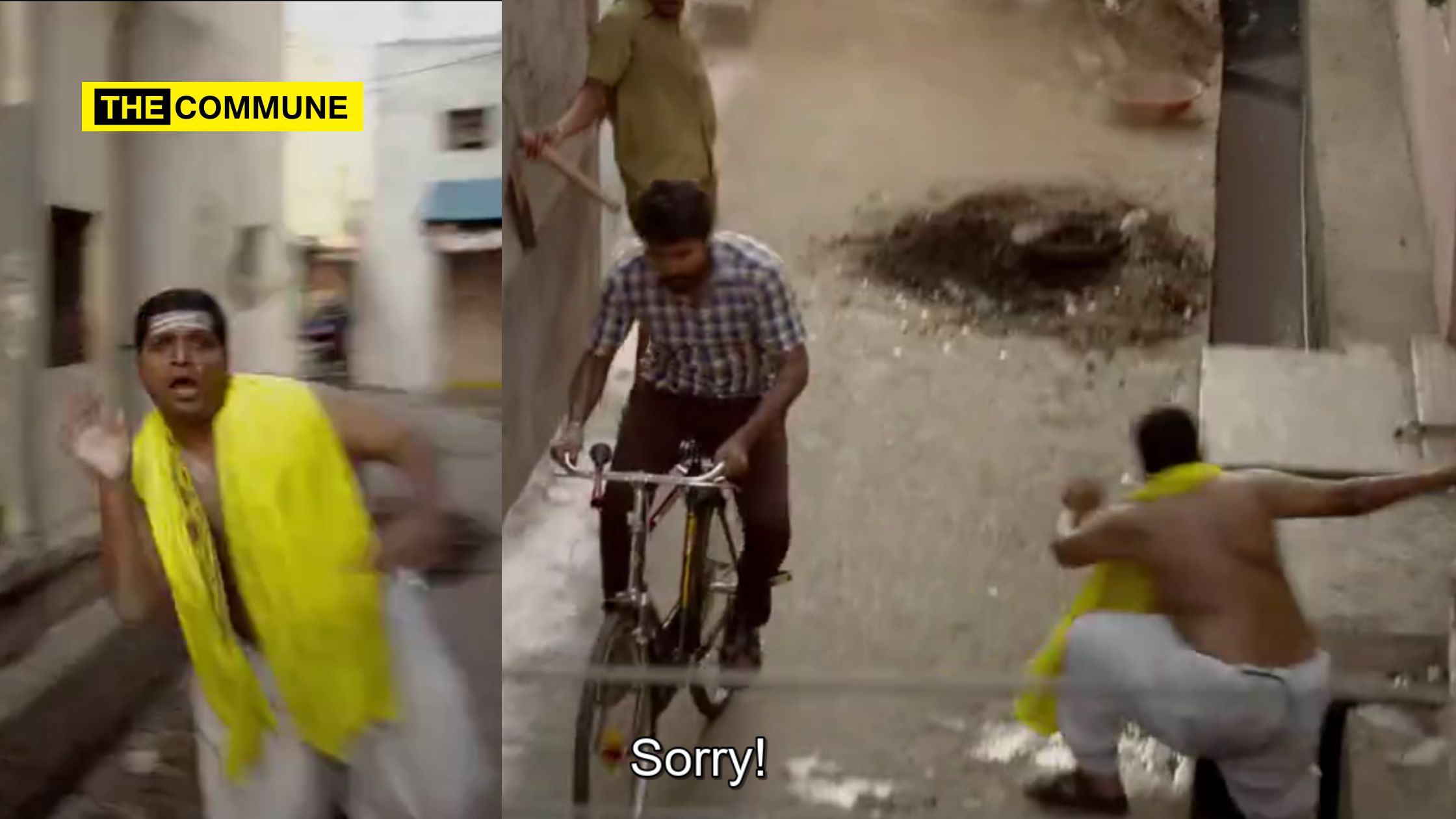
The same continues today in films like “Annapoorani” with blatant propaganda is easily recognizable, but in “Ayalaan,” a more subtle and insidious approach is employed for comic relief. The scene featuring Siva Karthikeyan riding a brakeless cycle in a narrow street, causing someone to fall into a sewage drain, may last only 5 seconds, but it is a calculated effort. The choice to depict a specific character, dress them in a certain way, and undergo multiple retakes suggests a deliberate intent to generate laughter. If it were solely for humor, the character falling would have been portrayed as an “identity-less” individual. However, the clear intention is to derive cheap laughs from the audience, particularly targeting a certain demographic. The film’s portrayal of the villain and his corporation named “Aaryan Industries” adds another layer to the narrative, drawing parallels to the portrayal of Manu Builders in “Kaala.” This hint shows the director or production unit’s affiliation to Dravidian ideology to get some favors later. 

Crafting such a scene requires a level of calculated malice, involving the meticulous storyboarding, casting, and execution to perpetuate a harmful stereotype. This deliberate portrayal of a Brahmin character falling into a ditch not only aims to entertain but is part of a larger narrative within the Dravidian project. The first facet of this project involves presenting Brahmin men as effeminate, cowardly figures, devoid of masculinity, surviving through scheming and betraying lower castes to the antagonist. These characters are deliberately made comical caricatures, reinforcing a narrative that justifies going after Brahmin women.

The second aspect focuses on depicting Brahmin women as objects of desire, discontent with their own community and yearning to be rescued from the supposed Brahminical oppression. This scene, lasting a mere five seconds, adds to a century-long pattern of portraying Tamil Brahmins as clowns, reinforcing the harmful perception that they are deserving of mockery. It is a continuation of the sustained assault on Tamil Brahmins through the medium of Dravidian art and cinema, leaving a lasting impact on the minds of millions of Tamil youth.

The title “Ayalaan,” meaning alien in Tamil, takes on a peculiar significance as it intertwines with an unexpected and seemingly unrelated subplot. In a striking example of calculated narrative manipulation, the film introduces the above random scene of a Brahmin falling into a ditch. This element appears to be a deliberate insertion, emphasizing the level of meticulous planning and execution involved. The scene doesn’t contribute to the main storyline but rather stands out as an anomalous addition, suggesting a certain criminal passion in the storytelling process.

The film’s connection to an alien subject becomes evident when an alien is depicted entering “Aaryan Industries,” adding an additional layer to the narrative. This seemingly random and disconnected insert reflects the lengths to which the filmmakers went to weave an unnecessary and derogatory portrayal of Brahmins into the fabric of the movie. It underscores a deliberate attempt to perpetuate harmful stereotypes and continues the century-long assault on Tamil Brahmins through the medium of cinema.

Subscribe to our channels on TelegramWhatsApp, and Instagram and get the best stories of the day delivered to you personally.
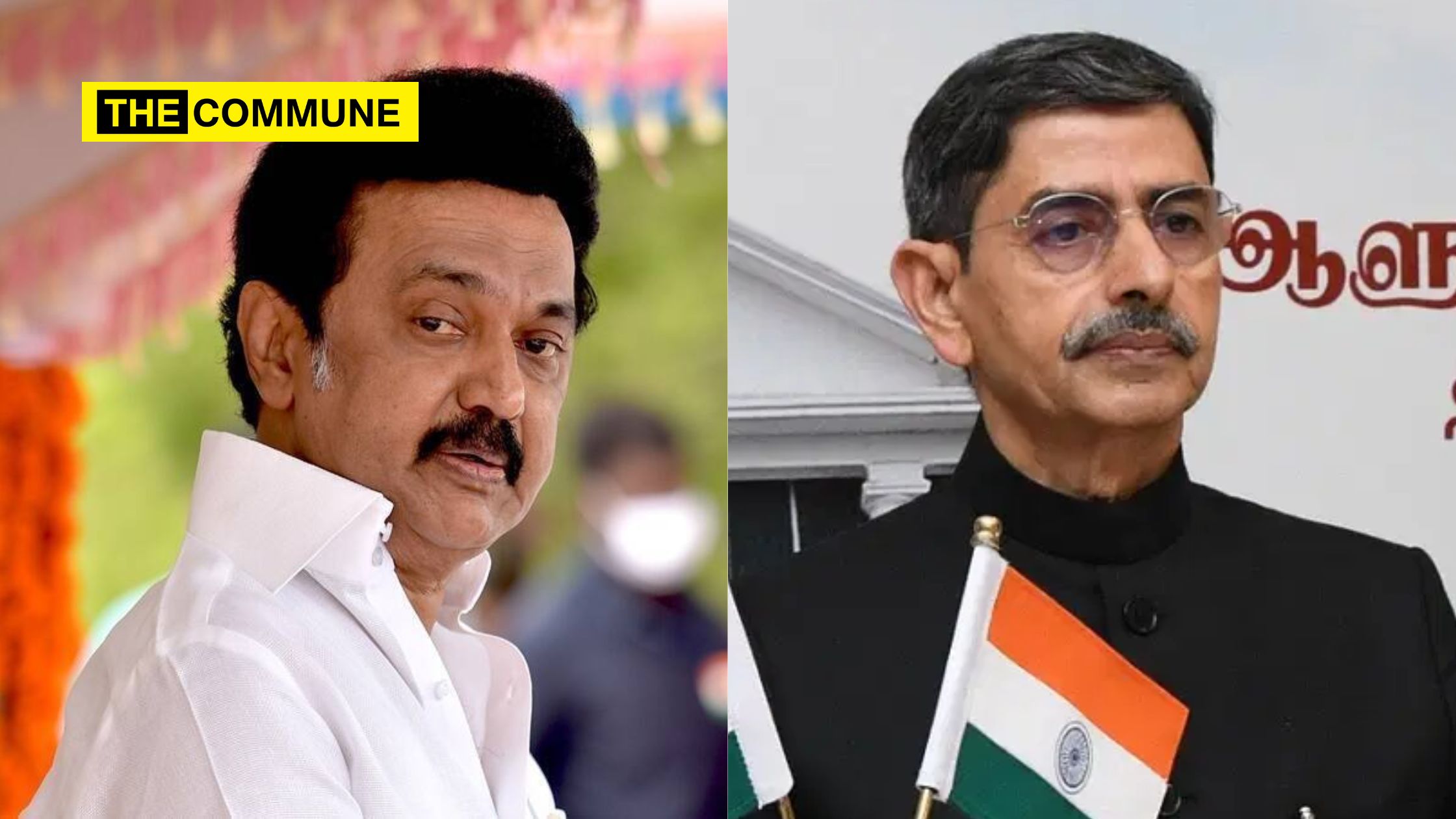
“Repeated Request To Play National Anthem Ignored”: RN Ravi Refuses To Parrot Address Prepared By DMK Govt Saying It Would Be A Constitutional Travesty

National Anthem Insulted Again By Not Playing In TN Assembly Alleges TN Guv RN Ravi, Walks Out Without Reading Address; Fourth Such Incident Since 2022

The Tamil Nadu Assembly gathered today, 12 February 2024, for the first session of this year (2024).

Governor R.N. Ravi extended his greetings to the Tamil Nadu Assembly in Tamil and expressed the honour he felt in delivering the inaugural address for the 2024 session. However, he noted with regret that his repeated requests to play the national anthem at the beginning and end of his address were disregarded.

He said, “Friends, my repeated requests and advice to show due respect to the National Anthem and play it at the beginning and end of the address has been ignored. This address has numerous passages with which I convincingly disagree on factual and moral grounds. I lending my voice to them would constitute constitutional travesty, hence with respect to the house, I conclude my address, wish this House a productive and healthy discussion for the good of the people. Vaazhga Tamil Nadu, Vaazhga Bharatham, Jai Hind, Jai Bharat, Nandri.”

The governor emphasised that the address, given to him by the State government, to be read by the Governor, contained numerous passages with which he strongly disagreed – both on factual and moral grounds. He asserted that vocalising these points would be a constitutional travesty. His abrupt conclusion of the address in the assembly, sparked an uproar among the members.

In general, the Governor’s address would be around 40 minutes which would list out the achievements of the state government, especially the plans for the coming year. It would also state that the law and order situation of the state is good and that the TN government is successfully implementing law and order – these seem to have not gone down well with the Governor and thus he refused to read out the speech handed over to him by the state government.

The speech given to the Governor is usually in English and subsequently translated into Tamil by the Speaker. After this protest by the Governor, Speaker Appavu continued addressing the Assembly with the translated speech of what was originally given to the Governor.

During the first day of the winter session in Tamil Nadu Assembly in 2023 also it was the same scenario. Despite the fact that the Raj Bhavan had communicated the changes required in the speech to the state government two days prior, there had been no response from the state government. It should be noted that DMK allies VCK, Congress, Tamilaga Vaazhvurimai Katchi, and others surrounded the governor as he began his speech, yelling “Get out Ravi! This is Tamil Nadu.” They prevented Governor RN Ravi from reading out his speech.

This time around, the Governor refused to read out what was given to him.

Subscribe to our channels on TelegramWhatsApp, and Instagram and get the best stories of the day delivered to you personally.
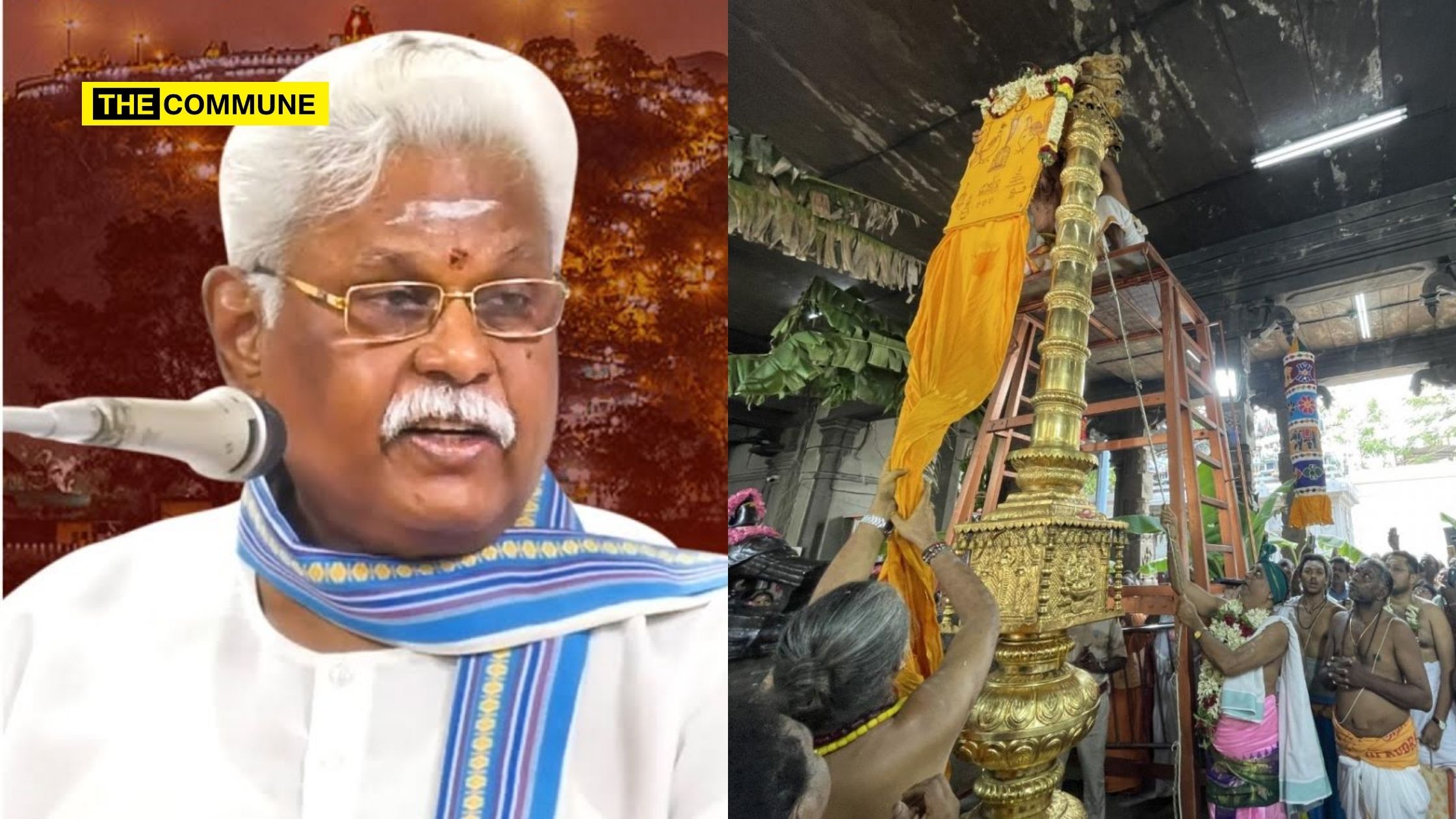
Self-Anointed Dravidianist ‘Spiritual Discourser’ Suki Sivam Says Palani Murugan Temple Has No Flagstaff, Here’s What He Didn’t Say

Suki Sivam is a popular Tamil orator, writer, and a self-anointed scholar who had become a household name with the TV show “Indha Naal Iniya Naal” on Sun TV. He is known for inserting Dravidianist agenda in his spiritual discourses. He is now facing criticism from netizens for allegedly spreading false information during a speech.

This comes in the wake of the Madurai Bench of the Madras High Court issuing an order on 30 January 2024, stating that individuals who are not Hindus should be restricted from entering the Palani Murugan Temple. The court further specified that those without Hindu beliefs should not go beyond the ‘kodimaram’ (flagstaff) of the temple, and visible placards conveying these restrictions should be placed at various locations within the temple premises.

At the discourse hosted by the Narayana Guru Trust at the Periyar venue in Madras University titled “Religion and Society,” he delivered a speech, “In the Palani temple, keep the board that says Hindus (said instead of non-hindus) are not allowed to cross the sacred Kodi Maram (flagstaff) so that it is clearly visible, i.e. write it clearly so that even the blind can see it without wearing glasses, they have given a ruling that no one can come beyond the sacred flagstaff, now I am going to say something interesting. There is no flagpole in Palani hill temple”

Only the temples built according to the rules of Agama have a flagpole, the temples built by the Siddhas in violation of the rules of Agama do not have the flagpole. Then the Palani temple was built by the Siddhas, so there was no flagpole. For a temple without a flagpole, one files a case, one writes a reply, and a judge writes a verdict. So none of them care about god, only the fight matters.” he said.

Now came the single judge judgment, but before this there was already a two-judge judgment in the bench. One, we don’t have time to scrutinize the religion of all the people. If there is a temple consecration (kumbabhishekam) ceremony is it possible to question, Who are you? What caste? What religion? It is impossible and hence the plea of the petitioners cannot be accepted.” he further said.

Number two, they claim that people of other religions should not come in. But they are playing the song sung by Yesudas for Ayyappan (Audience Clapping). If you ask me, Ayyappan likes Yesudas the most. Did Ayyappan care about What religion he is? No right? So we put on Yesudas song, can we question Yesudas devotion?” he added

Thirdly they said a word and it was a beautiful word. They said that if you come inside to see a diety, it means that he believes in that faith. Do not research this, it will not be good.” he further added.

Later Suki Sivam wryly remarked that the purpose of someone entering the temple is for worship, not to plant a bomb. He criticizes the emphasis on discouraging the worship of family clan gods, suggesting that it may not be a practical solution as long as there is a continuation of cultism and caste-based divisions. He also attributes the creation of castes to figures like Shankaracharya, referencing Vivekananda’s words to highlight the historical roots of the caste system.

The DMK IT wing initiated a video clipping, focusing on the Palani Murugan Temple and the discussion surrounding the sacred flagpole. They disseminated the content on social media, asserting that there was no sacred flagpole in the Palani Murugan Temple. In a swift response, netizens countered and refuted these claims by presenting previous news video of Thanthi TV showcasing ceremonies conducted for the Palani Murugan Temple’s sacred flagpole during the Thaipoosam festival.

Apart from the temple situated on the hillock, there is also a Murugan temple at the Adivaram (foothills of the Palani Murugan Temple hill). In ancient times palani was referred as Thiru Aavinankudi and this temple existed even before Palani Dhandayuthaswamy temple. This is also the third Padai-Vîdu (third of the six abodes of Murugan) celebrated in song, classics, legend and traditions. Usually before going to the main hill temple, devotees visit Tiru Avinankudi. The sacred water body ‘Saravana Poigai’ is located near this temple.

The Kodimaram in this temple is made of single stone. Lord Muruga (as child sitting on the peacock) is the main deity.

This is not the first instance of Suki Sivam entering into controversy. Whenever there is a discourse on Hindu dharma, he consistently aligns himself with a perspective that resonates with the Dravidian ideology, conveying sentiments that seem favorable to the DMK family. It is noteworthy that his career gained prominence through hosting programs on Sun TV, a network associated with the DMK family. There are allegations suggesting that he received the Kalaimamani Award in 2009 under the leadership of CM Karunanidhi.

In the discussion about conducting the Kudamuzhaku ceremony exclusively in Tamil ordered by the DMK government at the temple, Suki Sivam promptly aligned himself with the party, expressing full support for the initiative.

Previously as an opportunist to create controversy and capitalize on it, he unfounded a theory that Muruga and Subrahmanya are distinct, perpetuating a recycled narrative of Aryan and Dravidian divisions. He relies on Arivumathi’s flawed research book, a work associated with Dravidian Stockism, as evidence for his claims.

On another occasion, during the consecration of the Palani Murugan temple, several instances of Agama violations were reported. HR&CE Minister P Sekarbabu was observed standing shirtless outside the sanctum sanctorum. In an effort to defend the DMK, Suki Sivam asserted that Palani Dhandayudhapani does not require Agama-prescribed worship as it is a deity installed by Siddhars, and Lord Muruga himself is considered a Siddhar at Palani. Sivam claimed, “The name of Muruga at Palani is Sidhar Nathan. He does not have a Vel (spear) or peacock (Lord Muruga’s vehicle). He is Dhandayuthapani having a dhanda (a lathi). A loincloth-wearing saint. He is a Siddhar.” Contrary to Sivam’s assertions, Hindu Tamil texts, particularly Shaiva agamas, prescribe 17 forms for Muruga, including his Palani Aandi form. Tirumoolar, a Siddhar himself, has also revered Agamas.

In January 2022, CM Stalin appointed him as an advisor to the Tamil Nadu HR&CE department, and immediately in March 2022, he spoke at a DMK function praising the MK Stalin government, emphasizing that no historian, journalist, or political commentator had anticipated the level of governance provided. Taking subtle jabs at the AIADMK, Sivam remarked during the Chief Minister’s swearing-in, “On one side there is corona, and on the other side gaaliyaana gajana (empty treasury),” employing a metaphorical expression to criticize the financial state, thereby indirectly targeting the AIADMK. He concluded with a theatrical reference, stating that Stalin pulled off a “thillana.”

Subscribe to our channels on TelegramWhatsApp, and Instagram and get the best stories of the day delivered to you personally.