Home Blog Page 792

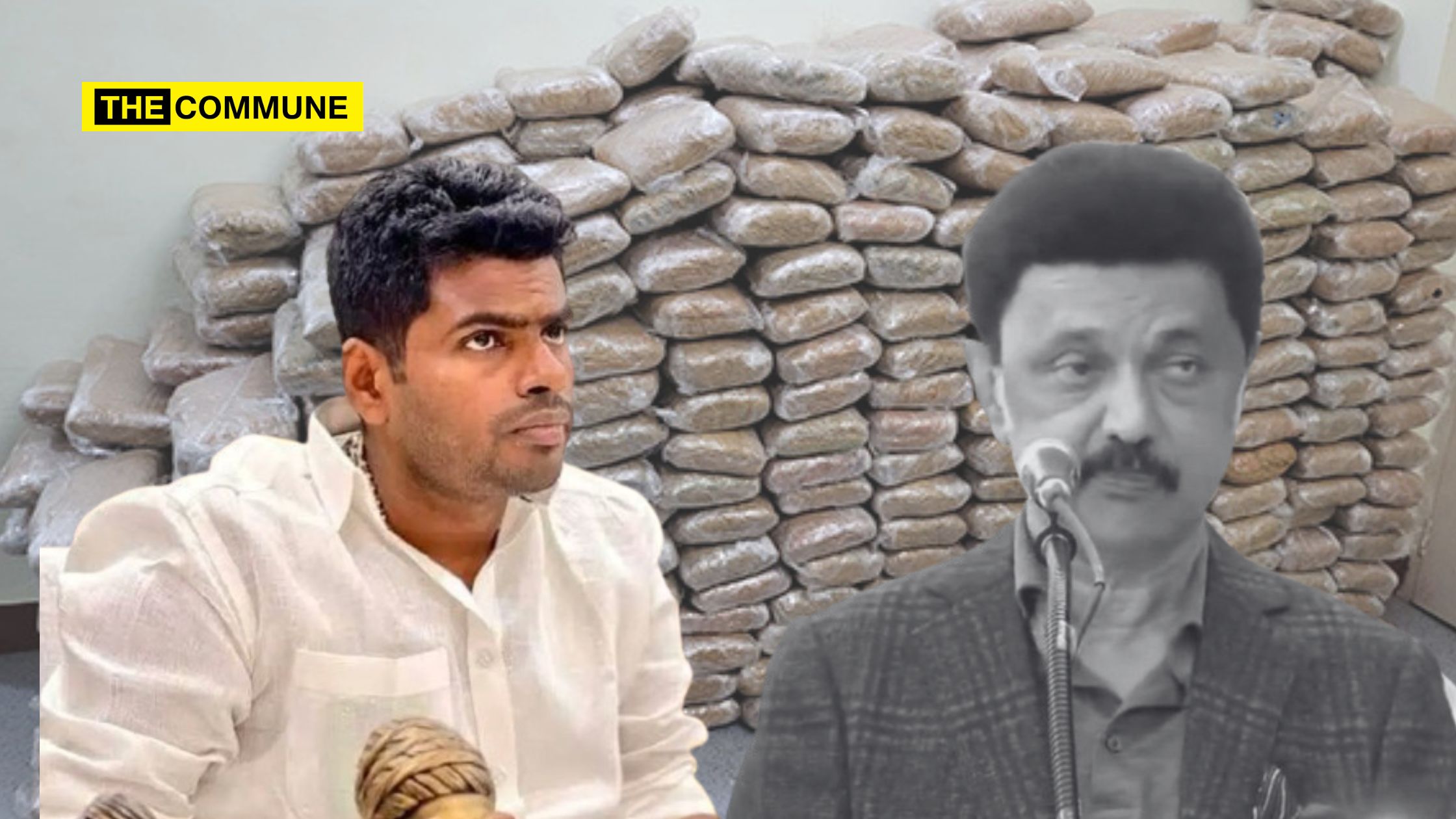
Major Drug Bust In TN: Customs Seize Hashish & Ganja Worth ₹110 Crores, TN BJP Head Annamalai Questions If DMK Govt Is In Slumber

Customs Preventive in Trichy successfully thwarted a drug smuggling attempt on Monday, seizing 100 kilograms of hashish valued at Rs 110 crore and 876 kilograms of ganja worth ₹1.05 crore in Mimisal, Tamil Nadu’s Pudukottai district. 

Acting under the Narcotic Drugs and Psychotropic Substances Act, 1985, and Customs Act, the authorities confiscated the illicit goods. This action follows the recent seizure of drugs worth ₹100 crore from the Rameswaram Coast in Tamil Nadu.

Responding to a tip-off, Trichy Central Intelligence Division Customs officers confiscated 400 bags of drugs concealed in a shrimp farm near Mimisal, intended for smuggling to Sri Lanka using a country boat through the Tondi Sea.

Authorities are actively pursuing Sultan from SP Pattinam, suspected to be involved in drug smuggling. Acting on details provided to the Customs Department of Trichy Central Intelligence Division, investigators examined a fish trading company and shrimp farms along the Ramanathapuram district border last night.

In the course of the searches, authorities seized 876 kg of ganja that was unlawfully stored in a shrimp farm for illicit transportation to Sri Lanka. The confiscated ganja was transported to the Ramanathapuram Customs Office for further inquiry. Preliminary investigations disclosed that the ganja bundles originated from a shrimp farm owned by Sultan of SP Pattinam. It was also discovered that a trio had orchestrated a plan to smuggle the ganja to Sri Lanka using a country boat on the ensuing Sunday night.

Responding to this newsbreak, Tamil Nadu Bharatiya Janata Party President K Annamalai took to his social media X handle to criticise the DMK government. He wrote, “After the DMK came to power in Tamil Nadu, drug traffic has increased in all parts of Tamil Nadu including villages. To top it off, the shocking news of DMK executive Jaffer Sadiq, who is the leader of an international drug trafficking ring, has come out recently. Today, near Aranthangi, Pudukottai district, the news is more shocking that 100 kg of hashish and 876 kg of ganja, worth about 110 crores, were seized by the intelligence unit of the customs department.”

He pointed out, “For all these years, the DMK government was having fun without taking any action to stop the drug traffic, the reason why there is such a high level of drug traffic in Tamil Nadu. The maximum quantity of drugs seized in the tests after the arrest of DMK executive Jaffer Sadiq shows that the drug traffic in Tamil Nadu has been unstoppable.”

“Realizing that drugs are a weapon to destroy our youth and future generations, will the DMK government ever wake up from its slumber and take action against the drug traffickers or, like Jaffer Sadiq, ignore them as their own party?” he questioned. 


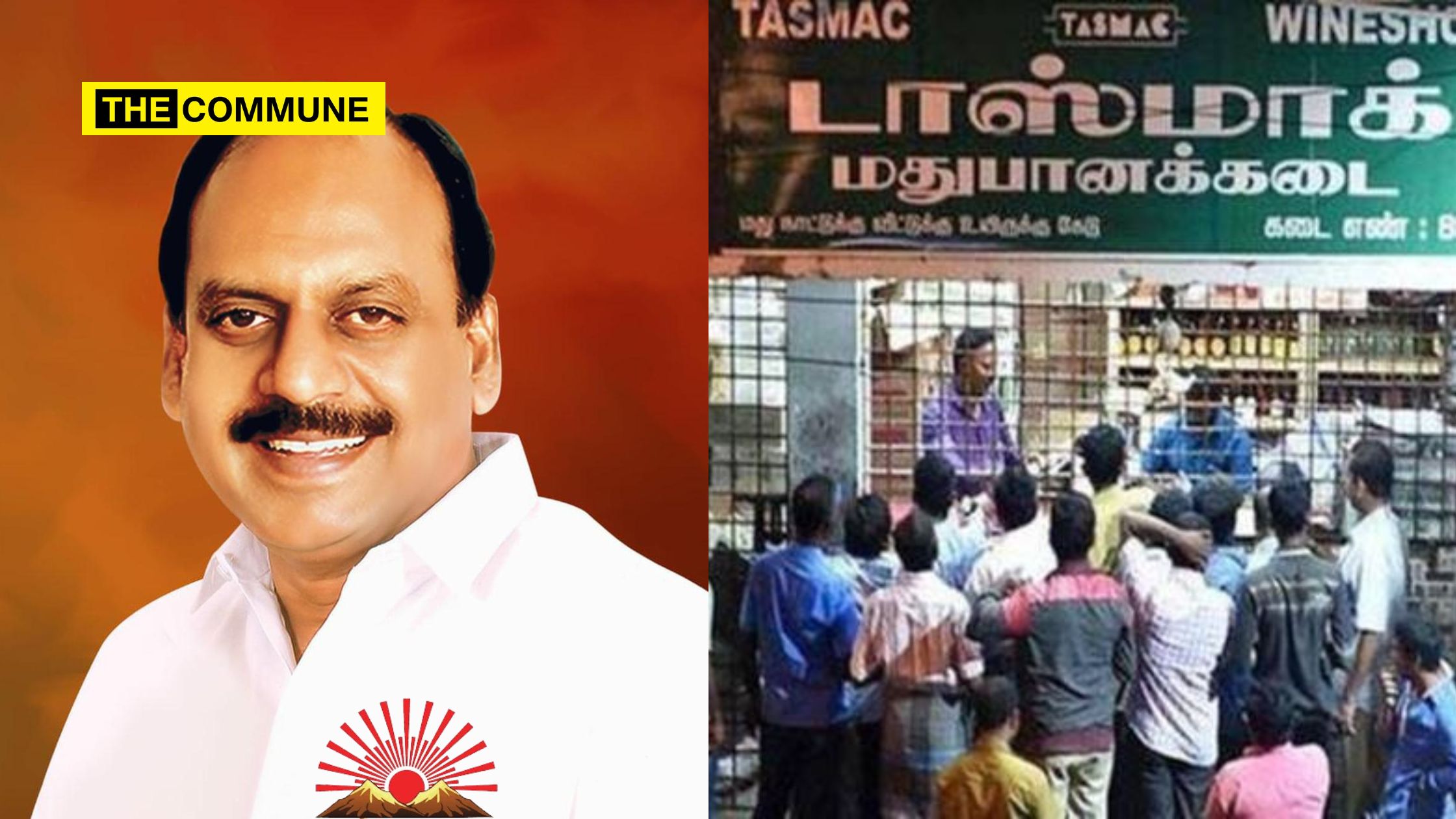
“Our Men Are Busy In TASMAC, Their Wives & Migrant Labourers Are Working,” Says DMK Minister Tha Mo Anbarasan

DMK Minister for MSME and Tamil Nadu Urban Habitation Development Board, Tha Mo Anbarasan, has come under scrutiny after a video featuring him went viral on social media.

During an event organized by Alandur Government Higher Secondary School, the minister commented that men in Tamil Nadu were not engaged in work but rather loitering in TASMAC for liquor. He noted that wherever he looked, Hindi-speaking individuals and women were the ones working, despite the content of his speech being intended as humorous, seemed to overlook the harsh reality of citizens’ lives. Anbarasan commented, “Now women are working more than men, no men are working. Our men are heading towards TASMAC after sending their wives to work. Look, I’m not saying this for laughs… This is our family, our people, so I’m talking happily. Men don’t work, I’ve said this in many gatherings, you can check who is at the tea shop. Who is there? There is only a northerner who came through migration, even if go to Adyar Ananda Bhavan there are only Hindi speaking people. He doesn’t understand what Masala Dosa is, and we don’t understand what he is saying.

In the state of Tamil Nadu, a disheartening reality prevails as the government faces accusations of primarily relying on revenue generated from liquor sales through TASMAC.  The recent ironic remark made by a current DMK cabinet minister sheds light on this issue. Despite frequent news reports featuring incidents related to liquor-related crimes, accidents, protests, and more, the government persists in the sale of alcohol as a means to generate revenue.

In 2019, the Madras High Court expressed concern over the rising incidence of crimes influenced by alcohol consumption. The court suggested that the state government, engaged in selling liquor to its citizens, should be held accountable as an abettor of such crimes

Numerous news reports highlight incidents of individuals with alcohol addiction causing harm to their own families, such as instances where addicts are responsible for fatal incidents.

  • In February 2024, 71-year-old Kasiammal, known for her role in the Tamil movie “Kadaisi Vivasayi,” was allegedly murdered by her 52-year-old son, P Namakodi, in their house near Usilampatti. The dispute arose over money for alcohol, leading to a heated argument and the fatal assault.
  • In November 2023, in Dindigul, Eshwaran, a 43-year-old a jobless alcoholic went on a stabbing spree, killing his 70-year-old mother and an 80-year-old neighbor while injuring his 14-year-old daughter, following his wife’s denial of money for liquor.
  • In September 2021, in Madurai district, police arrested a M Ramesh 21-year-old for killing his elderly mother after she refused to provide money for his alcohol consumption.
  • In November 2021, in Aanaikuppam, a 32-year-old man, S Karthik, allegedly killed his father P Subramanian (76), for denying him money to purchase liquor.

Journalists and political commentators attribute the increasing incidence of accident-related crimes in Tamil Nadu to the widespread prevalence of alcohol in the state. In 2021, Tamil Nadu witnessed a spike in road accident fatalities, deviating from a three-year pattern, while Chennai maintained its leading position among metros in road accidents, as reported by the National Crime Records Bureau (NCRB). Interestingly, there was a significant decline in fatalities related to drunken driving, dropping from 236 in 2020 to 15 in 2021, potentially linked to pandemic-induced restrictions on alcohol sales throughout the year.

Subscribe to our channels on TelegramWhatsApp, and Instagram and get the best stories of the day delivered to you personally.

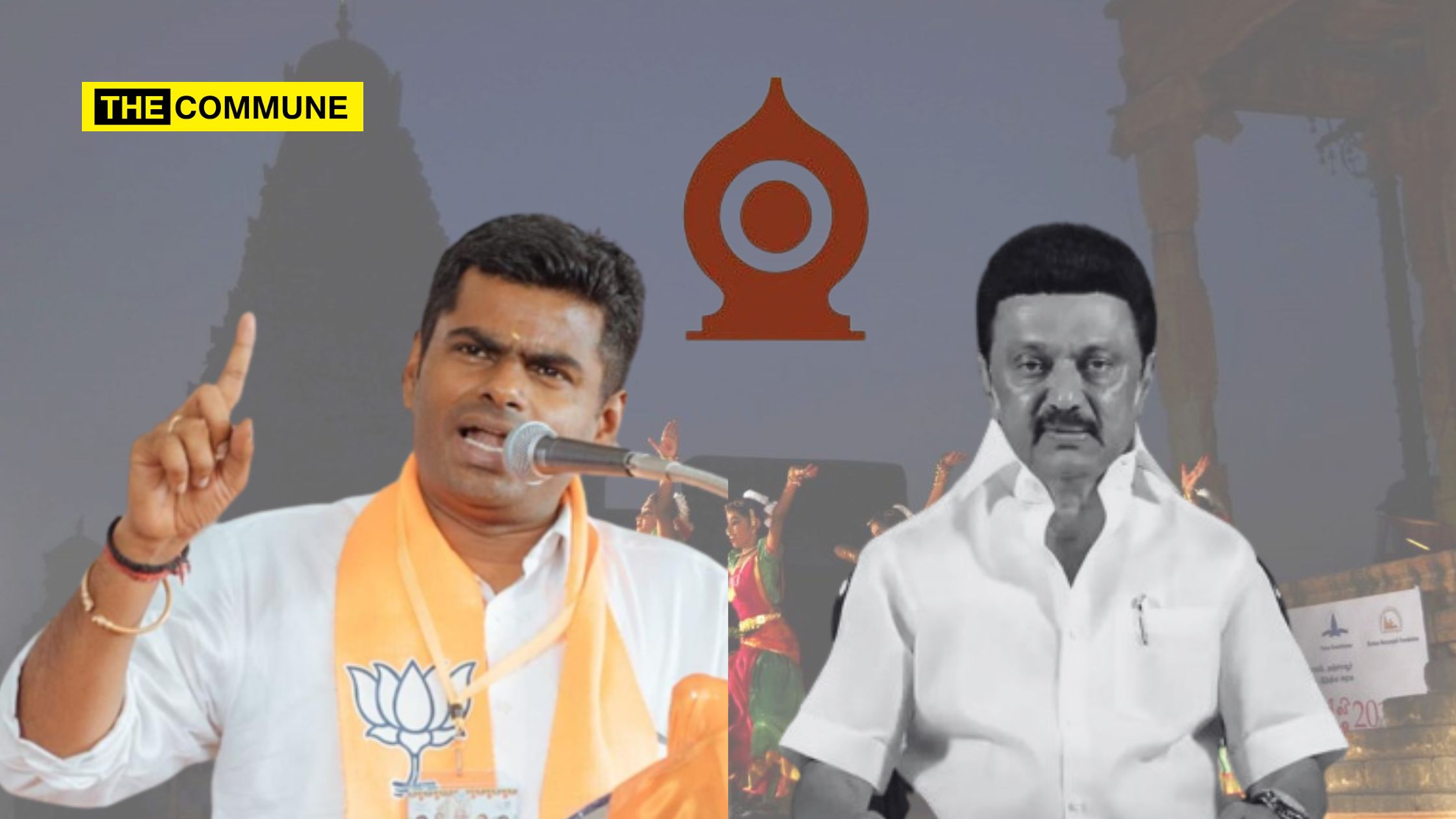
Thanjavur Natyanjali Festival Cancelled; Fact-Check Unit Claims TN Govt Not Responsible; TN BJP Head Annamalai Shows Proof That HR&CE Dept Is Responsible

The annual Thanjavur Natyanjali festival, a revered dance celebration coinciding with Shivaratri day, faced backlash and condemnation for its abrupt cancellation this year. Traditionally attracting Bharatanatyam, Kuchipudi, Mohiniattam, and Kathak artists worldwide, the festival pays homage to Thanjavur Peruvadaiyar and Rajaraja Cholan. Tamil Nadu Bharatiya Janata Party president K Annamalai lashed out at the Dravida Munnetra Kazhagam government over this and attributed the cancellation to the DMK government’s anti-Hindu stance, accusing them of unwarranted interference in temple events and practices. Annamalai, on 9 March 2023, demanded the immediate reinstatement of the festival, warning against disrespecting the proud symbol of Tamil Nadu, the Thanjavur temple.

Subsequent to this, the  Fact-Checking Unit created by the DMK government in November 2023 which came under the administrative control of Special Programme Implementation (portfolio of DMK scion and Minister Udhayanidhi Stalin), tried to “fact-check” this and claimed that the TN government had nothing to do with the Natyanjali festival. They claimed that the Tamil Nadu Government had not cancelled the Natyanjali festival, it was the Archeology Department of India under the control of the Union Government that refused permission for the Natyanjali festival. ceremony.

They also wrote on their X handle that the Department of Archeology of India had refused permission to hold programmes on Shivarathri in Thanjavur Peruvudayar Temple. This, they claimed was the reason why Natyanjali, which has been held for 20 years, was not held this year.

In response to this “fact-check”, Annamalai articulated the exact reason for the festival not being held. He said, “In the Thanjavur Natyanjali festival, on the grounds that it could not control the crowd, the DMK government denied permission to the Natyanjali festival held in the temple premises for two decades, and now that its anti-Hindu attitude has become public, the DMK government is trying to escape by blaming the archeology department, which has nothing to do with this.”

He further stated, “It is a shameful act of the DMK government to refuse permission to conduct the Natyanjali ceremony in the temple complex and then write a letter to the archeology department in an urgent manner and blame it on the archeology department citing the reply letter received.

Except for the Thanjavur Palace Devasthanam, which is under the Tamil Nadu Government’s Department of Hindu Religious Charities, getting permission from the Department of Archeology for Natyanjali, private organisations do not seek permission directly from the Department of Archaeology. In temples across Tamil Nadu, private companies are working as patrons of the charity sector.”

Annamalai also pointed out that the Natyanjali programme was not a private programme but one organised by the benefactors on behalf of the Tamil Nadu Government’s Hindu Religious & Charitable Endowments Department. 

He also criticised the DMK’s FCU for hiding this truth. Annamalai further furnished proof of a letter dated 14 February 2024, South Zone Cultural Centre, which comes under the Union Ministry of Culture, which clearly mentions that the Thanjavur Palace Devasthanam which comes under the DMK Government’s Department of Hindu Religious & Charitable Endowments is responsible for conducting Natyanjali and that no programmes are being held on their behalf in the temple on the days leading up to Natyanjali. 

Annamalai stated that the DMK government had misused the Hon’ble Madras High Court judgement to support its anti-Hindu activities with the sole aim of banning the Natyanjali festival which has been going on for 20 years.

He wrote, “Does the DMK government say that the Natyanjali programme, in which dance artists from all over the world pay respect to Peruvudaiyar and Rajarajacholan, is not a programme related to temple worship? Since 2010, for the past 13 years, the Hon’ble Madras High Court has not held the Natyanjali festival as a contempt of court. Banning the Natyanjali festival, which has been held in the temple complex for two decades, is nothing but the anti-Hindu attitude of the DMK government.”

He also accused that, “A gang working as the DMK government’s media outlet is constantly spreading false news full-time. People question the need for a team to spread these lies when DMK social media is doing this as a full-time job.”

Subscribe to our channels on TelegramWhatsApp, and Instagram and get the best stories of the day delivered to you personally.
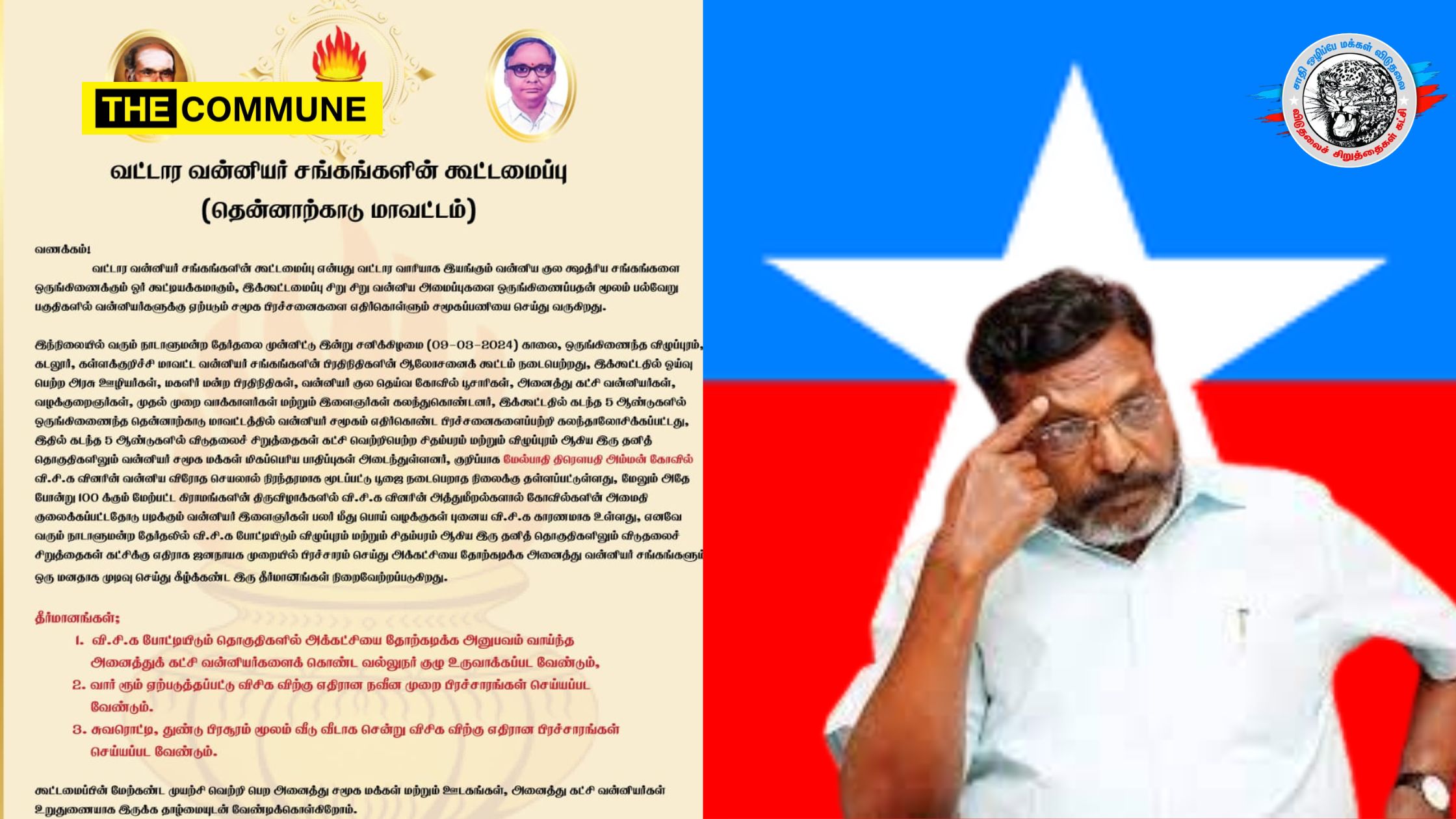
South Arcot Vanniyar Federation Resolute To Defeat VCK In 2024 Lok Sabha Elections

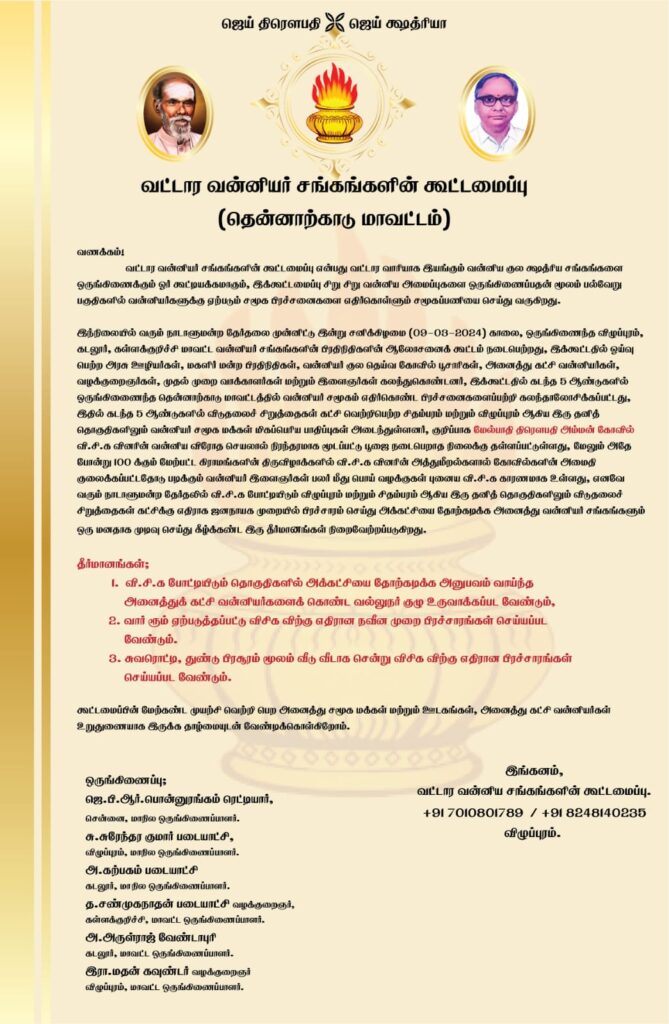
Against the backdrop of the imminent parliamentary elections in Tamil Nadu, the South Arcot District Local Vanniyar Federation has released a statement outlining their collective decision. After thorough consultations with local stakeholders, the Federation has strategically resolved to launch a campaign aimed at defeating the Viduthalai Chiruthaigal Katchi (VCK), a party that has previously secured victories in their constituency during Lok Sabha elections. In their statement, the association highlighted the absence of tangible benefits for the Vanniyar community despite the VCK being in power for the last five years. Instead, the community has faced numerous challenges in the locality. Consequently, the Federation has formulated a strategy to ensure the defeat of the VCK in the upcoming parliamentary elections in Chidambaram and Villupuram.

Efforts are underway to tackle the social challenges encountered by the Vanniyar community by consolidating various small and medium-scale cooperatives. In anticipation of the upcoming parliamentary elections, a consultative meeting was held on 09 March 2024, bringing together representatives from the amalgamated Villupuram, Cuddalore, and Kallakurichi District Vanniyar Associations. The participants included retired government servants, members of the Women’s Council, temple priests dedicated to Vanniyar Clan deities, All Party Vanniyars, prosecutors, first-time voters, and young individuals.

The gathering centered on the difficulties encountered by the Vanniyar community in the integrated South Arcot district, specifically in constituencies like Chidambaram and Villupuram, which were secured by the Viduthalai Chiruthaigal Katchi (VCK) over the past 5 years. They emphatically stated that these constituencies, now under VCK, are where the community faces the most significant challenges. Some of the adverse effects include the closure of the Melpathi Droupadi Amman temple for pujas due to VCK’s actions, the permanent closure of the temple. Additionally, over 100 villages were unable to host festivals, and numerous false cases have been initiated against Vanniyar community youths by the VCK.

In light of these challenges, the Vanniyar Federation put forth various resolutions during the meeting:

1. Assemble an expert committee consisting of knowledgeable leaders from all party Vanniyars to devise strategies and defeat the VCK in contested constituencies.
2. Establish a war room for modern campaign initiatives against VCK effectively.
3. Implement door-to-door anti-VCK campaigns through the distribution of posters and pamphlets.

The Vanniyar Federation earnestly sought the support of the community, the media, and all party members to enhance the success of these endeavors.

Subscribe to our channels on TelegramWhatsApp, and Instagram and get the best stories of the day delivered to you personally.
DMK Govt Orders Issuance Of Caste Certificates To Converted Muslims Contrary To Constitutional Provisions & Judicial Pronouncements

stalin minority community dmk minorities prophet muhammad muhammed

In what comes across as minority appeasement politics by the ruling Dravida Munnetra Kazhagam, the government has mandated the classification of backward, most backward, and Adi Dravidian individuals converting to Islam as part of the Muslim backward class, with the issuance of caste certificates.

In Tamil Nadu, up until 2012, individuals from different religions, specifically those belonging to the backward, most backward, and Adi Dravida classes, who embraced Islam, experienced a modification in their existing caste certificate. They were subsequently issued a fresh caste certificate designating them as Muslim Rauthar or Labbai.

This process granted individuals from backward backgrounds educational and employment rights when they converted to Islam. Nevertheless, this certification practice ceased for Muslims who underwent conversion after the year 2012.

Similarly, Muslim organizations continued to advocate for the issuance of caste certificates to individuals converting to Islam from BC, MBC, SC, and ST classes, designating them as backward classes among Muslims. Responding to these demands, the Tamil Nadu government accepted the proposition and issued an ordinance two days ago.

Under this arrangement, one of the seven Muslim sections outlined in the decree from 29 July 2008, has been granted approval. This specific section, sought after by those undergoing conversion, is now authorized to receive a caste certificate designating them as a backward class among Muslims.

As a result, individuals converting to the Muslim faith are anticipated to benefit from a 3.5% reservation in both education and employment opportunities.

In 2021,  the then Union Law Minister Ravi Shankar Prasad stated in the Rajya Sabha that, according to the Constitution and Indian law, Hindu persons eligible for reservation benefits, like those belonging to Scheduled Castes, cannot avail the same benefits if they convert to Christianity or Islam.The Constitution’s Article 3 specifies that those professing a religion other than Hindu, Sikh, or Buddhist shall not be considered Scheduled Caste members. While the Minister’s statement aligns with legal provisions, investigations reveal instances of Christians claiming Scheduled Caste status, indicating potential misuse of reservations meant for the community.

In 1950, the Nehru government passed an order restricting the definition of “scheduled caste” only to members of the Hindu faith. However, it was later extended to Sikhs in 1956 and to Buddhists in 1990 because they are seen as an extension of the Sanatana Dharma.

Para 3 of the Constitution (Scheduled Castes) Order clearly states that no person who professes a religion different from Hindu, Sikh or Buddhist religion shall be deemed to be a member of a Scheduled Caste. The Supreme Court in a 2015 ruling had said, “Once a person ceases to be a Hindu and becomes a Christian, the social and economic disabilities arising because of Hindu religion cease and hence it is no longer necessary to give him protection and for this reason he is deemed not to belong to a scheduled caste.”

The Andhra Pradesh government in 2020 had issued a GO extending Scheduled Caste benefits to converted Christians.

(with inputs from Dinamalar)

Subscribe to our channels on TelegramWhatsApp, and Instagram and get the best stories of the day delivered to you personally.
DMK MP Wilson Threatens To Sue Anyone Who Links Drug Lord & Expelled DMK Functionary Jaffer Sadiq With DMK & Its Leaders

In what can be seen as a bid to curb freedom of speech in Tamil Nadu, the Law Minister of the ruling DMK, S Regupathy, along with DMK Rajya Sabha MP P Wilson, issued warnings about taking legal action against individuals associating DMK and its leaders with a drug trafficking cartel. They emphasized that their party has no connections to the apprehended international drug smuggler Jaffer Sadiq.

Addressing reporters from DMK HQ Arivalayam on 10 March 2024, DMK Law Minister Regupathy asserted that the BJP government is employing the Narcotics Control Bureau (NCB) to tarnish the DMK regime, following alleged misuse of the Enforcement Directorate, Income Tax department, and Central Bureau of Investigation. He highlighted the DMK’s swift actions against drug peddling since assuming office in 2021, lauded by the courts, and accused the Centre of attempting to intimidate the DMK through the NCB.

Regupathy criticized NCB Deputy Director General Gyaneshwar Singh for prematurely holding a press conference on Jaffer Sadiq’s arrest, alleging a deliberate attempt to damage the DMK’s reputation for political gain. He noted the people of Tamil Nadu’s awareness of such tactics, drawing parallels to past scandals involving the AIADMK regime.

Regupathy emphasized the lack of action on the gutkha case during the AIADMK era, contrasting it with the current urgency to support the BJP-led Centre. Regarding Sadiq’s recent arrest, he questioned the NCB’s delay, pointing out Sadiq’s public appearance in an event on February 21. Responding to Sadiq’s party membership, Regupathy explained the challenges of verifying every member’s background but emphasized the DMK’s swift expulsion of wrongdoers. He underscored that Sadiq’s expulsion occurred promptly after the drug trafficking allegations surfaced.

Regupathy accused the BJP regime of making a wrong calculation to malign the DMK before the upcoming Lok Sabha polls and stressed the DMK’s lack of association with Sadiq. He criticized the BJP’s attempts to portray Tamil Nadu as a drug-tainted state, asserting that drug trafficking is nonexistent in the state. Regupathy condemned the NCB’s press conference, stating that making claims about a case before completion of the investigation goes against the law. Lastly, he clarified that the DMK did not receive any financial contributions from Sadiq.

DMK Rajya Sabha MP Wilson spoke after him expressed dissatisfaction with the unjust criticism directed at the DMK and its leaders regarding the Jaffer Sadiq and drug smuggling issue. He said that the NCB deputy director’s decision to hold a press conference during the early stages of the investigation, especially during an election period, raised suspicions defamation. He issued a warning, stating that if such baseless allegations are made against the party or its leaders, the DMK will actively pursue both civil and criminal cases.

Wilson further emphasized that Jaffer Sadiq was expelled from the party promptly upon receiving information, and questioned whether the same swift action was taken against Vijayabaskar, who faces charges in the Gutka case. Wilson pointed out that even the Governor initially denied permission for the investigation, and it was only after approaching the Supreme Court that permission was granted to probe both Vijayabaskar and Ramana. He underscored that the DMK has taken significant measures to combat drug-related issues, asserting that no other party has demonstrated similar commitment to eradicating drugs.

Jaffer Sadiq, a Tamil film producer and former Deputy Organiser for the Chennai West NRI Wing of the Dravida Munnetra Kazhagam (DMK), has been identified as the leader of a drug cartel involved in shipping Pseudoephedrine from India to Australia and New Zealand. Affiliated with the DMK, Sadiq was expelled from the party on 25 February 2024, after his connection to the cartel was revealed. The case unfolded when New Zealand and Australia alerted Indian agencies about significant drug smuggling disguised as food products. A joint operation by the NCB and the Special Cell of Delhi Police resulted in the seizure of 50 kg of Pseudoephedrine in Delhi, exposing an international drug trafficking network. Further investigations revealed that Sadiq masterminded the ring, orchestrating the transportation of over 3,500 kg of pseudoephedrine worth ₹2,000 crore in the international market over the past three years.

On 9 March 2024, the Narcotics Control Bureau (NCB) announced the arrest of Jaffer Sadiq, the mastermind behind the India-Australia-New Zealand drug trafficking network currently investigation.

Furthermore, while Jaffer Sadiq was on the run, significant drug busts took place in Tamil Nadu on an unprecedented scale, marking a notable departure from previous occurrences.

Gujarat Coast Drug Seizure Operation & Links To Tamil Nadu

  • Investigations revealed that the intercepted contraband of 3300 kgs off the Gujarat coast was meant for delivery to Indian nationals in Tamil Nadu.
  • Smugglers, alleged to be fishermen, carried nets and rations; three claimed Iranian nationality, and two asserted Pakistani origin.
  • A team of Narcotics Control Bureau (NCB) personnel dispatched to Tamil Nadu to establish links and investigate the potential involvement of broader drug trafficking network in the region.

Railway Drug Smuggling In Madurai

  • A startling revelation of drug smuggling through railways occurred in Madurai.
  • Acting on intelligence, officials targeted Pilliman Prakash on the Pothigai Express train from Chennai to Sengottai.
  • A raid at Madurai railway station resulted in the seizure of 30 kg of methamphetamine from Pilliman Prakash.

Indian Coast Guard (ICG) & DRI Operation In Mandapam

  • On 5 March 2024, ICG and DRI successfully thwarted a drug smuggling attempt near Mandapam, Ramanathapuram district.
  • Four individuals were detained, and narcotics valued at ₹108 crore were confiscated.

In addition to the aforementioned report, journalists covering the NCB investigations related to Jaffer Sadiq and his associates experienced a violent incident. The reporters, who were documenting the developments, were physically restrained, beaten. The assault occurred at the Sahara Express courier office, which is owned by Chitrarasu, also a  DMK’s West Chennai secretary.

While these incidents unfolded in Tamil Nadu, and the implicated individuals were members of the DMK, the party maintained a conspicuous silence, refraining from any public statements. Even in cases like the assault on journalists, the initiation of actions against the DMK functionary only occurred after severe criticism from opposition figures, including TN BJP President K Annamalai and ADMK General Secretary Edappadi Palaniswami. Against this backdrop of continued silence, the Law Minister and DMK’s legal advisor have now issued a warning, stating their intention to initiate criminal and civil defamation suits.

(With inputs from ZeeNews & DeccanHerald)

Subscribe to our channels on TelegramWhatsApp, and Instagram and get the best stories of the day delivered to you personally.
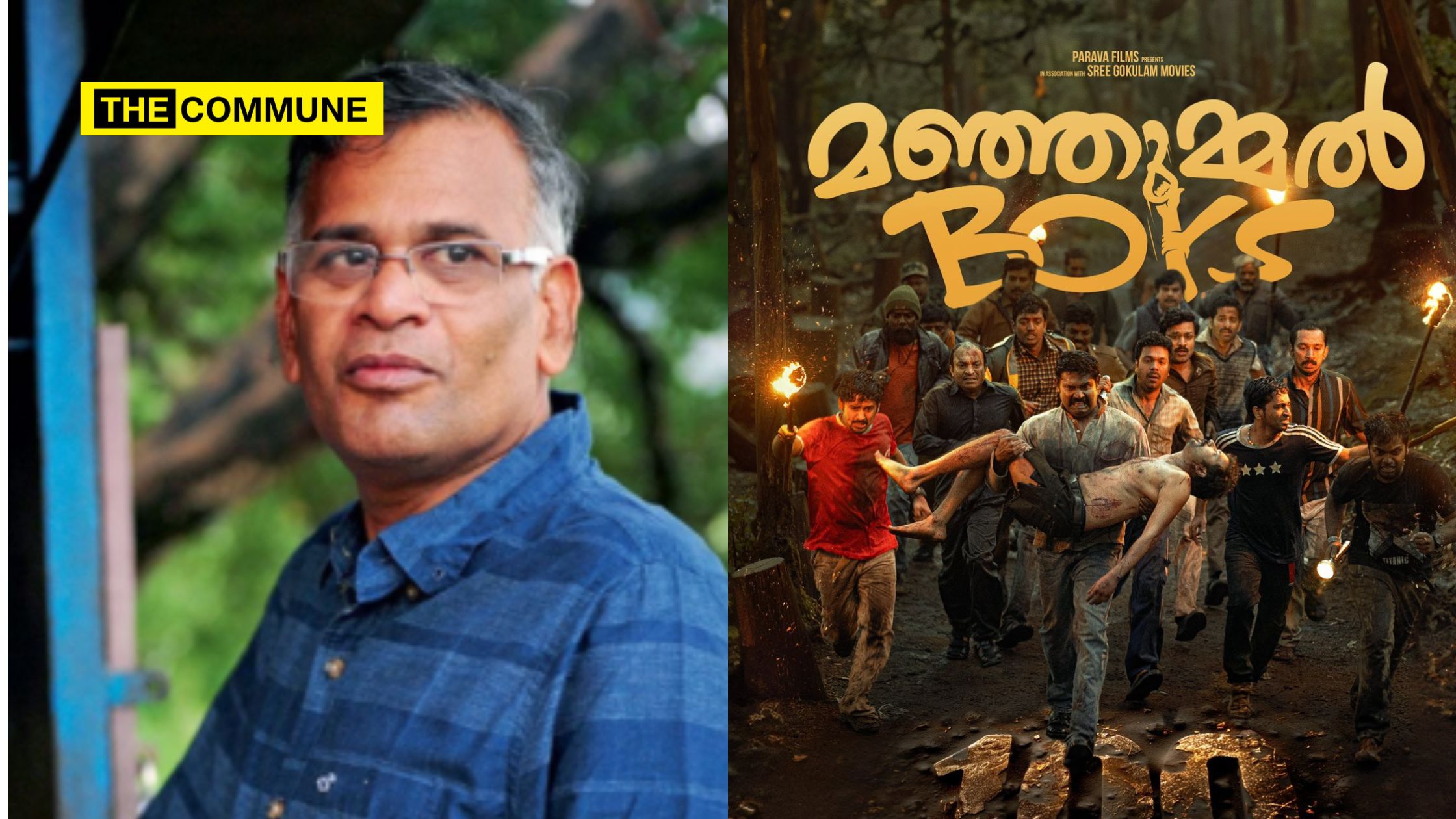
“Drunk Malayalee Porukkis”: Writer Jeyamohan Attacks Keralaites In Scathing Review Of ‘Manjummel Boys’, Condemns Glorification And Normalization Of Intoxication

Renowned Tamil and Malayalam author, B Jeyamohan, has expressed strong criticism towards the Malayalam film “Manjummel Boys,” a survival thriller penned and directed by Chidambaram. The movie features a diverse cast, including Soubin Shahir, Sreenath Bhasi, Balu Varghese, Ganapathi S. Poduval, Lal Jr., Deepak Parambol, Abhiram Radhakrishnan, Arun Kurian, Khalid Rahman, Chandu Salimkumar, and Vishnu Reghu.

Centered around a true incident from 2006, the storyline follows a group of friends from the small town of Manjummel near Kochi who embark on a vacation in Kodaikanal, Tamil Nadu, explore the forbidden Guna Cave, where one falls into a covered hole. Initially presumed a prank, it turns serious, and locals reveal the pit’s history of 13 unrecovered falls. Despite police reluctance, the friends insist on rescue, leading to a risky operation where one friend, Siju, bravely descends, ultimately saving the friend Subhash, who fell into the hole. The incident remains a secret, but Siju’s heroism is later revealed, earning him praise and a medal.

On 9 March 2024, in a passionate critique posted on his official website www.jeyamohan.in, B Jeyamohan expressed his discontent and disapproval of the Malayalam film “Manjummel Boys.” He criticized the film for receiving what he perceived as excessive praise from media outlets, accusing them of labeling numerous films as classics without deserving such acclaim. Jeyamohan specifically addressed the film’s depiction of a perilous and heroic incident, casting doubt on its authenticity and implying that it resembled a contrived climax presented as realism.

Delving into a broader reflection on the nature of films as a form of entertainment, Jeyamohan scrutinized the public’s engagement with cinematic discussions, lamenting the lack of intellectual depth. His concerns extended to the influence of cinema on society, emphasizing issues such as the disruptive conduct of Kerala tourists, the normalization of drug addiction in cinematic narratives, and the glorification of disruptive characters in “Manjummel Boys.” Jeyamohan underscored the adverse environmental impact of such behavior, including harm to tourist attractions and wildlife.

“Manjummel Boys” proved to be a vexing film for me since its portrayal is not fictional. This mindset is commonly observed among Kerala tourists visiting various destinations in the South, extending beyond tourist spots to jungles. Their primary focus is on getting drunk, leading to behaviors such as vomiting, retching, falling, and trespassing, displaying a lack of interest in anything else and a dearth of basic knowledge and general civility.

Jeyamohan recounted his experience stating, “On numerous occasions in Ooty, Kodaikanal, and Courtalam, I have witnessed these intoxicated Malayali individuals engaging in road rage, with both sides of their vehicles adorned with vomit, as depicted in the film. After consuming alcohol, they discard the bottles and break it, a phenomenon evident on roads like Sengottai – Courtalam or Kudallur – Ooty, proudly showcased in the movie. There have been frequent confrontations with them. During a visit to the Vagaman lawn, Senthilkumar, a lawyer from the Madras High Court accompanying us, collected and disposed of the bottles thrown by these individuals. Annually, at least twenty elephants succumb to foot rot caused by these bottles, a matter I passionately addressed in “The Elephant Doctor,” a work that has achieved significant sales in Malayalam. However, it seems improbable that the director of this film has acquainted themselves with its contents.”

These Malayalam individuals display a lack of proficiency in other languages, responding exclusively in Malayalam. Yet, they insist on the expectation that others should comprehend their language. The film accurately depicts their treatment by the Tamil Nadu police, showcasing their comprehension limited to physical force, devoid of any meaningful understanding.”

Expressing his frustration with the apparent lack of awareness among filmmakers, Jeyamohan called for government intervention to counteract detrimental trends within the cinematic landscape. Ultimately, he urged law enforcement to treat disruptive individuals as criminals, discouraging public support. Jeyamohan suggested that the unfortunate predicaments faced by such individuals could serve as a natural consequence, contributing to the safeguarding of natural environments.

The following passage is a excerpt from Writer Jeyamohan’s official website where he shares his critical insights titled “Manjummel Boys – A drunkard’s rant“: “I refrain from critiquing contemporary cinema and avoid commentary, as I am a part of it. Cinema, to me, is neither art nor propaganda but purely a business venture. This business norm dictates that one entrepreneur should not undermine the interests of another. This perspective aligns with an internal principle.

However, after viewing the Malayalam film “Manjummel Boys” amidst accolades and excitement, I couldn’t help but notice the excessive adulation showered upon Malayalam cinema, especially by certain media outlets. Every film is hailed as a classic without deserving such praise, often turning out to be mundane imitations that fail to captivate a diverse audience.

If “Manjummel Boys” had been a Tamil production, one might question the exaggerated risk and heroism portrayed in Tamil newspapers, which seems unknown to the locals in Kerala. The film depicts a moment where a man risks his life for another, creating an atmosphere of suspense. Yet, the reality of such an incident and its coverage is questionable, resembling a climactic fabrication presented as realism.

In essence, all films are amalgamations of elements meant for entertainment. Here, the masses, devoid of even a rudimentary intellectual introduction, engage solely in cinematic discussions, masquerading as intellectual pursuits. They consume what is presented to them and coexist within their destiny, fueled by their pocket money, a source of my concern.

“Manjummel Boys” irked me, not for its fictional elements but for mirroring a mindset prevalent among Kerala tourists who infiltrate tourist spots across the South. The film portrays a disturbing pattern of drunken behavior, vomiting, trespassing, and a lack of basic knowledge or civility. This depiction resonates with the unfortunate reality of drunk Malayalis engaging in road rage incidents in areas like Ooty, Kodaikanal, and Courtalam.

My experiences include witnessing these intoxicated individuals causing havoc, leading to broken roads and the tragic deaths of at least twenty elephants annually due to discarded bottles. Despite my efforts, as highlighted in “The Elephant Doctor,” the film’s director appears oblivious to the consequences of such behaviors.

These Malayali individuals, often oblivious to languages other than Malayalam, exhibit a sense of entitlement, showcased realistically in the film through their interactions with Tamil Nadu police. Attending weddings in Kerala has become a challenging ordeal, with two distinct types of Malayalis – those who toiled abroad and those who exploit domestic drinkers. These inebriated groups disrupt weddings with their unruly behavior, even resorting to vomiting during ceremonies.

Tamil Nadu seems to be heading towards Kerala’s norm, wherein cinema normalizes drug addiction and vices while portraying law-abiding citizens as benefactors. Kerala cinema consistently depicts joy through drinking, fighting, rioting, and vomiting, presenting a skewed perception of reality. In other words, the protagonist of today’s Malayalam cinema are the ones whom a Tamil hero saves the common man from.

The root of this cinematic trend lies in a small group of drug addicts in Ernakulam, perpetuating alcoholism and worse addictions day and night. Malayalam cinema, once celebrated for naturalistic works of art, has now veered towards centralizing such themes. Government intervention is imperative to counteract the influence of filmmakers glorifying drug addiction.

Those who celebrate these drug addiction movies in Tamil Nadu are likened to scoundrels, as commercial cinema, devoid of artistic attributes, directly addresses the uneducated masses. Granting artistic freedom to such cinema will only impoverish and degenerate the masses who lack intellectual resistance.

While these mobs degrade tourist attractions, their intrusion into thick forests poses a greater threat. Ignoring laws and warnings, they engage in destructive activities, endangering wildlife and ecosystems. May is particularly perilous, as discarded beedi cigarettes in dry Tamil Nadu forests lead to fires and loss of life.

Resorts in Kerala are fraught with danger, with horrifying experiences shared by many. “Manjummel Boys” not only justifies these disruptive individuals as representatives of the common man but also glorifies them, attempting to label them as martyrs and embodiments of friendship. The film’s conclusion, with one of them receiving a national award, contradicts legal norms and suggests a need for corrective measures.

If “Manjummel Boys” serves to raise awareness about these disruptive gangs in Tamil Nadu and Karnataka, it may encourage law enforcement to treat them unequivocally as criminals and discourage any form of support. Sometimes, their unfortunate predicaments may serve as a natural consequence, providing a deterrent and safeguarding our forests.

Writer B Jayamohan

Bahuleyan Jayamohan, born into a Malayali Nair family in Nagercoil, Tamil Nadu, is a prominent Indian writer and literary critic proficient in both Tamil and Malayalam. He is widely recognized for his significant contributions to literature, with notable works such as “Vishnupuram,” a fantasy masterpiece exploring Indian philosophy and mythology, and “Venmurasu,” a modern retelling of the Mahabharata, earning him the distinction of creating the world’s longest novel. His repertoire includes well-known novels like “Rubber,” “Pin Thodarum Nizhalin Kural,” and “Kotravai.” Influenced by humanitarian thinkers Tolstoy and Gandhi, Jeyamohan draws on his extensive travels and life experiences to reexamine and interpret India’s rich literary and classical traditions.

Subscribe to our channels on TelegramWhatsApp, and Instagram and get the best stories of the day delivered to you personally.
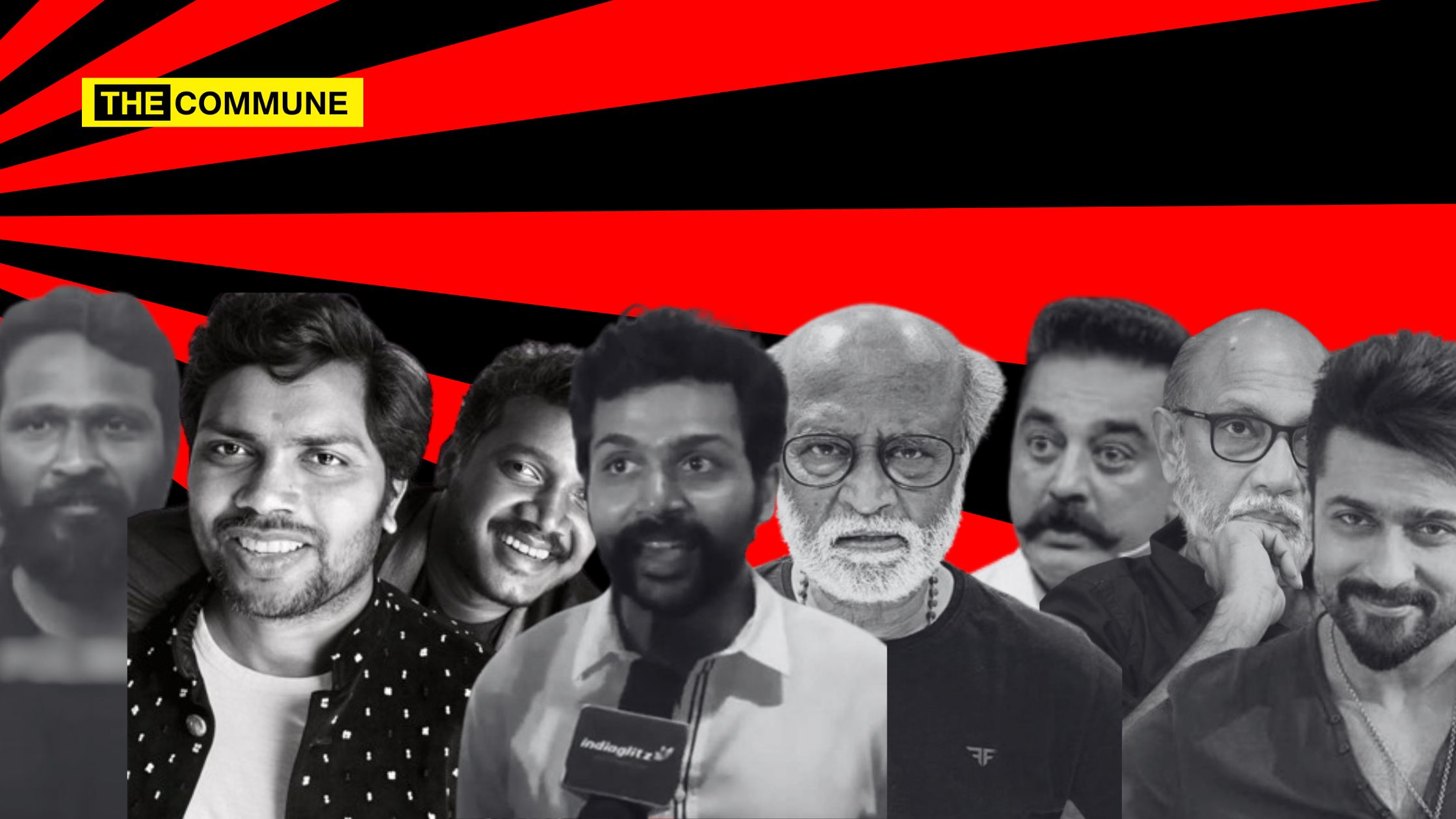
Kollywood Virtue-Signallers Silent On DMK’s Drug Scandal After Vocal Criticism On Everything Under The Sun During ADMK Era

The ongoing DMK drug scandal has taken center stage for the last ten days, gaining extensive coverage on social media and news outlets. Yesterday, the alleged drug peddling mastermind, Jaffar Sadiq, was apprehended. Interestingly, during the previous ADMK government, even a minor hiccup would prompt Kollywood actors and directors to vociferously express their opinions through the media or their social media platforms, making the news sensational by sharply questioning the government. However, surprisingly, these self-proclaimed champions of virtue have been conspicuously silent under the current regime. The pertinent question arises: where are these outspoken voices now?

Prominent voices supporting the DMK, including actors Rajinikanth, Kamal Haasan, Suriya, Karthi, Sathyaraj, Director Vetrimaaran, Pa Ranjith, and Mari Selvaraj, have been gone missing.

Rajinikanth

Shivaji Rao Gaekwad, widely known as Rajinikanth, has consistently maintained a close association with the first family of DMK, displaying a notable silence on the current matter. The relationship between DMK and Rajinikanth has been marked by mutual support, with both sides consistently expressing well wishes and meeting each other. Notably, during the inauguration of the late Karunanidhi’s mausoleum, Rajinikanth was the singular representative from the film industry, highlighting his close ties with DMK. He referred to the mausoleum as “Wonderful, Charming,” emphasizing its significance as not just Kalaignar Samadhi but also likening it to Kalaignar Taj Mahal.

Rajini consistently remained indifferent to film reviews and refrained from endorsing movies. However, he took a special initiative for the film “Maamannan,” in which the film was written and directed by Mari Selvaraj a D-stock, starred and produced by  Udhayanidhi Stalin of Red Giant Movies a DMK Scion. Rajini personally commended the team, stating, “A wonderful work by Mari Selvaraj emphasizing equality. My sincere appreciation to him. My congratulations to Vadivelu, Udhayanidhi and Bhagat Basil for their excellent performances.”

Rajinikanth extending his wishes to the DMK and their families and reciprocating warm regards from them are detailed in the below posts.

Rajinikanth appears to have been more vocal on critical issues, especially social and political matters in Tamil Nadu, prior to 2020 rather than after 2021 (when the DMK came to power). During that time, he strongly commented on the custodial death case of the Santhankulam father-son duo, emphasizing the need for truth and justice with the hashtag #TruthfullyYouShouldNotLeaveThem. Simultaneously, he criticized the ADMK government, urging them to explore alternative revenue sources instead of relying on liquor (TASMAC) profits, or else forget about returning to power.

Hasn’t Rajinikanth, the so-called social crusader, been informed about the recent drug prevalence news? Isn’t the rampant spread of drugs in Tamil Nadu a matter of concern for him? The same person who spoke out against TASMAC during the ADMK era – will he raise similar questions to his friend DMK’s Stalin or his brother Udhayanidhi Stalin? Will he inquire about the alleged connections between the DMK and the international drug kingpin Jaffar Sadiq, who previously served as the DMK Chennai NRI wing in charge? Strangely, there is utter silence on these issues.

Kamal Haasan

Kamal Haasan, a part-time politician, full-time actor, and the leader of Makkal Needhi Maiam, is known for addressing diverse social issues through advocacy in various interviews. However, his social media presence primarily revolves around sharing condolences or expressing concern specifically in cases of bus accidents or or similar tragedies. Interestingly, there seems to be a noticeable absence of awareness or commentary on events in Tamil Nadu, especially after the DMK assumed power.

Even when he ventures beyond his comfort zone and criticizes his allies in power, the DMK, he does so with a distinctly harsh friendly tone, as exemplified by statements like this, “I welcome the announcement by the Chief Minister of Tamil Nadu that the action on the proposed 12-hour work in factories is being suspended. I appreciate Mr. Stalin emphasis on what is being said rather than who is saying it and respecting the reasonable opinions of the alternative side and the feelings of the people are the hallmarks of a healthy government. I request you to permanently cancel the notification of 12 hours work”

Just a mere four days ago, there was an unforeseen twist in events when Kamal Haasan issued a statement strongly condemning the drug issue in Tamil Nadu. He connected the problem to various instances across different states, surprising everyone.

Everyone, including his party members and supporters, believed that ‘Aandavar’ (a nickname given to Kamal Haasan) was making a strong comeback reminiscent of his impactful role in the movie “Vikram.” The anticipation was that Kamal Haasan would expose the drug syndicate, administer justice to those involved, and leverage the incident to gain political momentum, ultimately securing victory in the Lok Sabha election. However, as usual he aligned himself with the same party, DMK, which had a person linked to drug smuggling in charge of Chennai, all for the nomination of a mere single Rajya Sabha seat.

In 2018 too he courageously established his own political party, dispelling notions of alignment with any particular group. Initially, his stance resonated as genuine, with occasional criticisms directed at both Dravidian parties as he positioned himself as a viable third front. However, he pledged his party and the trust of his supporters for the sake of securing a nominated MP seat in the Rajya Sabha.

His perspectives appeared ambiguous and indecisive, mirroring his dialogues in the movie where, when asked if he is good or bad, he responds with uncertainty. Much like a flock that initially strays but eventually returns to its nest, he executed various maneuvers only to align himself, in the end, with his parent’s party, the DMK.

Suriya & Karthi Sivakumar

Suriya Sivakumar, a strong supporter of the DMK, previously voiced his support for causes such as “Hindi Theriyadhu Poda,” anti-NEET advocacy, and condemned the Sathankulam custodial death during the ADMK regime. However, he is now noticeably silent. Notably, he didn’t speak out during the DMK regime concerning the Vengayvayal incident, and he remains silent even now regarding the drug busts taking place in various locations in Tamil Nadu. The question arises whether this silence reflects a deliberate choice or a decision to turn a blind eye to certain issues.

There’s not much to be said about Suriya SivaKumar or Karthi Sivakumar; they lack proficiency in both acting and storytelling. Suriya’s typical approach involves fostering social division, creating an upper-lower divide, and ultimately relying on a hero with a secular Dravidian ideology to rescue the situation, But karthi’s style diverges significantly from that of his brother, Suriya. Primarily he inclined towards comedy, Karthi tends to inject sarcasm into his roles, often overshadowing the entire script that leaves the audience frustrated, who paid 200 rupees to watch the film. It’s rather unfortunate, isn’t it?

Their survival hinges on a combination of nepotism and a complex caste background, with individuals who both belong to and perpetuate the same system often taking on roles as actors, producers, and directors within family. This is notably facilitated when the ruling government in Tamil Nadu is the DMK, as individuals associated with the Dravidian lineage tend to receive government awards. As an example, Jothika, the wife of Suriya, recently received an award from the Tamil Nadu government for her 2015 film “36 Vayathinile,” despite its perceived lack of substance. This movie, portrayed by Dravidian media as a pro-women empowerment film, raises questions about the criteria used for such accolades.

Sathyaraj

Sathyaraj, a well-known supporter of the DMK, attempted to deflect attention from the ongoing issues in Tamil Nadu by delivering a provocative speech just five days ago. Despite his efforts, the speech failed to gain viral attention. At a time when the state was buzzing with news of drug-related incidents linked to the DMK, Sathyaraj emerged unexpectedly to deliver a speech. In Tamil Nadu, all religions coexist harmoniously, and it would be foolish to exploit religious differences for political gains. Sathyaraj  remarked that while there may be a religious storm brewing in the North, in Tamil Nadu, it is  “Madappuyal” (Foolish storm). Further he expressed concerns about outsiders attempting to influence food (beef) choices, highlighting the danger in such trends.

Director Vetrimaaran, Pa Ranjith, Mari Selvaraj

Finally, three directors with distinct filmmaking styles appear to converge on a shared objective: promoting the Dravidian ideology, deriding structured Hindu beliefs, tarnishing the image of Brahmins, and unwaveringly supporting the DMK under all circumstances. Mari Selvaraj and Vetrimaaran subtly infuse their political ideologies into their films, while Pa. Ranjith, lacking the same finesse, occasionally expresses his political views in moments of anger, leading to scrutiny and trolling by netizens.

It is noteworthy that Vetrimaaran himself has been seen to be closely associated with Ameer and the druglord Jaffer Sadiq.

At present, amidst the ongoing drug busts in Tamil Nadu, it’s likely that the trio is contemplating the creation of a high-budget film centered around the themes of gangsters, guns, and drugs with the backing of the DMK or they might be deliberately distancing themselves from the drug issue altogether.

Subscribe to our channels on Telegram and WhatsApp and get the best stories of the day delivered to you personally.
Unlikely Bonds: Narendra Modi’s Connection With Kashmir And The Tale Of An Enduring Friendship

Upon coming to power in 2014, the Bharatiya Janata Party (BJP) directed its attention towards addressing terrorism and the challenges in Naxal-affected areas. Gradually, the party extended its efforts to address underlying issues, investing in infrastructure and implementing remedial measures at the grassroots level.

The steadfast commitment to consider Jammu and Kashmir an integral part of India was the central agenda for the BJP. Despite facing considerable challenges, the party remained determined to eradicate terrorism from affected regions. Although initially promising to repeal Article 370, impeding the state’s progress, the decision to revoke it was carefully considered and implemented during the second term in 2019.

On 7 March 2024, Prime Minister Narendra Modi embarked on his first visit to Jammu and Kashmir following the abrogation of Article 370. During this visit, he laid the foundation for various development projects aimed at fostering growth in the union territories. The initiatives underscored the government’s commitment to bringing positive changes and promoting development in the region.

Narendra Modi’s Past Association With Kashmir

In the tumultuous early 1990s, when militant outfits established ‘liberated zones’ across the Kashmir valley, an unexpected friendship took root. At the forefront was a relatively unknown BJP activist, Narendra Modi, who delved into the intricacies of separatism. This exploration led him to the residential village of Hizbul chief Salahuddin in Soibug, Budgam, where he crossed paths with a 26-year-old youth, Mohammad Ashraf Hajam, known as ‘Azad.’

Little did anyone foresee that this seemingly ordinary BJP activist, who engaged with the people during his six-day visit to all six districts, meticulously documenting his observations as a ‘social worker,’ would ascend to become Gujarat’s Chief Minister in eight years and, eventually, India’s Prime Minister in 21 years.

During his stay at Azad’s house in Hakermulla village, near Soibug, Modi, a teetotaler and vegetarian, immersed himself in the local environment. Azad reminisces about their uneventful taxi journey through the Shariefabad camp, where Modi paused to appreciate soldiers angling for fish in a stream. The camaraderie extended to the household, marking the beginning of a lasting friendship.

Azad vividly recalls their uncharted journey in 1993, where Modi, incognito and devoid of official knowledge or security, traversed the top militant strongholds and engaged with locals in Soibug, Zoonarishi, and various landmarks in Srinagar. Modi’s interactions included interviews with village elders and conversations with women, children, and youths, delving into their sentiments and political aspirations.

The genesis of Azad’s connection with Modi traces back to 1992 when, as a 24-year-old involved in selling LPG, he witnessed BJP President Murli Manohar Joshi’s announcement during the Ekta Yatra in Srinagar. Inspired, Azad saluted the Indian flag hoisted despite heightened tensions. Modi, identifying Azad as a Kashmiri Muslim sympathetic to their cause, initiated his involvement in peace initiatives.

In New Delhi, Modi introduced Azad to senior BJP leader Atal Behari Vajpayi, igniting Azad’s commitment to work for Kashmir’s peace and development. Under the Peace Council banner, Azad found a safe government accommodation at IMPA in Srinagar, nurturing his association with Modi.

Azad’s political journey began in 1996, campaigning for the BJP in Srinagar-Budgam Lok Sabha constituency. Despite electoral losses in subsequent years, Azad’s relief stems from achieving their mission of promoting peace and development. Soibugh, once influenced by Hizbul Mujahideen, donated land for public facilities at Azad’s request, marking a symbolic transformation.

The enduring friendship between Azad and Modi persisted through the latter’s tenures as Chief Minister of Gujarat and later as Prime Minister of India. Their last meeting transpired on 3 February 2019, at the Srinagar airport, preceding the Pulwama blast and months before the Lok Sabha elections. The bond between these unlikely friends endures as a testament to the profound connections that transcend tumultuous times.

(With inputs from IndiaNarrative)

Subscribe to our channels on TelegramWhatsApp, and Instagram and get the best stories of the day delivered to you personally.

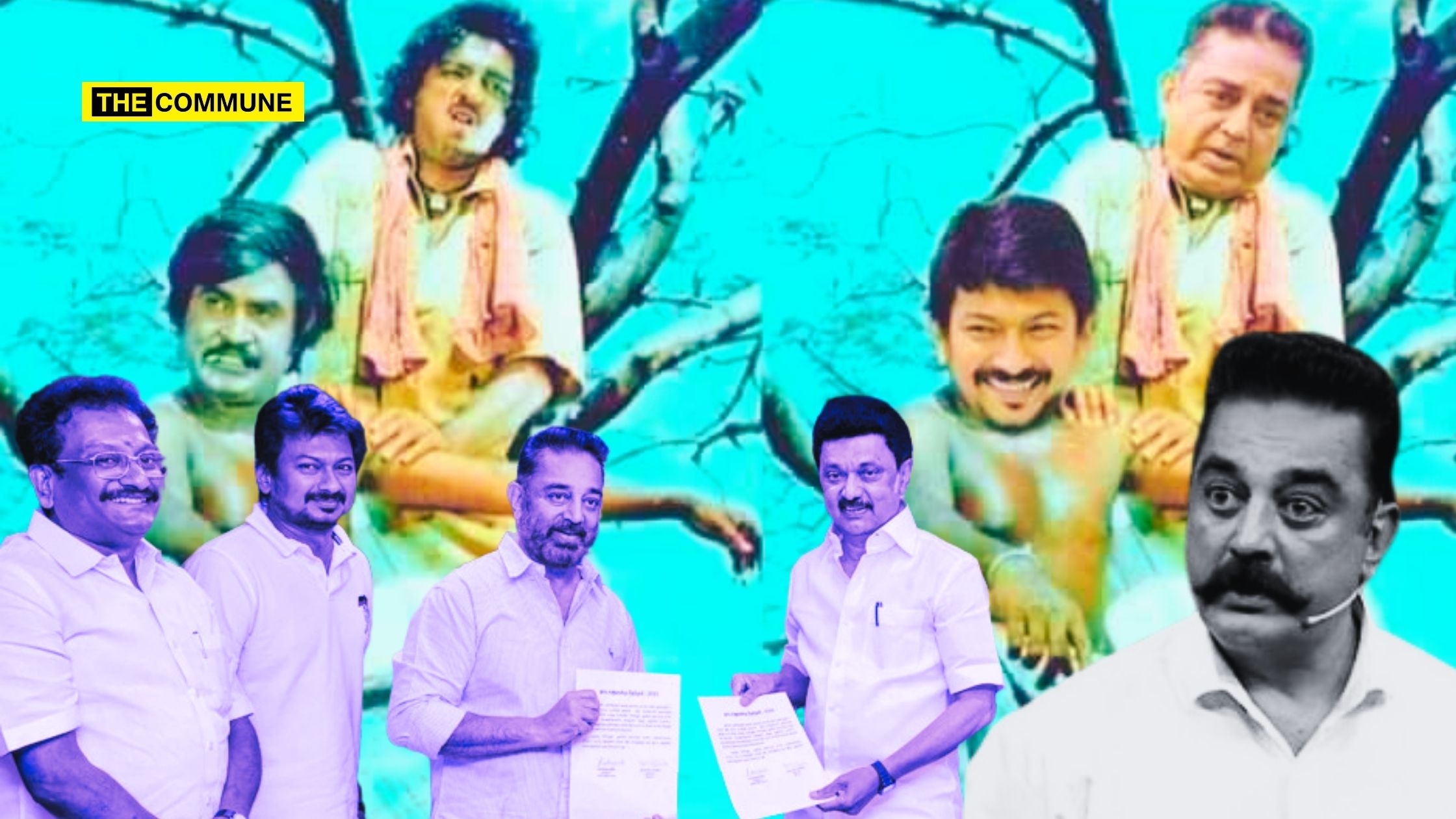
From “Ulaganayagan” To “Oopinayagan”: BJP Tamil Nadu And Netizens Troll Kamal Haasan Mercilessly Over MNM Allying With DMK In Return For 1 Rajya Sabha Seat

Kamal Haasan,  a full-time actor, part-time politician, and leader of the political party Makkal Needhi Maiam (MNM), finds himself amidst criticism, ridicule, and trolling on various social media platforms. This is due to his formal declaration of aligning himself with the ruling DMK party for the upcoming Lok Sabha elections, despite having previously criticized them as thieves and looters of Tamil Nadu. The video of his 2018 speech during the party launch is currently gaining traction.

The political party Makkal Needhi Maiam (MNM), established by Kamal Haasan six years ago in Madurai on 21 February 2018, was inaugurated with the concept of “Maiam,” meaning center. At the launch, Kamal Haasan expressed his vision for the party to remain centrist, avoiding alignment with any specific left or right ideologies and refraining from forming alliances with prominent Dravidian parties in Tamil Nadu, such as DMK or AIADMK. However, in a notable shift, he has now aligned with the DMK for the upcoming Lok Sabha Elections. It is important to note that this alliance is not for contesting Lok Sabha seats but rather for the Rajya Sabha elections, where nominated MPs are sent from the state. Despite this alignment, Kamal Haasan secured only one ticket for the Rajya Sabha elections.

Makkal Needhi Maiam released an official statement on the microblogging platform X, stating that, “In the 2024 parliamentary elections, the Makkal Needhi Maiam Party will campaign in Tamil Nadu and Puducherry constituencies in support of the Dravida Munnetra Kazhagam-led alliance. A seat has been reserved for the People’s Justice Center in the Rajya Sabha elections to be held in 2025.”

Previous stance of Kamal Haasan:

Kamal Haasan personally released a statement on his official social media account, expressing criticism towards the ruling Dravidian parties in Tamil Nadu regarding the escalating debts in the state stating, “Every man, woman, child & even an unborn child of Thamizh Nadu will have to bear a debt of Rs.57,000. The 2 Dravidian parties who ruled & swindled alternatively are responsible. Let’s join hands & put an end to their looting. Come, let’s forge a wealthy, debt free Thamizh Nadu.”

Subsequently, he shared an MGR song, suggesting his anticipation and readiness to challenge the Dravidian parties in the forthcoming assembly elections. “Some people, for want, need, life, convenience, will catch legs of others… There is no honor in it, there is no shame in it He always catches the tail. Future will come, My duty will come, I will abolish this gangs game

Even at the inaugural event of his political party and in subsequent interviews, he consistently reiterated his commitment to removing the Dravidian parties from the political landscape. Following the inauguration of the party, during a session addressing queries from party members, the presenter posed the question, “Will you publicly declare that we will not ally with the parties and their affiliates that you have identified as corrupt?”

Kamal instantly replied, “Lets announce it, just think of this, We started a party like this, convene a meeting, and none of us knows how many years or months for the election. Instead of doing all this, we could have join a big party, bent a little and bow that’s enough, could have gone like that, why didn’t we go like that? I had the hope that it would not blossom into a democracy, that is why I dared and they said that if I fall from this, I will never be able to get up, even now Tamil Nadu is like that, unable to get up. That’s why we have taken this decision we will be one of them.

Hence, we can surely promise that we will not ally ourself with baseless unworthy people,  boldly swear that we will not ally our self with thieves. If we found that they are criminals, we promise that we will not cooperate, this is not an election promise but a promise given at the beginning of the party.”

The BJP in Tamil Nadu engaged in relentless trolling of Kamal Haasan, using his past comments and speeches critical of Dravidian parties. They mocked him for receiving just one ticket for the Rajya Sabha, humorously stating in Tamil, “For this, the cotton bag could’ve been in the godown,” implying a humorous reference to a comic clip of Santhanam of an unimpressive outcome.


The Tamil Nadu BJP has also unveiled another video mocking Kamal Haasan, asserting that the “U.P Nayagan Paradox” on the reel hero aligns with the real villain. In this video, the TN BJP highlights apparent contradictions in Kamal Haasan’s stance, emphasizing that while he advocates for secularism, he forms alliances with politicians deemed anti-Hindu. Haasan, who advocates for a drug-free society, aligns himself with individuals associated with the drug mafia. Additionally, it points out a contradiction in Haasan’s anti-corruption stance, alleging alliances with politicians accused of corruption. The video also questions Haasan’s commitment to fighting terrorism, claiming associations with those who support the release of terrorists. Lastly, it underscores the paradox that Haasan, a proponent of Jallikattu, forms alliances with individuals who were in power when the sport was banned.

It is to be noted that Makkal Needhi Maiam (MNM), under the leadership of Kamal Haasan, has encountered difficulties in all electoral endeavors it faced. In the 2019 Lok Sabha elections (17th Lok Sabha), MNM contested 37 seats but failed to secure any, receiving a mere 0.40% of the votes, totaling 1,613,708. The outcome was a loss. In the 2021 State Legislative Assembly Elections, MNM faced similar challenges in Tamil Nadu (16th Assembly), contesting 180 seats with zero victories and securing 2.62% of the votes (1,210,667), resulting in a loss. The party also contested 22 seats in Puducherry (15th Assembly), with no wins and 1.89% of the votes (15,835), leading to another loss. In the 2019 Lok Sabha elections, MNM contended on 40 seats, generating speculation about a potential alliance with the Congress. Although the party achieved a vote share of 3.72% in the contested seats, it faced difficulties in rural areas. Notably, all candidates lost their deposits.

In the 2021 Tamil Nadu Assembly elections, MNM contested in 142 constituencies, declared no alliance with DMK or AIADMK, and failed to secure any seats. Kamal Haasan himself suffered defeat in Coimbatore South to BJP’s Vanathi Srinivasan. Later, MNM allied with the Congress to support EVKS Elangovan in a by-election. Despite these challenges and setbacks, Makkal Needhi Maiam remains an active participant in the political landscape, continually adjusting its strategies and alliances in anticipation of future elections.

Regarding the imminent 2024 Lok Sabha elections (18th Lok Sabha), the decision to abandon its prior ideologies and align itself with the DMK solely for a Rajya Sabha seat is seen as Kamal’s reluctance to face the electorate and an anticipated acknowledgment of inevitable defeat. Opting for a nominated Member of Parliament (MP) rather than pursuing victory through popular vote has elicited significant criticism from within his party and beyond.

The choice made by Kamal Haasan, the leader of the MNM party, faced significant criticism and mockery from social media users.


https://twitter.com/murugesh_ariyal/status/1766412750572679641


Subscribe to our channels on TelegramWhatsApp, and Instagram and get the best stories of the day delivered to you personally.