Home Blog Page 787

Commotion At North Chennai Nomination As DMK Minister Sekar Babu Engages In Uncivilized Clash Of Words With Rival ADMK

Despite the commencement of Lok Sabha candidate nominations on 20 March 2024, candidates opted to submit their filings on 25 March instead due to the day coincides with Panguni Uthiram, a significant auspicious day for Hindus, candidates from various political parties in Tamil Nadu are submitting their nomination papers. Notably, PK Sekar Babu of the DMK, despite controversies related to his actions against Sanathana Dharma, chose this auspicious time to file his nomination.

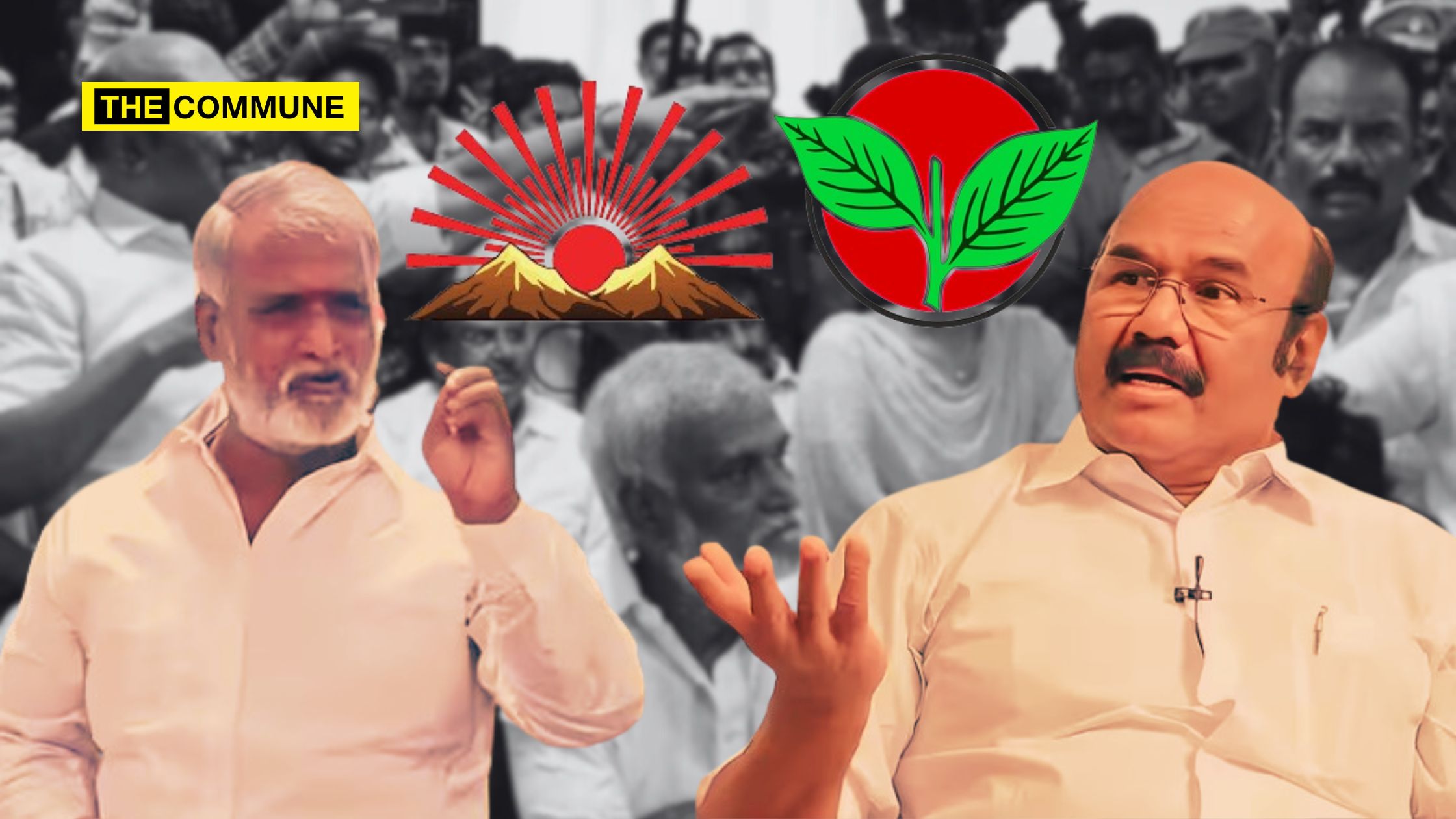
In North Chennai, prominent candidates like DMK’s Kalanidhi Veerasamy, AIADMK’s Rayapuram Mano, and BJP’s Pal Kanagaraj are in the fray. However, there was a dispute at a polling station in the Mint area regarding the sequence of filing nominations for the North Chennai Parliamentary Constituency.

An altercation occurred between Minister Shekharbabu, former Minister Jayakumar, and AIADMK district secretary Rajesh. A video showing the duo synchronously calling ‘Vada Poda’ during the argument has gone viral on social media.


Minister Shekharbabu expressed concerns about the sequence of token distribution, alleging that despite AIADMK’s candidate being allotted token number 7, DMK submitted the second token early at 9 am. He emphasized following the Chief Minister’s instructions to avoid conflicts and ensure a peaceful election process.

PK Sekar Babu engaged in a heated exchange with the electoral officer, emphasizing that the candidate had arrived promptly at 9 AM, only to be interrupted by a representative of the AIADMK party who clarified that tokens are issued upon candidate arrival. Frustrated, Sekar Babu sharply retorted, addressing the AIADMK representative disrespectfully and emphasizing the importance of adhering to the token system. The tension escalated as Sekar Babu admonished others nearby in a similar manner, showcasing his irritation.

The confrontation intensified when the AIADMK representative questioned Sekar Babu’s demeanor, prompting a clash of words without civility. Despite the threat of legal action due to recorded evidence, Sekar Babu’s response, marked by a glaring stare, reflected his sense of entitlement as a sitting minister. Despite confirmation from the electoral officer regarding AIADMK’s early arrival, the deadlock persisted, as both major Dravidian parties, DMK and AIADMK, delayed the nomination process. In response, BJP candidates sought entry, arguing that the two parties were intentionally monopolizing the nomination process.

On the other hand, Advocate Inpadurai representing AIADMK lodged a complaint, alleging misconduct by DMK and threatening the Election Officer. He insisted that AIADMK adhered to the rules and arrived first for nominations.

BJP candidate Pal Kanagaraj criticized both DMK and AIADMK for delaying the BJP nomination process and creating chaos. He accused the Dravidian parties of disrupting the election process and called for the Election Commission’s intervention.

Former AIADMK minister T. Jayakumar clarified that Rayapuram Mano filed his nomination promptly, and they arrived at the designated time. He claimed that DMK’s entry conflicted with their allotted time.

Due to the conflict between two Dravidian parties vying for nomination, ordinary citizens were forced to close their shops to avoid potential damage from enraged party members.

Tamil Nadu and Puducherry are set to conduct parliamentary elections in a single phase on 19 April 2024. The nomination process commenced on 20 March 2024 with a deadline for filing nominations by 27 March 2024. 30 March 2024 is the last date for withdrawal of nominations, while the scrutiny of nominations is scheduled for 28 March 2024. The counting of registered votes will take place on 4 June 2024, with the results announced on the same day.

Subscribe to our channels on TelegramWhatsApp, and Instagram and get the best stories of the day delivered to you personally.

Chaos Erupts During Nilgiris BJP Candidate L. Murugan’s Nomination, Annamalai Cools Tempers

Political

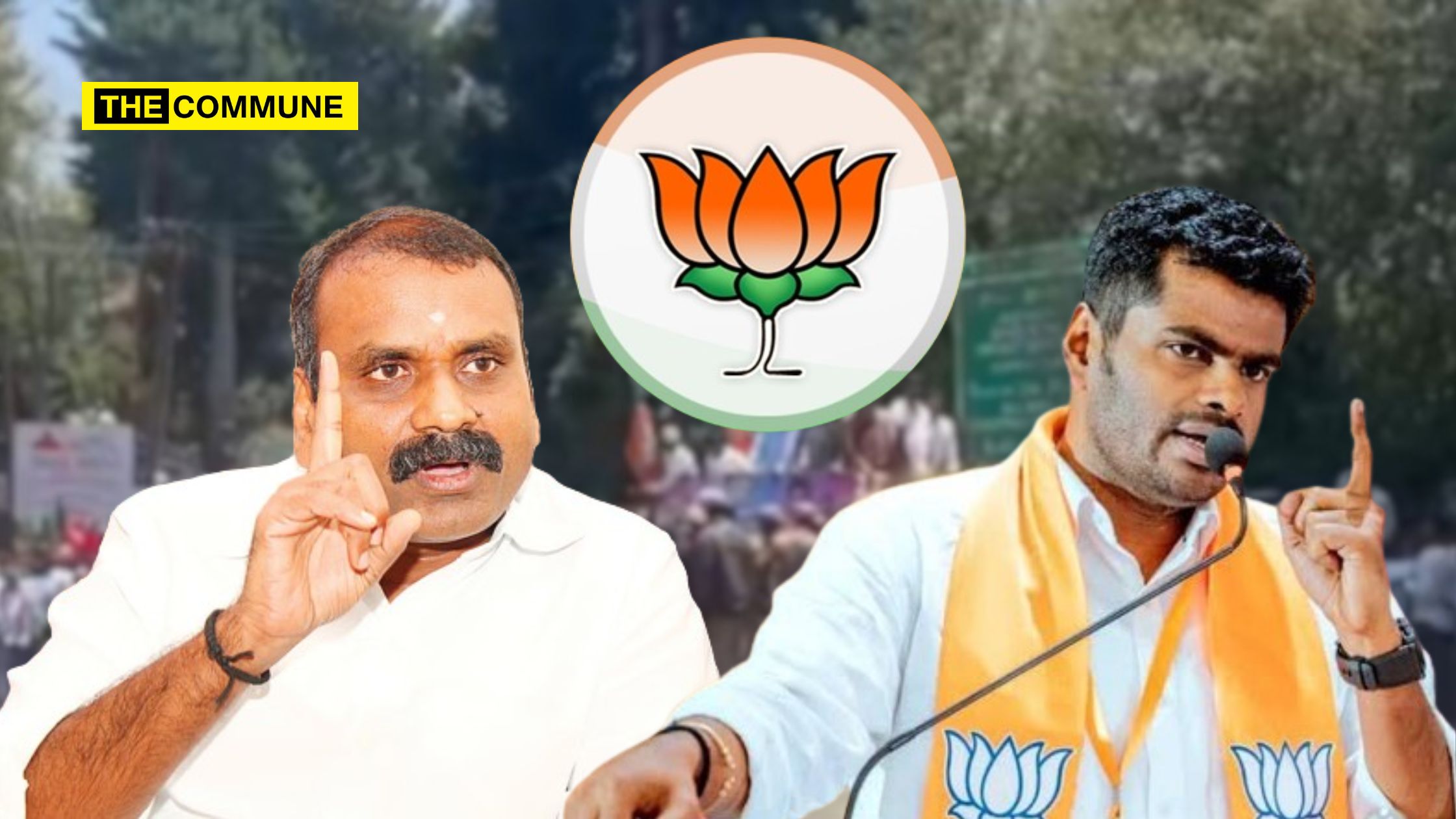
The Lok Sabha nomination process has kicked off vigorously, with candidates rushing to submit their names in their respective constituencies. The BJP had previously announced its intention to file nomination for L Murugan, former Tamil Nadu BJP president and current Minister of State, for the Nilgiris constituency and a time was allotted for that.

Accordingly, on 25 March 2024, accompanied by Tamil Nadu BJP president Annamalai, L Murugan filed his nomination papers in Ooty, joined by numerous party cadres. However, as they proceeded with the nomination process, police clashed with party volunteers outside, resulting in injuries and ensuing chaos. This action prompted protests from BJP activists, who condemned the police’s actions.

Several BJP workers reportedly sustained injuries during the police baton charge, sparking tension in the area. State President Annamalai, along with L. Murugan, joined the protest, demanding the removal of Ooty SP Sundara Vadivel.

Dinamalar reported that following the outcry, SP Sundara Vadivel apologized for the incident. In response, Annamalai, L. Murugan, and others decided to end the protest and visited the hospital to meet the injured volunteers and offer them consolation.


Annamalai clarified the necessity of his protest, citing the heightened anger among party members due to the police’s use of baton charges against the Nilgiris SP, “We also want to preserve the dignity of the uniform, this police department also has a dignity, we do not allow our men to shout slogans, if they speak ill of you, that dignity will be lost.
How can you do this sir, we also have to deal with it, we have sent a woman to the hospital with a broken bone, a child has been hit here, we need to cooperate a little, sir. You have put us into an unavoidable situation, and if I had said a word I would have been here in five minutes.

Afterward, he reassured the agitated party members and urged them to regain composure, emphasizing the need for calmness stated, “Whatever we talk about the police now it will attach a stigma to it, doesn’t it? There is no alternative to that. That’s why when you all come, we said don’t raise any slogans against the police, if our party doesn’t respect the police, no other party will respect the police, the incident is very wrong.

That’s what I said to the SP-Sir, Sir, the crowd is very large, if you have something to say to them, just phone me a word and we will come from inside and say it ourselves. We come at the appointed time, we go to the appointed place, we file the nomination form at the given time, but you have lathi-charged like this. As a police department is a brother, it is wrong to talk to them on the road like this, so don’t stay here for long. And when they come down, we come down three times because of our dignity, as far as the Bharatiya Janata Party is concerned, it is a party that always gives respect to the police department and always gives dignity.

Today, the police found themselves under pressure and responded accordingly. In order to prevent any altercation between the two party cadres, they have handled the situation without leniency. It’s important to clarify that their actions were not deliberate, and SP has apologized for any unintended consequences. As enforcers of the law, it is his responsibility to maintain order. Therefore, we urge everyone to respect the authority of the police, and we will peacefully depart from the protest with dignity.

The Nilgiris region is experiencing political heat as the electoral competition intensifies. The contest in the Nilgiris constituency is particularly fierce, with notable candidates vying for victory. Union Minister of State, L Murugan, has entered the race, adding significant weight to the contest. Additionally, Lokesh Tamil Selvan, the son of former Speaker Dhanapal, is representing the AIADMK in the constituency. Meanwhile, A Raja, the incumbent Member of Parliament, who is also a former Union Minister and DMK’s deputy general secretary.

Subscribe to our channels on TelegramWhatsApp, and Instagram and get the best stories of the day delivered to you personally.
Congress Spokie Supriya Shrinate Makes Scandalous Sexist Comments On Actress And BJP MP Candidate Kangana Ranaut

Popular Bollywood actress Kangana Ranaut has been included in the latest list of candidates announced by the Bharatiya Janata Party (BJP) for the upcoming Lok Sabha elections. Ranaut, known for her vocal support of the BJP, is set to contest from Mandi, Himachal Pradesh, her hometown.

Expressing her gratitude towards the party for nominating her as their Lok Sabha candidate from Mandi, the 37-year-old actress took to social media platform X to share her appreciation. She emphasized her unwavering support for the BJP, stating, “My beloved Bharat and Bhartiya Janta’s own party, Bharatiya Janta party (BJP) has always had my unconditional support, today the national leadership of BJP has announced me as their Lok Sabha candidate from my birth place Himachal Pradesh, Mandi (constituency) I abide by the high command’s decision on contesting Lok Sabha polls,”

It’s noteworthy that Kangana Ranaut hails from a political background, as her great-grandfather, Sarju Singh Ranaut, served as a Congress MLA.

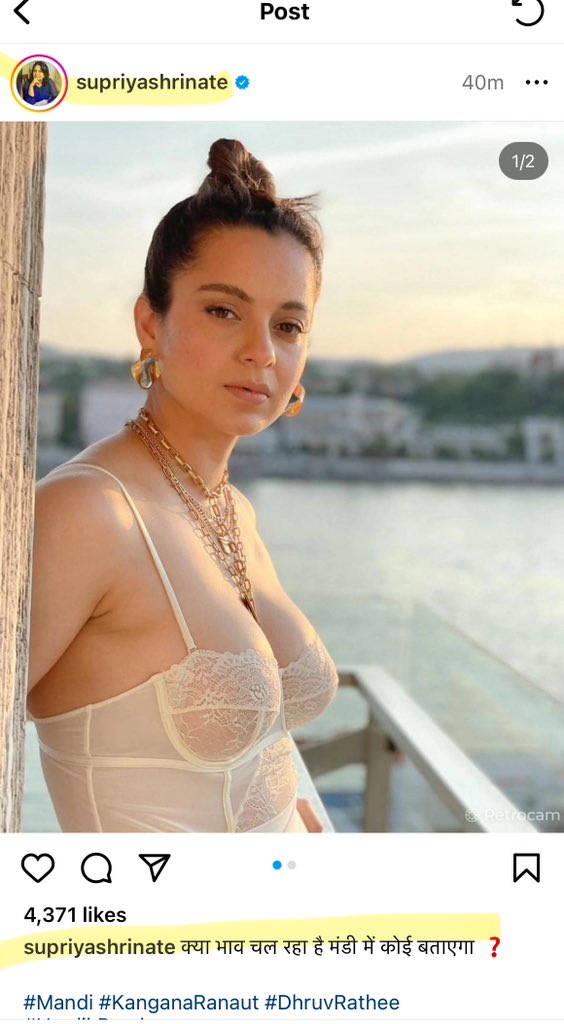
Following this, Congress spokesperson Supriya Shrinate posted a derogatory and sexist post on her Instagram handle about Kangana Ranaut. 

In the now-deleted post, Shrinate shared a picture of Ranaut with the caption (translated from Hindi), “What is the current rate in Mandi, someone please tell.”

This is not the first time that the two women have sparred with each other. 

BJP leader Shehzad Poonawalla condemned the comments and wrote, “This is beyond disgusting. The comments by @SupriyaShrinate on @KanganaTeam are despicable! Should be immediately sacked.. Will @priyankagandhi speak up? Will Kharge ji sack her! Where is the “Hathras” lobby now? First they justified Sandeshkhali, then Lal Singh getting a ticket from Congress and now this”

Back in 2021, Kangana Ranaut described India’s Independence in 1947 as “bheek” or alms. Congress spokesperson, Supriya Shrinate, condemned Ranaut’s comments, emphasizing the sacrifices made by freedom fighters. She criticized the government’s silence and called for action against Ranaut. Shrinate stressed that Ranaut’s disrespect towards India’s independence should not be tolerated, especially from someone honored with the Padma Shri. She urged both an apology from Ranaut and action from the government. 

However, this time Shrinate took it to a new low by sharing a picture of Ranaut with an even more disgusting caption. 

Subscribe to our channels on TelegramWhatsApp, and Instagram and get the best stories of the day delivered to you personally.
Khalistani Extremist Pannun Alleges Khalistani Groups Funded AAP With $16 Million Dollars Between 2014 & 2022

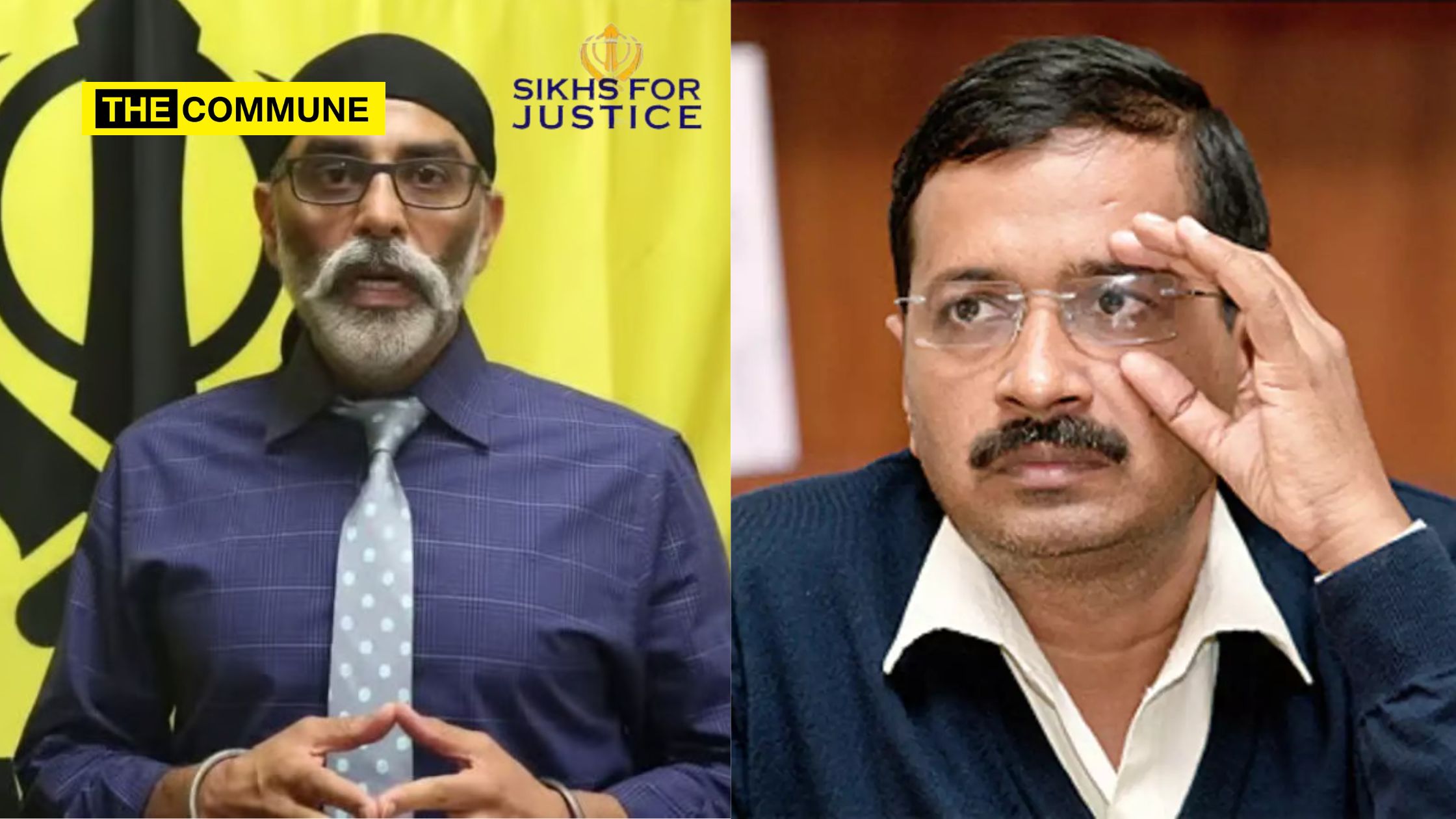
Gurpatwant Singh Pannun, a Indian origin Khalistani extremist, has alleged that Khalistani groups provided financial backing to the Aam Aadmi Party (AAP) to the tune of approximately $16 Million (₹133.54 crore) between 2014 and 2022. Pannun made these claims in a widely circulated video on social media, where he also alleged that Delhi Chief Minister Arvind Kejriwal had purportedly offered assistance in securing the release of Devinder Pal Singh Bhullar in exchange for funds. Bhullar is convicted in the 1993 Delhi bomb blast case, which resulted in nine deaths and 31 injuries.

Pannun asserted that “Arvind Kejriwal and his cohorts, identifying themselves as upright Indian Hindus, have proven to be more perilous than those lacking integrity. Back in 2014, when Kejriwal held no official position, he visited the US and assured pro-Khalistani factions of promptly releasing Professor Devinder Pal Singh Bhullar within five hours of assuming power. At that juncture, Pannun cautioned against placing trust in him. Now, nine years into his tenure, the warning stands validated.

Previously in February 2022 just prior to the Punjab elections, a contentious letter purportedly originating from the controversial pro-Khalistan group Sikhs For Justice (SFJ) caused a stir on social media platforms. The letter, widely circulated, suggested that SFJ was endorsing the Aam Aadmi Party (AAP) for the assembly elections. Written in Punjabi, the letter’s essence was an announcement of SFJ’s decision to back AAP in the Punjab polls. It stated that the 2022 elections held great significance for both Punjab and SFJ, expressing hope that AAP’s potential victory in Punjab would provide a renewed opportunity to advance their objectives. Signed by Gurpatwant Singh Pannun, the Executive Director of Sikhs For Justice, the letter urged support for AAP to bolster SFJ’s influence.

(Image Credit: IndiaToday)

Notably, Pannun, known for his affiliation with Sikhs For Justice, has previously issued threats against India, including a pledge to disrupt the functioning of the Parliament. However, such threats have fortunately not materialized.

The United States has accused India of involvement in a plot to assassinate the separatist leader. India’s internal investigation, however, has pointed fingers at certain ‘rogue agents’ as the perpetrators of this alleged plot.

In the midst of these controversies, Arvind Kejriwal remains in the custody of the Enforcement Directorate following his arrest in the Delhi excise policy scandal. Despite his plea for protection from arrest being denied by the Delhi High Court, AAP has decided that Kejriwal will continue to serve as the Chief Minister even during his custody. The party has also initiated the “Mai Bhi Kejriwal” campaign as it navigates its strategy for the upcoming Lok Sabha elections, with its convenor unable to actively participate in campaigning.

Sources within the Enforcement Directorate have claimed that the phone allegedly used by Kejriwal during the excise policy scandal has gone missing. Additionally, it’s been reported that the agency has explicitly stated in its orders that Kejriwal will not be provided with a computer or paper while in jail.

Opposition leaders have criticized Kejriwal’s arrest, with some suggesting that it was orchestrated to divert attention from the electoral bonds data released by the Election Commission of India on March 21. The data, furnished by the State Bank of India following a directive from the Supreme Court, reveals the BJP as the primary beneficiary of the scheme, which initially faced criticism for its lack of transparency.

(with inputs from Deccan Herald)

Subscribe to our channels on TelegramWhatsApp, and Instagram and get the best stories of the day delivered to you personally.

Vocalist Duo Ranjani Gayatri Give Polite But Stinging Response To N. Murali’s Letter

The internet was abuzz with the row over the Sangita Kalanidhi Award being given to Carnatic vocalist with leftist leanings TM Krishna. At the centre of the storm was the vocalist duo Ranjani Gayatri. 

To jog our readers’ memory – after the awards were announced, Ranjani Gayatri wrote a letter to the Music Academy intimating to them of withdrawal from the programme later this year. They also shared the same on their social media handles. 

They accused TM Krishna of causing irreparable harm to the Carnatic music world. “He has caused immense damage to the Carnatic music world, wilfully and happily stomped over the sentiments of this community, and insulted most respected icons like Tyagaraja and MS Subbulakshmi. His actions have tried to spread a sense of shame in being a Carnatic musician and has been exhibited through his consistent denigration of spirituality in music.“, the Carnatic sisters said in their statement.

They also slammed TM Krishna’s glorification of anti-Hindu ideologue EV Ramasamy Naicker (hailed as ‘Periyar’ by his followers) saying,

“It is dangerous to overlook Mr TM Krishna’s glorification of a figure like EVR aka Periyar who

1. Openly proposed a genocide of ‘brahmins’

2. Repeatedly called/abused every woman of this community with vile profanity

3. Relentlessly worked to normalize filthy language in social discourse”

Several other artistes followed in Ranjani Gayatri’s steps and withdrew from the concert. Artists like Chitravina Ravikiran and the family of Palghar Mani Iyer announced that they were returning their Sangita Kalanidhi awards to the Academy. 

Subsequent to this, the President of the Madras Music Academy N Murali wrote an intimidating letter to the sisters stating that the letter was “replete with unwarranted and slanderous assertions and insinuations verging on defamation, and its vicious tone against a respected senior fellow-musician.” 

Replying to the letter shared by N Murali, the vocalist sisters wrote, 

“Dear Mr Murali,

We thank you for the courtesy of providing a response to our letter dated 20 March 2024. We’d like to clarify that our letter to you was only a notification of our withdrawal without any request for your decisions or actions. We did not post the letter on social media, but merely informed our fans on the same subject. Now we realise, this didn’t help you manage the optics and we are sorry about it.

Did we question your prerogative to award anyone? No

Did we exercise our prerogative to withdraw? Yes

Did we refuse to be implicit apologists for genocide mongers and filthy discourse? Yes

With your verbose answer to questions we never raised, you are trying to build a convenient narrative and cast aspersions on us. Your statements to the press in this regard are immoral and dishonest.

We were a bit surprised as to why your response reads like a release on behalf of the awardee, erasing the distinction between him and the Music Academy. But it became obvious when Mr. N. Ram, media hegemon, joined as an undeclared spokesperson, with his campaign branding us “bigoted, casteist coterie”.

We immensely respect this hallowed institution and it will be the happiest day for us and for millions of people to see star performers emerge from underprivileged communities and dominate this stage. We want to see the day when the TTK auditorium is filled up with a diverse inclusive crowd from all communities and religious minorities. 

This transformation should begin at the top. Kindly start with the entrenched Executive Committee consisting of only Brahmins and royalty you have been heading for 2 decades. Unlike serious hardwork and the long journey it takes for artists to excel, this transformation is achievable instantly with a simple resolution and a bunch of resignations.

Please consider leading by example, lest the world calls it mere lip service and start branding you as a “bigoted, casteist coterie”.”

Director of Kasturi & Sons Ltd, Former Chairperson of The Hindu Group, and the former Editor of The Hindu, Malini Parthasarathy also came out in support of the vocalist sisters. On her official X handle, Malini wrote, 

“This transformation should begin at the top. Kindly start with the entrenched Executive Committee consisting of only Brahmins and royalty you have been heading for 2 decades. Unlike serious hardwork and the long journey it takes for artists to excel, this transformation is achievable instantly with a simple resolution and a bunch of resignations”

Excellent points made by @ranjanigayatri. to the Music Academy President. Must be heeded!”

It is noteworthy that The Hindu’s N Ram (whose brother is the President of the Music Academy), wrote a scathing post on his social media handle to the sisters. He said, “Commend the firm and fitting response from The Music Academy and its President to the bigoted, casteist objections by a small coterie of set-up Carnatic musicians who can’t stomach the choice of an eminent, widely acclaimed, erudite, and articulate musician for the highest accolade in Carnatic music. If T. M. Krishna doesn’t deserve the Sangita Kalanidhi honour, then who does? And what explains Ranjani-Gayatri’s wild and scurrilous attack — charged with venom and demonstrable falsehoods — on Periyar Ramasamy (1879-1973), the father of the Self-Respect Movement in Tamil Nadu and a champion of women’s equality and rights? Who put them up to this?”

Earlier, TN BJP president K Annamalai and ADMK’s spokesperson voiced out their support for the vocalist sisters and all those who decided to boycott the conference. 

Subscribe to our channels on TelegramWhatsApp, and Instagram and get the best stories of the day delivered to you personally.
DMK Functionaries Found Distributing Cash During Udhayanidhi Campaign Trail In Theni, Breaches MCC

The DMK’s campaign for the 2024 Lok Sabha elections is underway, led by its scion and Minister of Youth Welfare and Sports Development, Udhayanidhi Stalin. On 24 March 2024, he embarked on a campaign trail in Theni, the sole constituency lost by the DMK in the previous election out of the 40 seats in Tamil Nadu and Puducherry.

Addressing gatherings across Theni Lok Sabha constituency, including Usilampatti, Andipatti, and Theni, in support of DMK candidate Thanga Tamizhselvan, Udhayanidhi Stalin expressed confidence in a sweeping victory for the DMK and its allies. He rallied supporters, stressing the aim of securing a resounding 40 out of 40 seats this time around. He stated “Our mission is to oust anti-DMK forces such as the BJP and the AIADMK from this region, as they have consistently misled the people,” and appealed to the electorate for their assurance, emphasizing that the DMK’s victory margin in Theni should surpass all others in Tamil Nadu.

Later he highlighted the achievements of the DMK government over the past three years, Udhayanidhi enumerated various schemes benefiting economically disadvantaged sections like the CM’s Breakfast Scheme etc. Assuring voters of the DMK’s commitment, Udhayanidhi promised to scrap NEET in Tamil Nadu if the I.N.D.I alliance formed the central government. Furthermore, Udhayanidhi pledged the State government’s initiatives, including the construction of a reservoir across the Kuttukudi river in Bodinayakkanur, strengthening the Baby dam and Mullaperiyar dam, and supporting grape farmers with processing plants. He also announced plans for a railway line from Dindigul to Sabarimala and highlighted completed projects, such as modernizing infrastructure in government hospitals and implementing integrated drinking water schemes in Theni, Bodi, and Periakulam over the past three years.

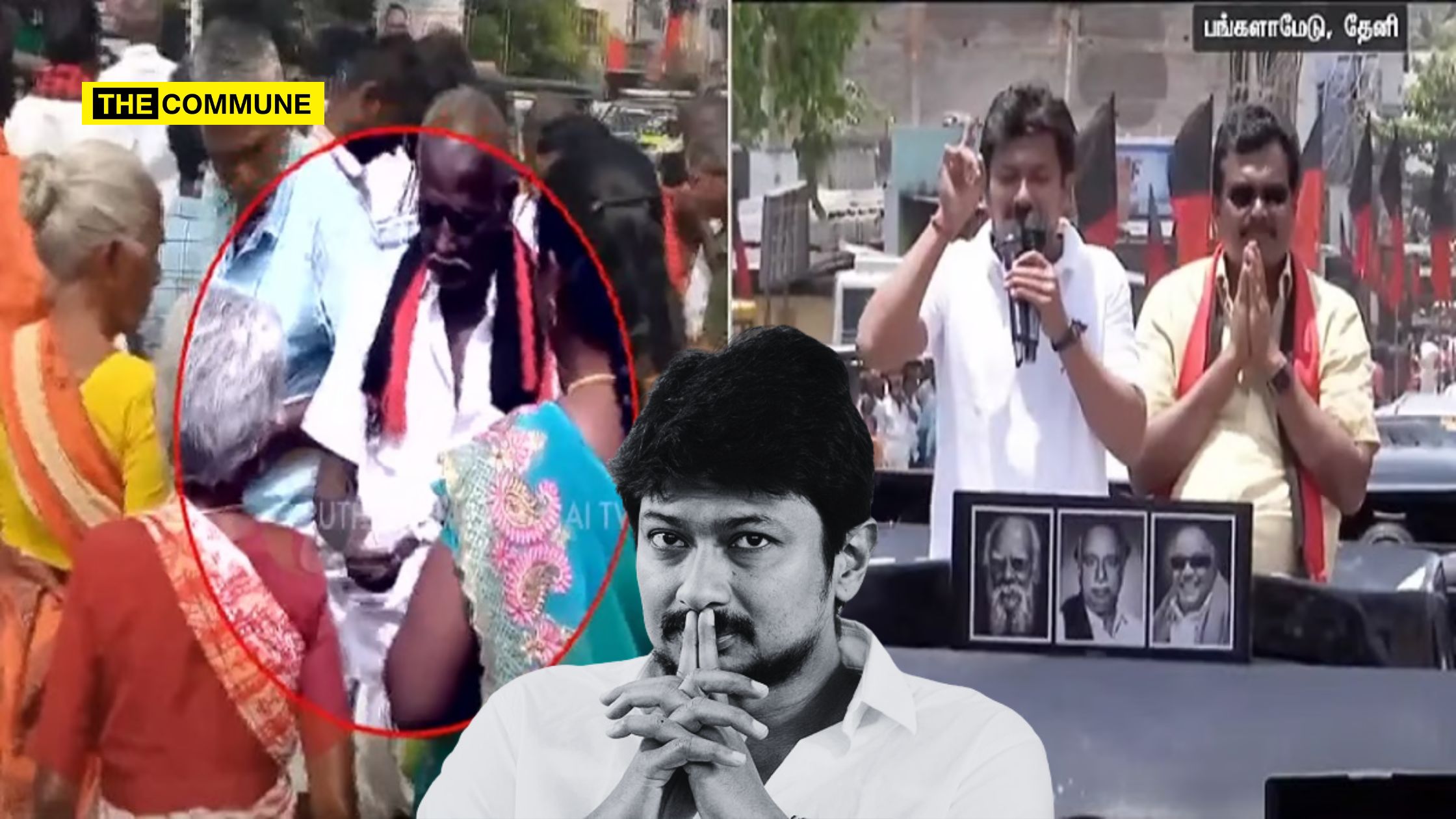
However, his campaign had indicated that there was a natural influx of people drawn to Udhaynidhi Stalin and keen to engage with DMK policies. Yet, a recent viral video circulating on the internet paints a different picture. During the campaign in Theni, there were reports of money being distributed, specifically ₹200 as a token for those participating in the campaign. Not only does this breach the model code of conduct, but it also reflects a lack of genuine interest from the local populace in the campaign activities in the Theni area.

In the video, an elderly man wearing a white shirt and traditional veshti is depicted wearing the distinctive red and black scarf of the DMK, while distributing currency to a group of three to four women surrounding him. Another scene in the video shows a gathering of people, where a man in a white shirt and black pants is seen managing a token system, exchanging currency notes one by one after verifying a ₹200 rupee token. Women and men who receive the money are observed checking and storing it in their purses or bags. This video has rapidly gained traction in the media, with criticism directed towards the ruling party DMK.

(With inputs from Puthiya Thalaimurai)

Subscribe to our channels on TelegramWhatsApp, and Instagram and get the best stories of the day delivered to you personally.
The Srirangam Massacre – History That Remained Hidden Over The Centuries

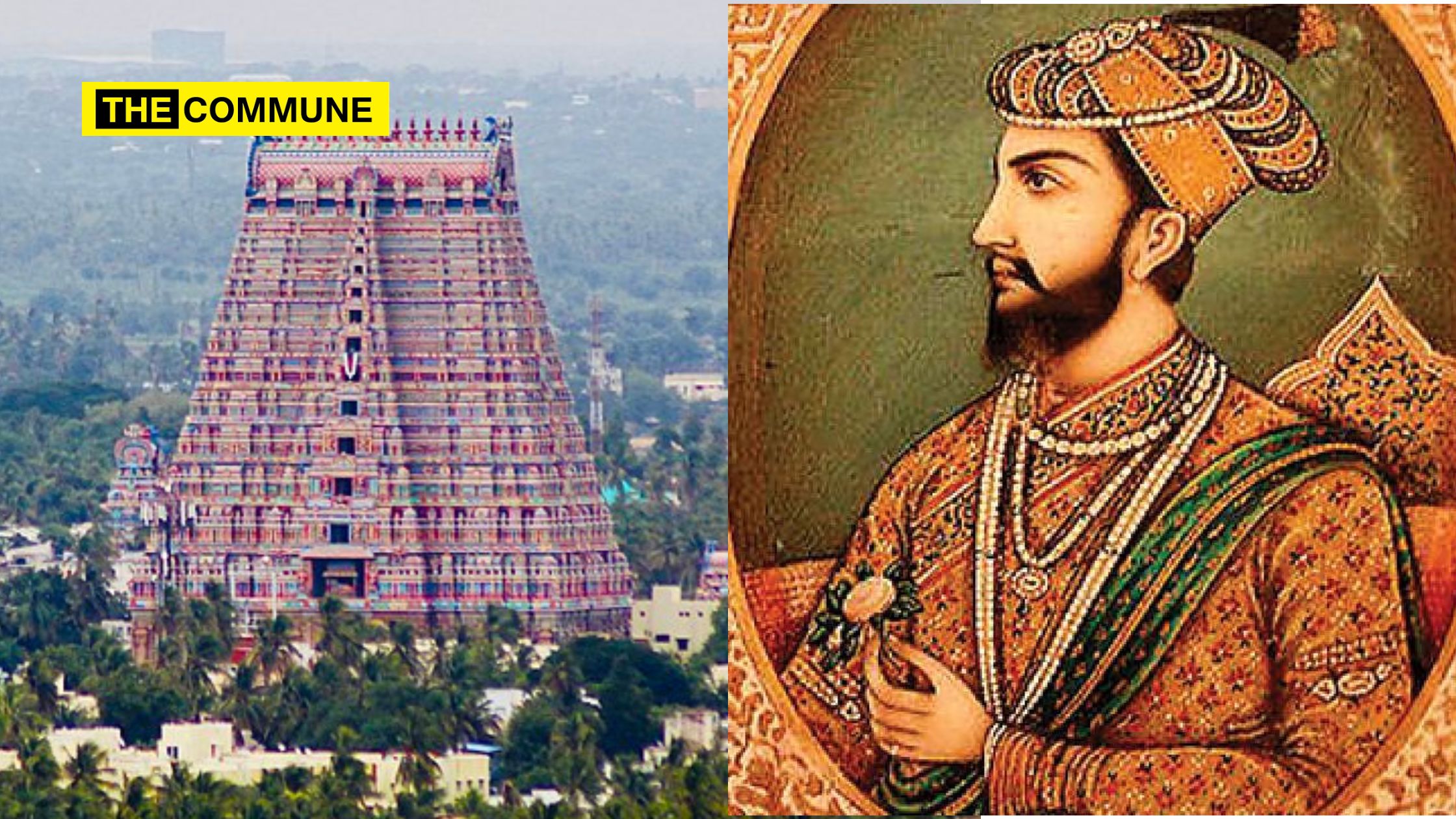
 The Panguni Uthiram festival has been celebrated across all temples in Tamil Nadu since ancient times. This usually marks the celestial wedding of God and Goddess in most of the temples. The ‘Bhooloka Vaikuntam’, Srirangam, is no exception to this. For thousands of years, Panguni Thirunal has been one of the important Utsavams celebrated in the temple, in which the day of Uthiram (Uthirapalguni Nakshatra) marks the ‘Serthi’ of Arangan and Thayar. However, this festival also brings back some dark memories of a catastrophe that happened in the early 14th century. 

 After the internal rivalry that plagued the Pandyan country during 1300, Tamilagam was invaded three times by Delhi Sultanate forces. First by Malik Kafur in 1311 in which he returned with a lot of wealth from there. The second was a few years later by Khusrau Khan, which didn’t have a major impact. The third one came in 1323. That was the one that has made a lasting impact on the culture and heritage of Tamil Nadu. 

During the reign of Ghyasuddin Tughlaq, his son Ulugh Khan (who later ascended the Delhi throne as Muhammed Bin Tughlaq) came with an army towards Deccan. His aim was not only to loot the wealth but also to subdue these kingdoms and make them serve under the Delhi Sultanate. He met with success in Warangal, and the Hoysalas, who were ruling the Dwarasamudras, also gave up. Veera Vallala III had to agree to peace with Ulugh Khan and let him pass through the kingdom towards Mabar (Madurai). Even after the raid by Malik Kafur, the Madurai Pandya Kingdom still had a lot of wealth, and that was the target of Ulugh Khan. He passed through the Servarayan Hills and reached Kannanur Koppam, which is now known as Samayapuram. Kannanur served as the second capital of Hoysalas during those days. 

At the same time, Srirangam was busy with the Panguni Uthiram festival. On the evening of the seventh day, after Azhagiya Manavala Perumal, the Utsava Murthy, had completed the procession, the news of the Sultanate forces reaching Samayapuram reached the temple authorities. They discussed whether to go ahead with the next day’s event, in which the Perumal is taken to the Varaha temple near the Kaveri River. It was known as ‘Pandriazhvan Medu’ during that time. Given the proximity of the place to Samayapuram, few objected to this. But there are valid counterarguments. One, the region had seen many battles since the Sangam days between Tamil kings, which didn’t have any impact on temple affairs. Second, they knew that Ulugh Khan was on the way to Madurai, and why would he come to a temple event? Convincing themselves, the temple authorities decided to go ahead with the event on the 8th day of the Panguni festival. 

 They were grossly mistaken. Knowing about the Srirangam temple and the kind of wealth it had, Ulugh Khan decided to attack the temple. His first target was the devotees who were assembled at the Varaha Swami temple. There were thousands of them, including men, women, and children, who came from faraway places to witness the festival. The Sultan’s army mercilessly pounced on them. Without even knowing why they were being attacked, they couldn’t even defend themselves. Kovil Ozhugu, which details the history of Srirangam temple, mentions that about 12,000 devotees were massacred. This was mentioned as ‘Panniraayiravar Mudithiruththiya Pandriyazhvan Metu Kalagam’, a battle that removed the heads of 12000 devotees. 

 The news quickly reached the temple where the Azhagiya Manavala Perumal was all set to leave for the Kaveri River. Realizing the danger, two of the Acharyas, Pillai Lokacharyar and Swami Vedanta Desikan, decided to safeguard the Perumal. As Pillai Lokacharyar was old, it was decided that he would leave for the south of Tamilagam along with the Utsava Murthy in a Palanquin with a few of the temple treasures. Vedanta Desikar left for north Tamil Nadu with all important texts. When Ulugh Khan’s army attacked the temple, they heard that the Azhagiya Manavala Perumal had been taken to safety. One of the divisions of the army was set out to chase them. The rest of the army sacked the temple and killed whoever was there to defend it. 

 Pillai Lokacharya took the Perumal through the jungles safely, avoiding the chasing army. Due to exhaustion, he attained Paramapatham at a place called Jothishkudi near Madurai Anaimalai. His disciples took the Perumal through Tirunelveli and Aralvazmozhi to Kerala. After some years, Perumal went to Melkotte in Karnataka and then to Tirupathi. 

 Meanwhile, Ulugh Khan captured Madurai and installed Jalaluddin Ahsan Khan as governor of Madurai. However, after Ulugh Khan left for Delhi, Ahsan Khan declared independence and made Madurai a separate sultanate. This sultanate created havoc in Tamilagam, and for 48 years it plunged into darkness. Many temples were destroyed, and poojas were stopped. Fortunately, Kumara Kampala of Vijayanagar came with an army in the 1360s and destroyed the sultanate. 

 Gopanna Raya, who was a general of Kampanna, heard about the happenings at Srirangam Temple and decided to bring back Azhagiya Manavala Perumal. He went to Tirupathi, took Perumal with him to Ginjee, performed poojas, and then took the swami to Srirangam. At that time, no one could vouch whether the Vigraha was the same one that was taken away during the raid of Ulugh Khan. Luckily, there was a washerman who lived through this time and he was brought in to verify the vigraha. Unfortunately, he was blind, but just by the smell of the dress, he could confirm that it was indeed ‘Namperumal’—our God. Gopanna installed the Vigraham in the temple and restored all the rituals and pooja. This event was inscribed in the Srirangam temple. 

Nowadays, Srirangam residents started lighting Moksha Deepa in memory of the innocent devotees who gave their lives during the festival. A fitting tribute indeed. 

TS Krishnan is a Tamil scholar and author.

Subscribe to our channels on TelegramWhatsApp, and Instagram and get the best stories of the day delivered to you personally.

Udhayanidhi Claims His Father Only Gave Vaccines To People During COVID, But Here’s How Stalin Fearmongered About Vaccines

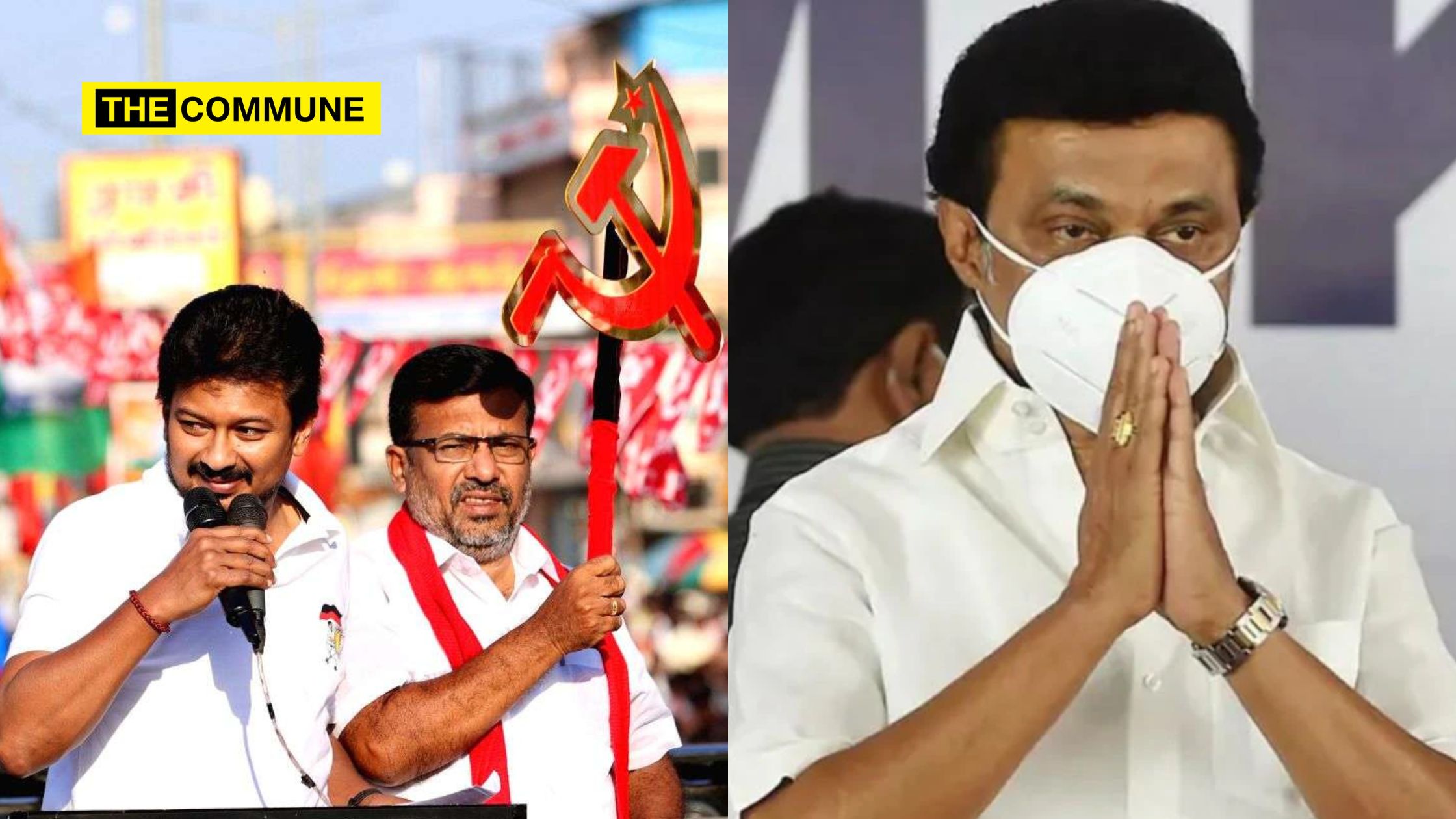
In the Dindigul parliamentary constituency, Satchithanandam, representing the Marxist Communist Party, is a candidate in the I.N.D.I Alliance led by the DMK. Seeking support from the electorate, Udhayanidhi Stalin, the DMK Minister for Youth Welfare and Sports Development, appealed for votes at Natham Bus Station, endorsing the Sickle Hammer symbol.

Reflecting on the COVID-19 pandemic, Udhayanidhi contrasted the leadership styles of Prime Minister Modi and the Chief Minister of Tamil Nadu, emphasizing the latter’s focus on vaccination and direct engagement with affected individuals. He praised the Chief Minister’s courage and highlighted the resilience of the people of Tamil Nadu in navigating the pandemic.

Udhayanidhi Stalin said, “We came to power in 2021 and you know what the situation was. COVID pandemic second wave, do you remember? Corona… What did Narendra Modi Union Prime Minister do then? What did he say? He told everyone to go into the house and hide, lock the house, one day suddenly he asked everyone to come out, keep a candle, keep a plate in hand, make a sound and the Covid will run away. Didn’t he say that? Some of us even followed what he said. Don’t forget that.”

“But what did our leader do, he said that vaccine was the only medicine to eradicate Covid, that awareness was the only medicine, and took the vaccine himself, the only chief minister in India who went to the Covid ward in Coimbatore, wearing the Covid PPE kit – only our TN Chief Minister. Moreover, it was our people of Tamil Nadu who guided India that vaccination is the only way to remedy for Covid.

The remarks made by the DMK scion Udhayanidhi Stalin sparked interest among internet users. They dug out old videos of MK Stalin stating something totally different to counter Udhayanidhi Stalin’s lies.

MK Stalin was seen fear mongering with respect to the Covid vaccine. However, now, Udhayanidhi praised his father MK Stalin’s “efforts” in distributing the vaccine to the public. Let us examine Stalin’s speech from the past.

In a speech by the then LOP MK Stalin in February 2021, just around the time when the vaccines were being rolled out to citizens, he raised numerous questions about COVID’s origin and treatment. In one of the ‘gram sabha meet’ organized as part of his election campaign in Maduravoyal, Chennai he said “There is news coming about vaccines. We don’t know if it is 100% success. It will be known only later. The Prime Minister has not taken it (vaccine). The Chief Minister (Edappadi K. Palaniswami) has not taken it. Some doctors are taking it. A few others are taking it. Because, it is just like they are testing (on doctors and other people).”

The online community proceeded to criticize the father-son duo for their deceptive storyline in their election campaign, aiming to manipulate underprivileged for political advantage.

https://twitter.com/Kunthavi5/status/1398933293043646465

https://twitter.com/RaghuTweetbook/status/1771988069496856595

Subscribe to our channels on TelegramWhatsApp, and Instagram and get the best stories of the day delivered to you personally.

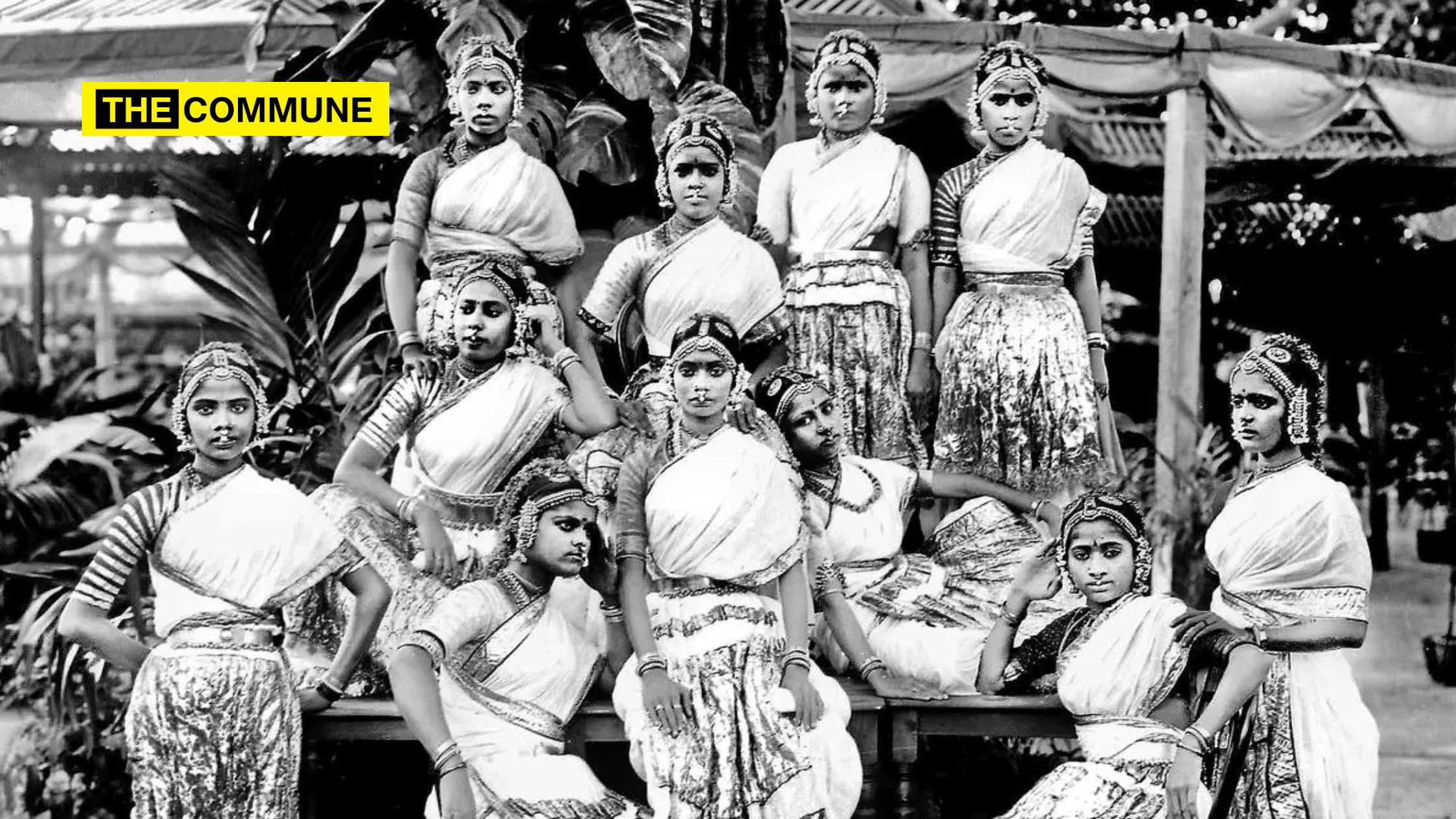
Who Mourns For The Devadasi-s?

Gone are the days when History was written by the victors and elitists. During the post-colonial period, many leftist schools of humanities. Subaltern studies are one version of post-colonial studies that focused on representing the voices of the “lower social classes”. These academic narratives gained momentum in the 1980s, thanks to the Subaltern Studies Group (SSG), a group of South Asian scholars pursuing a new approach to (re) writing History, and building postcolonial narratives.

The Devadasi community qualifies as a subaltern study as it had all the elements of “drama” needed to paint a colourful social history of the oppressed and the oppressors. The top most selling point for this narrative is the Devadasi Abolishment Act with a socio-religious angle especially since the Devadasi tradition has a ritualistic angle that traces back to the Hindu Temple Institution. What keeps this narrative going in South India is the fact that the profession of the Devadasi community, in contemporary times, is taken up by the upper-class Brahmins, who are thriving in the art forms.

Who were Devadasi-s? What was their role in the social hierarchy? What happened to them after the Abolishment Act? How does it relate to the recent tensions and divisions as a result of the announcement of 2024 Sangitha Kalanidhi? Is there a similar interplay of power dynamics especially since both involve artistic communities, its institutions, and patrons? 

Origin And Privilege Of The Devadasi Community

Today as academics repeatedly churn out the narratives of the Devadasi system and the Abolishment Act or the disenfranchisement, we have to read it in the context of what was happening elsewhere too. When a certain religion perceived threats from matriarchy it engaged in burning women in the name of witch-hunt. In India, at the same time, the dharmic society was celebrating matriarchy, giving them special status in the society.

In the book Nityasumangali: Devadasi Tradition in South India, Saskia C Keserboom traces the community’s origin to bardic traditions that consisted of male and female communities, both gaining a very prominent social status. In the later medieval times, the communities organised themselves into two orchestras: the periamelam (male nagaswaram virtuoso) who were patriarchal, and the chinnamelam (devadasi-s, consisting of the female dancers and their male guru-s: the nattuvanar-s) who were matriarchal. 

She explains the social and religious aspects of Sangam that suggest that the divine manifested in various intensities that needed mediation; in this space, the form and function of Devadasis were constructed to remove the evil influences of the temple deity. This earned them the special social status as (nityasumangali) the ever-auspicious also.

Amrit Srinivasan, a social anthropologist details that this shared community who lived, married, and worked together, exhibited a competitiveness amongst them. He writes, ‘Most of the nagaswaram players remarked on the greater wealth, fame, and glamour that had been possible for the dancing girls as compared to themselves. Significantly, they claimed this to be the effect of an unfair advantage arising out of the natural attraction for women. According to them, the temple authorities gave the dance pre-eminence at festivals knowing that the people would flock to see the devadasis.’ He is certain that ‘the leading role played by the men of the community in the subsequent reform campaign to abolish the female profession of temple-dancing cannot be understood without reference to this potent fact.’

Devadasi Abolishment And Disenfranchisement

When the native kings and their patronage of the temples weaned, among the many Hindu institutions that crumbled, the devadasi matriarchy suffered the most.

Earlier, the Devadasi women, who enjoyed higher professional status than men with special temple privileges were stripped of their rights as a result of “reform” that was largely politically pushed by some minorities of the community. As a result, the matrifocal household of the community during its prosperity included excessive female residents, a dichotomous power structure where the female members exercised household control, with customary Hindu law supporting their inheritance; from the 1920s began to shift, favouring the males of the community over the females. Although the Madras Act of 1929 enfranchising inams (gifts) and maniams (grants) became tax-free privileges that compensated the communities on the grounds of social justice; the conversion of public land into private taxable “property” also favoured the men over the women of the community. What was once the exclusive right of the professional working class of the community, became available for men of the community to inherit as well.

Yamini Krishnamurthy recounts in her autobiography that Mylapore Gowri Amma, who was once the Queen of Mylapore, lived in penury in her later period of life, bargaining with a street vendor for 2 anna-s, even though she possessed in her palms an unparalleled knowledge that was complemented with mastery in craft. 

 Did the Devadasi Abolishment progress or regress the matriarchy?

Art, society, And Politics

When the institution began to crumble, few male members of the community decided to support their female practitioners. The nattuvanar community spread the art to other communities outside of the guild but were not practitioners of dance, keeping to the norms of the guild. The old families coming out now to perform today shows that time heals. The young girls are encouraged and welcomed by the rasika-s and dance community.

Looking through the lens of socio-political, at that time the scenario prevalent in TN was pushing for anti-Brahminism aggressively between 1920 and 1947 by the Justice Party (now DK/DMK). This was done under the pretext of reinstating “rationalism”, and propagating atheistic programmes, wherein the Backward Classes Movement joined hands with the Christian missionaries with the sole agenda of discrediting Hindu practices and customs on the basis of reforming society. The Backward Classes Movement particularly included the men of the devadasi groups whose focussed agenda was anti-ritualism for both dominance within the household and to reclaim their socio-political status. 

When the Abolishment Bill was passed, the Justice Party, with the official backing of the British through Christian missionaries, had taken great care to protect service benefits in terms of grants and gifts attached to the Devadasi establishment. But another parallel movement existed who were interested in the Devadasi system was the Theosophical movement. The Theosophical Society, which was non-political, became the “unofficial” British wing as its interest was in the nationalisation of Indian art, life, and religious ideals. Into this wing, came contemporary educationalists of post-independent India Rabindranath Tagore, J. Krishnamurthi, and Rukmini Devi.

Given that the Carnatic traditions also had devadasi-s, the seat of Carnatic tradition being Thiruvaiyaru, it produced many vaggyakara-s. Thus, male members of the upper class were already learning and performing the Carnatic tradition from the middle and late 18th Century CE. The stigma of the Devadasi was attached only to Sadir, the traditional dance form of TN, as the vaggyakara-s of sadir belonged to the Devadasi community. This demarcation is important for present and future generations of rasika-s and practitioners to know. 

To remove the stigma attached to the practice of devadasi dance, the form and function needed sanitisation which was done by Rukmini Devi Arundale. In establishing Kalakshetra, Rukmini Devi democratised the dance form. She also broke the gender divide that existed in dance traditions. Her determination and endurance sowed the seed not only for next-generation Bharatanatyam practitioners but also largely helped other regional devadasi dance forms.

In The Present: Have The Wounds Of The Past Healed?

Academics belonging to the History and Anthropology disciplines can write papers on temple institutions and devadasi-s, but none of their studies and collaboration promote the spirit of the devadasi system and are relevant to India’s cultural continuity. Their narratives while staging the Devadasi dance have always only poked into the wounds of the surviving members of the community from time to time, not letting them heal.

In light of the recent announcement of the 2024 awards by the Madras Music Academy, it is clear that the premier institution is sending a political message that does not align with the values and history of what the institution has so long stood for. The Academy has undoubtedly groomed and promoted talent while also maintaining a high level of artistic excellence. However, when T. M. Krishna snubbed The Music Academy on several occasions in the past, the decision of the Academy had startling reactions, raising the eyebrows of not just the artists. The Academy’s choice to place a political ideology over its own institutional values has also definitely let down the larger performing arts community.

The Carnatic community is conflicted as they consider the performing space sacred, but are wary that the next generation of young talent and their intellectual skills will be used to push false narratives that may only lead to polarisation within the Tam-Brahm communities. The Music Academy being at the forefront of the artistic milieu paving the way for such polarisation is tragic. The millennial generation that is witnessing this churning in society needs to ask only one question – should caste and politics creep into the institutions of traditional arts, when the role of arts in society is to explore the ‘form’ that is meant to heal?

At this juncture, it is also extremely important to be sensitive to the art and the artists as both are inseparable and dependent on patronage. The role of patrons and rasika-s will thus play an important role in Margazhi Music and Dance Season here on especially since political agendas are intruding into the art and culture space.

The curtain is still drawn… the drama is yet to unfold!

Suggestions for further reading

  • Bharatanatyam, A Reader – Oxford University Press 2010
  • Saskia C Kersenboom, Nityasumangali, Motilal Banarsidass (1987) 2011, New Delhi
  • Knowledge Tradition Text, Approaches to Bharata’s Natyashastra, Sangeet Natak Akademi 2007
  • Douglas Knight Jr., Balasaraswathi, Her Art & Life, Wesleyan University Press 2010, in India Tranquebar (2011)

Deepa Chakravarthy is a performing artist and a practising academic. She is an Indic cultural expert whose expertise extends Indian cultural history to other practice traditions like Yoga and Vedic chanting.

Subscribe to our channels on TelegramWhatsApp, and Instagram and get the best stories of the day delivered to you personally.
India Set To Unveil Its Own Indigenous Rating System In Response To Biased Western Indices Evaluations

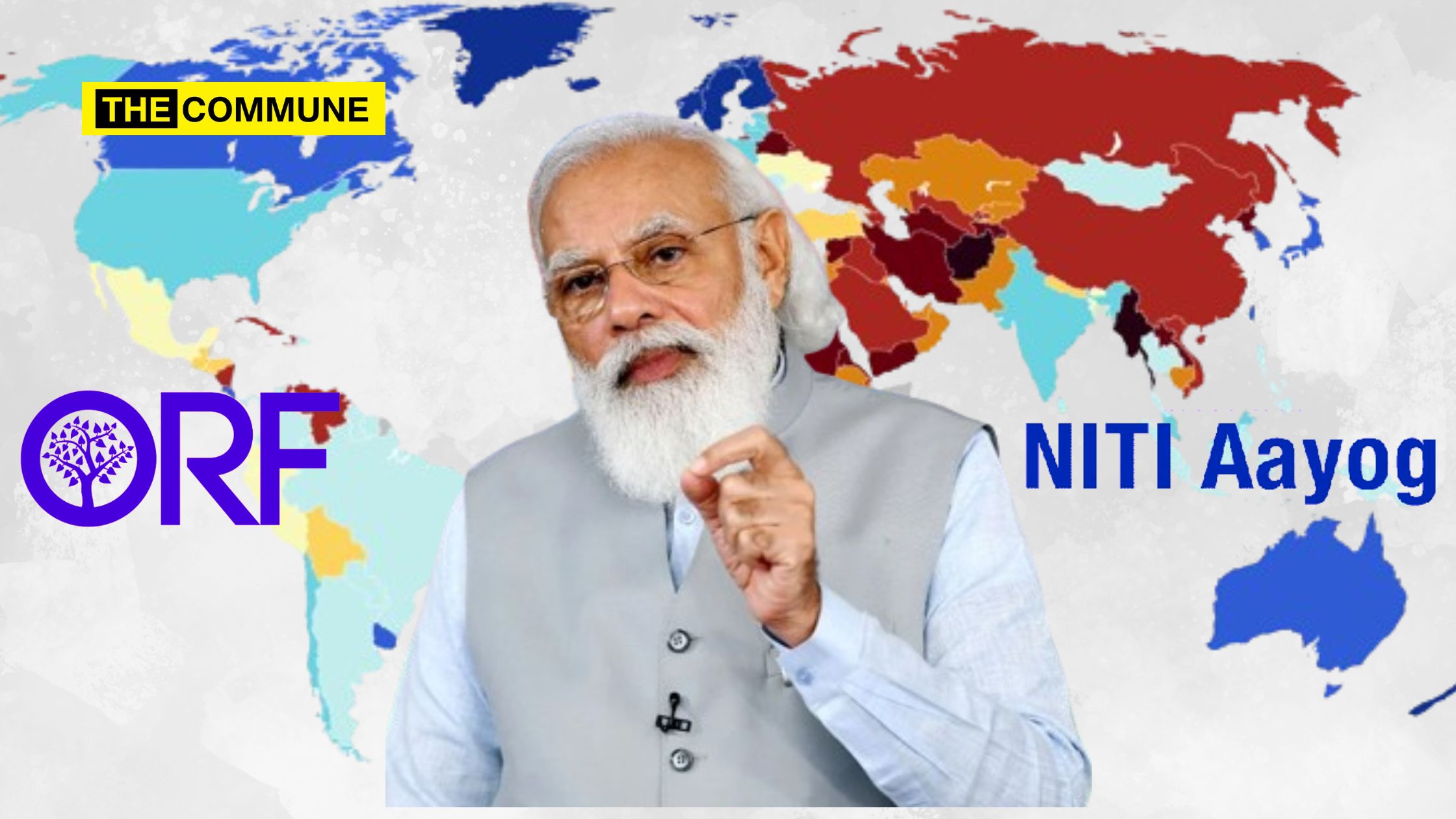
Amidst speculation that India is contemplating the creation of its own rating system due to dissatisfaction with biased Western evaluations, Al Jazeera has reported on potential plans for the country to introduce its own ratings system, likely in collaboration with think tanks advice NITI Aayog and ORF, either before or after the upcoming elections.

Al Jazeera, a Qatar-based news outlet financed by the Qatari government and often perceived to hold critical views towards India reported that Prime Minister Narendra Modi has enlisted the support of a prominent Indian think tank to devise its own assessment system for democracy, aiming to counter recent downgrades in international rankings that could potentially impact the country’s credit rating, as reported by Al Jazeera. It also disclosed that the Observer Research Foundation (ORF), closely collaborating with the Indian government on multiple fronts, is in the process of formulating the criteria for these democracy ratings. An unnamed official mentioned to Al Jazeera that a review session convened by NITI Aayog in January resulted in the decision for ORF to unveil the Democracy Rankings in the coming weeks.

Aljazeera at the time of elections in India have crafted a well-written article designed to captivate readers and maintain their narrative. However, their ability to sustain this narrative is limited. Nonetheless, the question remains: How can a news media outlet or an independent rating agency dictate the policies of a sovereign nation? Let’s examine some past indices to understand why India has opted to develop its own indigenous democracy index instead of relying on Western-influenced rating systems which has a consistent high ratings are typically seen exclusively within regions like the EU, Western Europe, North America, and parts of Latin America and the Caribbean, reflecting a lingering colonial mindset.

The Democracy Index

In the V-Dem’s Democracy Index, India’s position stands at 104, trailing behind nations like Niger, currently under the control of a military junta with the President placed under house arrest since July 2023. India also falls below Kuwait, where the Parliament was dissolved recently due to an incident involving a lawmaker insulting the Emir. In the latest report, India has been classified as an electoral autocracy, marking a notable shift. Adding to this the irony, the 2022 report identifies India among the top 10 countries undergoing autocratization globally, sharing this distinction with El Salvador, Turkey, and Hungary.

It co-related with amendement in  laws such as sedition, defamation, and counterterrorism equated to silence critics and undermining the constitution’s commitment to secularism by amending the Unlawful Activities (Prevention) Act (UAPA) in 2019.

The Happiness Index

India occupies the 126th spot in the Happiness Index, with Pakistan ranking higher at 108 despite facing economic difficulties and terrorist activities. Additionally, India finds itself below countries like Myanmar, experiencing a coup and civil unrest, as well as war-affected regions such as Ukraine and Palestine.

The World Happiness Report, created by the UN Sustainable Development Solutions Network (SDSN), has faced criticism for its Western-centric definition of happiness, leading to biases favoring the Global North. The report relies on Gallup World Poll data and self-reported responses, resulting in subjective measurements. Cultural biases in survey questions and inadequate representation of diverse cultures, particularly in countries like India, undermine the validity of the findings. Methodological flaws include small sample sizes, inconsistent methodologies over different years, and a failure to account for geopolitical factors and varying aspirations across regions. Additionally, the report overlooks important determinants of happiness such as job security, income inequality, and access to education and healthcare. Furthermore, the treatment of missing data raises concerns about the accuracy of rankings. Overall, the report’s relevance and accuracy are questioned, especially in reflecting the realities of the Global South and Bhutan’s unique approach to measuring happiness.

The Press Freedom Index

According to the Press Freedom Index, India is positioned at 161, placing it lower than Taliban-controlled Afghanistan at 152. Pakistan also surpasses India in this ranking, along with countries like the UAE, Brunei, Somalia, and Uganda.

The Paris-based organization Reporters Without Borders (RSF) annually releases the World Press Freedom Index (WPFI) evaluating media freedom in 180 countries. India’s rank in the WPFI has fluctuated over the years, dropping to 142 in the 2020 report. However, concerns have been raised regarding the methodology and transparency of the WPFI. The index is compiled through an online questionnaire answered by NGOs and correspondents, leading to subjective rankings. Critics argue that the survey lacks transparency as scores and respondent details are not disclosed. Additionally, the questionnaire may contain biased questions. Developing countries with government-owned media tend to rank lower, raising questions about the index’s objectivity. Furthermore, RSF’s funding sources are not transparent, undermining its credibility. There are calls for RSF to engage with countries it ranks and revise its methodology to reflect a consensus on press freedom. The Press Council of India has questioned India’s ranking and sought clarification from RSF, but to no avail. Until RSF addresses these concerns and improves transparency, its role as a policy-making aid remains limited.

The Global Hunger Index

The Global Hunger Index 2023 positioned India at 111 out of 121 countries. Within Asia, only Afghanistan ranked lower than India, holding the 109th spot, while countries such as Pakistan (99), Bangladesh (84), Nepal (81), and Sri Lanka (64) all achieved higher rankings. Comparatively, India’s ranking has fluctuated in recent years, standing at 101 out of 116 countries in 2021 and 94 in 2020 on the GHI. New Delhi criticized the Food and Agriculture Organization’s estimates, derived from the “Food Insecurity Experience Scale (FIES)” survey module conducted through the Gallup World Poll. This method, based on a mere “8 questions” posed to a small sample size of 3000 respondents, was deemed insufficient and subjective by Indian authorities. Even though government pulled its bias in 2022 for ranking 107 out of 121 countries,  it repeated its same without any effect transparency or changing the methodology.

India has criticized the Global Hunger Index (GHI) jointly released by Concern Worldwide and Welthungerhilfe for its inaccuracies and biases, particularly in its estimation of the country’s food security and nutritional status. The report, released annually by Concern Worldwide and Welt Hunger Hilfe, has been accused of using flawed methodology, including a small sample size and subjective opinion polls, to calculate the Proportion of Undernourished (PoU) population. India contends that such methods are not representative of its population and fail to acknowledge government efforts, especially during the COVID-19 pandemic, to ensure food security. India argued that the GHI overlooks these initiatives and instead relies heavily on health indicators of children, which may not accurately reflect overall food security. The country urges for a more comprehensive and objective assessment of hunger and nutritional needs.

Propaganda By Other Organisations

Notably, The Economist Group’s Economist Intelligence Unit downgraded India to a “flawed democracy” in its 2022 Democracy Index due to substantial setbacks in democratic freedoms under the Modi government. Additionally, Freedom House, a US-based non-profit organization, lowered India’s status from a free democracy to a “partly free” democracy in its global freedom and internet freedom assessments.

Sanjeev Sanyal, a member of the Economic Advisory Council to the Prime Minister (EAC-PM), Previously asserted in an interview with India Narrative that global rating agencies demonstrate evident biases against India. Addressing various macroeconomic concerns, Sanyal emphasizes the importance of resisting such biases to safeguard investments and trade flows. This initiative to develop a domestically sourced index marks a significant advancement for India, positioning it to potentially challenge prevailing Western perspectives and claim a prominent position on the global stage.

Subscribe to our channels on TelegramWhatsApp, and Instagram and get the best stories of the day delivered to you personally.