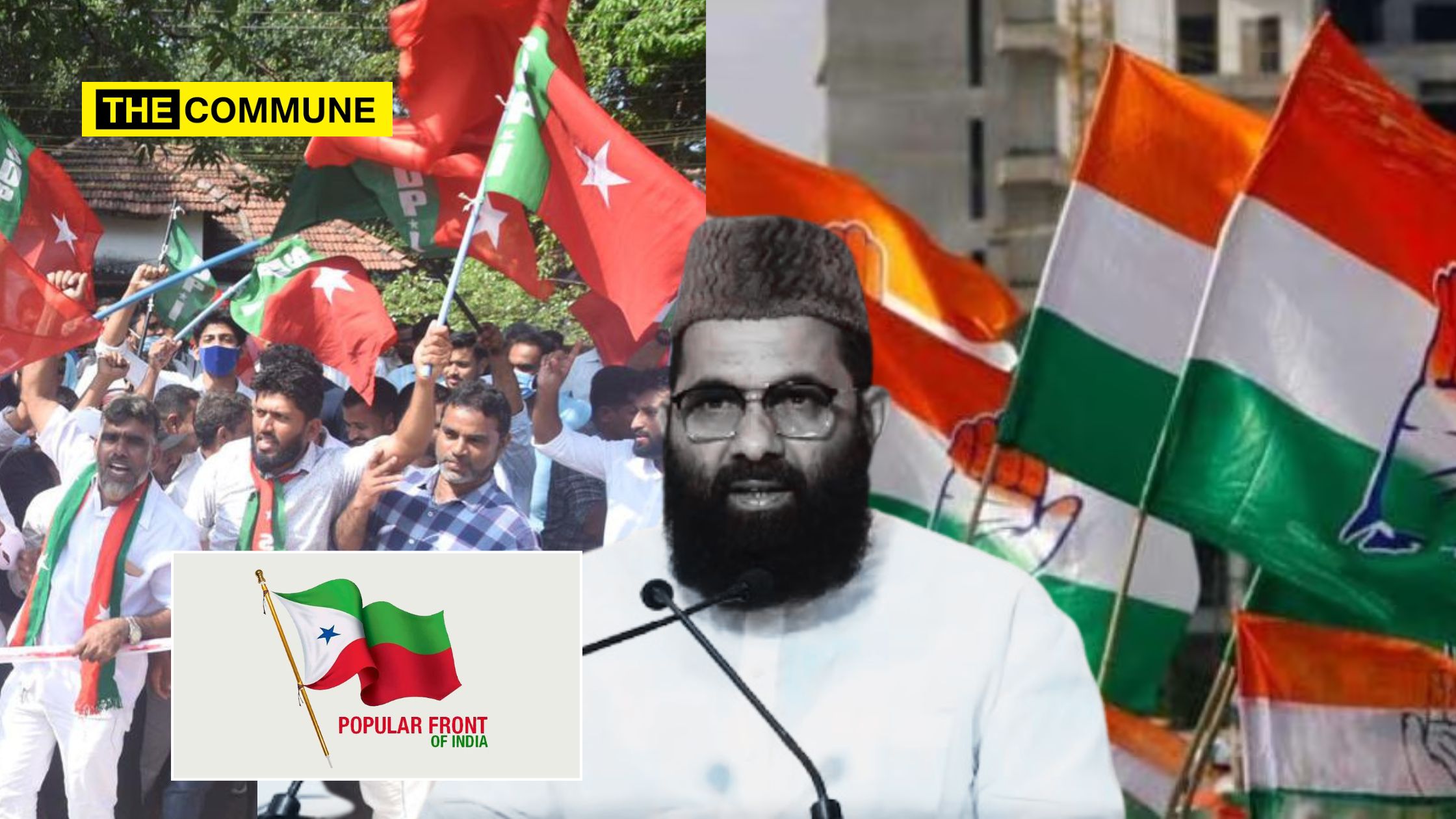
On 1st April 2024, the Social Democratic Party of India (SDPI), affiliated with the banned Popular Front of India (PFI), announced its endorsement of the Congress-led United Democratic Front (UDF) for the upcoming 2024 Lok Sabha elections in Kerala.
Ashraf Moulavi, the state president of SDPI Kerala, declared that they have opted not to field any candidates in Kerala. Nevertheless, nationally, 18 SDPI candidates are participating in the elections. This decision aligns with the Congress-led I.N.D.I alliance at the national level. Moulavi clarified that the party’s Kerala unit has not yet determined whether to actively campaign for UDF candidates or formalize any agreement with the UDF.
In the 2014 Lok Sabha elections, SDPI contested in all 20 Kerala constituencies, garnering votes ranging from 3,513 in Kottayam to 47,853 in Malappuram. However, in 2019, they contested only 10 constituencies. Moulavi highlighted a growth in both the number of branches and votes over the past decade, which he believes will bolster the alliance. He emphasized that the Congress party’s stance on issues such as implementing a caste census and defending constitutional values and secularism against challenges during BJP rule influenced their decision.
MM Hassan, the interim president of the Kerala Pradesh Congress Committee (KPCC), responded to SDPI’s support for the UDF by stating that he lacks prior knowledge of the move and that the party will need to deliberate on it. He stressed the importance of internal discussions before accepting support from any party.
Moulavi further clarified that neither the Congress nor the UDF in Kerala has formally reached out to SDPI. However, candidates from various parties have approached them. He reiterated that the party’s primary focus is on its growth, and decisions are being made with that objective in mind.
The recent announcement that the Social Democratic Party of India (SDPI), the political arm of the banned terror outfit Popular Front of India (PFI), will be supporting the @INCKerala-led United Democratic Front (UDF) in Kerala is not just shameful, but also deeply… pic.twitter.com/XuvdrOvQAL
— Pratheesh Viswanath (@pratheesh_Hind) April 1, 2024
In this election cycle 2024, there appears to be notable discontent among Tamil Nadu voters towards the incumbent DMK government led by Chief Minister MK Stalin. Despite being the first party to seal alliances and commence campaigning, DMK’s star campaigners and candidates are facing intense scrutiny and tough questioning from constituents wherever they visit.
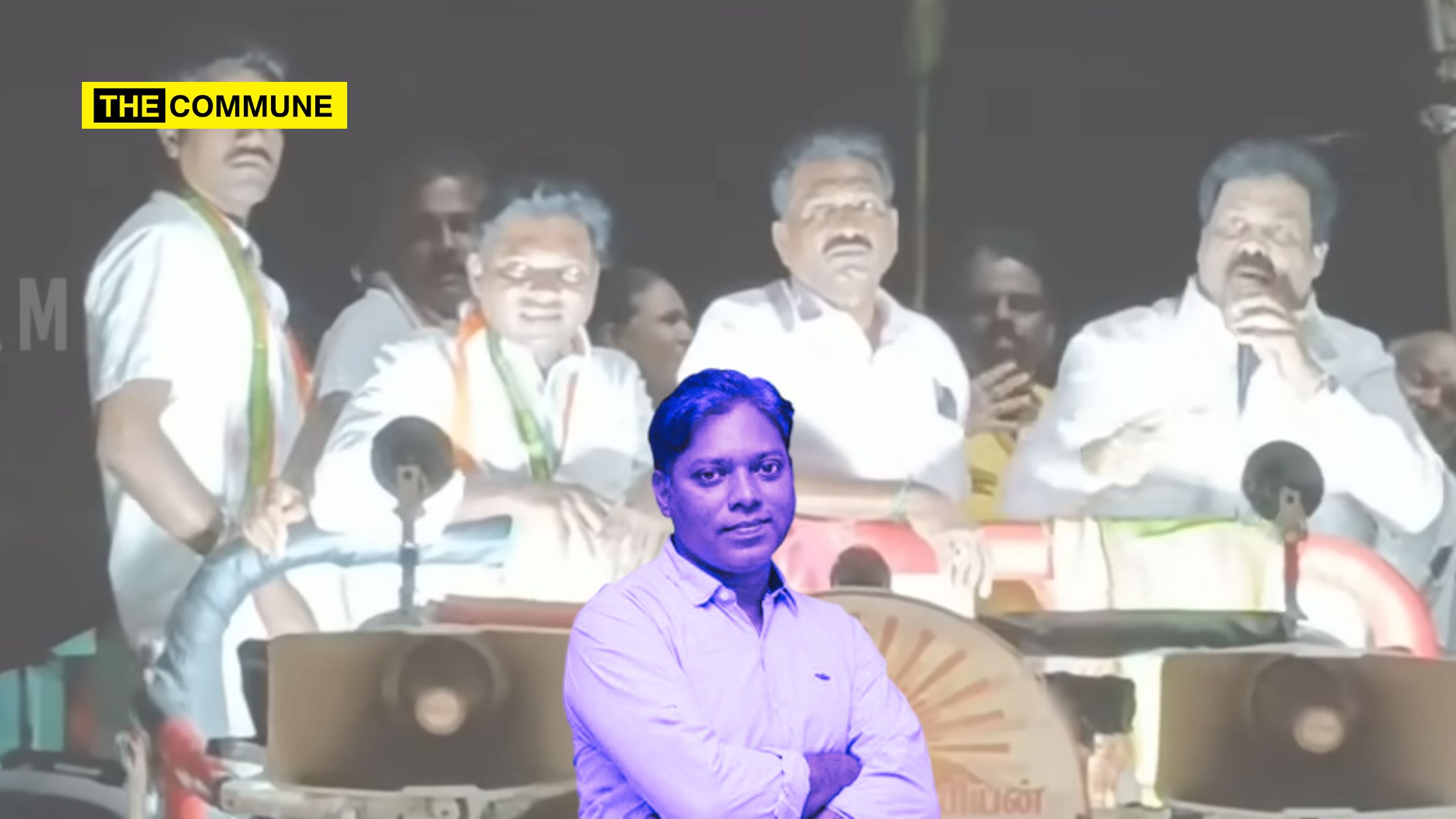
On 31 March 2024, former IAS officer Sasikanth Senthil currently the Congress candidate for the Tiruvallur Lok Sabha Constituency was involved in canvassing for votes, accompanied by his allies and supporters. Tiruvallur West District Secretary Tiruthani Chandran and Thiruvallur Legislative Assembly member VG Rajendran participated in the gathering. A video circulating widely on social media captured a moment where VG Rajendran, the assembly member, was seen forcefully advocating for Sasikanth Senthil, using a threatening tone and speaking disrespectfully in response to a query raised by a member of the audience towards the DMK MLA.
The altercation took place in Ulundhai village, the location of Chief Minister Stalin’s farmhouse. When MLA VG Rajendran began to address the crowd, they angrily questioned his actions as an elected representative. They demanded to know why he was seeking votes without delivering any tangible results since the previous assembly election.
DMK MLA VG Rajendran swiftly responded to the individual who raised concerns, with immediate anger, “Hey, come here and ask, why are you speaking from there, come here! Come up I’ll answer to you. This kind of work… hey! What do you know? are you cheating people? Who got this job worth ₹7 crore done, we did it! I, the MLA recommended MK Stalin to put a road here, the tank was also built by me MLA, no one but me”
Later VG Rajendran stated that those who seek to discredit his efforts and create issues would express themselves in such a manner. He then swiftly transitioned, in line with the typical stance of the DMK, to questioning the implementation of the Magalir Urimai Thogai (women’s basic income scheme), insinuating whether MK Stalin was giving or someone else. He emphasized that it was only after the DMK came to power that amenities such as street lights, roads, and tanks were installed in Ulundhai village, delivering his remarks with a tone reflecting the perceived arrogance of DMK.
Afterward, supporters of the DMK intimidated and encircled the individual who dared to raise concerns about the MLA.
Subscribe to our channels on Telegram, WhatsApp, and Instagram and get the best stories of the day delivered to you personally.
Coincidence met irony when the co-author of this article was vibing to this evergreen devotional hymn sung by the late SP Balasubrahmanyam in reverence to Lord Arunachaleshwara of Tiruvannamalai, as he was on his way to the temple city in the early hours of a Sunday morning.
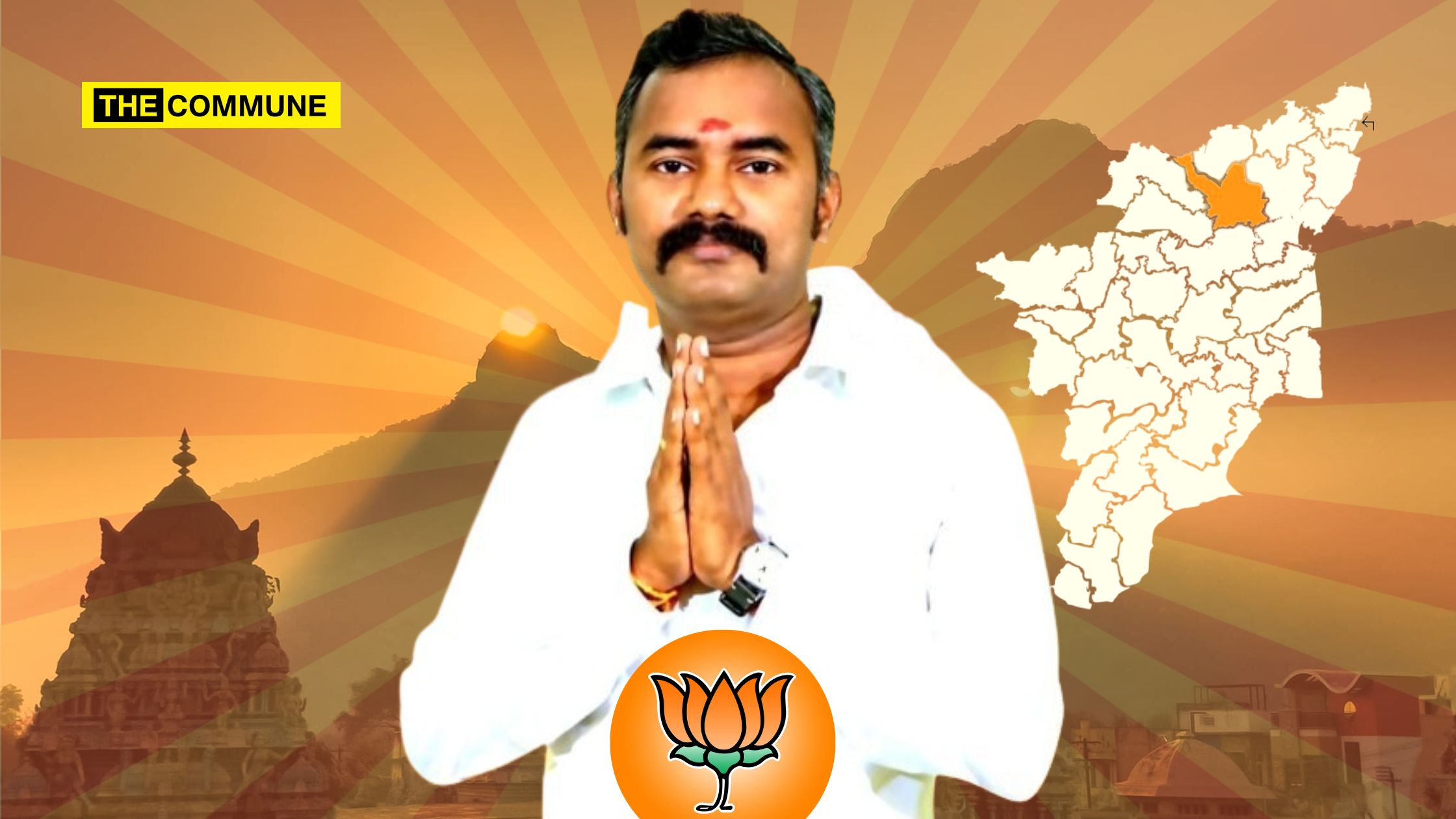
The coincidence works on different levels as The Commune team was to spend a day with Ashvathaman Allimuthu, the BJP MP candidate for Tiruvannamalai Lok Sabha constituency and the BJP in Tamil Nadu is headed by Thiru. K. Annamalai.
Ironic because, the devotional song was playing in Suryan FM, a radio station owned by the Sun Group of the DMK family, a party that is known for its tirade against Sanatana Dharma aka Hinduism.
This coincidence and irony is what is playing out in Tiruvannamalai as the BJP takes on the DMK.
The Political Landscape Of Tiruvannamalai
This world-renowned holy city of Siva, that attracts pilgrims from all over the world, has been fortified by DMK strongman E.V. Velu. The Tiruvannamalai Lok Sabha constituency which was carved out from Tirupattur constituency in 2008 comprises of 6 Assembly constituencies, namely – Jolarpettai, Chengam (SC), Kalasapakkam, Tirupattur, Keezhpennathur, and Tiruvannamalai – all of which are represented by DMK MLAs with E.V. Velu himself representing the Tiruvannamalai Assembly constituency.
In the Lok Sabha elections held from 1962 to 2004 when Tirupattur was a constituency, DMK has won 8 times, Congress 3 times and AIADMK once. After the formation of Tiruvannamalai, the DMK has won twice and the AIADMK once in 2014.
In the 2019 parliamentary elections, DMK’s CN Annadurai won by securing 6,66,272 votes. AIADMK candidate Agri S. S. Krishnamurthy who contested against him secured 3,62,085 votes, AMMK candidate Gnanasekar got 38,639 votes, Naam Tamilar Katchi candidate Ramesh Babu got 27,503 votes and Makkal Neeti Mayyam candidate Arul polled 14,654 votes.
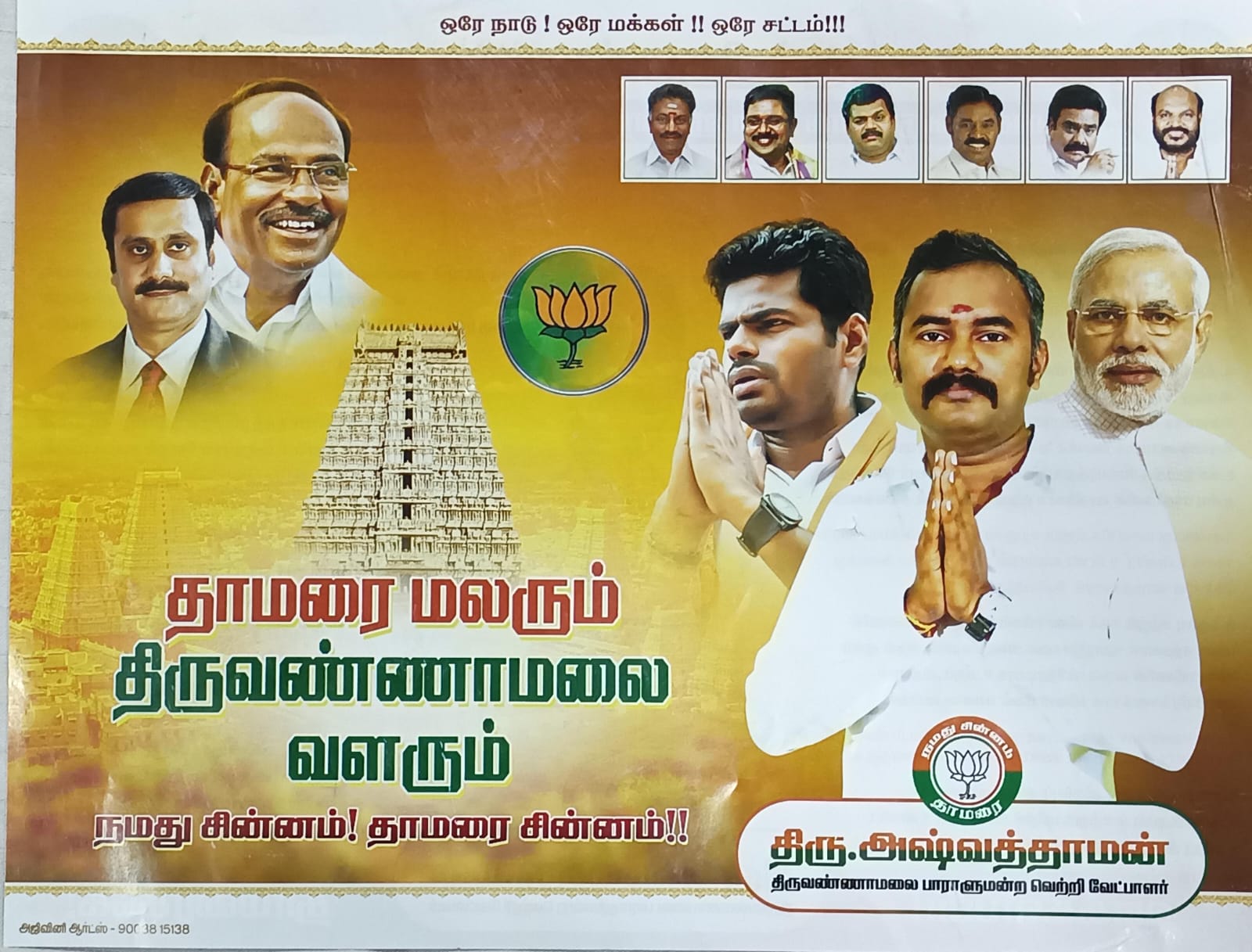
The DMK is fielding its incumbent CN Annadurai again and the BJP’s solider in this battle is Annamalai’s trusted soldier Ashvathaman, a 38-year-old advocate, and a Hindutva firebrand leader known for his fiery interviews and speeches.
Political Resume
Born and raised in Pugaipatti village, Ulundurpet Taluk, Kallakurichi District, Ashvathaman’s journey into politics was influenced by his early association with the Patali Makkal Party (PMK), where he served as the South Chennai District Youth Leader. However, his ideological alignment with the BJP eventually led him to join the party in 2012, marking a significant transition in his political career.
Over the years, the man has built an impressive political resume. Here is a snapshot of his early political years.
Advocated for the abolition of the “Self-respect Marriage Law” which recognized Christian-style marriage rituals of wearing rings as Hindu marriage. For this, Ashvathaman had come under the radar of the late DMK patriarch Karunanidhi who penned an article naming him in ‘Murasoli’. Dravidian ideologue K. Veeramani too lashed out at him in Viduthalai for his stance
Filed cases to ensure the establishment of Navodaya schools in Tamil Nadu
Filed lawsuits against the midnight opening of Hindu temples during English New Year celebrations
Filed a case against the movie “Mersal” for its uninformed propaganda against the Goods & Services Tax
Initiated legal action against allegations of bone theft by a Christian missionary near Kanchipuram and advocated for CBI investigation into the incident
Filed cases against state govt ordinance to prevent the celebration of Ganesh Chaturthi in 2018
Filed a case against the CAA protests
Filed PIL for the proper implementation of rainwater harvesting
Filed lawsuits against state government’s attempts to prevent reservations for economically backward people
When Zee released the trailer of its series ‘Godman’, the trailer of which came across as brazenly anti-Hindu, Ashvathaman along with other Hindu outfits like Hindu Munnani, BJP, Indhu Makkal Katchi ensured that the series never saw the light of the day
Complained about Karuppar Kootam and continued to insist that they be punished under the Goondas Act
Apart from the legal activism, Ashvathaman has also helped in students getting enrolled in Agnipath scheme by providing them free training at his native Ulundurpet. He had sent representation to the Railways Ministry for the stopping of Chennai Egmore – Kollam Express at Ulundurpet and Chennai Egmore – Tiruchendur Superfast Express at Kuttalam.
With a diverse background spanning legal advocacy, social activism, and political engagement, Ashvathaman brings a fresh perspective to the political landscape of the region.
From A Speaker To A Leader
During interviews and public appearances, Ashvathaman articulates his vision of Hindutva passionately and his political rhetoric taking down the DMK, its leaders and principles has made him a leader to watch out for in the BJP. His speeches often go viral resonating with the common audience. Recognizing his talent, he was made the BJP Tamil Nadu’s State Secretary by K. Annamalai.
As the election campaigning heats up, Ashvathaman traverses through key locations in the Tiruvannamalai constituency, engaging in spirited interactions with constituents from diverse backgrounds. His approachable demeanor and articulation of pressing issues resonate with voters, fostering a sense of connection and trust.
Amid a political landscape dominated by established parties, Ashvathaman’s candidacy represents a departure from the status quo, offering voters an alternative voice and perspective. However, he faces formidable challenges, including entrenched caste-based politics, voter polarization, and the prevalence of cash-for-votes practices. He draws attention to the challenges faced by farmers, inadequate job opportunities, and the urgent need for economic revitalization in the region.
Ashvathaman’s Vision Of Tiruvannamalai 2.0
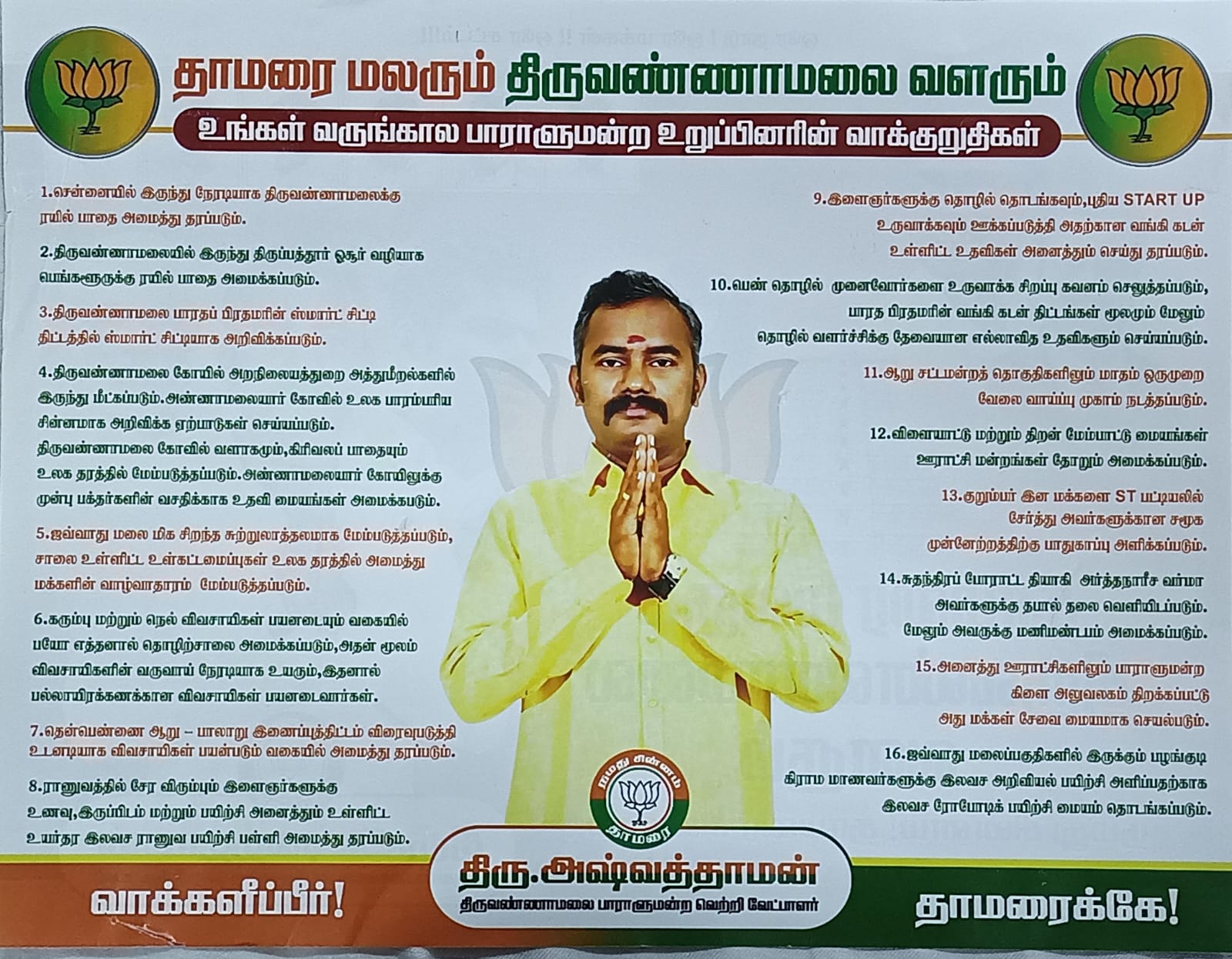
In his manifesto for the constituency, Ashvathaman promises the following:
Direct railway line to Tiruuvannamalai from Chennai
Direct railway line to Bengaluru via Tirupattur and Hosur
Bring Tiruvannamalai under Smart City scheme
Take efforts to relieve Tiruvannamalai Temple from HR&CE control and declare it as a symbol of world heritage, and upgrade pilgrim facilities in the temple complex
Make Javadhu Hills an attractive tourist destination by building roads and other infrastructure which will raise the standard of living
Take efforts to establish bio-ethanol production facilities that will benefit cane farmers
Take efforts to expedite linking of Thenpennai River with Palar River
Establish free training centres for those willing to join the armed forces
Facilitate creation of new start-ups and help them in getting bank loans
Special focus to create women entrepreneurs and facilitate in getting Central government schemes like Mudra loans
Monthly job fairs in all 6 Assembly constituencies
Sports and skill training centres for youth at the municipality level
Fulfil the demand of Kurumbars to get listed in Schedule Tribes
Postal stamp and a memorial for freedom fighter Arthanareesa Varma
Open Parliamentary branch office in all municipalities
Special schools for kids in Javadhu Hills to learn robotics and science
BJP MP candidate Ashvathaman’s manifesto for TiruvannamalaiThamarai Malarum, Tiruvannamalai Valarum (Lotus will bloom, Tiruvannamalai will develop)
Convo With The Commune
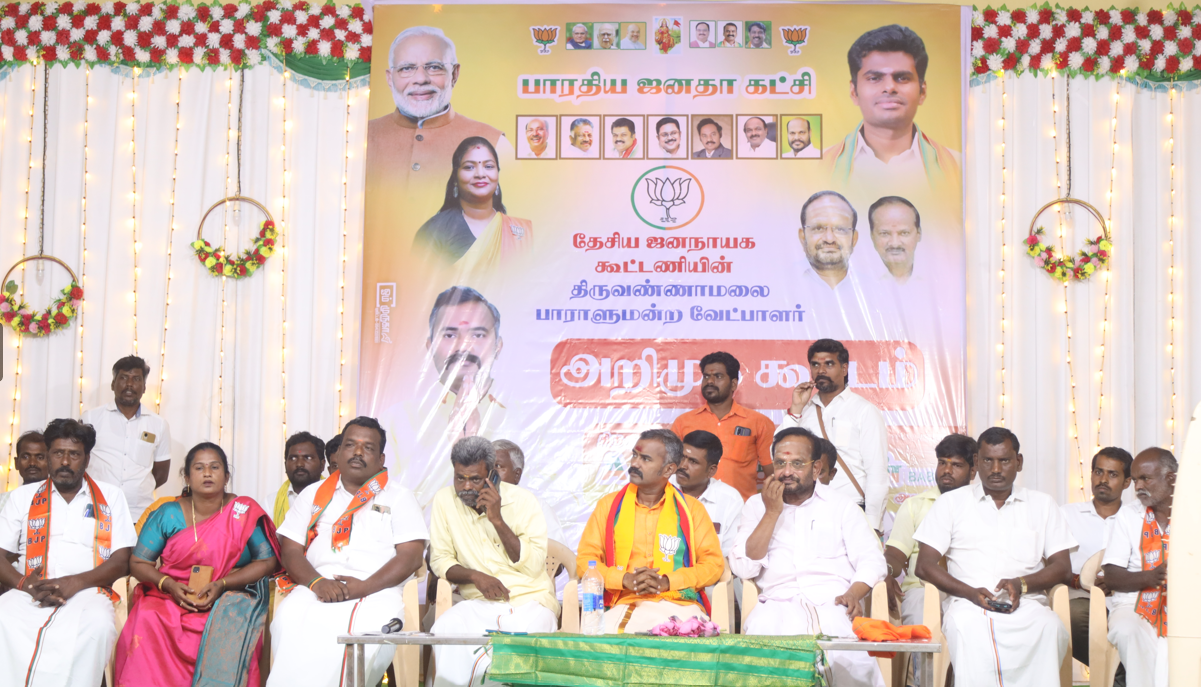
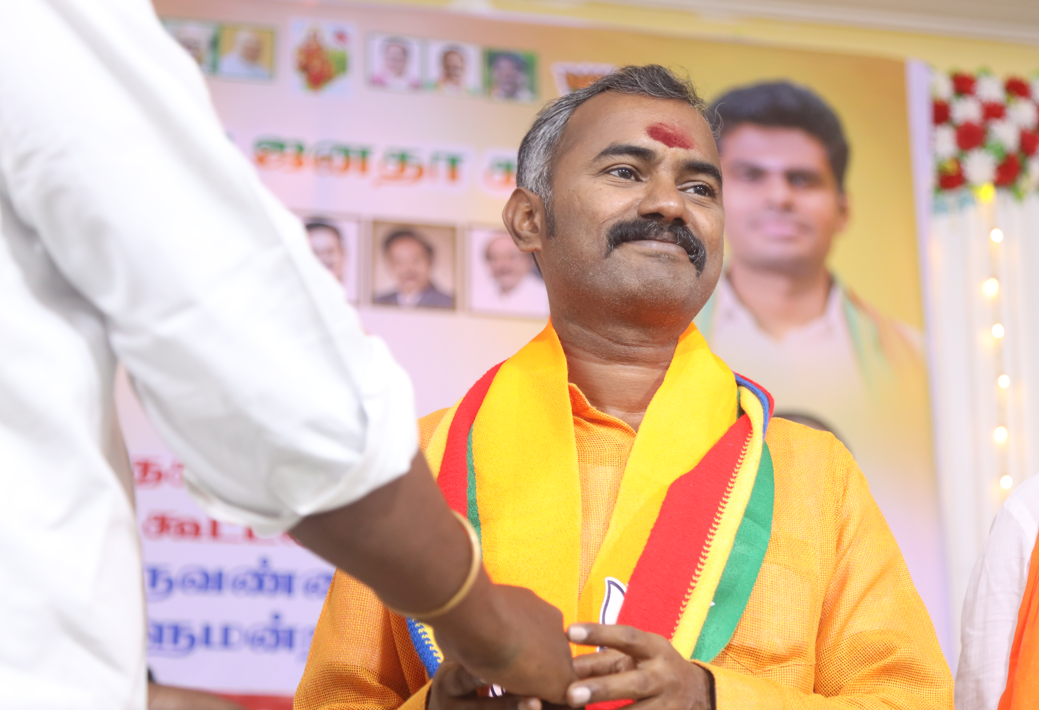
The Commune caught up with the man of the moment, A Ashvathaman who had a packed day ahead of him. He was holding a core comittee meeting at 10 AM after which he straight away headed to Kalasapakkam for the ‘candidate introduction’ meeting where cadres belonging to PMK, AMMK, and the BJP were assembled.
On the way back to Tiruvannamalai, Asuvathaman spoke about his journey and his vision of Tiruvannamalai 2.0. Here are edited excerpts of the interview.
Commune: Tell us about your association with the PMK.
Ashvathaman: During my tenure with the PMK’s student union from 2004 to 2009, known as the Patalli Manavar Sangam, I actively participated in various protests, including those advocating for OBC reservation in central government departments. Despite transitioning to focus on my legal career after 2009, my commitment to social work remained steadfast. Ideologically, both the PMK and BJP resonate with my values, shaped by my family’s patriotic ethos and admiration for leaders like Vajpayee. My upbringing inculcated a deep sense of pride in Indian culture and a belief in its potential to lead the world toward prosperity.
During my time in a convent school, there was a drawing competition coinciding with Vajpayee’s deployment of a warship around the Palk strait. I participated by sketching the ship and creating a collage showcasing all of Vajpayee’s initiatives for the nation. This was inspired by the discussions we frequently had at home, where my family and I would deeply engage in such topics. I have also grown up witnessing the importance of patriotism, and pride for Indian philosophy/Hindutva in my father’s role as a headmaster.
Nation always comes first and fostering patriotism is crucial, but I see India’s role extends beyond its borders. I firmly believe that India has what the world needs for it to become a better place and that is why India should become the Vishwaguru of the world.
Commune: Why did you shift to the BJP?
Ashvathaman: I don’t see it as a shift. After my tenure in the PMK’s student union and focusing on my legal career and social work, I found myself drawn to the ideology of the BJP. It resonated more with my beliefs and values. In 2011, around the age of 27 or 28, I made the decision to join the BJP along with 98 other lawyers. An incident in 2015, where Karunanidhi criticized me in Murasoli regarding a case I filed about self-respect marriage, prompted me to respond in a press meet. Veeramani’s article in Vidhuthalai also elicited a response from me. My stance garnered appreciation, notably from Veerathuravi RamaGopalji, for confronting the DMK. Those words of encouragement remain memorable and are a source of inspiration for me to this day.
Commune: How do you perceive your candidacy, following in the footsteps of PMK stalwart and firebrand Kaduvetti Guru as a first-time BJP Lok Sabha candidate?
Ashvathaman: When my name was announced for the Tiruvannamalai constituency, I felt a sense of pride knowing that I was contesting in the same constituency as Kaduvetti Guru. We are both first-time candidates representing our respective parties in this constituency. I hold him in high regard and make it a point to visit his home for every memorial occasion possible. Despite receiving 2.88 lakh votes, he narrowly lost the election. At that time, PMK contested alone without any alliance. Similar to him, false allegations and misinformation are being spread about me by the DMK, I take it as a matter of pride. Nevertheless, both the Lotus (BJP symbol) and I have become prominent topics in the current political discourse.
Commune: What challenges are you facing in Tiruvannamalai, considering your background/base in Cuddalore and Ulundurpettai?
Ashvathaman: Whether I contest from Cuddalore, Kallakurichi, or Tiruvannamalai, the party believes I can win. Annamalai has been a great moral support for me, and believes in me; he is like an elder brother, a part of my family. Tiruvannamalai is not unchartered territory for me; it’s just an hour away from my home, and my relatives live here. I’ve already fulfilled some of the wishes of the people here.
As for Tiruvannamalai, it holds great historical significance. Arthanareesa Varma, a freedom fighter akin to Subramania Bharathi, left a lasting impact here. His contributions, including bringing in liquor abolition laws and providing arms training to youth during the fight for independence, are noteworthy. I’ve written about him and his poems in various editorials, and even got the approval for a stamp to be issued in his honour. When the Ammani Amman temple was destroyed, I voiced my support for the Math. I have already done a lot of work in the Cuddalore/Ulundurpettai side. I am grateful that Union Railway Minister Ashwani Vaishnaw fulfilled two of our requests for train stops in a single day. He agreed to our demands for express trains to halt at Ulundurpettai in the Kallakurichi district and for the Tiruchendur express train to stop at Kuthalam in Mayiladuthurai district.
Tiruvannamalai isn’t unfamiliar to me. Even before receiving a ticket, I’ve been involved in addressing issues here. Some time ago, a child died due to the lack of a proper road in Tiruvannamalai. I protested against this, urging the collector to take action. Additionally, I’ve been working relentlessly for the people, irrespective of the constituency. For instance, I’ve petitioned to remove the Goondas Act filed against farmers protesting the usurping of their lands for building SIPCOT here, although the case is still pending even after the act’s removal.
The Kurumbar community members approached me with a petition to be enrolled in the Scheduled Tribe (ST) list. They visited Kamalalayam with their request, and even before that, I had already initiated the process to address their concerns. Annamalai entrusted me with this responsibility during his En Mann En Makkal yatra, and I ensured that their petition sees its logical end. The proactive steps I have taken so far have been well-received by the people, and they appreciate my efforts. Even before receiving a ticket for the Lok Sabha polls, I was committed to serving their interests. Now, they have confidence that I will continue to fulfill my responsibilities effectively when I become an MP.
Commune: What are the primary concerns facing the constituents in this constituency?
Ashvathaman: The foremost issue is the lack of development across various sectors. Farmers in the region struggle with balance settlement issues annually, leading to protests for fair compensation. Additionally, there’s a severe scarcity of job opportunities and industrial infrastructure, forcing residents to seek employment in distant cities like Bangalore or Chennai. Despite promises of industrial zones like SIPCOT, land acquisition issues and legal hurdles persist, leaving the region devoid of significant economic growth.
I have initiated several projects aimed at tackling these challenges head-on. One such initiative is the bioethanol project, which not only addresses environmental concerns but also creates economic opportunities for the local populace. Furthermore, I am committed to improving connectivity by advocating for the establishment of railway tracks connecting Tiruvannamalai to key cities like Bangalore and Chennai. Additionally, I aim to complete ongoing infrastructure projects like the Thenpennai-Palar connection and the Nandan Canal to ensure access to essential services like water supply.
Moreover, I believe in empowering youth through initiatives. When Agnipath was announced, I with the help of retired Army officers came up with a training camp offering free lodging, boarding, and training for aspirants looking to join the armed forces. In the first batch, out of 110 candidates, 33 have been selected, representing a placement rate of 35%. The response from the students has been overwhelmingly positive, particularly from villages where there is a strong eagerness to pursue careers in the armed forces.
Furthermore, it’s worth noting that there is currently a lack of sports facilities in the area. Despite the enthusiasm and capability of our youth, there is a notable absence of training opportunities for them to prepare for careers in the armed forces. Therefore, I am advocating for the establishment of sports training centers at the panchayat level to provide our youth with the necessary guidance and resources to pursue their aspirations in the armed forces.
Commune: Could you outline the key points of your manifesto for the constituency?
Ashvathaman: At the panchayat level, my focus is on establishing sports training centers to promote physical fitness and skill development among the youth. At the assembly level, I aim to establish armed forces training centers to facilitate career opportunities in the defense sector. Additionally, I plan to set up people’s service centers across six assembly constituencies to ensure accessibility for constituents seeking assistance.
Moreover, my office will actively support the formation of self-help groups for women, aiming to implement government schemes and foster entrepreneurial ventures among the youth. Furthermore, I advocate for Tiruvannamalai’s inclusion in the smart city scheme. Tiruvannamalai is akin to Ayodhya in terms of being a spiritual center. Improving infrastructure, enhancing job opportunities for youth and women, and developing infrastructure in and around the Javadhu Hills region are also integral aspects of my manifesto.
Additionally, I propose the establishment of free robotic and science schools for tribal communities in these hills, addressing the neglect they have faced in previous elections. Moreover, I intend to construct a bypass road outside Tiruvannamalai to alleviate traffic congestion and facilitate smoother transportation. Furthermore, I envision the implementation of an airport under the UDAN scheme to cater to the needs of travellers visiting Tiruvannamalai from various parts of the world.
Commune: How do you perceive the issue of the “cash for votes” culture, and do you believe people will vote for you despite it?
Ashvathaman: I won’t say cash for votes and voting for a person from one’s caste does not exist. Instead, I advocate for candidates who work for the welfare of all communities. My actions reflect this belief, as I have worked for the betterment of everyone, regardless of their background. Prime Minister Narendra Modi’s initiatives, such as scholarships for Muslims, exemplify his commitment to serving all citizens.
Commune: Considering the diversity within the Tiruvannamalai LS seat, particularly in reserved constituencies like Chengam, how do you plan to address concerns regarding support from other communities and ensure outreach to all?
Ashvathaman: I emphasize that the VCK party and SC communities should not be viewed monolithically. Many SC organizations in Tiruvannamalai, like the Paraiyar Iyakkam, support my candidacy because I advocate for the freedom and greatness of the SC community beyond political boundaries.
My outreach efforts extend beyond any specific community. I have advocated for historical figures like Swamy Sahajananda and Rettamalayar, highlighting their significance irrespective of community affiliation. Celebrating individuals like Arthanarisa Varma and Jaihind Shenbagaraman, regardless of their community, underscores the importance of embracing diverse legacies.
My approach transcends community boundaries, resonating with various organizations and individuals. I prioritize inclusive policies and actions, fostering friendship and support from all quarters.
Commune: What is your relationship like with Yogi Adityanath?
Ashvathaman: Yogi Adityanath is widely respected and admired by many, including myself. His tenure as Chief Minister of Uttar Pradesh has been marked by significant progress and development initiatives, transforming the state’s landscape. He has singlehandedly ensured the state received investments from investors along with impactful reforms, he has uplifted millions of lives in Uttar Pradesh. I hold great admiration for his leadership and the positive changes he has brought about in the state.
Commune: What is the battlefield like in Tiruvannamalai? Isn’t it proclaimed as EV Velu’s fort?
Ashvathaman: In Tiruvannamalai, only two parties are engaged in the battle. The current landscape seems to be in favour of the NDA alliance. You will see on 4th June whose stronghold it truly is.
Subscribe to our channels on Telegram, WhatsApp, and Instagram and get the best stories of the day delivered to you personally.
With just 18 days remaining until the Tamil Nadu Lok Sabha elections on 19 April 2024, the political atmosphere is reaching its zenith. Despite the Election Commission’s strict regulations outlined in the model code of conduct, which prohibit politicians from meddling in personal affairs and making derogatory remarks against others, certain prominent campaigners often flout these guidelines for entertainment purposes.
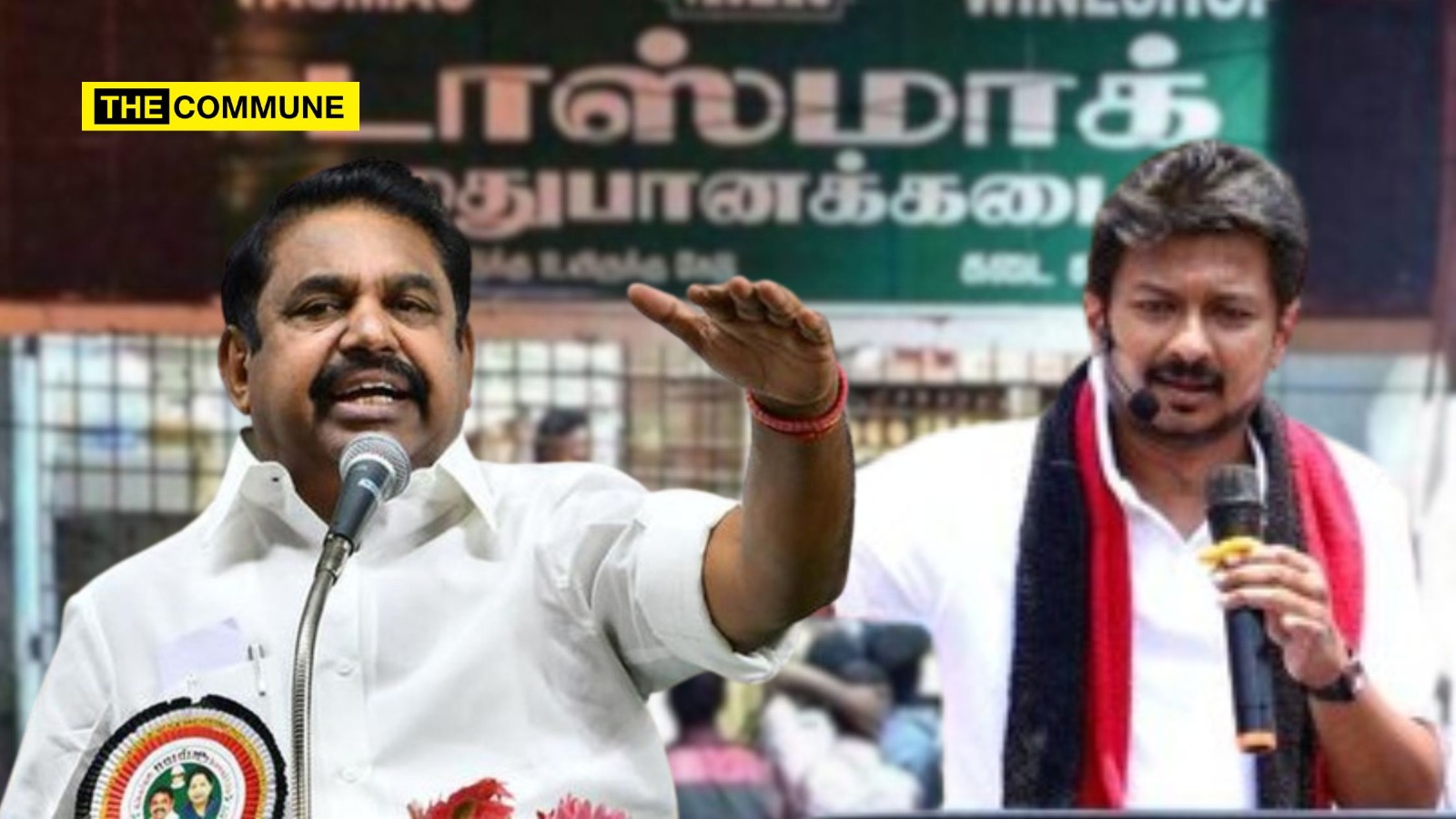
A particularly intense argument is ongoing between representatives of two Dravidian parties; Udhayanidhi Stalin of the DMK and Edappadi Palaniswami of the AIADMK. This heated exchange shows no signs of abating.
In a recent incident, the DMK Scion and Minister of Youth Welfare and Sports Development was seen delivering a crude speech, not only targeting the opposition leader Edappadi Palaniswami but also dismissing inquiries from constituents regarding their promises.
Tensions erupted during Udhayanidhi Stalin’s campaign gathering in Madurantakam, Chengalpattu district on 30 March 2024, when several women voters engaged in a heated discussion with him regarding the shutdown of TASMAC retail stores. This occurred as Udhayanidhi was discussing the accomplishments of the DMK government over the past three years. Amidst his speech, some women in the audience interrupted, expressing their discontent and insisting that the government should prioritize closing down all TASMAC outlets, which they believed negatively impacted people’s livelihoods.
Surprised by the matter at hand, the DMK minister queried, “Should the TASMAC wine shop be closed? In 2016, Kalaignar (Karunanidhi) made an election promise that if DMK came to power in Tamil Nadu, all wine shops would be closed. Did you vote for the DMK in 2016? Kalaignar made an election promise that if DMK comes to power all wine shops and TASMAC would be closed, Do you remember? Whom did you vote for? You voted for ADMK right!” Stalin junior deflected the inquiries of the woman, shifting responsibility onto the ADMK administration that governed from 2016 to 2021. With a subtle smile, he avoided making any commitments regarding TASMAC, demonstrating a clever evasion tactic.
Responding to Udhayanidhi’s assertions, female voters stated “We are calling for the closure of all TASMAC retail outlets. We expect that you will indeed close all of them.”
Later in the campaign, Udhayanidhi blamed Prime Minister Narendra Modi for engaging in election theatrics during his frequent visits to Tamil Nadu. He urged voters not to be misled, highlighting instances where the Prime Minister’s responses revealed insincerity, particularly regarding AIIMS hospital. Udhayanidhi emphasized the determination of DMK members to oust the Union BJP regime, labeling it as fascist.
In another instance in Ponneri, Udayanidhi Stalin was seen campaigning for Congress candidate Sashikanth Senthil, who is contesting from the Tiruvallur constituency. During his speech, Udayanidhi Stalin alleged that Edappadi Palaniswami, the former Chief Minister of Tamil Nadu and current AIADMK General Secretary, made derogatory remarks against him.
Udhayanidhi Stalin spoke, “Do you know who is lying down, (showing the pic of EPS) I mean, if he sees Modi, he will lie down, (doing namaskar) if he sees Amit Shah, he will lie down, if he sees Sasikala, he will kneel (immediately crowd cheered understanding the double meaning) to hold the leg, I cannot be held responsible for you thinking wrongly.”
#UdhayanidhiStalin is an absolute good-for-nothing nepo kid who has an IQ of a 5-year-old even though he is 46! You can neither call him young nor experienced.
He has had everything in his platter and doesn't even have competition among his siblings!
— Saikiran Kannan | 赛基兰坎南 (@saikirankannan) March 31, 2024
Udhayanidhi Stalin ridiculed Edappadi Palaniswami, stating, “While humans are bestowed with an upright spine, Edappadi Palaniswami seems to be an exception, lacking any backbone.”
It could be argued that Narendra Modi shouldn’t continue as the Prime Minister, but would Edappadi Palaniswami dare to voice such sentiments? The convergence of IPL interests and the AIADMK is evident, with various teams represented within the party. In light of this, I’ve symbolically renamed Prime Minister Modi as “29 Paisa,” signifying his perceived inability to provide full value for taxpayers’ money. With just 29 paise returned for every rupee taxed, it’s apt to discard his former title. While he remains in office for another month, his tenure as Prime Minister is swiftly approaching its end. Our candidate, Sashikanth Senthil, stands out as someone unafraid to challenge the BJP’s authority, making his mark felt even within their ranks.
Previously, Udhayanidhi Stalin was observed displaying AIIMS brick as usual DMK strategy and criticizing both the ADMK and the BJP for their failure to establish an AIIMS medical college and hospital in Madurai. In response, Edappadi Palaniswami mocked him, suggesting that he has been using the same script for years and pointed out that the construction work had already commenced. However, Udhayanidhi retaliated by presenting photos of Edappadi Palaniswami smiling alongside Prime Minister Modi, implying that he has surrendered the state’s rights to the central government. Palaniswami countered by sharing pictures of Stalin and Udhayanidhi smiling with PM Modi as his reply.
Although it appears as a contentious interaction between the two Dravidian parties, critics contend that it’s actually an effort by the DMK to reinvigorate the inactive ADMK for the elections, while marginalizing the BJP’s influence in Tamil Nadu.
Subscribe to our channels on Telegram, WhatsApp, and Instagram and get the best stories of the day delivered to you personally.
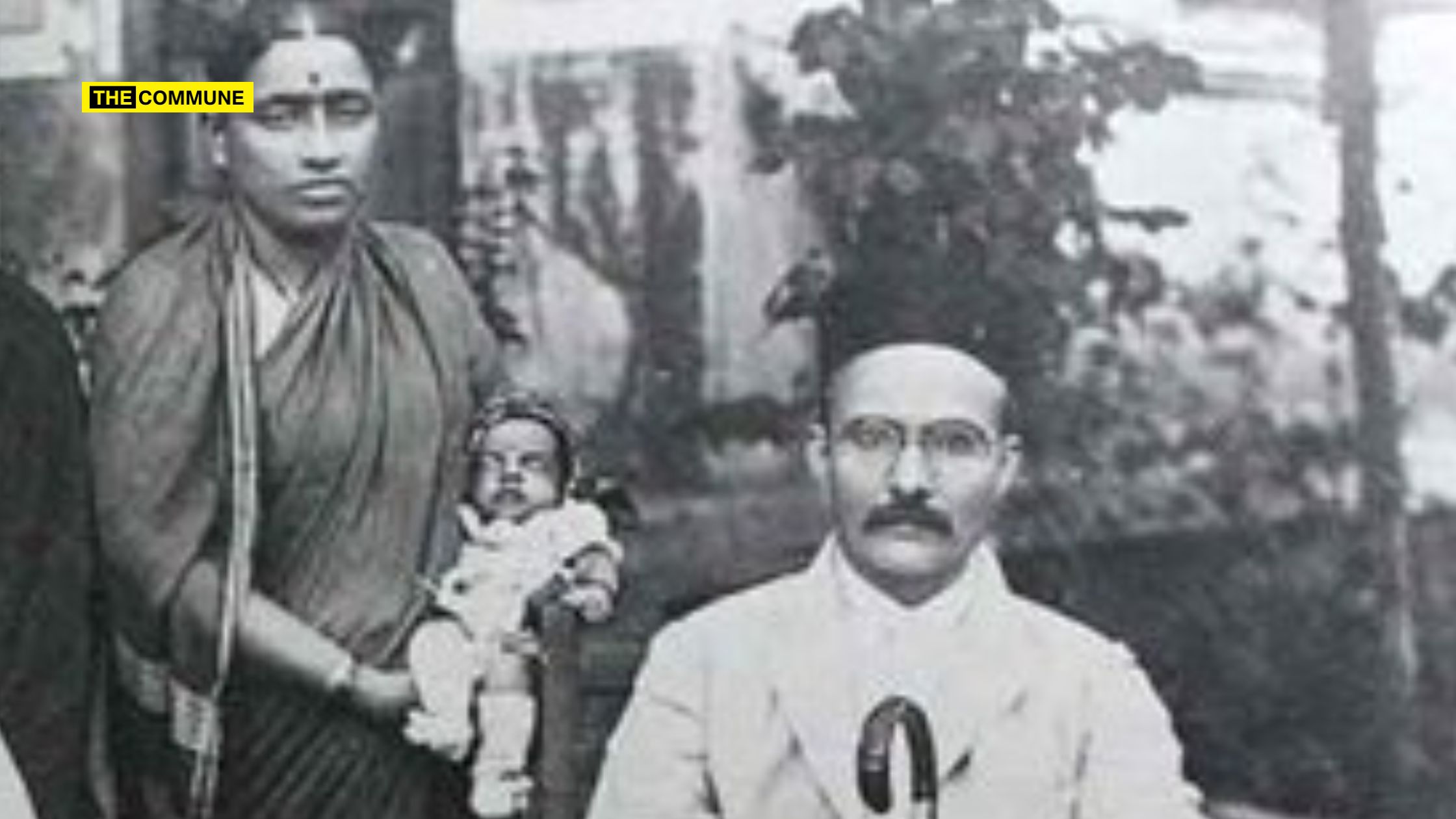
Behind every successful man is a woman. While we are familiar with Veer Savarkar, not many know about the woman in his life, Yamunabai Savarkar more affectionately known as Mai, a lady as great as her illustrious husband.
Her real name was Yashoda, and she came from a background, totally different from that of Veer Savarkar’s. While her husband came from a modest family, supported by his elder brother, she came from a rich and influential family. Born to Ramchandra Trimbak aka Bhaurao and Lakshmibai aka Manutai Chiplunkar in Thane district on 4 December 1888, her father Bhaurao Chiplunkar was the Dewan of the principality of Jawahar in Thane District, and she grew up in the lap of luxury.
Fondly called Jiji, she was unassuming and down to earth despite coming from a very wealthy background. She was friends with Savarkar’s sister-in-law Yashoda, wife of his elder brother Babarao.
The Chiplunkars were good friends with the Savarkar family, and Bhaurao was impressed by Vinayak’s intellect, his erudition, and his integrity.
It was Savarkar’s Mama (uncle), who brought forth the alliance, and Bhaurao agreed to bear Savarkar’s educational expenses too. Vinayak in turn, greatly respected Bhaurao, and saw in him the father figure he had missed early in life.
Mai and Vinayak entered into wedlock at Nashik in February 1901, she entered into his home and soon imbibed her husband’s nationalism and patriotic spirit. Fond of singing, she lent voice to Vinayak’s patriotic poems and ballads and made the other women members of the family memorize them.
She became a member of the Atmanishtha Yuvati Samaj, a body started for women by Babarao’s wife Yashoda, to inculcate nationalist feelings in women, and make them politically aware.
Their meetings would typically begin with the patriotic songs of Aba Darekar and then would read out Savarkar’s poems and his anti-British articles from the Keshari.
The members were required to take the following oath.
“In the name of the Motherland, Shivaji Raja who won freedom through war, and Bhavani Mata who gives strength, I hereby give witness before Shivaji and Bhavani Durga Devi that I shall use swadeshi goods only, love my country more than my life, strive for my country’s freedom and help those who are doing so.”
The ladies of the group wore glass bangles made in India only, and only coarse hand-made cloth. They felicitated Tilak’s wife Satyabhama Bai when she visited Nashik, and in 1908, they also raised funds for his defence in court. Bhaurao Chiplunkar bore the educational expenses of Savarkar, in fact, he helped him to get admission into Pune’s prestigious Fergusson College.
Vinayak in turn would visit Mai, regularly at Jawahar, and his epic poem Kamala was based on her to an extent. They had a son named Prabhakar born in 1905, who unfortunately died of smallpox when he was in London.
It was not an easy life for Mai, her husband and his entire family were under constant surveillance by the British. Just 15 days after Prabhakar had passed away, Vinayak’s elder brother Babarao, was arrested and deported for life to the infamous Cellular Jail in Andamans.
When Savarkar was arrested, after his epic escape at Marseilles and brought to India for trial, Mai went all the way to Nashik to see him. She had to travel on horseback from Trimbakeswar to Nashik along with her brother to meet her husband in prison.
Even worse, fearing the wrath of the British, none of her friends gave her shelter, and she had to spend all night in heavy rain at a temple in Nashik. She finally met her husband, and they spent around 45 minutes together.
When Veer Savarkar was sentenced to life at Cellular Jail, she accepted her fate stoically. However, when she saw him in chains at the Dongri prison in Mumbai, she became emotional and almost broke down. It was then Veer Savarkar advised her.
“If the Almighty shows compassion, we shall meet again. Till then, if you are ever tempted by the thought of ordinary family life, remember that if producing children and collecting a few twigs to build a home is to be called married life, then such a life is led by crows and sparrows as well.
But if a nobler meaning is to be given to married life, then we are blessed to lead a life fit for human beings. By breaking our hearth and utensils, golden smoke may ensue from thousands of homes in the future. And did not plague render our homes desolate when we were building them? Face the odds bravely.“
To which Mai replied – “We are trying to do just that. As far as we are concerned, we have each other. If you take care of yourself, we shall feel fulfilled.” Savarkar reassured her that he would take care and walked around with the manacles raised.
After a decade of separation from her husband, she was finally reunited with him in Ratnagiri, and she supported him wholeheartedly in his campaign for social reform.
When Ratnagiri was stuck by plague in May 1924, his younger brother Narayan brought Babarao and Mai to Mumbai. Vinayak could however not leave Ratnagiri, as the British Govt had placed him under house arrest.
Finally, in June 1924, he was permitted to go to Nashik, and after he was sometime he was in Mumbai till November, before he had to come back to Ratnagiri. Later they had a daughter named Prabhat in January 1925, and another daughter Shalini who however died in infancy.
When Mahatma Gandhi came to Ratnagiri, in 1927, he personally called on Savarkar at his home, as the latter was not feeling well. Mai and Kasturba spent time together, too sharing pleasantries in the kitchen. They had another child, this time a boy named Vishwas in March 1928.
In 1930, Mai chaired a public meeting of women at the Vithal Mandir in Ratnagiri to propagate Swadeshi, which was attended by Dalit women too. She also took part in the inter-community dining of women organized in 1932, at Ratnagiri, on the occasion of the visit of the Satyashodak leader Madhavrao Bagal.
She along with Savarkar organized an Akhil Hindu Yagna, and in 1936 a holy palanquin, was taken out on the occasion of Akhil Hindu Nama Saptah consecrated by Mai.
One of the largest inter-community dinners was organized for women of all castes at the Patit Pavan Mandir in Ratnagiri, and Mai along with Ms. Mundkur, the wife of the Dy Collector attended it.
She was felicitated by ladies of the Chitpavan Brahmin Sangh in 1941, and she later attended an Akhil Hindu Tilgul function, saying “The nation is my home”.
When Savarkar could not attend a Hindu Mahasabha convention in Pune, due to the volatile atmosphere after Gandhi’s assassination, Mai appeared on his behalf.
She was felicitated with the traditional sari, a gold necklace, and some cash. M.S. Dixit who wrote a small biography of Mai, Shantabhai Gokhale, Godumai Khare, and Saraswatibai Kanikar were among those who spoke admiringly of Mai’s sterling qualities.
And finally, Mai’s thanksgiving speech was read out by Sushilabai Gokhale. “Hindu sisters! In my childhood, the secret society ‘Abhinav Bharat’ had several ladies’ branches. In one of these branches and on the instructions of my late sister-in-law Yesuvahini, I took an oath to sacrifice everything for the glory of the Hindu Dharma and for the freedom of Hindustan. Many of my relatives and friends who undertook this sacred mission (vrat) along with me had their homes and family lives destroyed due to this. Many women who lost their husbands for the cause of Dharma in the prime of their youth laid down their lives pining in vain for their husbands.
In the last 4-5 years, several thousands of our Hindu sisters have surpassed the Chittod of yore and performed jauhars (self-immolation) in Kashmir, Sind, and Bengal provinces. How can one mention their sacred names that run in thousands? If I mention only the names of those brave Hindu sisters whom I know without mentioning the names of those brave Hindu sisters, I shall be in a sense committing partiality.
Hence, at the outset, I humbly and gratefully salute thousands of those brave Hindu women who laid down their lives to protect the Hindu Rashtra and Hindu Dharma. And then, all I say for myself is that the Almighty gave me the courage to do my duty to the best of my ability.
What is a Tulsi leaf? But when it is offered at the Divine feet and dries up, even the saints rub it on their foreheads. My own condition today is no different. I am but a bundle of dried flowers and leaves. I was fortunate enough to have fallen at the Divine feet. That is why great women like you are felicitating the dried flowers that my life is. But truly, this felicitation is not of the dried flowers but of the Master himself. To conclude, my message to the rising generations is that we should protect the freedom and self-rule that we gained through our valour.”
– Mai’s speech
Mai soon became a grandmother when her daughter Prabhat gave birth to a son in 1949, and her son Vishwas to a daughter in 1953. However, by 1956, Mai soon became ill and was kept at AK Talwalkar’s Nursing Home in Dadar. Though she came back home, Mai was again struck with lymphoma in 1956 and brought back to Dadar.
In the meantime Savarkar’s health too was not good, he had suffered a fracture, and the long time he spent in Cellular Jail had broken him down.
Finally, when she passed away on November 8, 1963, Savarkar almost swooned on hearing of it. The woman who had walked with him in life, been by his side in the worst of his times, was no more.
”Mai has passed, her life has been fulfilled, I have already bid farewell to her. I do not feel up to it to go there.”
As willed by Savarkar, her body was not kept in state, but taken straight to the crematorium. He himself did not attend her cremation and did not desire any public emotion.
Mai was a simple woman, who walked shoulder to shoulder with her husband and took care of his needs. She was a true Sita of modern times. She ensured his clothes were always neatly ironed, and managed the family within very modest means. Considering she came from a very rich family, she adjusted wonderfully within her husband’s very humble household.
She spent time in the garden watering plants just to be with Savarkar. Though he himself was an atheist and did not perform Puja, he nevertheless gave full freedom to Mai to do it, which he just observed. He ensured his numerous public engagements did not burden Mai in her household work.
She not only supported him in his social reform campaign but also took care of a Dalit girl, whom Savarkar adopted and bought into the home. When a mob descended on Savarkar Sadan, after Gandhi’s assassination, she bravely faced it with a stick in her hand.
A truly great woman of strength, character, and integrity, and the worthy wife of a great man, that was Mai.
(This was originally published on social media platform X and has been republished here with permission.)
Ratnakar Sadasyalu is a blogger with a passion in movies, music, books, and history. A techie by profession, and a writer at heart. Author of City of Victory a book on Vijayanagar Empire.
Subscribe to our channels on Telegram, WhatsApp, and Instagram and get the best stories of the day delivered to you personally.
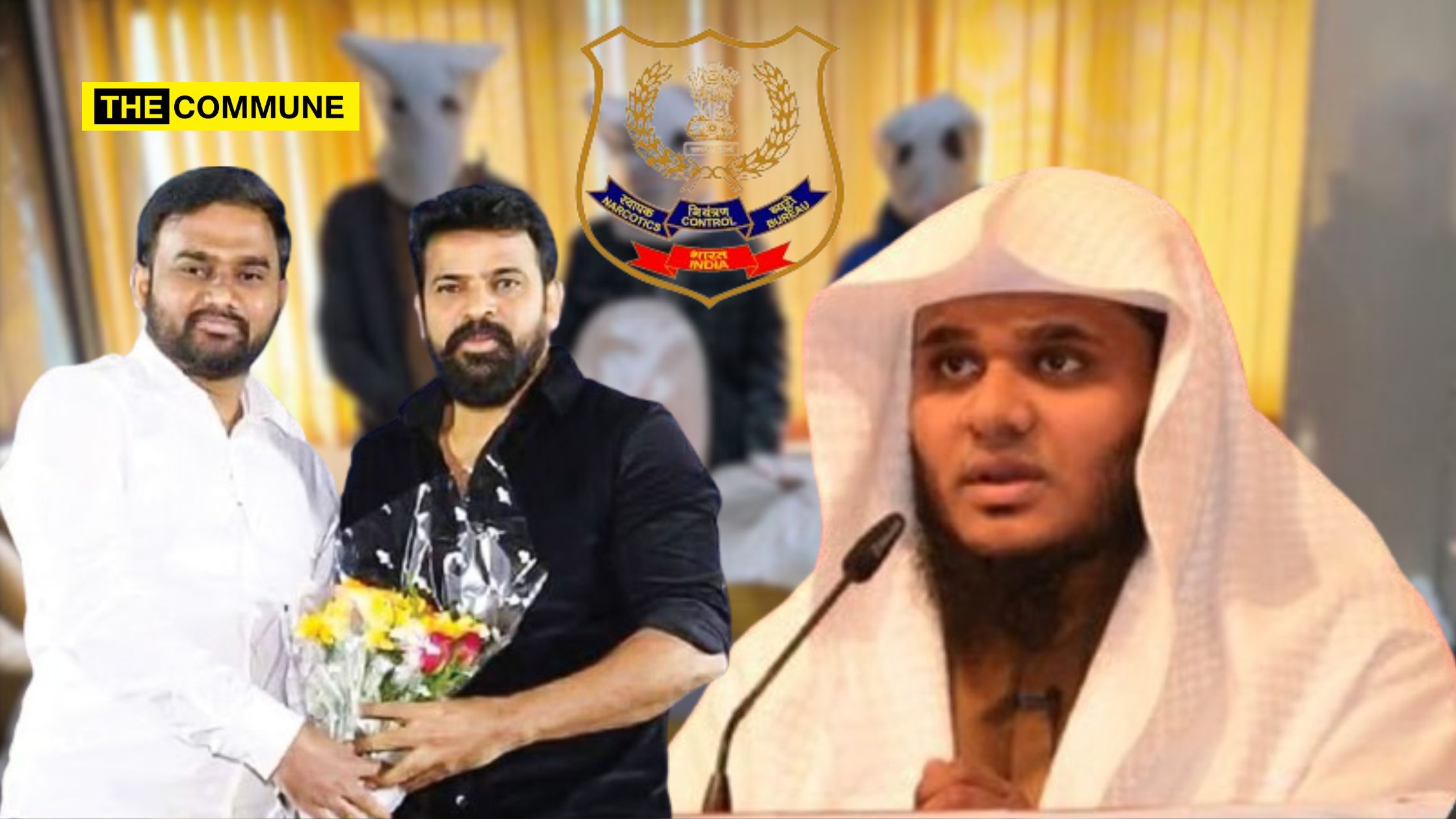
The Narcotics Control Bureau (NCB) has summoned in film director-actor Ameer Sultan and two others for questioning regarding their purported connections with Jaffer Sadiq, the alleged head of an international drug cartel recently apprehended in Delhi with ties to Tamil Nadu. Ameer, along with Abdul Basid Bukhariand Syed Ibrahim, have been asked to provide statements at the NCB headquarters in Delhi.
TOI reported that Ameer, Abdul Basid Bukhari, and Syed Ibrahim were involved in certain business ventures alongside Jaffer Sadiq, prompting the NCB to request their presence for inquiry. Ameer received the summons at his residence on 26 March 2024 and is scheduled to travel to Delhi on 2 April 2024 along with Bukhari, while Syed Ibrahim has requested an extension until 11 April 2024. In a related development, Saleem, the brother of Jaffer Sadiq, has once again appeared before the NCB in Delhi in response to summons, marking his second appearance.
To date, five individuals including Jaffer Sadiq have been apprehended in connection with the seizure of 50kg of pseudoephedrine, a controlled substance, in Delhi in February 2024. While three arrests were made at a warehouse in Delhi, Jaffer Sadiq was captured at a concealed location. His accomplice Sadanandam, responsible for packaging the drug in Chennai and Trichy before shipping it to Delhi, was arrested in Chennai.
However, when allegations regarding Jaffer Sadiq’s involvement in pseudoephedrine smuggling initially surfaced, Ameer issued a statement asserting their relationship as purely professional and suggested that law enforcement agencies should take appropriate action if Sadiq is indeed implicated in criminal activities.
It is reported that all five detainees are slated to appear before the Patiala court on 2 April 2024 upon the conclusion of their judicial remand.
Jaffer’s Connection With Director Ameer Sultan
During the launch event of Ameer Sultan’s movie “Iraivan Miga Periyavan” in February 2022, Ameer remarked that Jaffer Sadiq is a distant family member of his. He further revealed that Sadiq had been urging him to direct a film for his production house for a period of five years.
Correction, director Ameer Sultan is not just an associate but he is also related to the Drug cartel and ex DMK's NRI wing Chennai West district deputy organizer Jaffer Sadiq. pic.twitter.com/ffBlW07Jlc
Another video surfaced on social media platform X where Ameer is seen wishing all success to Jaffer Sadiq. He says, “I have been closely watching his meteoric rise in all businesses he has begun. I pray he achieves success with this film (production business) Iraivan Miga Periyavan too.” It is noteworthy that he addresses Sadiq as “thambi” and Sadiq addresses Ameer as “Anna”.
Director Ameer explains who is Drug Lord Jaffar Sadiq to him.
Not only this, Director Ameer and Jaffer Sadiq launched a coffee shop named 4AMCoffee and Kitchen under the Mahyan Pvt Ltd incorporation at ECR near Chennai. The managing director of this organisation, Abdul Basith Bukhari, is also a director of Zuko Overseas Pvt Ltd along with Jaffer Sadiq. Interestingly, Ameer Sulthan aka director Ameer is also a director of Zuko Overseas Pvt Ltd.
For the launch of the coffee shop, director Vetrimaran and actor Soori were present. Another coffee shop named Law Cafe was opened at Radhakrishnan Salai under the Mahyan Group of Companies banner run by Ameer and Sadiq in that preacher Abdul Basid Bukhari is the proprietor of it.
Subscribe to our channels on Telegram, WhatsApp, and Instagram and get the best stories of the day delivered to you personally.
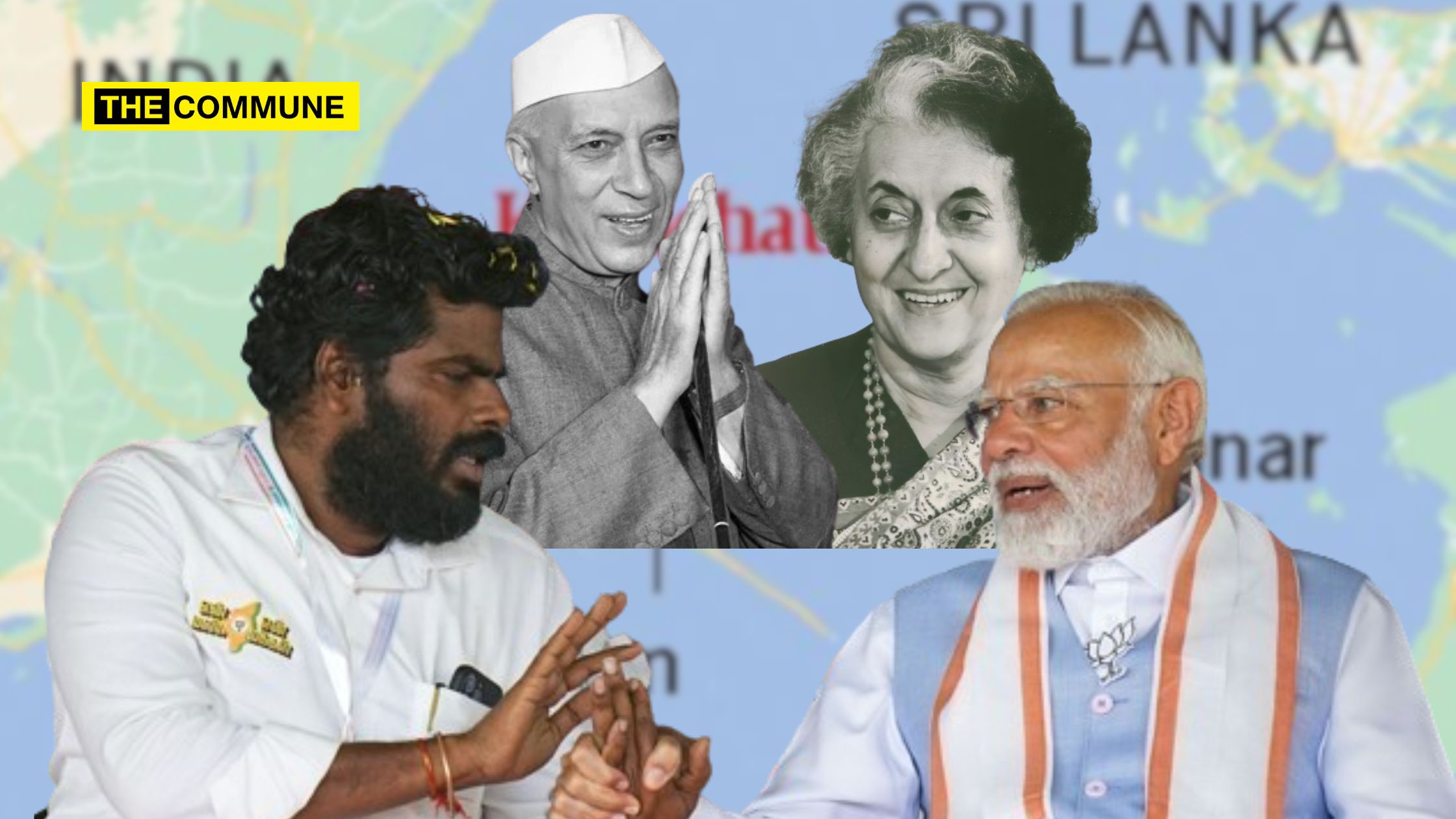
The decision made by Indira Gandhi’s government in 1974 to hand over Katchatheevu to Sri Lanka has emerged as a central issue in the 2024 Lok Sabha campaign in Tamil Nadu. Sri Lanka’s persistent efforts, historical evidence, and legal intricacies underscore India’s relinquishment of the island, sparking discussions on sovereignty and geopolitical dynamics. Recent revelations from a Right to Information (RTI) response obtained by Tamilnadu BJP president K Annamalai shed’s light on how Indira’s Congress government conceded to Sri Lanka’s claims.
This information is been underscored by official documents and parliamentary records. These documents reveal how an indecisive India lost control of the island in the Palk Strait to a smaller, yet determined, country.
Documents acquired by Tamilnadu BJP chief Annamalai through an RTI application highlight Sri Lanka’s persistent pursuit of the 1.9 square km island, located approximately 20km from the Indian shore, despite India contesting its claims for decades before ultimately acquiescing. Sri Lanka, then known as Ceylon, began asserting its claim to Katchatheevu immediately after gaining independence, asserting that the Indian Navy (then Royal Indian Navy) could not conduct exercises on the island without its permission. This stance was evident as early as October 1955 when the Ceylon Air Force held exercises on the island.
The steadfastness of Sri Lanka’s position is reflected in a memorandum from India’s first Prime Minister, Jawaharlal Nehru, dated 10 May 1961, dismissing the issue as inconsequential. Nehru’s memorandum, part of a note prepared by then Commonwealth Secretary Y D Gundevia, was shared by the Ministry of External Affairs (MEA) as background information with the Informal Consultative Committee of Parliament in 1968.
Nehru minute stated, “I would’ve no hesitation in giving up claims to the island… I attach no importance at all to this little island and I would have no hesitation in giving up our claims to it. I do not like this pending indefinitely and being raised again in Parliament”.
The background information provides insight into India’s wavering stance leading up to 1974, when it ultimately renounced its claim entirely. The ministry stated, “The legal aspects of the question are highly complex. The question has been considered in some detail in this ministry. No clear conclusions can be drawn as to the strength of either India’s or Ceylon’s claim to sovereignty”.
In 1960, despite the contrary opinion of the then Attorney General M C Setalvad, it was believed that India had a stronger claim over an island formed by a volcanic eruption. Setalvad acknowledged the complexity of the matter but ultimately leaned towards the conclusion that India held sovereignty over the island. This conclusion was based on the historical granting of zamindari rights by the East India Company to the Raja of Ramnad (Ramnathpuram) over the islet and its surrounding resources.
These rights, which were held continuously and without interruption from 1875 to 1948, were transferred to the State of Madras after the abolition of zamindari rights. During this period, the Raja exercised these rights independently, without any obligation to pay tributes or taxes to Colombo.
Documents also reveal that the Ministry of External Affairs’ Joint Secretary, K Krishna Rao, while not entirely certain, believed that India had a strong legal position that could be utilized to secure fishing rights. This is particularly significant given the ongoing issue of Indian fishermen being detained by the Sri Lankan Navy near the island.
In 1960, Rao remarked that while Colombo’s assertions appeared more substantial, India still possessed a strong legal argument that could be vigorously presented. He clarified that he wasn’t implying India lacked any legal basis. Even Gundevia, who deemed the uninhabited island with just a church on it as insignificantly important, opposed the idea of risking its relinquishment, as conveyed by the Ministry of External Affairs to the consultative committee in 1968. During the same year, the opposition criticized the Indira Gandhi government for seemingly hesitating to challenge Sri Lanka’s intensified assertion over the island.
During a parliamentary discussion, there was a demand for, and subsequently, a discussion took place regarding mounting suspicions surrounding a clandestine deal supposedly negotiated between Indira Gandhi and her Ceylonese counterpart, Dudley Senanayake, during Senanayake’s visit in 1968. This deal was rumored to involve the handover of the island. Opposition members criticized the government for not addressing the warning signs such as statements made by the Ceylonese Prime Minister in their Parliament and indications on maps showing Katchatheevu as Ceylonese territory, interpreting these as gradual steps towards the acquisition of the island.
The Indian government refuted claims of having signed away the island but acknowledged its disputed status. It stressed the importance of balancing India’s claim with the necessity of maintaining strong bilateral relations. The response by Surendra Pal Singh, Deputy Minister in the Ministry of External Affairs, that the island was uninhabited appeared reminiscent of Nehru’s remark about Aksai Chin, which incited anger among socialist veterans like Madhu Limaye and Rabi Ray.
The opposition forcefully raised the issue again in 1969, but despite this, both sides continued moving towards an agreement that would concede Sri Lanka’s claim.
Following foreign secretary-level talks in Colombo in 1973, the decision to relinquish India’s claim was communicated to Tamil Nadu Chief Minister M. Karunanidhi in June 1974 by Foreign Secretary Kewal Singh. During this meeting, Singh mentioned the zamindari rights of the Raja of Ramnad and the lack of documentary evidence from Sri Lanka proving their title to Katchatheevu.
However, Singh emphasized Sri Lanka’s strong stance based on historical records, Dutch and British maps, acceptance by an Indian survey team of its claim, and the inability of the State of Madras to prove the Raja of Ramnad’s original title. He noted that Ceylon had asserted sovereignty since 1925 without objection from India and referred to a second opinion from 1970 by the Attorney General, stating that sovereignty over Katchatheevu resided with Ceylon.
Singh sought immediate agreement from Karunanidhi, citing internal factors such as India’s discovery of oil, external factors like the growing pro-China lobby in Colombo, and the government’s reluctance to approach the World Court, which tended to favor smaller countries. Karunanidhi readily agreed without much persuasion from the foreign secretary.
Prime Minister Narendra Modi, in his official X handle, highlighted the actions of the Congress government regarding the Katchatheevu issue, stated “Eye opening and startling! New facts reveal how Congress callously gave away #Katchatheevu. This has angered every Indian and reaffirmed in people’s minds- we can’t ever trust Congress! Weakening India’s unity, integrity and interests has been Congress’ way of working for 75 years and counting.”
Eye opening and startling!
New facts reveal how Congress callously gave away #Katchatheevu.
This has angered every Indian and reaffirmed in people’s minds- we can’t ever trust Congress!
Weakening India’s unity, integrity and interests has been Congress’ way of working for…
Tamil Nadu BJP President Annamalai via his official X handle voiced criticism directed towards both the Congress and DMK parties stated, “This is the first part of the chronology of the betrayal of Congress & DMK. Both these parties chose to align with Sri Lankan interests, handed over Katchatheevu on a silver platter & put to risk the lives & livelihood of our Tamil Fishermen. This is part 1 of the exposè published by @TOIIndiaNews today based on an RTI. DMK’s two-timing will be exposed in part 2 of this exposè. DMK & Congress are answerable for the loss of innumerable lives of our Tamil Fishermen.”
This is the first part of the chronology of the betrayal of Congress & DMK.
Both these parties chose to align with Sri Lankan interests, handed over Katchatheevu on a silver platter & put to risk the lives & livelihood of our Tamil Fishermen.
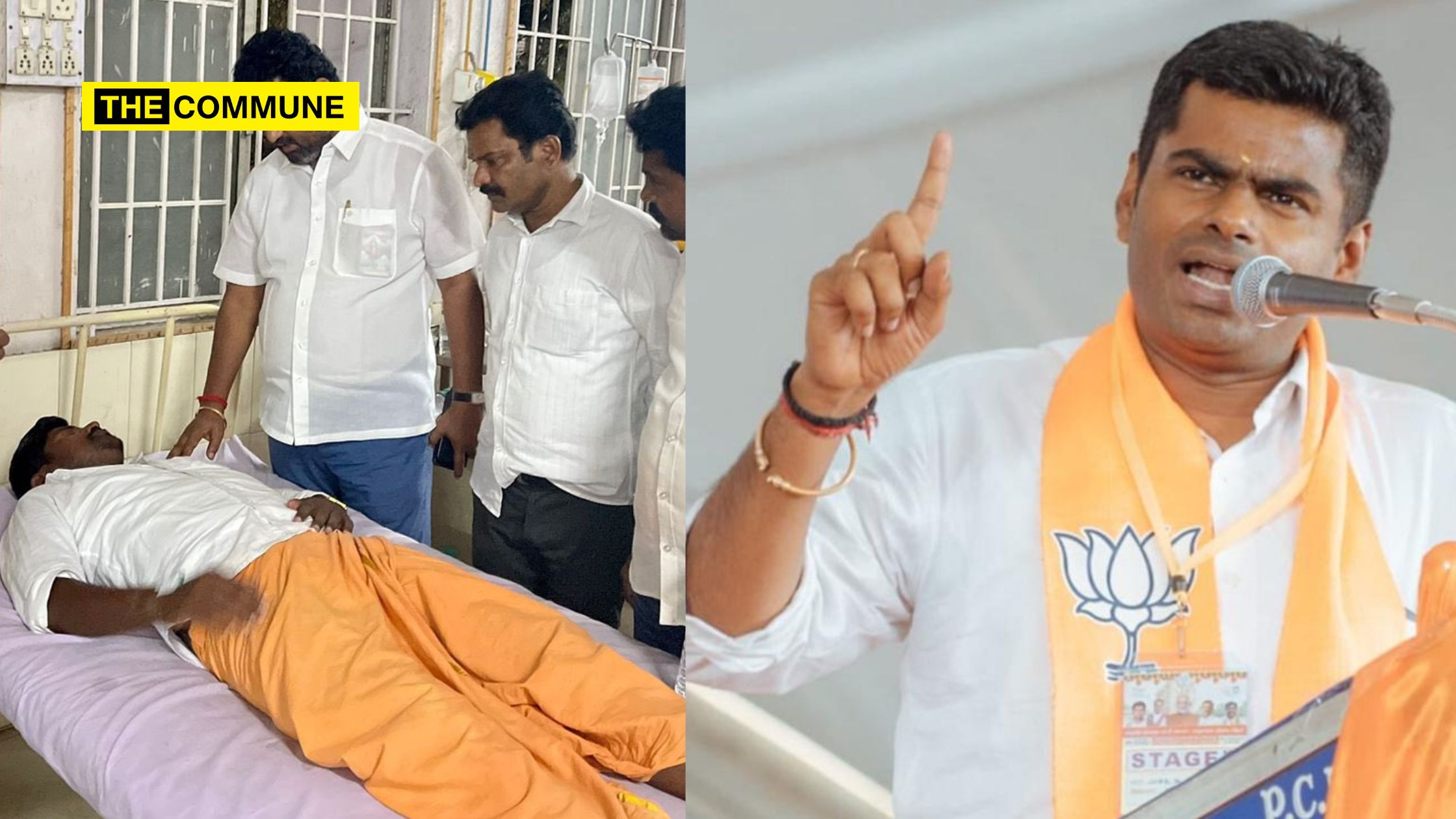
Tension arose at Coimbatore briefly following an incident where an intoxicated Muslim teenager hurled stones at BJP party members during their election campaign in Shanmuga Nagar on 29 March 2024.
More than 50 BJP supporters, led by party official Arjunan, were canvassing for their candidate K Annamalai when the 18-year-old Nowsath from Kannappa Nagar began throwing stones at them. Nowsath expressed discontent, questioning the BJP’s presence in their area for vote collection, labeling it as an act of atrocity and inciting violence. He adamantly declared his opposition to their campaigning in the locality.
As a result of the stone-throwing, four party members, including two women, sustained minor injuries, with one member Prabhu requiring treatment at Coimbatore Medical College Hospital. The party officials promptly notified the Kavundampalayam police regarding the disturbance caused by an inebriated young man. With swift action, the police arrived at the scene and apprehended Nowsath, who was intoxicated, for further inquiry. In the inquiry it was revealed that Nowsath was affiliated with SDPI an ally of AIADMK
In this context, the Tamil Nadu BJP President K Annamalai, has released an official statement via his X account, condemning the action that, “When the BJP brothers and sisters went to collect votes in Sanmuga Nagar area, Ward 32 of Coimbatore North Assembly Constituency, a man named Nawsath from SDPI ally of AIADMK stopped them from coming to canvass for votes, abused them and pelted them with stones. A brother named Prabhu and some sisters were injured.
This is an example of how the AIADMK alliance is afraid of defeat. People like Navshadvengage in such undesirable in such anti-democratic activities. I urge Tamil Nadu Police to take strict action against this person. BJP is a party traveling on the democratic path, our patience has a limit. I would like to give a warning that if there are similar incidents of blocking and attacking the BJP brothers and sisters who are going to canvass votes, then those concerned should be prepared to face the consequences. BJP Coimbatore District President Mr. Ramesh Kumar personally met and inquired about his health. I wish him a speedy recovery. BJP4Tamilnadu will always support Brother Prabhu.”
கோவை வடக்கு சட்டமன்றத் தொகுதி சண்முகா நகர் பகுதியில், 32 வது வார்டு பகுதியில், பாஜக சகோதர சகோதரிகள் வாக்கு சேகரிக்கச் சென்றபோது, அஇஅதிமுக கூட்டணிக் கட்சியான எஸ்டிபிஐ கட்சியைச் சேர்ந்த நவ்ஷாத் என்ற நபர், அவர்களை வாக்கு சேகரிக்க வரக்கூடாது என்று தடுத்து நிறுத்தி, தகாத வார்த்தைகள்… pic.twitter.com/nMana85m30
In the Hot climate of Coimbatore, a fierce battle is anticipated among Annamalai representing the BJP, Singhai Ramachandran from AIADMK, and Ganapathi Rajkumar of DMK.
Subscribe to our channels on Telegram, WhatsApp, and Instagram and get the best stories of the day delivered to you personally.
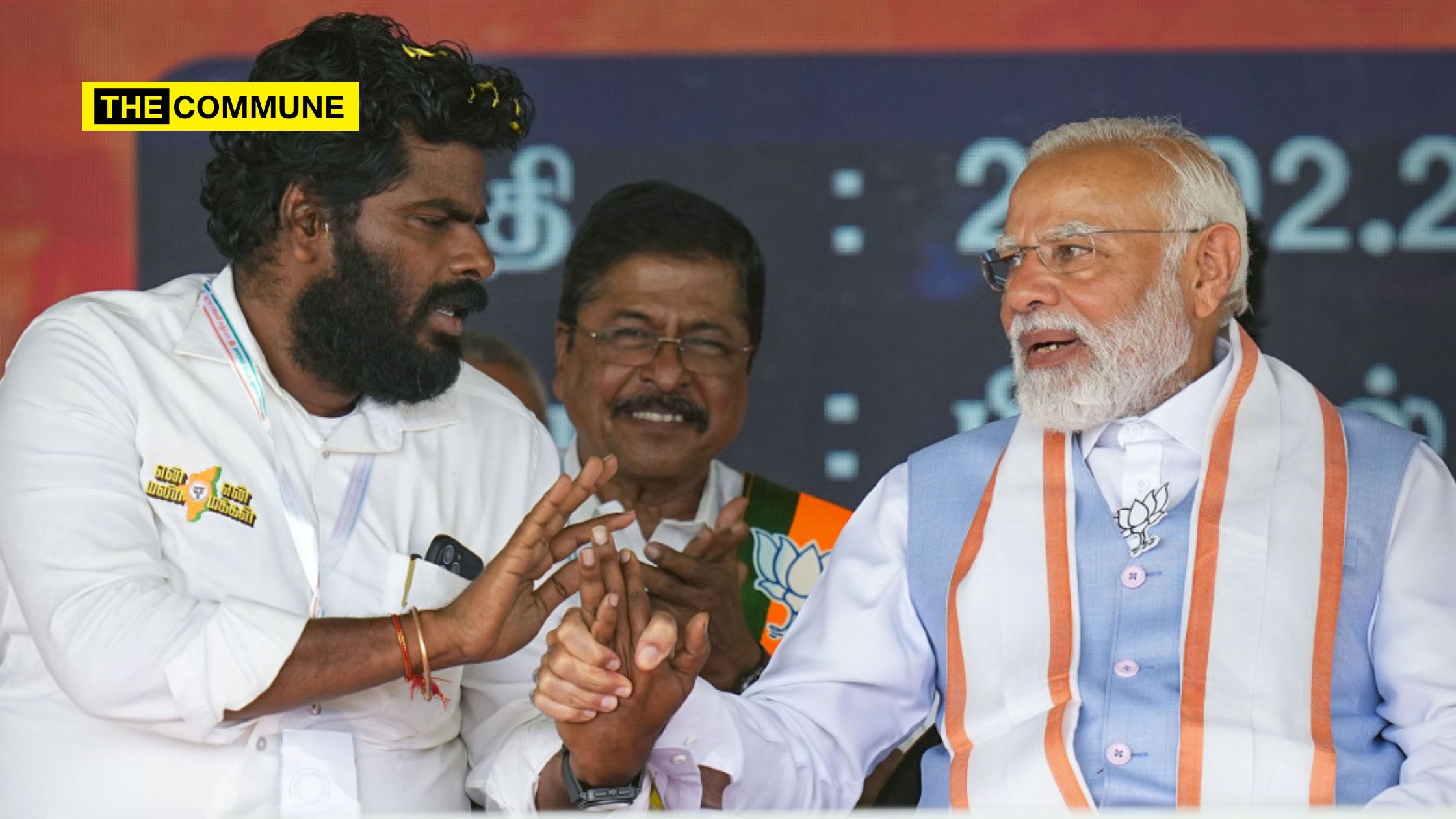
Prime Minister Narendra Modi possesses a remarkable ability to connect with people at the grassroots level, gaining a deep understanding of their concerns and adapting his actions accordingly. He consistently uplifts and motivates those he encounters with his affable demeanor, leaving a lasting impression that inspires heightened dedication. Ahead of the upcoming elections, he recently engaged with party workers from the Booth committee in Tamil Nadu, demonstrating his commitment to understanding the ground realities directly from those involved.
On 29 March 2024, Prime Minister Narendra Modi engaged with BJP members via the Namo App, focusing on grassroots efforts for the upcoming Lok Sabha elections. He urged them to delve into booth-level activities and strategize effectively to ensure victory for the party.
I look forward to ‘Enathu Booth Valimaiyana Booth’, an interaction with our hardworking @BJP4TamilNadu Karyakartas, through the NaMo App at 5 PM this evening.
It is commendable how our Karyakartas in Tamil Nadu are working among the people and ensuring that our Party’s good…
During the ‘Enathu Booth Valimaiyana Booth’ (My booth is the strongest booth) event, he urged party members to focus on securing victory for BJP and NDA candidates in the upcoming election. Narendra Modi said, “I understand you are facing a paucity of time owing to the general election scheduled for April 19 in Tamil Nadu. You hardly have 15-16 days left (since election campaigning ends 48 hours before polling day). Organize yourselves well, connect with the voters, highlight our achievements and hold tiffin or lunch meetings amongst you to discuss the next step,”
Speaking about the government’s emphasis on fostering women-led development, Modi inquired from a party member about the schemes that have resonated most with women and garnered significant attention. The Prime Minister expressed satisfaction with the party member’s dedication to grassroots efforts. A female participant from Tiruvarur highlighted the effectiveness of initiatives like the Pradhan Mantri Ujjwala Yojana (PMUY) and Jal Jeevan Mission. She emphasized that as agricultural laborers, these schemes have greatly facilitated their work. During the interaction, he expressed concern about not having Tamil as his native language and being unable to speak it fluently, and that it deeply affected him. Nevertheless, he said that the party remained dedicated to promoting the language globally.
Reflecting on his early days within the party, Modi encouraged booth-level workers to form small groups comprising three members, ensuring at least one female member in each group. He urged them to engage with 10 families daily, drawing from his own experiences to underscore the importance of such outreach efforts. Modi advised, “Sit with those families, discuss with them and even extend what help you possibly could. And in the night discuss among yourselves the people’s requirements and plan your strategy accordingly”
Modi also instructed them to convene meetings every three or four days involving various groups such as women, first-time voters, fishermen, farmers, and beneficiaries of government schemes. These gatherings were intended to disseminate the achievements of the BJP administration. Furthermore, they were urged to capitalize on the dissatisfaction with the current DMK government. Criticizing the opposition in Tamil Nadu, Modi remarked that Tamil Nadu’s governance had deteriorated significantly under the DMK government and its allies. He alleged that the ruling party was accountable for corruption, law enforcement issues, and the proliferation of drugs.
Highlighting the devastating impact of drugs on the youth, he stated, Our children’s lives are being ruined by drugs and expressed concern over recent large-scale drug seizures with connections to Tamil Nadu and urged efforts to raise awareness and combat this menace.
He mentioned that political experts anticipate a reversal of fortune for the BJP in Tamil Nadu, asserting that the dissatisfaction with the current ruling party in the state would find expression during the upcoming election. He criticized dynastic political parties, describing them as entities solely serving the interests of a particular family, encapsulating their nature as “of the family, by the family, and for the family.”
During the interaction with party workers in Tamil Nadu while speaking to VT Murugesan, the booth president of Coimbatore South constituency, PM Modi said, “Murugesan ji, I have given Annamalai the task of the entire state. That is, we have to win the entire Tamil Nadu. So Annamalai will not have time to work in his constituency. In this scenario, every karyakarta there is equivalent to Annamalai for me. You all have to become Annamalai and win Coimbatore seat. That’s why, you must tell Annamalai that he should travel all over Tamil Nadu and he need not spend time in Coimbatore, each karyakarta together will win Coimbatore so that Annamalai can travel all over Tamil Nadu.”
During the interaction with party Karyakarta's PM Modi Avl said, "For me all the candidates in TN are ANNAMALAI."
The upcoming Lok Sabha Elections 2024 mark the first instance where Tamil Nadu BJP is contesting polls without the support of Dravidian parties in Tamil Nadu. In the state, BJP has formed alliances with AMMK and PMK, and other parties.
For the election, BJP has selected K Annamalai, the state president, as its candidate for Coimbatore. Former Telangana governor Tamilisai Soundararajan will contest from Chennai South, and Union Minister L Murugan will contest from Nilgiris. TR Paarivendhar, founder of IJK and current MP has been fielded for Perambalur constituency, Pon Radhakrishnan for Kanyakumari, Vinoj P Selvam for Central Chennai, AC Shanmugam for Vellore, C Narasimhan for Krishnagiri, and Nainar Nagendran for Thoothukkudi.
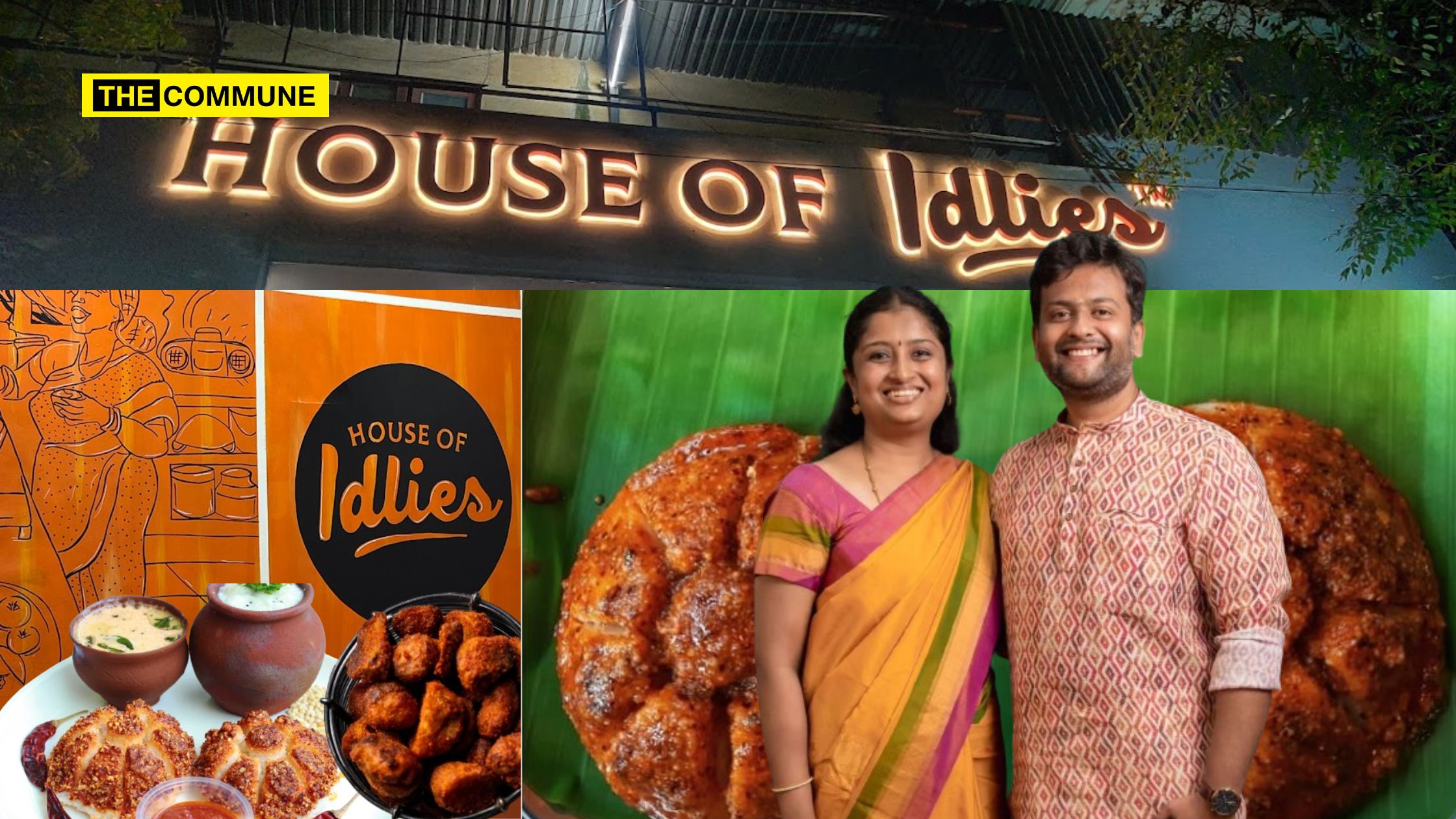
In the heart of Chennai, nestled amidst the bustling streets and aromatic flavors of South Indian cuisine, lies a culinary haven known as the House of Idlies. But what’s the story behind this humble yet thriving eatery? Meet Umesh Vaidyanathan, the visionary behind House of Idlies, whose journey from a small terrace kitchen to a renowned restaurant is nothing short of inspiring.
Umesh’s tale begins in 2016, when he and his wife Sadhna Shankar embarked on a mission to share the flavours of home-cooked podi idlies with the world. Armed with recipes passed down through generations, they set out to make a mark in the culinary landscape of Chennai. But theirs was not a journey paved with gold; it was a labour of love, fuelled by passion and dedication.
As Umesh reminisces about those early days, a glimmer of nostalgia dances in his eyes. “We started from my home, with a terrace kitchen,” he recalls. “The recipe of the podi, the batter – all of it was from my mom. It was my wife’s idea to distribute packed podi idlies to retail outlets.”
Umesh’s wife, a Chartered Accountant, was the brain behind the idea to start the business – from packed podi idlies delivered to outlets like Madras Coffee House and Chai Kings or catering to the customers over Swiggy or Zomato to dine-in restaurants in Chennai.
Their venture, initially named Only Idlies, soon gained momentum, with patrons flocking to savour the authentic flavors of South Indian cuisine. But it wasn’t just about the food; it was about preserving tradition, honouring family recipes, and sharing a piece of home with every bite.
Over the years, House of Idlies evolved, growing from a modest delivery model to a flagship restaurant in T Nagar. But amidst the expansion and success, Umesh has remained grounded, never forgetting his roots or the values that shaped his journey.
“We wanted to create something that felt like home,” he explains. “All our podis and masalas come from our own kitchen, crafted with love and care. We wanted to maintain that homemade essence, that feeling of comfort and familiarity.”
One dish that embodies this sentiment is the signature Podisa – a unique twist on the traditional dosa/uthappam, crafted with precision and passion.
“With no hefty marketing budget and lacking the grandeur of established restaurants, we knew we had to offer something truly unique to captivate people’s attention.” Recalling their early marketing efforts, Umesh recalled their grassroots approach, utilising platforms like WhatsApp and Facebook to spread the word about their culinary creations. “We wanted to stay true to our South Indian roots while offering something fresh and distinctive. That’s where the idea of introducing ‘podisa’ came into play.”
“You see, we wanted to add a new dimension to the classic dosa experience,” he recounted the genesis of podisa. “But we knew that as a delivery brand, replicating the traditional dosa served on a banana leaf would be a challenge. So, we took inspiration from uthapam, blending it with our own twist. Our rectangular packing boxes became the canvas for our culinary innovation. With no dosa masters at our disposal, we improvised. We crafted a special die to shape the batter and cooked it in an iron pan until it was irresistibly crispy at the bottom.”
“Just like the uthapam you’d enjoy at home, but with a twist. We wanted a name that would capture people’s imaginations, and ‘podisa’ seemed to fit perfectly – a nod to its resemblance to pizza and its unique appeal. And thus, Podisa was born.”
The Cheppankezhangu (Colacasia) fries also stay true to their original form – an Indian equivalent to the French Fries snack but that which reminds you of your home.
Reminiscing on the genesis of their menu innovations, Umesh enthusiastically tells us about the items on his menu. “Take, for instance, our latest addition – the Railway chutney. It’s not just a dish; it’s a nostalgic journey, evoking memories of train travels with its spicy, runny chutney atop soft idlies.”
With each dish, the team at House of Idlies aimed to deliver more than just flavours – they aimed to offer comfort and familiarity. “Our Rasam sadham, a lunchtime favorite, is like a warm embrace, it’s the taste of home, the taste of comfort that keeps our customers coming back,” Umesh shared.
In discussing the predominantly sattvik nature of their menu, Umesh revealed a deeply rooted philosophy. “It’s not about avoiding onion or garlic consciously,” he explained thoughtfully. “Rather, it’s about honoring tradition and simplicity. Our dishes like arisi upma and morkali thrive on the purity of their ingredients, without the need for additional embellishments.”
Reflecting on the evolution of their brand, Umesh’s eyes sparkled with admiration for the innovative concepts they had introduced. “We realized that to truly resonate with our customers, we needed to offer more than just traditional idlies and dosas,” he shared with a sense of pride. “That’s where the idea of verticalizing our brand into three distinct entities – Bowled, Kitchen Stories, and Dunked – was born.”
As he spoke, there was a reverence for the importance of customer convenience and satisfaction. “In today’s fast-paced world, people crave convenience,” Umesh explained thoughtfully. “Whether they’re working from the office or on the go, they want meals that are filling, healthy, and easy to consume.”
He continued, painting a vivid picture of their menu offerings and the inspiration behind them. “Take, for example, our Dunked concept – mini idlies and vadas served with various sides, it’s not just about the flavors; it’s about recreating nostalgic experiences, like enjoying a train journey with spicy chutney atop soft idlies,” Umesh described with enthusiasm.
In recounting their journey, there was a palpable sense of reverence for the past and optimism for the future. “While we may be relatively young in the industry, our experiences have taught us invaluable lessons. With each decision we make, we strive to be more calculated and focused, knowing that our ultimate goal is to delight our customers and leave a lasting impression on their taste buds,” Umesh reflected.
But House of Idlies isn’t just about food; it’s about community, about giving back, and about empowering those who work tirelessly behind the scenes. “Our team is like family,” Umesh emphasizes. “We prioritize their growth and well-being just as much as we do our customers.”
As Umesh shared the aspirations for expanding House of Idlies beyond Chennai, there was a sense of reverence for the journey they had undertaken. “We envision expanding our brand, much like any other, but with a careful approach. Our recent venture, Dunked, is still in its pilot phase, as we seek to perfect the model before scaling up.”
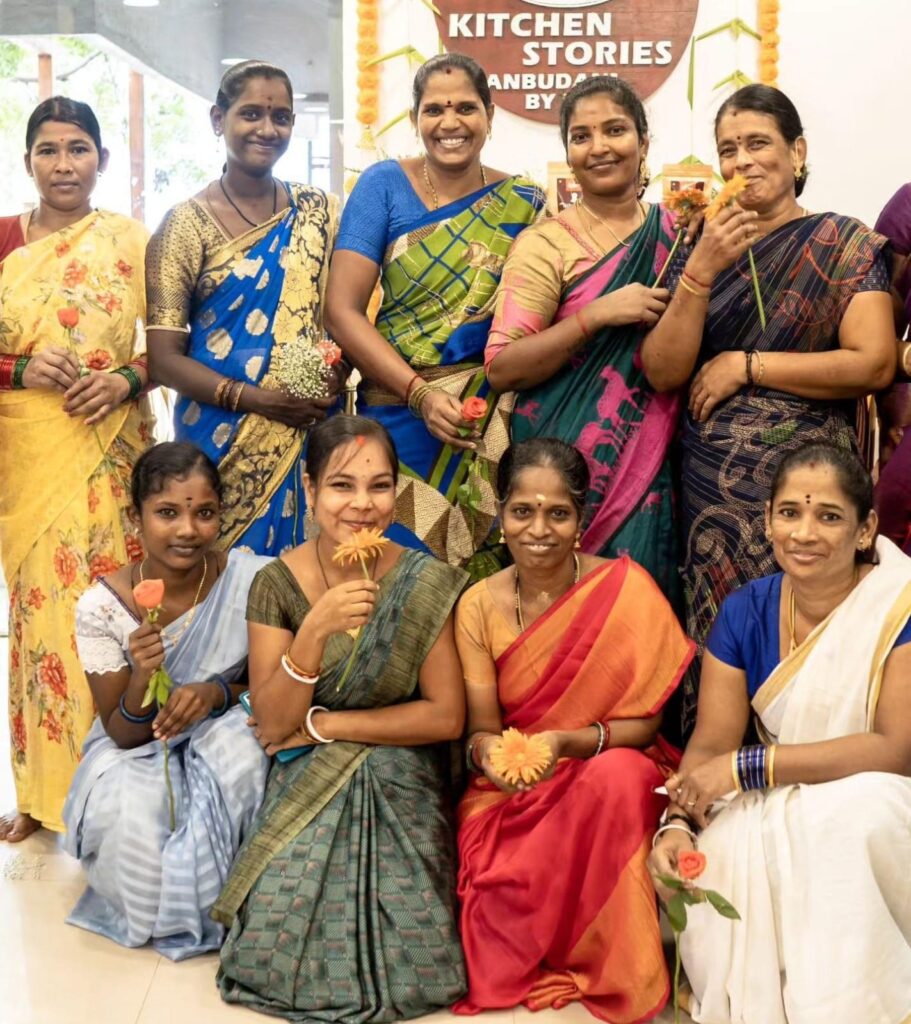
Talking about their staffing philosophy, Umesh spoke with admiration for the individuals who formed the backbone of their operation. “When it comes to hiring, we have an open-door policy,” he shared with a sense of pride. “Nearly half of our employees are women, many of whom are single mothers, like Kasthuri, our first employee.”
As he spoke of Kasthuri’s dedication and resilience, there was a palpable sense of reverence for her contribution to the House of Idlies family. “Kasthuri joined us to pack our podis at our terrace kitchen, supporting her two daughters as a single mother,” Umesh recounted with admiration. “Her story is just one example of the incredible potential we see in every individual who joins us.”
With each anecdote, Umesh conveyed a deep sense of appreciation for the values that guided their hiring practices. “At House of Idlies, we believe in providing opportunities to those who seek them,” he remarked thoughtfully. “Our employees are not confined to specific roles; rather, they’re empowered to contribute in whatever capacity they excel.”
Our conversation had turned to the inevitable topic of criticism – a shadow that occasionally darkened even the brightest kitchens. “Some find our dishes a tad too spicy for some of our customers. But that’s the beauty of feedback – it’s as diverse as the flavours we serve.” Umesh spoke of the intricacies of maintaining consistency, of the delicate dance that chefs performed each day as they recreated the magic of the previous day’s successes.
The topic then shifted to the early days, marked by opposition and uncertainty. Umesh deliberated on those initial hurdles with a mixture of reverence and understanding. “Yes, there was opposition, especially from family,” he confided, his voice carrying the weight of past struggles. “We weren’t from a business background. My father, a Vedic purohit, had envisioned a different path for me.”
He recounted the disappointment his father felt when he chose to pursue his own dreams rather than follow the conventional path of secure employment. “At first, there were doubts, but with time, as our vision took shape and our efforts bore fruit, that skepticism transformed into pride.”
Umesh recalled his foray into the world of marketing. “It was during my time with Chinmaya Mission that I felt a calling for something different. I craved a role that would offer both challenge and opportunity for creativity.”
Through his experiences, Umesh found inspiration in the mundane, conceptualizing innovative solutions like the bucket batter, born out of a desire to minimize waste and enhance convenience for consumers.
As he spoke of ideation and the journey from concept to reality, there was a sense of admiration for the resilience and ingenuity that fuelled his entrepreneurial spirit. “Starting something new is no small feat, but sometimes, amidst the chaos of ideas, the simplest solution emerges.”
Amidst the anecdotes and reflections, one question lingered: What was his favorite dish? Umesh’s voice breaks into a warm smile as he answers without hesitation, “Podi idli!”
Here was a man who not only served food but poured his heart and soul into every aspect of his craft. It was a testament to the power of passion and perseverance, a reminder that even in the face of criticism, true greatness shines through. And as House of Idlies continues to thrive, one thing remains certain – their commitment to quality, authenticity, and above all, to the spirit of home-cooked goodness that has captured the hearts of Chennai’s food lovers.
Those looking to try out their delicious fare can visit their outlet at Bazullah Road in Chennai or check out their website for more information.
Subscribe to our channels on Telegram, WhatsApp, and Instagram and get the best stories of the day delivered to you personally.