Home Blog Page 743

TNM’s Dhanya Rajendran Reportedly Under IB Radar

Article withheld in light of Delhi High Court ordering removal of YouTube videos, articles containing “defamatory” statements against The News Minute founder Dhanya Rajendran.

This note was updated on 22 July 2024 at 10:40 AM.


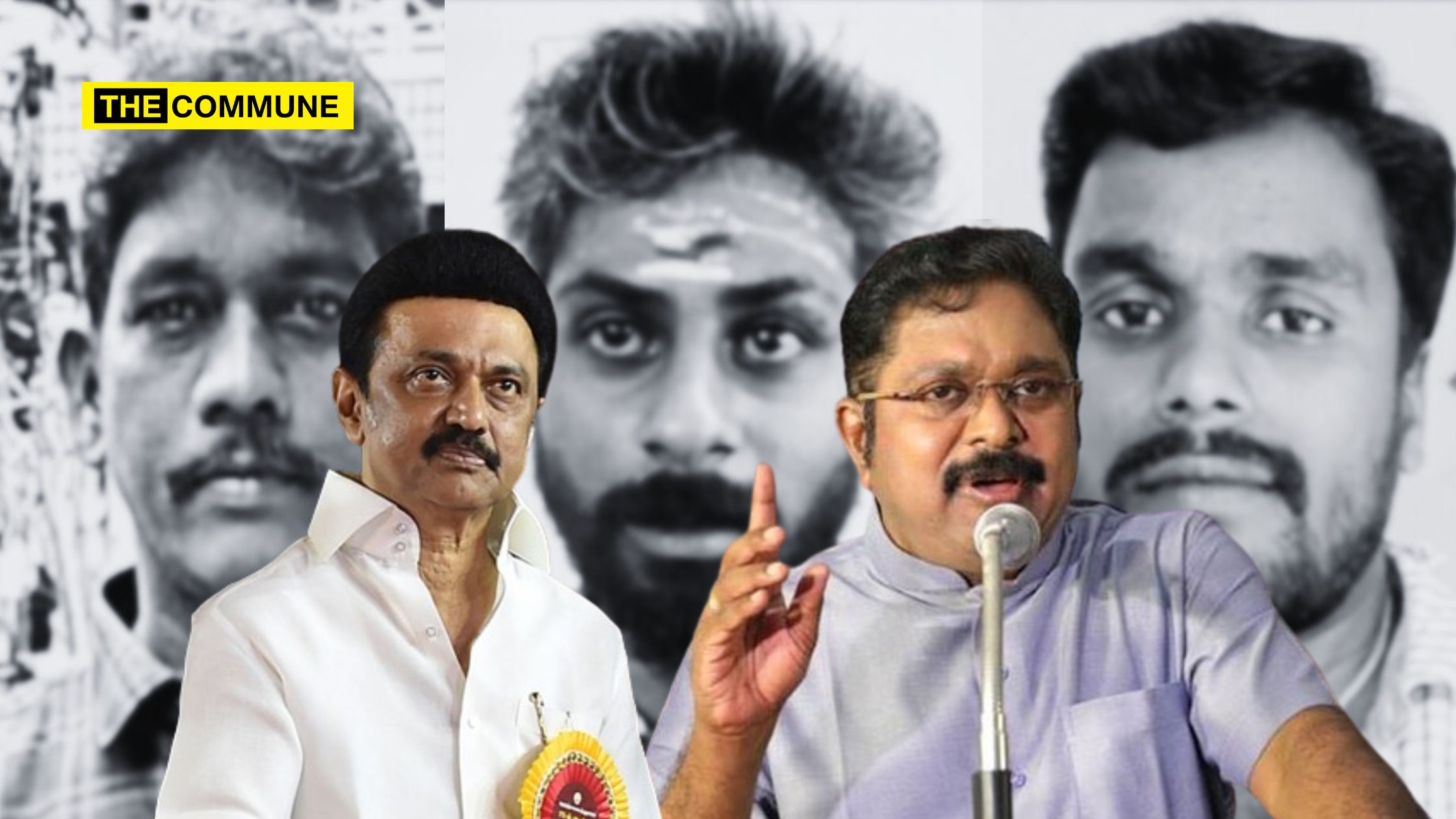
Tambaram Sees 3 Men Killed In Separate Incidents In 1 Night, TTV Dhinakaran Slams DMK Govt Over Crumbling Law & Order

Three people were killed in separate incidents on 27 May 2024 within the Tambaram police division has sent a shock waves in the society.

Thomas (50), a truck owner from Chromepet, was one of the victims. He had lent ₹28,000 to Sabari (A) Prithvi Rajan (31), who also lived in the area. A dispute arose when Thomas demanded the repayment of the loan. Allegedly, Sabari lured Thomas to the Tiruneermalai Karumariamman temple under the pretense of returning the money, and then attacked him with a sickle, killing him on the spot.

In another incident, Karthik Raja (28), an auto driver from Irumbuliyur near Tambaram, was killed. Known to have a record of assault cases, Karthik Raja was ambushed at the Tambaram bus station while waiting for commuters. He was attacked with a sickle by assailants and died instantly. According to the police, Karthik was not affiliated with any auto stand, but had been driving near the bus stand despite objections from another auto driver, Anandan. Infuriated by Karthik’s persistence, Anandan, along with six others, attacked Karthik. Following the incident, Anandan (42), Sivakumar (A) Ranjith (29), Kevin Raj (21), Ajith Kumar (28), and Samraj (50) surrendered to the Tambaram police. The police are still searching for two additional suspects.

The third victim was Rajesh (30), who worked at a brick kiln in South Malayambakkam near Kundrathur. He was walking near the Sembarambakkam lake on the night when a gang of three men attacked him, stealing his cell phone and money. Rajesh was taken to a private hospital in Kovur, where he succumbed to his injuries the following morning. The Kundrathur police are investigating this case.

In response to these incidents, AMMK Chief TTV Dhinakaran criticized the state of law and order in Tamil Nadu, urging the Chief Minister to take stringent action to address the situation, Dhinakaran in his official X account stated, “3 murders that took place in one night near Tambaram, Chennai – When will the police department wake up from deep sleep to prevent murders and crimes? The news that has come out in the sub-urbs areas of Chennai Tambaram, namely, an auto driver, a brick kiln worker and a person from Chromepet, were killed in a row yesterday, and the that a film photographer was hacked to death and his cell phone stolen in Nungambakkam is very shocking.

He further said “Not only in the capital of Tamil Nadu, but wherever you see daily a murder, robbery, theft, free circulation of drugs and crimes against women have created an environment where people are afraid to move freely. This is the best example of three years of DMK government’s law and order disorders. It is highly condemnable that the police, who are supposed to bring law and order under control, are acting only as a puppet of the ruling party figures, as if they have nothing to do with the crimes.”

Pressing MK Stalin to take action, Dhinakaran said “Therefore, I urge the Chief Minister of Tamil Nadu, Mr. M. K. Stalin, to at least wake up the police now, who are currently in deep sleep, and take measures to eliminate the law-and-order disorders that are completely broken down in Tamil Nadu and to take strict action against those who are involved in crimes without bias.
@CMOTamilnadu”

Subscribe to our channels on TelegramWhatsApp, and Instagram and get the best stories of the day delivered to you personally. 

TN Governor RN Ravi Pulls Up State Univs For Skewed History Syllabus, Says Tamil Contribution To Indian National Movement Overshadowed With Dravidian Movement Stories 

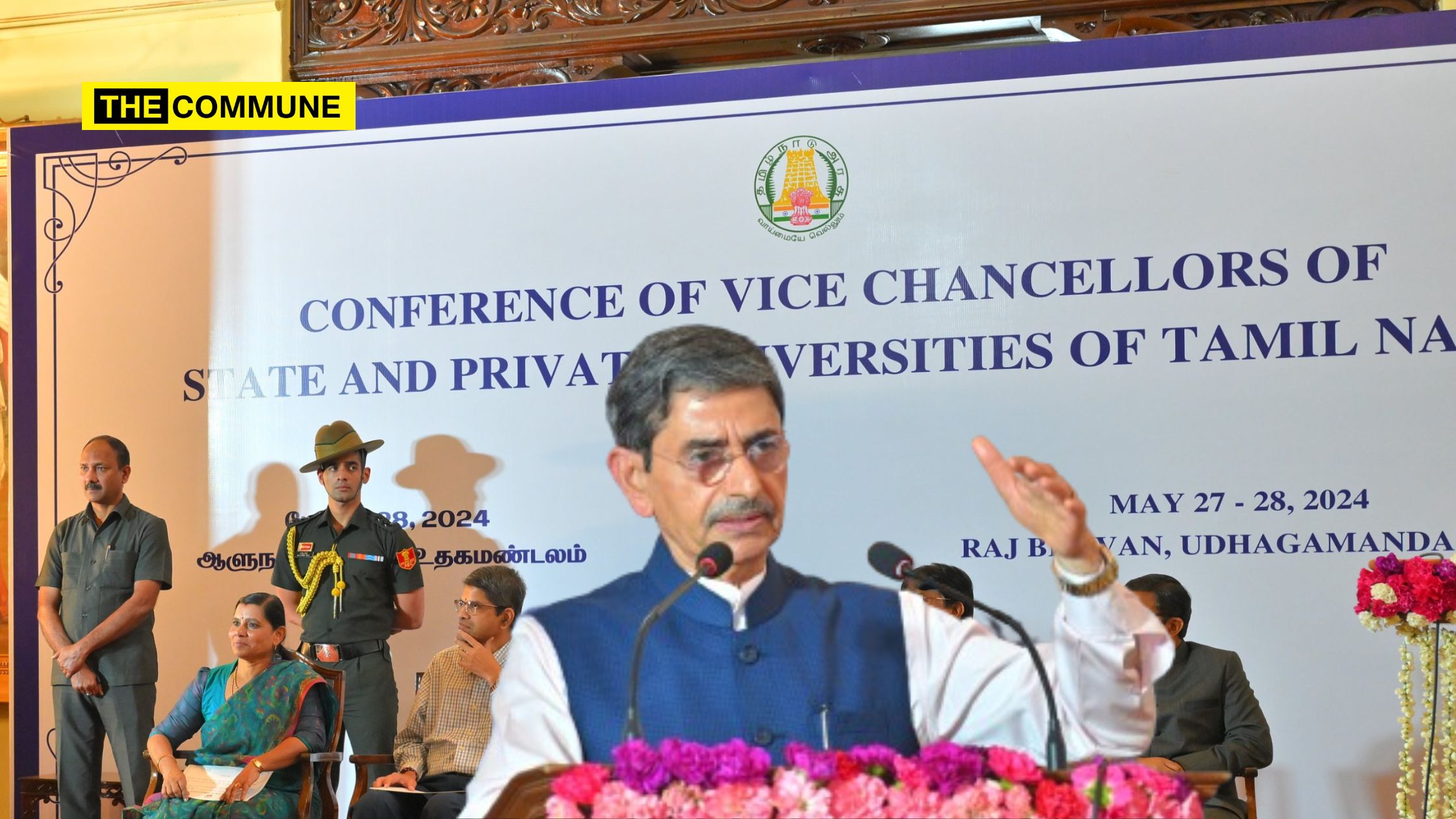
Tamil Nadu Governor RN Ravi, the chancellor of state universities, had recently inaugurated a two-day conference for vice-chancellors of both state-run and private universities at the Raj Bhavan in Udhagamandalam on 27 May 2024. Vice-chancellors from state, private, and central universities or institutions across the state participated in this annual conference.

According to the release from Raj Bhavan, the conference aims to elevate the standards of higher education in the state, covering topics such as research excellence, institutional development, entrepreneurship promotion, faculty capacity building, and the promotion of universal human values.

The conference features four sessions each day, during which vice-chancellors of state universities will present best practices implemented at their institutions. Additionally, students and scholars who have passed the NET or UGC-CSIR tests and obtained Junior Research Fellowships will share their experiences.

In his address the following day, Governor RN Ravi expressed concerns regarding the state universities’ curriculum, which he criticized for focusing solely on the Dravidian Movement while omitting the national freedom movement. He highlighted that the British rule’s impact on Tamil Nadu’s social, economic, and political fabric is completely absent from the curriculum.

Governor RN Ravi said, “There are unacceptable distortions in the history and political science syllabi of state universities. While the Dravidian Movement is an important part of history, it should not overshadow other historical events. In the 19th century, many Tamil people were forcibly taken by the British to work in colonies in Malaysia, Sri Lanka, and Fiji. Ignoring the sacrifices of millions of Tamils in the fight for India’s freedom is an insult. This omission weakens the sense of nationalism among our youth and fosters a disconnect from the national mainstream,” urging for a periodic review of the curriculum.

Ravi also criticized the practice of involving university students in government publicity programs. “Students should be encouraged to participate in social outreach by teaching in schools, not by promoting government programs. Are our students supplementing the state’s district administration and DIPR in publicity outreach? This is not an appropriate role for university students,” he remarked. He also called for universities to reconsider the use of RUSA funds for donations to schools, emphasizing that these funds are meant for higher education, not for providing furniture to schools. Lastly, the Governor pointed out that a 50% vacancy rate in universities is compromising the quality of education.

Governor Ravi expressed concerns that even PhD scholars, who are bright students, are either without any fellowship or get a meager amount of about 75000 per month. He said that due to lack of proper guidance and motivation, they are not able to obtain the UGC run NET-JRF fellowship, which is almost double the salary of our guest lecturers. He urged the Vice Chancellors of the state universities to take serious note of this issue and collaborate with private universities. The Governor highlighted how the severe shortage of teaching faculty in our universities, almost 40-50% shortage has heavily compromised the future of our students.

Deliberating over the curriculum, the Governor flagged unacceptable distortions in History and Political Science syllabuses of B.A and M.A. courses of the state universities. He pointed out that there is a total blackout of the National Freedom Movement in the syllabus. He elaborated how several thousand freedom fighters from Tamil Nadu sacrificed their lives for the freedom of our Nation while several thousand youths from Tamil Nadu joined the Indian National Army of Netaji and fought the British, and many gave their lives.

“The massacre of freedom fighters at Devakottai and Perungamanallur can’t be forgotten. Poligars resistance and popular uprisings at Palayamkottai, in which several thousand Tamils were killed by the British, and just a few to quote, Mahatma Gandhi visited the state more than 16 times. The Swadeshi Movement and Salt Satyagraha had a huge response in Tamil Nadu, and the people of Tamil Nadu played a leading role,” the Raj Bhavan press release stated.

“When the British partitioned Bengal communally, there was a huge uprising in Tamil Nadu, which motivated the great freedom fighter V. O. Chidambaram Pillai to join the National Freedom Movement. The Jallianwala Bagh massacre in Punjab outraged the people of Tamil Nadu and prompted young Kamaraj to abandon his studies and jump into the National Freedom Movement. Tamil Nadu played a crucial role in the framing of the Constitution of Free India. There are just a few illustrations. The impact of British rule on the social, economic and political fabric of Tamil Nadu is totally blacked out from the curriculum. Instead, the curriculum is filled with the stories of Dravidian movement. With respect to social and political awakening, all the movements, to name a few, the Ayyavazhi movement of Ayya Vaikundar, the Sanmarga movement of Vallalar, and the Nandanar movement led by Dalit leader Swami Sahajananda are missed altogether,” it further added.

“In the 19th century, several hundred thousand Tamil people were forcibly taken by the British as indentured labours to their colonies in Malaysia, Sri Lanka, and Fiji, where they were auctioned like slaves to the British landlords. They were treated like animals. Those who resisted were imprisoned, tortured, and even killed. Erasing the sufferings and sacrifices of the millions of Tamil people for the freedom of India and the suffering of countless people at the hands of the British is an insult to our countless martyrs and a denial of the true history and sacrifices of our forefathers. It also weakens the sense of nationalism among our youth and fosters an eco-system that emotionally disconnects our youth from the national mainstream.” it further added.

The Governor emphasized the significance of emerging technologies like Generative Al, Quantum Computing, Advanced Robotics, Ultra Nanotechnology, and Synthetic Biology, highlighting their profound impact on the world and the world order. He stressed the importance of investing in our youth to invest in these technologies so that they are equipped to harness the true potential of these transformative technologies. Earlier, Prof. H.D. Charan, Chairman of the National Committee on Universal Human Values at AICTE, gave a detailed presentation on Universal Human Values, emphasizing their role in Human Education and how institutions can develop into living models of a humane society. He highlighted how these institutions can serve as resource centers for their communities, and how personal and societal transformation can occur in a natural and evolutionary manner Dr. Jayanti Ravi, Secretary of the Auroville Foundation, engaged in insightful discussions with Vice Chancellors about the exciting Opportunities for students across various colleges and universities, aligning with the National Education Policy-2020.

(With Inputs From DT Next)

Subscribe to our channels on TelegramWhatsApp, and Instagram and get the best stories of the day delivered to you personally. 

Thirumukkudal Perumal Temple: A 950-Year-Old Chola-Era Temple That Also Functioned As A Hospital

In a remarkable discovery, Dr. Vanjiyoor K. Panneerselvam, head of the Tamil Epigraphy Department of the Archaeological Survey of India (ASI), has unveiled detailed information about a 950-year-old temple that also functioned as hospital during the Chola dynasty. According to a report by BBC Tamil, Dr. Panneerselvam shared the historical significance and operational details of the Adular Salai hospital located at Thirumukkudal.

Dr. Panneerselvam explained the etymology of “Adular Salai,” breaking it down into “Adular” meaning one who is ill, and “Salai” meaning a medical institution, effectively making it a medical facility for the sick. He further detailed the land donations made in names such as Vaidya Virupthi, Vaidya Bhagam, Vaidya Bhogam, Vaidya Kani, and Adular Salaipuram, which were used to maintain the hospital and pay the salaries of its medical staff.

Thirumukkudal, situated on the banks of the Palar River at the confluence of the Palar, Cheyyar, and Vegavathi rivers, is where this ancient hospital was located. The Venkatesa Perumal temple here housed the Adular Salai hospital during the Chola rule, around A.D. 1068. An inscription on the eastern wall of the temple’s first prakara features a statue of Rajakesari Virarajendra Chola, detailing the establishment and functioning of the hospital.

Dr. Panneerselvam elaborated on the operations of Adular Salai based on these inscriptions, revealing that it provided medical care to temple workers and students of Vedic studies. The hospital had 15 beds for in-patients and was staffed by a team of seven: a doctor, a surgeon, two pharmacists, two nurses, and a public servant. Surgical treatments, referred to as Salliyakriya, were provided for major injuries, while pharmacists managed and dispensed medicines.

The detailed inscriptions also mention the roles of general physicians and their assistants, including salary details and the types of food served to patients. Notably, the hospital functioned in a part of the temple known as “Janatha Mandapam.”

Dr. Panneerselvam highlighted the names of various medicines used at the hospital, many of which are still in use today. These medicines include 1. Brahmayam Kadumbapuri 2. Vasaritaki 3. Gomutra Karithakai 4. Dasamoola Haritaki 5. Pallathaka Haritaki 6. Kandiram 7. Balageranda Oil 8. Cotton Balm 9. Lasunagayeranda oil 10. Uttama Karinnadi Tailam 11. Sukla Sikritam 12. Bilwadi Giridham 13. Mandukaravadigam 14. Thravathi 15. Vimalai 16. Zunori 17. Tamrathi 18. Vajrakalpa 19. Kalyanalavanam 20. Puranagiritham with descriptions and their corresponding ailments detailed in the Ayurvedic text ‘Sarakar Samhita’.

Additionally, Dr. Panneerselvam pointed out that similar hospitals, referred to as Adular Salai, operated in various locations under the Chola reign, including Chidambaram and Mayiladuthurai. Epigraphic evidence also indicates the existence of Adular Salai hospitals in Koil Devarayanpettai near Nannilam in Thanjavur district and at the Agnipureeswarar temple in Tirupugalur near Nannilam.

Thirumukkoodal Sri Appan Prasanna Venkatesa Perumal

Thirumukkoodal, a name derived from the confluence of the Palar, Vegavathi, and Cheyyar rivers, is revered as a sacred site akin to the Ganges. The confluence, known as Triveni Sangamam, holds the same sanctity as the Prayag, where a dip in the waters is believed to purify the soul. Nestled on the riverbanks, the temple offers a picturesque vista, with its precincts gracing the river’s edge. On one side of the river stands the ancient Sri Lakshmi Narasimhar temple in Pazhaya Seevaram, while the Sri Appan Prasanna Venkatesa Perumal temple adorns the opposite bank. The latter, boasting a history that stretches back to the 9th century, is a testament to the architectural endeavors of Raja Thondaimaan Chakravarthy, the ruler of Thondai Mandalam with its capital at Kanchipuram.

Legend narrates that King Thondaimaan, en route to Thirupathi for a divine audience with Lord Venkatesa Perumal, was divinely instructed to postpone his pilgrimage to defend his realm against an impending invasion. Following his victorious return, the king was graced by the Lord with His Sanku (Conch) and Chakra (Wheel), symbols that later disappeared only to be reinstated by Sri Ramanujar at the deity’s behest. It was here, at Thirumukkoodal, that the king received the Lord’s blessing in a standing posture, a departure from His usual reclining form. Overwhelmed with joy, the king embraced the deity, exclaiming ‘Appaney Venkatesa’ (Oh My Father Venkatesa!), bestowing upon the Lord the name ‘Appan Venkatesa Perumal’. It is said that this very king constructed the temple, as well as others in Thirupathi and Thirumalai Vaiyaavoor, known as the Southern Thirupathi.

The main idol, Sri Appan Venkatesa Perumal, stands regally, receiving adoration from Brigu Maharishi, Sri Markandeyar, and Sri Bhumadevi. The temple is also distinguished by its three sacred trees, Devadhaari, Vanni, and Sandhanam (Sandal). Celebrations like Kanchipuram Sri Varadaraja Perumal’s Parvettai and Vaikunda Ekadasi are observed with great fervor, drawing devotees to witness the deities’ joint appearance on ‘Kaanum Pongal’ Day and to honor the temple’s goddess, Sri Alarmel Mangai Thaayaar, who has her own dedicated shrine.

Guarded by the Archaeological Survey of India (ASI), the temple’s walls are adorned with inscriptions from various eras, including those of Raja Raja Chola I and Rajendra Chola. These inscriptions chronicle the temple’s storied past and the generous endowments it received. A medical facility, named after King Veera Chozhan and staffed with a dedicated team including a physician named Kodhandaraman Aswathaaman Bhattan, once served the temple community. The inscriptions provide a detailed account of the hospital’s operations, including the salaries of its staff and the medicines it stocked.


(Image Credit: Dharsanam Blog)

The temple also played a role in the spiritual life of the community, with provisions for the recitation of ‘Thiruvaimozhi’ during the Chola period. Historical records place Thirumukkoodal within the subdivision of Madhuranthaka Chathurvedhimangalam, now known as Madhuranthakam, which was part of the Kalathur Kottam district within Jayamkonda Chola Mandalam.

(With inputs from BBC Tamil)

Subscribe to our channels on TelegramWhatsApp, and Instagram and get the best stories of the day delivered to you personally. 
Chennai Smuggler’s ISIS Connection Revealed In Recent Terror Module Bust In Gujarat

Recent inquiries have uncovered connections between a Chennai-based individual, acting as “sparrow,” (clandestine smugglers) and the terrorist group ISIS. On 20 May 2024, the anti-terrorist squad in Gujarat apprehended four individuals linked to ISIS who had traveled from Sri Lanka to Ahmedabad via Chennai.

Subsequent investigations and cybercrime analysis led to the confiscation of firearms from multiple locations. Further probing indicated plans to launch attacks in Gujarat, including suicide bombings. The investigation is now exploring potential links between the Chennai “sparrows” and associates in Ahmedabad.

In this regard, the Tamil Nadu Police’s recently established Anti-Terrorism Unit, is actively investigating the case. The arrest of Mohammad Nasrat, along with Mohammad Nafran, Mohammad Faris, and Mohammad Rashidin, all originating from Sri Lanka, brought to light Nasrat’s role as a “sparrow” in Chennai. Notably, Mohammed Nasarat was found to have worked with ISIS through the banned National Thowheeth Jama’ath a banned Islamic terror outfit that aimed to Convert Sri Lanka into an Islamic caliphate.

The investigation has verified their association with a prohibited organization in Sri Lanka, which has ties to ISIS. Notably, Nasrat is known to frequently visit Chennai for business dealings. It has been revealed that gold smuggling into Chennai has been ongoing for the last three years. Moreover, Nasrat’s recent trips to Mumbai have prompted a thorough investigation to determine if his connections with ISIS in Chennai have expanded.

(With Inputs From ETV Bharat)

Subscribe to our channels on TelegramWhatsApp, and Instagram and get the best stories of the day delivered to you personally. 
 

Madurai Bench Of Madras High Court Calls For Equal Treatment Of All Religions, Calls For Bringing Church Properties Under Registration Act

The Madurai bench of the Madras High Court recently underscored India’s commitment to secularism, emphasizing the need for the State to treat all religions equally.

Justice GR Swaminathan noted that under Section 22-A of the Registration Act, 1908, which deals with the ‘refusal to register certain documents,’ properties owned by churches do not receive the same legal protection as Wakf properties or those managed under the Tamil Nadu Hindu Religious and Charitable Endowments Act, 1959.

Justice Swaminathan expressed concern over the unlawful alienation of church properties, stating, “I have personally come across quite a few cases wherein church properties have been illegally and unlawfully alienated.” He pointed out the inconsistency in the Registration Act, which protects properties under Hindu and Islamic laws but excludes church properties. He suggested that this disparity exists because specific legislation covers Hindu and Wakf properties, while similar laws for church properties are absent.

Justice Swaminathan proposed that “the time has come to include church properties within the scope of Section 22-A of the Act.” These remarks were made during a writ petition filed by Shalin, who challenged the Sub Registrar of Tiruppathur in Sivagangai District for refusing to register a property he had purchased.

The Sub Registrar argued, citing a 2017 High Court ruling, that properties endowed to the Tamil Evangelical Lutheran Church (TELC) require High Court permission for registration. The Special Government Pleader supported this position, urging the court to dismiss the petition.

However, the single judge bench clarified that the 2017 ruling was an interim order and emphasized that such orders do not extend beyond the conclusion of the main writ petition. The court noted there is no current standing order preventing the registration of TELC properties. The bench considered whether Section 22(A)(1) of the Registration Act, 1908, applied in this case. It observed that Section 22-A covers immovable properties belonging to religious institutions under the Tamil Nadu Hindu Religious and Charitable Endowments Act, 1959, and Wakf properties under the Wakf Board’s jurisdiction.

The court noted that the petitioner had purchased the property from Vijaya, who acquired it through a settlement deed from M Premkumar Prithviraj, who had originally purchased it from TELC. Both the sale deed to Prithviraj and the settlement deed to Vijaya were registered, and the revenue records were updated accordingly.

Given these circumstances, the bench concluded that the impugned order should be set aside. The court allowed the petitioner to re-submit the document to the Sub Registrar, directing the latter to entertain and register it.

(With Inputs From Law Beat)

Subscribe to our channels on TelegramWhatsApp, and Instagram and get the best stories of the day delivered to you personally. 
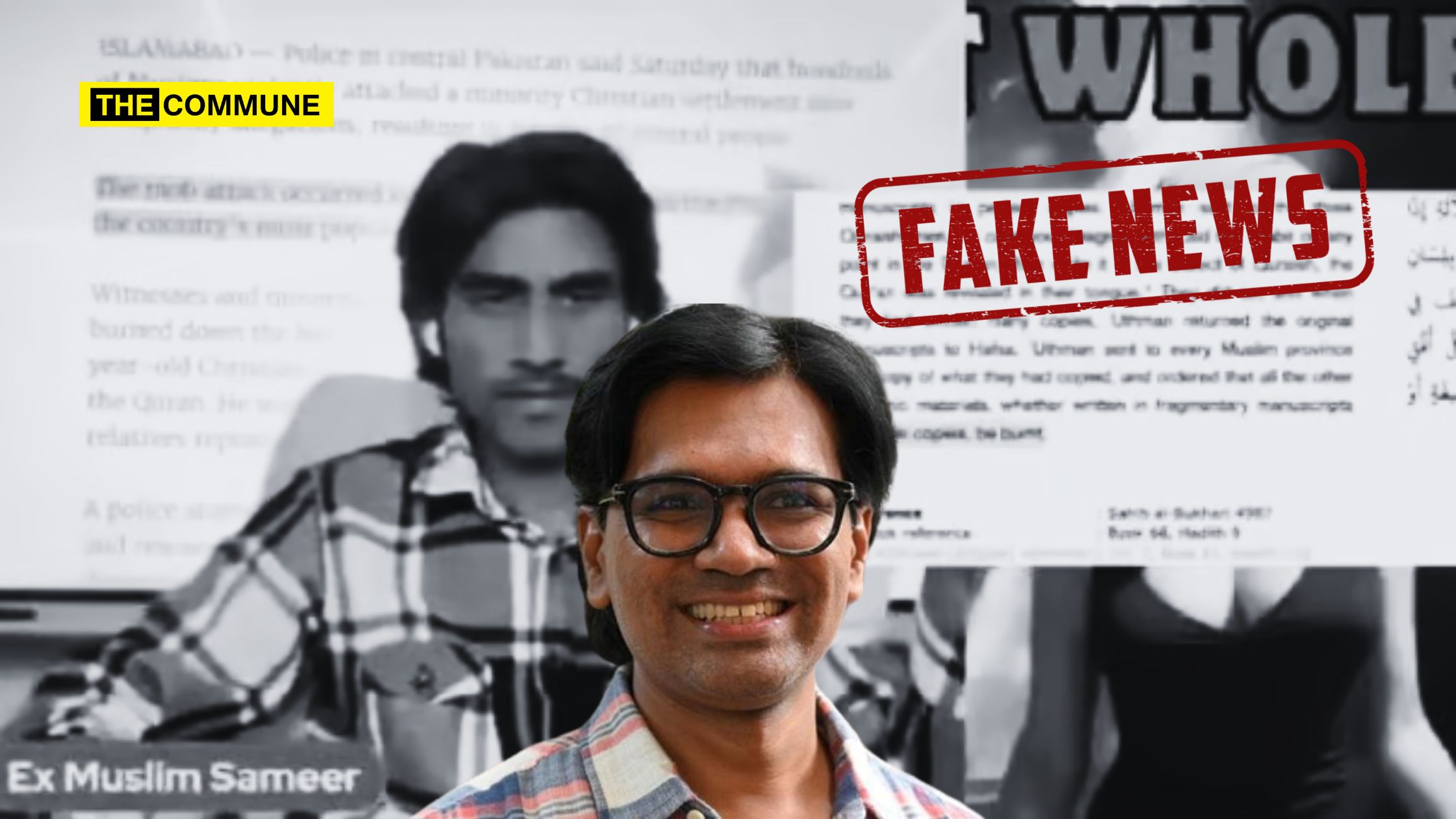
“No Quran Was Burnt”: Uttarakhand Police Fact Checks & Busts Fake Information Peddled By Alleged ‘Fact-Checker’ Mohammed Zubair, Warns Of Legal Action

The hashtag #ArrestExMuslimSameer was trending across India on the X platform today. This followed the circulation of a video showing a man desecrating the Quran by stepping on it, tearing its pages, and setting it on fire. As the video went viral, there were widespread demands for the perpetrator to be identified and arrested.

Mohammed Zubair, cofounder of Alt News and a self-proclaimed fact-checker, quickly attempted to capitalize on the issue. He posted a tweet tagging the Haridwar and Uttarakhand Police, claiming the incident took place in Roorkee and urging them to investigate. Zubair’s tweet, presumably based on information from his Whatsapp university sources, rapidly gained traction, prompting calls for police action.

Mohammed Zubair stated, “A video doing rounds on social media where a Youtuber from Roorkee has posted a video of him burning and stamping Quran. Request you to kindly look into this ASAP. C’C: @haridwarpolice @uttarakhandcops Not sharing the sensitive video and his personal details here on this platform. Can DM his details if needed.”

However, the Haridwar Police soon refuted Zubair’s claims, stating that the individual in the video had not resided in the mentioned location for the past three years. They confirmed that no such incidents of disrespect towards the Quran had occurred in Haridwar district. The police also warned that legal action would be taken against those spreading unverified claims, recognizing the potential for such misinformation to cause law and order issues.

Haridwar Police responding immediately to the sensitivity of law and order stated, “In the referenced case, Ex-Muslim Sameer is not living in a place called ‘Padli Gurjar’ for the last 3 years nor has any incident of disrespect to the Holy Quran taken place anywhere in Haridwar district. Therefore, do not share the matter without information otherwise legal action can be taken against you.”

Zubair’s previous actions have also drawn criticism. In 2022, he shared an incomplete video of former BJP spokesperson Nupur Sharma’s comments on Prophet Muhammad, which led to widespread riots and violence. This incident resulted in deaths and threats, including calls for Sharma’s execution and public effigies. People like Kanhaiya Lal and Umesh Kolhe became victims of Islamist violence after supporting Sharma.

This is not the first time Zubair has been accused of spreading falsehoods or posting provocative content. Both he and Alt News, along with cofounder Pratik Sinha, have faced allegations of lying and disseminating misleading information. Critics argue that Alt News often acts as an Islamic propaganda site under the guise of selective fact-checking, shielding Islamists and their actions.

(With Inputs From OpIndia)

Subscribe to our channels on TelegramWhatsApp, and Instagram and get the best stories of the day delivered to you personally. 

Secret Meetings Held In Chennai, Karur And Kanyakumari By Men Associated With Hizb-ut-Tahrir Reveals NIA Probe

Police Arrest Six Men Recruiting For Hizb ut-Tahrir

National Investigation Agency (NIA) officials have initiated a probe into the terror recruitment activities linked to the proscribed extremist group Hizb-ut-Tahrir.

Dr. Hameedu Hussain, a resident of Royapettah, Chennai, and a Petroleum Chemical Engineer who served as an Honorary Professor at Anna University, has been detained under UAPA (Unlawful Activities (Prevention) Act) along with his father, Ahmed Mansoor, and sibling, Abdul Rahman. The trio was apprehended by the Cyber Crime division of the Chennai Central Crime Branch on charges of associating with Hizb-ut-Tahrir, which is outlawed in numerous nations. Subsequently, Mohammad Maurice, a 36-year-old Chennai local, Qader Nawaz Sharif, aged 35, and 46-year-old Ahmed Ali Umari were taken into custody for their connections with the aforementioned individuals.

The scope of the inquiry has since expanded, with NIA officials undertaking a comprehensive investigation under a Deputy Superintendent of Police’s supervision.

NIA representatives have disclosed that the gravity of the offenses has necessitated their involvement. Dr. Hameed Hussain is suspected of actively engaging in the recruitment for terrorist groups and has a history of international travel, which is currently under scrutiny.

It has come to light that four individuals closely associated with Hussain have deactivated their mobile phones and are now fugitives.

Investigations reveal that Hussain has orchestrated training sessions and secret meetings on extremist ideologies not just in Chennai but also in Karur and Kanyakumari. Efforts are underway to gather information about the ‘Modern Essential Educational Trust,’ established for similar purposes, and to track the individuals involved with this entity. They have utilized platforms like YouTube for their recruitment and radicalization of youths in Tamil Nadu.

In February 2024, the National Investigation Agency (NIA) conducted a series of raids across 21 sites in Tamil Nadu, resulting in the arrest of four individuals. The operations targeted 11 venues linked to an educational institution implicated in the indoctrination of youth with Islamic State (IS) ideologies under the guise of Arabic language instruction, with the intent of inciting them to commit terrorist acts.

These actions were related to two investigations: one concerning IS cells inspired by Zahran Hashim, the mastermind behind the 2019 Sri Lanka Easter bombings, and the other involving the 2022 Coimbatore car explosion and the broader issue of IS indoctrination and recruitment within Tamil Nadu.

The authorities confiscated a variety of items, including six laptops, 25 mobile phones, 34 SIM cards, six SD cards, three hard drives, and numerous documents and material evidence.

The NIA’s scrutiny extended to eleven sites associated with either Madras Arabic College or Kovai Arabic College, where covert radicalization efforts were underway. These efforts involved the dissemination of extremist ideologies and the promotion of violent jihad to unsuspecting students enrolled in Arabic courses at various local study centers throughout Tamil Nadu.

The radicalization campaign also unfolded online, utilizing social media platforms and messaging apps like WhatsApp and Telegram. IS affiliates exploited these digital channels and the educational classes to deliver extremist lectures aimed at advancing the Khilafat and IS doctrines, which stand in opposition to India’s foundational values of secularism and democracy, as per the NIA’s Sunday announcement.

Simultaneously, NIA units raided an additional ten locations linked to the Coimbatore car bombing incident. These searches encompassed areas associated with suspects who were members of a secure mobile communication group, alongside other detainees. Investigations revealed that these individuals praised Zahran Hashim and utilized the group to deliberate on IS activities and the potential for establishing the group’s presence in India.

The NIA’s findings indicate that susceptible youths were being groomed to execute terrorist deeds and engage in illegal activities, such as the Coimbatore car bombing. It was discovered that ten individuals apprehended in connection with the bombing had ties to Kovai Arabic College in Coimbatore.

Among those arrested following the raids, three were connected to Madras Arabic College. This includes Jameel Basha Umari, the founder of the college, known for advocating fundamentalism, extremism, and radicalization. He openly supported the Khilafat ideology and endorsed the notion of sacrificing oneself for violent jihad. Two other detainees, Maulvi Hussain Faizy and Irshath, both alumni of Jameel and Madras Arabic College, were instrumental in renaming Madras Arabic College to Kovai Arabic College. The fourth individual apprehended, Syed Abdur Rahman Umari, was found in possession of incriminating IS-related materials and was actively involved in disseminating ISIS principles to those implicated in the Coimbatore car bomb case through clandestine gatherings and sermons.

(With Inputs From Dinamalar)

Subscribe to our channels on TelegramWhatsApp, and Instagram and get the best stories of the day delivered to you personally. 

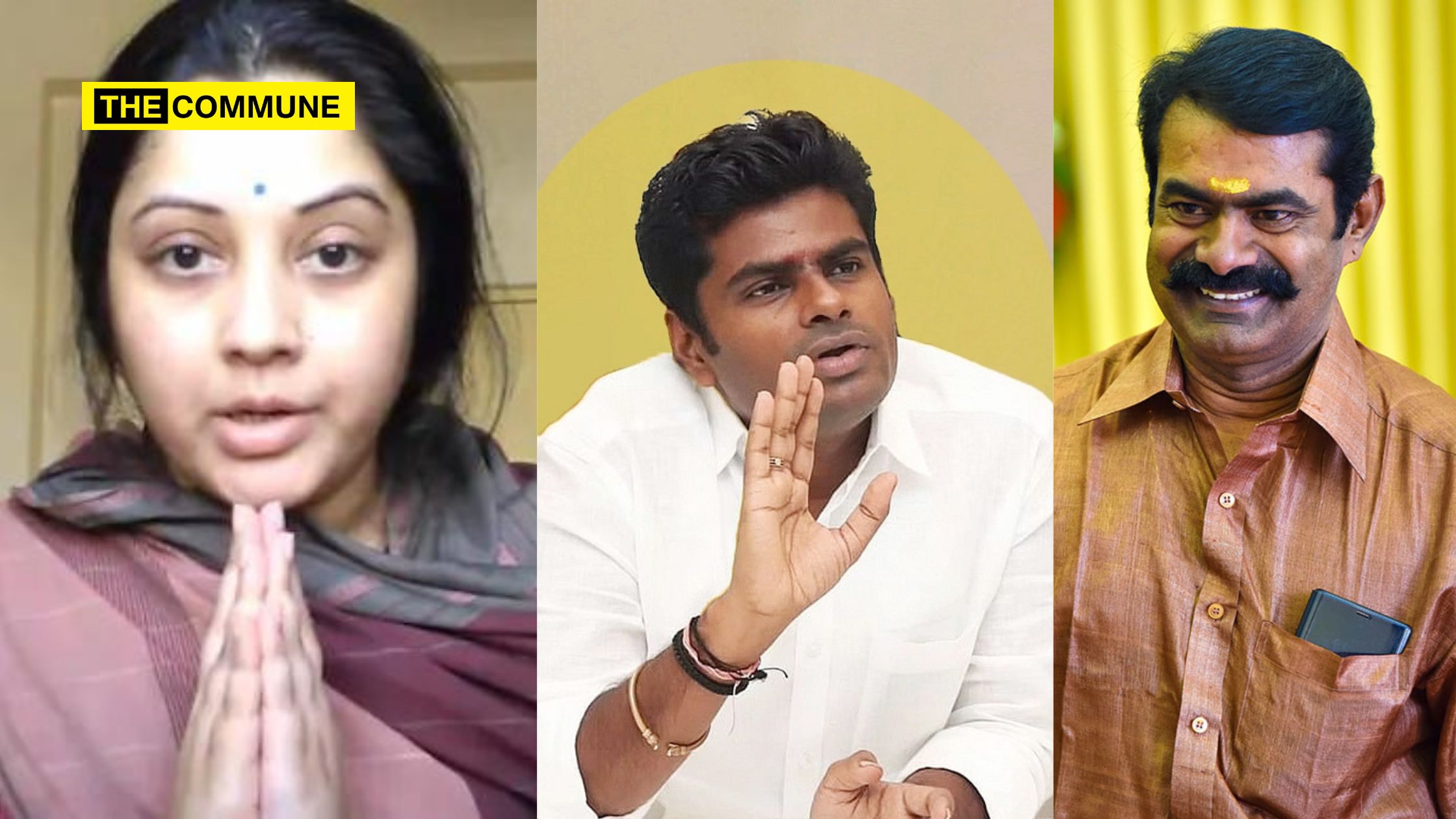
“Whenever Vijayalakshmi Talks, Seeman Will Attack BJP”: Annamalai Responds To Seeman

Tamil Nadu BJP President K Annamalai has roasted Naam Tamilar Katchi (NTK) chief Seeman amidst a debate over which party holds the position of the third largest in Tamil Nadu in terms of vote percentage. Annamalai accused Seeman of involving the BJP in unnecessary controversies to distract from the allegations made by actress Vijayalakshmi against Seeman.

When asked about Annamalai’s comments about BJP’s significant growth in Tamil Nadu, Seeman, the NTK coordinator, responded by challenging the BJP to contest elections independently. He asserted that a party’s strength should be measured by its standalone performance, questioning how many votes the BJP could secure on its own. Seeman declared that if his party failed to prove its strength, he would dissolve it and leave politics.

Speaking to the reporters, NTK chief Seeman stated, “Stand alone in elections and show that you are a man. How many individual votes did you get after the June 4th election? If it is beyond me, I will dissolve my party. You will know who is the biggest party right? You should not join the alliances (votes), standalone face to face like a lion, fight alone, Then he is a man, he is a fighter.”

In a subsequent press conference in Chennai, Annamalai addressing Seeman’s challenge remarked that Seeman tends to target him whenever Vijayalakshmi raises her voice. Annamalai emphasized that Seeman should respond to Vijayalakshmi’s allegations directly, rather than diverting attention to the BJP.

Annamalai highlighted that the BJP contested in 19 constituencies in Tamil Nadu independently, with party-affiliated independents standing in 4 additional seats. He suggested comparing the BJP’s total votes to those of the NTK, subtracting any votes allegedly bought by the NTK, to determine the true standing of each party.

Referring to Seeman’s previous statements about dissolving his party if it did not surpass the votes of the People’s Welfare Alliance, Annamalai noted that Seeman evaded the issue when the results came out. Annamalai expressed respect for Seeman, emphasizing that he did not wish to engage in irrelevant disputes but maintained that the BJP would perform strongly in upcoming elections, both in Tamil Nadu and nationally.

Annamalai stated, “Let go of brother Seeman, whenever sister Vijayalakshmi talks, brother (Seeman) comes on top of me. Sister Vijayalakshmi will attack from there, and Seeman brother will immediately attack me without any connection. Did I make a fuss on Seeman? He should reply to sister Vijayalakshmi, why is he talking to me, did I make a fuss?”

“I am saying this generously and you are going to see the result on 4th June. Today, Bharatiya Janata Party is standing alone without Dravidian parties, we are standing in nineteen places and symbol is standing in four places. You ask brother Seeman to compare BJP’s 23 seats. I didn’t even say closely and would give minus thirty percent. Let them minus thirty percent of the votes we got, let’s see if he comes closely.”, he added.

“Well, you seem like a good person, so I’ll give you another minus 20 percent discount, so I’ll give you a 50 percent discount. He is running a political party, let he be good, I don’t want to tell him to shut the party down. What did he say earlier? I will buy one vote more than the People’s Welfare Alliance (Makkal Nala Kootani)… The editor has caught him right that the party will dissolve the party. Right after the 2016 election someone asked and he said, ‘I told you but …what’.” He further added

“So, I do not want to leave brother Seeman in this embarrassment, let him run the party, Seeman’s voice is an important voice in Tamil Nadu, and it should be there. I don’t want to get into an argument or debate. I am a person who has respect for Seeman. I am saying not to leave it upon us to divert something without connection. If this is done then on 4th of June, I want to see your face and you have to see our face, I don’t know why he is coming to this match without needing Aga. So, I don’t know why he is unnecessarily coming to this competition.” He finally said

Annamalai concluded by expressing confidence that the BJP would secure more than 400 seats in India and return to power for a third term, referencing Prakash Raj’s unsuccessful bid in the Karnataka elections as an example of the BJP’s competitive edge.

Subscribe to our channels on TelegramWhatsApp, and Instagram and get the best stories of the day delivered to you personally. 
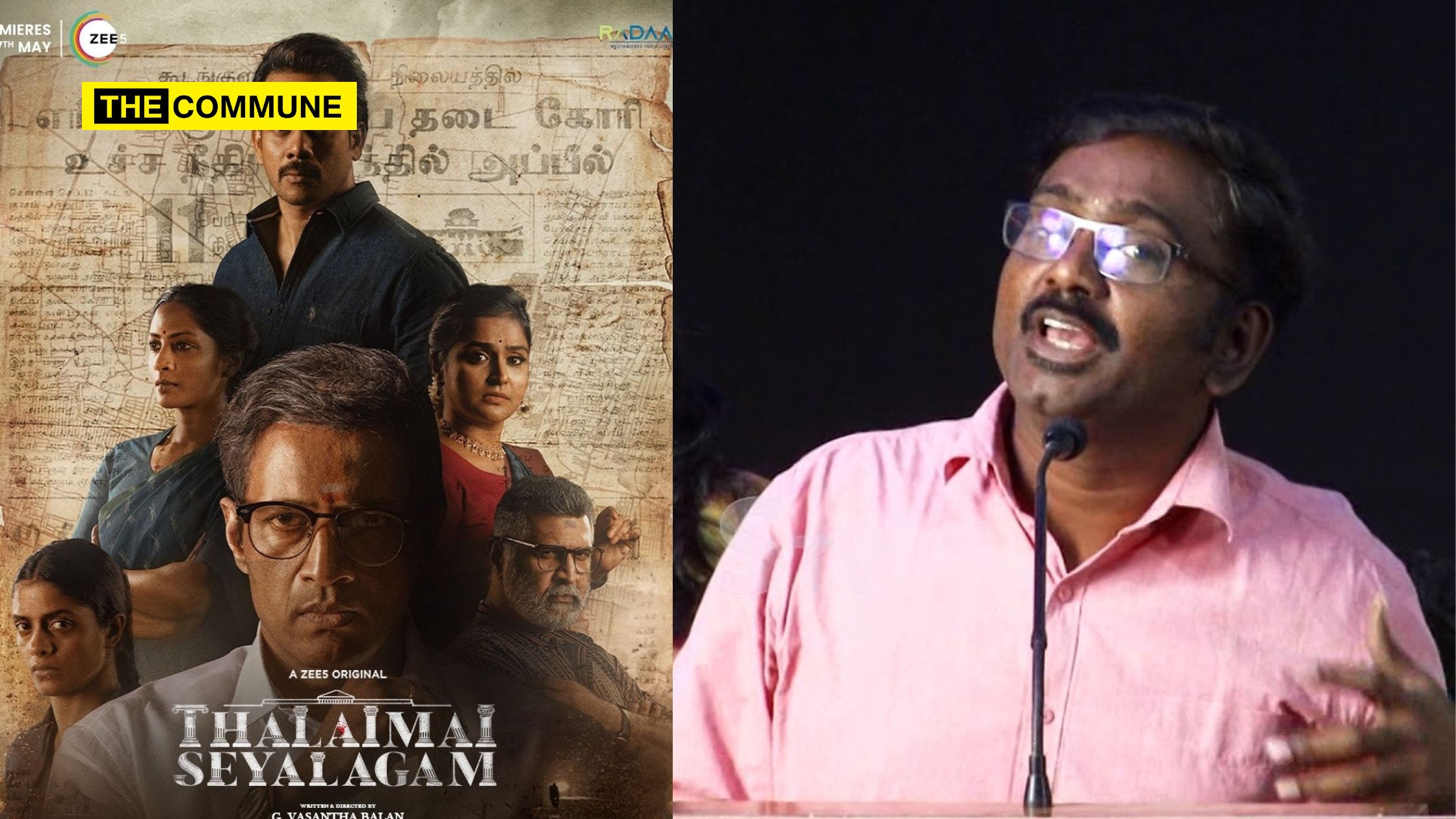
Dravidianist Film Director Vasanthabalan Justifies And Normalizes Corruption

Dravidianists in Kollywood using cinema as a tool to vilify Hindus, glorify Dravidian ideologues and propagate Dravidian propaganda of so-called ‘social justice’, ‘rationalism’ and what not, is nothing new. However, this time, a DMK sympathizing filmmaker Vasanthabalan has gone on to justify political corruption.

Vasanthabalan shot to fame with his debut film Veyil, produced by Shankar’s S production. His other film Angadi Theru, based on the lives of people working in textile showrooms in Ranganathan Street too became a hit. His other film Kaaviya Thalaivan, a period drama starring Siddharth and Prithviraj Sukumaran received critical acclaim but didn’t perform well in box office. There after his cinematic graph has been downhil. After a long hiatus, he’s now come with his latest series titled “Thalaimai Seyalagam” on Zee5 which is nothing but a boring Dravidian propaganda with no nuance.

Vasanthabalan’s narrative justifying corruption occurs against the backdrop of the BJP government going after corrupt dynastic parties. In Tamil Nadu prominent DMK politician Senthil Balaji is behind bars for corruption and action is awaited on many other bigwigs.

Now, with a DMK sympathizer like Vasanthabalan attempting to normalize corruption through cinema, it becomes alarming. As these films reach people’s homes, they may spread the notion that political corruption and profiteering shouldn’t be considered a big deal and must be normalized and made acceptable.

In a recent interview to the ‘Take Left’ YouTube channel Vasanthabalan has opened up his views and acknowledged that his ideas emerge from inspiration from communism and related figures. One of the anchors who interviewed him was ‘Minor’ who runs the rabid anti-Hindu YouTube channel U2 Brutus which had abused Lord Nataraja.

The interview began with a question about why the series was named “Thalaimai Seyalagam” (Secretariat). Vasanthabalan explained that the series focuses on the chief minister’s office, depicting the power struggles associated with the position. He described the legislative process of passing bills in parliament and questioned how a councilor, earning a mere 5000 rupees, can fulfill their duties after spending significant amounts of money to win the election.

Most of the interview centered on his reasons for choosing this series and the plot. As usual, he subtly reinforced the Dravidian ideology in Tamil Nadu, highlighting how it provided opportunities for everyone to study, in contrast to North India, where his mindset often revolved around same Dravidianists thought of hardworking but low-skilled labor. However, what was concerning in the interview was that both the YouTube channel and the host appeared to be promoting the idea of ignoring the issue of corruption.

The host praised Vasanthabalan, expressing admiration for a particular line in his series: “In the name of abolishing corruption, they will demolish democracy.” The host noted that even the leftist parties wouldn’t make such a statement and asked how Vasanthabalan arrived at this conclusion, suggesting that he believes corruption isn’t the main issue here.

Vasanthabalan replied, “I pay close attention to politics, not as much as you, and I pay attention to it whenever I get time. The way I see it is,  free rice comes to someone who doesn’t deserve it. They give that rice to their maid, who also sells it outside without using it. An idli vendor buys that rice on the road and sells the idli for 50 paisa. So the fund given by a government gets stolen somewhere, it benefits someone, and finally it reaches me as an idli for 50 paisa. Jeyaranjan (Dravidian Stock economist who is currently Vice-Chairperson of the State Development Policy Council) expressed this view in an interview. I really liked this idea.”

He added, “Let’s take a member from a particular community, he comes to a position, he commits a corruption of five crore rupees. But what he will do with those five crores is that he will marry his daughter, give that money to the ten people in that community, this money will be used for the emergence of that community… This will be a way for that community to study, to raise the standard of living or to improve the community. But he has done corruption, I am not saying no. But how I see is, it will take nearly 50 years for that community to advance. But somehow this money reaches the people.”

Vasanthabalan later remarked that while he was aware of the widespread agreement on the need to eliminate corruption, he went a step further to investigate the “red coin” and uncover its propagators, leading him to some insightful discoveries. He then praised Director Vetrimaaran for positively shaping the perception of the name “Asuran,” Director Ranjith for presenting Ravanan in a favorable light, and Director Maari Selvaraj for depicting a pig beautifully. Inspired by these examples, Vasanthabalan incorporated the concept of the “red coin” into his series to showcase its hidden aspects, he said.

Subscribe to our channels on TelegramWhatsApp, and Instagram and get the best stories of the day delivered to you personally.