Home Blog Page 730

Hooch Tragedy Victims Made To Wait For DMK Scion Udhayanidhi Stalin To Come And Give Them Cash Relief

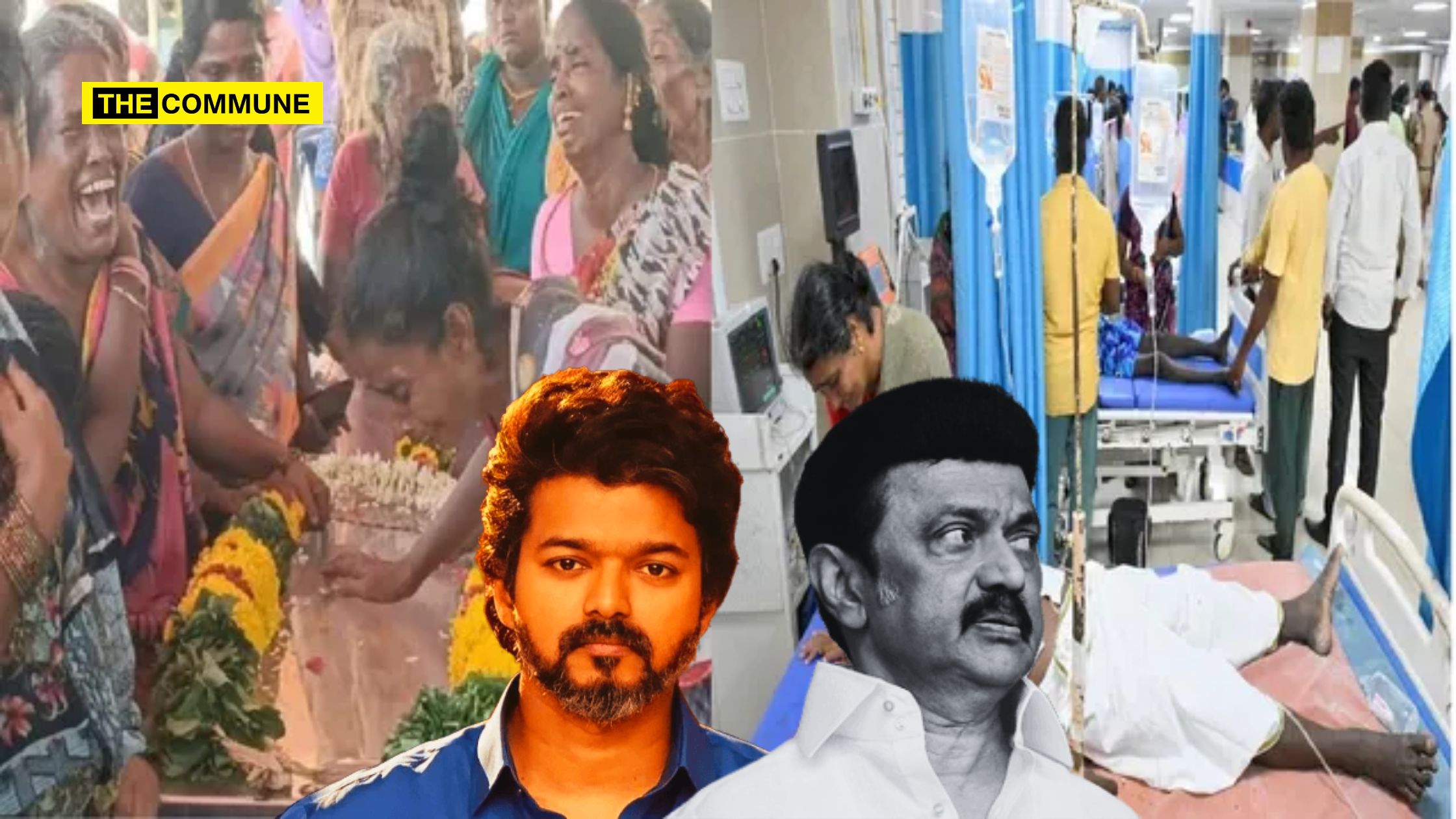
The village of Karunapuram comes to terms with the deaths of their fellow villagers and family members due to the illicit liquor. 

Every street in the village is witnessing funerals as the community mourns those who died from consuming illicit liquor. The people have a single demand from the government: to completely stop the sale of hooch and illegal arrack so that marginalized families can live without fear.

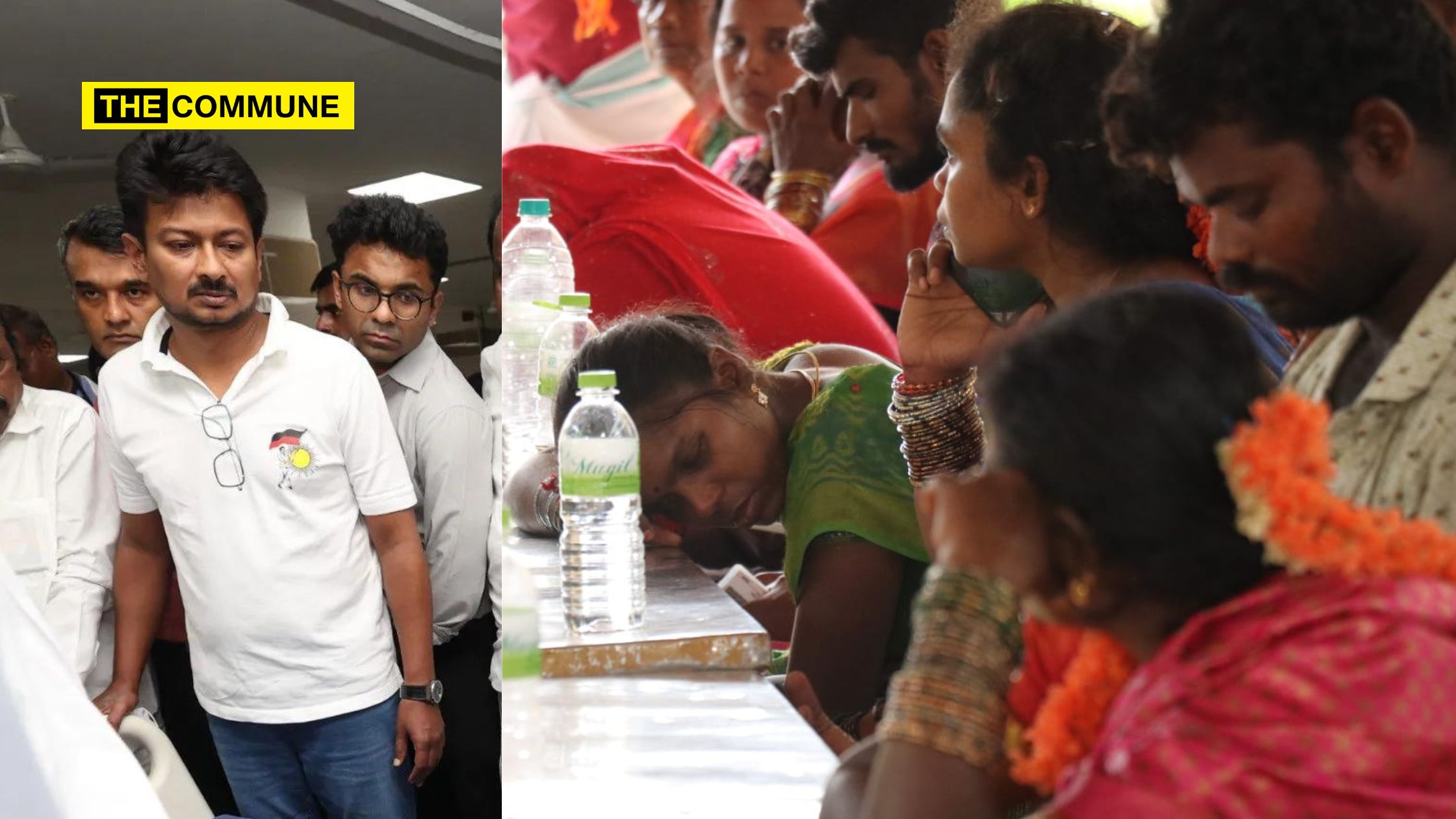
In response to this tragedy, Chief Minister Stalin announced compensation of ₹10 lakh for each family who lost a loved one and ₹50,000 for those undergoing treatment. However, the bereaved families of the deceased individuals are still waiting for Minister of Youth Welfare and Sports Development Udhayanidhi Stalin to deliver the promised relief funds of ₹10 lakh each. Some of the widowed women sat there, pale-faced, waiting on a hot sunny afternoon.

However, the heavens opened up with heavy rain, seemingly mourning the tragedy that has struck Kallakurichi. While it was expected that the funerals would take place by evening, the continuous rain has halted further proceedings in Karunapuram village.

The Minister of Youth Welfare and Sports Development, Udhayanidhi Stalin, is facing criticism for making the bereaved families of the deceased wait to receive the promised relief funds of ₹10 lakh each.

Subscribe to our channels on TelegramWhatsApp, and Instagram and get the best stories of the day delivered to you personally.

“We Don’t Want Free Rice, Just Close Down The Liquor Shops”, Elderly Woman In Anguish Falls At ADMK Leader EPS’s feet

Grief hangs heavily over Kallakurichi in Tamil Nadu following a tragic hooch incident that has claimed the lives of at least 37 people, with fears that the toll may rise further. Nearly 100 people were also hospitalized

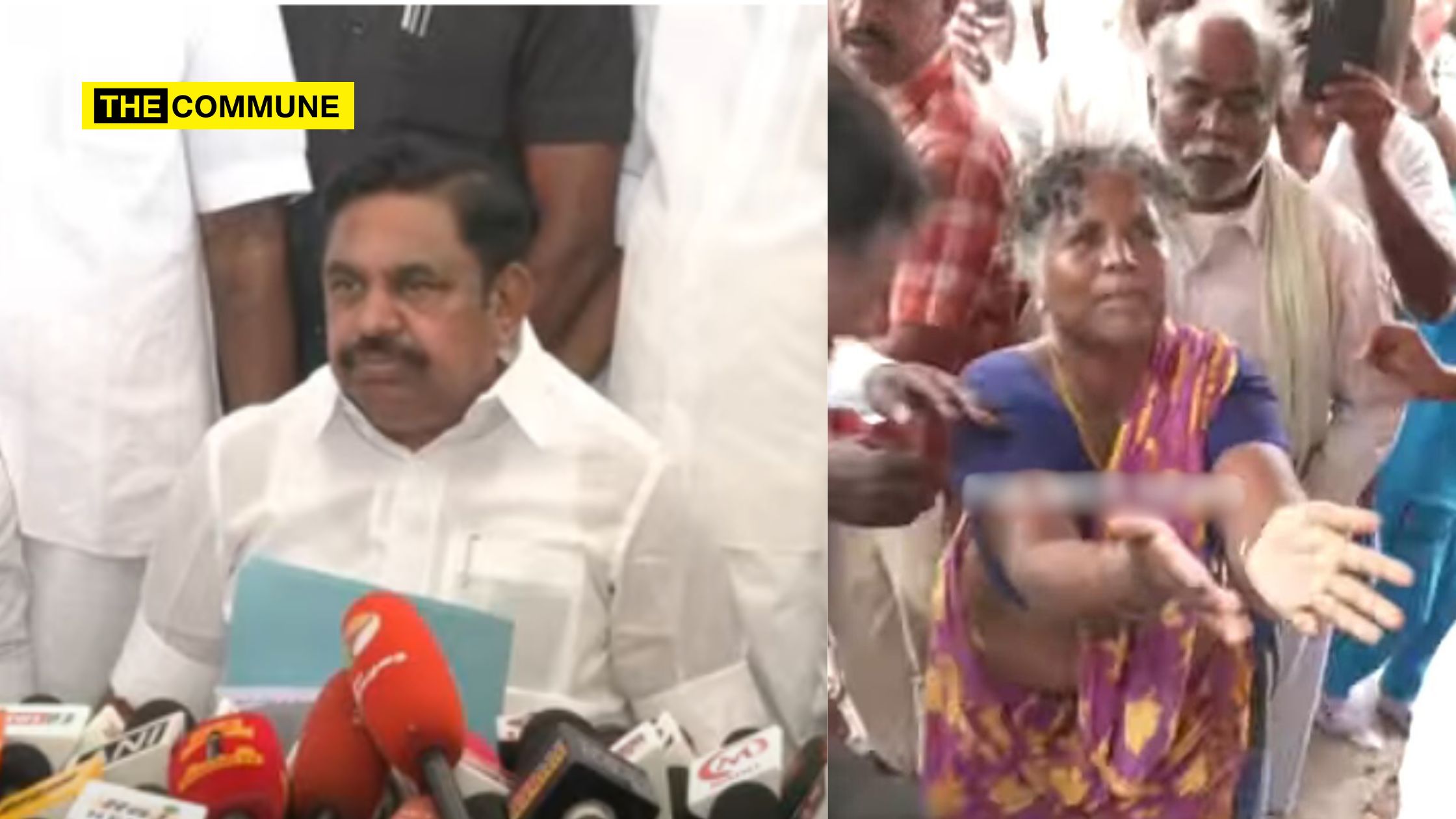
In response to the tragedy, Edappadi Palaniswami (EPS), the Opposition Leader and AIADMK General Secretary, visited the bereaved families on 20 June 2024. Accompanied by former Minister CV Shanmugam and others, he paid his respects to the deceased and consoled their relatives. Witnessing the anguish of the families, some women fell at his feet, tearfully pleading for the closure of all liquor (TASMAC) shops, rejecting any compensatory and financial aid measures. This emotional scene momentarily moved Edappadi Palaniswami.

Women falling at the feet of EPS cried and said, “The little kids have started to drink alcohol, please close the liquor shops. We don’t want free rice. Close liquor shops.

Later, he visited those undergoing treatment in hospitals after consuming the illicit liquor. Addressing the media, he expressed profound sorrow over the deaths, emphasizing the gravity of the situation. He criticized the administration for allowing such illicit activities to thrive near key government offices, suggesting a significant organized effort behind the illegal liquor trade. This incident underscores the urgent need for stringent action against the perpetrators and raises questions about local governance and law enforcement in Kallakurichi.

Local residents, particularly women, expressed their distressing situation, stating, “Since yesterday, we haven’t slept. What for and why?… All these days, they drank all these days, we all have been watching his. Even we don’t know but there is an accomplice here … One of the reasons for the sale is the supply comes from elsewhere, and who brews it is crucial. This is one of the reasons, only because it comes from there, and the government allows it, they are doing it courageously. They don’t brew and sell it privately. It comes from there; do you know where? They say it comes from the mountains, here and there. But because it comes from there, it has caused so many deaths.”

Later, she also expressed disappointment, saying, “We are ADMK loyalists but after Amma (Jayalalithaa’s death), we trusted Stalin and helped him win, but we can’t believe such things are happening even under his administration. People of low morals are using his name to carry out these activities.” Another woman intervened, blaming the police, said: “Even after we complained, why haven’t they taken any action? Who is responsible for this? The police are entirely responsible for this.” The first woman continued, questioning, “When we complain to the police, how do the accused know our names? How does news get to them? It is because they are also involved.”

Subscribe to our channels on TelegramWhatsApp, and Instagram and get the best stories of the day delivered to you personally.
Kallakurichi Hooch Tragedy: Locals Allege Rampant Police Connivance In Illicit Liquor Trade Enabling Access To Minors

The state of Tamil Nadu is stunned by the news of the hooch tragedy in Karunapuram village in Kallakurichi. At least 37 people are reported to have died and around 116 people have been hospitalised. The case was handed over to the CB-CID on 19 June 2024.

Streets of the Karunapuram village were filled with the dead bodies of the victims on 20 June 2024 with relatives mourning for everyone who had passed.

New SPs and IAS have been appointed in the region to investigate the matter. It is alleged that there are similarities between the hooch tragedy that occurred in Chengelpet in 2023 which saw 22 deaths.

Local residents mourning the deaths of their family and friends allege that the illicit liquor peddlers have been functioning with the connivance of the police. They also demand the government to curb the sale of illicit liquor in their locality.

When enquired with the newly appointed Kallakurichi District Collector MS Prashant regarding the connivance of the police with the arrack sellers, he stated that the matter was under investigation.

Kallakurichi Superintendent of Police Rajat R Chaturvedi also stated similarly that since he had been appointed just recently, he was unaware of the details of the matter and promised to look into the allegations.

Women mourning the passing of their loved ones stated that it was the younger people of the village who were addicted to liquor who had fallen prey to the illicit liquor. They also alleged that any complaints made to the police by the local villagers about illegal liquor operations resulted in their private information being disclosed to the illegal liquor mafia by the police.

Additionally, the woman alleged that the police officers who were supposedly involved were suspended from work, but to her, it felt like they had gone on a vacation and were on rest. They also alleged that whether they are transferred to another location, they will continue doing the same work. She alleged that the police department’s lackadaisical attitude towards illicit liquor peddlers has led the village to this state today. She also alleged that in Jayalalithaa’s tenure, such issues were dealt with with an iron fist.

It is alleged that the illicit liquor peddlers had pasted CM Stalin’s photo on their home doors to avoid police action.

Who Are The Victims Of The Hooch Tragedy?

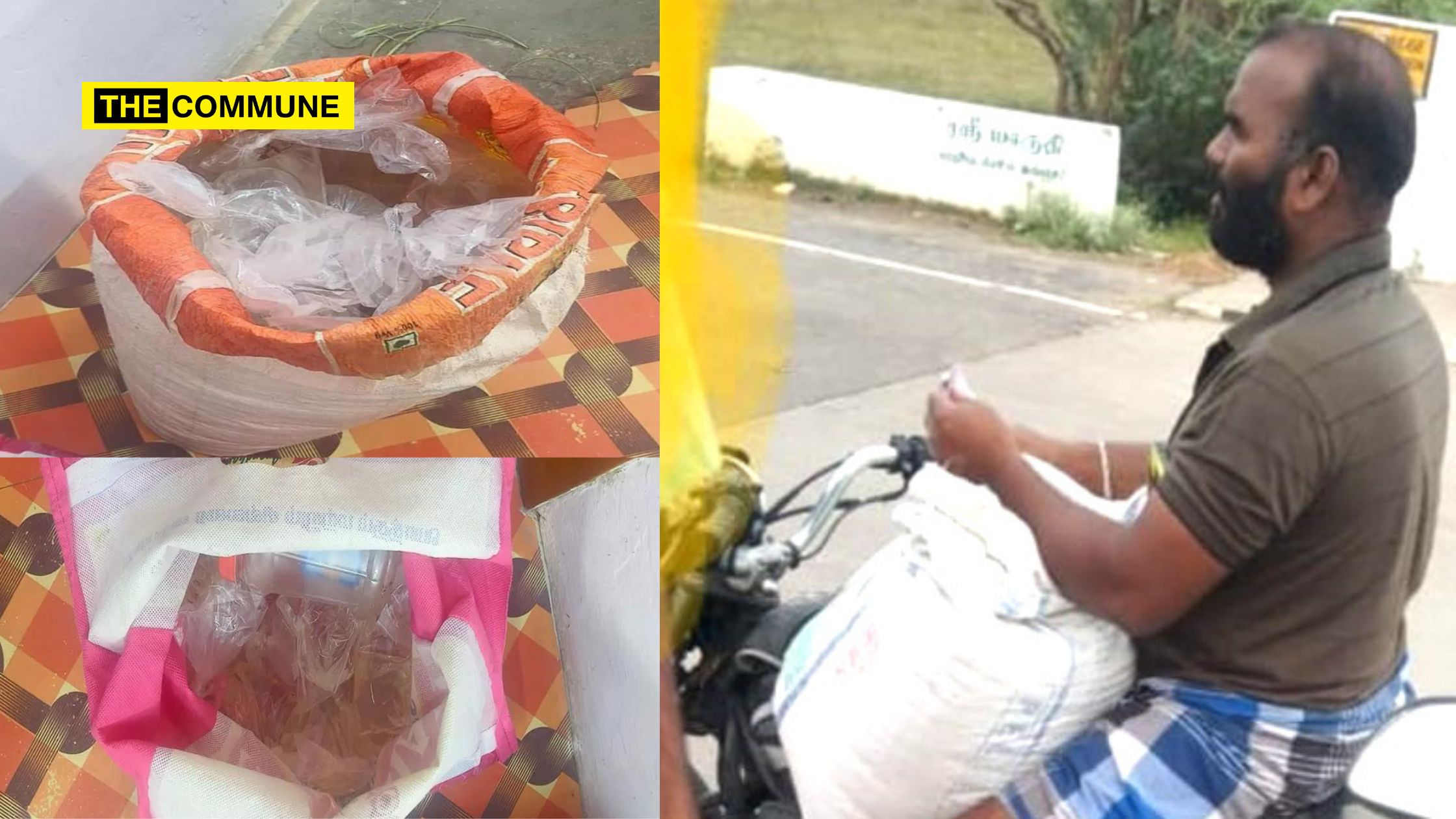
A lady in this video alleges that any person who questioned the illicit liquor peddlers would be attacked. It is said that the victims all belonged to the SC category and no elected official came to visit the families. Only the Tahsildar was doing some work. The tragic illicit liquor incident in Tamil Nadu’s Kallakurichi district has shed light on a disturbing trend involving minors and the apparent complicity of corrupt officials. According to the lady in the video, boys aged 13-15 have been consuming spurious liquor delivered door-to-door in plastic packets resembling water pouches by peddlers on motorbikes. The situation is further exacerbated by the presence of drug abuse among these young individuals in the area.

Compounding the issue are allegations of corruption within the local police force, with claims that officers have been accepting bribes and turning a blind eye to complaints regarding the illicit liquor trade.

The lady said, “Even if the police come on rounds to the village, as they hear the sound of the police vehicle/whistle, the peddlers are alerted. They pretend to apprehend one or two peddlers and take them aside, accept money, and let go of the apprehended peddlers.”

She further adds, “They have to put a stop to this liquor trade. We expected problems to arise once the DMK party returned to power in the state. Police have never come here to ask for bribes (mamool), nor have they controlled them (peddlers). They (peddlers) proudly say we are paying mamool so the police will not be able to do anything to us.” She further said, “There is a court, a police station nearby, even a Collector. yet no one came here or any action was taken despite presenting a memorandum.” It is also alleged that there is not just one peddler but many and also from outside the village who come to Karunapuram to sell the illicit liquor.

The incident has sparked calls for accountability and stringent action against those involved in the illicit liquor trade, as well as demands for measures to address the underlying issues contributing to the consumption of spurious alcohol and drug abuse among minors in the region.

Subscribe to our channels on TelegramWhatsApp, and Instagram and get the best stories of the day delivered to you personally.
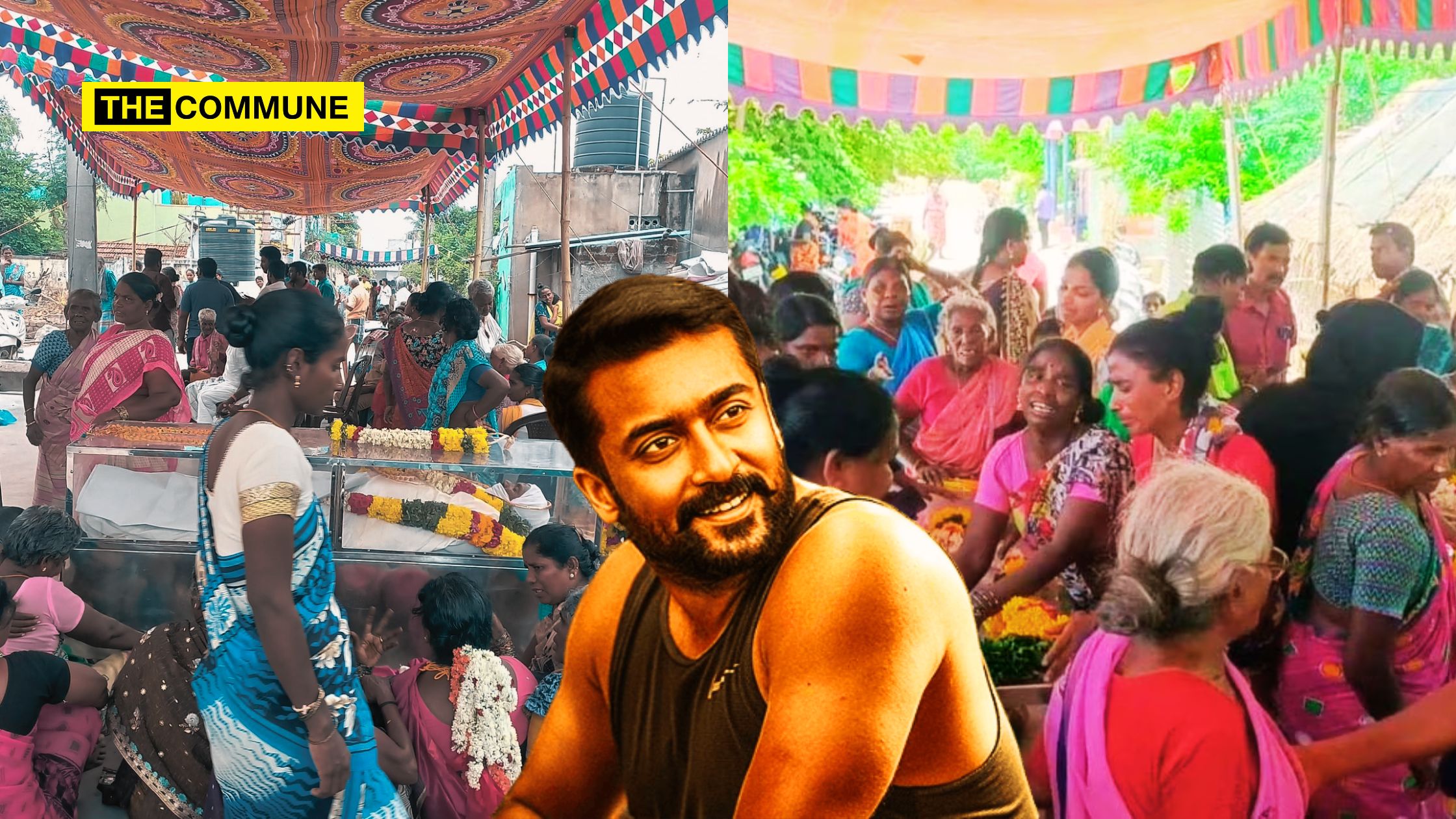
“Now We’re The Ones Eating Mixture”: Alleged ‘Actor’ Suriya’s Old Tweet Comes Back To Haunt Him

Alleged ‘actor’ Suriya who is known for playing second fiddle to the DMK and amplifying Dravidianist propaganda finds himself at the receiving end of the backlash as he has maintained a stoic silence over the hooch tragedy in Kallakurichi which has claimed around 34 lives.

Most of the victims ingested the contaminated liquor in Karunapuram, Kallakurichi, on Tuesday (18 June 2024) night. As the effects became apparent on Wednesday (19 June 2024), they were taken to Kallakurichi Government Medical College and Hospital, as well as hospitals in Salem, Villupuram, and the Jawaharlal Institute of Postgraduate Medical Education and Research (JIPMER) in Puducherry.

Among the deceased were two women and a trans person, with many victims passing away on Wednesday night. Sources suggest the official death toll might be underreported, as several individuals are believed to have died before reaching medical facilities.

Suriya Sivakumar, a nepotist actor and a strong supporter of the DMK, who had previously voiced his support and flexed his muscles by commenting on everything under the sun during the ADMK regime, is now noticeably silent. Be it the Vengayvayal incident, or the drug bust involving a DMK functionary, Suriya and his brother Karthi have not even opened their mouths on the failures of the DMK government.

In light of this, an old tweet of Suriya has resurfaced that exposes his duplicity.

Back in 2017, when Edappadi K. Palaniswami formed the government with the support of 122 MLAs, actor Suriya tweeted “It is we the people who are now left to eat the mixture” taking jibes at O Paneerselvam as a leader who eats mixture (implying that he’s a good-for-nothing bystander).

BJP Tamil Nadu State Secretary SG Suryah pulled out this tweet of Suriya and asked “Can’t you open your mouth now? You and your brother Karthi? Oh you’ve now settled in Mumbai? Why have blood run through in the body of slaves like you? Even a dog won’t do such things for survival?

Other netizens too called out Suriya’s hypocrisy.

One user wrote “now you’re the one eating mixture”

Suriya and his family – particularly his wife Jyotika and brother Karthi – have indulged in virtue-signaling in an attempt to peddle DMK propaganda. He was one of the frontrunners in peddling anti-NEET rhetoric and making comments against the National Education Policy 2020. His brother Karthi had called for the boycott of the three farm laws that was implemented by the Modi Government ignorant of the fact that such laws were already in place in Tamil Nadu. His wife, actress Jyothika, who previously advocated for constructing schools and hospitals instead of temples.

After the DMK came to power, Suriya along with his family moved to Mumbai and currently live in a sea-view house allegedly worth ₹70 crore. Despite Suriya residing with his family in Mumbai, armed policemen continue to guard his Chennai residence, courtesy the DMK government in Tamil Nadu.

Subscribe to our channels on TelegramWhatsApp, and Instagram and get the best stories of the day delivered to you personally.
Tamil Nadu’s Recurring Illicit Liquor Tragedies: Backlash Over Compensation For Illicit Liquor Deaths

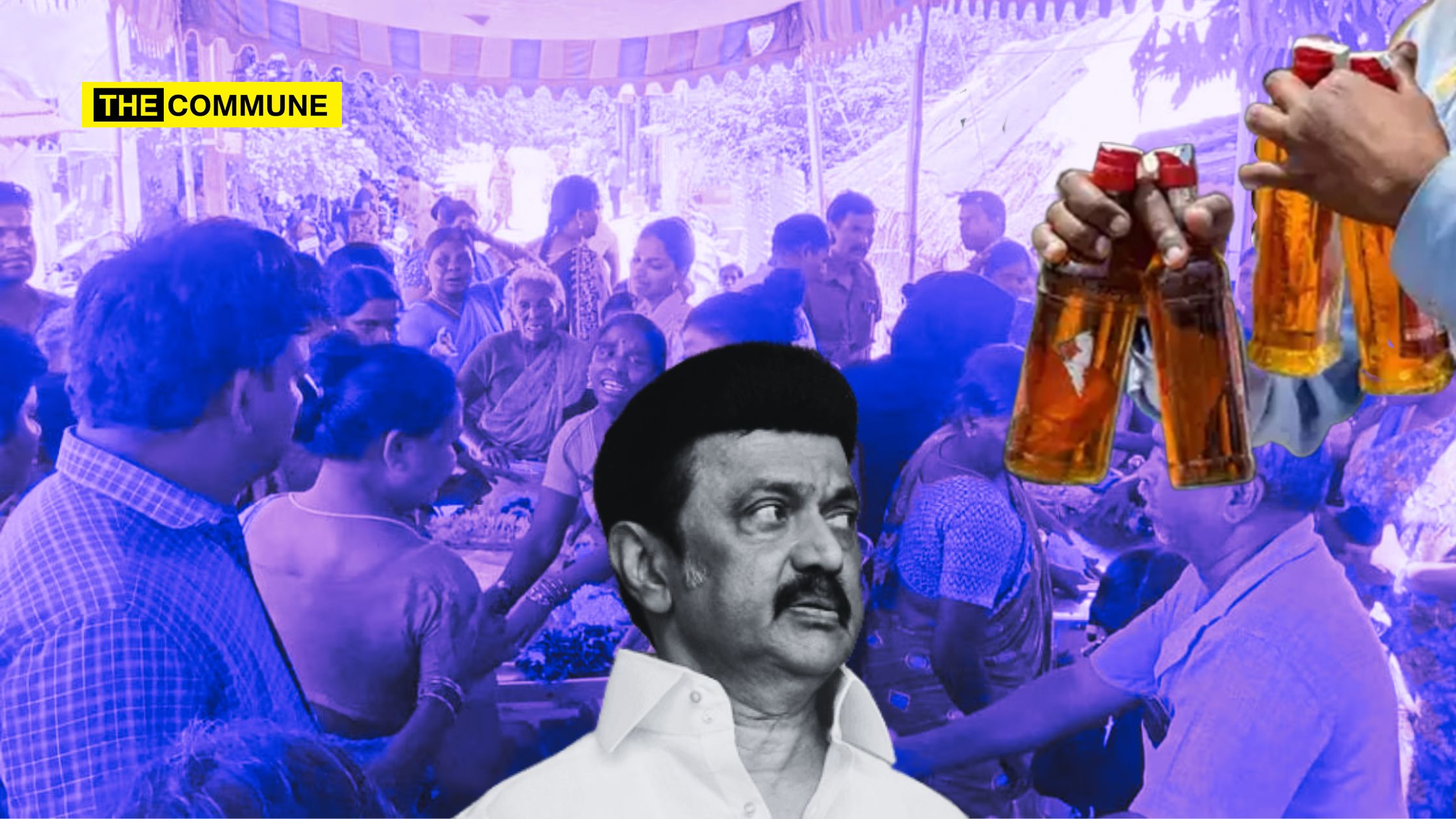
At least 37 people have lost their lives from consuming spurious liquor in Karunapuram, Kallakurichi district on 19 June 2024. The victims included two women and a transgender person, with 82 others currently receiving medical treatment. In response to the tragedy, the Tamil Nadu government has deployed over 2,000 police personnel from various districts to Kallakurichi.

Following the incident, District Collector Sravan Kumar Jatavath was transferred, and Superintendent of Police Samay Singh Meena was suspended by the state government. Tamil Nadu Governor R.N. Ravi expressed shock at the incident, prompting Chief Minister M.K. Stalin to establish a commission headed by Justice B. Gokuldas, a former High Court judge, to conduct a thorough investigation. In support of the affected families, Chief Minister Stalin announced compensation of ₹10 lakh for each deceased person’s family and ₹50,000 for those currently undergoing treatment.

However, there has been public backlash on social media regarding the compensation, with netizens pointing out historical instances and criticisms. This includes references questioning the rationale behind such compensation, contrasting it with Bihar Chief Minister Nitish Kumar’s stance against compensating victims of illicit liquor consumption.

Recently, an explosion at a firecracker unit in Sengamalapatti near Sivakasi resulted in the tragic deaths of ten workers, including six women, with at least ten others hospitalized due to severe injuries. This incident occurred on 9 May 2024. Just two days ago, the DMK government had announced compensation of ₹3 lakh each for the victims. It is worth noting that the work these individuals were engaged in was legitimate. However, there has been significant criticism regarding the current compensation of ₹10 lakh per deceased person’s family for victims of illicit liquor consumption. Netizens have particularly highlighted a statement made by Nitish Kumar in December 2022 during an Assembly session, where he firmly stated that no compensation would be provided to those who died after consuming illicit liquor, emphasizing that there should be no sympathy for them. This statement has resonated widely on social media.

In addition, there is a growing sentiment among netizens that instead of compensating victims from the Chief Minister’s fund, the compensation should be sourced from arrack sellers perpetuated this incident.

Last year, a similar incident occurred where numerous individuals fell critically ill and required intensive hospital care after consuming illicit liquor in the Marakkanam areas of Villupuram district, Tamil Nadu. Reports indicated that 410 individuals were arrested across 10 districts, including Kanchipuram, Chengalpattu, Thiruvallur, Villupuram, Nagai, Mayiladuthurai, and Cuddalore, in connection with the illegal sale of liquor. Among them, 150 people were remanded in custody, while approximately 260 offenders were released on bail and ten individuals were reported missing.

According to the Directorate General of Police (DGP) office, authorities seized 8,748 liters of adulterated liquor and 4,720 bottles of spirits as part of ongoing operations against illicit liquor across various districts. On 14 May 2023, Tamil Nadu Chief Minister MK Stalin announced compensation of ₹10 lakh for each family of the deceased and ₹50,000 each for the 12 individuals hospitalized due to the incident.

This year, within a span of just one year, a similar unfortunate incident has occurred again with alarming intensity, which is deeply disheartening.

Netizen Criticism

A netizen stated, “This is a good government, If you drink & die it will give 10 lakhs”

Another netizen wrote, “5 lakh if ​​you go abroad for work and die. 10 lakhs if you die after drinking illicit liquor.

Another netizen wrote, “Wrong precedent. Why should the government provide relief to those who died after drinking illicit liquor?”

Other netizens have raised questions about the rationale behind the government’s compensation, suggesting that it may inadvertently encourage more illicit liquor consumption and related dangers. They question the basis on which such decisions are made and who advised the government in this matter. There is concern that using taxpayers’ money to compensate those who engage in irresponsible drinking and subsequently suffer consequences could perpetuate such behaviors. Calls are being made for the government to take stringent action to curb these issues. If not addressed promptly, some argue that the responsible minister should take accountability for the administrative failures and consider resigning.

https://twitter.com/sathikkbasha1/status/1803695851505688622

Subscribe to our channels on TelegramWhatsApp, and Instagram and get the best stories of the day delivered to you personally.
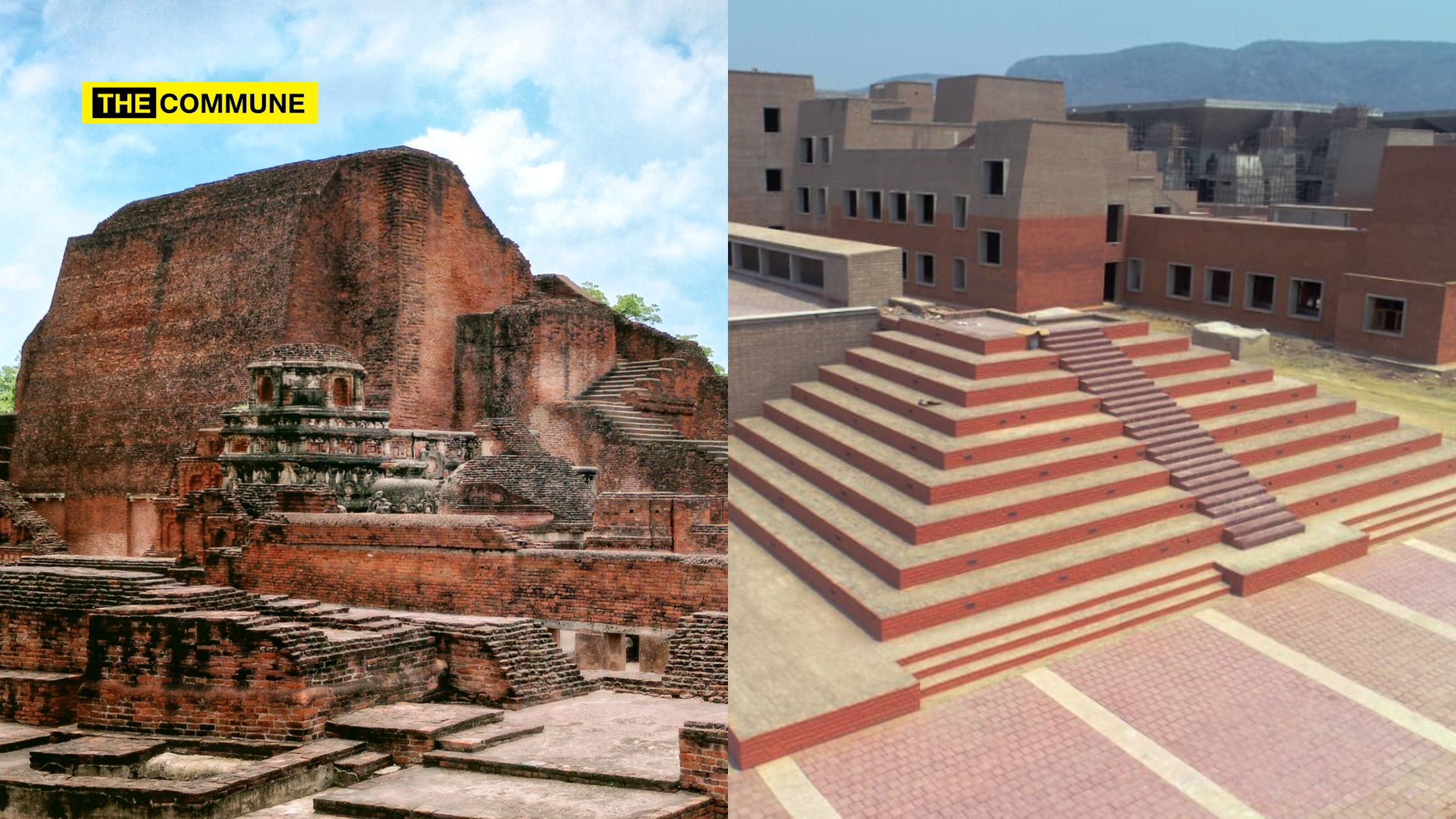
The Renewed Legacy Of Nalanda, A Pillar Of Civilizational Knowledge

When Prime Minister Narendra Modi inaugurated the new campus of Nalanda University in Rajgir, Bihar, he not only inaugurated an institution of repute but also renewed a chapter in Bharath’s civilisational legacy. Nalanda was one of the greatest educational institutions which flourished for centuries before the destruction by external forces which led to the inevitable decline. During its peak period, it was considered the greatest learning centre not only in India but also in the world. 

History

Nalanda University was founded during the “Golden era” of Indian history, the era of Guptas. Kumara Gupta, I was the king who is credited with founding this elite institute. Even though he was a follower of Hinduism, Kumara Gupta founded this ‘Maha Vihara’ of Buddhists during the early 5th century.  A seal found on the site & numerous coins which belong to him establishes this fact. This was also corroborated by the Chinese pilgrim Xuanzang who gave a list of Gupta monarchs who patronised the monastery & the university. Guptas established universities not only in Nalanda but also in Odantapuri & Vikramashila in Bihar. 

Seal of Narasimhagupta

It is said that the ‘tradition of formalised Vedic learning system helped to establish these learning centres”.  Of the seals found on the site, those of Gupta kings like Narasimhagupta & Kumaragupta III give the genealogy of Guptas right from their founder. This shows that the university was continuously under the patronage of the Guptas for centuries. Post-Gupta era, Harshavardhana (7th Century) continued to support the university & subsequently Kings from the Pala dynasty (8th-12th Century) patronised Nalanda. 

The University

Spread over 12 hectares, the Mahavihara & the university was based on the Mahayana sect of Buddhism. Hence texts associated with that and also eighteen Nikaya systems of Buddhism were taught in the university. In addition, Vedas including Atharva Veda, Logic, Grammer, Philosophy and medicine were taught to the students. By this, the university was one of the major learning centres of not only Buddhism but also of the Indic studies during that time. Hence students from faraway places & countries such as China, Korea, South East Asia & Central Asia were attracted towards this university.   Shailendra dynasty kings of Southeast Asia established a monastery on the campus out of respect. 

The university also had a well-established library.  According to Tibetian sources the library (Dharmaganja) comprised of three big multi-story buildingsThe names of these three buildings are Ratnasagara, Ratnodadhi & Ratnaranjaka. According to the Chinese pilgrims, the library had hundreds of thousands of books covering subjects like Buddhism, Vedic texts, grammar, logic, astronomy, astrology, medicine, and literature. Even in those times, it had a classification system for books & a well-developed catalogue. 

Destruction

The glorious days of Nalanda came to an end during the early 13th century when Bakhtiyar Khalji raided the place. Khalji came from present-day Afghanistan to Delhi in search of employment. He was rejected a few times due to his character and finally found employment with Maliq Husamudin Ughlubak, commander of Varanasi. Husamudin assigned him the present-day Mirzapur district and asked him to look after the administration. From there Khalji started attacking Magadha which didn’t have a strong ruler at that time. As part of his attacks, he raided the monastic university towns of Odantapuri, Nalanda and Vikramashila. He plundered them to augment his military resources. Taranatha, a Tibetan monk says that of these early raids on Odantapuri repulsed and the Turuska force of five hundreds was defeated. Angered by this, Khalji launched a brutal attack on Odantapuri. 

Minhaj a chronicler says 

Bakhtiyar with great vigour and audacity rushed in at the gates of the fort and gained possession of the place. Great plunder fell into the hands of the victors. Most of the inhabitants of the place were Brahmans with shaven heads. They were put to death. Large numbers of books were found there. When the attackers saw them, they called for some person to explain their contents, but all the men had been killed.

The same pattern was followed in Nalanda & Vikramashila too as per Taranatha. While Nalanda & VIkramashila were destroyed, Odantapuri became a fortress of Turuskas. 

Noted historian Vincent Smith says 

By clean shaven Brahmana, the historians mean Buddhist monks. A great library was scattered. When the victors desired to know what the book might be, no man capable of explaining their contents had been left alive. No doubt, everything was burnt

Some scholars say that the great library was not completely destroyed and what was remaining was shifted to other places once the Turks left the monastery. Taranatha says frequent raids by Khalji massacred many learned monks. Nalanda became targets of these Turuska soldiers which compelled monks to flee and settle elsewhere, he says. 

During 1232-36 CE, a Tiebten monk, Dhammasvami visited Nalanda. He found that the university was destroyed and damaged. Thousands of monks who were residing in the monasteries had fled. However, the chief of Nalanda who was ninety years of age didn’t run away. There were seventy monks receiving education under him. They were patronised by King Buddhasena and a Brahmana disciple Jayadeva. However, in the post-13th century, the university continued its decline as there were no patrons and no monks left to manage the monastery & university. 

By reviving the great institution, PM had signalled that Bharath was the land of such elite institutions and the tradition is now reinvented and will continue. The university should continue its tradition of being the knowledge centre of Indic studies and spread the true heritage of our literature, history, culture & spiritual aspects to students. 

It will be also a fitting tribute if the railway station to alight for Nalanda, which is named after the very destructor of the place, Bakhtiyar Khalji is renamed to Nalanda. That will correct a historic blunder.

TS Krishnan is a Tamil scholar and author.

Subscribe to our channels on TelegramWhatsApp, and Instagram and get the best stories of the day delivered to you personally.
Amidst Kallakurichi Hooch Tragedy, Door-to-Door Delivery Of Spurious Liquor Found In Salem

Due to the escalating death toll from illicit liquor consumption in Kallakurichi district, DIG of Salem Uma has initiated a rigorous crackdown on spurious liquor sales along the Salem district borders. This directive was headed along with Salem District Superintendent of Police Arun Kapilan.

In response, police have intensified operations against spurious liquor in villages such as Thalaivasal, Attur, Manivilundan, and Kalrayan Hills near the Salem-Kallakurichi district border. Acting on confidential information, Thalaivasal police learned of rampant sales of “pocket sarayam” or liquor sachets in Ramaseshapuram, Siruvachur, and Manivilundan areas on the Salem district border adjacent to Kallakurichi.

Officers swiftly conducted raids in these areas, resulting in the apprehension of four individuals, including two women: Balraj (25) and Ramasamy (58) from Siruvachur, Periyamal (60) from Kamakkapalayam, and Sivagami (60) from Vadakugara. They were arrested, and 50-liter packets of liquor were seized from them. The arrested individuals were presented in court and subsequently remanded to custody. Based on their statements, the police are pursuing leads to apprehend others involved in the illegal liquor trade.

In the Ramaseshapuram area of Salem, individuals have been seen delivering packets of illicit liquor door-to-door on motorcycles. A disturbing video capturing this activity has surfaced and is rapidly spreading online.

https://twitter.com/PTTVOnlineNews/status/1803653329840431573

Meanwhile, death toll in the Kallakurichi hooch tragedy has risen to 34 with around 100 others hospitalised — 5 of them in critical condition.

(With Inputs From Maalai Malar)

Subscribe to our channels on TelegramWhatsApp, and Instagram and get the best stories of the day delivered to you personally.
 

How Dravidianist Media Whitewashed The Kallakurichi Hooch Tragedy

Grief hangs heavily over Kallakurichi in Tamil Nadu following a tragic hooch incident that has claimed the lives of at least 34 people, with fears that the toll may rise further. Nearly 100 people were also hospitalised. However, the Dravidianist media, often seen as supportive of the ruling DMK government, has once again downplayed the incident. News reports include newly coined terms like “poisonous liquor deaths” to mitigate the gravity of the situation caused by illegal liquor, reflecting poorly on Tamil Nadu’s media integrity.

Even though Chief Minister MK Stalin and Public Works Minister E V Velu referred to the incident as “illicit liquor deaths“, the Dravidianist media continues to buttress the DMK by portraying the tragedy as something else. Surprisingly, certain news media have distorted their political leaders’ original remarks, substituting them with “poisonous liquor” in their reports. Let’s take a look at how the Dravidianist media in Tamil Nadu is whitewashing the whole tragedy.

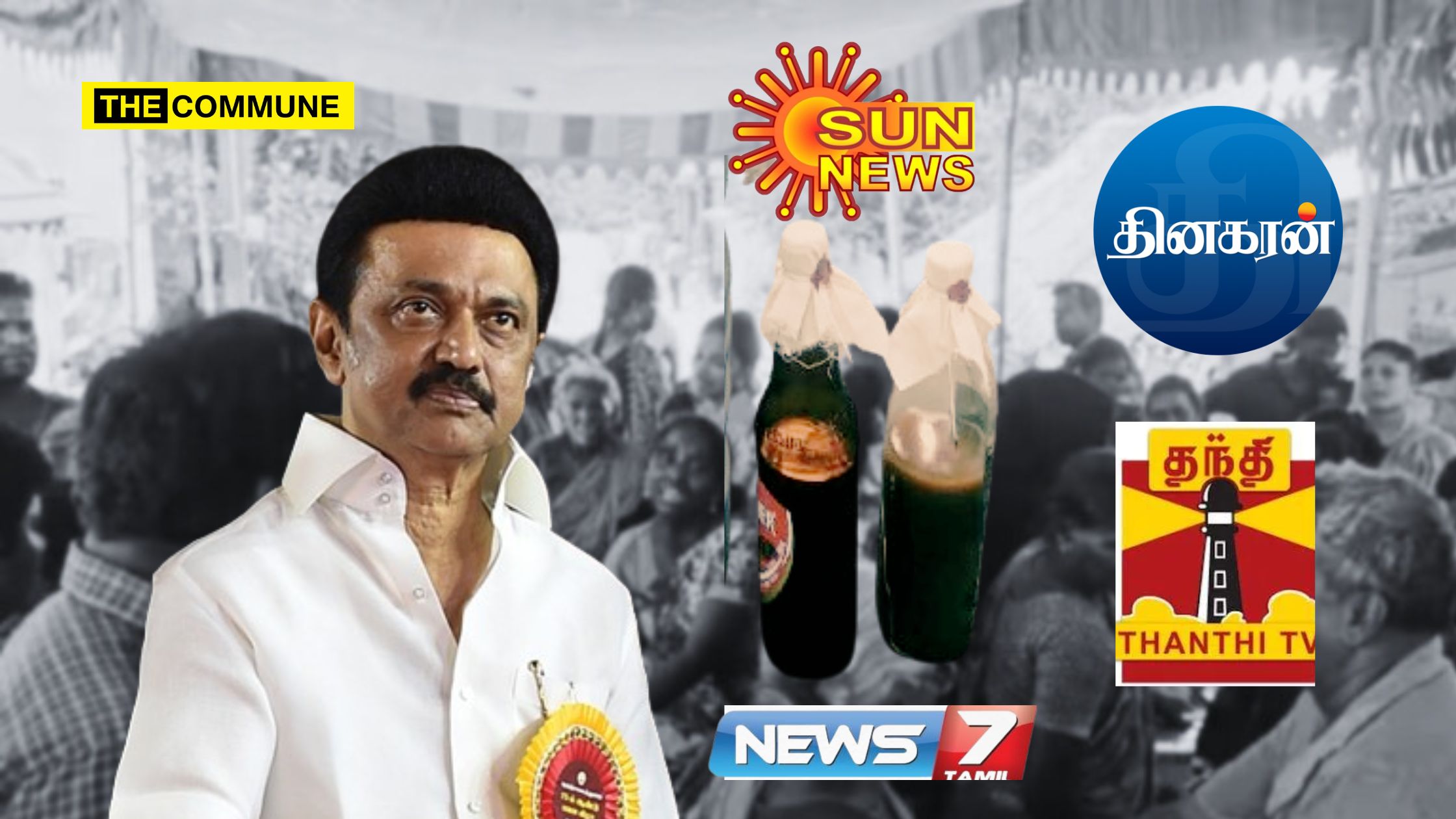
Let’s start with DMK’s mouthpiece outlets, Sun News and Dinakaran, who were primarily responsible for both creating and significantly distorting the issue, titled their news reports as “poisonous liquor.”


Other news media outlets such as Thanthi TV, News 7, and Polimer TV also followed the trend of using terms like “poisonous liquor deaths.”


News 7 went a step further, describing the incident as “consumption of alcohol mixed with ‘methanol’ in Kallakurichi district.” 

On the other hand, when leaders issued statements condemning the hooch tragedy using the term “illicit liquor,” it was deliberately misrepresented by Dravidian media as “poisonous liquor.” For instance, Tamilaga Vetri Kazhagam chief and actor Vijay’s condemnation was inaccurately portrayed in Dravidianist media as referring to “poisonous liquors.”

TVK chief Vijay wrote, “The news of the death of more than 25 people after consuming illicit liquor in Karunapuram area of ​​Kallakurichi district is shocking and heartbreaking. I offer my deepest condolences to the families of the deceased and pray to God for the speedy recovery of those undergoing treatment. The fact that such an incident has occurred again shows the indifference of the government administration when it has not yet fully recovered from the tragedy of losing many lives due to the same incident last year. I strongly request that the Tamil Nadu government should take strict precautionary measures to prevent such incidents from happening in the future.”

But Thanthi TV news card read, “Indifference of Government Administration Caused Death of Many Due to Drinking Poisonous Alcohol – Accuses Actor and Tamil Nadu Vetri Kazhagam President Vijay – The news of death of more than 25 people after drinking poisonous liquor in Kallakurichi is shocking and heartbreaking” “We have not fully recovered from the tragedy of last year’s loss of many lives due to the same incident.” “The fact that such an incident has happened again shows the indifference of the government administration.” “At least the Tamil Nadu government should take strict precautions to prevent such incidents from now on.”

It was startling to see the uniformity in media reports across Tamil Nadu overnight. For instance, on 19 June 2024, a news outlet declared the Kallakurichi hooch tragedy as “illicit liquor deaths,” but by 20 June 2024, the same media outlet had altered its reporting to “poisonous liquor deaths.”


Even more egregious was how Dravidian media outlets shamelessly portrayed the hooch tragedy as if it were a natural disaster, subtly downplaying the gravity of the situation.


 Most of the victims of the Kallakurichi hooch tragedy were daily-wage workers who couldn’t afford Indian liquor available at TASMAC outlets. Instead, they turned to cheaper, illicit liquor, which was sold locally. Three individuals have been arrested in connection with this tragic incident. Local women have long complained about rampant illicit liquor sales in the area, criticizing the police for their failure to take action against the sellers.

On news channels, grieving women could be seen shaking with sorrow as they either rushed to see the bodies of their loved ones or held onto their kin. Among the over 100 people hospitalized, at least 14 were reported to be in critical condition. However, these Dravidian media outlets introduced a new term, “poison liquor,” implying that the victims had knowingly consumed methanol-laced alcohol. This misrepresentation has clouded the reality that this was the second incident in the same district where people have died due to spurious liquor sales.

Subscribe to our channels on TelegramWhatsApp, and Instagram and get the best stories of the day delivered to you personally.
Justice Chandru’s Report On Eradicating Caste In Educational Institutions Is An Attack On Hindus, Here’s Why

The one-man commission report submitted by retired judge Chandru has caused great concern and outrage among the Hindu community. The report seems to be only indicating one particular religion. In the name of preventing caste violence, the report’s recommendations are seen to only target Hindus and their customs and practices.

Let’s see how this report is problematic and why it is an attack on Hindus alone.

To start with, the report begins with a quote from Dr. BR Ambedkar in Ambedkar An Overview (p.404)

“Hindus must consider whether the time has not come for them to recognize that there is nothing fixed, nothing eternal, nothing sanatan; that everything is changing, that change is the law of life for individuals as well as for society. In a changing society, there must be a constant revolution of old values; and the Hindus must realize that if there must be standards to measure the acts of men, there must also be a readiness to revise those standards.”

The need for referring to Hindus is a blatant indication that the report is targeting the Hindu community only and also perpetuates the lie that it is only the Hindu community that is riddled with caste-based violence.

Let’s take a look at each of the problematic recommendations.

Removal of Caste Names From Institutions

The report suggests removing caste names from schools and colleges, including those established by the government specifically for communities such as the Kallars and Adidravidars. These schools were established to provide special attention to these marginalized groups, even though students from other communities also attend them. One wonders what the purpose of removing these caste names is and what it will achieve. For example, Tamil Nadu has a Department for the Welfare of Adi Dravidars—if school titles need to be changed, one can argue whether this department’s name also be reconsidered. If so, how should it be renamed? The welfare of whom?

Schools for the backward communities were built to support specific disadvantaged communities. It is also a matter of wonder whether removing caste names applies only to schools and colleges, considering that caste-based violence occurs throughout society and not just in educational institutions.

To achieve this, the report recommends that the government amend the Tamil Nadu Societies Registration Act “and insert a provision that a society intending to start an educational institution shall not include any caste appellations in their institution’s name.”

The committee also recommends that teachers keep caste details confidential and must not address the students by their caste name or any such. While this sounds good, one wonders whether the government and schools/institutions will stop celebrating the remembrance days of illustrious leaders like Dr Ambedkar or Muthuramalinga Thevar just because they have their caste name attached. Or will they change their names by dropping the “caste surname”?

Donor Recognition

Donors to schools or colleges are often honored by having their names highlighted or having buildings or blocks named after them, a common practice. Typically, these names include the donor’s caste name as a surname. Is it logical to remove this part of the name for the building or block? Doing so might insult the donor, potentially discouraging future donations. This issue arises as the government considers seeking public donations to fund schools. If conditions are imposed on donors, it is a point to ponder whether they will still be willing to contribute in the future.

The report’s focus on caste-based names raises questions about religion-based schools. Tamil Nadu has numerous schools with religious affiliations, and you can argue that if caste names are to be removed, should similar scrutiny not be applied to religious names to ensure consistency?

Student Names And Scholarships

When it comes to students’ names, many directly indicate the student’s community, as they are often based on their family deity, village deity, etc. These names can reveal the student’s community and background, even without a surname. In such cases, will students be required to change their names at the time of enrollment? Additionally, students that caste-based scholarships, often distributed privately during class hours, already reveal students’ caste backgrounds, questioning the effectiveness of removing caste indicators from institutions. So, this begs the question of whether scholarships to specific communities will be cancelled.

Teacher Appointments

The report proposes that teachers from dominant communities should not be appointed to positions like CEO, DEO, BEO, and headmasters in areas where their community is prevalent. Now isn’t this approach contradictory and impractical, as it suggests appointments should be based on caste rather than merit. They also question the definition of “area” and how this would be implemented fairly across different regions. In Tamil Nadu, people from specific communities will be “dominant” in specific regions but on the whole, SCs are the dominant category across the state. So, does this mean, SCs will be denied appointments to this post?

Annual Confidential Reports (ACR)

The committee also recommends that a confidential report be created for teachers based on how they are behaving towards SCs.

Will something similar apply to SC teachers over their behaviour towards students from other communities? This confidential report will only bring in bias and unfairness among the officers, teachers in schools. This also begs the question of whether this report will be misused by the authorities to exact revenge on the officers, teachers, and HM.

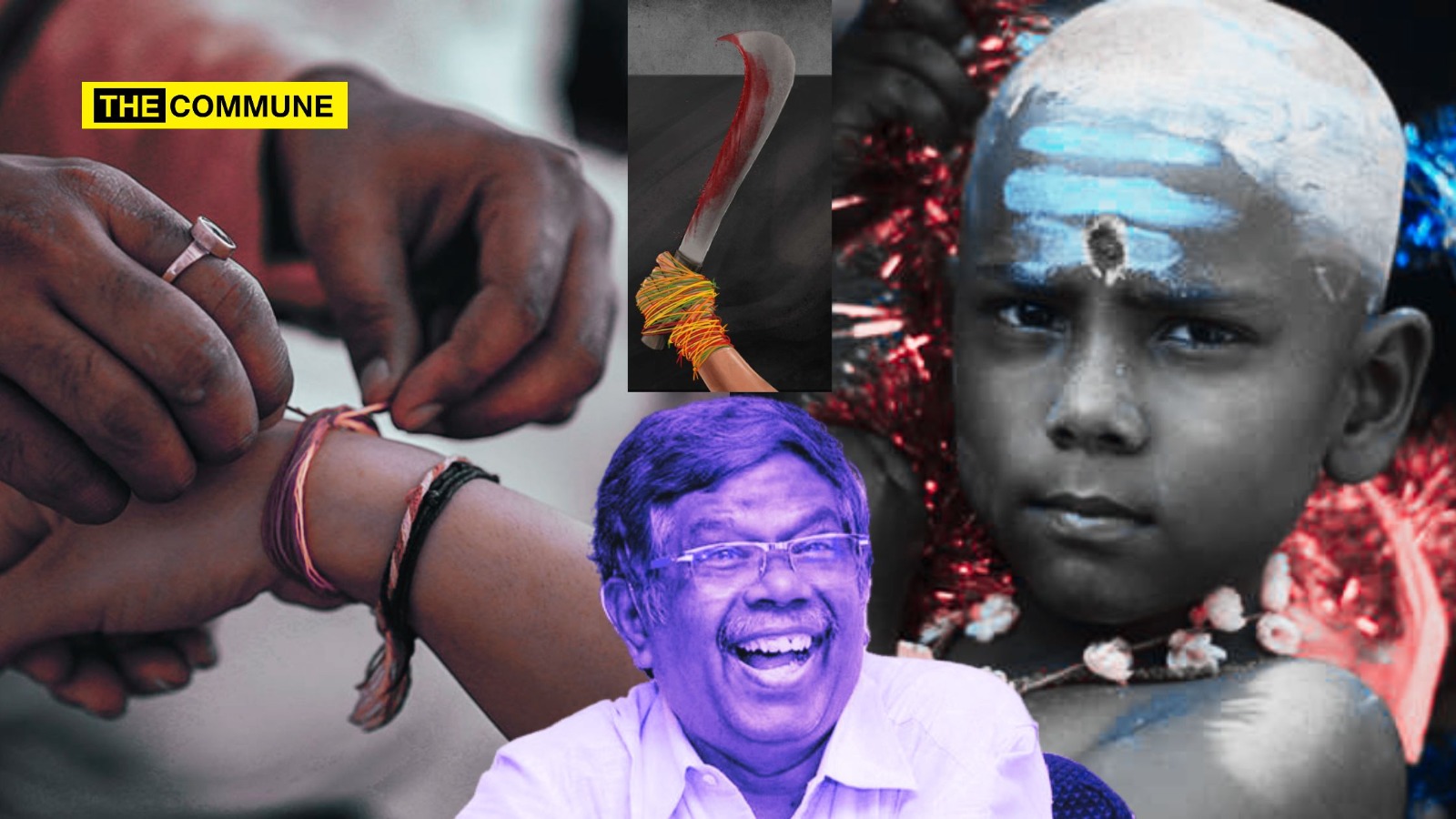
Prohibition Of Sacred Wrist Threads, Forehead Marks, Rings On Finger

The report’s final page features an image of a hand with multicoloured threads on the wrist holding a blood-soaked sickle. It is unclear why this image has been added to the report and what is the intent behind the image.

The recommendation to ban religious symbols like forehead marks and wrist threads in schools is seen as an infringement on religious freedom, and it is blatantly against the constitutional right that gives us the freedome to practice our religion.

In a society and culture that has given us saints like Avvayar who once said, “Neerilla Netri Paazh” meaning “Addle is the forehead that wears not the holy ash”

Bicycle Colours

The report states, “They must also refrain from coming to school on bicycles painted with reference to their caste or exhibiting any caste-related sentiments.” It is unclear what sentiments a cycle can exhibit or kindle. It is a known fact that colours often represent political affiliations rather than caste – black refers to DK, red to Communist, blue refers to VCK, saffron to BJP, yellow to PMK etc, complicating the rationale behind this recommendation.

Social Justice Student Force

The report also recommends the formation of a Social Justice Student “Force”. It seems the committee is unaware that there are different groups like NSS, NCC, and Scouts already been in existence for several decades in Tamil Nadu itself. The functions of this “force” as mentioned in the report seem to be similar to those of NCC, NSS, and Scouts, making one question the need to create a new one.

Identifying “Caste Atrocity Prone Areas”

The committee recommends that the state govt assess whether a given “area” be called caste atrocity prone. This recommendation seems to have been taken without taking into consideration the effect it will have on the people of a specific “area” or locality. Such actions will only incite further violence and stigmatise communities.

Historical Name Changes

Past efforts to remove caste surnames from place names, like renaming GN Chetty Road as Gopathy Narayana Road, are ineffective, suggesting that such changes do not impact societal behaviour.

Religious Institutions

DMK members like Speaker Appavoo have often praised the “immense” contribution of Christian institutions to education. Almost all Christian institutions are named indicating which religion is behind the institution. However, the committee has a problem with caste names in Hindu institutions, it exposes the underlying bias of the committee making one question whether the intent is to prevent caste-based violence and discrimination or to undermine Hindu practices.

The report by Justice Chandru has left many eyebrows raised and many questions in people’s minds rather than solving the problem for which it was formed in the first place. In the name of addressing caste-based discrimination, what can be seen is yet another attack on Hindu traditions making one question its practicality and fairness.

Justice Chandru’s report may face legal challenges, with someone likely to seek a court stay order against its implementation, potentially keeping the matter in judicial limbo for years. The DMK is likely to use this situation to argue that a retired judge’s recommendations for social justice were blocked by a “Brahmin” judiciary, regardless of the actual complainant, lawyers, or judge involved. This could become a recurring point in their rhetoric, with the salient facts obscured and the unconstitutional nature of the recommendations, similar to the AK Rajan report, exploited for political gain during elections.

This removal of caste names, hiding/”protecting” caste names, and prohibiting wearing Tilak and sacred wrist threads is akin to the Dravidian model of making Hindus remove their caste/surnames. The Dravidian ideologues enforced this removal of a person’s surname as a means to “abolish/eradicate” caste. Ironically, despite having succeeded in removing surnames as a mode of eradicating caste differences, incidents like Nanguneri continue day in and day out.

This move is only seen as a method to divide the Hindus further based on caste and also ensure that Hindus lose their identities forever. Instead of creating awareness and empathy in children about various castes and fostering harmony, recommending such drastic and Hinduphobic measures will only lead to dividing the society further and deepening the Dravidianist ideologies in the minds of the people and destroying society.

(with inputs from Chanakya)

Subscribe to our channels on TelegramWhatsApp, and Instagram and get the best stories of the day delivered to you personally.
“Such Repeated Instances Shows Negligence Of Govt”: Actor Vijay Becomes First Prominent Voice From Kollywood To Slam DMK Govt Over Kallakurichi Hooch Tragedy

Actor Vijay and the head of Tamilaga Vetri Kazhagam (TVK) has condemned the hooch tragedy in Kallakurichi that has so far claimed 31 lives.

In an X post, actor Vijay wrote “The news of the death of more than 25 people after consuming spurious liquor in Karunapuram area of ​​Kallakurichi district is shocking and heartbreaking. I offer my deepest condolences to the families of the deceased and pray to God for the speedy recovery of those undergoing treatment.

Coming down heavy on the DMK government, Vijay said “The fact that such an incident has occurred again shows the negligence of the government administration when it has not yet fully recovered from the tragedy of losing many lives due to a similar incident last year. I strongly request that the Tamil Nadu government should take strict precautionary measures to prevent such incidents from happening in the future.

Vijay’s condemnation comes when rest of the actors like Suriya, Karthi, Kamal Haasan, Rajinikanth, etc who had often virtue-signalled playing second fiddle to the DMK when the AIADMK was in power, have maintained stoic silence on the hooch tragedy.

The death toll in Tamil Nadu’s Kallakurichi district from consuming illicit liquor has increased to 31, according to media reports. More than 60 individuals have been hospitalized due to the incident.

According to sources, a total of 107 people were admitted to the Kallakurichi Government Medical College Hospital, with 59 being referred to hospitals in other locations such as Salem, Villupuram, and Puducherry. Out of the 29 fatalities, 18 occurred at the Kallakurichi Government Medical Hospital, while the remaining 11 were from other hospitals. Fifteen individuals were admitted to JIPMER (Jawaharlal Institute of Postgraduate Medical Education & Research) the previous night. Officials have expressed concern that the death toll may increase.

This is not the first instance of spurious liquor deaths ever since the DMK came to power. Last year in May, 22 people died in similar incidents in the Villupuram and Chengalpattu districts. To make things worse, MK Stalin-led DMK government awarded ₹50,000 solatium to the culprit responsible for the hooch tragedy in Tamil Nadu which resulted in 19 deaths.

Many on social media have called for the resignation of MK Stalin for the administrative failure and making Tamil Nadu an intoxicated state. A netizen wrote on X “No. 1 CM Stalin. He is the only Chief Minister in the history of Tamil Nadu to see more than 50 deaths due to alcoholism. No.1 Chief Minister Muthuvel Karunanidhi Stalin.”

Subscribe to our channels on TelegramWhatsApp, and Instagram and get the best stories of the day delivered to you personally.