Home Blog Page 724

Dravidianists & Dravidianist Media Peddle Misinformation On GST, Falsely Portray GST Reduction On Milk Cans As New 12% Tax
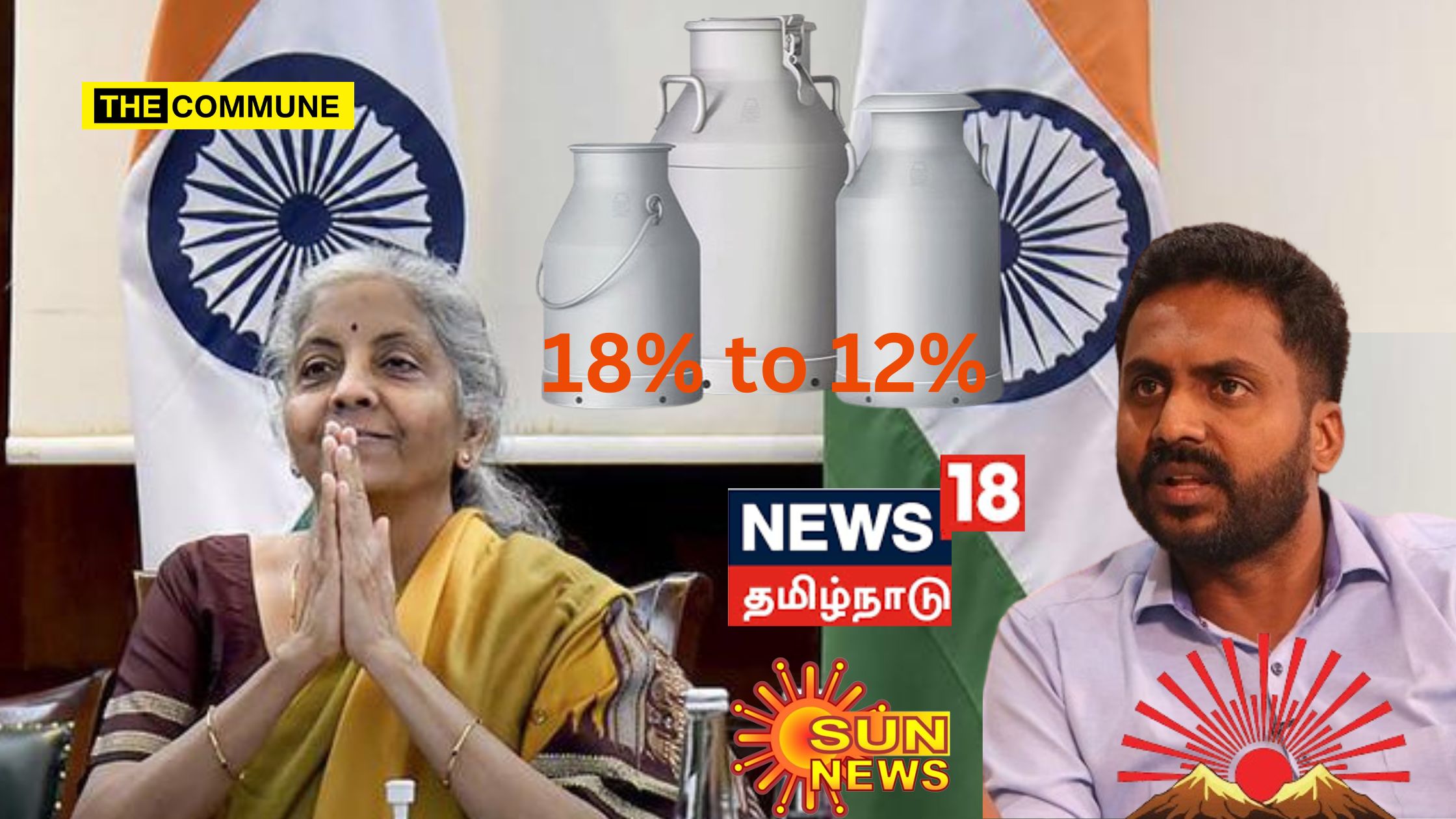
The media propagandists relentlessly strive to cast the Narendra Modi government in a negative light, fabricating stories daily despite readily available accurate information from respective ministry websites and the internet. Recently, they insinuated that the government had imposed a new 12% tax on milk cans, falsely portraying Modi as an anti-agrarian and anti-dairy farmer.

Contrary to these misleading narratives, the Goods and Services Tax (GST) Council meeting on 22 June 2024, actually focused on easing tax burdens and enhancing compliance for businesses. One of the key decisions made was to reduce the GST on milk cans from 18% to 12% nationwide, ensuring a uniform tax rate regardless of the can’s material—whether steel, iron, or aluminum.

In this regard, the Union Finance Minister Nirmala Sitharaman’s office shared information on the X platform stating that GST Council has recommended to prescribe a uniform rate of 12% on all Milk Cans meaning steel, iron, aluminum which are irrespective of the use. They are called milk cans but wherever they are used that will be the rate applicable so that no disputes arise out of it. The Council also recommended to prescribe a uniform GST rate of 12% on all Carton Boxes and cases of both corrugated and non-corrugated paper or paper board. This will, in particular, help the apple growers of Himachal Pradesh and Jammu & Kashmir. The Council clarified and recommended that the clarification be put out on that all types of Sprinklers, including fire water sprinklers, will attract 12% GST. The Council recommended to prescribe 12% GST on all Solar Cookers whether it has single or dual energy source. – Smt @nsitharaman post 53rd GST Council Meeting in New Delhi.

Opposition sympathizers were circulating the news of a 12% GST on milk cans as though it was a new tax introduced under Modi 3.0, conveniently omitting the crucial detail that this actually was an announcement for a reduction from the previous 18% GST rate. For instance, R. Rajiv Gandhi, President of the DMK Student Union, commented,Nirmala madam who poured milk to milk!! 12% GST Tax Robbery! suggesting that the 12% GST is detrimental to the dairy industry.

The situation became concerning when Tamil Nadu news media, such as News 18 Tamil Nadu, published a news card stating,Union Finance Minister Nirmala Sitharaman announced a 12% GST tax on all types of milk cans, including iron, aluminum, and cast iron,missing out the very fact that it was reduced from 18% portraying the BJP and the Union Finance Minister in negative light.

As expected, the mouth piece of the ruling DMK, their family-owned news channel Sun News, published a news card stating, 12% GST on all types of milk cans-Nirmala Sitharaman, Union Finance Minister

 Subscribe to our channels on TelegramWhatsApp, and Instagram and get the best stories of the day delivered to you personally.
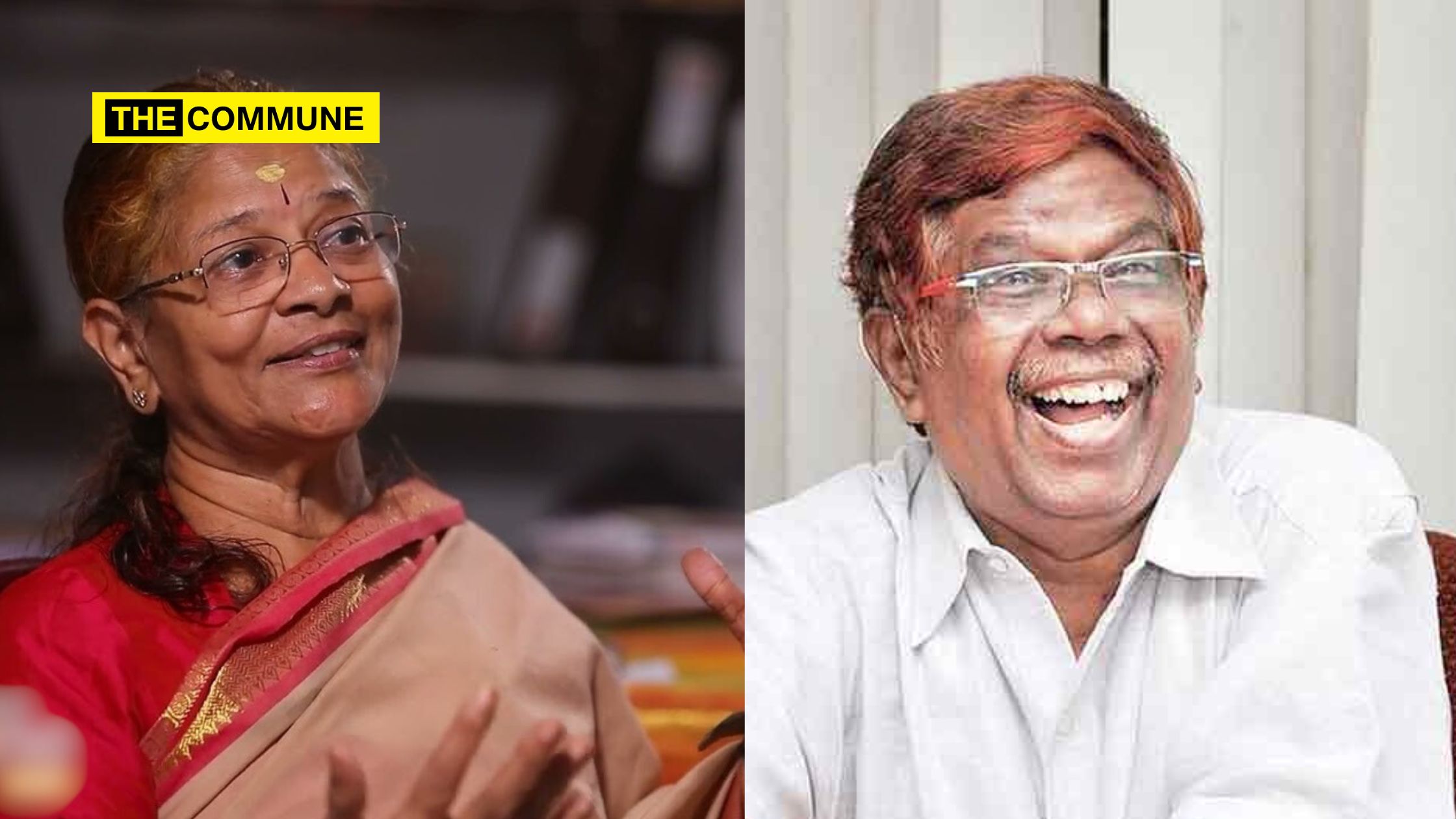
Chennai BJP Councillor Uma Anandan Shreds Justice Chandru’s Anti-Hindu Report To Pieces And Storms Out Of Corporation Meeting

On 24 June 2024, BJP councillor Uma Anandan walked out of the Chennai Corporation council meeting, the first held after the 2024 Indian general elections, in protest against Justice K Chandru’s recent report on eliminating caste discrimination in schools. During the meeting, Uma Anandan tore up a copy of the report, sparking a commotion among the council members.

Uma Anandan condemned the former High Court judge’s report, calling it biased and criticized the council for not addressing other caste-based issues, such as the exclusion of certain castes from a Christian crematorium in Tirupur’s Palladam area. She expressed her frustration to the media, stating, “Justice Chandru should have spoken about this. A biased statement, a biased judge has issued a statement. The Chennai City Council should condemn Justice Chandru’s statement. They did not condemn. Thus I tore up the judge’s report.”

Anandan further criticized the council’s focus on praising Udhayanidhi Stalin, son of the Chief Minister, instead of addressing pressing issues. She said, “Why do we need to talk about this at this time? At this time, why are you singing praises to Udhayanidhi Stalin? Chief Minister is ok, but why should you sing praises to Udhayanidhi?”

The incident prompted VCK councillor Ambedvalavan to demand that Mayor R Priya ban Uma Anandan from attending council meetings for the next three months. His request received unanimous support from all DMK councillors. However, no decision on the matter has been publicly announced.

The actions of Uma Anandan and her subsequent comments have led to a significant stir within the council and among the public. TN BJP leaders and executives have voiced strong opposition to Justice Chandru’s report. It is noteworthy that the report presented by the Justice Chandru committee was seemingly anti-Hindu and attacked only Hindu customs and traditions.

Subscribe to our channels on TelegramWhatsApp, and Instagram and get the best stories of the day delivered to you personally.
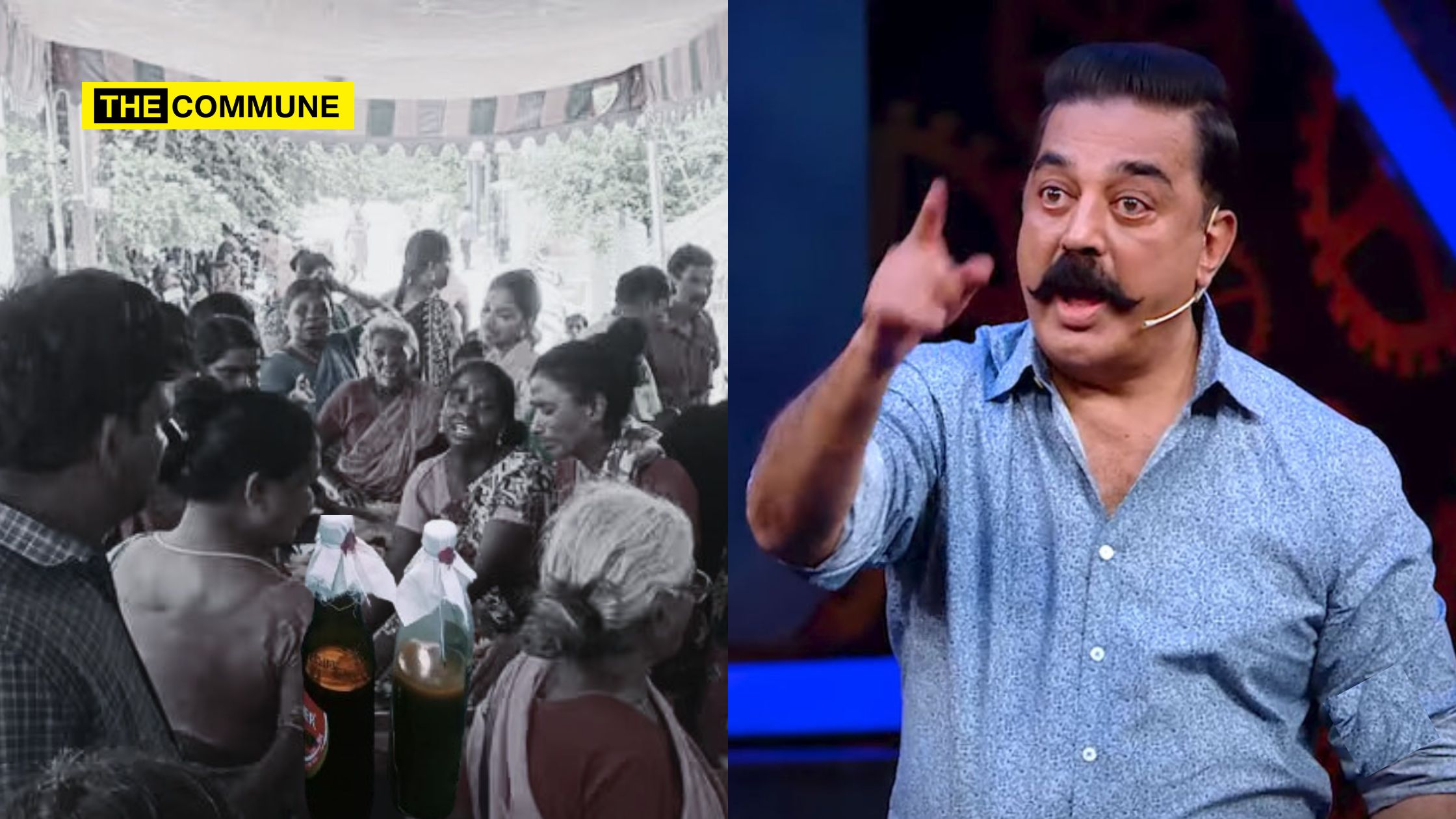
Part-Time Politician Kamal Haasan Blames People For Kallakurichi Hooch Tragedy, Buttresses DMK Govt

Kamal Haasan,  a full-time actor, part-time politician, and leader of the political party Makkal Needhi Maiam (MNM), finds himself amidst criticism, ridicule, and trolling on various social media platforms. This is because his condemnation lacked the strength to highlight the DMK government’s failure in addressing the Kallakurichi hooch tragedy, which is not an isolated incident but the second occurrence.

On 20 June 2024, Kamal Haasan on his official X account wrote, “Tamil Nadu has been shocked by the news that 36 people have died, and many others are in critical condition after consuming illicit liquor in Kallakurichi. My deepest condolences to the bereaved families. I wish those undergoing treatment a speedy recovery. The government of Tamil Nadu should crack down on the bootlegger dealers with an iron fist so that such a tragedy does not happen again in Tamil Nadu. Rehabilitation centers should be set up immediately to help drug addicts get rid of it. Now is the time for each of us to get involved in the war against addiction.”

Later, as the death toll climbed to 58, Haasan was compelled to visit the area due to online criticism aimed at virtue-signaling celebrities from Kollywood and sympathizers of the DMK. Therefore, on 23 June 2024, Kamal Haasan visited the victims of the hooch tragedy in Kallakurichi, urging them to recognize the dangers of excessive drinking and advocating for the establishment of psychiatric centers to offer counseling.

Speaking to the reporters Kamal Haasan said, “These victims will have to understand they have exceeded their limit, and they have been careless. They have to be careful. They have to take care of their health. My request to the government would be to create psychiatric centres which will counsel them.

“It has to be occasional drinking, social drinking if at all. But they must understand that exceeding limit in any form be it sugar, or anything is bad,” the part-time politician added.

This statement also didn’t go well, as the actor-turned-part-time politician, who was once a vocal critic of the DMK but recently switched alliances for a Rajya Sabha seat, faced scrutiny from both internet users and opposition parties.

BJP leader Amit Malviya on his official X account accused Haasan of shifting blame onto the victims instead of confronting the problem of illegal alcohol in Tamil Nadu. Malviya wrote, “Kamal Haasan is actually blaming the victims of Hooch tragedy instead of holding the MK Stalin Govt responsible for the illicit liquor, which is freely available in Tamil Nadu. One has to be depraved to make such an outrageous comment. But then what can one expect from INDI Alliance?”

A netizen wrote, “All these DMK lootlicking just for Rajasabha MP seat. Pathetic downfall of your career. Not a single word of “Stalin need to control this hooch sellings.”

Another netizen calling out the hypocrisy of Kamal Haasan wrote, “Kamal Hussain saar they have been drinking all their lives like u do But they died because the liquor was adulterated and had become a poison So u don’t blame victims for their death u blame the govt which doesn’t control illicit liquor Ur govt owns liquor industry and makes tens of thousands of crore by selling liquor Since Dstock bought u with RS seat u r blaming victim Would u have done the same if this has happened in bjp ruled state

Another netizen ridiculed Kamal Haasan stating, “I think the only missing statement in this speech is “BJP and Modi are responsible for this”

Another netizen wrote, “If this would have been BJP ruled state, he would said same? Blame the Victim shield DMK What an intelligent Man Kamal Hassan”

Another netizen wrote, “Sorry @ikamalhaasan sir, but shame on you! Instead of holding the govt, illicit liquor sellers, and local authorities accountable for the deaths in the tragedy, you’re lecturing the victims about “exceeding their limit” and being “careless”? Are you trying shift the blame away from those who should be held responsible? These people died due to the negligence and corruption of the system, not because they “exceeded their limit” or were “careless”! Even 10 ml poison can kill a person. And your double standards are appalling! If this had happened in a BJP-ruled state, you would have lashed out at the govt and called the people innocent. But because it happened under your beloved DMK’s watch, you’re suddenly preaching about “occasional drinking” and “social drinking”?”

Another netizen stated, “Never condemned the government for its incapacity and inefficiency? Oh yeah Rajya Sabha seat is pending!”

Subscribe to our channels on TelegramWhatsApp, and Instagram and get the best stories of the day delivered to you personally.
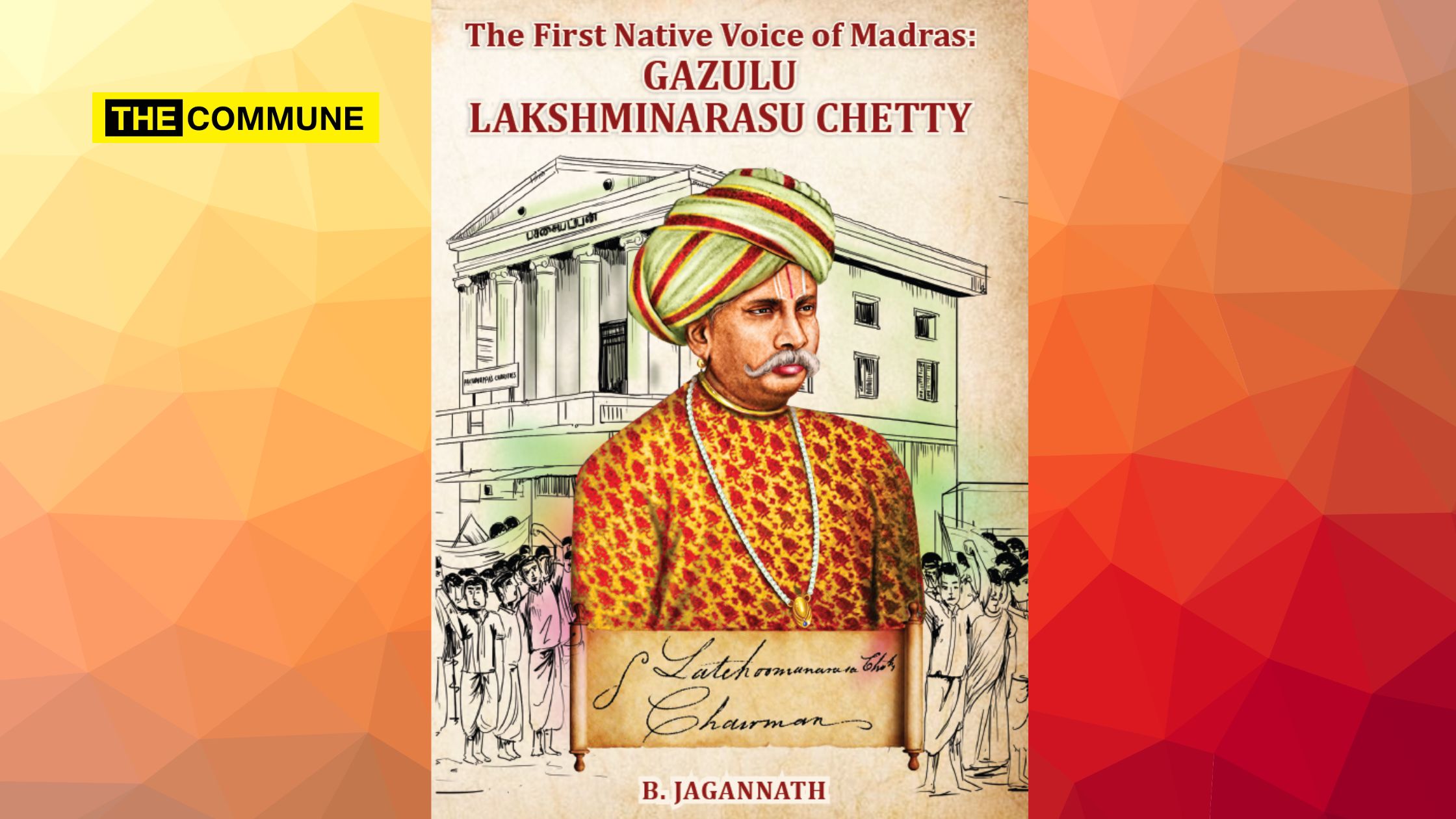
Book Review: The First Native Voice Of Madras – Gazulu Lakshminarasu Chetty – A Well-Researched Book On A Forgotten Hero Of 19th Century India

In this meticulously researched and enlightening book, the author and advocate, B Jagannath uncovers the remarkable life and legacy of Gazulu Lakshminarasu Chetty, a pivotal figure in 19th century Madras Presidency whose contributions have been largely overlooked by history.

For the uninitiated, B Jagannath is the same person who stood up and took action in the “eradicate Sanathana Dharma” remarks case made by DMK Minister Udhayanidhi Stalin.

This book was launched on 17 June 2024 by the Hon’ble Governor of Tamil Nadu, RN Ravi at TN Rajaratnam Kalai Arangam – Muthamizh Peravai in Adayar, Chennai.

The book is a revelation for many readers, including this reviewer, who had little prior knowledge of Chetty. As one reads through the book, it becomes clear that Chetty was a towering figure who stood as a formidable barrier between the native Indians and the oppressive policies of the British Crown.

Written in accessible prose, the book paints a vivid picture of the challenges faced by native Indians under British rule in the 19th century. It details the extent of missionary activities, forced conversions, oppressive taxation, and attempts to impose Christian religious education. Against this backdrop, Chetty emerges as a heroic defender of native Indians’ rights and culture.

One of Chetty’s most significant achievements was breaking the British monopoly on printing and publishing. By establishing the Madras Crescent newspaper, he gave voice to native concerns and became a pioneer of the Indian press. The author makes a compelling case for considering Chetty the father of the Indian printing and newspaper industry.

The book also highlights Chetty’s political acumen and dedication. He not only raised issues in local committees but ensured they reached the British Parliament, often achieving tangible results for the native Indian populace. His efforts were crucial in preserving access to education for Indians and resisting forced religious conversions.

While the book is comprehensive, it leaves the reader wanting more. As noted by the Governor of Tamil Nadu during the launch of the book, the book is a condensed version, and each chapter could be expanded into its own volume. This is particularly true for the sections detailing the atrocities committed under British rule, which are both shocking and deserving of further exploration.

A question that lingers after reading is why such an important historical figure has been largely forgotten. The book raises intriguing possibilities about systematic efforts to erase Chetty’s legacy, potentially by missionary groups or Dravidian ideologues. This aspect of historical memory and narrative control is a fascinating thread that could be further developed.

One of the book’s strengths is its portrayal of Chetty as a unifying figure who fought for all Indians, regardless of caste, boundary, or class. This nuanced view challenges some contemporary narratives about historical caste relations in Tamil Nadu.

In conclusion, this book is not just a biography but a seed for further historical exploration. It serves as a vital contribution to our understanding of 19th-century India and the complex dynamics of colonial rule. For anyone interested in Indian history, the freedom struggle, or the roots of modern Indian media, this book is an essential read. It not only honors a forgotten hero but also prompts us to question why such important figures fade from our collective memory. Kudos to the author for choosing this forgotten hero and bringing him back into the limelight. 

Subscribe to our channels on TelegramWhatsApp, and Instagram and get the best stories of the day delivered to you personally.
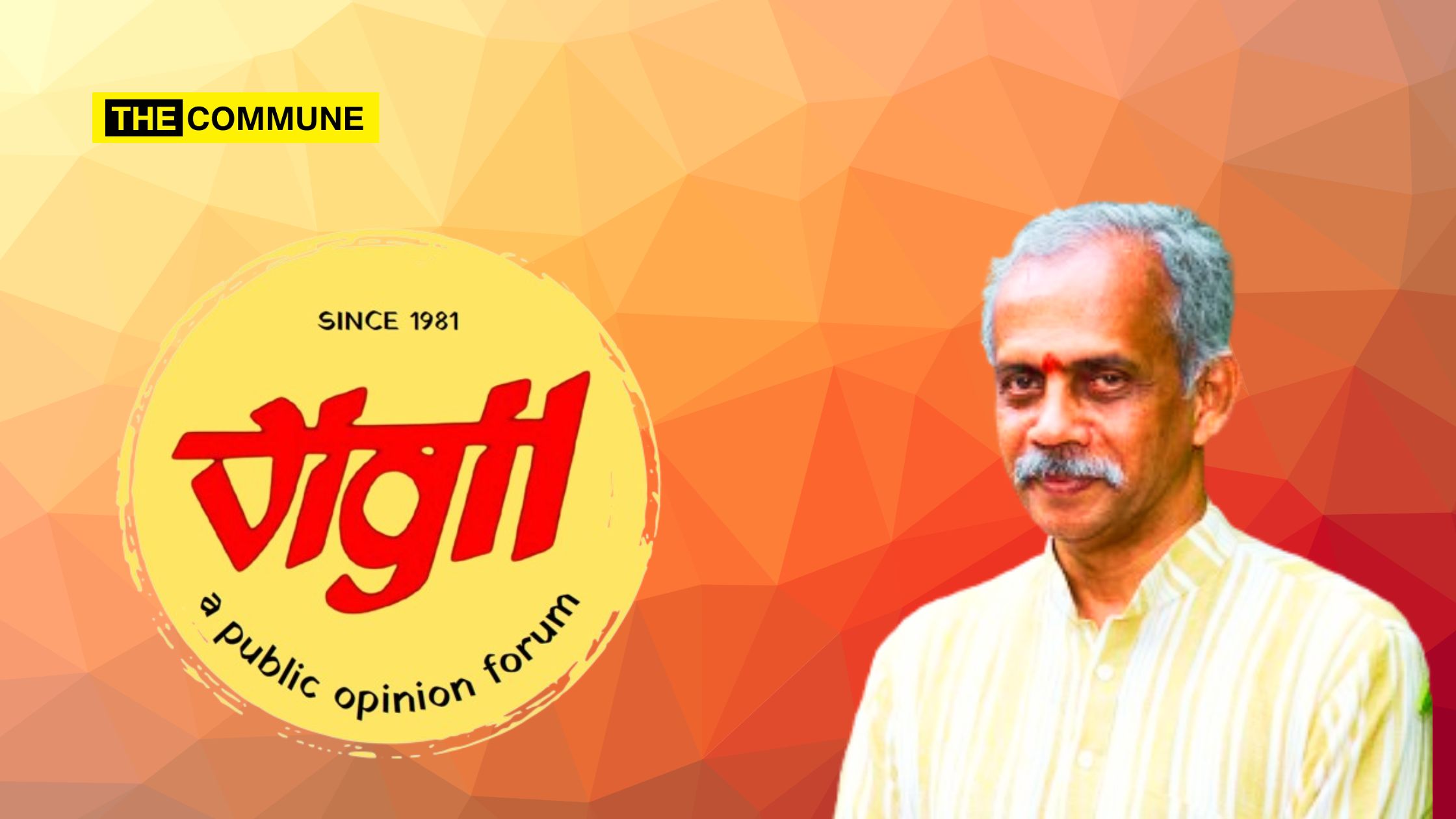
Cultural Seminar By VIGIL: RSS Ideologue J Nandakumar Highlights Concerns Over Wokeism And Cultural Marxism

VIGIL, a public forum for discussions and public dialogue, was an initiative of various public-spirited citizens of Chennai and was active during the 1990s until 2010. Various intellectuals and luminaries like Swami Dayananda Saraswati have graced occasions of VIGIL.

A seminar organized by VIGIL at KRS Auditorium, Meenakshi College for Women, Chennai, on 23 June 2024 addressed growing concerns about the spread of anti-India sentiments and the perceived assault on traditional culture. The event featured prominent speakers discussing topics such as wokeism, cultural Marxism, and their potential impact on Indian society.

VIGIL team’s convener, Sathyanarayan, opened the seminar by introducing VIGIL and the work it had done in the past and its transformation over the years. The organization aims to counter anti-India narratives on social media and promote nationalism through various initiatives, including speeches and book launches.

Guest speaker Nandakumar, National Convener Pragyah Pravah, RSS and editor of Kesari, a weekly magazine, emphasized the importance of spreading awareness about Hindutva nationwide. He delivered a presentation on wokeism and cultural Marxism, describing them as parallel ideologies threatening traditional values. He argued that these movements sought to destroy culture, language, and traditions, potentially leading to societal degradation.

Nandakumar further elaborated on the origins and implications of wokeism. He traced its roots to classical Marxism and its evolution into cultural Marxism, which he stated targets thinkers and students through academic institutions. The speaker warned of attempts to infiltrate cultural and educational institutions to promote divisive ideologies.

Some key components of wokeism, as outlined in the seminar, include:

  • Fostering a victimhood mentality
  • Promoting divisiveness
  • Hindering honest communication
  • Encouraging pronoun wars and identity politics
  • Propagating ideas through films and media
  • Promoting cancel culture
  • Appropriating minority culture, dismissing majority culture as hegemony
  • Victimology

To counter these trends, the speaker suggested:

  • Reclaiming traditional education systems while blending them with modern approaches
  • Establishing new universities and promoting online education
  • Boycotting corporate brands involved in “woke propaganda”
  • Supporting smaller and medium-sized businesses
  • Encouraging the majority to speak out against perceived harmful ideologies

Nandakumar also elucidated instances of wokeism in Indian universities that have happened in the recent past. The seminar concluded with a call for vigilance and active participation in preserving cultural values while adapting to modern challenges.

Subscribe to our channels on TelegramWhatsApp, and Instagram and get the best stories of the day delivered to you personally.
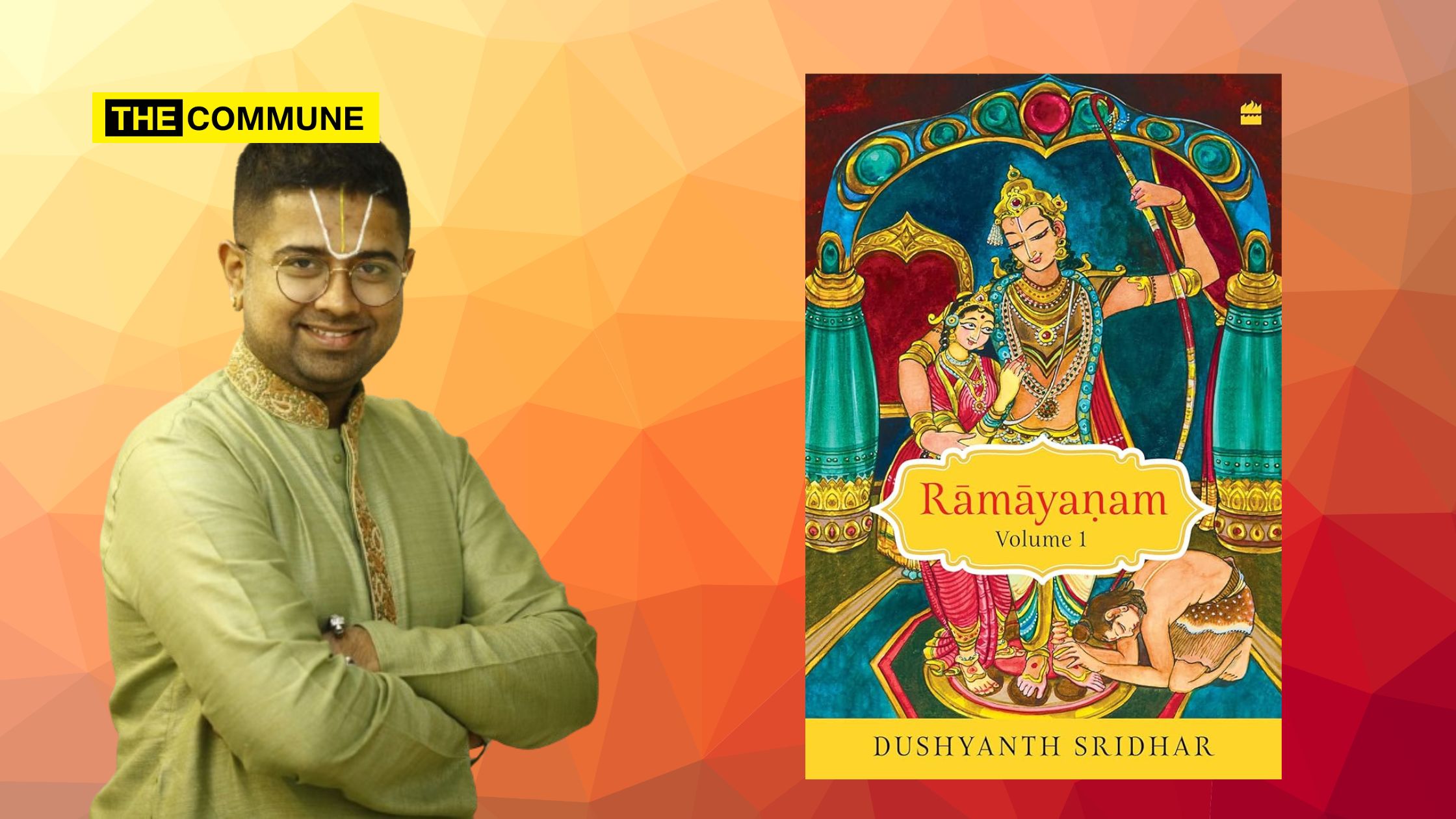
“A Prayaschitham To An Aparadham”: Dushyanth Sridhar Launches His Ramayana Volume 1 In The Presence Of Stars And An August Audience

Dushyanth Sridhar and his book Rāmāyaṇaṁ’– Volume 1
Dushyanth Sridhar clarifies reviewer's doubts on Rāmāyaṇaṁ’– Volume 1

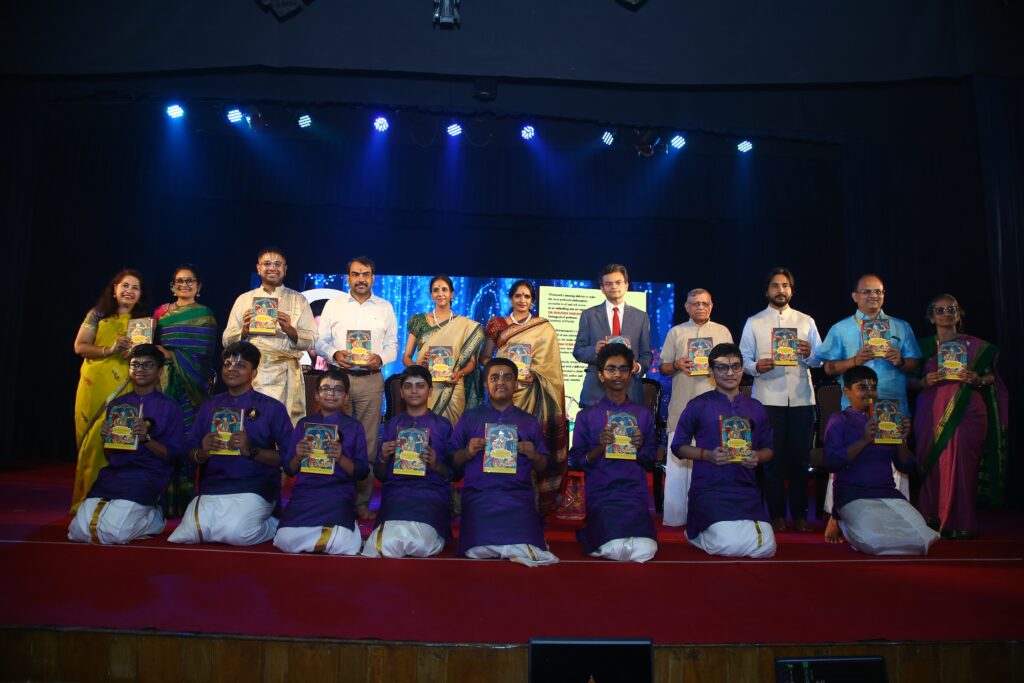
The much-awaited launch of Vedic speaker Dushyanth Sridhar‘s book, Rāmāyaṇam (Vol 1) took place on 22 June 2024 at Narada Gana Sabha in Chennai. The book was released by a multitude of luminaries such as Editor of Tamil weekly, Thuglak, S Gurumurthy, political analyst and scientist Anand Ranganathan, Carnatic musician sisters Ranjani Gayatri, and noted journalist Rangaraj Pandey.

The list of chief guests also included Tamil Nadu Bharatiya Janata Party chief K Annamalai and film star Rajinikanth. However, owing to the developments in the state over the Kallakurichi hooch tragedy, Annamalai could not attend the event. Rajinikanth also had to skip the event due to other commitments.

However, the approximately 900-strong audience (live) was left enthralled by the nearly 3-hour programme that satisfied their thirst for music, dance, and Bhakti. The entire evening was filled with claps, laughter, and joy as evident from their reactions.

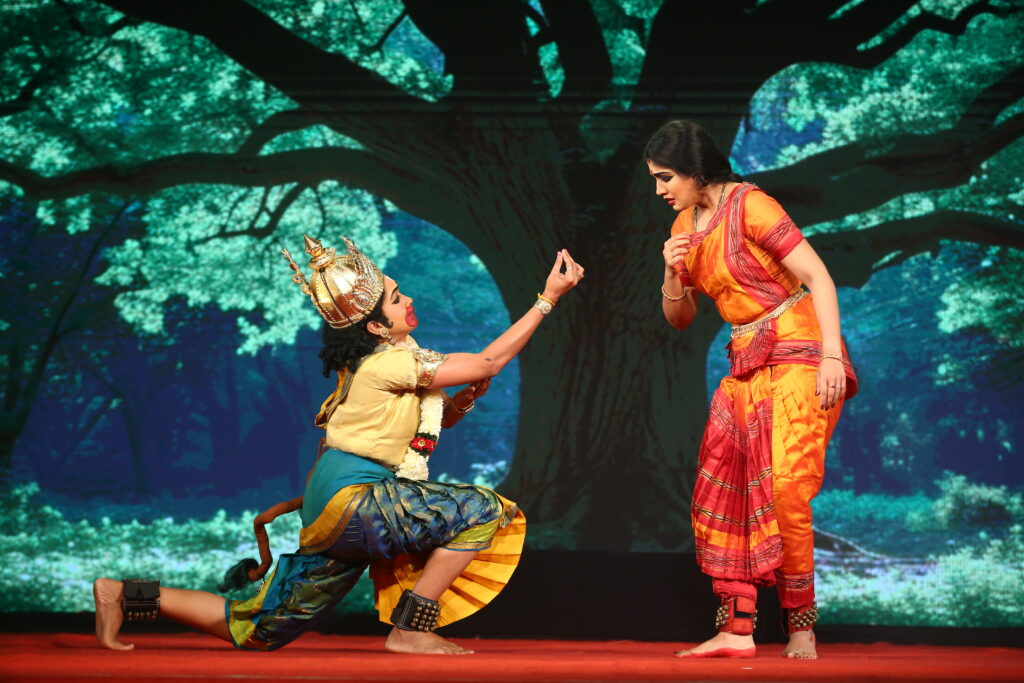
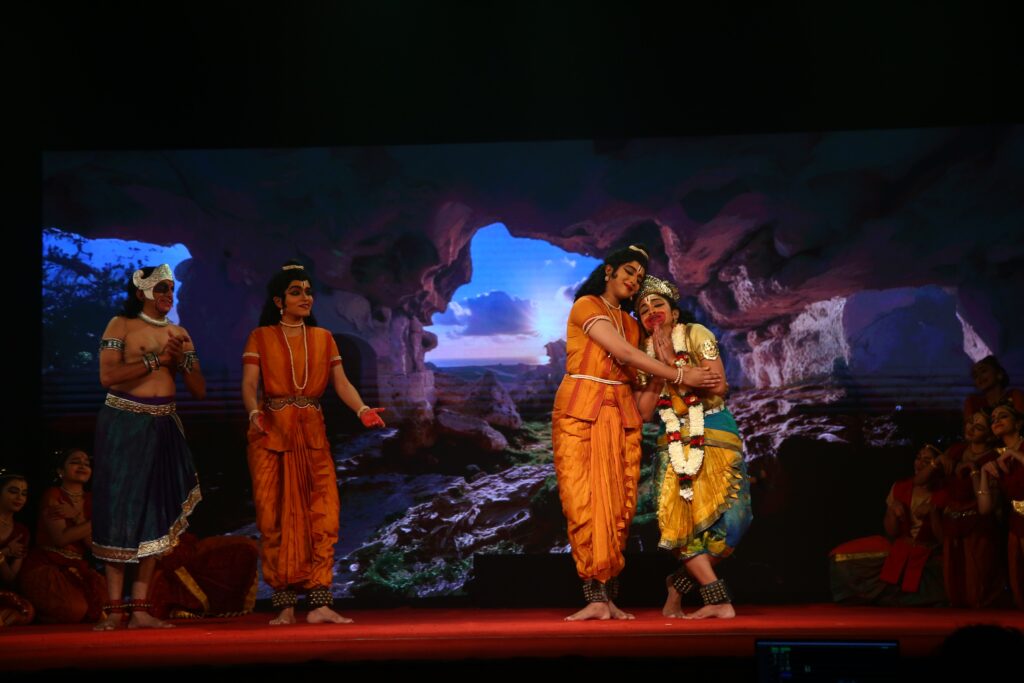
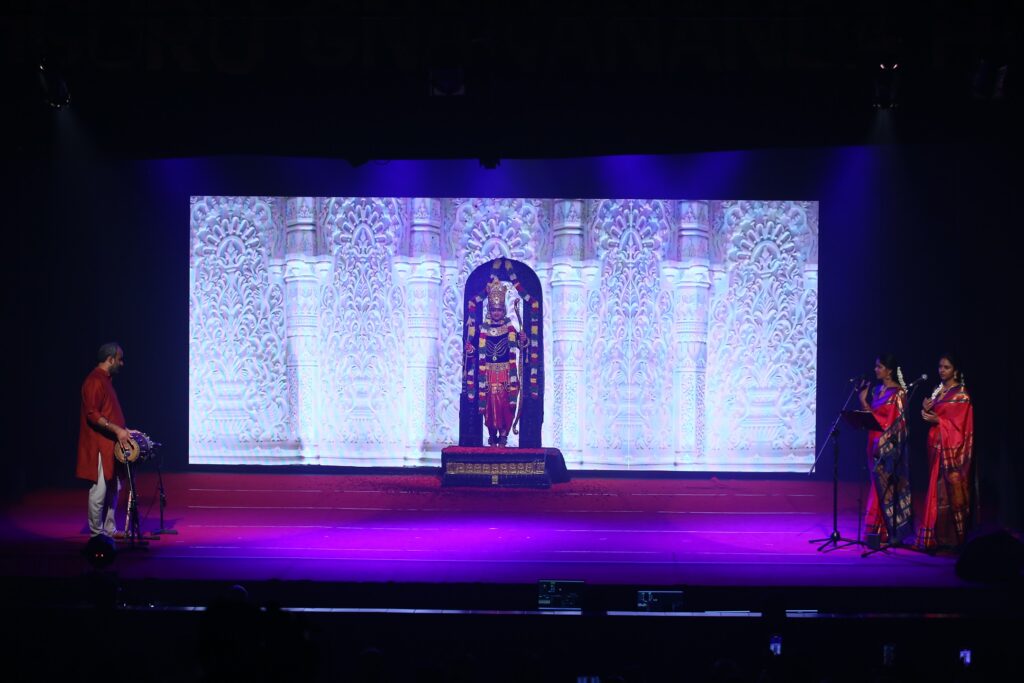
The programme began with a recital by noted danceuse Anita Guha’s Bharatanjali team which put together the “Parishvanga Pattabhishekam” scene for the audience. The piece included scenes from the Sundarakandam and depicted how Hanuman meets Devi Sita and encounters Ravana, the burning of Lanka (Lanka Dahan) followed by bringing the good news to Lord Rama about having met Devi Sita.


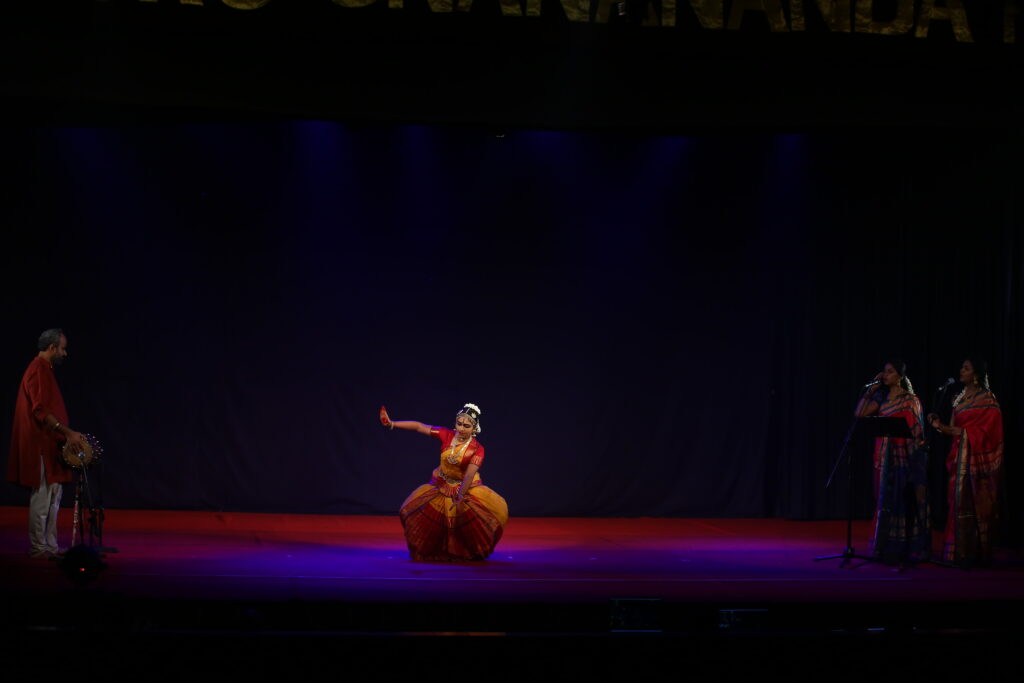
This was followed by a presentation of a medley of songs on Lord Rama (Rama Bhakti Geetam) sung by budding Carnatic singers Anahita and Apoorva, which gave the audience an aural treat and the visual treat by Pranauti, a young Bharatnatyam danceuse and disciple of exponent Urmila Satyanarayanan.

The closing of this performance left the audience literally astounded, as the divine darshan of Ayodhya’s Ram Lalla made them leave a little gasp together.

This was followed by a rendition of the national song, Vande Mataram by Anahita and Apoorva.

The contributors to the book were honored following this rendition. They include the editor of the book, Latha from Nairobi, and illustrators Keshav and Upasana Govindarajan. Historians and authors TS Krishnan and Jayashree Saranathan were also honored for their contributions to the book.

Following the launch of the book, the guests made their speeches. S Gurumurthy recollected the Ramjanmabhoomi movement and explained how the word Rama itself was a spiritual power that brought people together and how the word Rama changed the course of India – historically, politically, and culturally.

He recollected how the BJP touched Rama at Palampur resolution and there was no stopping its rise since 1989 when the Ramjanmabhoomi movement became a part of its political manifesto.

He called the book launch a nationalist event and not a spiritual or religious one and said that it was an integrated celebration of our civilization.

This was followed by a short speech by scientist, Anand Ranganathan who said it was incredible that Ramayana is still being written and read even in this day and age. He also said that Ramayana was special and beyond that, our civilization is also very special, and this struck home on 22 January 2024 (Pran Prathishta event). He described the joy that even little children and teens found during the Pran Prathishta event and wondered what connection it was that someone so young danced on the streets of Ayodhya that day. He also added that because of this continuity, Sanatan Dharma cannot be eradicated because the families of people who want to do it are themselves devotees of Rama.

Ranganathan also uttered the last two stanzas of the Vande Mataram which was originally objected to as India’s national song by Mohammed Ali Jinnah. He said, “We have mutilated the greatest creation, sacrificed the core of our civilization in the name of secularism (pseudo-secularism).

Carnatic music singer duo Ranjani and Gayatri spoke about how eternally relevant the Ramayana is to Hindus even today. They described the qualities of Lord Rama and explained why Bharat worships Him even today. The sisters sang a few Tamil verses from the Kamba Ramayanam in the most soulful way.

Following this lilting rendition, journalist Rangaraj Pandey praised the performances. Narrating an incident that happened the previous day, he said, “We don’t know when and how we will die but we can understand how to live a good life and for that, Ramayanam is a good guide. Rama lived as a common man and lived as an example for others.”

He enumerated the qualities of Lord Rama such as Ekapatnivrata (married to and loyal to only one wife, at a time when everyone including his father had many wives) and Pitruvakyaparipalana – one who obeyed his father’s words without hesitation.

He also noted that the language of the book was English and also observed that this was done in order to connect and deliver/reach the message to the next generation.

He further added, “An ordinary Mohandas Karamchand Gandhi became Mahatma Gandhi because of the words Hey Ram.”

The author of the book, Dushyanth Sridhar delivered the vote of thanks. He narrated the process that went into the making of the book. He added, “As long as the rivers flow and the mountains rise and stand tall, so shall Ramayana live.” But today mountains have been quarried and rivers have become dry and their sand taken away. So the situation today warrants this explanation for the modern day, “Till Ramayanam is written and spoken about, till then rivers will flow and mountains shall stand.”

Dushyanth Sridhar also explained why the book was launched in Chennai of all places. He said, “Bhakti was born in Tamil Nadu, which is a state that has maximum temples.He further said, “Tamil Nadu was a state where Rama was paraded with chappal mala, where Rama was called by different names, how many every prayaschittams we do, we need more, this is a prayaschittam to that aparadham.”

He also added that the book will be translated into Kannada, Tamil, Hindi, and Telugu in about a year and that even before the book was launched it had already hit the best-seller list.

Subscribe to our channels on TelegramWhatsApp, and Instagram and get the best stories of the day delivered to you personally.
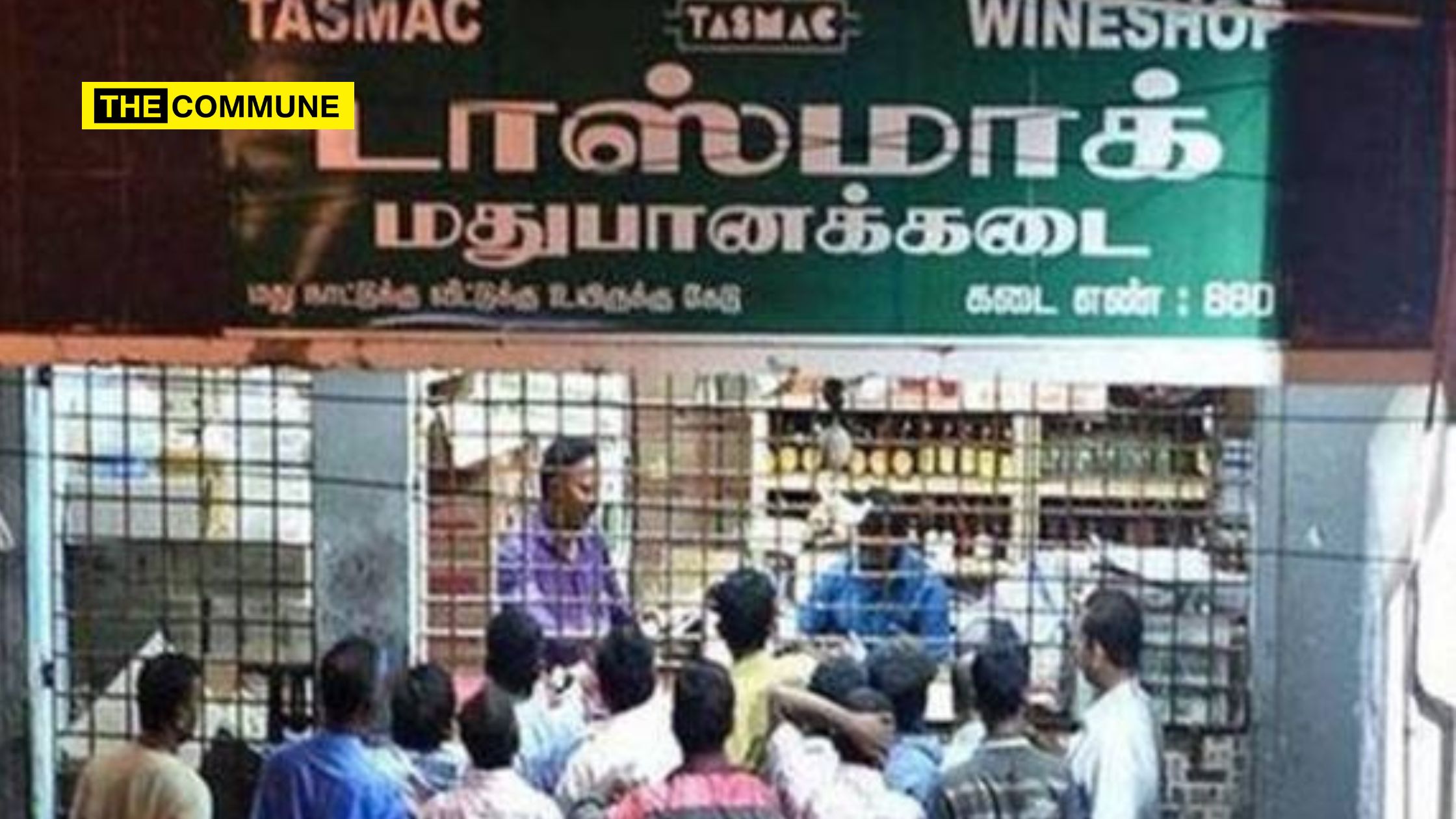
Tamil Nadu’s Liquor Revenue Surge To ₹45,855 Cr In 2023-24, Yet Illicit Liquor Continues To Loom

During the fiscal year 2023-24, liquor sales in Tamil Nadu yielded ₹45,855.67 crore in revenue, as disclosed by the state government in the Assembly. This total includes ₹35,081.39 crore from VAT and ₹10,774.28 crore from excise duties. Compared to the previous year’s revenue of ₹44,121.13 crore, this represents an increase of ₹1,734.54 crore, pending final reconciliation of figures according to the Prohibition and Excise Department.

Additionally, during the same period, the government collected ₹53.93 crore from special fees on imported foreign liquor, while the Tamil Nadu State Marketing Corporation (TASMAC) earned ₹16.70 lakh from service charges. Beer exports amounted to 3,20,024 cases, generating ₹187.79 lakh in revenue. Export permits for liquor to other states and Union Territories were facilitated online.

In combating illicit activities, such as the production and sale of illegal liquor, as well as trafficking in narcotics and psychotropic substances, the government emphasized rigorous enforcement measures. In the year 2023-24, authorities filed cases against 12,431 instances of illicit arrack production, resulting in the arrest of 12,422 individuals and the destruction of 4,64,152 liters of illicit arrack. These operations, conducted in collaboration with police and revenue officials, included frequent raids and inspections of licensed premises.

The government’s efforts also extended to setting up 25 additional de-addiction centers in government hospitals, in partnership with the Health and Family Welfare Department, to aid in the rehabilitation of drug addicts. The goal remains to coordinate across departments to achieve a drug-free Tamil Nadu.

As of March, TASMAC operated 4,829 retail outlets across 38 districts, with 2,919 attached bars. Liquor was supplied to 546 FL2-licensed clubs and 854 FL3-licensed hotels.

During discussions in the Assembly, there were calls from various quarters, including Congress legislator J.M.H. Aassan Maulaana, to consider allowing toddy shops in the state as a potential strategy to curb illicit liquor trade, acknowledging the challenges posed by cross-border alcohol imports from neighboring states like Andhra Pradesh and Puducherry.

The revenue from Tasmac has always sparked public outcry, leading to the closure of highway shops. Nevertheless, the government continues to see rising income from Tasmac each year, with some projects reportedly funded based on this revenue. Leaders like K Annamalai, TN BJP chief, has repeatedly urged the government to explore alternative revenue sources apart from Tasmac. Regarding total prohibition, earlier criticisms were leveled at DMK for omitting it from their election manifesto. MP Kanimozhi clarified that DMK’s commitment focused on reducing alcohol sales rather than eliminating them entirely, countering accusations of unfulfilled promises made by various parties at election time. This significant revenue growth this year has raised concerns among many.

(With Inputs From The Hindu)

Subscribe to our channels on TelegramWhatsApp, and Instagram and get the best stories of the day delivered to you personally.
Kallakurichi Hooch Tragedy: BJP TN Chief Annamalai Shares Stalin’s 2023 Video Where He Claims Spurious Liquor Had Reduced Considerably

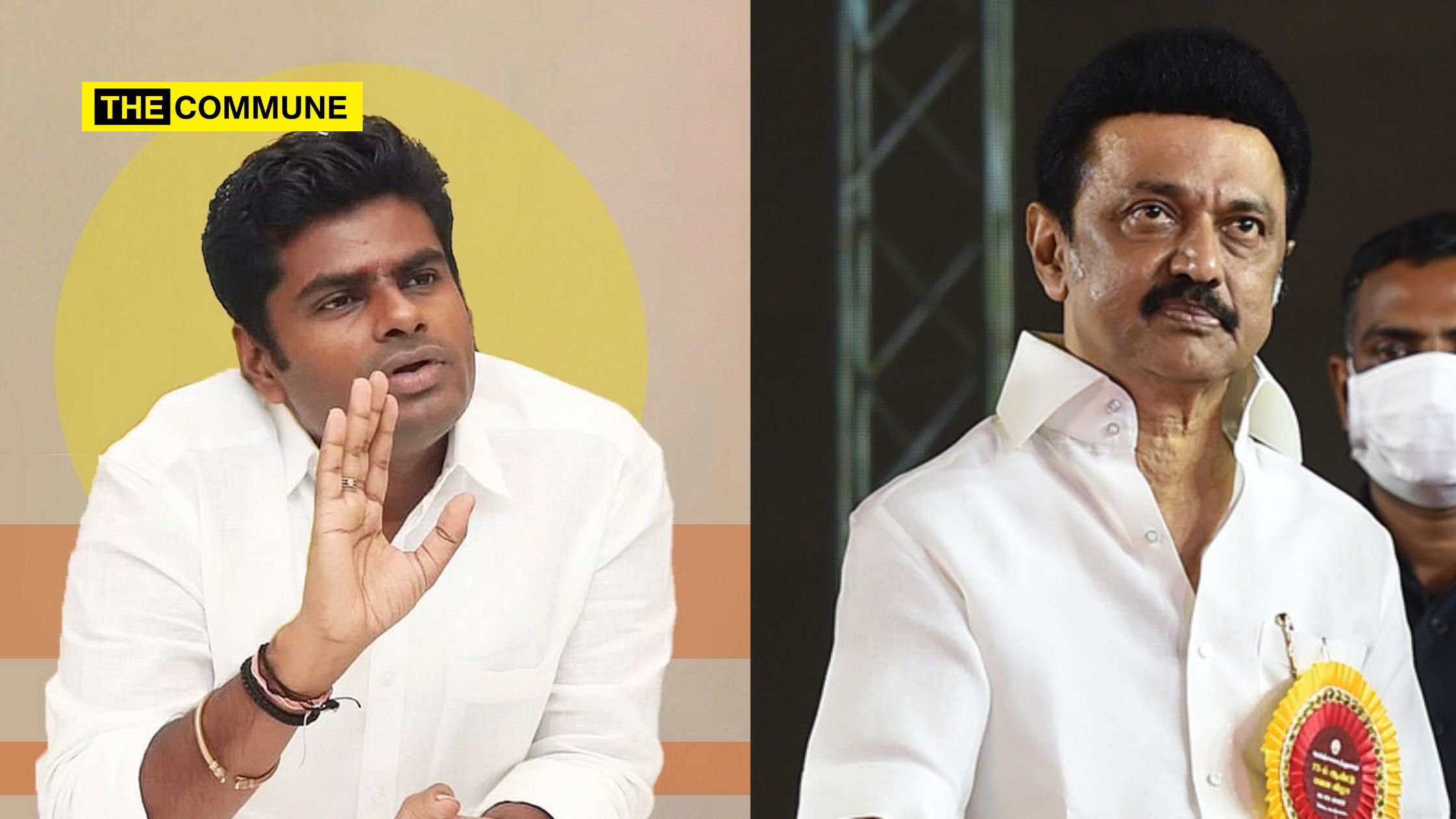
K Annamalai and MK Stalin
Annamalai fires DMK for misleading the public on electricity rates and the unemployment situation in Tamil Nadu.

The Tamil Nadu BJP president K Annamalai, has raised question whether the Chief Minister with moral obligation will dismiss the Minister for Prohibition and Excise Department.

The number of fatalities in the Kallakurichi hooch tragedy in Tamil Nadu has climbed to 54, following the deaths of four additional individuals who consumed adulterated illicit liquor in Karunapuram. The opposition has announced protests against the inefficiency of the ruling DMK government, citing the Kallakurichi hooch tragedy. Chief Minister Stalin, in a prior assembly speech during twin hooch tragedy in 2023, claimed the issue had been addressed seriously. However, as the fate remained same, another incident of spurious liquor consumption in Kallakurichi to life of 55.

Therefore, the Chief of Tamil Nadu’s BJP Annamalai shared a video of Chief Minister Stalin’s speech on his X platform, criticized the government’s failure to act on the 55 lives lost due to illicit alcohol. He pointed out that the Chief Minister remains silent and inactive regarding the minister in question. Annamalai further stated that if the Chief Minister had shown similar concern towards addressing the grievances of protesting BJP members against the DMK’s administrative failures, many families would not be suffering today. Therefore, Annamalai emphasized that the Chief Minister’s immediate moral duty should be to dismiss the Minister of Prohibition and Excise Department, questioning whether he will take such action.

In the video CM Stalin says, “In the past few months back, there have been some casualties due to some untoward incidents in Villupuram and Chengalpattu districts. Following my advice, due to the concerted crackdown and action of the district administration and the police department, the brewing and selling of spurious liquor has reduced considerably. To continue this situation, continuous monitoring and concerted action should be expedited to ensure the complete elimination of the brewing and sale of spurious liquor. A weekly review meeting should be held to monitor this.”

Annamalai wrote, “Here’s the video of Tamil Nadu Chief Minister Mr @mkstalin speaking in July last year. Apart from praising himself that the brewing and selling of adulterated liquor has reduced drastically due to the DMK government’s action, he had also made a vain advertisement that inspections would be conducted every week. As a result of the investigation conducted by them, we lost 55 lives due to fake liquor today. Even after all this, the Chief Minister is keeping fake silence without taking any action against the concerned minister.”

“Many families would not have come to the middle of the road today if they had shown the same concern in arresting and disabling our @BJP4Tamilnadu brothers and sisters who are protesting DMK’s administrative incompetence. Without further delay, the only moral duty of the Chief Minister would be to sack the Minister for Prohibition and Excise Department. Will Mr.@mkstalin do?” further stated.

Subscribe to our channels on TelegramWhatsApp, and Instagram and get the best stories of the day delivered to you personally.
Temple Activist Demands Cancellation Of GO That Allowed Alleged Illegal Lease Of Kapaleeswarar Temple’s Land

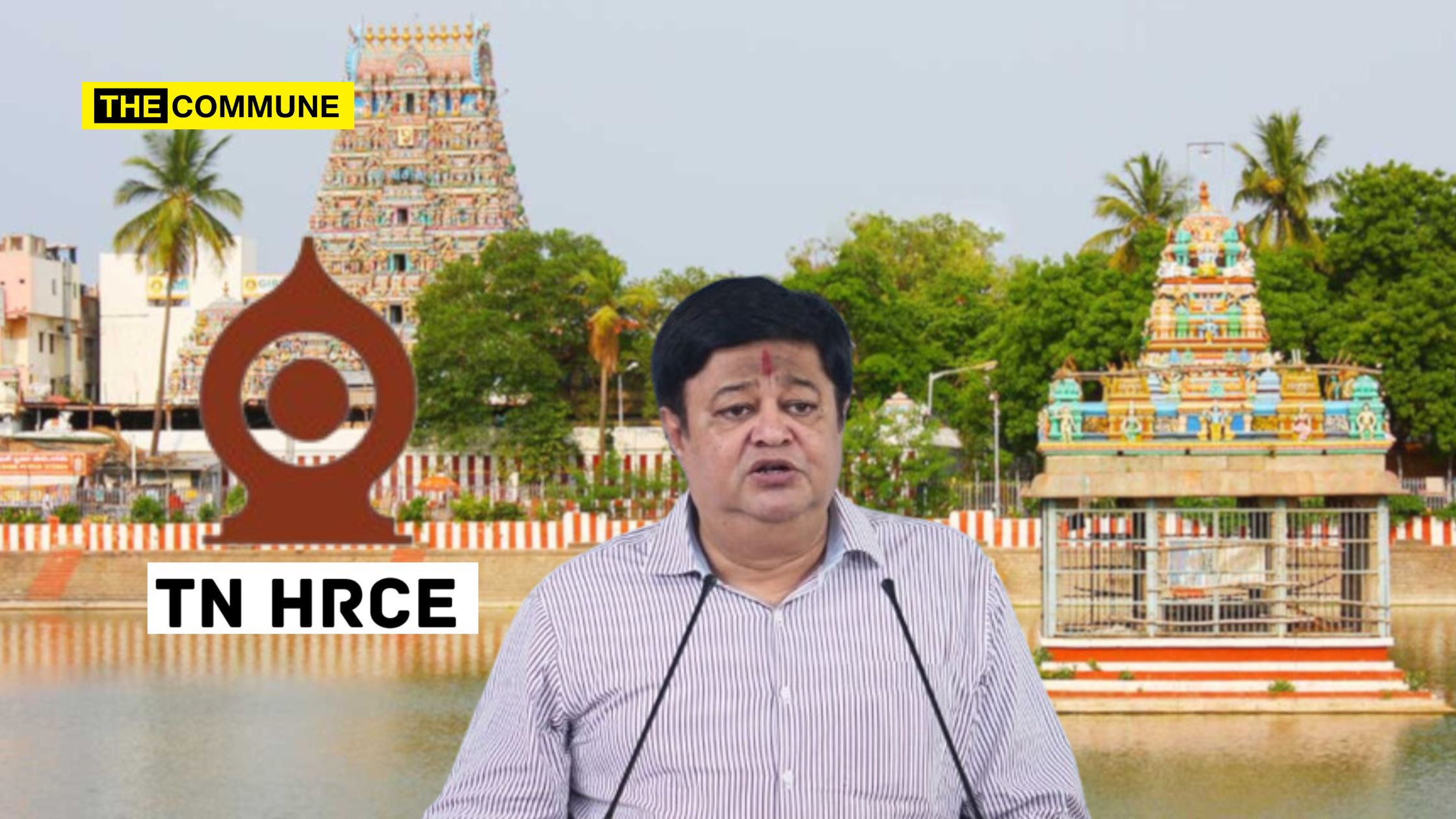
On 21 June 2024, renowned temple activist TR Ramesh has addressed correspondence to key officials of the Tamil Nadu government concerning Sri Kapaleeshwarar Temple in Mylapore, Chennai. The temple, an ancient agamic structure for the Saiva Sampradaya and the Poonamalee Uyar Thuluva Vellalars sect, was relocated to its current site in the 16th century after the original temple was destroyed by Portuguese forces and replaced with San Thome church.

The activist raised concerns over the unlawful lease of temple land to the Women’s Indian Association in 2012, comprising 10 grounds at a nominal rent of ₹3000 per month for 29 years and 11 months. Despite objections by the Temple Worshippers Society, the lease was approved by the government via G.O. Ms. 77 dated 24 February 2011, which has not been rescinded to date. This lease has resulted in significant financial losses to the temple annually.

TR Ramesh, President of the Temple Worshippers Society (TWS) in Chennai, alleged collusion and criminal neglect of duty against successive Secretaries, Commissioners, Executive Officers, and Trustees associated with the temple. The activist demanded the immediate actions of:

  • Cancelling G.O. No. 77, deemed void ab initio.
  • Evicting the Women’s Indian Association from the temple lands.
  • Initiating criminal complaints against the encroachers under Section 79-B of the Tamil Hindu Religious and Charitable Endowments Act, 1959.
  • Calculating and collecting commercial rent from the encroaching organization for the period since 1986, and subsequent rents from 2013 onwards, with responsibilities and liabilities distributed among relevant government officials.

In his official X account, he highlighted that the Tamil Nadu government and the HR&CE department attempted an unauthorized lease of 10 grounds of valuable land on Greenways Road, Chennai. Instead of the mandated ₹15 lakhs per month, the land was leased for a nominal ₹3000 per month, bypassing legal notice requirements under the HR&CE Act.

He noted that Radha Rajan, founder of  TWS, swiftly objected on 23 July 2012, with additional objections raised subsequently. By 13 February 2013, the Commissioner recommended cancelling the Government Order approving the lease. However, the G.O. has not been rescinded, and the organization encroaching on the temple land remains in place.

As a consequence, Sri Kapaleeshwarar Temple has suffered losses exceeding ₹20 crores in potential rental income over the past 11 years due to this unresolved issue, according to the temple activist. Ramesh criticized the government and the HR&CE department for allegedly withholding funds that could have supported Dharmic activities benefiting thousands of Hindus annually. He urged the Tamil Nadu government to reclaim these funds from those responsible for the purported mismanagement and negligence.

Subscribe to our channels on TelegramWhatsApp, and Instagram and get the best stories of the day delivered to you personally.
Chennai DMK MPs Visit Controversial Archbishop Antonysamy Accused Of Influencing Voters Along Religious Lines

The 18th Lok Sabha’s first session is scheduled to commence from 24 June 2024, and will run until 3 July 2024. Parliamentary Affairs Minister Kiren Rijiju announced on 19 June 2024, that the Rajya Sabha session will start on 27 June 2024. He also urged all political parties to engage in constructive debates during the upcoming session.

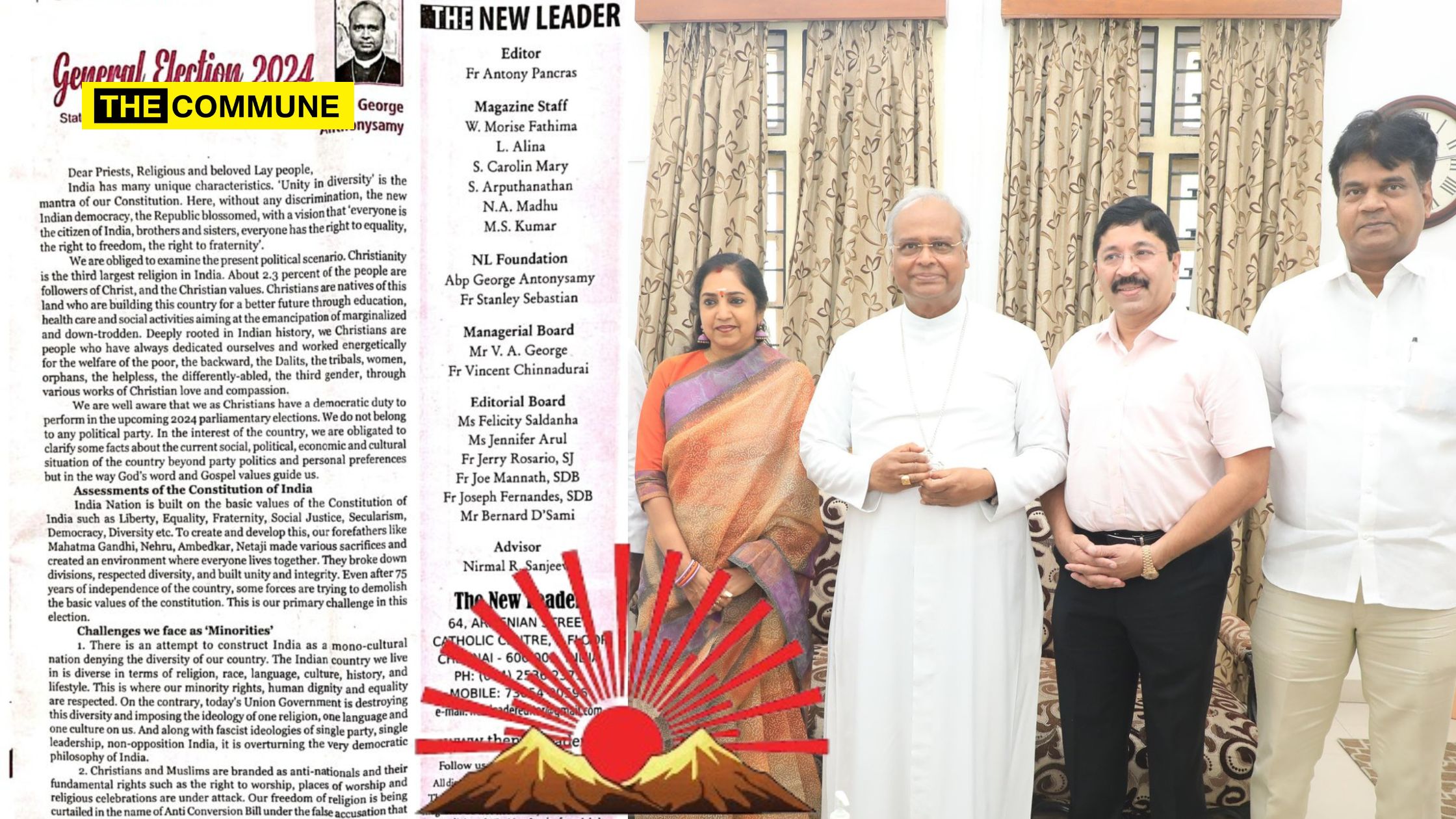
Against this backdrop, Members of Parliament Dayanidhi Maran from Central Chennai, Thamizhachi Thangapandian from Chennai South, and Kalanidhi Veeraswamy from Chennai North visited George Antonysamy, the controversial Archbishop of the Archdiocese of Madras-Mylapore. Archbishop Antonysamy had recently been accused of attempting to influence voters using religious sentiments during the concluded Lok Sabha elections in 2024. The DMK MP’s faced criticism from the netizens.


During the recent 2024 Lok Sabha elections, a complaint was raised by the Legal Rights Protection Forum (LPRF) on 29 April 2024, to the Election Commission of India (ECI) regarding the Tamilnadu Bishops’ Council and Archbishop of Mylapore – Madras Archdiocese, George Antonysamy, for allegedly propagating written propaganda through a community magazine to sway voters in the 2024 Lok Sabha elections, the ECI has acknowledged the complaint. Subsequently, the ECI has acknowledged the complaint and instructed the Chennai District Election Officer to address the issue of influencing voters along communal lines.

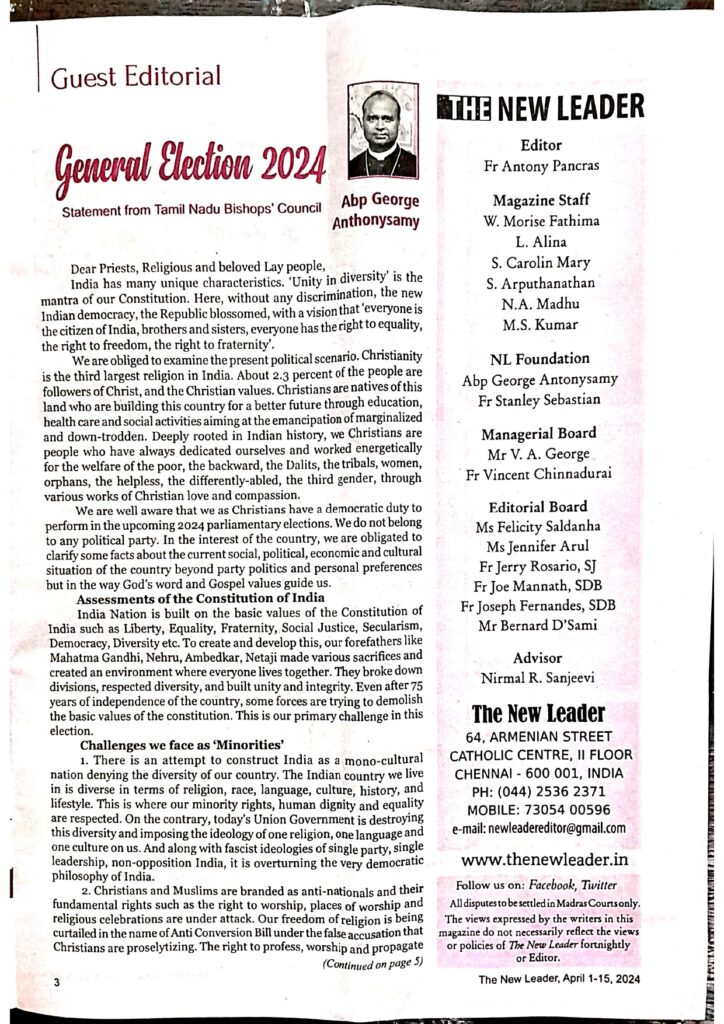
Archbishop George Antonysamy had penned an editorial titled “General Election 2024: Statement from Tamil Nadu Bishops’ Council” in a recent edition of The New Leader magazine, invoking religious sentiments and employing fear-mongering tactics. In the editorial, Antonysamy openly criticized India’s elected central government (BJP) and its citizens. He had suggested that there was an attempt to construct India as a mono-cultural nation, denying its diversity. He had accused the Union Government of imposing the ideology of one religion, one language, and one culture, along with fascist ideologies.

Antonysamy had further stirred disharmony by alleging that Christians and Muslims were branded as anti-nationals and their fundamental rights were under attack. He had criticized the government for attempting to impose communal laws and curtail religious freedom. He had also expressed concerns about various issues including media control, neglect of southern states, attacks on state rights, and alleged government control over investigative bodies and courts. The editorial had concluded with a call to action urging Christians to vote to protect religious faith and human rights, rejecting sectarian parties, and aligning with non-religious, democratic forces.

The editorial’s tone and content had suggested a possible alignment with a political party, specifically the DMK, based on its language and echoed claims. Concerns had been raised about its attempt to influence voters based on religious lines, which could have violated the democratic process. Several organizations affiliated with the Archdiocese of Madras-Mylapore had been highlighted, indicating the need for a thorough investigation into potential violations of FEMA, PMLA, and FCRA regulations. Allegations had been made about the misuse of FCRA funds for purposes contrary to donor intentions, including political agendas.

Various organizations, including the Legal Rights Protection Forum (LRPF), had raised the issue with the Election Commission of India, urging decisive action against the Bishop’s Council and the Archdiocese of Mylapore-Madras. There had been demands for investigation and accountability for violating laws and misusing funds.

Subscribe to our channels on TelegramWhatsApp, and Instagram and get the best stories of the day delivered to you personally.