Home Blog Page 722

Jayaprakash Narayan And Nanaji Deshmukh: The Two Karmayogis Who Fought Against Indira’s Draconian Emergency
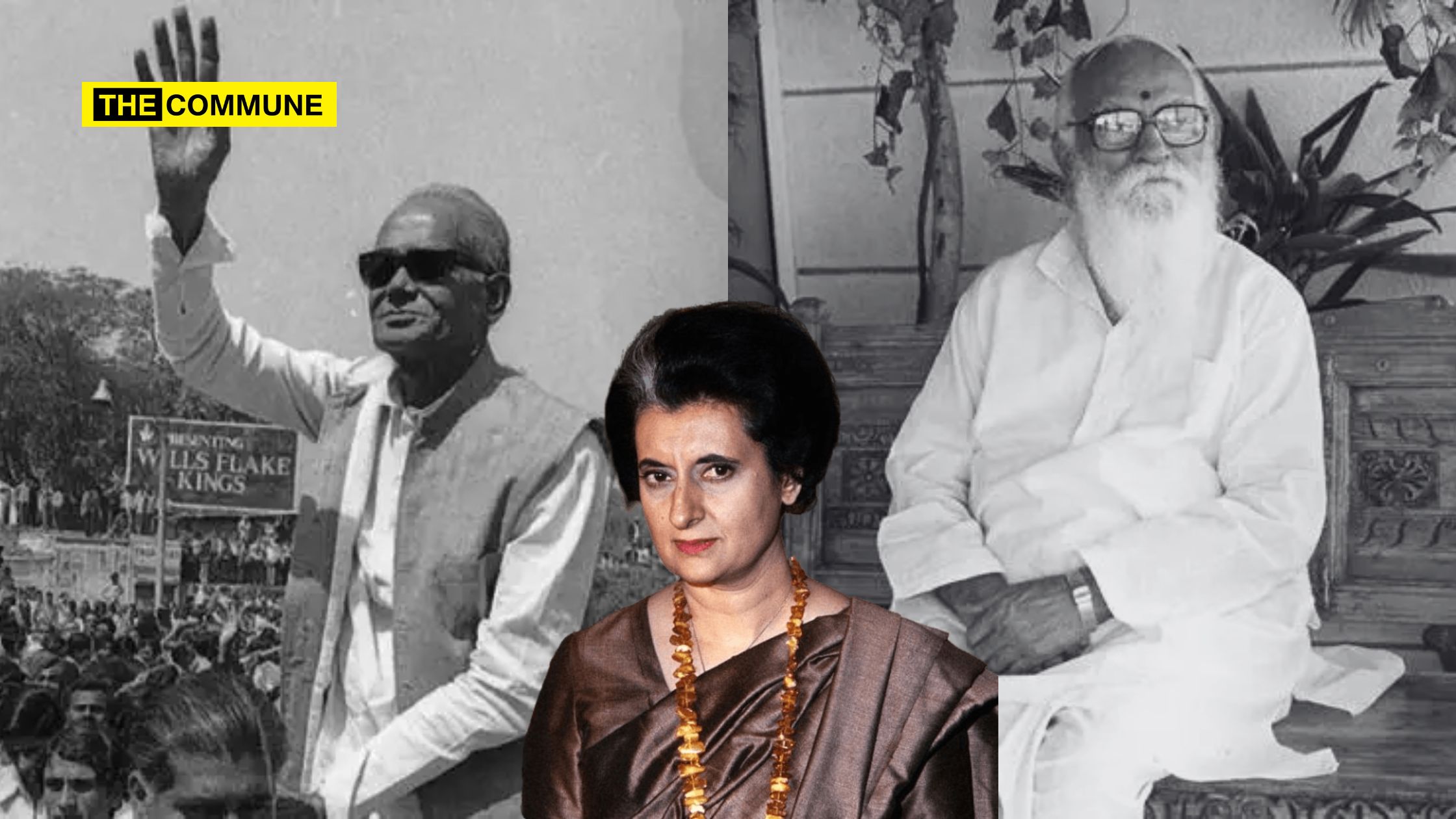
1974, Patna – India was in turmoil, as a vast wave of discontent, swept the nation. The heady days of idealism were gone, as a nation came into terms with the loss of innocence. A nation that saw corruption, political skullduggery become the norm, of rising inflation, unemployment. And in that period, the face of the protest emerged against Indira Gandhi’s autocratic rule. Just 3 years earlier, Indira had swept to power, with the victory over Pakistan in the War, and the emergence of Bangladesh, fuelling her popularity. But the euphoria of the war victory had come off, the people were forced to deal with the harsh realities of life. Jayaprakash Narayan aka JP was the one giving a voice to the anger in the masses, as he led a huge procession on the streets of Patna. He had earlier led the Nav Nirman Andolan in Gujarat against the Chimanbhai Patel Government there. Just a couple of months he had asked for a Total Revolution from the masses and students, against the growing corruption. As JP led the procession in Patna, he was brutally lathicharged by the police. He was the target, and the police still continued raining blows on him, until another older man, shielded him, and took the blows, all the while escorting him to safety. The man who shielded JP from the police blows was Chandikadas Amrut Rao Deshmukh, better known as Nanaji Deshmukh.

Two men, from two vastly different backgrounds- Jayaprakash Narayan and Nanaji Deshmukh. Both born on the same date, Oct 11, separated by a gap of 14 years. JP was from Bihar’s Saran district, his father was a lower Government official, and he later went on to study in the US too. Nanaji on the other hand, was from Maharashtra’s Hingoli district, lost his parents at an early age, had to struggle in his childhood, and later rose up the ranks of the RSS.  Their ideologies too differed, where JP was socialist, left leaning, Nanaji’s was more rooted in the Integral Humanism of the Jan Sangh. And yet on that fateful day in Patna, the paths of both these men would cross. It was destined to be so, if JP was the face of the Total Revolution, Nanaji was the brains behind it, as well as the Janata alliance that came later. JP took the Revolution to the masses, Nanaji organized the funds for it, coordinated it, and when the Government cracked down, during the Emergency, he oversaw the underground movement.

Nanaji was one of the men who built up the Jan Sangh in UP, brick by brick, when the then chief Guru Golwalkar had sent him there as an RSS pracharak to Gorakhpur. Arriving at a place, that had no funds, no base, no organization, Nanaji undertook the task of building the RSS from scratch, staying in Baba Raghavdas home, cooking meals for him. Within 3 years there were 250 Shakhas just in Gorakhpur itself, the also established the first Saraswati Shishu Mandir there in 1950. If BJP has a solid base in Gorakhpur, the reason is the foundation laid by Nanaji there. He was one of the trilogy, who spread the Jan Sangh in UP, the others being Deen Dayal Upadhyaya and Atal Bihari Vajpayee. Where Upadhyaya provided the ideological soul of the Sangh, Vajpayee took the message to the masses with his oratory, it was Nanaji who was instrumental in organizing and coordinating. Even when RSS was banned following the assassination of Mahatma Gandhi, it was Nanaji who kept things going, with publications from the underground.

On the other hand, JP’s trajectory was somewhat different. In a sense like Nanaji, he did have to work hard for his education. Nanaji sold vegetables as a young boy to support himself, while as a student in US, JP did a whole lot of odd jobs from picking grapes, washing dishes, as a mechanic at a garage to even a slaughter house. Unable to pay the fees at Berkeley, JP had to transfer from one University to another in US, before graduating in sociology finally. It was his experiences with the working class, that attracted JP to the Leftist ideology, especially the works of Marx and M.N.Roy. Even when he joined the Congress, during the Freedom struggle, JP was part of the Congress Socialist Group, a left wing group within the party, that included Ram Manohar Lohia, Ashok Mehta and was headed by Acharya Narendra Dev. A rebel with a derring do attitude, JP was arrested numerous times during the freedom struggle. One of the more inspiring anecdotes relates to the Quit India struggle, when he went underground, and had a daring escape from the Hazaribagh Central Jail, and walked to Gaya, along with his associate Yogendra Shukla whom he carried on his shoulders.

Though on the other side of the political divide, Nanaji Deshmukh, enjoyed a respect and support across the entire political spectrum. By 1957 he had established the Jan Sangh across UP, and it soon became a powerful political force in it’s own right. The first ever non Congress Govt in UP, was due to the efforts of Nanaji, who forged an alliance with Chaudhary Charan Singh and Ram Manohar Lohia, the first ever such grouping. Jan Sangh was to the Right, Conservative, while Lohia represented the more Left liberal aspect, and Charan Singh represented the farming community. Nanaji in fact outwitted Chandra Bhanu Gupta, considered a political giant, not once but thrice. He first managed to get Gupta’s nominee defeated in the Rajya Sabha, and then forging an alliance with other socialist groups defeated him twice in Lucknow and Maudaha later. Gupta had immense respect for Nanaji, whom he called a modern day “Nana Phadnavis”. He had a good relation with Ram Manohar Lohia, and the Jan Sangh- Socialist parties alliance, would be the first major opposition to the Congress party then. He also took an active part in Vinobha Bhave’s Bhoodan Movement.

Emergency

At some point of time, these two great men would find their paths intersecting. And it came in 1974 during the Sampoorna Kranti( Total Revolution) launched by JP against Indira Gandhi’s misrule, the ever increasing corruption and rising inflation. JP was the movement’s visible face, but in the background was Nanaji coordinating every aspect of it, raising funds, sending the messages. As General Secretary of the Lok Sangarsh Samiti, Nanaji was the man who kept the underground movement, when Indira cracked down on it, during the Emergency. Nanaji was himself a wanted man, and managed to give the Government a slip during the Emergency, just getting out at the last moment. On June 25, 1975, Nanaji managed to get together a small group that consisted among others Subramaniam Swamy, M.L.Khurana, Ravindra Verma and Dattopant Thengadi. It was Nanaji who drew up the main plan for the movement during Emergency, of publishing underground news bulletins and pamphlets, setting up of underground cells, staging protest demonstrations, raising funds, helping the families of those detained. Nanaji himself was arrested later on June 29, 1979, but by then he had put the entire network into place, which ensured, that the underground movement would not die out. Both JP and Nanaji were arrested during the Emergency, but their spirit would be the guiding force for the movement. It was therefore not a surprise that when Indira lifted the Emergency and elections were held in 1977, Nanaji once again came to the forefront as the architect of the Janata alliance. Due to his immense political contacts, Nanaji managed to put together the formidable alliance, consisting of the Jan Sangh, Janata Party and other outfits. Nanaji himself won from Balrampur in 1977, and he played a key role in the Janata victory, coordinating the entire election effort. He however refused to take up a Cabinet minister position, stating he wanted to dedicate his life to social service.
“Singhasan Khali Karo ke Janata aati hai” thundered JP during the Ramlila rally of 1975, that quote was from the famous poet Ramdhari Singh Dinkar. JP was greatly influenced by Dinkar’s works, and the latter was a great admirer of JP, both these men shared a close bonding. It is said, that when JP was seriously ill, Dinkar had gone to Tirupati to pray for his health, saying that if there was a life to be taken it was his. Coincidentally, Dinkar passed away just when JP was recovering from his illness. JP was detained at Chandigarh, he however was later release due to a kidney problem was on dialysis for long. He managed to see his dream come true, of the Janata Government come into power, and Indira defeated. However he would be saddened by the way, the Janata leaders wasted the mandate with their internal squabbles and ego clashes.

Maybe it was for this reason, that Nanaji did not want to be a part of the Government. At a later stage in his life, Nanaji often remarked that he admired the Vanavasi Ram, more than the Raja Ram. He actually walked the talk, of retiring from politics, and dedicating his life to social service. Nanaji knew what poverty was, he had grown up with it, and the upliftment of the poorer sections was his life long aim. The Deen Dayal Research Institute was set up by Nanaji to promote grass roots level development in 1969. The motivation was a visit to Chitrakoot, a place that was holy due to it’s association with the Ramayana, where Lord Ram, had spent his exile in. The Chitrakoot that Nanaji visited though was a far cry from what he had read, steeped in backwardness, illiteracy and superstition. Moved by it’s condition, Nanaji made a resolve to change the face of Chitrakoot and also make it the base for his social reforms. “Har Haath ko denge Kaam, har Kheth ko denge Paane” ( Work to All, Water to every field) was the motto of Nanaji, as he did pioneering studies in anti poverty programs, cottage industry and rural development. Gonda in UP, and Beed in Maharashtra, two of the country’s most backward districts, was where Nanaji focused his efforts on.
And that led to the establishment of the Chitrakoot Grameen Viswavidyalaya, which he named after Mahatma Gandhi. It was India’s first ever rural University, and Nanaji was it’s first chancellor. The main aim was to provide students in rural areas, access to quality high education. The university has been doing great work in promoting courses on rural development, mass education and awareness among the rural people and sustainable development.

Neither JP nor Nanaji are around now, but their legacy and spirit will always continue to inspire. Two men who were true karmayogis, for whom power was not an end in itself. Two men, who led others to power, but did not accept it themselves. It was destiny, that two such great karmayogis were born on the same date.

Sources:

http://www.bjp.org/images/kamal_sandesh/ks_e_mar_02_2010.pdf

http://indiatoday.intoday.in/story/nanaji-deshmukh-the-main-force-behind-jayaprakash-narayans-agitation-for-total-revolution/1/435501.html

(This article was originally published by Ratnakar at historyunderyourfeet.wordpress.com and has been republished here with permission.)

Ratnakar Sadasyalu is a blogger with a passion in movies, music, books, and history. A techie by profession, and a writer at heart. Author of City of Victory a book on Vijayanagar Empire.

Subscribe to our channels on TelegramWhatsApp, and Instagram and get the best stories of the day delivered to you personally.

No, Guv Ravi Did Not Call For Banning Kula Deivams; DMK-Supporting Dravidianists Peddle Fake News 

Dravidianist supporters of the DMK in Tamil Nadu are continuously engaging in spreading false propaganda. It seems they are unable to rest unless they target either the BJP or the Governor every single day. Throughout the day, we have uncovered numerous instances of fake news being circulated, including misleading edits targeting Union Finance Minister Nirmala Sitharaman, the RSS, and now Tamil Nadu Governor RN Ravi. These falsified reports are being disseminated in regional languages, misleading the public.

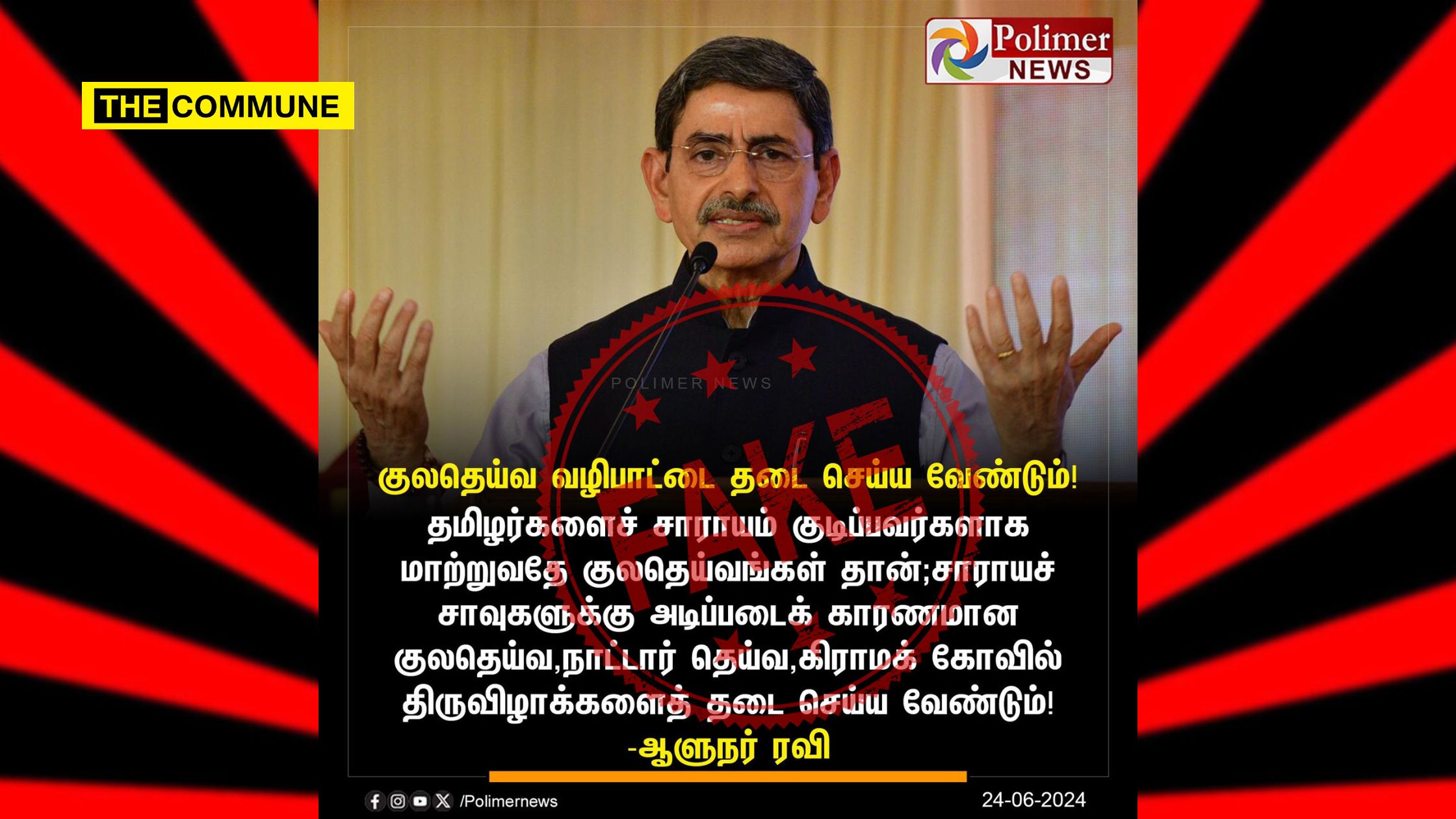
Recently, Dravidianists fabricated a news card under the guise of a regional news channel,Polimer News‘. Upon receiving the news, the channel promptly refuted it and exposed the falsified card. Subsequently, many of the vigorous spreaders of this misinformation on social media platforms deleted their posts and comments.

In an attempt to divert attention from the mishandling of the Kallakuruchi hooch tragedy, they created a fake news card claiming it to be the words of Tamil Nadu Governor RN Ravi. The falsified card purportedly quoted Governor Ravi as advocating for the ban of clan deity worship, blaming it for turning Tamils into drinkers and linking it to deaths related to alcoholism.

The fake news card stated, Clan deity worship should be banned. It is the clan deities that turn Tamils ​​into drunkards; Clan Deity, Nattar Deity, and village temple festivals that are the basis for alcoholism-related deaths should be banned. – Governor Ravi”

Below are some of the now-deleted fake posts propagated by supporters of the DMK on social media:

Image

Image

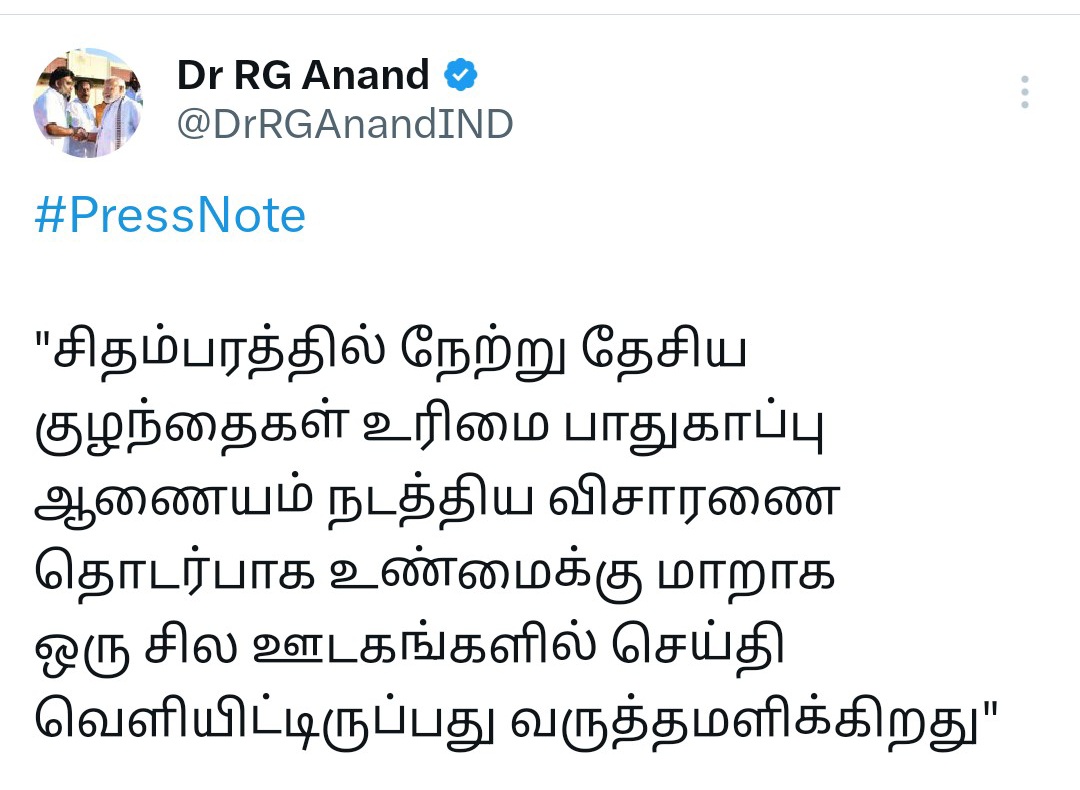
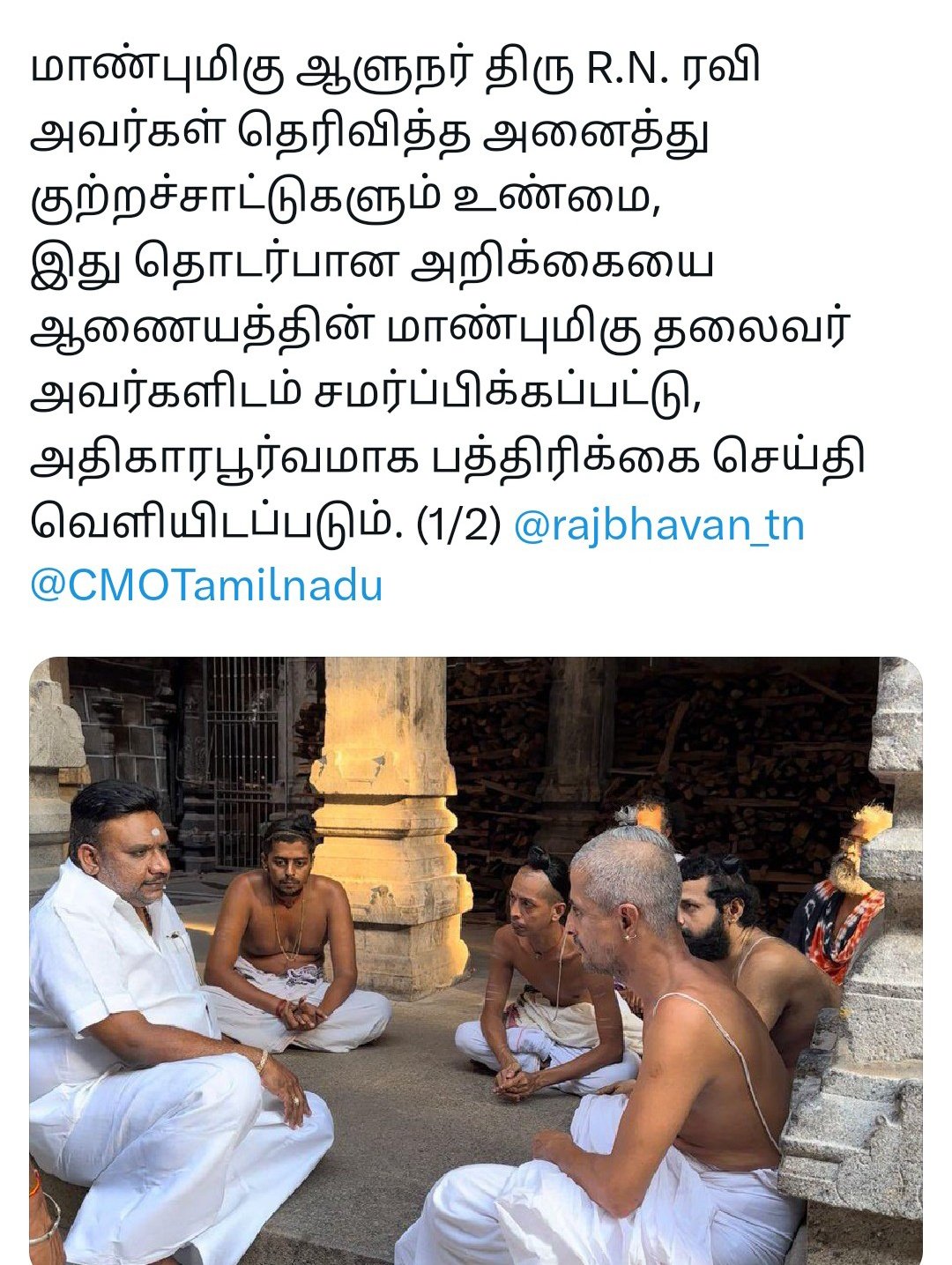
Previously, on the issue concerning the Chidambaram temple, Tamil Nadu Governor RN Ravi alleged that forced virginity tests, specifically the two-finger test, were conducted on minor girls suspected to be victims of child marriage. RG Anand, a member of the National Commission for Protection of Child Rights (NCPCR), supported these allegations in May 2023.

NCPCR member Anand tweeted that after conducting inquiries in Chidambaram, he confirmed,All the allegations made by the Governor are true. He also mentioned that a detailed report would be submitted to the NCPCR Chairperson Priyank Kanoongo regarding his findings.

Responding to reports that disputed the investigation’s findings, Anand clarified, It is regrettable that a few media outlets published untrue statements about the NCPCR’s investigation in Chidambaram.He further reiterated his stance to journalists in Salem, stating,The claims made by Governor R.N. Ravi are true.He explained that through inquiries with the affected families and verification of police records, they confirmed the use of the two-finger test on the girls, with police records indicating intact hymen as evidence.

Anand clarified, Some sections of the media reported statements contradicting the Governor’s claims, which is not accurate. I am providing this explanation today to correct the misinformation.”

Image

Image

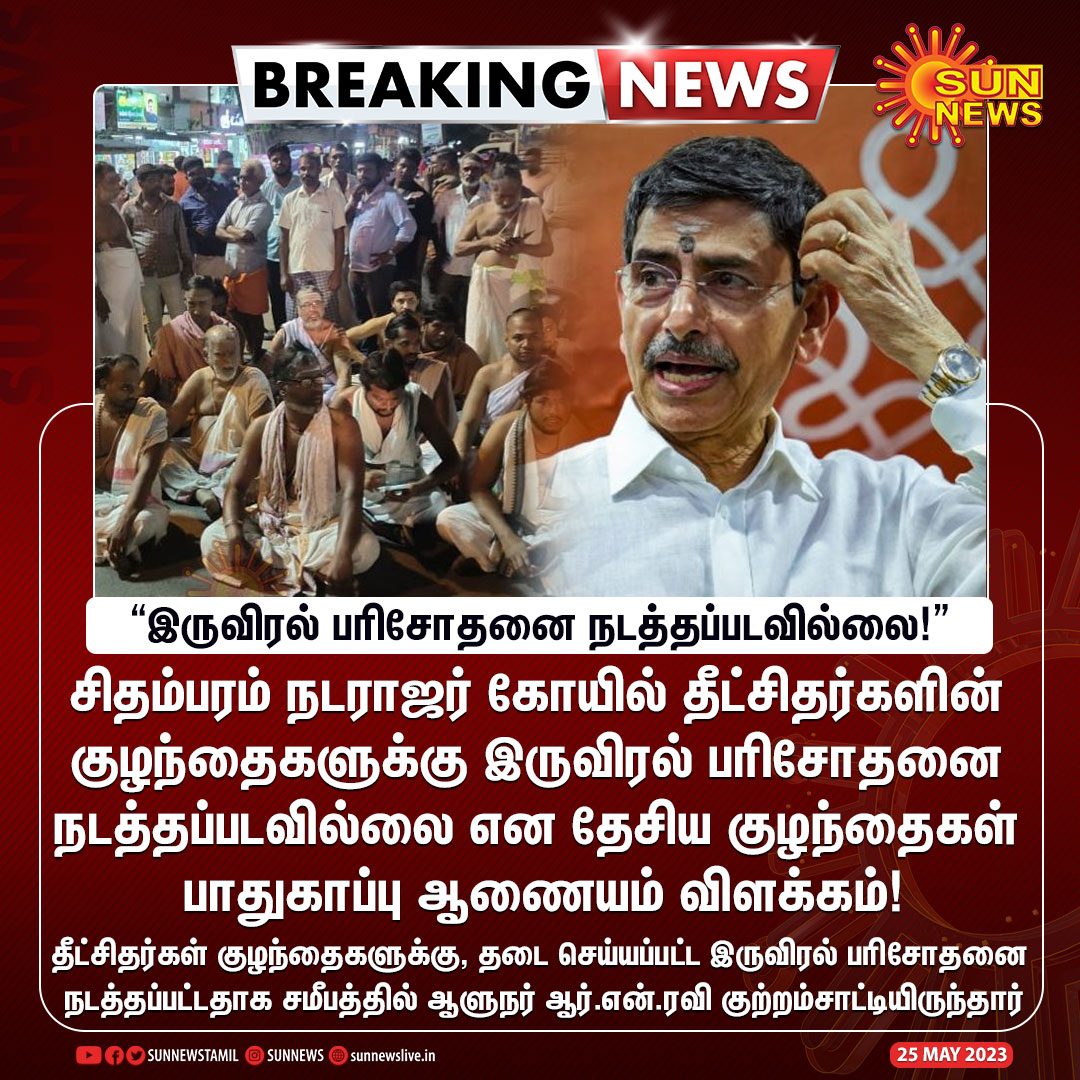
However, Sun News, a mouthpiece of the DMK, denied these and called them allegations.

Image

Subscribe to our channels on TelegramWhatsApp, and Instagram and get the best stories of the day delivered to you personally.

TN: Speaker Appavu Rebukes Dairy Minister Mano Thangaraj For Off-Topic Criticism Of BJP During Dairy Debate During Assembly Session

During the Tamil Nadu Legislative Assembly session that commenced on 20 June 2024, Speaker M Appavu reproached Minister Mano Thangaraj of the Milk and Dairy Development portfolio for attempting to critique the ruling BJP government at the Centre while responding to the debate on grant requests on 22 June 2024.

Thangaraj participated in discussions concerning the Dairy Department’s subsidy request, where he also unveiled new initiatives. However, his address took a controversial turn as he launched into a critique of the BJP’s policies, accusing them of taking control of various institutions, intimidating opposition parties, and engaging in divisive propaganda.

Speaker Appavu intervened promptly, admonishing Thangaraj for straying from the debate’s focus. Speaker Appavu said, “We drop the word ‘false’ from the Assembly records, (it’s) untruthful .. Come to the subject, come to the subject.”  Minister Mano Thangaraj justified that it is necessary for a political party to speak on politics, “Mr. Chairman, we as a political party should talk a little about politics, we are standing after the end of a critical election, I will finish in the time you have given me, please I’m asking you to allow me to speak.”

Appavu emphasized the importance of parliamentary etiquette and urged Thangaraj to adhere to the established norms of decorum and not to speak like in a political rally on the Assembly floor. Despite Thangaraj’s attempt to justify his remarks as pertinent to political discourse following a critical election, Appavu reiterated the need for relevance and civility within departmental debates. The Speaker redirected Thangaraj to discuss matters pertinent to the dairy sector, instructing him to refrain from irrelevant discussions.

Again Speaker Appavu warned, “They have spoken in the debate on the grant request of the Milk and Dairy Development department, and everyone’s wish is to answer it, and we should go beyond that… you can just touch touchstone of reality. It is not polite if you speak like you are speaking outside in the (political) platform, the assembly has some civility and you have to behave according to it, but if you speak beyond that, it is not good.”

Later, Minister Thangaraj reassured that he would uphold the decorum of the assembly sessions. However, the Speaker urged the minister to drop the issue, indirectly referencing senior ministers. Despite this, the minister cited the Human Development Index once more and uttered that India tops in false propaganda. This prompted the Speaker to express anger, demanding that the minister stick to the relevant topic. The Speaker warned that anyway the irrelevant remarks would be expunged from the assembly records. Subsequently, Thangaraj shifted his focus to the dairy industry, announcing plans for the purchase of 1.8 million liters of milk and assuring the procurement of 6.6 million liters in the near future.

(with inputs from DTNext)

Subscribe to our channels on TelegramWhatsApp, and Instagram and get the best stories of the day delivered to you personally.

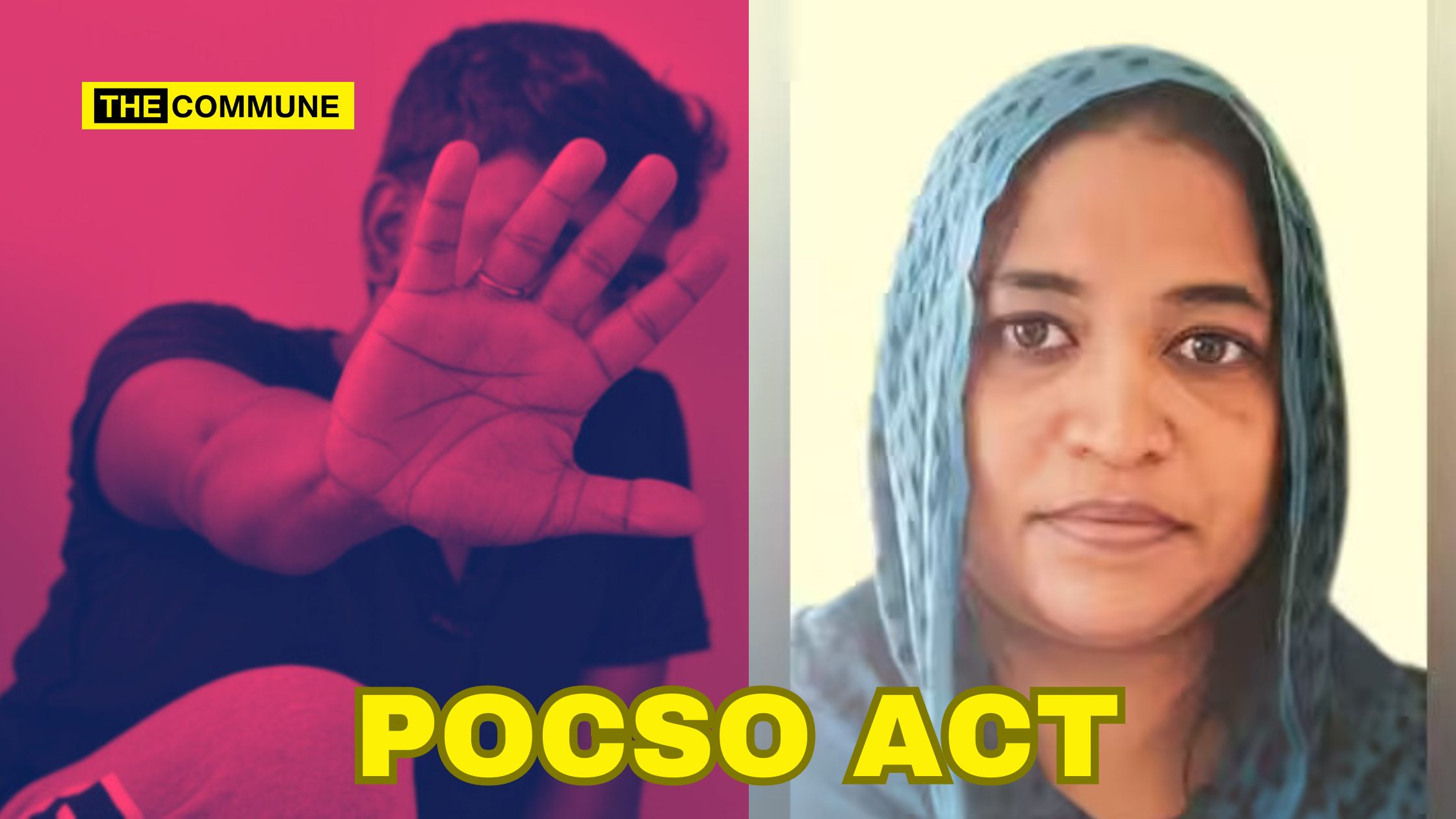
POCSO Case Filed Against School Teacher Fathima Kani For Alleged Relationship With Minor Student

A case under the POCSO Act has been registered against a 42-year-old teacher from a private school who developed romantic relationship with 17-year-old student, causing a significant uproar due to the teacher’s betrayal of trust and ethical misconduct.

Fathima Kani, aged 42, hailing from Madurai, was employed as an educator at a private school located in Kariapatti, Virudhunagar district. The situation unfolded as Fathima Kani started showing special attention to a Plus-2 student at the same school. Following an incident where the student met with an accident and fell ill, Fatima displayed notable care and concern for the student, including assisting with academic tasks. Upon learning of these actions, the school administration allegedly directed that Fathima be transferred to a school in Melur, Madurai.

Despite the transfer order, it is alleged that the teacher continued communicating with the student. After completing his 12th grade, the student went missing on the 15 June 2024, prompting distress among his parents. Extensive searches at the residences of his friends and relatives yielded no results, leading to the parents filing a report at the Aviyur police station.

During the ensuing investigation, it was discovered that the student and the 42-year-old computer teacher, Fathima Kani, were involved in a romantic relationship. The school administration was notified, and the police, suspecting further misconduct due to reports of other instances involving the teacher and students, probed deeper, eventually locating Fathima at a lodge in Puducherry. Subsequently, law enforcement rushed to the lodge in Puducherry to rescue the student and apprehend Fathima. Upon questioning, Fatima claimed that she was taking the student to Puducherry for college enrollment, raising doubts about her actions considering the student’s parents.

A POCSO complaint was filed against Fathima, highlighting her apparent failure to inform the parents of the college arrangement. Notably, Fathima Kani is married and has two children.

(with inputs from Vikatan)

Subscribe to our channels on TelegramWhatsApp, and Instagram and get the best stories of the day delivered to you personally.

Dravidianists Peddle Fake News Linking RSS To Kallakurichi Hooch Tragedy, RSS Refutes It Vehemently

The Kallakurichi hooch tragedy saw nearly 50 people die after consuming illicit liquor. Now, Dravidianists have once again started spreading lies and peddling propaganda that the Rashtriya Swayamsewak Sangh (RSS) is allegedly behind the Kallakurichi hooch tragedy.

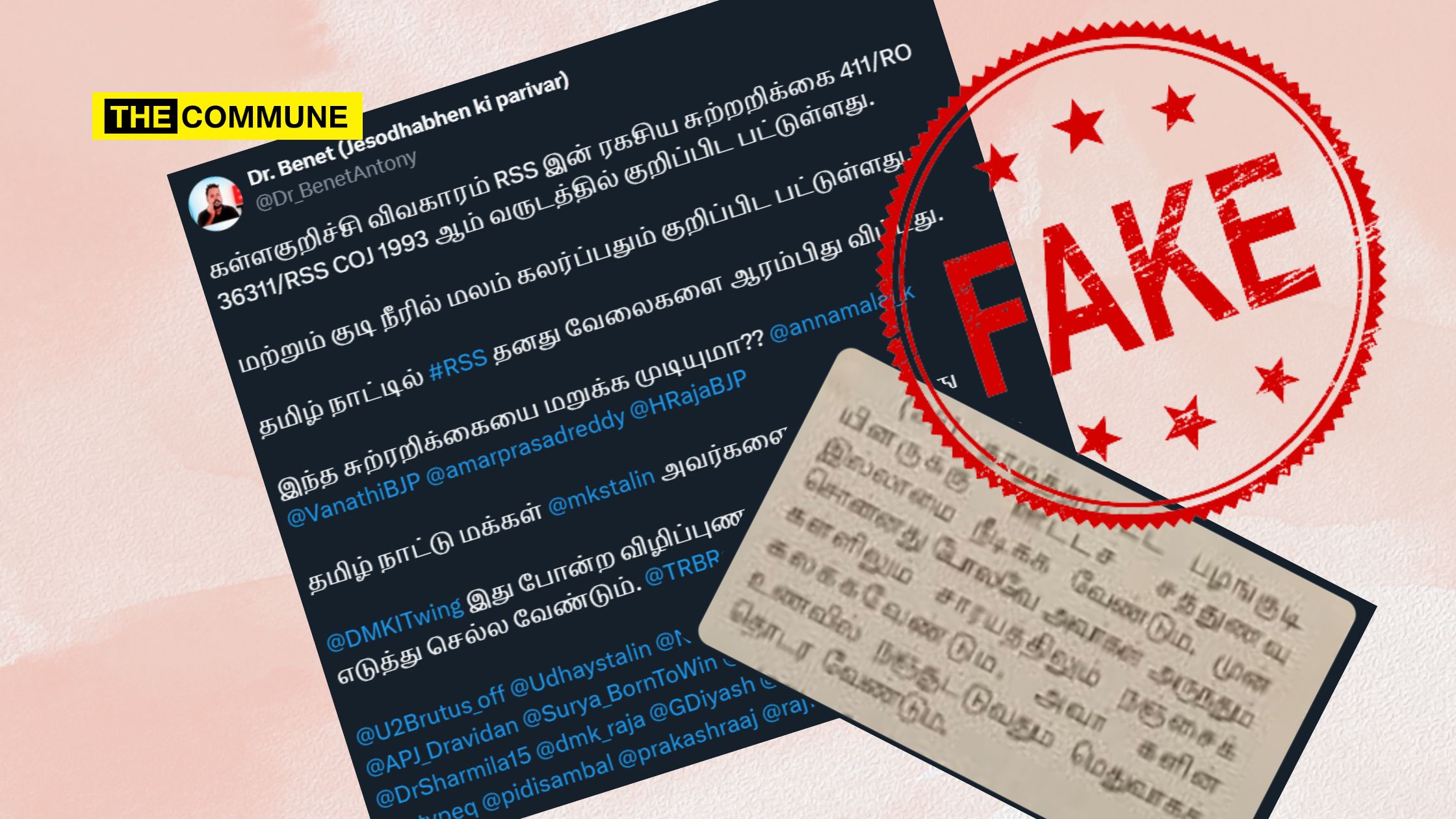
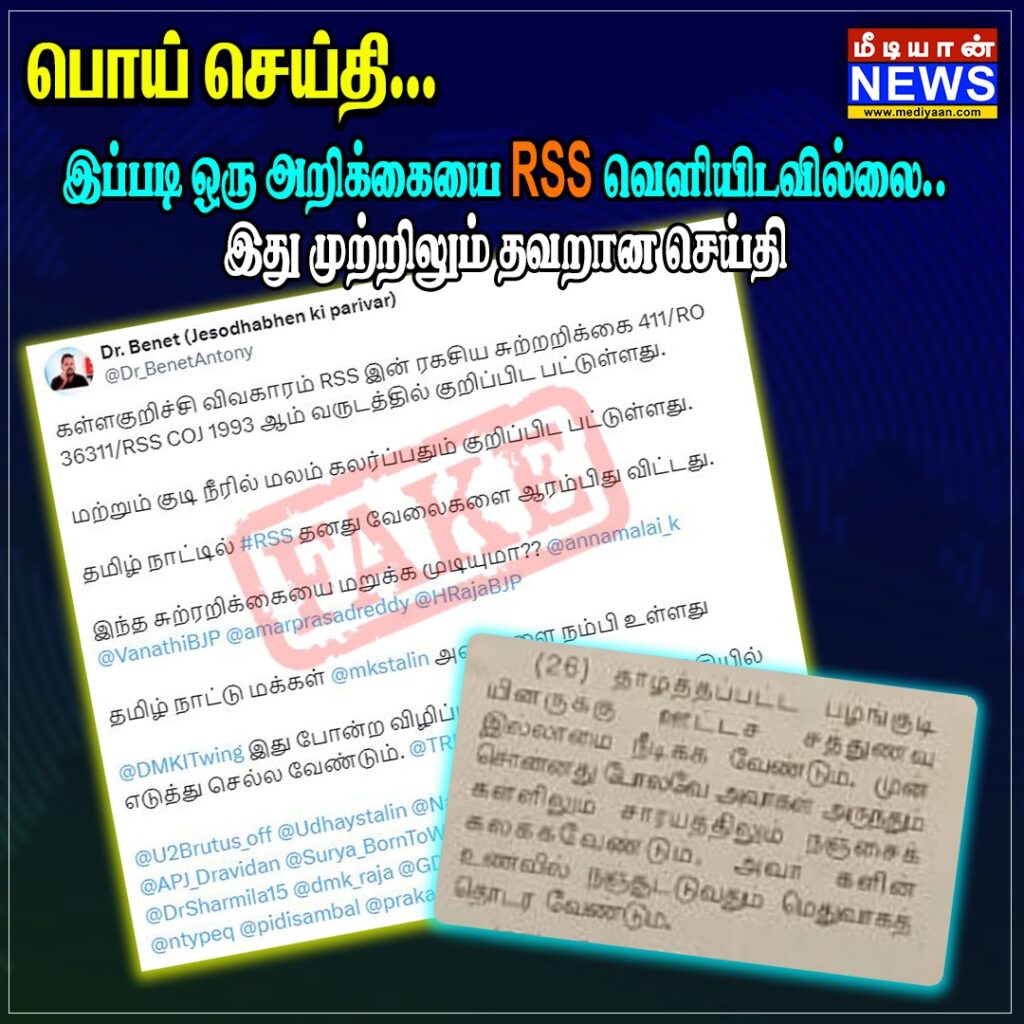
These Dravidianists shared screenshots of an alleged circular that “incriminates” the RSS of wrongdoing. The post on social media platform X read, “With regard to the Kallakurichi incident, a confidential circular of the RSS saw mention of it. 411/RO 36311/RSS COJ 1993. Faecal contamination of drinking water has also been noted. #RSS has started its work in Tamil Nadu. Can you deny this circular?? @annamalai_k @VanathiBJP @amarprasadreddy @HRajaBJP. Tamil people @mkstalin It depends on them. @DMKITwing Such awareness should be taken among people. @TRBRajaa”

The post also shared a supposed circular with the text, “Malnutrition must continue in oppressed Scheduled Tribes. As mentioned above, the poison must be mixed with the liquor and toddy they consume. Even their food must continue to be contaminated with poison.”

The RSS has refuted this and has stated that such circulars were not issued by the organisation and that the Dravidianists are spreading fake news.

Subscribe to our channels on TelegramWhatsApp, and Instagram and get the best stories of the day delivered to you personally.

Idol Of Lord Vishnu Unearthed During Construction In Mannargudi, Thiruvarur District

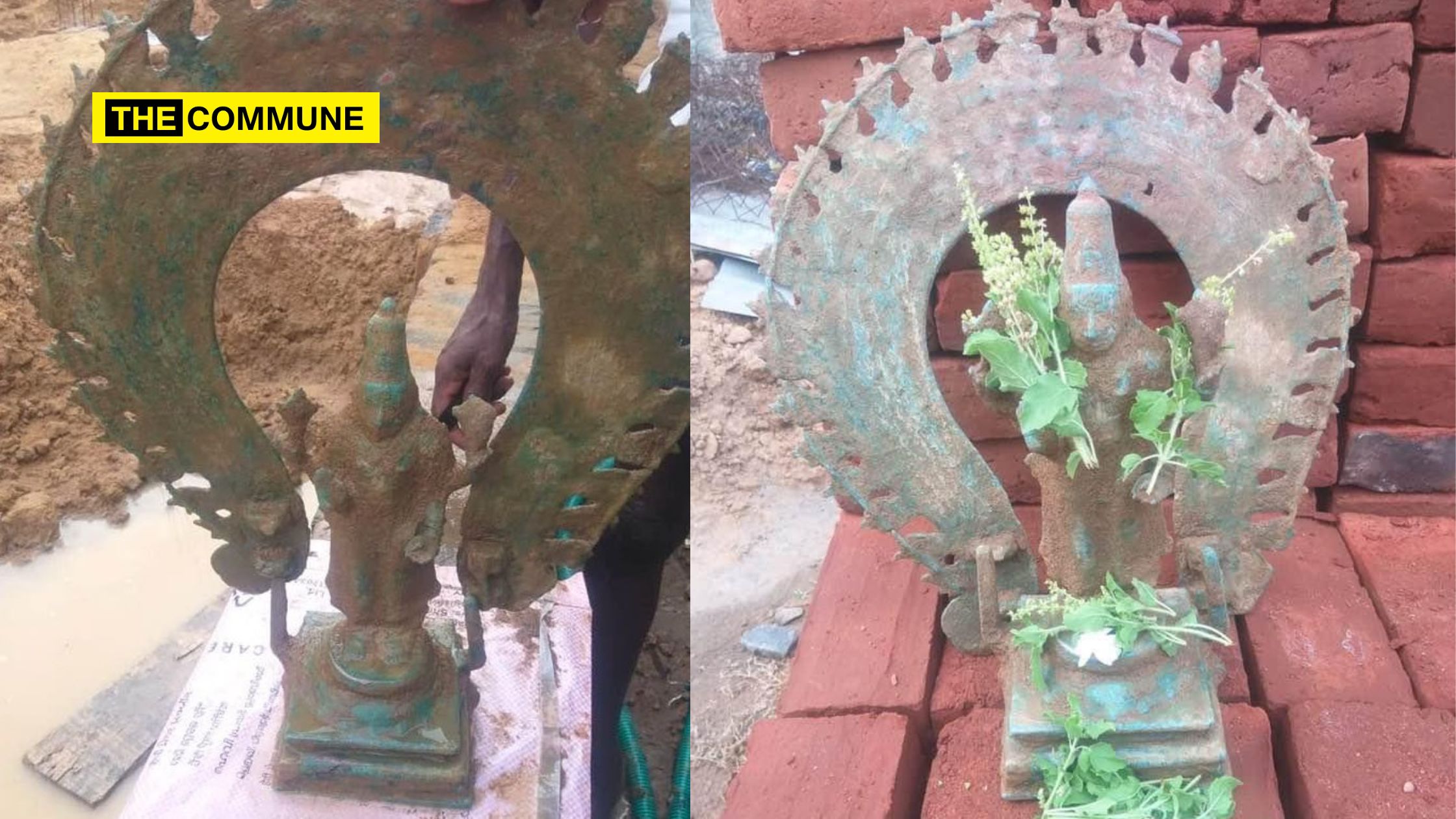
A metal idol of Lord Vishnu was discovered on 23 June 2024 while digging a ditch for the construction of a house in Mannargudi.

This discovery occurred on Sanjivee Street, where Natarajan, a 52-year-old resident, was building a house on his vacant land in Modern Nagar. M. Ramurthy, 48, from Gudithangiche, was tasked with digging a ditch for the construction of a sewage tank.

During the process, Ramurthy unearthed a metal idol buried in the soil. The discovery was promptly reported to the Mannargudi Police Station and the District Collector’s office. District Collector K. Mahesh Kumar and Police Inspector Velayutham arrived at the scene to inspect the find.

The idol, identified as an ancient statue of Perumal, stands one and a half feet tall and weighs approximately 5 kg. The statue, along with the arch (Thiruvatchi), was handed over to the District Collector’s office for further examination.

Initial assessment of the idol seems to indicate that the idol belongs to the later Chola era.

The archaeological department will conduct a thorough investigation to uncover more details about the idol’s origin and historical significance.

(with inputs from Dinamani)

Subscribe to our channels on TelegramWhatsApp, and Instagram and get the best stories of the day delivered to you personally.

Dravidianists & Dravidianist Media Peddle Misinformation On GST, Falsely Portray GST Reduction On Milk Cans As New 12% Tax

The media propagandists relentlessly strive to cast the Narendra Modi government in a negative light, fabricating stories daily despite readily available accurate information from respective ministry websites and the internet. Recently, they insinuated that the government had imposed a new 12% tax on milk cans, falsely portraying Modi as an anti-agrarian and anti-dairy farmer.

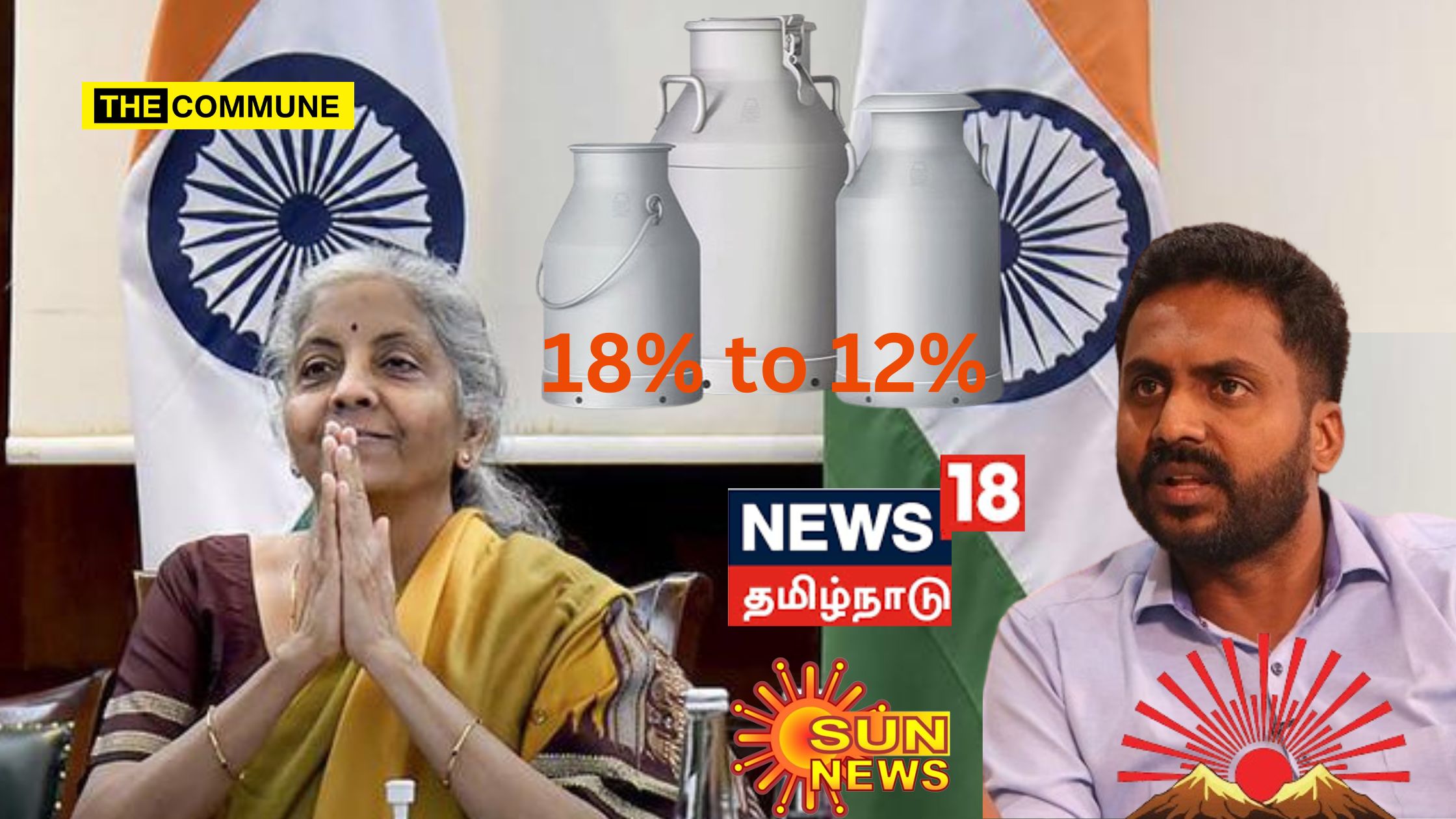
Contrary to these misleading narratives, the Goods and Services Tax (GST) Council meeting on 22 June 2024, actually focused on easing tax burdens and enhancing compliance for businesses. One of the key decisions made was to reduce the GST on milk cans from 18% to 12% nationwide, ensuring a uniform tax rate regardless of the can’s material—whether steel, iron, or aluminum.

In this regard, the Union Finance Minister Nirmala Sitharaman’s office shared information on the X platform stating that GST Council has recommended to prescribe a uniform rate of 12% on all Milk Cans meaning steel, iron, aluminum which are irrespective of the use. They are called milk cans but wherever they are used that will be the rate applicable so that no disputes arise out of it. The Council also recommended to prescribe a uniform GST rate of 12% on all Carton Boxes and cases of both corrugated and non-corrugated paper or paper board. This will, in particular, help the apple growers of Himachal Pradesh and Jammu & Kashmir. The Council clarified and recommended that the clarification be put out on that all types of Sprinklers, including fire water sprinklers, will attract 12% GST. The Council recommended to prescribe 12% GST on all Solar Cookers whether it has single or dual energy source. – Smt @nsitharaman post 53rd GST Council Meeting in New Delhi.

Opposition sympathizers were circulating the news of a 12% GST on milk cans as though it was a new tax introduced under Modi 3.0, conveniently omitting the crucial detail that this actually was an announcement for a reduction from the previous 18% GST rate. For instance, R. Rajiv Gandhi, President of the DMK Student Union, commented,Nirmala madam who poured milk to milk!! 12% GST Tax Robbery! suggesting that the 12% GST is detrimental to the dairy industry.

The situation became concerning when Tamil Nadu news media, such as News 18 Tamil Nadu, published a news card stating,Union Finance Minister Nirmala Sitharaman announced a 12% GST tax on all types of milk cans, including iron, aluminum, and cast iron,missing out the very fact that it was reduced from 18% portraying the BJP and the Union Finance Minister in negative light.

As expected, the mouth piece of the ruling DMK, their family-owned news channel Sun News, published a news card stating, 12% GST on all types of milk cans-Nirmala Sitharaman, Union Finance Minister

 Subscribe to our channels on TelegramWhatsApp, and Instagram and get the best stories of the day delivered to you personally.

Chennai BJP Councillor Uma Anandan Shreds Justice Chandru’s Anti-Hindu Report To Pieces And Storms Out Of Corporation Meeting

On 24 June 2024, BJP councillor Uma Anandan walked out of the Chennai Corporation council meeting, the first held after the 2024 Indian general elections, in protest against Justice K Chandru’s recent report on eliminating caste discrimination in schools. During the meeting, Uma Anandan tore up a copy of the report, sparking a commotion among the council members.

Uma Anandan condemned the former High Court judge’s report, calling it biased and criticized the council for not addressing other caste-based issues, such as the exclusion of certain castes from a Christian crematorium in Tirupur’s Palladam area. She expressed her frustration to the media, stating, “Justice Chandru should have spoken about this. A biased statement, a biased judge has issued a statement. The Chennai City Council should condemn Justice Chandru’s statement. They did not condemn. Thus I tore up the judge’s report.”

Anandan further criticized the council’s focus on praising Udhayanidhi Stalin, son of the Chief Minister, instead of addressing pressing issues. She said, “Why do we need to talk about this at this time? At this time, why are you singing praises to Udhayanidhi Stalin? Chief Minister is ok, but why should you sing praises to Udhayanidhi?”

The incident prompted VCK councillor Ambedvalavan to demand that Mayor R Priya ban Uma Anandan from attending council meetings for the next three months. His request received unanimous support from all DMK councillors. However, no decision on the matter has been publicly announced.

The actions of Uma Anandan and her subsequent comments have led to a significant stir within the council and among the public. TN BJP leaders and executives have voiced strong opposition to Justice Chandru’s report. It is noteworthy that the report presented by the Justice Chandru committee was seemingly anti-Hindu and attacked only Hindu customs and traditions.

Subscribe to our channels on TelegramWhatsApp, and Instagram and get the best stories of the day delivered to you personally.

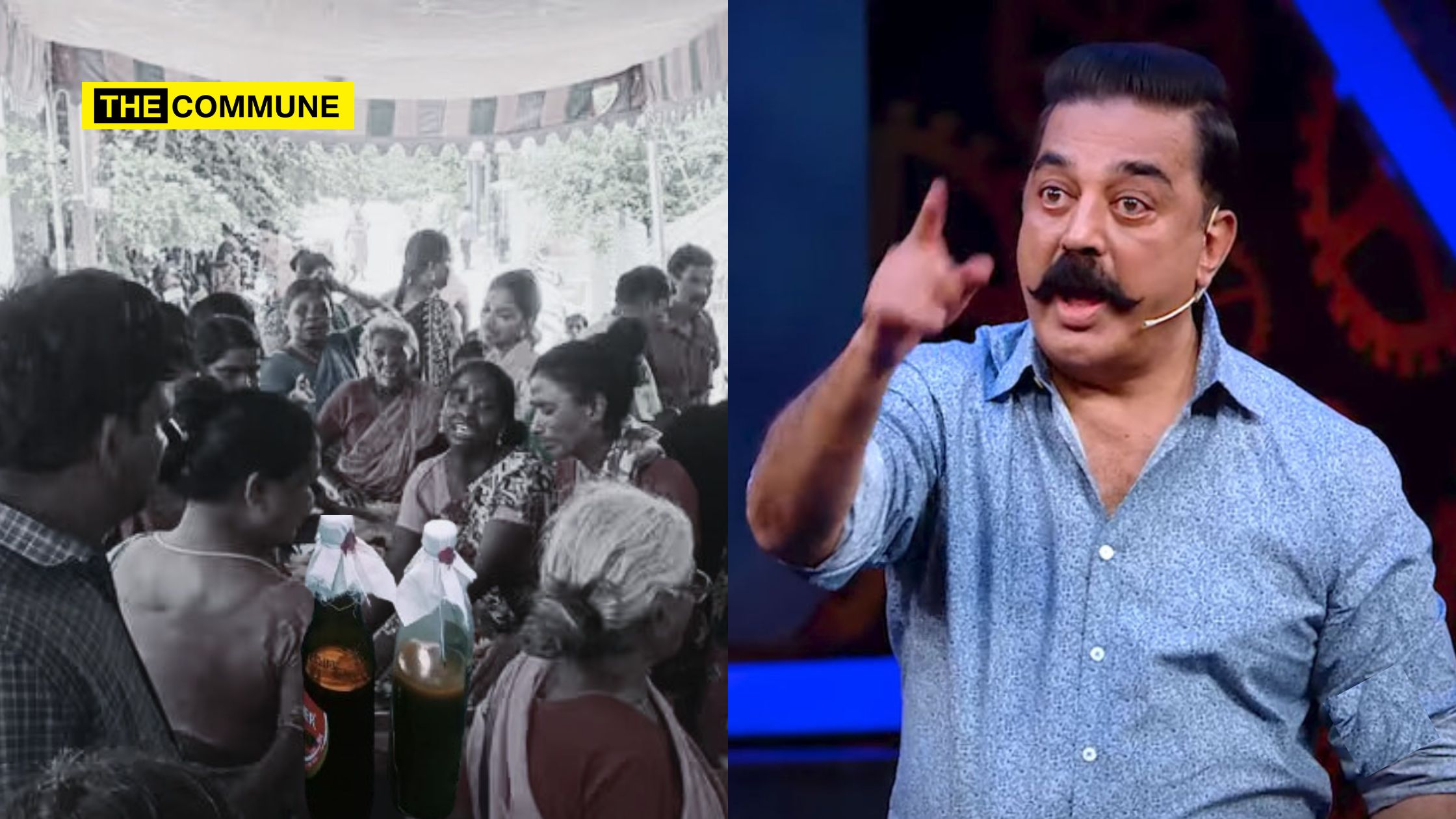
Part-Time Politician Kamal Haasan Blames People For Kallakurichi Hooch Tragedy, Buttresses DMK Govt

Kamal Haasan,  a full-time actor, part-time politician, and leader of the political party Makkal Needhi Maiam (MNM), finds himself amidst criticism, ridicule, and trolling on various social media platforms. This is because his condemnation lacked the strength to highlight the DMK government’s failure in addressing the Kallakurichi hooch tragedy, which is not an isolated incident but the second occurrence.

On 20 June 2024, Kamal Haasan on his official X account wrote, “Tamil Nadu has been shocked by the news that 36 people have died, and many others are in critical condition after consuming illicit liquor in Kallakurichi. My deepest condolences to the bereaved families. I wish those undergoing treatment a speedy recovery. The government of Tamil Nadu should crack down on the bootlegger dealers with an iron fist so that such a tragedy does not happen again in Tamil Nadu. Rehabilitation centers should be set up immediately to help drug addicts get rid of it. Now is the time for each of us to get involved in the war against addiction.”

Later, as the death toll climbed to 58, Haasan was compelled to visit the area due to online criticism aimed at virtue-signaling celebrities from Kollywood and sympathizers of the DMK. Therefore, on 23 June 2024, Kamal Haasan visited the victims of the hooch tragedy in Kallakurichi, urging them to recognize the dangers of excessive drinking and advocating for the establishment of psychiatric centers to offer counseling.

Speaking to the reporters Kamal Haasan said, “These victims will have to understand they have exceeded their limit, and they have been careless. They have to be careful. They have to take care of their health. My request to the government would be to create psychiatric centres which will counsel them.

“It has to be occasional drinking, social drinking if at all. But they must understand that exceeding limit in any form be it sugar, or anything is bad,” the part-time politician added.

This statement also didn’t go well, as the actor-turned-part-time politician, who was once a vocal critic of the DMK but recently switched alliances for a Rajya Sabha seat, faced scrutiny from both internet users and opposition parties.

BJP leader Amit Malviya on his official X account accused Haasan of shifting blame onto the victims instead of confronting the problem of illegal alcohol in Tamil Nadu. Malviya wrote, “Kamal Haasan is actually blaming the victims of Hooch tragedy instead of holding the MK Stalin Govt responsible for the illicit liquor, which is freely available in Tamil Nadu. One has to be depraved to make such an outrageous comment. But then what can one expect from INDI Alliance?”

A netizen wrote, “All these DMK lootlicking just for Rajasabha MP seat. Pathetic downfall of your career. Not a single word of “Stalin need to control this hooch sellings.”

Another netizen calling out the hypocrisy of Kamal Haasan wrote, “Kamal Hussain saar they have been drinking all their lives like u do But they died because the liquor was adulterated and had become a poison So u don’t blame victims for their death u blame the govt which doesn’t control illicit liquor Ur govt owns liquor industry and makes tens of thousands of crore by selling liquor Since Dstock bought u with RS seat u r blaming victim Would u have done the same if this has happened in bjp ruled state

Another netizen ridiculed Kamal Haasan stating, “I think the only missing statement in this speech is “BJP and Modi are responsible for this”

Another netizen wrote, “If this would have been BJP ruled state, he would said same? Blame the Victim shield DMK What an intelligent Man Kamal Hassan”

Another netizen wrote, “Sorry @ikamalhaasan sir, but shame on you! Instead of holding the govt, illicit liquor sellers, and local authorities accountable for the deaths in the tragedy, you’re lecturing the victims about “exceeding their limit” and being “careless”? Are you trying shift the blame away from those who should be held responsible? These people died due to the negligence and corruption of the system, not because they “exceeded their limit” or were “careless”! Even 10 ml poison can kill a person. And your double standards are appalling! If this had happened in a BJP-ruled state, you would have lashed out at the govt and called the people innocent. But because it happened under your beloved DMK’s watch, you’re suddenly preaching about “occasional drinking” and “social drinking”?”

Another netizen stated, “Never condemned the government for its incapacity and inefficiency? Oh yeah Rajya Sabha seat is pending!”

Subscribe to our channels on TelegramWhatsApp, and Instagram and get the best stories of the day delivered to you personally.

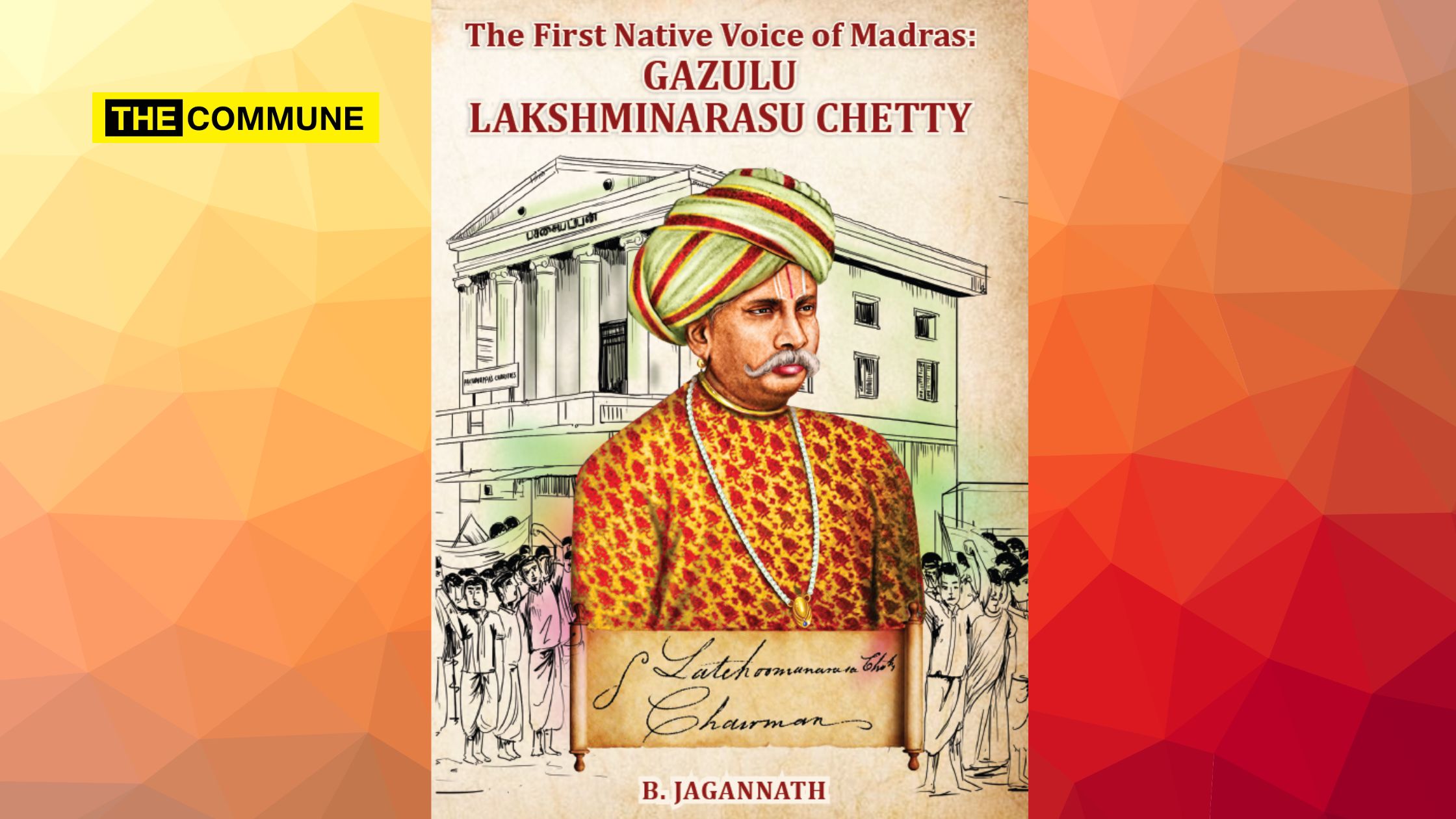
Book Review: The First Native Voice Of Madras – Gazulu Lakshminarasu Chetty – A Well-Researched Book On A Forgotten Hero Of 19th Century India

In this meticulously researched and enlightening book, the author and advocate, B Jagannath uncovers the remarkable life and legacy of Gazulu Lakshminarasu Chetty, a pivotal figure in 19th century Madras Presidency whose contributions have been largely overlooked by history.

For the uninitiated, B Jagannath is the same person who stood up and took action in the “eradicate Sanathana Dharma” remarks case made by DMK Minister Udhayanidhi Stalin.

This book was launched on 17 June 2024 by the Hon’ble Governor of Tamil Nadu, RN Ravi at TN Rajaratnam Kalai Arangam – Muthamizh Peravai in Adayar, Chennai.

The book is a revelation for many readers, including this reviewer, who had little prior knowledge of Chetty. As one reads through the book, it becomes clear that Chetty was a towering figure who stood as a formidable barrier between the native Indians and the oppressive policies of the British Crown.

Written in accessible prose, the book paints a vivid picture of the challenges faced by native Indians under British rule in the 19th century. It details the extent of missionary activities, forced conversions, oppressive taxation, and attempts to impose Christian religious education. Against this backdrop, Chetty emerges as a heroic defender of native Indians’ rights and culture.

One of Chetty’s most significant achievements was breaking the British monopoly on printing and publishing. By establishing the Madras Crescent newspaper, he gave voice to native concerns and became a pioneer of the Indian press. The author makes a compelling case for considering Chetty the father of the Indian printing and newspaper industry.

The book also highlights Chetty’s political acumen and dedication. He not only raised issues in local committees but ensured they reached the British Parliament, often achieving tangible results for the native Indian populace. His efforts were crucial in preserving access to education for Indians and resisting forced religious conversions.

While the book is comprehensive, it leaves the reader wanting more. As noted by the Governor of Tamil Nadu during the launch of the book, the book is a condensed version, and each chapter could be expanded into its own volume. This is particularly true for the sections detailing the atrocities committed under British rule, which are both shocking and deserving of further exploration.

A question that lingers after reading is why such an important historical figure has been largely forgotten. The book raises intriguing possibilities about systematic efforts to erase Chetty’s legacy, potentially by missionary groups or Dravidian ideologues. This aspect of historical memory and narrative control is a fascinating thread that could be further developed.

One of the book’s strengths is its portrayal of Chetty as a unifying figure who fought for all Indians, regardless of caste, boundary, or class. This nuanced view challenges some contemporary narratives about historical caste relations in Tamil Nadu.

In conclusion, this book is not just a biography but a seed for further historical exploration. It serves as a vital contribution to our understanding of 19th-century India and the complex dynamics of colonial rule. For anyone interested in Indian history, the freedom struggle, or the roots of modern Indian media, this book is an essential read. It not only honors a forgotten hero but also prompts us to question why such important figures fade from our collective memory. Kudos to the author for choosing this forgotten hero and bringing him back into the limelight. 

Subscribe to our channels on TelegramWhatsApp, and Instagram and get the best stories of the day delivered to you personally.