Home Blog Page 721

AAP Simp Dhruv Rathee & Kerala Congress Together Peddle Misinformation Against PM Narendra Modi
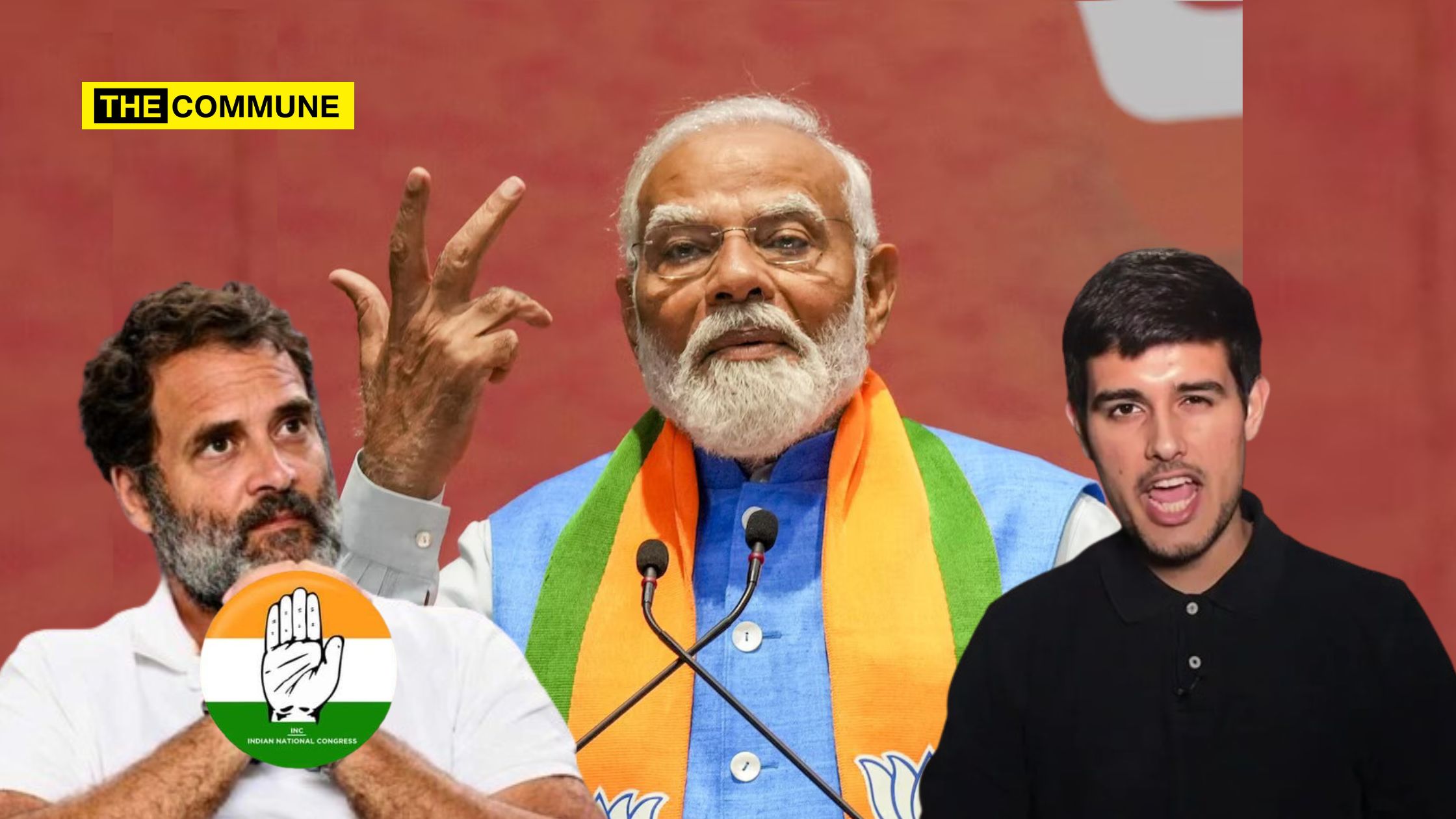
Fake propaganda frequently proliferates on social media, often propagated by opposition especially sympathizers of the Congress party. These propagandists persistently endeavor to portray the Narendra Modi government negatively, fabricating stories daily, despite easily accessible accurate information on the internet. Even when their false agendas are exposed and proven to be lies, they continue spreading misinformation to reach a broader audience, allowing misinformation to persist.

In this way, the unofficial propagandist of the Aam Aadmi Party (AAP) Dhruv Rathee and the Kerala unit of the Indian National Congress (INC) have collaborated in a propaganda effort. They selectively quoted a fragment from a larger tweet by Prime Minister Narendra Modi on his official website’s account. The excerpt they propagated attributed words to Narendra Modi: “@narendramodi – If a student is weak and there is test day, you give questions a day in advance the student can get marks,” linking it to the recent paper leaks in NEET UG exams.

Dhruv Rathee initiated the propaganda by writing a post stating, “What was Narendra Modi trying to say here?” quoting Modi’s post below.

Kerala unit of INC in its official X account stated, “Appadiya? So, the grand NEET scam was his original idea! Students, please note: this man is your Prime Minister now,” quoting the Prime Minister Modi’s tweet followed by propagandist AAP sympathizer Dhruv Rathee.

In December 2012, Narendra Modi addressed seven large public gatherings across Gujarat, culminating with a significant rally in Ahmedabad that drew an enthusiastic response. Responding directly to statements made by Sonia Gandhi earlier in South Gujarat, Modi highlighted her inability to answer questions he posed. He criticized the Congress for lacking substantive issues in the election, particularly noting Sonia Gandhi’s appeal based on familial connections rather than policy achievements.

Modi questioned Sonia Gandhi’s assertions about Gujarat’s infrastructure, disputing claims about road quality and highlighting the state’s exclusion from PM Gram Sadak Yojana funds due to perceived road excellence. He emphasized the importance of truthfulness during elections, accusing the Congress of deception and unfulfilled promises. Addressing specific grievances, Modi criticized the Congress for banning cotton exports and mismanaging power distribution during their rule. He also defended Gujarat’s law and order record against Sonia Gandhi’s criticism and challenged allegations of corruption, asserting that discussing corruption did not suit the Congress.

In his closing remarks, Modi appealed to voters for another term to continue Gujarat’s development trajectory, urging them to reject Congress and its campaign tactics based on falsehoods about the state’s governance and achievements.

Following these events, Prime Minister Narendra Modi’s personal blog, NarendraModi.in, updated a series of tweets on the former Twitter platform. The posts read, “Congress has no issues in this election. What did she say today – my mother-in-law also came to this area,” was the first tweet. The subsequent tweet remarked, “She has not been able to answer any of my questions,” followed by another tweet suggesting giving questions in advance to a weak student, “If a student is weak and there is a test day, you give questions a day in advance the student can get mark.” further wrote, “Madam Sonia ji is in Gujarat. That’s why yesterday I sent some questions for her.”

This was in an election speech, Narendra Modi criticized Sonia Gandhi’s rally for spreading false information about the Gujarat administration.

Previously, the Kerala unit of the Congress crossed a line by making a shameful comparison on re-appointment of National Security Advisor (NSA) Ajit Doval to James Bond’s character, known for his womanizing tendencies. They dubbed Doval as ‘Desi 007’. This derogatory comparison, accompanied by a picture of actress and Member of Parliament Kangana Ranaut, has been widely condemned. Netizens expressed strong disapproval, leading to the deletion of the Kerala Congress’s post.

In its now-deleted post, the Kerala Congress in its official X handle wrote, “With his re-appointment at 79, ‘Desi 007’ Ajit Doval extends his record of being the oldest Bond ever. Roger Moore was the second oldest at 57 (A View to Kill-‘85)

https://twitter.com/Data_Statistica/status/1801283103199310155

And fake peddler Dhruv Rathee needs no introduction, below are some of the false claims, propaganda, and hypocrisy of Dhruv Rathee

Statue of Unity Propaganda: On 1 November 2018, Dhruv Rathee released a video on his YouTube channel titled “Statue of Unity: The Harsh Reality | Analysis by Dhruv Rathee.” In this video, Rathee argued that there is little reason to believe that the Statue of Unity would attract more tourists than India’s top historical landmarks such as the Taj Mahal or Amber Fort. He asserted that the statue of Sardar Patel is primarily a symbol of political significance and does not enhance India’s cultural and historical heritage. From an economic standpoint, Rathee deemed the statue impractical. He noted that the Taj Mahal, India’s most visited tourist site, generates an annual revenue of ₹25 crore from 8 million visitors. Rathee predicted it would be overly optimistic to expect the Statue of Unity to draw even a tenth of that number. He claimed that even if the statue were to match the popularity of the Taj Mahal, it would take over 120 years to break even, not including ongoing maintenance costs, making profitability seem unattainable. He never let his hope down prayed and begged in another video on 21 November 2019 titled, “Statue of Unity: First Year Performance“. But he got a slap on the face when in 2023 TOI reported, the Statue of Unity experienced its busiest year, with a record-breaking 5 million visitors. This influx generated over ₹400 crore in revenue by October 2023, marking the highest annual footfall for the site to date.

Unnao case Propoganda: On 11 May 2018, Rathee propagated in his social media that the CBI had confirmed rape charges against BJP MLA Kuldeep Singh Sengar. However, the CBI later slapped these claims, criticizing the dissemination of false and sensationalized stories. In an official statement, the CBI clarified, “In response to media queries related to a news item published today in a National Daily, it is stated that investigation in Unnao case is still continuing. CBI has not given any update/conclusion/views with respect to the case to any mediaperson. All such stories related to Unnao case published/broadcast in the media recently are purely speculative.

Dravidian Model Propaganda of building hospitals: On 17 April 2021, Rathee posted a message aimed at generating sympathy, criticizing the BJP for spending enormous sums on various projects: ₹3000 crore on the Statue of Unity, ₹20,000 crore on the Central Vista project, ₹300 crore on the Ram Mandir, and ₹700 crore on the BJP’s new party office. He argued that if this money had been spent on hospitals and healthcare facilities, countless lives could have been saved. However, it’s important to note that the funds for the Ram Mandir and the BJP’s new party office come from private sources, not public money. This time Rathee’s post was fact-checked and debunked by the UP government, which emphasized the need to read full news reports rather than just headlines.

Spreading fake news about collapse of Sattarghat Bridge in Bihar: In July 2021, Rathee, his peddler buddy Mohammed Zubair and the members of Congress claimed that a section of the Sattarghat Bridge over the Gandak River in Bihar’s Gopalganj district had collapsed due to heavy rains that caused increased water flow. They asserted that the bridge, which had been constructed at a cost of ₹263 crore and inaugurated by Bihar CM Nitish Kumar just 29 days earlier, had suffered significant damage. However, the peddlers lie didn’t stand long as the claim was quickly refuted by the Bihar government’s public relations department. They clarified that it was actually the approach road to a small, older 18-meter-long bridge, located about 2 kilometers from the Sattarghat Bridge, that had been washed away. They assured the public that the main 1.4 km long Sattarghat Bridge remained entirely intact and safe. ImageFear mongering during COVID pandemic: In Dhruv Rathee’s analysis of the COVID-19 pandemic during 2019-20, he initially advised against panicking over the new COVID-19 virus, suggesting that the threat was limited to outside of India. Later he propagated that, “people living outside of China have nothing to worry about,” suggesting that India performs poor in hospital facilities. However, his perspective shifted significantly as the situation evolved.

Modi’s Model Village propaganda: In a bid to undermine Prime Minister Narendra Modi, Dhruv Rathee posted images purportedly showing a model village in a state of disrepair, with dilapidated toilets and garbage, mocking Modi’s Swachh Bharat initiative. However, an independent fact-checker later debunked Rathee’s claims, providing evidence that the same locations were actually well-maintained. This revelation suggested that the post was a deliberate attempt to tarnish the Prime Minister’s reputation and discredit the efforts of the public and local administration.

Ladakh Propoganda: Posting a video of General seceretary of Youth Congress of UT of Ladakh, Dhruv Rathee claimed him (Tundub Nubu) to be a local resident complaining about the lack of facilities in the area. However, this video was debunked as propaganda when Tundub Nubu Cheetha’s social media account surfaced, revealing the misleading nature of the claims made by Dhruv Rathee and the Congress regarding the situation in Ladakh.

WhatsApp university propaganda:  Another instance of false information, highlighting his investigative abilities, is when Rathee shared the claim, “Do you remember the news about Mumbai’s income tax department building was on fire & fire burnt all the file related to Nirav Modi?” The very next day, the tax department slapped them, debunking the claim by asserting,”News reports appearing in some sections of media alleging that records/documents relating to investigation of Nirav Modi/Mehul Choksi have been destroyed in the Scindia House fire in ITOffice,Mumbai are completely false & misdirected.

Image

Hypocrite Dhruv Rathee

Siva Sena Vs Sachin Piot: Dhruv Rathee displays blatant hypocrisy, showing clear favoritism towards Congress and AAP allies. When it comes to political shifts, his stance varies significantly. He readily supports Shiv Sena, praising their actions despite their alliance break, yet he laments and curses Sachin Pilot when the latter leaves Congress to potentially join BJP. Rathee’s double standards are evident as he expressed, “only cowards and power hungry politcians join a party of opposite ideology.”

Did you know that Dhruv Rathee was previously staunchly opposed to the Congress party, even making videos exposing its various scandals? He outlined a series of these scandals, stating, “Have you heard of Congress corruption? In the history of independent India, such rampant corruption has never been witnessed. From the 2G scam to the 3G scam, from the Adarsh scam to the Satyam scam, from the Colgate scam to the CWG scam, from the solar scam to the cash-for-vote scam, the list seems endless. In this regard, the Congress party deserves zero.” However, despite his past criticisms, he is currently seen as supporting the party, working tirelessly for a party known for its corruption.

Even went as far as effortlessly spreading messages of Rahul Gandhi via his personal social media account, despite declaring himself to be a neutral influencer.

Dhruv Rathee has been critical of YouTubers who promote betting apps, yet he has engaged in promoting cryptocurrency himself. He even featured a sponsored segment in one of his videos, claiming that PNP Cryptocurrency is the world’s first regulated crypto. This claim raises eyebrows, as even those with a basic understanding of cryptocurrency know that it operates in a decentralized manner and cannot be regulated by governments. This is an example of his IQ level.

Hinduphobic Dhruv Rathee

Hindu Phobic Comedy is Democratic Right: In a video supporting Munawar Faruqui and Kunal Kamra, Dhruv Rathee addresses the cancellation of their shows over allegations of Hinduphobic comedy. Rathee contends that the way these comedians are being treated contradicts the principles of democracy and law and order in India. He asserts that the controversy arises from jokes by Munawar and Kunal that have been misinterpreted and taken out of context, leading to claims that they were offensive to Hindu deities.

Equating Ramayana to Spider man: In another interview, Dhruv Rathee, who identifies as an atheist and does not support idol worship similar to the views of Islamists and followers of Abrahamic religions, expressed his skepticism about the historicity of the Ramayana and Mahabharata despite some claims of historical evidence. Rathee remarked, “When I was around 7-8 years old, I often heard stories about gods and questioned their validity. They didn’t seem real to me. I listened to many stories about the Ramayana and Mahabharata during my childhood, including tales of armies of monkeys. No one could provide a satisfactory explanation when I asked about it.”He continued, “Using critical thinking and logical reasoning, I concluded that these stories are not real; they simply don’t make sense.” Rathee also addressed claims that the Ramayana is historical due to the existence of a man-made bridge between India and Sri Lanka. “People argue that the bridge’s existence proves the Ramayana’s historicity, but this is a shallow level of thinking,” Rathee compared this reasoning to the Spider-Man movies, noting, “Just because New York exists in reality and also appears in Spider-Man movies, it doesn’t mean Spider-Man is real.”

BJP received Electoral bond money from ‘Beef’ exporting Company: Dhruv Rathee, on his X handle,  claimed, “Did you know? Electoral Bond data reveals that BJP received crores of money from India’s top beef exporting company.” However, his assertion was swiftly debunked by Finance Minister Nirmala Sitharaman. She clarified that the export of meat from oxen, calves, cows, and bulls is prohibited in India. This ban aligns with the country’s cultural and religious values, as the cow holds a sacred status for a large segment of the population. The government’s policy on this matter has been steadfast, making any contrary claims unfounded.

Subscribe to our channels on TelegramWhatsApp, and Instagram and get the best stories of the day delivered to you personally.
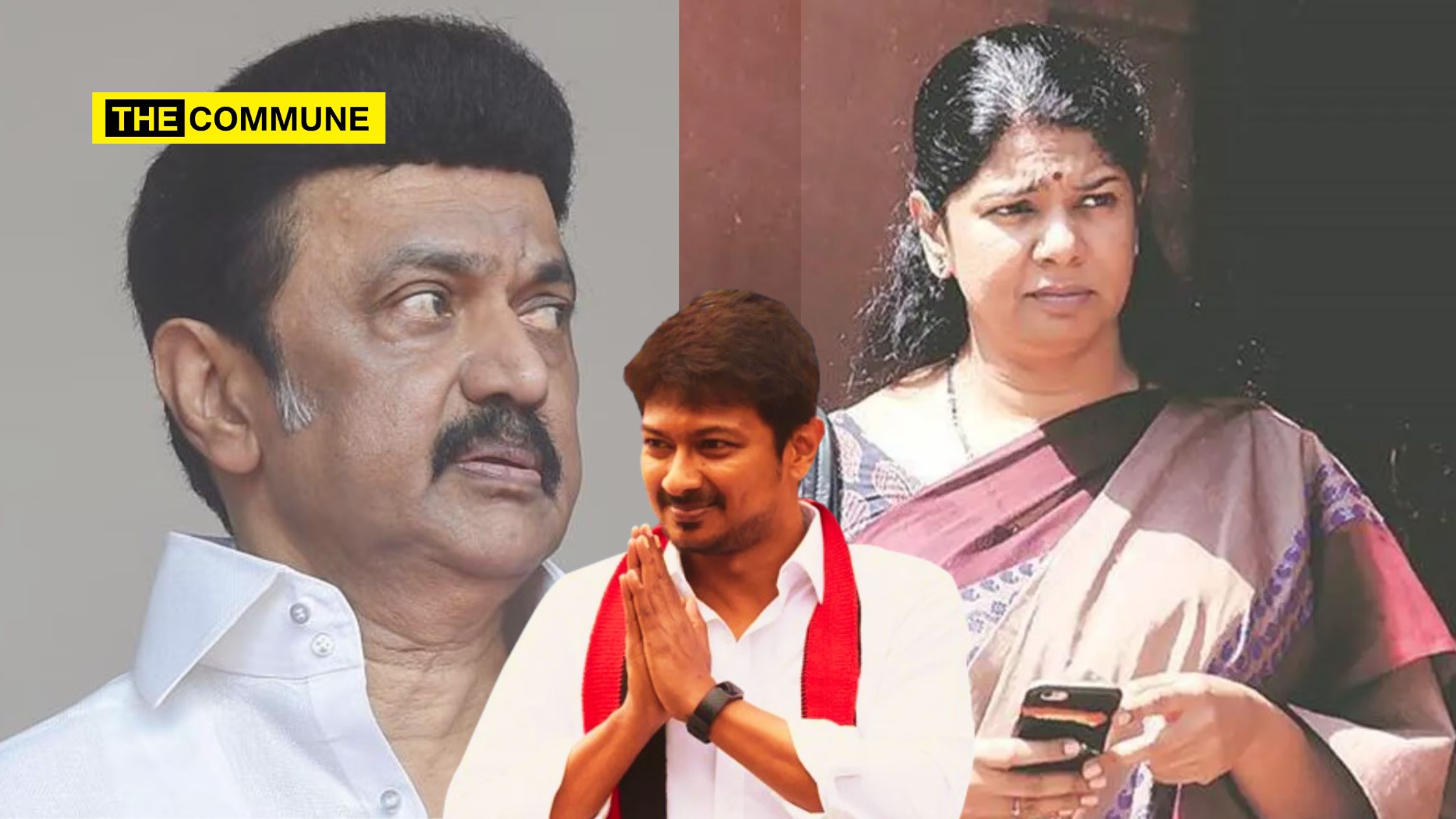
“Vaazhga Chinnavar, Our Future”: DMK MPs Sing Paeans For Party’s Crown Prince Udhayanidhi Stalin While Taking Oath, Kanimozhi Doesn’t Even Mention Stalin

The newly elected MPs took their oaths in Parliament in various languages like Sanskrit, Tamil, Malayalam, Kannada, etc. In previous oath-taking ceremonies, each MP would battle it out for saying the best slogan of them all – praising the motherland or their favourite deity.

Standing out from the rest were the 24 DMK MPs from Tamil Nadu. Most of them ended their vows with praises and uttered slogans in praise of DMK scion Udhayanidhi Stalin.

Coimbatore MP Ganapathy Rajkumar who won against TN BJP chief Annamalai concluded his oath by saying, “Long live our future Udayanidhi Stalin.

Central Chennai MP Dayanidhi Maran ended his oath with “Long live Tamil, Long live Kalaignar, Long live Periyar, Long live Anna, Long live Muthuvel Karunanidhi Stalin, Long live Udhayanidhi”

Kanchipuram MP Selvam ended with “Sing praises of Periyar, Anna, Kalaignar, Long live Thalaivar Thalapathy, Long live youth leader Udhayanidhi Stalin

Arakkonam MP S Jagath Rakshakan said, “Long live Tamil, long live leader Kalaignar, Long live Thalapathy”

Salem MP TM Selvaganapathy, Kallakurichi MP Malaiyarasan Arani MP Tharaniventhan, and Tiruvannamalai MP CN Annadurai ended their oaths similarly with, “Long live Kalaignar, our CM, our future Udhayanidhi” while also thanking a few DMK ministers.

Thanjavur MP Murasoli, Perumbalur MP Arun Nehru, Pollachi MP Easwarasamy, Erode MP KE Prakash, Vellore MP Kathir Anand said, “Long live Tamil Nadu, may DMK win, long live Thalapathy, our future Udhayanidhi

Dharmapuri DMK MP A Mani, North Chennai MP Kalanidhi Veerasamy, South Chennai MP T Sumathi alias Tamizhachi Thangapandian ended her oaths with praises to Karunanidhi, MK Stalin and Tamil.

Tenkasi MP Rani Srikumar had a list of names she said slogans for – these included Karunanidhi, Periyar, MK Stalin, Kanimozhi, KKSSR, as well as DMK scion Udhyanidhi Stalin!

Namakkal MP VS Matheswaran was refreshing because he did not mention any of the above-mentioned DMK leaders names!

Surprisingly MPs such as TR Baalu, A Raja, and Thanga Tamizhselvan just took the oath without any other frills and unnecessary words and phrases.

Subscribe to our channels on TelegramWhatsApp, and Instagram and get the best stories of the day delivered to you personally.
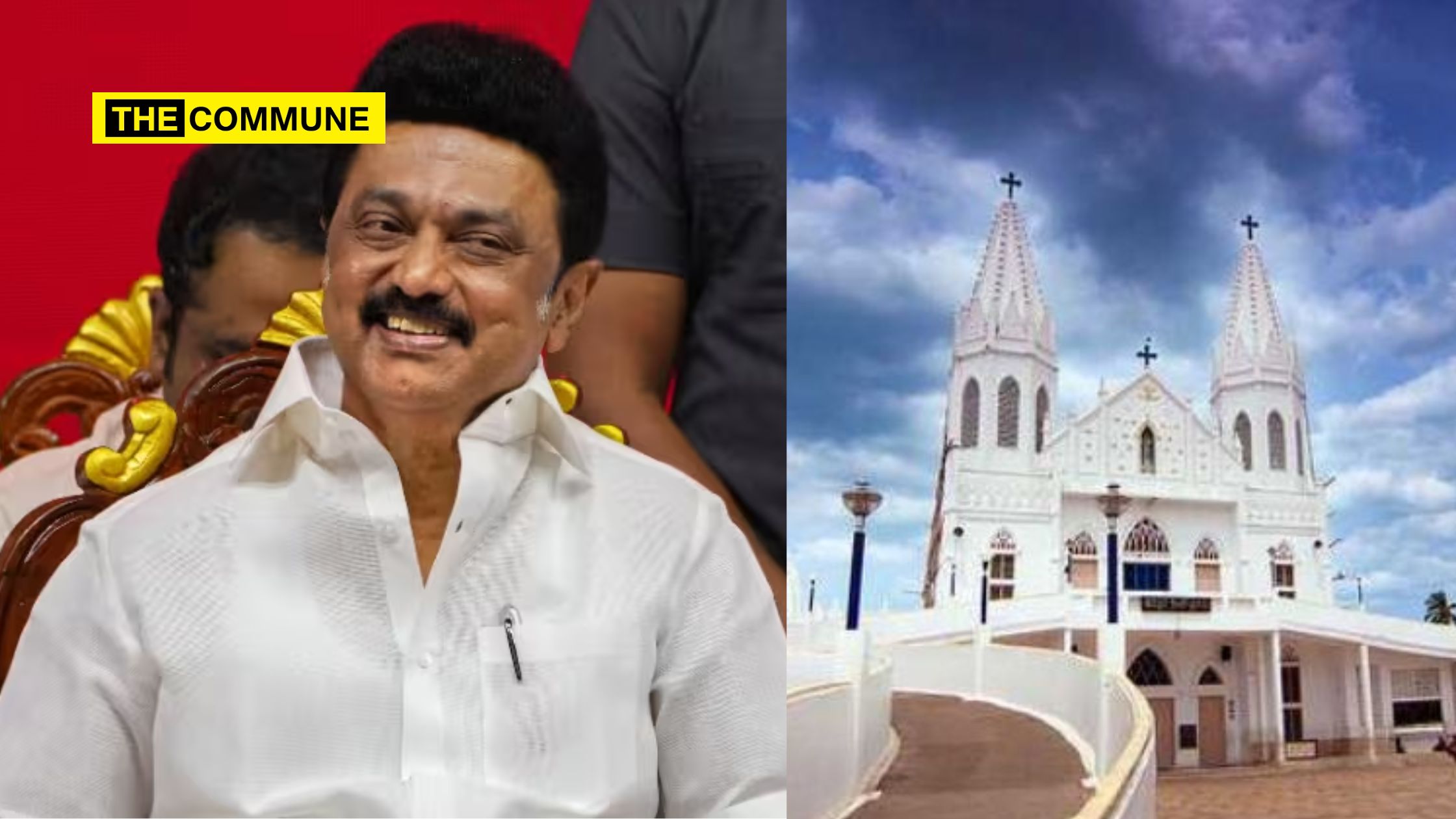
Dravidian Model: Kanchipuram Collector Announces Increased Financial Aid For Church Repairs

Kanchipuram District Collector Kalaichelvi Mohan has announced that the DMK government will soon disburse financial aid for the repair and renovation of churches. This initiative, which began in the fiscal year 2016-17, now includes increased funding based on the age of the church buildings.

According to an official release, funding will cover the installation of stands for reading the gospel, sound systems, altars, sacred vessels, benches for devotees, and compound walls. The financial aid has been significantly increased:
– Churches aged 10-15 years will now receive ₹10 lakh instead of the previous ₹2 lakh
– Churches aged 15-20 years will get ₹15 lakh, up from ₹4 lakh
– Churches over 20 years old will receive ₹20 lakh, an increase from the earlier ₹6 lakh

A committee led by the Collector will review applications, conduct site inspections, and assess the needs before recommending eligible churches for funding. The financial aid will be disbursed in two installments via electronic transfer to the church’s bank account, according to an official release.

It is noteworthy that HR&CE department in Tamil Nadu has been routinely taking temple money and using it for purposes that are not related to the temple or rituals connected to the temple. Also, neither do churches and mosques come under the purview of any Religious and Charitable Endowments department under the state government. Critics question how and why a state government must fund the repair of churches when it does not partake in the money from these institutions.

Additionally, the work done in the name of repairs in Tamil Nadu have been seen as a farce. In 2023, a portion of the eastern entry tower at Srirangam Sri Ranganathaswamy Temple collapsed. This occurred during an ongoing effort to mend the first and second-level compound walls of the temple entrance exposing the quality of “repair work” allegedly done by the HR & CE department. In addition to this, temple premises are being used as parking lots for officials to park their vehicles.

Subscribe to our channels on TelegramWhatsApp, and Instagram and get the best stories of the day delivered to you personally.
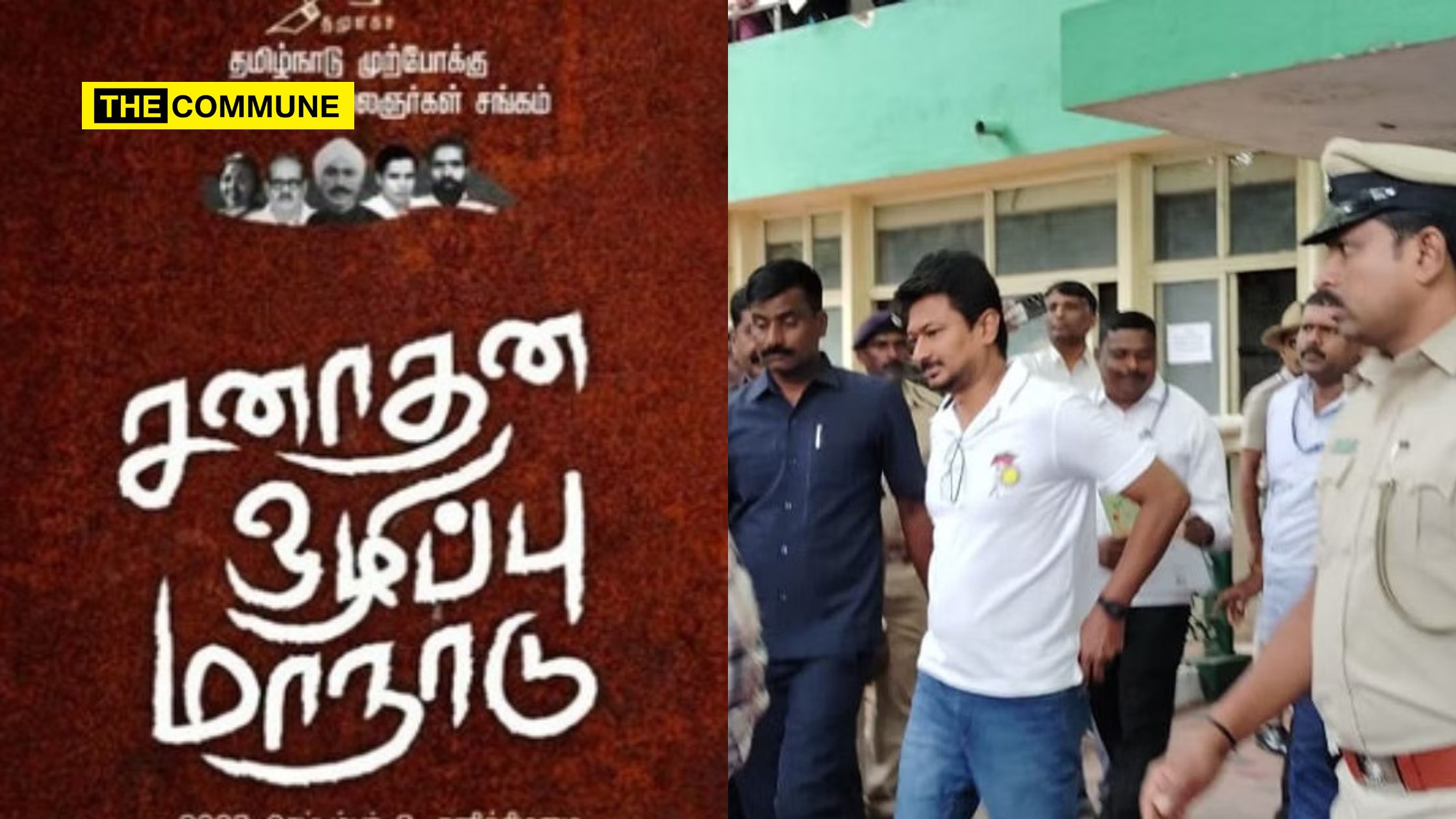
DMK Scion Udhayanidhi Stalin Granted Bail By Bengaluru Court In “Eradicate Sanatana Dharma” Remarks Case

(Image Credit: Deccan Herald)

On 25 June 2024, DMK’s Udhayanidhi Stalin, the Tamil Nadu Minister for Youth Welfare and Sports Development, appeared before the Special Magistrate’s Court in Bengaluru to face trial for making derogatory remarks about Sanatana Dharma.

As reported by ANI news, Udhayanidhi Stalin, scion of the DMK, was granted bail on a ₹1 lakh cash surety. The 42nd People’s Representative Court in Bengaluru adjourned the matter to 8 August 2024, following a request from the advocate representing Udhayanidhi Stalin in the case related to the ‘eradicate Sanatana Dharma‘ remarks.

The court proceedings were initiated based on a complaint filed by social activist V Paramesha, who alleged that Udhayanidhi Stalin’s remarks had defamed him, his religion, and people of the Hindu faith. The court took cognizance of offences under IPC Sections 153 (provocation with intent to cause riot), 298 (uttering words with intent to wound religious feelings), and 500 (defamation).

The Backstory

Addressing a conference hosted by the Tamil Nadu Progressive Writers and Artists Association, titled “Eradicate Sanatana Conference,” on 2 September 2023, in Teynampet, Chennai, DMK Minister Udhayanidhi Stalin said, “The title of this conference has been excellently coined. You’ve named it as ‘Eradicate Sanatanam Conference’ and not ‘Oppose Sanatanam Conference’, so my best wishes to that.

Udhayanidhi Stalin also said that some things need to be eradicated and not opposed. “Mosquitoes, dengue, flu, malaria, corona – we should not oppose these things. They’ve to be eradicated completely. Same is the case with Santanam (Hinduism). Our first work should be to eradicate Sanatanam instead of opposing it. So, my appreciations to you all for giving an apt title to the meeting”, DMK Minister Udhayanidhi Stalin said.

He also further went on to say “What is Sanatanam? The name Sanatanam itself comes from Sanskrit. Sanatanam is opposed to equality and social justice. What is the meaning of Sanatanam? Eternal or something that can’t be changed. Something that can’t be questioned. That is the meaning of Sanatanam.

The speech sparked widespread controversy across India, leading to numerous legal cases filed against DMK scion Udhayanidhi Stalin.

Previously, on 6 March 2024, the Madras High Court declined to issue a quo warranto against DMK Minister Udhayanidhi Stalin, Hindu Religious and Charitable Endowments Minister P.K. Sekarbabu, and Nilgiris Member of Parliament A. Raja regarding the controversy surrounding their comments on eradicating Sanatana Dharma.

Justice Anita Sumanth ruled that the relief sought by the writ petitioners was premature, noting ongoing First Information Reports (FIRs) across various police stations without any convictions. The judge acknowledged that the remarks targeting Sanatana Dharma were objectionable and divisive. She stressed the importance of criticism being constructive and based on factual accuracy, particularly when made by incumbent Ministers. Justice Anita Sumanth highlighted the necessity for public figures to uphold constitutional values and refrain from statements that undermine social harmony. Despite arguments that Minister Sekarbabu had only attended the conference and not spoken on the subject, the judge noted that participation alone could imply endorsement of the conference’s themes.

She also condemned statements likening Sanatana Dharma to diseases such as HIV, AIDS, dengue, and malaria as misleading and contrary to constitutional principles.

In March 2024, the Supreme Court Bench comprising Justices Sanjiv Khanna and Dipankar Datta rebuked DMK scion Udhayanidhi Stalin for his contentious remarks on Sanatana Dharma, stating that he had “misused his privileges.” The court made these remarks while addressing Udhayanidhi Stalin’s request to consolidate First Information Reports (FIRs) filed against him regarding his alleged statements.

The Bench remarked, “You have abused your rights… You know what you have said. You should have realized the consequences. You are a Minister, not a layman,” during the hearing.

Subscribe to our channels on TelegramWhatsApp, and Instagram and get the best stories of the day delivered to you personally.
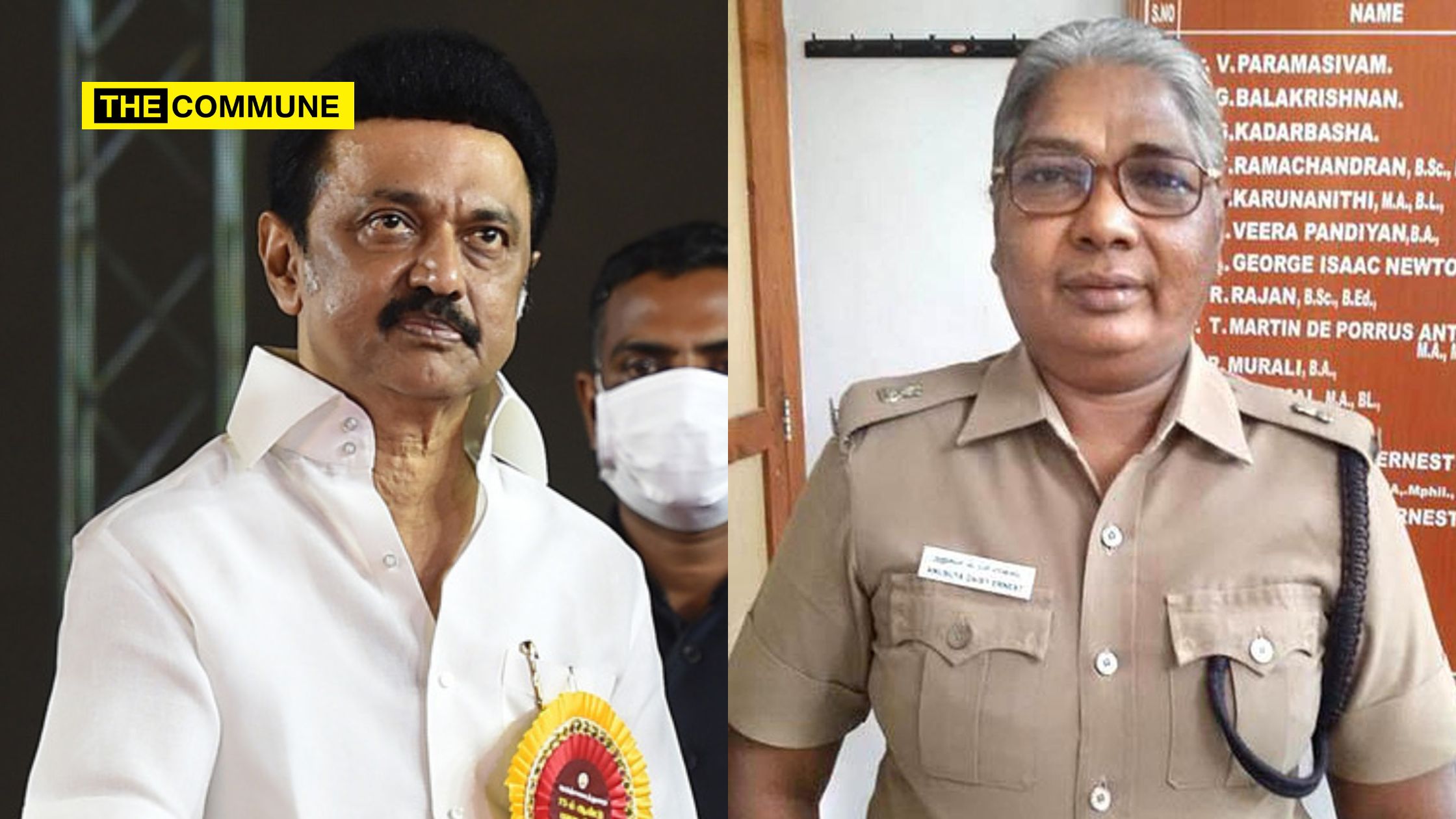
Former TN Police Officer Anusuya Who Survived LTTE-Rajiv Gandhi Bomb Blast Calls For TASMAC Ban Following Kallakurichi Hooch Tragedy

The recent Kallakurichi hooch tragedy, which has resulted in the loss of 58 lives and numerous hospitalizations, has sparked widespread outrage in the state. There is now a growing chorus demanding stringent measures to curb illicit liquor and advocating for a complete ban on TASMAC. Adding her voice to these calls is a former police officer, who echoes the sentiment of returning to the Kamaraj era when alcohol was completely prohibited, aligning with Mahatma Gandhi’s views on the matter.

Anusuya Daisy Ernest, a retired police officer who once oversaw security on the night of Rajiv Gandhi’s assassination and survived the suicide bombing, expressed deep regret over the current administration’s shortcomings. During her tenure as ADSP in the Prohibition Enforcement Wing, she recalled maintaining strict control over the region, effectively curbing the presence of illicit liquor but she expresses current deaths are alarming.

In a recent interview with reporters, Anusuya Daisy Ernest reflected on her extensive career in law enforcement. “I served in the Prohibition Enforcement Wing in Nagapattinam district from 2014 to 2015, and later as ADSP in Villupuram headquarters from 2016 to 2018, currently I’m retired. Currently, illicit liquor is a big issue that has claimed more than 50 people and it is very sad to think about it because people are drinking poisoned liquor like this, and it feels like a big infectious disease. When there is infectious disease people will die like this and now it is worse than that.”

With 37 and a half years of dedicated service, including her impactful tenure in Nagapattinam, she recounted her efforts to eradicate alcohol-related issues. Anusuya Daisy said, “Even in this advanced age of science it is painful to witness such deaths because I have worked in the police department for 37 and a half years and today, I have retired and am getting paid from people’s tax money today, it is giving me so much pain. I worked in Nagapattinam district for a year and a half in the Prohibition Enforcement Wing, and I used all of my knowledge, strength, and police training to eradicate alcohol there.” She added, “People put up a banner on Tiruvarur road thanking me for eradicating liquor menace, so much so that I eradicated the liquor, the poisonous liquor, the illicit liquor, and arrack, I controlled it all. After completing it and working successfully for one and a half years without any incident, there was not even a single lock-up death, not a single criminal died, and we seized a substantial amount of illicit liquor. I can say that because we ensured we gained the trust of the public that the police will take action, we changed their minds towards the police and I could be successful in my work. Sometimes, there are police who are accomplices with brewing criminals for mere bribery, but not all. Today there is no poisonous liquor death throughout Tamil Nadu because it is because of the police and the superintends successful work.”

Later, Anusuya likened the Kallakurichi hooch tragedy to a catastrophic train accident, drawing from her experience in the Villupuram district, which once encompassed Kallakuruchi before it became a separate district. During her tenure there, she emphasized, there were no incidents like the Sakthi School riots or the Marakkanam hooch deaths. Reflecting on this, she expressed satisfaction that their effective measures then had prevented such tragedies. She also recalled overseeing the Kalavarayan Hills and its surrounding seven subdivisions without encountering similar issues.

However, she lamented the current wave of deaths linked to illicit liquor sales and poisoning, describing it as a disgrace to the entire police force. She noted with concern that even local ward members now know where illicit liquor is sold in their areas, and urged everyone, including councillors, to take responsibility and act vigilantly to combat this scourge. She concluded by urging the Chief Minister of Tamil Nadu to take decisive action to completely prohibit and shut down TASMAC. Pointing out that this incident marks the second tragedy during his tenure, she emphasized the need to prioritize the lives of the people of Tamil Nadu. She advocated for a return to the era of Kamaraj, when TASMAC was banned, as a necessary step towards ensuring public safety and well-being.

Subscribe to our channels on TelegramWhatsApp, and Instagram and get the best stories of the day delivered to you personally.
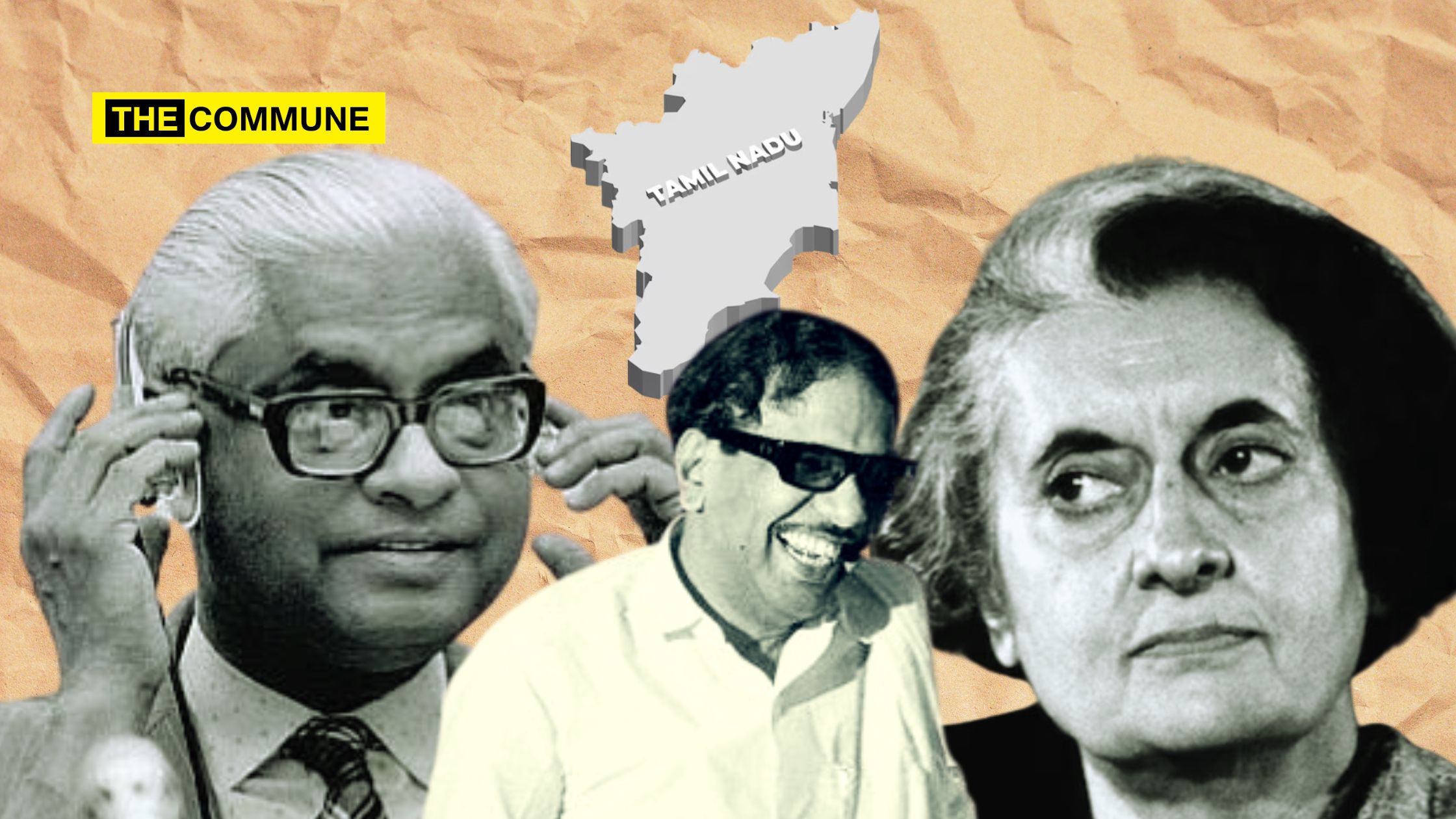
When EAM S Jaishankar’s Father Ensured A Lenient Regime In DMK-Ruled TN During Emergency Imposed By Indira Gandhi

In the annals of Indian bureaucratic history, few stories stand out as starkly as that of K. Subrahmanyam (KS), father of current External Affairs Minister S. Jaishankar, during the tumultuous period of the Emergency in 1975-77. Contrary to popular speculation, KS maintained a principled distance from the corridors of power, adhering to what he believed was an unwritten code of conduct for civil servants.

KS’s philosophy was rooted in the ideal of service to the state as an abstraction, eschewing political connections to further one’s career. This stance was put to the test during the Emergency, a period that significantly weakened the bureaucracy and fostered clientship relations between IAS officers and politicians.

In 1975, KS was removed from his position at the Institute for Defence Studies and Analyses (IDSA) and transferred to Tamil Nadu’s Board of Revenue. The following year, he found himself in an unprecedented situation. The DMK government in Tamil Nadu had been dissolved, its leaders imprisoned, and President’s rule imposed. PK Dave, a career bureaucrat, was sent as a special adviser to the governor and appointed KS as the home secretary of Tamil Nadu.

This role placed KS at the heart of internal security matters during one of India’s most challenging periods. While he did not openly defy regulations, KS often chose to follow his conscience rather than rigidly enforce rules. He viewed the Emergency as deeply anti-democratic, reminiscent of the colonial era when freedom fighters were held in British jails.

KS’s approach, coupled with that of his friend and Finance Secretary Gugan, who had even stronger views and close ties with DMK members, resulted in Tamil Nadu having one of the most lenient regimes during the Emergency. This leniency raised eyebrows in Delhi, with questions being asked about the state’s seemingly relaxed stance.

It is likely that the central government would have intervened to impose stricter measures in Tamil Nadu had it not been for the 1977 elections that saw Indira Gandhi’s resounding defeat. This episode in KS’s career, while known to some of his contemporaries, is often overlooked in discussions about his professional life.

This lesser-known chapter in the career of K. Subrahmanyam showcases a bureaucrat’s moral compass in action during one of India’s darkest periods.

Source: Chapter 11 of the book – Security Beyond Survival: Essays For K Subrahmanyan

Silencing The Sirens Of Discord: A Comprehensive Approach To Combating Fake News In India

India, a land where ancient traditions meet modern innovation, embodies a vibrant tapestry of cultures, languages, and faiths. However, this very diversity creates a fertile ground for a modern-day weapon of mass destruction – fake news. In the digital age, fabricated stories and manipulated visuals can travel at lightning speed across the internet, wreaking havoc on this delicate social fabric. Unlike traditional media with its editorial oversight, the internet empowers anyone to become a publisher. While this democratizes information, it also allows the unfettered spread of misinformation, with potentially devastating consequences.

The Destructive Power Of Fake News

The threat of fake news isn’t a distant worry; it’s a present danger. Doctored videos and fabricated stories have ignited mob lynchings, fuelled communal tensions, and eroded public trust in institutions. From claims about religious minorities spreading diseases to misinformation about government policies, fake news thrives by exploiting pre-existing social fault lines. It can:

  • Incite Violence: Malicious rumours, often laced with religious or social undertones, can quickly morph into mass hysteria, leading to riots, mob violence, and loss of life.
  • Erode Public Trust: Fake news undermines public confidence in democratic institutions and sows discord within communities.
  • Hinder Progress: Misinformation can derail important public health initiatives, disrupt economic policies, and hamper disaster relief efforts.
  • Stifle Free Speech: When genuine information gets buried under an avalanche of fake news, it undermines the very foundation of a healthy democracy – informed discourse.

The Limitations Of Existing Solutions

The current legal framework in India lacks the teeth to effectively combat fake news. Traditional defamation laws are cumbersome and time-consuming, often proving inadequate for the fast-paced nature of online misinformation. While some platforms have adopted voluntary content moderation policies, their effectiveness is limited.

Adopting a Singapore-style POFMA (Protection from Online Falsehoods and Manipulation Act) might seem like a solution, but India’s unique social landscape demands a more nuanced approach. A centralized system struggling to keep pace with the sheer volume and diversity of content in 22 official languages and hundreds of dialects is a recipe for ineffectiveness.

A Multi-Pronged Approach For India

Combating fake news in India requires a multi-pronged approach that addresses the specific challenges faced by the nation:

  • Strengthening the Legal Framework:
    • A dedicated Fake News Authority established by Parliament, with regional branches for linguistic and cultural sensitivity.
    • A clear definition of “fake news” that differentiates malicious misinformation from unintentional errors or satire.
    • Graduated Penalties:
      • For individuals: fines, community service, and imprisonment for repeat offenders.
      • For publishers and platforms: hefty fines for knowingly publishing fake news, and potential suspension/revocation of licenses for repeated violations.
    • Right to Appeal: Content creators and publishers should have a clear right to appeal against flagging, with robust appeals process to prevent censorship.
    • Independent Oversight & Transparency: The Fake News Authority should function independently of the government, with transparent decision-making processes.
  • Empowering Fact-Checking Organisations:
    • Increased government funding for independent fact-checking organizations.
    • Collaborations between fact-checkers, journalists, and social media platforms to debunk false information quickly and effectively.
    • Standardizing fact-checking methodologies and ensuring easy public access to verified information
  • Promoting Media Literacy:
    • Integration of media literacy programs into school curriculums, teaching students how to critically evaluate information online.
    • Public awareness campaigns that educate citizens on how to identify and avoid fake news.
    • Encouraging responsible digital citizenship, where users flag suspicious content and verify information before sharing.
  • Social Media Platforms Take Responsibility:
    • Implement stricter content moderation policies that target fake news dissemination.
    • Partner with fact-checking organizations for content verification.
    • Develop algorithms that identify and demote fake news content, promoting verified information in user feeds.
    • Increase transparency in content moderation practices.

The Road To A More Informed Future

The fight against fake news is a continuous battle. By creating a robust legal framework, empowering fact-checkers, promoting media literacy, and holding social media platforms accountable, India can take a crucial step toward a more informed and peaceful future. This fight is not just about safeguarding national security, but also about protecting the very essence of a vibrant democracy – the free flow of truthful information that empowers citizens to make informed choices.

India’s rich tapestry deserves to be protected from the corrosive effects of fake news. By adopting a multi-pronged approach that combines strong legal deterrents, empowered fact-checkers, and media clutter.

Ganesh Kumar is a geo-political analyst.

Subscribe to our channels on TelegramWhatsApp, and Instagram and get the best stories of the day delivered to you personally.
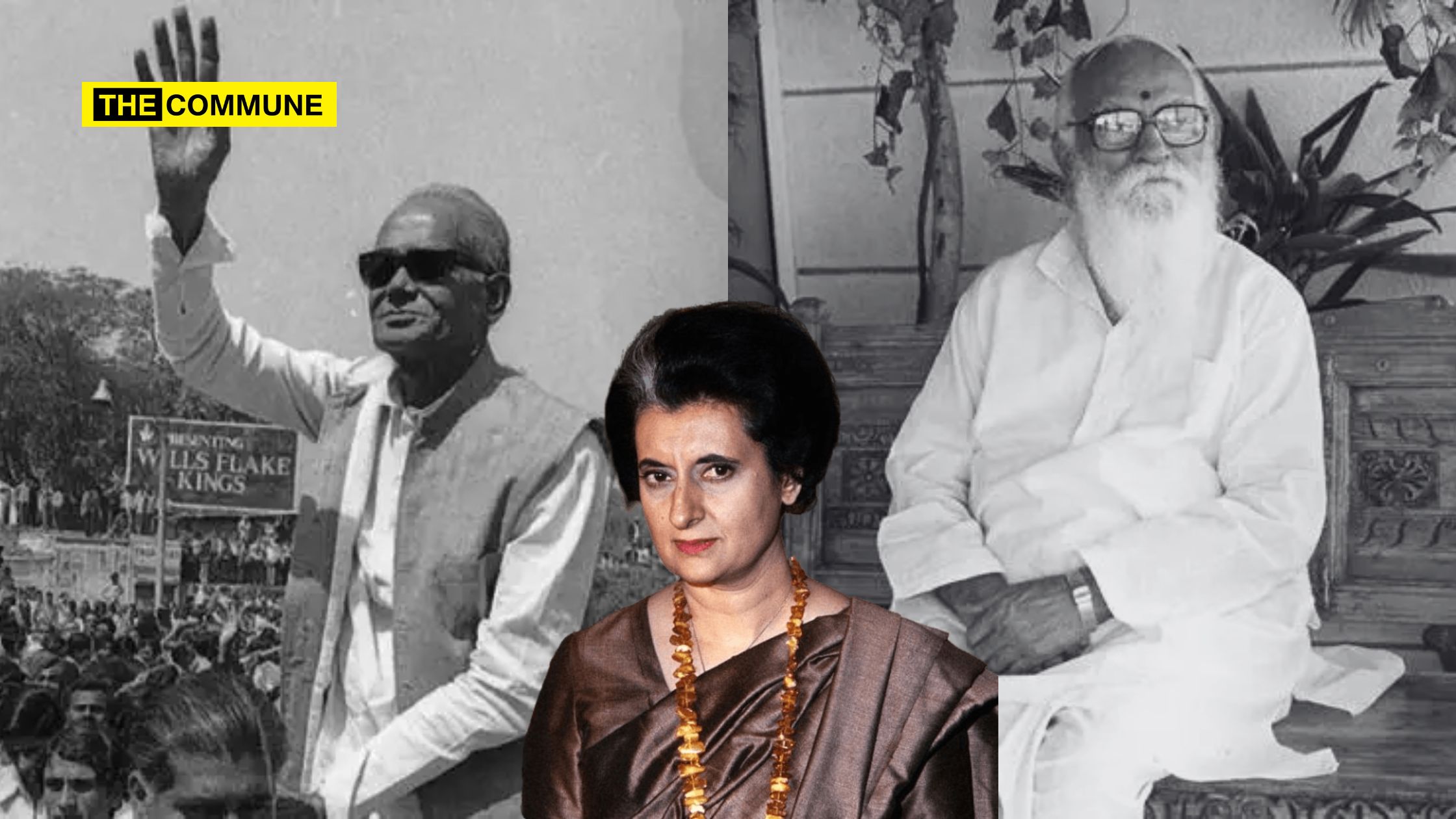
Jayaprakash Narayan And Nanaji Deshmukh: The Two Karmayogis Who Fought Against Indira’s Draconian Emergency

1974, Patna – India was in turmoil, as a vast wave of discontent, swept the nation. The heady days of idealism were gone, as a nation came into terms with the loss of innocence. A nation that saw corruption, political skullduggery become the norm, of rising inflation, unemployment. And in that period, the face of the protest emerged against Indira Gandhi’s autocratic rule. Just 3 years earlier, Indira had swept to power, with the victory over Pakistan in the War, and the emergence of Bangladesh, fuelling her popularity. But the euphoria of the war victory had come off, the people were forced to deal with the harsh realities of life. Jayaprakash Narayan aka JP was the one giving a voice to the anger in the masses, as he led a huge procession on the streets of Patna. He had earlier led the Nav Nirman Andolan in Gujarat against the Chimanbhai Patel Government there. Just a couple of months he had asked for a Total Revolution from the masses and students, against the growing corruption. As JP led the procession in Patna, he was brutally lathicharged by the police. He was the target, and the police still continued raining blows on him, until another older man, shielded him, and took the blows, all the while escorting him to safety. The man who shielded JP from the police blows was Chandikadas Amrut Rao Deshmukh, better known as Nanaji Deshmukh.

Two men, from two vastly different backgrounds- Jayaprakash Narayan and Nanaji Deshmukh. Both born on the same date, Oct 11, separated by a gap of 14 years. JP was from Bihar’s Saran district, his father was a lower Government official, and he later went on to study in the US too. Nanaji on the other hand, was from Maharashtra’s Hingoli district, lost his parents at an early age, had to struggle in his childhood, and later rose up the ranks of the RSS.  Their ideologies too differed, where JP was socialist, left leaning, Nanaji’s was more rooted in the Integral Humanism of the Jan Sangh. And yet on that fateful day in Patna, the paths of both these men would cross. It was destined to be so, if JP was the face of the Total Revolution, Nanaji was the brains behind it, as well as the Janata alliance that came later. JP took the Revolution to the masses, Nanaji organized the funds for it, coordinated it, and when the Government cracked down, during the Emergency, he oversaw the underground movement.

Nanaji was one of the men who built up the Jan Sangh in UP, brick by brick, when the then chief Guru Golwalkar had sent him there as an RSS pracharak to Gorakhpur. Arriving at a place, that had no funds, no base, no organization, Nanaji undertook the task of building the RSS from scratch, staying in Baba Raghavdas home, cooking meals for him. Within 3 years there were 250 Shakhas just in Gorakhpur itself, the also established the first Saraswati Shishu Mandir there in 1950. If BJP has a solid base in Gorakhpur, the reason is the foundation laid by Nanaji there. He was one of the trilogy, who spread the Jan Sangh in UP, the others being Deen Dayal Upadhyaya and Atal Bihari Vajpayee. Where Upadhyaya provided the ideological soul of the Sangh, Vajpayee took the message to the masses with his oratory, it was Nanaji who was instrumental in organizing and coordinating. Even when RSS was banned following the assassination of Mahatma Gandhi, it was Nanaji who kept things going, with publications from the underground.

On the other hand, JP’s trajectory was somewhat different. In a sense like Nanaji, he did have to work hard for his education. Nanaji sold vegetables as a young boy to support himself, while as a student in US, JP did a whole lot of odd jobs from picking grapes, washing dishes, as a mechanic at a garage to even a slaughter house. Unable to pay the fees at Berkeley, JP had to transfer from one University to another in US, before graduating in sociology finally. It was his experiences with the working class, that attracted JP to the Leftist ideology, especially the works of Marx and M.N.Roy. Even when he joined the Congress, during the Freedom struggle, JP was part of the Congress Socialist Group, a left wing group within the party, that included Ram Manohar Lohia, Ashok Mehta and was headed by Acharya Narendra Dev. A rebel with a derring do attitude, JP was arrested numerous times during the freedom struggle. One of the more inspiring anecdotes relates to the Quit India struggle, when he went underground, and had a daring escape from the Hazaribagh Central Jail, and walked to Gaya, along with his associate Yogendra Shukla whom he carried on his shoulders.

Though on the other side of the political divide, Nanaji Deshmukh, enjoyed a respect and support across the entire political spectrum. By 1957 he had established the Jan Sangh across UP, and it soon became a powerful political force in it’s own right. The first ever non Congress Govt in UP, was due to the efforts of Nanaji, who forged an alliance with Chaudhary Charan Singh and Ram Manohar Lohia, the first ever such grouping. Jan Sangh was to the Right, Conservative, while Lohia represented the more Left liberal aspect, and Charan Singh represented the farming community. Nanaji in fact outwitted Chandra Bhanu Gupta, considered a political giant, not once but thrice. He first managed to get Gupta’s nominee defeated in the Rajya Sabha, and then forging an alliance with other socialist groups defeated him twice in Lucknow and Maudaha later. Gupta had immense respect for Nanaji, whom he called a modern day “Nana Phadnavis”. He had a good relation with Ram Manohar Lohia, and the Jan Sangh- Socialist parties alliance, would be the first major opposition to the Congress party then. He also took an active part in Vinobha Bhave’s Bhoodan Movement.

Emergency

At some point of time, these two great men would find their paths intersecting. And it came in 1974 during the Sampoorna Kranti( Total Revolution) launched by JP against Indira Gandhi’s misrule, the ever increasing corruption and rising inflation. JP was the movement’s visible face, but in the background was Nanaji coordinating every aspect of it, raising funds, sending the messages. As General Secretary of the Lok Sangarsh Samiti, Nanaji was the man who kept the underground movement, when Indira cracked down on it, during the Emergency. Nanaji was himself a wanted man, and managed to give the Government a slip during the Emergency, just getting out at the last moment. On June 25, 1975, Nanaji managed to get together a small group that consisted among others Subramaniam Swamy, M.L.Khurana, Ravindra Verma and Dattopant Thengadi. It was Nanaji who drew up the main plan for the movement during Emergency, of publishing underground news bulletins and pamphlets, setting up of underground cells, staging protest demonstrations, raising funds, helping the families of those detained. Nanaji himself was arrested later on June 29, 1979, but by then he had put the entire network into place, which ensured, that the underground movement would not die out. Both JP and Nanaji were arrested during the Emergency, but their spirit would be the guiding force for the movement. It was therefore not a surprise that when Indira lifted the Emergency and elections were held in 1977, Nanaji once again came to the forefront as the architect of the Janata alliance. Due to his immense political contacts, Nanaji managed to put together the formidable alliance, consisting of the Jan Sangh, Janata Party and other outfits. Nanaji himself won from Balrampur in 1977, and he played a key role in the Janata victory, coordinating the entire election effort. He however refused to take up a Cabinet minister position, stating he wanted to dedicate his life to social service.

“Singhasan Khali Karo ke Janata aati hai” thundered JP during the Ramlila rally of 1975, that quote was from the famous poet Ramdhari Singh Dinkar. JP was greatly influenced by Dinkar’s works, and the latter was a great admirer of JP, both these men shared a close bonding. It is said, that when JP was seriously ill, Dinkar had gone to Tirupati to pray for his health, saying that if there was a life to be taken it was his. Coincidentally, Dinkar passed away just when JP was recovering from his illness. JP was detained at Chandigarh, he however was later release due to a kidney problem was on dialysis for long. He managed to see his dream come true, of the Janata Government come into power, and Indira defeated. However he would be saddened by the way, the Janata leaders wasted the mandate with their internal squabbles and ego clashes.

Maybe it was for this reason, that Nanaji did not want to be a part of the Government. At a later stage in his life, Nanaji often remarked that he admired the Vanavasi Ram, more than the Raja Ram. He actually walked the talk, of retiring from politics, and dedicating his life to social service. Nanaji knew what poverty was, he had grown up with it, and the upliftment of the poorer sections was his life long aim. The Deen Dayal Research Institute was set up by Nanaji to promote grass roots level development in 1969. The motivation was a visit to Chitrakoot, a place that was holy due to it’s association with the Ramayana, where Lord Ram, had spent his exile in. The Chitrakoot that Nanaji visited though was a far cry from what he had read, steeped in backwardness, illiteracy and superstition. Moved by it’s condition, Nanaji made a resolve to change the face of Chitrakoot and also make it the base for his social reforms. “Har Haath ko denge Kaam, har Kheth ko denge Paane” ( Work to All, Water to every field) was the motto of Nanaji, as he did pioneering studies in anti poverty programs, cottage industry and rural development. Gonda in UP, and Beed in Maharashtra, two of the country’s most backward districts, was where Nanaji focused his efforts on.

And that led to the establishment of the Chitrakoot Grameen Viswavidyalaya, which he named after Mahatma Gandhi. It was India’s first ever rural University, and Nanaji was it’s first chancellor. The main aim was to provide students in rural areas, access to quality high education. The university has been doing great work in promoting courses on rural development, mass education and awareness among the rural people and sustainable development.

Neither JP nor Nanaji are around now, but their legacy and spirit will always continue to inspire. Two men who were true karmayogis, for whom power was not an end in itself. Two men, who led others to power, but did not accept it themselves. It was destiny, that two such great karmayogis were born on the same date.

Sources:

http://www.bjp.org/images/kamal_sandesh/ks_e_mar_02_2010.pdf

http://indiatoday.intoday.in/story/nanaji-deshmukh-the-main-force-behind-jayaprakash-narayans-agitation-for-total-revolution/1/435501.html

(This article was originally published by Ratnakar at historyunderyourfeet.wordpress.com and has been republished here with permission.)

Ratnakar Sadasyalu is a blogger with a passion in movies, music, books, and history. A techie by profession, and a writer at heart. Author of City of Victory a book on Vijayanagar Empire.

Subscribe to our channels on TelegramWhatsApp, and Instagram and get the best stories of the day delivered to you personally.
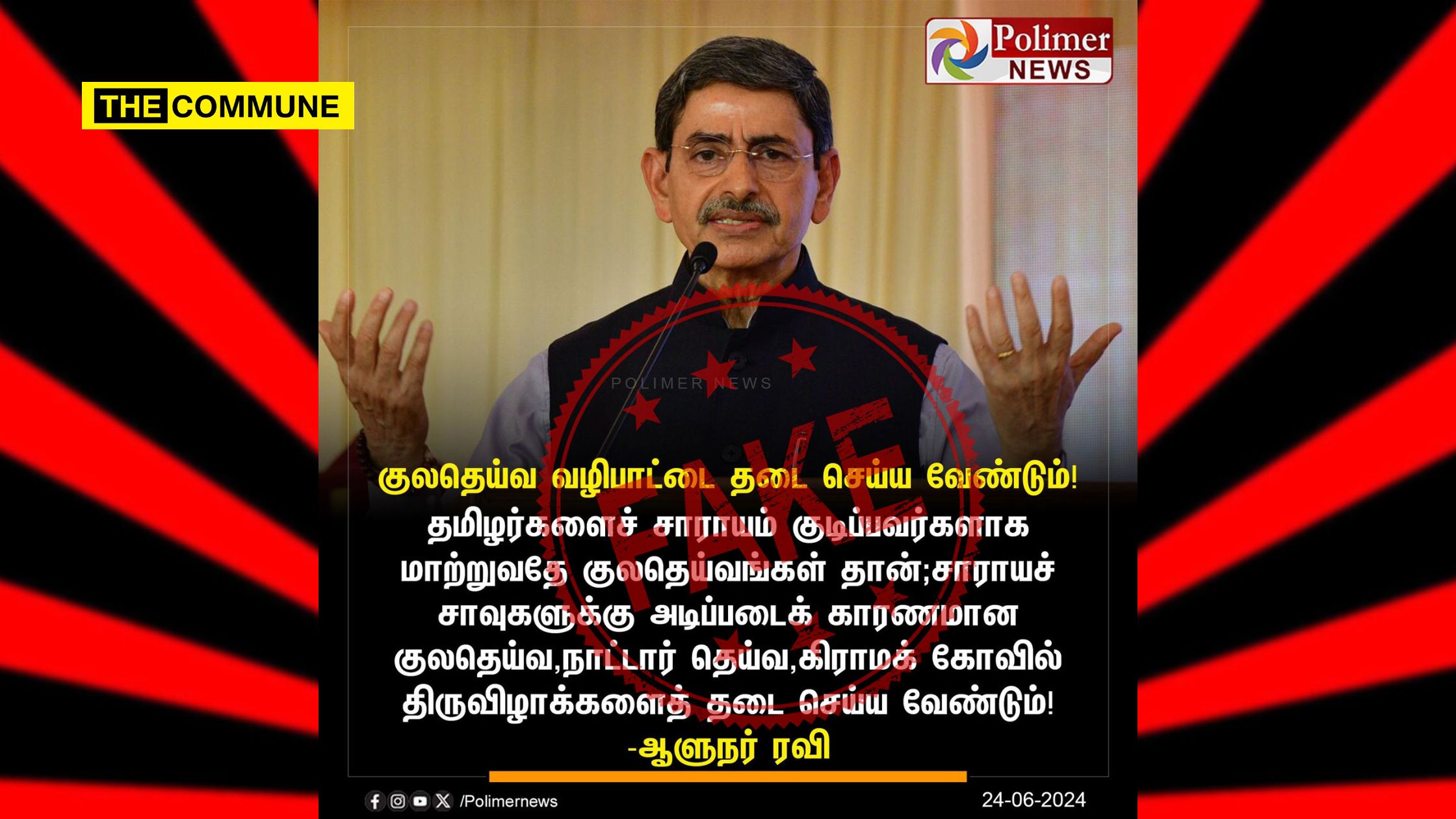
No, Guv Ravi Did Not Call For Banning Kula Deivams; DMK-Supporting Dravidianists Peddle Fake News 

Dravidianist supporters of the DMK in Tamil Nadu are continuously engaging in spreading false propaganda. It seems they are unable to rest unless they target either the BJP or the Governor every single day. Throughout the day, we have uncovered numerous instances of fake news being circulated, including misleading edits targeting Union Finance Minister Nirmala Sitharaman, the RSS, and now Tamil Nadu Governor RN Ravi. These falsified reports are being disseminated in regional languages, misleading the public.

Recently, Dravidianists fabricated a news card under the guise of a regional news channel,Polimer News‘. Upon receiving the news, the channel promptly refuted it and exposed the falsified card. Subsequently, many of the vigorous spreaders of this misinformation on social media platforms deleted their posts and comments.

In an attempt to divert attention from the mishandling of the Kallakuruchi hooch tragedy, they created a fake news card claiming it to be the words of Tamil Nadu Governor RN Ravi. The falsified card purportedly quoted Governor Ravi as advocating for the ban of clan deity worship, blaming it for turning Tamils into drinkers and linking it to deaths related to alcoholism.

The fake news card stated, Clan deity worship should be banned. It is the clan deities that turn Tamils ​​into drunkards; Clan Deity, Nattar Deity, and village temple festivals that are the basis for alcoholism-related deaths should be banned. – Governor Ravi”

Below are some of the now-deleted fake posts propagated by supporters of the DMK on social media:

Image

Image

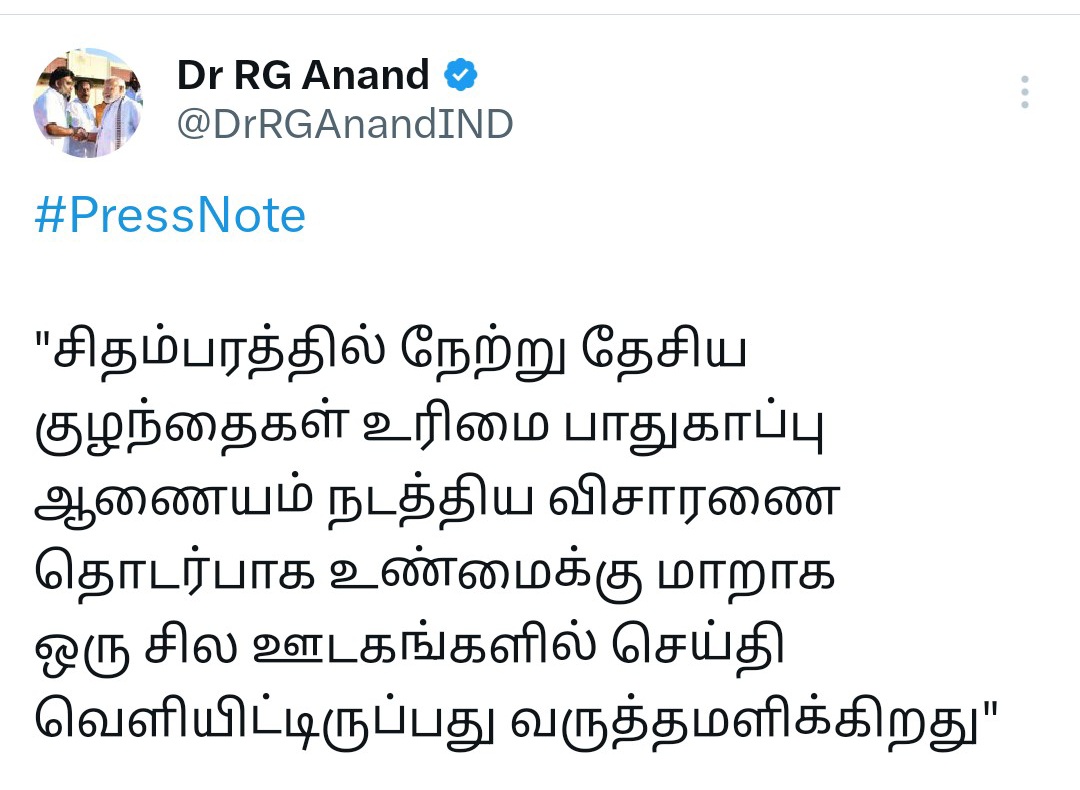
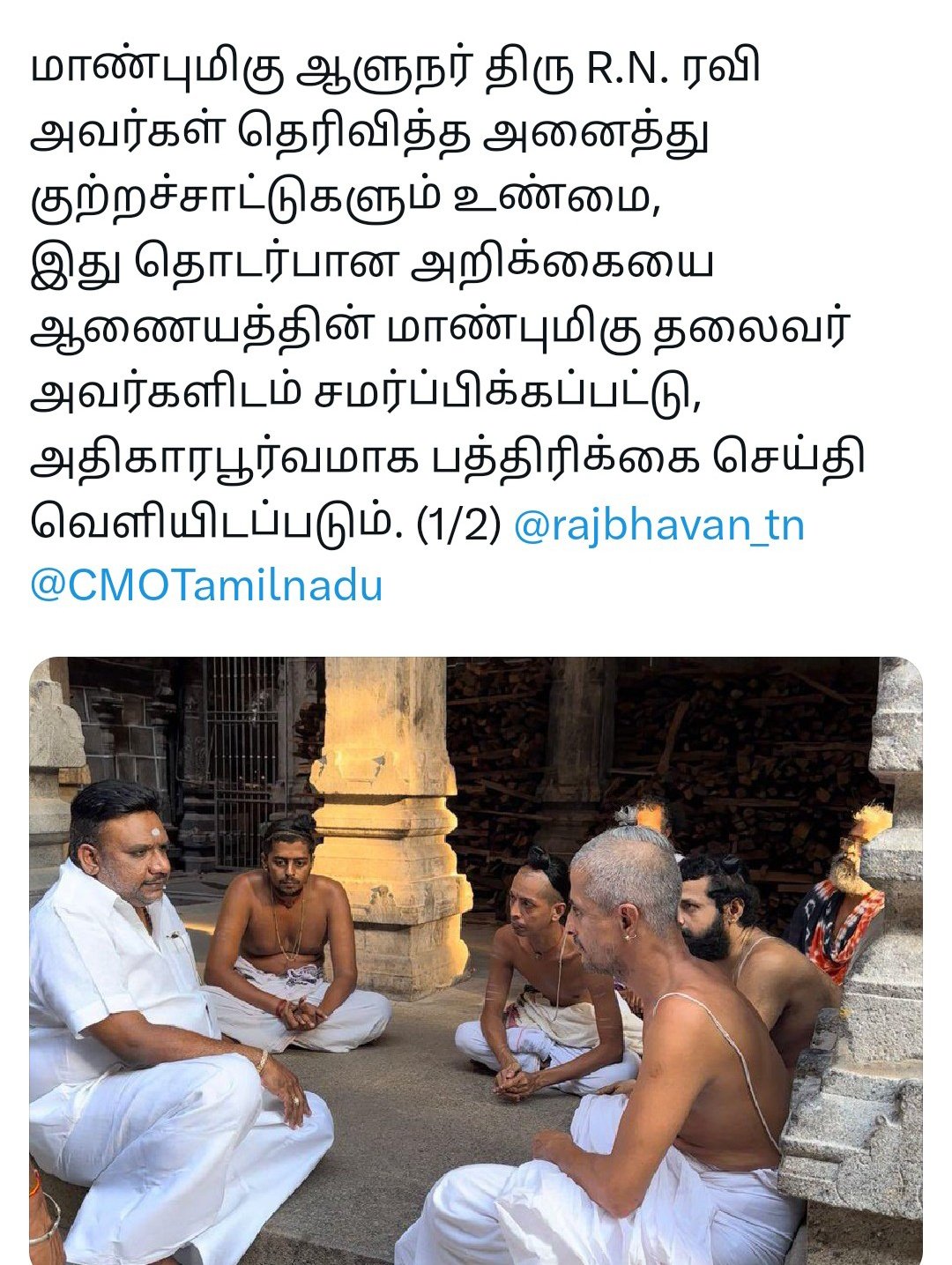
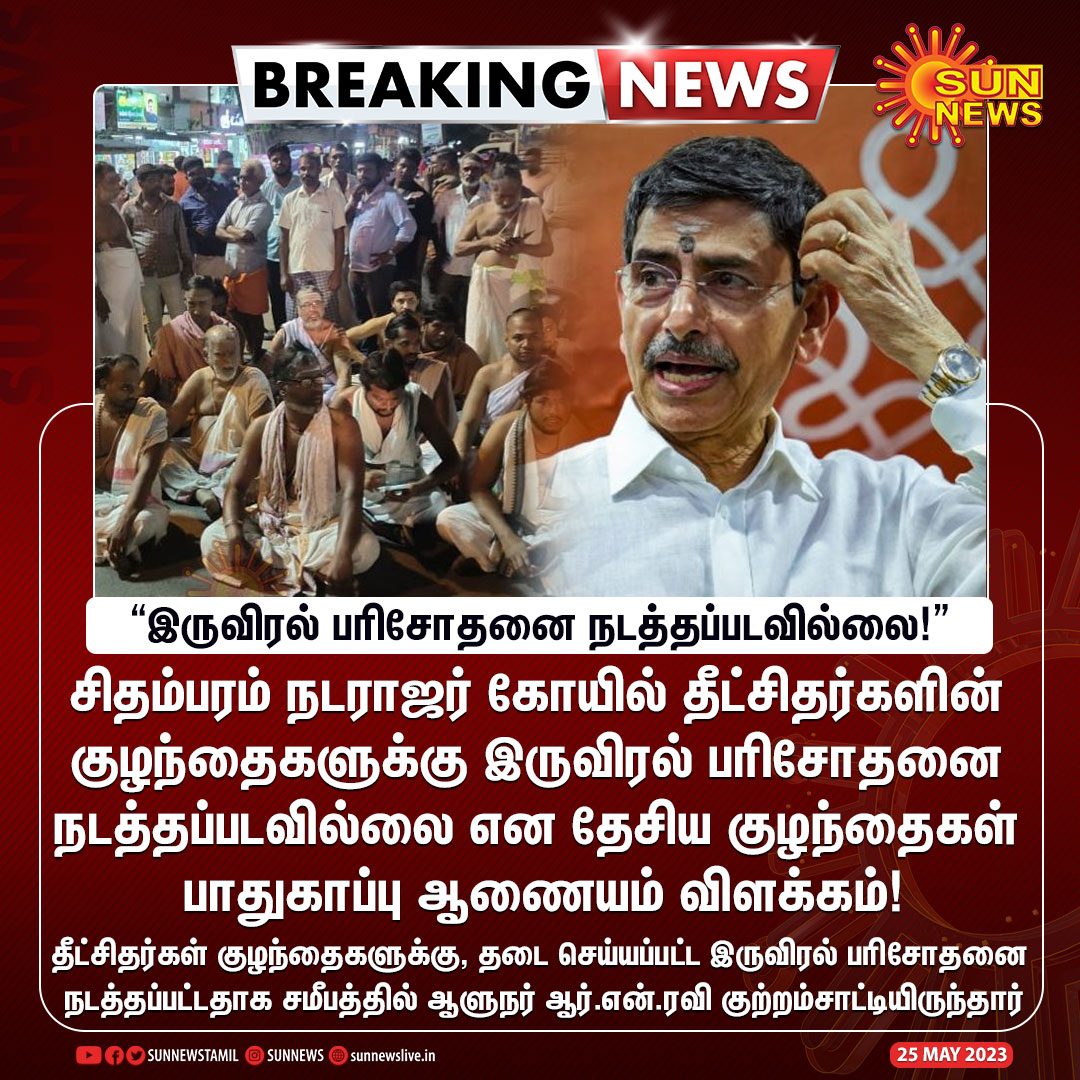
Previously, on the issue concerning the Chidambaram temple, Tamil Nadu Governor RN Ravi alleged that forced virginity tests, specifically the two-finger test, were conducted on minor girls suspected to be victims of child marriage. RG Anand, a member of the National Commission for Protection of Child Rights (NCPCR), supported these allegations in May 2023.

NCPCR member Anand tweeted that after conducting inquiries in Chidambaram, he confirmed,All the allegations made by the Governor are true. He also mentioned that a detailed report would be submitted to the NCPCR Chairperson Priyank Kanoongo regarding his findings.

Responding to reports that disputed the investigation’s findings, Anand clarified, It is regrettable that a few media outlets published untrue statements about the NCPCR’s investigation in Chidambaram.He further reiterated his stance to journalists in Salem, stating,The claims made by Governor R.N. Ravi are true.He explained that through inquiries with the affected families and verification of police records, they confirmed the use of the two-finger test on the girls, with police records indicating intact hymen as evidence.

Anand clarified, Some sections of the media reported statements contradicting the Governor’s claims, which is not accurate. I am providing this explanation today to correct the misinformation.”

Image

Image

However, Sun News, a mouthpiece of the DMK, denied these and called them allegations.

Image

Subscribe to our channels on TelegramWhatsApp, and Instagram and get the best stories of the day delivered to you personally.
TN: Speaker Appavu Rebukes Dairy Minister Mano Thangaraj For Off-Topic Criticism Of BJP During Dairy Debate During Assembly Session

During the Tamil Nadu Legislative Assembly session that commenced on 20 June 2024, Speaker M Appavu reproached Minister Mano Thangaraj of the Milk and Dairy Development portfolio for attempting to critique the ruling BJP government at the Centre while responding to the debate on grant requests on 22 June 2024.

Thangaraj participated in discussions concerning the Dairy Department’s subsidy request, where he also unveiled new initiatives. However, his address took a controversial turn as he launched into a critique of the BJP’s policies, accusing them of taking control of various institutions, intimidating opposition parties, and engaging in divisive propaganda.

Speaker Appavu intervened promptly, admonishing Thangaraj for straying from the debate’s focus. Speaker Appavu said, “We drop the word ‘false’ from the Assembly records, (it’s) untruthful .. Come to the subject, come to the subject.”  Minister Mano Thangaraj justified that it is necessary for a political party to speak on politics, “Mr. Chairman, we as a political party should talk a little about politics, we are standing after the end of a critical election, I will finish in the time you have given me, please I’m asking you to allow me to speak.”

Appavu emphasized the importance of parliamentary etiquette and urged Thangaraj to adhere to the established norms of decorum and not to speak like in a political rally on the Assembly floor. Despite Thangaraj’s attempt to justify his remarks as pertinent to political discourse following a critical election, Appavu reiterated the need for relevance and civility within departmental debates. The Speaker redirected Thangaraj to discuss matters pertinent to the dairy sector, instructing him to refrain from irrelevant discussions.

Again Speaker Appavu warned, “They have spoken in the debate on the grant request of the Milk and Dairy Development department, and everyone’s wish is to answer it, and we should go beyond that… you can just touch touchstone of reality. It is not polite if you speak like you are speaking outside in the (political) platform, the assembly has some civility and you have to behave according to it, but if you speak beyond that, it is not good.”

Later, Minister Thangaraj reassured that he would uphold the decorum of the assembly sessions. However, the Speaker urged the minister to drop the issue, indirectly referencing senior ministers. Despite this, the minister cited the Human Development Index once more and uttered that India tops in false propaganda. This prompted the Speaker to express anger, demanding that the minister stick to the relevant topic. The Speaker warned that anyway the irrelevant remarks would be expunged from the assembly records. Subsequently, Thangaraj shifted his focus to the dairy industry, announcing plans for the purchase of 1.8 million liters of milk and assuring the procurement of 6.6 million liters in the near future.

(with inputs from DTNext)

Subscribe to our channels on TelegramWhatsApp, and Instagram and get the best stories of the day delivered to you personally.