DMK cadres are still dealing with the sadness and shock of the defeat they met with in the recent Assembly elections in Tamil Nadu.
To add insult to injury, a sitting Chief Minister was defeated by very ordinary TVK candidate. This has caused even more shock and anger among the DMK cadres and supporters.
A day ago, Stalin visited his constituency to thank his supporters, many cried and expressed their grief.
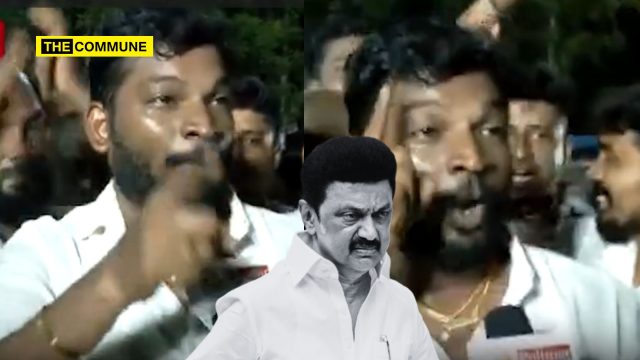
But what is even more shocking, some may say this is expected behaviour, is how the DMK cadres are threatening and abusing the voters of Kolathur constituency.
In a video that has gone viral on social media, a cadre is seen saying, “Slipper shots are waiting for everyone. Slipper shots are waiting for the people of this Kolathur constituency. Duty, dignity, and discipline are what Anna taught us. But Kalaignar has taught us something else to an extent: if you hold the flag upright, it’s a flag; if you turn it around, it’s a stick. Our leader has kept us disciplined so that we don’t have to raise that stick.”
He went on to claim that the constituency itself is the true loser of the election, warning of grim consequences. “Even today, if you look at it, he lost his chance at victory in yesterday’s election. Okay, he isn’t the one who lost the victory. It is this Kolathur constituency; yes, it is the Kolathur constituency that lost the victory, and today they are going to suffer. This constituency, without my leader, is going to suffer,” the cadre declared.
The remarks culminated in a severe insult directed at the entire state, with the cadre exclaiming, “This is not Tamil Nadu; it’s a land of illiterates, a land of illiterates, a land of illiterates, a land of illiterates, a land of illiterates. Just rename this Kolathur as a graveyard.”
One can recall the remarks made by former Chief Minister M. Karunanidhi after the DMK’s defeat in the 2001 Assembly elections, when he had referred to the people of Tamil Nadu as “corpses beaten with rice.” The present comments by the cadres reflects an inability within sections of the party to accept electoral defeat.
The recent threats from DMK members in Kolathur, promising to beat voters “with slippers” and threatening to turn the constituency into a “graveyard”, represent a dangerous escalation. DMK cadre have insulted the entire state by branding it a “nation of fools”, just because they do not agree with the mandate of the people.
Within 72 hours of the DMK’s defeat in the 2026 Tamil Nadu Assembly elections, Iyan Karthikeyan, Mission Director of the Tamil Nadu Government Fact Check Unit (FCU), posted a single word on Facebook: “Resigned!” The timing seems suspicious though.
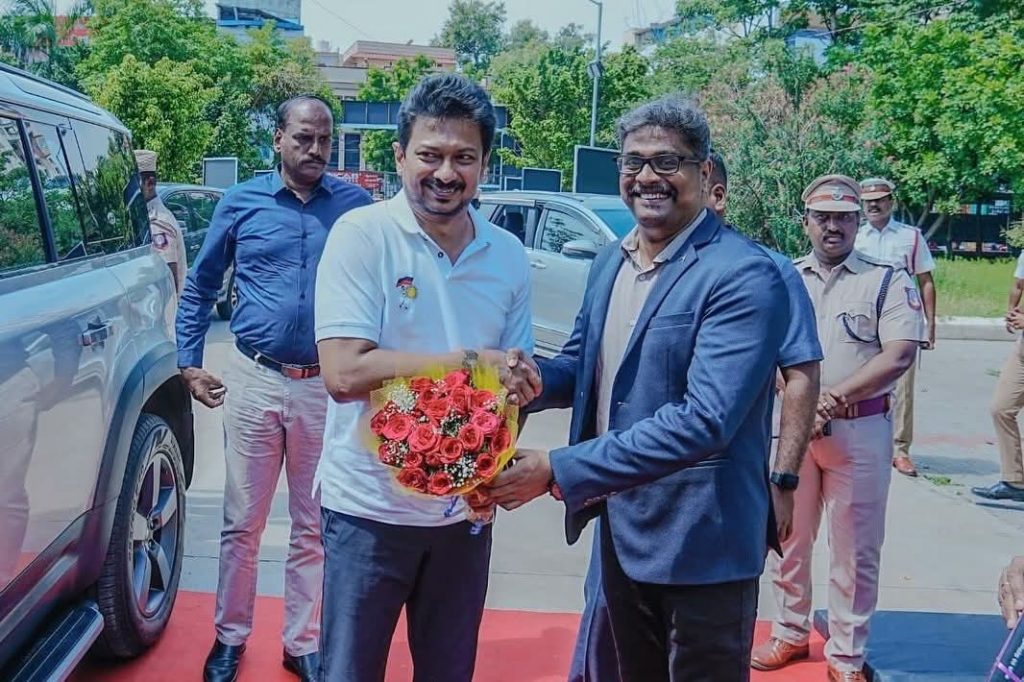
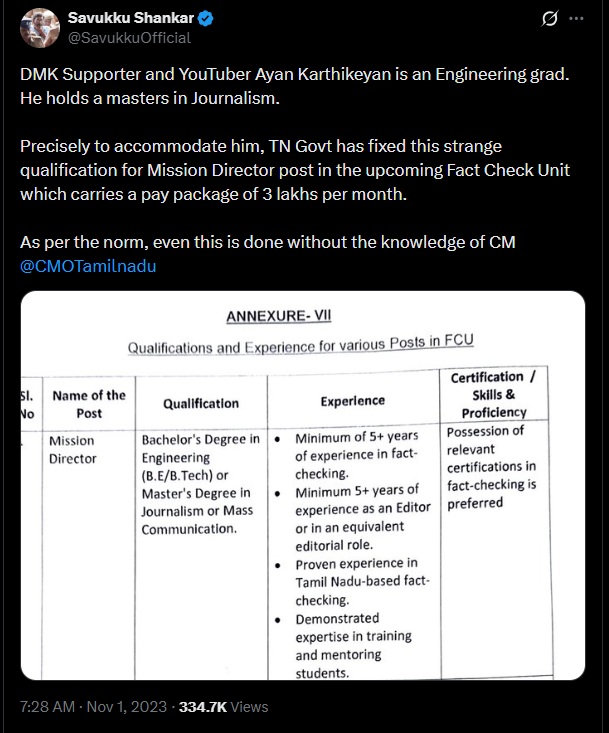
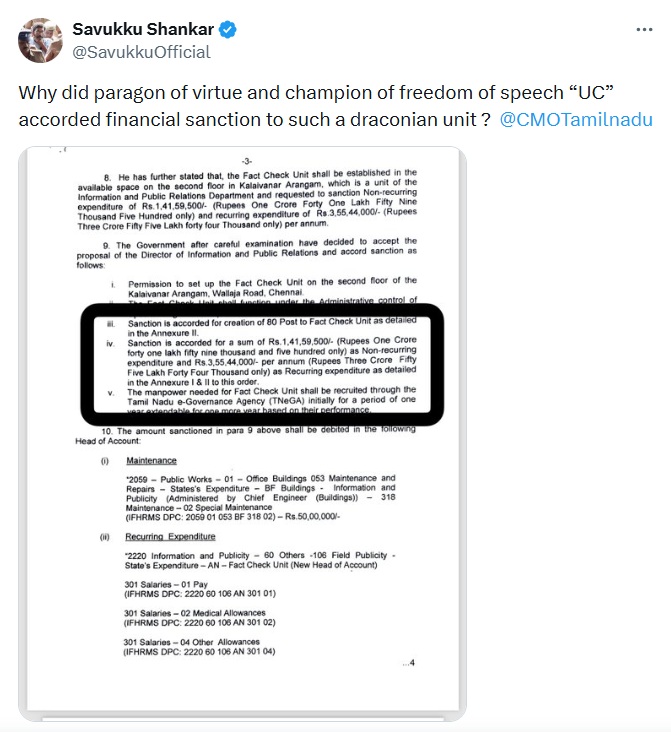
The FCU was created through a Government Order issued on 6 October 2023 by the Tamil Development and Information Department under the portfolio of Udhayanidhi Stalin, Minister for Special Programme Implementation and son of Chief Minister MK Stalin.
Crucially, the setting up of this significant department was never brought before the Tamil Nadu Legislative Assembly. The annual expenditure was projected to exceed ₹3 crore, and until the 2023-24 supplementary budget approved it formally, expenses were to be drawn from the contingency fund – at a time when the state government had failed to implement pay parity for teachers and had not fulfilled its ₹1,000 monthly promise to women.
Even more striking: no public advertisement was issued for the 80 positions in the 25 days between the GO being issued and appointments being made. The Madras High Court had ruled that contract and temporary posts require either selection from employment exchanges or public notifications giving every eligible candidate a chance to compete. Neither was followed. Concerns also arose about whether the 69% reservation policy mandated under Tamil Nadu’s General Rules for State and Subordinate Services was applied in the appointments process.
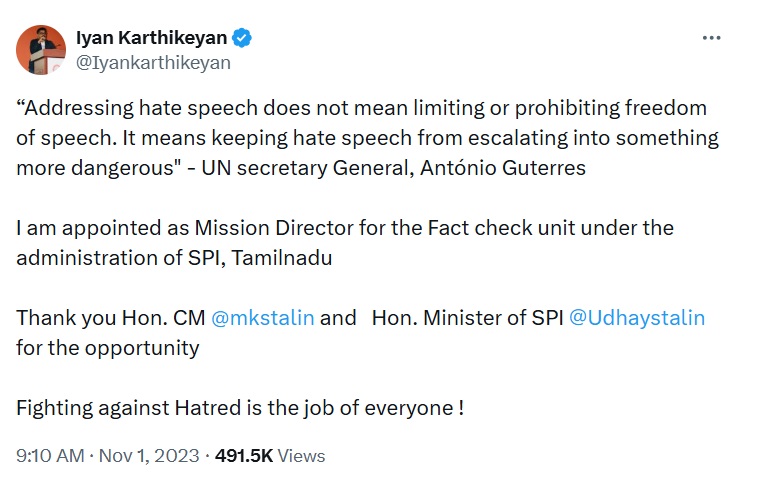
On 30 October 2023, Iyan Karthikeyan quietly resigned from YouTurn on social media. Two days later, on 1 November 2023, he announced on X that he had been appointed Mission Director of the FCU – not through any official government press conference or gazette notification, but through his own tweet.
Who Is Iyan Karthikeyan
Karthikeyan was formerly the Editor-in-Chief of YouTurn, a self-described fact-checking YouTube channel and website known for its proximity to DMK positions. The channel routinely targeted DMK critics including YouTuber Maridhas, and journalists Rangaraj Pandey and Sandhya Ravishankar, while running content critical of the BJP and its leaders.
Karthikeyan is an engineering graduate. The GO’s qualification requirements for Mission Director listed either a B.E./B.Tech or an M.A. in Journalism or Mass Communication. The qualifications appeared tailored to fit a specific profile rather than drawn from any standard government service requirement.
His appointment immediately drew comparisons to the pay structure of senior public servants. ISRO Chairman S. Somanath, who led the Chandrayaan-3 mission, earns ₹2.5 lakh per month. Iyan Karthikeyan, a YouTuber with no government experience, was handed ₹3 lakh per month from public funds as Mission Director of a one-year (extendable) contract position.
This, at a time when nurses were on the streets demanding regularisation of services and government school teachers were protesting for pay parity.
DMK IT Wing Inside The Unit
South First reported, quoting a state-level DMK functionary directly, that DMK IT wing cadres and social media-active party workers were being recruited into the FCU. AIADMK Deputy Leader of Opposition RB Udhayakumar stated that credible sources confirmed recruitment exclusively involved individuals affiliated to the DMK and its IT wing.
Social activist Jayaram Venkatesan of corruption watchdog Arappor Iyakkam stated publicly that the FCU appeared to be a government propaganda tool and an extension of the DMK IT wing, primarily designed to counter content critical of the government. He also questioned why the unit was placed under Udhayanidhi Stalin’s portfolio rather than under the Information Minister or the DIPR.
The Mandate: Not Fact-Checking But Silencing Critics
On paper, the FCU was set up to tackle misinformation and hate speech. In practice, its mandate told a different story. The unit was authorised to fact-check all news related to the Tamil Nadu government across every media platform – not just viral misinformation, but any coverage of government policies, schemes, and officials.
Any content the FCU deemed false could be referred directly to the legal and police departments for action. In short, it had the power to trigger criminal cases against journalists, social media users, and ordinary citizens who posted content the government disagreed with.
The unit reported directly to Minister Udhayanidhi Stalin’s department – Special Programme Implementation. The chain of command went straight to the CM’s son.
What It Did: Intimidation by Design
The FCU’s structure was built for intimidation. Any post, tweet, or news article that questioned the government could be flagged, “fact-checked” by a politically aligned team and then referred to the cybercrime wing or legal department. Mere referral, even without a case being filed, was enough to chill speech. Journalists and social media users knew that a complaint from the FCU could result in a police visit, a WhatsApp summons, or worse.
Multiple voices who have now spoken post-election confirm this climate existed. Serious allegations have been raised that the Tamil Nadu cybercrime wing was used alongside the FCU to file questionable cases, suppress voices, and damage reputations of those who criticised the government.
The resignation of @Iyankarthikeyan is a significant development. But it cannot be treated as the end of the issue in fact, it should be the beginning of a deeper and more transparent enquiry.
Serious concerns have been raised about the functioning of the so-called “fact check”… pic.twitter.com/INtFuH7rLY
சமூக ஊடகங்களில் கடந்த திமுக ஆட்சியின் போது யார் திமுகவை எதிர்த்து கேள்வி கேட்டாலும் சைபர் காவல்துறை உதவியுடன் அவர்களது சுய விவரங்கள் எடுக்கப்பட்டு அவர்கள் மேல் FIR , விசாரணை எதுவும் இன்றி உடனே கைது, ஜாமீனில் வெளிவர முடியாத வழக்கு, 500 கீழ்… pic.twitter.com/DFF6q8SLM6
And if you thought the unit did some good work fact-checking wrong information, you are wrong. It turned out that netizens would often end up fact-checking the unit. Once MK Stalin himself had to delete a post because it turned out to be false. Netizens questioned where the ‘Mission Director’ had disappeared.
And most often, the real fake news especially those shared by DMK IT Wing and its supporting handles would go unchecked.
It is noteworthy that anyone who had shared a piece of information deemed misleading would end up with a police case. Several YouTubers, netizens have been targeted and cases lumped upon them in the process.
Now that Iyan Karthijeyan has resigned, it only seems fit for the incoming government to investigate the department created out of the blue. The truth about the TN Fact Check Unit will not emerge from a resignation. It will require a full, independent audit of its finances, its cases, and the people who directed its operations from within Udhayanidhi Stalin’s department.
Subscribe to our channels on WhatsApp, Telegram,Instagram and YouTube to get the best stories of the day delivered to you personally.
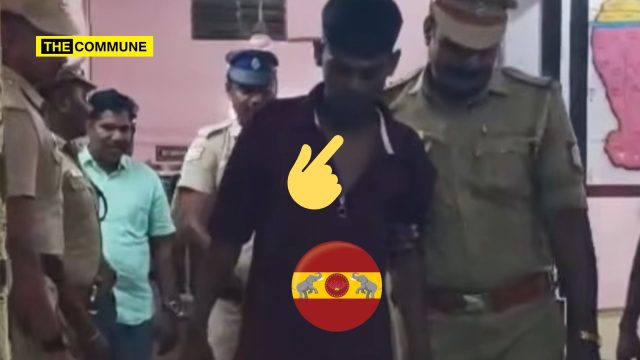
A member of Tamilaga Vettri Kazhagam has been arrested by police for allegedly kidnapping a two-year-old girl in order to steal her gold talisman near Naduveerapattu in Cuddalore district.
According to police, the accused kidnapped the child on a motorcycle and later abandoned her by the roadside after allegedly taking the gold talisman she was wearing. A young man passing through the area noticed the abandoned child, rescued her, and handed her over to the police.
The child was subsequently reunited safely with her parents.
Following an investigation, police examined CCTV footage from the area and identified the suspect as Vetrivel. He was later arrested in connection with the incident.
Subscribe to our channels on WhatsApp, Telegram,Instagram and YouTube to get the best stories of the day delivered to you personally.
Tamilaga Vettri Kazhagam (TVK) leader C. Joseph Vijay built his 2026 electoral campaign on the promise of clean governance, law and order, and a definitive break from Tamil Nadu’s compromised political culture. Yet, by actively choosing to partner with the Tamil Nadu Congress Committee (TNCC) to secure a government majority, TVK leadership especially Vijay and Aadhav Arjuna have effectively whitewashed TNCC President K. Selvaperunthagai, a man deeply implicated in organized violence and political murder.
The most glaring casualty of this new political arithmetic is the K. Armstrong murder investigation. On 5 July 2024, the BSP state president was hacked to death in Perambur. The investigation quickly exposed ties between Selvaperunthagai and the family of the accused, specifically convicted gangster Nagendran and his son Ashwathaman. Despite direct appeals from Armstrong’s widow, Porkodi, and public demands from the BSP, the TNCC chief was shielded from police scrutiny.
In September 2025, the Madras High Court formally recognized this investigative blindspot. While transferring the case to the CBI, Justice P. Velmurugan explicitly pulled up the state police for deliberately failing to interrogate Selvaperunthagai or record his statement. TVK had previously claimed to stand in solidarity with Porkodi’s fight for justice; today, they are sharing power with the primary political figure accused of orchestrating her husband’s assassination.
Furthermore, TVK is now aligned with a party whose leader is accused of deploying mob violence against the press. In March 2025, political commentator Savukku Shankar filed a formal police complaint alleging that Selvaperunthagai sent goons disguised as sanitary workers to his Chennai residence. The mob broke in, physically assaulted Shankar’s 68-year-old mother, dumped sewage inside the home, and issued death threats.
By integrating the Congress into its ruling coalition, TVK has granted Selvaperunthagai sudden political immunity. The “puritanical” image TVK marketed to voters has evaporated, replaced by the reality that they are willing to provide sanctuary to a politician accused of assassinating a Dalit leader and terrorizing journalists. With the accused now a critical stakeholder in the TVK-led government, the Armstrong murder probe is highly likely to be buried entirely.
💔So, no one will bother to focus on the Armstrong case now that the “accused” has joined the TVK alliance and will now be considered a puritan.
Kudos to TVK Vijay & Aadhav for whitewashing a criminal, who also sent goons to vandalize Savukku Shankar’s home! pic.twitter.com/4zn1qeBH24
— Saikiran Kannan | 赛基兰坎南 (@saikirankannan) May 6, 2026
Subscribe to our channels on WhatsApp, Telegram,Instagram and YouTube to get the best stories of the day delivered to you personally.
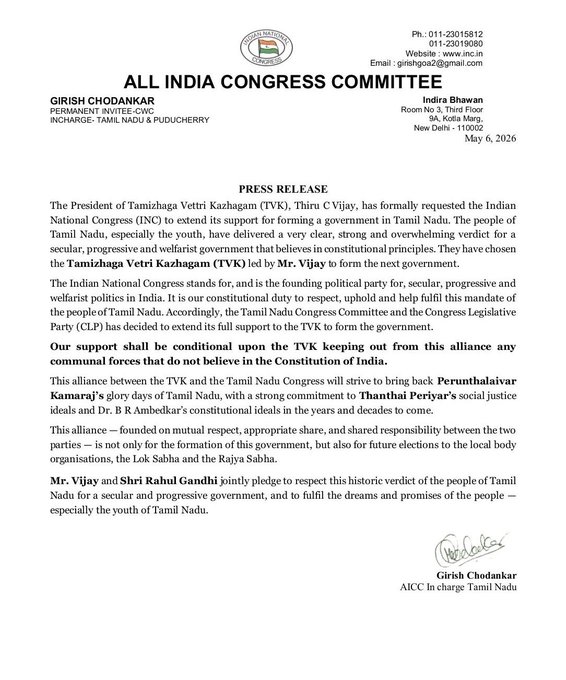
The Congress on Wednesday, 6 May 2026, formally ditched its longtime ally, the DMK and extended support to actor-politician Vijay’s Tamilaga Vettri Kazhagam (TVK) to form the government in Tamil Nadu after the party emerged as the single largest force in the Assembly elections but fell short of a majority.
In a press release issued by AICC in-charge for Tamil Nadu and Puducherry Girish Chodankar, the party said Vijay had formally sought the Indian National Congress’ support for government formation.
“The people of Tamil Nadu, especially the youth, have delivered a very clear, strong and overwhelming verdict for a secular, progressive and welfarist government that believes in constitutional principles. They have chosen the Tamizhaga Vetri Kazhagam (TVK) led by Mr. Vijay to form the next government,” the statement said.
Congress, which secured five seats in the Assembly, said its backing would come with a condition that the alliance should not include “communal forces”.
“Our support shall be conditional upon the TVK keeping out from this alliance any communal forces that do not believe in the Constitution of India,” the release stated.
The party further said the Tamil Nadu Congress Legislative Party had decided to extend “its full support to the TVK to form the next government”.
Referring to the alliance as one rooted in constitutional and social justice principles, Congress said the partnership would seek to revive “Perunthalaivar Kamarajar’s glory days of Tamil Nadu”, while remaining committed to “Thanthai Periyar’s social justice ideals and Dr. B.R. Ambedkar’s constitutional ideals”.
The statement also indicated that the understanding between the two parties could extend beyond government formation and continue into future local body, Lok Sabha and Rajya Sabha elections.
“Mr. Vijay and Shri Rahul Gandhi jointly pledge to respect this historic verdict of the people of Tamil Nadu for a secular and progressive government, and to fulfil the dreams and promises of the people — especially the youth of Tamil Nadu,” the release added.
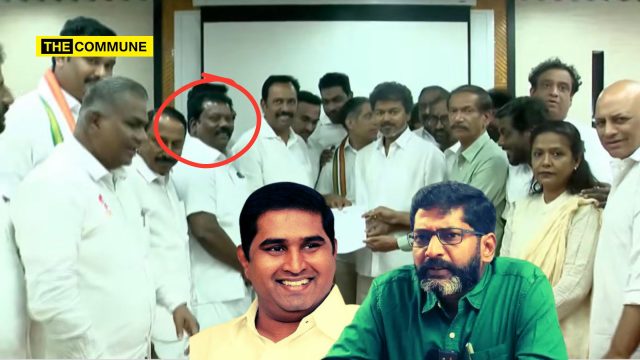
The Congress leaders met Vijay at the TVK headquarters in Chennai and handed over the letter of support.
#WATCH | Tamil Nadu Congress leaders hand over the letter of support to TVK chief Vijay at the TVK Headquarters in Chennai.
Tamil Nadu Congress Committee and the Congress Legislative Party (CLP) has decided to extend its full support to the TVK to form the government.… pic.twitter.com/1Bi3Ik06Ky
We had reported in October 2025 that the Congress could ditch the DMK to join hands with the TVK. The party has now formed a post-poll alliance with the TVK in TN.
Subscribe to our channels on WhatsApp, Telegram,Instagram and YouTube to get the best stories of the day delivered to you personally.
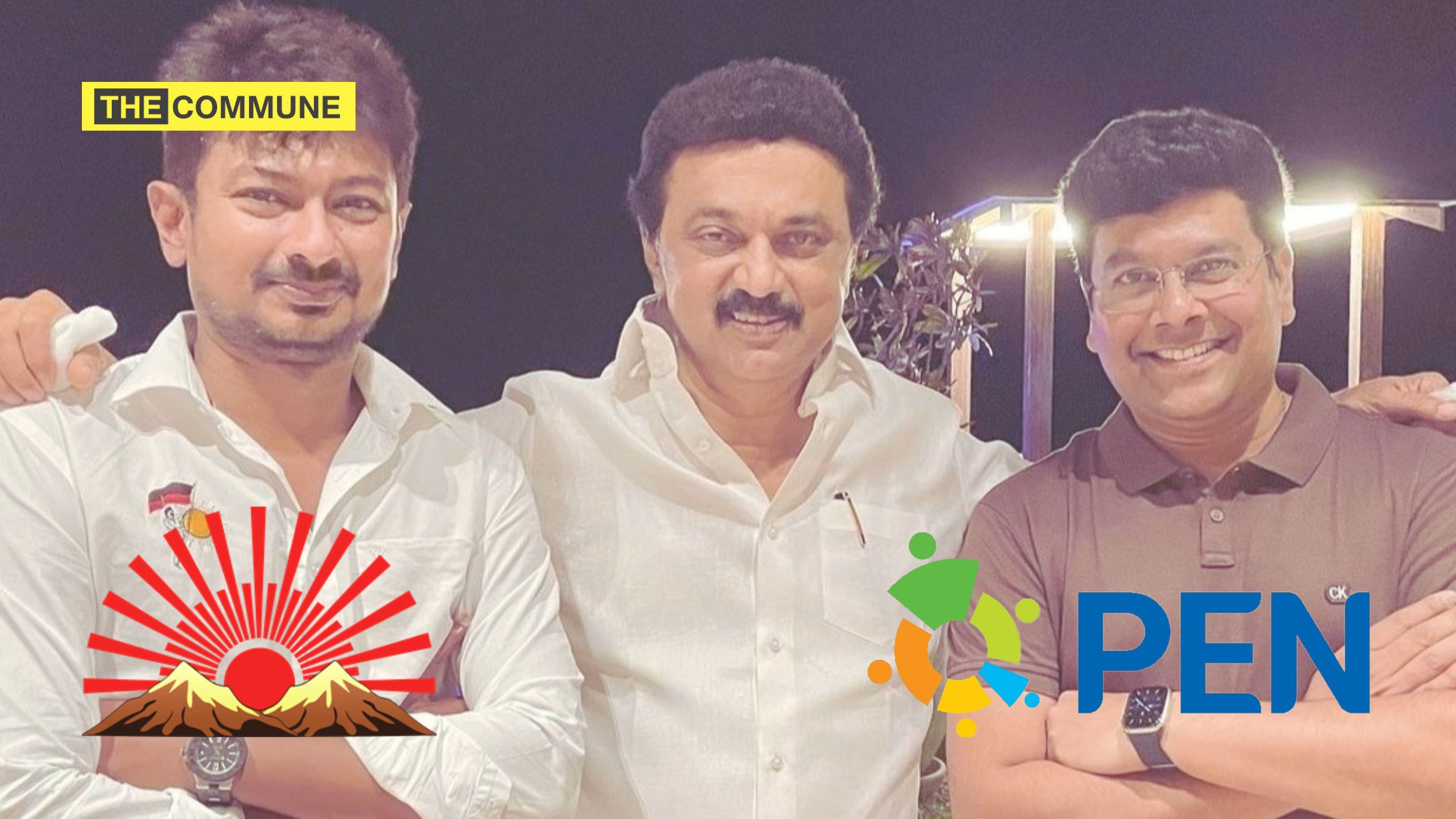
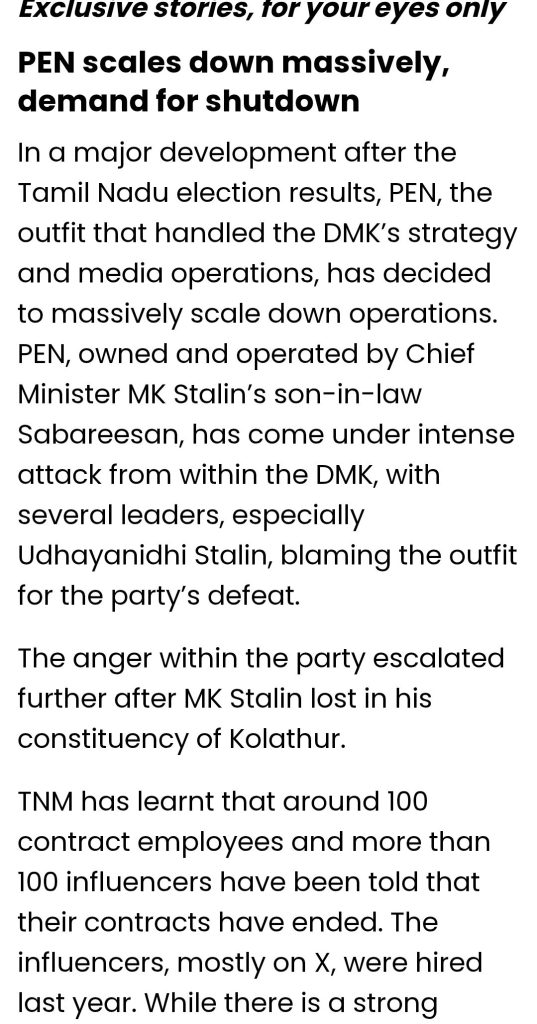
Populus Empowerment Network, better known as PEN, is reportedly scaling down massively and probably shut down, as per leftist rag The News Minute (also DMK’s mouthpiece).
Typed this out as an update yesterday and deleted as I couldn’t get my hands on the email sent out by PEN to many employees.
PEN media is scaling down.
From @thenewsminute ‘s Powertrip 👇 pic.twitter.com/eKM82mvzbf
— Siddharth Prabhakar (@Sidprabhakar7) May 6, 2026
In its paid newsletter ‘Powertrip’, TNM states that around 100 contract employees have been terminated and more than 100 social media influencers, most of them active on social media platform X, have been told their contracts are over. The influencers were hired as recently as last year in the run up to the 2026 Assembly elections.
The news of scaling down comes directly in the wake of the DMK’s crushing defeat in the 2026 Tamil Nadu Assembly elections. Within the party, blame has quickly settled on PEN. Multiple senior DMK leaders, including Udhayanidhi Stalin, have reportedly pointed to the outfit’s operations as a key factor in alienating voters and contributing to the party’s fall, as per the newsletter.
The anger within the party reached its peak after MK Stalin himself lost his own constituency of Kolathur – this is something that made PEN’s failure impossible to ignore or defend.
It is reported that several PEN employees were already looking for work a month ago.
People from PEN started asking for jobs a month back. Couple came to me. https://t.co/MIyxomFwyi
— Shalin Maria Lawrence (@ShalinSpeaks) May 6, 2026
Since most of them were on a contractual role until April 2026, they knew that if a DMK government did not return to power, they had no jobs waiting for them.
PEN hired around 100-150 people for a contractual role till April. All of them knew that they couldn’t continue after April if no dmk govt https://t.co/3voo3yLFta
PEN was not just a political strategy firm. It was a family operation. Founded in November 2022, it was owned and run by V. Sabareesan, Chief Minister MK Stalin’s son-in-law. On paper, its mandate included data analysis, ground surveys, managing the ‘Makkaludan Stalin’ app, selecting TV debate spokespersons, and providing digital strategy support. In practice, it became the DMK’s most powerful and least accountable arm.
Its official directors are Manikandan Vasudevan and Prabhakaran Sekar, but V Sabareesan, son-in-law of Chief Minister MK Stalin, is said to exercise indirect control over the company.
PEN functions as DMK’s in-house digital and social media agency. It runs the Facebook page “Ellorum Nammudan” (596,000 followers), the Instagram handle “dmk_ellorumnammudan” (113,000 followers), and multiple other DMK-linked digital properties. It was also responsible for developing the “Makkalin Mudhalvar” app and game promoting the DMK’s “Dravidian Model” branding.
In 2024, then Tamil Nadu BJP president K Annamalai publicly accused DMK of spending ₹7.39 crore in social media ads through PEN, calling it “crony capitalism” and alleging that the Chief Minister’s family was directly profiting from state-funded political propaganda. The allegations, backed by public Meta Ad Library and Google Transparency Center data, triggered an Election Commission complaint but no regulatory action followed.
Sabareesan could be labelled as the “shadow CM of Tamil Nadu” – a man who held no elected office, answered to no electorate, and yet wielded influence across government policy and party strategy. When Tamil Nadu announced a Space Industrial Policy in 2024, Sabareesan had floated a space-tech startup just weeks earlier and stood to benefit directly.
Populus Empowerment Network Private Limited (PEN), incorporated in November 2022, emerged as India’s most aggressive state-level political digital advertiser, according to data drawn from Google’s Ads Transparency Center and Meta’s Ad Library. Its spending is verifiable; its ads are public and its links to the ruling DMK and Chief Minister M.K. Stalin’s son-in-law V. Sabareesan are documented.
PEN’s digital election spending operated at an extraordinary scale. Public ad transparency data shows the outfit spent ₹9.25 crore on Google Ads in 2024 alone, making it India’s second-largest non-government political advertiser on the platform. Between January and October 2025, PEN reportedly spent ₹4.1 crore on Meta platforms across over 1,000 ads, alongside ₹1.24 crore on Google Ads. Digital monitoring estimates place PEN’s combined 2025 ad expenditure at ₹14-17 crore. The spending intensified sharply ahead of the 2026 Assembly elections, with February 2026 alone seeing roughly ₹3.6 crore spent on high-volume ad campaigns reaching crores of viewers.
The Intimidation Machine
Beyond election strategy, PEN became known inside Tamil Nadu’s media circles for something more troubling: the systematic monitoring and intimidation of journalists.
If a reporter posted a critical tweet that didn’t sit well with the government’s narrative, PEN operatives would reportedly screenshot the content and forward it directly to the journalist’s editors and management. The message was never explicit. It didn’t need to be. The implied threat was enough: keep writing this, and your job becomes difficult.
Stalin SP, Chief of Bureau at Puthiya Thalaimurai TV, broke his silence on election night itself. “Hereafter I can tweet whatever I think,” he posted. “PEN can’t intimidate me by taking screenshots and sending them to my office”.
The IT Wing: From Strategy to Organised Abuse
Alongside PEN, the DMK’s official IT Wing operated as the digital enforcement arm. Multiple journalists and commentators have come forward since the results to describe what they experienced.
Omjasvin MD, a Times of India journalist, wrote that the constant targeting of journalists critical of the government was “one of the worst downgrades of the DMK IT wing.” He noted that beyond abusive comments, dedicated online spaces were set up specifically to tarnish journalists’ reputations, and that those running these operations were closely linked to the top brass of the party.
The constant abuse and target of journalists writing critically against the govt was one of the worst downgrades of the #DMK IT wing in the last few years. Beyond comments, spaces were created for discussions to tarnish journalists. Many involved in these trolls and targeted… https://t.co/63XLJ6tW6A
Political commentator Vinodh Arulappan went further, explicitly naming the turning point: when the IT Wing’s mantle shifted from PTR Palanivel Thiagarajan to TRB Rajaa. “Under PTR, abuse became organised,” Arulappan wrote. “A team existed solely to go after critics with slurs and threats. Earlier they were loafers, now, under TRB Raja they become thugs”.
Under PTR, abuse became organised. A team existed solely to go after critics with slurs and threats. I know exactly who they are. Earlier they were loafers, now, under TRB Raja they become thugs. https://t.co/P4HsOsE18K
The scale of the current reckoning reflects how deeply the PEN-IT Wing machinery had penetrated Tamil Nadu’s public discourse. For five years, the Fact Checking Unit, also run by DMK lackeys such as Iyan Karthikeyan, controlled what needed to be fact-checked, PEN handled corporate pressure on newsrooms, and the IT wing patrolled social media with slurs and coordinated attacks. Together, they built a managed information environment designed to sustain the illusion of a popular government.
The 2026 election verdict dismantled both the government and the machine that propped it up. PEN is scaling down and probably disbanding. The influencers are off contract. The IT wing enforcers have lost their state backing.
Subscribe to our channels on WhatsApp, Telegram,Instagram and YouTube to get the best stories of the day delivered to you personally.
As Joseph Vijay prepares to stake claim to form the next government in Tamil Nadu, grandson of Rajaji and someone who appears to be a staunch Dravidianist, Gopalkrishna Gandhi penned an ‘open letter’ to Vijay that was published in The Hindu.
The “open letter” by Gopalkrishna Gandhi to Vijay reads less like a congratulatory note and more like an ideological onboarding document written by a senior DMK figure attempting to politically tutor a newcomer who has unexpectedly seized power.
What makes the letter striking is not merely what it says, but the tone in which it says it. Throughout the piece, Gandhi writes with the air of a headmaster addressing an intelligent but unruly schoolboy rather than an elected Chief Minister with a historic democratic mandate. The repeated insistence that Vijay must be “told some truths,” that he is “inexperienced and whimsical,” and that he must be guided into proper constitutional behavior reveals a deeply paternalistic attitude.
The condescension begins almost immediately. Gandhi admits he did not vote for Vijay and says he initially viewed him as “inexperienced and whimsical.” Even the compliment that follows – “fresh, clean” sounds less like admiration and more like the cautious approval one reserves for an untested amateur. The underlying message is unmistakable: Vijay may have won power, but in Gandhi’s eyes, he has not yet earned intellectual legitimacy.
That patronizing tone continues throughout the letter. Gandhi repeatedly frames himself as a custodian of moral wisdom passing down instructions to a politically immature figure. The structure itself resembles a lecture. Gandhi keeps repeating these words – protect secularism, avoid triumphalism, respect officers, reject sycophancy, embrace constitutional morality, uphold federalism, embody communal harmony.
If only he had instructed this to the DMK cadre and to MK Stalin himself, he could have won Kolathur and retained power? Nevertheless, instead of engaging Vijay as an independent political actor with his own ideological legitimacy, Gandhi attempts to induct him into a pre-approved liberal-secular framework.
One of the most politically revealing sections is Gandhi’s treatment of MK Stalin. Despite the letter ostensibly being about Vijay, Gandhi devotes significant space to praising Stalin and the Periyarist tradition. He describes Stalin as representing a “venerable thinking tradition” rooted in Periyar’s movement for equality and social justice. He even calls Stalin’s departure “statesmanlike” and says his absence from the Assembly would be regrettable. This seems to be the opposite of what he wrote to Vijay in the earlier paragraph.
The contrast is revealing. Vijay, despite winning a fairly massive mandate, is treated as an impulsive newcomer who must learn discipline. Stalin, despite being electorally defeated in this hypothetical scenario, is treated as a dignified statesman carrying forward an intellectual legacy. Gandhi appears far more emotionally invested in preserving the moral prestige of the outgoing Dravidian establishment than in celebrating the arrival of a new political force.
Even more curious is Gandhi’s invocation of EV Ramasamy while completely ignoring his own grandfather, C. Rajagopalachari. Rajaji was not merely Gandhi’s ancestor but one of Tamil Nadu’s greatest intellectual and political figures – a statesman deeply associated with constitutionalism, federalism, governance, linguistic balance, and ethical public life. Yet the letter contains no mention of Rajaji whatsoever.
Dear @realitycheckind I offer this letter from the esteemed Gopalkrishna Gandhi, retd Civil Servant and Ex-Governor. See the encomiums for Periyar and not a word about his own grandfathers Gandhi and Rajaji. Thankfully, Patel makes a cameo in a positive manner.
Instead, Gandhi selectively roots Tamil Nadu’s moral legitimacy entirely within the Periyarist tradition. This omission is politically significant. It suggests an ideological alignment with the dominant Dravidian-secular narrative while sidelining alternative Tamil political inheritances, including conservative constitutionalism, classical liberalism, and Rajaji’s own critique of centralized ideological politics.
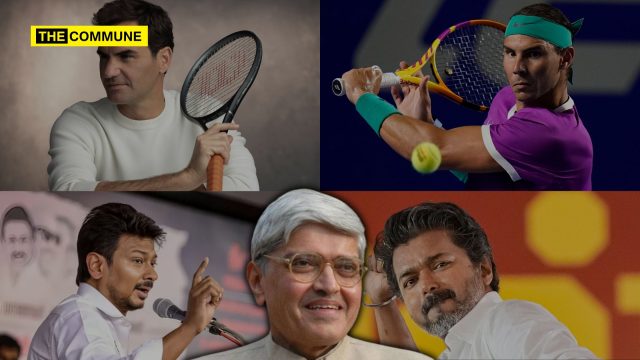
How Gandhi speaks about Udhayanidhi Stalin is even more peculiar. He effectively asks Vijay to treat Udhayanidhi as a collaborative partner within the Assembly rather than as the son of a defeated political dynasty. He adds, “And let Udhayanidhi Stalin’s presence in the House be for you a great duet, not a grim duel. As in what Nadal facing Federer has been – a balance of skills.” Even in defeat, the Stalin family is framed not as an outgoing establishment to be challenged, but as an indispensable part of Tamil Nadu’s political continuity. Gandhi appears less interested in a clean political rupture than in ensuring that the old Dravidian order remains accommodated within the new one. This creates an unusual tension in the letter: while warning Vijay against personality cults and inherited power, Gandhi simultaneously normalizes the continued centrality of the Stalin dynasty in Tamil politics.
Another revealing aspect is Gandhi’s discomfort with ideological clarity. When he asks Vijay, “What is your ideology?”, he immediately supplies the answer himself: “My ideology is following my conscience.” This sounds lofty, but it also conveniently discourages sharp ideological positioning. Vijay is subtly advised not to become too culturally assertive, too majoritarian, too anti-establishment, or too disruptive. “Conscience” here functions as a softer substitute for ideological conviction – one that fits neatly within elite liberal vocabulary.
The letter also contains unmistakable anxiety about the national political climate. Gandhi repeatedly invokes secularism, hate-free politics, fear-free India, constitutional morality, protection of minorities, and federalism – typical language of Dravidianist DMK.
The letter therefore reads not only as advice to Vijay, but as an attempt to ensure that a potentially powerful new Tamil leader remains within the ideological boundaries acceptable to the Dravidianists.
Perhaps the most extraordinary line comes at the end, when Gandhi highlights Vijay becoming “the first Christian” to head the Tamil Nadu government and describes it almost as a providential affirmation of Tamil Nadu’s secular credentials. This is politically loaded. Rather than simply treating religion as irrelevant in governance, Gandhi elevates Vijay’s Christian identity into a symbolic civilizational statement. Critics may see this as paradoxical: a letter repeatedly preaching secularism ultimately closes by celebrating the religious identity of the leader himself.
In the end, the “open letter” reveals as much about Gopalkrishna Gandhi as it does about Vijay. It exposes the anxieties of an aging intellectual-political establishment confronted with a charismatic outsider whose ideological direction remains uncertain. Gandhi praises Vijay, but cautiously. He congratulates him but lectures him. He welcomes change but simultaneously attempts to contain it within familiar ideological boundaries.
The result is a document that oscillates between blessing, warning, ideological instruction manual, and elite political gatekeeping – all wrapped in the language of constitutional morality and elder-statesman civility.
Subscribe to our channels on WhatsApp, Telegram,Instagram and YouTube to get the best stories of the day delivered to you personally.
The Indian National Congress appears set to back Vijay and Tamilaga Vettri Kazhagam in forming the next government in Tamil Nadu following the party’s strong performance in the 2026 Tamil Nadu Legislative Assembly election, a move that has reportedly caused unease within its long-time ally, the Dravida Munnetra Kazhagam.
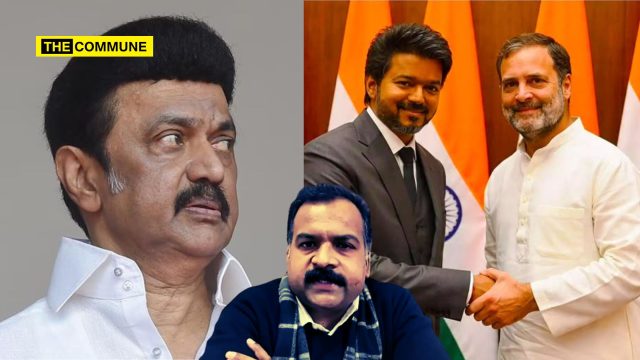
While several DMK leaders have criticised the Congress for moving closer to TVK after the election verdict, Congress MP and senior leader Manickam Tagore defended the party’s stand, arguing that the electoral mandate could not be ignored.
In a post on X, Tagore wrote, “The verdict has gone against the DMK government. Half the ministers in the Cabinet have lost their seats. We faced collateral damage for no fault of ours. Now, BJP is eyeing Tamil Nadu. The question before us is clear: Should we stand with those rejected by the people’s verdict, or should we unite with the force that fought against BJP and fight to stop BJP from ruling Tamil Nadu?”
The verdict has gone against the DMK government.
Half the ministers in the Cabinet have lost their seats.
We faced collateral damage for no fault of ours.
Now, BJP is eyeing Tamil Nadu.
The question before us is clear:
Should we stand with those rejected by the people’s verdict,…
— Manickam Tagore .B🇮🇳மாணிக்கம் தாகூர்.ப (@manickamtagore) May 6, 2026
Speaking to reporters later, Tagore said the people of Tamil Nadu had delivered a decisive verdict and that political parties must respect it.
“As far as we are concerned, our people, the voters of Tamil Nadu–have made a clear decision. Some people had been saying things like, “This won’t suit the soil of Tamil Nadu,” or “Tamil Nadu will not accept a share in governance.” But the people of Tamil Nadu have given their answer. They have made their decision. So, we will see what happens next. As far as I know, I can only say this much. In the meeting I attended yesterday, during the political advisory committee discussion, certain decisions were taken. The announcement regarding those decisions can only be made by Girish Chodankar,” as reported in MoneyControl.
According to sources, the Congress is prepared to end one of its longest-standing alliances in Tamil Nadu and extend support to TVK with its five MLAs in order to help Vijay form the government.
Vijay is understood to have written to Congress president Mallikarjun Kharge seeking support. Indications suggest the Congress leadership has responded positively and may also attempt to bring allies such as the Viduthalai Chiruthaigal Katchi and Left parties into the arrangement.
Congress leaders have projected the move as part of a broader anti-BJP strategy, arguing that the mandate in Tamil Nadu favours a secular front capable of preventing the Bharatiya Janata Party from gaining power in the state.
Subscribe to our channels on WhatsApp, Telegram,Instagram and YouTube to get the best stories of the day delivered to you personally.
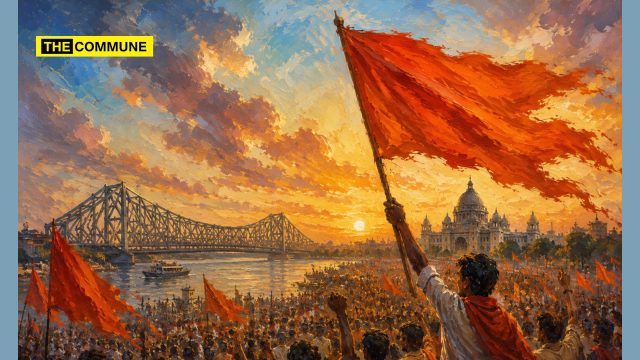
For decades, West Bengal stood apart in India’s political landscape. Its electoral grammar was rooted in ideological conviction rather than identity mobilisation. Unlike the caste-driven politics of North India or the overt religious polarisation seen elsewhere, Bengal’s political culture evolved through the influence of Leftist thought, intellectual discourse, and a certain civilisational confidence that muted overt identity conflicts. Religion existed but rarely dictated the ballot. That grammar, however, has now been fundamentally rewritten.
At the centre of this transformation lies a long-term, deeply embedded strategy executed by the Rashtriya Swayamsevak Sangh. What unfolded in the recent electoral outcome is not merely a political victory for the Bharatiya Janata Party, but the culmination of decades of social engineering that has quietly altered the state’s political consciousness.
The historical irony is striking. The ideological forebear of the BJP, the Bharatiya Jana Sangh, was founded in 1951 by Syama Prasad Mookerjee, a towering figure from Bengal itself. Yet, for decades, the political movement he inspired remained peripheral in his home state. Bengal resisted the Sangh’s appeal, anchored as it was in a distinct socio-political ethos shaped by the Left and later by regional forces. This resistance was not accidental; it was structural, cultural, and deeply ingrained.
That is precisely why the present moment carries such symbolic weight. When Prime Minister Narendra Modi remarked that “Syamaprasad Mookerjee’s soul has finally found peace,” it was more than rhetorical flourish. It was an acknowledgment of a historical gap finally bridged.
The scale of the effort behind this shift is staggering. Nearly two lakh voter awareness meetings across roughly 250 constituencies reflect a level of grassroots engagement rarely witnessed in Indian politics. Fourteen affiliate organisations of the Sangh Parivar systematically penetrated every layer of society – students, labourers, women, tribal communities ensuring that the message was not merely broadcast but absorbed.
What distinguishes this mobilisation is its method. It is not spectacle-driven. There are no dramatic rallies or headline-grabbing theatrics. Instead, the RSS deployed a calibrated model through Lokmat Parishkar meetings – small, localised interactions designed to “clarify public opinion.” Yet, beneath this understated phrasing lies a powerful psychological shift. Elections were reframed not as routine democratic exercises, but as existential choices.
This reframing proved decisive. The narrative of vulnerability, particularly around the condition of Hindus in Bangladesh following political upheavals and the perceived threat of extremist forces, was subtly woven into the discourse. It did not rely on overt alarmism but on cumulative suggestion. Over time, this created a shared sense of civilisational anxiety that transcended local divisions.
Perhaps the most significant achievement of this strategy is the consolidation of Hindu identity across caste and class lines – something Bengal historically resisted. Unlike Uttar Pradesh or Bihar, where caste arithmetic dominates electoral politics, Bengal’s Hindu society was fragmented but not politically mobilised along caste lines. The RSS recognised this as both a challenge and an opportunity.
Rather than engaging in direct political messaging, it invested in long-term social conditioning. Cultural platforms became political instruments. Festivals like Ram Navami were reimagined as vehicles of collective identity, extending their reach beyond religious observance into the realm of socio-political symbolism. Grassroots networks ensured that this message reached rural and semi-urban Bengal, where political narratives often take deeper root.
What makes this approach particularly potent is its subtlety. The RSS has always operated in a low-decibel mode, avoiding aggressive posturing that might provoke resistance. Instead, it normalised the idea of Hindu consolidation, allowing it to evolve organically within the social fabric. The narrative was not imposed; it was internalised. And therein lies its enduring strength.
The implications of this shift extend far beyond a single electoral cycle. Bengal is witnessing the emergence of a new political template – one where identity may increasingly overshadow ideology as the primary axis of politics. For the BJP, this represents the creation of a durable electoral base, built not just on votes but on a reconfigured social consciousness.
For its opponents, the challenge is far more complex. They are no longer contesting a political party alone but confronting a transformed electorate. Traditional strategies such as coalition-building, welfare politics, or ideological appeals may prove insufficient against a narrative that operates at the level of identity and perception.
In this sense, Bengal has become more than just another state in India’s electoral map. It is a test case for a broader national strategy. The success of sustained, decentralised, and culturally rooted mobilisation here offers a potential blueprint for replication elsewhere.
If this model holds, it signals a profound shift in Indian politics – one where long-term social engagement trumps short-term electoral tactics, and where the battle for the electorate is fought not just in rallies and manifestos, but in the slow, deliberate shaping of collective consciousness.
Dr. Prosenjit Nath is a techie, political analyst, and author.
Subscribe to our channels on WhatsApp, Telegram,Instagram and YouTube to get the best stories of the day delivered to you personally.
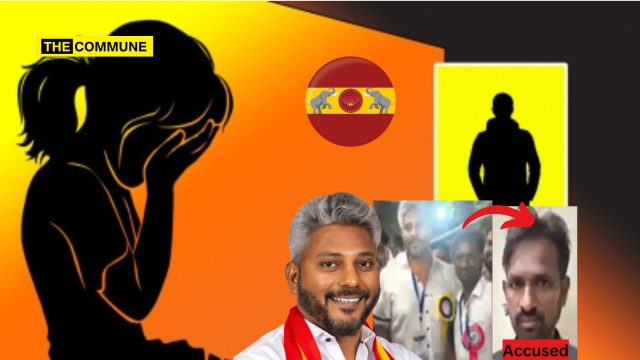
A functionary of Tamilaga Vettri Kazhagam (TVK) has been arrested in Chennai’s R.K. Nagar area in connection with the alleged sexual assault of a 10-year-old girl, according to a news report citing police action by the Royapuram All Women Police.
The accused, identified as Dinesh, also known as “Paambu” Dinesh, is reported to be the party’s 43rd ward secretary in the area. The girl, who is from Mylapore, had been staying at a relative’s house in Singaravelar Nagar in Kasimedu for the past few weeks when the alleged incident took place on 23 April 2026, the day of polling in Tamil Nadu.
Dinesh, who was said to be a neighbour, allegedly took the child into his house and assaulted her while she was playing nearby. He is also alleged to have threatened the girl with death if she disclosed the incident to others.
The child later informed her aunt, who alerted the family, following which the parents lodged a complaint at the Kasimedu police station on 3 May 2026. As the complaint involved provisions under the Protection of Children from Sexual Offences (POCSO) Act, the case was transferred to the All Women Police Station for further action.
Police reportedly attempted to arrest Dinesh on 4 May 2026, but were unable to do so at the time because he had gone to a vote-counting centre to support TVK candidate Marie Wilson in the R.K. Nagar constituency. He was arrested later that night.
Dinesh had reportedly been active in election canvassing in the Kasimedu area alongside Marie Wilson, who is the newly elected MLA from R.K. Nagar. The arrest has triggered shock and embarrassment within political circles, particularly because TVK leaders had campaigned on the issue of safety for women and children.