Home Blog Page 618

The Hype Surrounding ‘The Satanic Verses’ Will Lead To ‘Skyrocketing Sales’ In India

'Why Was This Book Banned?' Buyers React As 'The Satanic Verses' Makes A Comeback In India

Soon after the ban on Salman Rushdie’s ‘The Satanic Verses’ was lifted after 36 years, the mercurial excitement of readers drove them to bookstores in select cities to fetch a physical copy of the controversial novel.

While the famous Bahrisons Booksellers is one of the few outlets selling Rushdie’s fourth novel in Delhi, apart from a few others in certain cities like Pune, select e-commerce platforms to offer purchase of this book.

BooksWagon.com was prompt to procure copies and put the book out for sale. Its founder Shubham Jain imported copies of this book from the UK and US, and to his pleasant surprise, there was “a positive response for the book”. But the process of procuring the copies did not go without a few hiccups. Importing ‘The Satanic Verses’ was quite a task.

“We had to go through customs clearance; in addition, we had to explain the need to import copies of the book,” said Jain.

Shortly after the ban was lifted, the demand for the book surged in India due to its availability now. Many literary enthusiasts, academics and readers curious about the book and its controversies are looking forward to owning a copy.

“There is a lot of hubbub and hype surrounding this book in India which will lead to skyrocketing sales, and then a stable number of people would be interested in buying the book which includes the loyal audience of the author and literary enthusiasts,” Jain told IANS.

He is positive that ‘The Satanic Verses’ would get encouraging responses from academic and intellectual circles. Although the book might still face backlash due to the sensitive nature of its content, Jain feels that it could supersede its sales, or at least dampen it due to the Streisand effect – the attempts to censor it might increase its demand. “Ultimately, the sale will also depend on how the public and media react to it, and how booksellers and retailers promote the book which could make the sales rise, fall, or reach stable figures,” said Jain.

As ‘The Satanic Verses’ make a return to bookstores in India after more than three decades following a Delhi court order, Islamic clerics continue to insist on its ban. It is argued that the government should have engaged in a dialogue with the concerned groups before making the book available. ‘The Satanic Verses’ was banned in 1988 in India under Rajiv Gandhi’s regime.

The reason was that Muslim organisations deemed its content blasphemous. The ban had to be dropped after the Delhi High Court, in November, closed the proceedings challenging the government’s ban on the import and sale of this book. The reason for this was that the authorities failed to produce relevant notification. In the absence of pertinent documents, the court “presumed that it does not exist.”

Salman Rushdie is a celebrated Indian-born British and American novelist. His famous works include ‘Midnight’s Children’ (1981), ‘Shame’ (1983), ‘The Jaguar Smile’ (1987), ‘The Satanic Verses’ (1988), East, West (1994), ‘The Moor’s Last Sigh’ (1995), and ‘Fury’ (2001). Rushdie is the recipient of several awards including the Booker Prize (for Midnight’s Children). In 2022, Rushdie survived an assassination attempt after he was stabbed multiple times before a public lecture in New York.

He has been threatened with death since 1989, a year after ‘The Satanic Verses’ was published.

–IANS

Subscribe to our channels on TelegramWhatsApp, and Instagram and get the best stories of the day delivered to you personally.

Ramanathapuram: Four Arrested For Assault And Sexual Harassment Of Woman

Ramanathapuram: Four Arrested For Assault And Sexual Harassment Of Woman

A shocking incident similar to the recent Anna University campus sexual harassment case has occurred in Ramanathapuram district, sparking widespread concern about women’s safety in the state.

On 31 December 2024, police arrested four men for allegedly threatening and sexually assaulting a young woman near Ramanathapuram.

The attack took place when the young woman was traveling with a male friend of hers to the Puthanendal area. They were intercepted by four men, who assaulted both the woman and her male friend. The perpetrators also sexually harassed the woman during the incident.

Following the assault, the victim filed a complaint at the Ramanathapuram Town police station. The police have since arrested four suspects from Puthanendal —identified as Bhuvanesh kumar, Saran, Selva kumar, and Muneesh kannan—and an investigation is underway.

(With Inputs From Dinamani)

Subscribe to our channels on TelegramWhatsApp, and Instagram and get the best stories of the day delivered to you personally.

Muslim Religious Leaders Slam Delhi AAP Govt Over Pujari Granthi Samman Yojana

Muslim Religious Leaders Slam Delhi AAP Govt Over Pujari Granthi Samman Yojana

Undeterred by the storm over the Mahila Samman Yojana, AAP leader and former Delhi Chief Minister Arvind Kejriwal has announced yet another financial assistance scheme called Pujari Granthi Samman Yojana, for temple and gurdwara priests who will get Rs 18,000 a month.

The political slugfest between the AAP, BJP and the Congress over this scheme is likely to continue before the Assembly polls scheduled to take place in Delhi in February this year. Slamming the Aam Aadmi Party (AAP)-led Delhi government over launching the Pujari Granthi Samman Yojana in the national capital just to influence the Hindu and Sikh votes towards it for electoral gains ahead of the Assembly polls in the national capital, the All India Imam Association Chairman Maulana Sajid Rashidi has said, “This is an election stunt. They (AAP) have done this for the elections. The question is, Delhi’s Muslim community was already aligned with him (Arvind Kejriwal), frustrated with Congress and having no other options, they gave their full support to Kejriwal and voted for him in large numbers… This is the reason that the AAP won twice in 2020 and 2015 Delhi Assembly polls.

Rashidi further added: “Now for the upcoming Assembly polls it is projected that the Muslim community is likely to shift away from the AAP towards the Congress. Therefore, the AAP has announced the Pujari Granthi Samman Yojana to influence the Hindu and Sikh vote bank in Delhi towards it. Earlier, the AAP had announced the Mukhyamantri Mahila Samman Yojana for the women in the city which was ultimately declared “non-existent” by Delhi’s Women and Child Development Department. The AAP had first announced to give a monthly assistance to women residing in the national capital of Rs 1,000 which was then increased to Rs 2,100. If the AAP government felt that this was the right step to take then they should have first passed this scheme in the Assembly and then officially made the announcement. He also said that if the AAP government was serious about the welfare of Pujaris and Granthis then they should have passed the Pujari Granthi Samman Yojana in the Assembly first and allocated a budget for this scheme before making the official announcement.

The AAP did nothing about this scheme till now and now has announced that if it comes to power in Delhi again then it will implement this scheme. Even if AAP comes to power it has to first implement it which is uncertain. The meaning of this scheme is that till the state government has money it will give allowance to pujaris and granthis and this can stop anytime the government wants to stop it. The pujaris and granthis must understand that this scheme will not pay their salaries or dues every month and they will face the same situation as that of Imams who are yet to be paid by the Delhi government since the last few years.

Asked about the AAP government’s Pujari Granthi Samman Yojana, Maulana Arshad Nadvi said, “We welcome the announcement made by Arvind Kejriwal yesterday. However, we do not agree with the 18,000 rupees figure because it does not cover the priests of temples, granthis of gurudwaras, or imams of mosques… This amount is quite meagre as compared to people employed in labour work who get paid salaries between Rs 18,000 to Rs 24,000 every month. Merely giving Rs 18,000 per month as promised by the AAP government is an insult to Imams, pujaris, granthis, priests, etc. For every kind of religious and auspicious occasion, people need pujaris, imams or granthis, etc to conduct religious rituals whether it is related to birth, death or a pious occasion. The Arvind Kejriwal government has announced this scheme which is a welcome step but it must not remain a promise on paper only. This scheme has only been announced now by the AAP government as it was first announced for Imams in mosques.

–IANS

Subscribe to our channels on TelegramWhatsApp, and Instagram and get the best stories of the day delivered to you personally.

TN Congress Demands Action Against Stand-Up Comic Barath Balaji For His Joke About Jawaharlal Nehru

TN Congress Demands Action Against Stand-Up Comic Barath Balaji For His Joke About Jawaharlal Nehru

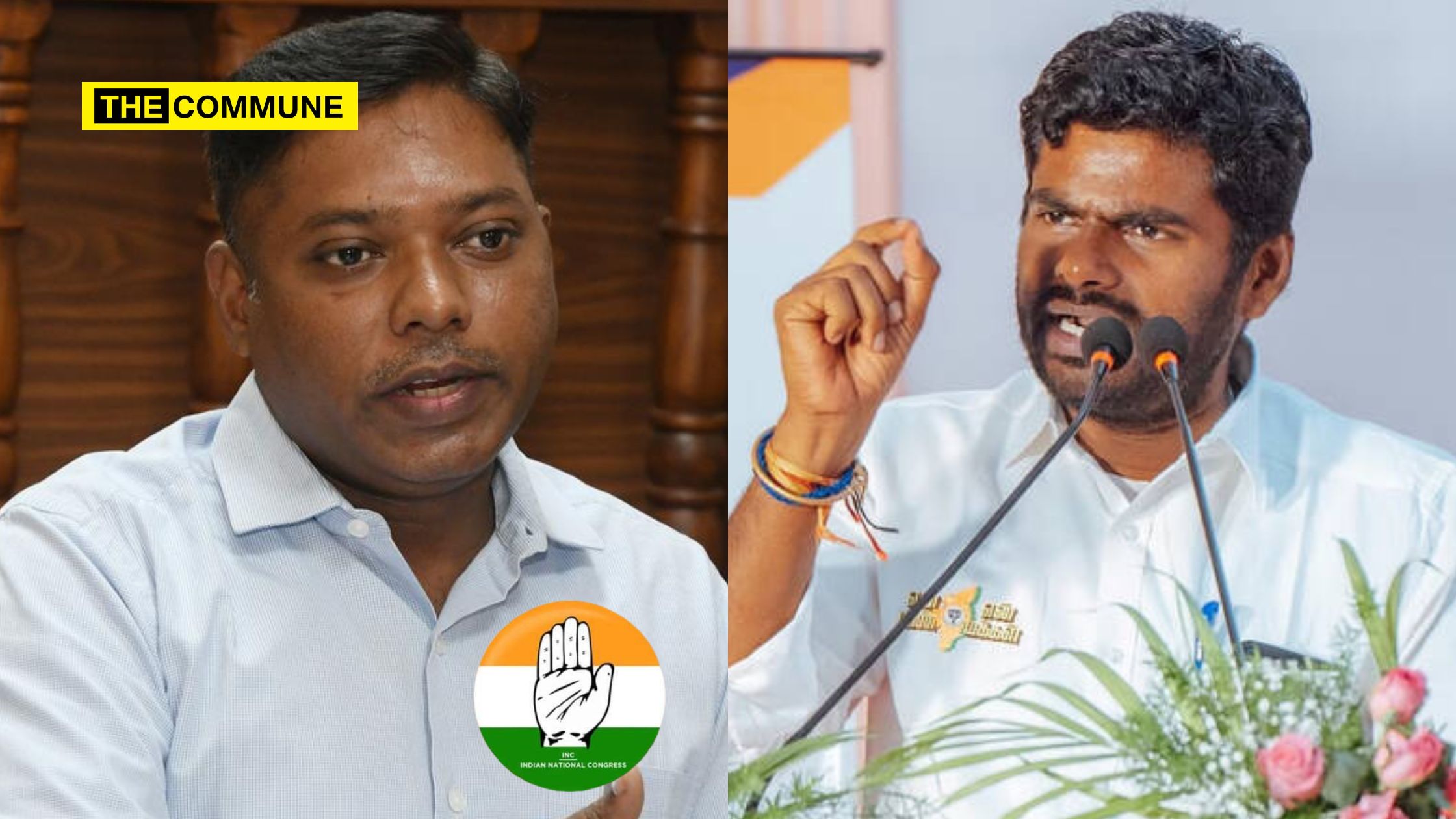
On 31 December 2024, K Selvaperunthagai, president of the Tamil Nadu Congress Committee, called on Chief Minister MK Stalin to take action against stand-up comedian Barath Balaji for his controversial joke about former Prime Minister Jawaharlal Nehru. Balaji’s video, in which he made the joke, went viral on social media.

In a statement, Selvaperunthagai expressed that the comment had deeply offended Congress members and leaders in Tamil Nadu.

“Balaji’s remarks about Pandit Jawaharlal Nehru, India’s first Prime Minister, were highly derogatory and disrespectful. Such behavior cannot be tolerated,” he stated.

Selvaperunthagai reiterated through his official X account, “Under the guise of ‘stand-up comedy’ on social media, Bharat Balaji made highly insulting and derogatory remarks about Bharat Ratna Pandit Jawaharlal Nehru. No one can be allowed to speak in such derogatory manner about Pandit Nehru, who was not only the Prime Minister for 17 years but also was called the architect of modern India, widely admired and praised by global leaders. On behalf of the Tamil Nadu Congress, I strongly condemn this.”

“I request the police to take immediate action to arrest Bharat Balaji, who spoke in a disrespectful manner about Pandit Nehru. I appeal the Chief Minister of Tamil Nadu, M.K. Stalin, to intervene and take appropriate action, so that the police can act against this individual who made offensive comments about Pandit Nehru,” he added.

Selvaperunthagai emphasized that such harmful speech had caused great distress among Congress members in Tamil Nadu and had severely impacted their mental well-being. “The Cyber Crime Unit of the police must take responsibility to prevent such uncivilized remarks from spreading on social media,” he concluded.

Tiruvallur Congress MP Sasikanth Senthil, who often waxes eloquent on democracy and fascism couldn’t take dark humour of the standup comic saying that freedom of speech should not be an excuse to degrade one of India’s greatest leaders.

Balaji, for his part, later posted on his social media platform X that he had removed the video and issued an unconditional apology.

Subscribe to our channels on TelegramWhatsApp, and Instagram and get the best stories of the day delivered to you personally.

Anna University Sexual Assault Culprit & DMK Man Gnanasekaran Was Jailed During AIADMK Rule For Kidnapping

Anna University Sexual Assault Culprit & DMK Man Gnanasekaran Was Jailed During AIADMK Rule For Kidnapping

The disturbing rise of Gnanasekaran, a repeat offender with a sordid history of criminal activities, and the main accused in the recent Anna University sexual assault case has raised questions about political protection and accountability under the current DMK regime. Despite his longstanding criminal background, Gnanasekaran’s alleged transformation into a serial molester has been linked to his affiliations with the ruling party, sparking widespread outrage and demands for justice.

Criminal Background And Arrests Under AIADMK Rule

In 2018, during the AIADMK government, Gnanasekaran, then 28, was arrested in connection with a high-profile abduction case. Along with his mother, two wives, and other accomplices, Gnanasekaran masterminded the kidnapping of M. Muthukumar, a businessman from Puducherry, for a ransom of ₹15 lakh. The case, handled by the Kancheepuram police, led to the recovery of an unlicensed pistol, ₹2.5 lakh in cash, and a vehicle used in the crime.

This marked a significant clampdown on Gnanasekaran’s criminal activities, effectively curtailing his ability to carry out further offenses. Notably, no molestation or sexual harassment charges were filed against him during this period, underscoring a stark contrast to his criminal trajectory under the current administration.

Rise Of A Serial Molester Under DMK Regime

Gnanasekaran’s resurgence as a repeat offender, particularly in cases of sexual assault, has been linked to his close ties with the ruling DMK. After the party assumed power, Gnanasekaran allegedly leveraged his political connections to evade accountability and escalate his crimes.

Key incidents during the DMK regime include:

  • Anna University Sexual Assault Case (December 2024): Gnanasekaran, exploiting his wife’s employment at Anna University, gained unrestricted access to the campus. He is accused of sexually assaulting an engineering student, recording the incident, and threatening to release the footage to coerce the victim further.
  • Ongoing Molestation Cases: Over 14 criminal cases, including molestation, trespassing, and theft, have been filed against Gnanasekaran, with six resulting in convictions. Reports indicate a pattern of targeting vulnerable individuals, including women within Anna University and the daughter of a government official.

Political Connections And Allegations Of Protection

Gnanasekaran’s affiliation with the DMK has been a focal point of controversy. Publicly available photographs and party documents identify him as a Deputy Organizer for the Saidapet area, contradicting official denials by DMK leaders. His close ties with senior leaders, including Deputy Chief Minister Udhayanidhi Stalin and Minister Ma. Subramanian has fueled allegations of political interference in legal proceedings.

For instance, in the Anna University case, DMK circle secretary Shanmugam reportedly intervened to delay Gnanasekaran’s arrest, raising concerns about attempts to shield him from prosecution.

The rise of Gnanasekaran as a serial molester under the current regime underscores the need for accountability and transparency in addressing politically connected criminal activities. The contrast between Gnanasekaran’s curtailed criminal activities during the AIADMK rule and his unchecked offenses under the DMK has become a potent symbol of the broader issue of political protection for criminals, sparking calls for systemic reform.

Subscribe to our channels on TelegramWhatsApp, and Instagram and get the best stories of the day delivered to you personally.

Scientists Unravel How Early Life Experiences Reshape Our Genes, Brain Health

Scientists Unravel How Early Life Experiences Reshape Our Genes, Brain Health

A team of researchers has provided crucial insights into how early-life experiences become biologically embedded, affecting long-term health outcomes by reshaping our genes and brain health.

In a comprehensive Genomic Press Interview published in the journal Genomic Psychiatry, renowned neuroscientist Dr Michael Meaney from McGill University in Canada revealed pivotal discoveries about the intricate relationship between genes and environment in shaping brain health.

“I have always been genuinely fascinated by the search for the developmental origins of individual differences in brain development and function,” said Dr Meaney, whose work has earned him election to the American Academy of Arts and Sciences and the Order of Canada.

Dr Meaney’s research journey began with a simple question: what makes individuals different from one another? This curiosity led him to groundbreaking discoveries in epigenetics — the study of how environmental factors can influence gene expression without changing DNA sequences.

“We too readily embrace narratives and technology that appeal to the general public, achieve headlines, and attract venture capital, but are far too simplistic to capture the complex reality of brain health truly,” observed Dr Meaney.

The findings raise intriguing questions about how society might better support child development: How can we translate these scientific insights into practical interventions? What role do different types of early experiences play in shaping resilience?

The Genomic Press interview is part of a larger series that highlights the people behind today’s most influential scientific ideas. Each interview in the series offers a blend of cutting-edge research and personal reflections, providing readers with a comprehensive view of the scientists shaping the future.

This format provides an ideal starting point for profiles that delve into the scientist’s impact on the field, while also touching on broader human themes, said study authors.

—IANS

Subscribe to our channels on TelegramWhatsApp, and Instagram and get the best stories of the day delivered to you personally.

Anna University Rape Case: TN BJP To Hold Massive Protest Against DMK

BJP TN Chief Annamalai Slams DMK Govt For Leaking Victim's Identity In Anna University Sexual Assault Case Involving Alleged DMK Functionary

The Tamil Nadu BJP is accelerating its protest against the DMK and its government over the Anna University rape case. It may be recalled that a second-year engineering student of Anna University was allegedly raped by a person on Christmas Eve. The victim, in her complaint to the police, said the offender beat up her male friend who was with her, dragged her to a secluded place nearby and raped her.

The Tamil Nadu BJP women‘s wing will hold a protest march from Madurai to Chennai on January 3. Party Women‘s Wing state president Umarathi Rajan will lead the march. The organisation’s office-bearers will meet Tamil Nadu Governor R.N. Ravi and submit a memorandum on the issue.

Meanwhile, BJP leader and former Governor of Telangana and Puducherry, Tamilisai Soundararajan, has arrived in New Delhi and will submit a report on the Anna University rape case to Union Home Minister Amit Shah.

She will also meet BJP national president, J.P. Nadda and apprise him of the concerns raised by the people of Tamil Nadu on the rape of the second-year engineering student within the Anna University campus.

It may be noted that the Tam Nadu BJP president, K Annamalai, conducted a dramatic protest outside his residence in Coimbatore, flogging himself six times to symbolize the deteriorating law and order situation of Tamil Nadu and to highlight the sexual assault against the Anna University female student. Annamalai also announced that he would undertake a 48-day fast and visit all six holy abodes of Lord Murugan as part of his protest.

The Tamil Nadu BJP president lashed out at the Tamil Nadu Police for leaking the FIR in the sexual assault case, stating that the leak intentionally revealed the identity of the 19-year-old victim, an engineering student of Anna University. He charged that the accused, Gnanasekaran, was not on the rowdy list of the Tamil Nadu Police despite being involved in several cases. Annamalai said this was due to the accused Gnanashekaran’s proximity to the DMK leaders. Annamalai also said the DMK was trying to divert attention from the failing law and order situation of Tamil Nadu by creating a false narrative of the North-South divide.

The National Commission for Women (NCW) will present a report to the Centre on the sexual assault case. NCW member Mamta Kumari and her team returned to Delhi after conducting a two-day investigation into the sexual assault that took place on the Anna University campus.

Speaking to media persons at Chennai airport, Mamta Kumari said, “We visited every corner of Anna University and conducted a thorough investigation. We met the affected girl and her family and gathered all the necessary information. We also met with the Governor of Tamil Nadu to discuss the matter.” She added, “A detailed report on the investigation will be submitted to the Central government by the National Commission for Women. Whoever is found guilty will face strict punishment. It is shocking that despite having over 20 cases against him, the accused was allowed to roam free.” Mamta Kumari further questioned, “Why didn’t the government take action earlier? The Central government will ensure strict action against anyone who commits crimes against women.” She expressed confidence that justice would be served and the guilty parties would be punished.

BJP Tamil Nadu President K. Annamalai has announced that the party will hold a justice rally from Madurai to Chennai under the leadership of the state Mahila Morcha president Mrs. Umarathi Rajan.

The BJP will also meet Tamil Nadu Governor RN Ravi and present their petition.

–IANS

Subscribe to our channels on TelegramWhatsApp, and Instagram and get the best stories of the day delivered to you personally.

The Cultural Integration Of The Gregorian Calendar In Colonial And Post-Colonial India

The Cultural Integration Of The Gregorian Calendar In Colonial And Post-Colonial India

The Gregorian calendar, a global standard for civil purposes, has a fascinating history that intertwines with the narratives of many nations, including India. While the calendar’s origins lie in Europe, its adoption and adaptation in India present a unique story shaped by colonialism, modernization, and cultural integration. This article delves into the journey of the Gregorian calendar from its inception to its present-day use in India, highlighting the socio-political and cultural dynamics that influenced its acceptance.

Historical Context: Pre-Gregorian Calendars In India

Before the Gregorian calendar’s introduction, India had a rich tapestry of indigenous timekeeping systems. These calendars were deeply rooted in astronomical observations and cultural practices, reflecting the diversity of the Indian subcontinent. Some of the prominent pre-Gregorian calendars included:

  • The Hindu Calendar: The Hindu calendar, also known as the Panchang, is a lunisolar calendar that plays a crucial role in Hindu religious and cultural life. It is used to determine the dates of festivals, auspicious times (muhurtas), and rituals. The calendar varies regionally, with different states and communities following slightly different versions.
  • The Islamic Calendar: The Islamic or Hijri calendar is a purely lunar calendar used by the Muslim community in India. It marks the months based on the moon’s cycles and is essential for determining the dates of Islamic festivals like Eid-ul-Fitr and Eid-ul-Adha.
  • The Vikram Samvat and Shaka Samvat: These are two prominent Indian calendars used historically. The Vikram Samvat, established by King Vikramaditya, is widely used in North and Western India. The Shaka Samvat, introduced by the Shaka rulers, is the official civil calendar in India.

The Introduction Of The Gregorian Calendar In India

The advent of the Gregorian calendar in India is closely linked to British colonial rule. When the British East India Company established its foothold in India in the 17th century, they brought with them its administrative systems, including the Julian calendar. However, it was the Gregorian calendar that gradually replaced the Julian calendar during the British Raj.

Early Encounters: The Portuguese Influence

Before British colonization, the Portuguese were the first Europeans to introduce the Gregorian calendar to parts of India. Goa, a Portuguese colony from the early 16th century, saw the introduction of the Gregorian calendar in 1582, shortly after its adoption in Europe. The Portuguese influence, however, was limited to their territories and did not significantly impact the broader Indian timekeeping practices.

The British East India Company And The Julian Calendar

The British East India Company initially used the Julian calendar for its administrative and commercial activities. As British influence expanded, the need for a standardized calendar system became apparent. The inconsistencies between the Julian and Gregorian calendars were becoming problematic, particularly for international trade and communication.

The Transition To Gregorian Calendar

The transition from the Julian to the Gregorian calendar in British-administered India was not immediate. It was a gradual process that culminated in 1752 when Great Britain officially adopted the Gregorian calendar. The reform involved skipping 11 days (September 2, 1752, was followed by September 14, 1752) to realign the calendar with the solar year. This change was implemented in British colonies, including India.

How The Gregorian Calendar Affected Indian Society

The introduction of the Gregorian calendar had far-reaching implications for Indian society, particularly in areas such as administration, education, and social practices. Here are some key impacts:

  • Administrative Uniformity: The adoption of the Gregorian calendar brought administrative uniformity to British India. It standardized official documentation, legal proceedings, and government functions. This uniformity was crucial for efficient governance, especially in a vast, diverse territory like India.
  • Educational Reforms: The British colonial administration placed a strong emphasis on education, leading to the establishment of schools and universities across India. The Gregorian calendar became the standard for academic calendars, influencing the scheduling of examinations, academic sessions, and holidays. This alignment with Western education systems facilitated the integration of Indian students into global academia.
  • Economic and Commercial Integration: The Gregorian calendar played a vital role in integrating the Indian economy with global trade networks. It provided a common reference point for business transactions, shipping schedules, and contracts, making it easier for Indian merchants to engage in international trade. This integration was instrumental in the economic development of colonial India.
  • Social and Cultural Adaptation: The influence of the Gregorian calendar extended beyond administration and commerce. It began to permeate social and cultural practices in urban areas, especially among the Western-educated Indian elite. Christian communities in India, such as the Anglo-Indians and Goan Catholics, also adopted the Gregorian calendar for their religious and social events.

Resistance And Cultural Resilience

Despite its widespread adoption, the Gregorian calendar faced resistance in many parts of India. The persistence of indigenous calendars and cultural practices highlighted the resilience of Indian traditions. This resistance can be understood through various lenses:

  • Religious Significance: The Hindu and Islamic calendars held deep religious significance for their respective communities. Festivals, rituals, and religious observances were intricately tied to these traditional calendars. For many Indians, adopting the Gregorian calendar did not mean abandoning their religious timekeeping systems. Instead, they continued to use both calendars in parallel, each serving different purposes.
  • Regional Diversity: India’s regional diversity played a significant role in the continued use of indigenous calendars. Different states and communities had their unique calendars, which were closely linked to local festivals and agricultural cycles. The Gregorian calendar, while useful for official purposes, did not replace these regional systems in everyday life.
  • Colonial Resistance: The introduction of the Gregorian calendar was seen by some as another aspect of colonial imposition. Nationalist movements in the late 19th and early 20th centuries emphasized the importance of preserving Indian culture and traditions. This sentiment fueled resistance to the complete adoption of Western practices, including the calendar.

Post-Independence India And The Gregorian Calendar

After gaining independence in 1947, India retained the Gregorian calendar for official purposes. However, the Indian government also recognized the importance of indigenous calendars and sought to integrate them into the national framework.

  • Adoption Of Shaka Samvat: In 1957, the Indian government adopted the Shaka Samvat as the official calendar alongside the Gregorian calendar. The Shaka Samvat, with its historical and cultural significance, became the basis for Indian national holidays and official documents. This move was a testament to India’s commitment to preserving its cultural heritage while embracing modernity.
  • Dual Calendar System: Today, India operates a dual calendar system. The Gregorian calendar is used for most civil, administrative, and educational purposes, while the Shaka Samvat and other traditional calendars continue to be used for religious, cultural, and regional events. This coexistence reflects the pluralistic nature of Indian society, where multiple traditions are respected and celebrated.
  • Cultural Festivals And Calendars: Indian festivals, which are an integral part of the country’s cultural fabric, are determined using traditional calendars. For example, Diwali, Holi, Eid, and Christmas are celebrated based on the Hindu, Islamic, and Gregorian calendars, respectively. The ability to navigate multiple calendars is a unique aspect of Indian life, showcasing the nation’s cultural diversity.

Challenges And Opportunities

The coexistence of the Gregorian and traditional calendars in India presents challenges and opportunities. Some of these include:

  • One of the challenges is synchronizing events and holidays across different calendars. The government and organizations must coordinate public holidays, official events, and school schedules to accommodate religious and cultural observances. This requires careful planning and consideration of diverse community needs.
  • There is an opportunity to educate the younger generation about the significance of different calendars and their historical contexts. Schools and universities can incorporate lessons on the Gregorian and traditional calendars into their curricula, fostering an appreciation for India’s rich cultural heritage.
  • Advancements in technology offer new possibilities for integrating and managing multiple calendars. Digital tools and applications can help individuals and organizations keep track of important dates from various calendars, ensuring that no significant event is overlooked.
  • The continued use of traditional calendars is a testament to India’s cultural resilience. There is an opportunity to document and preserve these calendars for future generations. Scholars and cultural organizations can collaborate to create comprehensive records of traditional timekeeping practices, ensuring that they are not lost to history.

The journey of the Gregorian calendar in India is a fascinating tale of adaptation, resistance, and coexistence. The story reflects the complex interplay between global influences and local traditions, from its introduction during the colonial period to its present-day use alongside traditional calendars.

India’s ability to embrace the Gregorian calendar for administrative and civil purposes while preserving its indigenous calendars for religious and cultural events is a testament to its pluralistic ethos. It highlights the resilience of Indian culture and its capacity to integrate diverse influences while retaining its unique identity.

As we move forward, the dual calendar system in India will continue to evolve and will be shaped by technological advancements, cultural shifts, and global interactions. Understanding and appreciating this intricate tapestry of timekeeping gives us a deeper insight into India’s rich and dynamic heritage. Through this exploration, we celebrate not just a calendar but the spirit of India—a land where tradition and modernity coexist harmoniously and where the rhythms of the sun and the moon marks the passage of time.

Ganesh Kumar is a geo-political analyst.

Subscribe to our channels on Telegram, WhatsApp, and Instagram and get the best stories of the day delivered to you personally.

Methamphetamine Worth ₹20 Crore Seized In Chennai; Six Arrested, Including A Woman

Methamphetamine Worth ₹20 Crore Seized In Chennai; Six Arrested, Including A Woman

Six persons, including a woman, were arrested during a major drug bust in Chennai that led to the seizure of 16 kg of methamphetamine worth approximately ₹20 crore.. The case began when the Grater Chennai Police Commissioner received credible information about illegal drug sales in Madhavaram’s Roja Nagar area.

On 22 December 2024, the newly formed Narcotics Control Bureau, in collaboration with Madhavaram Police, conducted a raid in Roja Nagar. During the operation, two suspects—Venkatesan (41), a local drug dealer, and Karthik (36) from Triplicane Border Estate—were arrested. The police seized 1.5 kg of methamphetamine from them, and both were sent to jail.

After their arrest, the police intensified their investigation into the drug trafficking network linked to Venkatesan. Using contacts from Venkatesan’s mobile phone, the police uncovered a vast network of drug dealers from various parts of India, including Delhi and Mumbai.

Under the direction of Additional Commissioner of Police Narendra Nair, Kolathur Deputy Commissioner Pandiarajan, Puzhal Circle Assistant Commissioner Sahadevan, and Inspector Boopalan, six people, including Venkatesan’s wife, Jhansi, were arrested. Following interrogations, the authorities discovered a stash of 16 kg of methamphetamine hidden in a house, which was seized. The authorities are now focusing their efforts on tracking down five more individuals connected to the drug syndicate, with teams dispatched to Delhi and southern Tamil Nadu for further arrests.

(With Inputs From Dinakaran)

Subscribe to our channels on TelegramWhatsApp, and Instagram and get the best stories of the day delivered to you personally.
“Who Is The DMK Government & Law Minister Trying To Protect?” Asks AIADMK MLA Vijaya Baskar, Slamming Contradictory Statements On Anna University Sexual Assault Case

AIADMK MLA Vijaya Baskar, Slamming Contradictory Statements On Anna University Sexual Assault Case

AIADMK MLA from Viralimalai and former Minister for Health and Family Welfare, C Vijaya Baskar, has sharply criticized the DMK government over the handling of the Anna University campus sexual assault case, particularly the confusion surrounding the arrest of the alleged DMK functionary Gnanasekaran. He highlighted contradictions in the statements from DMK ministers and the police, which have raised further concerns.

Vijaya Baskar stated, “The accused was initially arrested on 23 December but was released by a phone call, as he is from the DMK. He was only re-arrested on Christmas Day. Edappadi Palaniswami’s first question is, on whose orders was he released? All the details showing that the accused is a DMK functionary has been submitted, yet the Law Minister from Pudukkottai openly stated in a press meet that he does not belong to the DMK, and the party has no ties. Then, (Higher Education Minister) Kovi Chezhiyan held a press conference with contradictory statements. Following that, the Police Commissioner also addressed the media separately. All three press conferences were inconsistent with each other. So, the AIADMK now asks, who is the DMK government and the Law Minister trying to protect, and safeguarding?”

He also ridiculed DMK Law Minister Raghupathi, stating that he seems to have lost all sense of responsibility and is always chasing the spotlight. “Every time he sees a microphone, he can’t resist making comments—he has ‘mic mania,'” he said. “However, as the Law Minister, none of his statements carry any credibility.”

Subscribe to our channels on TelegramWhatsApp, and Instagram and get the best stories of the day delivered to you personally.