Home Blog Page 590

India’s Inland Waterways Transport Offers Robust Growth Opportunities Via PPPs

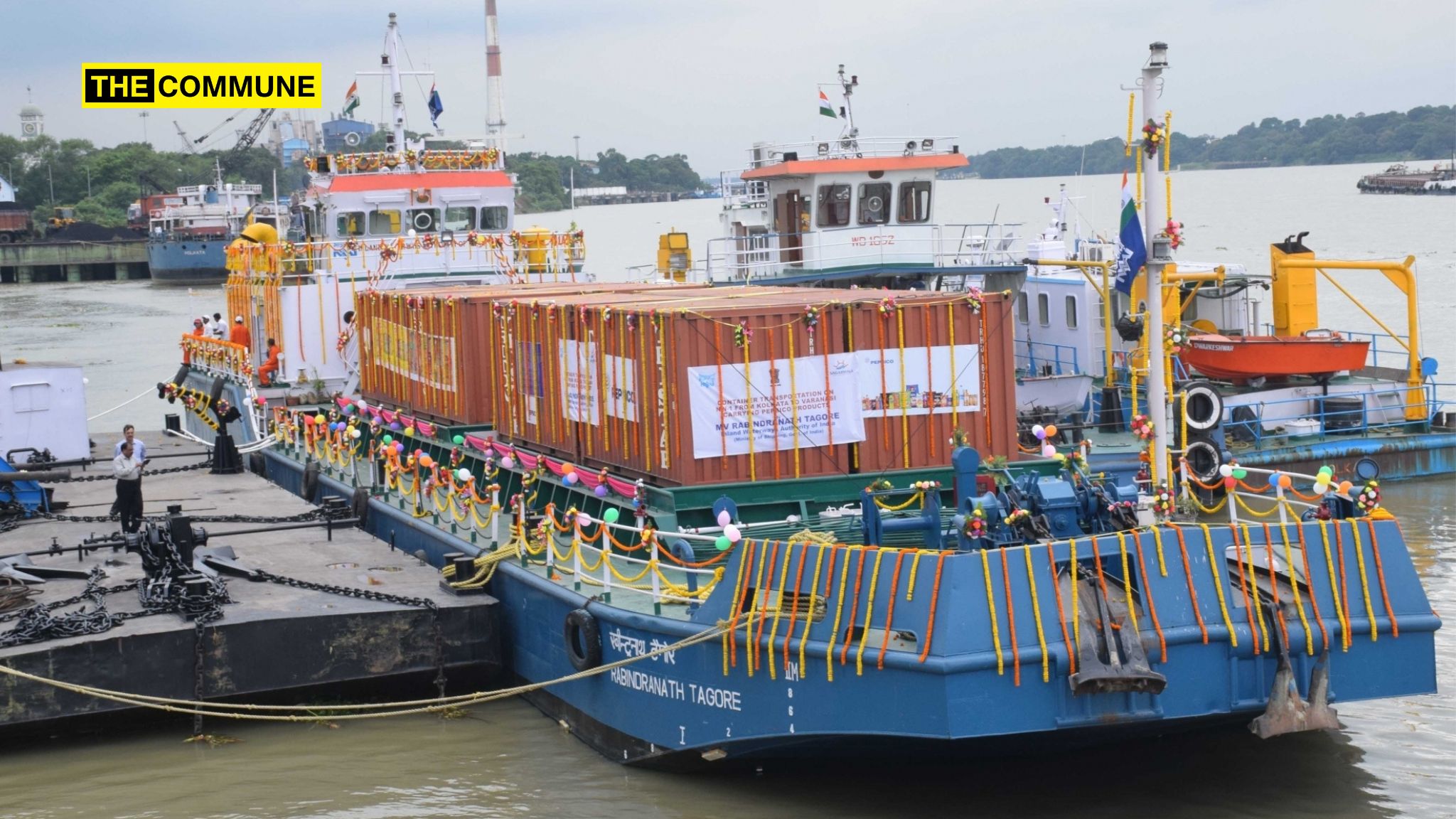
The Indian inland waterways transport (IWT) sector presents significant opportunities for growth through public-private partnerships (PPPs), and the government is eyeing expansion of the PPP model to drive development, according to a report on Tuesday.

The focus on expanding PPPs and offering financial incentives, such as discounts up to 35 per cent on freight transported via key national waterways (NW), aims to further attract private sector participation, according to the report by Crisil Market Intelligence and Analytics. A subsidy scheme is being formulated for NW-1, NW-2 and NW-16, which traverse key states such as Uttar Pradesh, Bihar, Jharkhand, West Bengal and Assam, to promote the use of inland waterways for freight transport, the report mentioned. Since the government’s strategic shift in 2016, operational waterways have increased from just three in fiscal 2014 to 26 by fiscal 2024, driven by substantial budgetary support and key initiatives like the Jal Marg Vikas Project.

Launched in 2018 with a financial outlay of Rs 5,369.18 crore, the project aims to enhance the capacity of National Waterway 1 (NW), spanning 1,390 km along the Ganga-Bhagirathi-Hooghly river system. “India’s inland waterways are witnessing significant revitalization driven by targeted investments and policy reforms. The cost advantage is clearly benefiting this mode of transportation, transporting 1 tonne of freight by waterways is approximately Rs 1.06 per km, notably less than Rs 1.36 per km by rail and Rs 2.50 per km by road,” the report argued. The resurgence in the sector has resulted in a marked increase in cargo volumes, surging from 18.1 million tonnes in fiscal 2014 to 132.9 million tonnes in fiscal 2024, with the government setting ambitious targets of 200 million tonnes by fiscal 2030 and 500 million tonnes by fiscal 2047.

Digital innovations have played a key role in improving efficiency in the IWT sector. Platforms such as the IWAI Vessel Tracker, PANI Portal and Car-D Portal provide real-time navigation information, updates on cargo tracking, and efficient management of cargo and passenger data. Water transport also produces lower emissions, less noise and consumes less energy, making it an environmentally-friendly alternative to the traditional road and rail transport. Waterways are suitable for moving bulk commodities such as coal, iron ore, iron ore fines, sand and minerals.

–IANS

Subscribe to our TelegramWhatsApp, and Instagram channels and get the best stories of the day delivered to you personally.

Global Telecom Standards Should Ensure Security, Dignity And Equity: PM Modi

Global Telecommunication Standards Should Ensure Security, Dignity And Equity: PM Modi

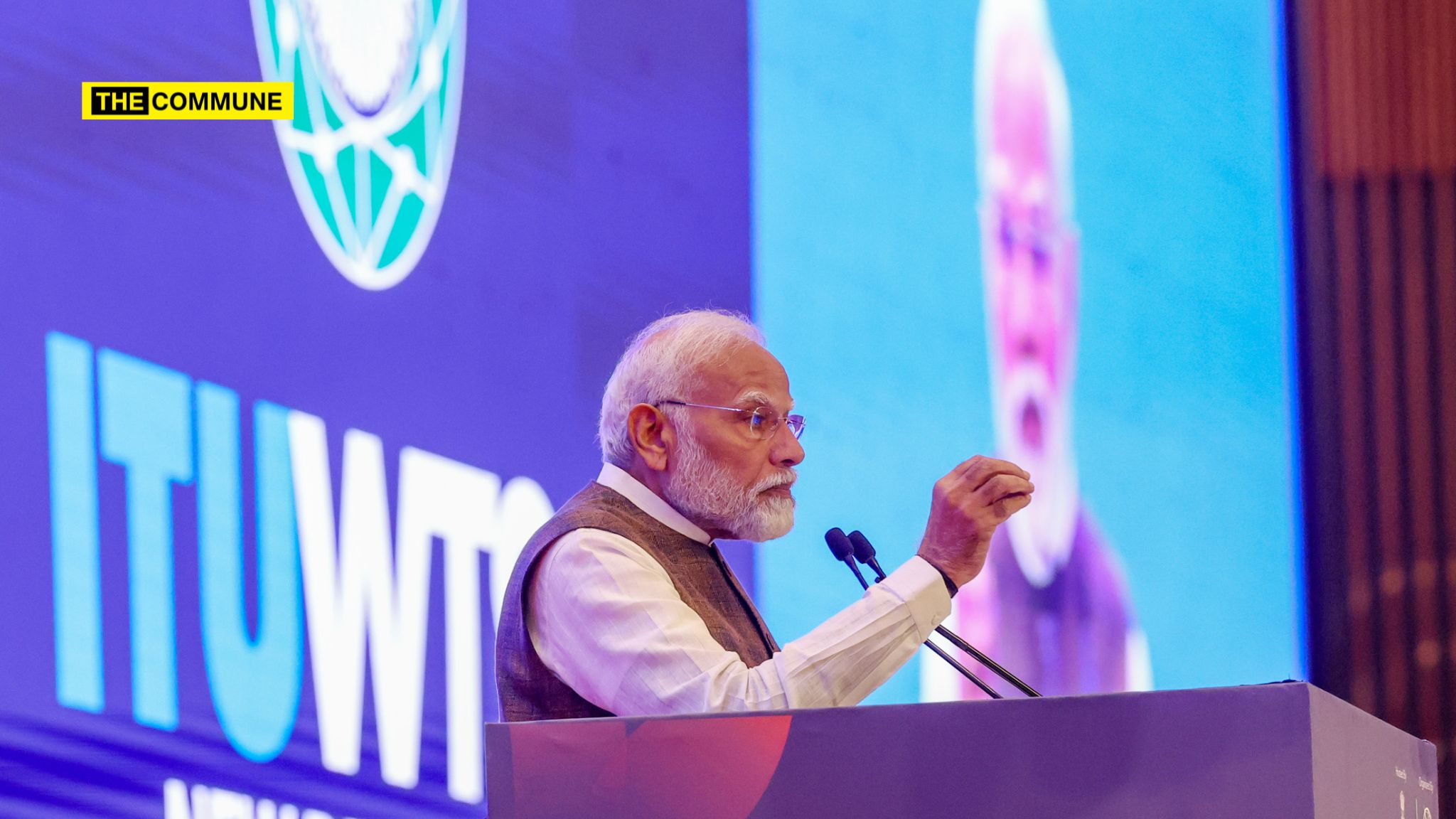
Prime Minister Narendra Modi said on Tuesday that there is a need for a human-centric dimension to the ongoing technological revolution, stressing that principles of security, dignity, and equity should be central to global telecommunication standards. Inaugurating the historic International Telecommunication Union’s (ITU) ‘World Telecommunication Standardization Assembly (WTSA) 2024’ in the national capital, PM Modi said that standards set here will determine the future direction.

“Our goal should be that no country, no region and no community is left behind in this digital transformation,” said the Prime Minister, underscoring the need for innovation balanced with inclusion. “The time has come to accept the importance of a global framework for digital technology. We have to ensure that our future is both technically strong and ethically sound,” PM Modi told the gathering. PM Modi also inaugurated the 8th edition of the ‘India Mobile Congress 2024,’ saying that while WTSA’s objective is to work on global standards, the role of the ‘India Mobile Congress’ is associated with services and both the events “bring global standards and services on a single platform”. Discussing telecom sector reforms, the Prime Minister noted India’s efforts in lowering data costs. The cost of internet data in India is now as low as 12 cents per GB compared to many countries in the world where one GB of data is 10 to 20 times more expensive. “Today, every Indian consumes about 30 GB of data on an average every month”, said PM Modi.

Today, the country has a mobile phone user base of 120 crore, 95 crore internet users and digital transactions of more than 40 per cent of the entire world in real-time. “India had showcased how digital connectivity had become an effective tool for last-mile delivery,” said PM Modi. “India’s mobile and telecom journey in the 21st century is a subject of study for the whole world. Telecom is not just a medium of connectivity but also a medium of equity and opportunity in India,” the Prime Minister emphasised. The four pillars of Digital India — low-priced devices, extensive reach of digital connectivity to every nook and corner of the country, easily accessible data and goal of ‘Digital First’, are leading to robust results. The Prime Minister also underscored the remarkable advancements in infrastructure, including the rapid installation of Wi-Fi facilities at public places like railway stations and the connection of islands like Andaman-Nicobar and Lakshadweep through undersea cables.

“In just 10 years, India has laid optical fibre which is eight times the distance between Earth and the Moon”, said PM Modi, adding that the country is already progressing towards 6G technology, ensuring a future-ready telecommunication infrastructure. India democratised digital technology and created digital platforms where innovations on these platforms created millions of new opportunities The transformative power of the JAM Trinity—Jan Dhan, Aadhaar, and Mobile—has laid the foundation for countless innovations. PM Modi said that Unified Payments Interface (UPI) has provided new opportunities for many companies and ONDC is revolutionising digital commerce. “In an interconnected world, security cannot be an afterthought. India’s Data Protection Act and National Cyber Security Strategy reflect our commitment to building a safe digital environment”, noted PM Modi.

It is for the first time that the ITU-WTSA is being hosted in India and the Asia-Pacific. The global event has brought together more than 3,000 industry leaders, policy makers and tech experts from over 190 countries, representing telecom, digital and ICT sectors. Union Minister for Communication Jyotiradiya Scindia, Minister of State for Communication, Dr Chandra Sekhar Pemmasan, and Secretary General of ITU, Doreen Bogdan-Martin, were also present at the inaugural session.

–IANS

Subscribe to our TelegramWhatsApp, and Instagram channels and get the best stories of the day delivered to you personally.
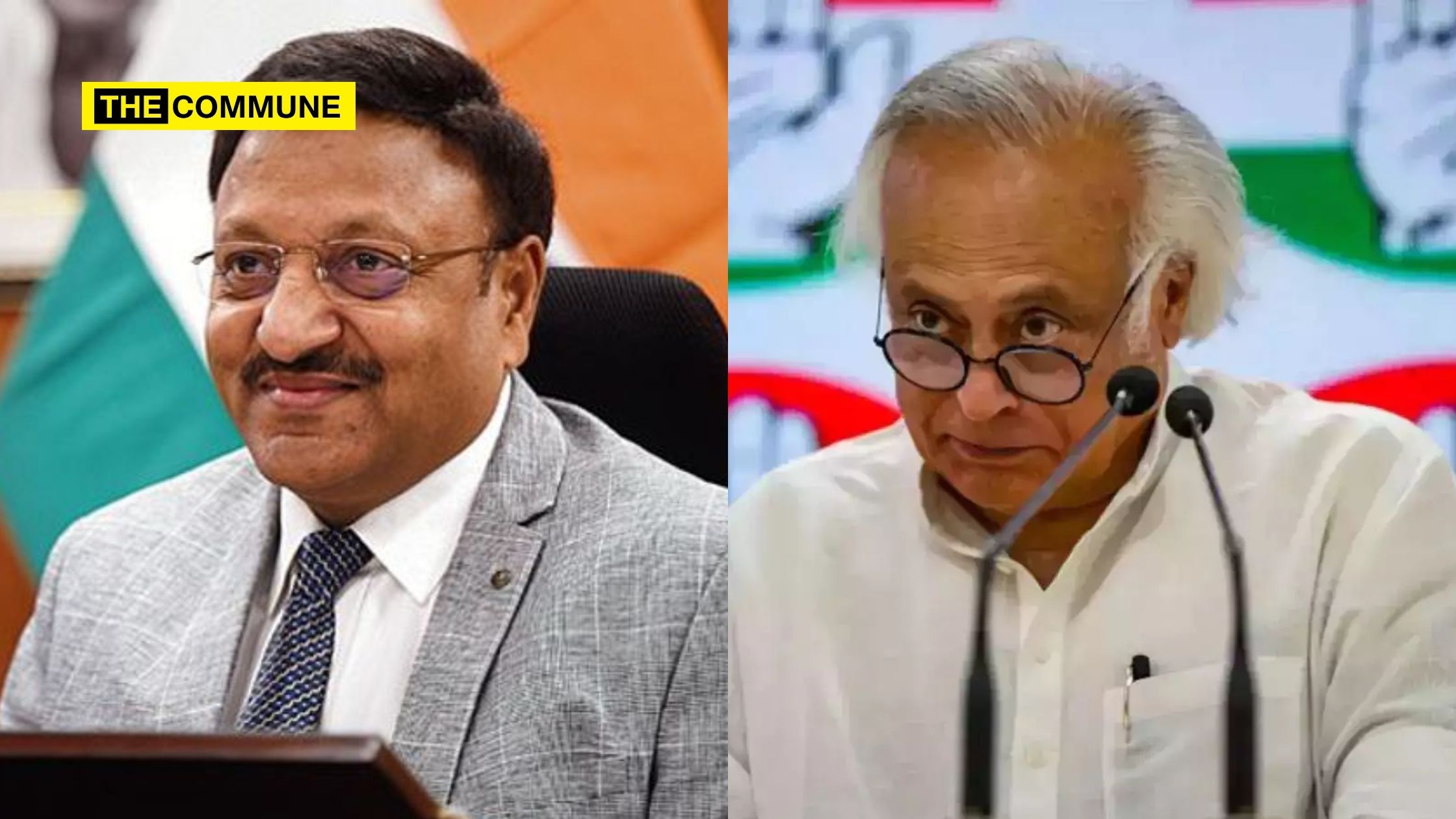
“Gap Between Expectation And Reality Can Lead To Frustration”: Chief Election Commissioner Trolls Congress, Dismisses Allegation Of EVM Tampering

On Tuesday, Chief Election Commissioner Rajiv Kumar once again dismissed charges of possible tampering with EVMs or their batteries. He also suggested introspection over the sample size chosen by exit poll agencies to avoid distorted expectations. The CEC also promised to develop an FAQ to dispel doubts about EVMs.

He said that over the past few elections, exit poll outcomes have been creating distorted expectations, and all responsible for this issue need to consider steps for self-regulation. “The gap between expectation and reality can lead to frustration,” he said, criticising some TV channels for running incorrect trends in an alleged bid to match the findings of their exit polls.

Addressing media persons after announcing the dates of the Maharashtra and Jharkhand Assembly elections, CEC Kumar replied to a question about the difference between the results of the Haryana Assembly elections and the drastically opposite projections by exit polls. The CEC also ruled out any scope for EVM tampering and promised to reply to all 20 candidates complaining about the voting machine malfunction in the recent Assembly polls. “The answers will carry details of when the battery was commissioned and where all it was used,” he said.

Expressing displeasure at rumours about EVMs, the Chief Election Commissioner said that sometimes it is said pagers can be tampered with, so EVMs can also be tinkered with, and sometimes it said the vote does not go to the candidate whose button is pressed. Indirectly answering the doubts raised by some Haryana Congress candidates who lost the election, the CEC said the batteries are loaded into EVMs when commissioning and even candidates’ agents are made to sign on the seal.

Some Congress candidates had complained on the counting day on October 8 that some of the EVMs were charged up to 99 per cent despite use for voting. To this, the CEC said: “EVMs have a single-use battery that is used at a stretch for five years. After commissioning, it is checked in mock polls, which are also held at polling stations, and the number of candidates is also different in all seats.”

–IANS

Subscribe to our TelegramWhatsApp, and Instagram channels and get the best stories of the day delivered to you personally.
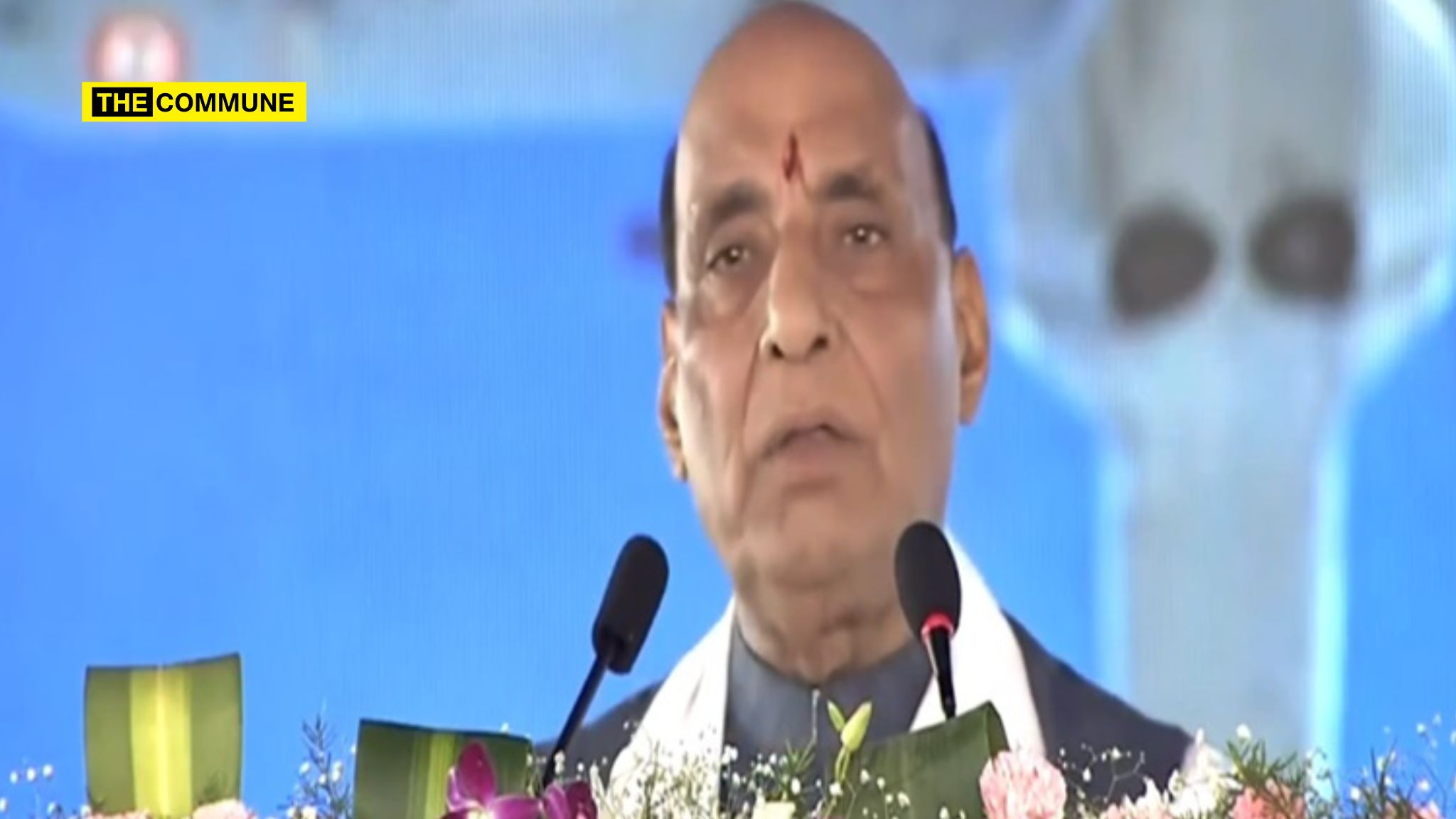
Rajnath Singh Lays Foundation For Navy’s VLF Station In Telangana

Rajnath Singh Lays Foundation For Navy's VLF Station In Telangana

Defence Minister Rajnath Singh laid the foundation stone for the Indian Navy’s Very Low Frequency (VLF) communication transmission station in Telangana’s Vikarabad district on Tuesday. Chief Minister A. Revanth Reddy, Union Minister for Coal and Mines G. Kishan Reddy and Union Minister of State for Home Bandi Sanjay Kumar attended the programme at Puduru village.

The state government in January this year transferred 1,174 hectares of forest land for the station, which is expected to be completed in 2027. The Navy uses VLF communication transmission stations to communicate with ships and submarines. This will be the second such station in the country. INS Kattabomman Radar Station at Tirunelveli, Tamil Nadu was the first of its kind. It has been serving the Navy since 1990. The Eastern Naval Command in Visakhapatnam had identified Telangana as a suitable area for setting up a second radar station. The Union Forest and Environment Department approved the Navy’s proposals in 2014. Campa funds of Rs 133.54 crore for handing over forest land have been paid. The Navy has also paid Rs 18.56 crore for the works undertaken for land conservation measures. Meanwhile, Bharat Rashtra Samithi (BRS) working president K T Rama Rao has opposed setting up the VLF radar station in Telangana, saying it threatens the ecosystem of the Musi River.

He said the VLF station was coming up in Damagundam forest, where the Musi originates. He slammed the Congress government for its “double standards”. On one hand, the Telangana government has taken up a project for the beautification of Musi River while on the other it is writing a “death warrant” for the river by agreeing to VLF radar station, he said. The BRS leader alleged that the installation of a radar station would cause serious damage to the environment. He said the project will be undertaken by cutting down 12 lakh trees along with around 2900 acres of forest land.

Rama Rao said for 10 years, the BRS government did not give permission for the radar station and asked the Congress government why it agreed to the project. However, the Congress government claimed that the final approval for the radar station was given in 2017 when TRS (BRS) was in power. It clarified that Chief Minister A. Revanth Reddy merely respected the age-old concept of continuity of governance, and cooperative federalism, and supported a project of national security and significance. The ruling party alleged that with KTR opposing the project, BRS’ “hypocrisy was exposed”.

–IANS

Subscribe to our TelegramWhatsApp, and Instagram channels and get the best stories of the day delivered to you personally.
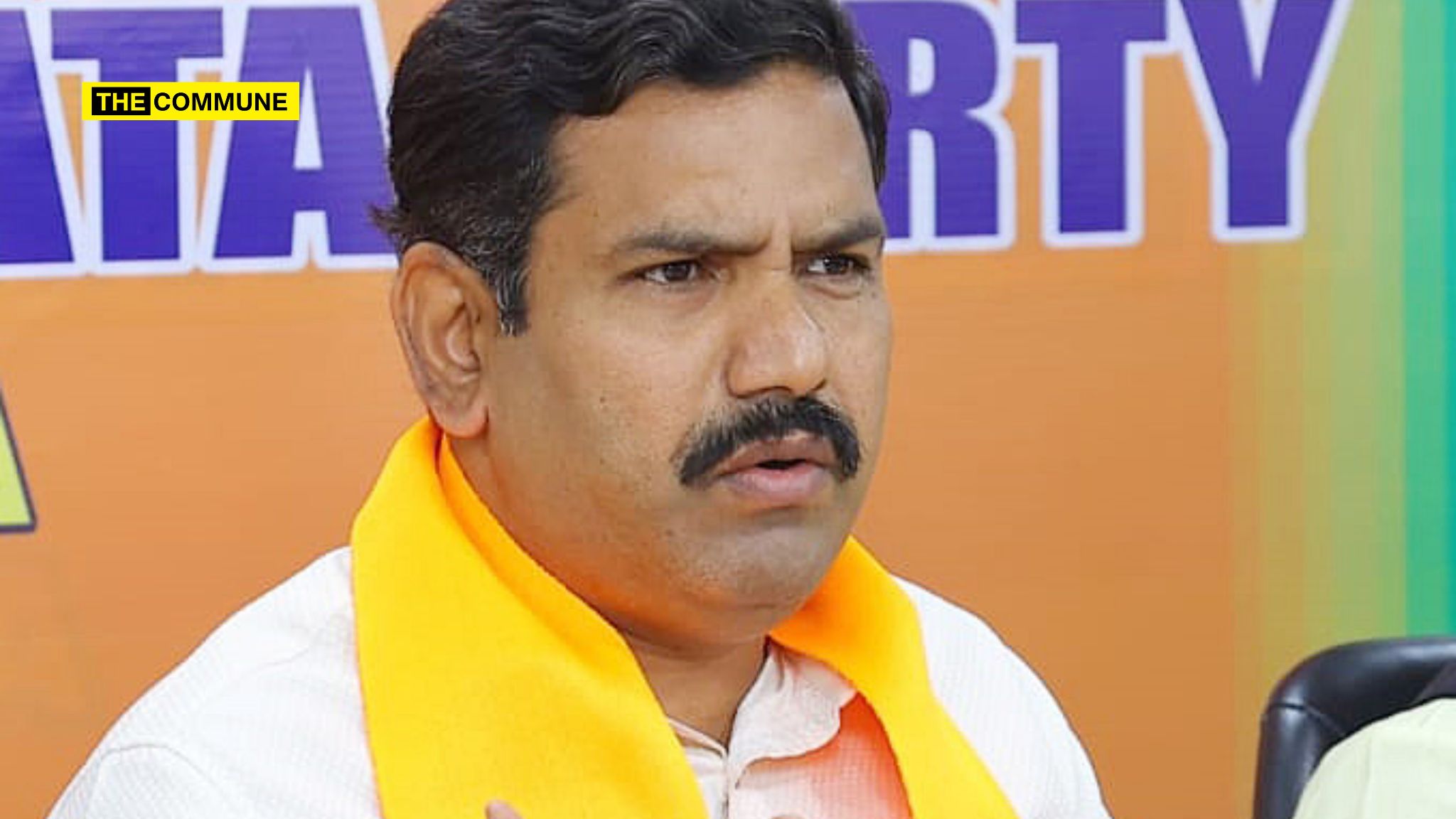
Karnataka BJP To Approach President Urging Sacking Of ‘Anti-Hindu’ Cong Govt

Karnataka BJP To Approach President Urging Sacking Of ‘Anti-Hindu’ Cong Govt

Karnataka BJP President and MLA B.Y. Vijayendra has announced that the party delegation will soon meet President Droupadi Murmu to demand the sacking of Karnataka’s “anti-Hindu” Congress government. On Tuesday, he spoke to media representatives during a meeting of BJP representatives held in Bantwal, Dakshina Kannada district, regarding the upcoming Legislative Council by-election.

Vijayendra stated, that the government is adopting anti-people policies and it is unresponsive. “We will meet President Droupadi Murmu in the coming days and we will sack the corrupt and anti-Hindu Congress government and the Chief Minister,” he said. “We are considering it seriously and after discussion with party leaders, we will make an announcement in this regard,” he informed. He added that the government is not being helpful to farmers, Dalits or anyone. “The BJP has been working towards teaching a befitting lesson to the Congress. Whether it’s the MUDA or tribal welfare scam, diversion and misuse of money reserved for SC and STs. Keeping all these factors in mind, we will strategise,” he stated.

Vijayendra further announced that the party would soon organise a massive protest in Hubballi against the Congress government’s decision to withdraw sedition cases. He criticised the Congress government’s move, recalling that in 2022, anti-nationals in Hubballi pelted stones at a police station, attacked the police, and created unrest. “The Siddaramaiah-led government has withdrawn the cases against those responsible for this violence. The decision is highly unfortunate and condemnable,” he charged. He added that the Home Minister-led sub-committee had recommended this withdrawal, adding that the FIR was filed by the police, and an investigation by the NIA is still ongoing. “However, this action by the state government is an unforgivable crime,” he stated.

He also mentioned that a symbolic protest against this decision was conducted on Monday in Bengaluru. Criticising the Congress government and the Chief Minister for being mired in corruption and for not allocating funds for development, Vijayendra stated that the BJP has consistently fought against the Congress government and will continue its protests. Vijayendra further mentioned that the BJP will soon decide on the next course of action regarding the Valmiki Development Corporation scam, the Mysuru MUDA scam, and the misallocation of SEP and TSP funds. Referring to the election results in Haryana and Jammu and Kashmir, he noted that the BJP has successfully returned to power for the third time in Haryana.

“The voters there have appreciated the development work done by the state government and have shown their trust in the leadership of Prime Minister Narendra Modiji. On the other hand, Congress, which was dreaming of coming to power in Haryana, has once again faced defeat,” he maintained. He added that In Jammu and Kashmir, after the election results, the BJP has emerged as the official opposition. “The Congress party has long followed policies of minority appeasement,” Vijayendra added. He said that the by-election for the Legislative Council is being held for the seat vacated by BJP MP Kota Srinivas Poojari.

“The BJP has announced Kishore Kumar Puttur, a young activist and a strong supporter of Hindutva, as its candidate. All our MLAs and representatives are working with enthusiasm, and they are putting in efforts to ensure our candidate wins with a large margin,” he said. He expressed confidence that the BJP would win this seat by a significant margin.

–IANS

Subscribe to our TelegramWhatsApp, and Instagram channels and get the best stories of the day delivered to you personally.
 

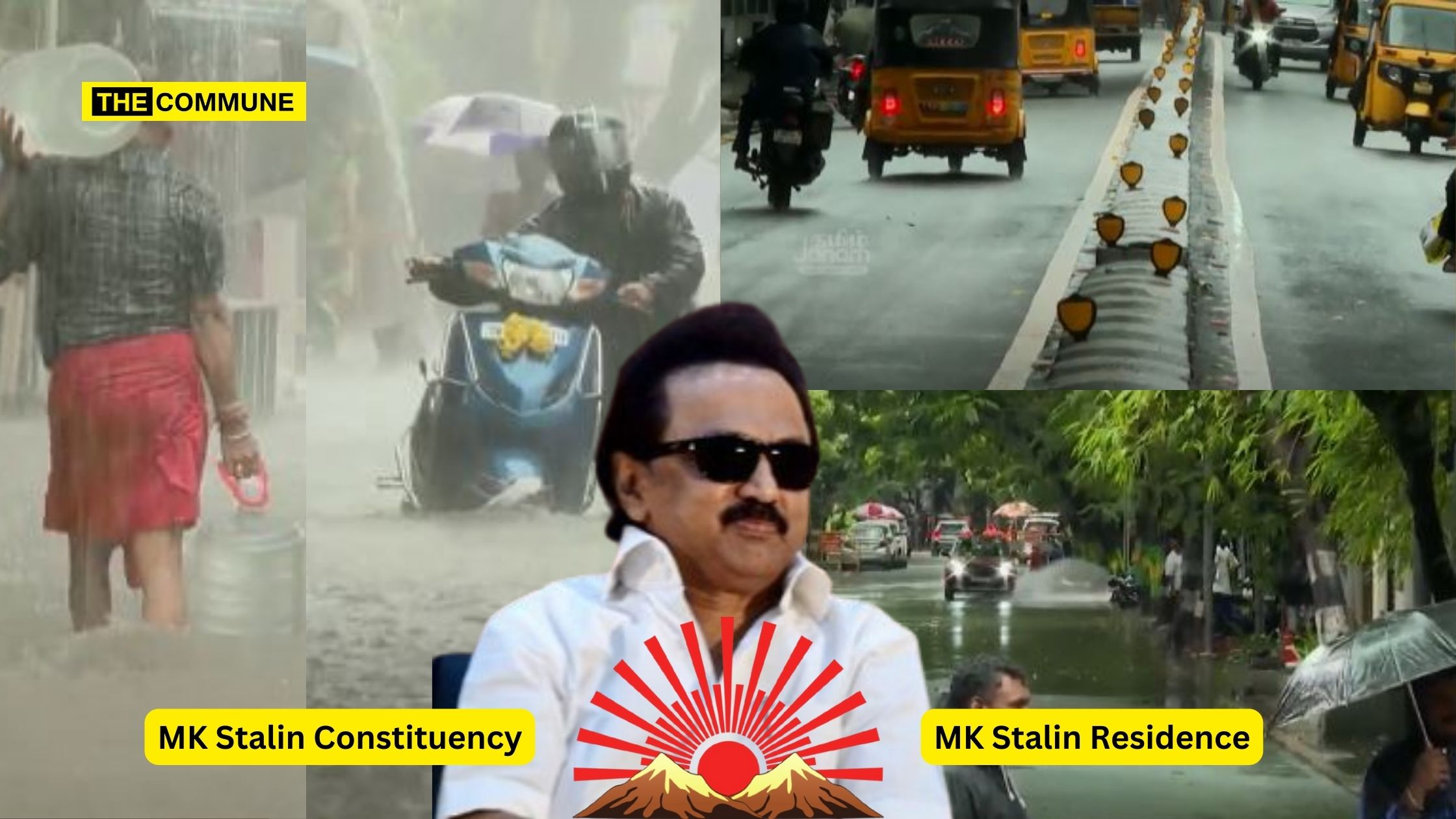
Dravidian Model: CM MK Stalin’s Constituency Drowns While His Home Remains Unscathed In The Rains

CM MK Stalin's Constituency Drowns While His Home Remains Unscathed In The Rains

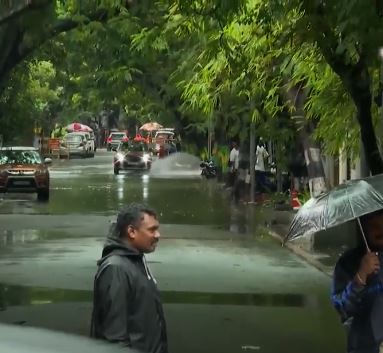
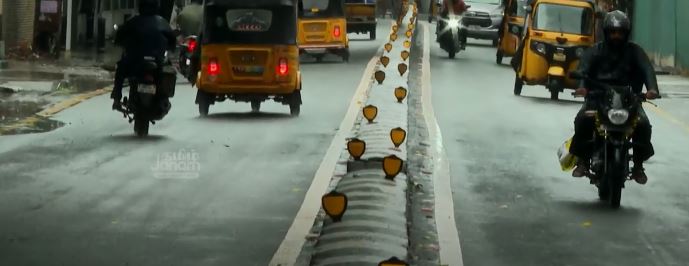
The Dravidian model government repeatedly claimed to have allocated over 4,000 crore in 2023, with approximately 1,321 crore earmarked specifically for storm-water drainage in the Chennai corporation’s 2024 budget. However, despite only receiving an average rainfall of 6-9 cm across various localities in the city, the recent rains as of 15 October 2024 has exposed the government’s administrative shortcomings and its inability to prevent such disasters.

Since the rain began on 14 October 2024, the city has experienced significant flooding, with water pooling in many areas due to incomplete drainage projects. Particularly shocking was the dire situation in Chief Minister MK Stalin’s constituency, Kolathur, where residents were seen towing their two-wheelers by hand wading through knee-deep water. Many vehicles stalled as water flooded into their engines.

GKM Colony in the Kolathur area has become a scene of distress. Residents are swimming through floodwaters just to access their daily essentials. They attribute their plight to government negligence, as repeated requests for improvements to the rainwater drainage system in Stalin’s constituency have been ignored. Due to the area’s low elevation, there are no proper pumps, and minor drains have been severely lacking maintenance. Officials have not initiated new infrastructure projects. Despite claims from the MLA and local ward members that the work has been completed successfully, the reality is quite the opposite. This situation is not unique to GKM Colony; nearby areas such as Thillai Nagar, Kumaran Nagar, and Kambar Nagar, all within Chief Minister Stalin’s constituency, are experiencing similar challenges.

When speaking to reporters, one resident expressed disappointment about the constituency, lamenting the ongoing issues. “It is very bad; we are suffering silently not only this year but every year we are suffering the same. It has only rained for one day, it didn’t rain yesterday, only today. Look at our situation, we are towing our vehicles. You are saying this is the Chief Minister’s constituency, what kind of constituency is this? Very bad. Check out other constituencies, they are also bad, but this one is the worst. We are living a bad life here.”

The reporter then asked if there was a rainwater drainage facility in the area, to which the resident replied, “Yes, everything is there, there is a rainwater drainage and every other thing, but they are not maintaining it properly. During this monsoon season, just two days ago they came and looked at it, my home is on 31st street, many manholes have not been closed and it’s still the same. What shall we do? we have complained to them many times, they come and check, give us false hope and leave, a common man’s life is like that. I don’t know what else to say, everyone knows this is the CM’s constituency, still, he should take strong action. We go and say to the DMK office, they too come and see, but they are not taking proper steps.”

The reporter asked another woman resident about the situation in the Chief Minister’s constituency, and she responded with a mocking laugh, “You could see the situation very gladly. They have mentioned things like rainwater drainage and others, I was very happy that there won’t be any floods hereafter. This is an elevated area, if the situation here is like this my mother’s house in Perambur Barracks, Choolai, where the water level is up to the throat. I asked them to come over, but they could not even come. We were with hope that there won’t be any floods hereafter as they took up rainwater drainage works since it is a new regime we looked forward to something new, to say the least, this (DMK) is more than to them (AIADMK).”

She also expressed frustration that essential items, like milk, were unavailable in the area, stating, “We hope for a change, but nothing seems to improve.”

While residents lamented their situation, the contrast was stark with the Chief Minister’s home and street, which remained spotless and free of any water. The drainage there was efficient, leaving no signs of the heavy rainfall that had affected the rest of Chennai. Residents struggled in flooded conditions, while the CM’s street appeared untouched by the deluge. This highlighted the administration’s ability to manage floodwaters, suggesting that the DMK, which champions social justice, only extends that concern to its leaders and elites, leaving ordinary citizens to fend for themselves.

(Pic Credit: Tamil Janam)

Subscribe to our TelegramWhatsApp, and Instagram channels and get the best stories of the day delivered to you personally.
Drunk TANGEDCO Staff In Mayiladuthurai Found Asleep Amid Power Outage

Drunk TANGEDCO Staff In Mayiladuthurai Found Asleep Amid Power Outage

Residents of several areas around Kadalangudi, located in Kuthalam Taluk of Mayiladuthurai district, Tamil Nadu, already frustrated over a prolonged electricity outage, were shocked to see TANGEDCO (Tamil Nadu Power Generation and Distribution Corporation) employees asleep and intoxicated at the substation.

The disruption, which originated from the Kadalangudi sub-station, caused considerable inconvenience to locals, prompting them to seek assistance from the electricity officials.

Calls For Help Ignored

The power outage, which began on 14 October 2024, persisted for several hours, leaving residents in the dark and disrupting daily life. Desperate for a solution, people repeatedly attempted to contact the TANGEDCO officials by phone to report the issue and request a resolution. However, their calls went unanswered despite multiple attempts.

As the power outage continued, residents decided to take matters into their own hands and visited the Kadalangudi sub-station to raise the issue directly with the staff.

Drunk Employees Found Sleeping

Upon arriving at the substation, the locals were shocked to find two employees asleep inside the office, visibly intoxicated. The workers appeared to be completely unaware of the ongoing power issue or their surroundings, as they lay in a dishevelled state with their clothing displaced.

Angered by the negligence, the residents woke the sleeping employees and informed them about the power outage, demanding immediate action to restore electricity. Some individuals captured the incident on video and subsequently shared it on social media, where it quickly went viral, sparking widespread outrage.

Following the incident, residents called for the authorities to act appropriately against the employees involved. They voiced concerns about the safety risks associated with handling electrical equipment, particularly when workers are under the influence of alcohol.

The public urged TANGEDCO to ensure stricter oversight of its staff and to implement measures to prevent such incidents from recurring. They emphasized the need for the Electricity Board to properly monitor its employees, given the potential dangers involved in handling power supply equipment.

(With inputs from PTTV)

Subscribe to our TelegramWhatsApp, and Instagram channels and get the best stories of the day delivered to you personally.
How To Make India More Hindu?

How To Make India More Hindu?

After centuries of surviving persecution under mleccha rule by restricting their faith to the boundaries of their individuals homes and shrines, Hindus are reclaiming their sense of being a sociopolitical community. This collective sense of being, which had existed since the Vedic era, had been rendered dormant first as an adaptation to oppression under foreign rule and then, after 1947, as a matter of the State’s social engineering endeavour of enforced secularisation of the Hindu social, economic, political, and even religious life. Yet, the rediscovery of the importance of community affairs, i.e. Hindutva, is recrystallising with Hindus being increasingly eager to articulate, advocate, and agitate for Hindu concerns and interests.

What began as a tempestuous collective upheaval of latent sentiment with the Ram Janmabhoomi movement and the removal of the invasive occupying structure erected over Bhagawan Rama’s birthplace has proven to stand the test of time, and the political effervescence of Hindutva did not die a death of senescence as the matter went on endlessly in the courts, but culminated with the BJP’s outright clinching of the majority mark in 2014 and 2019. The BJP’s miss in 2024 is more a result of a perceived betrayal of the Hindutva cause and inaction over Hindutva priorities—another first in contemporary Indian politics.

To understand how to make India more Hindu, a brief contextualisation of how India underwent de-indigenisation and pseudo-indigenisation where Hindutva as an idea was all but erased, is necessary. The clear concept of an outgroup, or a deplorable other to which Hindus have religious and social sanction to be antagonistic towards, has a long and consistent history. Whether the Dasyus of the Rigveda or the Mlecchas and Turushkas of the Puranas and Dharmashastras, the idea of a malevolent other, which is fit to face suspicion, boycott, and even dharmic violence, has been very clear. However, for the sake of protecting dharma itself, these concepts had to be necessarily kept in abeyance when Muslims came to occupy swathes of Bharat generation after generation. Thus, in the Bhakti era, even outright syncretism was employed as a protective mechanism to profess and propagate the core tenets of dharma while the land and people were under occupation; large temples, the fulcrum of all aspects of Hindu life, were all but wiped out in the northern half of the subcontinent, and hardly a temple exists in Kashi, which has not been razed at least once.

The absence of any noticeable collective feeling of Hindutva in our country for many decades following independence owes, in our opinion, to the almost complete deracination of the Hindu mind for over two centuries of colonisation by the British, preceded by aggressive destruction of our holy places by the Muslims. The post-1858 period was particularly unfortunate in this regard—Macaulay had done his work efficiently—and Hindus were degraded physically, mentally and morally with a small number allowed to ascend to lowly clerical positions in the Raj to ultimately form the future ruling elite of the brown sahebs. This enfeebled condition of the Hindus continued unfortunately after independence with a ‘secular’ constitution that placed the 80% majority community at a status lower than the 20% minority communities, and by this we mean largely the 15% Muslim community. This enforced secularisation where the majority is relegated to a position lower than the minority is unprecedented in the modern world, nay even in world history. Politically, this strange situation was the handiwork of the Congress Party, which is now clearly identified as a party for the Muslims—the modern day equivalent of the AIML of the pre-independence days when the INC (the previous incarnation of today’s Congress) and the AIML were at daggers drawn during the freedom struggle. Such are the vagaries of history.

Lenin’s dictum of controlling the “commanding heights of the economy”, which was readily adopted by the socialistic mai-baap State post-independence and is the bedrock of the political vapidity of today’s freebie culture, is no longer fully applicable today due to the structure of our modern economy. Thus, while overall economic growth and security should undoubtedly be an important matter for Hindus, the proper advancement of their interests needs a proper delineation of the goals they should work towards. To this extent, what is needed is for Hindus to ultimately control the “commanding heights of the society”, in other words, control over education, media, the legal system, and the Overton window.

The capture of these commanding heights requires a certain momentum, mental frame, and morale to achieve them in a reasonable timeline, which can be propped up with doable solutions that soothe Hindu sentiments as Hindu society reinvigorates itself and shapes itself into a proper political community. A few such initiatives are suggested as follows:

1. Temple Freedom: State control over temples, while constitutionally framed to permit temple entry, have ended up giving the godless complete control over institutions which were once the source of education, direction, and organisation for Hindu society. Such control is critical to keep temples from reclaiming this space, and permitting Hindus to have powerful social institutions which are autonomous from the State. With the scandal of beef fat being used to poison Hindus’ faith in Tirupati, and the ongoing theft of temple jewellery in many of southern India’s shrines, it is incumbent upon Hindus to demand a complete exclusion of the government, including the courts, from all matters concerning their temples. To this end, different temples may organise different modes of governance as test cases, with the general dictum being that overall supervision rests largely with an elected body of devotees, and daily management being the responsibility of the various classes of priests and servicemen which have traditionally undertaken upkeep of the temple.

2. Sanatana Dharma Samrakshana Board: Andhra Pradesh’s Deputy Chief Minister, Pawan Kalyan, has an important suggestion towards converting the various disparate initiatives into an organised, channelised movement. A Sanatana Dharma Samrakshana Board, which can aggregately take up Hindu causes such as social media account suspensions, lawfare, Hindu economic rights, temple protection etc., is necessary. It ought to be noted that the All India Muslim Personal Law Board was neither set up by the government nor was endorsed by it, and yet it successfully manages to act as a custodian of Muslim rights across all fields. Thus, an equivalent body that can coordinate Hindu efforts and be an umbrella pressure group needs to be set up, and it can and should be set up privately.

3. UCC: The greatest remnant of the special treatment advanced to Muslims in the country is their uncodified personal law, while Hindu personal law has been successively deracinated and distorted since the first attacks were made by the four Hindu family law acts passed soon after the independence. The time is right to end any such remnants of the premium accorded to minorities, and such law be necessarily framed as per the wishes and needs of the majority. It must be made abundantly clear that for anyone to live in Bhārat, they ought to submit to Bhāratiya law, and any wishes of Sharia ought to be met with calls of deportation.

4. Waqf: The third largest landowner in the country is a rapacious institution which has stolen Hindu land with little accountability. Entire villages, including temples, have been demanded by the Waqf board for its aggrandisement. The authors are inclined to only accord a lukewarm reception to the fireworks in the Joint Parliamentary Committee proceedings over the Waqf amendment bill. The Waqf is a continuation of the economic and geographical conquest waged over Hindus by aliens, and the only response warranted to such an affront is for its complete dissolution. The Waqf ought to be scrapped in its entirety, and all its properties distributed to Hindus as reparations for the millenia long indignities and destruction waged by invaders.

5. Citizenship: The fact that the government took years to notify and frame rules for the much-maligned Citizenship (Amendment) Act, 2019 (CAA), was a disgrace. Such a puzzling act of pusillanimity, if repeated, will only inflame Hindu scorn towards the current government. The need of the hour is twofold—the time limit for entrants to be eligible for citizenship, being December 31, 2014, has to be removed and the eligibility needs to be perpetual, perhaps even included in the Constitution. Secondly, and more importantly, the CAA needs to be reworded to unambiguously frame India as the natural home of Indic faiths and Indic faiths only, instead of framing it indirectly, even timidly, in the language of religious persecution. This will form the legal foundation for Hindu Rashtra in due course.

6. Reclamation of the Kshetram: Instead of shooting from the shoulders of the courts, reducing a non-negotiable question of Hindu faith to a petty land dispute, the law needs to be wielded to the fullest extent to enable Hindus to reclaim their temples. Kashi Vishwanath and Krishna Janmabhoomi are emblematic; however, till date there are 40,000 occupied and abandoned temples across the country, standing testament to the repeated assaults inflicted by mlecchas on Hindus. All of them need to be reclaimed not by pulverising Hindus into mendicants running before the courts against hordes which have scant regard for judgements, but by a matter of right being enforced through the might and majesty of the State, devoid of inhibitions. If a confrontation with the judiciary is what it takes, so be it. Likewise, a clear intention to retake parts of the country which are under Pakistani occupation is welcome, yet action on the ground is needed. Likewise, the idea that Pakistan, ipso facto, is an illegitimate and irrelevant entity, which is occupying India’s borders that naturally go up till the Sindhu, must be mooted and encouraged. These artificial nation state borders imposed on large sections of the world by the Euro-Amerisphere are unnatural and inefficient for many of us who inhabit civilisational states—they need to go.

7. Education: One of the most egregious missed opportunities post-2014 is to not make any fundamental changes to education. Education is a means of forging a national narrative, and instilling a sense of swayambodh as well as shatrubodh. A nationalistic, Hindu-oriented system of syllabi needs to be initiated, where invaders are no longer glorified, and while continuous genocide of the Hindus is not whitewashed, neither are Hindus painted as perpetual victims, with heroes who fought back such as Maharana Pratap, Gopal Patha, and Raja Kulchand being appropriately introduced. Our history, which is the history of each and every Hindu child, is a history of resilience and grace; a proper syllabus will concretely establish Hindus as a political community for generations to come.

Even with the disputes concerning Christian conversion in parts of south and central parts of India, no substantial and deep-seated disputes exist between Hindus and Christians. The problems in the northeast, including the anti-Hindu pogroms in the past, while requiring constant attention, are more than manageable. They are political in nature rather than religious. It is the Muslim community which continues to have a fraught relation with Hindus and Bhārat. Surprisingly, even discussing this problem has been criminalised under the new Bharatiya Nyaya Samhita, 2023, where questioning any religious, racial, language or regional group or caste or community’s allegiance to the Constitution or towards upholding the integrity or sovereignty of the country is a criminal offence—how such provisions can be enacted in a country where genocides against Hindus and secessionist movements founded specifically on religion continue to this day is a question left to the readers. Whether it is sar tan se juda, the consternation surrounding events in Lebanon and Palestine, or the insistence to wear the hijab, some clear, unambiguous, and frank assessments need to be made and collectively imposed amongst themselves by Hindus.

The path to the Hindu Rashtra will rest heavily on the ability of the Hindu vanguard in shifting the Overton window sufficiently, and thus rendering all meaningful opposition untenable. This goes back to the idea of controlling the commanding heights of the society. When this occurs, institutions and entities which stand in opposition will be rendered either nugatory or irrelevant, and a de facto Hindu Rashtra will be able to usher in a de jure transformation. To take a page from Sun Tzu, to subdue the enemy without fighting is the acme of skill.

Once we feel Hindu, and our myriad individual feelings coalesce and synergise into a massive collective feeling, the Overton window will shift automatically and the Supreme Court, BJP, Modi etc become irrelevant. Hindu Rashtra needs to be achieved de facto before it is a reality de jure.

Gautam Desiraju is Professor Emeritus in the Indian Institute of Science, Bengaluru.

Deekhit Bhattacharya is an Associate in Luthra & Luthra Law Offices, New Delhi

Subscribe to our TelegramWhatsApp, and Instagram channels and get the best stories of the day delivered to you personally.
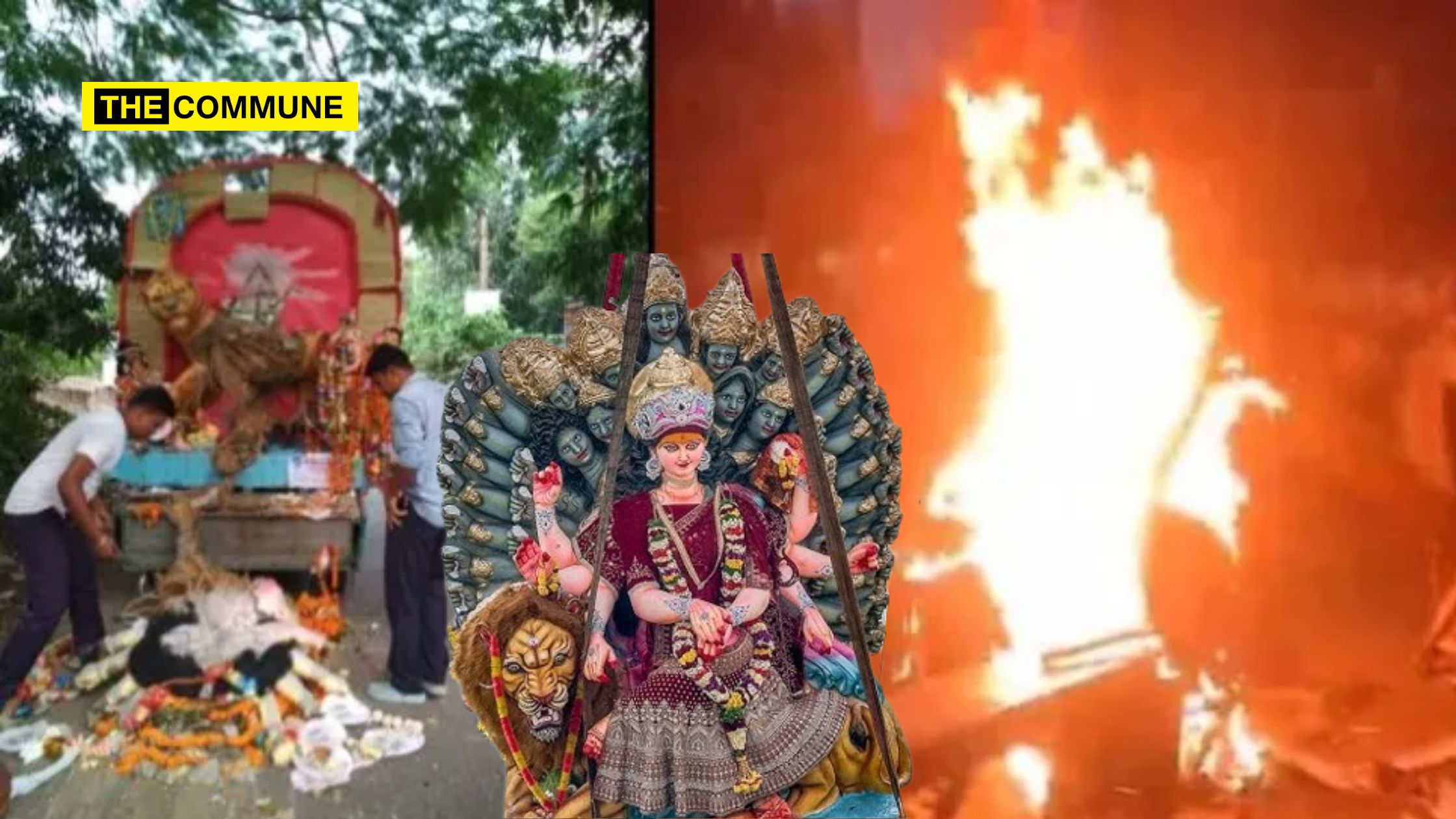
11 Instances Of Attacks During Durga Puja And Visarjan In 2024 Across India

11 Instances Of Attacks During Durga Puja And Visarjan In 2024 Across India

A disturbing series of communal clashes and violent incidents across various parts of India marred the Durga Puja and Visarjan festivities in 2024. Several regions witnessed attacks, stone-pelting, vandalism, and even fatal shootings as tensions escalated during the immersion processions. The incidents highlighted underlying communal issues and raised concerns over public safety during religious celebrations. Below are 11 instances that occurred during the 2024 Durga Puja season, detailing the extent of the violence and the resulting consequences.

1. Bahraich, Uttar Pradesh (13 October 2024)  

During a Durga idol immersion in Maharajganj, located in the Hardi police station area, tensions flared when an Islamist mob expressed anger over DJ music being played. The altercation escalated into stone-pelting and firing. Ram Gopal Mishra (22) was fatally shot, and several others, including 30-year-old Rajan, Sudhakar Tiwari, Akhilesh Bajpai, and a physically disabled Satyawan, sustained serious injuries.

2. Howrah, West Bengal (13 October 2024)  

Violence broke out in the Shyampur area when an Islamist mob pelted stones at people participating in a Durga idol immersion procession. The situation escalated further as the mob set fire to the idols and vandalized various pandals. The Shyampur Bazar Vyavasayik Samiti puja pandal suffered extensive damage as multiple idols were burned.

3. Garhwa, Jharkhand (13 October 2024)  

In two different locations, clashes erupted as the Islamist community members blocked Hindus from proceeding with the idol immersion, citing restricted access to certain areas. This led to stone-pelting and confrontations. The immersion procession was disrupted, and tensions ran high, necessitating intervention to prevent further violence.

4. Kaushambi, Uttar Pradesh (12 October 2024)  

An incident occurred in the Manjhanpur area when some members of the Islamist community took offense at the application of gulal (colored powder) on the Imambara platform, leading to stone-pelting and violence.  

The idol was damaged during the chaos, and there were also reports of an attempted assault on a woman. Thirteen individuals, including Ghulam Waris and Saeed Ahmed, were named in the police complaint.

5. Gonda, Uttar Pradesh (12 October 2024)  

As the Durga Visarjan procession made its way towards Khaira Mandir Talab, it encountered resistance in an Islamist-majority locality. The procession participants were attacked with stones. The police had to escort the procession to ensure safety and prevent the situation from spiraling out of control.

6. Kolkata, West Bengal (11 October 2024)  

A group of 50-60 individuals entered a puja pandal organized by the New Bengal Sporting Club in Garden Reach, threatening to damage the idol if the celebrations continued. The pandal was vandalized, and the celebrations were momentarily halted due to the violent disruption.

7. Karimganj, Assam (9 October 2024)  

In Mansangan village, trouble ensued when Abdul Ahad, Sahabul Ahmed, and another individual attacked a Durga idol procession by throwing leftover cooked rice at the participants. The idol was damaged, and law enforcement quickly apprehended the perpetrators.

8. Gonda, Uttar Pradesh (9 October 2024)  

Violence erupted when an Islamist mob, including individuals named Aslam, Sultan, and Munna, attacked a Puja pandal and hurled stones at the devotees. A case was registered against 12 suspects as the authorities sought to control the escalating situation.

9. Gorakhpur, Uttar Pradesh (6 October 2024)  

In Karamhana Bujurg village, violence broke out after some youths objected to the DJ music being played during the Durga procession. The attackers disconnected the sound system wires before fleeing the scene.  

The immersion procession was briefly disrupted as devotees tried to restore order.

10. Kushinagar, Uttar Pradesh (6 October 2024)  

As devotees carried the Durga idol, a mob pelted stones at them, resulting in injuries and damage to the idol. The police detained 10 individuals suspected of involvement in the violence.

11. North Tripura, Tripura (6 October 2024)  

Clashes arose in the Kadamtala block area when a local Durga Puja club requested a donation of ₹5000 from an Islamist driver named Jahar Miya, leading to a confrontation with an Islamist mob. Hindu houses and club members faced attacks, and law enforcement had to intervene to restore peace.

From Uttar Pradesh to West Bengal and Tripura, the pattern of hostility and unrest during these events reflects the deep-seated hate that the Islamists have for the Hindu community.

This is not the first time that attacks on visarjan procession or puja pandals have happened in India. Here are 16 instances of attacks on Ganesha processions by Islamists across India during 2024 Vinayakar Chaturthi.

Subscribe to our TelegramWhatsApp, and Instagram channels and get the best stories of the day delivered to you personally.
Millions Of Australian Households Experiencing Food Insecurity: Report

Millions Of Australian Households Experiencing Food Insecurity: Report

Millions of Australian households are experiencing severe food insecurity, according to a report published on Tuesday by hunger relief charity Foodbank Australia.

The report said 3.4 million households across the country experienced food insecurity in the last 12 months, 2 million of which experienced severe food insecurity.

The Australian government defines food insecurity as the limited or uncertain availability of nutritionally adequate and safe foods or the ability to acquire acceptable food in socially acceptable ways.

The annual Foodbank report found that 97 per cent of severely food-insecure households skipped meals or cut meal sizes and that half of adults experiencing severe food insecurity went for days without eating due to affordability, the Xinhua news agency reported.

Over 80 per cent of food-insecure households cited the rising cost of living as a factor. “More than half of food-insecure households are now at the severe end of the food insecurity spectrum. For these families, it’s not just about cutting back, it’s about missing meals entirely, sometimes for days,” Brianna Casey, chief executive of Foodbank Australia, said. “This is no longer a crisis of temporary hardship but a prolonged, systemic issue affecting millions of Australians,” she said.

“These households live with the daily anxiety of not knowing where their next meal will come from, forced to choose between essentials like food, housing and utilities.” Among households that experienced severe food insecurity, 97 per cent worried about running out of food before having enough money to buy more and 93 per cent were unable to afford balanced meals. One-quarter of food-insecure households reported having support from friends and family, down from one-third in 2023.

–IANS

Subscribe to our TelegramWhatsApp, and Instagram channels and get the best stories of the day delivered to you personally.