Home Blog Page 544

Three Found Guilty Sentenced To Life Imprisonment, 1 Acquitted Due To Insufficient Evidence In 2016 Kollam Collectorate Blast Case
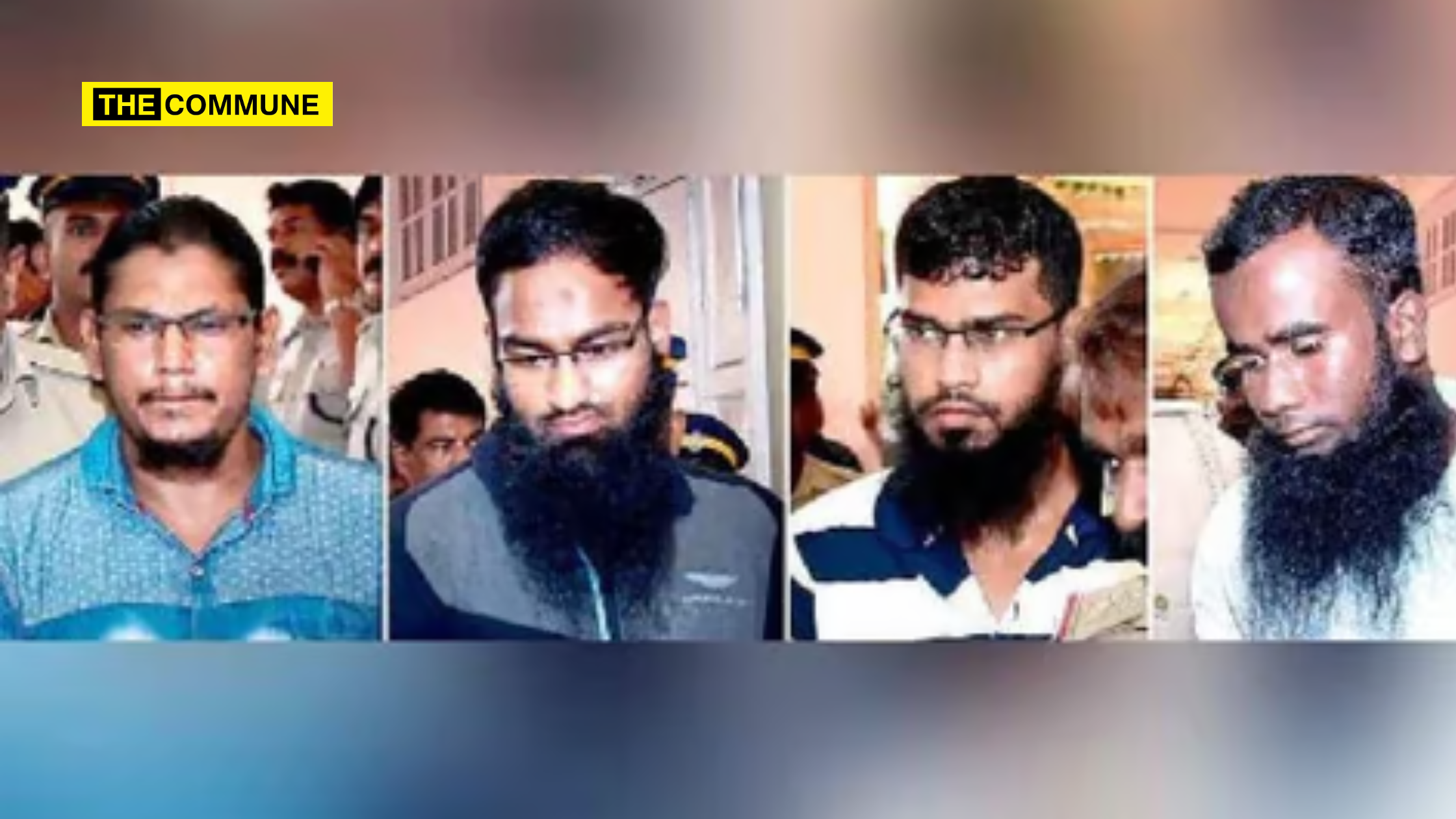
Three accused in the 2016 Kollam Collectorate bomb blast case have been found guilty and sentenced to life imprisonment, while a fourth was acquitted due to lack of evidence. Principal Sessions Judge G. Gopakumar delivered the verdict, sentencing Abbas Ali (31), Samsun Karim Raja (33), and Dawood Sulaiman (27) to rigorous life terms for their roles in the blast. The defendants, all from Madurai, Tamil Nadu, are members of the banned terror group Base Movement, which espouses the ideology of Osama bin Laden.

On 15 June 2016, a low-impact bomb exploded under an idle labour department jeep at the Kollam Collectorate, injuring Sabu, the former president of Perayam Panchayat. The blast occurred during peak hours, when the court premises were bustling with people, raising serious public safety concerns. Investigators recovered key forensic evidence, including 15 batteries, 17 fuse wires, and a bag from the scene, which linked the incident to other bombings attributed to the Base Movement.

Roles, Charges, And Sentences

The court found Samsun Karim Raja to be the mastermind behind the plot. A week before the blast, Karim Raja visited Kollam, captured photos and videos of the Collectorate on his mobile phone, and then returned to Madurai to plan the attack with his accomplices. On the morning of the bombing, he traveled with the bomb by bus from Tenkasi to Kollam and placed it in the court premises.

The court sentenced Karim Raja to four life terms, while co-defendants Abbas Ali and Dawood Sulaiman received three life terms each. Additional concurrent sentences include 20-year and 10-year terms under multiple sections, such as IPC Sections 307 (attempted murder), 324 (voluntarily causing grievous hurt), 120-A (criminal conspiracy), and 427 (mischief-causing damage), as well as provisions under the Explosive Substances Act and Unlawful Activities Prevention Act. Each defendant was also fined Rs. 30,000.

Base Movement And Broader Operations

The Base Movement, founded by the first accused, operated out of Darul Islam in Tamil Nadu and sought to instill fear through terror attacks. The organization had previously bombed other court complexes, including those in Chittoor, Nellore, Mysore, and Malappuram, indicating a coordinated attempt to target judicial institutions across South India.

NIA Investigation And Key Witness

The case, initially handled by Kerala Police, was later transferred to the National Investigation Agency (NIA), which arrested the suspects during a separate investigation into a Vellore blast. Muhammad Ayub, a fifth defendant, turned state witness, providing critical testimony that detailed how the group manufactured and planted the bomb. His statements also confirmed the conspiracy, identifying each member’s role in the operation.

(With inputs from Kerala Kaumudi)

Subscribe to our channels on TelegramWhatsApp, and Instagram and get the best stories of the day delivered to you personally.

Vijay TVK’s Allegedly Buys Big Social Media Handles To Increase Social Media Visibility

Vijay TVK's Allegedly Buys Big Social Media Handles To Increase Social Media Visibility.

Kollywood star Vijay’s Tamilaga Vettri Kazhagam (TVK) appeared to be winning over Tamil Nadu’s youth, until a live interview revealed that the surge in TVK social media support was largely a PR stunt, as the party is likely to have bought profiles with large number of followers and engagement to create a facade of popularity.

TVK Popularity Amongst Youth

There was a widespread belief that after Kollywood star Vijay launched his own political party, Tamilaga Vettri Kazhagam (TVK), many youths were eagerly joining the cause. It was rumored that social media was flooded with TVK-related handles, leading everyone to think the party was gaining significant traction. Even the DMK, feeling threatened by the influence TVK was creating, reportedly planned stunts to refocus attention on the youth demographic.

However, it has now emerged that the perception of a massive youth following was nothing more than a hoax. It turns out that the social media profiles promoting the party were largely bought through PR agencies, leaving many shocked by the deception.

Doubts Over TVK Social Media Strategy

In a startling revelation during a live interview on a private YouTube channel, a political commentator exposed a shocking truth about the TVK party’s social media presence. The host, visibly stunned, questioned the claim’s validity, prompting the commentator to demonstrate the findings. He pulled up a Facebook profile that appeared to be a major TVK supporter, with a whopping 4 million followers and 139k likes. The page’s cover and profile photos prominently featured Vijay alongside the TVK party flag, giving the impression that the party’s youth wing was growing rapidly and gaining immense popularity.

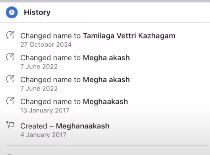
However, the truth was revealed when the commentator dug deeper into the page’s “About” section and checked its page transparency.

Fake TVK Popularity

The page, created in 2017, was initially set up by fans of actress Megha Akash. Despite the 4 million followers accumulated across India, the page had no direct connection to TVK, which was founded in February 2024. This discovery exposed how the page, initially meant to celebrate Megha Akash, had been co-opted to falsely portray a massive following for Vijay’s political party.

The commentator, unveiling this revelation, expressed disappointment, stating that Vijay’s team seemed caught up in creating fake popularity stunts on social media instead of focusing on real grassroots work. He went on to allege that several companies in Bangalore and other towns had sprung up solely to fabricate online followings and boost false narratives of support. He also clarified that not all the IDs were fake, acknowledging that genuine followers and content creators were involved. However, he pointed out that, on the other hand, such deceptive stunts were still happening on a large scale, exploiting social media to create a false sense of support.

The commentator urged Vijay to take politics seriously and focus on meaningful work for the public good, warning that many other parties had tried and failed such stunts before. He emphasized that genuine political engagement was far more impactful than manufactured online popularity.

Subscribe to our channels on TelegramWhatsApp, and Instagram and get the best stories of the day delivered to you personally.

Vote For Mahayuti For Fast Development, Oppose MVA Which Will Put Brakes: PM Tells Maha

Show The Door To Non-Performers: PM Modi Tells Union Secretaries

Prime Minister Narendra Modi on Friday appealed to the voters of Maharashtra to re-elect the Mahayuti alliance comprising the BJP, Shiv Sena and NCP to increase the pace of development and oppose the Maha Vikas Aghadi (MVA) which will put brakes on the state’s growth.

PM Modi asserted that the MVA would scrap welfare and development schemes brought out by the Eknath Shinde-led Mahayuti government in the state.

PM Modi, who started his poll campaign from tribal dominated Dhule, said Maharashtra trusts the NDA and will vote for the Mahayuti alliance in the upcoming elections.

“I appeal to you to vote for the Mahayuti so that it will take the progress of Maharashtra to new heights in the next five years. Only the Mahayuti government can provide the good governance that Maharashtra needs,” PM Modi said.

“On the other hand, the Maha Vikas Aghadi vehicle has neither wheels nor brakes and there is a fight even for sitting on the driver’s seat. The Mahayuti government, which has taken several decisions to speed up development, will continue to boost the state’s growth and also promote the development of various sections. But be aware of the Congress and Maha Vikas Aghadi which are against development and bent on putting brakes on the state’s growth,” said the Prime Minister.

He praised the Mahayuti government’s ‘Vachannama (manifesto)’ comprising 10 guarantees covering various sections and claimed that it is being discussed across the country.

“Everyone has their own goal when they enter politics. People like us consider the public as a form of god and have come into politics to serve the people. Whereas for some people the basis of their politics is to ‘rob people’. When people like Maha Vikas Aghadi, who have the intention of looting people, come to power, they stop development and indulge in corruption in every scheme,” claimed the Prime Minister.

However, he said that the Mahayuti government has restored Maharashtra’s pride and glory while marching on the development path. The Prime Minister slammed the Congress party for hatching a conspiracy to divide the SCs, STs and OBCs by pitting various castes against each other as the grand old party never desires these communities to develop and progress. However, he gave a call to remain united and foil the Congress party’s game plan to divide castes.

“Ek hain to safe hain (If you are united you are safe). We have to remain united and foil the dangerous game of Congress and keep moving ahead on the path of development,” he said, amid slogans raised by the people at the rally.

“A dangerous game of pitting one caste against another is being played by the Congress. And this game is being played because the Congress can never see the Dalits, Backward Classes and tribals progressing. This is the history of the Congress,” he said.

The Prime Minister also lashed out at the Congress and the INDIA bloc for the reinstatement of Article 370 in Jammu and Kashmir while referring to the passage of a resolution in the Assembly there.

“Don’t spearhead Pakistan’s agenda. Don’t speak the language of terrorists. You (Congress and INDIA bloc) will not succeed in your plan till Modi is here,” he warned. He strongly defended the Centre’s move to abrogate Article 370 in Jammu and Kashmir and thereby implement the BR Ambedkar-penned Constitution there.

–IANS

Subscribe to our channels on TelegramWhatsApp, and Instagram and get the best stories of the day delivered to you personally.
Remembering C. Ganesa Iyer: Tamil Scholar, Researcher, And Pioneer Of Tolkappiyam Studies

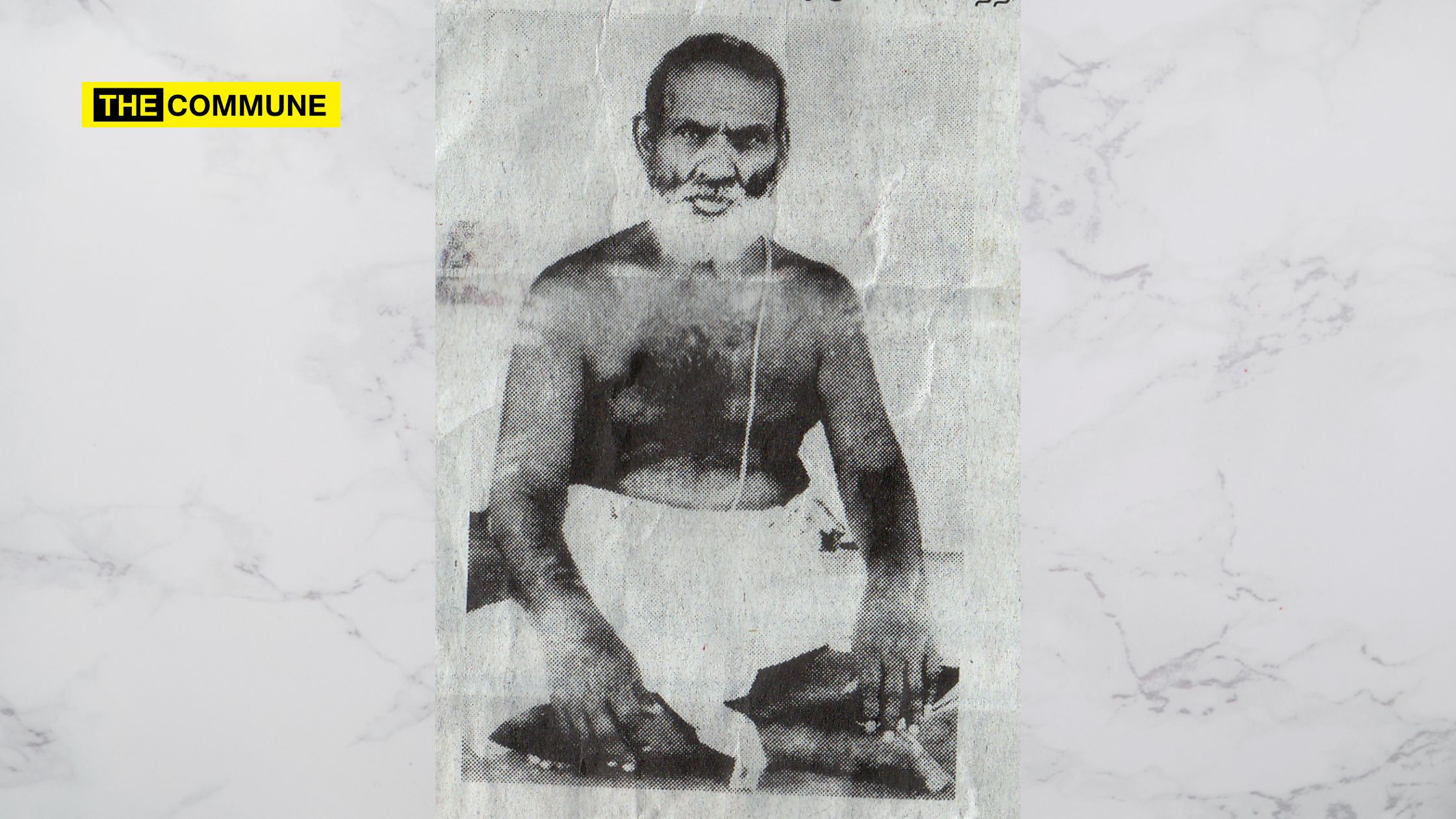
C Ganesa Iyer, a pioneering Tamil scholar and researcher from Jaffna, is celebrated for his significant contributions to Tamil grammar and literary studies. Known for his deep dedication to Tamil literature, Ganesa Iyer’s scholarly works, especially his comprehensive study of Tolkappiyam, have indelibly impacted Tamil academia.

Early Life And Education

Ganesa Iyer was born on 1 April 1878 in Punnalaikattuvan, an agricultural village near Jaffna. His family lineage was notable: his father, Chinnaiyar, was connected to the historic Ayakatavai Siddhivinayakar Temple, and his mother, Chinnammal, was the sister of the renowned astrologer Abdalaivilan Yogavana Iyer. 

Ganesa Iyer received his early education in a Saiva school managed by his great-grandfather, Kathirgama Iyer. Later, he studied Tamil grammar under distinguished mentors, including Ponnambala Pillai and Kumaraswamy Pulavar, and developed a profound expertise in grammar and Sanskrit.

Career And Personal Life

Ganesa Iyer began his career as a primary school teacher and went on to teach at prestigious institutions, including the Vivekananda Siddhalai and Navalar Kavya School. During his seven-year tenure at Saivapadashala of Nainadiv, he contributed extensively to Tamil literature through his articles and public addresses. In 1921, he became headmaster of the Sunnagam Persian School, founded by Satasiva Iyer of the Arya Dravida Pashabi Vridhi Sangha, where he remained until 1932. His teaching notes eventually became sought-after publications.

After retiring from formal teaching, he engaged in private tutoring and led public lectures on Tamil grammar, often under a banyan tree near the Marutadi Ganesha Temple. He also provided public readings of ancient Tamil literature and astrological guidance.

Ganesa Iyer married Annalakshmi, the daughter of his paternal uncle, but they had no children. Following her passing, he donated land and a well,Annalakshmi Koopam,to the Marutadi Ganesha Temple, which still serves as the temple’s holy water source.

Scholarly Contributions And Literary Legacy

A prominent figure in Tamil scholarship, Ganesa Iyer authored groundbreaking research articles for notable publications like Senthamizh, covering topics such as Shaiva Siddhanta and Kamparamayana. He also authored numerous Tamil poems in devotion to deities, such as Maruthadi Vinayagar Prabandham and Thiruchelvachannidhi Nanmanimalai. His works on the structure and grammar of Tamil remain invaluable to Tamil literature.

His lasting fame comes from his contributions to Tolkappiyam, the oldest known Tamil grammar text. While others had previously published Tolkappiyam, comprehensive annotated versions were lacking. Ganesa Iyer undertook this monumental task, studying the commentary traditions of Nachinarkiniyar, Senavaraiyar, and Perasiriyar. He spent years researching in Madurai, working closely with D.K. Ramanuja Iyengar, to produce what remains one of the most respected annotated versions of Tolkappiyam to this day.

Recognition And Final Years

In 1938, Ganesa Iyer was honored with the titleVithuva Siromaniby the Jaffna Arya-Dravida Pasha Vivrudhi Sangam, celebrating his contributions to Tamil studies. His final years were spent in ascetic devotion at an ashram near Marutadi Ganesha Temple, where he continued his teaching and research. On 3 November 1958, the Tamil world lost this extraordinary scholar, who was later commemorated with a Shiva Lingam at his memorial site. (Note: English Wiki mentions his death to have occurred on 8 November 1058)

Ganesa Iyer’s legacy endures, with the Colombo Kampan Kazhagam awarding an annualVithuva Siromani Ganesaiyar Awardin his memory. His work on Tolkappiyam and his dedication to Tamil scholarship have solidified his place among the most influential Tamil scholars of his time.

(With inputs from Tamil Wiki)

Subscribe to our channels on TelegramWhatsApp, and Instagram and get the best stories of the day delivered to you personally.
SC Overturns 1967 Ruling On Minority Status, AMU Case Decision Referred To Three-Judge Bench

SC prohibits mandatory religious education all minority institutions

In a landmark ruling on Aligarh Muslim University (AMU)‘s minority status, a 7-judge bench of the Supreme Court, by a 4:3 majority, has overturned a longstanding precedent set in the 1967 S Azeez Basha vs. Union of India case. The 1967 decision held that institutions established by statute, such as AMU, could not claim minority status under Article 30 of the Constitution. However, the current majority judgement has revised this understanding, stating that an institution does not lose its minority status merely because it was established through legislation.

The majority opinion, led by Chief Justice DY Chandrachud on his last working day, concluded that the Court must delve into who founded the university and identify if a minority community was “the brain behind it.”

If so, the institution could qualify for minority status, a matter now remanded to a regular bench for a factual determination.

“The view taken in Azeez Basha that an educational institution is not established by a minority if it derives its legal character through a statute is overruled,” stated the majority opinion.

The bench’s decision arose from a long-standing dispute, initially stemming from the 2006 Allahabad High Court judgement that held AMU was not a minority institution, denying it the right to reserve seats for Muslim students. The majority’s decision also establishes that the relevant test under Article 30 should focus on the “establishment” of the institution, not its administration. “Formalism must give way to actuality,” the majority observed, emphasizing that the real origins of the institution should determine its minority status, regardless of statutory formalities.

This new interpretation significantly shifts the understanding of Article 30, which grants minority communities the right to establish and administer their own educational institutions. Justice JB Pardiwala, one of the majority judges, commented on the importance of this change: “An educational institution is a minority institution if it was ‘established’ by a linguistic or religious minority. It is not necessary to prove that the administration must vest with the minority.”

The ruling was met with a notable dissent from Justices Surya Kant, Dipankar Datta, and SC Sharma. Justice Surya Kant argued that minority institutions should require both “establishment and administration” by the minority community to qualify under Article 30. Justice Datta categorically declared that AMU is not a minority institution, while Justice SC Sharma stressed that minority institutions must retain administrative control by the minority without external influence. According to Justice Sharma, “To claim establishment, they have to bring it to existence; they should play a full role to the exclusion of others.”

The case has spanned several decades, with multiple references to larger benches for interpretation. Following the Azeez Basha judgement, the question was briefly reconsidered in 1981 and later in 2019. However, the Court only reached a decisive outcome in the present case, concluding that Azeez Basha’s strict interpretation limited the spirit of Article 30.

Senior Advocates Dr. Rajeev Dhavan, Kapil Sibal, Salman Khurshid, and Shadan Farasat represented AMU and the AMU Old Boys’ Association. Attorney General R Venkataramani and Solicitor General Tushar Mehta, among other senior advocates, represented the Union of India.

With the majority judgement now remanding the factual aspects of the case to a regular bench, the final determination of AMU’s minority status remains pending. However, this ruling represents a pivotal shift in constitutional law, broadening the scope for minority communities to establish institutions without losing their distinct status due to statutory incorporation.

(With inputs from LiveLaw)

Subscribe to our channels on TelegramWhatsApp, and Instagram and get the best stories of the day delivered to you personally.
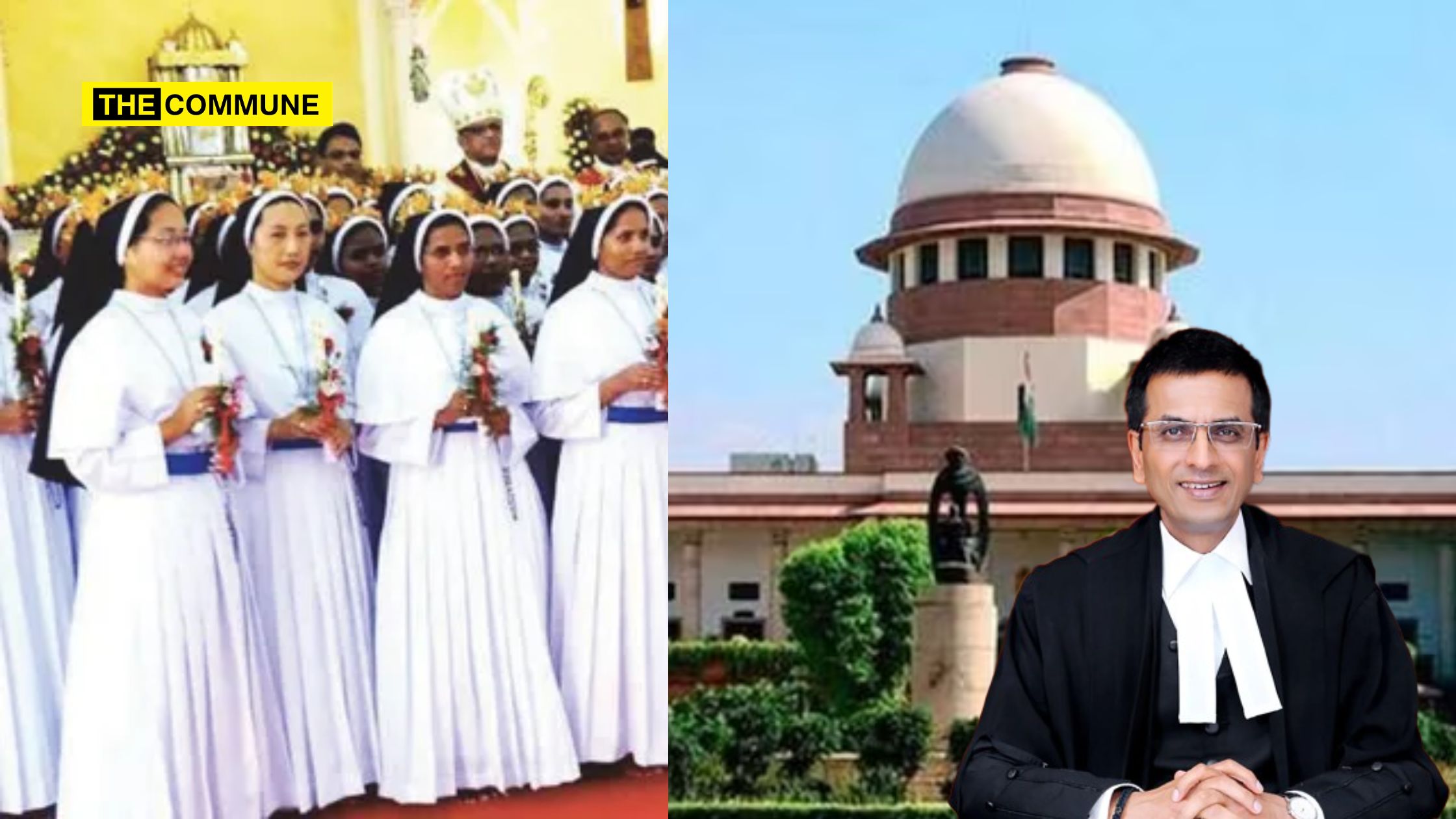
Supreme Court Upholds TDS On Salaries Of Nuns And Priests In Aided Institutions

Supreme Court Upholds TDS On Salaries Of Nuns And Priests In Aided Institutions

The Supreme Court dismissed a series of appeals challenging the imposition of Tax Deducted at Source (TDS) on the salaries paid to nuns and priests working as teachers in government-aided educational institutions. A bench comprising Chief Justice DY Chandrachud, Justice JB Pardiwala, and Justice Manoj Misra upheld the Madras High Court’s decision, affirming that TDS must be deducted from these salaries.

The petitioners argued that nuns and priests had taken a vow of poverty, with their salaries redirected to their respective dioceses or convents, thereby not benefiting them personally. However, Chief Justice Chandrachud observed, Salary is received, but because of the vow of poverty, they say I will not retain the salary… But how does it affect the taxability of the salary? TDS has to be deducted. The Chief Justice stressed the need for consistent application of tax law, noting that similar religious obligations would not exempt Hindu priests from tax if they handed over their earnings.

The Madras High Court had earlier ruled that salaries earned by nuns and priests were taxable under Section 192 of the Income Tax Act, as they received payment individually before forwarding it to religious institutions. The court ruled that the transfer of funds to dioceses was anapplication of incomerather than an exemption from tax at the source.

The petitioners’ counsel highlighted that according to Canon Law, nuns, and priestssuffer civil deathupon taking their vows, surrendering all personal income to the Church. Senior Advocate Arvind Datar argued that they have renounced the world… For the last 85 years, the priests were never taxed,and that nuns and priests should be exempt from TDS under an earlier circular by the Central Board of Direct Taxes (CBDT). The bench remained unconvinced, with CJI Chandrachud clarifying, Without a statutory exemption, taxation cannot be avoided.”

The petitioners pointed to Kerala High Court rulings where families of deceased priests or nuns could not claim compensation under the Motor Vehicles Act, citing the religiouscivil deathof these individuals. Chief Justice Chandrachud countered that while this may affect claims on their behalf, it did not impact tax liability.

Previously, the single bench of the Madras High Court had ruled in favor of religious institutions, agreeing that nuns and priests should not be subject to TDS as their incomes were effectively surrendered to the Church. However, a division bench overturned this, determining that the salaries were earned individually and transferred to the diocese only afterward, amounting to an application of income.

In dismissing the appeals, the Supreme Court affirmed the principle of uniform tax law, stating, The law is common for everyone.”

(With inputs from LiveLaw)

Subscribe to our channels on TelegramWhatsApp, and Instagram and get the best stories of the day delivered to you personally.
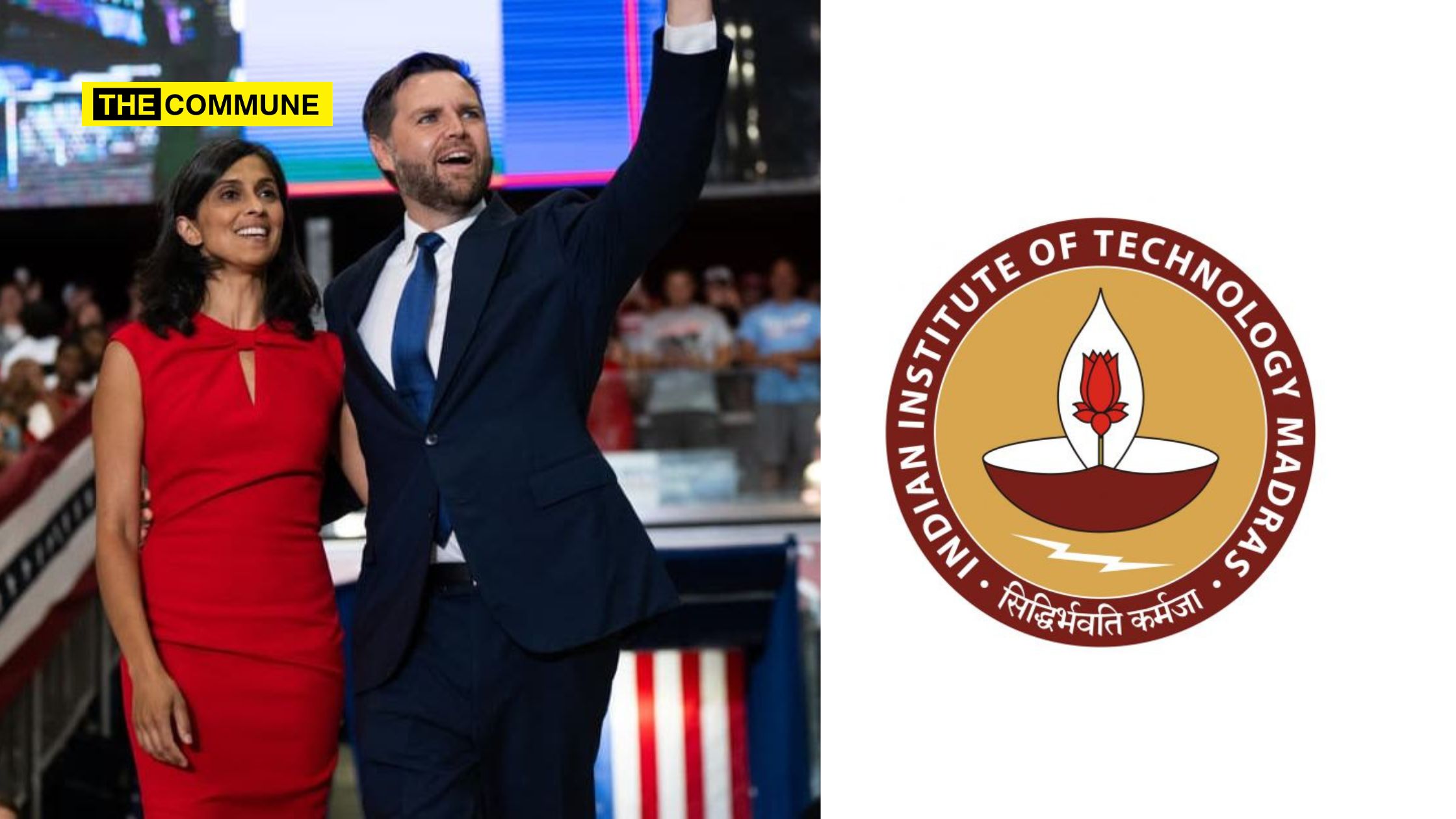
Usha Vance, US Second Lady Designate, Has A Chennai Connection Through IIT-Madras

Usha Vance, US Second Lady Designate, Has A Chennai Connection Through IIT-Madras

Just as people in Andhra Pradesh were celebrating the Telugu roots of Usha Vance, the wife of US Vice President-designate, Chennai did not want to be left far behind and a connection to the city has been unearthed.

Usha Vance, soon to become the United States’ Second Lady, has deep-rooted connections with Chennai through her family’s history at the Indian Institute of Technology Madras (IIT-Madras). As the first Indian-origin woman to hold the role of Second Lady, her ties to one of India’s premier institutions underscore her unique heritage and background.

Usha’s father, Professor Radhakrishnan Chilukuri, graduated with a B.Tech in Mechanical Engineering from IIT-Madras in 1977. Her grandfather, Professor Rama Sastri, played a pivotal role in establishing the institute’s academic legacy. As the first Head of the Physics Department when IIT-Madras was founded in 1959, Sastri served the institution in three terms and was instrumental in developing its early science programs.

In a notable moment of recognition, Professor Sastri received a special award from then Tamil Nadu Chief Minister M. Bhakthavatsalam in 1965 for his initiative in creating a vegetable garden on campus, a project that reflected his commitment to campus life and sustainability.

During IIT-Madras’s initial years, residential quarters were not yet built on the campus, though Professor Sastri resided there for about 15 years following his retirement. Later, the family migrated to the United States, where Usha eventually met and married J.D. Vance, a prominent politician and author, who is now set to take on the role of Vice President.

https://twitter.com/Abitha96960262/status/1854497048260714668?t=hix3qrA5xbkTeH3bwipstA&s=09

As Usha Vance prepares to step into a new chapter as the Second Lady of the United States, her family’s connection to Chennai and IIT-Madras adds a distinctive cultural and academic legacy to her story, bridging ties between two nations.

(With inputs from DTNext)

Subscribe to our channels on TelegramWhatsApp, and Instagram and get the best stories of the day delivered to you personally.
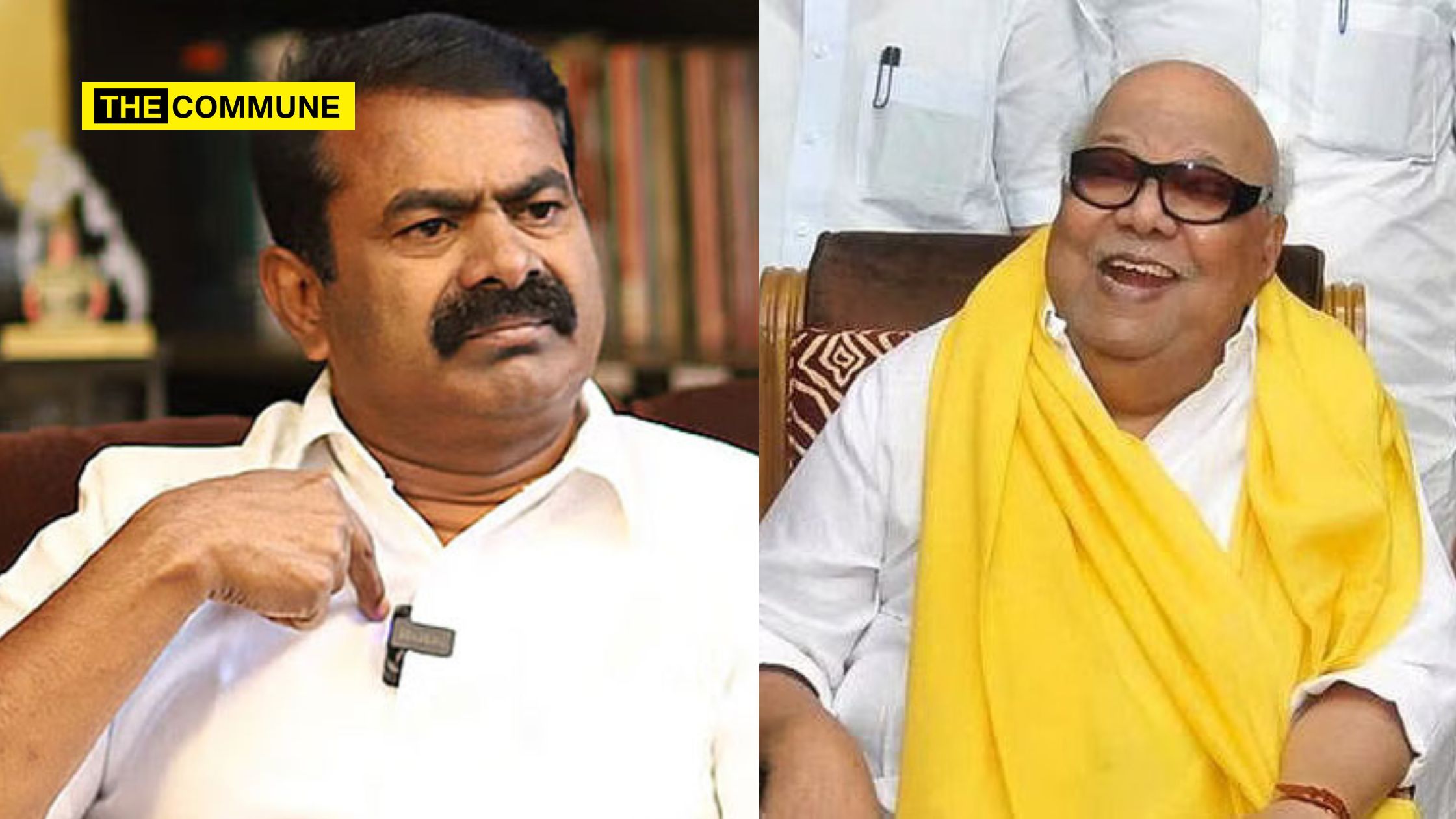
Case Filed Against NTK Chief Seeman For Singing ‘Controversial’ Song About Karunanidhi

Case Filed Against NTK Chief Seeman For Singing 'Controversial' Song About Karunanidhi

A case has been filed against Naam Tamilar Katchi (NTK) party chief coordinator Seeman at the Thanthonimalai Police Station under two sections, including defamation related to former Chief Minister Karunanidhi.

The controversy stems from a campaign event during the Vikravandi Assembly by-election, where NTK member Sattai Duraimurugan sang a song about the late Karunanidhi. A case was registered in Trichy district following the incident.

On 4 August 2024, Seeman, the NTK chief coordinator, referenced Duraimurugan’s controversial song, stating that he, too, would sing it, challenging the police to take action. Seeman also used inappropriate language during his statement.

Following this, Tamil Rajendran, a lawyer from Karur, filed a complaint with the District Collector of Karur on 5th August, requesting action against Seeman for his remarks. Despite no immediate action being taken, Rajendran pursued the matter further, filing a case in the Criminal Arbitration Court on 19 August 2024. The court accepted the case for hearing on 7 October 2024.

On 14 October 2024, the Karur Criminal Arbitration Court granted permission for an investigation, instructing the Thanthonimalai Police to look into the matter and take necessary action.

As per the court’s order, a case was formally registered against Seeman on 7 November at Thanthonimalai Police Station for making defamatory statements and publishing them online. Lawyer Tamil Rajendran stated that if found guilty, Seeman could face up to two years in prison, along with a fine.

(With Inputs From Hindu Tamil)

Subscribe to our channels on TelegramWhatsApp, and Instagram and get the best stories of the day delivered to you personally.
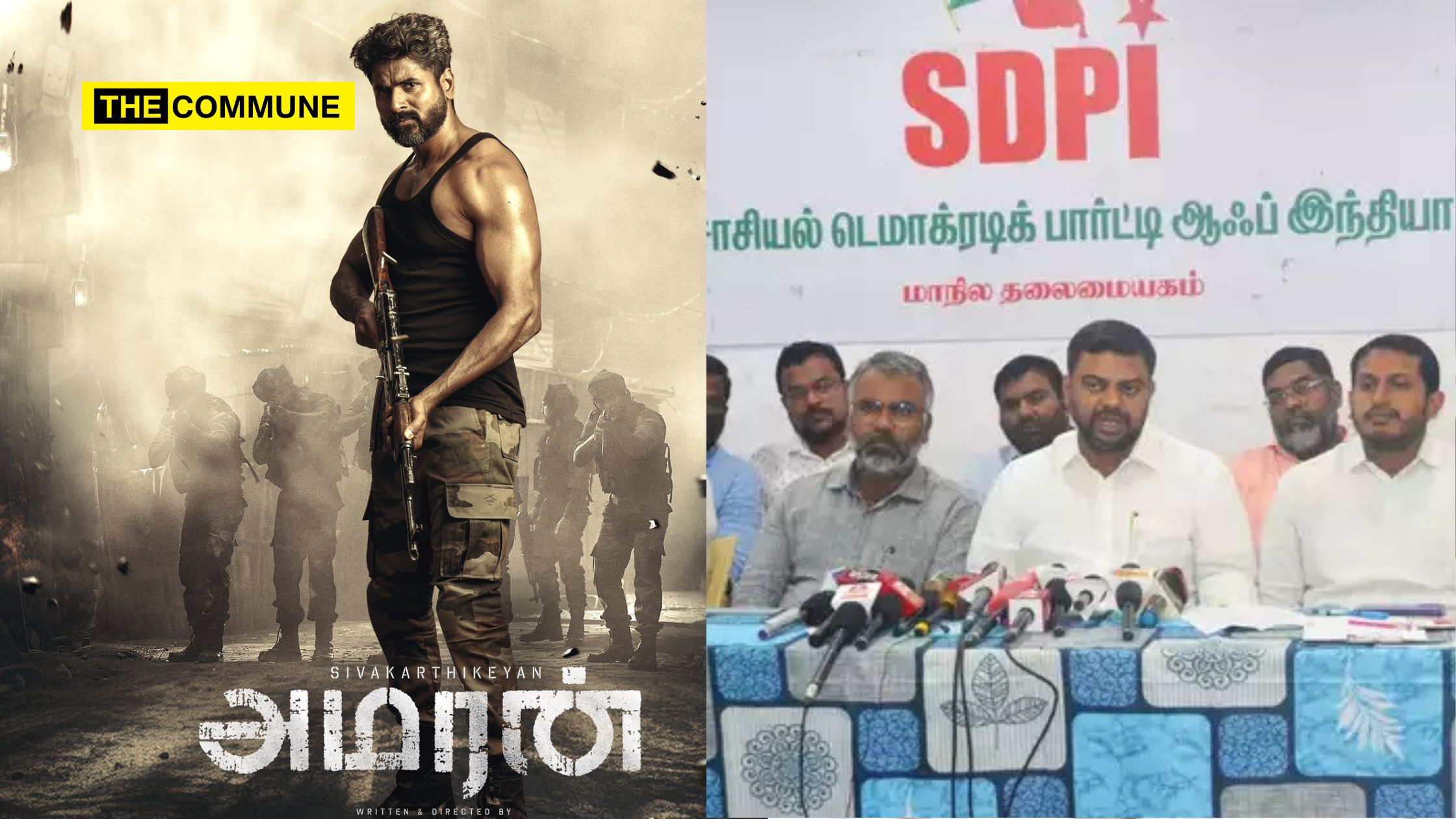
Political Wing Of Banned Terror Outfit PFI & ADMK Ally SDPI Wants Ban On Major Mukund Varadarajan’s Biopic Amaran

Political Wing Of Banned Terror Outfit PFI & ADMK Ally SDPI Wants Ban On Major Mukund Varadarajan's Biopic Amaran

Following Manithaneya Makkal Katchi (MMK) chief M. H. Jawahirullah, Nellai Mubarak, the state president of the Social Democratic Party of India (SDPI), has strongly objected to the film ‘Amaran’. They accuse the film of portraying the Kashmiri Muslim community in a negative light, depicting them as terrorists. The movie is based on the real-life story of Major Mukund Varadarajan, who played a key role in the 2014 counter-terrorism operation in Shopian, Jammu and Kashmir.

Despite receiving widespread praise from political figures such as TN BJP chief and former IPS officer Annamalai, Tamil Nadu Chief Minister M. K. Stalin, and Anbumani Ramadoss, the film has been starting to get criticism from some Dravidianist, now Muslim leaders have started to voice out.

Nellai Mubarak, the state president of the Social Democratic Party of India (SDPI), met with the media in Chennai to express strong objections against the film ‘Amaran’. He accused the film of distorting facts and propagating the harmful narrative that Muslims, particularly those from Kashmir, are anti-national.

Nellai Mubarak said, “Regarding the recently released movie Amaran, the film team has said that they have filmed the story of late Mukund Varadarajan, a former Indian Army Major who died fighting for India as a biopic. The sacrifice of soldiers is immense and we sincerely respect any soldier’s sacrifice. But we strongly condemn the action taken by ‘Raaj Kamal Films’ and then Chief Minister Udayanidhi Stalin’s company intent to malign the minority Muslims and the struggling democratic forces in the name of making such film.”

The SDPI leader also condemned the film for misrepresenting the slogan ‘Azadi’, a historic symbol of national liberation and democratic struggle, by equating it with terrorism. At the same time, he stated that the film promoted ‘Jai Bajrangbali, a slogan associated primarily with groups like Bajrang Dal, as a patriotic battle cry. However, what he overlooked is that ‘Jai Bajrangbali‘ is also the actual war cry of the Indian Army’s Rashtriya Rifles as well as the Rajput Regiment. Mubarak warned that such rhetoric, which could incite fear and hostility towards minority communities, is extremely dangerous.

Mubarak also rejected the film’s portrayal of Kashmiri women as “half-widows,” a depiction suggesting that their husbands had become terrorists and abandoned them. He described this as false, biased propaganda meant to manipulate public perception.

He argued that ‘Amaran’ is a direct sequel to ‘The Kashmir Files‘, both of which, in his view, spread misinformation and distorted the reality of the Kashmir conflict. He accused the film of furthering a political agenda that promotes division and hatred, while falsely casting certain communities as separatists in order to portray one side as heroes.

Mubarak denounced the film as part of the rising tide of anti-Muslim sentiment across the country and criticized Tamil Nadu’s Chief Minister for endorsing a film that he believes fuels such hatred. He called on all democratic forces to raise their voices against films that promote divisiveness and called for ‘Amaran’ to be banned.

Subscribe to our channels on TelegramWhatsApp, and Instagram and get the best stories of the day delivered to you personally.
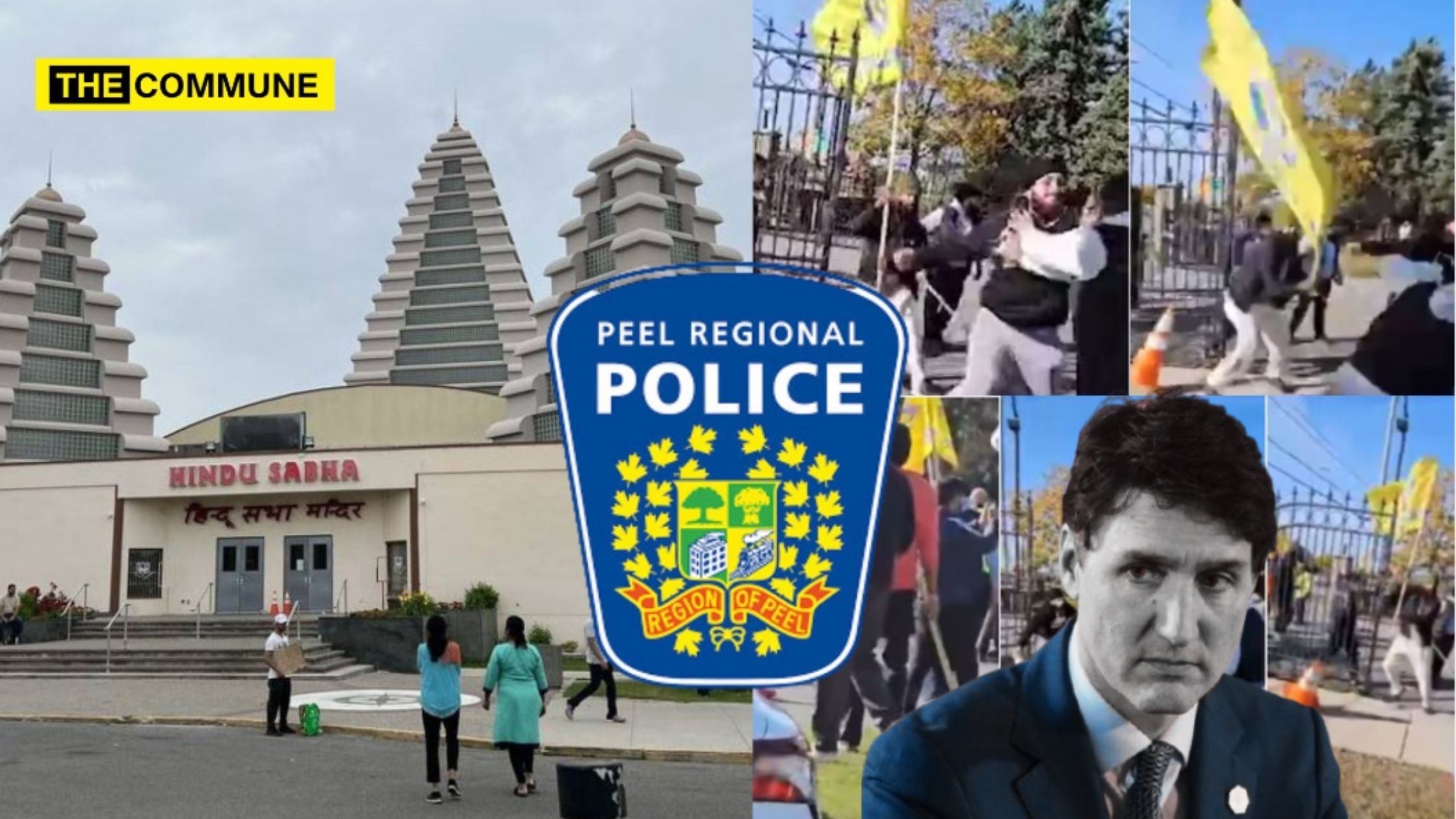
Canadian Police Arrests Hindus Following Brampton Temple Attack By Khalistanis, No Action On Khalistanis Giving Death Threats To Indian Diplomats And PM Modi

Canadian Police Arrests Hindus Following Brampton Temple Attack By Khalistanis

Peel Regional Police are facing criticism for the blatant bias after recent arrests related to demonstrations at the Hindu Sabha Temple in Brampton, Canada. On 8 November 2024, Peel Police released a video update announcing additional arrests and charges after incidents at the temple on November 3 and 4. However, questions have been raised over the police’s handling of the situation, with accusations that the enforcement actions disproportionately targeted Hindu individuals while overlooking alleged provocations by pro-Khalistani supporters.

According to the Peel Regional Police, tensions initially escalated during a “demonstration” at the Hindu Sabha Temple on 3 November 2024, with further confrontations occurring the following day. Officer Tyler Bell-Morena, speaking on behalf of the Peel Police, stated that the 4 November 2024 event saw “hundreds gathered, many of which were armed with weapons.” He also noted that circulating videos captured “several offences,” including an individual allegedly using a loudspeaker to incite violence against Sikh temples.

Subsequently, on 6 November 2024, police arrested 57-year-old Ranendra Lal Banerjee of Toronto, charging him with public incitement of hatred, citing Section 319(1) of the Criminal Code of Canada. Banerjee was released with conditions and is scheduled to appear at the Ontario Court of Justice in Brampton.

Additionally, Peel Police issued arrest warrants for two other individuals involved in the November 4 demonstration. Twenty-four-year-old Armaan Gahlot of Kitchener and 22-year-old Arpit (no surname) of no fixed address face charges including uttering threats, conspiracy to commit assault with a weapon, and conspiracy to commit mischief.

Despite these actions, critics argue that Peel Police’s response has been one-sided, with no arrests made among pro-Khalistani demonstrators, despite allegations of violence and threats against Hindu community members. Videos shared widely on social media reportedly show individuals carrying swords and issuing threats at the November 3 event. Additionally, accusations have surfaced regarding Peel Police officers allegedly supporting pro-Khalistani demonstrators and failing to protect Hindu attendees during the clashes.

These allegations have led some to question the obvious partiality of Peel Police, – the department has targeted Hindu youth while pro-Khalistani demonstrators face no repercussions. Critics further point out that no arrests have been made following past incidents involving threats against Indian diplomats or displays of anti-India sentiment, which some view as incitement to violence.


Peel Police has formed a Strategic Investigative Team to review all criminal incidents from the November 3 and 4 events. In their statement, police reiterated their commitment to upholding peaceful protests, while firmly condemning violence, threats, and vandalism.

The blatant bias in the handling of recent events has prompted calls for accountability.

Subscribe to our channels on TelegramWhatsApp, and Instagram and get the best stories of the day delivered to you personally.