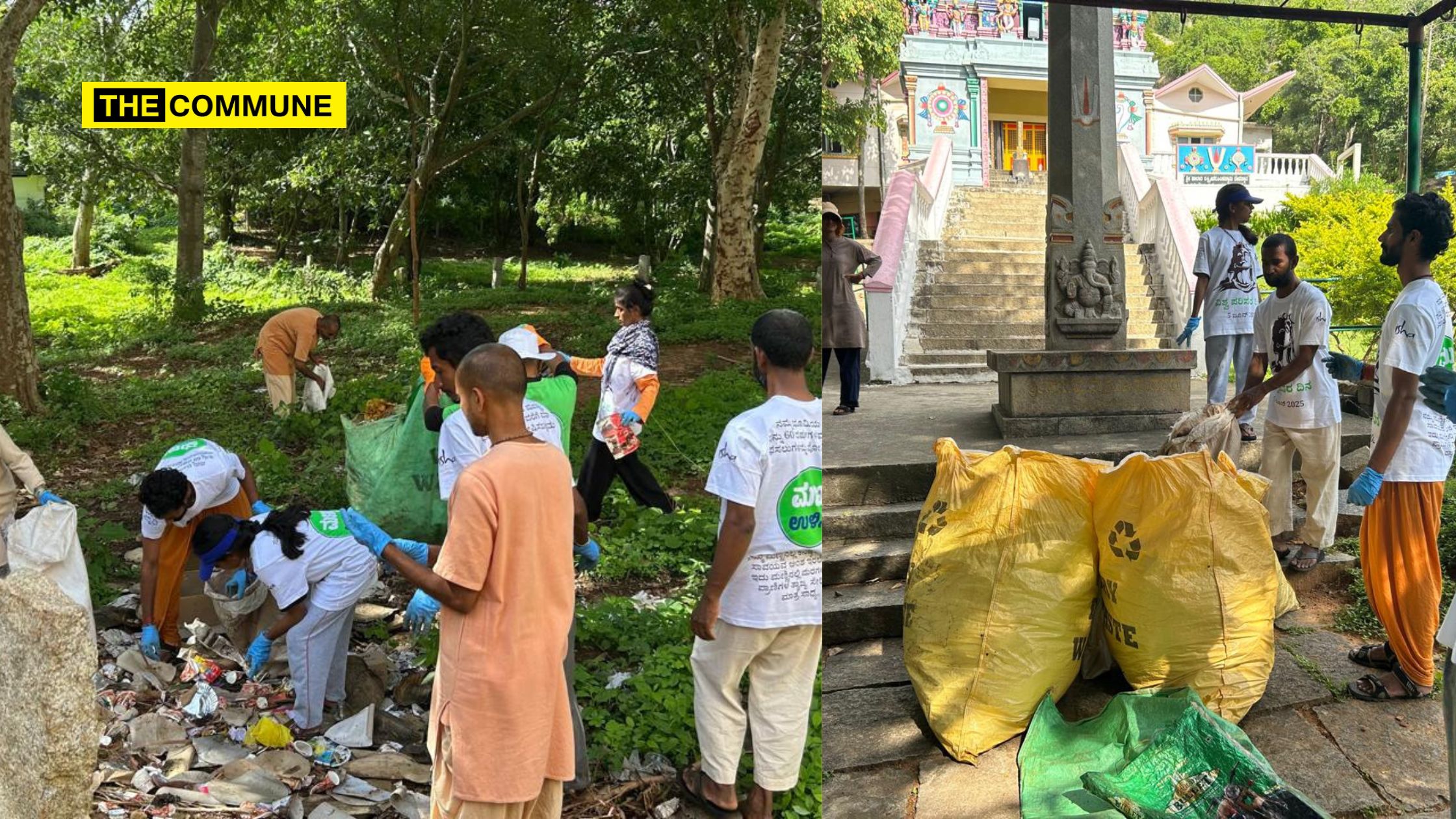
Marking World Environment Day, 40 volunteers from Sadhguru Sannidhi Bengaluru, Chikkaballapura, undertook an extensive clean-up of the revered Jalari Narasimhaswamy Devasthana, located at the peak of the Narasimha Devasthana Hills. The volunteers collected and brought down 40 bags, primarily of plastic waste, as part of a larger commitment to the theme of this year’s Environment Day: Ending Plastic Pollution.
This impactful drive also marked the beginning of a month-long environmental campaign in 22 villages of Avalagurki and Thippenahalli panchayats, led by Hasiru Chikkaballapura, an ecological initiative of Sadhguru Sannidhi. The campaign will focus on raising awareness about plastic waste management, especially among women and youth, while reinforcing sustainable practices across rural communities surrounding the Sadhguru Sannidhi.
The launch of this month-long campaign was held at the temple premises and graced by Shri Muniraju BM, PDO of Thippenahalli Panchayath; Shri Sundaresh, priest from Jalari Narasimha Swamy temple; Shri M. Narasimhaiah, Assistant Agriculture Officer (Retd.) from the Watershed Development Department, Chikkaballapura; Air Vice Marshal (Retd.) Shri Vikas Yajurvedi and Swami Lavana, Coordinator, Hasiru Chikkaballapura Project. The dignitaries shared insights on local environmental challenges, dangers of microplastics, ecological preservation, soil enrichment and the need for collective grassroots action.
The campaign will include plastic awareness sessions, household-level workshops, games competitions, prizes for winners, and the distribution of drumstick saplings to promote nutrition and green cover. Special focus will be given to women SHG members, as they are the key drivers of behavioural change within families. Through fun, participative formats and targeted messaging, Hasiru Chikkaballapura aims to make sustainable habits accessible and actionable at the village level.
Hasiru Chikkaballapur is an environmental outreach initiative of Sadhguru Sannidhi aimed at enriching soil and conserving water, boosting farmers’ incomes through tree-based agriculture and enhancing community health and wellbeing.
Subscribe to our channels on Telegram, WhatsApp, and Instagram and get the best stories of the day delivered to you personally.
Paramasivan Fathima dares to tread where few in Tamil cinema have. In a cinematic landscape dominated by Dravidianist narratives that often seek to de-Hinduize Tamil identity, this film plants its feet firmly in the soil of Tamil spiritual tradition and boldly questions the unsettling realities of religious conversions sweeping through the hinterlands.
At its core, the film exposes how Christian missionary activity, often masked under the garb of charity and upliftment, can fracture not just families but entire villages. Be it chocolates handed to innocent children or job offers dangled before the desperate, the film doesn’t shy away from depicting how conversion through enticement erodes native culture and community bonds.
The most striking achievement of Paramasivan Fathima lies in its rejection of the myth that Tamil Nadu is solely “Periyar’s Land.” Instead, it reclaims the Tamil identity through the spiritual lens of Periyapuranam, honoring ancestral worship and asserting the omnipresence of Shiva as central to Tamil heritage. The film also doesn’t hold back when it comes to calling out religious fanatics who brand Hindus as Satan-worshippers.
The film highlights a critical issue: government-aided schools run by Christian institutions receive public funding for salaries and operational costs, yet they actively engage in religious indoctrination and are openly identified as Christian establishments. This contradiction was also emphasized by the director during the press meet. The filmmakers could’ve made this the core of the film just like how Director Mohan G effectively made the issue of ‘crypto-Christians’ the central core in Rudra Thandavam. Missionary forces misusing foreign funds and engaging in illicit activities gets only a passing mention with no depth.
The film also gives strong rebuttals to Dravidianist filmmakers. In one scene, the protagonist delivers a stinging rebuttal to a character (played by M.S. Bhaskar) who parrots the colonial cliché that we owe our education to the British. “They came here to beg,” he retorts. No Gnanavels were harmed in this scene.
In another scene, a character played by ‘Cool’ Suresh utters the line, “Once you make a woman fall in love with you, you should finish the ‘matter’ immediately.” The protagonist’s immediate slap felt like a tight slap given to a certain caste-obsessed filmmaker.
Yet, for all its boldness in content, Paramasivan Fathima falters in craft. The first half is sluggish, bogged down by clichéd tropes and clumsy writing. The supernatural elements, which could’ve elevated the story into something mythic and memorable, suffer from a lack of narrative innovation. Dubbing mismatches in multiple scenes disrupt immersion, and while the film’s shoestring budget is understandable, it doesn’t excuse the uneven screenplay and underwhelming execution. The second half of Paramasivan Fathima is where the narrative gains momentum but by that time, you’ve already had enough.
The film also flirts with the supernatural, building toward a Kantara-esque climax with metaphysical realm rooted in Tamil Hindu belief systems. But it doesn’t have the magic that Kantara has.
In the hands of more seasoned storytellers, this could’ve been Tamil cinema’s Kantara—a spiritual, cultural, and cinematic experience rolled into one. But even with its flaws, Paramasivan Fathima stands out as a rare, gutsy voice in Tamil cinema—unafraid to ask uncomfortable questions, challenge dominant dogmas, and reclaim space for a more rooted, unapologetic Tamil Hindu identity.
Kaushik is a freelance writer.
Subscribe to our channels on Telegram, WhatsApp, and Instagram and get the best stories of the day delivered to you personally.
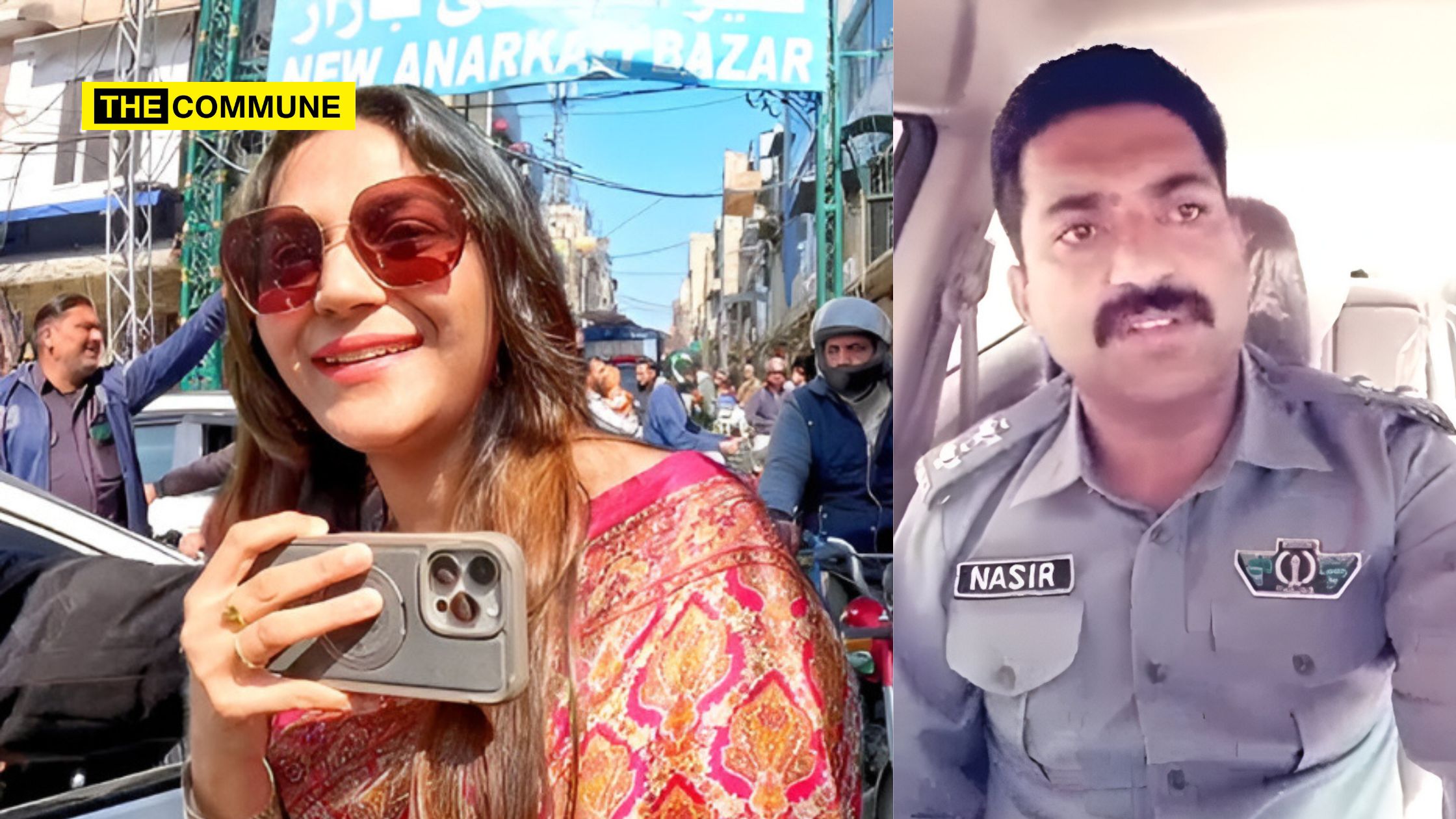
New details have emerged in the espionage case against Indian YouTuber Jyoti Malhotra, with investigative agencies uncovering her direct link to retired Pakistani police Sub-Inspector Nasir Dhillon, who is now under the scanner for alleged Intelligence operations against India. According to Intelligence sources, Malhotra was in personal contact with Dhillon and had even appeared alongside him in a podcast episode.
Their meeting reportedly took place during one of Malhotra’s earlier visits to Pakistan. Dhillon, who launched his own YouTube channel after retiring from the Pakistani police, initially projected himself as a promoter of peace and cultural dialogue between India and Pakistan. However, investigators now believe that behind the public persona lay a covert mission orchestrated by Pakistan’s Inter-Services Intelligence (ISI) and military.
Officials allege that Dhillon operated as a conduit for Pakistani Intelligence, using his channel to reach out to Indian YouTubers. After establishing friendly ties with them, he would allegedly introduce them to ISI operatives and gradually assign them tasks aimed at gathering sensitive information about the Indian Army and security establishments. Malhotra, 36, is believed to be one such individual who was manipulated through this network. Sources further confirm that Dhillon’s connections extended to Ehsan-ur-Rahim, alias Danish, a Pakistani High Commission staffer in New Delhi who was expelled by Indian authorities on 13 May for suspected espionage.
Investigators have found credible evidence linking Dhillon and Danish, indicating a broader and more organised spy ring operating under diplomatic cover. Jyoti Malhotra was arrested on May 16 under the Official Secrets Act and relevant provisions of the Bharatiya Nyaya Sanhita. She has since undergone multiple rounds of interrogation by both local police and central Intelligence agencies. She is among 12 individuals detained so far in Punjab, Haryana, and Uttar Pradesh as part of a wider crackdown on an alleged spy network attempting to exploit Indian digital influencers for Intelligence-gathering. As the probe deepens, security agencies are now expanding their focus to identify more potential infiltrators connected to this network, raising serious concerns over the use of social media as a new front for espionage.
-IANS
Subscribe to our channels on Telegram, WhatsApp, and Instagram and get the best stories of the day delivered to you personally.
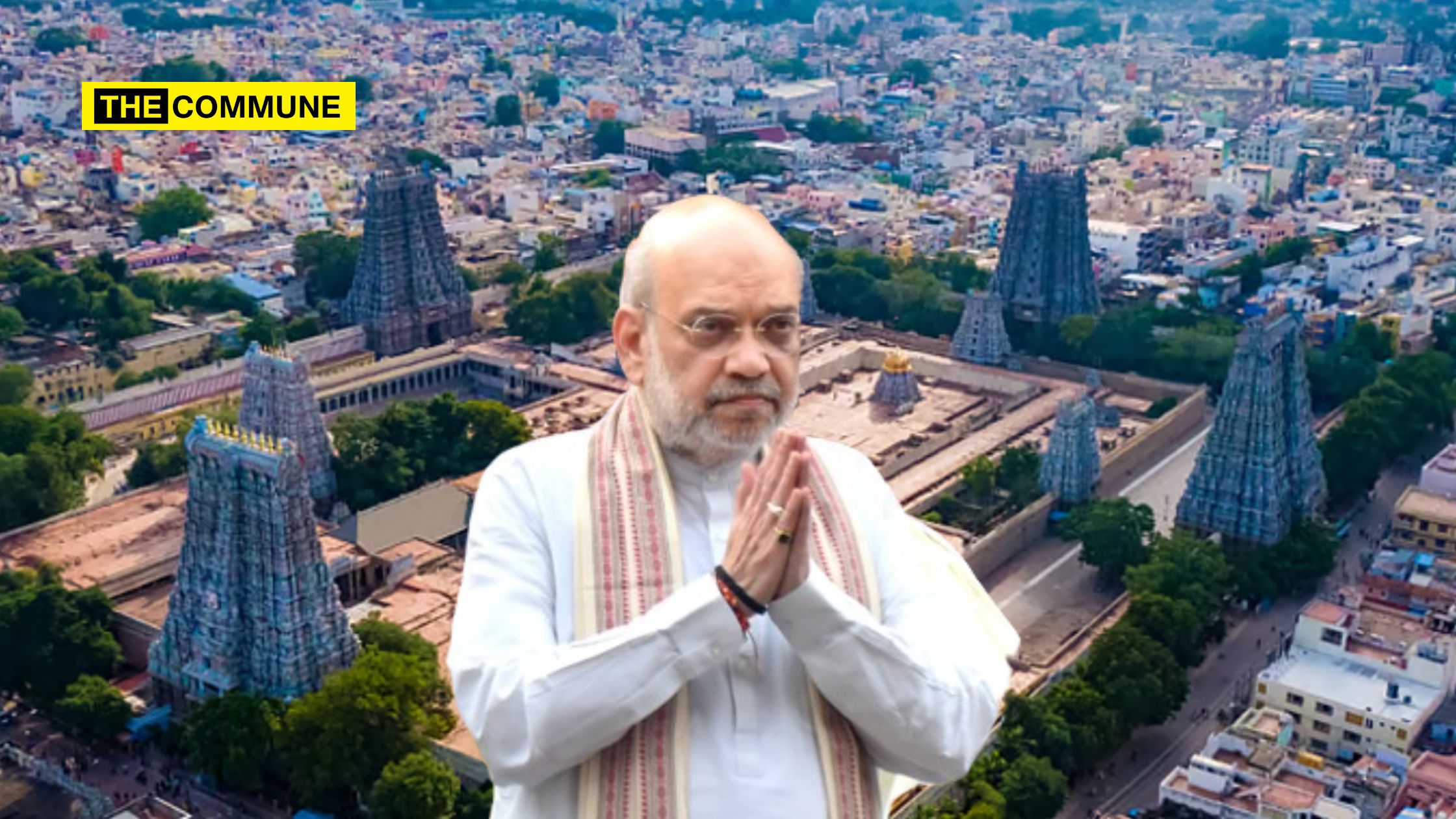
Union Home Minister and senior BJP leader Amit Shah is set to visit Madurai on 7 June, sparking renewed political interest in Tamil Nadu over the party’s southern strategy and the potential expansion of the NDA in the state.
According to party sources, HM Shah will arrive in Madurai late on 7 June and is scheduled to participate in the BJP’s Tamil Nadu core committee meeting the following day. He will also address office-bearers from the state, district, and mandal levels in what is being viewed as a strategic push to strengthen the BJP’s base in the southern districts. BJP national co-in-charge for Tamil Nadu, P. Sudhakar Reddy, said the visit would primarily focus on strengthening the party’s organisational structure and preparing for the 2026 Tamil Nadu Assembly elections.
“He will speak on various matters, including the achievements of the Modi government over the past 11 years. Amit Shah will also outline a road map for the BJP’s strategy in the state,” Reddy said. HM Shah’s visit comes at a time when discussions over the NDA’s expansion in Tamil Nadu are gaining traction. His previous visit to the state on 11 April marked a significant political moment, as it was during that trip to Chennai that he formally announced the revival of the BJP-AIADMK alliance. That announcement sent ripples across the state’s political landscape.
Commenting on the choice of Madurai as the venue, BJP state vice-president Narayanan Thirupathy dismissed any special political significance. “The Union Home Minister has previously chaired meetings in Chennai and Coimbatore. This time it’s Madurai,” he said. However, BJP insiders suggest that Madurai, often referred to as the cultural capital of Tamil Nadu, holds symbolic value.
The city has long been a stronghold of spiritual and cultural traditions aligned with the Sangh Parivar, and the party is keen to consolidate its base in the southern belt. In line with this, the BJP and its affiliate Hindu Munnani are organising a ‘Lord Muruga Devotees Conference’ in Madurai later this month. Tamil Nadu BJP spokesperson and senior leader ANS Prasad highlighted the impact of HM Shah’s earlier visit.
“His April 11 trip to Tamil Nadu changed the political narrative in the state. The announcement of the AIADMK-BJP alliance shook the DMK and its allies. Since then, leaders including Chief Minister M.K. Stalin have consistently addressed the implications of that alliance. Tamil Nadu politics can now be seen in two phases before and after Amit Shah’s April visit.” Prasad added that HM Shah’s upcoming speech in Madurai is expected to offer clear direction for the 2026 elections.
-IANS
Subscribe to our channels on Telegram, WhatsApp, and Instagram and get the best stories of the day delivered to you personally.
The National Investigation Agency (NIA) has filed a chargesheet against Maoist cadre Ashu Korsa in connection with the targeted killing of an Indian Army jawan, Motiram Achala, in Chhattisgarh. The chargesheet, filed in the NIA special court in Jagdalpur, outlines Korsa’s involvement in a larger conspiracy orchestrated by the banned CPI (Maoist) to eliminate Achala.
Achala, a soldier visiting his native village, was brutally shot dead on 25 February 2024, while attending a local fair in Useli village in the Amabeda area of Kanker district. The attack, carried out in full public view, was intended to instil fear among locals and deter individuals associated with security forces. The case was initially registered by local police but was transferred to the NIA on 29 February 2024, due to its national security implications. Investigations revealed that Korsa was an active armed cadre of the Kuyemari Area Committee under the North Bastar Division of the CPI (Maoist).
Alongside another senior Maoist leader, he played a key role in identifying Achala and executing the attack. The operation was part of a broader strategy by the insurgent group to assert dominance in the region and intimidate civilians. Korsa was arrested by the NIA in December last year, marking a significant breakthrough in the case. His involvement underscores the deep-rooted network of Maoist insurgency in Chhattisgarh, where armed cadres continue to challenge state authority through violent means.
The agency has invoked multiple sections of the Indian Penal Code, including murder and criminal conspiracy, along with provisions of the Unlawful Activities (Prevention) Act. The investigation remains ongoing as authorities work to uncover additional conspirators and map the full extent of the Maoist network behind the attack. The NIA’s efforts reflect a broader push to dismantle insurgent operations and restore stability in the affected regions. Security forces continue to monitor developments closely, ensuring that those responsible for such acts of violence are brought to justice. The case serves as a stark reminder of the persistent threat posed by extremist elements operating in India’s conflict-ridden areas.
-IANS
Subscribe to our channels on Telegram, WhatsApp, and Instagram and get the best stories of the day delivered to you personally.
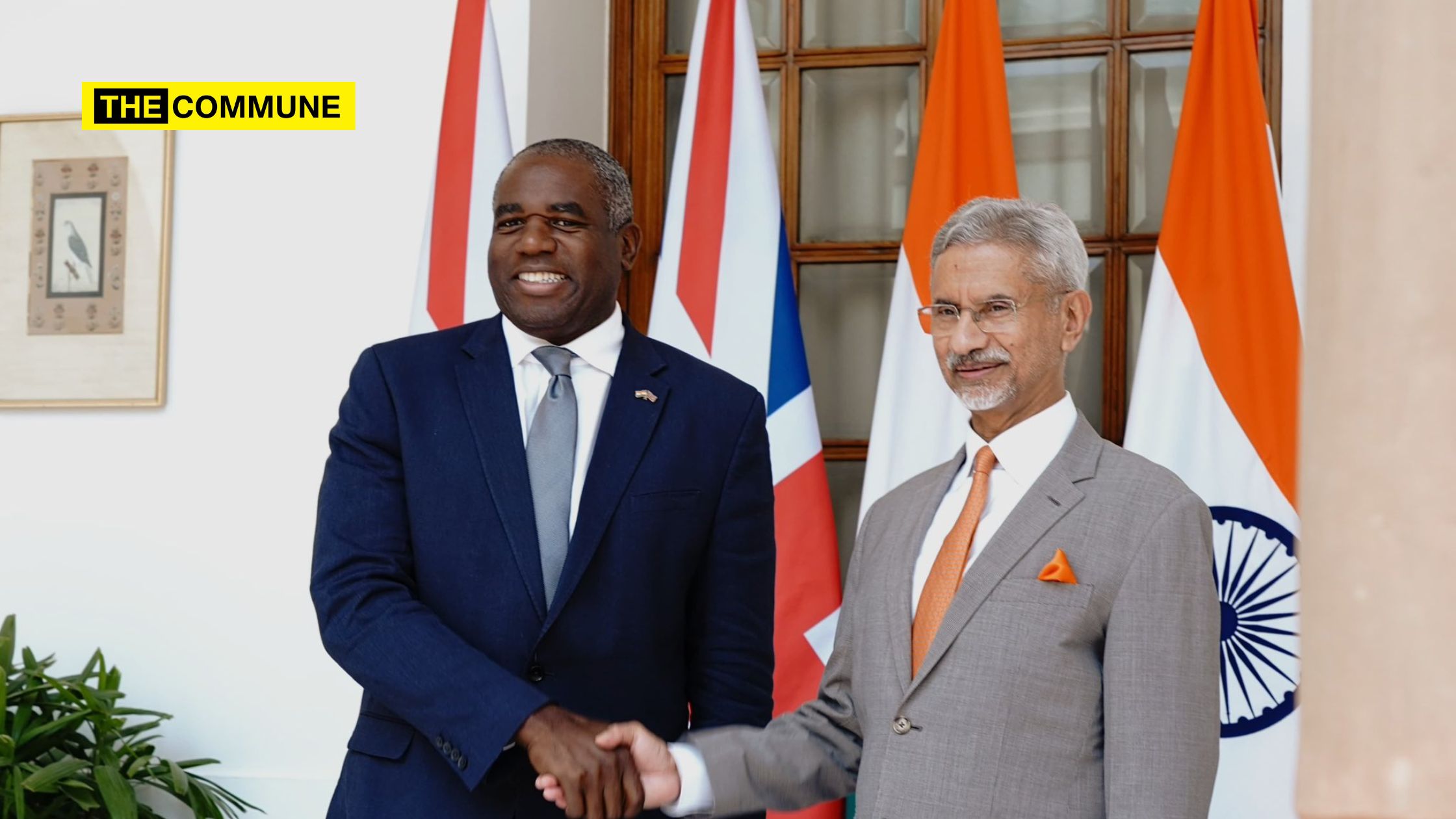
External Affairs Minister (EAM) S Jaishankar on 7 June 2025, thanked the government of the United Kingdom for standing shoulder to shoulder with India in its fight against terrorism to bring the perpetrators of heinous 22 April Pahalgam terror attack to justice.
“At the outset, let me thank the Government of the United Kingdom for the strong condemnation of the barbaric terrorist attack in Pahalgam in the Union Territory of Jammu and Kashmir and for your solidarity and support to India in the fight against terrorism. We practice a policy of zero tolerance against terrorism and expect our partners to understand it, and we will never countenance perpetrators of evil being put at par with its victims,” EAM Jaishankar said in his opening remarks during the delegation-level talks with David Lammy, Foreign Secretary of the UK at the Hyderabad House in New Delhi.
Lammy arrived in the Indian capital on 7 June morning for a crucial two-day official visit aimed at reviewing and advancing the UK-India economic and migration partnership. He called on Prime Minister Narendra Modi before engaging in bilateral discussions with the External Affairs Minister.
“David, very pleased to welcome you back to India. You have just had a very good meeting with Prime Minister Modi, and I think your visit at this time gives us an occasion to assess our comprehensive strategic partnership, which I believe has strengthened across all sectors in recent times. We have had very regular high level political and official interactions,” said the EAM.
Lammy’s day-long India visit follows the recent historic Free Trade Agreement (FTA) signed between the two countries on 6 May which, along with the Double Contribution Convention, said Jaishankar, is truly a milestone which will not only propel the two-way trade and investment but will have also have a positive effect on other strategic aspects of India-UK bilateral ties besides also contributing to the strengthening of supply and value chains.
“Since your last visit to India, there have been significant initiatives which both of us have taken and those initiatives have progressed well. I would single out the Technology Security Initiative (TSI) which will enable deeper collaboration in strategic technology sectors of AI, Semiconductors, Telecom, Quantum, HealthTech/ Bio-Tech, Critical Minerals and Advanced Materials,” the EAM stated.
“We have also launched the Strategic Exports and Technology Cooperation Dialogue, the first meeting of which was held, I believe, this week. This will enhance among others the TSI’s effectiveness in promoting trade in critical and emerging technologies, including the resolution of relevant licensing or regulatory issues,” he added.
The UK Foreign Secretary’s visit is seen as an important step in preparing the ground for a potential visit to India by UK Prime Minister Keir Starmer in the near future. EAM Jaishankar said that the UK-India infrastructure financial bridge can unlock quality long term capital flows from the United Kingdom to India, and that would also surely contribute to infrastructure development. As per UK government projections, the new trade deal will increase bilateral trade by over £25 billion annually, raise UK’s GDP by £4.8 billion, and enhance wages by £2.2 billion each year, resulting in tangible economic benefits for working-class citizens.
“There is very good collaboration in the education sector with many more universities, I believe, planning to establish their campuses in India, and on the people – to – people ties front, we had the privilege – I myself had the honour – to open two new consulates in Manchester and Belfast. So, there is so much more that we can talk about and that is indeed why we are meeting,” he remarked. After meeting PM Modi and holding talks with EAM Jaishankar, Lammy is scheduled to engage with key figures in the Indian industry to explore ways to increase Indian investment in the UK and unlock new opportunities in both markets.
In addition to meetings with the top Indian officials, he will also hold discussions with Union Minister of Commerce and Industry Piyush Goyal, later in the day. Ahead of his visit, the UK Foreign Office said that Lammy is also expected to address the recent escalation in tensions following the Pahalgam terrorist attack and how the welcomed sustained period of peace can be best supported in the interests of stability in the region.
-IANS
Subscribe to our channels on Telegram, WhatsApp, and Instagram and get the best stories of the day delivered to you personally.
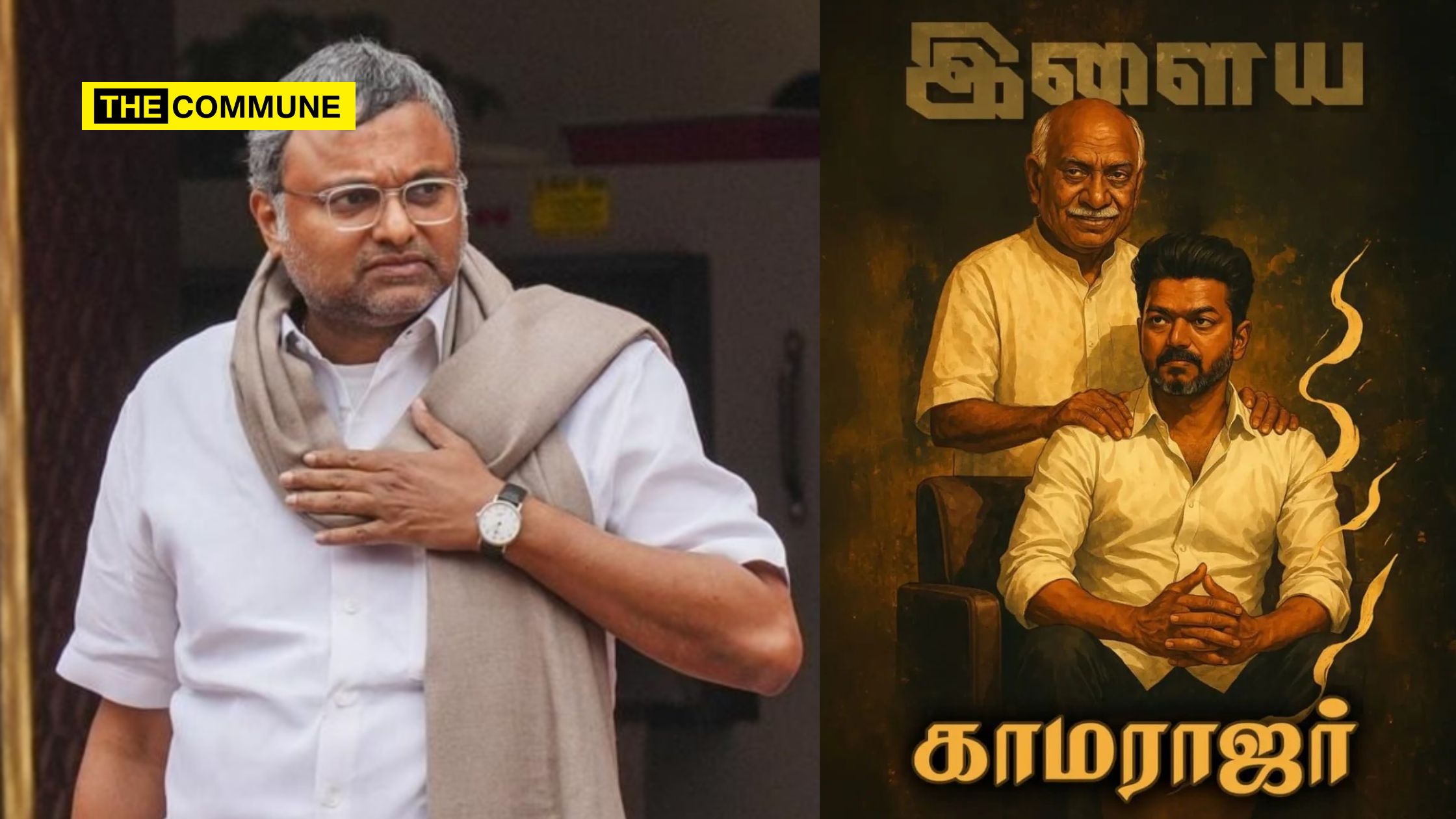
Sivaganga Congress MP Karti Chidambaram has sharply criticized the Tamilaga Vettri Kazhagam (TVK) for calling its party president and actor-turned-part-time-politician Vijay as “Ilaya Kamarajar” comparing him with the revered former Chief Minister K. Kamaraj, whose legacy transcends political boundaries in Tamil Nadu.
In a social media post, Karti wrote, “This is an outright insult to Perunthalaivar, those who posted this expose their lack of political & historical knowledge.”
This is an outright insult to Perunthalaivar, those who posted this expose their lack of political & historical knowledge. https://t.co/TEHum7N1UG
His remarks reflect widespread public sentiment condemning as an inappropriate comparison between a cinematic celebrity with minimal political experience and a statesman of Kamaraj’s stature.
Kamaraj was widely admired for his simplicity, integrity, and selfless dedication to public service. A lifelong bachelor, he lived modestly and passed away in 1975 without owning any property. At the time of his death, his personal belongings amounted to just ₹130 in cash, two pairs of sandals, four sets of shirts and dhotis, and a handful of books.
Known for embodying Gandhian values, Kamaraj wore a simple khadi shirt and dhoti throughout his life. His humble lifestyle and deep commitment to ethical politics earned him the affectionate title “Black Gandhi” among the people. He consistently refused special privileges and luxuries. For example, during his tenure as Chief Minister, when the municipality of Virudhunagar installed a direct water connection to his house, he promptly ordered it to be removed, insisting that public utilities were meant for the people, not for individual benefit. He also declined police protection, viewing it as an unnecessary use of public resources.
Though he had no formal higher education, Kamaraj displayed remarkable wisdom, keen insight, and a deep understanding of human nature—qualities that led to him being known as Padikkatha Methai (the unlettered genius). He believed that any goal could be achieved through the right means and emphasized action over rhetoric, earning him titles like Karma Veerar (Man of Action) and Perunthalaivar (Great Leader) in Tamil Nadu.
His influence extended beyond India. Former U.S. Vice President Hubert Humphrey once described Kamaraj as one of the greatest political leaders in the world.
Kamaraj, fondly remembered as the Father of Education in Tamil Nadu, made landmark contributions during his tenure as Chief Minister from 1954 to 1963. Despite lacking formal education himself, he revolutionized the state’s education system. He introduced free education for the underprivileged, initiated the Midday Meal Scheme to tackle child hunger and school dropouts, and raised the literacy rate from a dismal 7% to 37%. He expanded access to education, extended the academic calendar, and reformed the curriculum to meet diverse student needs.
Kamaraj was also instrumental in laying the foundation for Tamil Nadu’s industrial and infrastructural growth. He played a key role in establishing IIT Madras and oversaw major irrigation projects such as the Lower Bhavani Dam, which alone brought over 2 lakh acres under cultivation. His tenure also witnessed the rise of major industries like Neyveli Lignite Corporation, BHEL in Trichy, and the Manali Refinery, along with significant progress in sectors like paper, sugar, and cement. His governance model remains a benchmark for political integrity and public welfare.
In stark contrast, actor Vijay’s political foray is relatively new, and critics argue that his contributions to public service are negligible so far. More controversially, while Vijay opposed the National Education Policy (NEP) claiming it would promote Hindi, but he simultaneously runs a CBSE school, Vijay Vidyashram, where Hindi is taught and tuition fees run into lakhs. It is also a known fact that actor Vijay has been living a life of comfort and riches all his life, so the comparison is inappropriate and fallacious.
The decision by his party or supporters to liken him to Kamaraj has been met with backlash from both the public and political circles. Many argue that such comparisons trivialize the enduring legacy of a leader like Kamaraj, whose achievements were grounded in decades of grassroots public service, sacrifice, and visionary leadership not celebrity status or media hype.
Here are some of the reactions from netizens who mocked and criticized TVK’s claim of calling Vijay ‘Ilaya Kamaraj’.
Since 2006, Suriya’s Agaram Foundation has been quietly transforming student lives with real impact. Meanwhile, a half-baked new politician cum actor hands out ₹5000 and calls himself ‘Ilaya Kamarajar’ 🤡 At this rate, we need a law that says we’re not allowed to laugh! 😂 pic.twitter.com/JolamrVnvh
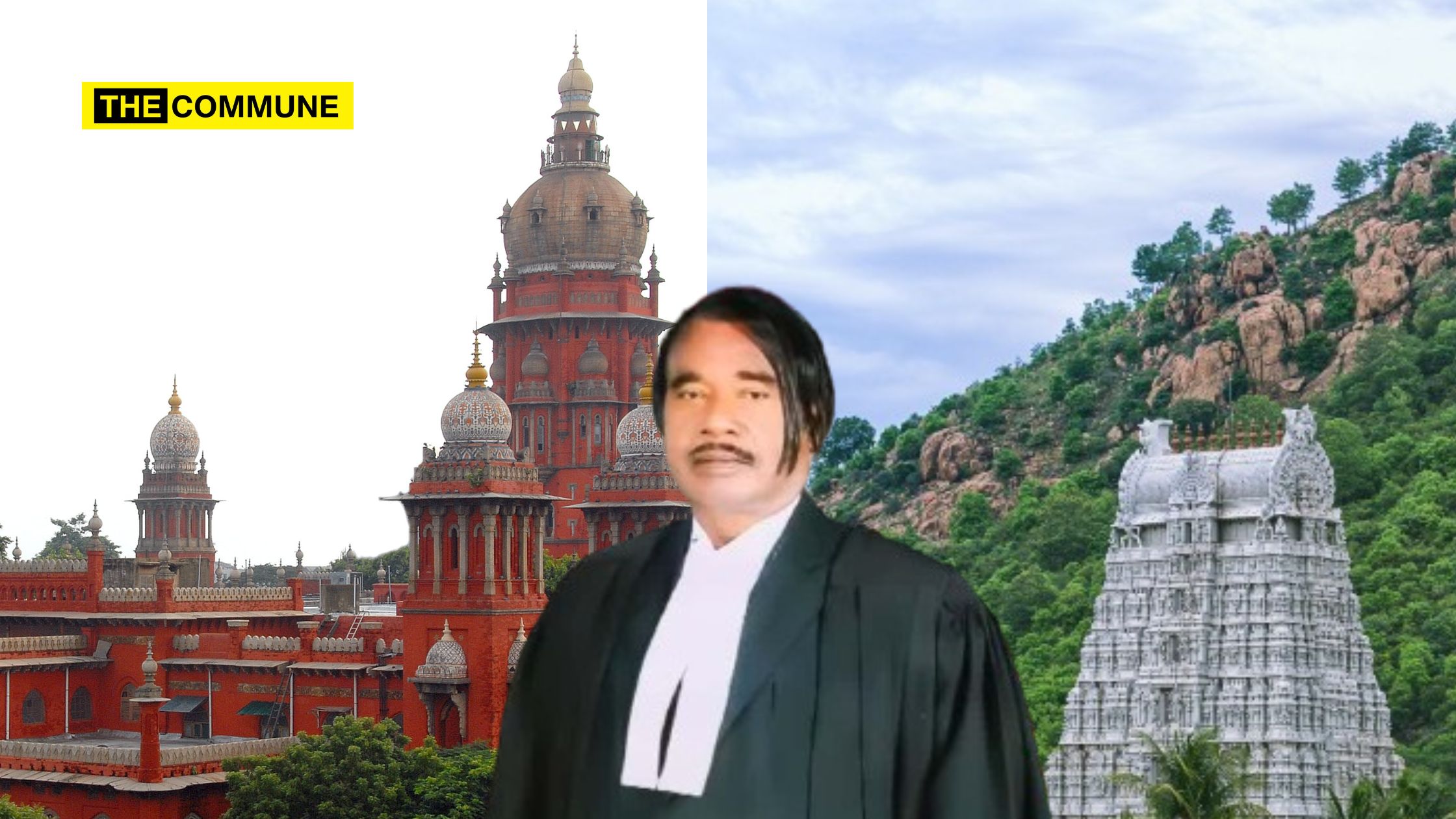
The Madras High Court has instructed the District Collector of Tiruvannamalai to submit a detailed report on the measures taken to remove 1,535 unauthorized constructions on the sacred Arunachala hill in Tiruvannamalai.
This directive follows a public interest litigation (PIL) filed by Advocate ‘Elephant’ Rajendran, who raised concerns over the increasing number of illegal buildings on the hill, home to the revered Arunachaleswarar Temple. In response to the PIL, the High Court had earlier constituted a special committee led by retired Justice Govindarajan, with representatives from both the Forest and Revenue Departments, to identify and initiate action against such structures.
During a hearing on 6 June 2025, presided over by Chief Justice S.V. Gangapurwala and Justice Sundar Mohan, the committee reported that 1,535 constructions had been raised without proper approvals. The court took serious note of the findings and ordered the District Collector to provide a status update on the actions taken to address the issue. The matter has been scheduled for the next hearing on 20 June 2025.
In a related matter, another PIL by Advocate Rajendran concerning encroachments on water bodies in the Tiruvannamalai region was also heard. According to a report from the Commissioner of Land Administration, out of the 170 locations identified by the petitioner, only 84 have been officially recorded as water bodies. The court instructed the state government to inspect these 84 locations for any encroachments and submit a report detailing the steps taken for their removal. This case has been adjourned until July.
Notably, nearly ten months ago, Advocate Rajendran had filed two significant PILs—one addressing the illegal encroachments on Tiruvannamalai hill and another focused on the protection of around 140 local water sources, including ponds and canals. At the time, the High Court appointed an Advocate Commissioner to assess the situation. The Commissioner’s report, which revealed over 1,000 illegal structures within temple and forest land, led to the appointment of a retired High Court judge to further examine the matter.
Despite initial assurances from the government that the encroachments would be cleared by 31 March 2025, the removal process has reportedly stalled following the transfer of a proactive District Collector. Advocate Rajendran brought this inaction to the attention of the court during the recent hearing, prompting the bench to express its dissatisfaction with the lack of progress. The Court has now directed the District Collector to file an affidavit detailing the steps taken so far. Final orders are expected by 27 June, potentially marking a turning point in restoring the sanctity and ecological balance of the Tiruvannamalai region.
Tiruvannamalai – Holy Temple – Holy Mountain – Holy Tanks – all endangered by encroachers – with Govt turning a blind eye for more than 15 years.
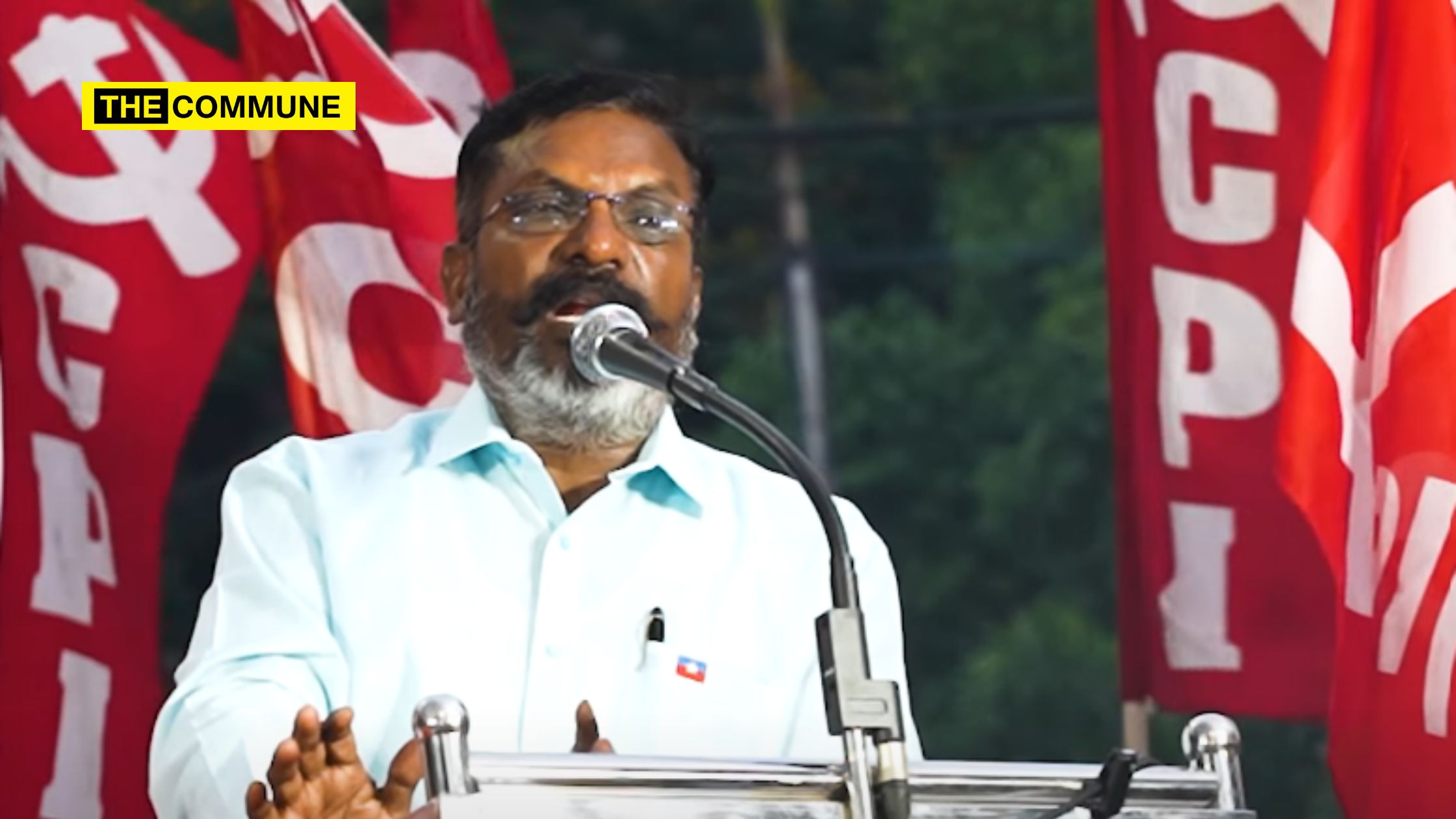
VCK chief and Chidambaram MP Thol. Thirumavalavan has once again expressed his support for the notorious Maoist group known for operating a parallel government in forest regions and often accused of interfering with tribal rights. He strongly condemned the Indian government’s recent crackdown under Prime Minister Narendra Modi, particularly criticizing ‘Operation Kagar’, during which a key leader of the banned CPI (Maoist), General Secretary Nambala Keshava Rao alias Basavaraju, was killed in an encounter with security forces.
In response to the incident, communist parties in Tamil Nadu including the CPI(M) and CPI(ML) organized a meeting to voice their opposition to the Centre’s actions. Leaders and participants at the event denounced the ongoing operation and expressed solidarity with those affected.
Participating in the event Thirumavalavan said, “Within the country, the Modi government is aggressively engaging in illegal actions and carrying out a brutal extermination campaign against the indigenous tribal communities and the Maoists who support them. Although leftist movements have openly stated that they do not agree with the Maoists’ ideology of ‘annihilation’ the so-called extermination policy and that they also do not support the belief in armed struggle or the use of weapons, they cannot simply stand by and watch the repression being carried out against them. These actions are neither legal nor just. It is not only the Maoists who are being mercilessly killed, but ordinary civilians are also being brutally massacred. Therefore, our primary demand is that this military operation, known as ‘Operation Kagar’, and the associated repression and killings, must be immediately stopped.”
He stated that the Maoists should not be seen as enemies of the people and urged the government to adopt a diplomatic approach by initiating dialogue with them. “Engage in talks,” he said, adding that the bodies of those killed in encounters should be returned to their families with dignity.
He emphasized that it’s not just Maoist leaders, but also social activists and human rights defenders who are standing up for the rights of the people. Dialogue should be extended to such democratic voices as well. A key demand he raised was the urgent need to halt the exploitation of natural resources. Mining operations that extract minerals from tribal lands, he warned, are threatening the very livelihoods of indigenous communities. Protecting these livelihoods must be a priority, he said.
Thirumavalavan attempted to portray the notorious Maoists as defenders of the people, stating, “Maoists are not anti-people. We may differ in opinion from their beliefs, and we may disagree with their idea of an armed revolution, but they are still on the side of the people. They are not anti-people, nor are they anti-national. Their goal is to establish a revolutionary democracy within a united India. They say they have no faith in the electoral process and therefore do not participate in elections, and they do not accept parliamentary democracy. But they have never called for the country to be divided. They are not against India’s unity, nor are they against the unity of its people. So how can they be labeled as anti-people? How can they be called anti-national? How can the idea of annihilating them be considered acceptable or justifiable in any way?”
Subscribe to our channels on Telegram, WhatsApp, and Instagram and get the best stories of the day delivered to you personally.
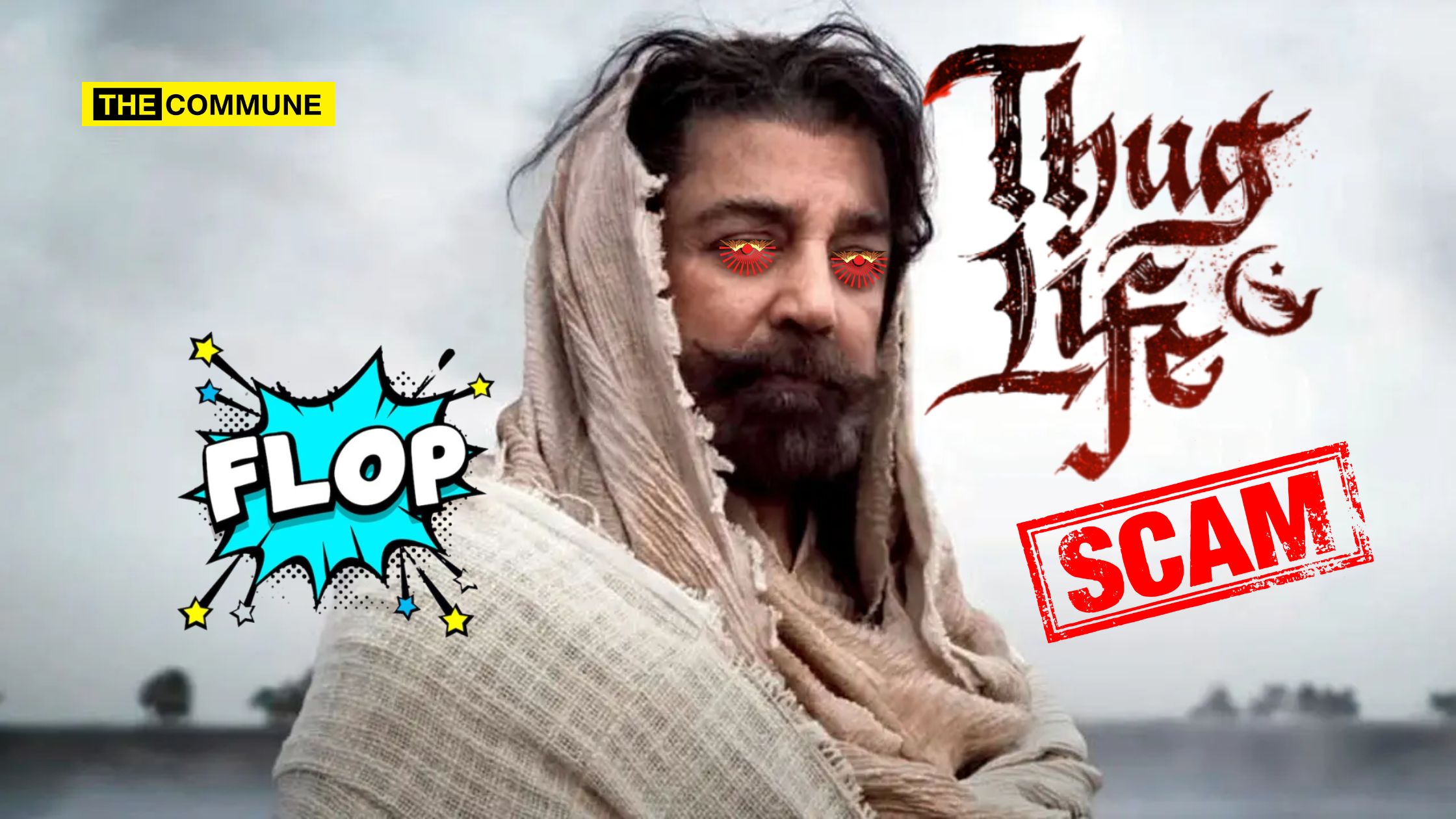
In what is emerging as one of the most audacious allegations in Tamil cinema, veteran actor Kamal Haasan is being accused not just of making a trashy crap film but of using the movie Thug Life as a front to launder crores of black money for the DMK’s first family. What began as confusion over the film’s bizarre plot and lackluster editing has now morphed into a serious financial scandal—with Haasan squarely at the centre.
A Story That Doesn’t Add Up
At the heart of the Thug Life movie is a disturbing story: a father figure searching for a missing daughter, inexplicably looking for her in a brothel instead of filing a police report. Eventually, he brings home a different girl, whom his adopted son later takes away. The two men, father and son, then enter a conflict, not over ideology or power—but over a woman. This is not a Shakespearean tragedy, but a script straight of ‘Thidal’ which has left audiences bewildered and disgusted.
The film features dialogues that have shocked many, including a supposed punchline justifying his ‘pombala soku’ (lusty behaviour for women). Many have asked: is this art or degeneracy posing as cinema? But it turns out, the story may be the least scandalous part of Thug Life.
The Real Plot: A Financial Heist?
According to critics, Thug Life isn’t really about storytelling—it’s about accounting. The real drama is offscreen, and it’s a tale of money trails, fake bills, and calculated laundering. Kamal Haasan allegedly inflated the film’s budget to a massive ₹300 crore (as stated in the petition by Raajkamal Films International), while actual production costs were estimated to be under ₹40 crore.
But why inflate costs? The answer lies in the magic of fake billing. In cinema, bills can be raised for anything: scouting a location, shooting a song, hiring a technician. Haasan and his team, critics allege, wrote up expenses for every inch of the film—overcharging, double-counting, and showing inflated payments for actors and crew. All of this, they say, was done to manufacture white money on paper.
By roping in four or five producers and distributors as fronts, Haasan was able to distribute the risk and shield himself from direct scrutiny by Income Tax or Enforcement Directorate officials. Critics say he cleverly structured the project to give the appearance of a ₹270 crore production, while actually spending just ₹40 crore.
Who Bought It—and Why?
The most explosive claim? That Thug Life was eventually “sold” for around ₹350 crore—allegedly to the DMK’s top leadership family. This conveniently “justifies” a profit of ₹80 crore to ₹100 crore on paper, all while helping turn a suspected ₹210 crore of black money into clean, white revenue.
If true, this is not mere tax evasion—it’s public betrayal. Not only is the film industry being used as a vehicle for laundering funds, but Tamil audiences are unknowingly part of the scheme, duped into supporting a cinematic fraud.
A Film Made To Fail?
It’s no wonder, then, that the film feels thrown together. Those who have seen the film point out the poor editing, wooden dialogues, and an overall lack of creative effort. This wasn’t an oversight—it was deliberate. Because the success or failure of Thug Life at the box office didn’t matter. Its real success was in laundering money under the radar of the public and authorities.
Do you really think the makers—or those at the edit table—didn’t realize they had made a trainwreck of a film? Do you think a director like Mani Ratnam, a master cinematographer like Ravi K. Chandran, or a National Award-winning editor like Sreekar Prasad would’ve been content with such an underwhelming final product? Many in the industry suspect that Thug Life was designed as a bad product on purpose. The goal wasn’t entertainment; it was evasion. By appearing to produce a legitimate film on inflated expenses, the masterminds could “whitewash” huge sums of black money—all while putting on a theatrical show of cinematic virtue.
Kamal Haasan: The Periyarist “Virtue” Mask
The ideological fig leaf for all this, is the ‘rationalist’ Kamal Haasan’s who has pledged his self-respect along with his party to the DMK family. Some suspect that the bizarre plot of Thug Life—featuring a father and son pitted against each other over a woman—was designed to subtly promote Periyarist ideals – disdain for traditional family structures and promoting open relationships. But this philosophical posturing, they say, is just a façade to distract from the financial sleight of hand at play.
A Scam Dressed In Cinema
Ultimately, Thug Life appears to be less of a movie and more of a scam. Allegations leveled by critics suggest it was a tool used by Kamal Haasan to help powerful political players—possibly the DMK family—convert hundreds of crores of unaccounted wealth into legally clean income.
Tamil Nadu’s moviegoers, who once looked up to Kamal Haasan as a cultural icon, now face a bitter truth: they may have unknowingly subsidized a massive financial crime. The people of Tamil Nadu deserve to know —was this a film, or a fraud?
Subscribe to our channels on Telegram, WhatsApp, and Instagram and get the best stories of the day delivered to you personally.