Home Blog Page 501

Andhra Pradesh: 8-Year-Old Child Dies After 40 Days Of Church ‘Healing’ For Brain Tumour

Andhra Pradesh: 8-Year-Old Child Dies After 40 Days Of Church 'Healing' For Brain Tumour

In a heartbreaking incident in the Nellore district, an eight-year-old girl, Bhavyashree, passed away after spending 40 days in a church praying and fasting in the hope of a miraculous cure for a brain tumour. The tragic event has raised serious concerns over the free permission given to such “miracle” healings in the name of treatment.

Bhavyashree, a resident of Dalit Colony in Balaji Raopet, Kaluvai Mandal, had been suffering from persistent headaches and vomiting. Her parents, Lakshmaiah and Lakshmi, both from a modest background, took their daughter to several doctors in Nellore and Tirupati, who diagnosed her with a brain tumour and recommended surgery. However, the family could not afford the procedure due to financial constraints and fears about the outcome.

In a desperate attempt to save their daughter, some relatives suggested that praying at a church in Adurupalli might offer a solution to the brain tumour. Believing in the power of prayer, the family travelled to the church with Bhavyashree, where they stayed for 40 days, fasting and praying for her healing. Despite the child’s worsening condition, the family remained hopeful, adhering to their faith.

Even as Bhavyashree’s health declined, the family’s devotion did not waver. Church authorities, though concerned about the child’s deteriorating condition, did not intervene to suggest medical help, instead reinforcing their belief that divine intervention would heal the child.

Tragically, Bhavyashree passed away at midnight on 9 December 2024 in the very church where she and her family had prayed for a miracle. The death has raised questions about the responsibility of religious institutions in such situations and whether more should have been done to address the medical needs of the child.

Subscribe to our channels on Telegram, WhatsApp, and Instagram and get the best stories of the day delivered to you personally.


Indian Express Peddles Fake Narrative With Misleading Headline About Govt Of India Giving Money To George Soros-Linked Bodies

Indian Express Peddles Fake Narrative With Misleading Headline About Govt Of India Giving Money To George Soros-Linked Bodies

The Indian Express misleads by alleging hypocrisy in Prime Minister Narendra Modi government’s stance on George Soros, ignoring that 96% of India’s $32M UNDEF contributions were made during the UPA era, with the BJP slashing funding to $1M.

In February 2023, External Affairs Minister Dr S. Jaishankar’s sharp rebuke of George Soros—calling him an old, rich, opinionated, and dangerous man—grabbed headlines. Soros’s open criticism of PM Modi and his government, coupled with his alleged interference in global narratives through his vast philanthropic empire, has long made him controversial.

Fast forward to December 2024, and certain members of the leftist gang have dug up two Indian Express articles from 2023 to accuse the current central government ofhypocrisyin its stance toward Soros. However, when one scratches beneath the surface of these articles, it becomes clear that the headlines are misleading and intended to manufacture outrage.

Let’s examine the facts and expose the intellectual dishonesty driving this narrative.

The Indian Express Headlines: Sensational And Misleading

The first article, titled What is the UN Democracy Fund, co-founded by India, which gives money to George Soros-linked bodies, paints a picture of India—including the current BJP-led government—supporting NGOs linked to Soros through contributions to the UN Democracy Fund (UNDEF). The second article, In New Delhi, George Soros is old, dangerous, and on a watchlist — at UN, he isn’t a problem, juxtaposes India’s domestic criticism of Soros with its contributions to UNDEF. The implication? Hypocrisy by the Modi government. But here’s what the articles and their critics conveniently leave out:

The Real Numbers: UPA Vs. Modi Government Contributions

India has contributed $32 million to the UN Democracy Fund since its inception in 2005. However, a staggering $31 million—over 96%—was contributed during the UPA government’s tenure. Under the Modi government, India’s contributions have been drastically reduced to about $1 million. This is not conjecture but verifiable data readily available in the public domain and, ironically, within the Indian Express articles themselves.

No Direct Funding To George Soros

Let’s bust another myth. Did India fund George Soros? No. India’s contributions went to the UN Democracy Fund, a global initiative to support democracy through NGOs and civil society organizations. Some of these NGOs also received funding from Soros’s Open Society Foundations (OSF). Blaming the Indian government for indirectlyfunding Sorosis akin to saying that India’s humanitarian aid to Turkey during the 2023 earthquake somehow aligned it with Pakistan, which also provided aid to Turkey. It’s an absurd leap in logic.

The Origins Of UNDEF

The UN Democracy Fund was co-founded in 2005 during Prime Minister Manmohan Singh’s tenure. It was a part of the India-US Global Democracy Initiative, launched alongside the landmark civilian nuclear cooperation agreement. The fund’s mission to promote democratic governance worldwide was seen as a feather in India’s cap as the world’s largest democracy. At the time, India’s role as a founding member and significant contributor to UNDEF aligned with its global diplomatic priorities.

Fast forward to the Modi government, and contributions to the fund have been drastically scaled back. India’s annual contributions have dipped from $5 million in the UPA years to as little as $50,000 in 2016, with only modest increases in subsequent years. Yet, liberal critics conveniently ignore this stark reduction and pin the blame forfunding Sorossquarely on the BJP.

The Left’sIntellectualDishonesty

By selectively highlighting snippets from the Indian Express articles, liberal trolls have weaponized the headlines to accuse the Modi government of hypocrisy. This is a textbook example of intellectual dishonesty. Here’s what they refuse to acknowledge:

India’s UNDEF Contributions Predate Modi: The lion’s share of contributions—$31 million—was made under the UPA government. Modi’s administration has significantly reduced these contributions.

There is no direct link between India and Soros. India’s contributions were to the UN, not Soros. The fact that some NGOs receiving UNDEF funds also received OSF grants is incidental and does not imply complicity.

Domestic and Global Diplomacy Can Diverge: It’s consistent with India opposing Soros’s meddling in domestic affairs while supporting UNDEF’s broader mission. Diplomacy often involves navigating complex and contradictory realities.

Manufactured Outrage Of Leftists

The liberal ecosystem’s attempts to smear the Modi government with these articles reveal their desperation. They ignore the inconvenient truths buried within the articles by taking the sensational headlines at face value. The result? A narrative designed to mislead and confuse the public.

If there is any hypocrisy here, it lies with those who supported massive UNDEF contributions during the UPA era but now attack the Modi government for the same fund’s indirect links to Soros. Where was this outrage when $31 million was flowing into UNDEF under Congress’s watch? Why are these critics silent on the fact that India’s contributions have been slashed under Modi?

The truth is plain to see. India’s contributions to the UN Democracy Fund were overwhelmingly made during the UPA years. The Modi government reduced these contributions and took a tough stance against foreign-funded NGOs, including those linked to George Soros. The attempt to paint the current government as hypocritical is a classic case of selective outrage and half-truths.

Subscribe to our Telegram, WhatsApp, and Instagram channels and get the best stories of the day delivered to you personally.

CAG Flags TN HR&CE Dept For Blocking Temple Asset Audits Despite Collecting 4%-12% Of Temple Income As Lease Rent

CAG Flags TN HR&CE Dept For Blocking Temple Asset Audits Despite Collecting 4%-12% Of Temple Income As Lease Rent

On 10 December 2024, the Comptroller and Auditor General (CAG) of India has raised concerns over the Hindu Religious and Charitable Endowments (HR&CE) Department’s failure to provide records on temple assets for auditing purposes.

According to KP Anand, Principal Accountant General (Audit-II) for Tamil Nadu and Puducherry, a compliance audit aimed at reviewing the general oversight and control exercised by the HR&CE Commissioner over temples and their endowments could not proceed due to the department’s lack of cooperation and refusal to produce necessary records.

While discussing the CAG’s compliance audit report for the Government of Tamil Nadu for the fiscal year ending 31 March 2022, Anand, a Principal Accountant highlighted that the HR&CE Department manages significant assets, which the CAG sought to examine. He noted that similar audits had been successfully conducted in other states.

The CAG report stated that the audit team was unable to verify whether the actual revenue collected matched expectations or if there were revenue leakages due to under-collection or non-collection of lease rent from temple properties. The report also emphasized the importance of assessing potential revenue losses to the exchequer.

The proposed compliance audit on “Management of Assets by HR&CE Department” was scheduled to begin in May 2022, covering the period from 2019 to 2022. On 29 April 2022, the CAG notified the HR&CE Department of its intent and requested detailed information about the assets under its management. However, the department responded on 27 May 2022, arguing that religious institutions were beyond the jurisdiction of the audit and suggested limiting the review to funds disbursed from the state’s consolidated fund. Consequently, the audit team had to withdraw.

The department’s stance was disputed by the CAG, which clarified that the audit’s focus was on the implementation of the HR&CE Act and the records maintained by the department’s offices, which fall under the audit’s scope.

Efforts to address the department’s non-cooperation included escalating the matter to the Principal Secretary of the Tourism, Culture, and Religious Endowments Department in June 2022 and subsequently to the Chief Secretary of Tamil Nadu in both June and August 2022. By June 2023, the state government responded, asserting that the temples and the HR&CE Department did not fall under the purview of the CAG’s Duties, Powers, and Conditions of Service (DPC) Act, 1971, and that only government-released grants could be audited.

The CAG rejected this argument, citing that the government collects 4%-12% of temple income as lease rent, which is deposited into an administrative fund. Verifying the correctness of this revenue collection and its alignment with expenditures for HR&CE operations falls within the audit’s mandate under Sections 13, 16, and 23 of the DPC Act.

(With inputs from The Hindu)

Subscribe to our channels on Telegram, WhatsApp, and Instagram and get the best stories of the day delivered to you personally.
TN DIPR Posts Distorted Map Of India, BJP TN Chief Annamalai Slams DMK Govt; TN DIPR Deletes Post Following Backlash

TN DIPR Posts Distorted Map Of India, BJP TN Chief Annamalai Slams DMK Govt; TN DIPR Deletes Post Following Backlash

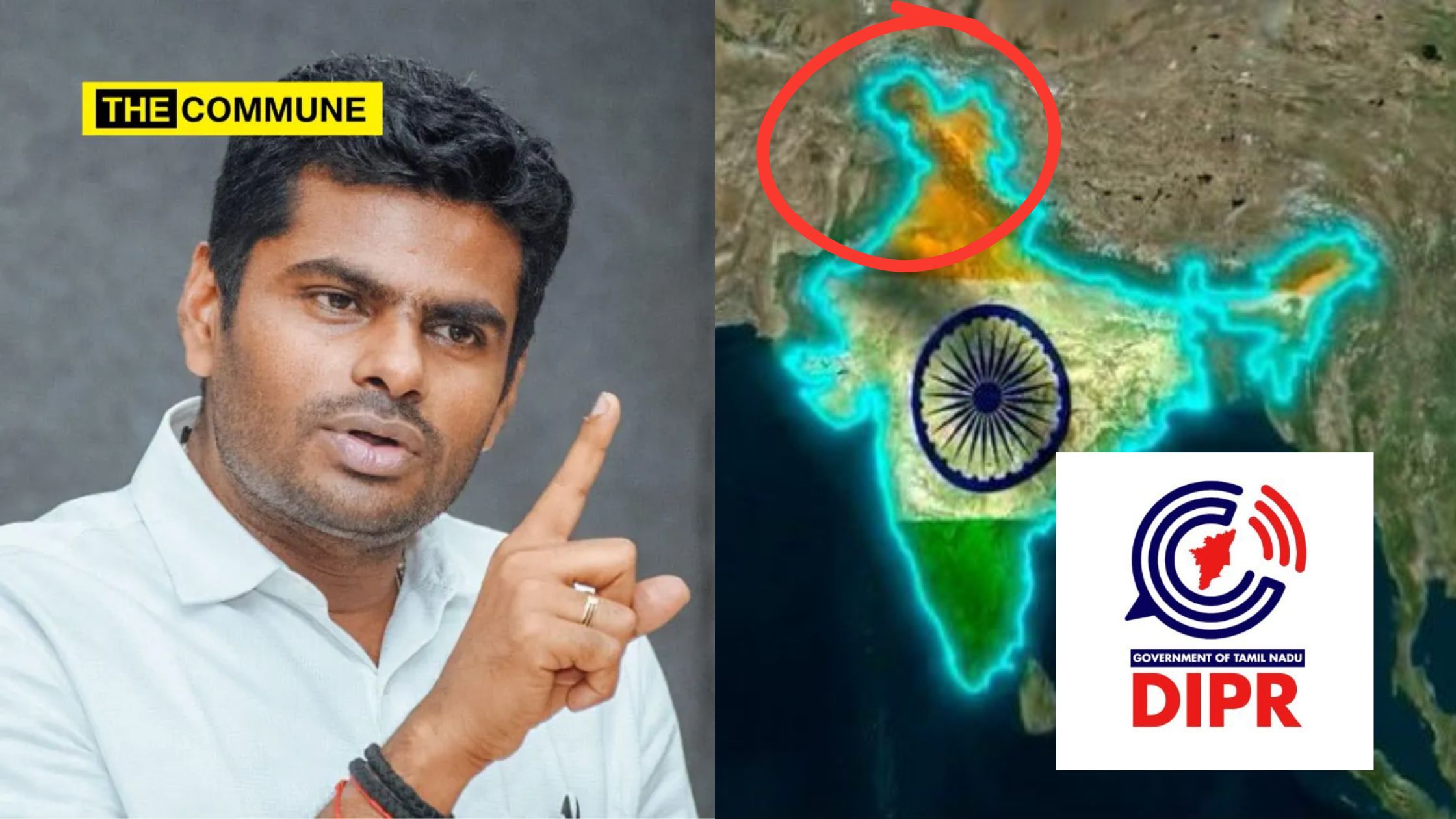
The Tamil Nadu Department of Information and Public Relations (DIPR) has come under fire after posting a distorted map of India. The post, shared on the official DIPR account, highlighted Tamil Nadu Chief Minister MK Stalin inaugurating the renovated Thanthai Periyar Memorial and Library at Vaikom, Kerala, in the presence of Kerala Chief Minister Pinarayi Vijayan on 12 November 2024.

The post read, “Hon’ble Tamil Nadu Chief Minister Mr @mkstalin will be inaugurating the renovated Thanthai Periyar Memorial & Library at Vaikom, Kerala on 12.12.2024 under the leadership of Hon’ble Kerala Chief Minister @pinarayivijayan.
#CMMKSTALIN #DyCMUdhay #TNDIPR @CMOTamilnadu @CMOKerala.”

However, the accompanying visual, which depicted a distorted map of India, drew swift backlash, particularly from Bharatiya Janata Party (BJP) leaders.

Tamil Nadu BJP President K. Annamalai took to X to criticize the state government and the DMK-led administration. In a scathing post, he accused the government of incompetence and alleged a lack of respect for national integrity. He wrote, “TN DIPR, the unofficial media wing of DMK, has published a distorted map of our country. If the state is led by someone who has no clue about when our Independence Day and Republic Day are, the unqualified puppets hired by them to handle the State government’s departmental functions will only end up with such mediocrity. This act also reflects the DMK’s disregard for national integrity, and on behalf of @BJP4TamilNadu, we demand that the DMK Government apologise and dare not repeat this!”

The post has since been deleted.

Subscribe to our channels on Telegram, WhatsApp, and Instagram and get the best stories of the day delivered to you personally.
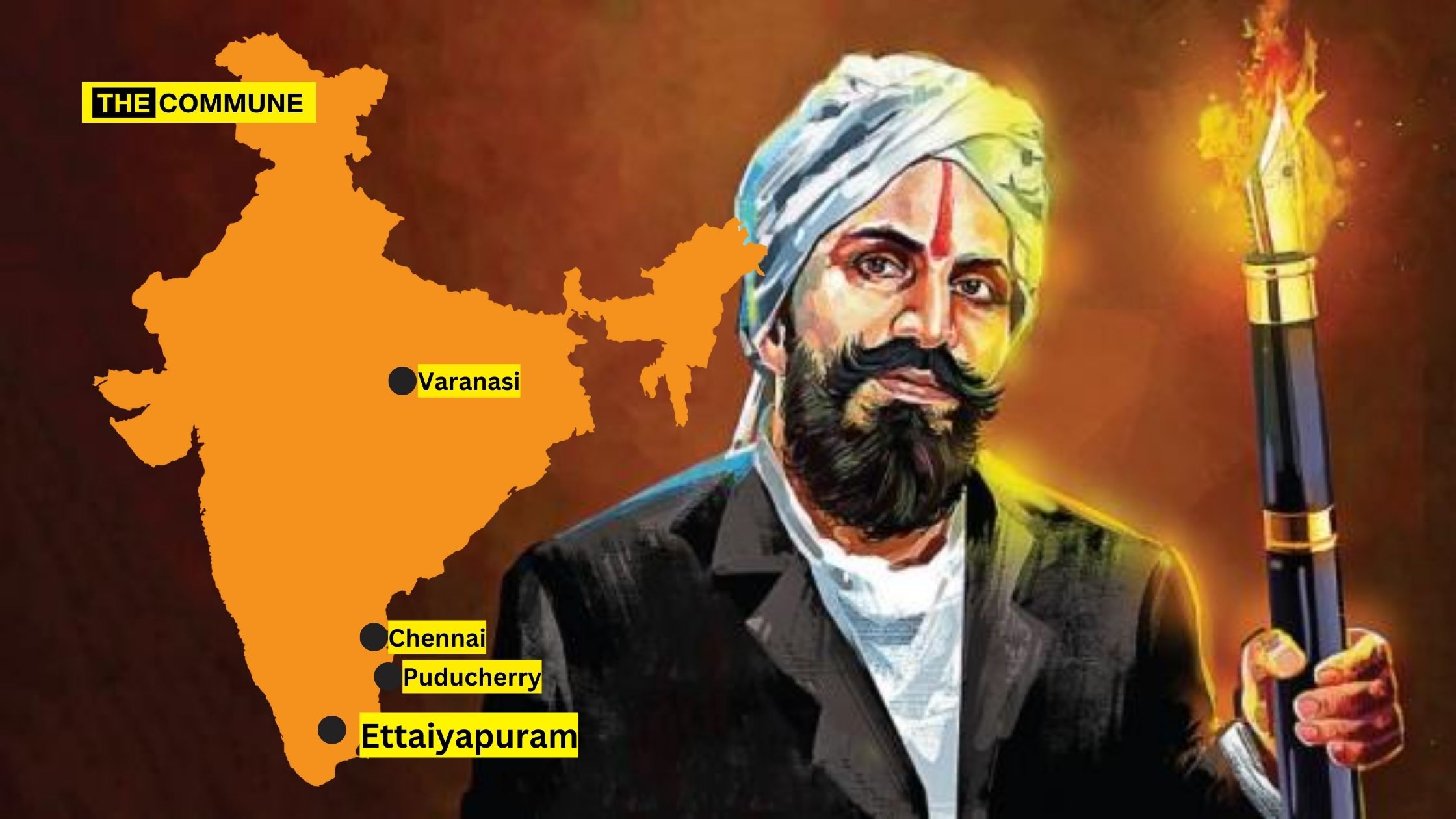
Tracing Bharathiyar’s Life Through These Memorable Locations

Tracing Bharathiyar's Life Through These Memorable Locations

Today is Bharathiyar’s birthday. 142 years have passed, and nobody even comes close to his poetic prowess. A selfless patriot and a peerless poet, his Dharmic poems rouse nationalism, bhakti, and courage in everyone.

Here are 4 locations tied to Bharathiyar’s life you can visit today to pay your respects!

Puducherry

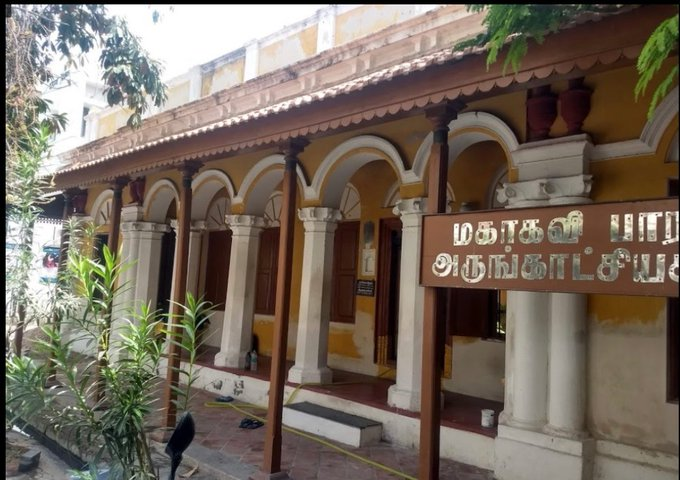
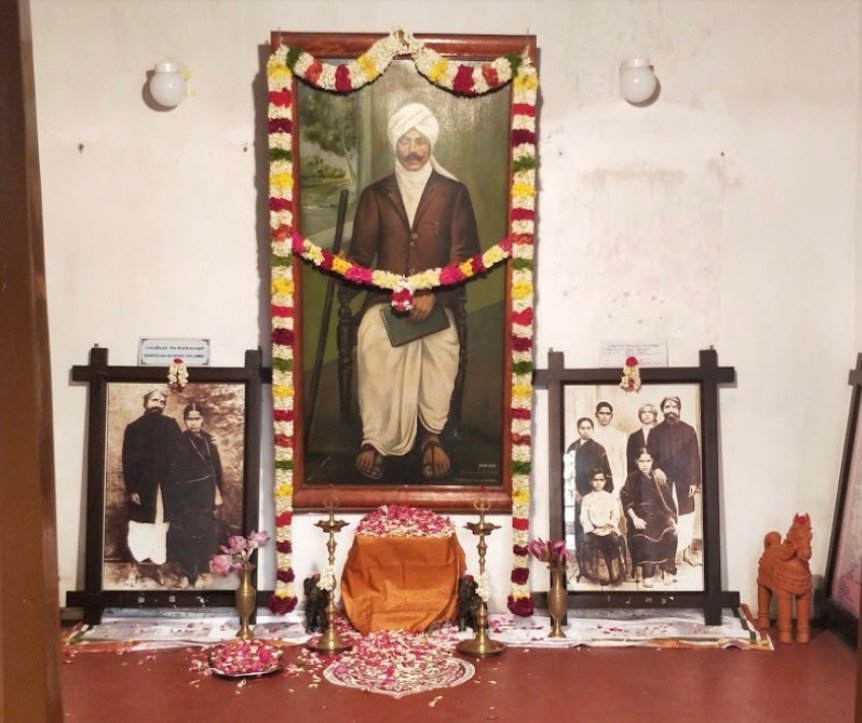
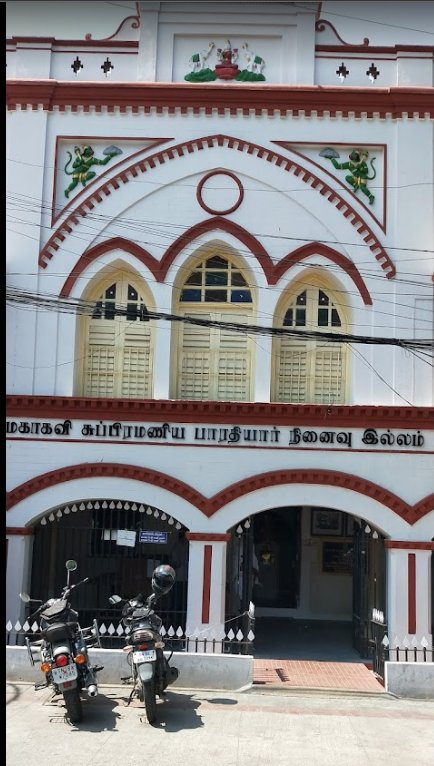
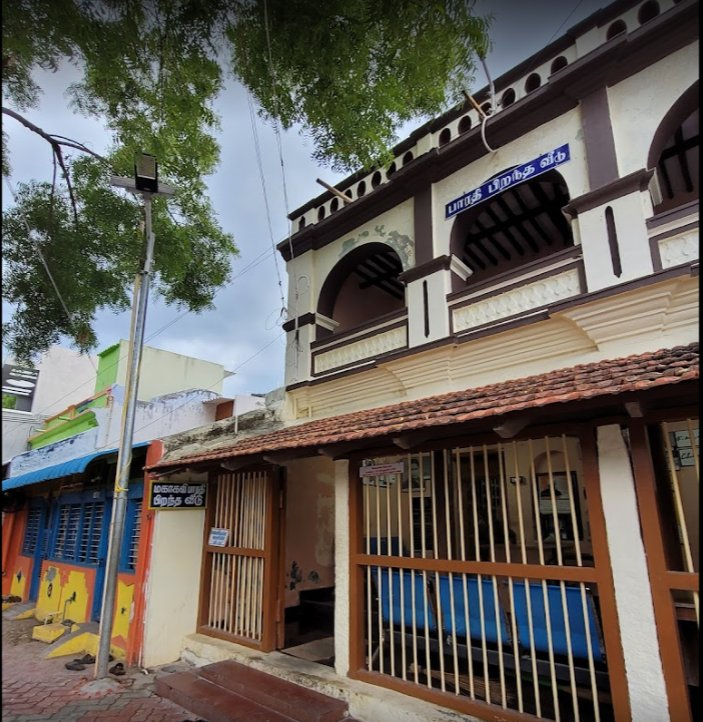
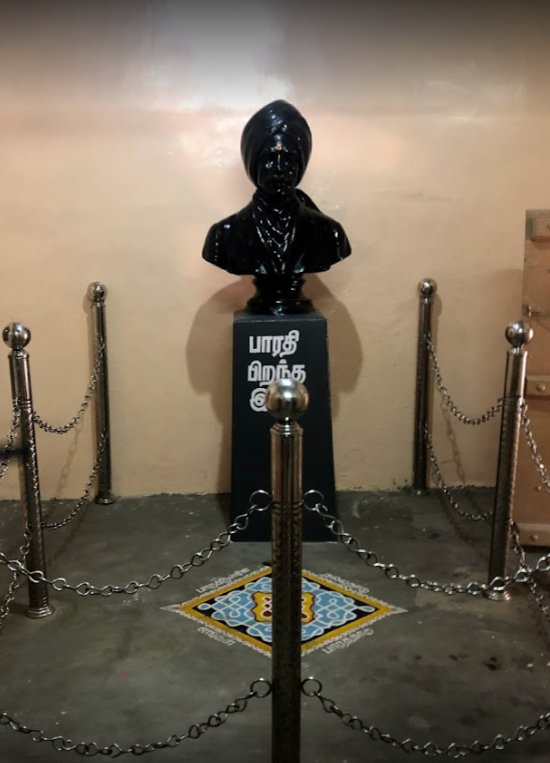
Puducherry folks can visit this Mahakavi memorial house. Entry is free. He lived here for 10 years from 1908 to 18 and composed immortal poetry, Kannan Paatu and Kuyil Paatu.

In 2022, only 500 people per month (~ 16 a day) visited here.

Location: https://maps.app.goo.gl/H7G8hAtsKaUNZJGv9

Chennai

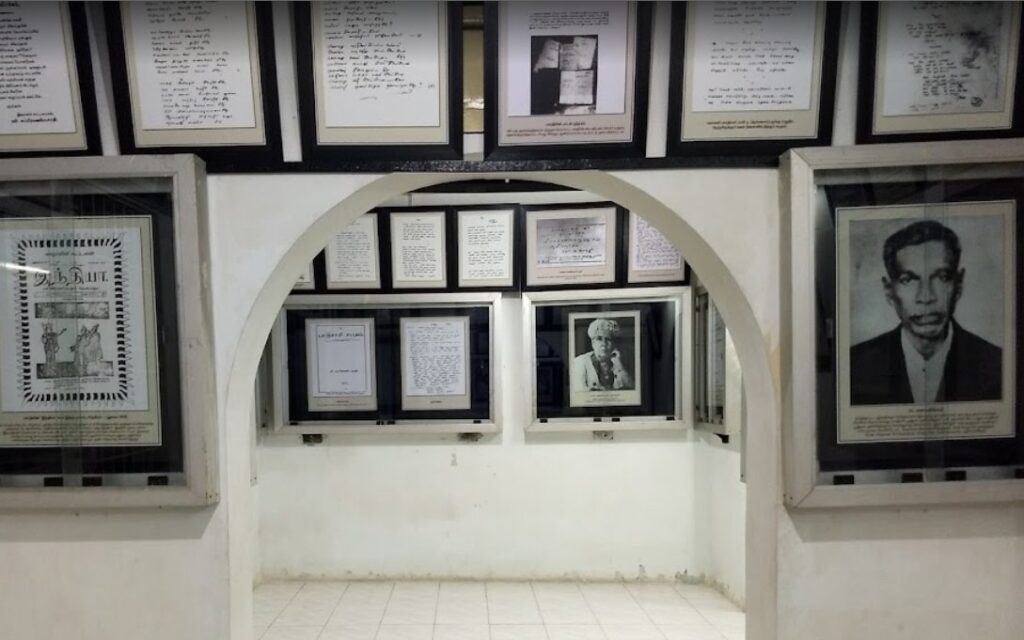
Chennaiites can visit Mahakavi’s memorial house in Triplicane. He spent the latter portion of his life here. The house he lived in is now a museum displaying original manuscripts.

Touching a pillar that Bharathi touched would make patriots of us all.

Location: https://maps.app.goo.gl/4q9spSCVa6xFYnGf8

Ettayapuram

Tirunelveli, Tuticorin, and Madurai folks could travel 90 minutes to reach Ettayapuram, the birthplace of the greatest modern-day Tamil poet.

The house where Bharathi was born is now a government museum—the genesis of a brave, selfless Mahakavi.

Location: https://maps.app.goo.gl/EsEFDE8xaSioomEA7

Kashi

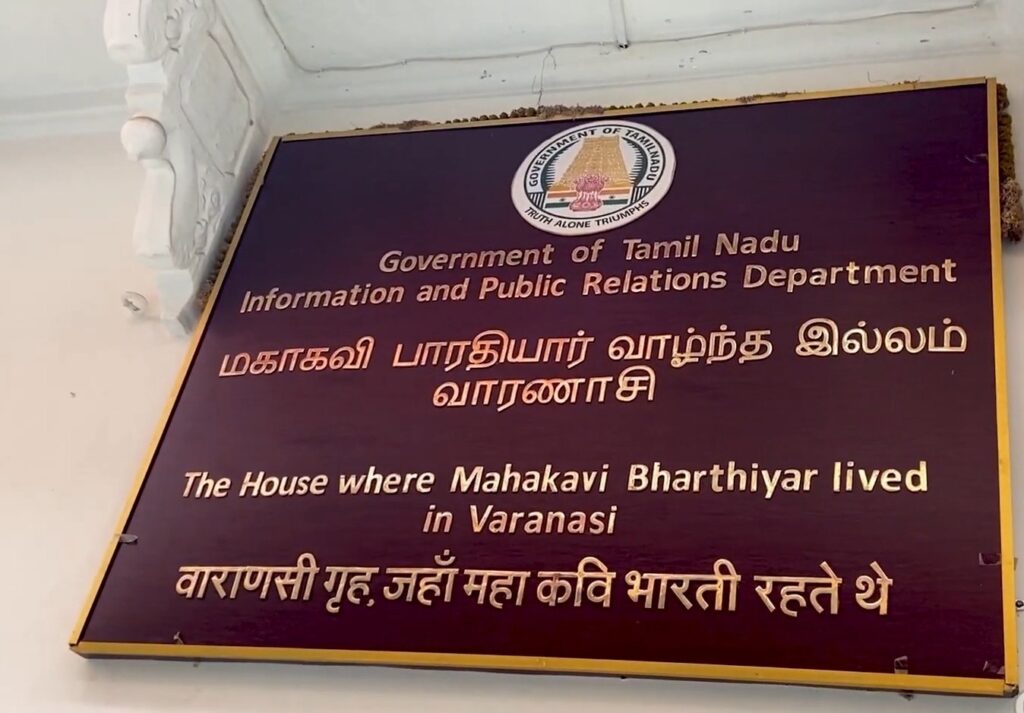
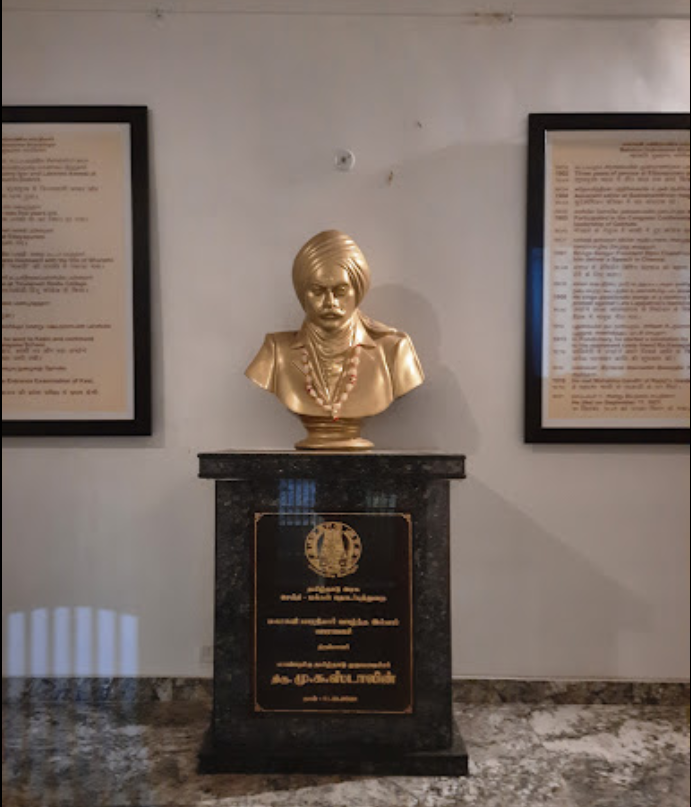
Kashi is where a young Bharathi learned Sanskrit, Hindi, English, and also our Vedas. He changed his outward appearance – he grew a beard and wore a turban.

Kashi transformed Subramaniyan into Bharathi! The house he stayed in is still there at Kashi.

Location: https://maps.app.goo.gl/xDuuq4zKerAdz8PEA

If you are unable to travel, no worries. Wherever you are, read a few lines of Bharathi. Wherever his fiery verses are being read, his presence can be felt.

If we forget Bharathi, we are forgetting a civilizational memory. Bharathi was Parashakthi’s own son, a great soul. Even though Bharathi uses fairly simple Tamil words, they can be slightly hard for the 21st-century reader to understand.

Poet Padmadevan has given complete meaning to all his poems. An 1100-page hardcover that’s worth its weight in gold – link here.

(This article based on the X thread by Tamil Labs 2.0)

Tamil Labs provide high quality Tamil Content written interestingly in English.

Subscribe to our channels on TelegramWhatsApp, and Instagram and get the best stories of the day delivered to you personally.

Anand Teltumbde: The Urban Naxal Whom TVK Chief Vijay Shared Stage With

Anand Teltumbde: The Urban Naxal Whom TVK Chief Vijay Shared Stage With.

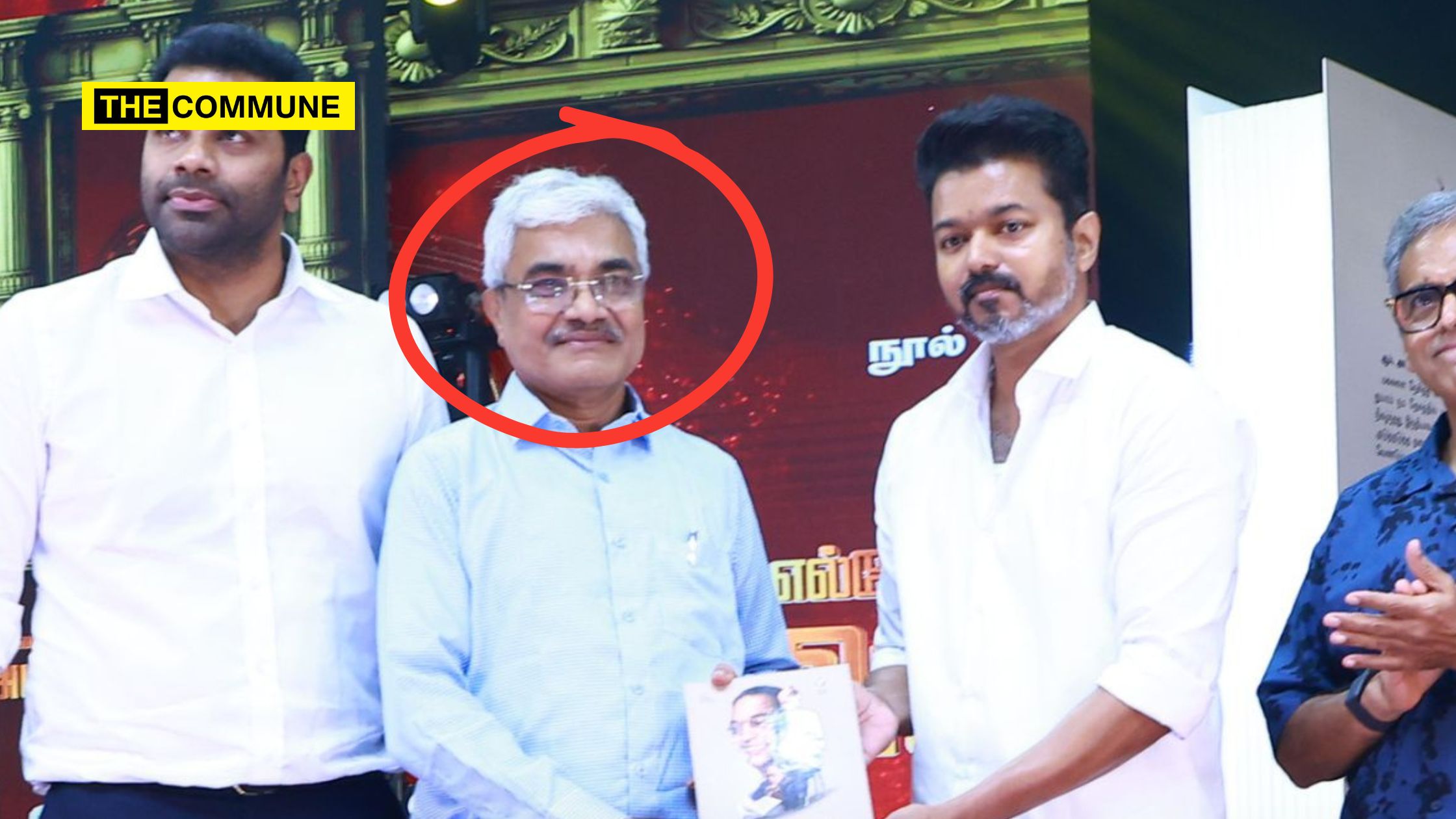
Against the backdrop of Tamil Nadu BJP president K Annamalai criticizing the organizers of the “Ambedkar: A Leader for All” book launch event on 8 December 2024 for inviting Anand Teltumbde—whom he described as an “Urban Naxal”—the incident sparked widespread discussion on social media, with users scrutinizing the allegations against Teltumbde.

Annamalai questioned the rationale behind including Teltumbde in the event and strongly condemned the event, led by VCK Deputy General Secretary Adhav Arjuna and called “Naxal political infiltration” in Tamil Nadu. He also criticized the Vikatan group, which co-organized the event, for enabling such participation. Annamalai highlighted that Anand Teltumbde’s brother was one of the 22 Naxals killed in a 2021 encounter in Maharashtra. Additionally, he pointed out that Anand is currently out on bail from the Supreme Court for his alleged role in the Bhima Koregaon violence and for inciting unrest.

The allegations, including Teltumbde’s connection to the 2018 Bhima Koregaon violence and an alleged Maoist plot to assassinate Prime Minister Narendra Modi, have been corroborated. However, Dravidian stocks and media outlets closely aligned with the ruling DMK government attempted to deflect criticism by portraying Teltumbde as a grandson of Dr BR Ambedkar—a claim that has been proven false.

Who Is Anand Teltumbde?

Anand Teltumbde is a management professional, writer, civil rights activist, and academic who teaches management at the Goa Institute of Management. He is married to Rama Ambedkar, the granddaughter of Dr. B.R. Ambedkar, and regularly contributes articles to various media outlets.

Teltumbde came under public scrutiny following allegations of involvement in the Elgar Parishad-Bhima Koregaon violence in January 2018. On 2 February 2019, Pune Police arrested him, along with others extremist such as Fr. Stan Swamy, for alleged links to Maoist groups. The investigation, initially led by Pune Police for two years, was handed over to the National Investigation Agency (NIA) in January 2021. The NIA claimed to have found incriminating documents on devices belonging to the accused, which reportedly connected them to the banned CPI(M) organization.

The Elgar Parishad-Bhima Koregaon Connection

The case revolves around an event called ‘Elgar Parishad‘ held on 31 December 2017 at Shaniwar Wada in Pune. The next day, on 1 January 2018, large-scale violence erupted at Bhima Koregaon, where thousands of Dalits had gathered to commemorate the 200th anniversary of their victory against the Peshwas in the Battle of Bhima Koregaon in 1818.

An FIR filed on 8 January 2019 accused the event’s organizers of using it as a front for Maoist activity. The police alleged that the activists involved were members of banned organizations and had incited violence.

Teltumbde’s arrest was based on accusations that his name appeared as a convener in a booklet titled ‘Bhima Koregaon Shauryadin Prerana Abhiyan,’ published before the 31 December event. In July 2021, a special NIA court denied him bail, citing the credibility of the allegations and his purported association with the banned group. The court found the claims against Teltumbde neither “inherently improbable” nor “wholly unbelievable” and noted his alleged role in advancing the activities of the proscribed CPI(M).

Teltumbde was among several Maoist sympathizing activists accused in the case, including Sudha Bharadwaj, Stan Swamy, Rona Wilson, Surendra Gadling, Mahesh Raut, Shoma Sen, Arun Ferreira, Vernon Gonsalves, and Varavara Rao. These individuals faced charges for inflammatory speeches and alleged involvement with banned organizations.  One of the accused, Stan Swamy, passed away in July 2021 while in custody, which further fueled public debate around the case and the treatment of those arrested under anti-terror laws.

Milind Teltumbde – Anand Teltumbde’s Brother

Milind Baburao Teltumbde was an Indian Maoist insurgent leader and a Central Committee member of the Communist Party of India (Maoist). He was the younger brother of Dalit activist and scholar Anand Teltumbde. Milind was killed in an encounter with Maharashtra Police in the Mardintola forest area of Gadchiroli district.

Milind Teltumbde joined the Naxalite movement in the 1980s, initially as an activist for the People’s War Group and a Akhil Maharashtra Kamgar Union member. Over the years, he rose through the ranks to become the secretary of the Maharashtra unit of the CPI (Maoist). Eventually, he was appointed to the party’s Central Committee. As the leader of the Maharashtra-Madhya Pradesh-Chhattisgarh zone, Milind played a key role in attempting to establish a safe “red corridor” for Maoist operations across the region.

According to law enforcement, Milind Teltumbde was a primary financier of the 2018 Bhima Koregaon violence, which saw widespread unrest and violence. He was also implicated in a total of 63 criminal cases. At the time of his death, there was a bounty of ₹50 lakh on his head.

In a 2020 chargesheet, the National Investigation Agency (NIA) named several extremists, including Anand Teltumbde, Gautam Navlakha, Hany Babu, Sagar Gorkhe, Ramesh Gaichor, Jyoti Jagtap, and Stan Swamy, accusing them of conspiring to advance the ideology of the left-wing extremist group CPI (Maoist). They were alleged to have incited violence, fostered hatred, and created dissatisfaction against the government and the establishment. Furthermore, they were charged with promoting enmity among groups based on religion, caste, and community.

In the same case, Milind Teltumbde, the younger brother of Anand Teltumbde, was named as an absconding accused. He was charged with organizing training camps to provide weapons training to members of the Maoist insurgency. The NIA asserted that Milind was influenced and guided by Anand to further the CPI (Maoist) activities, including expanding the movement to urban areas and promoting it internationally.

The chargesheet stated, “Milind, also known as Deepak, actively expanded the Maoist movement in urban regions with the support and guidance of his elder brother, Anand Teltumbde, on an international scale. Anand inspired Milind to join the CPI (Maoist) and engage in its activities.”

On 13 November 2021, Milind Teltumbde was among 26 Maoists killed during an encounter with Maharashtra Police in the Gadchiroli district. The operation took place in the Mardintola forest area and marked a significant blow to the Maoist insurgency in the region.

Dead Maoist Insurgent Leader Milind Teltumbde Drew Inspiration From His Brother Anand Teltumbde

Several shocking revelations came to light during the court proceedings for Anand Teltumbde’s bail application, filed by the National Investigation Agency (NIA) in Mumbai. The court considered the confession of Milind Teltumbde, a wanted Maoist insurgent and younger brother of Anand, in which he admitted that his elder brother had inspired him to advance the activities of the banned CPI(M) organization.

Justice Kothalikar, while rejecting Anand’s bail request, referenced Milind’s confession and stated, “The statement made by the wanted accused, that he was influenced by the applicant [Anand] to further the activities of a banned terrorist organization, is relevant. I find merit in the submission of the Special Public Prosecutor that the accused is the best person to testify about the influence on his conduct.”

A key witness in the case, who had close ties with Milind, testified that Milind frequently spoke about his brother, Anand Teltumbde, showing photographs of him and his family. This witness also recalled two separate trips to Bhopal with Milind, during which Milind mentioned meeting Anand. While there was no meeting during the first visit, Milind met with Anand on the second visit.

Another witness revealed that Milind frequently discussed the Elgar Parishad and Bhima Koregaon events and the role of urban CPI(M) members in using the platform to further their ideology. This witness also noted that Milind had organized events under the Sanyukta Morcha in urban areas to spread anti-government sentiments.

Further testimonies indicated that Milind had visited multiple urban areas such as Nagpur, Pune, Bhopal, and Indore, seeking his brother’s guidance in expanding the CPI(M) movement in both rural and urban areas. Milind reportedly received Maoist literature from Anand, who attended international conferences under the guise of academic trips. These conferences, which took place in countries like the Philippines, Peru, and Turkey, served as a cover for distributing materials on Maoist tactics, weapons, and recruitment strategies.

The Special Public Prosecutor argued that Anand brought back these materials, including literature and videos on Maoist ideology and strategies, from these international visits and used them to train CPI(M) cadres in secret meetings after receiving approval from the Central Committee.

Subscribe to our channels on Telegram, WhatsApp, and Instagram and get the best stories of the day delivered to you personally.
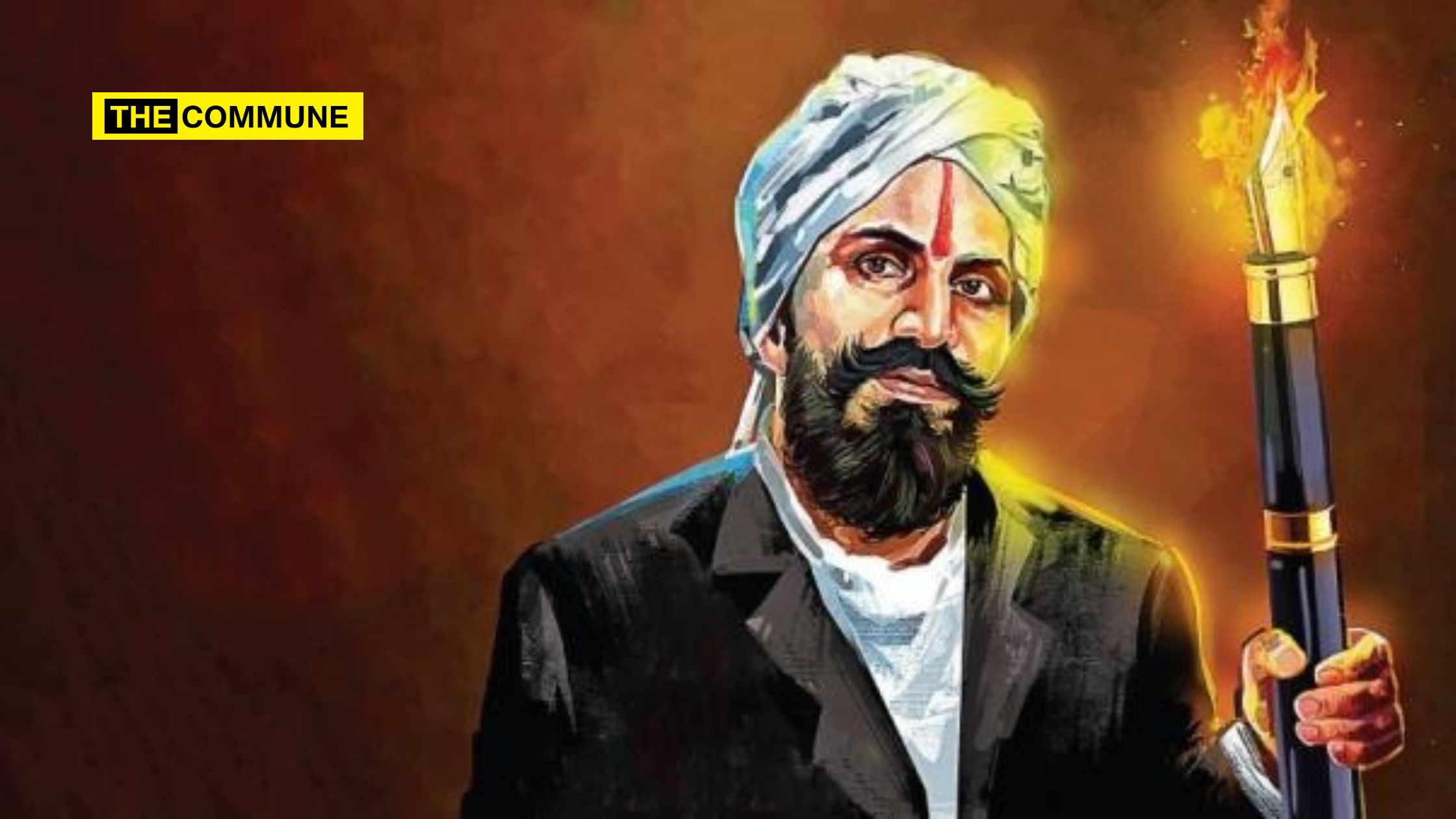
Mahakavi Subramaniya Bharathiyar: The Universal Poet Who Ignited India’s Soul

Mahakavi Subramaniya Bharathiyar: The Universal Poet Who Ignited India's Soul.

Mahakavi Subramaniya Bharathiyar was one of a kind. He was a great writer who wrote in simple language. This quality of his writings appealed to the masses immensely. His writings were powerful and appealed to everyone – young and old, rich and poor, men and women. They filled the Indian people with energy, enthusiasm, and patriotic fervour. Subramaniya Bharathiyar was a universal poet and writer whose writings are always relevant to all people.

Bharathiyar was born as C Subramaniyan Iyer in Ettayappuram, in the erstwhile Thirunelveli area of the Madras Presidency of Bharat, which was under imperialist British rule. Currently, Ettayappuram is part of the Thoothukudi District of Tamil Nadu, the state of free Bharat.

Subramaniyan wrote his first poem in Tamil at the age of eleven. He worked at Ettayappuram Palace for some time. He travelled to Kashi and lived there for a few years. He learned multiple languages and was a polyglot – he could speak Hindi and Sanskrit too. Subramaniyan was a Brahmin who opposed the practice of untouchability. ‘Bharathi’ was a title he earned for his erudition and debating skills. He was considered a ‘Mahakavi’ or a ‘Great Poet’ like Kalidasa. He was a social reformer as well.

He wrote many patriotic poems, including Vande Mataram’ and ‘Jai Bharat. These poems reflected the greatness of Tamil Nadu and the Tamil language. His Tamil poem, ‘Sentamizhnadu,’ deserves to be the Tamil Anthem instead of the present one – Tamil Thaai Vaazhthu.

Mahakavi Subramaniya Bharathiyar wrote devotional songs. He wrote short stories. He is considered to be the author of the first short story in the Tamil language. He wrote a commentary on the Bhagavad Gita. He wrote his autobiography. He was a genius poet-writer.

He also worked as the Assistant Editor of Swadesamitram, a Tamil Daily. He edited the Tamil Weekly India and the English newspaper Bala Bharatam. He worked with Shri Aurobindo on the ‘Arya’ and ‘Karma Yogi’ journals. He was an Indian Independence activist who opposed the oppression of women.

Mahakavi Subramaniya Bharathiyar envisioned a world filled with compassion, kindness, love, patriotism, good conduct, peace, and harmony. His writings have covered the themes mentioned above.

His writings have been inspirational, and many have praised him, including Prime Minister of India, Narendra Modi ji. He will remember for aeons to come.

Dr. S. Padmapriya is an author and thinker based out of Chennai.

Subscribe to our TelegramWhatsApp, and Instagram channels and get the best stories of the day delivered to you personally.

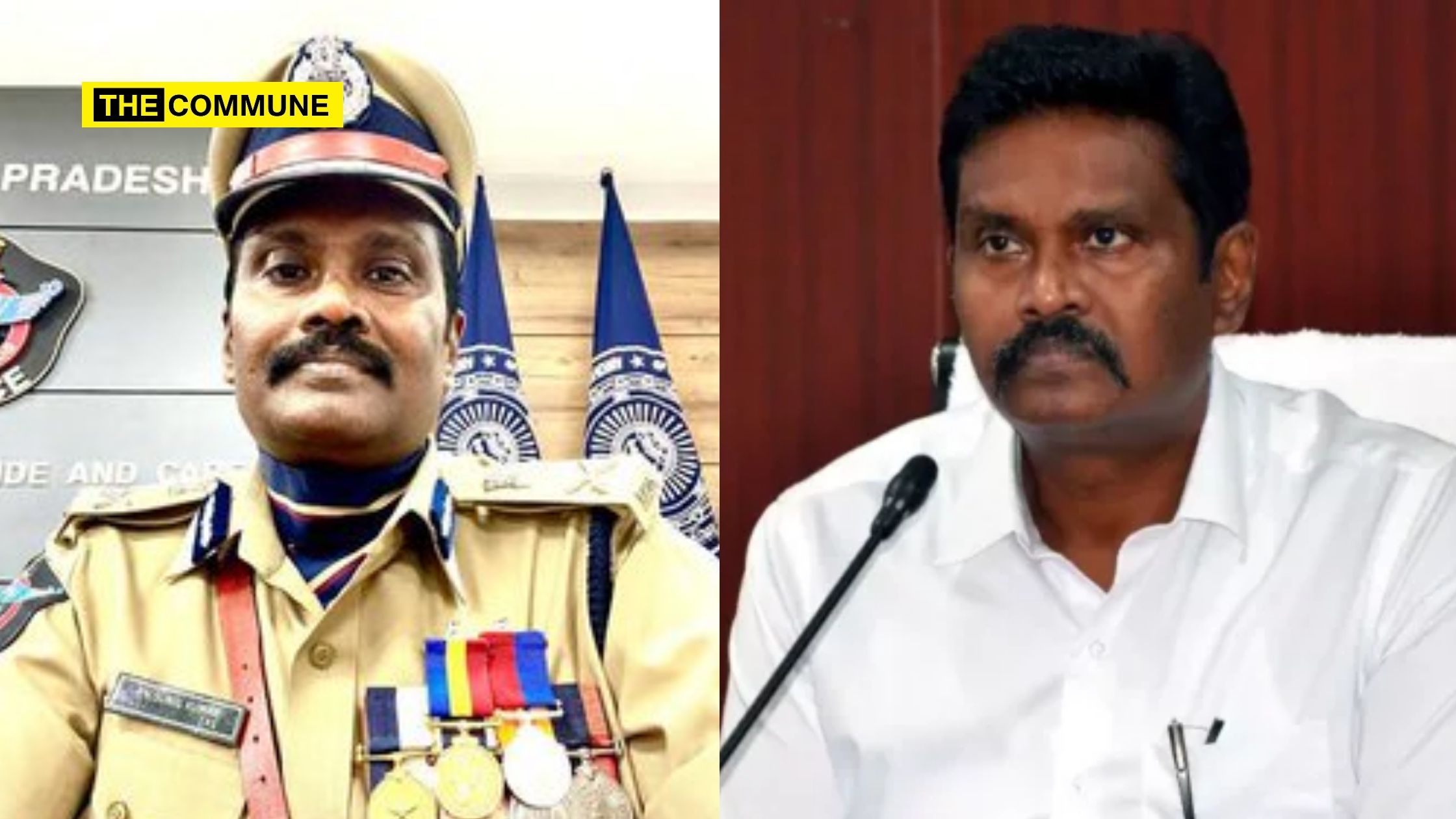
Controversial Andhra IPS Officer With Track Record Of Hate Speech Against Hindus Violates Civil Service Rules By Establishing Private Org, Complaint Filed

Controversial Andhra IPS Officer With Track Record Of Hate Speech Against Hindus Violates Civil Service Rules By Establishing Private Org, Complaint Filed.

The Legal Rights Protection Forum has lodged a complaint against PV Sunil Kumar, a senior IPS officer of the Andhra Pradesh cadre, and other police officials for allegedly violating the provisions of the Police Forces (Restriction of Rights) Act, 1966, and the Central Civil Services (Conduct) Rules, 1964.

The complaint, addressed to the Chief Secretary of Andhra Pradesh and copied to the Department of Personnel & Training, Government of India, accuses senior IPS officer Kumar of engaging in unauthorized activities by establishing a private organization, “Ambedkar’s India Mission,” and enrolling police officials as members.

According to the complainants, the organization, registered as a charitable trust, includes over 500 serving police personnel, some of whom hold roles as district in-charges. The organization has reportedly advocated for creating separate Gram Panchayats for Scheduled Castes.

The complaint cites a report by The South First alleging that Ambedkar’s India Mission’s activities breach Section 3 of the Police Forces (Restriction of Rights) Act, which restricts police officers from associating with non-sanctioned organizations. It further accuses Kumar of fostering divisions within the Hindu community and promoting religious animosity under the guise of community welfare.

On 26th November 2020, on the occasion of India’s Constitution Day, he appeared on Facebook live through the official page of “Ambedkar’s India Mission” and abused Hindu Religion and Hindu Sacred scriptures like Vedas and Puranas.

In another video, the officer praises British rule, stating that it was the British who gave them a God to pray and built churches, hospitals, etc., and adding that it was because of them that they are able to study today.

Additional allegations include bias in Kumar’s public statements favoring specific Scheduled Caste groups and advocating for Scheduled Caste status for Christians, as reported by The Times of India.

The complainants have also highlighted a 2021 complaint filed by Shri K Raghu Ramakrishna Raju, then Member of Parliament and current Deputy Speaker of the Andhra Pradesh Assembly, which had prompted a notice from the Ministry of Home Affairs to the Andhra Pradesh Chief Secretary. They allege that the previous state government ignored the notice due to political considerations.

The Legal Rights Protection Forum has called for:

  1. The suspension of PV Sunil Kumar.
  2. An FIR against him and other police officials linked to Ambedkar’s India Mission under the Unlawful Activities (Prevention) Act, 1967.
  3. A financial investigation into the organization’s funding sources and potential violations, including the illegal receipt of foreign funds.

The organization claims that protests and demonstrations were organized by Ambedkar’s India Mission following the 2021 complaint, reflecting what they term as “an anarchic mindset.”

The Andhra Pradesh government has yet to respond to the allegations and demands for action.

Subscribe to our channels on TelegramWhatsApp, and Instagram and get the best stories of the day delivered to you personally.

“What Assurance That A Top Student Won’t Join Extremist Group?”: Madras High Court Upholds NIA’s Freeze On Medical Student’s Tuition Fees

Madras High Court Upholds NIA's Freeze On Medical Student Tuition Fees.

The Madras High Court has declined to intervene in a National Investigation Agency (NIA) order freezing the tuition fees of a medical student. The NIA asserted that the funds used for her education were allegedly sourced from a Maoist organization based in Jharkhand.

A division bench comprising Justices S M Subramaniam and M Jyothiraman delivered the decision, dismissing the student’s petition seeking relief against the order.

During the hearing, the student’s legal representatives argued that her private medical college was withholding her certification due to the frozen funds. Additionally, the NIA summoned the student to address the allegations. Despite these arguments, the court ruled against overturning the NIA’s order.

The bench raised a pivotal question, inquiring, “What assurance exists that a high-achieving student might not align with an extremist organization?” This remark underscored the allegations’ gravity and emphasised the importance of safeguarding national security in such cases.

The bench emphasized that the student must present her case before the NIA, provide a satisfactory explanation, and formally request the release of the funds.

(With Inputs From Latest Laws)

Subscribe to our channels on Telegram, WhatsApp, and Instagram and get the best stories of the day delivered to you personally.
PMK Chief Anbumani Ramadoss Challenges CM Stalin: Calls For CBI Probe Into TNEB Corruption, Supports JPC Inquiry Into Adani Allegations

PMK Pres Anbumani Ramadoss Slams DMK Govt Over Sathanur Dam Water Release And Poor Flood Response

Pattali Makkal Katchi (PMK) president Anbumani Ramadoss has declared the party’s willingness to support a Joint Parliamentary Committee (JPC) investigation into the corruption allegations against the Adani Group. Simultaneously, he has challenged Chief Minister MK Stalin whether he is ready to initiate a CBI probe into the corruption allegations involving the Tamil Nadu Electricity Board (TNEB).

During an Assembly session, Tamil Nadu Chief Minister Stalin questioned whether the BJP and PMK, who have been critical of the DMK, would support a JPC probe into the Adani allegations in Parliament. Responding to this question, Anbumani stated that the PMK is fully prepared to back such an inquiry. He emphasized that during a prior press conference, he had already called for an investigation into the corruption charges against Adani.

Anbumani also dismissed the claim that there was a direct agreement between the Adani Group and TNEB, accusing CM Stalin of being misinformed. He highlighted that the PMK has demanded clarity from the Tamil Nadu government regarding a case filed in a U.S. court, which allegedly accused the Adani Group of bribing the TNEB to purchase electricity through the Solar Power Corporation of India.

“If there is no wrongdoing, there should be no fear of investigation,” Anbumani remarked. He questioned why the state government and CM Stalin have avoided addressing the issue and resisted calls for a probe.

The PMK reiterated its support for a JPC investigation into the Adani corruption allegations. Simultaneously, Anbumani urged CM Stalin to announce whether he is willing to order a CBI or Special Investigation Team (SIT) probe, under Supreme Court supervision, into the bribery allegations involving the Adani Group and TNEB.

(With inputs from Dinamalar)

Subscribe to our channels on Telegram, WhatsApp, and Instagram and get the best stories of the day delivered to you personally.