Home Blog Page 497

Manipur Pays Rich Tributes To Women Freedom Fighters On Historic Nupi Lal Day
Manipur Pays Rich Tributes To Women Freedom Fighters On Historic Nupi Lal Day

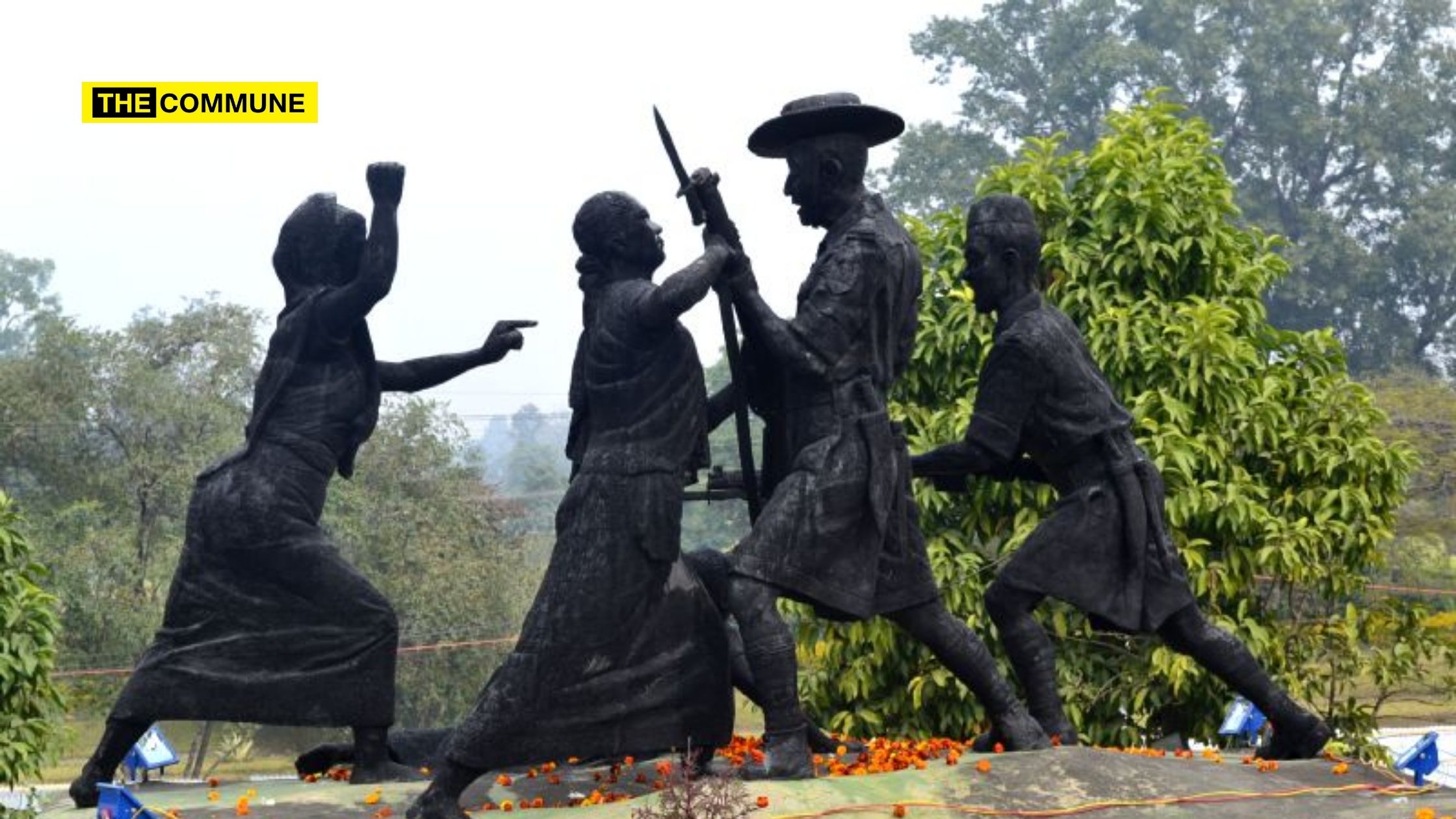
The people of Manipur on Thursday paid heartfelt tributes to women freedom fighters who took part in ‘Nupi Lal (women’s war)’ against British actions in 1904 and 1939. The iconic day was commemorated as the 85th Nupi Lal Numit.

The Nupi Lal or Nupee Lal is an epoch-making struggle which broke out on December 12, 1939 against an extremely exploitative form of socio-economic and political system perpetrated by the combined feudalistic-colonial rule in Manipur. Chief Minister N. Biren Singh led the people in offering floral tributes to the departed women freedom fighters at the Nupee Lal Memorial complex. A formal function was also held at the Ghanapriya Women’s College, where addressing the gathering, the Chief Minister maintained that Nupee Lal Numit had been observed every year to remember the role played by brave Manipuri women in 1904 and 1939, revolting against the injustice of British imperialism.

He continued that apart from the contribution of women during the fight, people should also remember the bravery and courage shown by Manipuri women in other instances including ousting the Burmese (Awa) during the Seven Year Devastation period (1819-1826). Singh further mentioned that the bravery and courage could also be seen among present day women of the state, as they had been leading from the forefront in every issue pertaining to the safety of the people of the state.

He highlighted the contribution of Manipuri women in certain sectors including social, economic, art and culture, hospitality and games and sports among others, apart from their domestic activities. Cultural performances by Manipuri women in different national and international events had shown the uniqueness of the state’s culture across the world, the Chief Minister stated.

Singh told the gathering at the function that acknowledging the hard work and commitment of women, the state government had introduced certain women welfare schemes including the Ima Nongthangleima Yaipha Tengbang Scheme, providing financial assistance of Rs 500 per month to unemployed women who are above the age of 40 years. Noting that Ima markets (all-women market) had been constructed across every district of the state, considering the role of women in economic activities, Singh said that financial assistance had also been given to women sports persons in establishing training institutes and providing training to young athletes in their respective disciplines.

The Chief Minister also spoke on the initiatives of the Central Government under Prime Minister Narendra Modi in passing the Women’s Reservation Bill 2023 in Parliament. Forest, Environment and Climate Change Minister Biswajit Singh stated that Nupee Lal is observed every year to remember the courage and sacrifice of women freedom fighters and to pay tribute to their contributions, adding that the observation should be a proud moment for every Manipuri.

Referring to the two instances of Nupee Lal in 1904 and 1939 and the courage and bravery of Manipuri women in fighting against the injustice of the British imperialist, he stressed the need for everyone in the state to inherit their courage and love for the motherland. The Minister stated that Nupee Lal had brought political, social and economic reformation in the state and people should always remember that. Mentioning the contribution of women in different fields, he expressed that gender equality is necessary for bringing development in Manipur. He further stressed the need for women in the decision-making process for inclusive growth.

On December 12, 1939, a large number of women stormed the state Durbar Office asking for immediate stoppage of rice export, in which around 21 women were seriously injured by the bayonets and butts of the soldiers’ weapons. The first women’s agitation was triggered by the action of Colonel Maxwell in July 1904 to reintroduce the abolished Lallup System, wherein men were required to perform free labour for 10 days after every 30 days.

After the bungalows of two British officials were burnt down in 1904, Maxwell temporarily reintroduced the Lallup System to rebuild them. This move proved a misstep as the women rose up in unison to protest against the injustice of forced labour. After the Anglo-Manipur War of 1891, Manipur came under direct British rule till 1907, when the administration was handed over to Raja Churachand Singh and his durbar. However, a British political agent was employed to oversee the functioning of the region and had powers over the royal durbar. This had major implications on the economy and trade of Manipur.

–IANS

Subscribe to our channels on TelegramWhatsApp, and Instagram and get the best stories of the day delivered to you personally.

“If You’ve Sex Child Is Born, But If I Just See Child Is Born”: DMK’s Rabid Stage Speaker Sivaji Krishnamurthy Unleashes Abuse On TVK Vijay, Kasturi, ADMK Leaders

DMK Sivaji Krishnamurthy Unleashes Abuse On TVK Vijay, Kasturi, ADMK Leaders

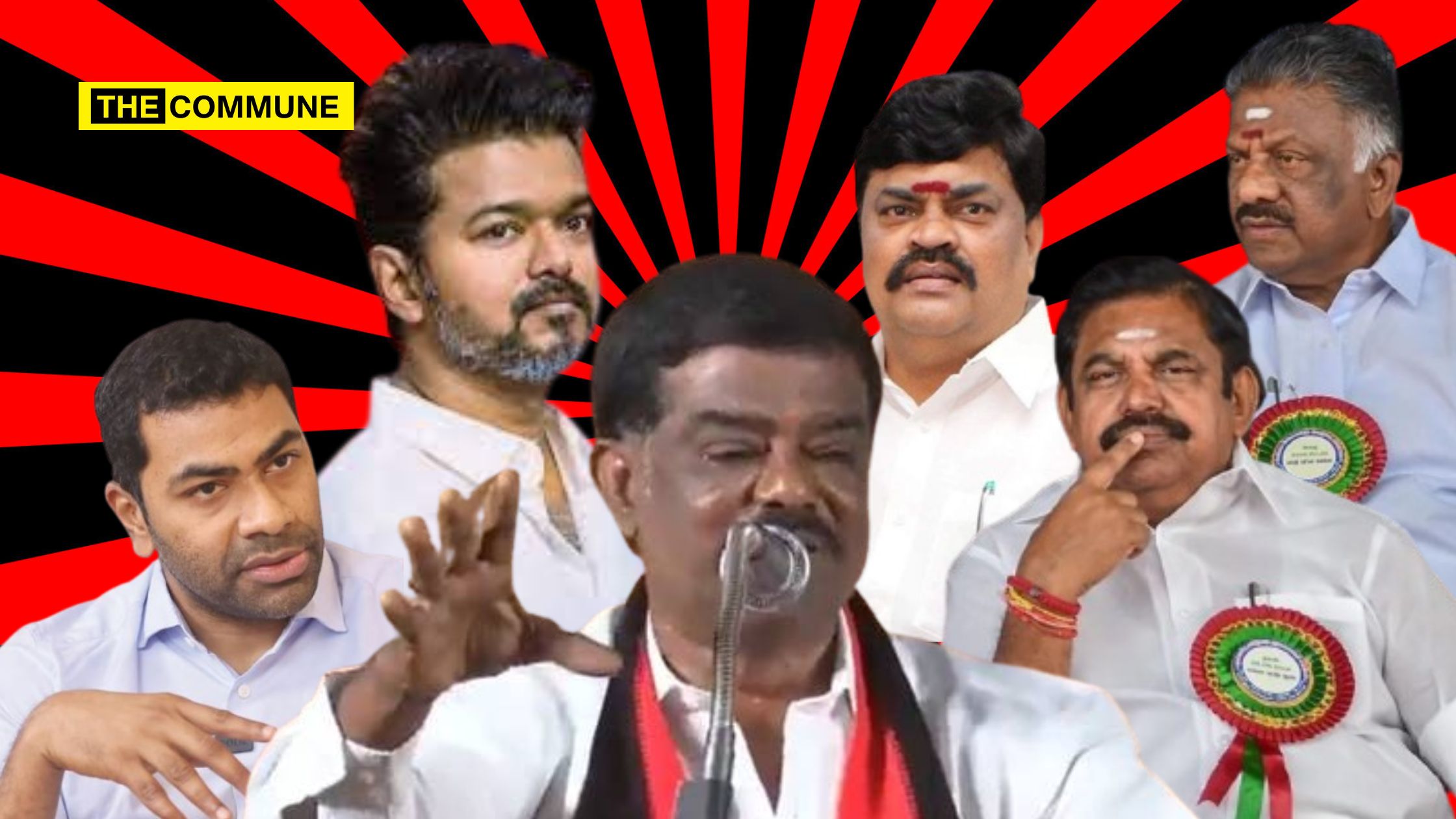
Sivaji Krishnamurthy, a DMK functionary infamous for abusive speeches, used a Pudukkottai event celebrating Udhayanidhi Stalin’s birthday to unleash vulgar tirades against opposition leaders, judiciary members, and his party allies. Despite having spent two months in jail for hate speech, Krishnamurthy showed no remorse, brazenly mocking legal consequences and boasting of impunity under the DMK government. His remarks, including personal attacks and body-shaming, were laced with defiance and open contempt, exposing a culture of protection and tacit endorsement from the ruling party.

Sivaji Krishnamurthy Speech At DMK Meeting

Sivaji Krishnamurthy wasted no time stirring controversy at the DMK meeting, beginning his speech with a provocative and self-aggrandizing statement, he said, “While Senthil was speaking, our MP said, ‘He was good, but now he has started speaking Seeman, Saaman (d*ck),’ and asked how that happened. If I’m on stage, there will be a electric vibration. If you have sex, you will have a child, but if I see you, you will have a child—that’s Sivaji Krishnamurthy!”

Later, displaying no remorse for his recent arrest, he continued with a defiant tone, “They said here too, ‘they’ll file an FIR.’ An FIR is equal to my hair (M*yiru)—what will he do? Recently, they kept me in jail for two and a half months and made all kinds of offers, saying, ‘If you come here, we’ll give you this or that,’ but all of that is eqaul as my hair.” and continued, “They can keep me in jail for another 15 days—that’s all they can do, other that, they cant even pluck my hair,” he boasted, openly challenging authorities and dismissing the consequences of his actions.

In the video, Sivaji Krishnamurthy is seen angrily lashing out at TVK chief Vijay for his recent criticism of the DMK during the Ambedkar book launch event in Chennai. He also took aim at VCK deputy general secretary Aadhav Arjuna for his remarks against DMK scion Udhayanidhi Stalin.

In a particularly controversial segment, Sivaji turned his criticism toward the judiciary. Referring to Actress Kasthuri’s bail and criticizing unknown justice, he said, “Don’t think this is the same jail where Kasthuri was in. She came out in just four days. This ‘Naadhari’ gets out of jail in four days, while I was kept for two and a half months.” He went on to express his frustration, on the honorable judges in the court, “A DMK speaker held in jail for two and a half months, but a ‘Naadhari’ speaks, comes out in four days, and on the sixth day, she seeks a conditional bail relaxation, and the court grants it! But if I approach the court, they ask, ‘Have you heard his speech? Go, listen to and come back. Would you watch this with your family?’ Why are you not watching it with your family or someone else? Am I shutting the door and showing you a blue film? You are hearing it with your family, aren’t you?”.

The remarks, laced with defiance and contempt, reflect Sivaji’s lack of remorse, sparking further controversy over his behavior and language.

Continuing his controversial tirade, Sivaji Krishnamurthy turned his attention to actor-turned-politician Vijay, making abusive remarks. Referring to Vijay’s activities during the pandemic, he asked mockingly, “Vijay was plucking whose hair while DMK was giving their life and working? You were clapping hands in the business center. Don’t you have any shame, ‘Mayirandigala’?”

He then shifted to ridiculing and abusing AIADMK leaders with offensive remarks. Taking digs at former Chief Ministers and other party members, he said, “During the corona period, what did ‘Pallu’ Palaniswami and ‘Poosari’ Paneerselvam do? Don’t laugh at this. Call Paneerselvam, make him stand here, dress him in a saffron dhoti, and give him a sickle. He’ll look just like God Ayyanar. Call Palaniswami, put a big chair in front of him with a table and a cash box, and he’ll resemble a Buhari hotel manager.”

He didn’t stop there, targeting another AIADMK leader, Sellur Raju, with ridicule he said, “There’s a guy in Madurai—who is he? Sellur Raju. He’ll look exactly like an astrologer with a parrot. This is the truth. If I’m wrong, say so or come to my room and slap me with a chappal. But what I’m saying is true, isn’t it?” Krishnamurthy’s insults continued as he mocked Rajendra Balaji, “Then there’s another, Rajendra Balaji. Have you seen the Hutch dog? Put a picture of that  and morph it with Rajendra Balaji. Even the hutch dog would be scared, saying, ‘Our man has come!’ He will be same with that eyes, face, and nose alike.”

The speech, marked by crude humor and personal attacks, has drawn widespread criticism for its tone and lack of decorum.

Subscribe to our channels on Telegram, WhatsApp, and Instagram and get the best stories of the day delivered to you personally.
Income Tax Refunds Jump 46.3% To ₹3.04 Lakh Crore In April-Nov

income tax hyderabad

According to figures released by the Union Finance Ministry on Thursday, the number of tax refunds recorded a 46.31 per cent jump to ₹3.08 lakh crore between April 1 and November 27 this year compared to the same period of 2023, marking a significant increase in the efficiency of the Income Tax Department.

In the corresponding period last year between April 1, 2023, and November 30, 2023, refunds totalling ₹2.03 lakh crore were issued, reflecting the Ministry’s concerted efforts to expedite the process this year. The Central Board of Direct Taxes (CBDT) played a crucial role in achieving this milestone, the statement added.

In its year-end review, the Finance Ministry also said that within just a week of processing, an impressive 26.35 per cent of IITRs for FY 2024-25 were cleared — a significant improvement compared to the 22.56 per cent achieved during FY 2023-24. This year-on-year surge showcases not only the capacity of the system but also the proactive engagement of taxpayers in adhering to filing deadlines.

At its peak this year the Income Tax Return portal handled more than 900 filings in a second and nearly 70 lakh ITRs (Income Tax Returns) in a day, the figures show.

This year a record of over 1.62 crore ITRs were processed in a single day for A.Y. 2024-25, according to the statement. The highest filing of ITRs in one day was 69.93 lakh ITRs filed on July 31, 2024. A total of 8.50 crore ITRs were filed till November 22, which is 7.32 per cent higher than ITRs filed for the corresponding period of the preceding year.

The Demand Management Facilitation Centre was established to simplify the management of tax demands by providing taxpayers with a single point of contact for all issues related to outstanding tax demands which helped to speed up filings, the statement said.

“The Central Board of Direct Taxes strives for greater transparency through timely release of data and assists taxpayers through timely awareness campaigns,” the statement added, A special initiative was undertaken to address 35 lakh failed refund cases from various assessment years, ensuring refunds were processed for validated bank accounts. This step not only expedited the issuance of pending refunds but also streamlined the overall process.

–IANS

Subscribe to our channels on TelegramWhatsApp, and Instagram and get the best stories of the day delivered to you personally.

Indian Citizenship Granted Under CAA To 56 Pakistani Nationals Residing In Gujarat

Indian Citizenship Granted Under CAA To 56 Pakistani Nationals Residing In Gujarat.

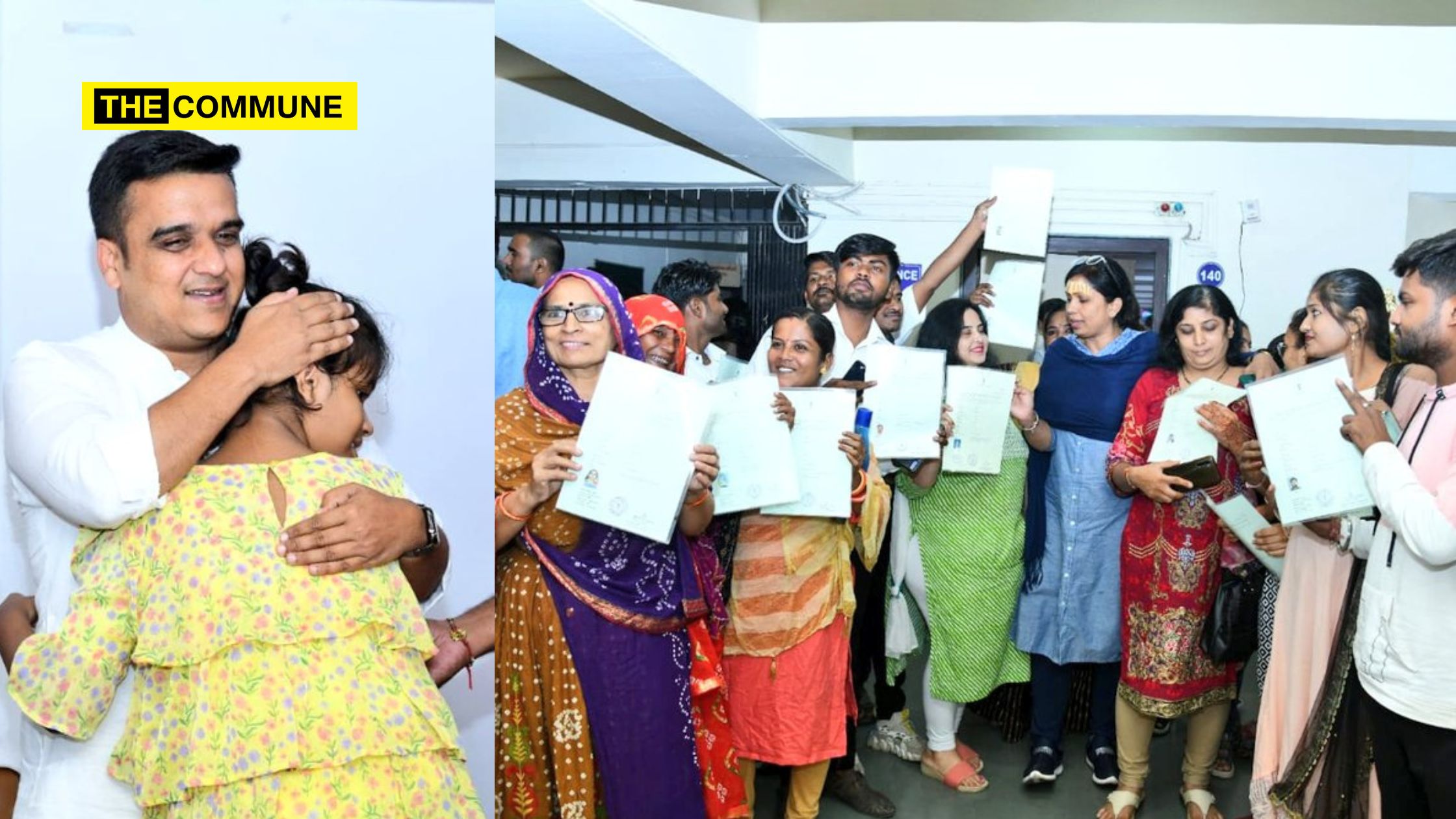
Under the provisions of the Citizenship Amendment Act (CAA), Gujarat has officially granted Indian citizenship to 56 Pakistani nationals who have lived in the state for over two decades. Gujarat’s State Home Minister Harsh Sanghavi ceremoniously handed over the citizenship certificates during an event in Ahmedabad on 11 December 2024.

Sanghavi congratulated the recipients and expressed heartfelt wishes, saying, “Smile, now you are citizens of this great country, India.” His words brought immense relief and joy to the new citizens, many of whom had awaited this moment for years.

Hisha Kumari’s Remarkable Journey

One of the most inspiring stories among the recipients was that of Hisha Kumari. Born in Pakistan in 1998, she moved to India with her family in 2013, seeking freedom and a better future. Her perseverance and determination stand as a testament to her resilience.

Hisha continued her education in India, completing her schooling and gaining admission to a medical college in Ajmer in 2017. Having recently completed her medical studies, she is now set to embark on her career as a doctor.

Expressing her gratitude upon receiving her citizenship, Hisha said, “I am grateful to the country’s Prime Minister Narendra Modi and Home Minister Amit Shah for restoring my identity. With this citizenship, I can now apply anywhere.” She proudly displayed her certificate, marking the culmination of years of effort and hope.

Streamlining the Citizenship Process

State Home Minister Sanghavi highlighted the government’s commitment to simplifying the citizenship process for deserving individuals. “Earlier, these people had to endure a lengthy process in Delhi. Now, we have ensured their issues are resolved locally,” he explained.

The event underscored the Modi government’s focus on granting citizenship to persecuted minorities from neighboring countries under the CAA. From 2017 to March 2024, 1,167 Pakistani citizens were granted Indian citizenship. With these 56 individuals, the total has now risen to 1,222.

Gujarat’s Proactive Role

In Gujarat alone, over 50 Pakistani Hindus received citizenship certificates in the last six months, demonstrating the state’s proactive approach to addressing the concerns of persecuted minorities.

For the 56 individuals, obtaining Indian citizenship marks the end of a long and arduous journey and the start of a new chapter filled with opportunities and hope. This legal recognition enables them to fully integrate into Indian society, pursue their dreams, and build a secure future.

(With Inputs From Organiser)

Subscribe to our channels on Telegram, WhatsApp, and Instagram and get the best stories of the day delivered to you personally.
“You Will Hear From Me Legally”, Actress Sai Pallavi Gets Disproportionately Enraged At Vikatan’s Report About Her Eating Vegetarian Food During “Ramayan” Film Shooting

Actress Sai Pallavi Enraged At Vikatan Report About Her Eating Vegetarian Food During "Ramayan" Film Shooting

Kollywood actress Sai Pallavi made news, not for her work, but for her fiery reaction to a harmless report about her adopting a vegetarian diet for her role as Sita in Nitesh Tiwari’s upcoming Ramayana adaptation. While the report was seen as a positive reflection of her dedication to the role, Pallavi quickly denounced it as “baseless”. She threatened legal action, raising eyebrows over her selective outrage.

Sai Pallavi, recently seen in Major Mukund Varadarajan’s biopic Amaran, threatened legal action over a seemingly harmless rumour about her diet. A Vikatan report claimed Sai Pallavi adopted a vegetarian lifestyle for her portrayal of Sita in Nitesh Tiwari’s upcoming adaptation of the epic Ramayana.

The creative read, Sai Pallavi is currently acting inRamayanamin Bollywood. For that, she has made a commitment not to touch any non-vegetarian food till the end of the shoot. So, he does not even eat at the hotel, but takes chefs with him when he goes abroad. They cook vegetarian food.”

https://twitter.com/CinemaVikatan/status/1866434735452418254

This seemed like a normal and positive step for any actor involved in filming our epics. However, Sai Pallavi chose to react differently.

In response, Pallavi issued a fiery statement on X, slamming the media and threatening legal action for baseless rumoursandfabricated lies. She wrote, Most of the time, Almost every time, I choose to stay silent whenever I see baseless rumours/fabricated lies/incorrect statements being spread with or without motives(God knows), but it’s high time that I react as it keeps happening consistently and doesn’t seem to cease; especially around the time of my films’ releases/ announcements/ cherish-able moments of my career! Next time I see any “reputed” page or media/ individual carrying a cooked-up crappy story in the name of news or gossip, then you will hear from me legally! Period! & @CinemaVikatan @vikatan @AnandaVikatan I doubt your credibility @filmsandstuffs “Ditto””

While Pallavi’s decision to address a rumour about her diet may seem trivial to many, it has raised questions about her selective outrage. Critics have pointed out that the actress remained silent on far more significant and contentious issues in the past.  

Pallavi faced backlash earlier for her controversial remarks about the Indian Army when she compared Pakistani terrorists to our Army, as well as her insensitivity towards the genocide of Kashmiri Pandits. Despite widespread criticism, the actress refrained from issuing a clarification or apology. Her silence during that period left many questioning her stance on important national issues.  

However, when it came to a benign report about her food habits during the shoot of Ramayana, Pallavi reacted with unprecedented intensity. This stark contrast in her approach has led to accusations of hypocrisy and selective activism.  

The original rumour—that Pallavi was sticking to a vegetarian diet while playing Sita—was neither defamatory nor damaging. Many saw it as a compliment, reflecting her dedication to embodying the revered character. Yet, Pallavi labelled the report asfabricated liesand threatened legal action against media outlets.  

This reaction has left many questioning why such a minor narrative elicited such a strong response. Was it a deliberate attempt to distance herself from being perceived as devoutly religious or aligned with the portrayal of Hindu cultural values?  

While Pallavi’s food habits are undoubtedly her personal matter, her disproportionate response to this issue compared to her silence on previous controversies suggests a calculated approach. Critics argue that her indignation over being associated with vegetarianism, especially in the context of playing Sita, exposes a deeper discomfort with the cultural implications tied to the role.  

Stars Who Turned Vegetarian When Playing Roles Of Deities

Many stars have shown remarkable dedication by giving up personal habits to embody the spiritual essence of divine roles. Actress Nayanthara adopted vegetarianism as a mark of respect while playing Sita in the Telugu film Sri Rama Rajyam (2011). Similarly, Bollywood actor and co-star of Sai Pallavi, Ranbir Kapoor embraced a disciplined lifestyle by abstaining from alcohol, non-vegetarian food, and late-night parties to connect with the purity of Lord Ram while preparing for the same film.

Wrestling legend Dara Singh, who played Hanuman in Ramanand Sagar’s Ramayan (1987), gave up non-vegetarian food entirely during the shoot and remained so immersed in his role that he often murmured his lines in his sleep.

Arun Govil, who portrayed Lord Ram in the same series, gave up smoking after an incident where a fan criticized him for not aligning his off-screen behavior with his divine role. Inspired by the reverence fans had for his portrayal, Govil not only quit smoking but also embraced spirituality.

Sai Pallavi’s selective engagement with public narratives—ignoring significant controversies while vehemently opposing benign rumours—raises questions about her priorities and principles. If she can threaten legal action over a harmless report about vegetarianism, why couldn’t she offer clarity or correction on her remarks about the Army or Kashmiri Pandits?  

Subscribe to our channels on Telegram, WhatsApp, and Instagram and get the best stories of the day delivered to you personally.

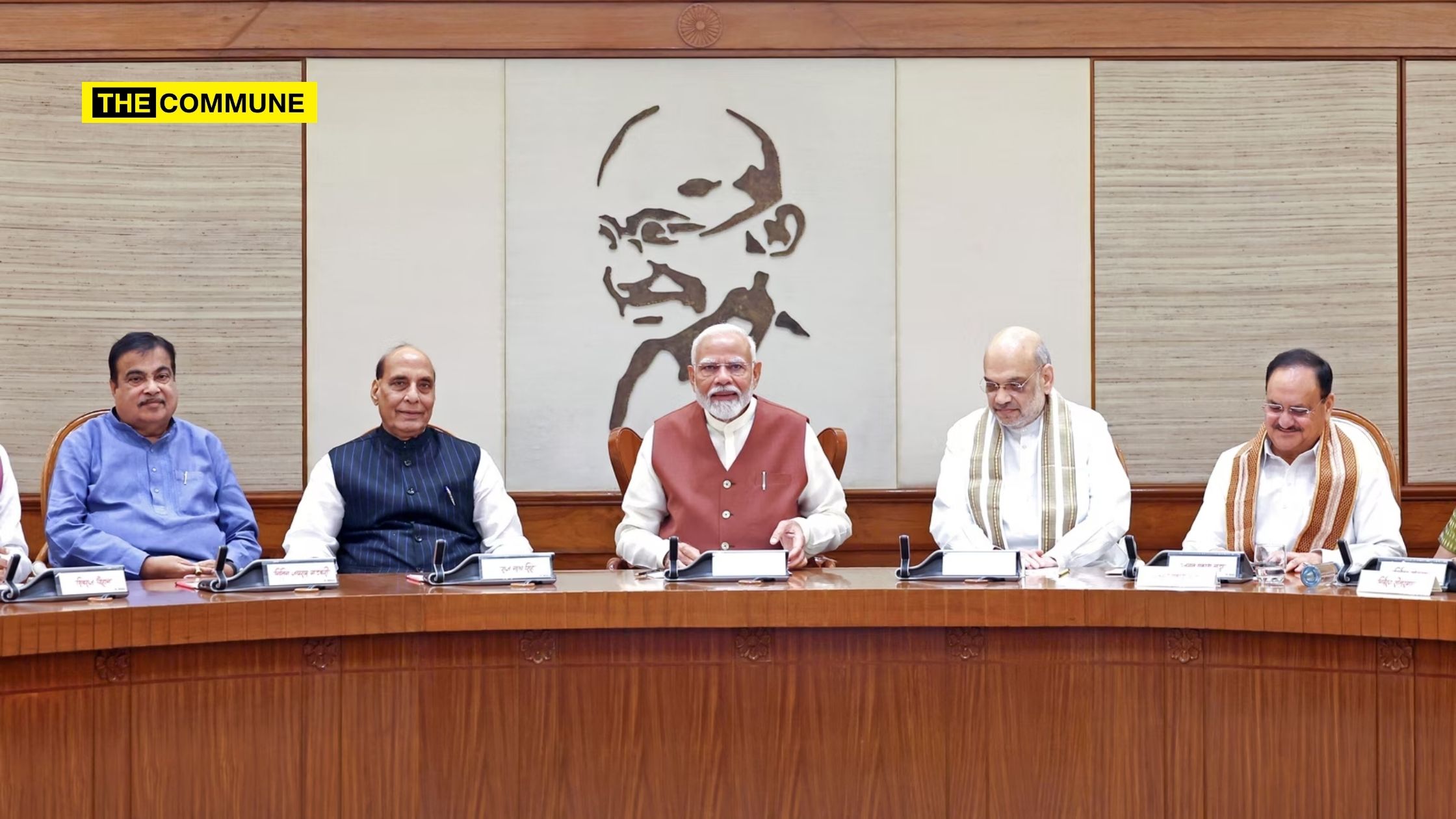
Union Cabinet Clears ‘One Nation, One Election’ Bill To Streamline Electoral Process

Union Cabinet Clears ‘One Nation, One Election’ Bill To Streamline Electoral Process.

The Union Cabinet on Thursday approved the ‘One Nation, One Election’ Bill, which aims to improve electoral processes. The bill is likely to be tabled during this winter session of parliament.

According to the Centre, this legislation will not only streamline the electoral process but also foster greater efficiency and reduce the financial and administrative burden associated with conducting multiple elections at different times.

The Centre has stressed that the concept of ‘One Nation, One Election’ envisions synchronising the electoral cycles of the Lok Sabha and state Legislative Assemblies, allowing voters to cast their ballots for both polls simultaneously.

By doing so, the government aims to address several challenges posed by the current staggered elections, which often lead to prolonged electioneering, disruption in governance, and heightened expenditure.

Earlier in September, the Union Cabinet had approved the proposal for the ‘One Nation, One Election’ Bill.

Congress leader Tariq Anwar, while speaking to IANS, said, “This is a controversial issue. Ours is a federal structure in which it is not possible to implement ‘One Nation, One Election’. The opposition has not gained confidence in the issue. All stakeholders must be taken into confidence before taking such a big decision,” he said.

Earlier, Prime Minister Narendra Modi had hailed the proposal, saying that the Cabinet has accepted the recommendations of the High-Level Committee on Simultaneous Elections.

The High-Level Committee on Simultaneous Elections headed by former President Ram Nath Kovind had recommended holding concurrent elections for the Lok Sabha and state Assemblies followed by synchronised local body polls within 100 days.

However, critics have argued that implementing synchronised elections could pose logistical and constitutional challenges. They highlight potential difficulties in dissolving Assemblies midway or addressing situations where a state government falls before completing its tenure. Proponents of the Bill, on the other hand, argue that it will usher in a new era of stability and continuity in policymaking, as governments will no longer have to operate in a perpetual election mode.

–IANS

Subscribe to our channels on TelegramWhatsApp, and Instagram and get the best stories of the day delivered to you personally.

“Brahmins Are Poisoning Our Minds & Pushing Us To Wield Weapons”, Says Failed Commie Director Raju Murugan

Brahmins Are Poisoning Our Minds & Pushing Us To Wield Weapons, Says Failed Commie Director Raju Murugan.

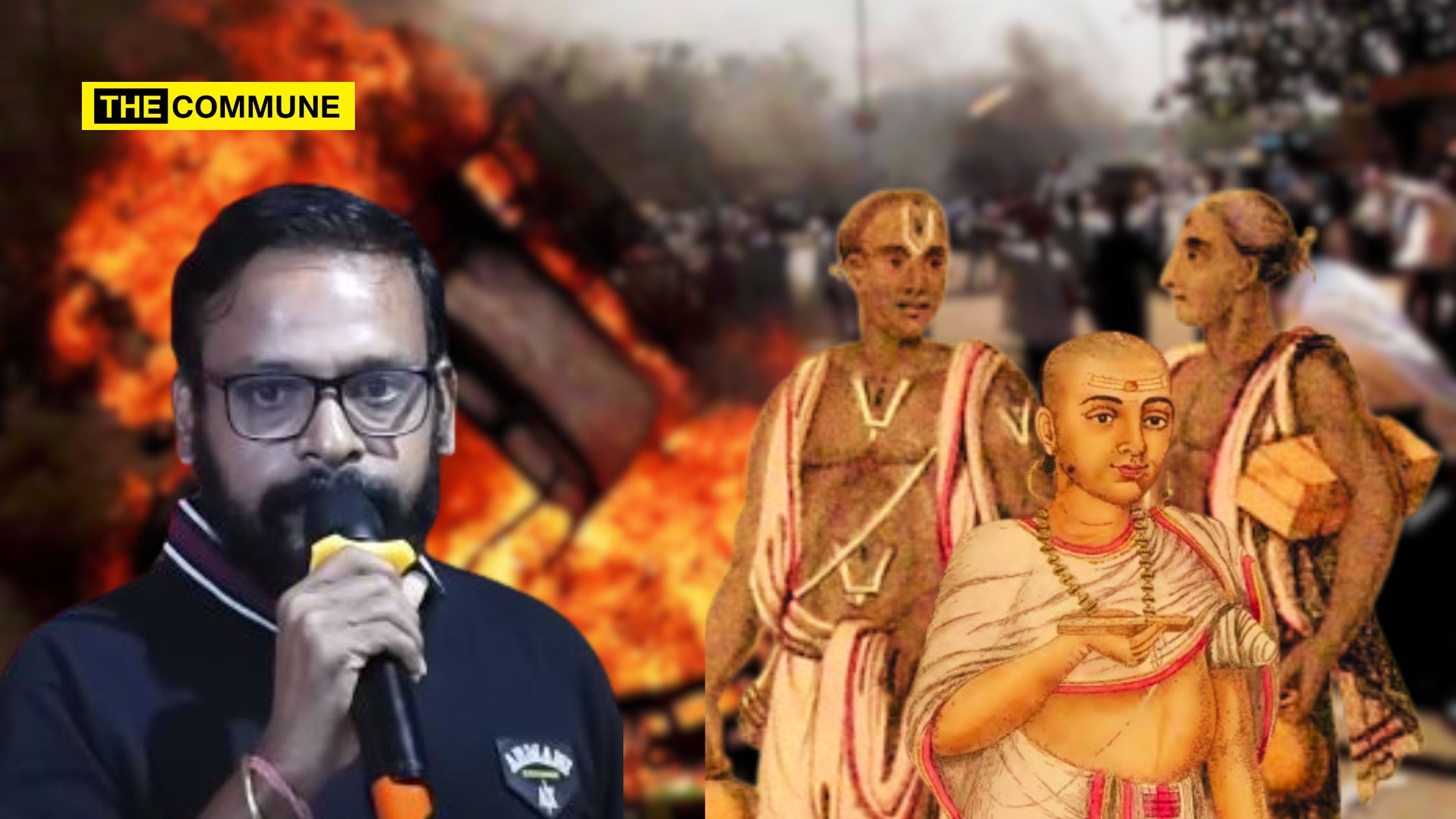
The Dravidianist propaganda machinery in Tamil Nadu hit a new low as Kollywood director Raju Murugan, known for his waning relevance and ideological failures, used the platform of the “Break the Bloody Silence” event to launch an unwarranted tirade against Brahmins.

He made sweeping and scandalous allegations that were irrelevant to the event he was participating in and not based on any factual truth.

At the launch of the song “Break the Bloody Silence”, an event intended to condemn ongoing global conflicts like war, Raju Murugan took the opportunity to voice unfounded accusations against the Brahmins. His remarks, filled with hatred, went beyond the purpose and aimed at advancing a divisive narrative.

He began by linking international conflicts rooted in land, ethnicity, and geopolitical tensions to India’s domestic issues, stating, “Comrades, if you see why we designed this evening’s event as a stance against war, an international war is not just about Palestine or Ukraine it is a struggle against capitalism, autocracy, and imperialism which are deeply connected to the violence in Manipur, Gujarat, and even honour killings in Tamil Nadu. We are not merely speaking for a child who has died in Palestine; we are speaking for ourselves, and that’s why everyone must speak. This makes it vital.”

Then, advancing a narrative targeting the Brahmin community, he said, “Comrades, if you see the upper castes, they often repeat one thing. In Tamil Nadu and India, Brahmin supporters keep saying, ‘Have you ever seen a Paapaan (derogatory word for Brahmin male) on the street wielding a knife to stab someone? Have you seen one? Are they inciting riots? Are they taking up weapons? Have you ever seen this?’ For over fifty years, this question has been repeated endlessly. And I see this as a very important question because when it reaches ordinary people, he believes, ‘Yes, that’s true. I’ve never seen an upper caste in street wielding a knife and stab someone.’ While that might be factual, but the critical point is for the person who holds the knife on the street, the very knife was provided by him (Brahmin). The weapon is here (brain) which is a significant poisonous tool. So here we should see for the past thousand years who is giving that weapon.”

What followed from Director Raju Murugan was highly controversial. He shifted focus to a documentary on the Gujarat riots and the Godhra train burning incident, naming communist activist Teesta Setalvad as part of the research. Murugan claimed that many of those involved in the violence were Dalits and tribal people. He went on to assert that both the victims and the perpetrators were Dalits and tribals. Then he blamed the Brahmin community for allegedly brainwashing Dalits and inciting them to commit acts of violence.

Director Raju Murugan’s film career, particularly after his early successes with ‘Cuckoo’ and ‘Joker’, has largely been marked by a series of failures, primarily driven by his attempt to push communist and Dravidianist ideologies in his films. His 2020 film ‘Gypsy’ serves as a prime example of this trend. The film tells the story of a wandering communist musician who elopes with an orthodox Muslim girl in the name of love, ultimately marrying her. The narrative is illogical, with the couple ending up in Delhi, and throughout the film, there are references to promoting communist ideals. The storyline culminates in riots that closely resemble the 2020 Delhi riots. Additionally, the film’s song “Ullam Uruguthayaa”, sung by Susheela Raman, faced severe criticism for its woke pop song aimed to deride Hindu gods and hymns. Now, his latest attempt to gain attention by targeting the Brahmin community only further highlights his ongoing search for relevance and opportunities.

Subscribe to our channels on Telegram, WhatsApp, and Instagram and get the best stories of the day delivered to you personally.
“I Would Like To Call It As Chennai Ezhumbur”, Union Railways Min Ashwini Vaishnaw Tells DMK MP Who Called It Egmore Railway Station

I Would Like To Call It As Chennai Ezhumbur, Union Railways Min Ashwini Vaishnaw Tells DMK MP Who Called It Egmore Railway Station

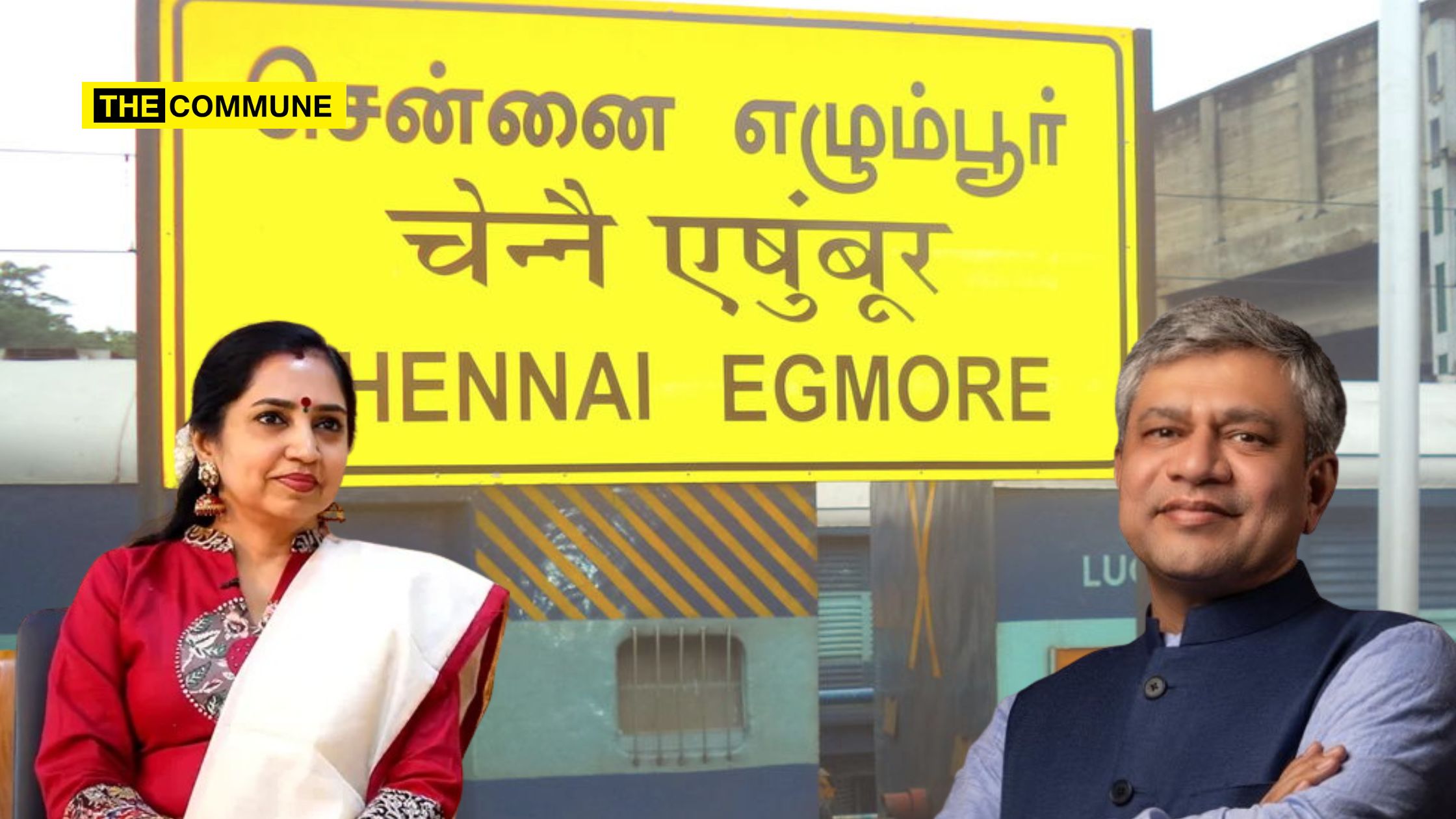
Ezhumbur, the historic name for Chennai’s Egmore station, was spotlighted in the Lok Sabha as Railway Minister Ashwini Vaishnaw emphasized its redevelopment under the Amrit Bharat Station Scheme. Responding to DMK MP Tamilachi Thangapandian’s concerns, Vaishnaw hailed Ezhumbur’s transformation, stating it would soon become a prime attraction in Chennai, blending its legacy with modern upgrades.

During the ongoing Winter Session of the Lok Sabha, DMK MP Tamilachi Thangapandian raised concerns about restoring and redeveloping railway stations in Chennai under the Amrit Bharat Station Scheme.  

Speaking in Parliament, Thangapandian highlighted the need for updates on redevelopment efforts, particularly in her constituency. She stated, “I would like to the minister through you sir regarding the Amrit Bharat station scheme. The ministry has announced 1324 stations which have been identified for redevelopment including 77 stations in the state of Tamil Nadu. I’d like to ask the Hon’ble Minister what has been the update with respect to these railway stations in our state, especially I have given representation to my constituency which is Saidapet station as well as the redevelopment work of Chennai Egmore.”

In response, Railway Minister Ashwini Vaishnaw provided an update on the station redevelopment programme, emphasizing the significant scale of the initiative. He noted, “The supplementary is actually not related to the main question. But still, I would like to point out that the Hon’ble Prime Minister has really focused on the transformation of Indian Railways, and as a part of that, one of the major programmes we have taken up is the redevelopment of 1,300 railway stations. And at this point in time, this is the world’s largest station redevelopment programme, and nowhere in the world has anybody taken up the redevelopment of such a large number of stations in a network which is continuously operating.”  

Focusing on Chennai Egmore station, Vaishnaw remarked, “The Chennai Egmore, I would like to pronounce it as Chennai Ezhumbur, is one of the Amrit Bharat stations and it is developing very well. I have visited that twice and the design and the enthusiasm of the officers working on that project is really amazing. I can say that it will be one of the stations which will become a prime attraction in the city of Chennai. Regarding other stations, Hon’ble MP can always meet me and discuss the details.”

Subscribe to our channels on Telegram, WhatsApp, and Instagram and get the best stories of the day delivered to you personally.
NIA Raids 19 Locations Across 5 States In Jaish-e-Mohammed Terror Probe

NIA Raids 19 Locations Across 5 States In Jaish-e-Mohammed Terror Probe

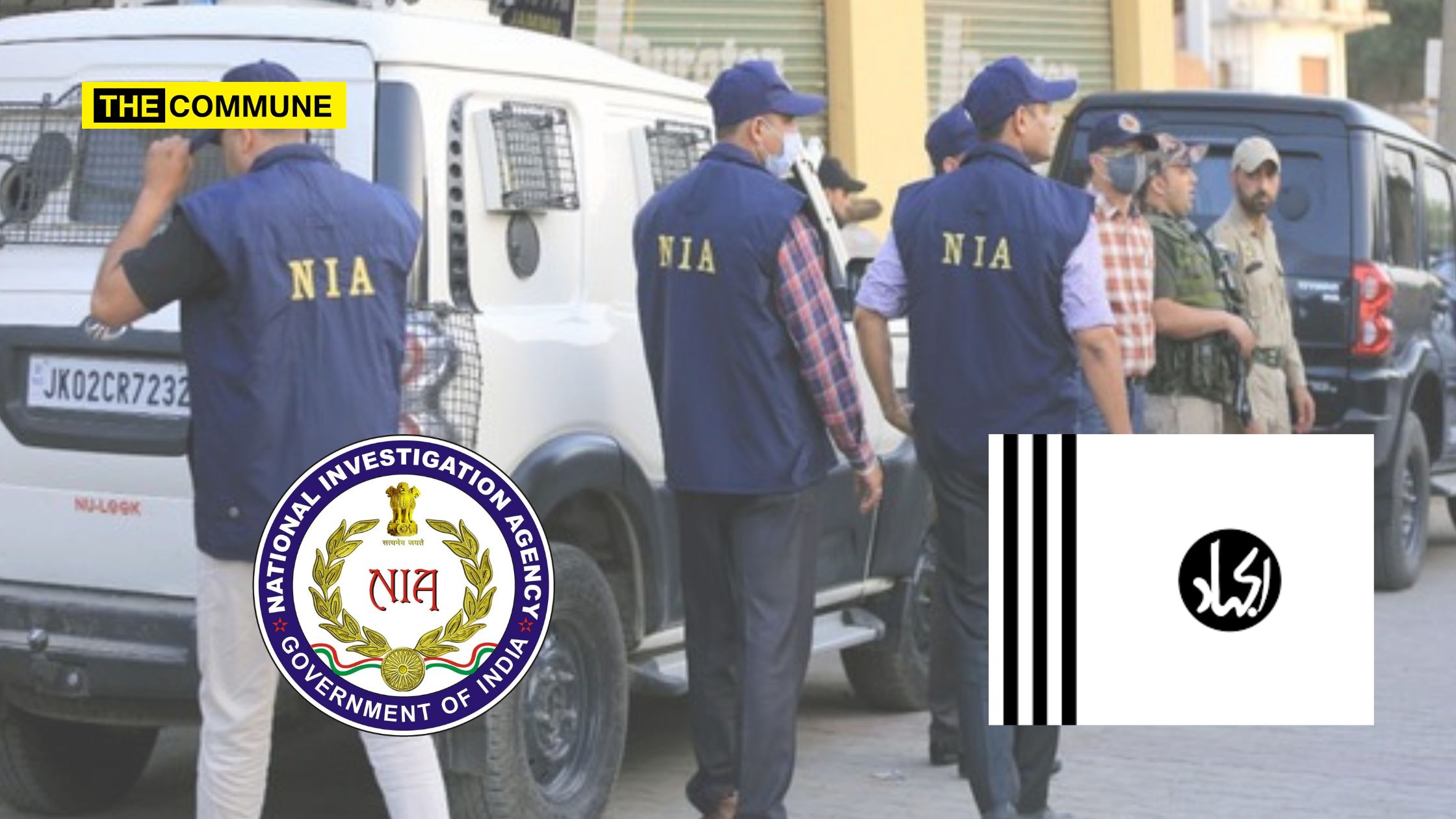
The National Investigation Agency (NIA) conducted extensive raids on Thursday across 19 locations in Assam, Gujarat, Jammu and Kashmir, Maharashtra, and Uttar Pradesh. The operation was part of an ongoing investigation into the banned terrorist group Jaish-e-Mohammad (JeM) and its alleged involvement in radicalizing individuals and spreading extremist propaganda.

In Jammu and Kashmir, raids were carried out in the Bamzoo Mattan area of Anantnag, Kreeri in Baramulla, and Khansahib in Budgam. In Gujarat, the NIA, in collaboration with the Ahmedabad Rural Police, searched the residence of Adil Vepari in Sanand town. Vepari, identified as a member of an online radical group, reportedly works at a madrasa in Chekhala village, Banas Kantha district.

In Uttar Pradesh, protests erupted in Jhansi during a raid at the home of local cleric Mufti Khalid. The cleric addressed the gathered crowd, urging calm and explaining that the NIA was conducting the operation within the bounds of the law.

According to sources, the NIA teams seized incriminating materials, including pamphlets, magazines, and electronic devices, during the raids at these locations. Several individuals have been taken in for questioning regarding their suspected involvement in activities aimed at inciting violence across the country.

The NIA has stated that the suspects were part of a network that sought to radicalize and motivate individuals to carry out violent attacks within India.

(With inputs from ANI)

Subscribe to our channels on Telegram, WhatsApp, and Instagram and get the best stories of the day delivered to you personally.
India’s Nuclear Power Capacity Has Doubled In The Last 10 years

India's Nuclear Power Capacity Has Doubled In The Last 10 years.

The Parliament was informed that India’s nuclear power generation capacity has nearly doubled in the last 10 years, from 4,780 MW in 2014 to 8,180 MW in 2024.

Highlighting the significant progress and future potential of India’s atomic energy programme, Union Minister of State (Independent Charge), Department of Atomic Energy, Jitendra Singh, has informed the Lok Sabha that the capacity is projected to triple to 22,480 MW by 2031-32.

He elaborated on key developments and outlined a roadmap for achieving greater self-reliance in nuclear power generation.

Jitendra Singh emphasised the revision of India’s power distribution framework, which has increased the home state’s share of electricity from atomic plants to 50 percent, with 35 percent allocated to neighbouring states and 15 percent to the national grid. This new formula ensures equitable resource distribution and reflects the nation’s federal spirit.

The Union Minister attributed this progress to several transformative initiatives, including the bulk approval of 10 reactors, increased funding allocations, collaborations with Public Sector Undertakings (PSUs), and limited private sector participation.

He credited technological advancements and streamlined administrative processes for strengthening India’s nuclear infrastructure.

In addition to energy production, Jitendra Singh highlighted the diverse applications of atomic energy. He noted its extensive use in agriculture, including the development of 70 mutagenic crop varieties. In the healthcare sector, India has introduced advanced isotopes for cancer treatment, while in the defence sector, atomic energy processes have been used to develop cost-effective, lightweight bulletproof jackets.

The Union Minister also underscored India’s abundant thorium reserves, which constitute 21 per cent of the global total. Indigenous projects like “Bhavani” are being developed to harness this resource, reducing dependence on imported uranium and other materials.

He acknowledged the challenges in implementing atomic power projects, such as land acquisition, forest clearances, and equipment procurement, but reaffirmed the government’s commitment to addressing these issues.

He noted that nine atomic power projects are currently under construction, with several others in the pre-project stage, demonstrating India’s dedication to expanding nuclear energy capacity.

Jitendra Singh provided a historical perspective, highlighting projects like the Kudankulam Nuclear Power Plant, which gained momentum post-2014 under the leadership of Prime Minister Narendra Modi.

He reiterated India’s commitment to peaceful purposes of atomic energy, as envisioned by Homi Bhabha, and emphasised leveraging nuclear energy for sustainable development while aligning with the vision of ‘One Nation, One Government’.

This progress underscores India’s resolve to achieve energy self-sufficiency, drive innovation, and contribute significantly across sectors through the peaceful applications of nuclear energy, he added.

–IANS

Subscribe to our TelegramWhatsApp, and Instagram channels and get the best stories of the day delivered to you personally.