Home Blog Page 498

Dravidian Model Of Administration: DMK Abandons Amma Kudineer Water Scheme In Chennai, Outlets Shut Down

The Amma Kudineer initiative, a landmark program introduced by former Chief Minister J Jayalalithaa to provide 20 liters of free drinking water per family each day, appears to have been abandoned by the current DMK government in Chennai. Several Amma Kudineer water distribution points across the city have been shut down, leaving residents struggling to access clean drinking water. Since June 2023, many of these outlets have either fallen into disrepair or been closed due to poor coordination between the Greater Chennai Corporation (GCC) and the Chennai Metropolitan Water Supply and Sewerage Board (CMWSSB).

In June 2023, the GCC passed a resolution to transfer the management of 53 Amma Kudineer units to the CMWSSB, citing the board’s expertise in water treatment. This decision was later supported by a directive from the Additional Chief Secretary of the Municipal Administration and Water Supply Department.

According to the GCC, 50 of the 53 Amma Kudineer outlets were still operational as of March 2025. However, a visit to five of these outlets by TNM revealed that none of them were working. When questioned, CMWSSB officials stated they had not yet received an official transfer of these units and therefore, were not responsible for their maintenance.

At an outlet on Elaya Street, Tondiarpet, residents reported that the facility had been closed for over a year. Previously, it supplied approximately 8,000 liters of water daily to 300 nearby households. One resident described how the outlet had been a crucial resource when operational, but now they had to rely on hand pumps, which provided poor-quality water. Many households often wasted up to 30 buckets of water just to remove impurities, and in some cases, the water had an unpleasant odor or even traces of sewage, leading to skin infections.

Murugan, a resident of Tsunami Quarters, explained that with the Amma Kudineer outlet no longer functioning, many people had turned to water lorries to meet their needs. He noted that residents now had to manually fill barrels from hand pumps early in the morning, while the metro water lorry, which arrived every other day, charged ₹15 per barrel and ₹1 per pot—an additional financial strain on families.

M. Renuka, the councillor for Ward 42, stated that the outlets had been handed over to the CMWSSB for better management, but no response had been received regarding when services would resume.

Similar concerns had been raised in other parts of Chennai. In Ward 110 of Teynampet, an Amma Kudineer outlet near a corporation park had remained locked for over a year. A resident in the area indicated that the closure was due to low usage.

According to R. Sivamurugan, Chief Engineer of the Operation and Maintenance Division 1, the GCC had not officially transferred the outlets to the CMWSSB, which meant the board could not be held responsible for their closure.

Meanwhile, Mayor Priya Rajan clarified that while Metro Water was in charge of the water supply, the GCC was responsible for maintaining the infrastructure. She pointed out that several Amma Kudineer outlets in areas like Saidapet were still operational, suggesting that some closures might have resulted from low demand.

(With Inputs From TNM)

Subscribe to our channels on TelegramWhatsApp, and Instagram and get the best stories of the day delivered to you personally.

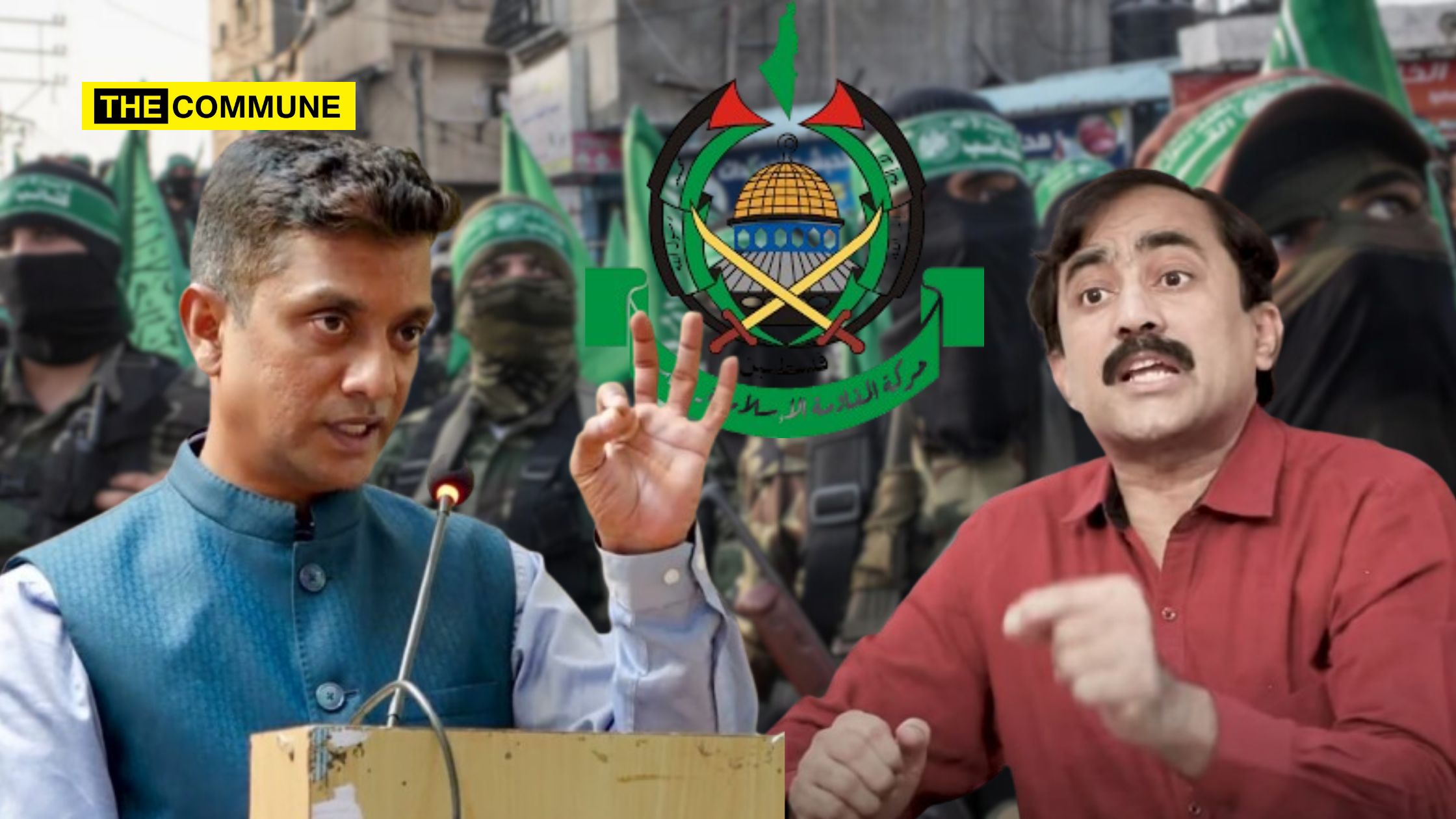
“Do They Have The Guts?” – Kerala BJP MP Suresh Gopi’s Explosive Retort To CPIM MP John Brittas Over Film Censorship & Waqf Debate

In a fiery exchange in the upper house of Parliament, BJP MP and actor Suresh Gopi hit back at CPI(M) MP John Brittas, calling out what he described as hypocrisy and misinformation in Brittas’ statements regarding the Waqf Act amendments and Kerala’s political landscape. Suresh Gopi delivered a blistering counterattack against CPI(M)’s John Brittas during a heated debate on Waqf Board amendments and Kerala’s political landscape, after Brittas launched a scathing attack, alleging discrimination in religious matters and accusing the government of trying to alienate Muslims from Waqf properties.

The Debate Over Waqf and Religious Discrimination

The confrontation began when Brittas launched a scathing critique of the government’s proposed changes to Waqf laws, accusing the ruling party of “extending bulldozer politics to the divine realm.” The CPI(M) member claimed the amendments discriminated against Muslim religious properties while protecting Hindu endowments, declaring: Sir they have already discriminated amongst people, they segregated people from

people. You know this bill what they intending, they are segregating gods from gods, they’re segregating Hindu gods from Allah. This act of limitation is not applicable to Devastanam, not applicable to a Hindu god, they want to make it applicable to Allah. How can they discriminate between gods? He further said, “This is extension of bulldozer, digging, and danga. Whatever is happening in this country that has been extended to a piece of legislation.”

Switching to Malayalam, he claimed the BJP was shedding crocodile tears for the Christians and that Christians were being persecuted every day. Then he brought up the film Empuraan. He said, “The other day we spoke about the movie Empuraan. There is a character in the film Munna. You can see that Munna here. You can see a Munna on BJP benches. Malayalis will figure it out. Kerala will figure it out. That is Kerala’s history. Kerala will keep your poison out. One man (read Gopi) has won. Like we closed the account in Nemom, we will close this account also. Malayalis made a mistake and they will rectify it soon. Don’t worry.”

Brittas then brought up Munambam, a village in Kerala’s Ernakulam district, where a conflict has arisen over 400 acres of land designated as Waqf property, despite being home to Christian families. “Nobody will lose their house in Munambam. The Left government in Kerala has the responsibility to protect all families. It’s a promise of the government. The government had the wherewithal and courage to construct 5 lakh houses for the homeless. We don’t need anybody’s charity,” he said.

Suresh Gopi’s Fiery Speech

Hitting back, Gopi later said, “There was an indirect reference to a Malayalam movie. He was talking about Empuraan… Does he dare to have a re-release of  51 cuts TP Chandrasekharan (based on the life of Revolutionary Marxist Party leader TP Chandrashekharan who was stabbed to death), Left Right Left? Two films, does Mr. Brittas or his Kairali channel or his chairman in the Kairali channel who is a leading actor in the Malayalam film industry, I do not wish to take his name because he is a noble soul. Do they have the guts, does the chief minister of Kerala have the guts? Sir, they should have the guts to let these two films be screened again, permitted to be screened, then they can start yelling for Empuraan and one more matter of fact which is the only truth, which I have to be letting the Indian nationals, I have to be letting it known to the Indian citizens. There was no Censor pressure on the producers of Empuraan, I was the first person to call up the producers and ask them to delete my name in the form of a credit card towards the beginning of the film. So this is the truth. I’m ready to take any punishment if this turns out to be a false on-record deposit that I am making in this upper house. Sir, it was the decision of the producers and the lead actor of the film with the permission of the director of the film to remove 17 portions from that film. It was their decision and what is the circus which is going on in the name of politics in the whole of the state?”

Speaking on Munambam, Gopi said, “This party has killed some 800-odd people in Kerala… 600 families were cheated because of your politics of murder in Munambam. They had set up a commission which was thrown out by the HC, buried in the Arabian Sea. You will be buried by the people of Kerala, irrespective of Hindus, Muslims, and Christians,” he said.

As tempers flared, Brittas attempted to have Gopi’s remarks expunged, calling them “derogatory.” But the Chair did not agree to it instantly.

Subscribe to our channels on Telegram, WhatsApp, and Instagram and get the best stories of the day delivered to you personally.

NIA SDPI-Linked Premises In Kerala’s Malappuram, Four In Custody

The National Investigating Agency (NIA) on Friday took four people into custody after raiding five houses in Kerala’s Malappuram district. The raids were held in continuation of the action by the Enforcement Directorate (ED), which conducted raids at the residences and offices of some SDPI activists in March.

The Social Democratic Party of India (SDPI) is the political arm of the now-banned Popular Front of India (PFI). It was the Kochi unit of the NIA that swooped down around 3 a.m. at five residences in the district. More details are awaited about the people who have been taken into custody. On March 6, the ED sleuths conducted raids in three districts of the state and on March 20, they again raided the houses and offices of SDPI activists.

Both these searches came after the arrest of the SDPI’s National President M.K. Faizy in connection with an alleged money laundering case tied to the PFI. Faizy was taken into custody at Delhi’s Indira Gandhi International Airport on March 3 and was subsequently presented before a special Prevention of Money Laundering Act (PMLA) court at the Patiala House courts. The court then granted the ED six days of custodial interrogation. Investigators claimed that the SDPI received Rs 4.07 crore from the PFI through illegal hawala channels and allegedly funnelled the funds to its units nationwide.

Founded in 2009, the SDPI has long been accused of having close ties with the PFI, which was banned by the Union government in 2022 under the Unlawful Activities (Prevention) Act (UAPA) for its alleged involvement in anti-national activities. While the SDPI has consistently denied any direct association with the PFI, claiming to be an independent political organisation, Faizy’s arrest and the fresh raids have once again put the party’s financial dealings under the scanner. Earlier, the ED had written to the Election Commission of India seeking details of the funding and expenditure of SDPI over the years as part of its crackdown.

–IANS

Subscribe to our channels on TelegramWhatsApp, and Instagram and get the best stories of the day delivered to you personally.

TVK Once Again Proves It Is Just Another DMK, To Protest Against Waqf Bill Which Gives Rights To Muslim Women

In an effort to appeal to the Muslim vote bank, following the example set by the DMK, part-time politician and leader of Tamilaga Vettri Kazhagam (TVK), Vijay, has announced a state-wide protest on 4 April 2025, calling for the repeal of the Waqf (Amendment) Bill, 2025. This move follows the passage of the Waqf (Amendment) Bill in the Lok Sabha during the early hours of 3 April 2025, after a marathon 12-hour debate.

In this regard, the party has announced protests across all districts of the state. Reports suggest that Vijay, the part-time politician, has instructed district secretaries to coordinate and manage the demonstrations effectively. This announcement follows remarks made by Tamil Nadu Chief Minister MK Stalin in the Assembly, where he stated that the DMK would challenge the Bill in the Supreme Court.

On 3 April 2025, TVK chief Vijay, in a statement on his social media X account, stated, “The Union Government should withdraw the anti-democratic Waqf Amendment Bill! The dignity of the Indian Constitution must be upheld!

  • The Waqf Amendment Bill passed by the BJP government in the Lok Sabha has once again raised concerns about the fundamental principles of secular Indian democracy and the dignity of the Constitution.
  • The ruling BJP government in the Union has enacted the Waqf Board Amendment Bill, continuing a troubling trend that continues to undermine the Constitution.
  • The Indian Constitution recognizes the fundamental right of all Muslim brotherhood in India to follow their religious and cultural practices through Muslim personal laws.
  • The Waqf Board Act is deeply intertwined with the theological and socio-economic aspects of Muslim life. It is a key component of Muslim personal law.
  • What else is the demolition of the Waqf Board Act if not a direct assault on the promises made to minorities by our Constitution and the leaders of our country?
  • What else is the majoritarian and divisive politics pursued by the BJP government if not a psychological attack that keeps our Muslim brothers in a perpetual state of constant insecurity and fear?
  • Throughout history, we have seen that rulers who pass laws that undermine social harmony with the support of coalition parties, simply because they have the power to rule, often face the consequences through the people’s revolution.
  • The ruling party at the Union is presenting the hollow argument that “This amendment is for the benefit of the Muslim minority, but opposition parties are misleading them.”
  •  If, as the BJP government claims, this is a law to protect the interests of Muslims, why don’t they have a single Muslim representative to even introduce it?
  • Why aren’t there enough Muslim members in the democratic assembly to discuss it?
  • This is the worst majoritarian politics that the BJP government has established today.
  • All opposition parties and democratic forces in India are opposing this amendment bill. They are unanimously condemning the action of the Union government.
  • The Joint Parliamentary Committee formed to consider this bill. The opposition members in the joint committee have accused it of ‘unusual, for the first time in history, rejecting the recommendations.’ This is nothing but the tyrannical power of the BJP government.
  • Resolutions have been passed in the states of Tamil Nadu, Kerala, and Karnataka urging the withdrawal of the Waqf Amendment Bill. The Tamilaga Vettri Kazhagam has also passed a resolution in its general committee emphasizing the same idea.
  • Tamilaga Vettri Kazhagam strongly condemns the Union BJP government, which has rejected all the democratic values ​​of our country and, with the help of its majoritarian dominance, has taken up stance against the Muslim brotherhood.
  •  In order to listen to the entire democratic voices of the country, Tamilaga Vettri Kazhagam insists that this anti-democratic amendment bill should be withdrawn immediately.

If the Union BJP government does not take action, Tamilaga Vettri Kazhagam will stand in solidarity with the Muslim brothers and join their fight for the Waqf Rights Act.”

On contrary to part time politician Vijay, Parliament has passed the Waqf (Amendment) Bill, 2025, with the Rajya Sabha approving it and the Upper House approved the Bill with 128 members voting in favor and 95 members voting against it, following a 12-hour debate. The Lok Sabha had already passed the Bill earlier.

The Waqf (Amendment) Bill 2025 aims to streamline the management of Waqf properties by including provisions to safeguard heritage sites and promote social welfare. The legislation seeks to enhance transparency in property management, improve coordination between Waqf Boards and local authorities, and protect the rights of stakeholders. Additionally, the Bill aims to improve the economic and social status of Muslim women, particularly widows and divorced women. One of the key objectives is to make the Waqf Board more inclusive, ensuring representation from various Muslim sects for better governance and decision-making. The Bill also seeks to establish a secular, transparent, and accountable system for Waqf administration.

During the debate, Minority Affairs Minister Kiren Rijiju responded by emphasizing that the legislation would benefit millions of poor Muslims and stated that it would not harm any Muslim community. He clarified that the Bill does not interfere with Waqf properties and that the government is committed to the vision of “Sabka Saath, Sabka Vikas” (Together with All, Development for All). Rijiju also mentioned that poor and Pasmanda Muslims had urged him to support the Bill. He assured that the government had considered the views of Members of Parliament in the Joint Parliamentary Committee, incorporating their suggestions into the Bill. He further noted that the Central Waqf Council would consist of 22 members, including ex-officio members, with no more than four non-Muslim members. The Waqf Board would have eleven members, of whom only three would be non-Muslims.

Earlier, while introducing the Bill, the Minority Affairs Minister highlighted that it had been brought after detailed consultations with stakeholders and the Joint Parliamentary Committee. He appealed to opposition parties to support the Bill.

Additionally, Parliament approved the Mussalman Wakf (Repeal) Bill, 2025, which repeals the Mussalman Wakf Act of 1923, with the Rajya Sabha giving its approval. The Lok Sabha had already passed the Bill.

Why Is The Waqf (Amendment) Act necessary?

  • In 2020, the Tamil Nadu Waqf Board claimed ownership of the entire Balasamudram Municipality in Dindigul district, asserting that their records indicate the area spans 389 acres. Due to ongoing legal disputes, this claim has left approximately 10,000 residents in limbo, as they can now not sell their ancestral properties.
  • In September 2022, the Tamil Nadu Waqf Board claimed ownership of the entire Thiruchendurai village in Tiruchirapalli, including temple lands, sparking significant concern among residents. This claim emerged when local farmer Rajagopal was required to obtain a No Objection Certificate from the Waqf Board to register his land sale, despite having proper revenue documents. The claim was recently debated in parliament, including over the 1,500-year-old Manendiyavalli Sametha Chandrasekhara Swamy temple. The Tamil Nadu Registration Department has acknowledged issues with encroachments and disputed properties but struggled to justify the Waqf Board’s claims over temple lands.
  • In 2023, the Tamil Nadu Waqf Board asserted ownership over land allocated to 73 Scheduled Caste families in Anganakaundan Puthur, Erode District. The Tamil Nadu government provided this land in 1980 after a flood, and since then, it has been their home for 40 years. The Waqf Board’s claim has caused significant challenges, including transferring land titles, registering deeds, and obtaining loans.
  • In January 2023, the DMK government wrongly reclassified 57 acres of agricultural land in Veppur village, Ranipet District, as Waqf Board property. This land, which Hindu families had farmed for decades, was abruptly claimed by the Waqf Board without proper notice or due process, causing considerable distress among the affected farmers.
  • On 11 August 2024, former Tamil Nadu Waqf Board President Abdul Rahman claimed that the Peyazhwar Temple in Mylapore, Chennai, which is allegedly situated on land claimed by the Kutchery Road Mosque.
  • In January 2025, residents of Min Nagar in Kanchipuram district faced challenges after the Tamil Nadu Waqf Board claimed 2.43 acres of land they’ve lived on for over 40 years. The Kanchipuram Registrar’s Office confirmed the claim, hindering property registrations. The land was purchased in 1982 by employees of the Kanchipuram Electric City Office.

Subscribe to our channels on TelegramWhatsApp, and Instagram and get the best stories of the day delivered to you personally.

Waqf Bill Ends Era Of Years Of Injustice And Corruption, Says Amit Shah

Union Home Minister Amit Shah on Friday hailed the passage of the Waqf (Amendment) Bill, 2025, calling it a historic step toward ending years of injustice and corruption in the management of Waqf properties.

A day after Union Home Minister Amit Shah and Parliamentary Affairs Minister Kiren Rijiju made a strong case for the Waqf (Amendment) Bill in the lower house of the Parliament, Leader of Rajya Sabha and Union Minister J.P. Nadda led a passionate debate in the upper house on the bill while slamming the Opposition.

The Rajya Sabha approved the Bill in the early hours of Friday with a majority of 128 votes against 95, following a charged debate. This came just a day after the Bill was passed in the Lok Sabha following a nearly 12-hour-long discussion. Taking to X, Amit Shah posted, “Today is a historic day, when the Parliament has approved the ‘Waqf (Amendment) Bill, 2025’, ending the era of years of injustice and corruption and ushering in an era of justice and equality.”

He added, “Through this Bill, the Waqf Board and Waqf properties are going to be more accountable, transparent and equitable. This will definitely benefit the poor, women and children of the Muslim community.” Congratulating the leadership behind the Bill, Shah said, “I congratulate Prime Minister Narendra Modi and Minority Affairs Minister Kiren Rijiju for this important Bill that gives justice to crores of people. Also, I express my heartfelt gratitude to all the parties and MPs who supported it.”

The Rajya Sabha debate, which started on Thursday, concluded with the approval of the Bill early Friday morning. The legislation will now be sent to President Droupadi Murmu for her assent to become law.

–IANS

Subscribe to our channels on TelegramWhatsApp, and Instagram and get the best stories of the day delivered to you personally.

“Hindu Temples Already Under Govt Control, Hindu Devotees Feel Betrayed” – Nirmala Sitharaman Shuts Down Kapil Sibal’s Waqf Argument

A heated debate erupted in Parliament as Union Finance Minister Nirmala Sitharaman and Law Minister Kiren Rijiju clashed with senior Congress leader Kapil Sibal over the management of Waqf and Hindu temple properties. The discussion, which took place during a session on amendments to the Waqf Board laws, saw Sitharaman delivering a sharp rebuttal to Sibal’s claims, leaving the veteran lawyer visibly cornered.

Sibal’s Claims on Waqf vs. Temple Lands

Kapil Sibal, while opposing a bill related to Waqf properties, argued that Hindu temples possess significantly more land than Waqf boards. He cited figures from Tamil Nadu, Andhra Pradesh, and Telangana, claiming that Hindu religious institutions hold nearly 10 lakh acres, compared to Waqf’s 8 lakh acres. He said, “First, let us understand a fundamental point: I own property. Whether I am Hindu, Muslim, Christian, or Sikh, if I wish to donate my property to charity, who can stop me? No one. Yet, the law being proposed restricts this right. Historically, non-Muslims also had the right to create Waqf. However, amendments in 1954 and 1995 stated that only Muslims could create Waqf. This restriction was removed in 2013, but now, this bill seeks to reinstate the same restriction, allowing only Muslims to create Waqf. I want to cite historical legal precedents:

  • In the 17th century, Hindu zamindars allowed Muslims to create Waqf within their territories.
  • In Arur Singh vs. Badar Dan (Lahore case), the court upheld the right of a Hindu to create Waqf for a Muslim graveyard.
  • After independence, the Nagpur High Court also upheld the right of non-Muslims to create Waqf.

Yet, now, we are regressing. Our Prime Minister often speaks of “One Nation, One Law.” If we truly believe in this principle, how can we justify a law that says only Muslims can donate property to Waqf? This law is neither secular nor just. If I want to donate my property to charity, why should I be stopped? This is my property, my choice. The state has no right to dictate how I use it. If we truly want One Nation, One Law, then this restriction must be abolished.

He then started comparing Hindu temple property with that of Waqf. He said, “Naddaji spoke about the vast Waqf properties in India. But let me tell you the real numbers. Hindu religious institutions in Tamil Nadu, Andhra Pradesh, and Telangana alone own:

    • 4.47 lakh acres in Tamil Nadu
    • 4.65 lakh acres in Andhra Pradesh
    • 87,000 acres in Telangana
    • Tirumala Tirupati Devasthanam (TTD) alone holds 723 acres

In total, in just four states, Hindu temples control nearly 10 lakh acres of land. Yet, you only highlight Waqf properties, which cover 8 lakh acres nationwide. Why this selective concern?”

Sibal then claimed it was the government that had control over Waqf Boards. He said, “Another issue in this bill is the government’s total control over Waqf Boards. Earlier, these boards included MPs, Supreme Court and High Court judges, and civil servants. The Chief Executive Officer (CEO) of the board was a civil servant, and the government could issue directives to the board. Now, the government has superseded these provisions and taken full control. If the previous system was functioning, why dismantle it? If any wrongdoing occurred, it was under the government’s watch anyway.”

Sitharaman’s Sharp Rebuttal

Nirmala Sitharaman swiftly countered Sibal’s argument, pointing out that Hindu temples are already under government control, unlike Waqf properties. She said, “There are 1 or 2 points on which I want to give clarification as much as the Minority Affairs minister says, we are talking to a senior legal luminary so I humbly submit if I heard him right, hon’ble member. In Tamil Nadu or in Andhra, and he also took the name of the Tirumala Tirupati Devasthanam. In all this, the HR&CE is with the government. Government appointed people monitor it., they execute it, they run it. Second, in TTD, the Executive Officer is appointed by the government of Andhra Pradesh. The Endowment Board has people are appointed by the government of Andhra Pradesh and the entire system is completely under the government of Andhra Pradesh. So it is not as if Hindus are not being touched at all, only Muslims are.. no! There is a huge, in fact, it has led to a lot of feeling that Hindu pilgrims have started feeling that only our temples are being completely controlled by government and government-appointed men. It is leading to a lot of confusion among Hindu pilgrims and its a matter of concern for all religions,” highlighting that Hindu devotees have long raised concerns about government interference in temple affairs.

Subscribe to our channels on Telegram, WhatsApp, and Instagram and get the best stories of the day delivered to you personally.

VCK’s Women District Secretary Allegedly Attacks Doctor’s Family In Kallakurichi; Video Goes Viral

A month-old incident has recently gone viral, showing a video of Viduthalai Chiruthaigal Katchi (VCK) women’s district secretary allegedly leading an attack on a doctor’s family with the help of a group of individuals near Kallakurichi. The footage has sparked widespread attention and controversy.

Palaniyammal, a resident of Kalaignar Nagar in Thiyagadurgam, Kallakurichi district, serves as the VCK Kallakurichi North District Secretary. She is said to have planted and maintained saplings on a piece of land measuring approximately 10 cents in front of her residence. However, Saravanan, a doctor and the son of Kanagaraj, reportedly objected to this, claiming that the land was officially registered in his family’s name. Allegedly, he cut down the trees, stating that others had no right to plant and grow saplings on their property.

Enraged by this, Palaniyammal asserted that she had not planted saplings on anyone’s private land. It is alleged that she then called in her associates and, claiming that she was cultivating plants on government-owned Kallanguthu Poramboke land, threatened Saravanan’s life. The group reportedly vandalized the doctor’s house, breaking gates and windows with stones and sticks.

Further escalating the situation, Palaniyammal allegedly attacked Saravanan’s family, using both physical force and stones. She is also accused of seizing Saravanan’s phone after he recorded the altercation. Additionally, her husband, Velmurugan, allegedly assaulted a person who attempted to retrieve the phone.

The Thiagadurgam police station has launched an investigation following complaints from both parties. Though the incident occurred over a month ago, the emergence of the viral video has now drawn widespread attention, intensifying public reaction.

(With Inputs From ABP Nadu)

Subscribe to our channels on TelegramWhatsApp, and Instagram and get the best stories of the day delivered to you personally.

POCSO Case Filed Against Pastor & Warden At Trichy’s Govt-Aided St. Xavier’s School Hostel

Two individuals, including a pastor, have been arrested in a POCSO case related to the sexual harassment of hostel students.

St. Xavier’s Government-Aided Higher Secondary School, located in Purathakudi near Samayapuram in Trichy district, has over 700 students. The school also houses St. Xavier’s Britto Hostel, where more than 100 students reside. The hostel warden, Kulanthai Nathan, is from Ayyavadi near Kumbakonam in Thanjavur district. Sundarrajan, a resident of Murugankottai in Udayarpalayam, Ariyalur district, is a postgraduate student is training to become a priest. It is alleged that he stayed in the warden’s room and harassed students at the hostel.

Despite multiple complaints, no action was taken, leading the students to inform their parents. The matter was later reported to Trichy District Child Protection Officer Rahul Gandhi, who conducted an inquiry. The investigation confirmed that students had been subjected to sexual harassment.

Following this, a POCSO case was registered against hostel warden Kulanthai Nathan and his associate Sundarrajan at the Lalgudi All Women’s Police Station based on a complaint filed by Rahul Gandhi. Further legal proceedings will depend on the outcome of the police investigation.

(With inputs from Update 360)

Subscribe to our channels on TelegramWhatsApp, and Instagram and get the best stories of the day delivered to you personally.

Vedic Scholar Dushyanth Sridhar Seeks ₹1 Crore In Defamation Suit Against Temple Activist Rangarajan Narasimhan

rangarajan narasimhan dushyanth sridhar

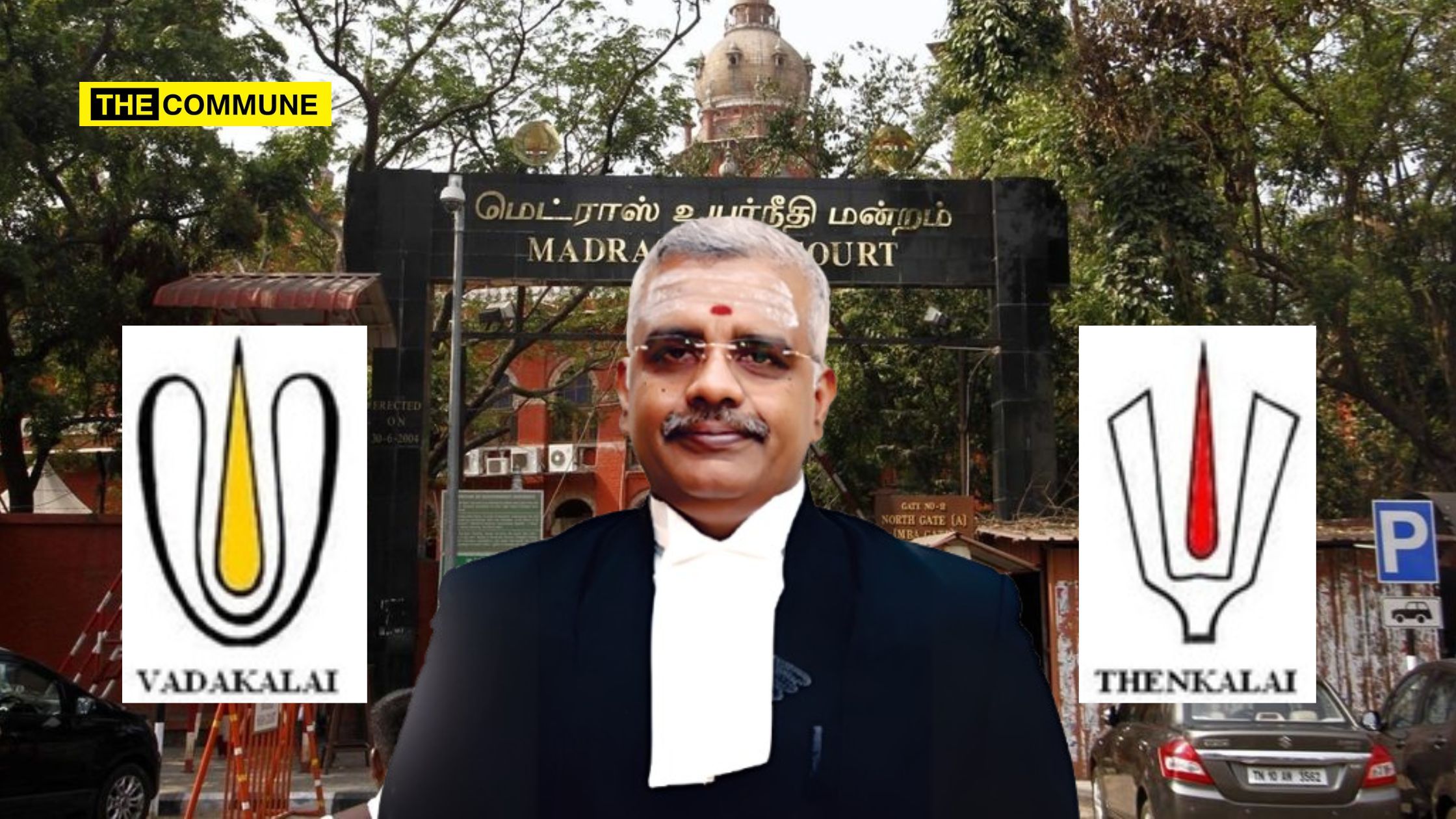
Vedic speaker and orator Dushyanth Sridhar has approached the Madras High Court, seeking permission to file a defamation suit against temple activist Rangarajan Narasimhan. He is demanding ₹1 crore in damages, alleging that the activist made derogatory remarks about him on social media.

On Thursday (3 April 2025), Justice K. Kumaresh Babu granted time until 29 April 2025 for Narasimhan to submit his written objections. Appearing in person, the activist argued that the suit should have been filed in Tiruchi, where he resides, rather than in Chennai.

Dushyanth Sridhar, a Bengaluru resident, justified his decision to approach the Madras High Court by stating that his primary audience and followers are based in Chennai. His legal counsel informed the court that he is a chemical engineer with both bachelor’s and master’s degrees from the prestigious Birla Institute of Technology and Science (BITS), Pilani. Transitioning to religious discourse, he claims he has since delivered approximately 3,500 lectures globally on scriptures such as the Ramayana, Mahabharata, Bhagavata Mahapurana, and Divya Prabandham.

Dushyanth Sridhar alleges that since 2023, Rangarajan Narasimhan has been making personal attacks against him online, which he claims go beyond fair criticism. He has requested the court to direct the activist to remove the defamatory posts, refrain from making further such statements, and compensate him for the alleged harm to his reputation.

According to the plaint, Chennai serves as Sridhar’s primary base for discourses, given his large following in the city and his preference for delivering speeches in Tamil. It further states that the defendant has a history of making inflammatory remarks against well-known figures to gain attention.

The case will be heard further after the activist files his response by 29 April 2025.

(With inputs from The Hindu)

Subscribe to our channels on Telegram, WhatsApp, and Instagram and get the best stories of the day delivered to you personally.
Tenkasi Kashi Vishwanathar Temple Consecration Halted By Madurai High Court Bench Over Alleged Misuse Of Funds

The Madurai Bench of the High Court has issued an interim ban on the consecration ceremony (Kumbabhishekam) of the Sri Ulagamman Udanurai Arulmigu Sri Kashi Vishwanathar Swamy Temple in Tenkasi. The decision comes in response to a public interest litigation (PIL) filed by a petitioner alleging mismanagement and structural instability in the temple following renovation efforts.

The petitioner, Nambirajan from Tenkasi, contended that extensive excavation work had been carried out within the temple premises, leading to the removal of 100 tractor-loads of soil under the directive of the temple’s executive officer, Murugan. This, he claimed, had compromised the structural integrity of the temple. Additionally, he alleged that government funds allocated for the temple’s renovation had not been utilized properly, and that an inspection by the Tenkasi District Assistant Commissioner confirmed that the renovation work remained incomplete.

The High Court, in response, has halted the Kumbabhishekam until the temple’s restoration is fully completed. The case has been adjourned, with the court directing an inspection by a team from IIT Madras and the Customary Commission to assess the temple’s stability and submit a report.

Meanwhile, controversy has erupted on social media over a notice issued by the temple’s renovation committee detailing the proposed expenses for the Kumbabhishekam. The document lists an estimated total cost of ₹1.67 crore, with a Shivacharya’s salary reportedly starting at ₹45 lakhs, sparking public outcry and raising concerns about financial transparency.

The case will continue to be heard, with further developments awaited on the future of the temple’s consecration ceremony.

(With inputs from WebDunia)

Subscribe to our channels on Telegram, WhatsApp, and Instagram and get the best stories of the day delivered to you personally.