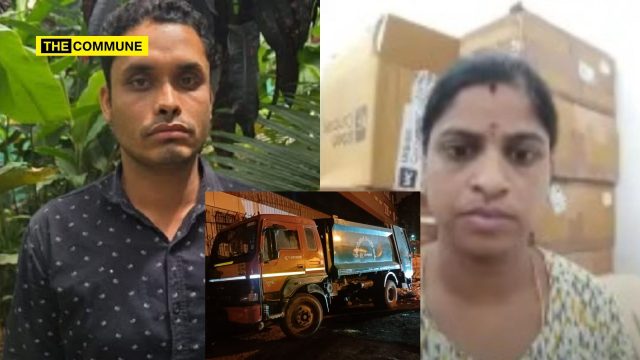
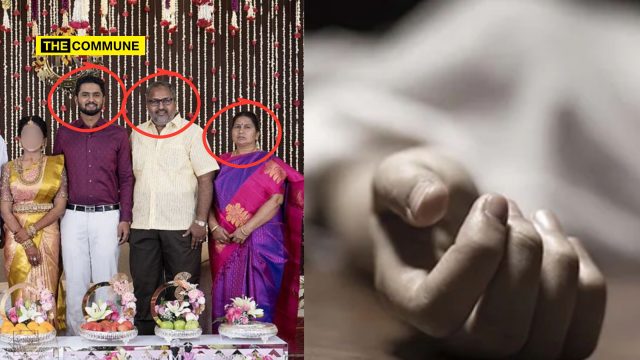
The National Investigation Agency (NIA) on Thursday filed a fourth supplementary charge sheet in the 2022 Coimbatore car blast case, formally charging five additional individuals for their involvement in the terror plot and associated financing activities.
The blast, which occurred in October 2022, killed the prime suspect and suicide bomber Jamesha Mubeen. The attack was allegedly aimed at the Kottai Sangameshwarar Temple in Coimbatore.
The five newly charge-sheeted accused are Sheikh Hidayathullah, Umar Farooq, Pavas Rahman, Sharan Mariappan, and Aboo Hanifa. According to the NIA, all five played critical roles in supporting and funding the attack. With the latest additions, a total of 17 individuals have now been charge-sheeted in connection with the case.
In a significant development, the NIA revealed that terror financing in the case was partly conducted through a fake COVID-19 vaccination certificate racket, orchestrated by some of the accused between 2021 and 2022.
Sheikh Hidayathullah, along with Umar Farooq and Amir (previously charge-sheeted), is accused of using the proceeds from the certificate scam to purchase materials used in the car bomb. The scam was reportedly facilitated by co-accused Pavas Rahman and Sharan Mariappan, while Aboo Hanifa provided financial assistance for the creation of the fake vaccine documents.
The funds generated from the fraudulent operation were used to acquire bomb-making components and support logistical preparations for the failed terror attack.
The investigation into the Coimbatore blast is ongoing, with the NIA continuing to probe deeper into the network of conspirators and financiers involved in the case.
Senior BJP leader and Tamil Nadu BJP Co-ordination Committee Convenor H. Raja has issued a stern warning against the growing anti-Hindu rhetoric in the state. Referring to the ongoing legal proceedings against DMK Forest Minister K. Ponmudy, Raja said this should be the last instance of any leader making derogatory remarks about Hindu beliefs.
Speaking at a BJP felicitation event in Chennai’s Royapettah YMCA Ground, organized to honor the newly appointed Tamil Nadu BJP President Nainar Nagendran, Raja congratulated him and condemned the state police for acting with political bias. He warned that if this partiality continues, officers responsible would face strict disciplinary action similar to the crackdown during the Emergency period under Indira Gandhi’s regime.
H. Raja stated, “Today, efforts are being made to take action against a minister who speaks ill of the Hindu community. Their DNA is like that. Since the very beginning, with EVR, it has become fashionable in Tamil Nadu to mock Hinduism.”
He declared, “Let Ponmudy be the last person to do so. From now on, no one should dare to speak against Hinduism. To such an extent that women are out on the streets. I tell you with certainty, Hindus, ‘Snakes should hiss; if not, they will strike.’ That is why I am saying that these Dravidian stocks, the vile forced degenerates, the evil anti-Hindu factions, should be uprooted from the political landscape of Tamil Nadu.”
Then, Raja expressed confidence in Nainar Nagendran’s leadership, describing him as an experienced and capable leader who previously held major portfolios such as Industries and Energy during his earlier political career.
Highlighting the BJP’s goal of establishing a strong foothold in Tamil Nadu, Raja urged party workers to act as if Prime Minister Narendra Modi himself were contesting from every constituency. “Every karyakarta must commit fully, like a student who is fully prepared for an exam,” he said.
Drawing inspiration from BJP founder Dr. Syama Prasad Mukherjee, Raja emphasized the spirit of selfless service and sacrifice for the nation. “Unlike other political dynasties, especially the Karunanidhi family, BJP leaders step forward first in service, not for personal gain,” he said.
He concluded by assuring Nainar Nagendran of full support from the party’s nearly 50 lakh members in the state, adding confidently that under Prime Minister Modi’s leadership, the BJP-led National Democratic Alliance (NDA) would form the government in Tamil Nadu in the near future.
Subscribe to our channels on Telegram, WhatsApp, and Instagram and get the best stories of the day delivered to you personally.
Indu Makkal Katchi (IMK) chief Arjun Sampath has voiced strong opposition to the recent Madras High Court ruling directing the removal of caste-based names from schools and colleges—both government and private—in Tamil Nadu. Taking to his official X account, Sampath posed a series of questions challenging the judgment and its implications for Hindu communities.
Sampath questioned the legitimacy of the court’s directive, stating, “How can the judiciary strip Hindus of constitutional rights?” He argued that caste-based identifiers in school names have historical and cultural roots, especially in the context of Hindu communities establishing their own institutions to counterbalance Christian dominance in education.
“Why Only Hindus?” Sampath Asks
Citing communities such as the Nadars, Kallars, Sengundars, and Vanniyars, Sampath said that these groups created educational services in response to a long-standing imbalance in access. He argued If Christian and Muslim institutions are allowed to operate under their religious identities, why are Hindu communities alone being restricted.
In his X post, Arjun Sampath questioned, “Will they also ban the worship of kula deivams (Clan deities)? To break the (historical) dominance of Christians in education, Hindu communities such as the Nadars, Kallars, Sengundars, and Vanniyars began establishing their educational services. Just as the government and politics that took over temples, is it fair to ban running educational institutions for Tamils? Minority status provided for education institutions in the name of Christ and Islam! then is it fair for Hindu Tamils to be barred from providing educational services? What justification does the court have to deprive the Hindu community of the fundamental rights granted by the Constitution?”
குலதெய்வ வழிபாட்டையும் தடை செய்து விடுவார்களா ?
கல்வியில் கிறிஸ்தவர்களின் ஆதிக்கத்தை முறியடிக்க நாடார்,கள்ளர்,செங்குந்தர், வன்னியர் உள்ளிட்ட இந்து சமூகங்கள் கல்வி சேவை துவங்கினர்.
ஆலயங்களை அரசாங்கமும் அரசியலும் கைப்பற்றியது போல தமிழ் குடிகளின் கல்வி சேவையை தடை செய்வது… pic.twitter.com/mVz9jYbaw7
On 16 April 2025, the Madras High Court ruled that no educational institution in Tamil Nadu—government or private—should use caste-based titles in their names starting from the academic year 2025–26. Justice D. Bharatha Chakravarthy ordered that all schools and colleges with such appellations, whether explicitly stated or included in donor names, must remove them within four weeks. Institutions that fail to comply could face loss of recognition and forced transfer of students by 2026–27.
Additionally, the court instructed the State to implement recommendations by a committee headed by retired judge K. Chandru, including the removal of terms like ‘Kallar Reclamation’ and ‘Adi Dravidar Welfare’ from school names.
The ruling also extended to caste-based societies registered with the government. The Inspector-General of Registration was directed to identify societies named after specific castes, amend their bylaws to open membership to all, and remove caste references. This process must be initiated within three months and completed in six months.
Justice Chakravarthy remarked that the caste system is not confined to Hinduism and exists across religious communities, including among Christians. He added that caste-based organizations cannot expect legal recourse under Article 226 if they continue to promote exclusionary practices.
The verdict came in response to petitions filed by the South Indian Senguntha Mahajana Sangam (Chennai), Tiruchengode Vatta Kongu Velalar Sangam (Namakkal), and The Poor Educational Fund (Chennai)—the latter of which restricts membership to specific Christian sub-castes.
In a critical observation, the judge noted, “The caste system today is not about religion. It cuts across faiths. People carry this burden so stubbornly, they’d take it with them even to the moon.”
Subscribe to our channels on Telegram, WhatsApp, and Instagram and get the best stories of the day delivered to you personally.
Two second-year Pre-University students were allegedly forced to remove their janeu (sacred thread) by security staff at the Aadichunchanagiri Independent PU College CET examination centre in Shivamogga on 16 April 2025, triggering protests from the local Brahmin community.
The janeu is a sacred cotton thread worn by Brahmins as part of a spiritual initiation rite and is considered a deeply significant religious symbol. Community leaders claimed one student’s thread was forcibly removed and discarded, despite being worn under the shirt and not visibly displayed.
According to a report by Udayavani, security personnel demanded that students remove their religious threads. One student is said to have refused, stating, “Do what you want, I will not remove it,” while another student, who complied under pressure, was reportedly left devastated after his janeu was removed.
A video of the confrontation between parents and officials has gone viral. In the footage, a parent is seen asking, “Do they have the courage to do something similar with students of other religions?”
Karnataka – A Brahmin Student made to cut his Janeu and thrown in dustbin before taking CET exam!
One of the parent is heard asking “Do they have the courage to do something similar with student of other religion?”pic.twitter.com/lk2NXNEk2t
The incident has sparked widespread outrage. Members of the Brahmin community, including representatives of the Akhila Karnataka Brahmana Mahasabha and the Federation of Vipra Organizations, met with the Shivamogga District Collector demanding swift action against those responsible. Former MLA K.B. Prasanna Kumar and local leaders also visited the exam centre to raise concerns.
In a memorandum submitted to the administration, community leaders condemned the act as “anti-Hindu” and “anti-Brahmin,” stating, “It is deeply condemnable that such an insulting act was carried out at a centre where students who had undertaken the Gayatri Mantra initiation were forced to remove their sacred thread. This is a violation of their dignity and religious freedom.”
Several others criticized the emotional distress caused to students just before a critical exam. While the examination protocol reportedly prohibits jewellery and metallic items, the reason behind targeting a non-metallic, religious thread remains unclear. No official clarification has been provided by exam authorities so far.
The District Collector has been urged to initiate an immediate investigation and take disciplinary action if any violation of religious rights is confirmed.
Security agencies have uncovered a disturbing new dimension to the recent wave of violence in Murshidabad, linking the riots to cross-border infiltration by jail-broken militants from Bangladesh. According to intelligence sources, at least 20 operatives affiliated with the banned extremist group Ansarullah Bangla Team (ABT) played a key role in orchestrating violence across multiple locations in the district.
Investigators allege that the militants—many of whom had escaped custody during the political upheaval in Bangladesh following the fall of the Sheikh Hasina government—entered India through the porous Suti border in Murshidabad. Disguised in burqas to avoid detection, the militants reportedly split into three operational units and led coordinated attacks in Shamsherganj, Suti, and Dhulian.
The infiltrators include known extremists identified only by their aliases—‘Ripon’, ‘Jewel’, ‘Ekramul’, and ‘Mizan’. Sources say their presence in the region was part of a larger, premeditated plan to spark communal unrest and destabilize the region. These operatives, according to security personnel, maintained continuous contact with handlers across the border, who issued real-time instructions—mirroring the coordination seen during the 2008 Mumbai attacks.
Early signs of the impending violence surfaced as far back as January. Intelligence officials revealed that unidentified individuals on motorcycles had conducted surveillance operations in ward number 7 of Dhulian, hurling stones at select residences and mapping routes and potential targets. Despite the clear indicators, these early warnings were not acted upon decisively.
By April, the plan was in motion. The violence that erupted in Singhapara, Lalpur, and Gorur Hatpara—all in Dhulian’s ward 7—closely matched the areas previously surveyed by the outsiders. Investigators now believe the reconnaissance mission was used to prepare for large-scale arson and looting.
The blueprint reportedly included violent attacks on government infrastructure—railway stations, BDO offices, police stations, and power supply installations were all marked for destruction. In one chilling instance, masked rioters attempted to kill a senior police officer by igniting a gas cylinder. The officer narrowly escaped with his life.
Beyond state property, targeted violence extended to private homes. Witnesses recount how masked looters terrorized families, threatening to set children ablaze unless valuables were handed over. Investigators have described the attackers as “hired looters” backed by a radical ideological network and steered by transnational handlers.
The backdrop to this violence includes local unrest over the new Waqf Act, which had already triggered protests across the district. Intelligence agencies had picked up on provocative speeches in Raghunathganj and Dhulian, where threats were openly made to “enforce the Bangladesh Line” if the law was not withdrawn. Despite this, authorities failed to anticipate the scale or coordination of the actual violence.
Officials now believe that the chaos in Murshidabad was part of a broader strategy by fundamentalist groups to exploit communal fault lines in border regions, emboldened by the shifting political climate in Bangladesh under Nobel Laureate Muhammad Yunus’ government. Areas adjacent to the Indian border, such as Rajshahi and Chapai Nawabganj, are reportedly witnessing growing militant control—making infiltration into India both easier and more dangerous.
The full extent of coordination between domestic and foreign actors in the Murshidabad riots is still under investigation. However, sources within the security establishment warn that the events of April may be a precursor to more such attempts to inflame tensions along India’s eastern border.
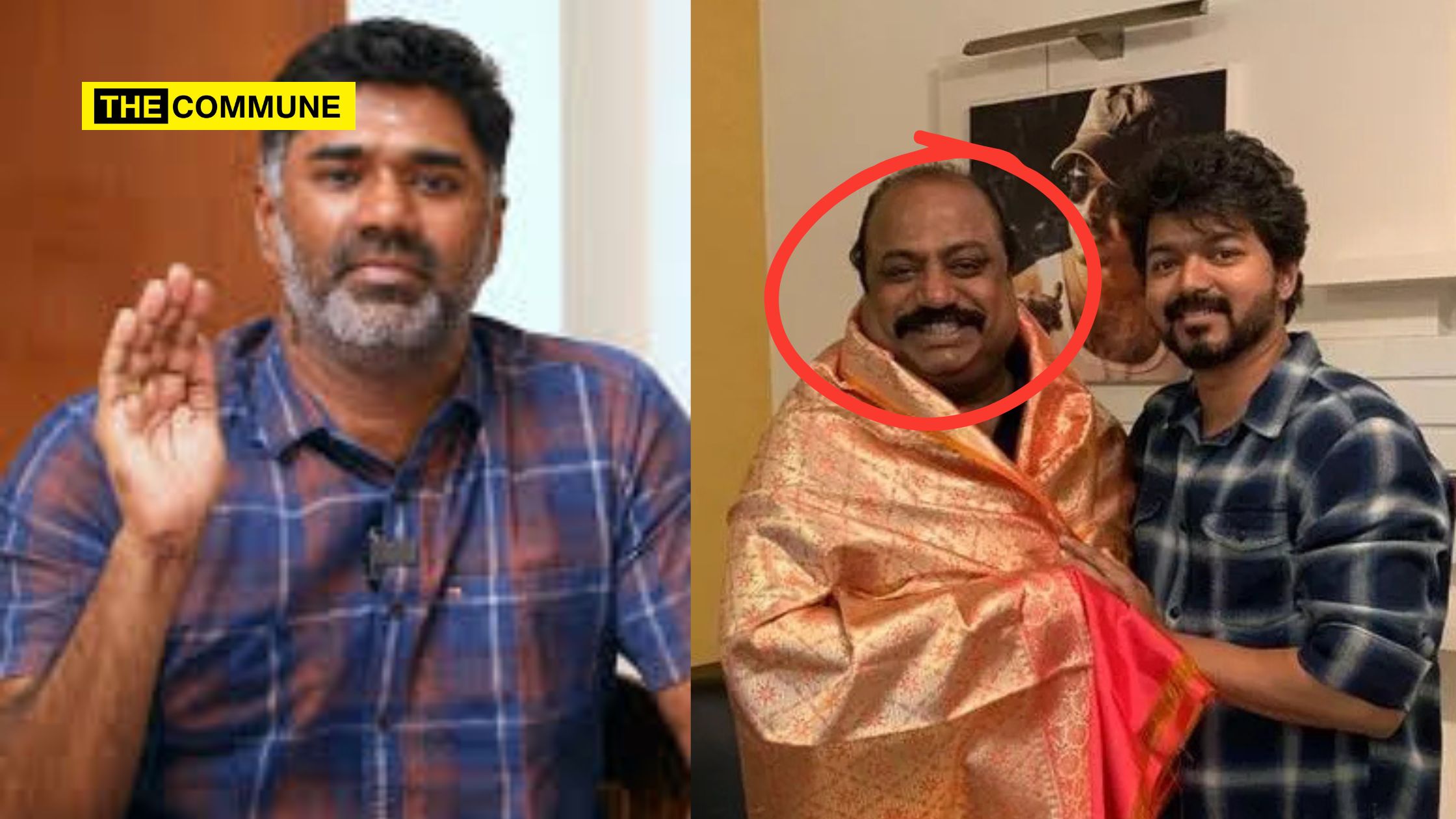
Hindu Munnani has sharply criticized DMK MLA Thiyagarajan for his alleged controversial remarks during a session of the Tamil Nadu Legislative Assembly, where he likened Deputy Chief Minister Udhayanidhi Stalin to the ten-headed demon king Ravana, alleging that he had come to destroy Sanatana Dharma (Hinduism).
The Hindu Munnani expressed its outrage on its official X account, questioning, “Will MLA Thiyagarajan openly seek votes in Trichy district by declaring his intent to destroy Sanatana Dharma?” The organization further warned that “just as Lord Rama destroyed the ten headed Ravana, the anti-Hindu DMK will be defeated and driven away by the people of Rama’s devotees in the 2026 elections.”
உதயநிதி ஸ்டாலின் சனாதனத்தை ஒழிக்க வந்த 10 தலை ராவணன் என சட்டப்பேரவையில் முசிறி MLA தியாகராஜன் பேச்சை, இந்துமுன்னணி வன்மையாக கண்டிக்கிறது.
சனாதன இந்து சமயத்தை ஒழிப்பேன் எனக் கூறி திருச்சி மாவட்டத்தில் ஓட்டு கேட்க MLA தியாகராஜன் தயாரா?
During a heated exchange in the Assembly, MLA Thiyagarajan, representing the DMK, made a poetic remark referring to Udhayanidhi Stalin as a “ten-headed Ravana of the dynasty” and portrayed him as a force aiming to dismantle Sanatana Dharma.
This statement drew responses from both opposition and ruling party members. AIADMK’s K.P. Munusamy acknowledged the poetic style of Thiyagarajan’s speech but pointed out a conceptual inconsistency. He stated that Ravana, traditionally known as a devout follower of Lord Shiva, cannot accurately be described as an enemy of Sanatana Dharma.
DMK’s HR&CE Minister Sekar babu chimed in with an analogy, comparing Sanatana to the peel of a banana and God to the fruit itself—suggesting that Sanatana is merely an outer layer of devotion. However, Munusamy contested this view, arguing that devotion and Sanatana are distinct concepts. If they were one and the same, he said, there would be no reason to oppose Sanatana or fight legal battles over it.
VCK MLA Sinthanai Selvan also added that Sanatana and religious devotion are separate, asserting that the philosophical heritage of Tamil culture should not be conflated with Sanatana Dharma.
Subscribe to our channels on Telegram, WhatsApp, and Instagram and get the best stories of the day delivered to you personally.
The murder of Australian missionary Graham Staines and his two sons in Odisha in January 1999 has long been portrayed globally as an emblematic instance of anti-Christian violence in India. International media coverage, subsequent films like The Least of These: The Graham Staines Story, and official narratives have all cast the incident in stark communal terms, often ignoring the complex sociopolitical undercurrents that preceded the tragic event.
First let us take a look at Graham Staines and what he indulged in, in the name of missionary activity.
Graham Staines
Graham Staines, often portrayed as a leprosy relief worker, was primarily engaged in evangelism among tribal communities in Odisha. Monthly despatches published in the Tidings newsletter by Australian Missionary Tidings reveal a sustained pattern of missionary activity, including Bible sales, tract distribution, baptisms, and Vacation Bible Schools. Notably, Christian literature was distributed during Hindu festivals like the Jagannath Rath Yatra, a move that, while not illegal, raised moral and cultural concerns. Despatches from 1997 to 1998 indicate active promotion of conversions, with repeated mentions of baptisms, jungle camps for evangelism, and testimonies of individuals claiming “miracle cures” as motivation for converting. Inquiries noted that promises of healing led some to convert, although many reverted to Hinduism when their problems persisted. It was also observed that neither the missionaries nor local authorities were aware of the Orissa Freedom of Religion Act, 1967, which mandates reporting of conversions and baptisms to district magistrates—a legal requirement that was consistently ignored.
Furthermore, missionary activities targeted minors through Sunday schools and Vacation Bible Schools, raising ethical concerns. Despatches also mention internal conflicts within church groups and disputes over mission property. Despite being known for leprosy work, Staines’ reports provide scant evidence of medical outreach, suggesting that his primary focus was religious conversion. His prolonged activities arguably violated the Orissa Freedom of Religion Act and contributed to social tensions in tribal areas.
Now let us take a closer look at official testimonies, judicial records, and inquiries about Staines and his death that reveal a more tangled and uncomfortable truth—one involving allegations of sexual misconduct, coercive conversions, community tensions, and judicial revisionism under institutional pressure.
A Testimony Silenced: Hemalata Karua’s Allegations
Among the most disturbing and least-discussed aspects of the case is the testimony of Hemalata Karua, a tribal woman from Machhagarh village. She appeared before Sessions Judge M.N. Pattnaik and accused Graham Staines of sexually assaulting her during a Christian camp organized at the border of Mayurbhanj and Keonjhar districts. The camp, held on the eve of Makar Sankranti in January 1999, was a yearly event where new converts would gather.
According to her testimony, Hemalata and her husband were persuaded to convert to Christianity with promisesof escaping their financial hardships. They stayed overnight at the camp, where Hemalata recounted that Staines allegedly entered her tent under the pretext of a meditation session and tried to molest her. “He entered and asked me to close my eyes and meditate. As I was meditating he laid his hands on my body, I protested but he continued to persuade me, saying physical relationship with him would benefit me,” she told the judge. She stated that when she screamed, Staines fled the scene, and she left the camp the following morning. Twenty days later, she alleged, Gladys Staines, Graham’s wife, approached her to apologize for her husband’s behavior.
Institutional Pressure And Supreme Court’s Backtrack
In the original 2005 Supreme Court verdict in the sentencing of Dara Singh, the man convicted for the murders, Justices P. Sathasivam and B.S. Chauhan had noted, “There are materials to suggest that the missionaries were involved in forceful conversions… The intention was to teach a lesson to Graham Staines about his religious activities, namely, converting poor tribals to Christianity.”
But in 2011, this part of the judgment was expunged following intense lobbying by Christian organizations and mainstream media. The final revised version read, “There is no justification for interfering in someone’s religious belief by any means.”
The original judgment’s critical reference to conversion practices was removed in what critics argue was an unusual instance of judicial rollback driven by external pressure.
The Wadhwa Commission’s Findings: A Sobering Reality
The Justice D.P. Wadhwa Commission, instituted to investigate the murders, recorded testimonies that painted a very different picture of missionary activities in the region. Several tribal witnesses revealed that conversion promises were often linked to miraculous health cures and social mobility.
“Many witnesses who testified before the Commission said that ‘Cure from Health Problems’ was the prime reason for conversion to Christianity,” wrote Justice Wadhwa. “Some of the witnesses reverted to Hinduism when the promised Magic Cures did not materialise.”
Moreover, the Commission criticized local officials, “Both the District Magistrates and the Superintendent of Police also did not have a proper working knowledge of the Orissa Freedom of Religion Act and were not aware of the provisions of the Act and its rules.”
The Wadhwa Commission also documented how certain high-profile cases used to demonize Hindus were, in fact, unrelated to religious conflict. In one instance, two tribal children were found murdered in Kandhamal district. The media immediately declared it an attack on Christians. However, investigations revealed that the perpetrator was a relative of the victims—himself a Christian. This was mentioned in BJP leader Arun Shourie’s blog.
Tensions in the Community: Not Religious, But Cultural
The conflict wasn’t merely between Hindus and Christians but between tribal converts and non-converts. The CBI court that tried Dara Singh noted, “The tribals converted to Christianity distanced themselves from the non-Christian tribals and adopted anti-tribal customary practice of eating beef and ploughing land during Raja festival… Tension was brewing between Christian and non-Christian communities.”
Such religious conversion, the court said, disrupted community cohesion and tribal identity, ultimately leading to backlash.
Political And Media Whitewashing?
BJP MP Satya Pal Singh accused Staines of molesting as many as 30 tribal girls and converting them under duress. He also alleged that a senior Congress leader influenced the CBI to exclude such testimonies from the charge sheet. The National Commission for Minorities disregarded the Wadhwa Commission’s conclusion that Dara Singh had no links to the Bajrang Dal, branding him a member nonetheless.
The Role of Media And Propaganda Films
In 2019, the Christian-funded film The Least of Theseportrayed Graham Staines as a martyr, focusing on religious harmony while sidestepping serious allegations made against him. Directed by Aneesh Daniel and starring Stephen Baldwin—known for his evangelical Christian activism—the film was criticized for whitewashing Staines’ activities and vilifying Hindu resistance.
Victor Abraham, the film’s producer and founder of Skypass Entertainment, is a known Christian fundamentalist. Despite claims that the movie isn’t propaganda, its promotional campaigns and selective storytelling tell a different story.
Historical Context: Missionary Expansion in Mayurbhanj
Missionary activity in Mayurbhanj dates back to the mid-19th century. According to the 1933 publication Kate Allanby of Mayurbhanj, missionaries often attempted to convert local rulers and leveraged traditional Hindu festivals like the Jagannath Rath Yatra as platforms for proselytization.
The missionaries referred to Lord Jagannath as a “heathen god” and described the Rath Yatra as “evil” and “depressing”. Such historical hostility toward indigenous beliefs remains part of the cultural memory in the region.
The suppression of Hemalata Karua’s testimony, judicial revisions, and selective media portrayals raise critical questions about the narrative construction around the case.
Far from being a simple tale of religious persecution, the story reflects a clash of civilizational values, community rights, and unaddressed grievances.
The Chennai Metropolitan Development Authority’s (CMDA) plan to construct a pedestrian overpass linking the Kilambakkam bus terminus with a new railway station has hit a roadblock due to a hefty compensation demand from the landowner. The owner is reportedly seeking ₹350 crore for about 1.45 acres of land—an amount that has left officials stunned, especially since the market value is estimated at only ₹60 crore and the total cost of the skywalk project is ₹74 crore.
Background: Kilambakkam Bus Terminus & Skywalk
As part of efforts to ease traffic congestion in Chennai, a new bus terminus was built on 40 acres in Kilambakkam near Vandalur, with an investment of ₹400 crore. The facility became operational on 30 December 2023. However, the lack of a direct metro connection has caused inconvenience for passengers, especially those traveling to and from the city.
To address this, a railway station is under construction between Oorapakkam and Vandalur, aimed at integrating suburban rail services with the terminus. To ensure seamless connectivity, CMDA proposed a 1,310-meter pedestrian overpass across GST Road at a projected cost of ₹74 crore. The foundation stone was laid in March 2023.
Legal Dispute Over Land Acquisition
The Chengalpattu District Administration had earlier issued a notification to acquire the required land for the project. However, the landowner challenged the acquisition in the Madras High Court, arguing that legal procedures had not been properly followed. The court agreed and quashed the initial order, directing the district administration to issue a fresh notification in compliance with the law.
Amid this ongoing process, the landowner has now demanded ₹350 crore in compensation, triggering concerns among CMDA and district officials over the viability of the project. Authorities are particularly alarmed, given the wide gap between the demand and the actual market value of the land.
Officials Grapple With Land Dispute Linked To DMK MP S. Jagathrakshakan
The land in question belongs to Premier Leather Corporation, owned by DMK Member of Parliament S. Jagathrakshakan and his family. The previous court ruling noted procedural lapses in the acquisition process, including failure to follow the proper notification route via the Tamil Nadu Government Gazette and the improper delegation of powers under the Right to Fair Compensation and Transparency in Land Acquisition Act, 2013.
Justice N. Anand Venkatesh observed that the same official—Chengalpattu Collector—had performed dual roles under Sections 15(2) and 15(3) of the Act, which is not permissible when property rights are involved. The court stressed that the land acquisition process should not be treated as a formality and must involve genuine consideration of objections.
Officials are now reportedly considering escalating the issue to the Chief Minister’s office to seek a resolution, especially given the political profile of the landowner. The future of the pedestrian overpass project remains uncertain until a feasible and legally sound path forward is found.
Kuttanad, Kerala’s picturesque backwater region, is facing an invisible killer—cancer. Often called the “rice bowl of Kerala,” this water-logged area has become a hotspot for cancer and kidney diseases, with alarming rates far exceeding state and national averages. The culprit? Severely contaminated water.
For decades, excessive use of chemical fertilizers (15,000 tons/year), pesticides (500 tons/year), and toxic effluents from houseboats have poisoned the Pampa River, Kuttanad’s lifeline. Groundwater tests reveal Total Dissolved Solids (TDS) levels exceeding the safe limits. The result? Families drinking and cooking with water laced with carcinogenic pesticides, leading to cancer clusters, kidney failures, and birth defects.
While wealthier communities and churches installed Reverse Osmosis (RO) plants years ago, impoverished Hindu (mainly SC) families—mostly daily wage laborers—had no choice but to consume the toxic water. Many were forced to convert just to access clean water from church-run facilities.
The Scale of the Crisis
A 2009-2010 survey in Kainakary panchayat found that 27% of deaths (91 out of 334) were due to cancer, far exceeding state averages.
Medical reports from Alappuzha Medical College in 2009 confirmed rising cancer cases, particularly breast, intestinal, and urinary bladder cancers.
Government-supplied water was also found contaminated containing iron, lead and ammonia as well, leaving impoverished Hindu families—who couldn’t afford commercial RO water—with no safe alternatives.
Hindu Seva Kendram Steps In
Seeing this humanitarian crisis, Hindu Seva Kendram (HSK), a grassroots organization, took action. After initial research, the solution recommended by scientists was to install free, high-capacity RO plants in every affected village. Speaking to The Commune, Sreeraj, State Organising Secretary of Hindu Seva Kendram and a key volunteer, detailed how the initiative—called Pampa Thirtham—was launched to address the region’s water contamination crisis.
“For a long time, we’ve been providing free medicines to families in Kuttanad, especially in Kainakary. What stood out was the unusually high demand for cancer and kidney medications. We were supplying around ₹25,000 worth of medicines to just one village,” Sreeraj said.
The abnormal pattern prompted the organization to investigate further. With the assistance of scientist Balram Kaimal, they conducted tests in the region and discovered that the TDS level in the local water was alarmingly above 1000—far beyond the safe limit for human consumption.
“This is water that shouldn’t even be used to rinse your mouth, but people here were drinking and cooking with it,” he added.
The primary source of drinking water in Kuttanad is the Pampa river. A report published by The Hindu described Kainakary as the “fastest cancer hub in Kuttanad” and attributed the health crisis to the contamination of the river. Given that Kainakary is one of the lowest-lying areas in Kuttanad—an already below-sea-level region—it bears the brunt of the polluted inflow from Pampariver. “We realized that people here needed access to low-TDS water, but commercial RO plants were charging around ₹5 per litre—an impossible sum for daily wage workers. So we set up our first RO plant in Edathua panchayat, supplying one lakh litres of clean water to over 500 families in just 1.5 months,” Sreeraj said.
Mohanlal’s Intervention: A Turning Point
When Malayalam superstar Mohanlal learned of HSK’s efforts, he joined the mission. His ViswaSanthi Foundation installed a massive solar-powered RO plant in Kuttanad, producing 2,000 litres/hour—four times HSK’s initial capacity. “Mohanlal’s involvement helped bring national attention to the issue. He spoke about Kuttanad’s water crisis in several interviews, and thanks to his influence, companies and CSR foundations began approaching us. We were then able to install RO plants in all 12 panchayats of Kuttanad,” Sreeraj explained.
One more plant is currently under construction. But Sreeraj emphasizes that the ultimate goal is to have one plant in every ward to serve approximately 200 families per unit. “We’ve managed to bring down the TDS from over 1000 to just 8–10. But to reach every corner of Kuttanad—including areas only accessible by boat—we need either a massive central plant or an RO unit in each ward. That requires an investment of over ₹100 crore,” he said.
Call For Kerala Government Action
While initially the government was hesitant and viewed the effort as politically motivated, Sreeraj says the situation has improved. “The government used to send water tankers, but now that our plants are operating in many villages, those tankers are no longer needed. In some ways, we’re reducing their burden.”
The project, Pampa Thirtham—named to liken the river Pampa to a sacred Ganga and the purified water as “divine water”—has now been running for five years and currently benefits over 5,000 families daily.
Two bottles filled with water..!!!
The one on the right is what the people of Kuttanad have been drinking and cooking with for years Polluted, dangerous, and silently deadly..!! Bringing cancer, kidney failure, jaundice, and more..
However, Sreeraj warns that long-term sustainability requires policy changes. “The root cause is still not addressed—overuse of pesticides and chemical farming. Unless there is awareness and a move towards organic farming, we’ll continue fighting symptoms, not the disease,” he said.
Pampa Thirtham might have started as a small initiative, but for thousands in Kuttanad, it has become a lifeline.
Subscribe to our channels on Telegram, WhatsApp, and Instagram and get the best stories of the day delivered to you personally.
Temple activist TR Ramesh has expressed serious concern over a recent e-tender issued by the Tamil Nadu Hindu Religious and Charitable Endowments (HR&CE) Department for renovation works at the ancient Arulmigu Kalamegaperumal Temple in Thirumohur, Madurai. The tender, estimated at ₹2.67 crores, calls for the renovation of all vimanams (temple towers), construction of a stone Vahana Mandapam, Madapalli (temple kitchen), store room, Salai Gopuram, and cut stone flooring around the praharam (circumambulatory path).
Ramesh questioned the need for such extensive works when the temple had already undergone major renovations just two years ago and is reportedly in good condition. In a post on his official X (formerly Twitter) account, he highlighted the temple’s historical and spiritual importance as one of the 108 Divya Desams in the Srivaishnava tradition and emphasized that it is over 1,000 years old.
He raised critical questions:
Why is there a fresh tender for ₹2.67 crores so soon after recent renovations?
Was approval obtained from the Director of the State Archaeology Department, as legally required for heritage temples?
Did the Archaeological Survey of India (ASI) conduct an inspection and issue a report, as mandated by a Madras High Court Division Bench ruling?
Ramesh also alleged that the HR&CE department is notorious for mismanagement and financial irregularities, and claimed the Executive Officer currently overseeing the temple lacks a valid appointment order. He warned that the new tender could be a cover for misappropriation of public funds under the guise of renovation.
“This department, controlling temples without legal authority, seems to be using sanctioned funds for possibly unnecessary works. It raises serious red flags about misuse in the name of temple upkeep,” Ramesh wrote, urging transparency and accountability from the authorities.
Sri Kalamega Perumal Temple – Tirumohur – near Madurai – one of the 108 Srivaishnava Divyadesams – An ancient temple of great heritage.
As usual – an Executive Officer of the @tnhrcedept – a Department known for large scale frauds – is functioning in this temple without any… pic.twitter.com/n3BNhajsGH