The Allahabad High Court has criticized Mohammed Zubair, co-founder of Alt News and self-proclaimed fact-checker, for his motives behind the social media posts related to an alleged speech by Yati Narsinghanand. The court questioned why Zubair used the microblogging site X instead of filing a case, accusing him of inciting “social disharmony.” This came in response to a plea filed by Zubair challenging the FIR, which accuses him of promoting enmity through his posts.
A division bench, led by Justice Siddhartha Varma and Justice Ram Manohar Narayan Mishra, observed that Zubair’s actions contributed to social unrest. Justice Varma commented, “If this person (Narsinghanand) is making controversial statements, shouldn’t you file an FIR rather than escalate the situation?” He added, “If you don’t like the speech, file an FIR, instead of using social media to create further unrest.”
Justice Varma expressed frustration that Zubair had chosen social media to amplify the alleged speech instead of pursuing legal channels. He remarked, “Come to the court. Why create social disharmony through social media? A glance at your tweet shows you are inciting unrest.” Zubair’s lawyer argued that Zubair was exercising his “constitutional right to freedom of speech” by highlighting the speech, claiming he was unaware of the FIR filed against Narsinghanand just hours before his post.
Justice Varma was unconvinced by the defence, questioning whether social media could replace legal actions. He asked, “Is there any law that permits someone to use Twitter instead of approaching the court?”
The Uttar Pradesh Additional Advocate General (AAG) argued that Zubair had distorted Narsinghanand’s remarks to provoke unrest. The AAG noted that freedom of speech is not absolute and can be limited under Article 19(2) of the Constitution. He also informed the court that a lookout notice had been issued against Zubair.
FIR Against Zubair
The FIR against Zubair was filed following a complaint from Udita Tyagi, the general secretary of the Yati Narsinghanand Saraswati Trust. Tyagi accused Zubair of spreading enmity through his social media posts, particularly a tweet on October 3rd that featured edited clips of Narsinghanand’s speech, intended to incite violence.
Previously, on 3 December 2024, a bench led by Justice Mahesh Chandra Tripathi and Justice Prashant Kumar had declined to hear the case, referring it to another bench. The FIR includes charges under Section 152 of the Bharatiya Nyaya Sanhita (BNS) for endangering India’s sovereignty, unity, and integrity, following Zubair’s tweet. Tyagi’s complaint further alleges that Zubair’s post, featuring manipulated video clips of Narsinghanand’s controversial remarks about Prophet Muhammad, incited extremist views against the priest.
Tyagi also accused Zubair, along with Asaduddin Owaisi and Arshad Madani, of inciting violent protests at Dasna Devi Mandi. The complaint led to charges under various sections of the BNS, including inciting animosity on religious grounds, creating false evidence, and defamation. Section 152 was later added to the FIR. The next hearing is scheduled for 20 December 2024.
Tensions erupted in Parliament on 19 December 2024 following an altercation between Congress leader Rahul Gandhi and BJP MP Pratap Chandra Sarangi amid ongoing protests over Union Home Minister Amit Shah’s alleged remarks on Dr BR Ambedkar. Sarangi alleged that he was injured after Gandhi pushed another MP, causing the MP to fall on him. The incident occurred as protests intensified between BJP and INDIA bloc MPs, who were demonstrating over Shah’s speech, which Congress claimed disrespected Ambedkar, the father of the Indian Constitution.
#WATCH | Delhi | BJP MP Pratap Chandra Sarangi says, "Rahul Gandhi pushed an MP who fell on me after which I fell down…I was standing near the stairs when Rahul Gandhi came and pushed an MP who then fell on me…" pic.twitter.com/xhn2XOvYt4
Sarangi, who represents Balasore in Odisha, was standing near the stairs when the incident occurred. He reported that while near the stairs, another MP fell on him after being pushed by Rahul Gandhi, leading to a head injury. Sarangi was later taken to the hospital for treatment.
In his defense, Gandhi explained that he was trying to enter Parliament when BJP MPs attempted to block him. He asserted that the jostling was part of his effort to enter the building, claiming, “BJP MPs were trying to stop me, push me, and threaten me.” He added that the central issue at hand was the BJP’s alleged attack on the Constitution and Ambedkar’s memory.
#WATCH | "This might be on your camera. I was trying to go inside through the #Parliament entrance, BJP MPs were trying to stop me, push me and threaten me. So this happened…Yes, this has happened (#MallikarjunKharge being pushed)," says Lok Sabha LoP #RahulGandhi
The political drama unfolded in front of Makar Dwar, as BJP MPs were protesting Congress’ actions, with slogans like “Ambedkar showed us the path, Congress misled” and “Babasaheb Ambedkar ji ka apmaan nahi chalega.” Sarangi’s injury and the altercation drew attention as Rahul Gandhi later approached him, who was being treated by doctors. During this time, BJP MP Nishikant Dubey accused Gandhi of engaging in rowdy behavior, shouting, “Don’t you feel ashamed? You are engaging in rowdyism.” Rahul Gandhi responded by engaging in a heated exchange with BJP leaders before leaving the scene.
It is noteworthy that Sarangi, an MP from Odisha, is someone coming from the humblest backgrounds. In July 2021, he was appointed as the Union Minister of State for the Ministries of Micro, Small and Medium Enterprises, and Fisheries, Animal Husbandry, and Dairying. Additionally, he played a significant role in establishing schools across numerous tribal villages in the Balasore and Mayurbhanj districts of Odisha under the Gana Shiksha Mandir Yojana. The 69-year-old has held various important positions throughout his political career.
This is the person who was injured by Rahul Gandhi. Pratap sarangi is one of the poorest MPs and comes from a very humble background. pic.twitter.com/X8SOUhdiAG
BJP State Secretary SG Suryah took to his X handle to slam Congress scion Rahul Gandhi over the issue. He wrote, “It is highly condemnable that a madman @RahulGandhi, who cannot win in the People’s Assembly and has been chased away by Indians in the 89 elections held in India in the last 10 years, clinging to office in the name of his grandfather, grandmother, and father, has become a rowdy in Parliament and attacked a BJP MP @pcsarangi. I request the Prime Minister @narendramodi
to make arrangements to immediately provide appropriate treatment to the rowdy #ராகுல்காந்தி, who is mentally disturbed due to continuous defeats and being ostracized by Indians in every election!”
மக்கள் மன்றத்தில் வெல்ல முடியாத, கடந்த 10 ஆண்டுகளில் இந்தியாவில் நடைபெற்ற 89 தேர்தல்களில் இந்தியர்களால் ஓட ஓட விரட்டியடிக்கப்பட்ட; தாத்தா, பாட்டி, அப்பன் பெயரால் பதவியில் ஒட்டிக்கொண்டிருக்கும் இழிப்பிறவி @RahulGandhi எனும் பைத்தியக்காரன் பாராளுமன்றத்தில் ஒரு ரெளடியாக மாறி பா.ஜ.க… pic.twitter.com/KL41ilKFZx
While the Congress hypocritically accuses the Centre of being disrespectful to Dr BR Ambedkar, let us take a look at an instance from the UPA era when the Congress disrespected Ambedkar, mocked him, and even ensured it was in textbooks!
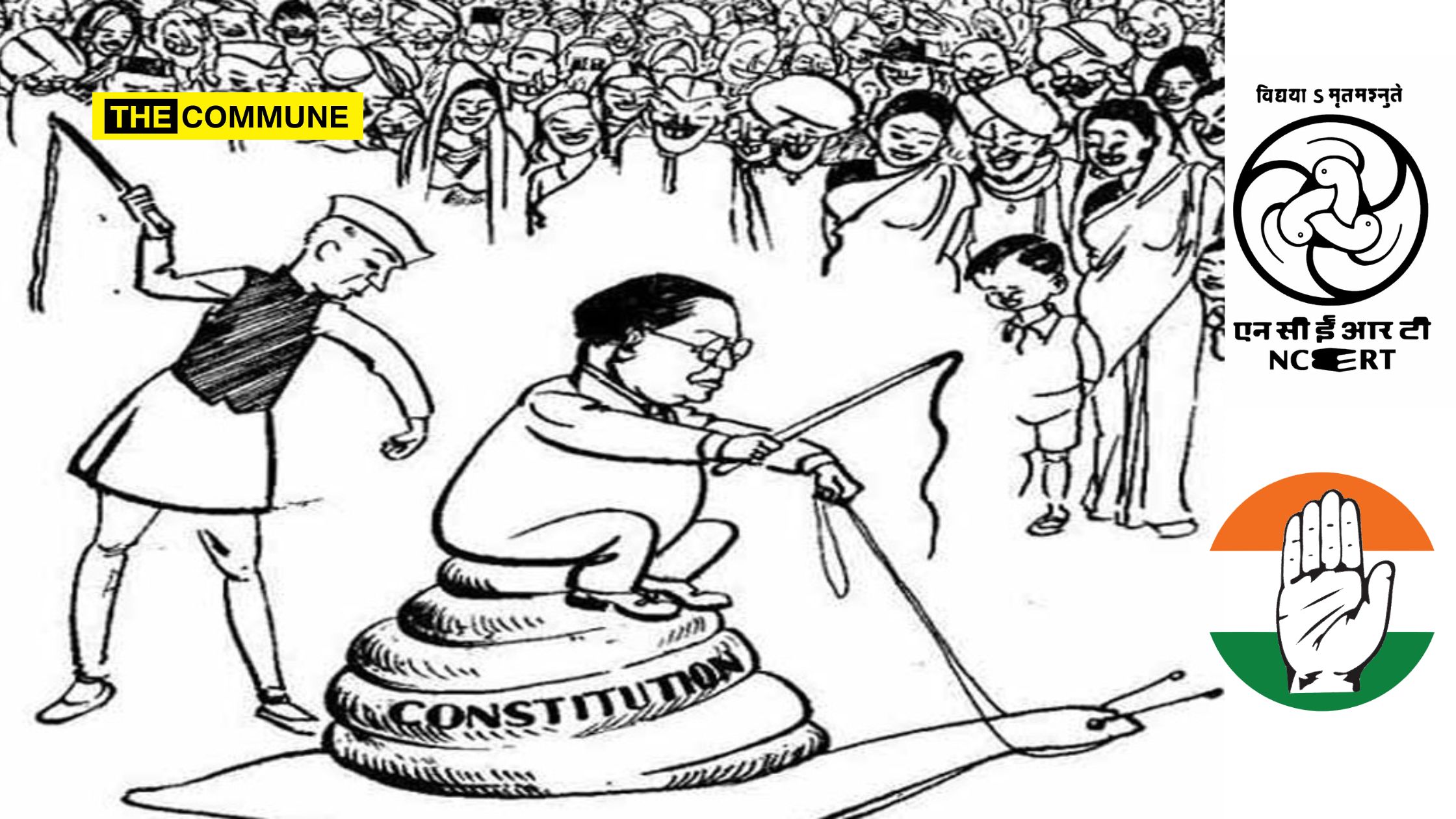
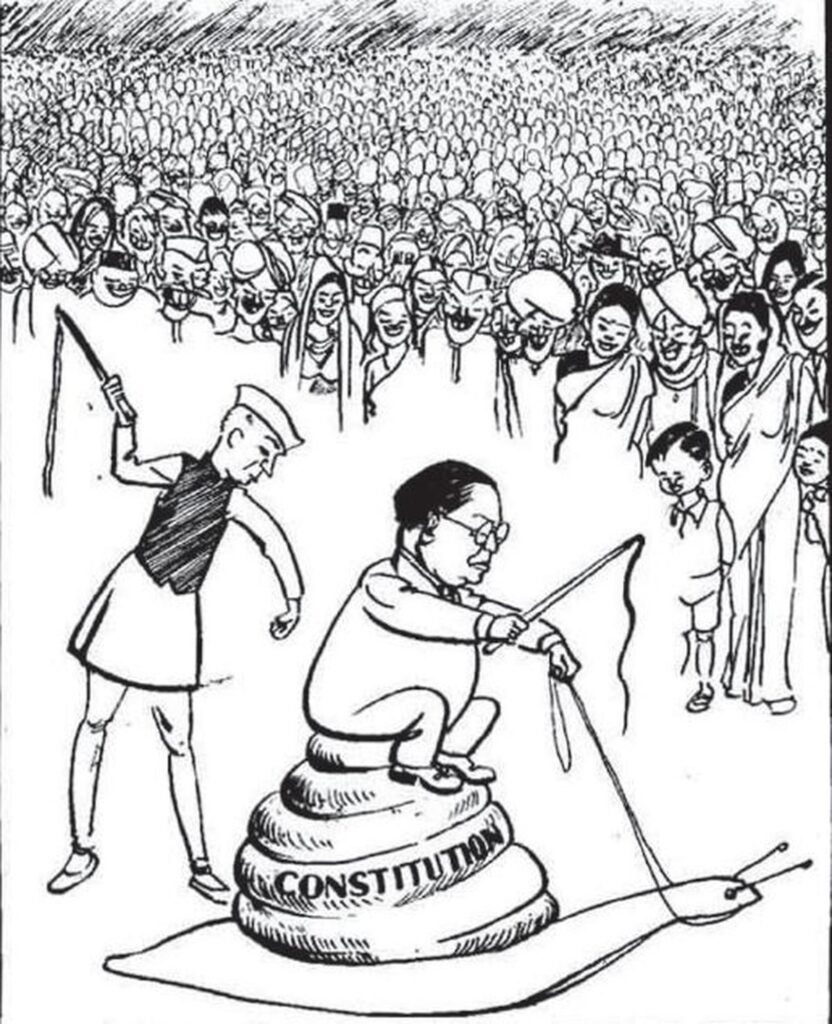
In May 2012, the National Council of Educational Research and Training (NCERT) decided to remove the controversial Ambedkar-Nehru cartoon from the Class XI political science textbooks. The decision came after the Human Resource Development (HRD) Ministry issued directions to withdraw the cartoon, which had been part of the “Indian Constitution at Work” textbook since 2006.
The cartoon, created by renowned political cartoonist Shankar in 1948, depicted Dr. B.R. Ambedkar, the chairman of the drafting committee of the Indian Constitution, riding a snail, with Jawaharlal Nehru standing behind him holding a whip. The image sparked widespread debate, particularly in Parliament, and led to the decision to remove it from future editions of the textbook.
NCERT confirmed that the cartoon would no longer appear in the textbooks starting next year. While books already printed for that year could not be withdrawn from circulation, it was stated that future editions would omit the controversial cartoon.
The inclusion of the cartoon had been intended to make the textbook more visually appealing and accessible to students, in line with the national curriculum framework, which emphasized making education more engaging and enjoyable. However, the cartoon had been interpreted by some as disrespectful to Ambedkar, leading to its eventual removal from the curriculum.
The decision marked the end of a six-year run for the cartoon in educational materials, which had allegedly never been meant to be derogatory to Ambedkar or the drafting committee.
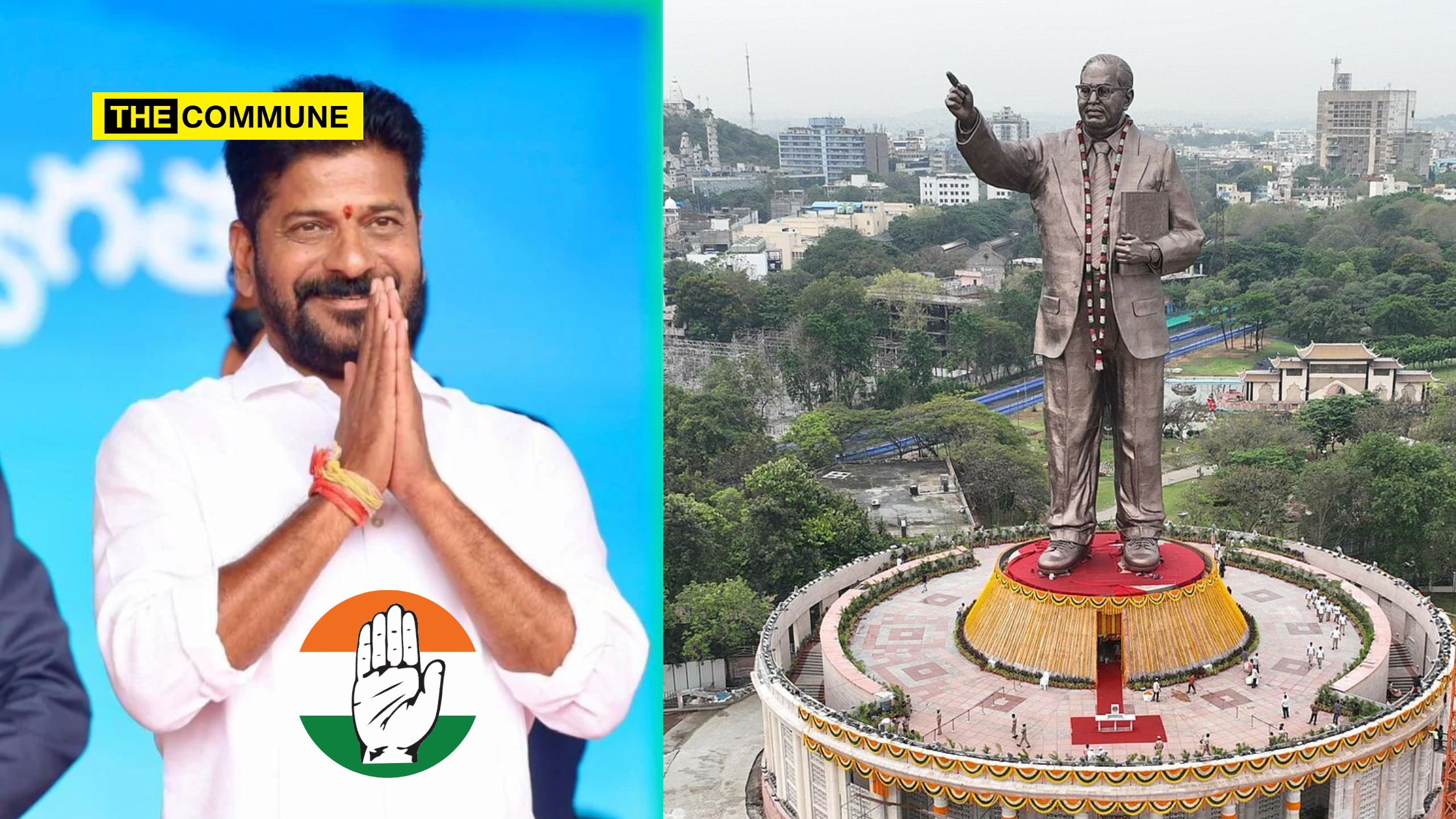
While the Congress hypocritically accuses the centre of being disrespectful to Dr BR Ambedkar, let us take a look at an instance from the recent past when the Telangana Congress in actuality disrespected Ambedkar and his values.
In a stark display of neglect, the Congress government in Telangana came under fire for disrespecting Dr. BR Ambedkar and undermining his legacy, particularly on his death anniversary on 6 December 2024. The government’s failure to honor Ambedkar’s contributions drew sharp criticism from various quarters, especially regarding the world’s tallest 125-foot statue of Ambedkar near Tank Bund, which was installed during the previous BRS government.
It is reported that the statue, a symbol of the recognition given to Ambedkar, had been abandoned, with public access to it restricted by the Congress administration. Despite being a prominent figure in Indian history, Ambedkar’s statue is said to have been left in neglect, with reports stating that the Congress government neither cleaned nor garlanded the statue on Ambedkar’s death anniversary.
This lack of respect for Ambedkar’s memory is not limited to the statue. The Congress government’s approach has been criticized for disregarding Dalit welfare, with actions such as canceling cheques issued under the Dalit Bandhu scheme, halting Ambedkar Overseas Scholarships, and neglecting tribal welfare programs. Additionally, promises made under the Ambedkar Abhayahastham initiative were alleged to have failed to materialize, leaving many Dalit Bandhu beneficiaries facing legal challenges for seeking the funds they were promised.
The Congress has also been accused of a historical pattern of disrespecting Ambedkar’s ideology, both during his lifetime and after his death. This lack of commitment to social justice has raised questions about the government’s priorities, particularly in relation to its treatment of marginalized communities.
The controversy has deepened with the upcoming inauguration of a redesigned Telangana Thalli statue, which critics argue is an attempt by the Congress to erase Telangana’s cultural identity. The statue, which was created after consultations with poets, artists, and intellectuals during the statehood movement, is now being redesigned in a manner that some see as an insult to the aspirations of the people who fought for Telangana’s statehood.
Subscribe to our channels on Telegram, WhatsApp, and Instagram and get the best stories of the day delivered to you personally.
A recent study by the Centre for Policy Studies (CPS), a not-for-profit research organization, sheds light on the self-governing administrative systems in two north Tamil Nadu villages, Kundrathur and Ullavur, before British colonial rule. The research, led by CPS Director Jatinder K. Bajaj, aimed to explore the functioning of India’s polity before British intervention. The study is based on a survey conducted by Thomas Barnard, a British military officer, between 1767 and 1774. Barnard’s survey covered approximately 2,000 locations in the Chengalpattu Jagir, an area the British acquired from the Nawab of Arcot in 1762.
Bajaj explained that the British had compiled a summary of the survey in English, which was preserved at the Tamil Nadu State Archives. This record, along with Tamil palm-leaf inscriptions kept by traditional accountants called ‘Kanakkupillais,’ provided insights into the governance of villages in the region. In addition to these records, the study also examined inscriptions from the Pallava period, including the Kasakudi copperplate, further enriching the research.
One of the study’s key findings is that Indian villages in the pre-British era were self-sufficient, with clear financial, cultural, and political boundaries. These villages were financially independent and culturally and politically self-contained, with a rich history spanning centuries. The study highlighted that Kundrathur has 55 inscriptions ranging from the Chola period to the Mughal era, offering a window into the village’s long-standing traditions and governance.
The study also found that the annual foodgrain production in the entire Chengalpattu Jagir was as high as one tonne per capita—five times the current average in India. A detailed analysis revealed how agricultural produce was distributed across various institutions, including allocations for maintaining water bodies and supporting scholars, teachers, musicians, and dancers. These practices reflect the holistic and community-driven governance of the time.
The CPS has published the study’s findings in two separate books in collaboration with the Indira Gandhi National Centre for the Arts (INGCA). The study calls on the Union and State governments to gather and compile records such as inscriptions, copper plates, and palm-leaf accounts from villages across India to decolonize the Indian polity and revive the self-governing practices before British colonialism. Additionally, the study recommends revitalizing the water bodies, flower gardens, and temples in Kundrathur and Ullavur to restore their 18th-century heritage and transform them into vibrant centres of heritage tourism.
On 19 December 2024, the Delhi High Court announced it would review the news articles that form the basis of the allegedly defamatory edits made to the Wikipedia page of Asian News International (ANI). The defamation suit, ANI Media Private Limited vs. Wikimedia Foundation Inc & Ors, concerns edits that ANI claims are defamatory and were published on the online encyclopedia.
Justice Subramonium Prasad, during the hearing, referred to the articles from The Caravan and The Ken about ANI’s functioning as a news organization. He said, “I will also read the articles … to see whether the (edits) are borne out of the articles or not. Obviously, if they are not borne out of the articles, they cannot do it. Therefore, I can, to that extent, even ask them to take down those offending statements.”
The court noted that if it finds the edits are based on articles in a way that could be reasonably inferred, it may not pass an order to remove the content. However, Justice Prasad questioned whether it could delve into such details at the interim stage of the case.
“This is an understanding of the editor of what the source means. If the understanding is so defamatory that it is relying on something which actually does not mean it at all, then the person can be restrained… again the question is even if it can be understood in that way, then would the court go deeper into that aspect to come to a conclusion as to whether in no circumstances can it be construed it as that at all,” the judge remarked.
It is important to note that The Caravan and The Ken are not parties to the defamation suit before the High Court.
The suit alleges that Wikipedia is allowing defamatory content to remain on ANI’s Wikipedia page. The court also indicated that it would later examine whether Wikipedia is merely an intermediary or a publisher, which would subject it to different legal rules.
At this stage, the court clarified it would focus on whether the content on ANI’s Wikipedia page violates the free speech restrictions under Article 19(1)(a) of the Constitution of India. “The courts in case of 19(1)(a) have said that injunction must be exception and not the rule. Keeping that in mind, I have to then look into the question of irreparable loss, prima facie case and balance of convenience,” the court explained.
Justice Prasad made these comments while reserving the decision on ANI’s application for interim relief.
The court also questioned Wikipedia for defending the actions of the users accused of making the defamatory edits on ANI’s page. In response, Senior Advocate Jayant Mehta, representing Wikipedia, stated, “I have to defend my model of free speech. I am not on merits of allegations.”
Advocate Sidhant Kumar represented ANI in the case.
In July, the court issued a summons to Wikipedia and ordered it to disclose the identities of three individuals who made the disputed edits to ANI’s page. However, ANI later complained that Wikipedia had not complied with this directive. In response, single-judge Justice Navin Chawla took strong exception to Wikipedia’s conduct and issued a notice for contempt of court. The court also ordered an authorized representative of Wikipedia to personally appear in court on 25 October 2024, when the contempt case was listed.
These directives were challenged by Wikipedia before the Division Bench. However, both ANI and Wikipedia reached an agreement, with Wikipedia agreeing to serve notice on the users, thereby protecting their identities. Wikipedia then served notices to the three users accused of defamation by ANI.
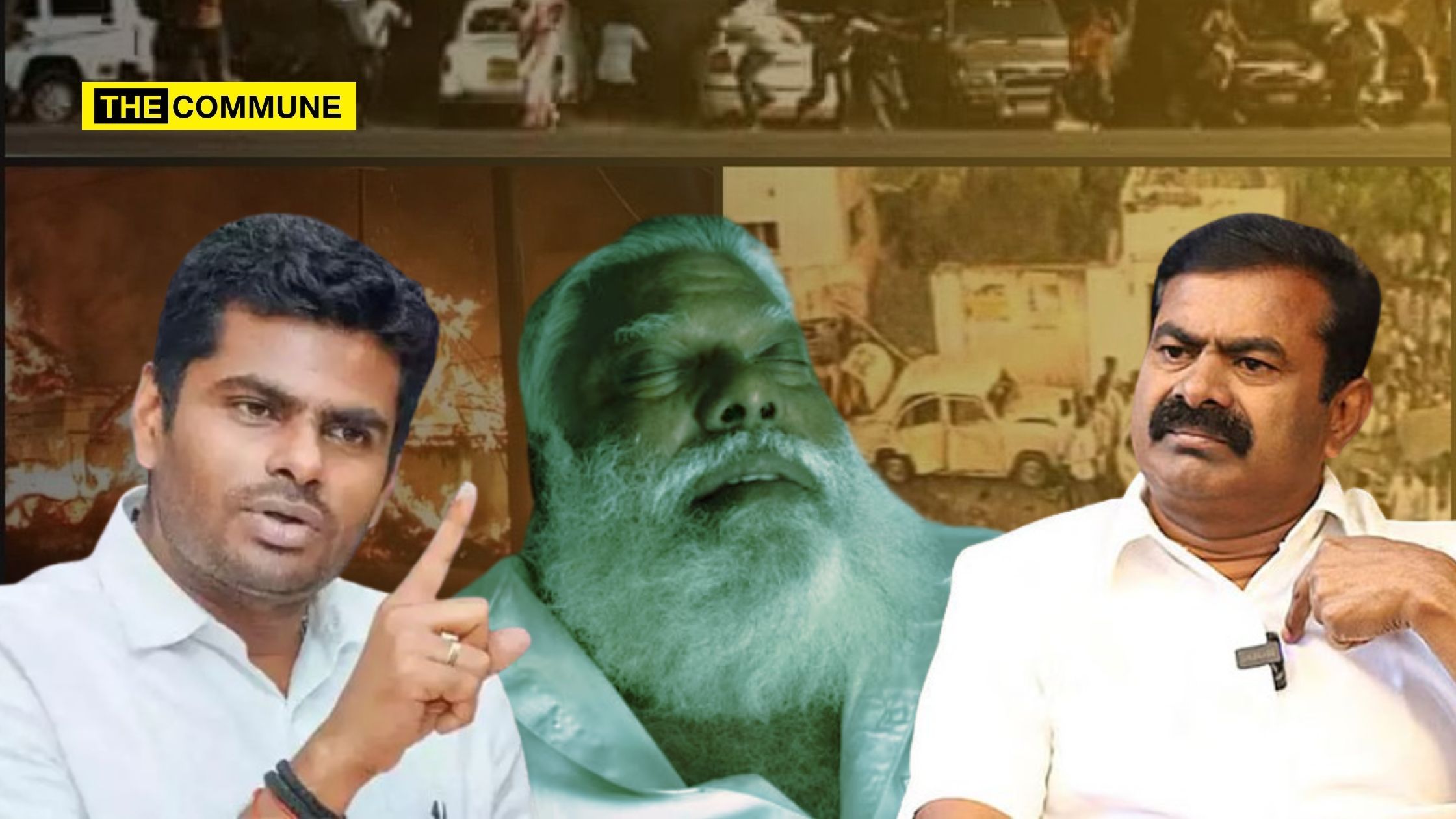
Tamil Nadu BJP chief Annamalai has criticized Naam Tamilar Katchi leader Seeman for hailing SA Basha, the convicted mastermind behind the 1998 Coimbatore serial bombings, as a “father” figure following his death on 16 December 2024. Basha, who was the founder of the extremist group Al-Umma, was responsible for masterminding the bombings that killed 58 people and left 231 others injured.
The reporters asked Tamil Nadu BJP chief Annamalai about Naam Tamilar Katchi leader Seeman calling SA Basha his ‘father,’ and about Trichy SP Varun Kumar’s recent statement at an All India IPS conference, where he suggested that the party was leaning towards separatism and should be monitored.
In response, Annamalai said in Coimbatore, “Yesterday, Seeman went to attend the funeral of Basha, the founder and leader of ‘Al-Umma,’ who was the mastermind behind the February 1998 Coimbatore bomb blasts. After being released on bail, he has now passed away. So, does this make Naam Tamilar an anti-national party? No. Should the Naam Tamilar party be banned? No. What I’m saying is that political parties have a responsibility. All the 58 people who died in the blasts also had fathers right? Seeman calls Basha his ‘father,’ the dead 58 children have parents right, including a Muslim child who died in the attack had a father. If Basha is a father figure, then the 58 victims are also fathers, and the 200 others severely injured are also fathers. Seeman should consider this as well. I don’t want to use harsh words here, but they should think carefully about when and where to do politics. Till today, the scars of 1998 remain unhealed, the sorrow from the attacks lingers in people’s hearts, and everyone knows, that is why the region went backwards.”
What Did NTK Chief Seeman Say?
On 17 December 2024, NTK party chief Seeman took to his official X account to describe the leader of the extremist group Al-Ummah SA Basha, as a “father figure”, expressing deep hurt over the news. In a mere attempt in minority appeasement, stating, “The death of father Basha is a great tragedy! Has the DMK government thought that the death of Muslim prisoners is their freedom? @CMOTamilnadu @mkstalin. I was deeply shocked and deeply saddened to learn of the death of father, Basha, who had been imprisoned for more than a quarter of a century in prison. I express my condolences to the family, relatives, and Muslim relatives who are grieving the loss of father and share in his grief.”
“The powerless situation of not being able to rescue my father despite knowing that injustice was being done gives me great mental pain and guilt. The fact that father Basha, who was striving to obtain the great right of freedom, was completely separated from us and achieved freedom is a great tragedy that cannot be described in words. Being with him in Coimbatore jail and talking to him when he was released from prison are etched in my heart.”
“He who makes a promise and then looks for excuses not to fulfill it is a cruel person,” says the venerable great prophet, Mohammed. The DMK, which promised to release the Muslim prisoners, formed the Adinathan Committee upon coming to power and withdrew, considering its duty to be over, is a terrible act of deceit that deceived the Muslim relatives who had trusted it. While prisoners Abuthakeer and Abdul Hakeem died during the DMK regime without enjoying their freedom, it is a great tragedy that father Basha has also died now following them. It is a great tragedy that his longing and desire, which he wanted to be freed at least in his last days and live in peace with his family, went unfulfilled until the end.”
“Isn’t it treasonous that the DMK, which came to power by winning the votes of all Muslim people, is delaying their long-standing demand for the release of Muslim prisoners without making any progress, and is obstructing the efforts of the prisoners who want to be released by conducting legal battles in the Supreme Court? Has the DMK government decided to release Muslim prisoners only through death? How much longer will you, gentlemen, get away with citing the Governor as an excuse? Can you shirk your responsibility and duty and play cheap politics on the release of Muslim prisoners? Shame!”
“It is an unacceptable tyranny to play political games and seek political gain by flouting the promise made to release the Islamic prisoners. Let the death of father Basha be the last. No prisoner should ever die without being released. Let the Islamic prisoners who have spent their entire lives behind bars spend their remaining time with their families and relatives. Our final tribute to father basha will be continuing the work to ensure the speedy release of Islamic prisoners. My tearful salutation to father Basha!”
அப்பா பாட்சாவின் மரணம் கொடுந்துயரம்! இசுலாமிய சிறைவாசிகளின் மரணம்தான் அவர்களுக்கான விடுதலையென நினைத்துவிட்டதா திமுக அரசு?@CMOTamilnadu@mkstalin
கால் நூற்றாண்டுகளுக்கு மேலாகச் சிறைக்கொட்டடியில் வாடிய சிறைவாசி அப்பா பாட்சா அவர்களது மரணச்செய்தியறிந்து பெரும் அதிர்ச்சியும்,… pic.twitter.com/6pcJ12y4at
S.A. Basha, the mastermind behind the 1998 Coimbatore serial bomb blasts, who founded the extremist organization Al-Umma, was responsible for planning the devastating blasts that killed 58 people and injured 231 others.
The Coimbatore serial bomb blasts of 1998 (DMK was in power in then) were a grievous incident in which 58 people were killed and over 200 individuals sustained serious injuries. This devastating series of 12 bomb attacks unfolded across 11 different locations within a 12-kilometer radius. Many of the survivors continue to grapple with the long-lasting effects of the shrapnel and other injuries caused by the devastating explosions.
The chief orchestrator behind these tragic events was identified as S. A. Basha, the founder of Al Ummah, an Islamic fundamentalist group. Investigations revealed that these bombings were part of a larger conspiracy with the sinister aim of targeting L.K. Advani, the leader of the Bharatiya Janata Party, during his election meeting scheduled for 4 p.m. on that ill-fated day. Fortunately, Advani’s flight was delayed, and he narrowly escaped the horrors of that day.
It is noteworthy to mention that one of the suspects, Mohammed Dhalka, who was detained in connection to the 2022 Coimbatore car blast terror incident is the nephew of SA Basha. Nawab Khan, Basha’s brother, was also sentenced to one-life term and 27 years of rigorous imprisonment in the 1998 bomb blast case.
The president of the banned fundamentalist outfit Al-Umma, SA Basha, openly threatened to kill the then Gujarat Chief Minister Narendra Modi if he visited Coimbatore in July 2003. This threat was made by Basha and eight others while speaking to journalists in the Coimbatore court premises after their conviction and life imprisonment in a case related to the murder of a Hindu Munnani leader. It is noteworthy that Al-Umma and its leader were allowed to operate openly by the DMK Government until the Coimbatore blasts on 14 February 1998.
Magazines like Outlook and Frontline also acknowledged the role of the Tamil Nadu Muslim Munnetra Kazhagam (TNMMK) in these blasts. In March 1998, Frontline reported, “Within hours of the blasts, the Tamil Nadu Government banned Al-Umma and the Jihad Committee. Al-Umma founder-president S.A. Basha and 12 other members of the organization were arrested in Chennai; explosive materials and weapons were seized from his house in Triplicane, Chennai.”
Subscribe to our channels on Telegram, WhatsApp, and Instagram and get the best stories of the day delivered to you personally.
The Kerala High Court has raised serious concerns over the Sunburn Festival, scheduled for New Year’s Eve at a tea plantation in Wayanad. The court demanded that authorities provide detailed information about the event, including permissions, expected crowd size, and the organizing group, following a complaint by two senior citizens submitted to the District Disaster Management Authority (DDMA).
Justice AK Jayasankaran Nambiar and Justice Easwaran S questioned the preparedness of local authorities to manage the crowd, especially after the region’s devastating landslides in July 2024, which claimed over 250 lives.“Barely after one disaster, now plunging into another,”remarked Justice Nambiar, urging authorities to inform the court about their disaster management plans for the festival.
The event, inspired by Goa’s Sunburn Festival, is expected to draw thousands to the hill district. Boby Chemmannur, the chief promoter, announced international DJ Mari Ferrari’s performance and noted that Rs 499 tickets had already sold out. The festival, spanning 25 acres, is expected to have 20,000 attendees. However, last year’s celebration saw police intervention due to riot-like conditions and injuries among attendees.
The court’s concern stems from the ongoing rehabilitation in the area.“Disaster management authority is supposed to prevent disasters also. Six months after the disaster, you are having parties there?” Justice Nambiar questioned. The court also sought clarification on the event’s approval process, crowd control, and traffic management.
The complaint also raised concerns about illegal constructions in the landslide-prone Chulika Estate, where the festival is set to be held. The court has instructed the state to provide full details on the event and posted further hearings for 19 December 2024.
Additionally, the court addressed the state’s request for flexibility in using the State Disaster Response Fund (SDRF) and National Disaster Response Fund (NDRF). The Advocate General reported that most of the SDRF funds have already been committed. The court has directed the Additional Solicitor General to ensure the Central Government responds by 10 January 2025 and will hear the case again in January.
A new study by the Network Contagion Research Institute raises alarms about the impact of Diversity, Equity, and Inclusion (DEI) programs, suggesting that caste-based materials may inadvertently fuel division and prejudice against the Brahmin community. By substituting “Brahmin” into anti-Semitic rhetoric from Adolf Hitler’s Mein Kampf, the research highlights a troubling trend in DEI content that could reinforce identity-based biases and punitive attitudes, raising serious questions about the effectiveness of these interventions in promoting inclusivity.
The study, which tested widely used DEI materials, reveals troubling findings about the potential of such interventions to exacerbate identity-based divisions and reinforce punitive attitudes.
The research focused on three prominent DEI themes: anti-racism, anti-Islamophobia, and anti-caste bigotry. Drawing from influential works by figures such as Ibram X. Kendi and Robin DiAngelo, as well as material from organizations like Equality Labs, the study examined how exposure to DEI narratives shaped participants’ beliefs and attitudes.
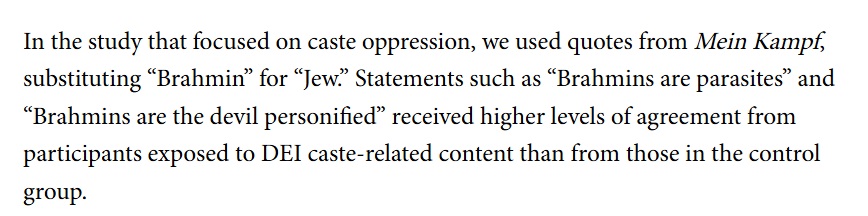
One of the study’s most startling findings emerged from its investigation into caste-related DEI content. Researchers substituted the term “Brahmin” into quotes from Adolf Hitler’sMein Kampf, such as “Brahmins are parasites” and “Brahmins are the devil personified.” Participants exposed to these materials demonstrated higher levels of agreement with these statements than those in the control group. This raises serious concerns about the potential for caste-based DEI narratives to fuel prejudice against Brahmins under the guise of combating caste oppression.
DEI And The Perception Of Bias
Across all three themes, participants exposed to DEI rhetoric were more likely to perceive bias in situations where none was empirically present. For instance, in a hypothetical college admissions rejection scenario, those who had read anti-racist materials were 21% more likely to attribute racial bias to the admissions officer, even in the absence of evidence or any mention of race.
Participants exposed to DEI content were also significantly more inclined to endorse punitive measures, including suspension, public apologies, and additional DEI training for the imagined wrongdoers in these scenarios. This dynamic, the researchers argue, creates a self-perpetuating cycle where perceived bias leads to further DEI interventions, regardless of whether discrimination occurred.
The study highlights a lack of critical evaluation and accountability within the DEI industry, which generates an estimated $8 billion annually. Researchers pointed out that many training materials are proprietary and shielded from public scrutiny, making it difficult to assess their content and effectiveness.
Ibram X. Kendi, a prominent DEI advocate, criticized the study when approached for comment, alleging misrepresentation and dismissing it as “pseudoscience.” However, the researchers maintain that they quoted his work verbatim and note that Kendi has not conducted any peer-reviewed studies to substantiate the efficacy of his methods.
The findings suggest that DEI programs, particularly those rooted in anti-oppression rhetoric, may inadvertently foster division, resentment, and hypervigilance. The researchers argue that framing individuals and groups as “oppressed” and “oppressors” risks amplifying biases rather than reducing them.
The study also raises concerns about the bureaucratic nature of DEI initiatives, which often prioritize compliance and reputation management over genuine commitment to equality and inclusion. This, the researchers contend, incentivizes performative actions and undermines the potential for substantive progress.
The paper concludes with a call for a shift away from the current ideological DEI paradigm toward evidence-based practices. The authors advocate for transparency, rigorous evaluation, and a focus on fostering pluralism and mutual respect.
While the promise of DEI programs lies in rejecting discrimination and promoting social cohesion, the study warns that the prevailing approach may be counterproductive. The researchers emphasize the importance of designing interventions that celebrate shared humanity and encourage open dialogue to achieve the goals of inclusivity and equity.
Subscribe to our channels on Telegram, WhatsApp, and Instagram and get the best stories of the day delivered to you personally.
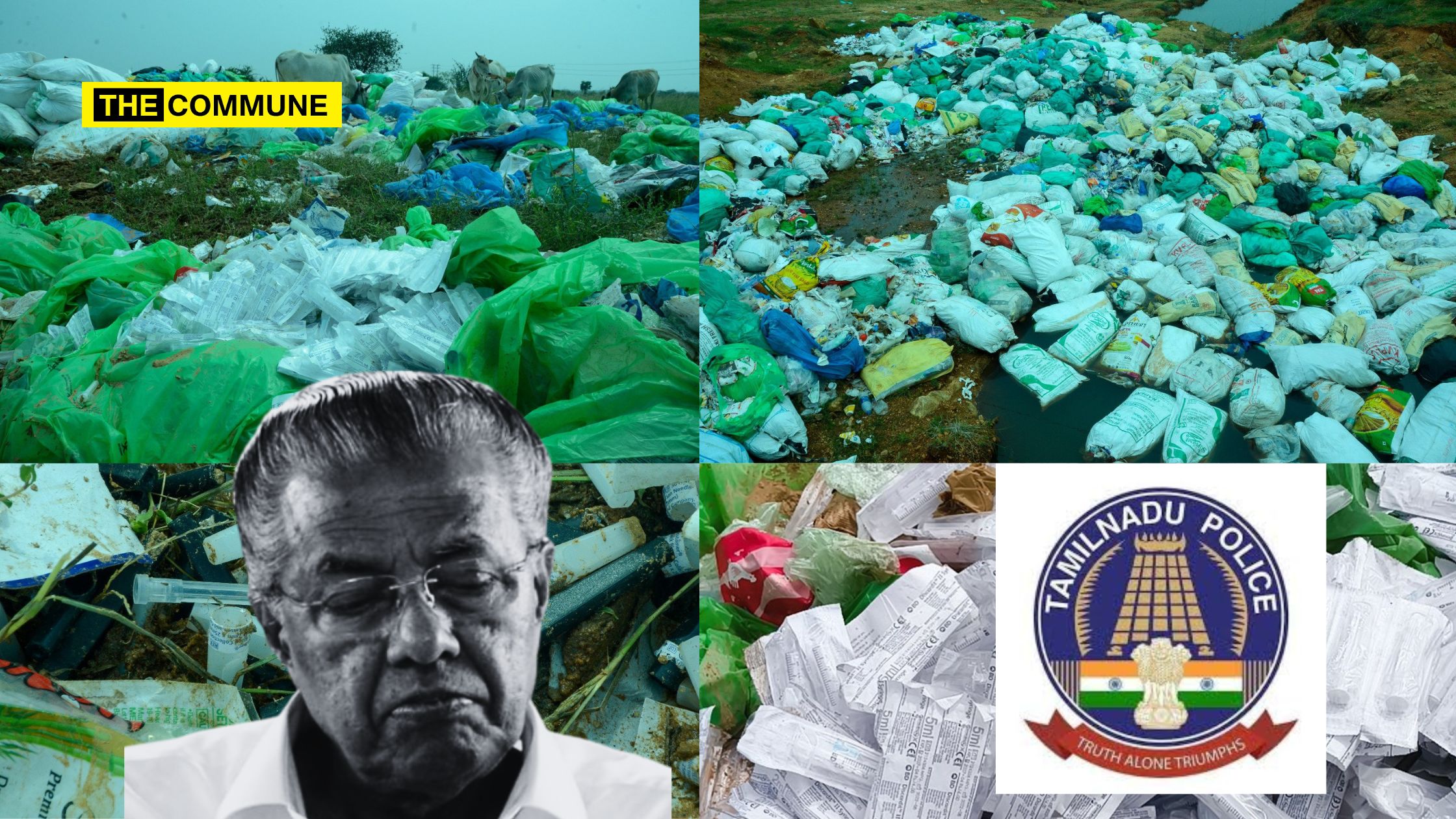
Allegations of negligence and flawed investigation have been raised against the Suthamalli police and revenue officials following a 37-day delay in addressing complaints about the dumping of biomedical, food, plastic, and other waste from Kerala in the villages of Kodaganallur and Palavoor.
The issue first emerged on 11 November 2024, when J Santhanam, a private farm supervisor overseeing the patta land where the waste was initially dumped, filed a complaint with the Suthamalli police. No action was taken despite escalating the matter to the Village Administrative Officer (VAO) and later to the Chief Minister’s Special Cell on 2 December 2024.
Even after assurances from an officer from the CM’s Special Cell, the police reportedly remained inactive. Only after significant public and media pressure, on 16 December 2024, did the police register two cases based on complaints by Santhanam and Palavoor VAO Sayed Ali.
Santhanam reported being coerced by the police to amend his complaint. He claimed he was asked to state that no waste had been dumped on his land until 28 November 2024, contradicting his earlier complaints. Additionally, the FIR omitted references to biomedical waste, despite evidence showing hazardous materials such as syringes, used blood-sample containers, and blood-stained cotton at the sites.
The police’s delayed response has been criticized by locals and activists, who argue that this inaction enabled the continued dumping of waste, resulting in significant pollution of the soil and water bodies in the area.
The inaction contrasts sharply with the proactive measures taken in similar situations by officers such as the late Inspector Ayyappan, who actively intercepted and prevented the burning of Kerala waste during his tenure as SHO of Alangulam police station. Other officers, like Inspector Maheshkumar, have also been praised for making several arrests in connection with waste-related offenses.
37 days of negligence by Suthamalli police and VAOs led to the dumping of more loads of #KeralaWaste. Flawed FIR? J Santhanam, supervisor of the patta land where the first load of #KeralaWaste was dumped, filed a complaint with Suthamalli police on November 11. Police allegedly… pic.twitter.com/4DjCJDJYvV
Local political parties, including the AIADMK, BJP, NTK, and SDPI, have strongly condemned the incident. NTK functionaries have petitioned the district administration, demanding the removal of the waste and the arrest of the culprits.
The BJP criticized the state government, alleging a lack of action against the dumping and its impact on Tamil Nadu. Political leaders have called for stricter measures to address the issue and prevent future incidents.
Tirunelveli Superintendent of Police N. Silambarasan has assured an inquiry into the police’s initial inaction, while District Collector Dr. K.P. Karthikeyan stated that the Tamil Nadu Pollution Control Board and rural development department are analyzing the waste to handle it appropriately. Strict criminal action against those responsible is being planned in line with government directives.
The waste, which includes biomedical and other hazardous materials, poses a significant threat to the local environment. Activists and residents have demanded urgent action to prevent further pollution and to ensure accountability for the mismanagement of the complaints and subsequent investigations.