Home Blog Page 479

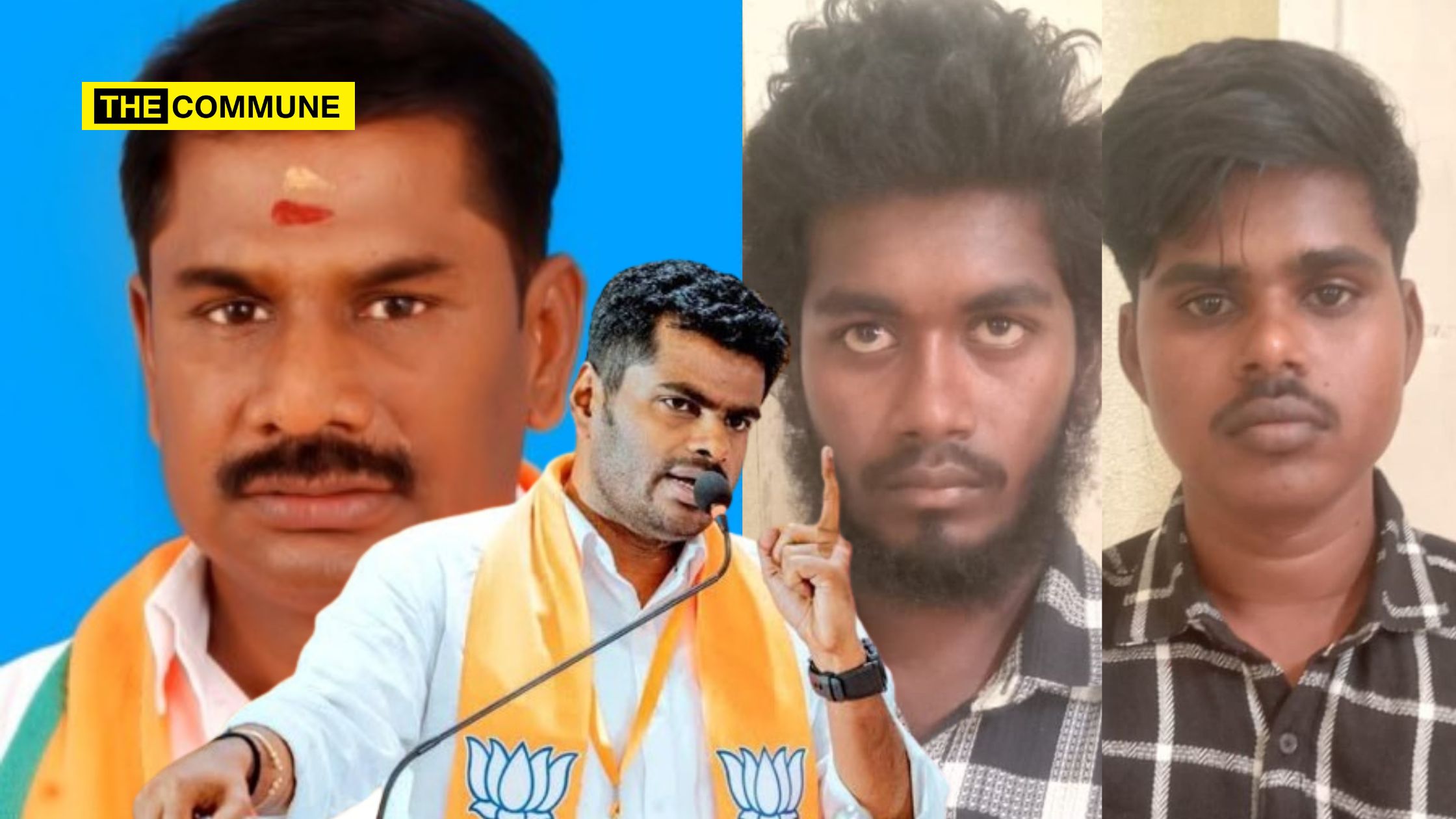
“Sorry State Of Law And Order”: BJP TN Chief Annamalai Slams DMK Cadres Involvement In BJP Functionary Vittal Kumar’s Brutal Murder

"Sorry State Of Law And Order": BJP TN Chief Annamalai Slams DMK Cadres Involvement In BJP Functionary Vittal Kumar's Brutal Murder

Tamil Nadu BJP President K Annamalai sharply criticized the ruling DMK government, describing its administration as a “sorry state of law and order,” even as he specifically urged the government not to intervene in the murder case of BJP functionary Vittal Kumar, emphasizing that the perpetrators were affiliated with the ruling party. Annamalai demanded justice for the victim, pointing out that BJP protests over the past four days had led to the surrender of the accused in court.

On 20 December 2024, Annamalai took to his official X account to condemn the DMK, stating, “This is the sorry state of law & order in TN under the DMK Govt. BJP functionary Thiru Vittal avl was brutally murdered by DMK Panchayat Chairman Bala Sait on 16th Dec. After subsequent protests by Vellore Dist functionaries of @BJP4TamilNadu to arrest the criminals, today accomplices of Bala Sait have arrived in court to surrender for the crime after 4 days. We caution the DMK Govt to ensure that all the DMK functionaries involved in this murder be arrested & not work overtime in saving them. Below are those who have surrendered in court today.”

Vittal Kumar, a 42-year-old BJP district secretary of the party’s spiritual wing, hailed from the Nagal area near K.V. Kuppam in Vellore district. He was married to Revathi and had two children. On the evening of 16 December, after completing his usual school duties, Vittal dropped his wife Revathi off at home on his two-wheeler.

Later, Vittal was found unconscious with severe blood injuries near the Chennangkuppam bus stand. Upon receiving the information, the K.V. Kuppam police arrived at the scene, rushed him to Gudiyatham Government Hospital, and then transferred him to a private hospital in Melvisharam. Unfortunately, despite efforts, Vittal succumbed to his injuries. Initially, the police treated the incident as a suspicious death and launched an investigation. However, the case was later reclassified as a murder, and two individuals were arrested and are currently being interrogated in connection with the crime.

In response to the incident, Tamil Nadu BJP leader K. Annamalai has accused DMK-affiliated rowdies of being behind the brutal attack, claiming they were responsible for Vittal Kumar’s lynching.

Subscribe to our channels on TelegramWhatsApp, and Instagram and get the best stories of the day delivered to you personally.

“Don’t Take This Court For A Ride”: SC Issues Notice To TN Govt. On DMK Min Senthil Balaji’s Bail And Ministerial Appointment In Cash-For-Job Scam Case

supreme court senthil balaji dmk

On 20 December 2024, a bench of the Supreme Court, comprising Justice Abhay S Oka and Justice Augustine George Masih, issued a notice to the Tamil Nadu government, directing it to provide details regarding the pending cases against DMK Minister Senthil Balaji. The Court also sought information on the number of witnesses involved, differentiating between public servants and other victims.

This order was issued in response to a petition challenging the Court’s earlier decision that granted bail to Minister Senthil Balaji in a money laundering case connected to the alleged cash-for-jobs scam. The Enforcement Directorate (ED) argued that Balaji’s reappointment as a Cabinet Minister after his release had put undue pressure on the witnesses.

During the proceedings, Solicitor General Tushar Mehta, representing the ED, pointed out that although in jail, Balaji wielded considerable influence as a minister without a portfolio, highlighting his political power within the state. In contrast, Senior Advocate Kapil Sibal, defending Balaji, countered by stating, “There are many individuals in any state who hold substantial power, even without a portfolio.”

Justice Oka raised concerns regarding the potential impact on victims, saying, “We need to know from the state how many victims are involved. If the number is large, then with him holding the cabinet minister position, what will happen to those victims?”

Senior Advocate Gopal Sankaranarayanan added that most of the prosecution’s witnesses were public servants from the Tamil Nadu government, where Balaji holds multiple ministerial portfolios. He also referenced the case of Arvind Kejriwal, where strict bail conditions were imposed, including barring him from visiting the Chief Minister’s office and the Delhi Secretariat.

Justice Oka acknowledged the importance of both public servants and ordinary citizens as witnesses in the case, stating, “We have reviewed the details of the trials. Common people, from whom money was taken, are witnesses. Civil servants are also witnesses. We will issue a notice to the state to ascertain how many witnesses there are and who they are.

Both Sankaranarayanan and Solicitor General Mehta argued that Balaji’s bail had led to delays in the trial process, citing the absence of a key forensic witness, PW4, who failed to appear in court after Balaji’s release.

Justice Oka expressed frustration over the events of 2 December, when Senior Advocate Sidharth Luthra, representing Balaji, had requested the Court not issue a notice, stating he would take instructions. While the Court had initially shown interest in issuing a notice, due to Balaji’s ministerial appointment shortly after his bail, it ultimately refrained after Luthra’s assurance.

Justice Oka criticized this statement: “‘Don’t issue notice, I will take instructions’—what does that mean? Don’t take this court for a ride. We were about to issue a notice but changed our order based on that statement. We are concerned about this. After this counsel makes a statement, there is a change in counsel. We cannot forget what happened in court that day. What does ‘taking instructions’ mean from your experience?”

Sibal apologized, and Justice Oka remarked, “We will examine this matter, but we are left with the impression that someone has misled this court.”

Sankaranarayanan pointed out that Balaji’s bail was granted due to a change in circumstances, implying that the Court had initially believed Balaji to be a layman. However, Justice Oka dismissed this interpretation, stating, “We were not under that impression. Please do not attribute that to us. The reasons for granting bail are clearly outlined in our order.” He explained that the bail was granted primarily due to delays in the trial, and noted that other accused individuals in the PMLA case had been given similar relief.

Justice Oka further commented, “It can’t be assumed that just because a person is released and then becomes a Minister, there is something wrong. There are situations where someone might be falsely implicated. We need to examine the specific facts of this case.” The Court then scheduled the next hearing for 15 January 2025.

Case Background

On 26 September, the Supreme Court granted bail to DMK minister Senthil Balaji, acknowledging a prima facie case against him. The Court’s decision was based on Balaji’s extended detention since June 2023 and the unlikely prospect of the trial starting anytime soon. It also underscored the importance of the right to a speedy trial, particularly in cases involving special statutes with strict bail conditions.

On 29 September, Balaji was sworn in as a Cabinet Minister under Chief Minister MK Stalin, assuming responsibility for the Electricity, Non-Conventional Energy Development, and Prohibition & Excise portfolios.

On 2 December, the Supreme Court expressed its surprise at Balaji’s appointment to a ministerial position so soon after being granted bail. While the Court did not retract its bail decision, it confined its inquiry to whether Balaji’s role as a minister might influence witnesses in the ongoing case.

In an affidavit filed on 13 December, the Enforcement Directorate (ED) raised alarms about Balaji’s swift reappointment to the Cabinet within 48 hours of his release. The ED noted that Balaji had held a ministerial post without portfolio during his eight-month imprisonment and had only resigned just before his bail hearing at the High Court.

The ED expressed concerns that Balaji could exert undue influence over witnesses, many of whom had worked under him when he served as Transport Minister. The affidavit also pointed to delays in the trial, including the extended cross-examination of a key forensic witness, PW4, and accused Balaji of using adjournments, requests for cloned digital evidence, and changes in legal representation to slow down proceedings.

Additionally, the ED suggested that Balaji’s actions undermined the Supreme Court’s directive to expedite the trial, implying that he deliberately obstructed the legal process and disregarded the Court’s orders.

(With Inputs From Live Law)

Subscribe to our TelegramWhatsApp, and Instagram channels and get the best stories of the day delivered to you personally.
Dravidian Model Leaves TN Higher Education Paralyzed: No VCs, No SEP, 4000 Faculty Posts Vacant

Dravidian Model Leaves TN Higher Education Paralyzed: No VCs, No SEP, 4000 Faculty Posts Vacant

Despite the annual rise in student enrollments across various engineering, vocational, arts, and science colleges, the Higher Education Department continues to face several challenges. Reports indicate that key tasks still remain unfinished, including the official implementation of the State Education Policy (SEP) with other ongoing issues include the appointment of vice-chancellors for six state-run universities, such as the University of Madras. In addition, the recruitment of approximately 4,000 assistant professors for arts and science colleges remains pending, despite a notification issued back in March.

The Ministry of Education, through the University Grants Commission (UGC) and the All India Council for Technical Education (AICTE), has consistently pressured state universities to update their progress on the implementation of the National Education Policy (NEP), which was introduced in 2020. At one point, the UGC issued several directives threatening to freeze central funding for universities failing to adopt the NEP.

Currently, universities like the University of Madras, Madurai Kamaraj University, Anna University, Bharathiar University, Bharathidasan University, and several others serve thousands of students across a variety of disciplines. However, the freezing of the ₹570 crore allocation under the Samagra Shiksha Abhiyan (SSA) by the Centre has put these state-run institutions under pressure, placing them at the crossroads between the Higher Education Department and the UGC. In contrast, deemed universities face fewer challenges in adopting the NEP despite the state’s resistance.

Failure To Implement SEP Even After Three Years of Recommendations

In 2021, a proposal was made to establish an expert committee to develop a dedicated SEP. After overcoming numerous challenges, it took nearly three years for the committee to complete the SEP report. Although the Justice Murugesan Committee submitted the SEP to Chief Minister MK Stalin in July, its implementation in both school and higher education sectors is still pending. A senior official in the Higher Education Department, who wished to remain anonymous, explained that the SEP cannot be implemented immediately because feedback and suggestions from stakeholders are needed to finalize any amendments.

The official added that, as per established norms, the SEP cannot be rolled out mid-academic year and is expected to be officially implemented from the next academic year. Furthermore, the expert committee only submitted a draft of the policy.

PB Prince Gajendra Babu, general secretary of the State Platform for Common School System-TN, expressed that the SEP could be launched in the next academic year if the state government begins taking steps toward its implementation. He emphasized that the SEP would benefit both educational institutions and students. Babu also criticized the withholding of funds for the non-implementation of the NEP, stating that the Centre should respect the state’s interests.

Vacant Vice-Chancellor Positions Disrupting Key Universities In TN

Six key universities, including the University of Madras, Anna University, Madurai Kamaraj University, Bharathiar University, Tamil Nadu Teachers Education University, and Annamalai University, are currently functioning without permanent vice-chancellors. Meanwhile, the state government has extended the tenure of vice-chancellors at Periyar University and Bharathidasan University.

A senior official from the Higher Education Department, who also preferred to remain anonymous, confirmed that the state government is resolute in forming a search committee to appoint vice-chancellors. The official argued that including a UGC representative in the selection panel would create complications, as no rules exist to support such a move, which is why the state is firm on its position.

P Thirunavukkarasu, vice-chairman of the Association of University Teachers (AUT), called for an immediate resolution to the dispute between the Raj Bhavan and the state government over the vice-chancellor appointments. He argued that universities cannot function efficiently without vice-chancellors, as decisions must go through a lengthy approval process involving syndicate members. Convening syndicate meetings alone is a time-consuming process, followed by additional formalities before decisions can be made.

Thirunavukkarasu also warned that the continued delay in appointing assistant professors in arts and science colleges would significantly disrupt academic activities, causing stress and placing extra pressure on part-time faculty members.

Professor Arul Aram from Anna University and president of the Anna University Teachers Association echoed similar concerns, noting that the lack of vice-chancellors would hamper administrative functions and delay critical policy decisions, including staff appointments. He stressed that the absence of vice-chancellors would degrade the overall working conditions for faculty members.

(With inputs from DTNext)

Subscribe to our channels on TelegramWhatsApp, and Instagram and get the best stories of the day delivered to you personally.
List Of Terror Attacks By Al Ummah Terrorist SA Basha And His Associates, Whom Thirumavalavan Glorified And Seeman Referred To As His Father

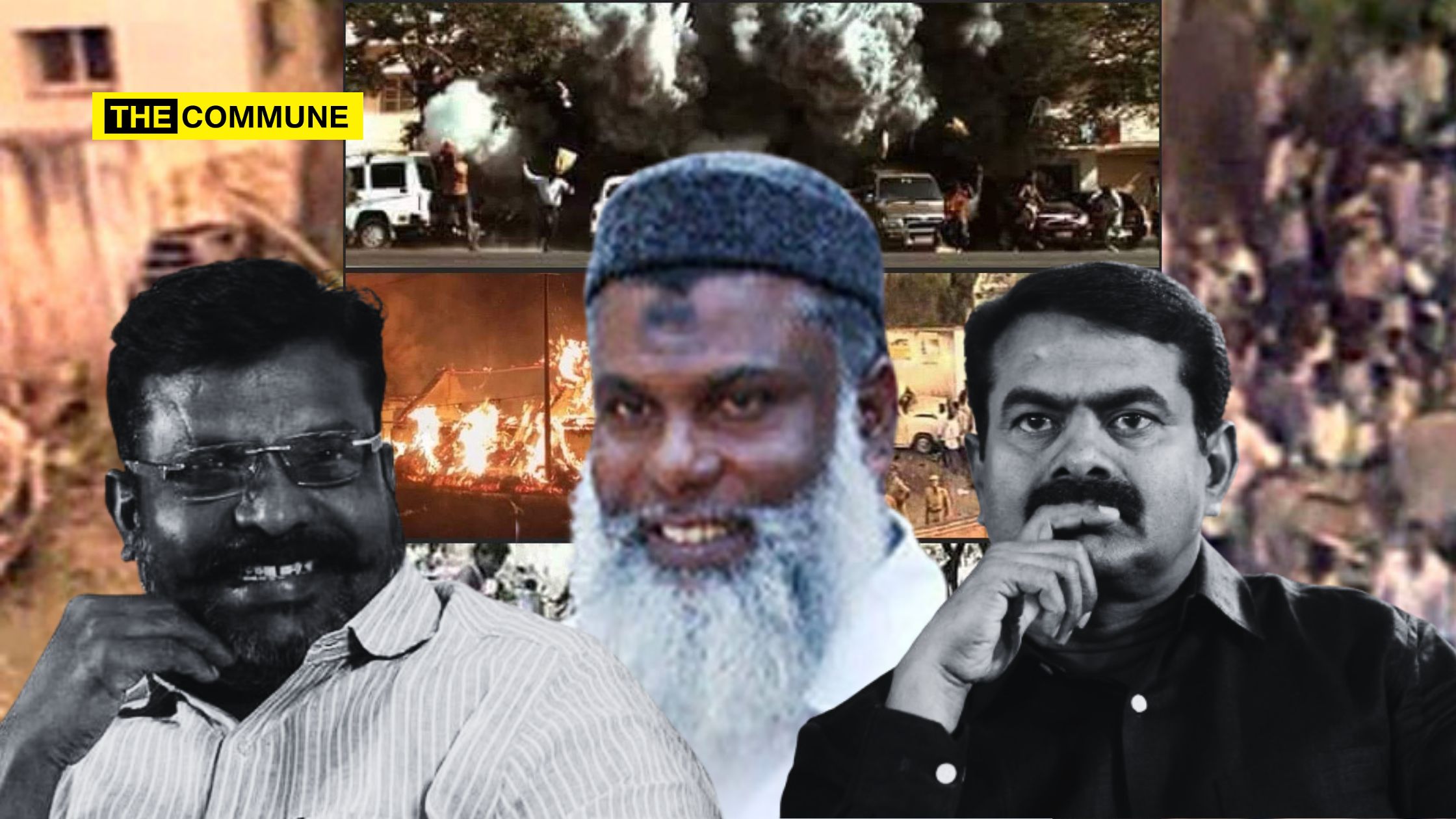
Thirumavalavan And Seeman, Do You Have An Ounce Of Shame In Glorifying A Mass Murdering Terrorist?

After the death of SA Basha, the notorious Islamist terrorist and founder of Al Ummah, who was infamous for his violent role in terror attacks across Tamil Nadu during the 1980s and 1990s, Tamil Nadu political leaders have come under fire for describing him as a “martyr for a cause” and even comparing him to a father figure. These remarks are a blatant attempt to whitewash the destruction caused by Al Ummah and its leader, disregarding the immense suffering inflicted upon the state and its citizen. Such statements have crossed all reasonable limits, with critics accusing these leaders of engaging in extreme minority appeasement for the sake of vote-bank politics, without any sense of responsibility.

VCK chief Thol Thirumavalavan, in a post on his official X account, praised Basha, stating, “His family was imprisoned to protect the interests of Muslims, he did not lose heart and lived with determination, unwavering in his principles.” He went on to say, “His demise is a great loss for Muslims,” and paid a “heroic tribute,” saluting “Kovai Pasha.”

Meanwhile, NTK chief Seeman, while expressing his condolences, controversially referred to Basha as “father Basha,” describing his death as a “great tragedy.” Seeman’s praise was alarming to many, especially considering his description of the convicted terrorist as a father figure. His comments attempted to deflect attention from the serious crimes Basha and his organization were convicted for, including the murder of innocent people, while blaming the imprisonment of Muslim prisoners on political motives, ignoring the severity of their crimes. This rhetoric has sparked widespread concern, as it seems to ignore the tragic consequences of the violent actions committed by Al Ummah and its leaders.

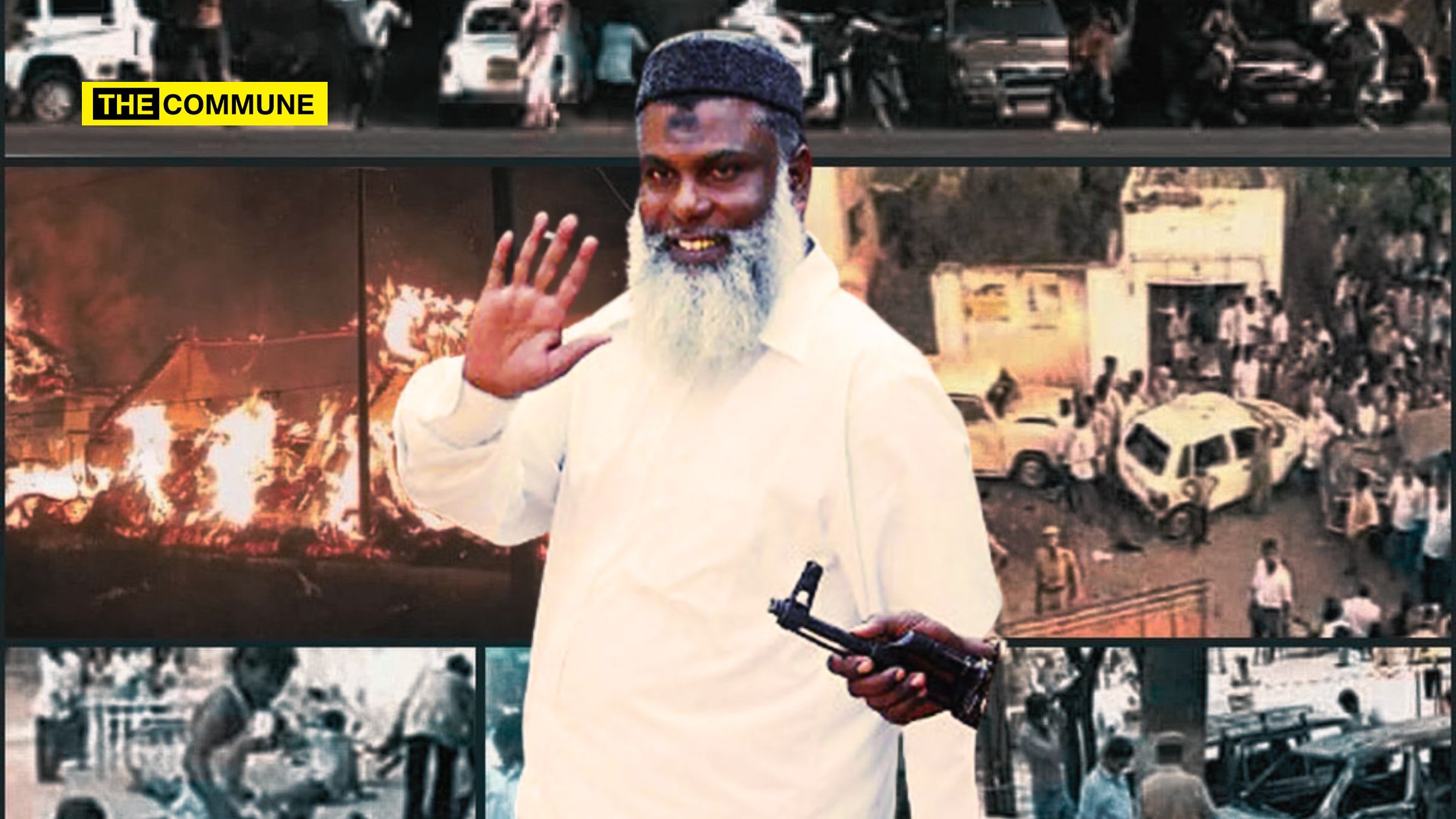
But the wounds from the devastating 1998 Coimbatore bomb blasts, orchestrated by Basha’s Islamist fundamentalist organization Al Ummah, remain fresh in the minds of the victims and their families. The coordinated attacks resulted in the tragic deaths of 58 people and left 231 others injured. Al Ummah was known for brainwashing young individuals into committing such heinous acts, leaving a trail of destruction and sorrow.

It is deeply condemnable when politicians praise a terrorist as a martyr while disregarding the innocent lives lost in such tragic incidents. Below are the atrocities carefully orchestrated and carried out over two decades by these so-called “father figures” and “martyrs.”

  • 1982: Basha attacked a group of Hindu leaders returning from a meeting at Coimbatore.
  • 1984: On 18 July 1984, Basha attacked Rama Gopalan, a prominent Hindu leader of the Hindu Munnani.
  • 1989: On 30 August 1989, Veera Ganesh, a prominent Hindu Munnani functionary was killed.
  • 1991: On 5 September 1991, Veera Shiva, a Hindu Munnani functionary, was killed.
  • 1992: On 29 October 1992, Al-Ummah members arrested while smuggling explosives from Kerala.
  • 1993 (August): RDX blast at RSS state headquarters, killing 11 people.
  • 1994 (October): State president of Hindu Munnani, Rajagopalan, dragged out of his house and attacked.
  • 1995 (April): RDX blast at Hindu Munnani headquarters.
  • 1995 (July): Parcel bomb killed the wife of district president of Hindu Munnani.
  • 1997 (September): On 2 September 1997, Five Hindus killed in one day.
  • 1997 (November): Police constable Selvaraj publicly executed.
  • 1998 (February): On 14 February 1998, Coimbatore serial bombings killed 76 people (Operation Allahu Akbar).
  • 1998 (March): Prof. Paramasivam dragged out of his house and executed.
  • 2003 (May): On 2 May 2003, Marad massacre – Eight Hindu fishermen massacred.
  • 2006 (August): 18 SIMI members conducted indoctrination-Jihad camp.
  • 2006 (November): Two Pakistani terrorists arrested.
  • 2007 (January): On 1 January 2007, Two LeT terrorists arrested while fleeing to Chennai.
  • 2010 (July): Professor’s hand chopped off in a violent attack.
  • 2012 (July): Two Hindu students, Sachin Gopal (20) and Vishal Kumar (19), stabbed to death.
  • 2012 (November): On 6 November 2012, Anand, an RSS functionary, attacked.
  • 2013 (April): BJP leader attacked in the morning hours.
  • 2013 (July): On 1 July 2013, Vellaiappan, a Hindu Front functionary, killed.
  • 2013 (July): On 19 July 2013, Ramesh, an auditor and BJP state general secretary, killed with 23 cuts.

This timeline highlights the continued violence and intimidation carried out by members of Al-Ummah and associated groups, reflecting a dark period in Tamil Nadu’s history. Let these incidents serve as an eye-opener for these politicians, urging them to focus on any issue but never play politics with national security or compromise the lives of innocent citizens.

Subscribe to our channels on TelegramWhatsApp, and Instagram and get the best stories of the day delivered to you personally.
Thirumavalavan And Seeman, Do You Have An Ounce Of Shame In Glorifying A Mass Murdering Terrorist?

Thirumavalavan And Seeman, Do You Have An Ounce Of Shame In Glorifying A Mass Murdering Terrorist?

Tamil Nadu political leaders, including Thol Thirumavalavan and Seeman, have eulogized Kovai Basha, the notorious terrorist responsible for the 1998 Coimbatore bombings. Kovai Basha died of old age a couple of days back. Who was he? Was he someone who contributed to the society? Did he contribute to science? Education? What is his claim to fame?

He was a convicted terrorist who was jailed for killing innocent people in the name of religion. He was a bigot who misled a generation of his coreligionists to perpetrate terror on ideologies that he didn’t like. Let us quickly look at who he was and his road to notoriety. Basha was a firewood commission agent in Ukkadam, Coimbatore. He diversified into real estate broking and became a real estate businessman. The influence of Wahabi Islam increased in the late 1980s. Its initial epicentre was the old Madurai District (Madurai, Ramnad, Tirunelveli), which slowly diversified into Coimbatore. Basha soon became the ringleader in Coimbatore. One of his first acts of terror came in 1983 when he waylaid attacked the BJP leaders who were travelling in a car with a machete. Basha brutally attacked Jana Krishnamurthy, Thirukovilur Sundaram, T. R. Gopalan, and Narayan Rao.

In 1987, Basha brutally attacked Rama. Gopalan, the late leader of Hindu Munnani at Madurai Railway station. An attack so brutal that Gopalji was in a coma a month before his miraculous recovery process started. His skull was broken into pieces by this attack. It makes one wonder how such a heinous terrorist was let loose in the society. How could he escape the hands of justice and continue perpetrating terror?

Emboldened that the arms of law were keeping him at a distance, he threw open challenges. In 1989, he started issuing fatwas against opponents. He issued a fatwa against five Hindu activists, including Arjun Sampath and Veera Ganesh. Veera Ganesh was brutally murdered.

Basha’s terror activities were so blatant that he and his gang ransacked the office of the Coimbatore West, DMK MLA, C. T. Dhandapani. The reason – he met with Atal Bihari Vajpayee. Anyone he thought was not subscribing to his position was intimidated or silenced.

In 1993, there was a deadly RDX blast in the RSS office in Chennai. This resulted in eleven deaths and seven people gruesomely injured. The cause was Jihadi terror, and the terrorists were linked to Basha. The next was the gruesome murder of Kottai Ameer, a Muslim activist who was campaigning against Jihadi activities. And then came the murder of the young traffic constable Selvaraj in 1997. His fault was that he stopped a bike for triple riding and asked for their papers. Many of us might remember that the police department went on a strike protesting the killing of their colleague, which itself is very strange. Even after a police strike, the loss of 20 lives in the violence that followed, didn’t activate the long arm of justice to do something decisive against Basha.

Next came the 1998 Coimbatore serial bomb blasts. This act of terror was aimed at BJP leader L. K. Advani, who was visiting Coimbatore for some political meetings. Such was the evil mind of the Jihadi terrorists that they timed a bomb in the Government hospital targeting the victims and relatives of the blasts in other locations who would eventually be brought to the hospital. In six hours, there were twelve explosions across the city, killing 58 people and injuring more than 200.

After this gruesome Jihadi attack, Al Umma, the terror organisation that Basha headed, was banned. He and his associates were arrested and prosecuted. It wasn’t just Basha, but a few more from his family were arrested too. The Justice Gokulakrishnan Commission that was set up to probe the bomb blasts, indicted the government machinery for their lack of checks and surveillance and for not discharging their duties as expected. Many of us would remember that this is more or less the same thing that Tamil Nadu BJP chief Annamalai said about the recent “gas cylinder” blasts in Coimbatore in 2023: intelligence failure and lack of surveillance.

So, this is the Basha who has been eulogised by leaders of a party recognised by the election commission, Viduthalai Chiruthaigal Katchi (VCK). The party supremo and an elected MP, Thol Thirumavalavan, went a step ahead and posted an eulogy, almost blaming the government for keeping Basha in jail. Another politician and the chief of the Naam Tamilar Katchi, Seeman, referred to Basha as his father and delivered his characteristic cinematic dialogues while paying tribute to this newfound father, a man who had been convicted of terrorist activities. The government of Tamil Nadu, on its part, even permitted a huge public procession to take the remains of Basha for burial.

The crowd seen during Basha’s final journey and in the meeting that happened before begs a critical question: What is the stance of the Muslim community on this? Do they see Basha as a role model for their children? The community that bravely came forward and issued a clarification during the recent 2023 Coimbatore bomb blasts against the Jihadi perpetrator Jameesha Mubin and subsequently denied him a burial in their graveyards needs to come out and clarify their stand about Basha and Al Umma. Otherwise, all their good work in 2023 would go waste and be seen as empty posturing.

The constituents of the Chidambaram parliamentary constituency need to ask their MP, Thol Thirumavalavan, about his stand on terrorism and terror activities. How can an MP who isn’t serious about terrorism that killed hundreds of innocent people protect the people of Chidambaram and ensure their welfare? The members and patrons of the Viduthalai Chiruthaigal Katchi should also ask the party the same question.

Lastly, Seeman, whom Tamil Nadu sees as a comic relief for his antics about his relationship with ‘dead’ people, must be taken seriously. By calling a convicted terrorist “Appa”, he has not just shown his class but has also bared his fangs. Tamil Nadu needs to wake up to who he is and show him his place in the next elections.

Here is what the people of Tamil Nadu should know before continuing to support these regressive forces, such as Thol Thirumavalavan and Seeman, that support terror convicts. Your vote is a mighty weapon you yield.

இளைதாக முள்மரம் கொல்க களையுநர்
கைகொல்லும் காழ்த்த இடத்து (The Appraising of Enemies, 879)

“Fell down thorn-trees while yet they are young: for when they are over-grown they will themselves cut the hand that attempteth to fell them” – The Kural Or The Maxims Of Tiruvalluvar – V V S Aiyar

Raja Baradwaj is a marketing communications professional who works with a leading technology multinational company. He is an avid reader, history buff, cricket player, writer, and Sanskrit and Dharma Sastra student.

Subscribe to our TelegramWhatsApp, and Instagram channels and get the best stories of the day delivered personally.

Here Are The Names Of Victims Who Died In 1998 Coimbatore Blasts Masterminded By Al Ummah Terrorist SA Basha Who Seeman And Thirumavalavan Glorified

Here Are The Names Of Victims Who Died In 1998 Coimbatore Blasts Masterminded By Al Ummah Terrorist SA Basha Who Seeman And Thirumavalavan Glorified

Political leaders in Tamil Nadu have come under heavy criticism for their alleged minority appeasement politics following the recent death of SA Basha, the Islamist terrorist and founder of Al Ummah. Basha, notorious for his role in terrorism across Tamil Nadu during the 1980s and 1990s, was described by these leaders as a “martyr for a cause” and even compared to a father figure. Such remarks have sparked widespread condemnation, with critics calling them alarming and irresponsible. Many argue that glorifying a known terrorist sets a dangerous precedent, labeling the leaders’ actions as extreme minority appeasement that has surpassed all reasonable limits.

The wounds from the devastating 1998 Coimbatore bomb blasts, orchestrated by Basha’s Islamist fundamentalist organization Al Ummah, remain fresh in the minds of the victims and their families. The coordinated attacks resulted in the tragic deaths of 58 people and left 231 others injured. Al Ummah was known for brainwashing young individuals into committing such heinous acts, leaving a trail of destruction and sorrow.

It is deeply condemnable when politicians praise a terrorist as a martyr while disregarding the innocent lives lost in such tragic incidents. In these heartbreaking times, the city of Coimbatore is coming together to remember the victims, honoring their memories, and lighting candles in their remembrance.

The following is the list of those who tragically lost their lives in this devastating event:

RS Puram: Muthu Lakshmi, Rukmabhai, Balu, Ranganathan, Rajendran, Vidyasagar, Arjunan, Sakthivel, Muthusamy, V. Siva Kumar, and R. Siva Kumar.

Mettupalayam: Siva, Poojari Mani, Ranganath, Jeganathan, Sabareesh, Rajesh, and Ravi Shankar.

Rajendran Textiles: P. Rajendra, Dhana Lakshmi, Dhana Bakhiyam, Chitra, M. Rajendran, and Krishnan.

Sivanandha Colony BJP office: Nagaraj, Prabhu, Towers Sundaram, Sheela, Govindaraj, and Saminathan.

National Travels: Baiju, Sundara Murthy, and Bala Krishnan.

Government Hospital: a nurse Varnam was also among the victims.

The Railway Station: Suresh

Kannappan Nagar: lost Seetha Lakshmi.

Sir Sanmugham Road: Siva Kumar, Rajesh, Rangaraj, Jeganathan, Sabarinathan, Mani, Mohana Sundari, Malar Vizhi, and Ravi Shankar.

Kani Ravuthar Street: Sokanathan, Ranganathan, Rama Krishnan, Murugesan, Devaraj, Vijaya, and Suruli Rajan. These victims will forever be remembered in Coimbatore’s heart.

Devastating Coimbatore Serial Blasts – A Grim Chapter

The 1998 Coimbatore serial blasts, orchestrated by S. A. Basha, the founder of the Islamic fundamentalist group Al Ummah, unfolded in a series of 12 bomb attacks across 11 locations. The intended target, L.K. Advani, narrowly escaped the tragedy due to a delayed flight, marking a dark day in Coimbatore’s history on 14 February. The aftermath of the blasts left 58 dead, 252 seriously injured, and economic losses in crores. Survivors and families of victims continue to grapple with the trauma, as highlighted by poignant testimonials.

14 February, a date associated with celebrating love on Valentine’s Day, became a sombre day in Coimbatore’s history. It was a black day for the city, stemming from events that began on 27 November 1997, when a policeman named Selvaraj was killed by unidentified individuals. This tragedy culminated in the Coimbatore blasts on 14 February 1998, with 18 explosions occurring in just four days. The aftermath was heart-wrenching, resulting in the loss of 58 lives and leaving 252 individuals with serious injuries for life. The economic toll was significant, with losses amounting to several crores.

L.K. Advani was initially scheduled to address the gathering in support of CP Radhakrishnan for the upcoming polls at RS Puram, marking a day etched in Coimbatore’s history with sorrow. The series of devastating blasts that shattered the tranquility of Coimbatore on that fateful day cast a long and dark shadow. This tragic event inflicted a profound trauma that the entire city has been grappling with ever since. It’s worth noting that these horrific blasts occurred during the tenure of the DMK government.

While the memories of the blasts may have faded in the minds of some politicians, the wounds are far from healed for the survivors and their families. Here, we present a collection of stories that shed light on the enduring pain and resilience of those who lived through that fateful day.

Cry Of A Mother Who Lost Her Young Son

25 years later, the ageing mother remembers the painful day with tears. She says, “Today is the death anniversary of my son who I toiled so hard to bring up. He would have been 35 today, I am extremely upset. All my sons have passed. He promised me as a child that he would study well and take good care of me.” The mother wails in front of his photo and cannot control her grief at the loss of her son.

Few Other Victim Testimonies

One victim shares, “I have no record of who admitted me to the hospital, and I remain in the dark about the details. I’ve tried in vain to discover who transported me from one hospital to another.”

Another survivor recounts, “I was injured on that fateful Saturday, 14 February, and regained consciousness only on Monday. The intensity of the blast and the mastermind behind it were so formidable that it felt like no one should have survived. The blasts even occurred right at the hospital entrance.”

Another victim displays the scars on his legs, his father voices his anguish at the failure of the justice system. He passionately argues that the perpetrators, the terrorists responsible for such heinous crimes, should have faced severe punishment, even capital punishment. He draws a poignant parallel, mentioning that Saddam Hussein was executed for his deeds. There are others like him in India, he insists, who must be held accountable through the harshest penalties. He says, “The perpetrators, the terrorists should have been punished severely and given capital punishment for the heinous crimes they committed. They even killed Saddam Hussein. There are many like him in India and they must be punished with hanging.”

The father of the victim shares his pain. He asks, “What is the point of the existence of the government? We have seen what the victims have gone through, but I have never seen anything so cruel in my entire life. We used to live like one family, and they must be punished for what they have done. We Hindus are the majority, have we ever done anything like this? No one bothers about the victims; they carry on with their work. They are basically scared that something else will happen to them.”

Another victim who, on that ill-fated day, had set out to distribute invitations for his daughter’s wedding but returned home as a burnt figure. His ageing mother and sister were dependent on him in many ways.

The Story Of Rangaraj Who Faced Multiple Blasts & Injuries

Rangaraj, a survivor of the Coimbatore blasts that occurred on 14 February 1998, still bears the physical and financial scars of that fateful day. His leg continues to ache, but the burden of medical expenses makes getting a scan an unaffordable luxury.

He shares the harrowing experience of the day, where he found himself caught in two bomb blasts, with the second causing severe injuries. After being carried to General Hospital (GH) by a compassionate policeman, another bomb blast occurred at the hospital following which he was shifted to Kuppusamy Naidu Hospital and KG Hospital. Subsequent treatment, including an operation conducted after a month, was excruciatingly painful.

Over 25 years and six surgeries, he continues to grapple with the aftermath. Severe damage to his hands and legs, compounded by grafting flesh from his thighs, leaves him in constant pain. Even mild itching can lead to infection, and his family remains unaware of his suffering to spare them further heartache.

His body is filled with shrapnel, necessitating scans and specialised treatment. However, financial constraints serve as a formidable obstacle. In the early stages, he was given medicines to address the embedded shrapnel, with the expectation that these fragments would gradually work their way out.

Rangaraj mentions one very important point. He said, “The blasts occurred in a Muslim-dominated area, but eerily, no one was present when the explosions transpired. It was as if they had prior knowledge. We behaved and worked with them as if we were family.”

Rangaraj also said, “Bomb blasts should never occur anywhere in the world. When they do, numerous individuals like me become victims of the ensuing devastation. I’ve endured this unrelenting pain for the past two decades, and I fervently pray that such a tragic incident should never happen again. It is my heartfelt plea that we remember and consider the enduring suffering of the victims.”

Victim Testimony – Live On With The Pain

Speaking to one of the survivors, a reporter inquires about the number of injured, to which the survivor responds, “14.” She vividly recalls her proximity to the bomb blast, an experience that left her with disfigured feet. Tragically, at least six of her colleagues who were working with her at the shop lost their lives in the explosion. The repercussions of her injuries have persisted over the years. Despite the passage of time, the victims says the pain in her feet remains a constant reminder of that fateful day. Her ordeal led to a two-month hospitalisation as medical professionals worked tirelessly to address her injuries.

The enduring physical and emotional scars serve as a poignant testament to the lasting impact of the Coimbatore blasts on their lives.

Survivors & Families Of Victims Do Not Want Release Of Terrorists

These survivors and families of victims vehemently oppose the release of the terrorists responsible for the Coimbatore blasts. Their conviction stems from the profound suffering they’ve endured, and they fervently wish to prevent others from experiencing the same fate. One survivor shares the daily struggle of grappling with the memory of her son, particularly as the anniversary of his passing approaches. She says, “These people should never be released. Only I know how much I have suffered as a result of the blasts. No one else must suffer my fate. I pass my days/life by thinking of my son daily. As the date approaches, I feel miserable. But I do not show it outside and carry on with my work. Every year we perform the rites on his death anniversary. If I continue thinking of him, I will fall ill and there is no one to take care of me now, so I have left everything to God and carried on with my life over the past 20 years. I brought up my brother’s son and took care of him. I am alone now. When asked about how things had changed after the blasts, she replied saying, at least 10 people died in this area. My uncle’s son, my uncle’s grandson, an aunt, a sister – all my relatives, died in the blasts and a few others died.”

https://twitter.com/Kumari_Jeyan/status/1711747074335944979

Reporter Mani’s Account Of The Tragedy

Reporter Mani provides a harrowing account of his experience covering the terrorist attack in Coimbatore, an event that left an indelible mark on his memory. He emphasises that in his entire life, both before and after that day, he has never witnessed such a catastrophic event. The shadow of death loomed ominously, casting a pall over the entire area. Tensions ran high, and people congregated in groups, chanting slogans directed against Muslims and the DMK government, with particular focus on M. Karunanidhi. Being a journalist to collect information on the blasts, he visited the hospital, where he learned that the bomb had exploded just outside. Notably, L.K. Advani himself arrived to inspect the aftermath, marking the gravity of the situation.

Mani said, “Advani had come to support CP Radhakrishnan’s election campaign at RS Puram. The blast occurred approximately 800 meters away from the campaign site, with the first bomb detonating at the railway station. Over that harrowing day, 12 bomb blasts unfolded, commencing at 3:50 PM and concluding around 10:30 PM. Of these, 10 bombs or so were detonated. The toll was devastating, with 58 lives lost and over 200 individuals injured. The perpetrators had even placed bombs in hospitals, tragically resulting in the deaths of a doctor, two nurses, and a patient at Kovai General Hospital.”

Reporter Mani said he visited the site the following morning, bearing witness to the grim aftermath, with bloodstains as a stark testament to the tragedy. The bombs were concealed in various vehicles and objects, from cars, motorcycles, and cycles to rexin bags, leather bags, school grounds, hotels, pubs, and bus stands – a chilling diversity of hiding places that defied imagination. He said, “The Coimbatore serial bomb blasts, which occurred in 1998, were preceded by the 1993 Mumbai bombings, making them a significant national tragedy. Notably, it was widely believed at the time and later confirmed that L.K. Advani was the primary target of the attack.

In the wake of these events, M. Karunanidhi, who was the Chief Minister in 1998, initiated an inquiry commission led by retired Chief Justice PR Gokulakrishnan of the Gujarat High Court, a Tamilian, to investigate the circumstances surrounding the attacks and assess the security provided to Advani. The commission delivered an interim report in 1998 and a final report in 2000. In the final report, it was revealed that three terrorists (names specified in the report) had infiltrated Advani’s proximity with the intent of carrying out suicide bombings. One of the primary targets of the serial blasts was indeed Advani. This crucial information is documented in the Justice PR Gokulakrishnan Committee report, highlighting the terrorists’ plan to assassinate Advani while he delivered a speech at RS Puram. They aimed to approach him from different directions, but due to stringent security measures akin to those for a Prime Minister, they were unable to execute their plan, ultimately thwarting a potentially catastrophic suicide bomb attack.”

https://twitter.com/Shibin_twitz/status/1712009416411636190

On 11 October 2023, the hastag #CoimbatoreWillNotForgive was trending on social media platform X where some important testimonies were shared relating to the terror attack. In an interview with Behindwoods, a security officer in charge recounts an incident where an individual donning BJP-related attire had bombs on his body on the stage.

“An unexploded car bomb forced us to flee our own home. All the people in the ~10 streets surrounding the car bomb were evacuated. My father left the new house he had worked so hard to build, crying. We experience the pain of the Sri Lankan Tamils and Kashmir Pandits who were forced to flee their homes. Forgetting all this and begging for votes now, Coimbatore will never forgive Edappadi, EDMK, ADMK”, wrote another.

Will the cries and sorrow of those who have lost their children, husbands, and wives reach the hearts of politicians who, in their desperate bid for votes, praise a terrorist—saying he is a loss to society? Let us hope that reason prevails over shallow vote-bank politics.

Subscribe to our channels on TelegramWhatsApp, and Instagram and get the best stories of the day delivered to you personally.
“Dei Father Enna Da Ithellam”, India’s Leading Off-Spinner, R Ashwin Humourously Responds After His Father’s “Humiliation” Comments Go Viral

Leading Off-Spinner, R Ashwin Humourously Responds After His Father's Comments Go Viral

Ravichandran Ashwin, India’s leading off-spinner with 500 Test wickets, has spoken out about a significant comment by his father, Ravichandran, following Ashwin’s unexpected retirement from international cricket. Ashwin retired after the third Test in the Border-Gavaskar Trophy ended in a draw in Brisbane, leaving two Tests remaining in the series. Despite being the world’s highest Test wicket-taker among active players with 537 wickets, Ashwin announced right after the match that he would no longer participate in international cricket.

On 19 December, his father suggested that “humiliation” might have influenced the abrupt decision. Ashwin was selected for only one of the three tests in the ongoing series.

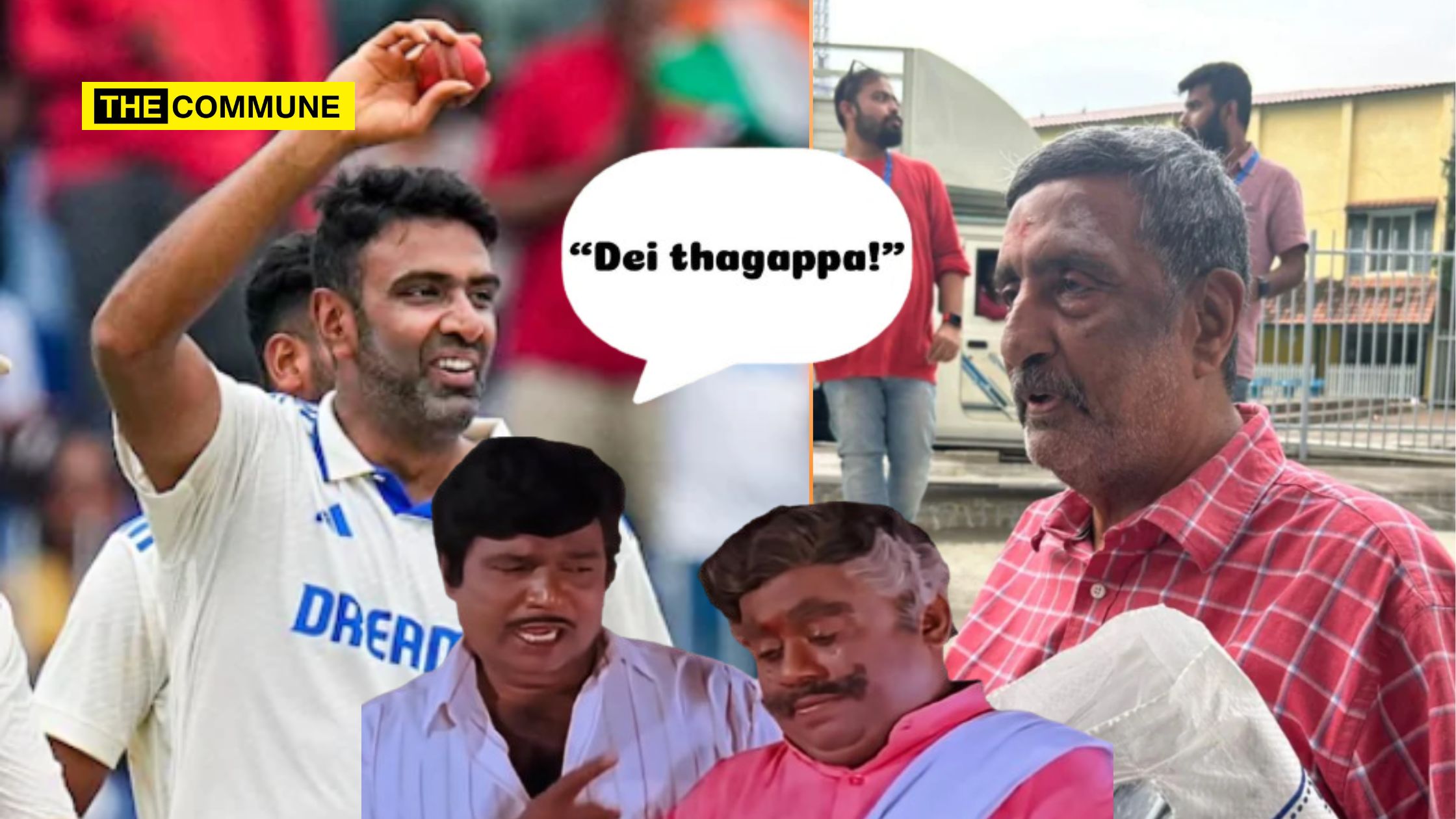
Ravichandran shared his thoughts in an interview with private news media, saying, “There’s no doubt it was emotional for the family, considering he had been on the field for almost 14-15 years. The sudden retirement was a shock, but at the same time, we also expected it due to the humiliation he faced. How long could he tolerate that? Perhaps he made the decision on his own.”

He added, “I found out at the last minute. What was going through his mind, I don’t know. He just announced it, and I accepted it with complete understanding. While one part of me was happy, another part wasn’t, as I felt he should have continued.”

Ravichandran emphasized, “Ultimately, it’s Ashwin’s choice, and I cannot interfere with that. But there could be several reasons behind the way he announced his retirement. Only Ashwin knows, maybe it was due to the humiliation he endured.

The comment to the private media channel quickly gained traction, sparking widespread speculation and various narratives. Soon “All in All” commentator Sumanth Raman barged in, asking Ashwin, “@ashwinravi99, dad says humiliation was going on and how long could he be expected to tolerate it?”

Ashwin breaking his silence on the statement by his father gave his befitting reply with humor stated, “My dad isn’t media trained, dey father enna da ithelaam. I never thought you would follow this rich tradition of “dad statements.” Request you all to forgive him and leave him alone.”

Upon his arrival in Chennai on 19 December, Ashwin reassured his fans, giving them a boost by confirming that he wasn’t done with cricket. Speaking to the media, he confirmed that he would continue to play for the Chennai Super Kings in the upcoming Indian Premier League season. “I am going to play for CSK. Don’t be surprised if I aim to play for as long as I can. I don’t think Ashwin the cricketer is done, but Ashwin the Indian cricketer has probably called it a day. That’s it,” Ashwin said.

(With inputs from NDTV)

Subscribe to our channels on TelegramWhatsApp, and Instagram and get the best stories of the day delivered to you personally.
“No Alliance With AIADMK Or TVK In 2026,” Declares BJP TN President K Annamalai

No Alliance With AIADMK Or TVK In 2026, Declares BJP Annamalai

Tamil Nadu BJP President K Annamalai has firmly stated that the party will not form an electoral alliance with the AIADMK, its former ally, or the newly formed political party Tamilaga Vettri Kazhagam (TVK) for the 2026 Tamil Nadu Legislative Assembly elections. He also predicted that the state would witness a five-cornered contest in 2026 and anticipated the formation of a coalition government. “Whoever forms the government in Tamil Nadu in 2026, it will be a coalition government,” Annamalai remarked.

During an interview with a private media, Annamalai welcomed actor Vijay’s entry into politics, acknowledging his prominence. “A person at the top stepping into politics is commendable. However, he will face challenges, including betrayal. Let Vijay embark on a long political journey like Jayalalithaa. Politics cannot change overnight; it requires persistence,” he stated.

Discussing the political landscape in Tamil Nadu, Annamalai pointed out the five major players – DMK, AIADMK, BJP, Naam Tamilar Katchi (NTK), and TVK. Each party, follows its own unique political strategy. “DMK claims they are doing politics right. AIADMK says they aim to fix the state. BJP promises to bring in new politics, and Seeman of NTK asks for a chance,” he explained.

Annamalai highlighted the evolving nature of Tamil Nadu politics, emphasizing the likelihood of a coalition government in 2026. He expressed his desire for a BJP-led coalition, stating, “The field has changed. I want a BJP-led coalition government to be formed in 2026.” However, he dismissed the possibility of forming alliances with AIADMK or TVK, asserting, “There will be no alliance with AIADMK or TVK in the 2026 assembly elections.”

He also acknowledged Nainar Nagendran’s suggestion for political unity but emphasized that the current political climate makes such coalitions challenging. As the BJP state president, he concluded, he must weigh his words carefully and focus on fostering BJP’s leadership in Tamil Nadu politics.

(With inputs from Dinamalar)

Subscribe to our channels on TelegramWhatsApp, and Instagram and get the best stories of the day delivered to you personally.
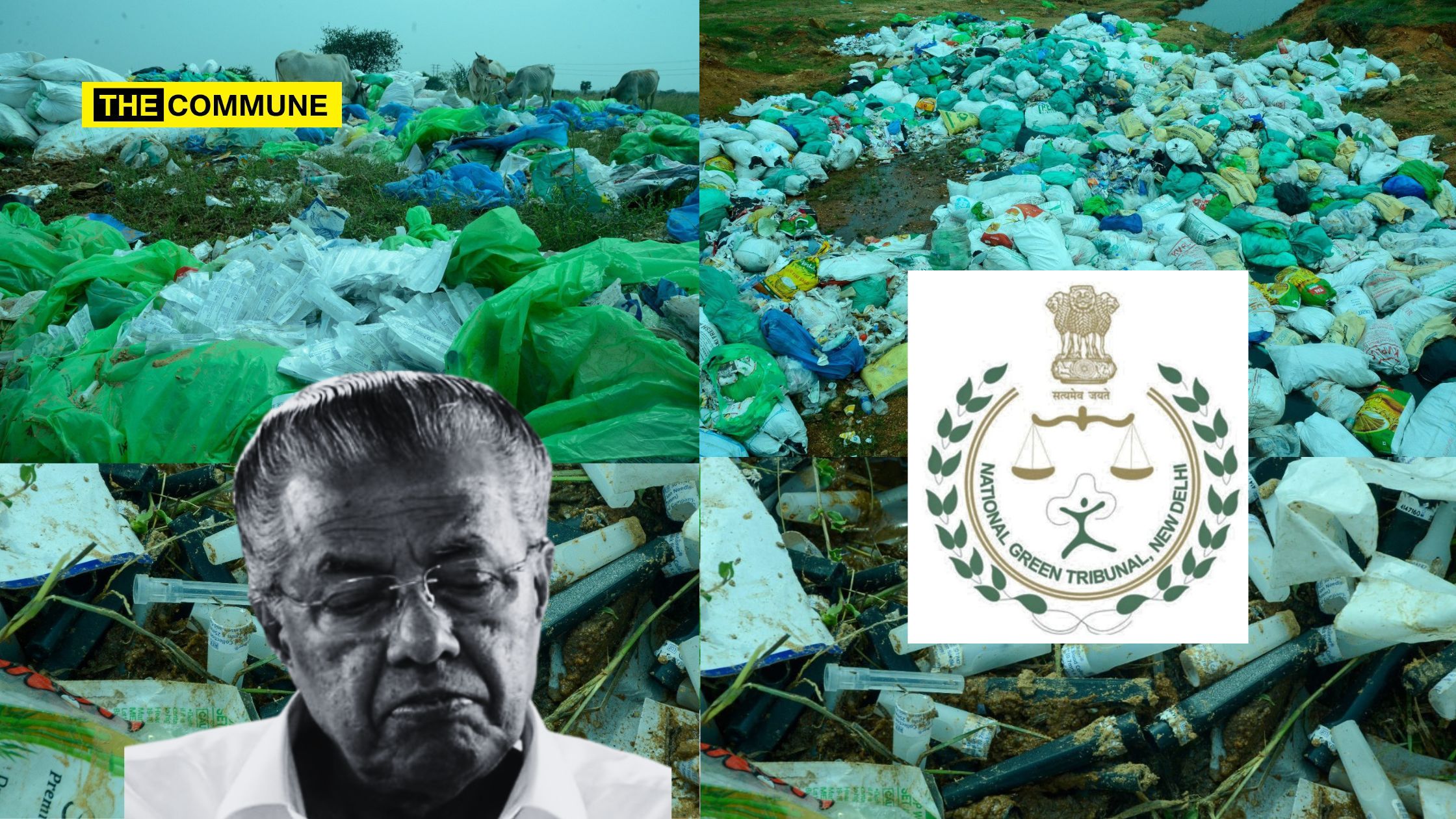
NGT Orders Kerala To Clear Illegally Dumped Biomedical Waste In Tamil Nadu Within 3 Days

NGT Orders Kerala To Clear Illegally Dumped Biomedical Waste In Tamil Nadu Within 3 Days

On 19 December 2024, the Southern Bench of the National Green Tribunal (NGT) instructed the Kerala government and its Pollution Control Board to clear the illegally dumped biomedical and mixed solid waste found at several locations along the border of Tamil Nadu’s Tirunelveli district within three days. The tribunal also demanded a compliance report to be submitted by 23 December 2024.

Reports indicated that hazardous biomedical waste from Kerala is being clandestinely dumped in Tamil Nadu, often during the night, in pristine forests, water bodies, and farmlands. Previously, such incidents were reported in areas like Anamalai, Theni, and Nanguneri. Currently, waste is found in four locations: Kodaganallur, Palavoor, Kondanagaram, and Sivalarkulam, all within the Tirunelveli district.

It was revealed that the biomedical waste originated from institutions such as the Regional Cancer Centre (RCC) in Thiruvananthapuram and Credence Private Hospital, while municipal waste came from Leela Kovalam. The NGT initiated the case suo moto and notices have been issued to these entities and to the environmental and health departments of both Kerala and Tamil Nadu for their failure to prevent this illegal activity.

A bench comprising Justice Pushpa Sathyanarayana and expert member K. Satyagopal directed Kerala to either retrieve the waste or establish a formal agreement with Tamil Nadu’s Common Biomedical Waste Treatment Facility for proper disposal. “The waste must be removed without delay,” the bench ordered, providing a three-day deadline.

Tamil Nadu government pleader D. Shanmuganathan stated that the Kerala State Pollution Control Board (KSPCB) failed to comply with an earlier tribunal order from June, which required it to pay ₹69,000 to cover the cost incurred by the local body for removing waste dumped along Nanguneri’s roadsides.

Officials from the Tamil Nadu Pollution Control Board (TNPCB) confirmed that a detailed investigation is underway to assess the volume of biomedical waste dumped. Counsel Sai Sathya Jith highlighted that TNPCB’s chairperson has written to KSPCB’s chairperson demanding legal action against RCC and other offenders, along with stricter border monitoring. Two FIRs have been filed by the Suthamalli police under various sections, including Sections 271 and 272 of the IPC, Section 15 (1) of the Environment Protection Act, and Section 3 of the Tamil Nadu Open Places (Prevention of Disfigurement) Act.

KSPCB counsel V.K. Rema Smrithi acknowledged the waste originated in Kerala and assured that criminal proceedings would be initiated against the culprits. She noted that unauthorized waste collectors, operating without government recognition, were responsible for this illegal activity.

Local activists pointed out that both the police and transport departments of Kerala and Tamil Nadu bear responsibility for these incidents. They emphasized that stricter monitoring of the narrow Sengottai road, the primary interstate route in the area, and enhanced vigilance at the border check-posts could mitigate the problem.

Improper disposal of biomedical waste poses significant risks to human health and the environment, as it is highly infectious and requires strict management under Biomedical Waste Management Rules.

(With inputs from TNIE)

Subscribe to our channels on TelegramWhatsApp, and Instagram and get the best stories of the day delivered to you personally.
Nehru’s Betrayal: How Cong Govt Silenced Ambedkar And Abandoned Hindu Code Bill

Nehru's Betrayal: How Cong Govt Silenced Ambedkar And Abandoned Hindu Code Bill

Dr BR Ambedkar’s resignation as India’s Law Minister in 1951 was a significant event, driven by multiple grievances regarding the government’s treatment of marginalized communities, its foreign policy, and its failure to advance the Hindu Code Bill. Ambedkar’s frustration had been building over the years, particularly with the government’s failure to allocate him substantial administrative responsibilities despite his qualifications. He had hoped to be entrusted with the Planning Department, but was excluded, and was not considered for key Cabinet committees like Foreign Affairs or Defence. Even his appointment to the Economics Affairs Committee was only due to his protest.

Ambedkar’s resignation was not only due to personal disappointment but also because of the government’s neglect of the Scheduled Castes and Backward Classes. Despite constitutional safeguards, these communities continued to face oppression, and their condition had not improved. The government’s failure to address these issues, while prioritizing Muslim protection, angered Ambedkar. He pointed out the minimal representation of Scheduled Castes in government service, which was far below the 12.5% guarantee outlined in the Constitution.

Ambedkar also expressed his concerns regarding the government’s foreign policy, which he felt had isolated India from its allies, particularly over issues related to Kashmir and East Bengal. He proposed partitioning Kashmir to resolve tensions and criticized the colossal military expenditure of Rs. 180 crores annually as a direct result of the government’s foreign policy. This, combined with his frustrations over India’s strained relations with Pakistan, particularly concerning Kashmir, led to Ambedkar’s deep dissatisfaction with the government’s priorities.

However, it was the mishandling of the Hindu Code Bill that pushed Ambedkar to resign. The Bill, introduced in 1947, was meant to be a landmark social reform. Despite Cabinet support to pass the Bill in the last sessions of Parliament, the Prime Minister proposed a truncated version, focusing only on the Marriage and Divorce section. Ambedkar agreed to this as a compromise, but then, the Prime Minister suggested abandoning even this part of the Bill. Ambedkar was shocked by this decision, believing that the Bill was not dropped due to a lack of time but because more influential Cabinet members sought to prioritize their own Bills.

Ambedkar criticized the Chief Whip for obstructing the Bill’s progress, claiming that the Whip had been disloyal to the Prime Minister and absent during crucial discussions. He refuted the notion that the Bill had been dropped due to strong opposition, pointing out that internal party divisions showed minimal resistance. The Hindu Code Bill had overwhelming support within the Party, and divisions in the House had repeatedly resulted in favorable outcomes for the Bill. Despite this, the Bill was killed with minimal progress, and Ambedkar felt that the government’s failure to address this crucial reform undermined the spirit of the Constitution.

Dr. Ambedkar’s resignation statement was a public protest against these failures. He felt that the Hindu Code was the most significant social reform in India’s history, and abandoning it would undermine the nation’s constitutional progress. He expressed his deep frustration with the Cabinet’s functioning, which he believed had become a mere registration office for decisions already made by Committees. Despite his deep disappointment, Ambedkar remained true to his principles and resigned, choosing to walk away from a government that he felt had failed to address the core issues he cared about.

Ambedkar’s resignation also highlighted his belief that Congress had long silenced and neglected Dalits. He recounted how Nehru’s government had attempted to censor his resignation speech in Parliament, marking a historical first in which Ambedkar was asked to submit a written copy of his speech for scrutiny before speaking.

Humiliated by this request, Ambedkar refused to comply, walked out of Parliament, and released his statement to the press. This act of defiance symbolized his refusal to be silenced by a government he felt had disregarded his contributions to the nation.

In his resignation, Ambedkar made it clear that his decision was not a result of ill-health, as some had speculated, but rather because of the government’s failure to address the vital issues of social justice, foreign policy, and constitutional integrity. He thanked his colleagues and Parliament members for their support during his tenure, but his resignation was an unequivocal statement of his principles, marking a turning point in his political journey.

(With inputs from Dharma Dispatch)

Subscribe to our channels on Telegram, WhatsApp, and Instagram and get the best stories of the day delivered to you personally.