Home Blog Page 442

Over Eight Chain-Snatching Incidents On Pongal Day In Tambaram Spark Fear, Including Attack On Police Commissionerate Staff
Over Eight Chain-Snatching Incidents On Pongal Day In Tambaram Spark Fear, Including Attack On Police Commissionerate Staff

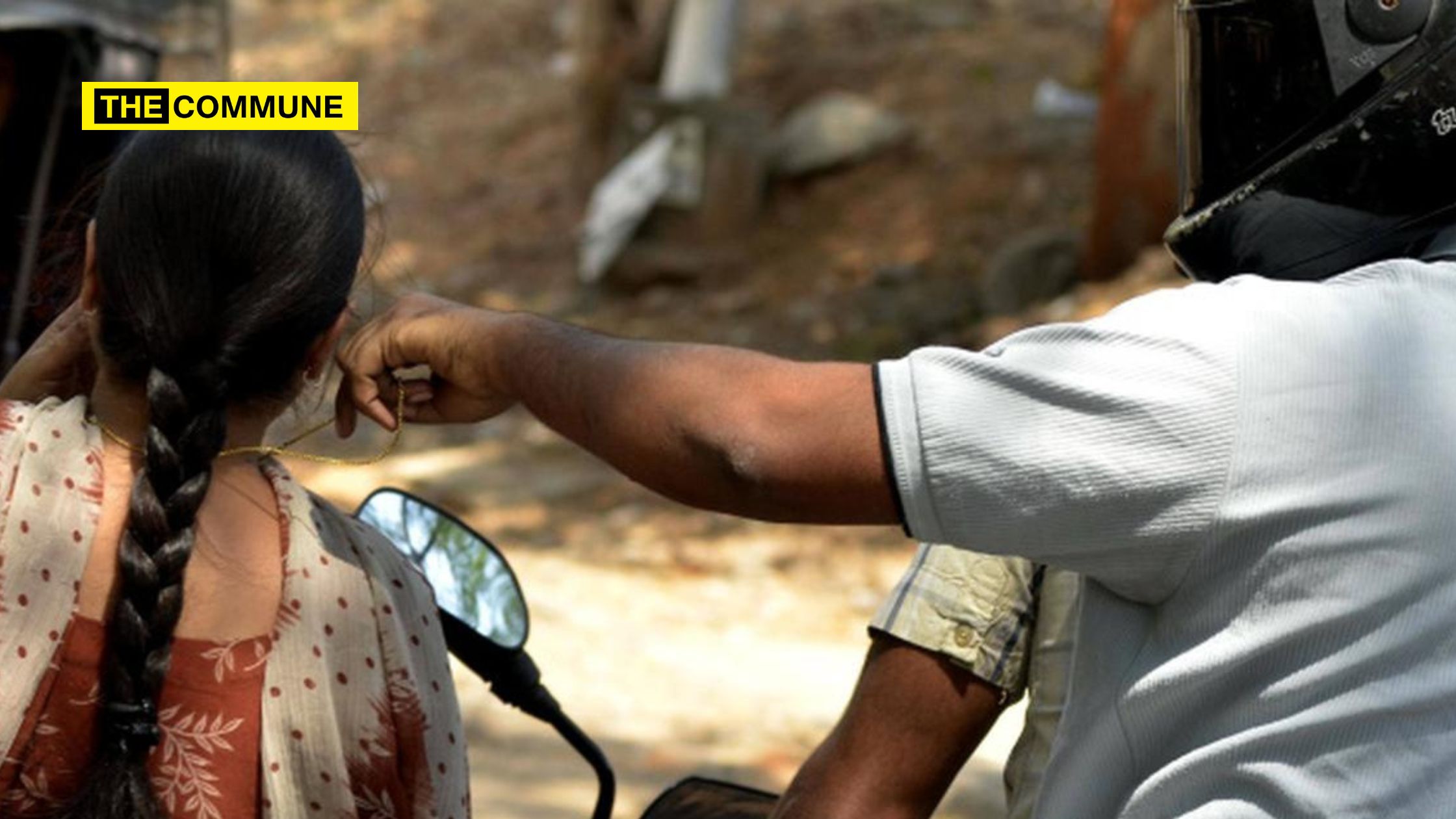
On a single day during the Pongal festivities in Tambaram, more than eight chain-snatching incidents were reported, causing widespread fear among the public. While police officers from various stations gathered at the Tambaram Commissioner’s office to celebrate the festival, these robberies were carried out by unidentified individuals, unsettling the community.

One such incident occurred when a female police officer from the Chennai Commissioner’s office was targeted. CCTV footage of the incident was released, sparking panic among the public.

The chain snatching took place in a single day across several areas under the Tambaram police jurisdiction, including Selaiyur, Manimangalam, Kuduvancheri, and Maraimalainagar. These incidents created widespread fear.

Amidst this, a private event, “the Mermaid Show,” was being held at the Chennai Tambaram Railway Ground. Ishwari (56), who attended the event with her family, was targeted by the robbers as she left. While wearing an 8-sovereign gold thali chain, Ishwari held on tightly to it. Despite her efforts, the thieves managed to cut off the 5-sovereign portion and quickly fled the scene. A complaint was filed at the Selaiyur police station, and an investigation was launched.

The police received information via walkie-talkie about the robberies occurring within Tambaram’s jurisdiction, including the areas mentioned. In another incident, Indira, a staff member at the Chennai Commissioner’s office, was followed by the robbers on foot and by motorcycle when returning home to Devaraj Street, Mudichur Road. Before she could open her gate, the robbers snatched her 5.5-sovereign gold thali chain and fled. CCTV footage of this attack was also released.

In response to the information from the police control room, the investigation was rapidly intensified, and checkpoints were established. When the robbers realized they were being pursued, they abandoned their vehicle, a Pulsar 220, at the Gandhi Salai junction on Tambaram GST Road and fled on foot. The police have seized the car and are continuing their investigation.

The Pongal celebrations at the Tambaram Commissioner’s office, which saw officers across all police stations participate, temporarily decreased police presence at key security points. The robbers took advantage of this gap to carry out their series of snatchings.

Three special teams have now been formed to track down the robbers, and an intensive investigation is underway. The chain-snatching incidents, particularly the attack on the female officer from the Chennai Commissioner’s office, have caused widespread fear and concern among the public.

(With inputs From Thanthi TV)

Subscribe to our TelegramWhatsApp, and Instagram channels and get the best stories of the day delivered to you personally.

Heavy Police Deployment And Barricades Erected To Prevent Animal Sacrifice By Islamists At Sacred Thiruparankundram Temple Hilltop

Heavy Police Deployment And Barricades To Prevent Animal Sacrifice By Islamists At Thiruparankundram

Over a hundred police officers and barricades were deployed at the Thiruparankundram Murugan Temple Hills after a large group of Islamists attempted to celebrate a ‘feast’ by bringing goats and roosters to the hilltop. They claimed the sacred Hindu temple site as ‘Sikandar Hills.’ When the police intervened to prevent the group from entering the hill path, tensions escalated as the Islamists raised slogans, resulting in a brief scuffle. This incident heightened tensions in Madurai.

Thiruparankundram, is a sacred site for Hindus, renowned for its famous Murugan Temple. This temple is regarded as the first of the six holy abodes (Arupadai Veedu) of Lord Muruga, making the hill a revered spiritual destination for millions of devotees.

On 27 December 2024, Madurai police intervened to detain a group of Islamists who attempted to bring goats and roosters to a hilltop dargah in Thiruparankundram, Madurai district, for ritual sacrifice. Syed Abu Dahir, 53, from Malaiyadipatti in Rajapalayam, arrived with his family, a goat, and two roosters for the ceremony. However, authorities stopped the group at the base of the hill, informing them that taking livestock up the hill was prohibited. This led to a protest by over 20 local Muslims from Thiruparankundram, who gathered at the hill’s steps in solidarity with the family.

A week later, on 5 January 2025, another large group of Muslim protesters gathered at Thiruparankundram Hills, demanding permission to offer prayers at the mosque located uphill. The police denied their request, leading to heightened tensions and a brief scuffle between the protesters and law enforcement. Eventually, the police detained the protesters.

Against this backdrop, on 17 January 2025, the Santhanakoodu Festival was held at a nearby dargah. Later that evening, a series of social media posts began circulating, claiming that an “Equality Feast” (Samabanthi Bhojan) would be held on 18 January at the hilltop dargah, where goats and roosters would allegedly be sacrificed. Fearing the potential for communal tension, the police took precautionary measures by setting up barricades and inspecting individuals heading to the Sikandhar Dargah on the hilltop, checking for any meat, goats, or roosters being brought along.

When the dargah Jamath was informed that they could only engage in prayers and not sacrifice animals at the hilltop, members of the Jamath and other Islamists protested against the police. They raised slogans, causing a stir in the region.


Subscribe to our TelegramWhatsApp, and Instagram channels and get the best stories of the day delivered to you personally.
VCK Cadres Allegedly Vandalize Houses In Political Enmity; Three Injured In Perambalur’s Thirumandurai Area

VCK Cadres Vandalize Houses In Political Enmity; Three Injured In Perambalur

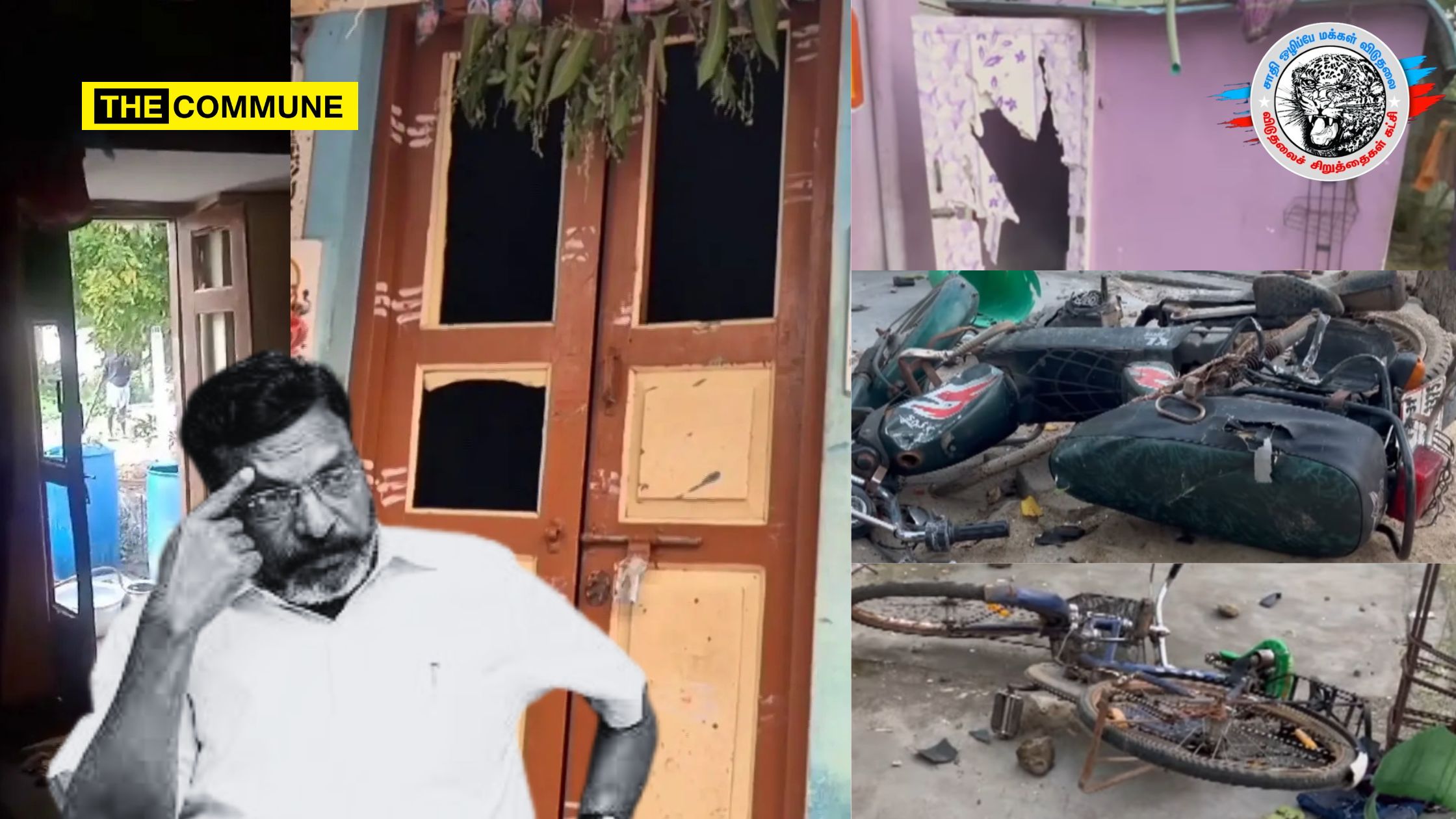
Residents of Thirumandurai in Perambalur district accused Viduthalai Chiruthaigal Katchi (VCK) cadres of vandalizing their houses following a clash between two local factions. Five houses were reportedly damaged, and three individuals were injured in the incident, requiring hospital treatment.

The conflict allegedly stemmed from an ongoing dispute between the nephew of VCK leader Thirumavalavan and the AIADMK union secretary, with tensions exacerbated by animosity related to local body elections. According to reports, a few days earlier, supporters of AIADMK leader Ilayaraja allegedly attacked a cleaner, believed to be a supporter of Selvamani, in Thirumandurai. In retaliation, Ilayaraja’s supporters are said to have vandalized five houses of Selvamani’s supporters using sticks and sickles. Subsequently, Selvamani’s supporters reportedly retaliated, attacking four homes in Ilayaraja’s locality.

Locals claim that VCK members, led by a relative of party chief Thirumavalavan, orchestrated the house vandalism. Residents allege that the attacks are part of ongoing party-related tensions and that the police have not taken adequate action to address the situation, with some accusing law enforcement of ignoring their complaints.

One of the victims, speaking to the press, said, “Thirumavalavan’s nephew, out of jealousy for us garlanding MGR on his birthday today, came and vandalized our houses. This has been going on for the last ten to fifteen years. Do we have any land dispute with them? No; it’s all due to party differences. Thirumavalavan’s nephew, who lives in the town, is behind all this. Today, he came, broke everything, and left.  All were under the influence of weed, hitting women. Thirumavalavan should come here to this town and witness this.”

Subscribe to our TelegramWhatsApp, and Instagram channels and get the best stories of the day delivered to you personally.
“Fascist Approach”: How Madras High Court Whipped And Gave Belt Treatment To DMK Govt In ‘Savukku’ Shankar Bail Case

Fascist Approach: How Madras High Court Whipped In 'Savukku' Shankar Bail Case

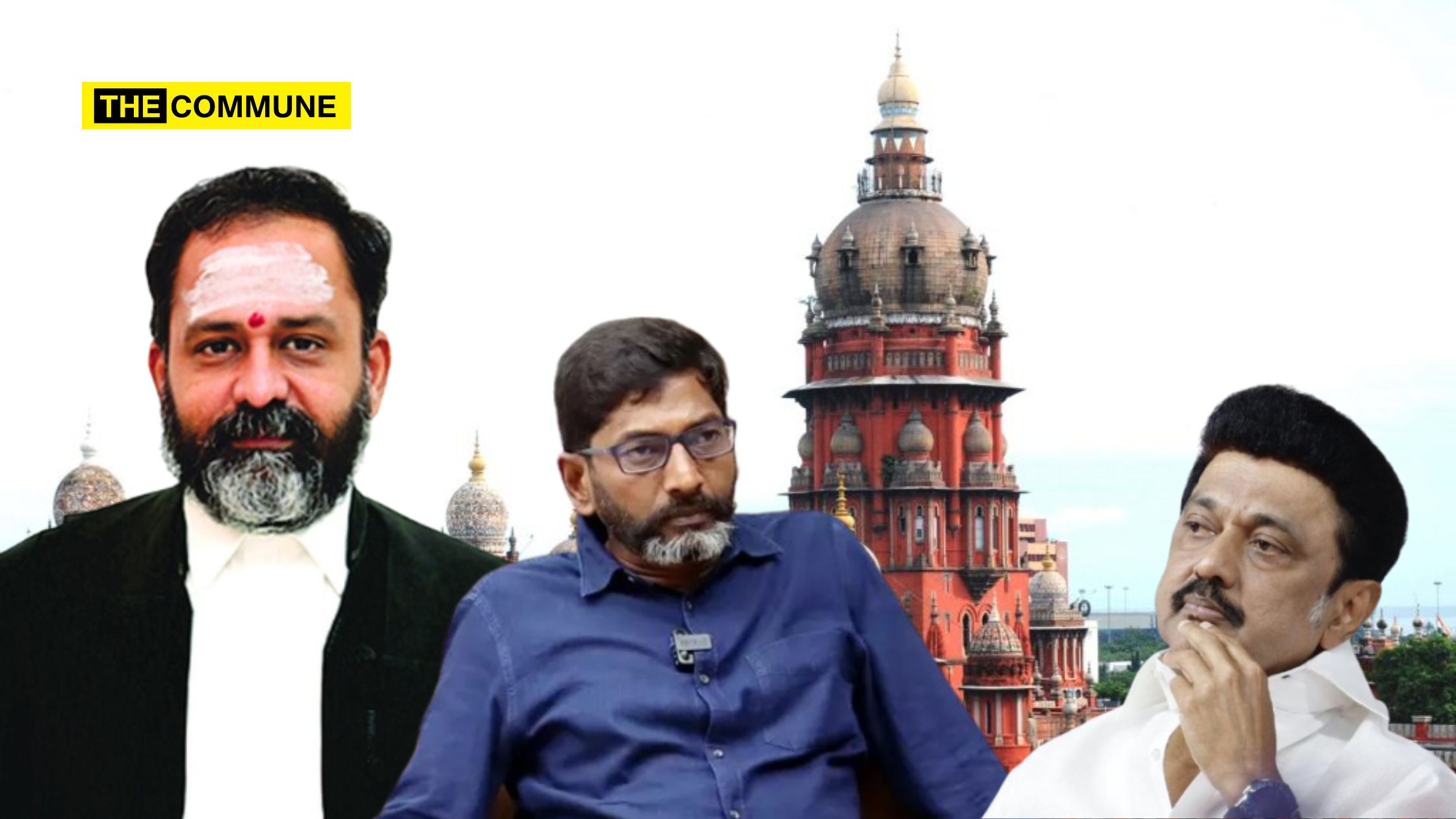
On 17 January 2025, the Madras High Court expressed concern about the growing trend of filing criminal cases against individuals for expressing their opinions on public matters, calling it indicative of a fascist mindset. The court raised alarms over the increasing practice of arresting people for making certain statements on social and mainstream media.

Judicial Lashing Of the Case’s Foundation

Justice Swaminathan meticulously dismantled the legal basis of the charges. The petitioner was accused under Sections 221, 222, and 353(1)(b) and (2) of the BNS Act, 2023. The court highlighted the glaring inconsistencies and overreach in these charges:

1. Misuse of Section 221:
The judge stated unequivocally that Section 221, which pertains to obstructing a public servant, was misapplied. The petitioner’s YouTube comments could not be construed as “deliberate stoppage” of the investigation. The judge quipped that the investigating officer appeared to have “his own dictionary,” twisting the meaning of obstruction to suit the narrative.

2. Misapplication of Section 222:
Section 222 involves a person’s legal obligation to assist a public servant. Justice Swaminathan ruled that since the petitioner believed the case to be false, he was under no obligation to assist the police. Therefore, invoking this section was baseless.

3. Perversity of Section 353:
The court labeled the application of Section 353 as “nothing short of perversity.” It rejected the claim that the petitioner’s video caused public mischief or fear, asserting that criticism of a police investigation falls within the ambit of free speech.

Slamming The Police And Government Actions

Justice Swaminathan’s observations extended beyond the legal technicalities, targeting the systemic misuse of power:

1. Erosion of Rule of Law:
The judge condemned the state for resorting to successive cases and preventive detention to silence the petitioner, terming it an act of “hounding.” He pointed to the state’s “scant regard for rule of law” and described the petitioner’s arrest as “unfortunate” and motivated by malafides.

Justice Swaminathan’s condemnation of the police and state government reached its zenith when he labeled the petitioner’s arrest as motivated by “petty reasons” and “evident malafides.” The judge unequivocally “condemned the respondent” for acting with blatant disregard for the rule of law.

2. Judiciary’s Responsibility to Stem the Rot:
He urged magistrates and sessions courts to play an active role in curbing such misuse of the law, emphasizing that the simplest remedy is to deny remand in such frivolous cases.

3. Democratic Ideals Under Attack:

Justice G.R. Swaminathan remarked, “Democracy is all about opinions. In the market place of ideas, only those that have substance will stand. If a opinion is ill founded, it will fail in the long run. To foist a case against a person for making a certain assertion is indicative of a fascist approach. The target of a verbal attack can be any person. No one can be a holy cow. Prosecution is one thing. Arrest is entirely another.”

The judge also recalled the Supreme Court’s repeated warnings to the police against making unnecessary arrests. He noted, “It seems these warnings have not been heeded. Arrests should only happen when violence is incited; otherwise, there’s no justification for police intervention.”

While acknowledging that police may sometimes act in bad faith, the judge emphasized the role of judicial magistrates and sessions courts in curbing such practices. He suggested that judicial officers could refuse to grant remand after a suspect’s arrest. If a suspect’s only offense was expressing an opinion or making comments, the trial courts should adopt a lenient stance when considering bail applications.

Justice Swaminathan expressed profound disbelief at the sequence of events that led to the petitioner’s judicial custody and subsequent denial of bail by the lower court. He remarked: “I fail to understand as to how he was remanded to judicial custody in the first place. Even more surprising is the denial of bail by the Court below.

The judge observed an alarming trend of criminal cases being registered against individuals merely for expressing opinions. While the police cannot be preemptively restrained from acting with malice, the judiciary holds a crucial responsibility to intervene. He emphasized that judicial magistrates and sessions courts must refuse unwarranted remand and grant bail when allegations are trivial and baseless.

The judge made these comments in response to the remand of YouTuber A. Shankar, also known as “Savukku” Shankar, who had been arrested by the Central Crime Branch police in Chennai for allegedly spreading misinformation about a land fraud case. Justice Swaminathan expressed surprise over the remand, stating, “I don’t understand why he was remanded in the first place. Even more puzzling is the denial of bail. The petitioner is not asking for the FIR to be quashed, only for bail.

Justice Swaminathan further criticized the state’s actions against Shankar, noting that he had been detained twice under the Goondas Act. When the Supreme Court intervened, the state circumvented its orders by filing additional cases against him. The judge condemned this behavior, calling it a violation of the rule of law and demonstrating the malice of the police involved.

After ordering Shankar’s release on a bond of ₹10,000, Justice Swaminathan stated, “I find the criminal case against the petitioner to be entirely unjustified.” The judge also questioned how Shankar’s interview on his YouTube channel could have obstructed the police investigation, sarcastically remarking that the investigating officer must have a unique definition of “obstruction” tailored to the convenience of the police.

A Stark Warning to the State

This judgment is a glaring reminder of the judiciary’s role as a bulwark against authoritarian overreach. Justice Swaminathan’s words resonate beyond the legal corridors, emphasizing that freedom of speech is sacrosanct and that no government should stifle dissent under the guise of maintaining law and order.

This case not only exposed the DMK government’s alleged vendetta-driven governance but also reaffirmed the judiciary’s commitment to upholding constitutional values.

Subscribe to our TelegramWhatsApp, and Instagram channels and get the best stories of the day delivered to you personally.

TN BJP Files Complaint Against Those Who Spread Fake Letter Of H Raja

TN BJP Files Complaint Against Those Who Spread Fake Letter Of H Raja

Karthik Gopinath, State Vice President of the Tamil Nadu BJP IT Wing, submitted a petition to the Chennai City Commissioner’s office requesting action against individuals who circulated a fake letter on social media that falsely claimed senior BJP leader and Convenor of the Tamil Nadu BJP Co-ordination Committee H Raja had written to the central leadership expressing dissatisfaction with the state BJP president, K Annamalai.

On 17 January 2025, BJP leader Gopinath filed a complaint against Gayathri Raguram, Deputy Secretary of the AIADMK State Women’s Wing, Dhivya Marunthiah, General Secretary of the Tamil Nadu Congress OBC Wing, and journalist Damodharan Prakash (also known as Nakheeran Prakash) for circulating a fake, morphed letter. The Chennai Commissioner’s office has acknowledged the complaint and will initiate an investigation.

This ongoing spread of misinformation by Dravidianists comes despite Raja’s clear clarification that the letter in question is fabricated and morphed. Yet, they have continued to propagate the falsehoods. On 16 January 2025, Raja clarified via his official x account that, “Fake news is being spread on social media by anti-social elements to tarnish my reputation. I want to clarify that legal action will be taken against the individual responsible for creating and disseminating this false information. Action will also be taken against whoever is involved in spreading this misinformation.”

Subscribe to our TelegramWhatsApp, and Instagram channels and get the best stories of the day delivered to you personally.
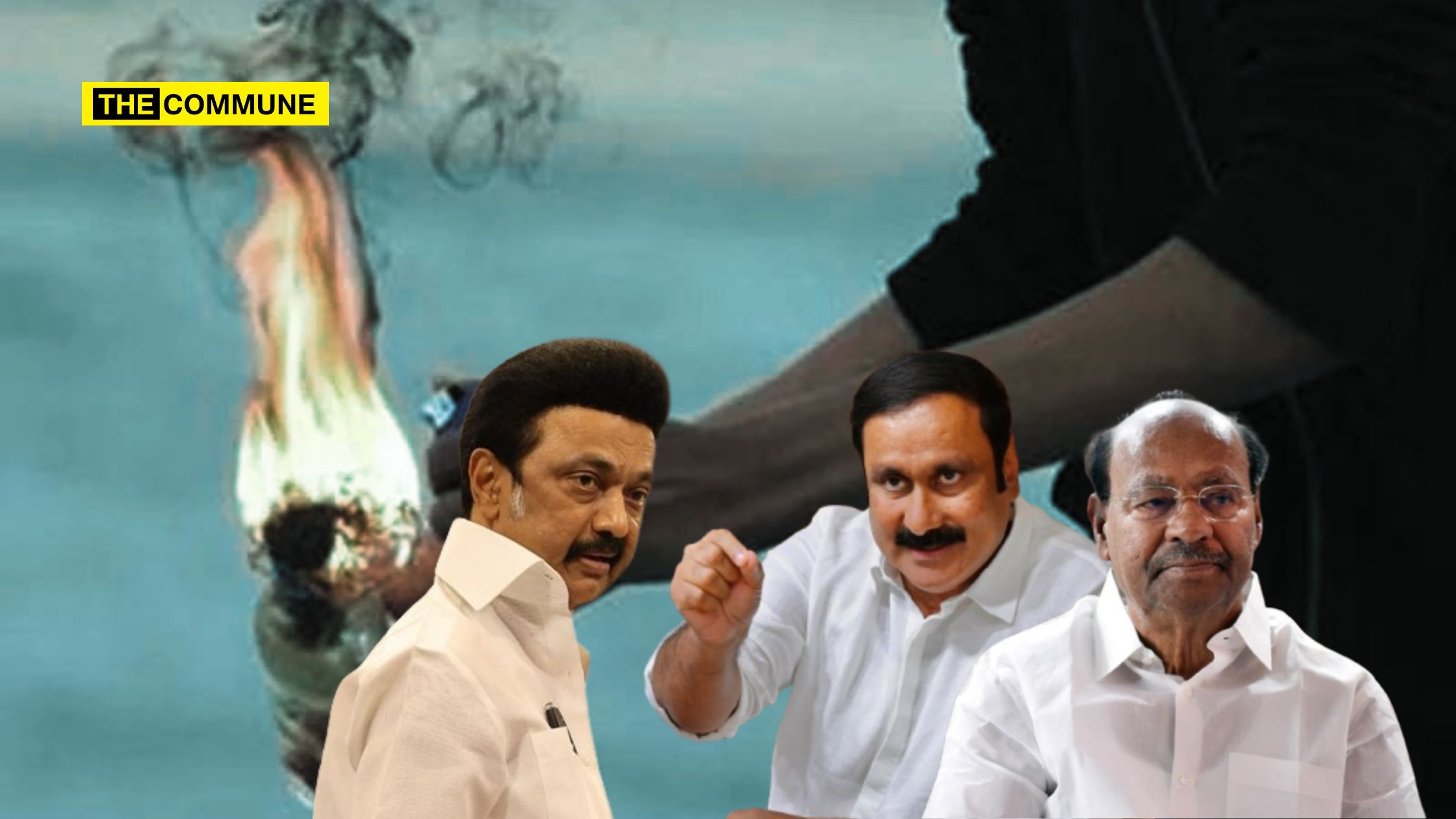
“PMK’s Patience Has Limits”: Anbumani Ramadoss Warns DMK After VCK Goons Attack PMK Youth With Petrol Bombs And Set Them On Fire

Anbumani Ramadoss Warns DMK After VCK Goons Attack PMK Youth With Petrol Bombs And Set Them On Fire

Dr Anbumani Ramadoss, the President of the Pattali Makkal Katchi (PMK), has issued a stern warning to the ruling Dravida Munnetra Kazhagam (DMK) government in Tamil Nadu, stating that the PMK’s tolerance has its limits after two PMK-affiliated youths were allegedly set on fire by cadres of the Viduthalai Chiruthaigal Katchi (VCK) following a quarrel in Nemili, Ranipet district, on 16 January 2025.

The victims, 22-year-old Surya (A) Tamizharasan and 25-year-old Vijay Ganapathy, sustained severe burns 60% and 25%, respectively. Initially treated at a hospital in Kancheepuram, one of the youths was later transferred to Government Kilpauk Medical College Hospital for further care.

Police arrested 25-year-old Prem Kumar in connection with the incident. Authorities revealed that Kumar and his friends were riding through Nemili on a two-wheeler when Tamizharasan and Vijay criticized him for speeding, which led to a verbal altercation. The following day, as the victims were returning home from a cricket match, Kumar and his group confronted them again. During the scuffle, Kumar grabbed a petrol bottle from the youths and, in the ensuing chaos, some petrol splashed on them. Kumar then allegedly lit a cigarette and set them on fire.

PMK founder Ramadoss in his social media post said that on the 16 January 2025, four people – Tamilarasan, Shankar, Vijayaganapathy and another person – all of them from PMK were sitting and chatting in the playground in Tirumalpur when six people from the VCK, namely Prem, Manikandan, Gopi, Venkatesan from Tirumalpur, and Sathishkumar and Dasarathan from Kilvenpakkam, went there and made casteist abuses. They threatened to the PMK cadres to leave from there immediately, or they would pour petrol on them and burn them all.

After that, the VCK members who left from there returned after a while and threw petrol bombs at the PMK members. The petrol bombs they threw fell on Tamilarasan and Vijayaganapathy, spreading petrol all over their bodies. As a result, when they fled in fear for their lives, 6 members of the Viduthalai Siruthaigal party surrounded them and set them on fire. The two who were seriously injured are admitted to the Kilpauk Medical College Hospital in critical condition and are receiving treatment.“, Dr. Ramadoss said blaming the casteist mindset and rampant drug menace prevalent among the party.

This is not the first time that the Viduthalai Siruthaigal party has indulged in violence and attacks based on caste. A few years ago, they entered the village of Nelvai and looted the properties of the people there. The situation was brought under control after the PMK staged a fierce protest against it. Their violence, which had been under control for a few years, has now reared its head again. The uncontrolled cannabis trade is the main reason for the frequent occurrence of such violence throughout the Ranipet district, including the Tirumalpur area. The Patali Makkal Katchi has been continuously urging and protesting to control the cannabis trade. However, the cannabis trade continues unchecked to this day. The police, which should have arrested and punished the 6 people who threw petrol bombs at the PMK membe s and brought them to justice, have arrested only two of them, including Prem. They are trying to protect the remaining criminals. The police should immediately arrest the 6 people from the Viduthalai Siruthaigal Party who threw petrol bombs at the PMK members and carried out the murderous attack. The cannabis trade should be eradicated throughout Tamil Nadu. The Tamil Nadu Police should also take strict action to control casteist forces so that such attacks do not happen in the future.“, Dr. Ramadoss said.

In response to the attack, local villagers protested late on 16 January, demanding swift action against the accused. Kumar has been charged with multiple offenses, including attempt to murder, causing grievous hurt, and criminal intimidation.

Anbumani Ramadoss, on 17 January, visited the hospital where the victims are being treated and condemned the attack. He stated, “Whoever carried out this act, including Prem Kumar, either belongs to VCK or is affiliated with them. This is not an isolated incident, as there have been similar incidents in the area in the past.” He also linked such violence to the rising drug addiction among the youth and warned that PMK members have been increasingly targeted in such attacks.

Anbumani stressed that the PMK’s patience is not unlimited, remarking, “If the PMK were to respond as it did in the past, it would result in violence. Chief Minister M.K. Stalin must ensure such incidents do not happen again.” He also added, “Being in an alliance with the ruling DMK does not give anyone the right to act with impunity.”

(With inputs From The Hindu)

Subscribe to our TelegramWhatsApp, and Instagram channels and get the best stories of the day delivered to you personally.
Indian Embassy In Myanmar Facilitates Repatriation Of Nationals From Myawaddy Job Scam Centre

Indian Embassy In Myanmar Facilitates Repatriation Of Nationals From Myawaddy Job Scam Centre

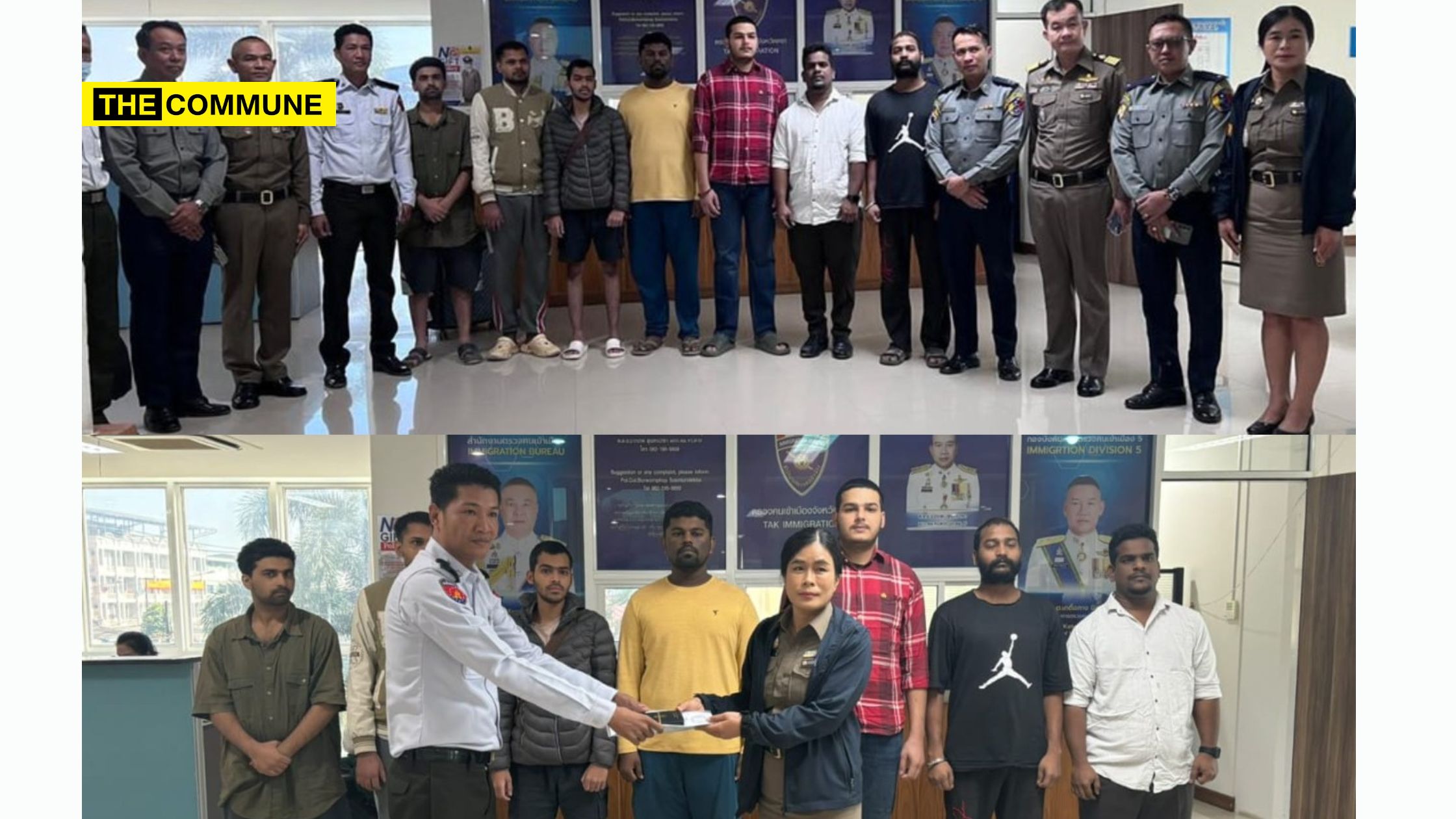
The Indian Embassy in Myanmar has successfully facilitated the repatriation of six Indian nationals and one additional individual, who were released from the Myawaddy job scam centre last month.

Myanmar authorities handed the group over to Thailand Immigration in Mae Sot on Friday after completing the local legal process for exit permits. The individuals are now set to be repatriated to India via Bangkok.

In a post on its official X handle on Saturday, the Indian Embassy provided an update on the matter, stating, “Upon completion of the local legal process for the exit permit, these six Indian nationals and one more, released from the Myawaddy scam centre last month, were handed over by Myanmar authorities to Thailand Immigration in Maesot y’day for further repatriation to India via Bangkok.”

This marks the continuation of the Embassy’s efforts in securing the release of Indian nationals who fall victim to illegal job scams in Myanmar. Earlier in December 2024, the Embassy had shared that six more Indian nationals from the same scam compound were brought to the local police station for deportation to India.

The post mentioned, “101 Indians repatriated to India since July 2024,” while reiterating the advisory against accepting job offers in the region without consulting the Indian Mission. The Embassy strongly reiterated its advice to Indians against taking job offers in Myanmar or the region without first consulting the Indian Mission, to avoid falling victim to fraudulent employment schemes.

Additionally, on January 12, the Embassy reported the repatriation of an Indian national from Kerala, who was released from the Myawaddy scam centre and repatriated via Yangon Airport.

This brought the total number of repatriated nationals to 111 since July 2024. The Embassy stresses the importance of verifying job offers through official channels to prevent exploitation. Through these efforts, the Indian Embassy remains committed to supporting its citizens in Myanmar, ensuring their safe return and emphasising caution against fraudulent employment schemes in the region.

–IANS

Subscribe to our channels on TelegramWhatsApp, and Instagram and get the best stories of the day delivered to you personally.

SS Rajamouli’s Father Calls ‘Ramayana: The Legend Of Prince Rama’ An Invaluable Gift From Japan To India’s Children

SS Rajamouli’s Father Calls 'Ramayana: The Legend Of Prince Rama' An Invaluable Gift From Japan To India’s Children

As the legendary Japanese anime “Ramayana: The Legend of Prince Rama” is all set to make its grand debut in 4K in Indian theatres on 24th January 2025, director SS Rajamouli’s father and renowned screenwriter V Vijayendra Prasad called the film an invaluable gift from Japan.

Talking about reviving this beloved classic for a new generation, he revealed, “Ramayana: The Legend of Prince Rama’ is an invaluable gift from Japan to the children of India.”

Speaking about the release of “Ramayana: The Legend of Prince Rama”, Vijayendra Prasad was quoted saying, “I invite the new generation of our country to discover and embrace the film with their families. Let this film be a source of joy, learning, and pride for India. I look forward to seeing your smiles as you embark on this cinematic journey.”

The celebrated screenwriter known for blockbusters like Baahubali, Bajrangi Bhaijaan, and RRR has contributed to the creative supervision of the Indian language versions of the film, lending his expertise and knowledge to these cultural adaptations.

Koichi Sasaki from Japan, who co-directed ‘Ramayana: The Legend of Prince Rama’ with Indian animation legend Ram Mohan talked about the film saying, “We are proud of the high level of animation that was achieved, including movement, timing, and character expressions… A film is not only about the visuals. It’s only with sound and lively dialogue that a film shines. The sound for this film was created 100% in India. I feel it’s a wonderful sound of the best of India. I cannot help but respect the many musicians and actors in India”.

“Ramayana: The Legend of Prince Rama” will be available in multiple languages including Hindi, Telugu, Tamil, and English. The project will be distributed across the country by Geek Pictures India, AA Films, and Excel Entertainment.

The film was conceived by the late Japanese filmmaker Yugo Sako, who was drawn to the mythological saga during one of his visits to India. The film is a rare Indo-Japanese collaboration that involves over 450 artists using nearly 100,000 hand-drawn cells.

–IANS

Subscribe to our channels on TelegramWhatsApp, and Instagram and get the best stories of the day delivered to you personally.
Ayurveda Can Be New Hope For Alzheimer’s Disease, Claims New Study

Ayurveda Can Be New Hope For Alzheimer's Disease, Claims New Study

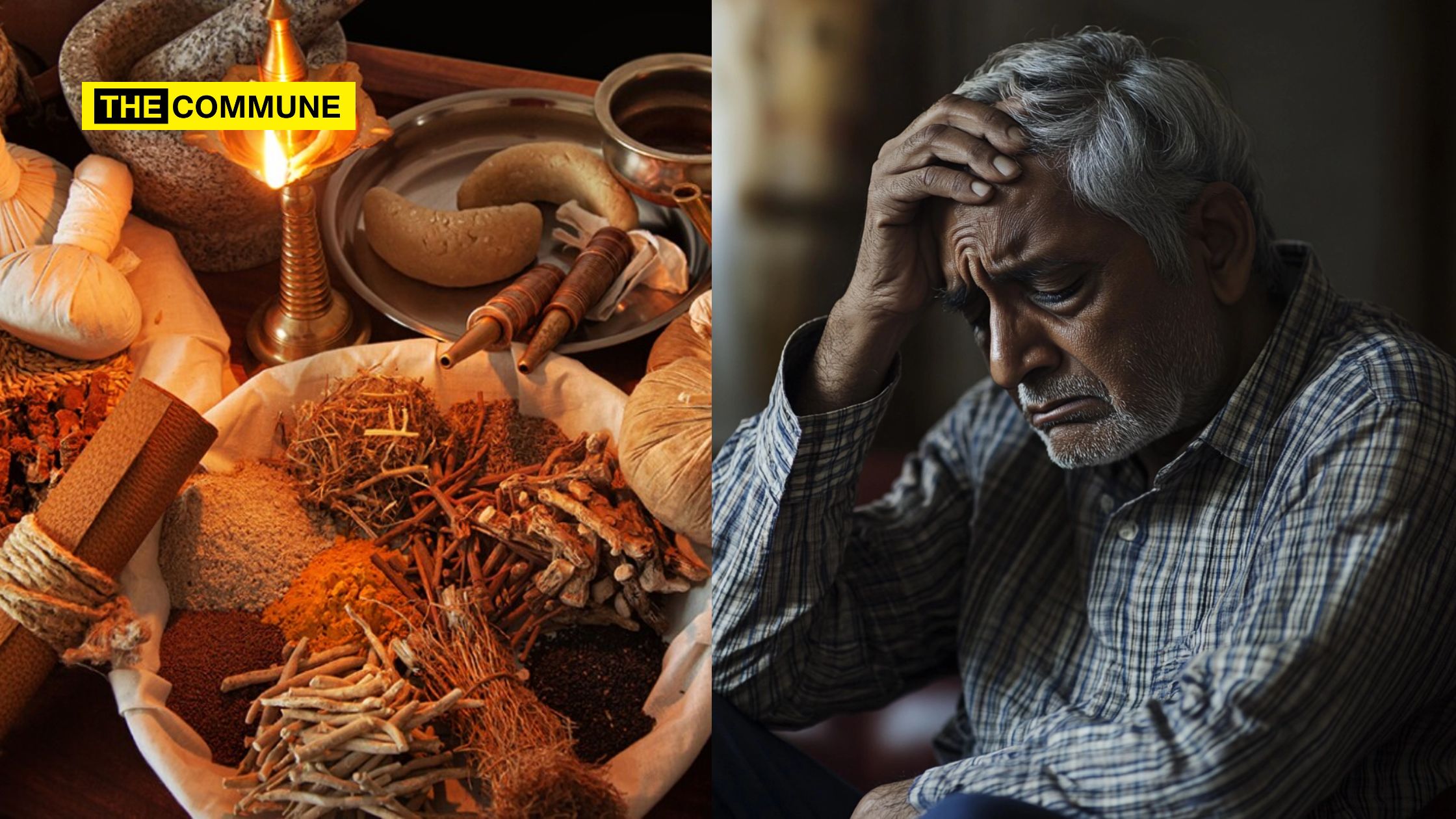
Scientists at the Bose Institute in Kolkata, an autonomous institute of the Department of Science and Technology, have shown that Ayurveda can provide new hope for Alzheimer’s Disease.

The team, led by Professor Anirban Bhunia, employed two distinct strategies to fight amyloid proteins and peptides, known to play a pivotal role in various neurodegenerative diseases, including Alzheimer’s disease (AD).d They began by using chemically synthesised peptides to combat amyloid beta aggregation. Next, they repurpose a drug called Lasunadya Ghrita (LG) from Ayurveda.

The traditional Indian medicine system has previously shown efficacy in treating depression-related mental illnesses.

The non-toxic compounds of LG and their components were characterised and repurposed for use against amyloid beta 40/42 aggregation. “The water extract of these compounds, referred to as LGWE, not only disrupted the fibrillation process during the elongation step but also inhibited the formation of oligomers in the initial stages of the fibrillation pathway,” said the researchers at Bose Institute.

Further, these compounds demonstrated greater efficacy in breaking down amyloid aggregates into non-toxic smaller degradable molecules compared to the chemically designed peptides. This suggests its novel role in disaggregating amyloid-prone proteins. These chemically designed peptides are “non-toxic, serum-stable, and effective in inhibiting as well as disaggregating amyloid proteins,” said Professor Bhunia, along with his collaborators from the Saha Institute of Nuclear Physics (SINP) Kolkata and IIT-Guwahati, in the paper published in the journal Biochemistry (ACS).

In addition, other Ayurveda experts from the State Ayurvedic College and Hospital at Lucknow University, along with other researchers from the Saha Institute of Nuclear Physics, demonstrated how natural compounds can enhance the inhibition and breakdown of amyloid beta more effectively than the chemically designed peptides. The findings highlight the potential of Ayurveda as a viable solution to complex neurodegenerative disorders like Alzheimer’s, and dementia.

–IANS

Subscribe to our channels on TelegramWhatsApp, and Instagram and get the best stories of the day delivered to you personally.
India’s Offensive, Defensive Responses Need To Be Strengthened: Defense Minister Rajnath Singh

India's Offensive, Defensive Responses Need To Be Strengthened: Defense Minister Rajnath Singh

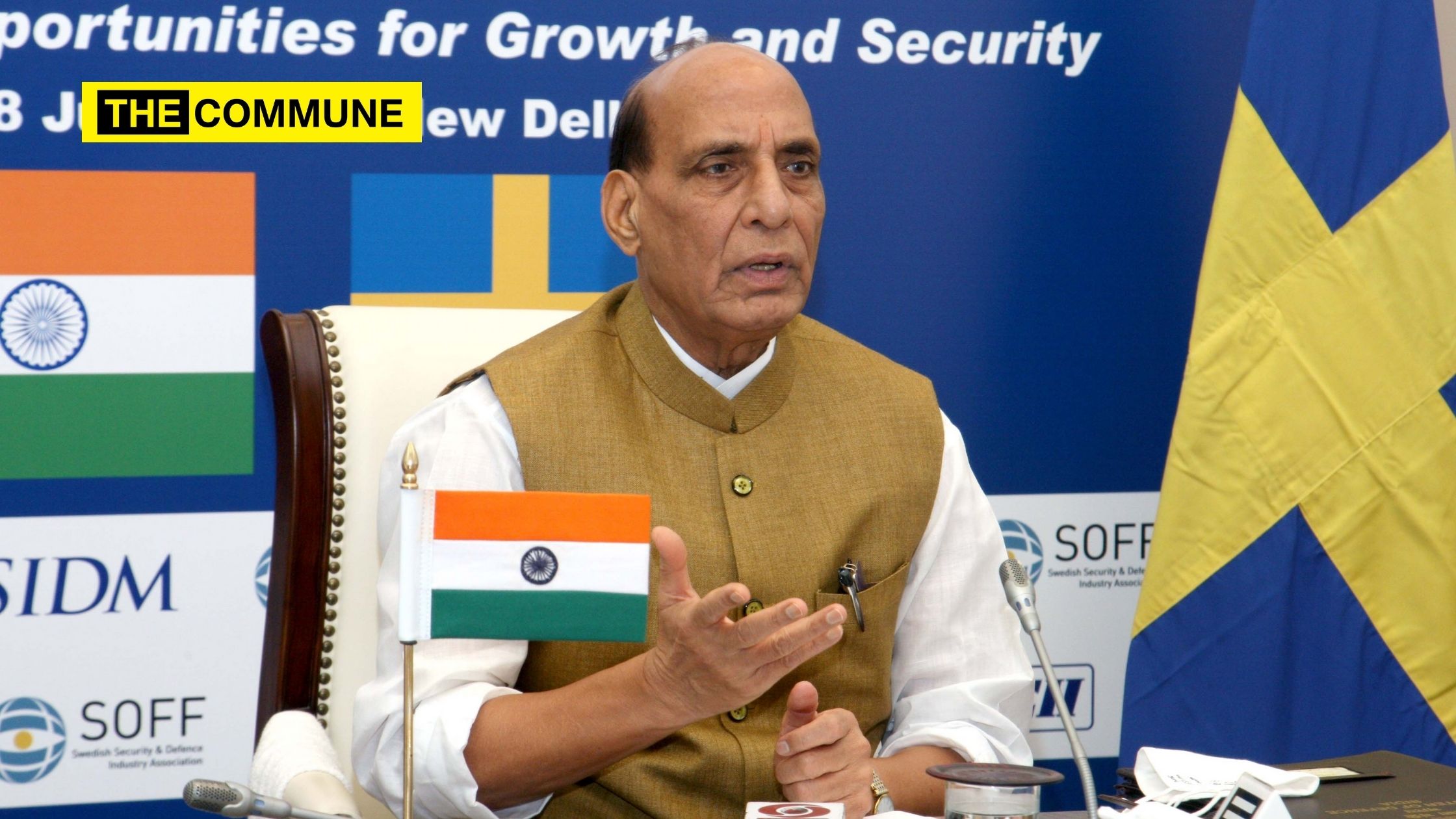
Defence Minister Rajnath Singh on Friday underlined the need to strengthen India’s offensive and defensive responses in view of the turmoil being witnessed in the rules-based international order.

Addressing an event to commemorate 2024 as the Year of Naval Civilians, the Defence Minister highlighted the increasing complexities for the Armed Forces due to the tense geopolitical security scenario and pitched increasing the country’s critical capability as soon as possible.

“If we assess the entire decade from a defence and security perspective, we can say that it has been a volatile decade. We are witnessing conflicts and wars in different regions across the world. Keeping these things in mind, we need planning, resourcing and budgeting for our security,” he said.

“There is a need to adopt a consultative approach. We need to take inputs from all the stakeholders on how to face future challenges. Our forces should be equipped and ready according to the changing times,” Rajnath Singh said.

He emphasised that the civilian workforce, an integral part of the Armed Forces, will play a crucial role in the planning process. The Defence Minister stressed that the military is surging forward with a big mandate and complex structure and the civilian workforce “soldiers without uniforms” play a pivotal role as they work behind-the-scenes to provide significant strength to the troops.

He asserted that patriotism, valour and discipline help soldiers fulfill their responsibility of protecting the country from threats and challenges and the civilian workforce should imbibe these values to further bolster the security infrastructure. “In the broader perspective of national service, every responsible civilian is a soldier without uniform and every soldier is a civilian in uniform,” he said.

In view of India’s strategic location and its geopolitical situation in the Indian Ocean Region (IOR), Defence Minister Rajnath Singh reiterated the resolve of Prime Minister Narendra Modi-led government to strengthen the Navy, terming it as a necessity in today’s times. He referred to the recent commissioning of three world-class warships – INS Surat, INS Nilgiri & INS Vaghsheer – built in India by Mazagon Dock Limited, stating that it was a result of concerted efforts of all stakeholders. Rajnath Singh termed the ships as a symbol of India’s empowerment.

“India’s economic prosperity is linked to maritime security. It is, therefore, necessary to protect our territorial waters, ensure freedom of navigation, and keep sea routes, which are our maritime highways, safe. In recent years, major naval powers have reduced their presence in IOR, while the Indian Navy has increased it,” he said.

“There is a possibility of an increase in threats in the Gulf of Aden, Red Sea and the sea areas adjacent to East African countries. In view of this, the Indian Navy is working towards increasing its presence further,” said the Defence Minister.

Rajnath Singh described cyber-security as an important aspect of maritime security in today’s times, stating that ignoring cyber-attacks can prove to be detrimental/fatal. He laid stress on the need to run a special awareness campaign on cyber-security in the Armed Forces.

–IANS

Subscribe to our channels on TelegramWhatsApp, and Instagram and get the best stories of the day delivered to you personally.