Home Blog Page 417

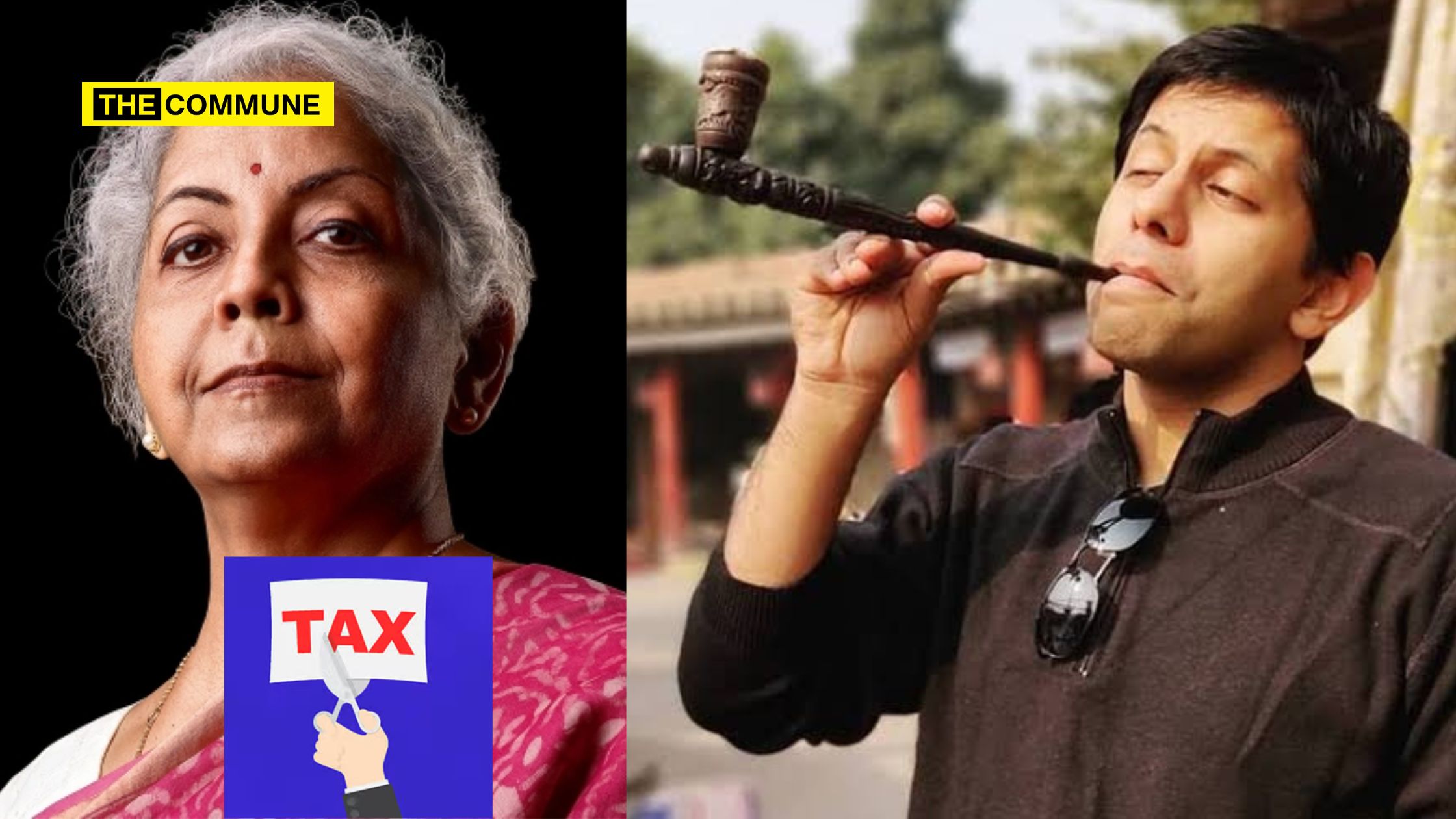
The Deshbhakt’s Akash Banerjee Peddles Fake News About Income Tax; Here’s Why His Tax Math Doesn’t Add Up

With the Budget 2025 just announced, several taxpayers are rejoicing, especially the middle class, after Union Finance Minister Nirmala Sitharaman announced that there will be no tax for individuals earning up to ₹12 lakh under the new regime.

However, propagandists like The Deshbhakt’s Akash Banerjee had to do something about this good news for the public and twist it in order to create a fake narrative.

In his video titled “Bold or Band-Aid? | Will Nirmala Sitaraman’s Budget Help India’s Economy Recover?”, he mocks the PM, FM, and even Goddess Lakshmi.

Coming to the main part of his fake news video, he talks about the zero tax for those earning up to 12 lakhs. He says, “If you are earning Rs. 12 lakhs in a year, you don’t need to pay any tax. You need to be salaried. There is fine print for this as well. There are ifs and buts. But, in simple terms, you pay nil tax on 12 lakhs If you are earning 12 lakhs in a year, then you are paying 0 for the first 4 lakhs. Between 4 lakhs and 8 lakhs, for the next 4 lakhs, you are paying a 5% tax Between 8 lakhs and 12 lakhs, the remaining 4 lakhs you earn, you will have to pay a tax of 10%. Total tax is payable. 60,000. But now, a standard deduction has been made of 75,000.”

He continues, “So, effectively, the post-tax rebate that you get, your income should be ₹12 lakh or technically ₹12.75 lakh – tax slabs have not changed. The rebate has changed. This means that if your salary is ₹12.76 lakhs, then you will have to pay almost the same tax, which would increase your tax liability for those earning ₹12 lakhs salary. So, whoever is earning up to ₹1 lakh is happy. Whoever earns more than ₹1 lakh is sad.”

As expected, the IQ level of such propagandists is way below the national average. Banerjee does not know the economics or maths of this calculation and also has no idea about what is known as “marginal relief.”

Let’s dive in.

Understanding Marginal Tax Relief For Salaries Just Above ₹12 Lakh

For individuals earning just over ₹12 lakh, marginal tax relief ensures they are not disproportionately taxed. Without this relief, a person with a taxable salary of ₹12,10,000 would owe ₹61,500 in taxes, while someone earning ₹12 lakh or less would pay nothing.

Marginal relief ensures that those earning slightly above the tax-free threshold are not unfairly taxed. Instead of paying the full tax amount, they pay only the difference between their taxable income and ₹12 lakh.

For instance, an individual earning ₹12,10,000 would pay ₹10,000 in taxes rather than the full ₹61,500. This relief is available for incomes up to ₹12.75 lakh per year.

Salaried individuals benefit from a ₹75,000 standard deduction, effectively making annual earnings up to ₹12.75 lakh tax-free.

Here are some examples:

Income: ₹12,10,000

    • Tax without marginal relief: ₹61,500
    • Actual tax due: ₹10,000
    • Savings due to marginal relief: ₹51,500

Income: ₹12,50,000

    • Tax without marginal relief: ₹67,500
    • Actual tax due: ₹50,000
    • Savings due to marginal relief: ₹17,500

Income: ₹12,70,000

    • Tax without marginal relief: ₹70,500
    • Actual tax due: ₹70,000
    • Savings due to marginal relief: ₹500

Income: ₹12,75,000

    • Tax due: ₹71,250
    • No marginal relief applicable

Marginal tax relief prevents sudden tax burdens for those earning slightly above ₹12 lakh. It ensures a gradual tax increase, preventing unfair deductions. However, once income exceeds ₹12.75 lakh, the full tax rate applies without relief.

The likes of Akash Banerjee can do themselves some good and gain some general knowledge if they do just a cursory goGoogleearch instead of spreading lies and causing panic and chaos among the public.

(With inputs from The Economic Times)

Subscribe to our channels on Telegram, WhatsApp, and Instagram and get the best stories of the day delivered to you personally.

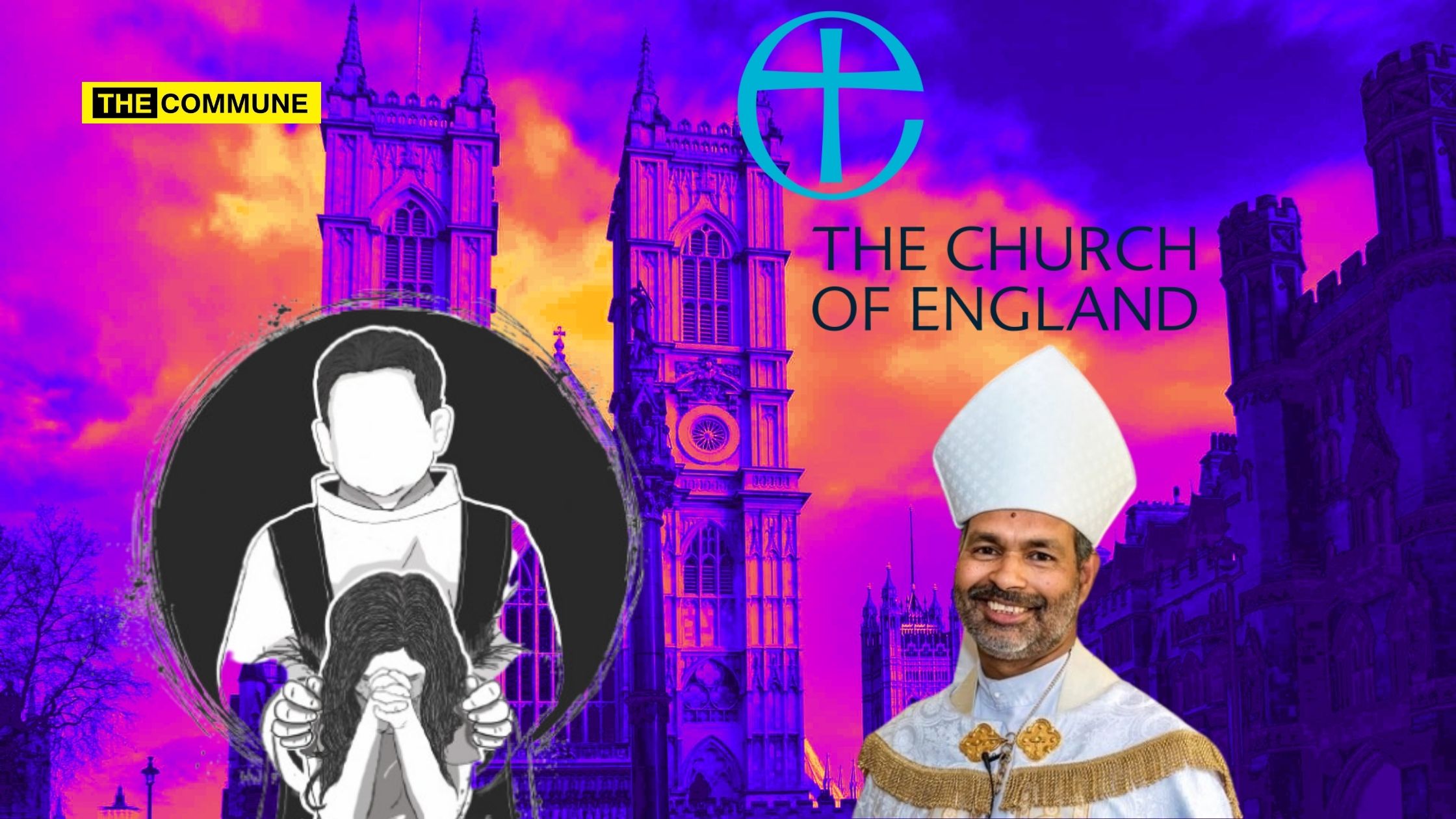
Malayali Bishop In Church of England Resigns After 2 Women Accuse Him Of Sexual Misconduct

The Bishop of Liverpool, John Perumbalath, a Malayali, resigned on 30 January 2025, citing a “trial by media” over allegations of sexual misconduct, which he has denied. His resignation follows the recent departure of Archbishop of Canterbury Justin Welby amid a broader crisis within the Church of England.

Perumbalath, 58, stepped down after Channel 4 News aired allegations that he sexually assaulted a woman multiple times between 2019 and 2023 and sexually harassed a fellow bishop. In a statement published on the Diocese of Liverpool website, Perumbalath rejected the accusations and said he was leaving to prevent the controversy from overshadowing the diocese’s work.

“I do not wish this story to become a distraction for this incredible diocese and its people, whom it has been an honour and joy to serve,” he wrote. He emphasized that his resignation was not an admission of guilt but rather a response to the pressure created by media coverage.

The Church of England previously reviewed a complaint of alleged misconduct against Perumbalath in early 2023 but found insufficient evidence to pursue a safeguarding-related case. Another complaint from a separate individual was dismissed by an independent judge for exceeding the one-year filing deadline.

Originally from Kerala, India, Perumbalath was ordained in the Church of North India in 1994 and later moved to the UK, joining the Diocese of Rochester in 2001. He became Bishop of Liverpool in 2023.

Perumbalath said he was retiring from active ministry with immediate effect, though the formal end date of his tenure is yet to be determined. The Diocese of Liverpool’s senior leadership described the situation as “deeply painful” while acknowledging his decision.

(With inputs from OnManorama)

Subscribe to our channels on Telegram, WhatsApp, and Instagram and get the best stories of the day delivered to you personally.

BNS Section 163 Imposed In Madurai Ahead Of Hindu Munnani Protest To Protect Thirupparankundram Murugan Temple Hill’s Sanctity

The Madurai district administration has imposed Section 163 of the BNSS (previously Section 144 of CrPC) across the district for two days, following tensions over a protest announced by the Hindu Munnani regarding the Thirupparankundram Hill issue. The ban, effective from today until tomorrow night, prohibits protests and gatherings to maintain public order, according to District Collector Sangeetha.

Madurai City Police Commissioner Loganathan has issued a warning that legal action will be taken against individuals and vehicles violating the law. Addressing the ongoing tensions over the Thiruparankundram hill dispute, he stated that conflicts between two groups have persisted for several days, leading to the registration of multiple cases.

“Permission has been denied for the protest planned by Hindu Munnani. So far, five cases have been filed against members from both sides,” he confirmed.

The dispute began after members of the Muslim community demanded permission to sacrifice goats and chickens at the Sikandar Badusha Dargah on Thirupparankundram Hill. Hindu organizations strongly opposed the demand, leading to a ban on animal sacrifice at the site. This has resulted in growing tensions between the two groups.

Further controversy erupted after Nawaz Kani, Chairman of the Waqf Board, Indian Union Muslim League state vice president, and MP from Ramanathapuram, visited Thirupparankundram along with members of various organizations. A photo shared on his social media showed him eating non-vegetarian food on the hill, sparking criticism from Tamil Nadu BJP leader K. Annamalai and Union Minister L. Murugan, who demanded his resignation. In response, Nawaz Kani challenged Annamalai to prove the allegations, stating he would resign if the claims were verified, but also demanded Annamalai step down if they were not.

The Hindu Munnani announced a protest to protect Thirupparankundram Hill on 4 February 2025, with several Hindu organizations pledging participation. However, authorities have denied permission for the protest, and the BJP has accused the police of arresting activists who pasted posters and distributed notices for the demonstration.

The Madurai district administration has urged the public not to participate in any protests, emphasizing that the enforcement of Section 144 is aimed at maintaining peace and order in the region.

(With inputs from One India Tamil)

Subscribe to our channels on Telegram, WhatsApp, and Instagram and get the best stories of the day delivered to you personally.

Chennai Traffic Cop Booked For Sexually Assaulting 13-Year-Old Girl

In Chennai, a traffic police officer was arrested after an investigation into a missing girl complaint revealed he had allegedly sexually assaulted a 13-year-old girl. The inquiry began when the girl’s mother reported her missing on January 25 to the Mylapore All Women Police Station (AWPS).

Using mobile phone tracking, the police traced the girl to Cuddalore, where she was found with her 16-year-old boyfriend. The boyfriend was arrested on allegations of raping the girl under the false promise of marriage.

Further investigation revealed that the girl had initially sought refuge at her boyfriend’s mother’s house in Mylapore, where she was instructed to sleep in a place of worship since the house was not available. While sleeping on the pavement because the place of worship was closed, she was approached by traffic policeman Raman, who is also employed as a driver for a traffic inspector.

Raman, under the guise of taking her home, allegedly assaulted her in his vehicle before taking her to a police booth near Foreshore Estate, where he assaulted her again. The girl’s cries made him flee the scene, allowing her to return home.

However, fearing an arranged marriage, she ran away again with her boyfriend to his relative’s house in Cuddalore, where she was allegedly raped once more.

The Mylapore AWPS arrested the policeman Raman, the boyfriend, and his mother, charging them under various sections of the Protection of Children from Sexual Offences (POCSO) Act.

Subscribe to our channels on TelegramWhatsApp, and Instagram and get the best stories of the day delivered to you personally.

Union Budget 2025-26: A ‘Game-Changer’ For India’s Middle Class ‘Lucky Bhaskars’

The Union Budget 2025-26 has ushered in a new era of financial freedom for India’s middle class, particularly for salaried professionals and young earners. By significantly reducing tax burdens, the budget provides greater flexibility in savings, investments, and wealth creation, empowering individuals to take charge of their financial future like never before.

Middle-Class Families: More Freedom, Less Tax Burden

For double-income families, the tax relief is particularly transformative. A salaried couple earning ₹1 lakh each per month pays zero tax, while a couple earning ₹2 lakh per month each (₹48 lakh annually) pays just ₹5.63 lakh in taxes, at an effective tax rate of only 12%. This substantial reduction in tax liabilities allows middle-class families to allocate more towards investments, home ownership, and financial security.

This budget grants progressive, aspirational families the freedom to chart their financial journey without excessive government intervention. It offers a real opportunity for individuals to achieve early financial independence and retire early (F.I.R.E.), an aspiration for many young professionals.

Youngsters Are The ‘Lucky Bhaskars’

If you’re just starting your career, this is the best time to be earning in India. Young professionals stay out of the tax net in the early years of their career, which means more savings to build a home corpus or make smart investments early on.

Previously, the government forced people to invest in PPF, NSC, ELSS, or other prescribed options to get tax benefits. Now, that era of forced saving is over. You get to decide where, when, and how to invest. With the right choices, this could mean higher returns, better compounding, and real wealth creation.

The catch? You’re now fully responsible for your financial future. With more choices come more responsibility, and it’s up to each individual to balance spending and saving wisely.

The ₹1 Lakh Salary Benchmark: A New Financial Milestone

A ₹1 lakh monthly salary is set to become the new financial benchmark for salaried professionals. More importantly, getting there without falling into the tax net is a huge win.

This is a mental shift in personal finance. People will start thinking differently about salaries, savings, and investments. Smart money will seek growth, and aspirational thinking will drive behavior. Instead of scrambling to save taxes, people will focus on building long-term wealth.

This move nudges people in the right direction—toward better financial discipline and smarter money management.

Balancing Growth, Revenue, And Stability

The Finance Minister had a tough job post-COVID:

~ Reviving economic growth

~ Keeping government finances on track

~ Building infrastructure

~ Boosting MSMEs

~ Ensuring financial stability

~ Keeping borrowing under control

Balancing all these priorities while cutting taxes isn’t easy. But this budget proves that it can be done. India is now in a position to sustain high growth while keeping the middle class financially empowered.

The tax relief for the middle class is long overdue. But timing matters. If done too early, it could have hurt economic recovery. If delayed further, it would have felt like a betrayal. This budget gets the timing just right—it rewards the middle class for their resilience at a time when India is on a strong growth trajectory.

Right Move, Right Time

Over the years, many Finance Ministers have been “popular” but reckless, making decisions for personal recognition rather than long-term stability. This time, the FM has chosen prudence over populism, and history will judge this decision favorably.

The 2025-26 budget is not just about tax cuts—it’s about trusting people with their own money, giving them financial freedom, and making them accountable for their future. For India’s middle class, this is a real turning point.

Shyam Sekhar is an investment professional and fund manager.

Subscribe to our channels on TelegramWhatsApp, and Instagram and get the best stories of the day delivered to you personally.

Tamil Audiences Reject Dravidian Propaganda/Propagandists’ Films, Resulting In Total 223 Flops And Over ₹1,000 Crore Loss In 2024

Tamil Film Active Producers Council Blames Audience Reviews And Film Critics For Kanguva, Vettaiyan & Indian 2 Flops, Wants To Ban YouTube Channels From Covering Public Reviews Insider Theatre

In 2024, Kollywood faced a significant setback, with many films underperforming at the box office. Out of the 241 films released that year, only around 18 were successful, while a staggering 223 failed to make a mark. The industry, which has been home to iconic filmmakers, actors, and unforgettable films, experienced its share of disappointments last year.

Despite a few notable successes such as Amaran, Maharaja, and Meiyazhagan, which won both critical acclaim and solid box office returns, Kollywood struggled overall. Reports indicate that Tamil film producers collectively spent nearly ₹3,000 crore on film production in 2024, but suffered a loss of around ₹1,000 crore.

The major issue lay in the large number of high-budget films that failed to live up to expectations. Big names like Suriya, Kamal Haasan, and Rajinikanth, whose films are usually anticipated by huge audiences, unfortunately delivered box-office disappointments. For example, Suriya’s much-anticipated pan-Indian film Kanguva, with a ₹350 crore budget, was expected to rake in ₹1,000 crore but only managed ₹106 crore, despite its hyped music and star-studded cast.

Shankar’s long-awaited sequel Indian 2, with a budget of ₹250 crore, similarly underperformed, grossing only ₹150 crore. Rajinikanth’s collaboration with Amitabh Bachchan in Vettaiyan also fell flat, despite a stellar ensemble cast and a 33-year wait for the film.

Interestingly, while big-budget films faltered, smaller films like Garudan, Lubber Pandhu, DeMonte Colony 2, and Vaazhai fared much better at the box office. This shift reflects a change in audience preferences, as Tamil viewers, traditionally enamored with star power, now seem to prioritize compelling stories over famous faces.

Further reinforcing this trend, Shankar’s Game Changers Tamil version, which starred big names, earned only ₹10 crore, while smaller films like Madha Gaja Raja and Kudumbasthan grossed more than ₹70 crore and ₹10 crore, respectively, in January 2025.

This shift in audience behavior suggests that compelling narratives are now taking precedence in Tamil cinema. As 2025 rolls in, several major Tamil films like Ajith Kumar’s Vidaamuyarchi, Rajinikanth’s Coolie, Kamal Haasan’s Thug Life, and Suriya’s Retro are expected to hit the box office, with hopes high for a better year.

Overall, 2024 was a tough year for Tamil cinema, but the industry is optimistic that it will bounce back in 2025, delivering better films and rekindling audience interest.

(With Inputs From IBTimes)

Subscribe to our channels on Telegram, WhatsApp, and Instagram and get the best stories of the day delivered to you personally.

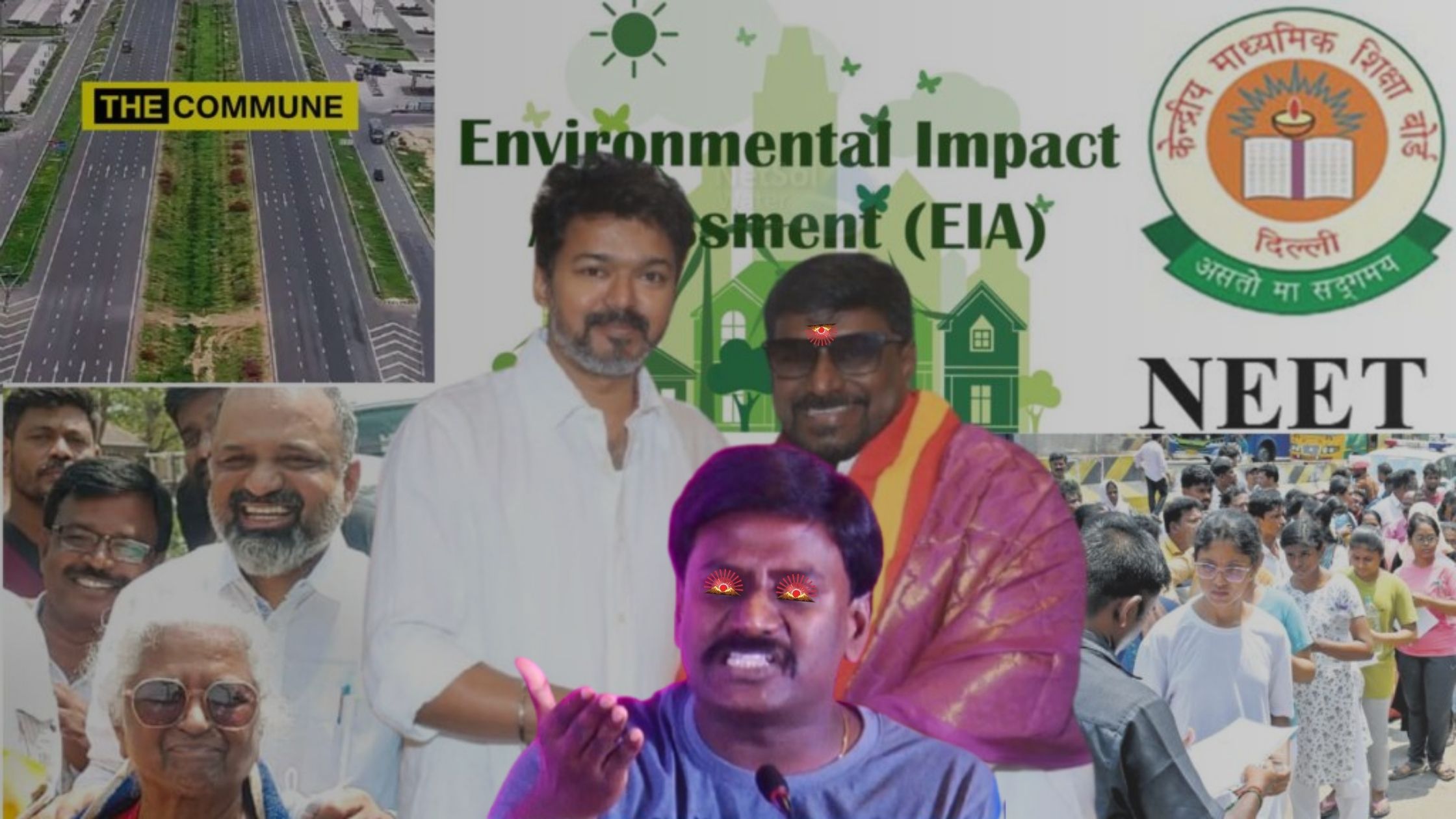
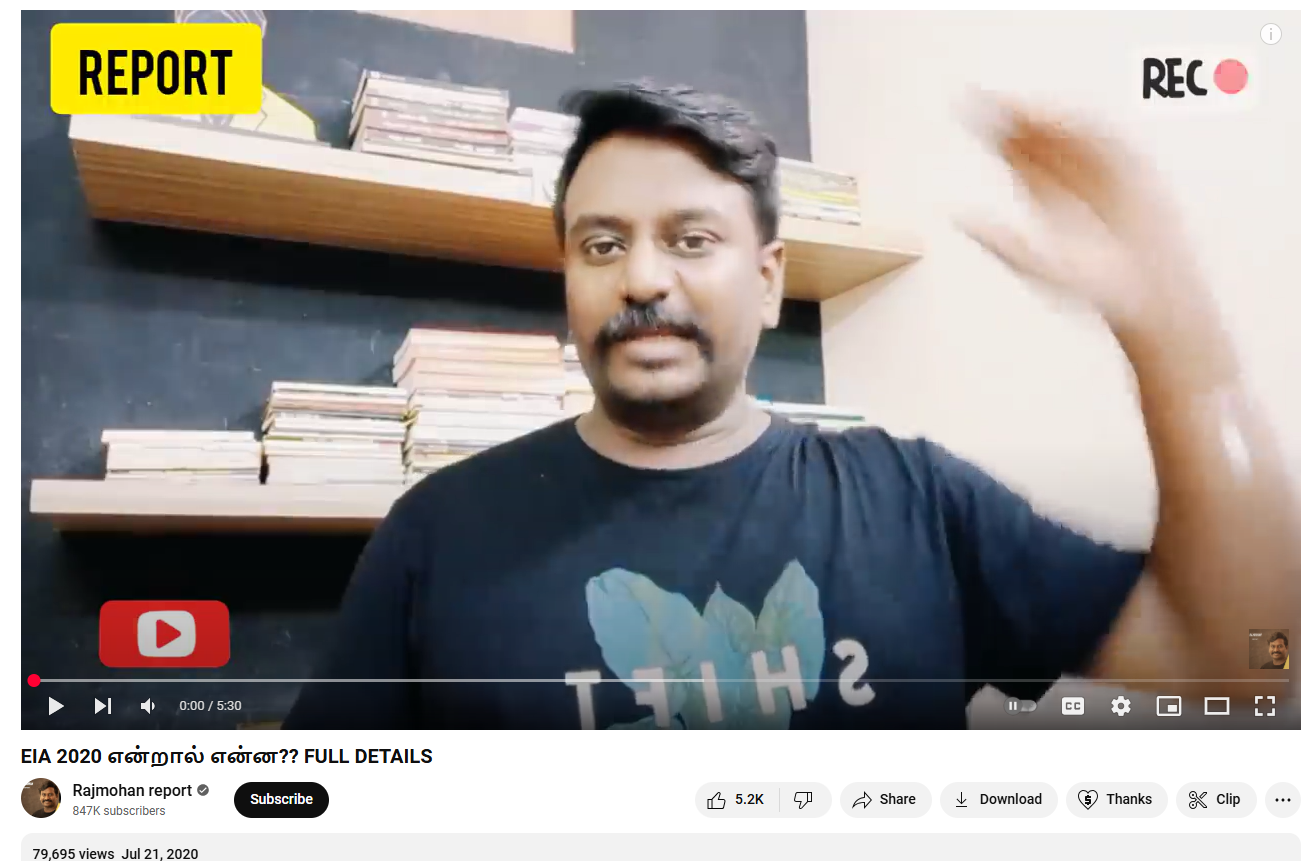
Meet Rajmohan, A Self-Styled Half-Baked Dravidian Propaganda YouTuber Who Is Now TVK Vijay’s Propaganda Secretary

Tamilaga Vettri Kazhagam (TVK), which is seen as a mere offshoot of the DMK, has begun to attract those who previously peddled narratives for the DMK during the AIADMK’s rule. In this context, part-time politician and TVK chief Vijay has appointed YouTuber A Rajmohan as the party’s propaganda secretary. Rajmohan, known for his WhatsApp University-style approach, is a prime example of someone who pushes specific narratives with his somewhat basic Tamil diction. Despite the lack of nuance in his propaganda, the party has announced that new office-bearers are being appointed to strengthen its organizational framework and prepare for a more robust election campaign.

How He Started

Rajmohan rose to fame after winning the Tamil Pechu Engal Moochu reality show on Star Vijay in 2008-09, but his success has largely been built on superficial rhetoric rather than substance. Though he gained attention for his Tamil oratory skills, he has since positioned himself as a self-styled Dravidian propagandist, aligning with DMK’s ideological narratives rather than objective discourse.

As the channel director of Put Chutney, he used political satire as a tool for biased storytelling, often pushing one-sided Dravidianist DMK’s narratives on issues like Sabarimala, Pollachi issue, and propaganda against the then Chief Minister Edappadi K. Palaniswami. His coverage of the 2018 Tamil Nadu-Karnataka Kaveri water dispute was a classic example of oversimplification and blame-shifting, catering to the DMK’s political narratives

During the COVID-19 pandemic, he rebranded himself as an activist, launching a YouTube channel supposedly for students, but it ultimately became another platform for his ideological preaching rather than genuine educational support.

YouTuber Rajmohan was previously seen spreading anti-establishment rhetoric against several initiatives introduced by the Narendra Modi-led Central Government in crucial sectors like infrastructure, education, and others. The country was already losing opportunities for job creation and new business ventures due to outdated, restrictive laws that were not conducive to a business-friendly environment. The lack of robust infrastructure led global companies to shift operations to countries like China, Vietnam, and Bangladesh. During this time, the Modi-led government targeted these redundant laws, aiming to remove barriers that were impeding benefits to ordinary citizens, whether in agriculture (the backbone of the country), education, or infrastructure.

However, despite these efforts, Dravidianists consistently opposed these reforms, pushing their own narratives without fully understanding the facts. And Rajmohan was one such Dravidianist.

Anti-Development Propaganda

EIA 2020

On 12 March 2020, the Ministry of Environment, Forest and Climate Change released the draft Environmental Impact Assessment Notification 2020 (EIA 2020) for public comments, aiming to replace the existing EIA 2006. The Ministry invited suggestions and objections to the draft by 11 August, after which it would be finalized. During this period, a wave of opposition emerged, with various propagandists voicing concerns about the draft. While the changes were primarily intended to attract investment for exploring untapped natural resources, one notable critic was YouTuber Rajmohan, who claimed that the new guidelines would lead to rampant destruction of the environment and natural resources. Ironically, he advocates for enjoying the luxuries of modern life, which often rely on the very resources he criticizes.

The central government’s intent behind the changes was to curb the influence of communist and so-called environmentalists who, with ulterior motives, oppose businesses and projects before they even begin, often launching strategic protests to disrupt economic growth. A prime example is the case of the Sterlite Copper plant in Thoothukudi, which faced severe opposition for alleged environmental degradation. However, scientific assessments showed no environmental harm caused by the plant, and it was shut down in 2018. More recently, protests erupted against a proposed tungsten mining project in Madurai after Hindustan Zinc Limited won the auction, despite no prior controversies surrounding the project.

The primary aim of the EIA 2020 was to tackle such opposition and promote economic growth. However, figures like Rajmohan continue to spread narratives that hinder progress, all while enjoying the comforts of modern life without acknowledging the exploitation of natural resources required to sustain these conveniences.
 

8 Lane Expressway Project 

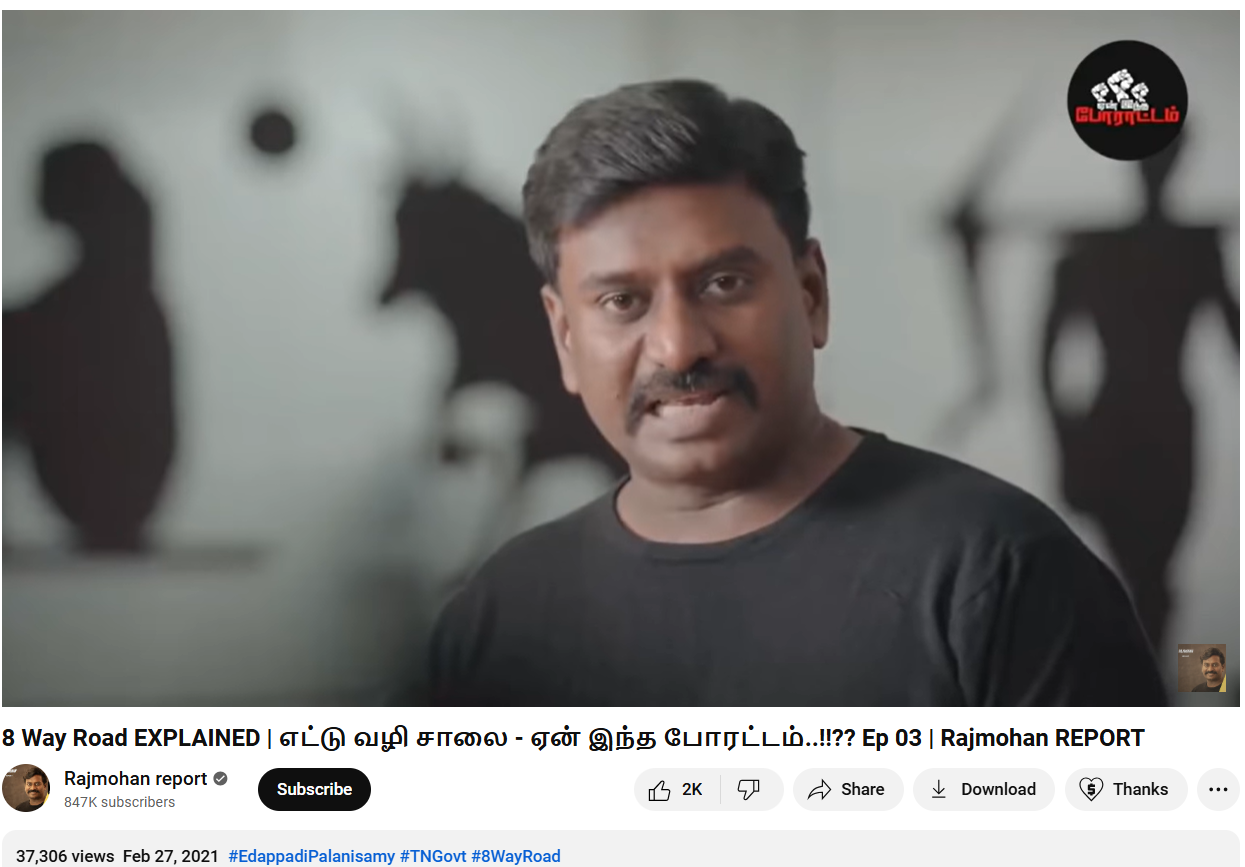
Similar to his opposition to the EIA 2020, Rajmohan also voiced strong opposition to the Chennai-Salem Expressway, an ambitious eight-lane, access-controlled greenfield expressway project. In his video, he questioned, “They are saying that we can go fast, so fast and very fast, but by going that fast, where are we going? Who are we destroying?” His rhetoric, while catchy, fails to address the broader economic context.

What Rajmohan and other propagandists fail to understand is that countries like India, with a large population and a growing skilled labor force, need substantial investments to make these resources valuable. Without attracting foreign investments and business, these resources remain underutilized. Investors primarily look for reliable infrastructure, skilled labor, and favorable business conditions. When these elements are in place, they bring in investments that create businesses, which in turn create jobs and utilize the country’s human resources.

Investors often rely on the Logistics Performance Index (LPI), which assesses the efficiency of a country’s logistics infrastructure. A nation’s ability to provide seamless connectivity via rail, road, and air is crucial in attracting such investments. Yet, despite understanding all this, Rajmohan and his supporters opposed the eight-lane expressway, citing environmental concerns, without fully appreciating the broader economic benefits.

Meanwhile, other states like Maharashtra and Gujarat have moved forward with similar projects, reaping the benefits of improved infrastructure. Ironically, the same individuals who opposed these projects are now quick to praise foreign countries for their progress, blaming the government for India’s lack of similar growth.
 

Anti-NEET Propaganda

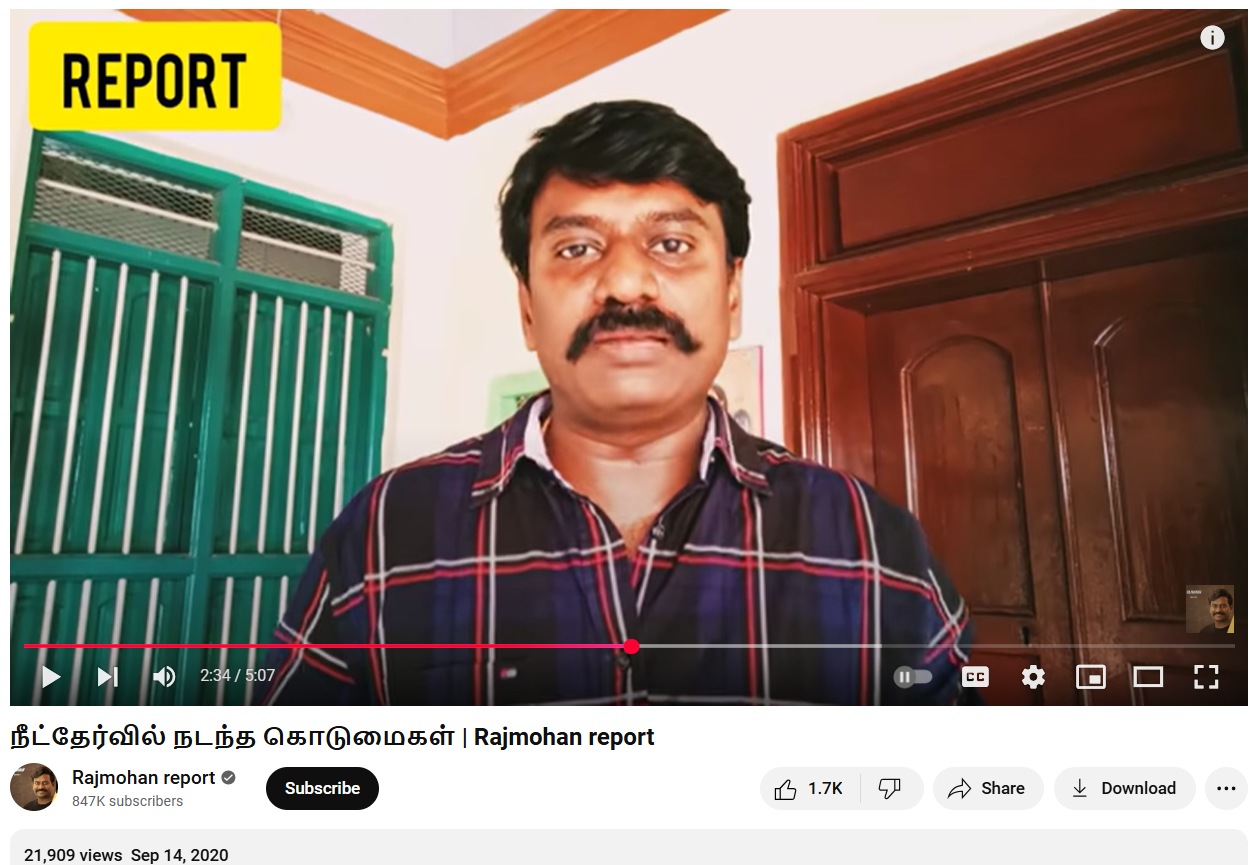
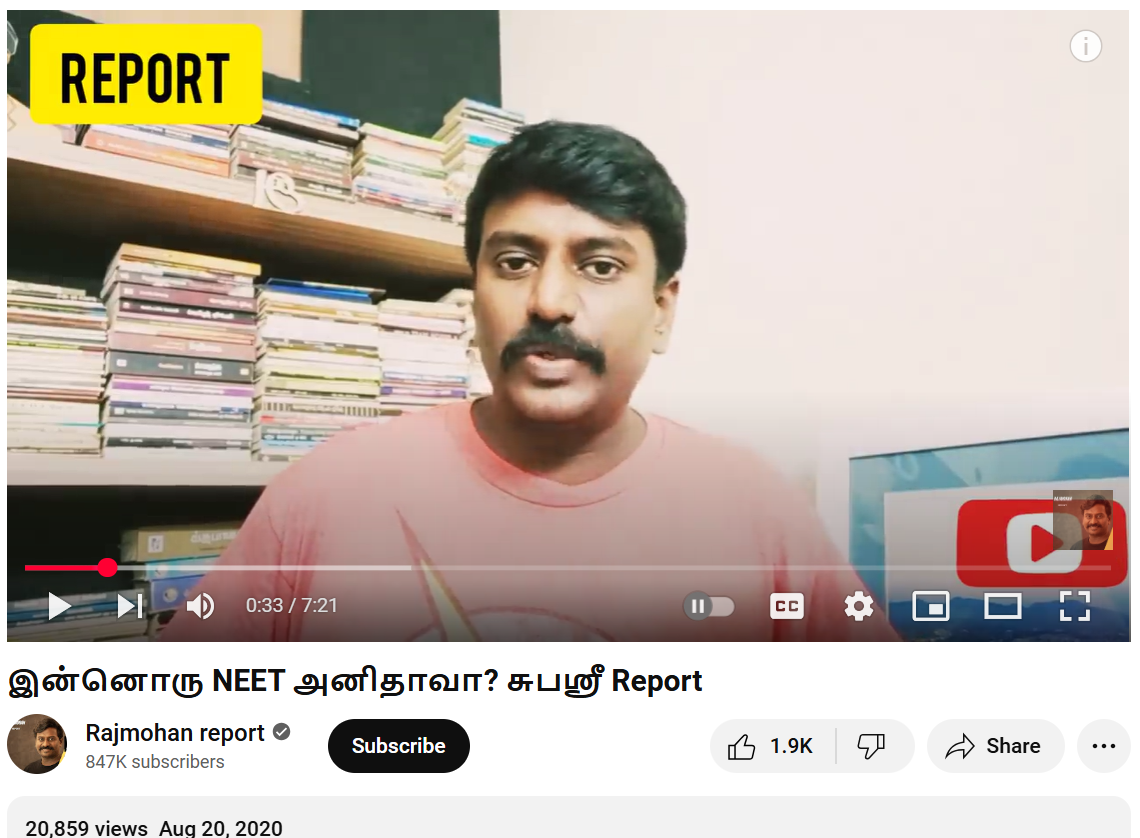
Similar to the DMK’s opposition to the NEET medical entrance exam, which gained momentum after the tragic suicides of students like Anitha and Subashree, the resistance to the exam began in 2017. Initially, the central government allowed time for students to adapt to the new system before making it compulsory. Critics, including the DMK, argued that Tamil-medium government school students would be at a disadvantage. However, the central government responded by introducing Tamil-language questions and addressing other concerns step by step. Despite these efforts, medical college lobbies, which were profiting from the previous system, resisted NEET, using toolkits to rally against the exam. Rajmohan, among others, was vocal in highlighting student suicides and advocating for a ban on NEET, rather than focusing on how to help students adapt to it.

However, in contrast to the initial propaganda, NEET has now gained widespread acceptance among both parents and students. Many government school students are excelling in the exam through their hard work, appreciating how it has provided them a fair opportunity to pursue medical studies without the old, money-driven practices of medical lobbies that once sold seats, even to capable students, for a price.
 

Sympathizing With Terrorists Who Killed Indian Prime Minister

Rajmohan was among the Dravidianists who advocated for the release of Perarivalan, who had been convicted by the special TADA court in 1991 for supplying two 9-volt batteries used in the bomb that killed former Prime Minister Rajiv Gandhi. The assassination, carried out by an LTTE (Liberation Tigers of Tamil Eelam) suicide bomber during an election rally in Sriperumbudur, Chennai, shocked the nation. In his video, Rajmohan argued that Perarivalan was innocent and should be released due to his health issues. He portrayed him as a man who merely assisted with the battery supply and had an ailing mother, using a sentimental appeal for his release. However, the true story was much more complex, and a wide range of people voiced their opposition to his release, including Anusuya Daisy Ernest, a retired police officer who was in charge of security the night Rajiv Gandhi was assassinated.

Anusuya strongly criticized those celebrating Perarivalan’s release, describing him as a convicted murderer, terrorist, and “blood-thirsty” individual. In a telephonic interview with Zee News Tamil, she questioned why so many people were supporting him, pointing out that he had killed the Prime Minister and caused the deaths of nine police officers and others. Anusuya, who herself had been severely injured in the bombing, with shrapnel still lodged in her body, condemned Perarivalan’s actions, calling him a “bloody terrorist” and a “blood-thirsty murderer.” She emphasized that Perarivalan’s release should not be mistaken for an act of mercy, stating that life imprisonment meant serving time for life. She further criticized the media for giving him excessive attention and feared that his release would encourage other terrorists and criminals to demand their own freedom.

Anusuya Daisy also raised concerns that the release of someone convicted for such a serious crime could lead to a dangerous precedent, asking why those convicted for other bombings, such as the Coimbatore bombings, were still in prison and questioning why Perarivalan, simply because he had killed a Prime Minister, was considered a “VIP convict.” But this two-bit Dravidian propagandist who claims to stand on the side of victims never spoke for real victims like Anusuya and many others who lost their lives in the tragic bomb blast that killed an Indian Prime Minister.


Peddling Propaganda Against Sterlite

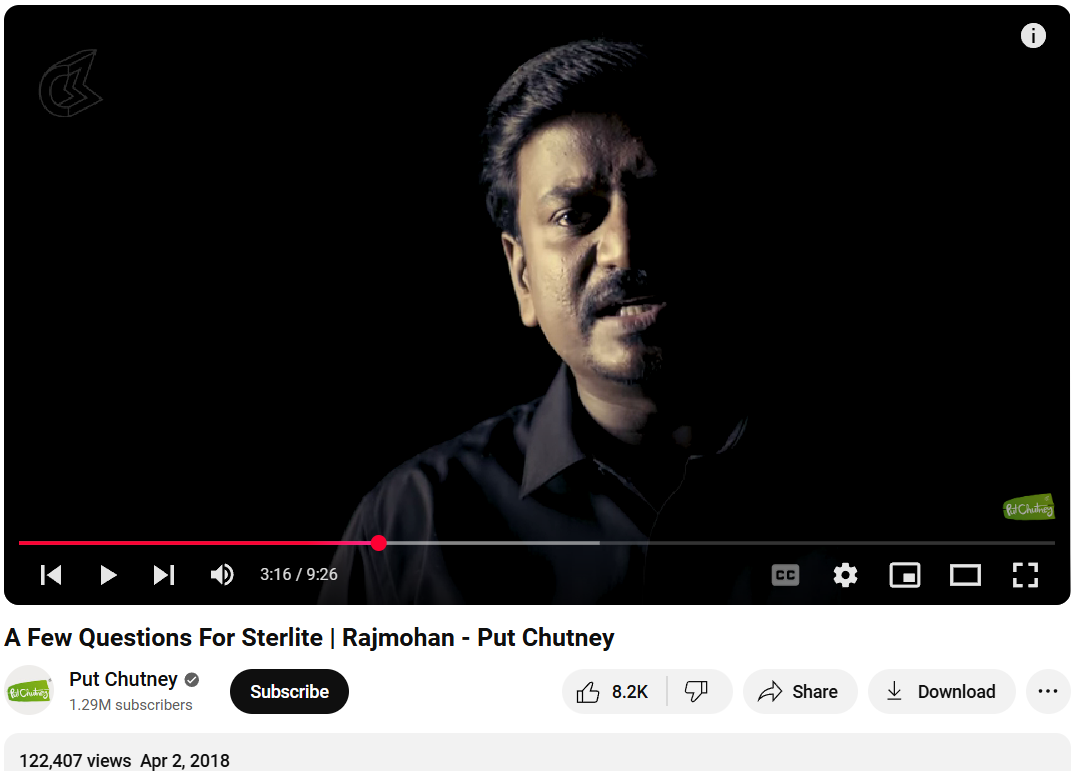
Rajmohan peddled DMK’s propaganda against Sterlite Copper factory saying, “Copper for you, Cancer for us?“. He made insinuations about Sterlite’s corporate social responsibility work asking whether the government is ruling the state or Sterlite.

He also parroted the same points of controversial Christian missionary-funded leftist ‘activist’ Nityanand Jayaraman.
TVK chief Vijay has once again proved that his party is nothing but a glossier DMK. If DMK had appointed a beautician YouTuber like Padma Priya as its IT Wing Deputy Secretary, TVK has appointed someone of the same league as its propaganda secretary.

Subscribe to our channels on Telegram, WhatsApp, and Instagram and get the best stories of the day delivered to you personally.

Old Tax Vs New Tax Regime: What Has Changed For Middle Class In Budget 2025-26

In a major move to ease the tax burden on middle-class taxpayers, Finance Minister Nirmala Sitharaman on Saturday announced fresh tax slabs under the New Tax regime in the Union Budget 2025-26. The new tax slabs aim to provide relief to individuals earning up to Rs 12 lakh annually and the exemption limit is Rs 12.75 lakh for salaried individuals (including standard deductions).

Finance Minister Sitharaman said that after the changes made under the new tax regime, there will be a saving of Rs 80,000 on an income of Rs 12 lakh, Rs 70,000 on an income of Rs 18 lakh, and Rs 1,10,000 on an income of Rs 25 lakh.

Under the new tax slabs announced in the Budget, there is no tax on annual incomes up to Rs 4 lakh. For income between Rs 4 lakh and Rs 8 lakh, the tax rate will be 5 per cent, while incomes between Rs 8 lakh and Rs 12 lakh will be taxed at 10 per cent.

For higher income brackets, the tax rates will increase progressively, with 15 per cent for Rs 12 lakh to Rs 16 lakh, 20 per cent for Rs 16 lakh to Rs 20 lakh, 25 per cent for Rs 20 lakh to Rs 24 lakh, and 30 per cent for incomes above Rs 24 lakh. In addition to the revised tax slabs, Finance Minister Sitharaman also announced an increase in the tax rebate available under Section 87A.

This means that individuals with a net taxable income of up to Rs 12 lakh will not be required to pay any income tax. However, if your annual income is exactly Rs 12 lakh, you will still pay tax according to the applicable slab rates but will benefit from the rebate, reducing your final tax liability.

In simpler terms, if you’re a salaried individual or earn other types of “regular income” up to Rs 12 lakh, you will not have to pay any tax due to both the enhanced rebate and the revised tax slabs. However, income from capital gains will not be eligible for the rebate and will be taxed separately under different rules.

The new tax regime will come into effect from the new financial year 2025-26, starting on April 1, 2025, provided the proposals are approved by Parliament.

In the current structure, individuals earning up to Rs 3 lakh will pay no tax, and tax rates increase incrementally as income rises. However, under the old tax regime, the basic exemption limit was Rs 2.5 lakh, and individuals had access to a range of deductions.

For income between Rs 2.5 lakh and Rs 5 lakh, a 5 per cent tax rate was applied, while incomes between Rs 5 lakh and Rs 10 lakh were taxed at 20 per cent. For earnings above Rs 10 lakh, a 30 per cent tax rate applies.

–IANS

Subscribe to our channels on TelegramWhatsApp, and Instagram and get the best stories of the day delivered to you personally.
Tax Concessions Will Accelerate Both Spending And Savings: Economists On Budget 2025

Union Finance Minister Nirmala Sitharaman’s proposal to raise the minimum tax slab to Rs 12 lakh from Rs 7 lakh in the new regime in addition to Rs 75,000 of the standard deduction for salaried taxpayers will boost both expenditure and savings among the middle-class section of the Indian population, feel economists.

Former chief economic advisor to the Union government, Ashok Kumar Lahiri, told IANS, that the proposal will have more surplus money in the hands of the middle-class taxpayers which will prompt them to spend more which again will boost market demand and benefit the overall economy of the country.

“At the same time, it will be wrong to think that the money will only boost expenditure and discourage savings. Rather, this proposal will also give scope for the middle-class taxpayers to save more besides spending more. To sum up, the proposal will accelerate spending and savings simultaneously,” said Lahiri, currently a BJP legislator in the West Bengal Assembly.

Economist Probir Kumar Mukhopadhyay feels that the new tax proposal has rightly focussed on demand generation after focussing on the supply side so far. “The focus on the supply side can never be effective unless there is an equal focus on the demand side. It is true that what percentage of the excess money in hand will be spent and how much will be saved will depend on the choice of the individual taxpayers. But generally, the tendency of the middle-class taxpayers is reflected in maintaining a balanced expenditure to savings ratio,” Mukhopadhyay said.

Economists also feel that equally welcome proposals were the rationalisation of tax deductions at source (TDS) for senior citizens which was doubled from Rs 50,000 to Rs 1,00,000. According to them, since the senior citizens are heavily dependent on income from interest, the decision will surely bring cheer for them. “In a sense, this budget after a long time is truly middle-class friendly,” said Mukhopadhyay.

–IANS

Subscribe to our channels on TelegramWhatsApp, and Instagram and get the best stories of the day delivered to you personally.

Budget 2025-26: UDAN Scheme To Bring 120 New Destinations On Air Map

Union Finance Minister Nirmala Sitharaman on Saturday announced the launch of a modified UDAN (Uday Desh Ka Aam Nagrik) scheme, as part of her Budget 2025-26 proposals, to enhance regional connectivity to 120 new destinations and carry 4 crore passengers in the next 10 years.

This scheme will also support helipads and smaller airports in hilly, aspirational, and North East region districts, the Finance Minister said. Praising the Regional Connectivity Scheme UDAN, she said in her speech that UDAN has enabled 1.5 crore middle-class people to meet their aspirations for speedier travel.

The scheme has connected 88 airports and operationalised 619 routes. Inspired by that success, She also informed the house that the government will facilitate the upgradation of infrastructure and warehousing for air cargo including high-value perishable horticulture produce. Cargo screening and customs protocols will also be streamlined and made user-friendly.

Giving infrastructure a fillip to Bihar, the Union Finance Minister proposed that the Greenfield airports will be facilitated in Bihar to meet the future needs of the state. These will be in addition to the expansion of the capacity of Patna airport and a brownfield airport at Bihta. Financial support will also be provided for the Western Koshi Canal ERM Project benefitting a large number of farmers cultivating over 50,000 hectares of land in the Mithilanchal region of Bihar.

The civil aviation sector has emerged as one of the fastest-growing sectors in the country and plays a critical role in economic growth and job creation. There has been a rapid expansion in airports, airline fleets have grown, and cargo operations have surged, all verticals related to civil aviation have pushed boundaries.

India has now become the third-largest domestic aviation hub in the whole world a senior official said. India’s domestic air passenger traffic rose by 6.12 per cent to 16.13 crore in 2024 from 15.2 crore in the previous year, according to the latest data compiled by the Directorate General of Civil Aviation (DGCA).

The country’s commercial airlines also flew more than 1.49 crore passengers on domestic routes in December 2024, which represents an increase of 8.19 per cent compared to the corresponding figure of 1.38 crore for December 2023.

–IANS

Subscribe to our channels on TelegramWhatsApp, and Instagram and get the best stories of the day delivered to you personally.