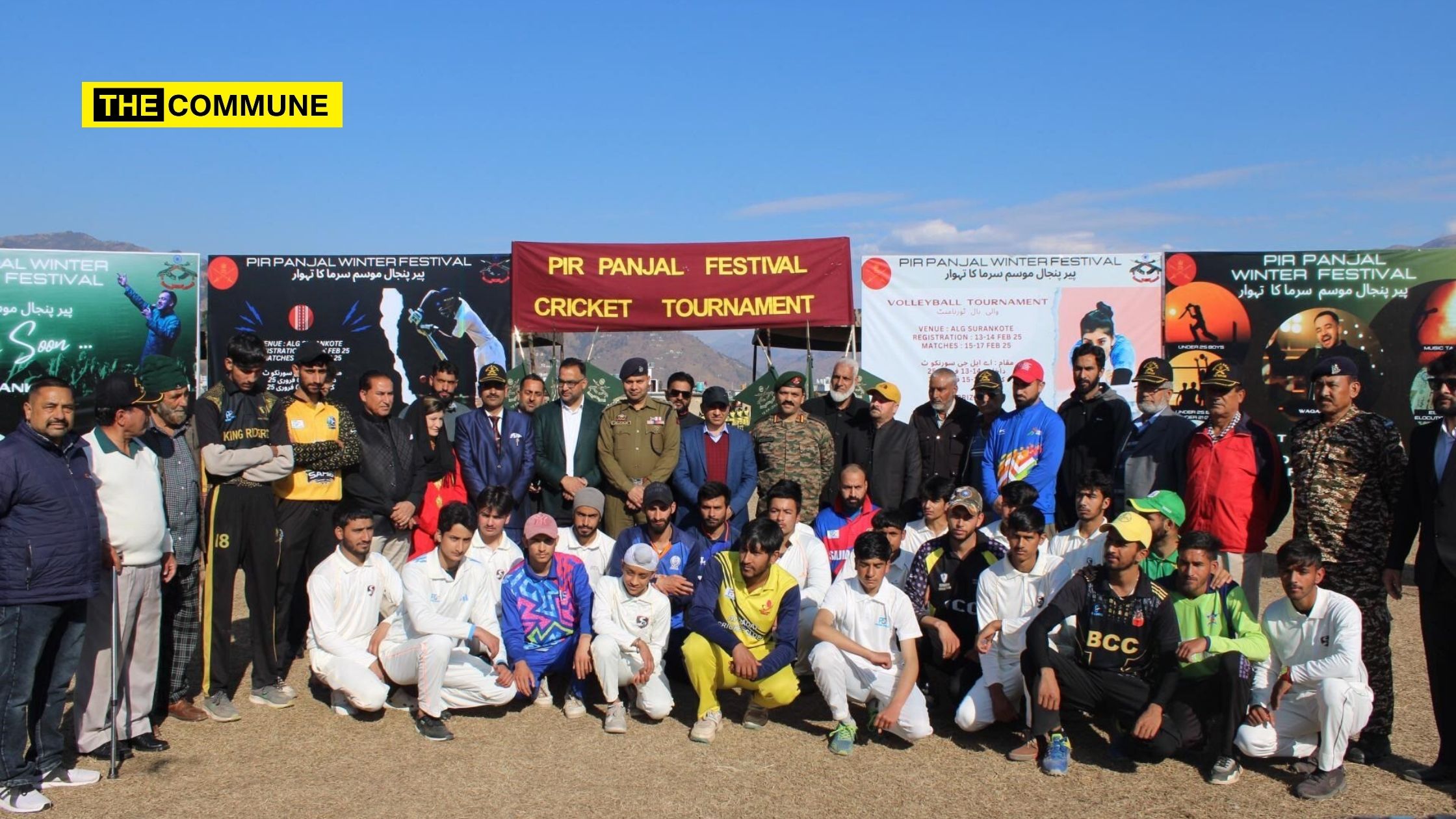
The Army kicked off the Pir Panjal Winter Festival in the city on Sunday, setting the stage for wide array of sports and cultural spectacles spread over next two months.
The festival is a testament to the Army’s unwavering commitment to youth empowerment, cultural preservation, and social reformation, particularly in advocating against drug abuse. Starting February 9 and culminating on March 31, the grandiose festival will see diverse sports and cultural spectacles, including: Under-25 Boys Cricket Tournament – a platform for aspiring cricketers to exhibit prowess.
Under-25 boys and Under-21 girls Volleyball Tournament – fostering teamwork, discipline, and competitive spirit. Open Kho-Kho Tournament (for girls) – celebrating agility, strategy, and endurance. Gujari and Pahari Folk dance performances with music and dance talent hunt – a tribute to the region’s rich artistic heritage, performed by local virtuosos.
Solo and Group Singing Competitions – an opportunity for school and college students to showcase their melodic talents along with science and art exhibitions to showcase their knowledge and creativity with painting, essay writing and elocution competitions.
The initiative serves as a catalyst for fostering sportsmanship, cultural renaissance, and holistic development among the youth, particularly those hailing from remote and marginalized communities.
The Pir Panjal Winter Festival embodies a transformative movement, inspiring young minds to eschew the perils of substance abuse and channel their energies toward constructive, life-affirming pursuits.
–IANS
Subscribe to our channels on Telegram, WhatsApp, and Instagram and get the best stories of the day delivered to you personally.
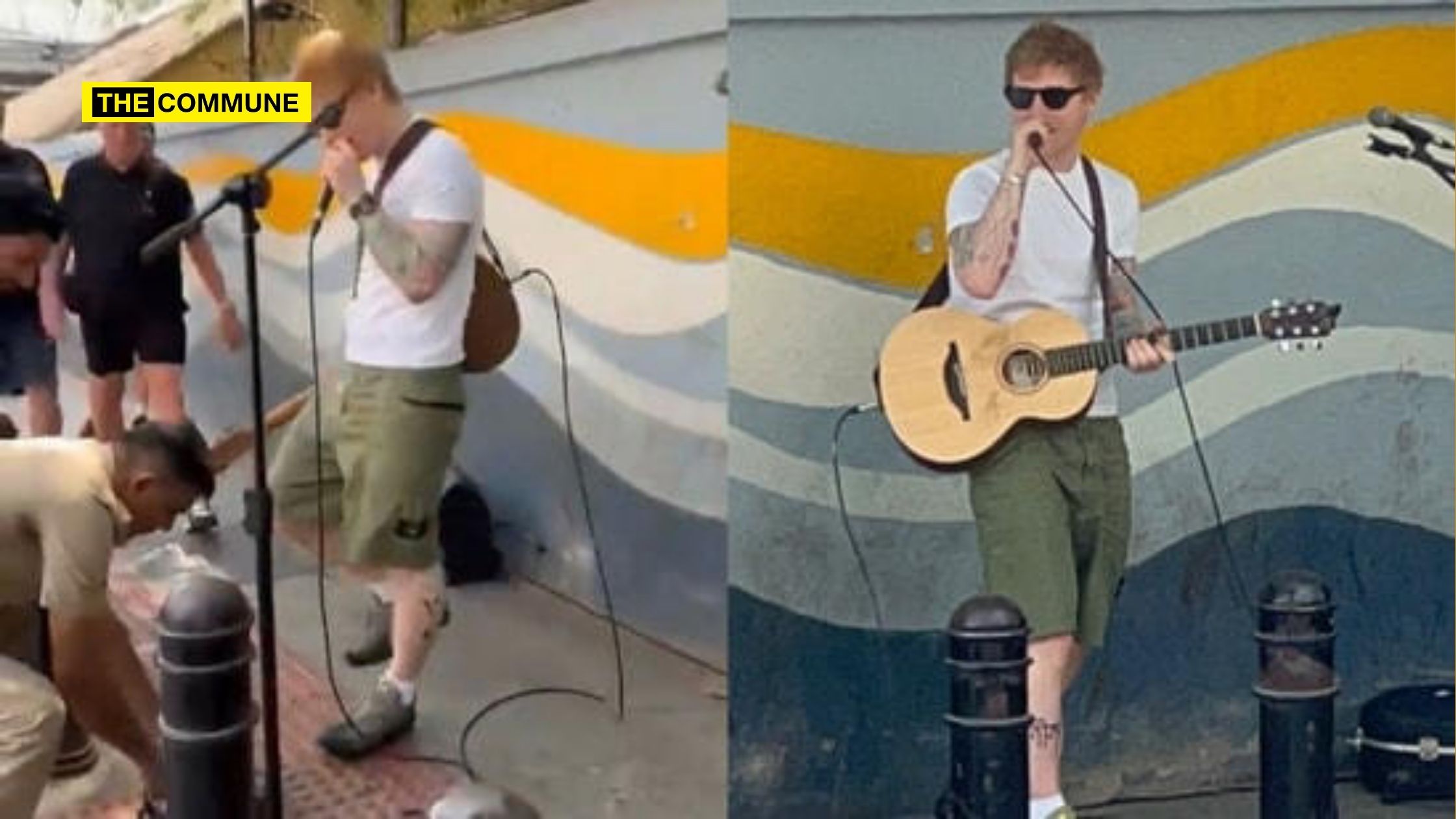
Global pop sensation Ed Sheeran is presently in Bengaluru as part of his ongoing +–=÷× Tour (Mathematics Tour). During his visit to the city, the singer decided to go for an impromptu street performance.
The British singer arrived opposite the M G Road Metro station on Church Street, where two microphones and a guitar had been set up for the performance.
He started to perform an unplugged version of his popular track “Shape of You”. He was only a minute into his performance when a police officer arrived and disconnected the speakers to stop his performance.
According to the police, the event had to be unplugged midway as they had not attained any prior permission for the performance.
If the reports are to be believed, the police had also received a complaint of public nuisance against the singer.
After taking over Bengaluru, Ed Sheeran will be seen performing in Shillong’s JN Stadium on 12th February.
The singer’s final stop will be on 15th February at the Leisure Valley Grounds, Gurugram. In the meantime, Ed Sheeran recently flew to Chennai for his performance at the YMCA Grounds in Nandanam.
Before the concert, the singer decided to enjoy some local hospitality. A video circulated on social media, where he was seen enjoying a relaxing head massage on the streets of Chennai.
The clip featured a local masseuse rhythmically tapping Ed Sheeran’s head.
The singer was also seen making exaggerated faces as he got the massage. Netizens flooded the comment section with some hilarious reactions like, “Now we would know the reason if you forget lyrics..”, “I think it’s the revenge of all the guitars that Ed slapped during bloodstream”, “when it says “shake to wake Ted” but you took the wrong Ted”, and “This is what happens when Ed keeps teasing us without answering with any other word but soon @teddysphotos , I’m just joking, please forgive me…luv you so much.”
–IANS
Subscribe to our channels on Telegram, WhatsApp, and Instagram and get the best stories of the day delivered to you personally.
The 1857 revolution is cited as India’s first war of independence, but the tribal warriors of Jharkhand (then Chhotanagpur) had already begun their struggle against British rule years before.
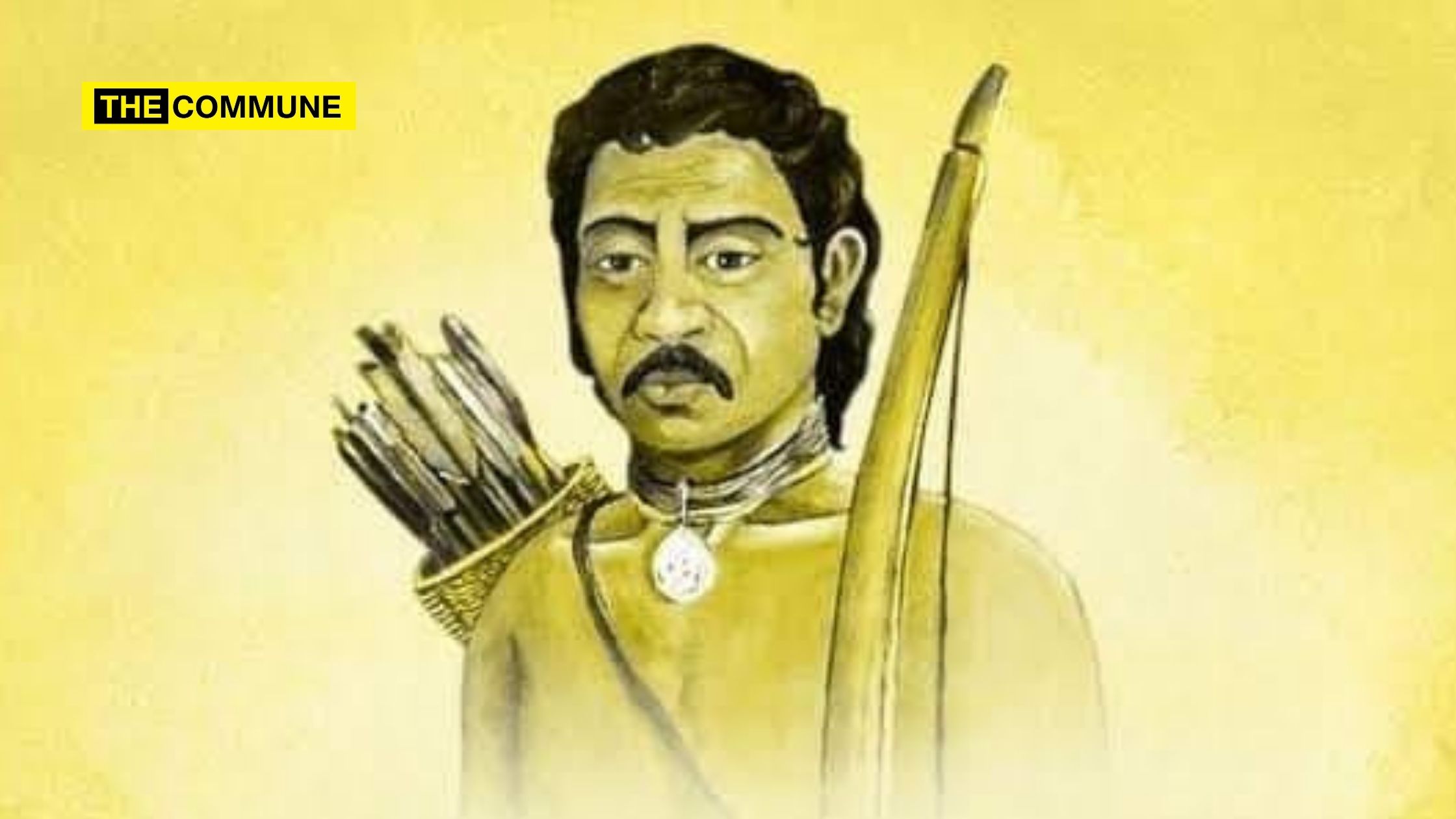
Among these valiant fighters was Telanga Kharia, whose 219th birth anniversary is being observed with great reverence in Jharkhand on Sunday. Born on February 9, 1806, in Murgu village under the Sisai police station (now in Gumla district, Jharkhand), Telanga Kharia ignited the flames of rebellion against British exploitation in the minds of people. Nearly a decade before the 1857 revolt, he organised village panchayats across Jharkhand to resist colonial oppression.
These panchayats mobilised thousands, forming armed squads to challenge British rule. Alarmed by his growing influence, the British government arrested and imprisoned him. However, even incarceration could not halt his movement. Later, a loyalist landlord of the British ambushed and assassinated him.
Telanga Kharia was born into a modest farming family. His father, Huia Kharia, and mother, Peto Kharia, raised him with values of courage and resilience. Tribal folk songs still celebrate his bravery, depicting him as a warrior from an early age.
Between 1840 and 1850, he led the formation of Juri Panchayats, which became a centre of organised resistance against the British and their allies – the feudal landlords. At these panchayats, he trained his followers in traditional warfare, including the use of gadka (wooden stick), swords, and arrows. Sisai emerged as the primary hub of training.
According to folklore, Telanga Kharia’s skill with his sword was so extraordinary that it was said to rival British rifles and guns, as if divinely blessed. Captured by the British, he was imprisoned in Kolkata for nearly twenty years. After his release, he resumed his fight, rallying his people against British tyranny.
On April 23, 1880, while conducting arms training at Sisai Maidan, he was fatally shot by a British loyalist hiding in the bushes. In his memory, a tomb was built at Chandali, three km from Gumla, while his only statue stands in his native village, Murgu.
His descendants continue to live in Ghaghra village, near Murgu, where the Kharia community regard him as a revered ancestor and worships him like a deity.
Telanga Kharia’s legacy remains a symbol of resistance and valour, inspiring generations in Jharkhand and beyond.
–IANS
Subscribe to our channels on Telegram, WhatsApp, and Instagram and get the best stories of the day delivered to you personally.
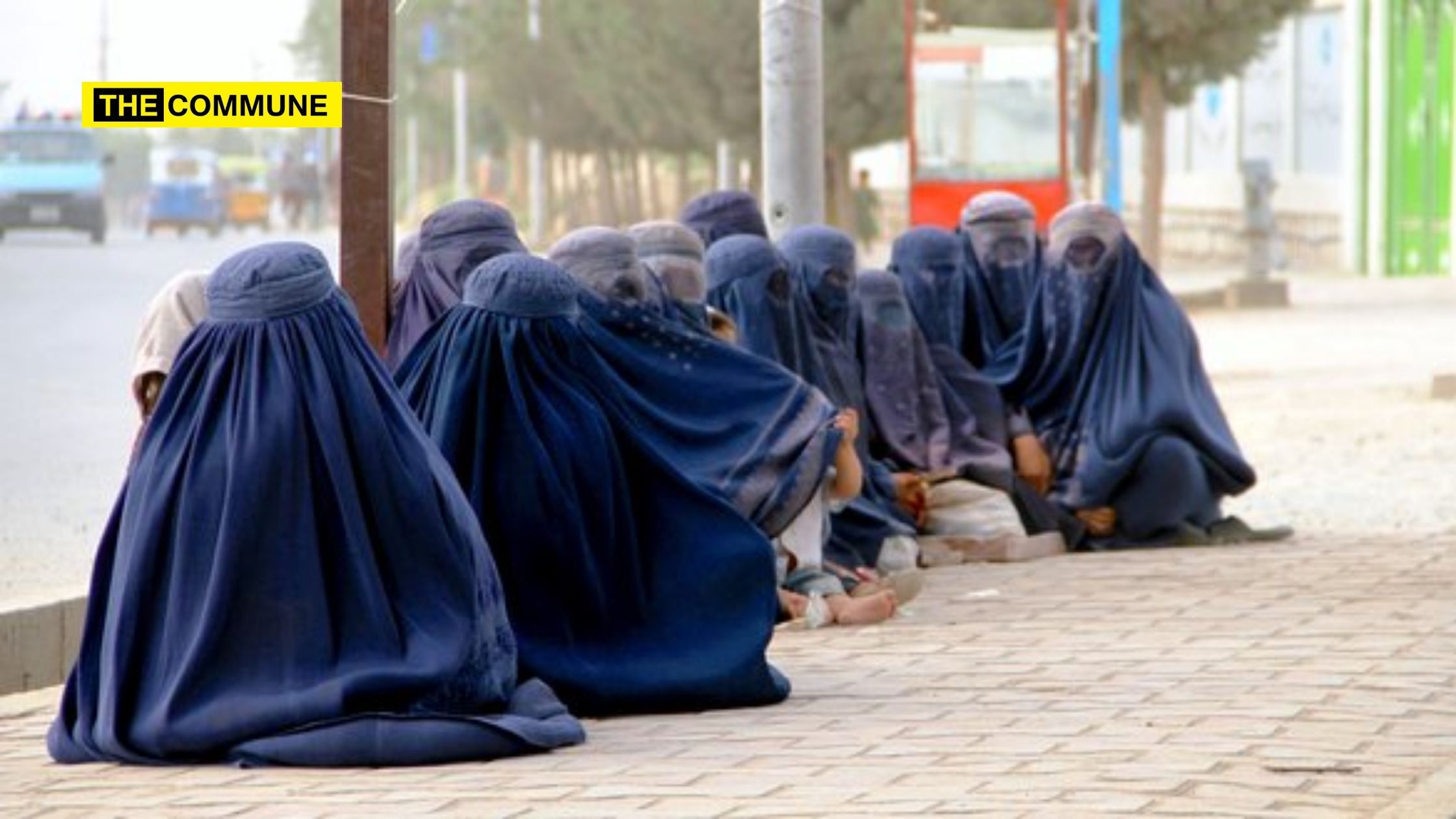
Police in Afghanistan have arrested more than 34,000 beggars from across the country over the past year to give an end to the culture of begging in society, a deputy on counter-narcotics of the Ministry of Interior Affairs said.
“We have arrested 34,377 beggars over the past year,” the National Radio and Television of Afghanistan (RTA) quoted Mullah Abdul Haq Akhund Hamkar on Sunday as saying. Major parts of the collected beggars were fake and professional, the official told the state-owned media outlet, saying the police after investigation have allocated a monthly allowance to the needy one and referred the professional beggars to the concerned entities for further investigation, Xinhua news agency reported.
A commission was established to register beggars and categorise them as “professional”, “destitute” or “organised”, which involves taking their biometric data and fingerprints. According to Taliban officials, nearly 60,000 beggars have already been “rounded up” in Kabul alone. The death of detainees rounded up under anti-begging laws is factored into the wording of the Taliban’s new law, in which Article 25 states: “If a beggar dies while in custody and has no relatives or if the family refuses to collect the body, the municipal officials will handle the burial.”
Under the new laws, those classed as “destitute” are legally entitled to financial assistance after their release, but none of the women said they had received any help. Officials in Balkh said that they have begun a campaign to round up beggars in Mazar-e-Sharif city and other parts of the northern province. The officials said that the beggars will be provided with 2,000 Afs per month after the completion of the process. “If they are really poor and vulnerable, we will provide them with 2,000 Afs per month,” said Noor-ul-Huda Abu Idris, the deputy governor of Balkh.
“There could be some fake beggars and there could be real beggars. This will be distinguished in the future because this commission is formed for this purpose,” said Faizullah Faizi, head of the commission to round up beggars. The Afghan caretaker government, according to the official, is committed to fighting the culture of begging as part of efforts to keep the society clean. More than 23 million Afghans, about half of the population of the war-torn country, have reportedly been facing a food crisis.
–IANS
Subscribe to our channels on Telegram, WhatsApp, and Instagram and get the best stories of the day delivered to you personally.
The BJP has released a factsheet reeling out statistics on household savings and wealth creation in the country to refute the Congress’s claim that under the Modi government real wages have declined and household savings and consumption have fallen while the debt burden and income inequalities are rising. The factsheet highlights that the increase in household debt is not due to rising indebtedness per borrower but due to a greater number of borrowers, reflecting improved credit access.
The sharp decline in net household savings and an increase in household liabilities is because Indians are investing in physical assets (real estate and automobiles).
The increased number of education loans and consumption of experiences are also leading to the trend, it notes. Countering the Congress claim that income inequality is rising in the country, the factsheet points out that under the Modi government, income brackets have expanded, with an 8.1 per cent rise in the Rs 5–10 lakh bracket and a 3.8 per cent rise in the Rs 10–20 lakh bracket. The wealth generation has trickled down to rural India with 9 out of 10 rural entrepreneurs being the first-generation entrepreneurs.
As more Indians are investing in real estate, India has seen a 21 per cent rise in the average price of an average residential unit in the top seven cities, it observes. The factsheet further states that for the first time since independence, average household spending on food was less than 50 per cent of the overall monthly spending because of increased income.
At the all-India level, the urban-rural gap in Monthly Per Capita Consumption Expenditure (MPCE) has declined to 70 per cent in 2023-24 from 84 per cent in 2011-12 showing the rural-urban divide is narrowing. Across social groups, MPCE increased across all categories, with the highest growth observed among Scheduled Tribes (ST) and Scheduled Castes (SC), reducing historical disparities, it added. “The Gini Coefficient, which measures inequality in consumption expenditure, has declined across all major states.
The bottom 5 per cent of the rural population witnessed a stunning 22 per cent growth in monthly consumption expenditure,” the factsheet states. Most significantly, even the poorest 5 per cent of households now spend above the poverty line, with rural MPCE at Rs 1,677 against a poverty line estimate of Rs 1,622 as per an SBI Report (based on the Suresh Tendulkar methodology).
Besides, with the implementation of GST, the price of almost all household goods has come down, leading to at least 4 per cent of total household savings as per a survey, the factsheet states. The BJP said that the Congress’s claim that income inequality in India is worse than during the British Raj is based on a World Inequality Lab report riddled with methodological and data issues.
The quality of life has significantly increased with 97 per cent of households having electricity access, 70 per cent having improved access to sanitation, and 96 per cent having access to safe drinking water as per NFHS-5 (2019-21), it states.
As many as 24.82 crore Indians escaped Multidimensional Poverty in the last nine years and the Poverty Headcount Ratio reduced from 29.17 per cent in 2013-14 to 11.28 per cent in 2022-23. In addition, 36.3 per cent of individual ITR filers earning less than Rs 3.5 lakh in FY14 have shifted to higher income brackets, with 15.3 per cent each moving to the Rs 3.5-5 lakh and Rs 5-10 lakh groups, and 4.2 per cent moving to Rs 10-20 lakh.
Besides, 21.1 per cent of the gross income from those earning below Rs 4 lakh shifted upwards, with notable gains in the Rs 5-10 lakh (7.1 per cent) and Rs 20-50 lakh (2.9 per cent) brackets, the factsheet observes.
The number of individuals earning over Rs 100 crore also increased from 23 in FY14 to 136 in FY21, but their share of total income dropped from 1.64 per cent to 0.77 per cent, indicating a broader income distribution, it added.
–IANS
ubscribe to our channels on Telegram, WhatsApp, and Instagram and get the best stories of the day delivered to you personally.
Congress General Secretary and Wayanad MP Priyanka Gandhi Vadra on 8 February 2025, congratulated all the winners of the Delhi Assembly elections where the BJP demolished the AAP to return to power after nearly three decades, saying the people had voted for change. She was at her constituency when the results started to trickle in and when the media approached her, she said she would react later.
As the BJP romped easily to victory, Priyanka Gandhi was candid in her reaction. “It was very obvious, right from the start of the campaign as we got to know from the people that they were looking for a change in Delhi. People wanted change and they have voted for change. I congratulate the winners and for the rest of us, we have to work harder,” she said.
The BJP was on course to win 48 of the 70 seats, while the AAP was ahead in 22 seats, but the Congress, like in the past two elections, failed to open their account in the national capital. Incidentally, when the counting of votes began, the Congress was leading in two seats, but as the day progressed, that also fizzled out. While Kejriwal ruled the roost in Delhi and with his party flying high, Kerala also saw a unit of the Aam Aadmi Party open with a bang.
The AAP unit saw leading lights from the civil society coming forward to join and it went on to include more apolitical personalities drawn from a cross-section of the state. But with the passing of time, internal strife broke out in the Kerala unit and it has now virtually become a non-entity. However, Kejriwal found support from Kerala Chief Minister Pinarayi Vijayan as both of them had common enemies – the Congress and the BJP.
When Vijayan and his entire cabinet staged a protest in the national capital against the sidelining of the state by the Centre, Kejriwal’s presence in the meeting became big news. Now with Kejriwal and his party routed, Vijayan might feel the pinch more than the Congress.
-IANS
Subscribe to our channels on Telegram, WhatsApp, and Instagram and get the best stories of the day delivered to you personally.
In a tragic turn of events, the hospital has declared the four-month-old unborn baby of a pregnant harassment survivor, who was thrown off a train by her assailant, dead.
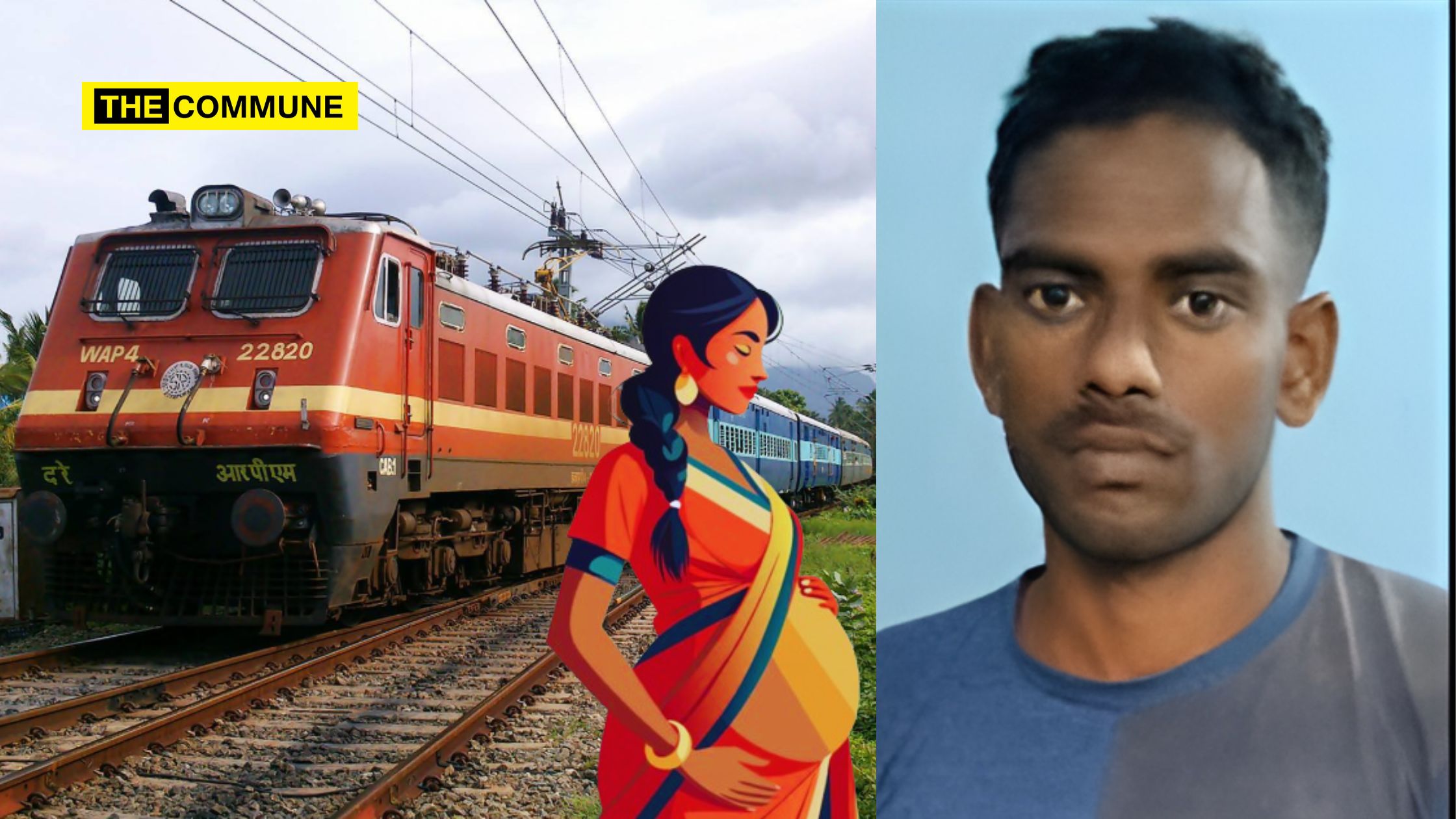
On the night of 6 February 2025, near Vellore, a pregnant woman was molested and pushed out of a speeding train by a youth when she resisted and fought back. According to Jolarpet railway police, the woman, who is four months pregnant and hails from Chittoor, Andhra Pradesh, was traveling in the ladies’ compartment of the Coimbatore-Tirupati Intercity Express.
The youth boarded the ladies’ compartment when the train halted at Jolarpet railway station. Upon noticing that the woman was alone, he began to molest her. She resisted his attempts to sexually assault her and ran towards the restroom to lock herself inside. However, the youth chased her and pushed her out of the moving train.
As a result of the fall, the woman sustained fractures in her upper and lower limbs. Passersby came to her rescue and admitted her to the Government Medical College and Hospital at Adukkamparai in Vellore. The Jolarpet police registered a case and conducted preliminary inquiries with the woman. They reviewed CCTV footage from Katpadi and Jolarpet railway stations and identified the perpetrator as Hemaraj from K V Kuppam. He was subsequently arrested.
Further inquiries revealed that Hemaraj had recently been released on bail after being arrested for the murder of a woman from Chennai. He has several pending cases against him and was booked under the Goondas Act in 2022.
Subscribe to our channels on Telegram, WhatsApp, and Instagram and get the best stories of the day delivered to you personally.
The leftist ecosystem over the years has ensured that lie after lie is repeated and brains of young students is literally “washed” with them. The Nehruvian system of education ensured Indians remain colonial slaves and continue to be Brown sepoys of the colonisers and the invaders even after regimes have changed and democracy has flourished.
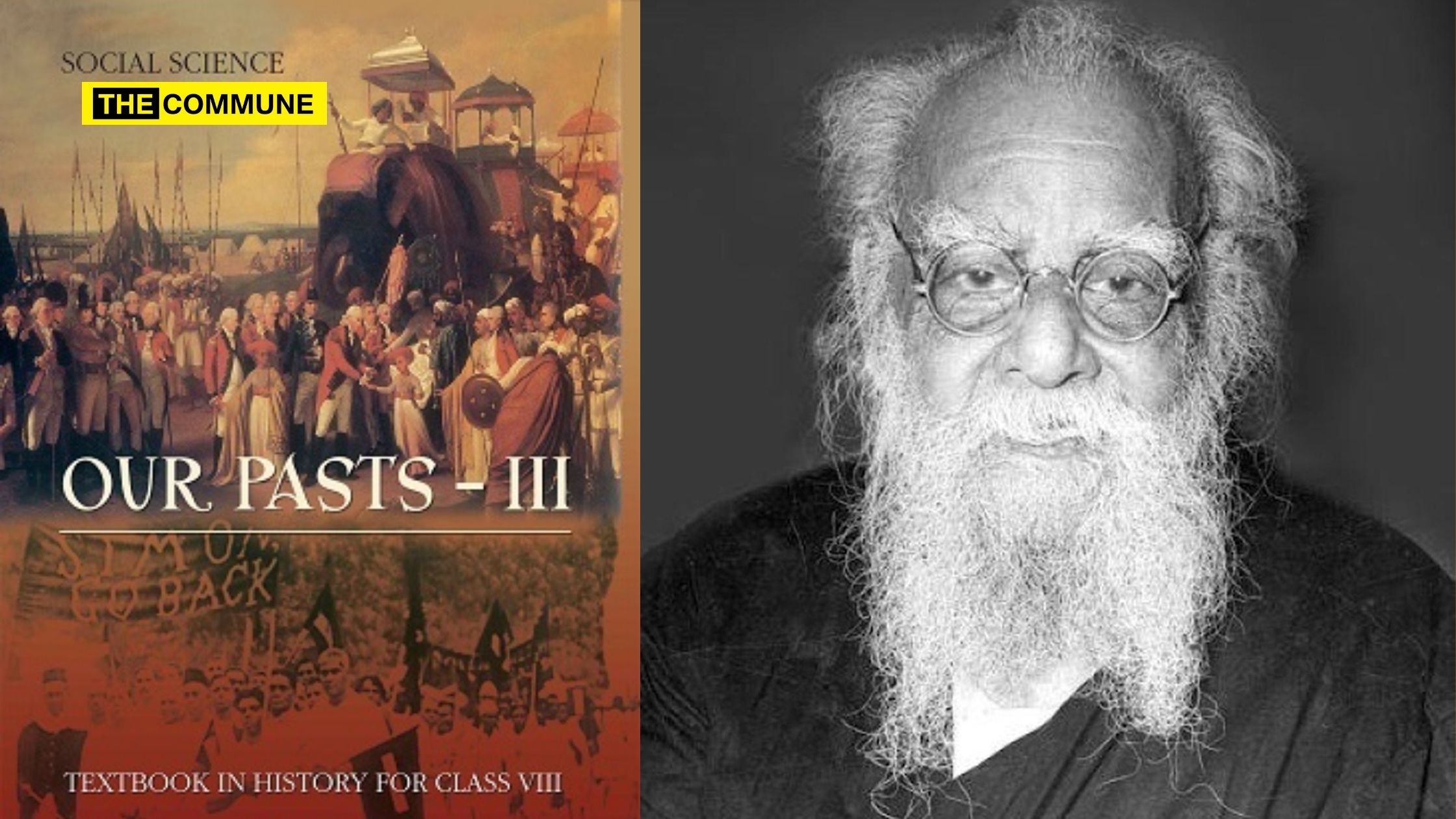
Down south, the Dravidian ecosystem has ensured that a rabid anti-Hindu, anti-Tamil “ideologue” of theirs, the one and only EV Ramasamy Naicker (referred to as Periyar by his loyal followers), continues to be venerated by the incoming generations.
The NDA government promised that textbooks will be changed to include the truth and children be taught the glory of our illustrious past. There has been change but not enough change has been made. While textbook lessons with respect to Mughal invaders and other lies that were propagated have been done away with, the NCERT/CBSE board introduces (not sure how long this has been the case), this Dravidianist rabid anti-Hindu as a “reformer” in its Class 8, History (Social Science textbook – Our Pasts III) in its 7th Chapter titled – Women, Caste and Reform.
The chapter continues to showcase the same names that were included in textbooks more than 2 decades ago – people such as Ishwarchandra Vidyasagar, Swami Dayanand Saraswati, Rajaram Mohun Roy and Shri Narayana Guru. Then comes the surprise – EV Ramasamy Naicker is also featured in the chapter under the “Non Brahman movement”.
This section is completely riddled with lies. Let’s look at each one of them.
Busting The Myths Of EVR Peddled In NCERT Textbook
Claim In NCERT: “They challenged Brahminical claims to power”
Reality: Back in the day, most of the Tamil Brahmins either worked as priests in temples or as teachers in schools that are funded by landed communities like Mudaliars, Chettiars, Pillais, etc. Some of the Brahmins lived on land donated to them by kings. With the coming of the British, the Brahmins who were once at the hold of these communities, proved to be agile with their skills and were employed by the British in various roles. It was not only the Brahmins who were employed by the British but a few other communities as well which included people from other communities including those from the Justice Party which EVR and his cronies went on to found.
Claim In NCERT: “E.V. Ramaswamy Naicker, or Periyar, as he was called, came from a middle-class family.”
Reality: He was born into a rich merchant family in Erode. He was not Tamil to begin with, he belonged to the Kannada Kamma community. In the book, Collected Works of EVR by DK’s K Veeramani, he describes EVR’s father Venkata Naicker as “A popular rich merchant; Ardent devotee of Hindu religion. (A Vaishnavite)” . So surely, EVR was not from a middle-class family.
Claim In NCERT: “Interestingly, he had been an ascetic in his early life”
Reality: Thanks to his father’s Hindu leanings, EVR had the chance to “hear Tamil Vaishnav religious Gurus talks on mythologies at his house, enjoying their hospitability. As a boy, he started questioning the contradictions and illusions in the fables of Hindu deities spread by the Aryan Race ie., Brahmins for subjugating Dravidian Race” – as mentioned in the book by K Veeramani.
By 13, he was married to his first wife Nagammal. He did “reform his orthodox wife and sowed rationalistic views”. Let us tell you how he did it.
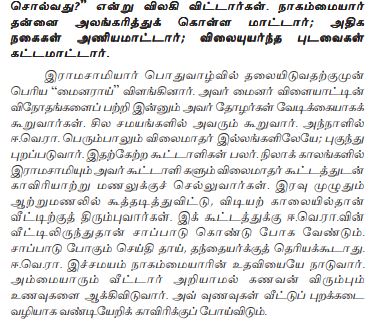
His wife, Nagammaiyar, was a devout woman who occasionally visited temples during festivals. However, EVR was determined to put an end to this practice, and he employed a rather unconventional—and controversial—method to achieve this. An account of this in a book under the chapter “Thoughts On Society”, it reads, “(2) Abolition of temple visitation: Nagammaiyar visits the temple every now and then during festivals. EV Rao’s plan is to stop this case. The prank he did for this was very funny. One day Nagammaiyar went to the temple with some women on the occasion of some festival. E.V.Ra. He went to the temple with some of his companions. He stood in a secluded place so that the minor Kolumbundu Ammaiyar could not see him well. Showing Nagammaiyar to his associates, ‘She is someone new. She has come to our town. We must conquer her; Make the effort you need to know her intentions.’ They also went to where Avvammaiyar was standing and started mocking him. Nagammaiyar saw the proceedings of this meeting. He had no idea what to do. Feet were hot. The body trembled. The heart was pounding with unbearable fear. She was drenched in sweat. However, she somehow managed to escape from the men and returned home. After knowing the situation of the temples, the next day she realized that the event held in the temple was a trick of her husband.”
His extreme and manipulative approach succeeded in instilling fear in her, effectively putting an end to her temple visits.
When Periyar's wife went to a temple, he told his friends that's a new prostitute is in town. His friends went and misbehaved. Wife got scared and ran away. But then what do you expect from someone named after a mass murdering dictator but to glorify such a horrible man? pic.twitter.com/czeYKQ3Mpj
Claim In NCERT: “Periyar was an outspoken critic of Hindu scriptures, especially the Codes of Manu, the ancient lawgiver, and the Bhagavad Gita and the Ramayana. He said that these texts had been used to establish the authority of Brahmans over lower castes and the domination of men over women.”
Reality:He was not a “critic” of Hindu scriptures. That’s a mild way of putting it when compared to the venom he spewed about Hindu Gods and scriptures. A critic is someone who engages thoughtfully and civilly to analyze, evaluate, and critique, using rational arguments grounded in principle. This rabid hate monger only abused Hindu Gods. EVR disgustingly described the birth of Hindu God Murugan. Kamba Ramayanam, the Tamil version of Ramayana that is revered in Tamil Nadu was denounced by Periyar as a ‘storehouse of falsehood’. Tamil Saivite literature like Tevaram, Tiruvasagam and Tirumandiram which are part of the Thirumurai, a collection of songs in praise of Hindu God Shiva was called as rubbish by EVR. He had called the presiding deity Lord Rangathaswamy of Srirangam as a god who comes in search of prostitutes. He had also claimed that Rama had married other women apart from Sita for his sexual pleasure. He had also claimed that Ravana was, in fact, a Dravidian King from South India.
In 1953, Periyar organized agitation for the desecration of Ganesha idols. He had elaborated extensively on the motivations behind the breaking of the idols. He had said in a speech in 1953, “We have to eradicate the gods who are responsible for the institution which portrays us as sudras, people of low birth, and some others as Brahmins of high birth. While the former go on toiling, without any education, whereas the latter can remain without exerting themselves. We have to break the idols of these gods. I start with Ganesa because it is he who is worshipped before undertaking any task.”
Claim In NCERT:“But orthodox Hindu society also reacted by founding Sanatan Dharma Sabhas and the Bharat Dharma Mahamandal in the north, and associations like the Brahman Sabha in Bengal. The object of these associations was to uphold caste distinctions as a cornerstone of Hinduism, and show how this was sanctified by scriptures.”
Reality: It feels as if there is an anti-Hindu element sitting right at the textbook committee for peddling such anti-Hindu lies and ensuring children who are at a very nascent stage are fed this propaganda nonsense and challenge the practices in their homes. This is especially targeted at Hindus as you cannot see much on other religious denominations in the chapter.
Hindus have consistently adapted their practices to remain relevant through changing times unlike one barbaric political cult that is stuck in the medieval past and bays for the blood its non-followers. Gurus like Ramakrishna Paramahamsa, Swami Vivekananda, Ramanujacharya, Kanchi Sankaracharya, Aurobindo and many others have enabled reforms within the community breaking the caste rigidity.
Claim In NCERT:“Periyar on women – Periyar wrote: Only with the arrival of words such as Thara Mukurtham our women had become puppets in the hands of their husbands … we ended up with such fathers who advise their daughters … that they had been gifted away to their husbands, and they belong to their husband’s place. This is the … result of our association with Sanskrit. Periyar, cited in Periyar Chintahnaikal”
Reality: Let us tell you what EVR had to say about women and women empowerment meant to him.
Said Women Visit Temples To Enjoy Being Groped By Men
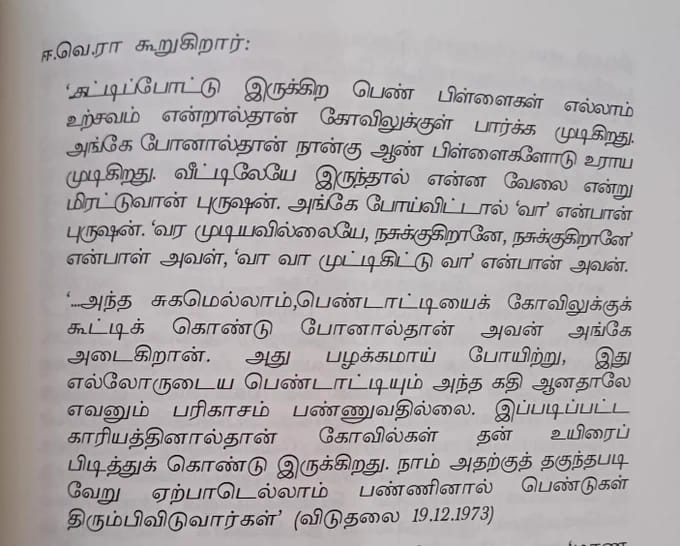
During a widely celebrated speech revered by followers of EVR and D-Stocks, EVR crudely asserted that women visit temples to be groped, “Husbands usually don’t go to the temple, but at least to have fun they go. The women who are tied (Married) can go only during festival season. Only by going there, she can rub with four men; If she stays at home ‘Her husband will threaten asking ‘what work; If she goes there… ‘Come’ will say the husband; She will say ‘Can’t come they are crushing’; He will say ‘Come, come through them’, She gets all that pleasure only when she is taken to the temple; He is habituated to this because everyone else’s wife is also subject to the same, hence no one will ridicule it. Only because of this, she is holding her life. If we make different arrangements for this, women would not go to temples.”
2. EVR, of age 94 says in his Irudhi Perurai (Final Great Speech) in 1973: "Why are temples still alive?
Because only in a temple's festive crowd, will a husband get the pleasure of seeing his wife being groped.
Samy Chidambaranar’s 1939 book “Tamizhar Thalaivar” delves into several controversial claims, including allegations about E.V. Ramasamy (Periyar). The book narrates accounts of his nocturnal activities with women by riverbanks while having his wife prepare meals for such outings. Titled, “Family Mischief” (Kudumba Kurumbugal), Samy Chidambaranar narrates, “Ramasamy was a great “Minor” (flirt) before he ventured into public life. His friends will joke about his ‘minor’ exploits quite quirkily. Sometimes he (EVR) would also talk about it. In those days, EVR was mostly in the houses of prostitutes – entering and departing. There were many partners for this. Ramasamy and his associates would go to the banks of River Cauvery with a group of prostitutes during the lunar nights. They would spend the whole night in the river ‘having fun’ and return home only early in the morning. The food for these meetings should come from EVR’s house only. Parents should not know about food delivery. For this, EVR will seek the help of Nagammai. She will, too, unbeknownst to the family, would cook the food that her husband wanted, and the food would be sent through the backdoor and taken to the Cauvery by a cart.”
Tamil Brahmins “Prostituted” Their Women To Other Castes
On Page 168 of the book “Collected Works of EVR Periyar“, it talks about how he said Tamil Brahmins “prostituted” their women to other castes.
“I asked him to tell me where he stands in the society. I asked him to tell me the rank he holds under the caste hierarchy. He told me his status in life is that of a minister. He replied that he is a Reddiar by caste. Stating the caste as Reddy, Gounder, Naidu, and Naicker are all names we have created. But according to shastras, religion, and tradition, we are all “Shudras” the fourth caste. This continues to exist for a long time. We have started the movement to crusade against this long-lasting disgraceful status. After that, I asked him what was meant by “Shudra”. I myself explained to him that “shudra” means the son of a prostitute.
Then I continued to speak to him. I said, “You have high degree of education. You have passed B.A., B.L., You were a minister for three years. Again you are a now a minister. You are still a “Shudra” the son of a prostitute. You are not ashamed of your low social status. A fellow who begs at you, a fellow who is willing to prostitute his womenfolk for you, calls himself as a high born. You accept him as superior in caste. You prostrate at his feet”. I finally put the question, ” Now you tell me whether you want the Self-Respect Movement or not?” He simply replied that all these have existed for a very long period.”
For example: Official source material publicly available. Collected Works of EVR Periyar P. 168- hence this is the established community level of obscenity in Tamil discourse.
Hindu Women Go To Crowded Temples To Rub Their Bodies Against Strange Men
In what is said to be one of his speeches and later published in the Dravidianist mouthpiece Viduthalai in 1973, EVR says, “Young women who are tied up at home can be seen outside only during temple festivals. Only if they go there will they be able to rub their bodies against young men. If they are at home, the husband threatens her with work. If she goes there, he will ask her to come. “I am not able to come, he is crushing me, he is crushing me“, she would say, “Come without a word“, he would say.
He receives that pleasure only when he takes his wife to the temple. That became a habit since this is the state of all wives, no one makes fun of it. Because of such things, life goes on. If we make other arrangements as appropriate, the women will return.”
This is what EVR had in mind and said about women.
Claim In NCERT:“Convinced that untouchables had to fight for their dignity”
Reality: On December 25, 1958, during the tragic Keezhvenmani incident, 44 Dalit workers were killed by landlords for seeking higher wages. Instead of condemning the violence, EVR suggested that workers should accept the wages given by landowners without demanding more. This stance overlooked the deep-seated caste discrimination involved. Moreover, in the magazine “Kudiarasu,” EVR commented that the increase in clothing prices was due to Dalit women beginning to wear jackets. Throughout his activism, EVR did not significantly engage in or support any movements specifically aimed at improving Dalit rights related to education, jobs, temple entry, or occupational rights. Despite this, he often took credit for broader social movements where his participation was minimal. EVR was always envious of Dalits gaining political representation so much so that he once had addressed Dr. Ambedkar as “an agent of the North Indian Brahminical Congress Party”
It is highly unfortunate that NCERT glorifies this perverted being as a reformer and one who fought for women’s/oppressed caste people’s rights.
EVR Was No Reformer, He Was Just A Rabid Hate Mongering Bigot
Called For Genocide Of Brahmins
EVR called for the genocide of Brahmins in the name of abolishing the caste system.
He said “If to eradicate caste we need to burn the agraharams (Tamizh Brahmin house colonies) and murder atleast 1000 Tamizh Brahmins then we will do exactly that” declaring the date of genocide as 26th November 1957, the Constitution Day.
The book “Periyar Thought Collection Part 1” records a speech by EVR where he advocated for the killing of Brahmin men and women if the Rajaji government failed to withdraw the Madras scheme of elementary education (Kulakalvi Thittam) in 1953. In another incident, EVR made a direct comparison between Brahmins and Jews, suggesting that Brahmins should be forcibly removed from India. This statement was made in 1938, coinciding with the rise of persecution against Jews in Germany. It is evident that EVR’s intention behind this comparison was to incite prejudice and discrimination against Brahmins. Additionally, he expressed the belief that in order to eliminate caste in India, it was necessary to eradicate God, religion, scriptures, and Brahmins. In a separate address by EVR in Virudhunagar in 1944, he offered guidance to students, proposing that just as the Germans persecuted Jews and rose to power, why shouldn’t we do the same to Aryans (Brahmins)?
In another instance, during his speech in Karaikudi, EVR openly encouraged non-Brahmins to kill Brahmins. EVR said, “They are celebrating festival it seems , he is celebrating Soora Samhaaram, what is it? He (Soorapadman the demon) was someone who said there is no god, they killed him, therefore now we can kill those buggers… that won’t be wrong (if we kill them) may be legally it will be wrong, that legal offence and all are bullshit we cant be bothered that it is legally wrong. We have to come to the conclusion, wherever we see a temple we must go inside and break all the idols inside, wherever we find Paapan (Brahmins) we must kill and destroy him. He has done like this to us, after all he (Tamil Brahmin) has done things like this only to come to this position. We must also do to the him, whatever he has done, what, a few of us have to die, if one Tamil dies for one paapan, means only three of us will die out of every hundreds, balance 94% will still remain.”
Called Pongal Festival A Nuisance
In a 1931 article penned under the pseudonym “Screw Loose,” EVR, hailed as Periyar by his followers, abused the Pongal festival, lambasting it as a wasteful and harmful tradition. He expressed particular disdain for the cultural practices surrounding Pongal, such as preparing sweet and savory dishes that, he claimed, were often overindulged in by poorer families.
Gems On Muslims
EVR harbored strong animosity toward minorities, particularly Muslims, and expressed his views openly. In a 1962 article, he declared that the nation would be doomed if it continued to support minorities. He vehemently attacked Muslims, blaming them for literally every issue, and worked to rally the non-Brahmin community against both Muslims and Hindu Brahmins by spreading hatred. This editorial reflects EVR’s deeply divisive rhetoric, in which he not only targeted Muslims but also sought to create further divisions in society by pitting non-Brahmin communities against both Muslims and Brahmin Hindus.
He referred to Christians and Muslims in Tamil Nadu as “non-Tamils,” stating, “In Tamil Nadu’s population, Brahmins make up 2.75%, Christians around 4%, Muslims approximately 5%, Malayalis about 8%, and people from Karnataka roughly 5%. When you combine these groups, they account for 25% of the population. Yet, these ‘non-Tamils’ occupy 75% of the top positions in employment. The suffering of Tamils, he argued, is due to the fact that Brahmins, Christians, Muslims, and others falsely claim to be Tamils.”
What He Thought About Malayalis
EVR’s dislike for Malayalis is evident in several of his speeches and writings. He often used strong, provocative language to criticize Malayalis, particularly targeting their cultural practices, social structures, and perceived dominance in certain spheres.
Abused Tamil Language And Called Thirukkural As ‘Faeces’
EVR hated Tamil so much that he called Thirukkural as faeces. In an editorial published in Viduthalai on October 11, 1967, EVR referred to Tamil as a “kaatumiraandi mozhi” (barbarian language). This was not an isolated remark—throughout his life, he belittled Tamil, advocating for its abandonment in favor of English. He even went so far as to say that “Tamil is a language not even useful for begging.” Silappadikaram, one of Tamil Nadu’s most revered literary works from the Sangam era, was dismissed by EVR as Aryan propaganda. In a speech on March 30, 1951, he described it as a collection of superstitions that promoted the subjugation of women.
Between October and November 1967, EVR wrote multiple articles portraying Tamils as backward and irrational. He argued that their inventions and traditions—such as the grinding stone, oil lamps, and bullock carts—were primitive and of no practical use. He even claimed that Tamils had no concept of time and had borrowed it from the English.
EVR openly derided Tamil society, describing its people as lacking racial consciousness, self-respect, nationalism, and even basic humaneness.
In a Viduthalai editorial dated March 16, 1967, EVR declared that Tamil scholars and pundits deserved to be imprisoned for life and hanged, accusing them of failing to contribute to society’s progress. He even ridiculed the World Tamil Conference, calling it a “census to enumerate fools.”
Thirukkural, revered as one of the greatest works of Tamil literature, was scathingly criticized by EVR. Initially, he praised it, but later dismissed it as “feces placed in a golden plate.”
EVR had contempt for Subramania Bharathi, the iconic poet and nationalist leader. In the journal Ticutar, he mocked Bharathi for calling Tamil the sister language of Sanskrit. He even compared Bharathi to a rat.
Anguished by the virulent vitriol spewed by EVR, Nehru shot off another letter to Kamaraj on 5 November 1957 in which he asked EVR to “be put in a lunatic asylum” and let his “perveted mind be treated there”.
NCERT Should Be Ashamed
It is one thing for a state entrenched in Dravidianism to glorify this hateful bigot as social reformer. It is also understandable if the EVR glorifying propaganda was inserted in textbook when the NCERT was under the control of leftists ably supported by the Congress-led UPA government. But NCERT should be a little more responsible as non-Tamil students across India would matter how much the Dravidianists, leftists and the woke Brahmins try to hail EVR as a social reformer
Is this the kind of idol and ideologue that NCERT/CBSE wants to introduce children to? Do we want our children to celebrate a man who abused Hindus, derogated Tamil culture, saw women as flesh, to live life “enjoying without responsibility”, and called for a genocide?
NCERT must be ashamed for peddling falsehoods about this rabid hate mongering demagogue and poisoning impressionable minds. It is even more shameful that the BJP government at the Centre has continued to allow this falsehood to be peddled right under its nose despite being in power for over a decade.
Subscribe to our channels on Telegram, WhatsApp, and Instagram and get the best stories of the day delivered to you personally.
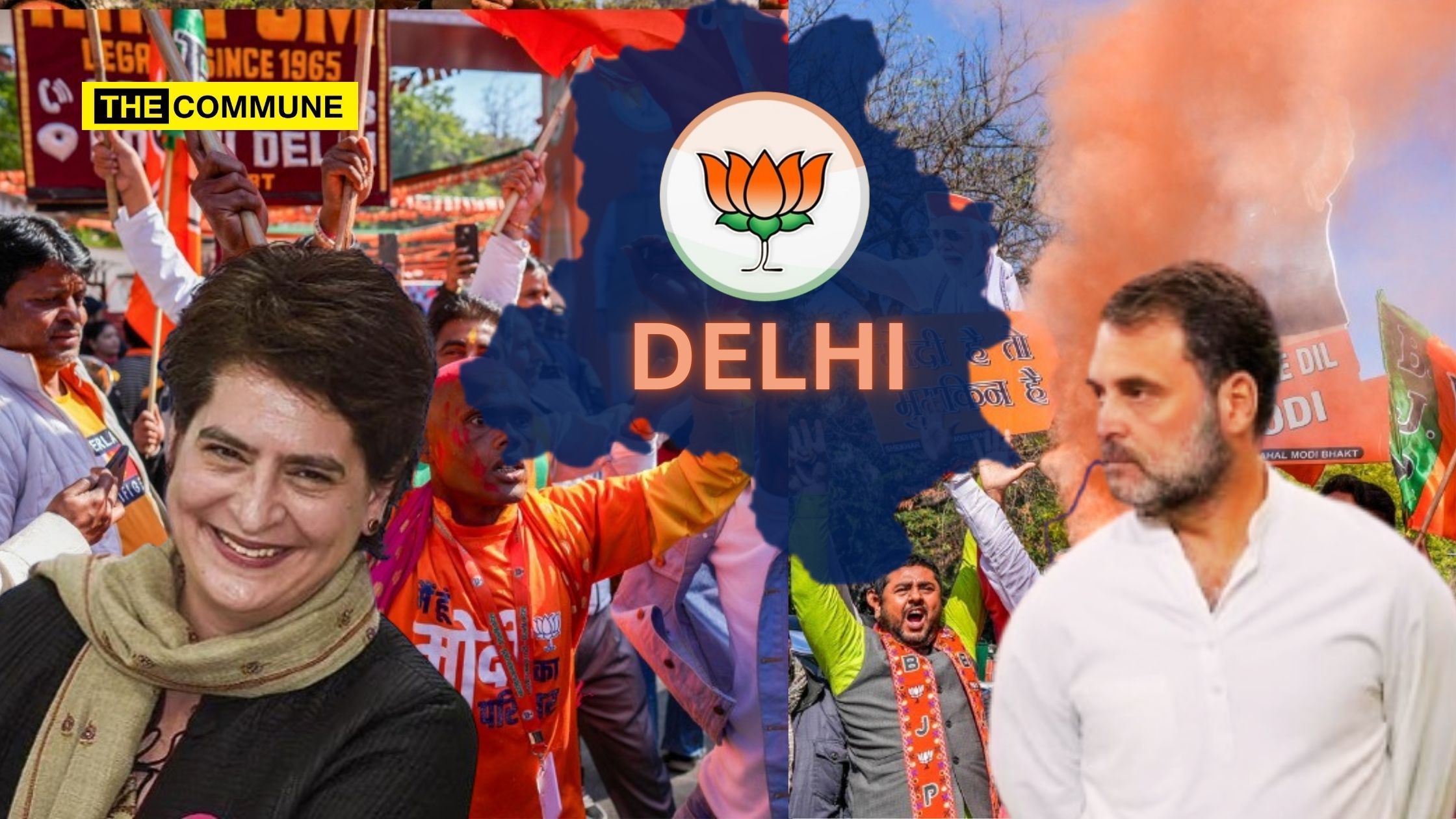
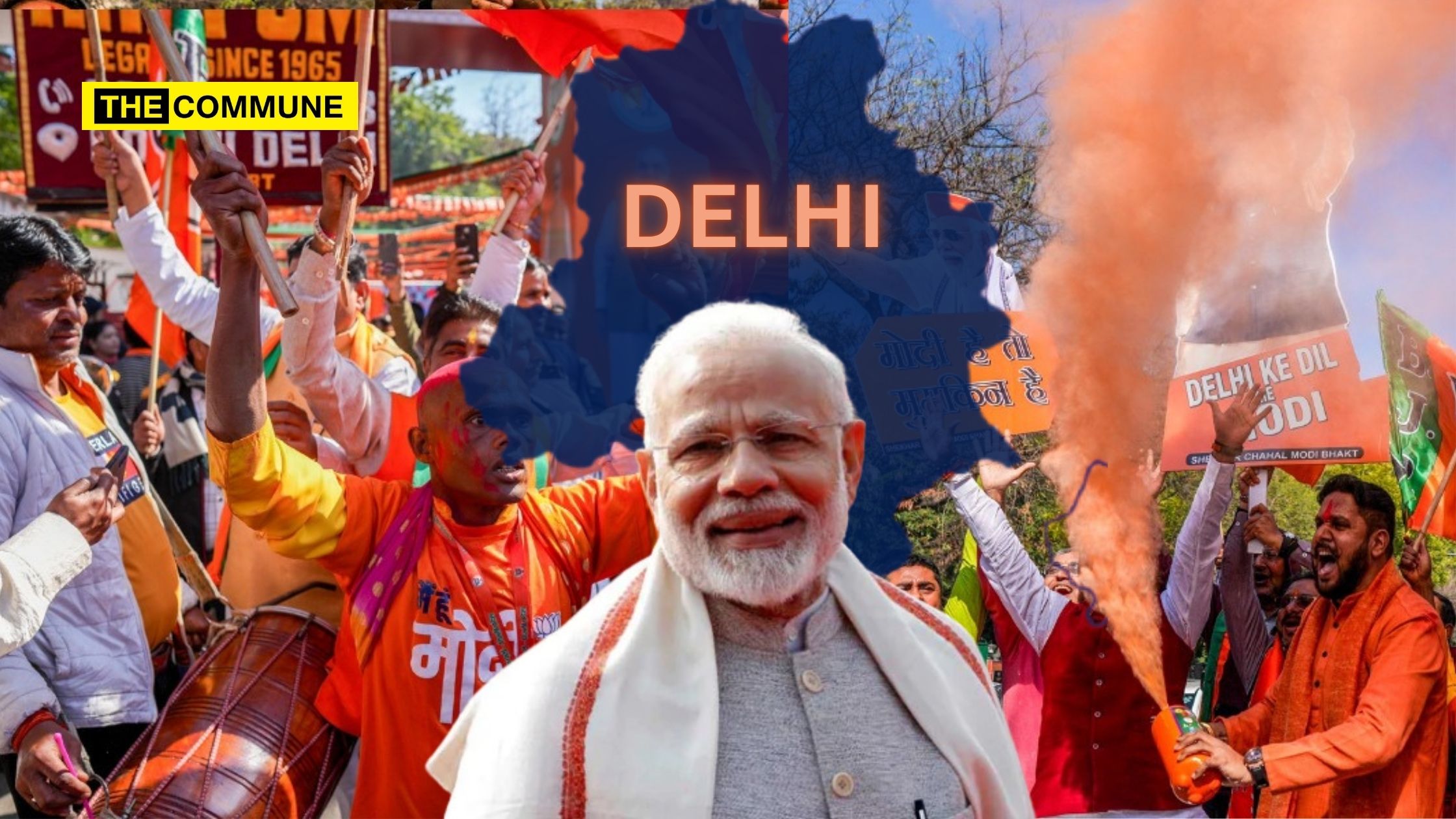
The Bharatiya Janata Party (BJP) romped home wresting the national capital from AAP’s control on Saturday, decisively defeating the party that governed Delhi since 2013. The resounding victory of BJP and ignominious defeat for AAP has more meanings than one.
First, it marks the end of AAP’s era and also a governance model that reverberated across the nation and saw its political footprints expanding beyond the capital. Secondly, it vividly reflects the public mood that the freebies and sops alone can’t be a guarantee to win elections. Thirdly and most importantly, the BJP’s landslide victory signifies the party’s growing clout in the Hindi heartland.
With BJP winning Delhi, this completes BJP’s domination in the region including the national capital. The BJP is already in power in states surrounding the capital including Haryana, Uttar Pradesh, Uttarakhand and Rajasthan. BJP has been in power in adjoining Haryana and Uttar Pradesh for three and two consecutive terms respectively and snatched power from Congress in Rajasthan in the 2023 elections.
Haryana witnessed a turf battle in 2023 as BJP and Congress engaged in a fierce poll battle but it was the former that had the last laugh. Just a year later, Delhi saw a high-stakes battle with all three AAP, Congress and BJP putting their foot down but it was the latter which outwitted all and stormed to power, after almost three decades. Interestingly, 48 out of 70 seats where BJP has either won or is ahead, include the border constituencies lining up with Haryana and Uttar Pradesh.
The city’s border constituencies, particularly with Haryana refused to buy AAP’s theory of water contamination and water terrorism charge by the adjoining BJP government and voted against its poll rhetoric. Days ahead of polling, Delhi CM Atishi and AAP office bearers made a scathing attack on the Haryana government, accusing it of “poisoning” the Yamuna river with an intention to “kill” Delhiites.
Kejriwal also made a similar pitch, hoping to build resentment among the public against BJP. But, this failed to cut ice and AAP faced the people’s ire even in border districts for keeping “theatrics over governance”. AAP government’s repeated accusations of the Centre and failure to address the stubble-burning issue in its party ruled Punjab didn’t do any good. Kejriwal’s repeated charge of stalling projects by Delhi L-G was seen as a “diversionary tactic” and people rather believed that the double-engine government would be key to Delhi’s problems.
Kejriwal’s impassioned appeal to people after being released from jail, that he would return to the CM post only if the people’s court elected him, also didn’t move voters. This gambit also failed to yield results. People saw all these as an exercise to wash their hands of responsibility and went to punish the party, which won more than three-fourths majority twice, first in 2015 and then in 2020.
The BJP, since 2014 has largely enjoyed dominance in North India. However, winning Delhi was beyond its reach despite popular appeal. It was handed over a crushing defeat in both the 2015 and 2020 Assembly elections, at the hands of Kejriwal-led AAP. However, this time, BJP marching to victory with a thumping majority marks an end to its long and anxious wait to be in power in the national capital.
-IANS
Subscribe to our channels on Telegram, WhatsApp, and Instagram and get the best stories of the day delivered to you personally.
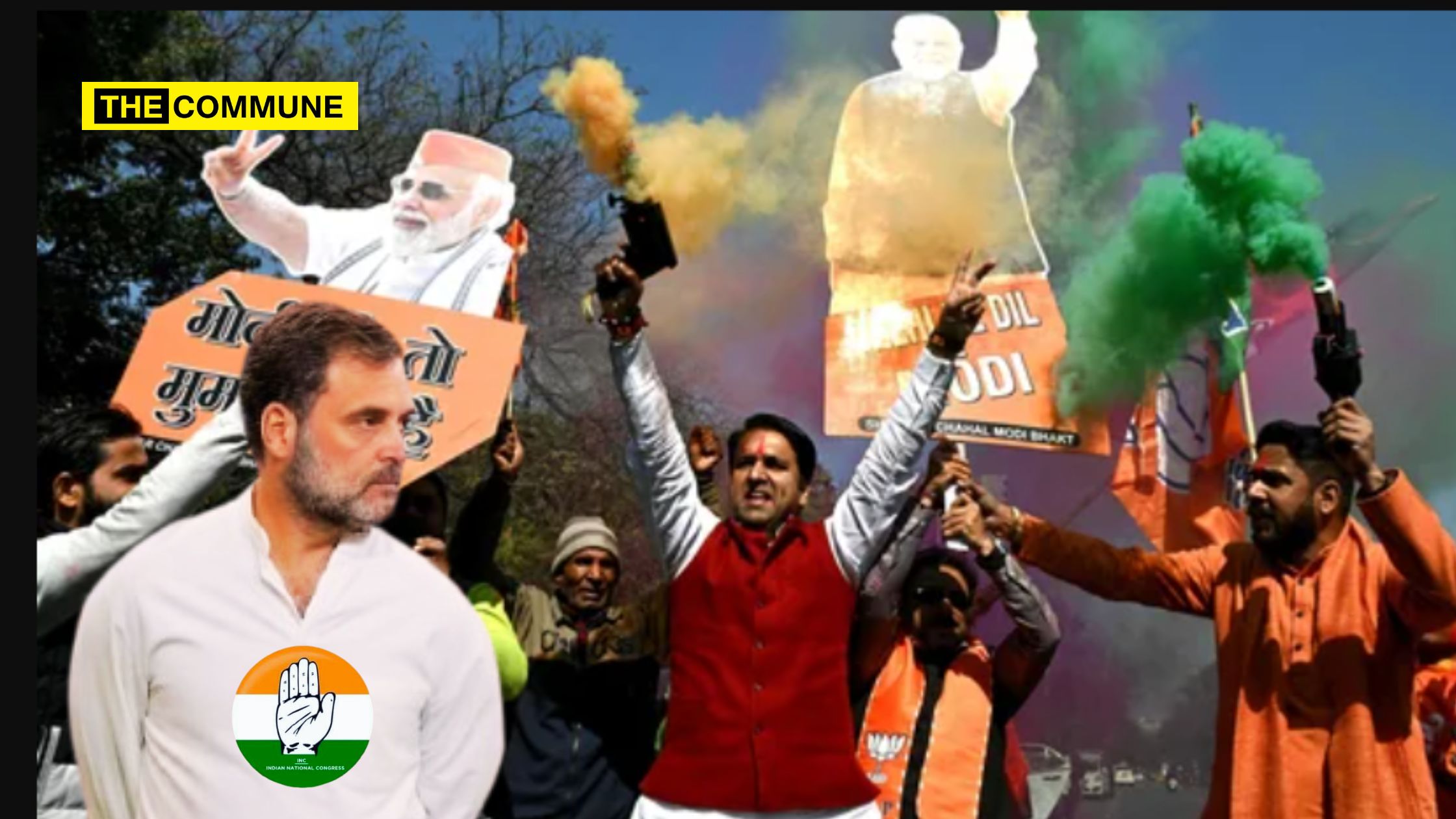
As the counting for the Delhi Assembly elections nears its conclusion, the Congress party, once a dominant force in the national Capital, appears set for yet another electoral washout, failing to win even a single seat this term.
The Congress, which ruled Delhi for 15 consecutive years from 1998 to 2013, is now staring at its fourth straight defeat in Assembly elections, underscoring its sharp decline in influence across the city. This time, the party’s struggle was particularly evident in three key Assembly seats — Mehrauli, Okhla, and Mustafabad. In Mustafabad, BJP candidate Mohan Singh Bisht emerged victorious with a lead of over 17,000 votes.
The AAP’s Adeel Ahmad Khan secured second place, while AIMIM candidate Tahir Hussain — former AAP Councillor and a key accused in the 2020 Delhi riots — finished third. Congress candidate Ali Mehdi was left trailing far behind. In Mehrauli, the BJP’s Gajender Singh Yadav maintained a lead, with the AAP’s Mahender Chaudhary in second place. An Independent candidate, Balyogi Baba Balaknath, was in third place, while Congress candidate Pushpa Singh lagged at fourth place, with only two rounds of counting left. Mehrauli is part of the South Delhi Lok Sabha constituency, which comprises nine other Assembly segments, including Bijwasan, Sangam Vihar, Ambedkar Nagar, Chhatarpur, Deoli, Kalkaji, Tughlakabad, Palam, and Badarpur.
The BJP is leading in six of these seats. In Okhla, AAP’s Amanatullah Khan maintained a strong lead of over 30,000 votes. AIMIM candidate Shifa Ur Rehman Khan was in second place, followed by BJP’s Manish Chaudhary. Congress candidate Ariba Khan trailed at fourth, with eight rounds of counting remaining. Congress candidate Sandeep Dikshit, contesting from the New Delhi Assembly seat, admitted to the party’s poor performance, calling it “disappointing” and acknowledging that Congress had failed to reconnect with Delhi’s voters. “We had hoped for 12-13 per cent of the vote share, but we fell short. We wanted to make a place for Congress in the hearts of the people but failed. It is disappointing,” Dikshit told IANS. Asked about the reasons behind the Congress’ dismal showing, he said, “It is difficult to pinpoint right now. Maybe people wanted to vote for the Congress but were unsure if we could form a government, so they chose other parties instead.”
Dikshit was in a three-way battle in New Delhi against AAP National Convenor and former Chief Minister Arvind Kejriwal and the BJP’s Parvesh Verma, who won the seat. As counting continues, early trends from the Election Commission of India (ECI) show the BJP crossing the halfway mark, leading in 48 of Delhi’s 70 Assembly seats, while the AAP is ahead in 22. The Congress, however, remains absent from the tally. Exit Polls had predicted a significant loss for the AAP, with the BJP expected to win between 45-55 seats.
The Congress was projected to win just one seat but has failed to achieve even that. The party’s failure to open its account once again underscores its declining relevance in Delhi politics. Once a formidable force under former Chief Minister late Sheila Dikshit, the Congress has been struggling to regain lost ground since the AAP’s rise in 2013. Early trends initially showed the Congress leading in Badli, but this advantage quickly dissipated. With no leads in any constituency, the party is poised for another electoral wipeout.
The poor performance comes despite a high-profile campaign led by Congress chief Mallikarjun Kharge, Leader of Opposition in the Lok Sabha Rahul Gandhi, and Wayanad MP Priyanka Gandhi, who held multiple rallies in the run-up to the elections. The Congress’ vote share has also been on a downward trajectory. The last time it won seats in Delhi was in 2013 when it secured eight constituencies. That election also marked the AAP’s debut, which disrupted the city’s political landscape. In 2015, the Congress drew a blank, managing only a 9 per cent vote share, while AAP swept 67 out of 70 seats.
The BJP won the remaining three. The downward spiral continued in 2020, with Congress again failing to win a single seat and its vote share dropping below 5 per cent. AAP retained power with 62 seats, while the BJP managed just eight. As the BJP celebrates its return to power in Delhi and AAP grapples with a significant setback, Congress’ continued decline raises serious questions about its future in the national Capital.
-IANS
Subscribe to our channels on Telegram, WhatsApp, and Instagram and get the best stories of the day delivered to you personally.