Home Blog Page 401

All-In-All Azhagu Raja Sumanth Raman Who Fashions Himself As An Expert Of Everything Under The Sun Asks How Is Mahakumbh 2025 Different From Kumbh
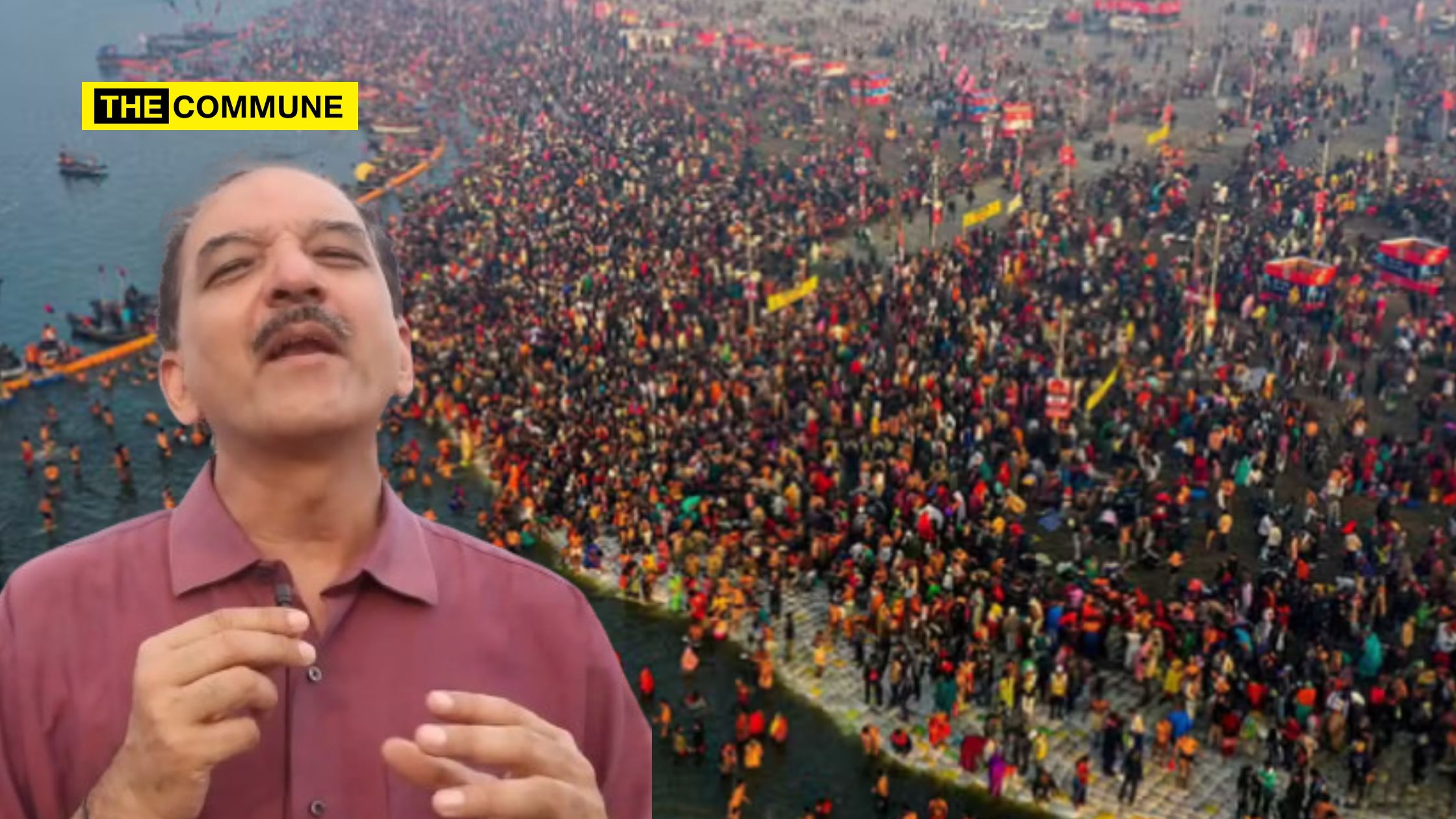
The globally renowned Mahakumbh celebration, which began on 13 January 2025, and will conclude around 26 February 2025, has witnessed an immense turnout of over 50 crore devotees, saints, and pilgrims so far. They have come to bathe in the sacred Triveni Sangam, where the Ganga, Yamuna, and the mythical Saraswati rivers meet. This extraordinary religious event has broken all attendance records.

In this backdrop, political commentator and former sports quiz host Sumanth Raman took to social media to indirectly criticize the event, questioning, “Can anyone explain how the current #Kumbh is a once-in-144-years event? Kumbh occurs every 12 years. So where did the 144 come from? Many visitors keep saying this is a once-in-a-lifetime event. What is the source of this?”

In his post, Raman not only raised the question but also asked for the source. While a quick Google search could have provided an answer, it seemed his real intention was to get left-wing and Dravidian groups to engage with his post, which largely fell flat. Despite his critique, the origin story and the scientific aspects of Kumbh still hold true today.

What was even more surprising was that former sports quiz host Sumanth Raman relied on a misleading post circulating on WhatsApp University, which falsely claimed that the Mahakumbh happens every 12 years. Even that post was simply a cut, copy, and edit from Wikipedia page. After seeing it, Sumanth started questioning the event without taking the time to verify the information. In reality, the Purna Kumbh takes place once every 12 years, not the Mahakumbh.

The Atharva Veda clearly states: “O saints! The Purna Kumbh occurs every twelve years and is witnessed at the four sacred sites of Haridwar, Prayagraj, Ujjain, and Nashik. Kumbh represents a cosmic event influenced by the alignment of planets and constellations.”

The Kumbh Mela itself is timed based on the astrological positions of Jupiter and the Sun. Jupiter, known as the “Guru of the Gods” in Hindu mythology, takes approximately 12 years (11.86 years, to be precise) to orbit the Sun. Each year, Jupiter transitions into a new zodiac sign, completing a full cycle of the 12 zodiac signs in 12 years. The Kumbh Mela is celebrated when Jupiter enters specific zodiac signs, and the Sun aligns in particular positions, creating an auspicious astrological configuration.

The Maha Kumbh Mela, however, occurs once every 144 years. This is because it signifies the completion of 12 full cycles of the 12-year Kumbh Mela (12 x 12 = 144). For instance, in Prayagraj, the Maha Kumbh Mela takes place when Jupiter is in Taurus and the Sun is in Capricorn, marking an exceptionally rare and sacred alignment. The uniqueness of the Maha Kumbh lies in a rare planetary alignment. It takes place when Jupiter transits over Taurus while the Sun is in Capricorn, along with the presence of the Pushya Nakshatra. This specific alignment happens only once in 144 years, making the 2025 Maha Kumbh Mela particularly significant. While Kumbh Mela occurs every 12 years at Prayagraj, the Maha Kumbh is marked by this extraordinary celestial configuration, which enhances its spiritual and astrological importance.

This once again highlights the danger of spreading half-formed or inaccurate information. Sumanth Raman was caught red-handed for endorsing baseless claims from WhatsApp University without proper fact-checking.

The Story Behind Kumbh Mela

The term “kumbh” comes from the Sanskrit word for pitcher or pot. The legend states that when the Devas and Asuras churned the ocean, Dhanvantari emerged with a pitcher of amrita, the elixir of immortality. To prevent the Asuras from claiming it, Jayant, the son of Indra, ran off with the pot. He was accompanied by the Sun, Shani, Brihaspati (Jupiter), and the Moon, who protected him and the amrita. During his flight, the elixir spilled at four locations: Haridwar, Prayagraj, Ujjain, and Nashik-Trimbakeshwar. Since Jayant ran for 12 days, and one day of the Devas equals one human year, the Kumbh Mela is celebrated every 12 years at these locations, in alignment with the positions of the Sun, Moon, and Jupiter.

Prayagraj and Haridwar also host the Ardh-Kumbh (meaning “half” Kumbh) every six years. The full festival that occurs every 12 years is known as Poorna Kumbh or Maha Kumbh. Each of these four places is situated on the banks of a river—Haridwar on the Ganga, Prayagraj at the confluence (Sangam) of the Ganga, Yamuna, and the mythical Saraswati, Ujjain by the Kshipra, and Nashik-Trimbakeshwar by the Godavari.

It is believed that bathing in these rivers during the Kumbh Mela, especially during the specific celestial alignment, washes away sins and brings spiritual merit (punya). The event also serves as a gathering place for sadhus and other holy figures, with the sadhu akhadas attracting much curiosity. It offers people an opportunity to meet these revered figures and gain spiritual insight.

While the Ganga’s significance in Hinduism is widely known, the Kshipra is said to have emerged from the heart of Vishnu in his Varah (boar) incarnation. The Godavari is often referred to as the “Ganga of the South.”

  • Maha Kumbh: The rarest and most sacred Kumbh Mela, celebrated once every 144 years in Prayagraj stands out as a once-in-a-lifetime event, radiating unmatched spiritual energy.
  • Purna Kumbh: Held every 12 years in Prayagraj, Haridwar, Nashik, and Ujjain. It is a grand occasion, attracting millions of devotees who come together to perform sacred rituals.
  • Ardh Kumbh: A smaller-scale gathering held every 6 years in Prayagraj and Haridwar.
  • Magh Mela: An annual event in Prayagraj, taking place during January and February.

An essential part of the festival is the presence of Naga Sadhus, ascetics as a symbol of renunciation.

Why This Maha Kumbh Holds Ultimate Significance

The Maha Kumbh Mela of 2025 is of exceptional importance, as it marks a rare celestial alignment that has not occurred in 144 years. For the first time in over a century, the positions of four major planets will align perfectly, and just three hours before Amavasya on 29 January, the Pushya Nakshatra will align with the four planets. This alignment adds unparalleled astrological significance to this Kumbh Mela, making it the most auspicious one in the past 144 years.

The Kumbh Mela, which occurs four times every 12 years, takes place at one of four sacred locations—Prayagraj, Haridwar, Ujjain, and Nashik—in rotation. The timing of the Kumbh Mela depends on the positions of the Jupiter, Sun, and Moon, as well as the zodiac signs they inhabit. Since Jupiter takes around 12 years to complete its orbit around the Sun, the Kumbh Mela is celebrated four times within that period. The Prayagraj Kumbh Mela, for example, takes place when Jupiter is positioned in Taurus, and the Sun and Moon are aligned in Capricorn.

According to NASA, such planetary alignments involving four or more planets are rare, and the visibility of bright planets like Mars, Jupiter, Saturn, and Venus makes this event even more special. While such alignments do occur periodically, the visibility of multiple bright planets is not an everyday occurrence.

The best time to view the alignment will be about 45 minutes after sunset. Venus, Mars, Jupiter, and Saturn will be visible to the naked eye, while Uranus and Neptune will require a telescope. Venus will shine the brightest, appearing prominently in the southwestern sky, while Mars will glow red in the eastern sky, and Jupiter will dominate the overhead view. Saturn will be visible in the western sky as a small dot. Uranus and Neptune, though part of the alignment, will be too distant for unaided eyes to catch.

This event, while not technically rare in the astronomical sense, holds great importance due to the unique combination of celestial factors and the rare alignment of six planets visible to the naked eye. This adds an extra layer of meaning to the 2025 Maha Kumbh, enhancing its spiritual and astrological significance.

Subscribe to our channels on TelegramWhatsApp, and Instagram and get the best stories of the day delivered to you personally.

Parithabangal YouTubers Once Again Negatively Stereotype And Peddle Hate Against North Indians

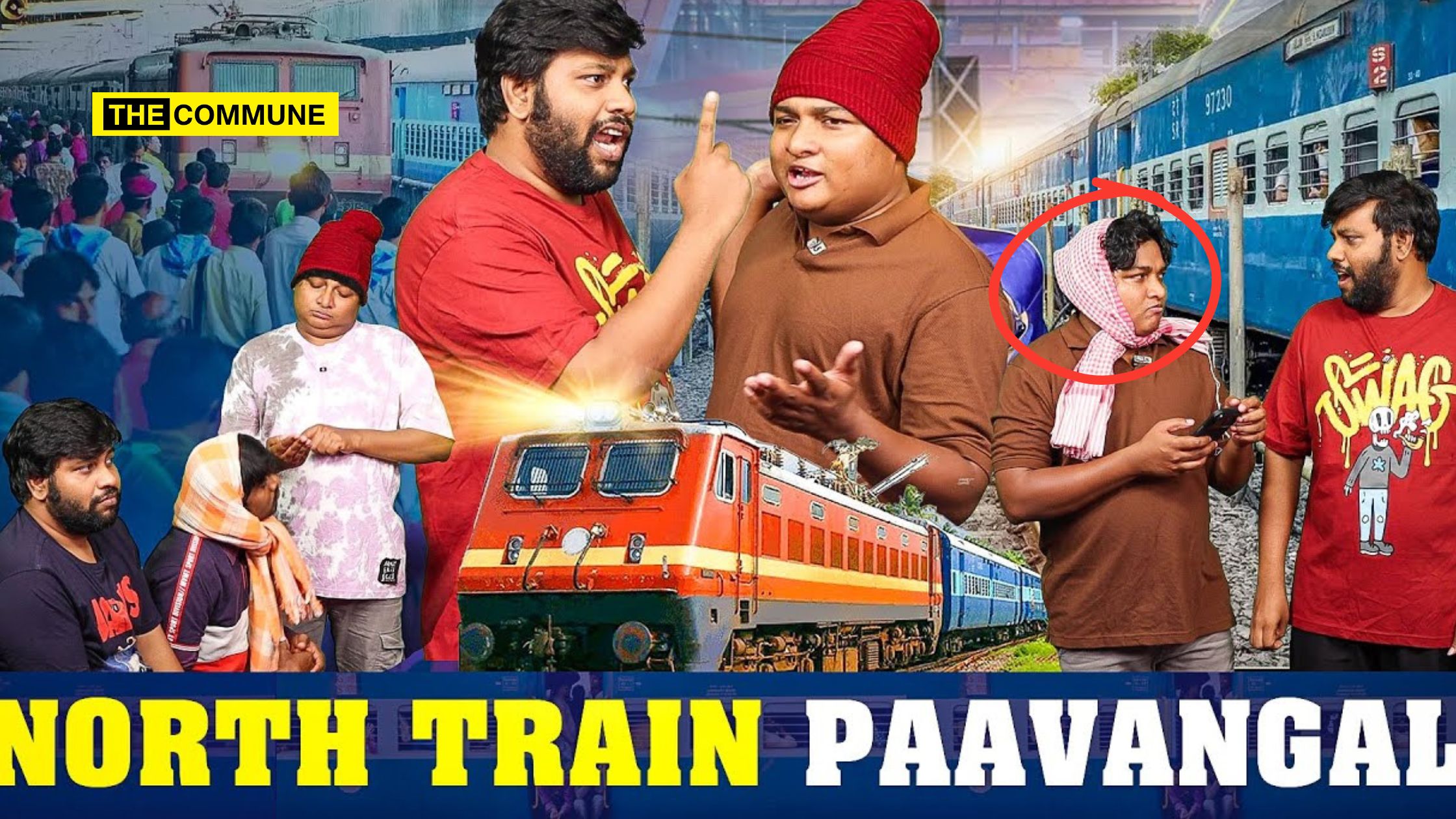
The YouTube channel Parithabangal has once again tried to peddle hate by portraying migrant workers from the North of India in an extremely poor light through their latest video, North Train Paavangal.

It seems as if they are taunting the Indians from the North of the country for their “uncivil” behaviour as the cause of the stampede that killed several at New Delhi railway station a few days ago.

In the video, we see the migrant workers from the north are stereotyped as consuming tobacco and spitting everywhere, overcrowding reserved train compartments, sitting on reserved AC coach seats despite having or not having a confirmed sleeper class ticket, listening to loud music without earphones, etc. The video also alleges that the north Indian workers have made themselves comfortable in regions like Madurai buying real estate and setting up their families and businesses.

The video does not evoke any sense of humour or laughter in any sense. And this is not the first time that the Parithabangal team has targeted migrant workers. About two years ago, they published a video titled “Vadakku Rail Pavangal” that had portrayed migrant workers from outside Tamil Nadu as unclean, unhygienic, lacking civic sense, and such.

The videos also portray the Tamilian passengers are very decent, well-behaved people with great order and as if they are perfect in following the rules and regulations.

2013 Little India Riots In Singapore

Let’s take a look back in history when migrant workers from Tamil Nadu primarily rioted in Singapore over the death of a fellow worker in an unfortunate traffic accident.

The 2013 Little India riot in Singapore, the country’s first major riot since the 1960s, erupted on 8 December 2013 after a fatal traffic accident involving a private bus and a 33-year-old Tamil Nadu construction worker, Sakthivel Kumaravelu. The incident began when Sakthivel, intoxicated, was asked to leave the bus for causing a disturbance. After alighting, he attempted to reboard the moving bus, lost his balance, and was fatally run over. Witnessing the accident, a crowd of migrant workers gathered, and anger quickly escalated.

Misinformation and rumours spread, including false claims that the bus timekeeper, Madam Wong, had pushed Sakthivel off the bus and that he had been left crying for help under the vehicle. The crowd, predominantly South Indian migrant workers, began attacking the bus, throwing bottles, bricks, and metal objects, shattering windows, and injuring Madam Wong and the driver, who hid inside to save themselves. Police and Certis officers arrived but were heavily outnumbered and attacked while trying to protect the bus and its occupants.

The riot intensified as the crowd flipped and burned vehicles, including police cars and ambulances, causing over $530,000 in damage. The rioters allegedly shouted, “Kill the woman, burn the bus“. Emergency responders faced communication challenges and a lack of coordination, delaying reinforcements. The Special Operations Command (SOC) eventually arrived in riot gear, dispersing the crowd and restoring order by 10:50 PM. In total, 62 people were injured, including 37 police officers. Authorities arrested 27 individuals, primarily Indian migrant workers, with some receiving prison sentences or deportation.

Parithabangal & Their Portrayal Of Migrant Workers

Almost always, the portrayal of North Indians in the Parithabangal videos is deeply classist and racist, blaming them for their own plight instead of acknowledging the system that keeps them in perpetual deprivation. As Tamil people, we understand this firsthand, having faced stigma in places where we migrated, such as Malaysia, and Singapore. This should make us more empathetic toward North Indians rather than looking down on them. After all, the 2013 Singapore riots give us a glimpse of how ‘poor and needy’ Tamil labourers behave when they migrate to other countries – Singapore, Malaysia, or the Middle East.

Subscribe to our channels on Telegram, WhatsApp, and Instagram and get the best stories of the day delivered to you personally.
If Aurangzeb Killed Sambhaji In Real, AR Rahman Kills In Reel With His Trash Music

Chhatrapati Shivaji Maharaj is well-known across the country but there is very little that we Indians know about his son, Chhatrapati Sambhaji Maharaj. Not many Tamils know that Chhatrapati Sambhaji Maharaj, or Shambhu Raje as he was dearly addressed, played a great role in restoring the Nataraja idol to Chidambaram Temple. Displaced during the Bijapur Sultanate’s ransacking in 1648, the idol was hidden and temple rituals halted. Sambhaji, with his Guru Muthaiya Dikshitar and official Gopala Dadasi, retrieved and reinstalled the idol, renovating the temple. A Tamil verse on a copper plate commemorates this event, marking Nataraja’s return in the month of Karthigai after 37 years.

After Shivaji Raje, Sambhaji Raje holds a significant place in the hearts of Marathas. His history was never told the way it should have been – be it his burning thirst to fulfill his father’s dream of Hindavi Swarajya, the barbaric torture he faced at the hands of the tyrant Aurangzeb, or how he refused to convert in order to save himself while being tortured.

The Film

Chhava, the film starring Vicky Kaushal (of Uri and Sam Bahadur fame) in the titular role with Rashmika Mandanna playing Maharani Yeshobai offers a powerful performance – bringing to life the characters they are playing. Vicky Kaushal looks like a lion all through the film, he roars (a lot, yes) but that can be forgiven. In fact, every single cast in the film has done an amazing job and has elevated the film – so much so that people were seen leaving the theatres weeping. The film, while not so tight in its story, portrays the Marathas in a fabulous light – that they truly deserve. The fight scenes, the iconic guerilla tactics of the Marathas, and the legendary scene where Maharaj fights a lion, have been portrayed exceptionally well. The film also shows us a glimpse of how talented Shambhu Raje was – he speaks in English in one scene with a British officer and we also get to see how rich the empire was, the grand Rajyabhishek and how prosperous our country was in those days.

The story does not include too much about Shambu Raje’s life but given the time limit, the makers try to do as much justice as they can. Some of the negatives include the heavily Urduized dialogues, the lack of Maratha accent or dialogues in the film, and the fact that Aurangzeb praised Chhatrapati Shivaji Maharaj at the beginning of the film and does the same when Shambhu Raje passes – this bit particularly felt a bit off. There is history of Aurangzeb calling Shivaji Maharaj amountain rat“, but whether he praised him is kind of baffling. For a tyrant who found pleasure in killing and torturing people, no matter how great the enemy, would he have praised him? I think not. 

In the film, they also do not show much of the torture that was meted out to Shambhu Raje – the peeling of the skin, the beheading, the display of the head in public, the mutilation of the body and such. In my opinion, it was kept clean for family audiences and today’s generation of moviegoers are unable to stomach what had happened in the past.

The first half is a bit slow, and the real action starts in the second half. The film truly hit the core of the audience’s hearts the moment Shambu Raje and his camp came to know of the betrayal by his own relatives which leads to the Mughals catching them unprepared for war. The way Raje fights singlehandedly facing a thousand Mughal soldiers – that moment you see the real Sambhaji Maharaj, the way he fights on despite knowing he has been cornered, and his captivity and subsequent death are only moments away. You are left in awe of the hero that he was and the respect he deserves from us. From the time he is chained and brought in front of Aurangzeb till the last minute of the film where he is shown to die, is what takes the film to another level. Maharaj’s interactions with the Chandogamatya Kavi Kalash in the climax leave you with a lump in your throat.

Deplorable Music By A So-CalledLegend’

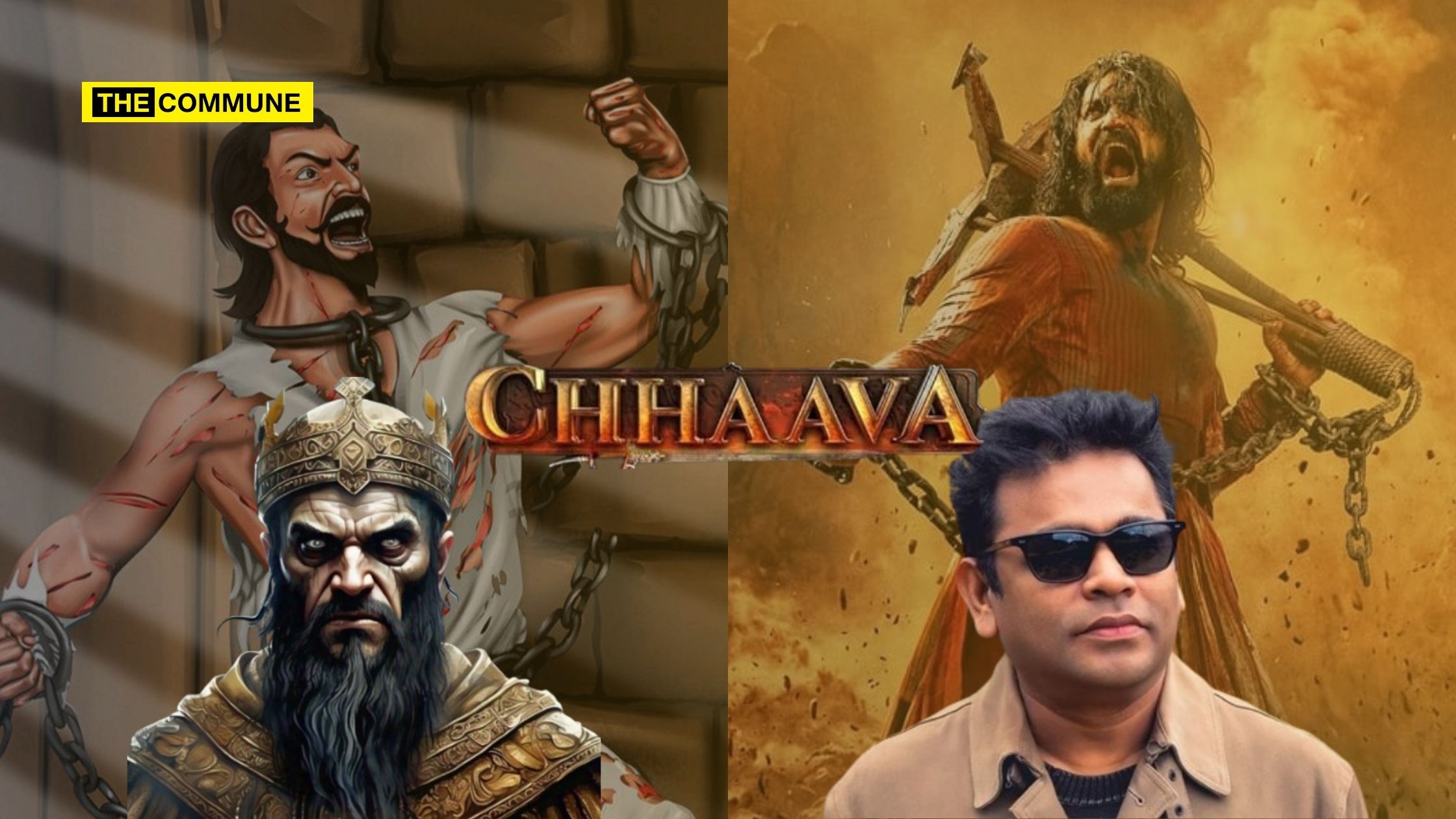
While Aurangzeb killed Shambhu Raje in real life, it waslegendary music composerAR Rahman who killed the film and the majestic hero in reel. AR Rahman was the biggest misfit in the film, and he destroyed what could have been an epic that would have remained in public memory for a long time.

Rahman’s music for Chhaava was a shockingly below-average and out-of-tune soundtrack for a period film that deserved so much more. Rahman’s work here isn’t just disappointing; it’s downright pathetic, and it single-handedly kills the soul of what could have been a powerful historical epic.  

No Marathi Touch

Let’s start with the most glaring issue: the music feels completely disconnected from the Maratha culture and the 17th-century setting. For a film rooted in Maharashtra’s rich history, where was the regional flavor? There was absolutely no hint of traditional Marathi musical essence in any part of the film, maybe a Dhol Tasha in the passing just happened by mistake.

What we got to listen to was a bizarre mishmash of Arabic tunes, Middle Eastern beats, and jarring electronic elements that feel like they belong in a 2010s rom-com or a Spanish fiesta, not a period drama about Chhatrapati Sambhaji Maharaj. The background score is so out of place that it actively distracts from the film’s narrative, pulling you out of the experience every time an ill-fitting tune kicks in.  

Did the filmmakers not update AR Rahman that the film was about Sambhaji Maharaj and not Aurangzeb?

Why Does Rahman Even Sing?

Let’s take Aaya Re Toofan which was supposed to be a powerful, anthemic track to rally the spirit of Shambhu Raje and also the Maratha warriors. Instead, it feels like a half-baked attempt that lacks the punch and grandeur it needed. Rahman’s decision to sing the song himself is baffling, especially when someone like Sukhwinder Singh could have elevated it to another level. The song tries to tick Marathi music checkboxes but does so in the most forced and unconvincing way.

We are forced to compare this to Malhari from Bajirao Mastani, which effortlessly captured the Maratha spirit and became an instant classic. Aaya Re Toofan falls flat, and its inability to resonate with the audience is a testament to Rahman’s failure here.  

Then there’s Jaane Tu, a song that feels like it was plucked straight out of a mediocre rom-com with its piano crooning in the background. The tune is forgettable, the lyrics are uninspired, and even Arijit Singh’s voice can’t save it. This is supposed to be a moment where Maharani Yesubai (played by Rashmika Mandanna) worships the return of her warrior king, but the song lacks any emotional depth or cultural authenticity. It’s a far cry from the kind of music that should accompany such a poignant scene in a historical drama.  

And guess what, you even get to hear a rap song! Imagine being this disconnected to the soul of the film!

Mughal Movie Or Maratha Movie?

Rahman’s background score is equally atrocious. The moment Akshaye Khanna, playing Aurangzeb (he nailed the role beyond perfection), delivers his dialogue, you’re suddenly hit with a Middle Eastern tune that feels more suited to a desert caravan than a Maratha court. And then, out of nowhere, electronic elements creep in, completely ruining the mood. The sound design is so inconsistent and jarring that it takes away from the film’s otherwise well-executed action sequences and visuals. The war scenes, which should have been elevated by a rousing score, are instead undermined by Rahman’s insipid compositions.  

Moments that called for an upbeat, rousing BGM were instead met with sounds that felt completely out of place. The moment where Shambhu Raje sees the betrayers deserved another fitting BGM that would move audiences to tears and fury, but we hear nothing. The horror of the barbaric torture is not brought out well by the background score – it seems to fit a film on the Mughals, rather.

Could Someone Else Have Done A Better Job?

It’s baffling why the filmmakers didn’t opt for the sons of the soil, Ajay-Atul, who have repeatedly proven their mastery over Marathi music and larger-than-life soundscapes. Their work in films like Sairat and Natrang showcases their deep connection to Marathi culture, and they could have brought the authenticity and grandeur that Chhaava desperately needed. Even a bad film like Panipat, which had its flaws, managed to deliver memorable songs like Mann Mein Shiva that resonated with the audience. In contrast, Chhaava’s soundtrack is utterly forgettable.  

Lazy Attempt & Trashy Music

Rahman’s inability to capture the essence of the period is even more glaring when you consider the cultural richness of the source material. Rahman’s music fails to transport you to the 17th century. Instead, it feels like a lazy, half-hearted attempt that lacks proper historical research and cultural sensitivity. Rahman seems to fit in only with Mughal period films, middle Eastern origin/desert cult stories may be his forte. Being from the south, he has absolutely no inkling of what stature Shambhu Raje had, and his place in the hearts of the people – maybe Rahman must stick to his favourite Sufiyana style music.

Shameful

The film itself has its merits – brilliant performances, astounding cinematography, well-shot war sequences, costumes, etc. But all of this is overshadowed by Rahman’s disastrous music. For a composer of his stature, this is nothing short of shameful. Chhaava deserved better, and so did the audience.

A man who was the lion’s cub, a king who worked towards Hindavi Swarajya, the man who prayed for his stempmother’s wish to unseat him to come true, the man who refused to let out even a squeal of pain when tortured in the most heinous and barbaric methods, the man who refused to convert in order to save his life despite being skinned alive, the man who refused to give in to the most dastardly tyrant that ever lived – Chhatrapati Sambhaji Maharaj deserves greater respect and a magnificent portrayal and even more thunderous music to showcase his lived history – that AR Rahman utterly failed to do justice to, even by an inch or rather, a note.

A.R. Rahman’s lifeless, out-of-touch-with-reality compositions are the biggest disservice there ever was to the Maratha legacy and to Shambhu Maharaj and a slap in the face to anyone who expected better from a composer of his caliber. This isn’t just a disappointment; it’s a betrayal of the trust audiences have placed in Rahman over the years and for killing Shambhu Raje once again. 

Subscribe to our channels on Telegram, WhatsApp, and Instagram and get the best stories of the day delivered to you personally.
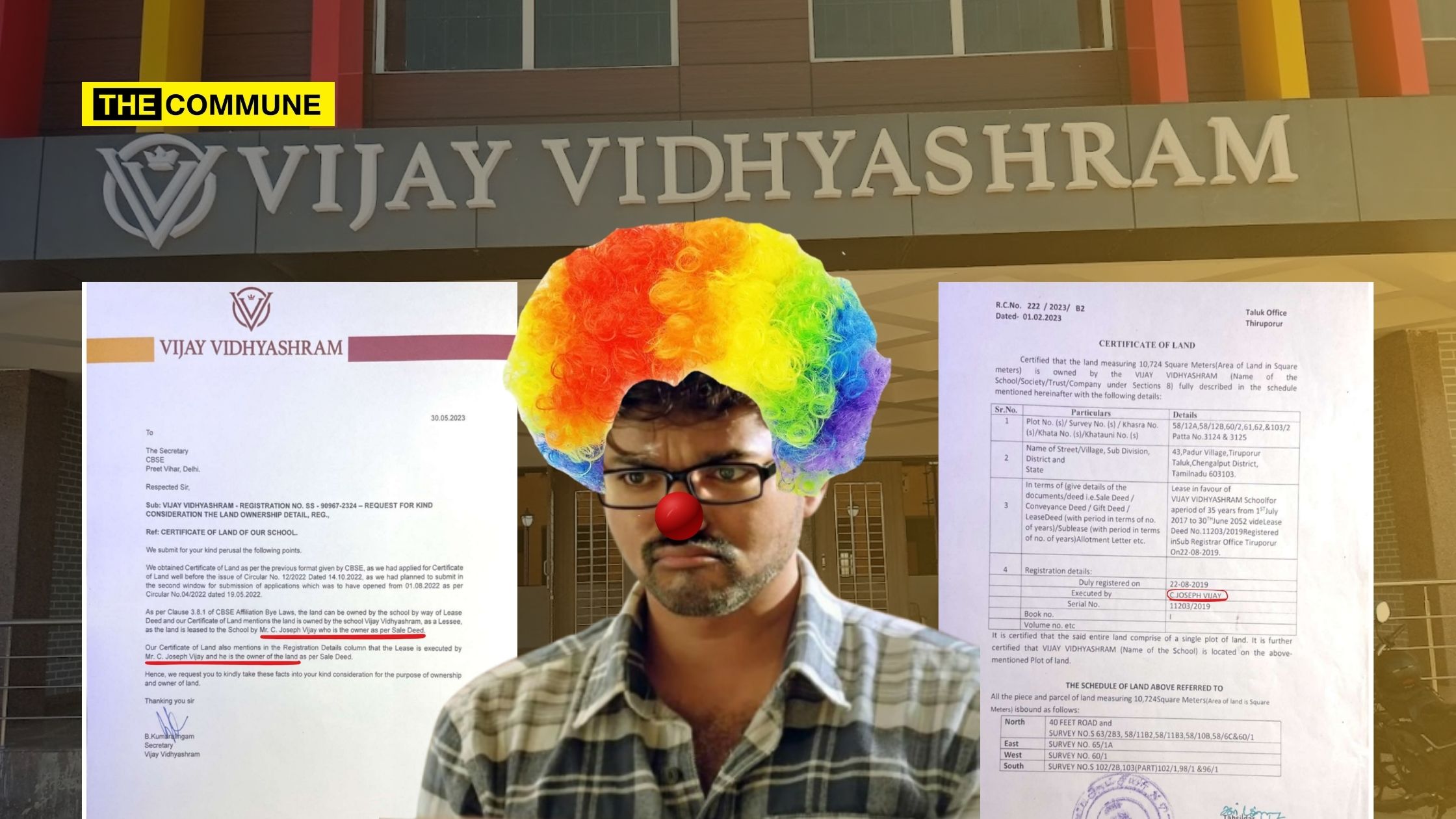
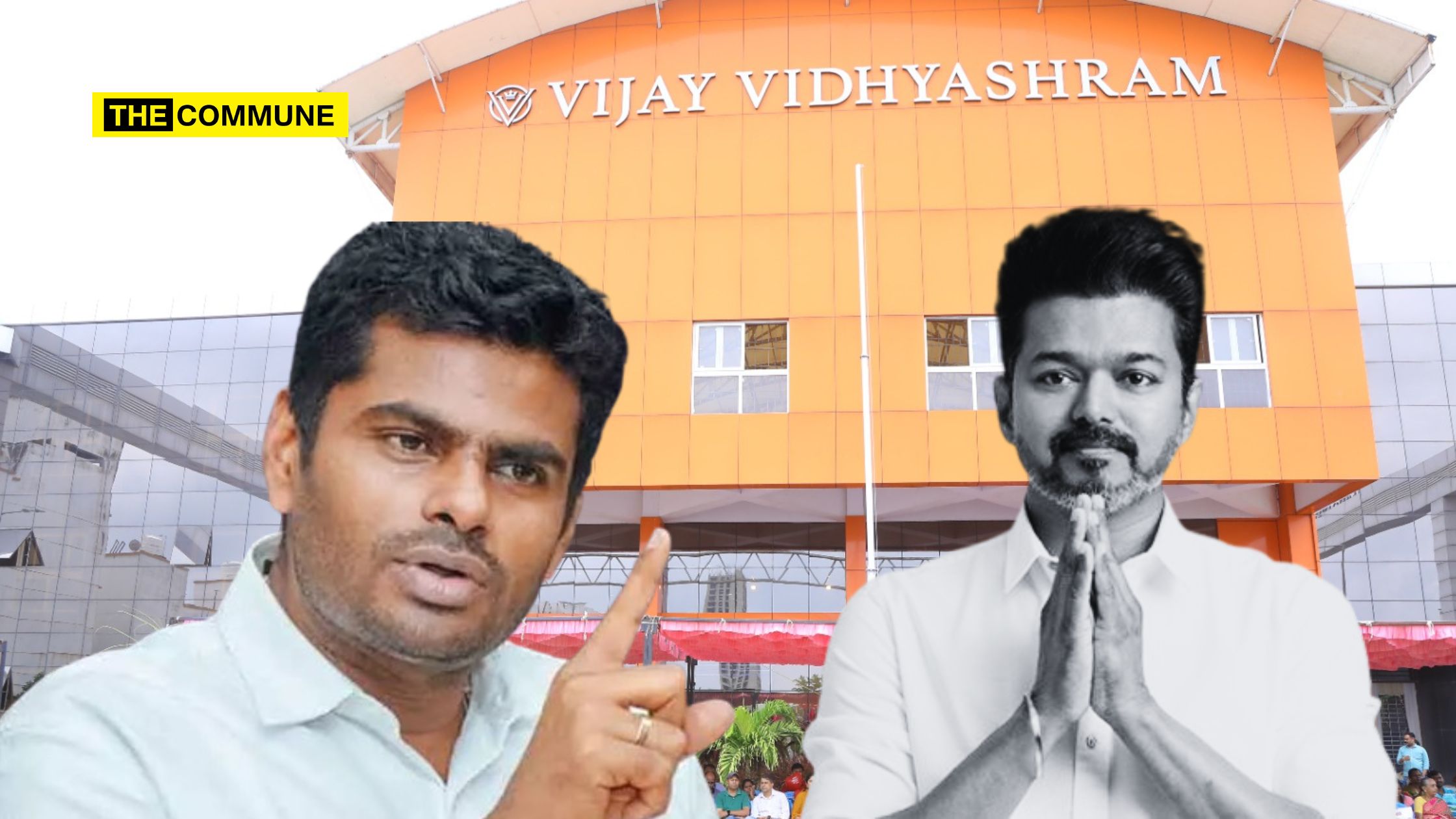
Hypocrisy Exposed: Part-Time Politician Actor Joseph Vijay Who Opposes 3 Language Policy In TN Govt Schools Runs CBSE School That Follows 3 Language Policy, Here’s The Proof

The hypocrisy of actor and part-time politician C. Joseph Vijay has been exposed, as it has come to light that he operates a CBSE school in Chennai that adheres to the very three-language policy his party claims to oppose.

While his party vehemently opposes the three-language policy introduced through the National Education Policy (NEP), it has now come to light that Vijay himself runs a CBSE school in Chennai that follows the very policy he condemns.

Vijay’s Opposition To 3 Language Policy

Criticizing the Central Government for introducing the three-language policy through the National Education Policy (NEP), Joseph Vijay stated on February 16, 2025, “Enforcing the three-language policy is nothing but an attempt to strip states of their autonomy.”

On November 3, 2024, Tamilaga Vettri Kazhagam (TVK) reaffirmed its commitment to Tamil Nadu’s two-language policy, asserting that the Union Government’s efforts to impose a third language in the state would never succeed. The party emphasized in its statement, “We strongly oppose the three-language policy and will continue to advocate for Tamil and English as the state’s official languages.”

During TVK’s first state conference in October 2024, Vijay reiterated his party’s unwavering support for the two-language policy.

However, his claims of championing Tamil language rights have been completely undermined by the revelation that he operates a CBSE school in Chennai, which follows the very three-language policy he publicly opposes.

Vijay The Hypocrite

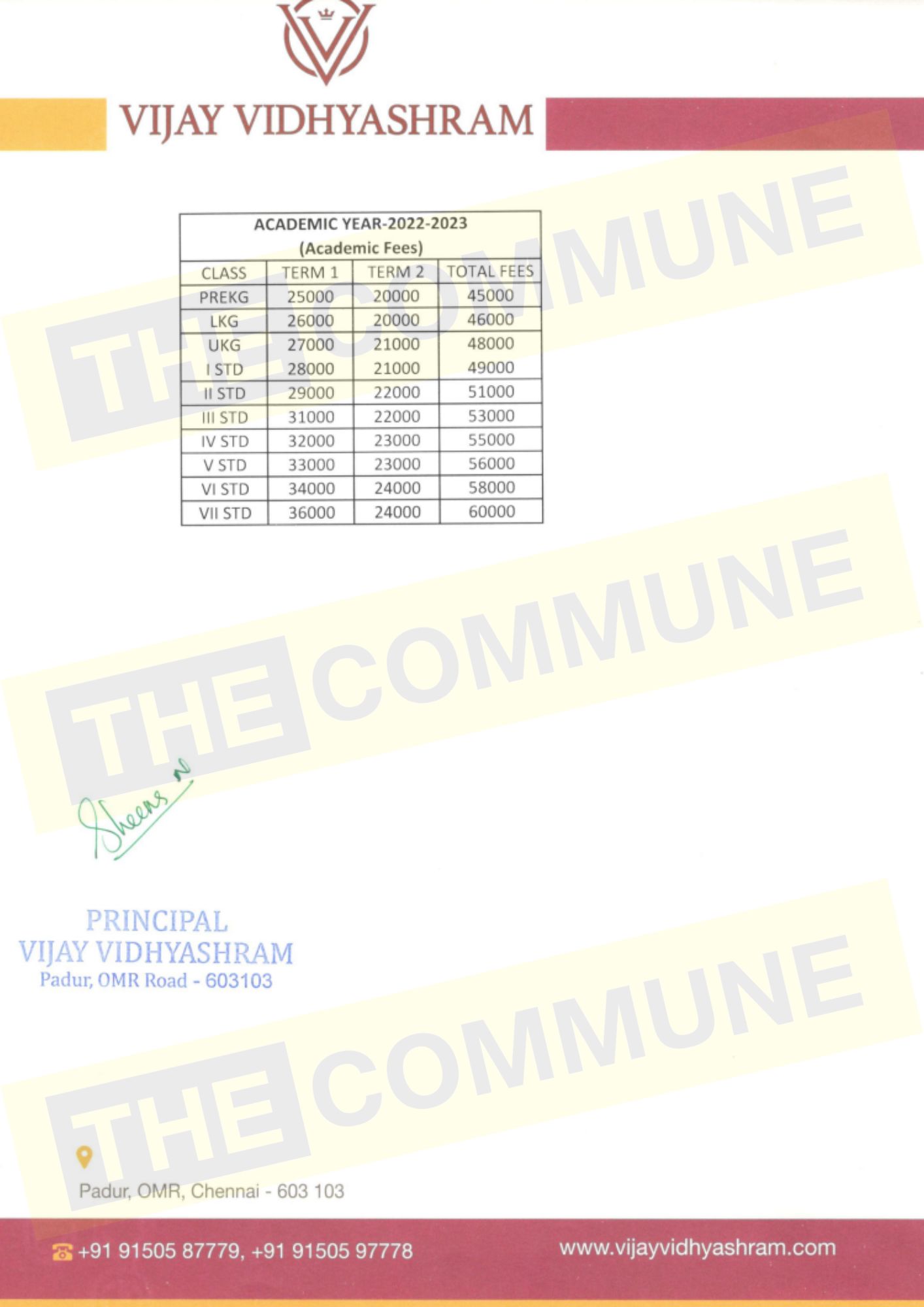
Vijay Vidyashram, an English-medium CBSE school located in Padur near Chennai, follows the three-language policy.

In CBSE schools of Tamil Nadu, students must study English as their primary language, while the second language can be selected from Hindi, French, German, or any other regional language offered in the state. In Chennai, most of the CBSE schools mandate a second language choice between Tamil, Hindi, or French. Additionally, a third language is also required until Class 8 (which is usually Hindi), after which students continue with only two languages. If Tamil is chosen as the second language from Classes 6 to 8, it continues as the second language through to Classes 9 and 10, while the same applies for Hindi if selected as the second language.

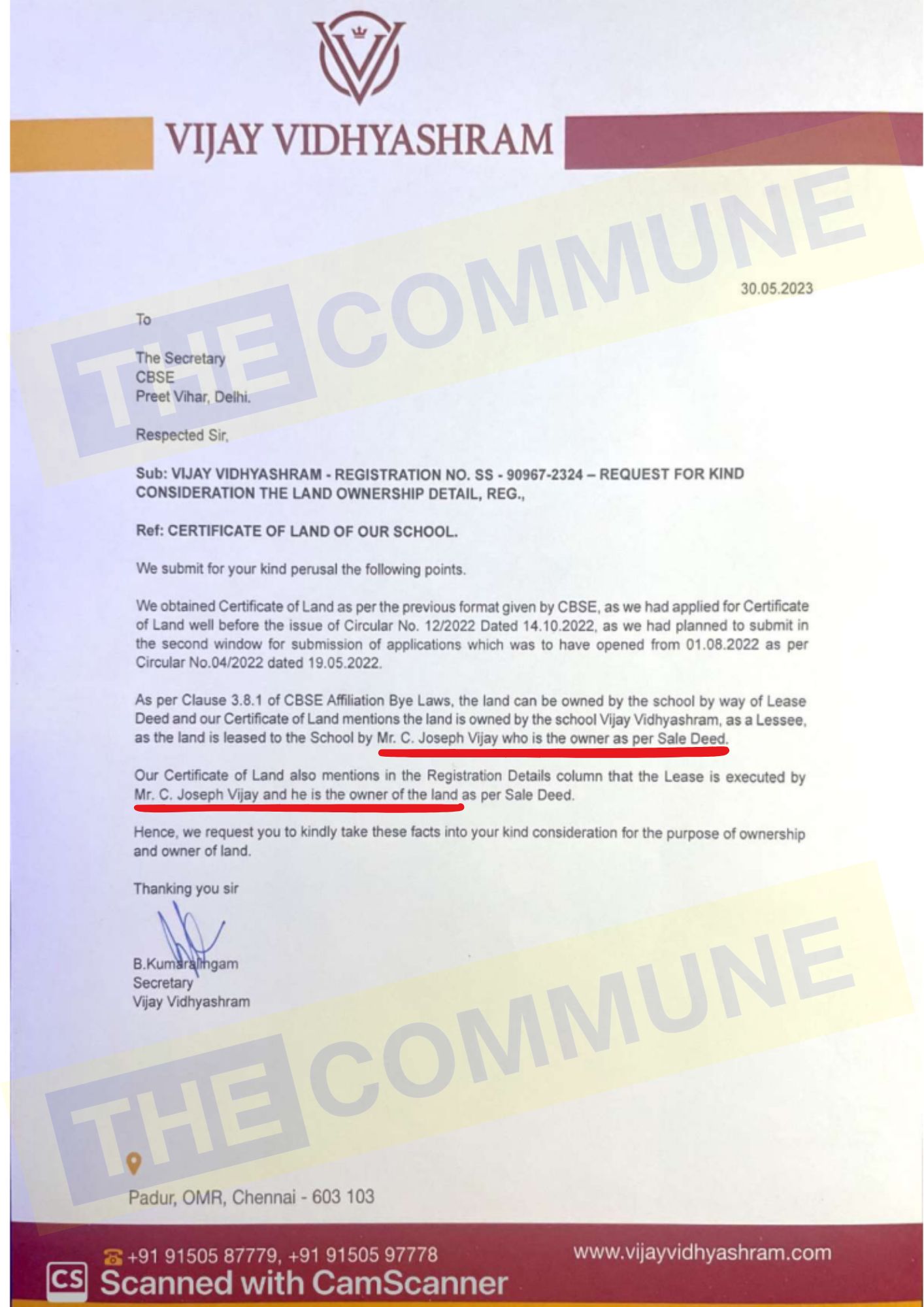
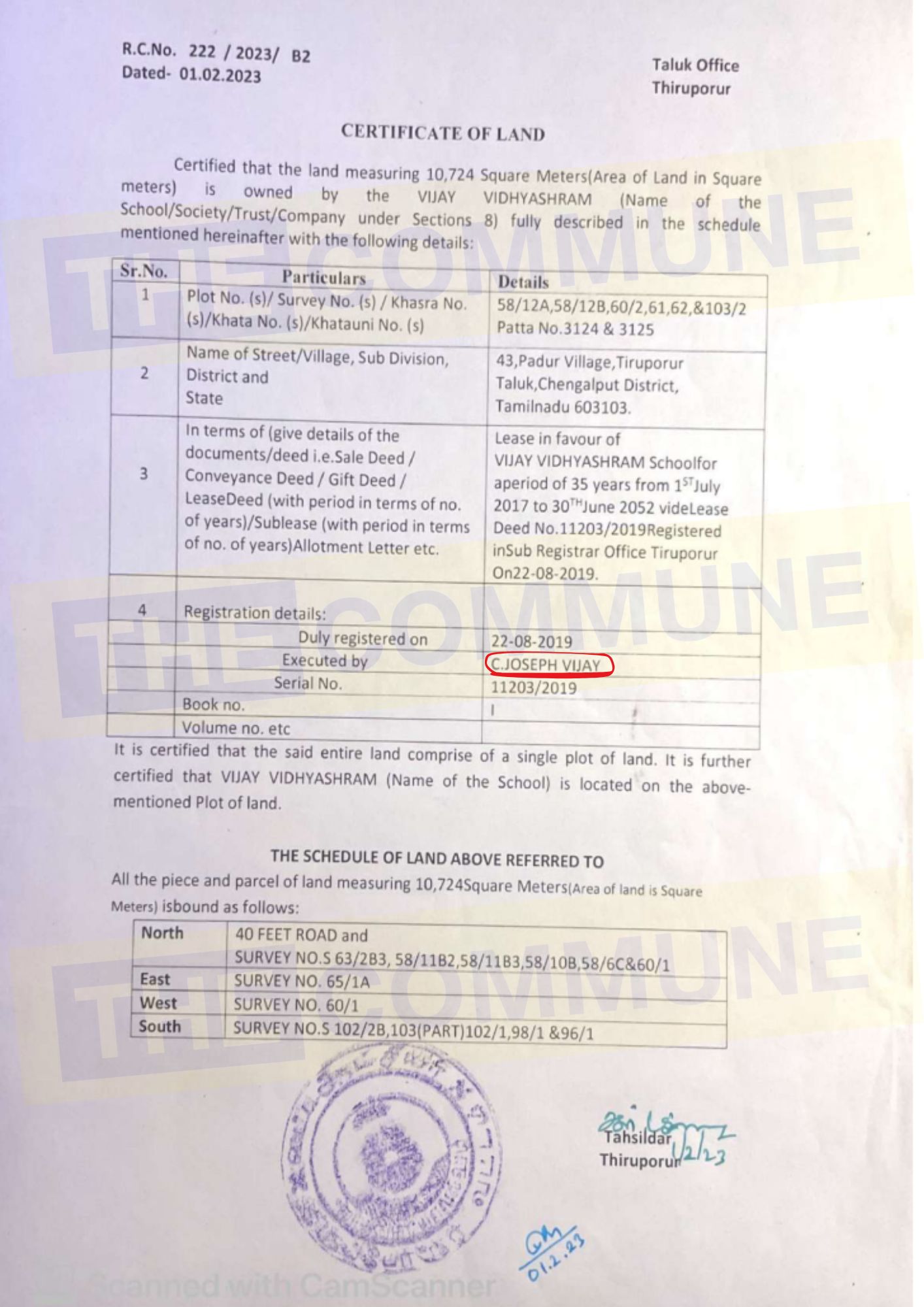
The land on which Vijay Vidyashram is built is owned by C. Joseph Vijay, as documented in the Sale Deed. He has leased the 10,724-square-meter property to the school. The Certificate of Land confirms that Vijay Vidyashram holds the land, and the lease agreement was made in favor of the school by Joseph Vijay.

BJP leader Annamalai has pointed out this contradiction, highlighting that Vijay, who leads Tamilaga Vettri Kazhagam (TVK), operates a CBSE school that adheres to the very language policy he publicly opposes. Annamalai stated, “TVK chief Vijay runs a CBSE school in Padur named Vijay Vidyashram. The land is owned by C. Joseph Vijay, who leased it for 35 years, from 2017 to 2052, to a trust registered under the name of SA Chandrasekhar. The school is operated under this trust.”

The blatant hypocrisy of C. Joseph Vijay cannot be ignored. While he vocally criticizes the three-language policy and presents himself as a champion of Tamil, the inconvenient truth is that he runs a CBSE school in Chennai that directly follows the very policy he claims to oppose. His attempt to position himself as a defender of Tamil language rights crumbles in the face of this exposed contradiction.

Subscribe to our channels on TelegramWhatsApp, and Instagram and get the best stories of the day delivered to you personally.

“TVK Chief Vijay Runs A CBSE School Vijay Vidyashram In Padur”, Says BJP TN Chief Annamalai

The ongoing debate surrounding the new education policy has sparked significant controversy in Tamil Nadu politics. While the Tamil Nadu government seems to not want to take any action on the matter, the Central government is accused by the Dravidianists of trying to exert influence over the education funds allocated to the state.

BJP state president Annamalai earlier released a video addressing the issue, accusing the DMK-led government of hypocrisy regarding its stance on teaching Hindi in schools. Annamalai pointed out that, despite the state’s resistance to implementing the trilingual education policy, schools run by DMK ministers and officials still teach Hindi. This, according to him, highlights a contradiction in the government’s position.

Speaking to reporters at the BJP headquarters in Kamalalayam on 18 February 2025, Annamalai emphasized the growing preference for private schools over government institutions. He stated that CBSE students are taught Hindi, while matriculation school students are given the option of choosing other languages. However, he pointed out that government schools continue to teach only two languages, which has led many parents to move their children to private schools. Annamalai suggested that this shift is inadvertently creating a ₹30,000 crore market for private education, something the DMK government might not have foreseen.

The controversy also extended to prominent political figures. Seeman, leader of the political party Naam Tamilar Katchi, had advocated for learning Hindi as a third language in his 2016 election manifesto, a position that was at odds with the DMK’s current stance on the issue.

Annamalai also highlighted the case of Vijay, leader of the Tamilaga Vettri Kazhagam, who operates a private CBSE school in Padur called Vijay Vidyashram.

He said, “TVK chief Vijay runs a CBSE school in Padur. It is called Vijay Vidyashram. See the name, C Joseph Vijay. Who is this C Joseph Vijay? His land has been leased for 35 years from 2017 to 2052 to a trust. The trust is registered under the name of SA Chandrasekhar and the school run by this trust is Vijay Vidyashram. What do some political leaders think – they run CBSE schools and Hindi is taught in these schools, and their own children learn French. Anbil Mahesh Poyyamozhi’s son is studying French. What do these politicians think when they say government school students should only study 2 languages – be it TVK leader Vijay or Seeman or TN’s Education Minister Anbil Mahesh? I am not delving into the DMK family-run Sunshine school.”


View this post on Instagram


A post shared by Kumudam News (@kumudamnews)

This, according to Annamalai, adds fuel to the debate regarding the DMK government’s position on the trilingual education policy.
In addition to this, DMK MP Kalanidhi Veeraswamy runs a matriculation school called Chennai Public School. In this school, students have the option to choose English as their first language, while other languages such as Hindi, French, and Tamil are offered as second languages.
Annamalai questioned whether political leaders running schools with CBSE curricula were unknowingly supporting the very policy they publicly criticize.

(With inputs from Tamil Samayam)

Subscribe to our channels on Telegram, WhatsApp, and Instagram and get the best stories of the day delivered to you personally.
7 Instances Of Attacks On Hindus By Islamists For Reciting Hanuman Chalisa

A few days ago, members of the Hindu Swabhiman organization were attacked by a Muslim mob in Jamui, Bihar, while returning from a Hanuman Chalisa recitation. This is not the first time that this has occurred. Over the past few years, there have been multiple incidents of attacks on Hindus or Hindu groups reciting the Hanuman Chalisa across India. 

This report highlights seven major incidents of attacks by Muslim mobs on individuals or groups reciting the Hanuman Chalisa from 2022 to 2025.

#1 Jamui, Bihar

In Jamui, Bihar, on 16 February 2025, a group of Hindus returning from a Hanuman Chalisa recitation were attacked by a mob. The attack took place as they passed through a Muslim-majority area near a mosque. The mob pelted stones, damaged vehicles, and injured several individuals, including women and children. Activists from the Hindu Swabhiman organization, who were part of the group, were also injured. The police responded, and internet services were suspended in the area. Several individuals were arrested, and a case was registered in connection with the attack.

#2 Auto Driver Threatens Temple Over Hanuman Chalisa in Bilaspur

In January 2025, auto driver Ishaq Khan in Bilaspur, Chhattisgarh, threatened a priest and sevadaar at Dakshin Mukhi Hanuman Mandir after Hanuman Chalisa was played on a loudspeaker. Khan made objectionable comments about Hindu deities and Lord Ram, and threatened to damage the temple and remove the loudspeaker. The incident, captured by CCTV, angered local Hindu groups, prompting a protest. The police quickly arrested Khan, who claimed the loudspeaker disturbed his sleep.

#3 Hindu Shop Owner Attacked In Bengaluru For Playing Hanuman Chalisa

In March 2025, Mukesh Kumar, a Hindu shop owner in Bengaluru’s Siddanna Galli, was attacked by a group of youths for playing Hanuman Chalisa and other devotional songs in his shop near a mosque. The altercation began when the accused, identified as Suleiman, Shahnawaz, and Rohit, objected to the music during the Azaan time. The situation escalated into physical violence, with the attackers dragging Mukesh out of his shop and assaulting him. The victim, who had faced extortion attempts by the accused previously, filed a complaint. An FIR was registered after a protest by local traders, and three main accused were arrested.

#4 Stone Pelting Over Hanuman Chalisa In Vadodara

A clash broke out in Ektanagar, Vadodara, on 13 March 2024, after a Muslim crowd protested the playing of Hanuman Chalisa at a local temple. The argument escalated into a fight, with stone pelting and damage to loudspeakers. Three people—two Hindus and one Muslim—were injured. The police arrived swiftly, arresting three individuals, including both Hindu and Muslim youths, and registering an FIR against seven people.

#5 Hindu Man Attacked In Bhavnagar Over Hanuman Chalisa Dispute

Rajendrabhai Chauhan, a Vishwa Hindu Parishad member, was attacked in Bhavnagar on 1 February 2024, by Sahil Padarshi and Shaukat Mankad, allegedly over a dispute regarding playing Hanuman Chalisa. Chauhan claims the attack followed a prior altercation over the religious chant, which had been turned off by the accused months earlier. The attackers, armed with an iron pipe, struck Chauhan in the head, causing injury. The accused’s father, Munna, later threatened Chauhan. Police have registered an FIR and are investigating, though the incident’s connection to Hanuman Chalisa was not mentioned in the FIR.

#6 Bajrang Dal Workers Attacked In Saharanpur Over Hanuman Chalisa

In Mandebas village, Saharanpur, Uttar Pradesh, Bajrang Dal workers were attacked on 20 June 2023, after reciting Hanuman Chalisa at a local temple. The attackers, including Salim, Alijan, and others, allegedly used sticks, stones, and bricks, with one assailant, Azam, reportedly firing a shot. Three victims, including a disabled person, were injured.

The Bajrang Dal workers filed a complaint, accusing the attackers of attempting to kill them. The police, however, claim the incident was due to a DJ dispute.

#7 Bajrang Dal Workers Attacked in Haldwani Over Hanuman Chalisa Recitation

In Haldwani, Uttarakhand, Bajrang Dal workers were attacked after reciting Hanuman Chalisa at a local temple. The workers, Rakshit, Dev, and Manas, were returning home when a group on motorcycles attacked them at Sheeshmahal gate. Local residents apprehended three suspects, and an angry crowd gathered at the police station. Hindu organizations, led by Mayor Jogendra Rautela, held a panchayat demanding swift arrests. The police had arrested 10 suspects.

Subscribe to our channels on TelegramWhatsApp, and Instagram and get the best stories of the day delivered to you personally.
Madras HC Orders CBI Probe Into TN’s ₹5,832 Crore Illegal Beach Sand Mining Scandal

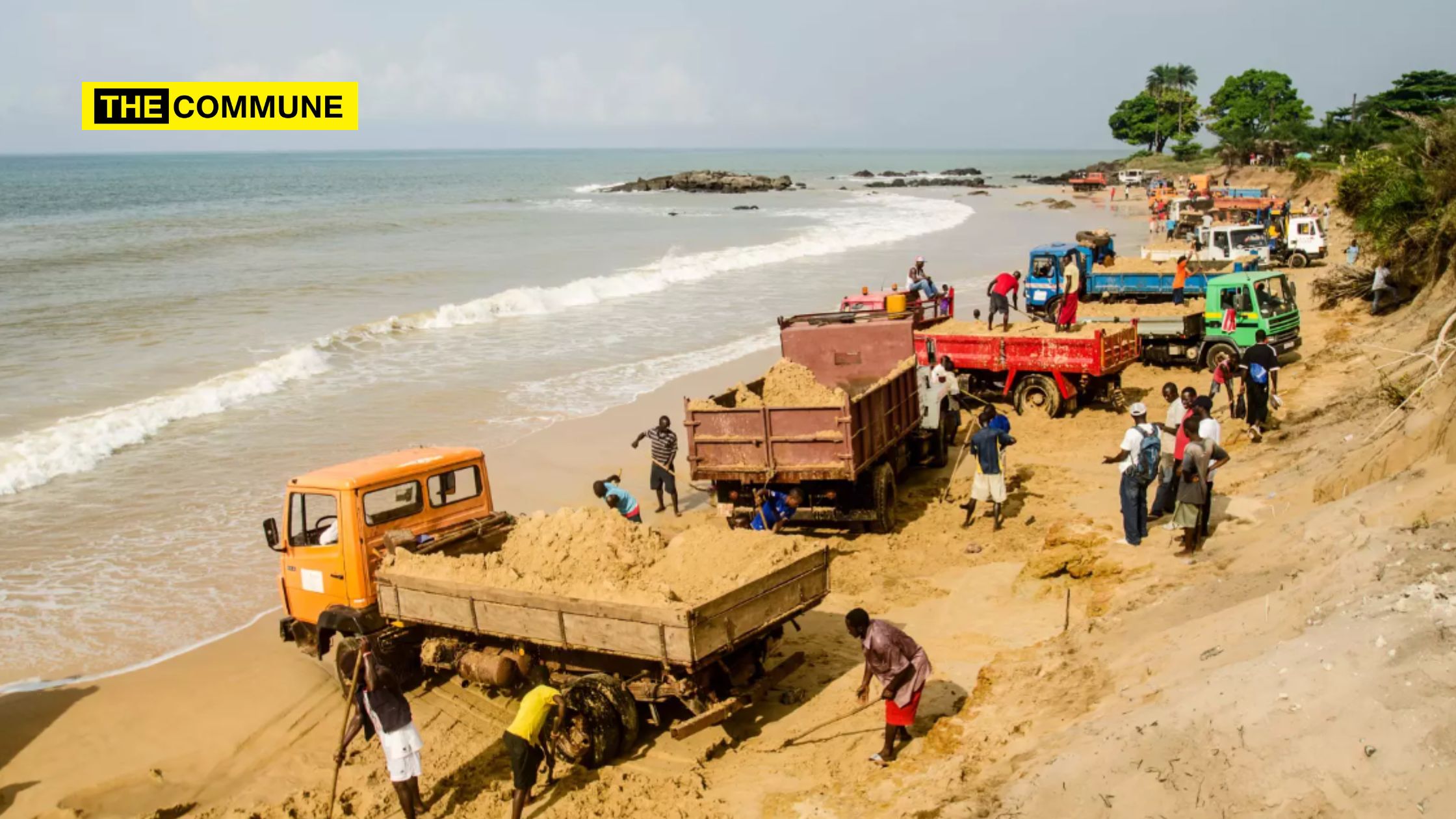
On 17 February 2025, the Madras High Court ordered a Central Bureau of Investigation (CBI) probe into the massive illegal mining of beach sand minerals (BSM) in Tamil Nadu. The Court sought to uncover any potential links between politicians, government officials, and private miners in this unlawful activity that has persisted since 2000-01, despite the State’s blanket ban on beach sand mining in 2013.

Justices S.M. Subramaniam and M. Jothiraman emphasized that such a serious illegal operation, particularly involving the mining of monazite—a radioactive mineral considered an ore of thorium—poses national security risks. The judges believed that such a large-scale crime could not have been carried out without “collusion, corruption, and complicity” among various political figures, government bodies, and private mining entities.

The Court instructed that all pending cases related to illegal beach sand mining in Tamil Nadu be transferred to the CBI. The CBI was directed to form as many investigation teams as necessary, ensuring the inclusion of officials with integrity and relevant expertise. The CBI Director was also mandated to regularly monitor the investigations.

Justice Subramaniam, who authored the judgment, stated that the CBI must investigate whether private miners had been exporting monazite to foreign countries, which could pose a serious threat to national security. Additionally, the Court ordered the Centre to examine the financial transactions of BSM miners and exporters and to initiate inquiries by the Directorate of Enforcement (ED), the Income Tax Department, and Customs officials.

The judges further clarified that disciplinary actions should be taken against any government officials involved in the illegal activities, based on the CBI’s investigation. They also noted that anyone could file a contempt of court petition should any of their orders be violated. This ruling came as part of a suo motu public interest litigation initiated by the court in 2015.

The Division Bench upheld the validity of the reports submitted by IAS officers Gagandeep Singh Bedi, Satyabrata Sahoo, and amicus curiae V. Suresh concerning illegal mining activities. The Court directed the State government to proceed with the actions it had initiated to recover ₹5,832.29 crore in royalties and penalties for the beach sand illegally mined prior to the ban.

The Bench further ordered that the approximately 1.4 crore tonnes of raw beach sand, semi-processed sand, and processed minerals currently stored in sealed warehouses and factories of private miners be immediately handed over to Indian Rare Earths Limited (IREL), a central government entity authorized to handle all beach sand minerals, including monazite.

The 2013 ban on mining was enforced during the tenure of former Chief Minister Jayalalithaa, following a letter from then Thoothukudi Collector Ashish Kumar to Chief Secretary Sheela Balakrishnan, highlighting large-scale illegal mining activities. Subsequently, the government formed a special team, led by senior IAS officer Gagandeep Singh Bedi, to conduct an in-depth investigation and submit a report.

Bedi’s team uncovered illegal mining of 10.29 lakh tonnes of raw sand from 66.18 hectares in Thoothukudi, 90.29 lakh tonnes from 412.99 acres in Tirunelveli, and 54,446 tonnes from 4.05 acres in Kanniyakumari. Around the same time, the High Court began monitoring the issue through a suo motu Public Interest Litigation (PIL).

In 2017, following a complaint by V. Suresh regarding ongoing illegal mining despite the ban, the State government appointed a team headed by Satyabrata Sahoo to conduct another investigation. This team discovered 1.55 crore tonnes of beach sand minerals (1.37 crore tonnes in Tirunelveli, 12.09 lakh tonnes in Thoothukudi, and 5.93 lakh tonnes in Kanniyakumari) stored by private miners in their warehouses and factories.

However, the miners had only declared 85.58 lakh tonnes of sand (64.59 lakh tonnes in Tirunelveli, 13.91 lakh tonnes in Thoothukudi, and 7.07 lakh tonnes in Kanniyakumari). This revealed a discrepancy of 69.89 lakh tonnes, according to Sahoo’s 2018 report. He also confirmed the presence of monazite tailings among the materials held by private miners.

Following his second inspection in 2021-22, Sahoo submitted a new report indicating that despite his initial assessment of 1.55 crore tonnes of beach sand stocks in 2018, and the subsequent sealing of all the warehouses, approximately 16.04 lakh tonnes had gone missing, leaving only 1.39 crore tonnes. Additionally, during his 2021-22 inspection, he discovered new stocks amounting to 6.62 lakh tonnes that had not been included in the 2018 evaluation.

Meanwhile, Suresh conducted his own investigations into the extent of illegal mining and the financial losses the State had incurred due to the actions of private miners. He submitted three detailed reports, which were accepted by the current State government under Chief Minister M.K. Stalin. The government subsequently decided to recover ₹5,832.29 crore from the miners.

To represent the State in the suo motu PIL and defend the writ petitions filed by private miners challenging the recovery notices for royalty and penalties, the State appointed senior counsel Arvin P. Datar, with assistance from Additional Government Pleader B. Vijay.

In this case, the analysis of the Royalty Settlement proceedings reveals discrepancies in the data provided by V.V. Mineral. The company initially declared that only 1,765 MT of Garnet and Ilmenite were exported during the 2005-2006 to 2007-2008 period. However, their own statement made to the Taluk Level Committee of Tirunelveli in June 2016 contradicts this, as they claimed to have exported 8,83,865 MT of beach sand minerals (BSM) during the same period. This inconsistency raises serious concerns about the legality of the process, particularly given the absence of Central Government approval for including certain minerals in the mining lease. The actions of the State Government in granting such a lease to the 8th Respondent must be scrutinized to determine if there was any political involvement or corruption, and whether government officials and the lessees were complicit.

For instance, according to data published by the Indian Bureau of Mines (IBM) in August 2013, the sale price of Garnet in Tamil Nadu was listed as ₹377 per MT, significantly lower than the prices in Andhra Pradesh (₹8,833 per MT) and Odisha (₹5,500 per MT). The export price of Garnet, however, ranged from ₹15,000 to ₹18,000 per MT, indicating substantial benefits to the lessees from this undervaluation.

The Department of Atomic Energy (DAE) has explicitly denied granting permission for the inclusion of Monazite in the mining lease, yet the State Government allowed this without Central Government or DAE approval. This violation of the Atomic Energy Act and its rules is a matter of concern. The role of DAE officials in granting handling licenses, as well as their failure to act despite widespread reports of monazite being handled by private players, raises further questions. Why did the monitoring mechanisms fail to detect and address these illegal activities? The Court believes that the involvement of DAE officials should be investigated by the appropriate authorities to uncover any possible collusion in this significant scam.

Additionally, the mining plans approved by the IBM and Atomic Minerals Directorate (AMD) did not account for these issues and allowed for an increased quantity of minerals to be mined, citing the replenishment of minerals in the intertidal zone. The reports from Mr. Bedi’s Committee and the Amicus Curiae further reveal that many lessees used mechanical mining methods, violating the requirement for manual scooping in the Intertidal Zone and other areas under CRZ-I, where only manual methods are permitted.

In 27 out of 52 leases in Tirunelveli District, the lessees unlawfully mined and removed sand dunes that were supposed to remain intact. Furthermore, of the total 1,51,27,070 MT of raw sand for which transport permits were issued, 86,35,151 MT was unlawfully transported under the 62 mining leases held by V.V. Mineral and Transworld Garnet India Private Limited.

Previously, the Tamil Nadu government, through the Tirunelveli district collector, has directed the beach sand mining company VV Minerals to pay ₹2,195 crore in “royalties” and “cost of minerals” for the natural resources it is accused of illegally mining and transporting between 2002-03 and 2013-14 in the district. Demand notices have also been issued to six other companies in Tirunelveli and Kanniyakumari districts, amounting to a total of ₹3,528.36 crore.

(With inputs from The Hindu)

Subscribe to our channels on TelegramWhatsApp, and Instagram and get the best stories of the day delivered to you personally.
Dravidian Model: TNSTC Buses In Disarray – Forced To Run Non-Stop Due To Chronic Battery Issues

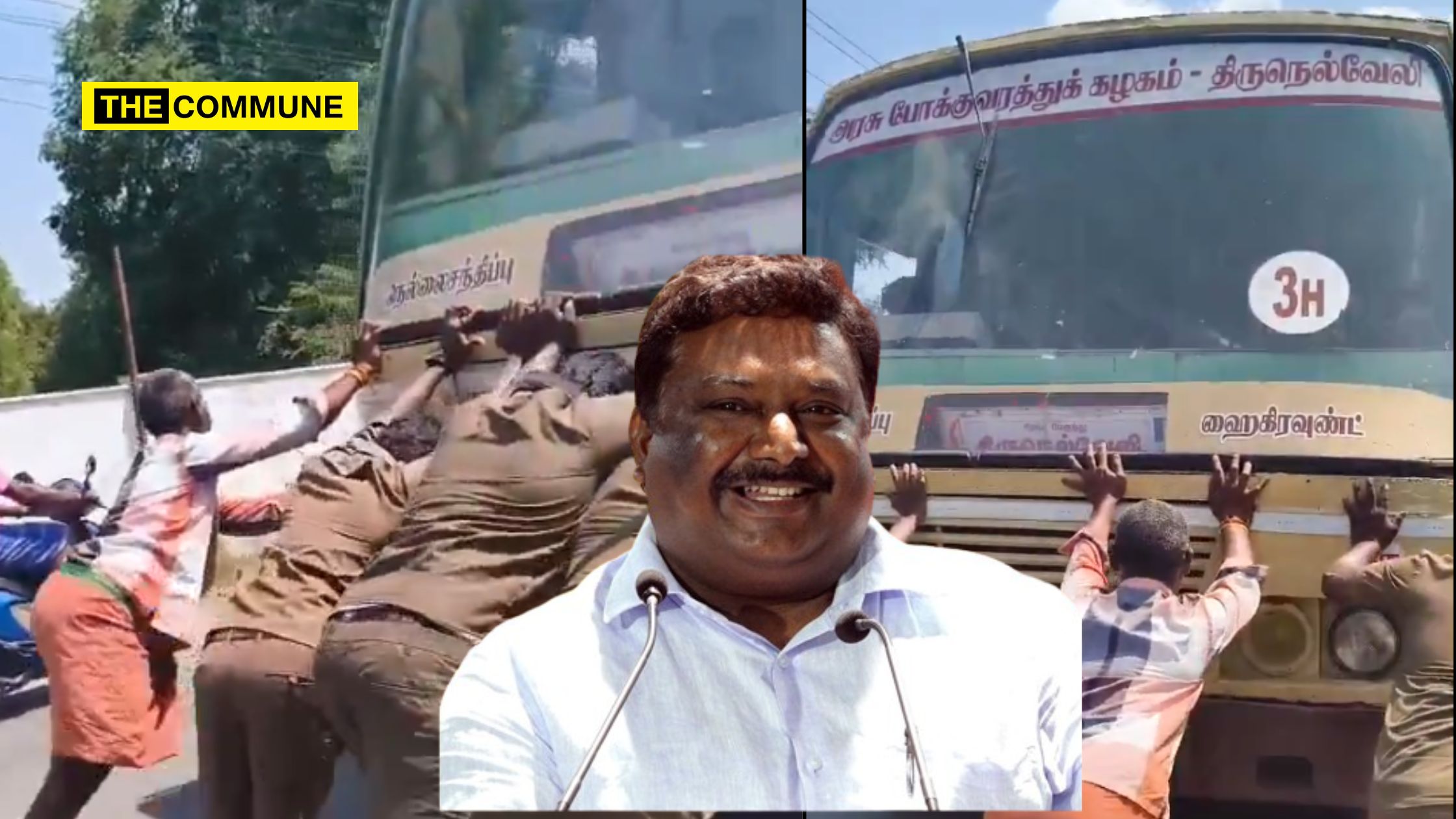
Despite a significant increase in the budget allocation for the state’s transport department, buses operating across Tamil Nadu continue to face basic functional issues that prevent them from running throughout the day. Reports have surfaced about faulty buses frequently breaking down, especially in rural areas, where these problems have become a daily occurrence. At the KTC Nagar depot, several TNSTC buses are forced to keep their engines running all day because even a brief stop causes the battery to drain, making the vehicle immobile. Drivers are now burdened with the task of keeping the buses running at full power throughout the day until they return to the depot in the evening, marking a new level of hardship.

The morning routine is even more demanding—an army of workers is needed to jump-start the buses daily. A long cable is used to connect the drained battery of one bus to the charged battery of another nearby vehicle, according to allegations from TNSTC bus drivers and conductors.

“Some buses at our depot rely on the batteries of other buses to start them each morning. We use a long cable to link the dead battery to one that’s charged. Once connected, we can get the bus started, but we’re instructed not to stop until we return to the depot in the evening,” said one driver.

On 17 February 2025 morning, one such bus broke down on the busy road between Palayamkottai and Tirunelveli Medical College Hospital. After struggling for about 15 minutes to clear the traffic, the crew and passengers were forced to get off and push the bus to the roadside.

Some contract-based TNSTC workers shared that breakdowns are frequent for city buses. “Most of these incidents happen on busy roads, but only a few are noticed by the public. For instance, another bus recently broke down at the crowded Tirunelveli Junction Bus Stand. The crew, passengers, and traffic police had to push it off the road. Engine trouble, primarily caused by battery problems, is the main reason,” they explained.

However, a TNSTC official stated that the depot has been supplied with adequate batteries and that there are no ongoing issues. R. Radhakrishnan, general secretary of the TNSTC Workers’ Federation, acknowledged hearing reports of some depots facing a shortage of quality batteries. “This problem doesn’t usually occur with experienced drivers. But the new, contract-based drivers, who lack experience, often cause buses to break down on the road. Ultimately, the root cause is battery issues,” he said.

(With Inputs From TNIE)

Subscribe to our channels on TelegramWhatsApp, and Instagram and get the best stories of the day delivered to you personally.
Growing Support For Hamas Terrorism In Communist-Ruled Kerala: Here Are 8 Instances From 2023-2025

Kerala has recently witnessed a series of incidents that have drawn attention to growing support for Hamas terrorism. Under the guise of solidarity for Palestine, a number of public events have emerged that glorify the actions of the terrorist organization, Hamas. The recent display of Hamas terrorist posters at a mosque in Palakkad beg the question if Kerala has increasingly become a focal point for the glorification and support of Hamas terrorism under the guise of various public events. Here are 8 major instances in the state that have raised concerns:

#1 Terrorist Posters Displayed At Mosque Celebration

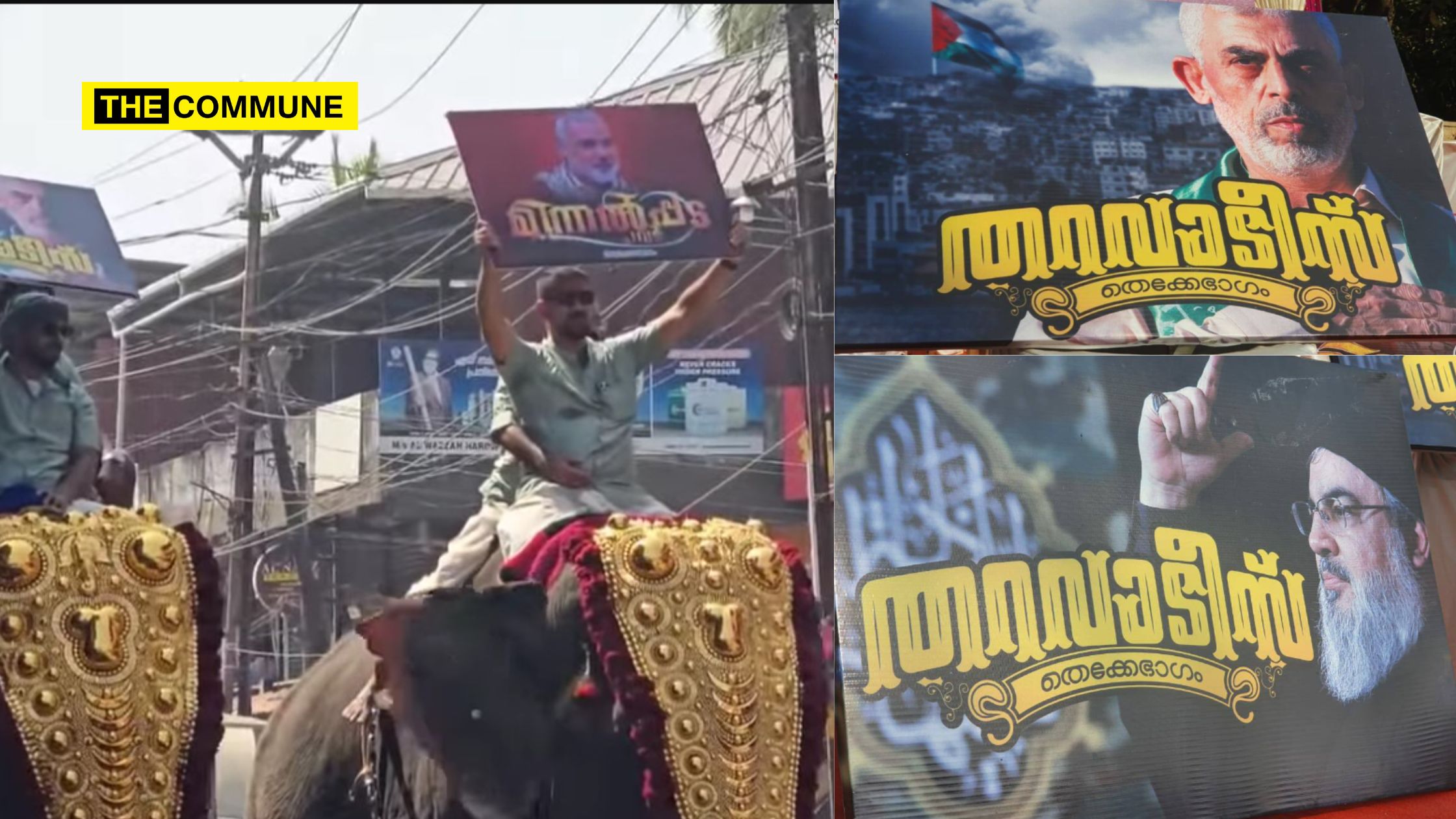
A few days ago, a mosque in Thrithala, Palakkad, sparked controversy and received severe criticism for displaying images of terrorist leaders of Hamas during its annual Urus celebrations. The pictures of Ismail Haniyeh and Yahya Sinwar, key figures of the terrorist group Hamas, were prominently featured in the elephant procession, with the images paraded atop three elephants.

The controversial display of these images, including banners with the titlesTharavadis, Thekkebhagamdrew widespread outrage. During the procession, which was attended by over 3,000 people, young children were seen holding posters of Sinwar and Haniyeh, while the crowd cheered on. The incident sparked significant debate on social media, with many questioning the organizers for allowing such displays.

#2 Funeral Prayer For Hamas Terrorist Yahya Sinwar Held

AMayyath Niskaram(funeral prayer) for Yahya Sinwar, the slain leader of Hamas, was organized in Kerala, raising eyebrows and igniting discussions about the complex socio-political landscape of the region. Sinwar was killed four days ago by Israeli forces, following his role as the architect behind the October 7th attack that claimed the lives of 1,200 innocent civilians in Israel. The prayer was organized by the Student’s Islamic Organization (SIO), a youth wing of Jamat-e-Islami, a group known for its Islamic activism. Photos of the event were widely circulated on social media, featuring Samad Kunnakav, assistant secretary of Jamat-e-Islami Kerala, leading the prayer. The gathering not only serves as a remembrance of Sinwar but also raises questions about the ideological affiliations and sentiments that exist within certain segments of Kerala’s population.

The SIO’s Facebook page for Ernakulam publicized the event, depicting Sinwar as avaliant warriorand showcasing images of the gathering, which drew participation from local youths and students. 

#3 Khaled Mashal Addressed Pro-Palestine Rally In Malappuram

In October 2023, in Malappuram, former Hamas chief Khaled Mashal addressed attendees via live video. The event was conducted by Solidarity Youth Movement (Kerala Youth Wing of Jamaat-e-Islami Hind) who invited Khaled Mashal, a founding member of Hamas, to speak at the rally where anti-Hindu slogans were raised. During a roughly seven-minute video address, Mashal urged attendees to provide unconditional support to Hamas and reportedly made anti-Hindu remarks. Visuals from the rally showed banners with slogans such asUproot Bulldozer Hindutva & Apartheid Zionism.Following his speech, the audience responded with applause and chants calling for the uprooting ofZionismthrough intifada.

#4 Muslim Crowd Marches in Wayanad in Support of Hamas Leader

Following the death of Hamas leader Ismail Haniyeh, as Wayanad was hit by severe rainfall, landslides, and floods, a Muslim crowd organized a tribute march in the midst of the heavy downpour to mourn the death of the Hamas leader. The marchers expressed their support for the Palestinian cause, protesting against Israel and calling for solidarity with the people of Gaza.

#5 Poster In Remembrance Of Hamas Leader Ismail Haniyeh

In Kozhikode, the Students Islamic Organisation (SIO) displayed banners and standees in remembrance of Hamas terrorist leader Ismail Haniyeh a few weeks after his death. The organization used social media platforms to call on Muslim youth in Kerala to unite in support of Hamas and the Palestinian cause.

#6 Jamiatul Ulama Marches in Thiruvananthapuram in Support of Palestine and Hamas

In August 2023, in Thiruvananthapuram, the South Kerala Jamiatul Ulama staged a march to express solidarity with Palestine and Hamas fighters. The march, organized by the Thiruvananthapuram, Neyyattinkara, and Kattakkada Taluk Committees, was a protest against Israel’s actions toward Palestinians, which they claimed violated international norms.

The demonstration, which began near Palayam Raktasakshi Mandapam, saw hundreds of participants, including Pandits, rallying in support of the Palestinian cause. Senior leaders from the Jamiatul Ulama led the procession.

#7 Jamaat-e-Islami Hind Allegedly Holds Pro-Palestine Convention in Kerala Amid Hamas Support

In 2023, Jamaat-e-Islami Hind was going to organize aPalestine Solidarity Conventionin Kerala’s Malappuram district, featuring Palestinian Ambassador Adnan Abu Alhaija and Gaza University VC Dr. Kamlain Shaa’ath, although the latter was said to be unlikely to attend due to the ongoing conflict. The event’s poster condemned Zionist terrorism and coincided with calls from Hamas leader Khalid Mashal for jihad. Despite India’s support for Israel, local political groups like Jamaat-e-Islami and the Indian Union Muslim League have expressed solidarity with Palestine, while other political parties, including the Congress and CPI(M), have not condemned Hamas.

#8 Kerala CPI(M) Rally Expressed Solidarity with Palestine, Criticized BJP’s Stance

On 11 November 2023, the CPI(M) organized a large rally in Kozhikode, Kerala, to express solidarity with Palestine on the death anniversary of Yasser Arafat. Kerala Chief Minister Pinarayi Vijayan condemned Israel’s actions against Palestinians and criticized the BJP-led government for aligning with Israel, deviating from India’s traditional stance. He accused the BJP of supporting imperialistic forces and supported the global opposition to Israel’s violence. The event was attended by leaders from various political, social, and cultural organizations, with CPI(M) members emphasizing the importance of supporting Palestine in the face of international injustice.

Subscribe to our channels on TelegramWhatsApp, and Instagram and get the best stories of the day delivered to you personally.
Coimbatore Horror: 17-Year-Old Girl Gang-Raped By College Students; BJP TN Chief Calls Out CM MK Stalin Over Rising Sexual Assault Cases In Tamil Nadu

A horrifying gang rape incident has rocked the city of Coimbatore, leaving residents in shock and disbelief. A 17-year-old girl was allegedly sexually assaulted by seven students from a private college in the city. All the accused have been arrested by the police in connection with the crime.

According to reports, the victim, a Coimbatore resident, had established an online relationship with the accused through social media. Over time, their virtual connection developed into a friendship. However, the situation took a sinister turn when the accused invited the girl to a room in Kuniyamuthur, where she was gang-raped by the seven college students.

The girl’s grandmother became alarmed when she did not return home at the expected time and filed a missing person’s report at the Ukkadam police station. The police initiated an investigation, which uncovered the chilling details of the crime.

As the investigation progressed, it was revealed that the girl had been subjected to sexual harassment by the college students. The police have filed charges under the Protection of Children from Sexual Offences (POCSO) Act, and all seven students involved have been arrested.

The case has sparked outrage throughout Coimbatore, with local residents demanding immediate justice for the victim. The incident has also raised serious concerns about the safety of women and children in the city, underlining the need for greater vigilance and measures to ensure their protection.

In a similar incident near Pollachi in Coimbatore district, two schoolgirls and a schoolboy were subjected to repeated sexual assaults by four minors and an 18-year-old youth. The police arrested three of the minors and the youth on 14 February 2025, seizing mobile phones believed to have recorded the incidents.

According to reports, the victims hailing from a nearby village, were assaulted around five times over recent months. The suspects, known to watch inappropriate content on their phones, allegedly forced the victims into these acts. The victims’ families, from less privileged backgrounds, were initially hesitant to report the incidents. Villagers intervened by contacting ChildLine (1098), leading to a police case under various sections of the Protection of Children from Sexual Offences Act.

Three minors were taken into custody and sent to an observation home, while the youth was placed in judicial custody. One minor is still at large, and efforts are ongoing to locate him.

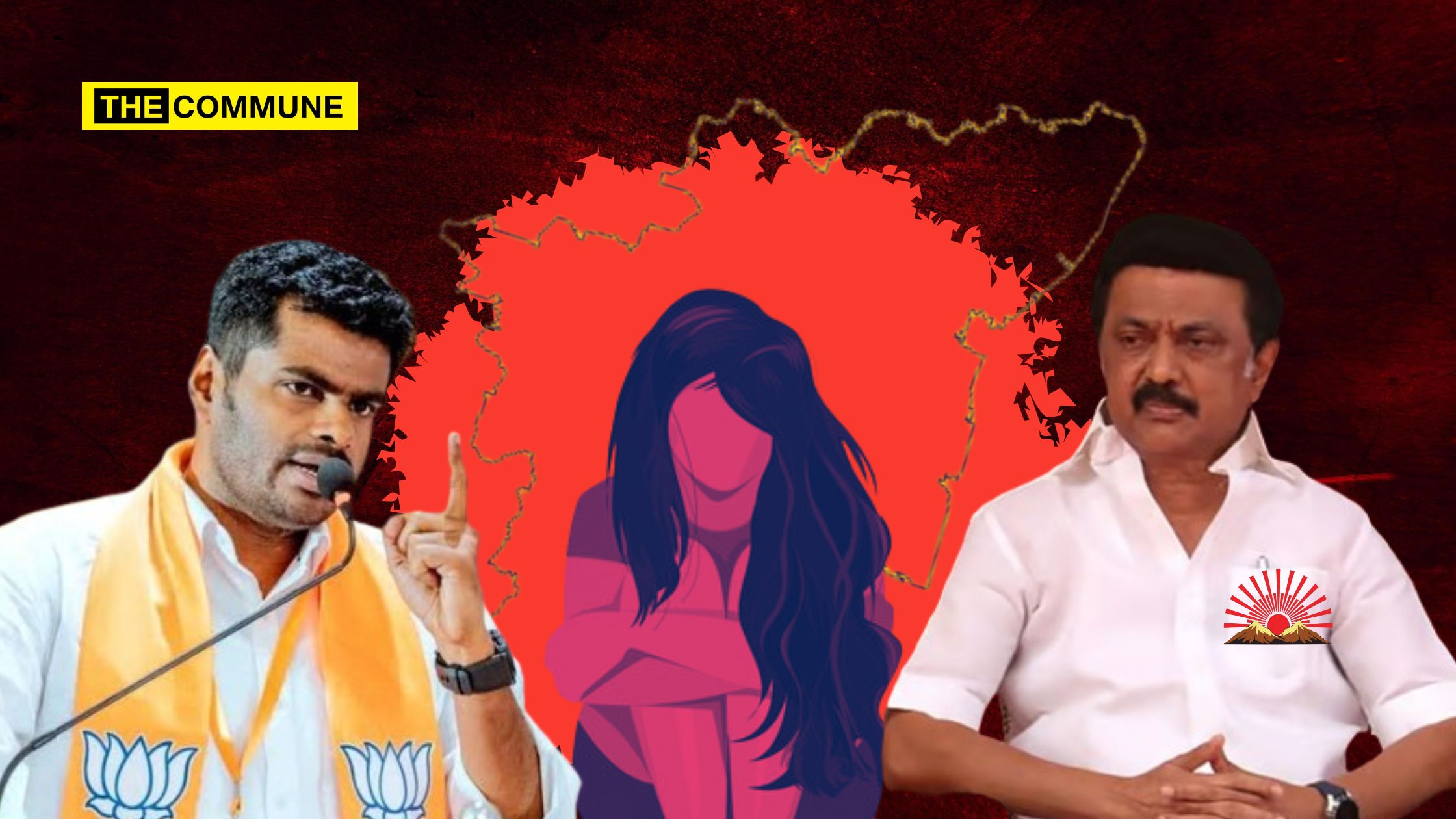
In response to the rising cases of sexual harassment and rape in Tamil Nadu, BJP Chief Annamalai has criticized Chief Minister MK Stalin for failing to take strong action against these heinous crimes. He expressed his shock over the gang-rape of a 17-year-old girl by seven students in Coimbatore, stating, “The news of a 17-year-old girl being gang-raped by 7 students in Coimbatore is shocking. Such gang rape on girls reflects the growing animalistic mentality among the youth, fueled by increasing drug abuse. The Nirbhaya case shook the entire nation, but in Tamil Nadu, women including girls, students, female police officers, and government officials are unsafe every single day. The DMK government has done nothing to curb drug abuse or to ensure the safety of women. If the culprit is from the DMK, and the women are blamed and victimized to protect him, while playing the role of ‘father and brother’ for vain publicity, will Chief Minister @mkstalin tell us who truly benefits from this?”

(With inputs from News Nine)

Subscribe to our channels on TelegramWhatsApp, and Instagram and get the best stories of the day delivered to you personally.