Home Blog Page 4

Kidney Theft Accused DMK MLA Given Ticket Again By MK Stalin

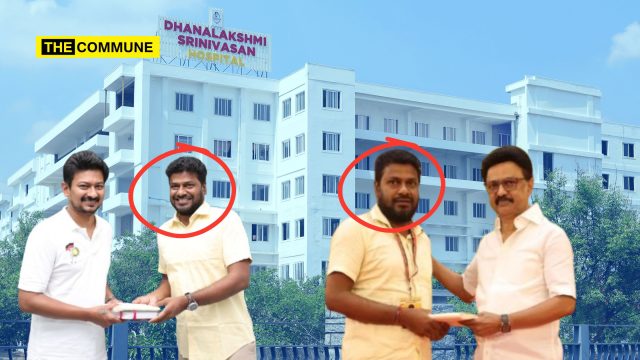
dmk mla kathiravan manachallur kidney theft

The Dravida Munnetra Kazhagam has renominated its Manachanallur MLA, S Kathiravan, for the 2026 Tamil Nadu Assembly elections, despite ongoing controversy linked to alleged irregularities and kidney trafficking at a hospital associated with his family.

Chief Minister MK Stalin released the party’s list of candidates for 164 constituencies on 28 March 2026, in which Kathiravan was once again fielded from the Manachanallur constituency in Tiruchirappalli district.

The renomination comes in the backdrop of allegations that surfaced in mid-2025 regarding an alleged illegal kidney transplant racket at a private hospital linked to the MLA’s family. The facility had come under scrutiny following claims that economically vulnerable individuals, including weavers from Namakkal, were allegedly targeted and induced into organ donation under questionable circumstances.

Subsequently, the Tamil Nadu Health Department suspended the hospital’s organ transplant licence based on preliminary findings of an inquiry committee. However, no criminal charges have been reported against the MLA in connection with the case so far.

The controversy intensified after Kathiravan made remarks during a public speech that drew widespread criticism. The MLA openly joked in a speech that he “could have bought a Rolls Royce if he had removed more kidneys” from the Thirupattur people

The decision to field Kathiravan again has drawn sharp reactions from opposition parties, which have argued that the move raises concerns about accountability and the handling of allegations involving public representatives.

Subscribe to our channels on WhatsAppTelegram, Instagram and YouTube to get the best stories of the day delivered to you personally.

Denied Ticket, Mano Thangaraj Rumoured To Be In Touch With TVK’s Aadhav Arjuna To Sabotage DMK+ In Kanyakumari Region

When the DMK released its first list of 164 candidates on 28 March 2026, the name conspicuously absent was that of T. Mano Thangaraj – sitting Dairy Development Minister, two-term MLA, and one of the party’s most visible faces in Kanyakumari district. The fallout from that omission is now reportedly threatening to spill beyond internal grumbling and into open electoral rebellion.

Padmanabhapuram, the constituency Thangaraj has held since 2016, was surrendered to Congress as part of the DMK-led alliance’s seat-sharing arrangement – a move that effectively foreclosed his path to a third term. His exclusion was not entirely without context. Thangaraj was dropped from the cabinet in September 2024 amid the Aavin row and controversies surrounding alleged quarry and mining links, before being re-inducted in April 2025. The party’s internal calculations, alliance compulsions, and factional pressures all reportedly converged against him.

He is not alone. Ministers K. Ponmudi, R. Gandhi, and N. Kayalvizhi Selvaraj were also denied tickets in the same list, signalling a broader generational and political reshuffle within the ruling party.

Sources in Chennai’s political circles allege that Thangaraj held a close to hour-long meeting with TVK General Secretary (Campaigns) Aadhav Arjuna at his Poes Garden residence in the past few days. The proposal reportedly on the table: Thangaraj contests Padmanabhapuram as an independent while ensuring friendly independent candidates are fielded in Killiyoor, Colachel, and Madurai Central with an understanding that these candidates would align with TVK after election results are declared.

TVK, for its part, officially declared a solo contest across all 234 seats on 18 March 2026, with Vijay ruling out formal alliances. However, it is noteworthy that an informal arrangement with rebel independents is structurally different from a declared alliance and would allow TVK to expand its footprint in Kanyakumari without violating its stated solo stand.

Within TVK, the proposal is said to have found measured acceptance among key figures including Aadhav Arjuna and senior leader Sengottaiyan whose growing influence within the party over rival Bussy Anand has been reported by multiple outlets since late 2025. Bussy Anand is said to have opposed the move, reportedly on the grounds that a minister who benefited from the DMK government for years cannot be relied upon the moment he is denied a seat. The proposal, sources say, is now pending Vijay’s final word. None of these internal TVK deliberations have been officially confirmed by the party.

What It Means On The Ground

Should Thangaraj file nomination as an independent, it would put the Congress candidate, who is set to contest Padmanabhapuram under the DMK alliance, in direct difficulty. Thangaraj carries a decade of constituent relationships and local mobilisation capacity in the region. A three-way contest involving TVK, DMK-alliance, and a rebel independent in Kanyakumari’s seats could meaningfully fragment the anti-AIADMK vote with uncertain consequences for all sides.

Whether this is a negotiating tactic to pressure the DMK into reconsideration, a genuine pivot toward TVK, or simply political noise ahead of the April 23 polls remains to be seen. What is clear is that the DMK’s candidate list has triggered fault lines in its own ranks and in Kanyakumari, those fault lines run deep.

Subscribe to our channels on WhatsAppTelegram, Instagram and YouTube to get the best stories of the day delivered to you personally.
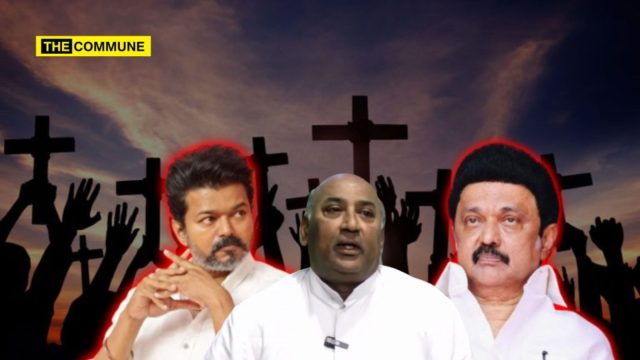
“Vijay Just Christian In Name, Won’t Vote For RSS Pawns”: Church Father Openly Says ‘Christians’ Will Vote For ‘Secular’ DMK+, Calls Sanskrit A Dead Language

TVK chief and actor Vijay unveiled all 234 candidates of his party on 29 March 2026 for the upcoming Tamil Nadu Assembly elections and criticised the Dravida Munnetra Kazhagam and its allies as a “stitched-together alliance.”

Amid this, Father Charles Kumar of St. Joseph’s Church, Vyasarpadi, Chennai, issued sharp criticism of Vijay’s political positioning and public messaging during a media interaction.

Speaking to the media, he said, “The political situation right now is more or less clear – alliances have been finalised and it is almost settled who gets which seat. Some people came and asked me: ‘In your constituency, who will the minority vote, the Christian vote go to? Vijay is a Christian, after all.’ I told them: one must not be a Christian only in name. Our vote will go to those who are Christians in deed, not just in name.

It is well known that minorities extend their support only to those who do not act as puppets of the RSS and who do not align themselves with religion-based politics or parties. This has been said for a long time, and I conveyed the same when I was asked about it.

Now, in the Perambur constituency, when I was asked whether Christians would vote for Vijay since he himself is a Christian, I responded that being a Christian is not just about the name – one must also live as a Christian in their life. Recently, information has come to light about how he conducts his personal life. If a person is unable to safeguard and manage his own family, it raises the question of how he would protect a nation, Tamil Nadu, and the Tamil people. This is something that many people are widely discussing now.

I have also been telling many that someone who has not been involved in anything so far, who has not participated in any political struggles, and who has not raised their voice for Tamil Nadu or for the Tamil people, cannot reasonably expect to receive the support of the people.

Moreover, it is widely known that the BJP at the Centre has consistently acted against the interests of Tamil Nadu, Tamil land, Tamil people, and the Tamil language. While they allocate thousands of crores to Sanskrit – a language that is no longer in common use, they show hesitation in supporting Tamil culture, which has ancient roots in civilization and heritage.

So, how can they expect the people of Tamil Nadu to support them? Those who have aligned with them and live as their subordinates now coming to seek the support of Tamil people is, in my view, completely unjustified.”

Subscribe to our channels on WhatsAppTelegram, Instagram and YouTube to get the best stories of the day delivered to you personally.
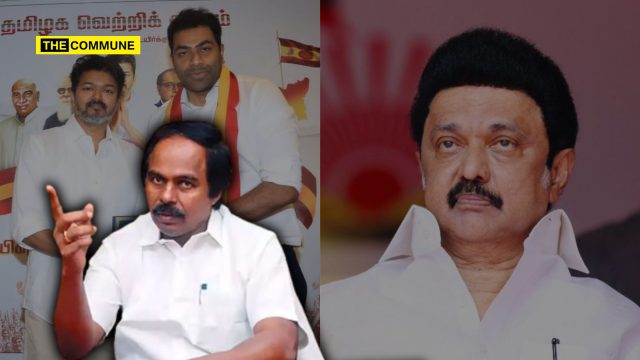
“How Can A Christian Contest In Reserved Constituency?” Hindu Makkal Katchi Leader Arjun Sampath Slams DMK’s Tamilan Prasanna Candidature For Egmore

"How Can A Christian Contest In Reserved Constituency?" Hindu Makkal Katchi Leader Arjun Sampath Slams DMK’s Tamilan Prasanna Candidature For Egmore

The Hindu Makkal Katchi has strongly opposed the opportunity given to DMK’s Tamilan Prasanna, who belongs to the Christian faith, to contest from the Egmore reserved constituency.

As per Supreme Court judgments, members of Scheduled Castes belonging to Hindu, Sikh, or Buddhist religions lose their Scheduled Caste benefits and rights if they convert to another religion. Various High Courts across states have also delivered similar rulings. The Supreme Court has recently reaffirmed this position.

In its judgment, the Supreme Court stated that a person who has converted to Christianity and actively follows that religion cannot continue to be treated as a member of the Scheduled Castes. It further observed that individuals following religions other than Hinduism, Sikhism, or Buddhism cannot claim the constitutional protections and benefits available to Scheduled Castes.

In this context, Tamilan Prasanna, who has been announced as the DMK candidate for the Egmore reserved constituency, is a Christian. The Hindu Makkal Katchi has questioned how he is eligible to contest from a reserved seat.

In a statement, the party’s leader Arjun Sampath said that Tamilan Prasanna, a DMK spokesperson contesting from Egmore, belongs to the Christian faith. He questioned how such a person could contest from a reserved constituency. He further stated that Prasanna is a devout Christian who regularly attends church. At a time when many Scheduled Caste members are unable to get opportunities, he questioned how the DMK could allot a reserved seat to a person who has converted to another religion.

Subscribe to our channels on WhatsAppTelegram, Instagram and YouTube to get the best stories of the day delivered to you personally.
Peak Dravidian Model: DMK Functionary In Namakkal Attacks TASMAC Staff Over Delay In Bringing Side Dish

Namakkal: DMK Functionary Attacks TASMAC Staff Over Delay In Bringing Side Dish

A functionary of the Dravida Munnetra Kazhagam was involved in an assault at a TASMAC bar in Mohanur, Namakkal district, after a dispute over delay in serving side dishes escalated into violence.

According to reports on 29 March 2026, the incident began as a verbal argument between the functionary and a bar employee. The situation later turned into a physical altercation, during which the functionary reportedly threw chairs and tables and attacked the employee, causing a commotion at the outlet.

CCTV footage capturing the entire sequence of events has since surfaced online and is being widely circulated on social media, triggering public outrage.

Following the emergence of the footage, Mohanur police registered a case and initiated an investigation into the incident.

Subscribe to our channels on WhatsAppTelegram, Instagram and YouTube to get the best stories of the day delivered to you personally.
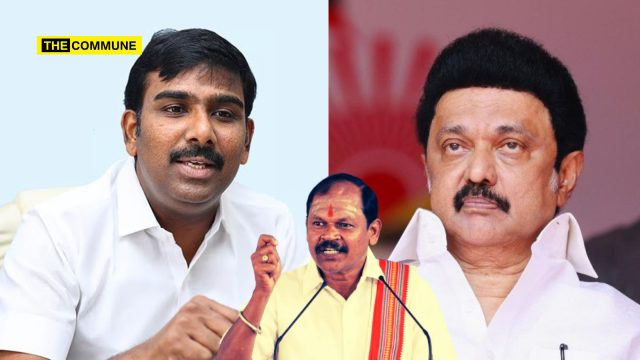
Part-Time Politician TVK Vijay Announces Candidates For 234 Constituencies, Vijay Himself To Contest In 2

Vijay TVK First State Conference

Vijay has confirmed he will contest from two constituencies: Perambur (Chennai) and Trichy East (Tiruchirappalli East).

Here are prominent names and constituencies highlighted in reports and the announcement:

  • Perambur — C. Joseph Vijay
  • Trichy East  — C. Joseph Vijay
  • Villivakkam — Aadhav Arjuna
  • T. Nagar  — Bussy N. Anand
  • Thousand Lights — J.C.D. Prabhakar
  • Virugambakkam — Sabarinathan
  • Egmore (Reserved) — Rajmohan
  • Velachery — Christy Prithivi
  • R.K. Nagar — Maria Wilson
  • Kolathur — V.S. Babu
  • Mylapore — Venkataraman
  • Gobichettipalayam — K.A. Sengottaiyan
  • Thirupparankundram – CTR Nirmal Kumar

By rejecting alliances unless Vijay is accepted as the undisputed CM candidate, TVK is positioning itself as a third force challenging the DMK-AIADMK binary on themes of secularism, social justice, and anti-dynasty governance.

the list reflects more fan-service and celebrity optics than rigorous organizational building. After the Karur incident exposed logistical and accountability gaps, questions persist: Can a leader who divides time between film shoots, personal milestones, and sporadic political forays effectively manage a state? Will star power convert into votes against entrenched party machineries?

Subscribe to our channels on WhatsAppTelegram, Instagram and YouTube to get the best stories of the day delivered to you personally.

Modi Govt’s Transgender Bill Is A Surgical Strike Against Pronoun Gangs And Wokeism

In a move that signals a sharp legislation and what can be termed as a surgical strike on the ‘woke’ and ‘pronoun’ crowd, the Narendra Modi government has passed the Transgender Persons (Protection of Rights) Amendment Bill, 2026, making it a direct pushback against the rise of “pronoun politics” and Western-style woke frameworks entering Indian law.

Far from being a routine amendment, the Bill is seen as a structural reset – one that replaces subjective identity claims with legally verifiable criteria and shuts down what it sees as a rapidly expanding and unworkable identity regime.

From “Self-ID” to State-Defined Identity

The 2019 law had granted individuals the right to self-perceived gender identity – a provision that, while celebrated in activist circles, quickly ran into practical problems in governance, as reported in OpIndia.

The 2026 amendment effectively dismantles that model.

Instead of allowing open-ended self-identification, the law now defines transgender persons through biological realities and established socio-cultural categories including hijra, kinner, aravani, jogta communities, intersex variations, and cases involving coercion.

What it decisively excludes is just as important: self-declared, fluid, or purely subjective identities with no grounding in biology or recognised social categories.

In one stroke, the government has drawn a line that many Western governments have avoided.

The End of “Say It and Become It”

At the heart of the amendment lies a blunt legal principle: identity, for the purposes of law and state benefits, cannot be based purely on personal declaration.

The Bill explicitly states that recognition cannot be extended based on “personal choice” or “self-perceived identity.”

That clause effectively dismantles the legal foundation of what critics call the “pronoun ecosystem” where identity is treated as entirely self-defined and infinitely expandable.

The new framework introduces verification, documentation, and state oversight bringing gender classification in line with how the law handles every other legally significant category.

Why the Government Tightened the Law

The reasoning is laid out clearly: the earlier definition was too vague to administer.

According to the government, an open-ended identity framework made it nearly impossible to:

  • Identify legitimate beneficiaries
  • Implement welfare schemes
  • Maintain consistency across legal systems

More critically, it risked diluting protections meant for historically marginalised communities by expanding eligibility to an ever-growing set of identity claims.

This amendment is designed to stop exactly that.

A Pre-Emptive Strike, Not a Reaction

What makes the move notable is its timing.

Countries across the West are already dealing with the fallout of self-ID based frameworks from legal contradictions to conflicts in women’s spaces and sports.

Public figures like J. K. Rowling have highlighted these tensions, particularly around laws that blur the distinction between biological sex and declared identity.

Meanwhile, bodies like World Athletics and World Aquatics have rolled back open participation policies, citing fairness and biological advantage.

The Modi government’s approach is the opposite of reactive – it is stepping in before similar conflicts fully take root in India.

Stronger Laws Where It Actually Matters

While the battle over identity has grabbed attention, the Bill also sharpens the law on real-world harms.

It introduces stringent penalties for:

  • Forced gender alteration
  • Coercion into identity adoption
  • Trafficking and exploitation

In severe cases, especially involving minors, punishments can extend to life imprisonment.

This shifts the focus from abstract debates to concrete protections.

Impact Beyond the Law

The implications go beyond courts.

By setting a clear legal definition, the Bill effectively forces institutions including schools and public bodies to align policies with statutory reality rather than activist-driven frameworks.

This could significantly reshape how gender identity is approached in education, documentation, and public administration.

A Direct Message

The amendment is not subtle in what it signals.

It rejects the idea that law should follow endlessly shifting identity claims. It asserts that legal systems require fixed definitions, verifiable categories, and administrative clarity.

Supporters see it as a necessary correction. Yes, the pronoun gang will call it restrictive.

But the intent is unmistakable: this is the Modi government drawing a hard boundary between personal identity and legal recognition, between ideology and governance.

And in doing so, it has effectively launched what it frames as a legislative pushback against pronoun-driven politics and the spread of wokeism into Indian law.

Subscribe to our channels on WhatsAppTelegram, Instagram and YouTube to get the best stories of the day delivered to you personally.
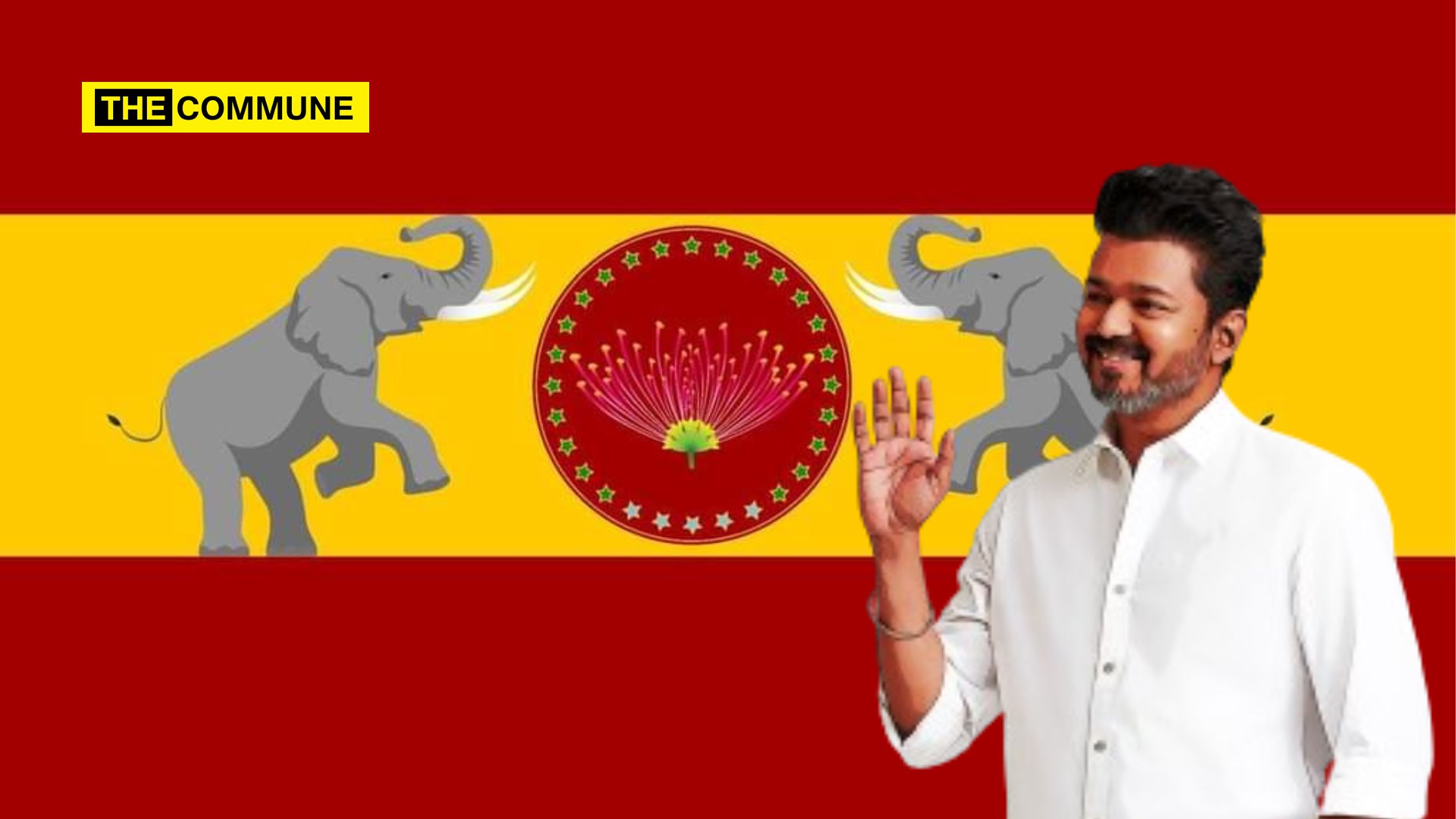
DMK Stooge Vetrimaaran Who Made Films Glorifying Naxals And Produced “Bad Girl” Dubbed As “Child Porno” By Courts Indirectly Calls Dhurandhar “Hate Propaganda”

Unable to digest the massive success of Dhurandhar: The Revenge, the ultra Dravidianist filmmaker who makes propaganda films glorifying DMK, Naxals and those that have been dubbed as “child pornography” by the Madras High Court has implied the biggest hit of Indian film industry to be a “hate propaganda”.

Until we tell our stories, our life is what our enemies say they are. We do not have the democracy to tell our own stories“, said Vetrimaaran who made a two-part film glorifying naxalism and constantly peddling subtle propaganda against the Indian government and BJP’s Hindutva politics in his films.

In his remarks, Vetrimaaran lamented: “Today, everything turns into propaganda. Propaganda has the power to influence memory. We all know who was most affected by demonetization and who lost their lives standing in queues. But that impact changed through hate propaganda. What can we do against that hate propaganda? We have to make films like this.

Crediting the film Neelira, he said “There are many films that cost millions of rupees, wishing to earn hundreds of crores with hatred and violence. This is a film does which not want to sell hate, caricature a race, a community, or a religious sect.

For a director whose entire oeuvre reads like a Dravidian manifesto wrapped in gritty realism, this sudden pearl-clutching over “hate propaganda” reeks of hypocrisy.

About Vetrimaaran

Vetrimaaran isn’t some neutral artist fretting about cinematic ethics. He’s a certified DMK ecosystem insider whose family has deep roots in the party’s anti-Hindu, Dravidianist ideology.

His films Viduthalai Part 1 and Part 2 (which turned out to be an utter flop) glorifies naxals, completely whitewashing the human and developmental cost of red terror.

Even his earlier works like Vada Chennai paint North Chennai’s underbelly as a victim of state neglect, with gangsters elevated to folk-hero status. These aren’t neutral “social issue” films. They are ideological weapons—Dravidianist propaganda that consistently peddles anti-development narrative portraying the Indian state, its institutions, as villains, while lionizing armed left-wing extremism and regional separatism.

He also produced the film ‘Bad Girl’ a film condemned by the Madras High Court as having a teaser that amounts to “child pornography.” The court had ruled that the content of the teaser, freely available, can “spoil the minds of children” and constitutes a “continuing offence”, ordering its removal from YouTube.

The film also sexualizes school students (minors) showing the protagonist indulging in drugs and sex at a young age. Words like “f**ing, asshole, bitch, bastard, chooth”* had to be muted from dialogue and removed from subtitles.

This same filmmaker lectures the nation about “hate propaganda” because Dhurandhar: The Revenge—a massive commercial success starring Ranveer Singh as an undercover agent ripping apart terror funding networks in Karachi—dares to show demonetization not just as a policy that caused queues, but as a hammer blow to black money, fake currency, and Pakistan-sponsored terrorism. Vetrimaaran wants us to remember only the suffering of the poor (real as it was for many), while erasing the documented impact on terror financing and counterfeit notes that intelligence agencies have repeatedly linked to cross-border threats.

Subscribe to our channels on WhatsAppTelegram, Instagram and YouTube to get the best stories of the day delivered to you personally.
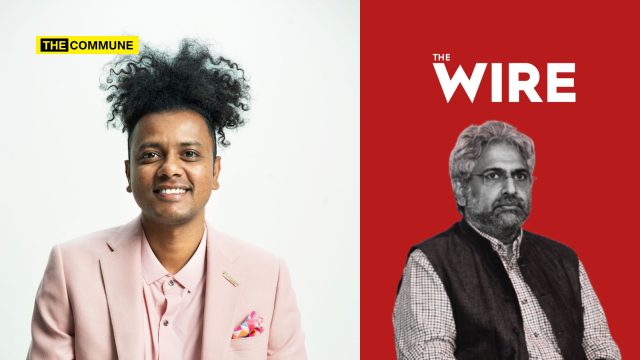
“Brahmin Women Salivate Over Dalit Man”: The Wire’s Editor Can Deny The Article But How Will He Deny This Statement Of Suraj Yengde?

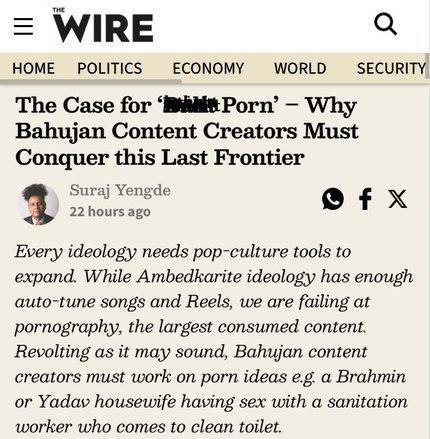
The Wire, in its characteristic posture of victimhood, issued a statement this week calling the controversy around Suraj Yengde’s purported article the work of “hatred and perversity among casteist Hindus.” The article in question, titled “The Case for ‘Dalit Porn’ – Why Bahujan Content Creators Must Conquer this Last Frontier” had reportedly been published on The Wire’s website before being allegedly deleted, with no correction notice and no editorial explanation, after screenshots of it went viral on X.

Image Source: X

In it, Yengde allegedly made a case for Bahujan content creators to enter pornography as an ideological project framing caste-targeted sexual content as a tool of Ambedkarite liberation.

The Wire’s response to the ensuing outrage was not to acknowledge the deletion. It was to declare the entire article a fabrication by those with “sick minds,” defend Yengde as a “respected Dalit scholar,” and close ranks entirely. Statement issued. Outrage dismissed. Case closed or so The Wire hoped.

There is just one problem. The fabrication defence does not extend to Suraj Yengde’s own X feed.

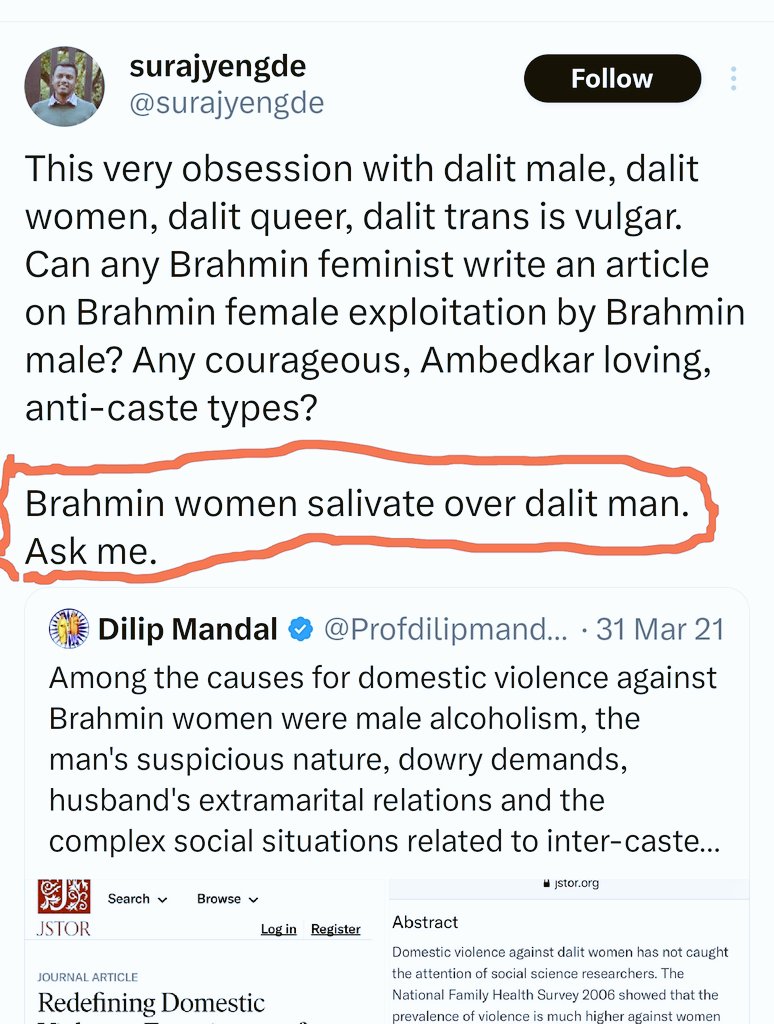
“Brahmin Women Salivate Over Dalit Man. Ask Me.”

In a tweet responding to journalist Dilip Mandal’s post on domestic violence against Brahmin women, a thread that referenced a JSTOR-linked research paper, Yengde did not express solidarity, nuance, or scholarly detachment. He wrote, in plain English: “Brahmin women salivate over dalit man. Ask me.”

Image Source: X

That is not a fabrication. That is not the product of a “sick mind” of any ideology. That was from the handle of Suraj Yengde, the man The Wire calls a respected scholar, reducing Brahmin women to objects of sexualised caste fantasy, in public, on a platform indexed to the world.

Read it again: “Brahmin women salivate over dalit man. Ask me.” The invite at the end “Ask me” is not incidental. It is a boast. It is a man presenting himself as evidence of his own claim about upper-caste women’s desires. And it was published not in a dark corner of the internet but on the public timeline of a Harvard-affiliated academic who regularly writes for India’s self-styled paper of record.

Editorial Response And Prior Statements Don’t Match

The Wire, in its response to the controversy, stated that the purported article did not appear on its platform and described the claims as fabricated. The statement focused on denying the existence of the article and defending its contributor, Suraj Yengde.

However, the response did not address discussions that emerged online regarding Yengde’s previously published social media posts. These posts, which remain publicly accessible, have been cited by netizens in the context of the controversy.

The Wire’s statement framed the controversy as a fabricated campaign but did not address questions regarding the interpretation or implications of the cited social media posts.

In the end, this is not just a question of one disputed article—it is a question of credibility, consistency, and intellectual honesty. The Wire may hope to shut down the controversy by branding critics as malicious fabricators, but that line collapses the moment Suraj Yengde’s own words enter the frame. His statement—crude, caste-charged, and openly sexualised—is not a doctored screenshot or a figment of anyone’s imagination.

So, The Wire can deny the article but the world has seen the venom that is in Suraj’s head.

Subscribe to our channels on WhatsAppTelegram, Instagram and YouTube to get the best stories of the day delivered to you personally.
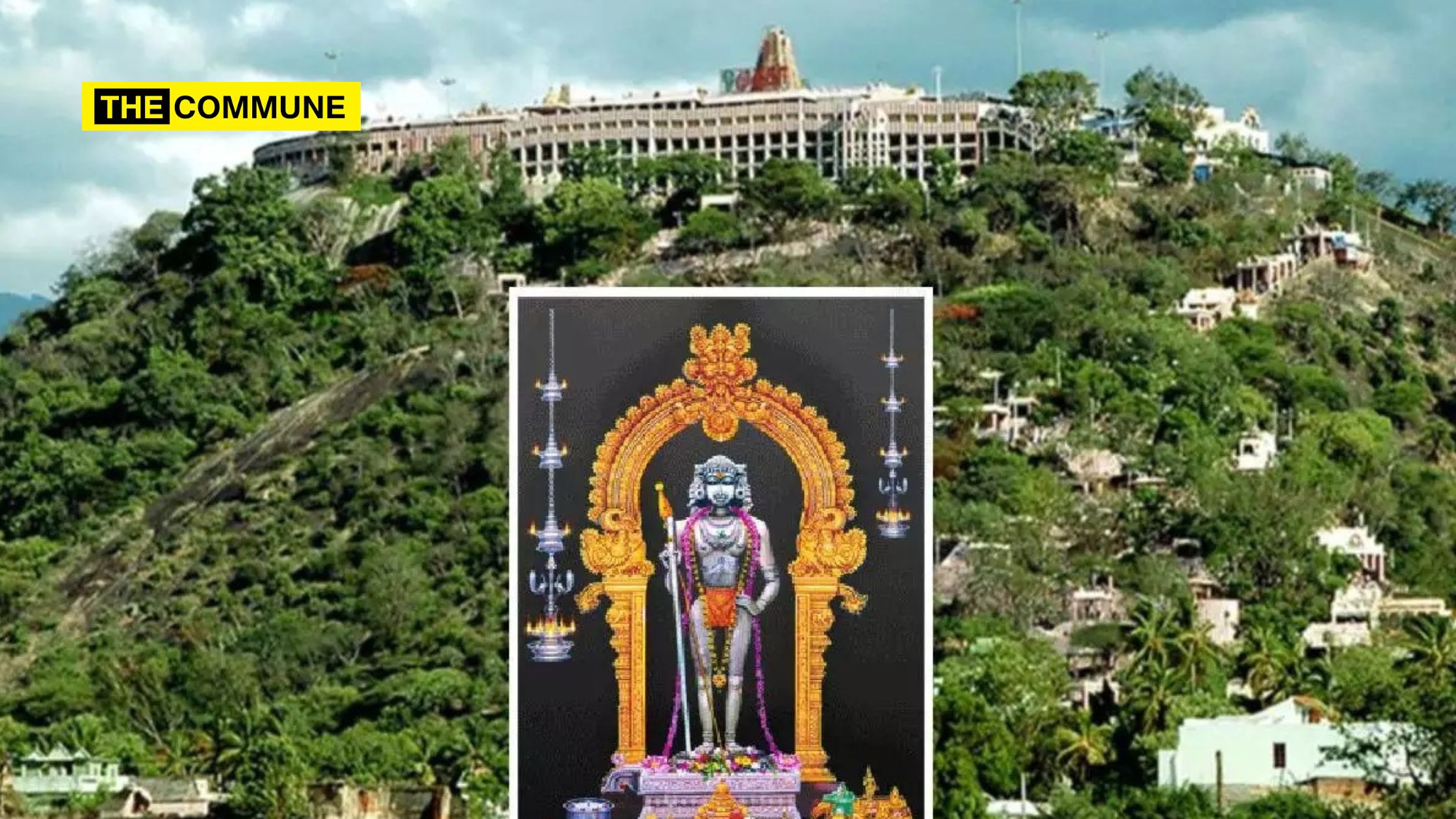
Madras High Court Halts ₹162.54 Crore Tender Works In HR&CE Controlled Palani Temple

Palani Municipality Councillors Demand 25% Share Of Murugan Temple Offerings For Healthcare And Infra Initiatives

The Madurai Bench of the Madras High Court has ordered status quo on a series of tender works floated by the Hindu Religious and Charitable Endowments Department (HR&CE) concerning the Arulmigu Dhandayuthapani Swamy Temple in Palani, Dindigul district.

The tenders, reportedly issued shortly before the announcement of election notifications, involved civil works valued at approximately ₹162.54 crore. The court intervened following a writ petition challenging the legality and procedural validity of these tenders.

The writ petition was filed by Vinoth Raghavendran before the Madurai Bench, seeking judicial intervention against the tenders issued by temple authorities. The petitioner raised concerns regarding alleged irregularities and violations in the tendering process initiated by the temple administration under the HR&CE Department.

During the hearing, the petitioner’s counsel, Suresh Palaniappan, submitted that multiple lapses had occurred in the issuance of the tenders. The counsel argued that the Executive Officer of the Palani Devasthanam had proceeded with the tender process in violation of established procedures and legal norms.

After hearing the submissions, the Division Bench directed that all tender-related activities be kept in abeyance and ordered maintenance of status quo. The court further appointed Justice Bharatidasan to conduct an independent inspection into the tender process.

The retired judge has been tasked with examining the records, procedures, and compliance aspects related to the tenders. The court directed that a report based on the inspection be submitted by June 6.

According to official tender documents, the HR&CE Department had invited e-tenders for construction works, including new devotees’ rest houses at the Palani temple. The tender notice specified timelines for submission and opening of bids in February 2026, with contracts structured on an item-rate basis.

The total value of the works, as cited in the petition, amounts to ₹162.54 crore across multiple civil projects. Concerns raised in the petition included the timing of the tender issuance and alleged procedural deviations.

Subscribe to our channels on WhatsAppTelegram, Instagram and YouTube to get the best stories of the day delivered to you personally.