Home Blog Page 379

PIL Seeks SC Intervention For NEP Implementation In Tamil Nadu, Kerala, And West Bengal

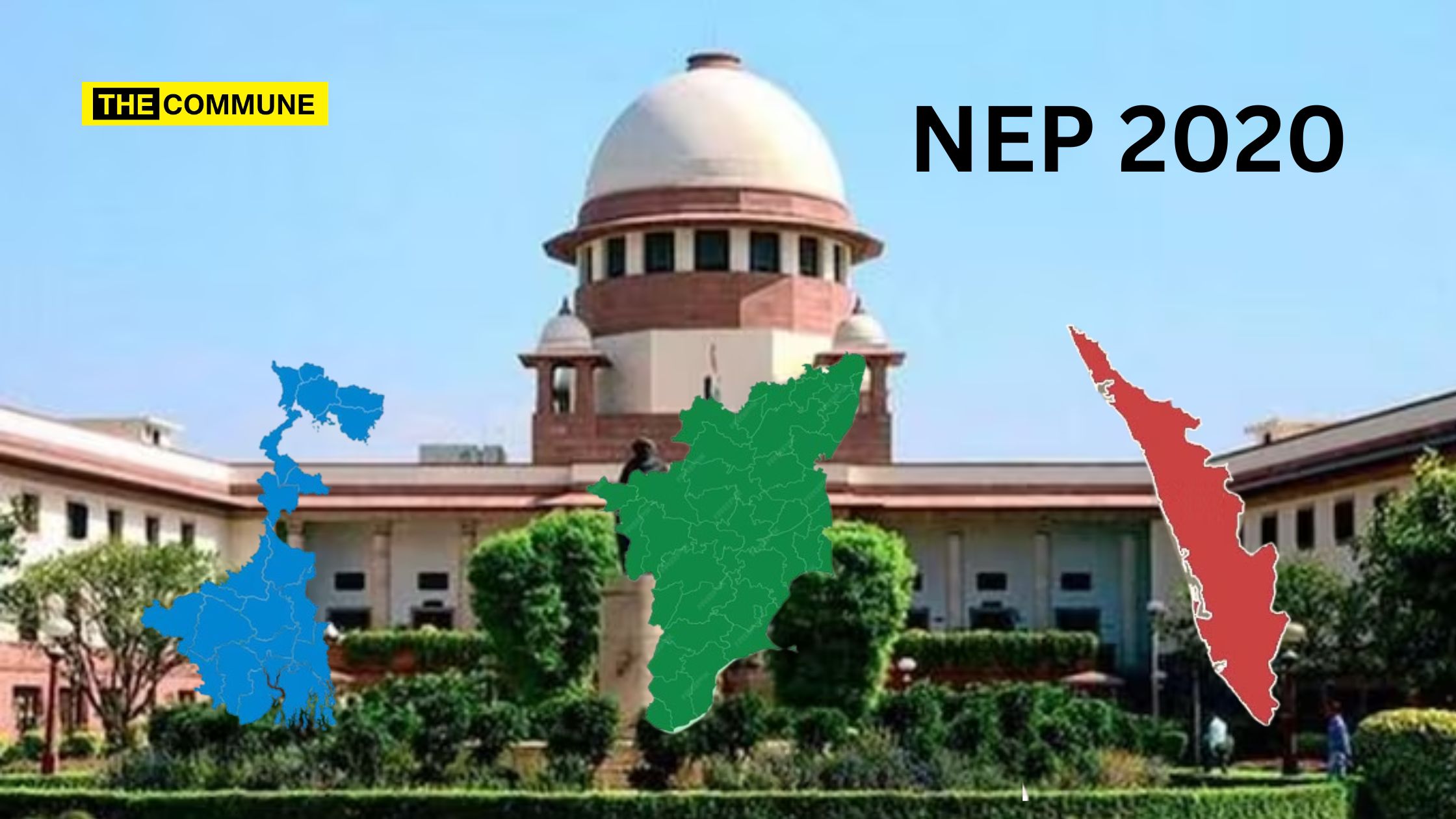
A Public Interest Litigation (PIL) has been filed before the Supreme Court seeking the implementation of the National Education Policy (NEP) in the states of Tamil Nadu, Kerala, and West Bengal. The petition, filed by advocate GS Mani, comes amid the ongoing debate on Hindi imposition and Tamil Nadu Chief Minister MK Stalin’s opposition to the three-language formula proposed under the NEP.

Tamil Nadu currently follows a two-language policy, teaching only English and Tamil in government schools. The state government has opposed the NEP, arguing that the Central government is attempting to impose Hindi through its provisions. CM MK Stalin has been vocal in rejecting the three-language policy, asserting that it goes against the state’s linguistic and cultural identity.

Advocate GS Mani, who hails from Tamil Nadu, has challenged this stance in his PIL, contending that Stalin’s claims arefalse, arbitrary, politically motivated, and against the fundamental right to free and effective education. The petition asserts that while the Supreme Court may not have direct authority to compel a state government to accept a policy or sign a Memorandum of Understanding (MoU), it does have the power to issue directives in cases of constitutional or legal violations. Such directions, the plea argues, could effectively mandate state governments to take specific actions.

The petition further contends that states are constitutionally and legally obligated to implement the NEP and enter into an MoU for its execution. Mani also highlights that the policy does not explicitly mandate the imposition of Hindi in non-Hindi-speaking states, countering the claims made by the Tamil Nadu government.

(With inputs from Bar and Bench)

Subscribe to our channels on Telegram, WhatsApp, and Instagram and get the best stories of the day delivered to you personally.

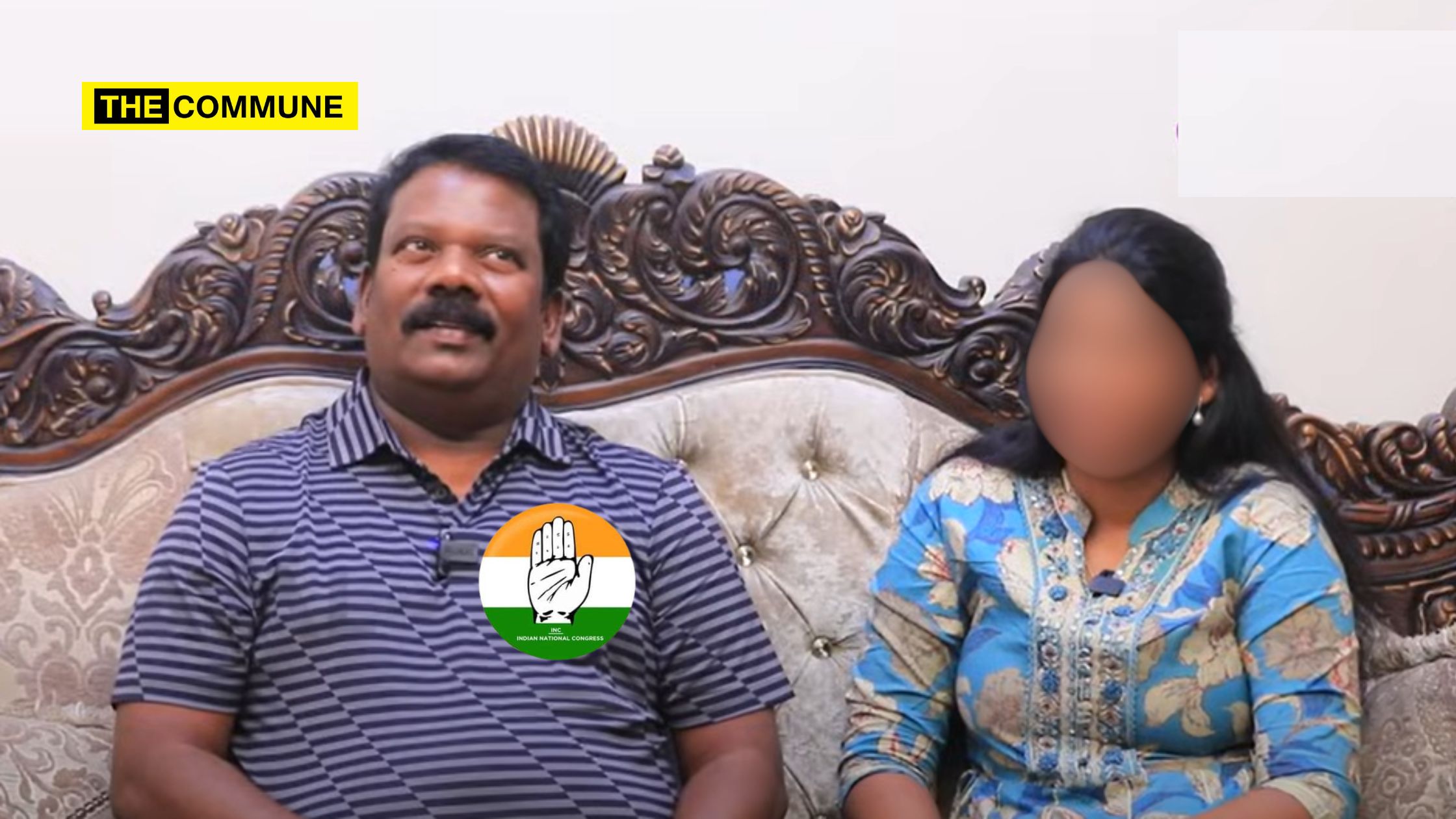
TN Congress Leader Who Opposes 3 Language Policy Made His Kid Study In Good Shepherd School That Follows 3 Language Policy

In the week-long controversy over the alleged imposition of Hindi, the DMK and its allied partners vocally opposed the introduction of a third language in Tamil Nadu. They accused the central government of forcing Hindi through the National Education Policy (NEP). However, their strategy did not gain traction. The political stance of the Congress, which has implemented the NEP in all the states where it governs, was particularly contradictory. Despite this, Tamil Nadu Congress Committee (TNCC) President Selvaperunthagai announced protests against Union Home Minister Amit Shah during his visit to Coimbatore on 26 February 2025, accusing him of imposing the three-language policy and the NEP.

During a press conference on 25 February 2025, Selvaperunthagai stated, “Our Union Home Minister is coming to Coimbatore, and we will democratically protest against him by showing black flags. He has consistently opposed Tamil Nadu’s interests, rejecting the state government’s proposals. The three-language policy, the Prime Minister’s Education Scheme, and the New Education Policy are all aimed at suppressing Tamil Nadu. He even insulted Dr. B.R. Ambedkar in Parliament. Therefore, the Congress Committee has decided to protest against him whenever he visits the state.”

Congress’s Double Standards Exposed

However, Tamil Nadu BJP President K. Annamalai countered these claims, exposing the DMK’s hypocrisy in the Hindi imposition debate. He pointed out that several senior DMK leaders and coalition partner leaders own CBSE schools in Tamil Nadu, where Hindi is taught without objection. Yet, the same leaders refuse to extend the opportunity of learning an additional language to students in government schools.

TNCC President Selvaperunthagai’s Contradiction

Selvaperunthagai’s stance is contradictory on two fronts: first, in contrast to his party’s national approach and the policies adopted by Congress-led states, and second, in his own personal choices, which reveal a clear bias. While Congress governments in Karnataka and Telangana have fully implemented the NEP, recognizing its advantages for students, the Tamil Nadu Congress unit has chosen to align itself with the DMK’s opposition. This selective stance suggests that Tamil Nadu’s Congress leadership is more focused on echoing the DMK’s rhetoric rather than maintaining a uniform party position on education policies.

Adding to the contradiction, TNCC President Selvaperunthagai, who argues that introducing a third language would be detrimental to Tamil Nadu students, has ensured that his own daughter received an education that included multiple languages. In an interview, he revealed that his daughter studied B.Com at Stella Maris College, completed her schooling at Good Shepherd School, pursued a master’s degree at Birmingham University in England, and is now in her final year of an MBA at Anna University.

Notably, Good Shepherd Schools in Chennai offer English, Tamil, Hindi, and French as part of their curriculum.

Despite opposing language diversity in government schools for underprivileged students, Selvaperunthagai had no reservations about enrolling his daughter in an institution that promotes multilingual education, further exposing his double standards on the issue.

Subscribe to our channels on TelegramWhatsApp, and Instagram and get the best stories of the day delivered to you personally.

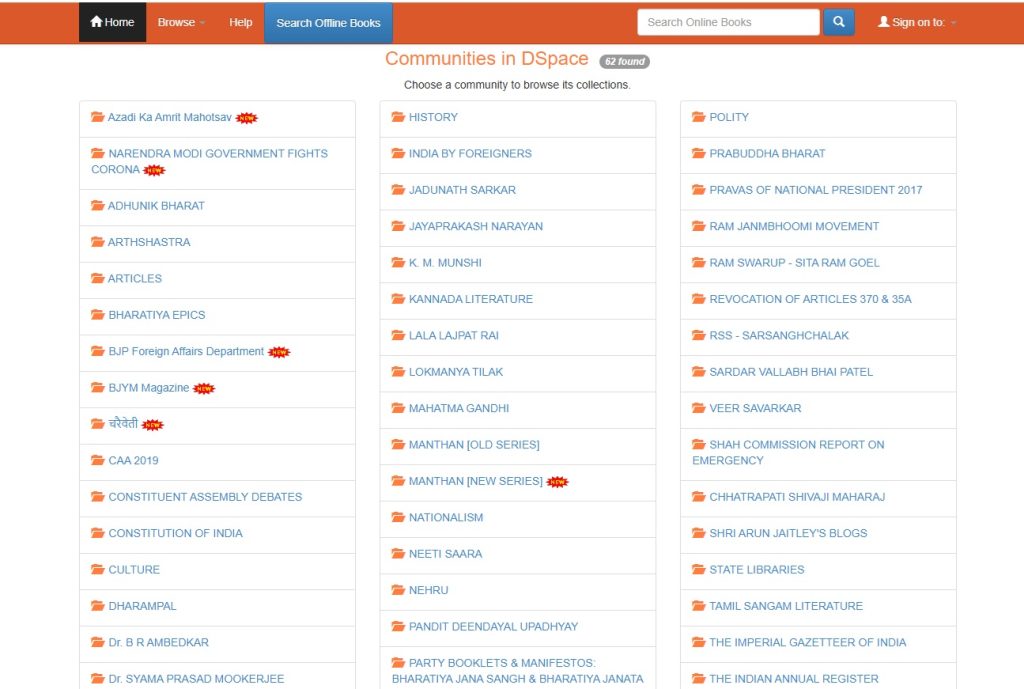
BJP’s Website With Central Library Has Volumes Of Books Promoting Tamil Literature, DMK’s Website Has None

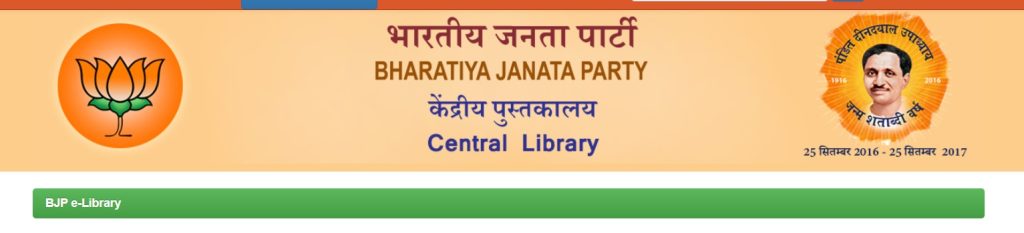
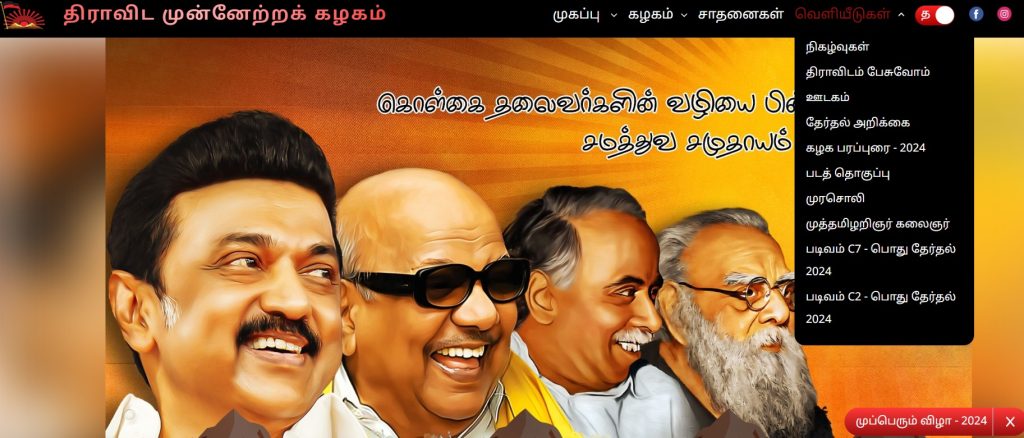
A political party’s website serves as a reflection of its ideology, priorities, and engagement with cultural and intellectual heritage. The Bharatiya Janata Party (BJP), through its website, hosts a vast digital library—an intellectual repository comprising historical, political, philosophical, and literary works, including significant contributions to Tamil literature. On the other hand, the website of the Dravida Munnetra Kazhagam (DMK), a party that claims to champion Tamil identity and culture, lacks any such intellectual repository, let alone a dedicated section for Tamil literature.

BJP’s Extensive Digital Library: A Treasure Trove Of Knowledge

The BJP’s e-library boasts a staggering collection of resources across multiple disciplines, emphasizing India’s history, culture, philosophy, and governance.

Among its 62 categorized sections, one finds:

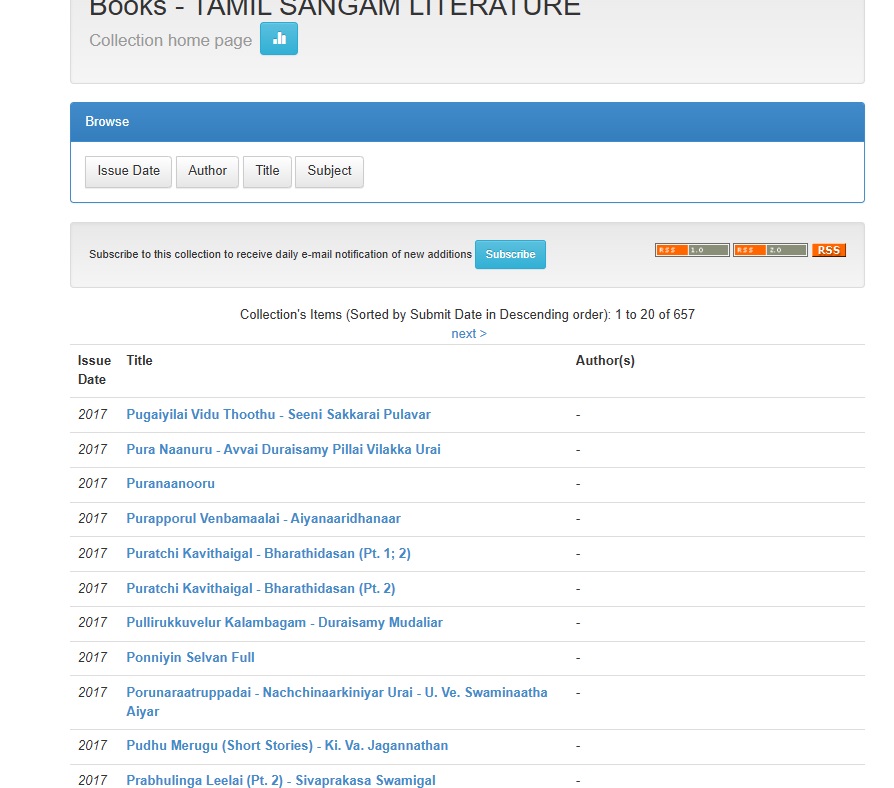
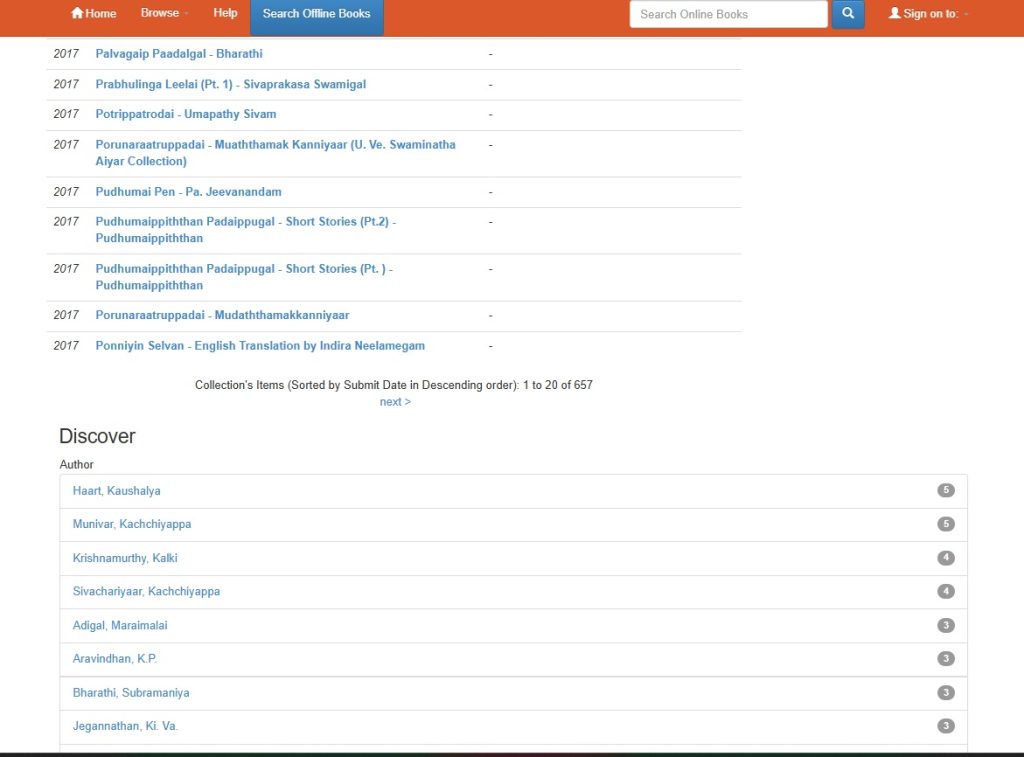
  • TAMIL SANGAM LITERATURE: A dedicated space for Tamil’s ancient literary tradition, celebrating the works from the Sangam era such as Kanchi Puranam by Kachchiyappa Munivar, Naalayira Dhivya Pirabandham, Kanda Puranam by Kachchiyappa Sivachariyaar. Some of the other works on display in the Tamil Literature category include works of Bharathiyar, Maraimalai Adigal, Kalki Krishnamurthy, Meenakshi Sundaram Pillai, and Sivagnaana Swamigal to name a few.

Some of the other noteworthy additions to the library include:

  • BHARATIYA EPICS: Showcasing India’s civilizational continuity, including Tamil contributions.
  • HISTORY AND CULTURE: Featuring diverse perspectives on India’s historical trajectory, including figures like Chhatrapati Shivaji Maharaj and Veer Savarkar.
  • POLITICS AND GOVERNANCE: Providing insights into India’s constitutional evolution, parliamentary debates, and economic thought.

This repository is not just a collection of books; it serves as a knowledge hub for researchers, scholars, students, and the general public interested in understanding India’s intellectual traditions, including the contributions of Tamil civilization.

Absence Of A Knowledge Base With DMK: A Stark Contrast

In contrast, the DMK’s official website lacks an equivalent knowledge hub. A party that claims to uphold Tamil pride and promote its linguistic heritage has glaringly omitted a digital collection that could serve as an educational resource on Tamil history, literature, and philosophy. There is no visible archive of Tamil literary works, Sangam poetry, or historical records that highlight Tamil Nadu’s rich contributions to Indian civilization. All we can see is Dravidian Model, events, photos, election manifesto, and such. 

For a party that often positions itself as the guardian of Tamil identity, this absence raises serious questions. Why has the DMK not invested in curating a digital archive showcasing Tamil literature and historical texts? Why is there no repository of works by great Tamil poets, philosophers, and thinkers?

This is how it is for all the boasting they do about being saviours of Tamil culture and language!

A Commitment To Intellectual Empowerment

The BJP’s commitment to intellectual empowerment is evident in its structured approach to documenting and disseminating knowledge. It has created a centralized digital resource where history, politics, culture, and philosophy converge, offering access to seminal works in various languages, including Tamil. Meanwhile, the DMK’s failure to establish a similar resource suggests a lack of genuine commitment to knowledge-building beyond political rhetoric.

If the DMK truly wants to be seen as the protector of Tamil culture, it must take concrete steps—starting with the creation of a digital repository that does justice to the legacy of Tamil literature and history. Until then, the BJP’s digital library remains a testament to its efforts in preserving and promoting India’s diverse intellectual traditions, including Tamil contributions, while the DMK’s website stands devoid of any such meaningful engagement with Tamil heritage.

Subscribe to our channels on Telegram, WhatsApp, and Instagram and get the best stories of the day delivered to you personally.

DMK Min PTR Palanivel Rajan Who Wants TN Govt School Children To Study Only 2 Languages Made His Kids Study In A School That Follows Multilingualism

In a recent interview with Karan Thapar on The Wire, Tamil Nadu’s Minister for Information Technology and Digital Services, P.T.R. Palanivel Thiagarajan (PTR), showcased a level of arrogance and hypocrisy that has become emblematic of the DMK’s approach to governance and policy. While defending Tamil Nadu’s two-language policy and opposing the National Education Policy (NEP), PTR’s arguments were riddled with contradictions, elitism, and a blatant disregard for facts.

In the interview not only did he insult Hindi speakers but also ridiculed children in UP and Bihar.

Throughout the video, he kept harping on one point alone – TN government school children should study only 2 languages. He called it anethnically, culturally, and economically, sophisticated approachthat has apparently yielded spectacular results. Well, the ASER Report 2024 will probably be laughing in a corner. Speaking to Karan Thapar, he said, We are elected by the people, we are legislators, we form a government, we have a government policy. Our policy is a two-language policy. We are very very clear that we do not want a three-language policy. It doesn’t matter to me what Mr Yadav thinks. I’m so glad. How many children in Uttar Pradesh know three languages? How many children in Bihar know three languages? Since you have such a fantastic idea that every child can learn three languages, what has been the outcome in our country for the last 75 years? What percentage of our children are spectacularly good at two? Let’s start then with three. What do you mean children are spectacularly good at learning? Where have been the outcomes to show any of this to be true? We are very clear we want a two-language formula; it is both an ethnically, culturally, and economically, sophisticated approach that has yielded spectacular results. Tell me one place where a three-language formula in this country has yielded better results than the state of Tamil Nadu and explain to me why we should change our policy for the sake of somebody else.”

But here’s the hypocrisy of PTR that we are exposing.

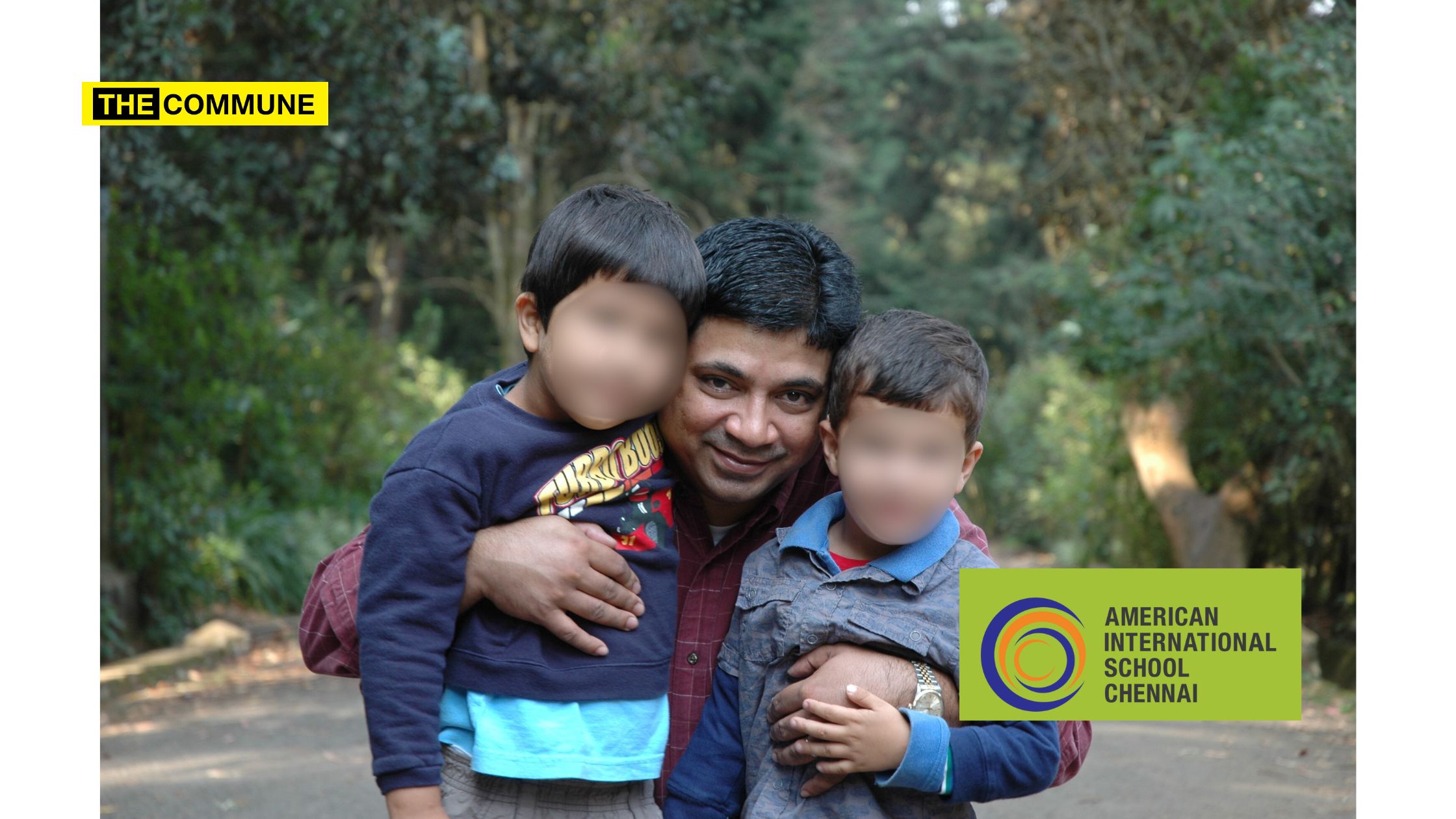
PTR Palanivel Thiagarajan is married to an American woman, Margaret Thiagarajan, and has two children Palani and Vel. As per this report published in The Hindu in 2017, it was revealed that Palani (then 12 years of age) and Vel (then 10 years of age), we have PTR himself admitting that the children studied at The American School in Chennai.

While English is the medium of instruction at The American School in Chennai, they also offerworld languages (French and Spanish)for students in Grades 3–5. They also offer English as an additional language for students whose mother tongue/language spoken at home is not English.

It is at this grade that students in India under NEP 2020 are also introduced to another language (Indian). So if PTR’s sons could study world languages apart from English, then why is he denying the opportunity of government school students in Tamil Nadu to learn another Indian language is what critics ask.

PTR’s Schooling

For all the Dravidianist talk that PTR and his father/grandfather, who were hardcore Dravidianist leaders, spoke, PTR himself is an alumnus of The Lawrence School, Lovedale, and Vikaasa School, Madurai as per Wikipedia.

It is a known fact that The Lawrence School offers French as an additional language for its students.

PTR belonged to Class of 1983. Learning French was vogue then as much as it is in vogue now.

Ultimately, PTR’s stance appears less about preserving Tamil Nadu’s cultural identity and more about perpetuating a divisive and elitist agenda that denies students the chance to thrive in a multilingual, interconnected world. Would leaders like PTR align their personal practices with their public policies and prioritize the holistic development of all students, rather than imposing arbitrary limitations rooted in political rhetoric?

Subscribe to our channels on Telegram, WhatsApp, and Instagram and get the best stories of the day delivered to you personally.

Dravidianist Rag Vikatan Gets A Knock On Its Head: Madras High Court Orders It To Remove Slanderous Cartoon On PM Modi

On 6 March 2025, the Madras High Court granted temporary relief to the Tamil magazine Vikatan, instructing the Union government to unblock its website. However, the relief was conditional on the magazine removing a controversial cartoon depicting Prime Minister Narendra Modi in chains while meeting former U.S. President Donald Trump.

Justice D. Bharatha Chakravarthy issued the directive in response to a writ petition filed by Ananda Vikatan Productions Private Limited and Ananda Vikatan Publishers Private Limited. The petition challenged the Information and Broadcasting Ministry’s order from 25 February 2025, which had blocked public access to Vikatan’s website and sought its immediate restoration.

Senior Counsel Vijay Narayan, assisted by Rahul Unnikrishnan, represented the petitioners. He argued that Article 19(2) of the Indian Constitution allows restrictions on free speech only under specific grounds, including threats to sovereignty, integrity, security, public order, decency, morality, defamation, or incitement to violence. Similarly, Section 69A of the Information Technology Act, 2000, permits blocking content only on these grounds. He contended that merely citing an impact on “sovereignty” without demonstrating harm to “integrity” was insufficient to justify blocking the website.

Narayan emphasized that the published cartoon did not fall under any of the legally defined reasons for restricting access to information. He asserted that the artwork had not harmed India’s sovereignty, integrity, or diplomatic relations with the United States. Highlighting concerns about journalistic freedom, he pointed out that political cartoons of world leaders are common internationally but rarely face such severe actions. Furthermore, he criticized the government for refusing to disclose the identity of the complainant whose grievance led to the website’s blocking.

In response, Additional Solicitor General (ASG) AR.L. Sundaresan countered the arguments by stating that both Article 19(2) and Section 69A include “foreign relations” as a valid reason for restricting content. He argued that the cartoon could negatively impact India’s relations with the U.S., justifying the government’s action. The ASG also pointed out that granting an interim stay on the ministry’s order would effectively resolve the case before the government could submit a formal response. He further noted that an internal committee had already recommended restoring access to the website if Vikatan voluntarily removed the controversial cartoon.

After hearing both sides, Justice Chakravarthy ruled that the entire website did not need to remain blocked while the court deliberated on whether the cartoon fell within the bounds of free speech or affected international relations. He, therefore, instructed Vikatan to temporarily take down the image and notify the ministry so that public access to the website could be restored.

Additionally, Narayan urged the court to expedite the case and direct the government to submit its counter-affidavit without unnecessary delays. In response, Sundaresan assured that the affidavit would be filed within two weeks. Consequently, the judge scheduled the next hearing for 21 March 2025, to review the government’s response.

(With inputs from The Hindu)

Subscribe to our channels on TelegramWhatsApp, and Instagram and get the best stories of the day delivered to you personally.

DMK Cries About Imaginary Hindi Imposition, Here’s How They’re Protecting Tamil

Tamil activists and enthusiasts have raised concerns over the deteriorating condition of the Tamil Development and Cultural Center in Tirunelveli, which has remained abandoned, overgrown with bushes, and left without maintenance. They have urged the district administration to utilize the facility, at the very least, for the upcoming two-day official language seminar planned at the Tirunelveli Collector’s Office.

Located on Uzhuvai Road in NGO Colony, the center was constructed to host events for the Tamil Development Department. Spanning approximately 50 cents of land, the building covers 10,000 square feet, with 5,000 square feet on each floor. Its prime location near the Tirunelveli New Bus Stand makes it an ideal venue not only for Tamil Development Department activities but also for literary and cultural events. However, despite its potential, the center has remained inactive for years.

The administration of the center falls under the jurisdiction of the District Collector, with the Deputy Director of the Tamil Development Department serving as Secretary. Although there are additional officials such as Joint Secretaries and Executive Committee members, the facility has been left unused. Meanwhile, official language seminars continue to be held at the Collector’s Office instead of utilizing this purpose-built center.

Activists argue that shifting such events to the Tamil Development and Cultural Center would help restore its relevance. They also emphasize the need for its revival to support book publications, literary events, and other Tamil cultural activities. The call for action has reignited hopes that the neglected center will once again serve its intended purpose.

DMK’s Hypocrisy: Claim To Save Tamil While Letting It Deteriorate

For the past week, the ruling DMK has been loudly proclaiming that it is protecting Tamil from the “invasion” of other languages, particularly Hindi. But in reality, has the party truly safeguarded Tamil language and culture in the state? The answer is a resounding no. Just like the abandoned Tamil Development and Cultural Center in Tirunelveli—left to decay, overgrown with bushes, and without proper maintenance—Tamil itself has suffered under the Dravidianist rule.

Abysmal Levels Of Tamil Literacy Among Students As Per ASER Report 2024

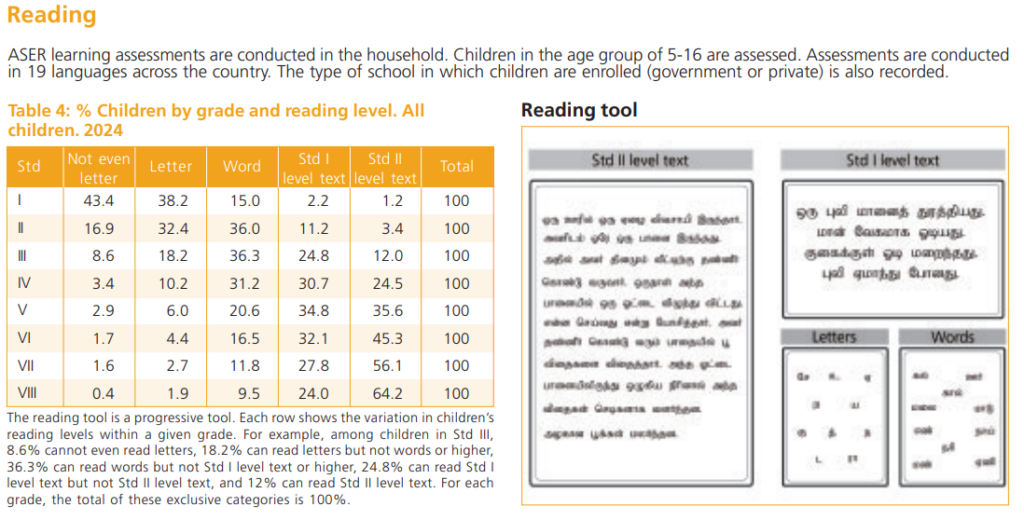
A stark example of this neglect can be seen in the shocking findings of a Tamil reading assessment conducted for school students in the ASER report 2024:

Class 3 Reading Levels: A Crisis in Tamil Education

  • 8.6% of students cannot even recognize letters in Tamil.
  • 18.2% can identify letters but cannot read words.
  • 36.3% can read words but fail to comprehend even a Class 1-level text.
  • Shockingly, only 12% of Class 3 students can read at a Class 2 level.
The Learning Crisis in Government and Private Schools

  • 86.8% of Class 3 government school students cannot read a Class 2 text.
  • Even in private schools, 90% of Class 3 students fail to meet this benchmark.
  • 63% of Class 5 government school students still struggle to read a Class 2 text.
  • Alarmingly, even in private schools, 32.3% of Class 5 students fail this basic test.
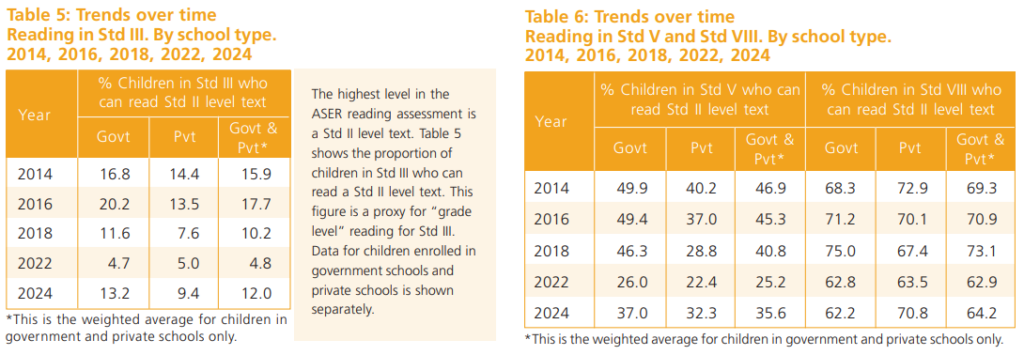
These numbers expose the deep crisis in Tamil education, proving that the DMK’s rhetoric on protecting the language is nothing more than a political stunt. Instead of actually strengthening Tamil education, the party has let literacy rates plummet—leaving students unable to read in their own mother tongue.

No Tamil Prachar Sabha Established Anywhere In The Country

For all the talk about the presence of Hindi Prachar Sabha in Tamil Nadu, there is not a single Tamil Prachar Sabha established by the so-called guardians and saviours of Tamil language – the Dravidianists.

The DMK often boasts about its efforts to uphold the Tamil language, frequently citing its role in securing Classical Language status for Tamil in 2004. However, while the central government actively supports classical languages through various initiatives, the Tamil Nadu government has failed to implement similar measures to truly promote Tamil.

The benefits of Classical Language status are extensive—it helps preserve ancient knowledge, cultural identity, and literary traditions, fosters research and academic study by establishing research centers and university chairs, provides national awards for scholars, offers financial assistance to promote the language, and supports focused teaching and advanced studies. Despite these advantages, has the Tamil Nadu government established anything comparable to the Hindi Prachar Sabha? The answer is a big no.

While the central government allocates funds for the development of Tamil, the DMK has done little to establish dedicated institutions that systematically promote the language. Their claims of protecting Tamil remain empty rhetoric, with no real action to back them up.

(With inputs from Dinamalar)

Subscribe to our channels on TelegramWhatsApp, and Instagram and get the best stories of the day delivered to you personally.

DMK Executive Accused Of Assault, Land Grabbing, And Illegal Occupation Of Temple Land In Chennai

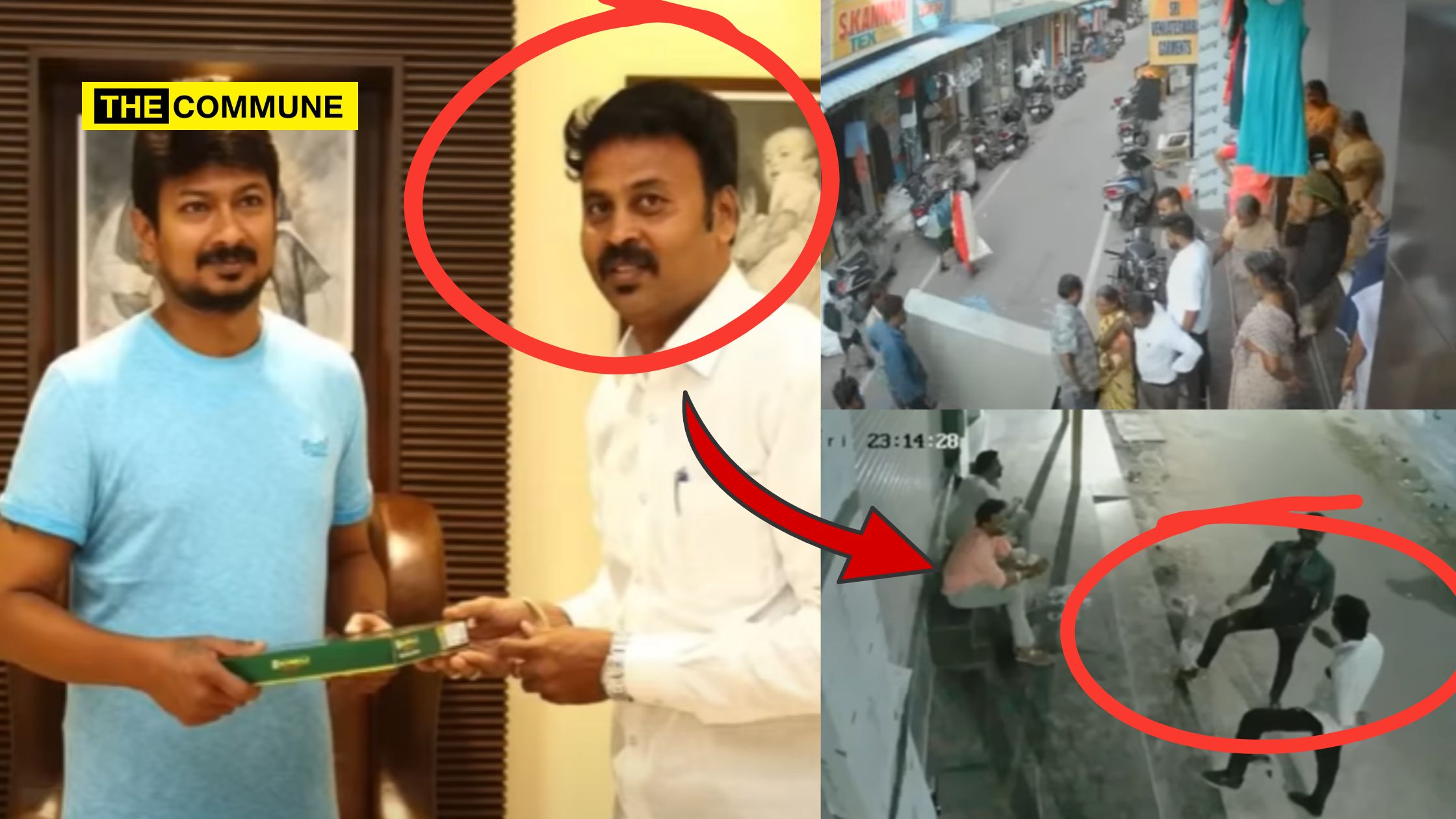
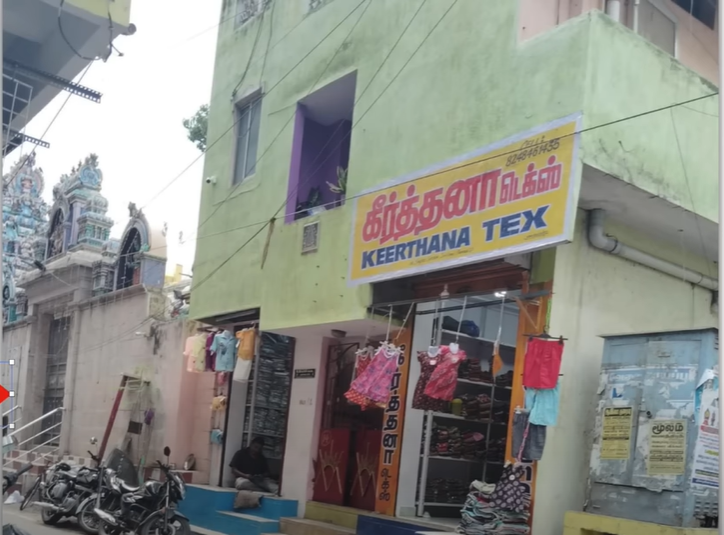
A complaint has been lodged against a DMK executive for allegedly assaulting a clothing store owner in Old Washermanpet, Chennai, and attempting to seize the shop.

Mano Shankar, a resident of Old Washermanpet and the owner of the clothing store, has submitted a complaint to the Police Commissioner’s office.

In his complaint, he accused DMK executive Rajan of attempting to take over his store in collaboration with a known criminal with a history of offenses. After filing the complaint, Mano Shankar spoke to reporters, claiming that Rajan had threatened to kill him if he did not comply with his demands.

A CCTV video has surfaced showing DMK executive Rajan allegedly plotting to seize a clothing store in collaboration with a known criminal, sparking fear among the public.

The footage, recorded the night before the incident, captures Rajan discussing the plan with history-sheeters. They were heard saying that if they managed to take over the store, they could lease it for an advance of ₹1 crore and generate a monthly income of ₹1 lakh. They also mentioned that the issue could be resolved by bribing senior police officials with ₹20 lakh.

Criminals Niranja, Lenin Kumar, and Karthik reportedly agreed to the plan but suggested that, instead of directly getting involved, it would be safer to use women to avoid suspicion. On 27 February 2025, they executed their scheme by sending a group of local women disguised as customers into the store. The women caused a commotion and allegedly attempted to place an empty almirah inside the shop to fabricate evidence of ownership.

Following the incident, the store owner filed a complaint at the Royapuram police station. Speaking to reporters, he claimed, “There were around 20-30 people recording videos, trying to provoke us into reacting so they could use it as evidence against us.”

It is further alleged that after the case was registered, the CCTV cameras were destroyed, leading to another complaint. Additionally, two FIRs had already been filed against DMK executive Rajan and his brother Jayakumar at the police station. However, no action has been taken against them, reportedly due to their political connections as members of the ruling party and Jayakumar has been continuously threatening them to withdraw the case.

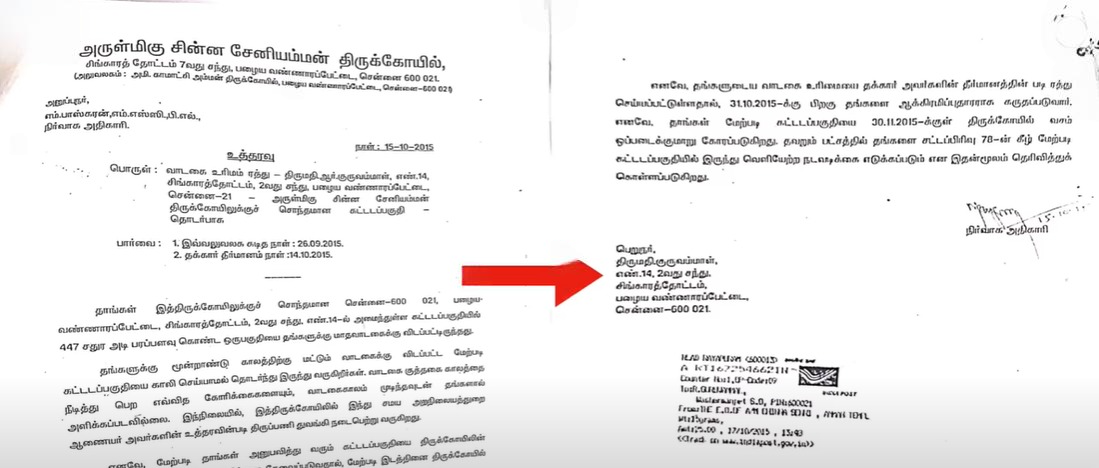
This is not the only instance where DMK functionary Rajan has been accused of illegal land occupation. Previously, he and his associates had taken the land of Arulmigu Chinna Seniamman Temple in Old Washermanpet on lease for three years. However, even after the lease period ended, they refused to vacate the premises.

Instead, they allegedly constructed two unauthorized buildings on the land and began renting them out for ₹50,000 per month. Despite an eviction order being issued as early as 2015, the group has continued to occupy the property and profit from it. The temple falls under the jurisdiction of the Hindu Religious and Charitable Endowments (HR&CE) Department and is located near the residence of DMK HR&CE Minister Sekar Babu. However, no action has been taken to reclaim the land.

Subscribe to our channels on TelegramWhatsApp, and Instagram and get the best stories of the day delivered to you personally.
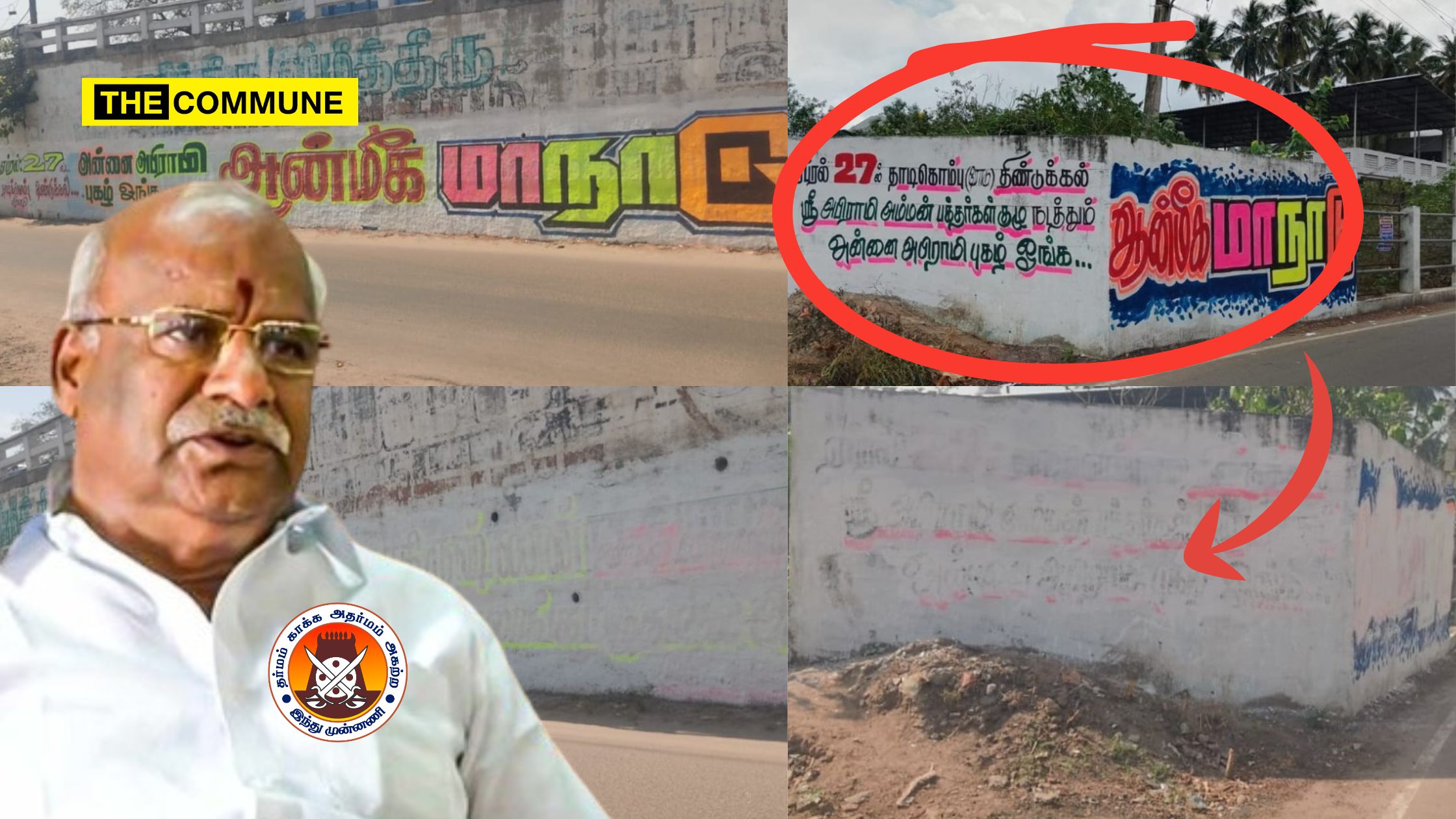
Dindigul Spiritual Conference Ads Erased Overnight, Hindu Munnani Slams DMK Govt For “Childish Politics” Over Hindu Religious Rights

The Hindu Munnani has strongly criticized and mocked the Tamil Nadu government for playing childish politics with Hindu religious rights, accusing it of systematically suppressing Hindu worship and faith. The latest controversy erupted after Dindigul city police erased wall advertisements promoting a spiritual conference organized by the Abhirami Amman Devotee Trust Group, scheduled for 27 April 2025. The police reportedly removed the advertisements in secrecy at night illegaly, sparking outrage among Hindu organizations.

In response, Hindu Munnani President Kadeswara Subramaniam ridiculed the ruling DMK government, asking, “Will the marriage stop if you hide the comb?”—implying that erasing advertisements would not prevent the spiritual event from taking place. He demanded immediate action against the officials responsible for this act, warning that failure to do so would result in a massive protest by Hindu organizations.

In an official statement, Subramaniam accused the Tamil Nadu government of using unlawful tactics to suppress Hindu religious rights and spiritual gatherings. He pointed out that, “The Tamil Nadu government is employing all kind of unlawful methods to suppress the legitimate worship rights of Hindus and spiritual festivals. On behalf of the Dindigul Sri Abhirami Amman Devotee Trust Group, various social organizations in Dindigul are coming together to organize a “Spiritual Conference to Hail Mother Abhirami” on 27 April. At this conference, Maharashtra Governor His Excellency C. P. Radhakrishnan, along with abbots and monks, will deliver spiritual discourses. The event also feature yajna sacrifices and other religious ceremonies. To promote the event, wall advertisements were put up across Dindigul city on behalf of the Sri Abhirami Amman Devotee Trust Group. However, the Dindigul District Police erased these advertisements whitewashing them overnight, without anyone’s knowledge. This act of the Dindigul District Police is shameful and humiliating. Even the ordinary daily activities of Hindus are being stopped and suppressed by the police every day in Tamil Nadu. Additionally, the government displayed its malice by erasing the names of the Honorable Governor and revered saints from these advertisements. What wrongdoing did the government find in organizing a spiritual conference for Hindus? Why such hostility towards Hindus? The Hindu Munnani strongly condemns this repression against Hindus. Action should be taken against the officials responsible for this heinous act. If corrective measures are not taken, we strongly assert that the Hindu Munnani will mobilize all communities and devotional organizations in Dindigul to launch a large-scale protest. We also wish to state clearly that If you hide the comb, the marriage will not stop.Through this statement, the Hindu Munnani expresses that no one can stop the Hindu uprising and Hindu unity that is emerging in a Sattvik manner in Tamil Nadu.”

Subscribe to our channels on TelegramWhatsApp, and Instagram and get the best stories of the day delivered to you personally.
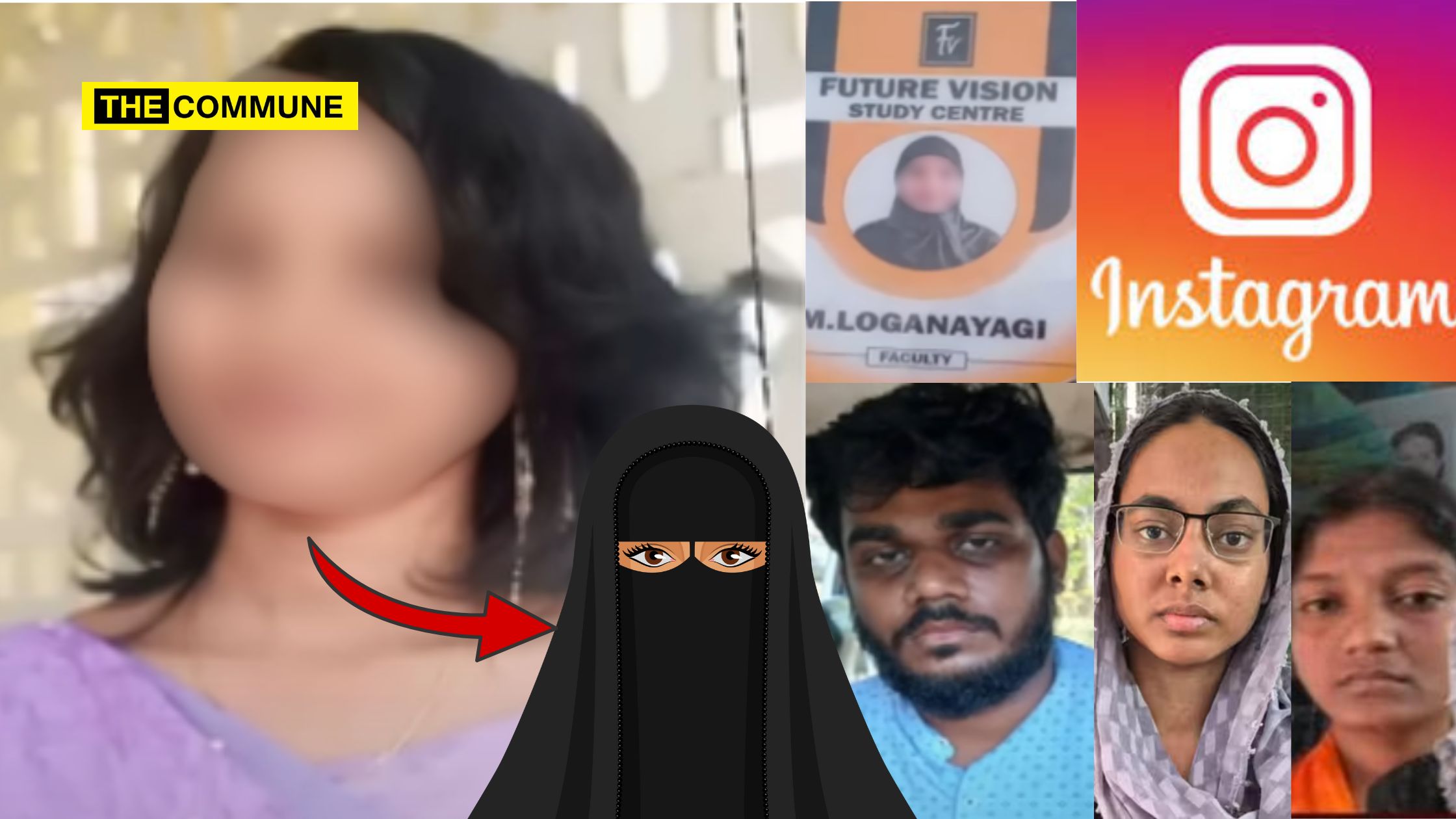
Tamil Nadu’s ‘Kerala Story’: Abdul Lures Loganayagi, Demands Conversion For Marriage, Then Kills Her With Accomplices Sultana & Monisha After She Finds Out About His Betrayal

In a shocking crime that has unsettled Salem, three individuals, including two women, were arrested on 5 March 2025 for brutally murdering a woman and disposing of her body in Shevaroy Hills located in Salem district.

The victim, identified as 31-year-old Loganayagi from Thuraiyur in Trichy district, had been residing in a private hostel near Salem’s new bus stand. She had been missing for four days, prompting the hostel warden to lodge a complaint with the Pallapatti Police. During the investigation, authorities discovered the woman’s body beneath the 60-foot bridge on the ghat road. Inside her purse, they found an ID bearing the name Loganayagi, though the photo on it showed her wearing a burqa. Further inquiry led investigators to trace her last known phone call to a young man in Trichy. Shortly after the call, her phone was switched off along the Ghat Road leading to Yercaud.

The caller, 22-year-old Abdul Hafeez, an engineering student from Perambalur, was taken into custody. During interrogation, he confessed to being in a relationship for four years with Loganayagi, a woman he had convinced to convert after meeting her on Instagram with the promise of marriage (One report identifies the deceased woman as Loganayagi, while another refers to her as Albiya). At the same time, he was also involved with another woman, Dhaviya Sultana (22), an IT professional. When Loganayagi learned about his other relationship, she demanded that Abdul marry her.

It is alleged that Abdul Hafeez had pressured Loganayagi to convert to his religion as a condition for marriage. Trusting him, she not only converted but also started wearing a burqa to work. However, despite her commitment, Hafeez allegedly continued to exploit her for his own desires.

Over time, Loganayaki discovered that Hafeez was becoming close to other women, leading to frequent arguments between them. Realizing she had been deceived, she decided to cut off communication with him. In an attempt to reconcile, Hafeez later claimed to have realized his mistake and assured her that he would marry her.

In response, Abdul allegedly plotted with Dhaviya Sultana (One report identifies the accomplice woman as Dhaviya Sultana, while another refers to her as Kaviya Sultana) and their mutual friend Monisha (21) to kill Loganayagi. On 1 March, the trio traveled to Salem, rented a self-drive car, and took Loganayagi with them. They then drove to a 60-foot bridge on the ghat road, where they reportedly killed her by injecting poisong with a syringe and threw her body into a 20-foot gorge before fleeing the scene.

Authorities later recovered the decomposed remains and sent them to Government Mohan Kumaramangalam Medical College and Hospital for an autopsy. A case was registered, and all three suspects were arrested.

(With Inputs From Polimer News)

Subscribe to our channels on TelegramWhatsApp, and Instagram and get the best stories of the day delivered to you personally.

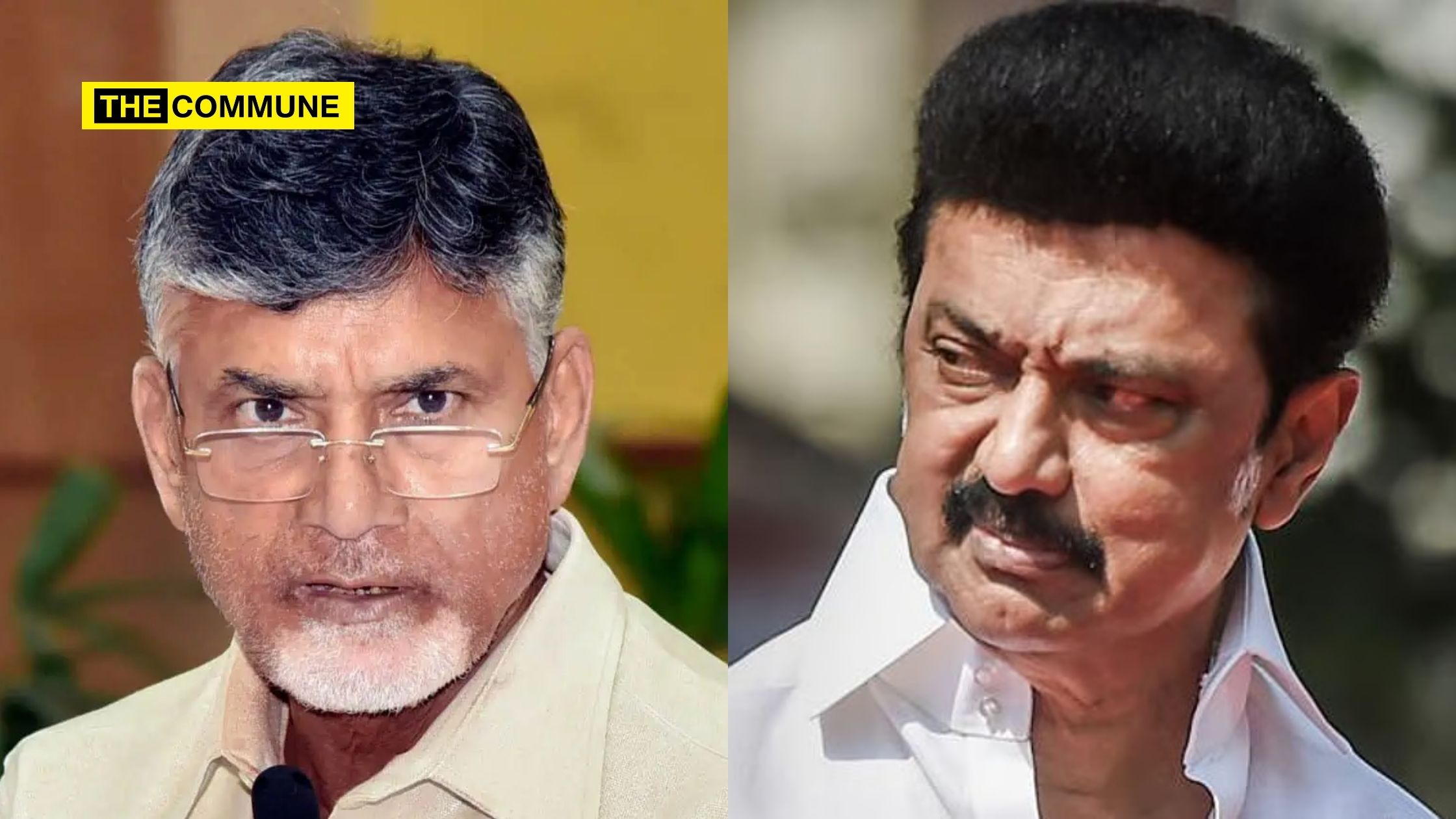
“Not 3, I’m Going To Promote 10 Languages”: Andhra CM Chandrababu Naidu’s Slipper Shot Response To MK Stalin’s Anti-Three Language Policy Stance

chandrababu naidu andhra cm stalin dmk hindi

In a bold statement aimed at Tamil Nadu Chief Minister MK Stalin, Andhra Pradesh Chief Minister Chandrababu Naidu said that he will not stop at implementing three languages but will promote 10 languages in his state. He said that he has plans to introduce the teaching of 10 languages in every university across the state. Speaking at a public event, he underscored the importance of multilingual education, advocating for the promotion of Telugu and English while also encouraging students to learn Hindi for better communication across India.

“Knowledge is different. Language is different. Now I’m going to promote 10 languages. Every university, 5-10 international languages. You study, go and work there. They need your services. Not only 3 languages, multilanguage.”, Chandrababu Naidu said.

He further added “Telugu we’ve to promote. English is international language for livelihood. Hindi better to learn so that it will be very easy to mingle with people. Nothing wrong in it.” which comes as a stinging response to MK Stalin who has been peddling hate against Hindi.

The DMK led by its Chief Minister MK Stalin has been going on a tirade against Hindi while refusing to implement the three language formula as laid down by the National Education Policy 2020. The NEP 2020 doesn’t mandate the teaching of Hindi but instead calls for introducing children to mother-tongue education till grade 5, learn English and any other Indian language. Tamil Nadu could implement the 3 language policy by introducing Telugu, Malayalam, Kannada, or any other language.

However, the DMK has weaved an imaginary Hindi imposition narrative. DMK cadres have been defacing Hindi words on the boards of central government offices and buildings at locations including SankarankoilPollachi, and Palayamkottai railway stations, as well as on the boards and banners at the Parangi Malai post office and BSNL office.

While DMK leaders either run CBSE schools or their kids study in schools that implement 3 language policy and teach Hindi, they’re denying the same opportunity to government school students.

Subscribe to our channels on TelegramWhatsApp, and Instagram and get the best stories of the day delivered to you personally.