Home Blog Page 369

DMK Govt’s HR&CE Dept To Spend ₹14 Crores Of Maasani Amman Temple Funds To Build Resort In Ooty, Devotees Object
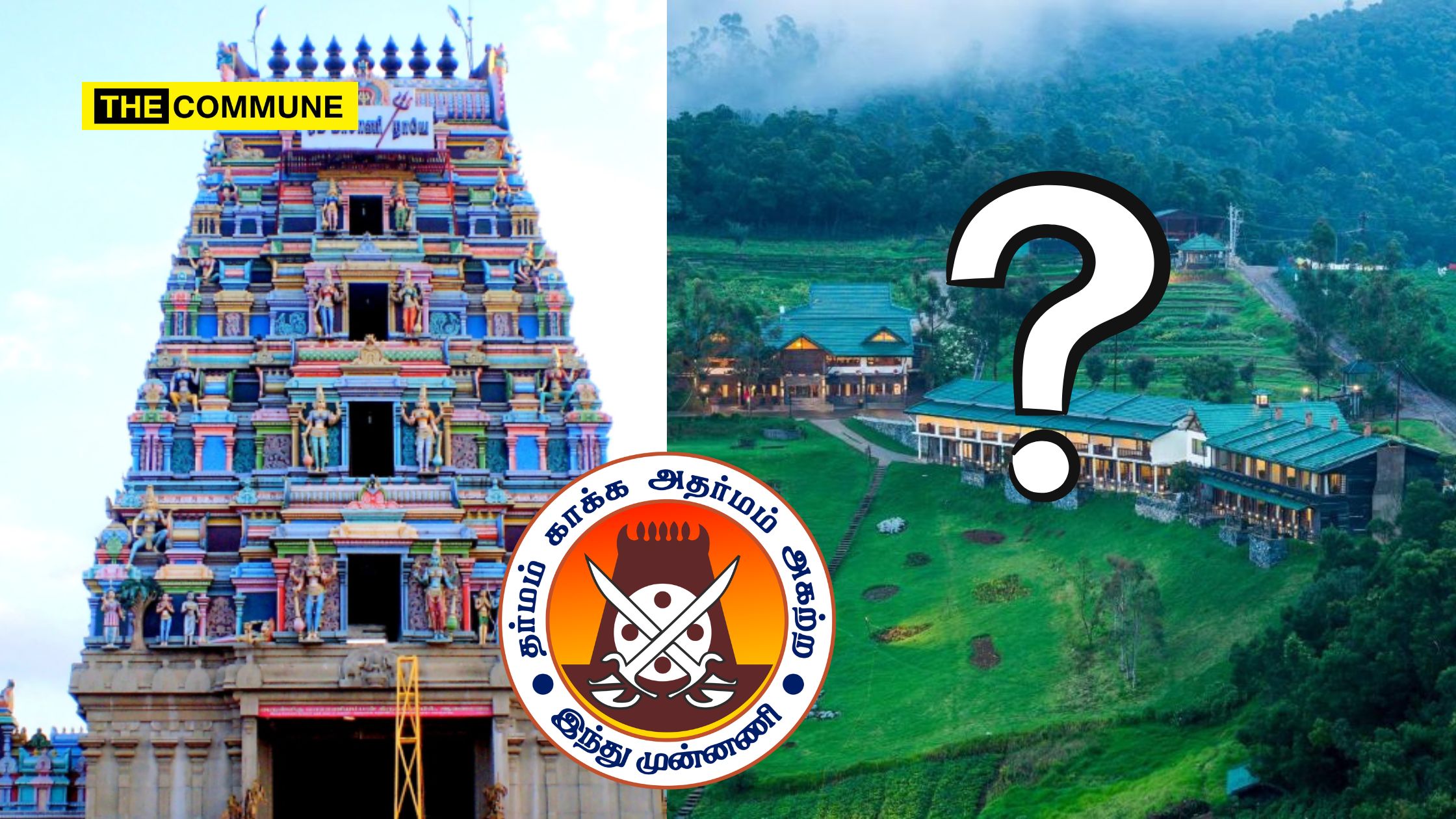
The Maasani Amman Temple is a famous Hindu temple located in Aanamalai near Pollachi in Coimbatore district. The presiding deity is a 17 feet idol of Goddess Maasani Amman. Thousands of devotees from across the state visit this famous temple and so the temple sees a lot of revenue coming into the Hundi.

According to a Dinamalar report, around ₹100 crore rupees paid as offerings by devotees to this temple has been deposited in the bank. The Hindu Religious & Charitable Endowments (HR&CE) department has reportedly decided to take around ₹14 crores from this amount to build a resort near Subramaniya Swami Temple in Kandal near Ooty. It has been decided to demolish the old residences there and build new ones.

The trustees of Maasani Amman Temple have opposed the HR&CE department’s decision to use temple funds for constructing a resort. With their term nearing its end, devotees allege that the department is appointing its own officials who are not resisting the project.

They further claim that the resort plan is being pushed by a businessman with ties to the DMK, who is orchestrating changes in temple management to facilitate the project. This has sparked outrage among devotees, who warn that the move could damage the DMK’s reputation in the region. In protest, they have written to the Tamil Nadu Governor and Chief Minister, urging them to intervene and halt the resort’s construction using temple funds.

The Hindu Munnani has raised concerns over the DMK government’s plans to divert temple funds from the Arulmigu Maasani Amman Temple in Pollachi towards building a resort in Ooty. Citing the Madras High Court’s directive that temple funds should be used exclusively for temple development and not for extravagant government expenditures, the organization has warned against any misuse.

In a post on its official X account, the Hindu Munnani questioned, “A resort in Ooty with temple money….???Is the Dravidian model DMK government planning to squeeze the 100 crore deposit money of the Pollachi Maasani Amman temple? The Dravidian model DMK government and the Hindu Religious and Endowments Department, which have repeatedly ruled that the temple money should be spent on the temple itself, should understand that the only aim of the people is to loot the temple money..!! A resort with Masani Amman temple money.” 

What Did Madras High Court Said?

On 9 January 2025, a two-judge bench of the Madras High Court ruled that surplus funds from revenue-generating temples cannot be used for constructing shopping complexes, reinforcing that temple funds should be utilized strictly for religious and charitable purposes.

The case originated when a Tamil Nadu resident, P. Bhaskar, came across a tender notice in the New Indian Express on 11 December 2023. The notice indicated that the Tamil Nadu Hindu Religious and Charitable Endowments (HR&CE) Department planned to build a commercial shopping complex on land belonging to the Arulmigu Nandeeswarar Shivan Temple, utilizing its surplus funds.

Concerned about the legality of this move, Bhaskar filed a Public Interest Litigation (PIL) in the Madras High Court, challenging the HR&CE Department’s decision. He argued that the temple, which falls under the jurisdiction of the Tamil Nadu government, was being operated without trustees and was effectively under the sole authority of the Joint Commissioner. Furthermore, he contended that under the Tamil Nadu HR&CE Act of 1959, surplus funds of temples must be utilized in specific ways as outlined in the legislation.

Legal Provisions On Temple Fund Usage

The Tamil Nadu HR&CE Act of 1959 clearly specifies in Sections 36, 36-A, and 36-B that temple surplus funds can only be used for religious and charitable activities such as conducting Hindu marriages and feeding the poor. Additionally, Section 66 provides guidelines for managing temple endowments (donations), restricting their use to purposes including:

  • Providing financial aid to underprivileged religious institutions
  • Supporting activities related to Hindu religious teachings
  • Promoting the recitation of sacred Hindu texts such as Divya Prabandham and Thevaram
  • Establishing schools to train Hindu priests
  • Creating universities dedicated to Hindu religious studies
  • Running educational institutions that include Hindu religious instruction

None of these provisions permit the construction of commercial properties such as shopping complexes.

Despite these restrictions, the HR&CE Department attempted to justify its plan by claiming that rental income from the complex would contribute to temple development. The department further assured that only Hindu vendors would be allowed to lease shops and that the complex would exclusively sell puja items, utensils, and vegetarian food.

High Court’s Judgment

The case was presided over by Chief Justice Kalpathi Rajendran Shriram and Justice Senthilkumar Ramamoorthy. The court observed that the Arulmigu Nandeeswarar Shivan Temple had no appointed trustees and questioned whether its surplus funds had been allocated according to Section 66 of the HR&CE Act. The judges emphasized that temple funds should be used for propagating religious values and maintaining Hindu traditions.

The ruling stated, “Constructing a shopping complex using temple funds does not serve the religious objectives outlined in the HR&CE Act. Such an endeavor fails to contribute to the propagation of Hindu tenets and, therefore, is not permissible.”

Additionally, the judges criticized the HR&CE Department for failing to conduct a feasibility study before proceeding with the project. They questioned the financial rationale behind the decision, stating:
“For instance, if ₹1 crore is spent on constructing the shopping complex, the projected return on investment has not been analyzed. A fixed deposit of the same amount would yield an annual return of approximately 7.25%. There is no evidence to suggest that the proposed project would generate returns exceeding this amount.”

The court also pointed out the potential risks associated with commercializing temple land, such as tenant disputes, rent recovery issues, and encroachment concerns. Consequently, it ruled that temple surplus funds must strictly be used for purposes defined in Sections 36-A, 36-B, and 66 of the HR&CE Act.

As a result, the court struck down the HR&CE Department’s plan to construct a shopping complex and recommended alternative uses for the existing temple land, such as planting native trees, hosting weddings for underprivileged Hindus, and establishing shelters to provide free meals.

Government Control Over Temples in Tamil Nadu

Unlike in most parts of India, where temples are managed by independent trusts or religious institutions, Hindu temples in Tamil Nadu are overseen by the state government through the Tamil Nadu Hindu Religious and Charitable Endowments (HR&CE) Act of 1959. This legislation was originally intended to ensure the efficient administration of temples and religious endowments.

Currently, the Tamil Nadu government controls:

  • 36,635 temples
  • 45 mutts
  • 68 temples associated with mutts
  • 189 charitable endowments
  • 1,721 specific endowments
  • 17 Jain temples

The HR&CE Department appoints key temple administrators, including the Commissioner, Joint Commissioner, and Assistant Commissioner. It also manages temple assets and finances under the pretext of ensuring sustainable development. Additionally, the government imposes levies of 1.5% to 4% on temple income for audit purposes.

Another controversial aspect of the HR&CE Act is its provision allowing the government to appoint priests (archakas), overriding traditional Hindu practices where specific communities manage temple rituals.

Under government control, Tamil Nadu has witnessed the decline of several historic religious institutions. Notably, 11 mutts have ceased to function in recent years, reducing the total number of operational Hindu mutts in the state from 56 to 45.

Conclusion

With its recent ruling, the Madras High Court reaffirmed that temple funds must not be diverted for commercial projects. The judgment serves as a reminder that government-controlled religious institutions must adhere to legal provisions governing fund utilization. By striking down the HR&CE Department’s plan, the court has reinforced the principle that temple resources should remain dedicated to religious and charitable causes.

Subscribe to our channels on TelegramWhatsApp, and Instagram and get the best stories of the day delivered to you personally.

Delhi High Court Orders Takedown of YouTube Video Alleging Exploitation at Isha Foundation

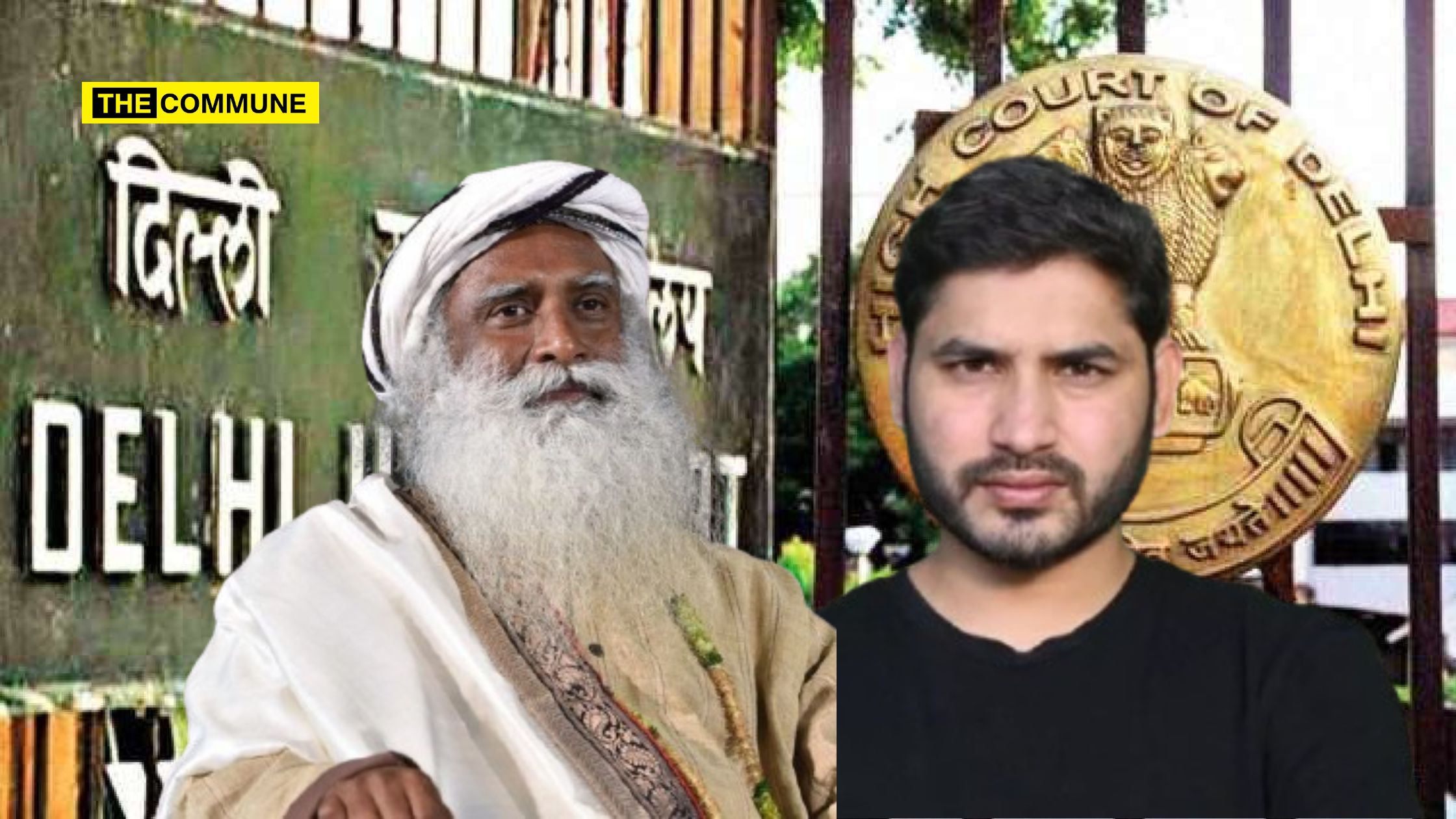
The Delhi High Court on Wednesday directed YouTube, X, and Meta to take down a video uploaded by YouTuber Shyam Meera Singh, which allegedly defames Isha Foundation and its founder, spiritual leader Sadhguru Jaggi Vasudev.

The video, titled “Sadhguru EXPOSED: What’s Happening in Jaggi Vasudev’s Ashram”, was uploaded on Singh’s YouTube channel on 24 February 2025 and subsequently shared on his X page. The video, which has amassed over 937,000 views, 65,000 likes, and 13,000 comments, contained allegations suggesting the exploitation of minors at the ashram.

Justice Subramonium Prasad, in an interim order, restrained Singh from publishing or sharing the video. The court also prohibited members of the public from re-uploading it on any social media platform. The order came in response to a defamation suit filed by Isha Foundation, which argued that the video was defamatory and based on unverified claims.

“The contents of the video are per se defamatory and directly impact the reputation of the Plaintiff in the eyes of the general public,” the court observed, adding that Singh’s video title was a “clickbait” meant to attract attention.

The bench further noted that reputation is an integral aspect of an individual’s dignity and emphasized the need to balance freedom of expression with the right to reputation, which is protected under Article 21 of the Indian Constitution.

Isha Foundation was represented in court by Senior Advocate Manik Dogra and a legal team from Athena Legal, including Advocate Yajat Gulia. The case will next be heard on 9 July 2025, with the interim relief application scheduled for 9 May 2025.

(With inputs from LiveLaw)

Subscribe to our channels on Telegram, WhatsApp, and Instagram and get the best stories of the day delivered to you personally.
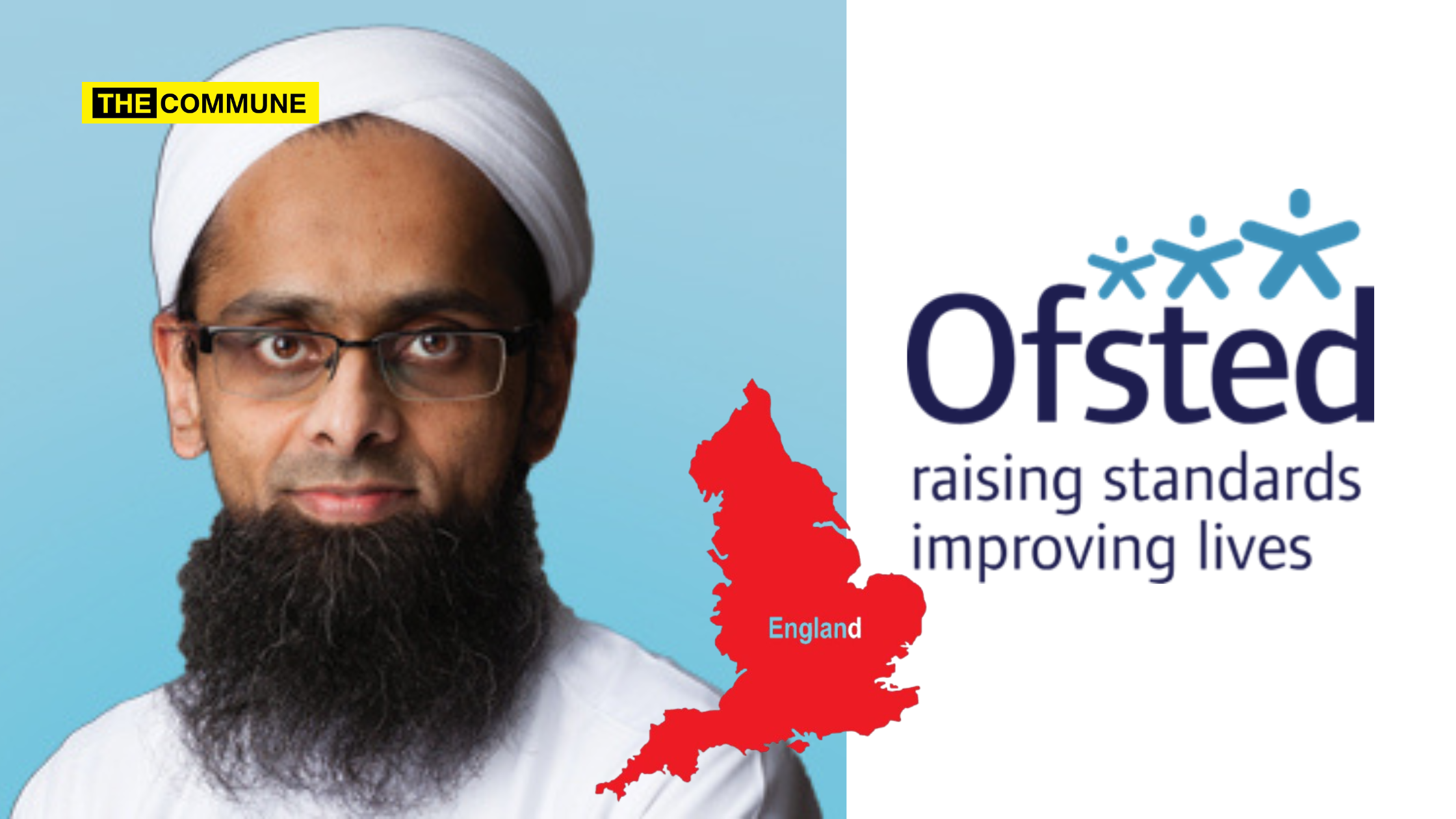
Hamid Patel Appointed Interim Chair Of Ofsted

Sir Hamid Patel, chief executive of Star Academies, has been appointed as the interim chair of Ofsted, the Office for Standards in Education, Children’s Services and Skills in England. He will serve in this role until the government appoints a permanent successor to Dame Christine Ryan, who announced her departure in November after four and a half years in the position.

Sir Hamid, an Ofsted board member since 2019, will hold the position for up to five months. His appointment comes at a time when Ofsted is undergoing governance reforms in response to a review led by former Chief Inspector Dame Christine Gilbert, published in September last year.

Chief Inspector Sir Martyn Oliver welcomed the appointment, saying,I am very pleased that Sir Hamid will be supporting us as interim chair while the government recruits Dame Christine’s successor. I look forward to working closely with him and, in time, with a new chair.”

As CEO of Star Academies since its formation in 2010, Patel has overseen the development of 36 primary and secondary schools across Lancashire, Greater Manchester, West Yorkshire, the Midlands, and London.

Beyond his role at Star Academies, Sir Hamid holds several key positions in the education sector. He is vice chair of the National Institute of Teaching, chairs the Cabinet Office’s independent Education Honours Committee, and serves as an honorary professor of education at the University of Birmingham. His leadership contributions have earned him numerous accolades, including a CBE in 2015 and a knighthood in the Queen’s Birthday Honours in 2021.

Subscribe to our channels on Telegram, WhatsApp, and Instagram and get the best stories of the day delivered to you personally.
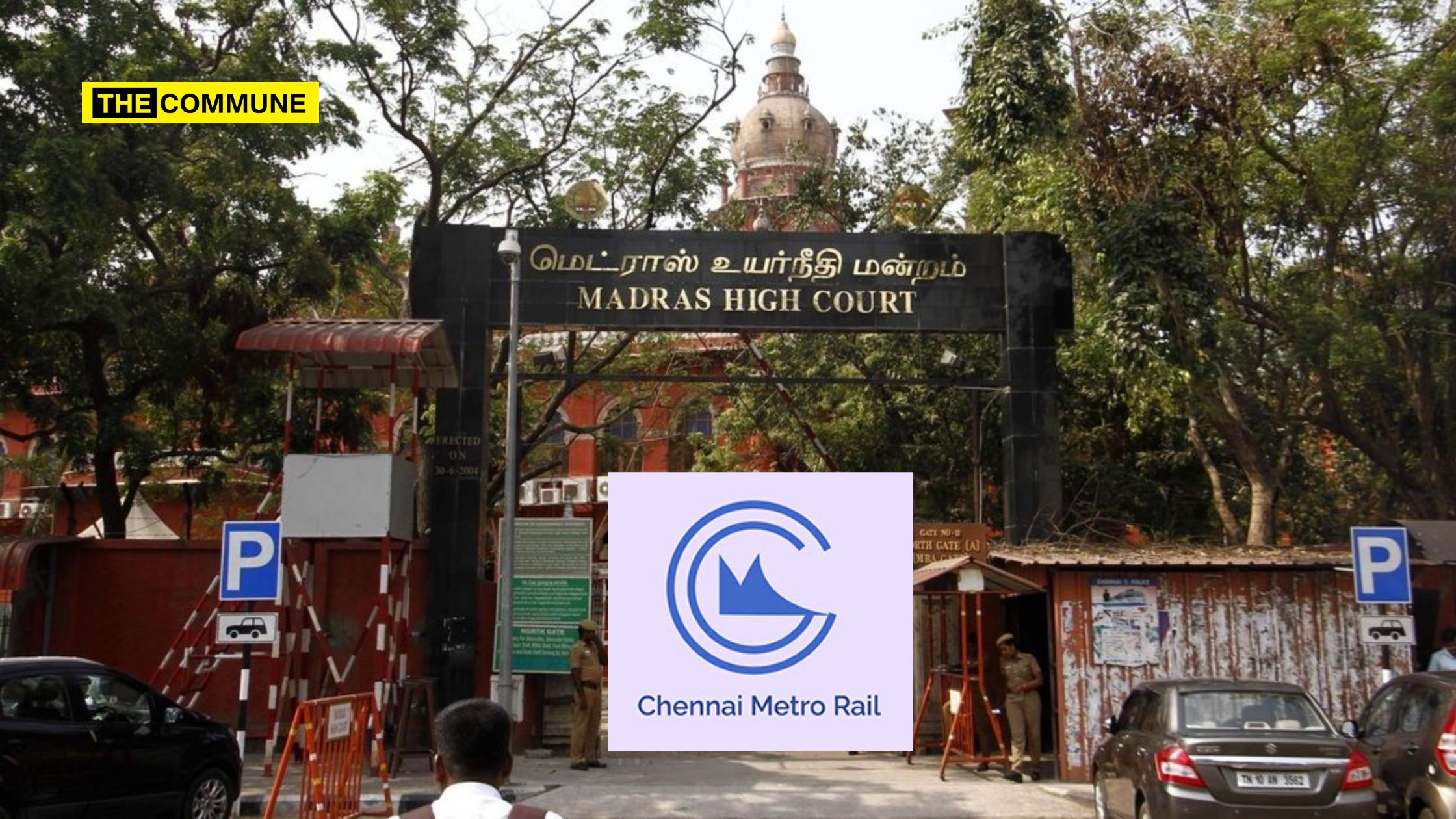
Madras HC Upholds Temple Land Acquisition For Metro Project, Says No Violation Of Fundamental Rights Under Articles 25 And 26

The Madras High Court has set aside a notice issued by Chennai Metro Rail Limited (CMRL) to acquire property belonging to United India Insurance for the construction of a metro station under Phase-II of the project. The court ruled that CMRL could proceed with its original plan of acquiring land from a nearby temple instead.

Justice Anand Venkatesh, borrowing from a Kerala High Court judgment, remarked that the Almighty would show kindness and benevolence toward the development of the metro station, benefiting lakhs of people. Quoting the Kerala High Court’s recent words, he observed:

“This Court, like P.V. Kunhikrishnan, J, fervently believes that the Almighty would undoubtedly shower his kindness and benevolence for the development of a metro rail station, which will benefit lakhs of people from all segments of society, some of whom may well be devotees, who visit the temple. In the words of the Kerala High Court, ‘God will forgive us. God will protect the petitioners, the authorities, and also the author of this judgment. God will be with us.’”

The court also clarified that religious institutions’ lands are not exempt from acquisition and that such acquisitions do not violate fundamental rights under Articles 25 and 26 of the Constitution.

Background

The case arose from a petition filed by United India Insurance challenging a show cause notice issued by CMRL under Section 3(2) of the Tamil Nadu (Acquisition of Lands for Industrial Purposes) Act, 1997. The notice asked why the company’s property should not be acquired for the proposed metro station.

Initially, CMRL had planned to locate the entry/exit points of the station within the premises of the Arulmighu Sri Rathina Vinayagar Temple and the Durgai Amman Temple. However, a public interest litigation (PIL) was filed by an organization representing devotees, opposing the move. Following a joint inspection, CMRL gave an undertaking to the High Court, stating that the metro station’s entry/exit points would instead be shifted to the insurance company’s property. Based on this assurance, the notice was issued to the company.

Arguments And Court Observations

United India Insurance argued that the show cause notice was merely a formality, as CMRL had already decided to acquire its property. The company highlighted that it had invested ₹250 crore in constructing its building after obtaining a No Objection Certificate (NOC) from CMRL, creating a legitimate expectation that the property would not be disturbed. Additionally, the company was not made a party to the earlier PIL and contended that the undertaking given by CMRL in that case could not be binding on it.

CMRL, however, maintained that its initial plan was to acquire temple land but shifted its stance following the devotees’ opposition. The agency argued that no final decision had been made and that objections raised by the insurance company would be considered independently.

The court, after examining the records, noted that the relocation of the Vinayagar deity had already been decided by the Hindu Religious and Charitable Endowments (HR&CE) department. Additionally, the Gopuram of the Durgai Amman Temple was planned to be shifted five meters inside and reinstated after the metro project. It was also observed that while the temples were claimed to be very old, they were, in fact, established only in 1960.

The court sided with the insurance company, agreeing that the notice amounted to a post-decisional hearing, as CMRL had already made a commitment in court. It ruled that CMRL’s actions were restricted by the principle of promissory estoppel, as the company had been led to believe that its property would remain undisturbed.

Court’s Final Decision

The High Court concluded that CMRL could not now take a different stand based on an earlier proceeding where the insurance company was not a party. Justice Anand Venkatesh stated:

“The CMDA, by granting approval, has induced the petitioner to invest funds. To allow the CMDA and the CMRL to sing a different tune at this juncture and that too on the basis of a proceeding, to which the petitioner was not even a party, would be grossly unfair and arbitrary. It would clearly tantamount to an abuse of power violating Article 14. As pointed out supra, the consent given by the CMRL before the First Bench of this Court cannot bind the petitioner since it was not made a party nor was heard before such orders were passed.”

Though CMRL argued against applying the promissory estoppel doctrine in this case, the court ruled that its defenses were not valid. Consequently, the show cause notice issued to the company was quashed.

The court refrained from imposing costs on the State or the devotees’ organization but emphasized that the highest aim of religion is to unite humanity. It reiterated that CMRL was free to proceed with its original plan of acquiring the temple land for the metro project.

(With inputs from LiveLaw)

Subscribe to our channels on Telegram, WhatsApp, and Instagram and get the best stories of the day delivered to you personally.
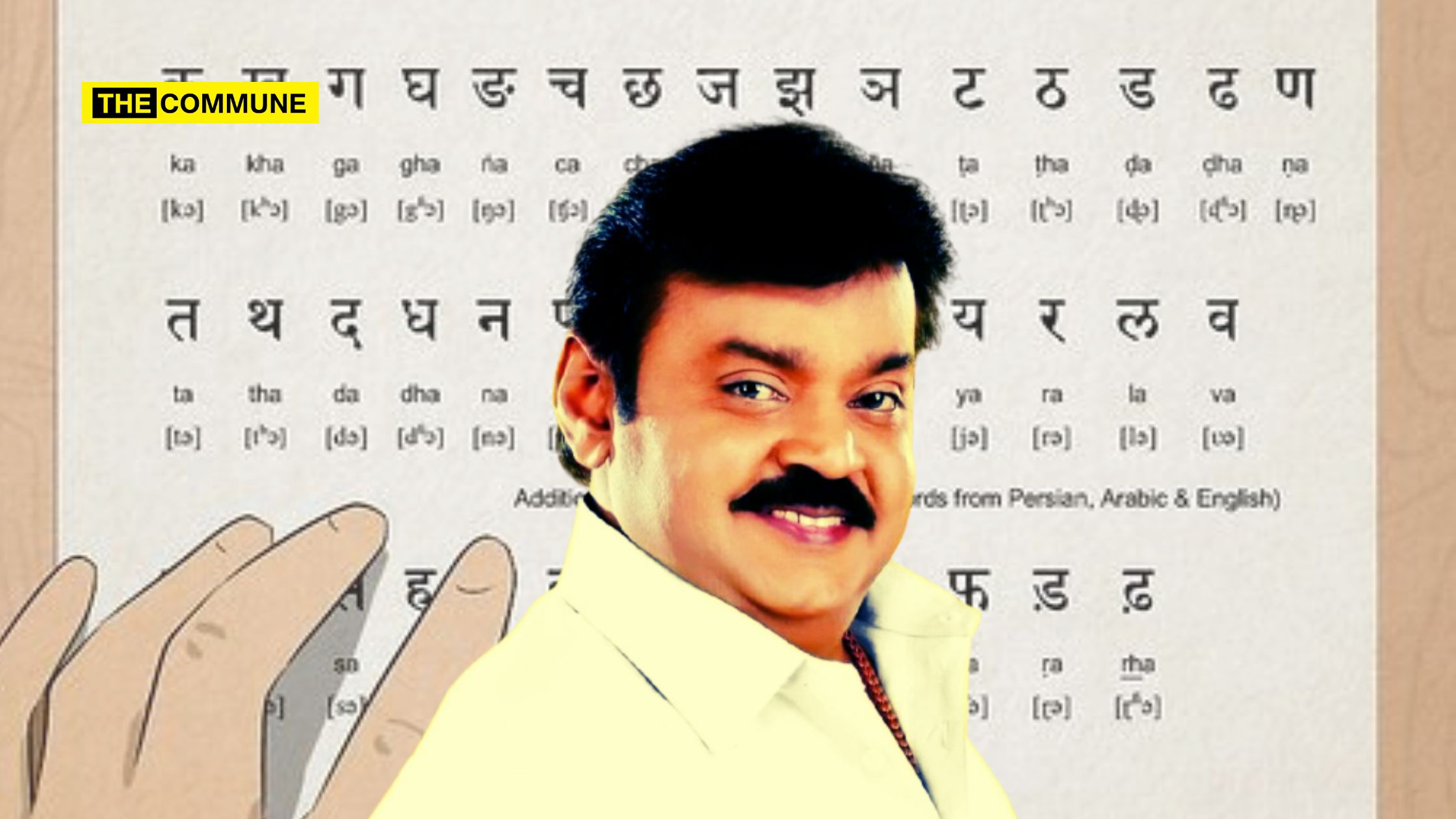
‘Protect Tamil, But Learn All Languages to Succeed’, When DMDK Founder Vijayakanth Professed Support For Learning Multiple Languages Including Hindi

Tamil language politics seems to be boiling over again and again and at this time, a video of DMDK founder actor turned politician Vijayakanth speaking in support of learning multiple languages surfaced on social media. Speaking on 1 May 2007 at a May Day public meeting in Tiruppur, Vijayakanth narrates an anecdote of someone telling him, “Had we studied Hindi, today Tamil Nadu would have been entire India. They did not let us learn the language. Because I do not know Hindi, I am finding it difficult here. AN Englishman also works where I work. I remember your words. You said, protect the mother tongue and learn all languages. I remember that thought.”

Vijayakanth continued, “I also experienced something similar like that sister. I am not finding fault with Tamil. We need Tamil. Tamil is like our two eyes, I am not denying that. Tamil is like our breath, I am not denying that. But in today’s scenario, we must know all languages. Today there are 2 lakh Tamilians, there are 5 lakh Tamilians in Bombay, did they learn and go there? No, they went there and learned it because they had to converse in Hindi with others, to help the family, my mother, and sister who are living in Chennai, Coimbatore, and Tiruppur and are dependent on them. So many Tamilians learned Hindi because of that need for survival. I went to Bengaluru and asked someone why they were working there. They said no one was employing them here but somehow learnt Kannada and survived there. Those near Krishnagiri speak that language. They say TN welcomes and helps those who come here to thrive. But today, the Tamil Nadu is eating up those who are natives. This is the truth.”

He added, “If DMDK comes to power, everyone should learn all languages, Tamil will be the first and important language, there are no second thoughts on that, but my people must have the knowledge of all the languages and succeed.”

Subscribe to our channels on Telegram, WhatsApp, and Instagram and get the best stories of the day delivered to you personally.
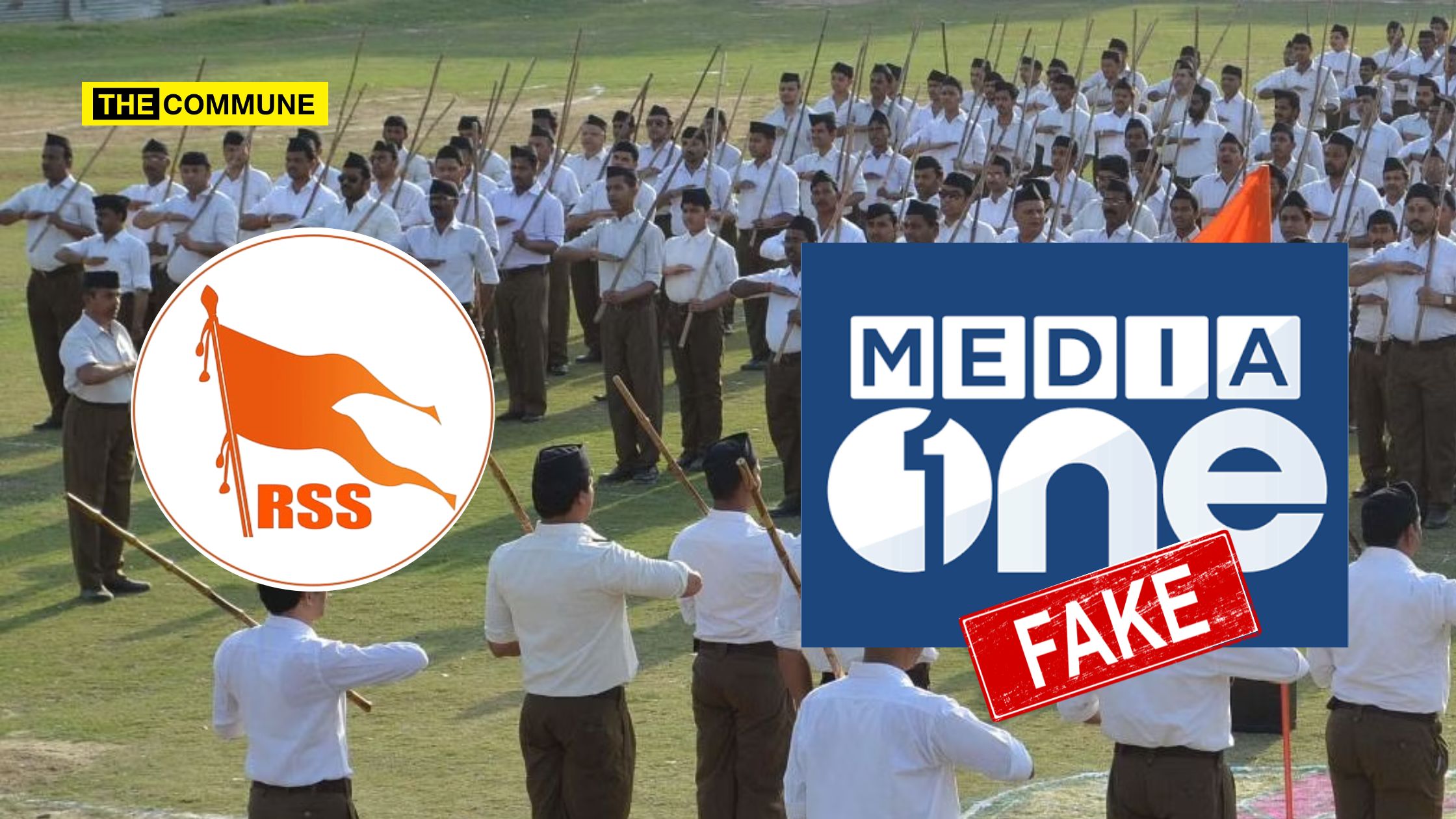
Kerala’s MediaOne Channel Peddles Fake & Unsubstantiated Claims About RSS

A controversial clip from MediaOne, a Malayalam news channel, is making rounds on social media, raising serious concerns about the blatant spread of misinformation. In the video, an anchor claims that AI-generated obscene images of Muslim women with Hindu men are being circulated online as part of an alleged anti-Muslim propaganda campaign. He said, “We are getting reports that obscene pictures of women made with AI are being propagated through social media. In those, pictures of Muslim women wearing purdah and hijab with Hindu men are being propagated. In response to this news we received, an activist told us that this is not to be seen just as a troll, it is anti-Muslim propaganda. It is also done to scare Muslim women. How do you see this Ajims?”

However, it is the shocking response from a panelist named Ajims that has sparked outrage. Ajims goes on to make an incendiary and unverified claim, stating,  “We can see this as a form of rape. Rape is used as a tool in wars. In India, rape is a tool of the RSS, like their Trishul or their big sword, rape is also a tool of the RSS, that to rape like that is not wrong. This has been said by their intellectuals. They shared this as a secret communication to rioters to rape. What they are doing now is through these pages (on social media/Facebook) which have more than 10,000 followers, they are spreading these rape comments and pictures. Those reading, seeing, those exposed to this content, even if they are very independent individuals, they feel that if there is a riot tomorrow, they should raise their (the youth) mental state to rape and kill people.”

These inflammatory remarks, presented without a shred of evidence, amount to a baseless and defamatory attack on the RSS and Hindus at large.

MediaOne’s Troubling History

This is not the first time MediaOne has found itself in controversy. In February 2022, the Central government banned the channel citing national security concerns. Though the Kerala High Court briefly stayed the ban, the Ministry of Home Affairs (MHA) had previously denied the channel’s security clearance, citing undisclosed threats. In 2020, the channel was suspended for 48 hours over its allegedly biased coverage of the Delhi riots, along with Asianet News.

Despite its track record of pushing questionable narratives, MediaOne has once again crossed ethical boundaries by airing unsubstantiated claims that have the potential to incite communal discord. The broadcast’s attempt to equate the RSS with war crimes and organized sexual violence is not only factually baseless but also dangerously provocative.

A Calculated Attempt to Incite Hatred?

The outrageous assertion that rape is an ideological tool of the RSS is a calculated attempt to malign Hindus, demonize a nationalist organization, and deepen communal tensions. Where is the evidence? What facts back up these grave accusations? MediaOne’s failure to substantiate such inflammatory remarks exposes its agenda of propagating fear and division.

This kind of reckless reporting cannot be brushed aside as mere opinion—it is an orchestrated assault on truth and harmony. Misinformation of this scale, if left unchecked, can stoke real-world violence and unrest. The concerned authorities must take stringent action against such irresponsible journalism and hold MediaOne accountable for its role in spreading communal falsehoods.

Subscribe to our channels on Telegram, WhatsApp, and Instagram and get the best stories of the day delivered to you personally.
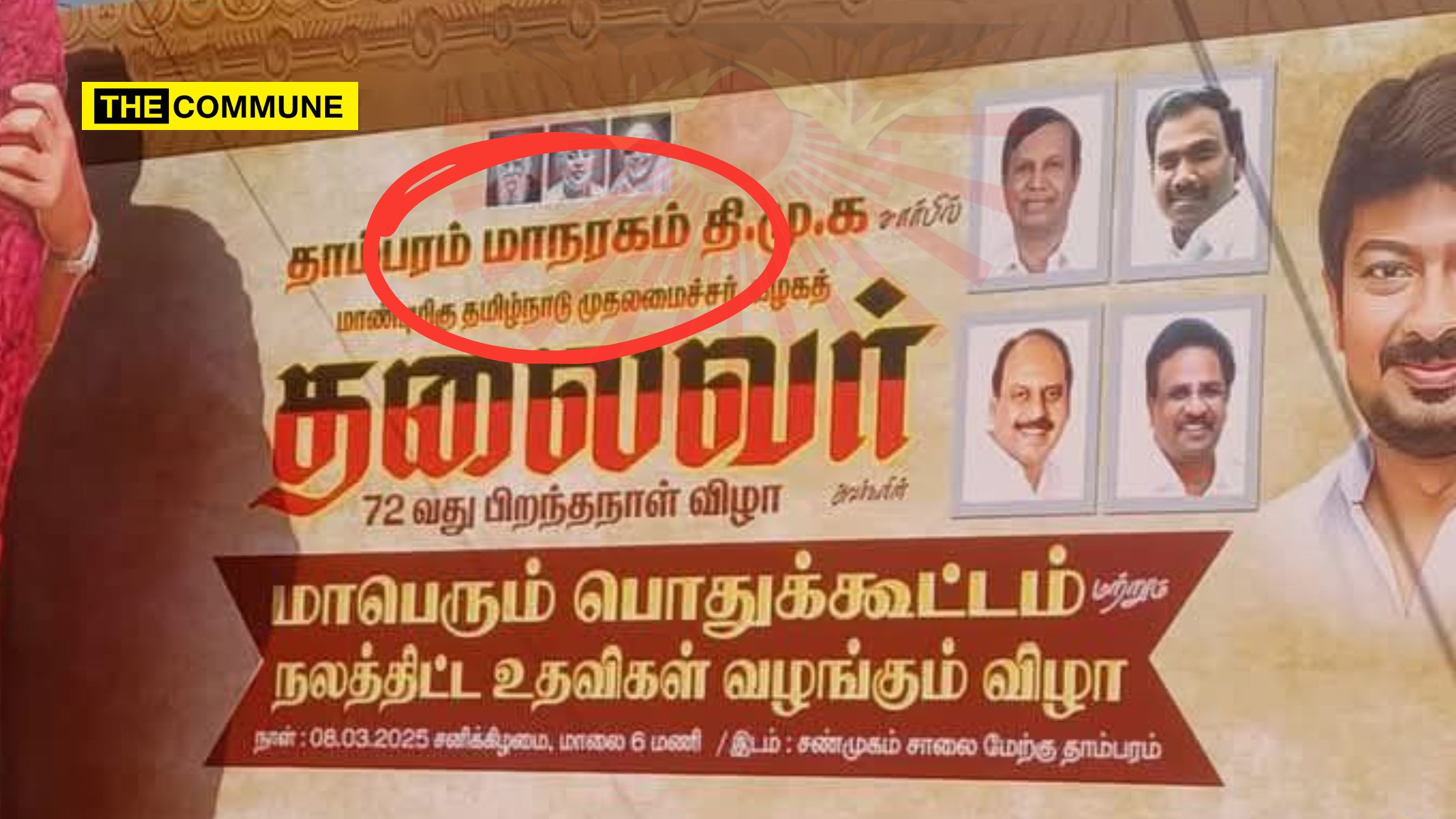
DMK’s Epic Fail: Banner Reads ‘Tambaram Great Hell’ Instead Of ‘Tambaram Corporation’ Exposing Irony Of Language Saviour Claims

The ruling DMK, which prides itself on being the guardian of the Tamil language, faced intense trolling after its Tambaram unit erected a banner with a major blunder. Instead of reading “Tambaram Corporation,” (Tambaram Managaram) the board mistakenly displayed “Tambaram Great Hell,” (Tambaram Manaragam).

The error quickly went viral on social media, drawing widespread ridicule from netizens and opposition parties. The embarrassing mistake became the laughing stock of the day, with critics mocking the DMK for its irony—claiming to protect the language while failing to proofread its own banners.

Reacting to the blunder, Tamil Nadu BJP senior leader and State Coordination Committee Convenor H. Raja took a jibe at the DMK, stating, “Not just for Tambaram..!! DMK is hell for all of Tamil Nadu! First of all, Tamil and Tamil Nadu need to be saved from the DMK!”

However, DMK’s mouthpiece, Kalaignar News, attempted to dismiss Raja’s remarks as fake news. Despite their claims, the actual sequence of events told a different story.

After the massive backlash and social media trolling that spread like wildfire, the Tambaram DMK unit hurriedly attempted a patch-up job on the banner. This was evident in a post by the Tambaram DMK Mayor, where the corrected text reading “Tambaram Corporation” (Tambaram Managaram) was visible, along with clear signs of cellophane tape being used to cover up the original blunder in the photos.

Here are some of the top trolls and mocking reactions from netizens targeting the DMK over their blunder:


Subscribe to our channels on TelegramWhatsApp, and Instagram and get the best stories of the day delivered to you personally.

Thiruvallur: Udhayanidhi Stalin’s Cutout Falls On Auto, Cutout Placed Despite Court Orders

A giant cutout of Tamil Nadu Deputy Chief Minister Udhayanidhi Stalin collapsed and fell on an auto in Tiruvallur, triggering concerns over the continued use of unauthorized banners and placards at political events. The incident occurred ahead of a public meeting scheduled to be attended by Chief Minister M.K. Stalin.

It is alleged that instructions from the DMK leadership were sent prohibiting the placement of banners at party events, however, reports suggest that volunteers erected flagpoles and giant cutouts along the eight-kilometer route leading to the meeting venue in Tirupachur, Tiruvallur district. Strong winds caused one such towering cutout of Udhayanidhi Stalin to fall onto a passing auto. The driver reportedly escaped with minor injuries.

Janam TV reported that the auto had children riding in it.

The incident has sparked renewed criticism, drawing parallels to the tragic 2019 death of Subhasree, a young woman who was killed when an AIADMK banner fell on her, causing her to be run over by a water tanker. That incident led to widespread outrage and court-ordered restrictions on the use of political banners in public spaces.

Despite these restrictions, political functionaries continue to defy orders, raising safety concerns.

(With inputs from OneIndia Tamil)

Subscribe to our channels on Telegram, WhatsApp, and Instagram and get the best stories of the day delivered to you personally.

“Don’t Give Up, Brother. Keep Fighting”, BJP TN Chief Annamalai Encourages NTK Chief Seeman

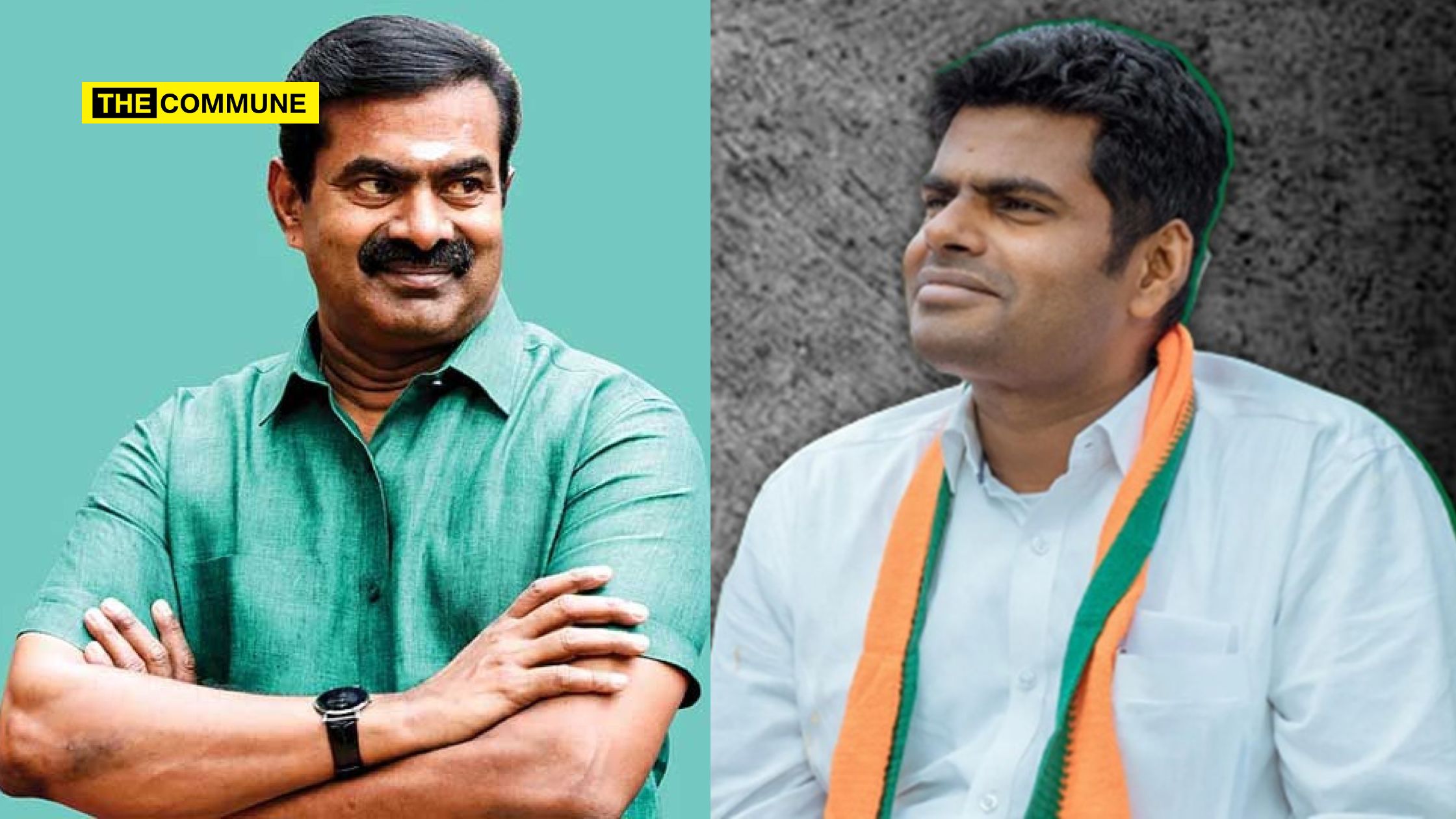
Tamil Nadu BJP president K. Annamalai and Naam Tamilar Katchi (NTK) coordinator Seeman had an unexpected encounter at a wedding function in Chennai, sparking discussions in political circles.

As Seeman was seated in his car, Annamalai approached, held his hand, and offered words of encouragement, saying, “Keep fighting, be strong. Don’t give up, brother.”

The interaction, caught on video, has since gone viral on social media, fueling speculation about its political implications.

At a book launch event in Coimbatore in July 2024, Tamil Nadu BJP president K. Annamalai and Naam Tamilar Katchi (NTK) coordinator Seeman shared a warm exchange, surprising many. The event, held at a private hotel near Neelambur, was attended by several political leaders, including PMK president Anbumani Ramadoss and TMC president G.K. Vasan. Amid the gathering, Annamalai approached Seeman, embraced him, and spoke to him affectionately before leaving. The unexpected gesture, despite their opposing political views, sparked curiosity among attendees.

Seeman is currently facing multiple challenges as several party executives have recently resigned. Additionally, he has been embroiled in controversy following a sexual harassment complaint filed by an actress. However, the Supreme Court has granted an interim stay on the investigation, offering a temporary reprieve.

Meanwhile, Seeman’s remarks on social reformer EV Ramasamy Naicker have drawn criticism, with Periyarist organizations staging protests against him. Amid these challenges, political parties in Tamil Nadu have intensified their criticism of NTK and its leader.

(With inputs from OneIndia Tamil)

Subscribe to our channels on Telegram, WhatsApp, and Instagram and get the best stories of the day delivered to you personally.
“Those Who Studied Hindi Are Rearing Cows At My House, Selling Panipuri”: DMK Minister Peddles Hate Against North Indians

DMK leaders and ministers in Tamil Nadu have been continuously misrepresenting the difference between individuals who are educated in a language and those who speak it as their mother tongue but  illiterate and engaged in manual labor. Strategically, they continue to push a divisive narrative under the guise of opposing the Hindi language while belittling the hard work of North Indian laborers who migrate across states for their livelihood.

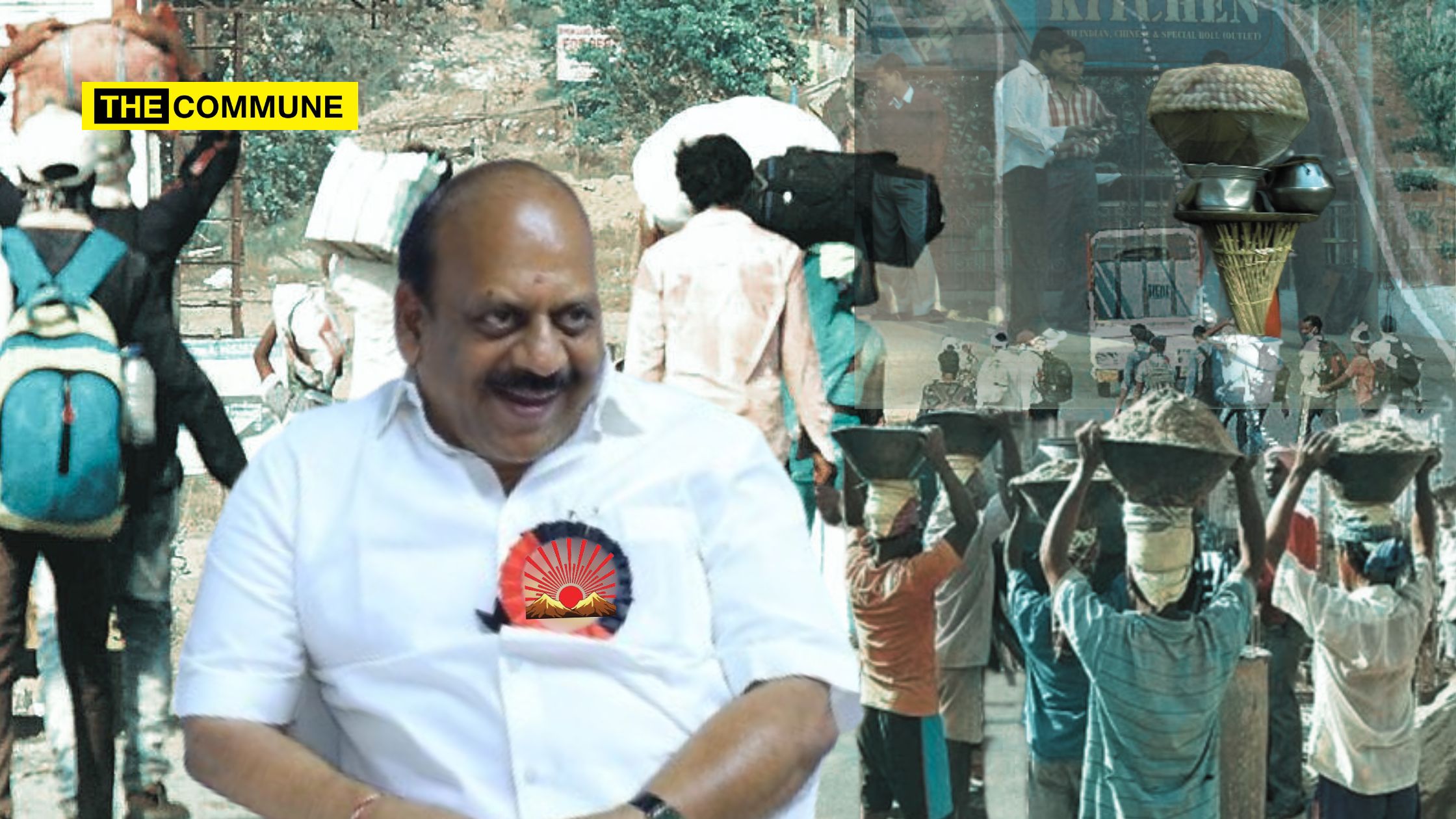
In the latest controversy, Tamil Nadu’s Micro, Small, and Medium Enterprises (MSME) Minister, T.M. Anbarasan, made contentious remarks at a DMK event, stating that Hindi speakers in his household are engaged in cattle herding. His comments were seen as disparaging towards migrant laborers who earn their livelihood through hard work and perseverance.

The statement was made during a meeting held under the banner of the I.N.D.I.A. alliance in the Pallavaram Assembly constituency. At the event, Minister Anbarasan strongly criticized the central government’s trilingual policy, arguing that it contradicts Tamil Nadu’s well-established two-language system.

He credited the global success of Tamils to the two-language policy introduced by former Chief Minister C.N. Annadurai, claiming that it allowed them to thrive in various professional fields abroad. He further asserted that those proficient in Tamil and English have made significant strides internationally, whereas he generalized that individuals educated in Hindi are often engaged in labor-intensive jobs such as cattle herding, street vending, or masonry.

He said, “Where are the ones who studied Hindi? Where are they? those who studied Hindi are rearing cows at my home. I’m not joking, It’s true. They are selling Panipuri, mason, carpenters. If we study Hindi we also have to go to North India and sell Panipuri.” 

In response to DMK MSME Minister T.M. Anbarasan’s remarks, Tamil Nadu BJP Chief strongly criticized him, accusing DMK leaders of routinely belittling North Indian workers while disregarding Tamil values and culture. He pointed out that Minister Anbarasan, who has only completed schooling up to the 11th grade and has poor proficiency in Tamil, holds a significant position in the state government.

The BJP leader further alleged that the DMK government has negatively influenced the youth by enabling unrestricted liquor sales and easy access to drugs. He condemned the party for disrespecting migrant laborers who have contributed to filling Tamil Nadu’s labor shortage.

Clarifying misconceptions about the National Education Policy (NEP) 2020, he stated that unlike previous Congress-led education policies, NEP is not centered around Hindi but aims to promote all Indian languages. It emphasizes mother-tongue-based education, allowing Tamil to be the primary medium of instruction while also providing students in government schools the opportunity to learn a third language or foreign languages at the secondary level. He asserted that the people of Tamil Nadu have recognized the benefits of NEP 2020 and urged the DMK to stop wasting efforts on misleading propaganda and spreading division.

Annamalai via his official X account stated, “DMK Ministers take great joy in belittling our brothers and sisters from Northern India, often forgetting our Tamil values and culture. DMK Minister Thiru Anbarasan avl is an 11th pass, has very poor Tamil proficiency, and is the Minister of MS&ME in TN Govt. Having intoxicated the younger populace of our state with unrestricted liquor sales and easy access to drugs, the DMK should be ashamed for demeaning the people who have filled in the labour deficit of our state. The NEP 2020 is not about Hindi like the previous educational policies released by the Congress party. It is about promoting all Indian languages, with emphasis on the mother tongue (Tamil) as a medium of instruction, and the opportunity for our government school students to learn a third language and foreign languages at the secondary level. The people of TN have realised this, and DMK should stop wasting their energy in spreading their defunct propaganda and spreading hatred.”

Subscribe to our channels on Telegram, WhatsApp, and Instagram and get the best stories of the day delivered to you personally.