Home Blog Page 368

Paramasivan Fathima: A Film That’s Surely Going To Rattle ‘Dravidoidwood’ And Conversion Gangs

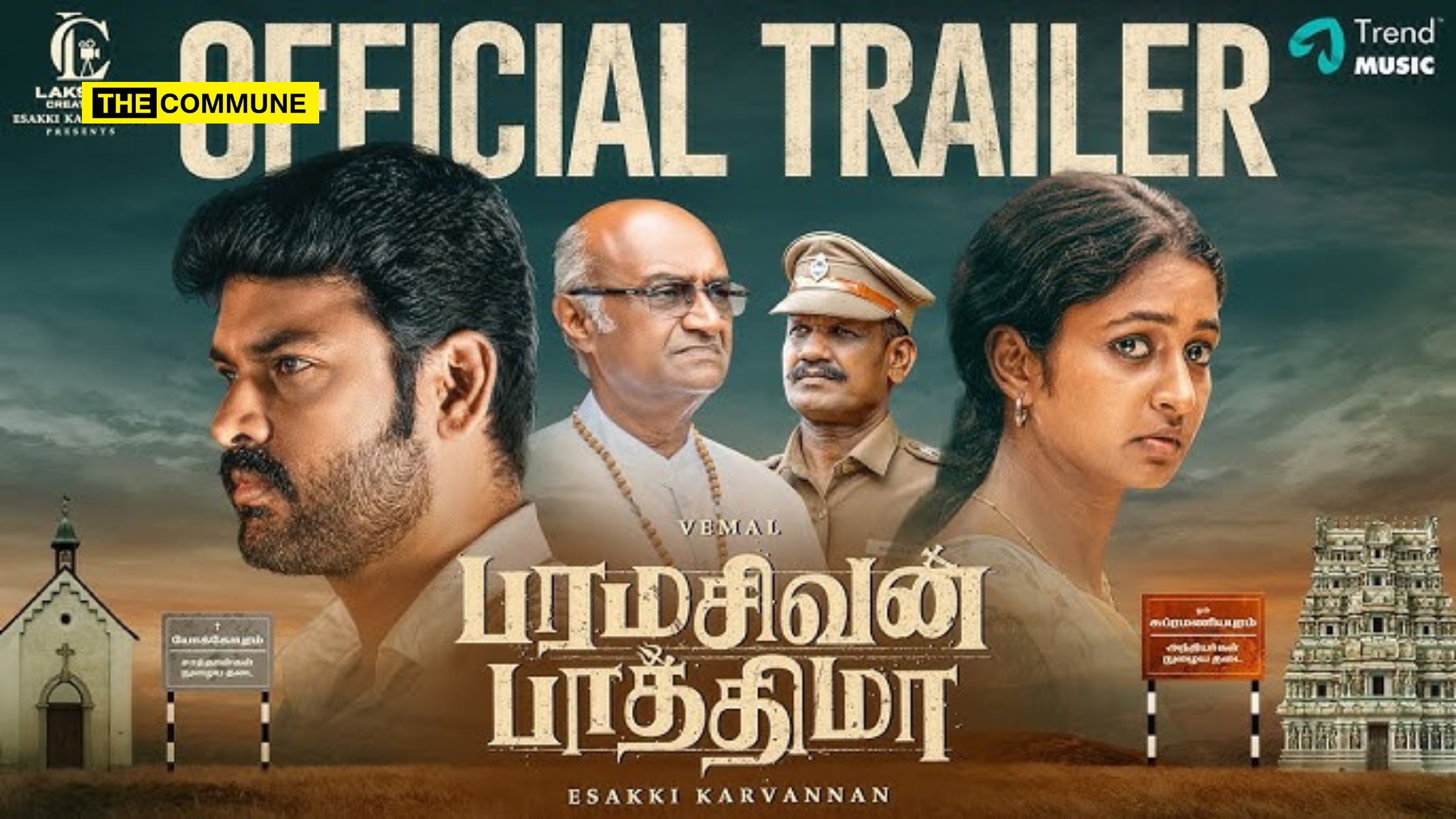
The trailer of Paramasivan Fathima, directed by Isakki Karvannan and starring Vimal, Sayadevi, and MS Bhaskar, has created quite a stir with its bold take on religious conflict and forced conversions. The YouTube link to the trailer was shared by NTK Chief Seeman and BJP State President Annamalai on their social media handles. The film appears to explore the undercurrents of sectarian strife, social engineering, and the conversion mafia in a small hill village.

The film revolves around two villages—Subramaniapuram, predominantly Hindu, and Yakobupuram, a Christian-majority settlement. The trailer sets the tone with a shocking opening scene of a couple being brutally murdered. MS Bhaskar who plays the role of a pastor described the two villages as polar opposites – He says, The people of Subramaniapuram are very aggressive and indulge in violence at the drop of the hat. The people of Yakobupuram are very decent and educated and are capable of forgiving even enemies.

This sets the tone for the film which intends to show how missionary propagandists portray Christians as peaceful people while the other community is not. The film also revolves around the love story between Vimal, who plays a school teacher from Subramaniapuram, and Chayadevi, who dons the role of a woman from Yakobupuram. This becomes the catalyst for a larger conflict fueled by ‘religious intolerance’ and conversion attempts.

Bold Themes And Hard-Hitting Dialogues

The trailer does not shy away from addressing provocative themes. MS Bhaskar, portraying a priest, delivers typical missionary propagandist lines to which the replies would be what is on the minds of people. For example, in an exchange between Vimal and Bhaskar, Bhaskar says, If only the white men had not come here, you would have been begging.And Vimal replies, That white man came here to beg.

In another scene between the police and Bhaskar where the police asks why the Yakobupuram people should not forgive the people of Subramaniapuram, Bhaskar says, Sir they are barbaric people. When the British built a church here, they placed an idol of Mariamman in the church. Then we started worshipping Mariamman, thinking of Mary Amma. Some other dialogues of Vimal against conversion by the missionaries are also hard-hitting and those that need to be said.

Scenes featuring a Muslim youth dancing in a temple and police conducting so-called ‘social harmony marriages’ suggest the film’s attempt to scrutinize narratives around religious integration and coercion.

A Cinematic Commentary On Religious Conversions & Missionary-Led Tensions

The movie raises the question: what happens when love transcends religious boundaries? The trailer hints that such unions are met with violence, as the village resorts to killing grooms of interfaith marriages. The police then intervene, seeking to unravel the crimes tied to conversion-related conflicts.

Drawing parallels to the 2004 Tamil film Kovil, Paramasivan Fathima appears to take a more confrontational stance on the conversion mafia and the socio-political ramifications of demographic shifts. With a screenplay written by the director himself, the movie could be one of Vimal’s most politically charged projects.

Produced by Lakshmi Creations, the film features an ensemble cast including Manoj Kumar, Sri Ranjani, Athira, Aruldas, Kool Suresh, Kadhal Sukumar, and Veerasamar. The cinematography is helmed by Myna Sukumar, while Deepan Chakraborty has composed the music.

The trailer has generated significant attention online, with discussions about its bold narrative and controversial themes. Fans believe this film could be a career-defining moment for Vimal, who is known for choosing unique storylines. Given the subject matter, the film is expected to spark debate and could face scrutiny from certain quarters.

Kollywood’s Dravidianist film industry frequently depicts Hindus as oppressors while subtly promoting missionary and Dravidian propaganda. Paramasivan Fathima boldly challenges this narrative, offering a refreshing change in the otherwise ideologically charged landscape of “Dravidoidwood.”

Subscribe to our channels on Telegram, WhatsApp, and Instagram and get the best stories of the day delivered to you personally.

Bommanahalli BJP MLA M Satish Reddy Raises Stray Dog Menace, Cites The Commune’s Report

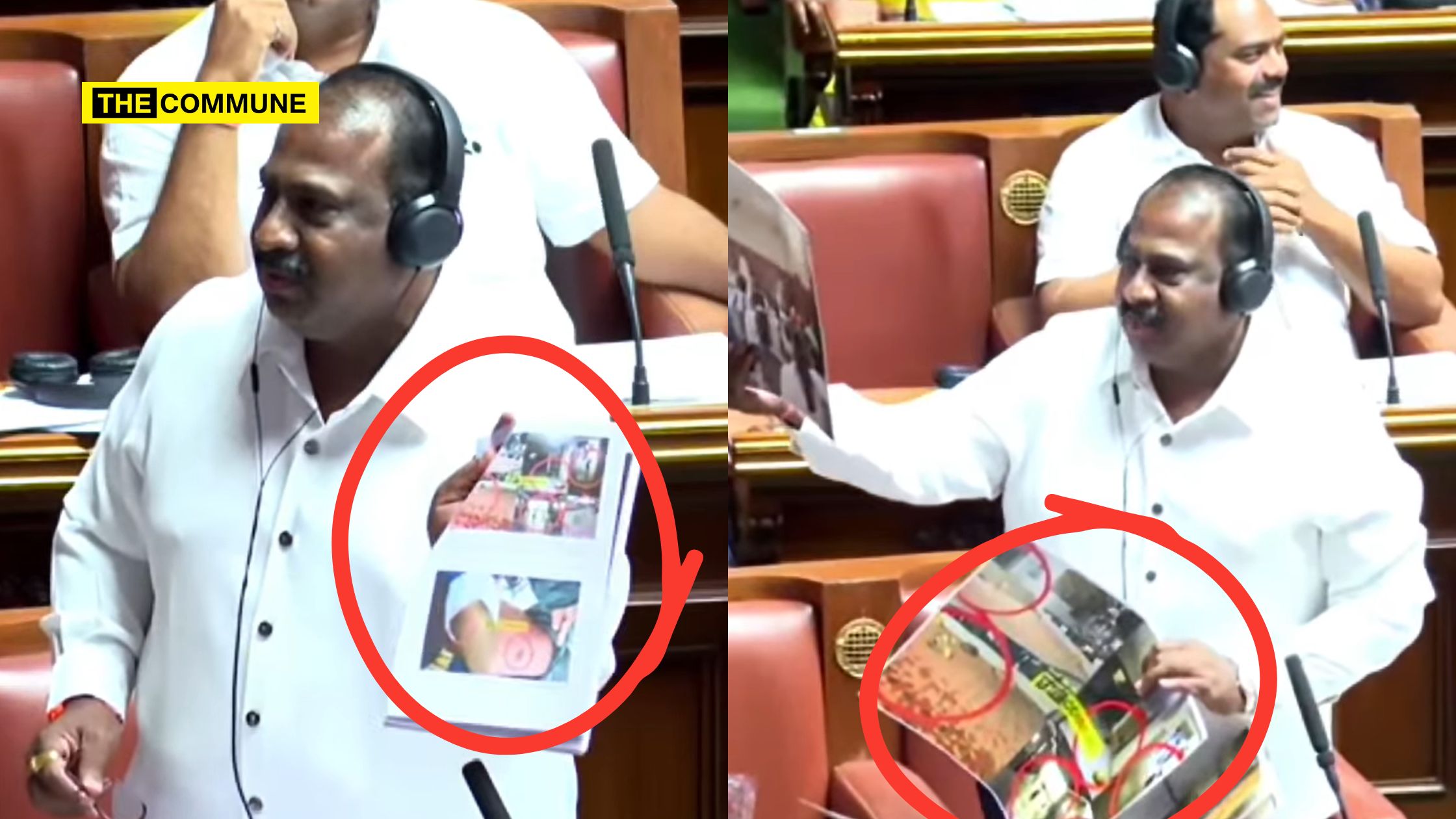
The issue of the rising stray dog menace in Bengaluru has once again come under scrutiny, with Bommanahalli BJP MLA M Satish Reddy raising concerns in the Legislative Assembly. During the Zero Hour session, Reddy highlighted the growing threat posed by stray dogs, particularly in the Sun City Apartments of Ibbaluru, located in his constituency.

Residents have long complained about aggressive stray dogs roaming the apartment premises, with reports of attacks on children and elderly individuals. However, despite numerous complaints, the Bruhat Bengaluru Mahanagara Palike (BBMP) has yet to take substantial action, leading to increased frustration among citizens.

MLA Satish Reddy’s Appeal to the Government

Speaking in the Assembly, Reddy urged the government to intervene in the matter, emphasizing that residents are living in constant fear due to unchecked stray dog activity. He noted that stray dogs have been seen chasing pedestrians, entering lifts, and even attacking people inside the apartment complex. Reddy also referenced multiple video clips that depict the extent of the issue, showcasing how strays have taken over parking areas and communal spaces, causing distress to the residents.

The MLA pointed out that this issue is not limited to his constituency but is part of a broader crisis across Bengaluru and other major cities. The National Human Rights Commission (NHRC) had previously taken cognizance of the rising number of dog bite incidents across India, particularly in Haryana, where it had directed the Animal Welfare Board of Haryana to submit an Action Taken Report (ATR) after reports of nearly 22 lakh dog bite cases in 2024.

Sun City Apartments: Stray Dog Problem and Alleged Animal Trafficking Nexus

The Commune had earlier reported in March 2025 about the situation in Sun City Apartments, exposing an alleged animal trafficking nexus linked to an individual named Minu Singh. According to residents, Singh, a self-proclaimed animal activist, has been running an unauthorized rescue operation within the apartment complex since 2010. Her alleged activities include bringing in stray dogs from demolished shelters and other residential areas, significantly increasing the number of dogs inside the apartment premises.

Residents claim that at any given time, 9 to 12 dogs occupy the ground floor, making it unsafe for children and senior citizens. Many have been chased or bitten by these dogs, yet their complaints have largely gone unheeded. Reports indicate that Singh allegedly relocates displaced stray dogs into the complex, leading to an unpredictable and unmanageable rotation of animals within the residential area.

Allegations of Financial Misconduct And Political Influence

Apart from safety concerns, allegations have emerged regarding financial misconduct tied to Singh’s NGO, Minu Rakshe Vahini Foundation. The organization has reportedly raised nearly ₹50 lakh through crowdfunding under the guise of animal rescue, but discrepancies in its registered address and operations have led to suspicions about its legitimacy.

Furthermore, residents allege that Singh has created a network of influence by paying off security guards and using political connections to evade accountability. Her alleged ties to Maneka Gandhi have made it difficult for residents to take action, as attempts to raise concerns are often met with threats, legal complaints, and even accusations of molestation. In one instance, an FIR was registered against 40 residents, further escalating tensions within the community.

Intervention By Authorities And BBMP’s Response

Following mounting complaints, local authorities, including BBMP and the police, intervened to some extent. Two illegal dog shelters outside the apartment gates were demolished, and authorities ruled that stray dogs should not be allowed in the basement and ground floors. However, a BBMP inspection still found 19 stray dogs inside the complex, with residents demanding that they be managed by the association rather than external activists.

Despite these interventions, residents argue that the problem persists due to Singh’s continued influence and defiance of regulations. Her social media presence has further fueled the issue, as she openly defends her actions while branding residents as “anti-animal.”

With the issue now reaching the state assembly, MLA Satish Reddy’s push for government intervention has brought renewed attention to the plight of residents in Sun City Apartments. The larger concern remains the increasing number of stray dog-related incidents in Bengaluru and other Indian cities. While the BBMP and authorities have taken limited action, long-term solutions, including proper shelter management and stricter enforcement of stray dog policies, are necessary to ensure public safety without compromising animal welfare.

Subscribe to our channels on Telegram, WhatsApp, and Instagram and get the best stories of the day delivered to you personally.
DMK’s Rupee Symbolism Is Yet Another Attempt to Satiate Its Itch For Separatism

The DMK government’s 2025-26 budget has replaced the Rupee symbol, which was designed by a Tamilian and widely embraced across India. This decision reeks of hypocrisy and political pettiness.

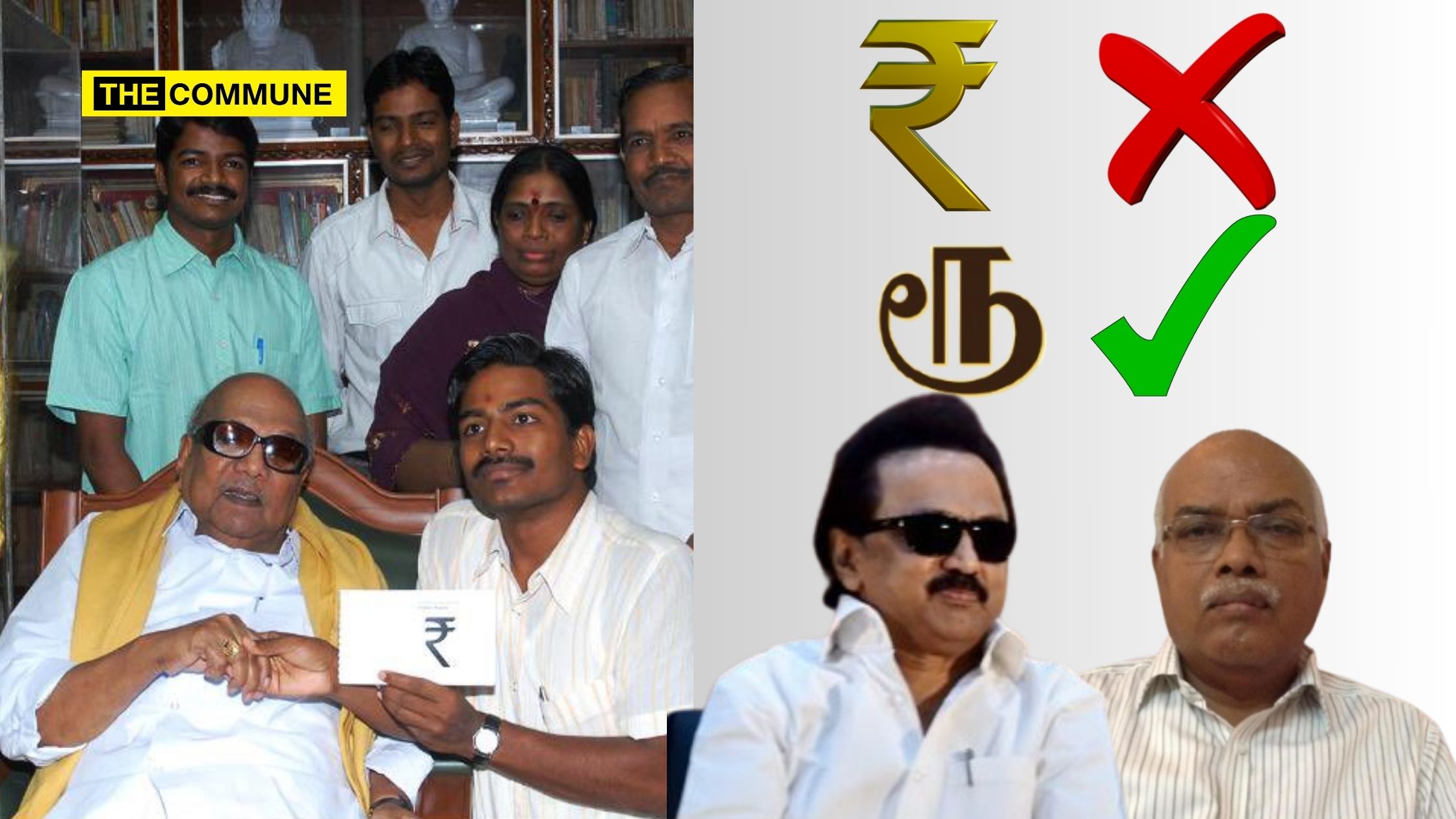
The Tamil Nadu State Planning Commission’s Executive Vice Chairperson, J. Jeyaranjan, stated that the ₹ symbol was dropped from the state budget because it was based on the Devanagari script. This absurd justification adds to the growing list of illogical decisions under the DMK regime. Jeyaranjan claims that there is no need to accept everything just because it was created by a Tamilian. If that’s his logic, does he believe he knows better than his own party patriarch, Karunanidhi, who once proudly posed with Udaya Kumar, the very creator of the ₹ symbol?

Rejecting What Their Own Party Once Endorsed

Dr. D. Udaya Kumar, the designer of the ₹ symbol, is a Tamilian and the son of N. Dharmalingam, a former DMK Member of the Legislative Assembly from the Rishivandiyam constituency in Tamil Nadu. The symbol was officially adopted in 2010 when the Congress ruled at the Centre and DMK governed Tamil Nadu. None other than P. Chidambaram—another Tamilian and a close ally of the DMK—had felicitated Dr. Udaya Kumar for his design.

Adding to this irony, M. Karunanidhi himself, the former DMK patriarch, had posed for a photograph with Udaya Kumar, acknowledging his contribution to India’s national identity. Yet today, his son, Chief Minister M.K. Stalin, is rejecting what his father once celebrated. How deep does this contradiction run within the DMK?

So why is the DMK suddenly turning against something it once proudly endorsed? Is their desperation for identity politics so great that they are willing to erase the contributions of their own party loyalists?

If the DMK is so concerned about sticking to Tamil, why didn’t they implement this change in their budgets from 2021 onwards? The timing of this move only exposes their selective outrage and their continuous attempts to manufacture controversies to stay politically relevant.

A Decision That Insults Tamil Nadu’s Own Legacy

Dr. Udaya Kumar holds a Bachelor of Architecture from Anna University and a Master of Design in Visual Communication from the Industrial Design Centre (IDC) of IIT Bombay. He completed his PhD in 2010, focusing on the evolution of Tamil typography. He currently serves as the Head of the Department of Design at IIT Guwahati.

The ₹ symbol, designed by Dr. Udaya Kumar, is a fusion of the Devanagari letter “र” (ra) and the Latin capital letter “R” without its vertical bar. The parallel lines at the top are said to represent the tricolor Indian flag and also depict an equality sign, symbolizing the nation’s desire to reduce economic disparity.

Yet today, the DMK government has chosen to erase this legacy under the flimsy pretext of rejecting the Devanagari script. The irony is staggering—while DMK claims to champion Tamil pride, it is discarding a symbol designed by a proud Tamilian solely for the sake of petty politics.

Keeping Secessionist Tendencies Alive

This move is not just an attack on a currency symbol—it is part of DMK’s larger agenda to keep its secessionist tendencies alive. Time and again, DMK has attempted to stoke linguistic and regional divides, subtly pushing its anti-national narrative under the garb of Tamil pride. The party’s history is littered with instances of separatist rhetoric, and even today, it continues to create imaginary enemies to maintain its relevance. Instead of working towards true federalism and development, it keeps playing the divisive card, undermining the unity of the nation.

How Much Lower Can Stalin’s DMK Sink?

At this point, one has to ask: How much lower can Stalin’s DMK sink? The party has become a circus of incompetence, constantly contradicting itself in an attempt to manufacture outrage. Instead of focusing on real governance, they waste their time on divisive, performative politics that do nothing to benefit the people of Tamil Nadu.

The people of Tamil Nadu deserve better than a government that prioritizes theatrics over real progress. Stalin’s DMK has once again proven that it is a party of nincompoops—driven not by rational governance, but by an insatiable need to stir controversy.

Subscribe to our channels on Telegram, WhatsApp, and Instagram and get the best stories of the day delivered to you personally.
Dravidian Model: Students Forced To Carry Bricks For Construction Work In Thiruvallur Govt School

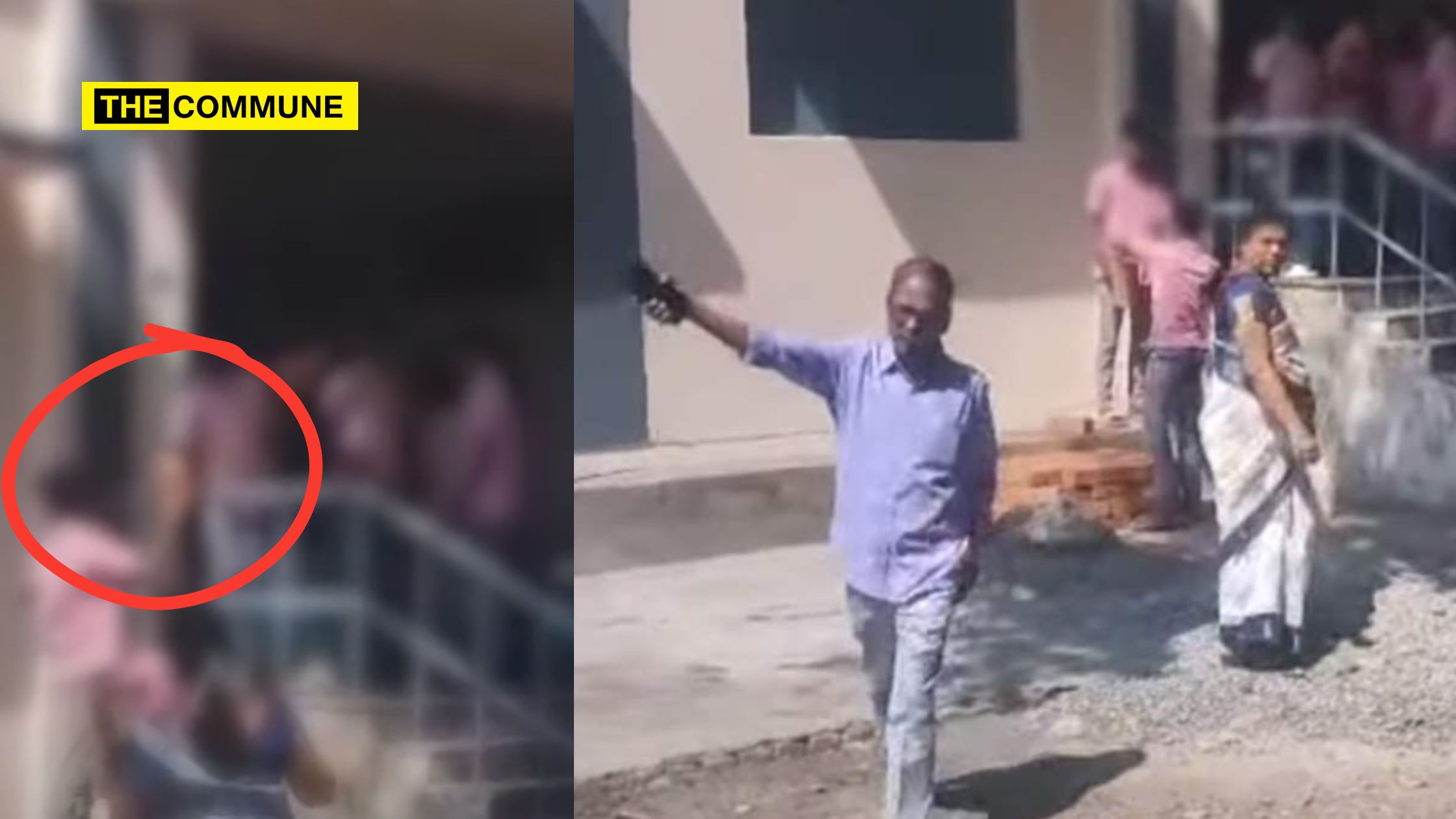
In a shocking incident from Tamil Nadu, a viral video has surfaced showing government school students, dressed in uniforms, being forced to carry bricks for construction work under the supervision of their headmaster and teachers in weekend holiday.

The incident took place at a government high school in the Kottamedu area near Kosavampalayam in Thiruvallur district. On Saturday, a designated holiday—three teachers, including the headmaster, reportedly summoned several students to the school and instructed them to transport bricks from the school premises to the construction site.

Following the teachers’ orders, the students proceeded with the task. However, when onlookers recorded the incident on video, the teachers allegedly tried to stop them. Despite their efforts, the footage has now gone viral on social media, sparking widespread criticism.

Speaking to the press, a local woman who raised the complaint shared her observations stating, “I live in Thiruninravur near Kosavanpalayam, and we built our house next to Kotambamedu Government School about five years ago. The school was also constructed around the same time. It has been functioning for four or five years now. Around two years ago, a new male headmaster took charge and we could see his actions are not good, we have been observing things things for past two years. From our house, we can clearly see how the coaching is conducted. Even though we have a compound wall, we still have visibility. He (headmaster) treats students disrespectfully and speaks singular tone towards girl children. Making the girl children to sweep the entrance getting manual labor. He does not prioritize their studies, even during exam time. What happened yesterday was a second Saturday being a government holiday, there were no classes. While some schools conduct additional coaching as exams are going on, it should be education-related. However, he called the students to school and made them carry bricks and soil for construction work. When I noticed this, I questioned them, asking, ‘Why are you doing like this?’ he disrespected me and I asked my husband to intervene. My husband also confronted the headmaster. Instead of addressing our concerns, he spoke to us disrespectfully.” 

She continued, “We have warned him multiple times not to do such things. We have also informed local leaders, and all important figures even though everyone questions about this but he doesn’t take it seriously.”

She also claimed that upon realizing the incident was being recorded and could have consequences, the headmaster locked the school and left.

The incident has triggered outrage, with many condemning the school authorities for forcing children into labor instead of focusing on their education. As the video continues to circulate, calls for strict action against the responsible officials have grown louder.

Subscribe to our channels on TelegramWhatsApp, and Instagram and get the best stories of the day delivered to you personally.

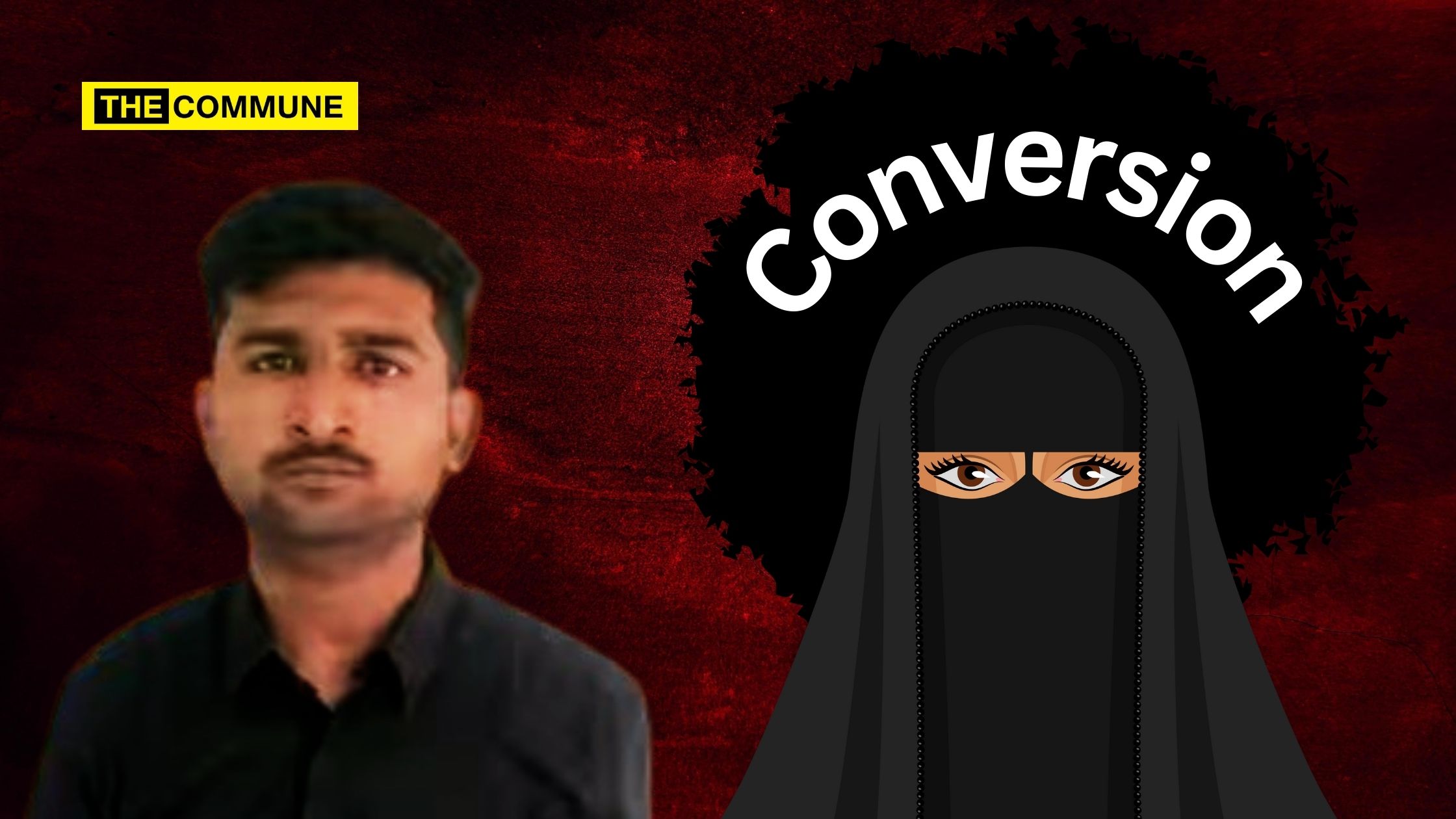
Another Kerala Story In Tamil Nadu: Mohammad Lures Woman In College, Promises Marriage And Sexually Exploits Her; His Mother Demands Conversion To Islam And Dowry, He Abandons And Marries Another Woman Settling In Dubai

A man accused of deceiving a young woman under the guise of love, coercing her into conversion, and later abandoning her was arrested at Chennai airport after seven years. Mohammed, a resident of Lalpettai in Cuddalore district, was detained under the Prohibition of Conversion Act after returning from Dubai.

The victim, a Chennai-based woman, was a student at a private engineering college in Kumbakonam between 2012 and 2016 when she fell in love with Mohammed, a fellow student. Their relationship progressed, and Mohammed allegedly sexually exploited her multiple times, promising marriage. After college, she moved to Chennai for work, where Mohammed reconnected with her, reassuring her of his commitment. Their relationship continued, and they remained intimate.

In 2018, Mohammed left for Dubai, claiming he was going for work. However, shortly after his departure, his family arranged his marriage to another woman from their community. When the victim approached Mohammed’s mother seeking answers, she was pressured to convert to Islam. She was forced to read religious texts, wear a burqa to work, and even observe fasting for Ramzan. Eventually, Mohammed’s family demanded ₹5 lakh as dowry for marriage. Having already converted for love, she felt betrayed and devastated.

In 2020, the woman filed a complaint at the Vadapalani All Women Police Station, detailing the abuse and deception she had endured. Based on her complaint, police registered a case against Mohammed under multiple charges, including breach of trust, sexual assault, and forced conversion. Despite being summoned for questioning, he evaded authorities. Investigators later discovered that he had married another woman while living in Dubai. A lookout notice was subsequently issued against him.

On the morning of 8 March 2025, Mohammed was intercepted by immigration officers upon his arrival at Chennai airport and handed over to Vadapalani police. He was later produced in court and remanded to Puzhal jail.

Another Recent Incident From Salem

In a disturbing crime that shook Salem, three individuals, including two women, were arrested on 5 March 2025, for the murder of 31-year-old Loganayagi from Trichy district. Residing in a private hostel near Salem’s new bus stand, she had been missing for four days before authorities discovered her body beneath a 60-foot bridge on the ghat road. Police traced her last phone call to 22-year-old Abdul Hafeez, an engineering student from Perambalur, who later confessed to being in a four-year relationship with her. Reports suggest Hafeez had convinced Loganayagi to convert with promises of marriage, though he was simultaneously involved with another woman, 22-year-old Dhaviya Sultana. When Loganayagi discovered his betrayal and demanded marriage, Hafeez allegedly plotted her murder with Sultana (identified in some reports as Kaviya Sultana) and their friend Monisha (21).

On March 1, the trio rented a self-drive car, took Loganayagi to the ghat road, and allegedly killed her by injecting poison before disposing of her body in a 20-foot gorge. Investigators recovered her remains and sent them for autopsy at Government Mohan Kumaramangalam Medical College and Hospital. Police registered a case and arrested all three suspects.

(With inputs from Polimer News)

Subscribe to our channels on TelegramWhatsApp, and Instagram and get the best stories of the day delivered to you personally.

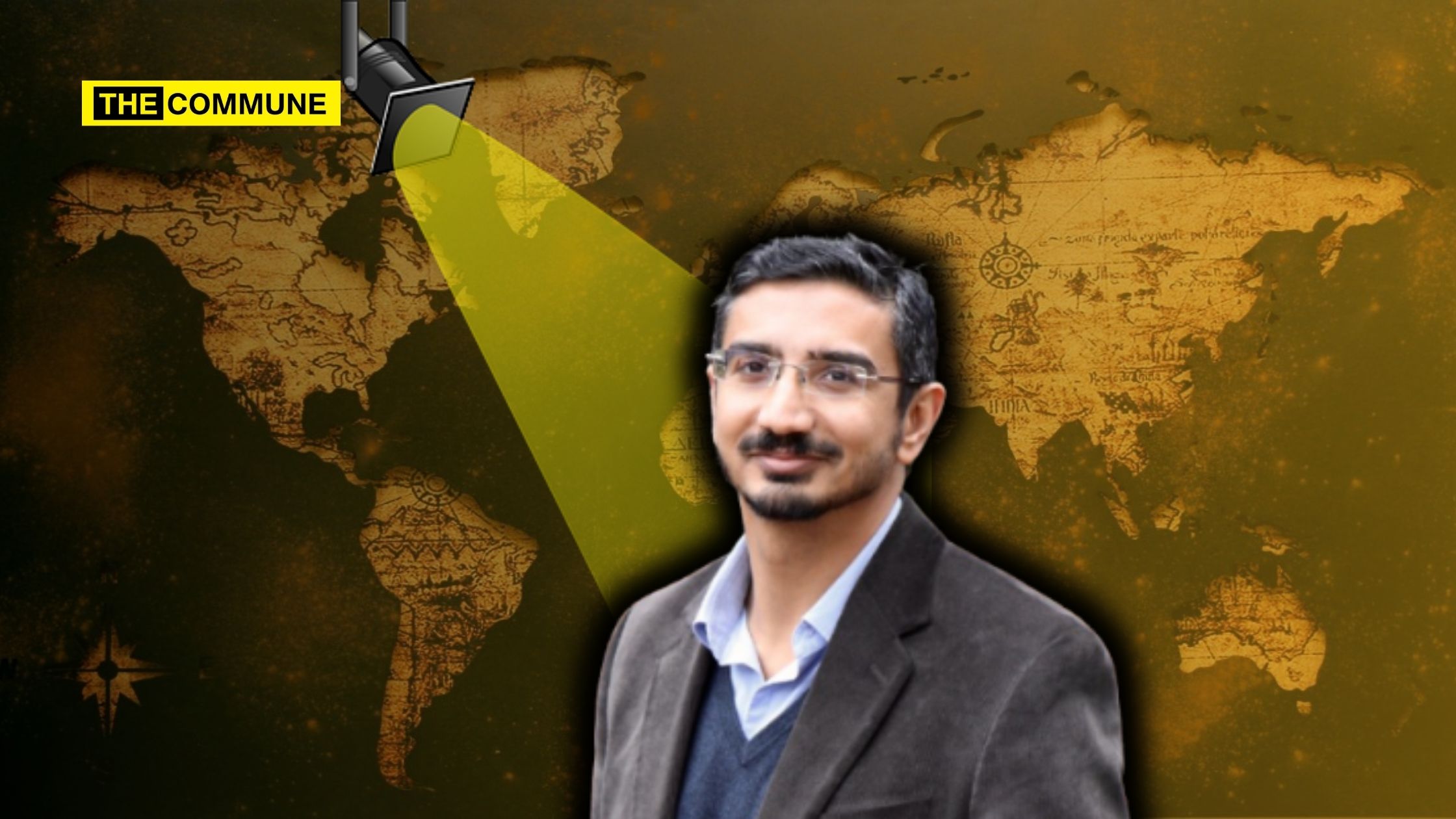
Dhruva Jaishankar Speaks To The Commune On Diplomacy, Strategy, And Carving His Own Path

We all know of the swag and suave Subrahmanyam Jaishankar—his sharp responses, piercing gaze, and viral one-liners have made him an internet sensation. But what about his son Dhruva Jaishankar? While his father dominates headlines and Instagram reels, Dhruva has quietly built his own space in the world of foreign policy and strategic affairs. Like his father, he’s deeply involved in the world of diplomacy—but more from behind the scenes. Whether he’s authoring a book, shaping discussions in think tanks, or engaging in Track-2 diplomacy, Dhruva Jaishankar operates where strategy meets substance.

In this candid chat, he talks about growing up in a family of civil servants, why he never took the UPSC plunge, and whether his father’s towering reputation ever weighs on him. He also dives deep into India’s evolving China strategy, the idea of the “Deep State,” and how ancient Indian texts influence modern statecraft along with insights from his latest book, Vishwa Shastra.

A conversation packed with insights, humor, and some unexpected stories—read on!

1. There are cases where the son is more popular than the father in public life. In the case of politicians, both the son and father become well known. In your case, atleast in Instagram and YouTube, your father definitely is more popular than you with his suaveness and laser eyes. Do your father’s fame and achievements weigh heavy on you?

Not at all. It is remarkable how my father has become well known by the general public in India and elsewhere, but this has mostly occurred after 2022 or so when some of his statements went viral online. I also think it would be a mistake to think of quick soundbytes as the main work of a diplomat, something he has been since 1977. There is a lot of important diplomatic work – with very important and direct implications for the well-being of average Indians – that happens on an almost daily basis but which is still poorly understood. Nevertheless, if viral reels are what excite public interest in the practice and understanding of diplomacy in India, that can only be a good thing. For my part, I’m more of a journalist and historian by background and orientation, and prefer to be an observer rather than participant in international relations: one who tells the story rather than one who becomes the story. I don’t see why anyone else’s achievements should weigh on me at all.

2. You come from a family of civil servants? Why didn’t you give it a try?

I did think about it, but the preparation for the UPSC exam is very hard and would have taken a lot of time, which I felt reluctant to invest in until it was too late. In hindsight, I also realise I would not have made a very good civil servant, and I enjoy the relative autonomy and entrepreneurial nature of what I do now. I suppose I was also fortunate that there were professional and educational opportunities that were available to Indians of my generation that were not available to those in my parents’ or grandparents’ generation.

3. Can you manage a few words or sentences in Tamil?

இல்லை 🙂

4. What’s the most unexpected thing that’s happened to you during a diplomatic or policy event?

Well, unexpected occasions are a regular occurrence in the policy world: it keeps you on your toes. I think one amusing occasion was in January 2016 when I was entering the Japanese prime minister’s office to interview one of his aides about India-Japan relations, a few hours after North Korea tested a nuclear device. The local press chased me down, visibly confused about why an Indian-looking person pertained to North Korea’s nuclear programme!

5. Coming to your latest book Vishwa Shastra, you reference Puranas, Vedic texts, as well as works like the Arthashastra and Manusmriti to highlight India’s ancient strategic traditions. How do you see these historical frameworks influencing India’s contemporary foreign policy and statecraft?

Overall, I think India’s pre-Independence history remains pertinent in a variety of ways, including for modern India’s economy, diaspora, geographical boundaries, religious composition, and political character, and I attempt to demonstrate how. But I also try to remind many readers both of India’s tradition of statecraft and also shed light on historical links that many Indians may be less familiar with. Finally, as I write explicitly, the pre-Independence period is a reminder of the timelessness of competitive power politics, of commercial enterprise and exchange, and of competition over norms for international engagement. These all have important and immediate lessons for India today.

6. Are you a China hawk or a US hawk? Is the rhetoric about the Deep State valid or overhyped?

I don’t like to conform to labels and would leave it to others to draw their own conclusions. I do write – and try to demonstrate clearly – in the second part of my book that China is a major obstacle to India’s international ambitions, whether it is India’s economic transformation, its neighbourhood policy, the regional balance of power, relations with Pakistan, or matters of global governance. Indians should have clarity about that. Meanwhile, India’s relationship with the United States is complex. There are many areas of cooperation covering virtually every domain, which many critics in both countries frequently overlook. But there remain continuing differences, as over Russia, Pakistan, Bangladesh, Myanmar, trade, immigration, and social issues, and these should be addressed candidly. In fact, I find Americans are generally receptive if India’s position is explained clearly and they appreciate candour. On assessments of the United States, I find a lot of Indian commentary frankly embarrassing. The U.S. is – like India – a competitive democracy with multiple formal and informal interest groups advocating for a variety of positions, some supportive of and some critical of India. These must be analyzed objectively. I find those that buy into a simplistic ‘deep state’ narrative suffer from the same problems – specifically, an over reliance on certain Western media narratives – that they accuse their critics of.

7. You stress the need for India to manage competition with China proactively. Do you see any realistic areas for cooperation between the two nations?

It shouldn’t be complicated. There should be cooperation with China – as with any country – if that cooperation advances India’s interests while mitigating costs and risks. Such cooperation could extend, for example, to some economic exchange in non-sensitive areas, if balanced, and we perhaps need more people-to-people exchanges and understanding. But the fact is that China has shown a consistent disregard for India’s sensitivities over many decades, and this is reflected quite clearly in even recent engagements with Chinese counterparts.

8. While India has strengthened ties with QUAD and other regional players, China continues to expand its influence aggressively—both militarily and economically. Do you believe India’s current approach to countering China is sufficient, or does it require a more disruptive strategy?

China’s influence has actually decelerated a little bit, and moved into new domains. But for the foreseeable future, Beijing retains a resource advantage vis-a-vis New Delhi. What I try to point out is that China’s influence – including in the Indian Subcontinent – is not new, in some cases dating back to the 1970s and 1980s in Pakistan, Sri Lanka, and Bangladesh. I do outline a number of steps that India must take, including in terms of military preparedness, industrial and trade policy, neighbourhood initiatives, maritime security, and balancing with like-minded powers. In some areas, including on the border and maritime domain, this will require new approaches to deny Chinese adventurism at the border, maritime control in the Indian Ocean, and exploitation in the cyber and space domains.

9. One of the key themes in Vishwa Shastra is strategic patience. Do you think India’s diplomatic approach sometimes leans too much toward patience rather than proactive assertion?

I’m not sure I would agree with that. In fact, it calls for a great deal of urgency, particularly when it comes to some areas of domestic transformation such as defense procurement and technology policy. I also document many cases of India being more assertive, historically and more recently, with mixed results. It is worth reflecting when it pays to be more assertive, in what ways, and what are the potential risks and costs.

10. If you could have a casual coffee chat with any historical leader, who would it be and why?

This is hard, but I’ll restrict myself to five fascinating figures from Indian history, all of whom feature in my book: the Emperor Ashoka, Maharaja Ranjit Singh, Ahilyabai Holkar, Dr. B.R. Ambedkar, and General K. Sundarji. Why? Each was ahead of their times in their worldviews and meaningfully shaped statecraft, governance, or matters of war and peace.

Subscribe to our channels on TelegramWhatsApp, and Instagram and get the best stories of the day delivered to you personally.

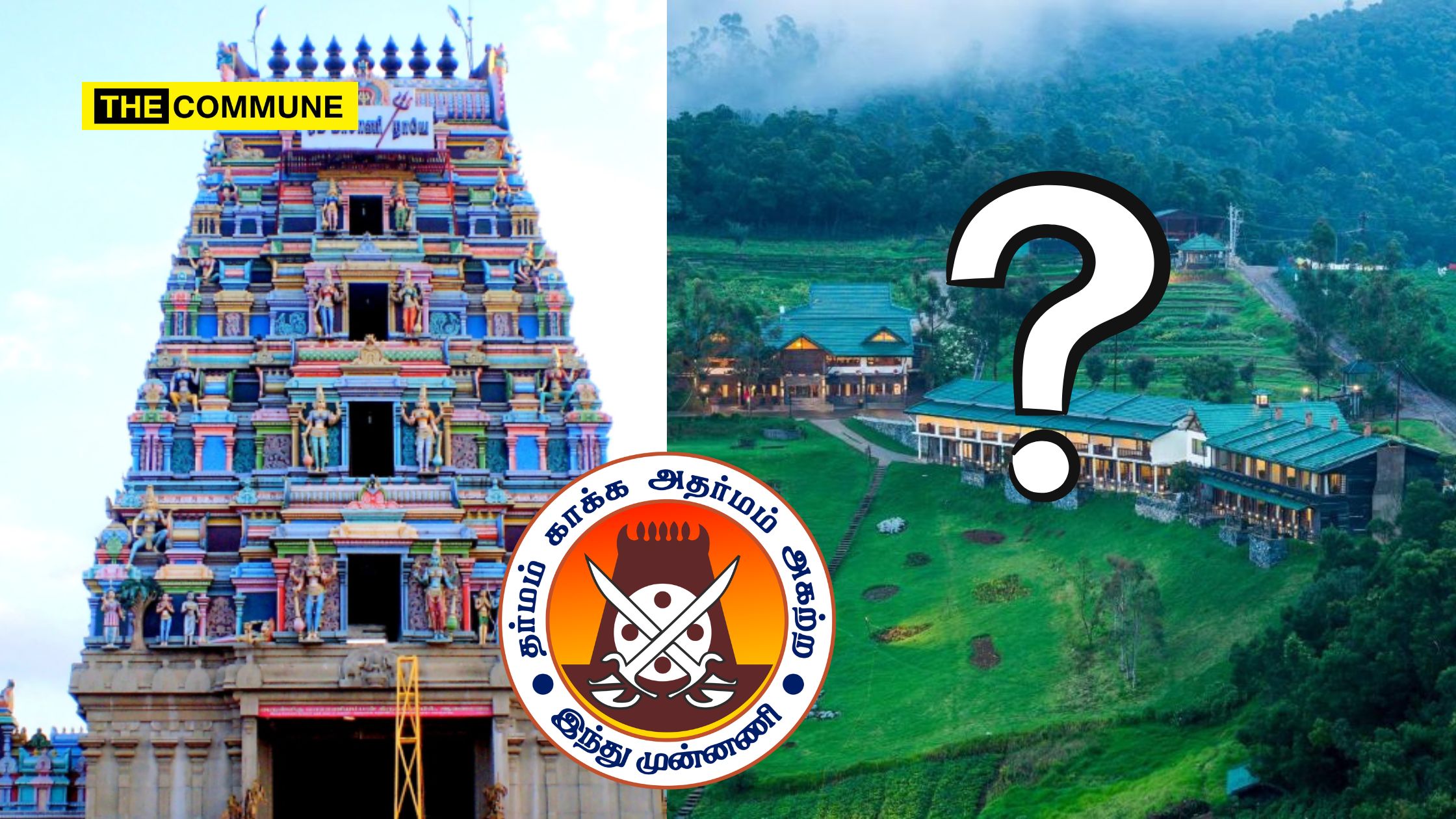
DMK Govt’s HR&CE Dept To Spend ₹14 Crores Of Maasani Amman Temple Funds To Build Resort In Ooty, Devotees Object

The Maasani Amman Temple is a famous Hindu temple located in Aanamalai near Pollachi in Coimbatore district. The presiding deity is a 17 feet idol of Goddess Maasani Amman. Thousands of devotees from across the state visit this famous temple and so the temple sees a lot of revenue coming into the Hundi.

According to a Dinamalar report, around ₹100 crore rupees paid as offerings by devotees to this temple has been deposited in the bank. The Hindu Religious & Charitable Endowments (HR&CE) department has reportedly decided to take around ₹14 crores from this amount to build a resort near Subramaniya Swami Temple in Kandal near Ooty. It has been decided to demolish the old residences there and build new ones.

The trustees of Maasani Amman Temple have opposed the HR&CE department’s decision to use temple funds for constructing a resort. With their term nearing its end, devotees allege that the department is appointing its own officials who are not resisting the project.

They further claim that the resort plan is being pushed by a businessman with ties to the DMK, who is orchestrating changes in temple management to facilitate the project. This has sparked outrage among devotees, who warn that the move could damage the DMK’s reputation in the region. In protest, they have written to the Tamil Nadu Governor and Chief Minister, urging them to intervene and halt the resort’s construction using temple funds.

The Hindu Munnani has raised concerns over the DMK government’s plans to divert temple funds from the Arulmigu Maasani Amman Temple in Pollachi towards building a resort in Ooty. Citing the Madras High Court’s directive that temple funds should be used exclusively for temple development and not for extravagant government expenditures, the organization has warned against any misuse.

In a post on its official X account, the Hindu Munnani questioned, “A resort in Ooty with temple money….???Is the Dravidian model DMK government planning to squeeze the 100 crore deposit money of the Pollachi Maasani Amman temple? The Dravidian model DMK government and the Hindu Religious and Endowments Department, which have repeatedly ruled that the temple money should be spent on the temple itself, should understand that the only aim of the people is to loot the temple money..!! A resort with Masani Amman temple money.” 

What Did Madras High Court Said?

On 9 January 2025, a two-judge bench of the Madras High Court ruled that surplus funds from revenue-generating temples cannot be used for constructing shopping complexes, reinforcing that temple funds should be utilized strictly for religious and charitable purposes.

The case originated when a Tamil Nadu resident, P. Bhaskar, came across a tender notice in the New Indian Express on 11 December 2023. The notice indicated that the Tamil Nadu Hindu Religious and Charitable Endowments (HR&CE) Department planned to build a commercial shopping complex on land belonging to the Arulmigu Nandeeswarar Shivan Temple, utilizing its surplus funds.

Concerned about the legality of this move, Bhaskar filed a Public Interest Litigation (PIL) in the Madras High Court, challenging the HR&CE Department’s decision. He argued that the temple, which falls under the jurisdiction of the Tamil Nadu government, was being operated without trustees and was effectively under the sole authority of the Joint Commissioner. Furthermore, he contended that under the Tamil Nadu HR&CE Act of 1959, surplus funds of temples must be utilized in specific ways as outlined in the legislation.

Legal Provisions On Temple Fund Usage

The Tamil Nadu HR&CE Act of 1959 clearly specifies in Sections 36, 36-A, and 36-B that temple surplus funds can only be used for religious and charitable activities such as conducting Hindu marriages and feeding the poor. Additionally, Section 66 provides guidelines for managing temple endowments (donations), restricting their use to purposes including:

  • Providing financial aid to underprivileged religious institutions
  • Supporting activities related to Hindu religious teachings
  • Promoting the recitation of sacred Hindu texts such as Divya Prabandham and Thevaram
  • Establishing schools to train Hindu priests
  • Creating universities dedicated to Hindu religious studies
  • Running educational institutions that include Hindu religious instruction

None of these provisions permit the construction of commercial properties such as shopping complexes.

Despite these restrictions, the HR&CE Department attempted to justify its plan by claiming that rental income from the complex would contribute to temple development. The department further assured that only Hindu vendors would be allowed to lease shops and that the complex would exclusively sell puja items, utensils, and vegetarian food.

High Court’s Judgment

The case was presided over by Chief Justice Kalpathi Rajendran Shriram and Justice Senthilkumar Ramamoorthy. The court observed that the Arulmigu Nandeeswarar Shivan Temple had no appointed trustees and questioned whether its surplus funds had been allocated according to Section 66 of the HR&CE Act. The judges emphasized that temple funds should be used for propagating religious values and maintaining Hindu traditions.

The ruling stated, “Constructing a shopping complex using temple funds does not serve the religious objectives outlined in the HR&CE Act. Such an endeavor fails to contribute to the propagation of Hindu tenets and, therefore, is not permissible.”

Additionally, the judges criticized the HR&CE Department for failing to conduct a feasibility study before proceeding with the project. They questioned the financial rationale behind the decision, stating:
“For instance, if ₹1 crore is spent on constructing the shopping complex, the projected return on investment has not been analyzed. A fixed deposit of the same amount would yield an annual return of approximately 7.25%. There is no evidence to suggest that the proposed project would generate returns exceeding this amount.”

The court also pointed out the potential risks associated with commercializing temple land, such as tenant disputes, rent recovery issues, and encroachment concerns. Consequently, it ruled that temple surplus funds must strictly be used for purposes defined in Sections 36-A, 36-B, and 66 of the HR&CE Act.

As a result, the court struck down the HR&CE Department’s plan to construct a shopping complex and recommended alternative uses for the existing temple land, such as planting native trees, hosting weddings for underprivileged Hindus, and establishing shelters to provide free meals.

Government Control Over Temples in Tamil Nadu

Unlike in most parts of India, where temples are managed by independent trusts or religious institutions, Hindu temples in Tamil Nadu are overseen by the state government through the Tamil Nadu Hindu Religious and Charitable Endowments (HR&CE) Act of 1959. This legislation was originally intended to ensure the efficient administration of temples and religious endowments.

Currently, the Tamil Nadu government controls:

  • 36,635 temples
  • 45 mutts
  • 68 temples associated with mutts
  • 189 charitable endowments
  • 1,721 specific endowments
  • 17 Jain temples

The HR&CE Department appoints key temple administrators, including the Commissioner, Joint Commissioner, and Assistant Commissioner. It also manages temple assets and finances under the pretext of ensuring sustainable development. Additionally, the government imposes levies of 1.5% to 4% on temple income for audit purposes.

Another controversial aspect of the HR&CE Act is its provision allowing the government to appoint priests (archakas), overriding traditional Hindu practices where specific communities manage temple rituals.

Under government control, Tamil Nadu has witnessed the decline of several historic religious institutions. Notably, 11 mutts have ceased to function in recent years, reducing the total number of operational Hindu mutts in the state from 56 to 45.

Conclusion

With its recent ruling, the Madras High Court reaffirmed that temple funds must not be diverted for commercial projects. The judgment serves as a reminder that government-controlled religious institutions must adhere to legal provisions governing fund utilization. By striking down the HR&CE Department’s plan, the court has reinforced the principle that temple resources should remain dedicated to religious and charitable causes.

Subscribe to our channels on TelegramWhatsApp, and Instagram and get the best stories of the day delivered to you personally.

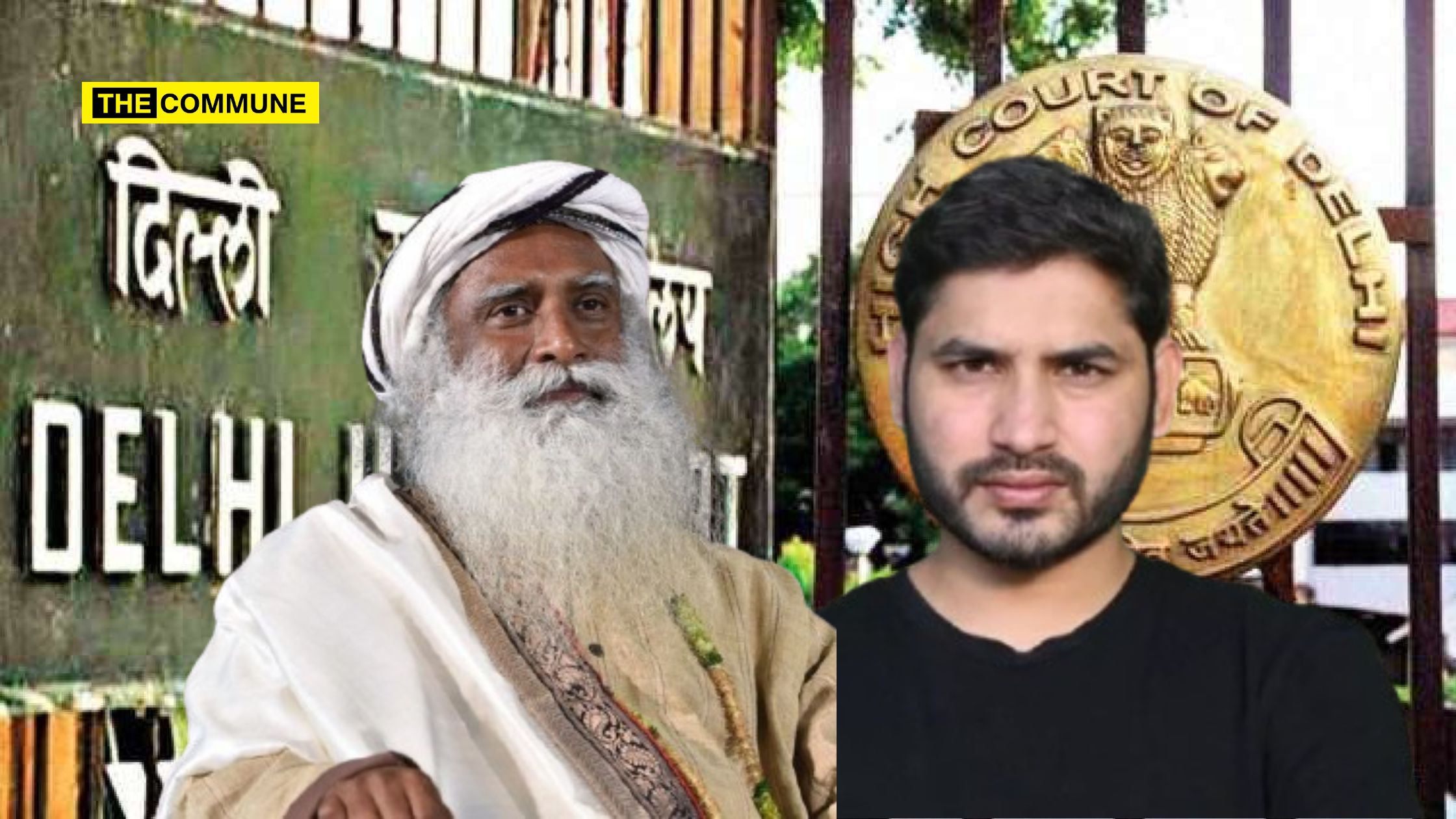
Delhi High Court Orders Takedown of YouTube Video Alleging Exploitation at Isha Foundation

The Delhi High Court on Wednesday directed YouTube, X, and Meta to take down a video uploaded by YouTuber Shyam Meera Singh, which allegedly defames Isha Foundation and its founder, spiritual leader Sadhguru Jaggi Vasudev.

The video, titled “Sadhguru EXPOSED: What’s Happening in Jaggi Vasudev’s Ashram”, was uploaded on Singh’s YouTube channel on 24 February 2025 and subsequently shared on his X page. The video, which has amassed over 937,000 views, 65,000 likes, and 13,000 comments, contained allegations suggesting the exploitation of minors at the ashram.

Justice Subramonium Prasad, in an interim order, restrained Singh from publishing or sharing the video. The court also prohibited members of the public from re-uploading it on any social media platform. The order came in response to a defamation suit filed by Isha Foundation, which argued that the video was defamatory and based on unverified claims.

“The contents of the video are per se defamatory and directly impact the reputation of the Plaintiff in the eyes of the general public,” the court observed, adding that Singh’s video title was a “clickbait” meant to attract attention.

The bench further noted that reputation is an integral aspect of an individual’s dignity and emphasized the need to balance freedom of expression with the right to reputation, which is protected under Article 21 of the Indian Constitution.

Isha Foundation was represented in court by Senior Advocate Manik Dogra and a legal team from Athena Legal, including Advocate Yajat Gulia. The case will next be heard on 9 July 2025, with the interim relief application scheduled for 9 May 2025.

(With inputs from LiveLaw)

Subscribe to our channels on Telegram, WhatsApp, and Instagram and get the best stories of the day delivered to you personally.
Hamid Patel Appointed Interim Chair Of Ofsted

Sir Hamid Patel, chief executive of Star Academies, has been appointed as the interim chair of Ofsted, the Office for Standards in Education, Children’s Services and Skills in England. He will serve in this role until the government appoints a permanent successor to Dame Christine Ryan, who announced her departure in November after four and a half years in the position.

Sir Hamid, an Ofsted board member since 2019, will hold the position for up to five months. His appointment comes at a time when Ofsted is undergoing governance reforms in response to a review led by former Chief Inspector Dame Christine Gilbert, published in September last year.

Chief Inspector Sir Martyn Oliver welcomed the appointment, saying,I am very pleased that Sir Hamid will be supporting us as interim chair while the government recruits Dame Christine’s successor. I look forward to working closely with him and, in time, with a new chair.”

As CEO of Star Academies since its formation in 2010, Patel has overseen the development of 36 primary and secondary schools across Lancashire, Greater Manchester, West Yorkshire, the Midlands, and London.

Beyond his role at Star Academies, Sir Hamid holds several key positions in the education sector. He is vice chair of the National Institute of Teaching, chairs the Cabinet Office’s independent Education Honours Committee, and serves as an honorary professor of education at the University of Birmingham. His leadership contributions have earned him numerous accolades, including a CBE in 2015 and a knighthood in the Queen’s Birthday Honours in 2021.

Subscribe to our channels on Telegram, WhatsApp, and Instagram and get the best stories of the day delivered to you personally.
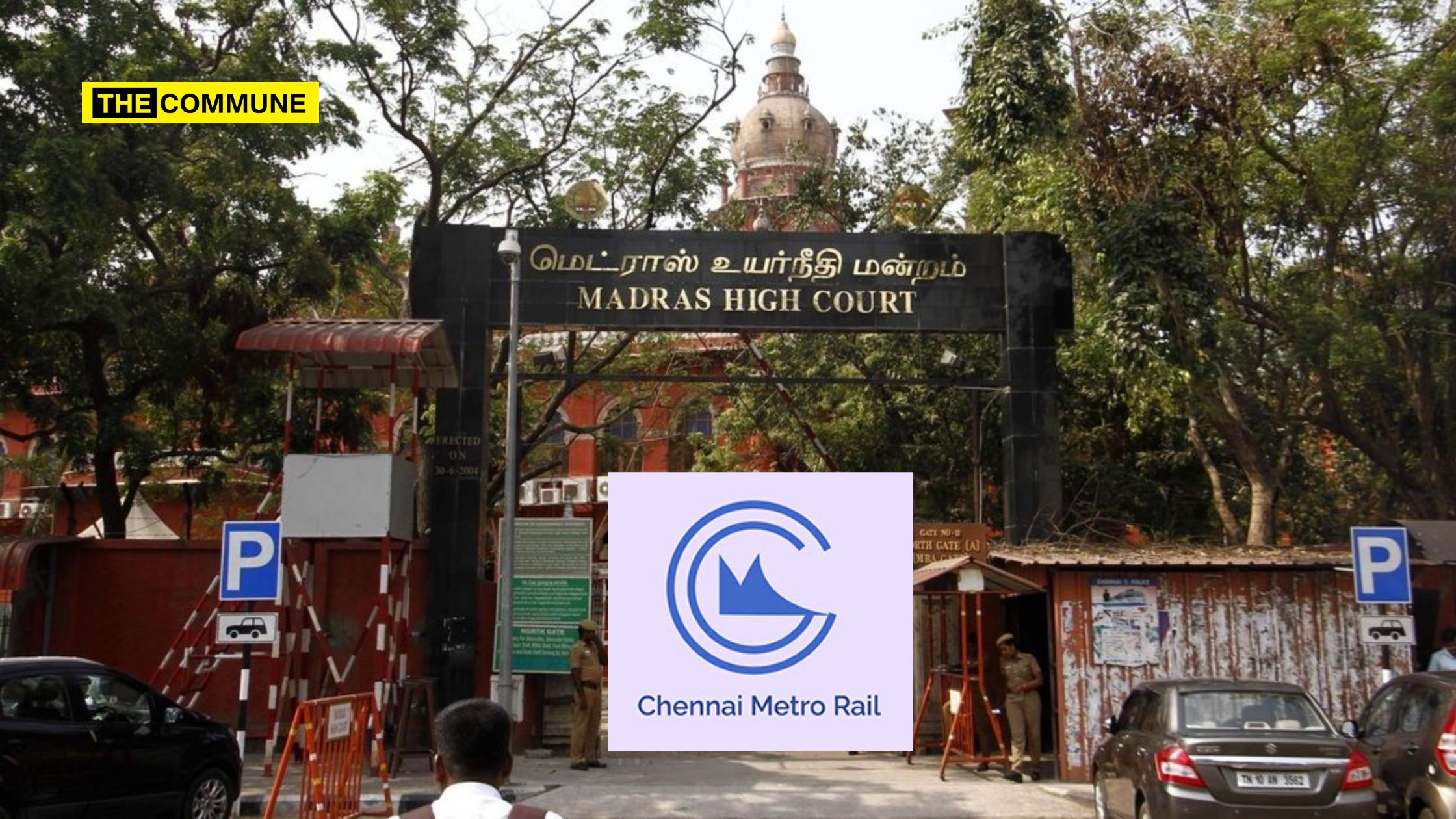
Madras HC Upholds Temple Land Acquisition For Metro Project, Says No Violation Of Fundamental Rights Under Articles 25 And 26

The Madras High Court has set aside a notice issued by Chennai Metro Rail Limited (CMRL) to acquire property belonging to United India Insurance for the construction of a metro station under Phase-II of the project. The court ruled that CMRL could proceed with its original plan of acquiring land from a nearby temple instead.

Justice Anand Venkatesh, borrowing from a Kerala High Court judgment, remarked that the Almighty would show kindness and benevolence toward the development of the metro station, benefiting lakhs of people. Quoting the Kerala High Court’s recent words, he observed:

“This Court, like P.V. Kunhikrishnan, J, fervently believes that the Almighty would undoubtedly shower his kindness and benevolence for the development of a metro rail station, which will benefit lakhs of people from all segments of society, some of whom may well be devotees, who visit the temple. In the words of the Kerala High Court, ‘God will forgive us. God will protect the petitioners, the authorities, and also the author of this judgment. God will be with us.’”

The court also clarified that religious institutions’ lands are not exempt from acquisition and that such acquisitions do not violate fundamental rights under Articles 25 and 26 of the Constitution.

Background

The case arose from a petition filed by United India Insurance challenging a show cause notice issued by CMRL under Section 3(2) of the Tamil Nadu (Acquisition of Lands for Industrial Purposes) Act, 1997. The notice asked why the company’s property should not be acquired for the proposed metro station.

Initially, CMRL had planned to locate the entry/exit points of the station within the premises of the Arulmighu Sri Rathina Vinayagar Temple and the Durgai Amman Temple. However, a public interest litigation (PIL) was filed by an organization representing devotees, opposing the move. Following a joint inspection, CMRL gave an undertaking to the High Court, stating that the metro station’s entry/exit points would instead be shifted to the insurance company’s property. Based on this assurance, the notice was issued to the company.

Arguments And Court Observations

United India Insurance argued that the show cause notice was merely a formality, as CMRL had already decided to acquire its property. The company highlighted that it had invested ₹250 crore in constructing its building after obtaining a No Objection Certificate (NOC) from CMRL, creating a legitimate expectation that the property would not be disturbed. Additionally, the company was not made a party to the earlier PIL and contended that the undertaking given by CMRL in that case could not be binding on it.

CMRL, however, maintained that its initial plan was to acquire temple land but shifted its stance following the devotees’ opposition. The agency argued that no final decision had been made and that objections raised by the insurance company would be considered independently.

The court, after examining the records, noted that the relocation of the Vinayagar deity had already been decided by the Hindu Religious and Charitable Endowments (HR&CE) department. Additionally, the Gopuram of the Durgai Amman Temple was planned to be shifted five meters inside and reinstated after the metro project. It was also observed that while the temples were claimed to be very old, they were, in fact, established only in 1960.

The court sided with the insurance company, agreeing that the notice amounted to a post-decisional hearing, as CMRL had already made a commitment in court. It ruled that CMRL’s actions were restricted by the principle of promissory estoppel, as the company had been led to believe that its property would remain undisturbed.

Court’s Final Decision

The High Court concluded that CMRL could not now take a different stand based on an earlier proceeding where the insurance company was not a party. Justice Anand Venkatesh stated:

“The CMDA, by granting approval, has induced the petitioner to invest funds. To allow the CMDA and the CMRL to sing a different tune at this juncture and that too on the basis of a proceeding, to which the petitioner was not even a party, would be grossly unfair and arbitrary. It would clearly tantamount to an abuse of power violating Article 14. As pointed out supra, the consent given by the CMRL before the First Bench of this Court cannot bind the petitioner since it was not made a party nor was heard before such orders were passed.”

Though CMRL argued against applying the promissory estoppel doctrine in this case, the court ruled that its defenses were not valid. Consequently, the show cause notice issued to the company was quashed.

The court refrained from imposing costs on the State or the devotees’ organization but emphasized that the highest aim of religion is to unite humanity. It reiterated that CMRL was free to proceed with its original plan of acquiring the temple land for the metro project.

(With inputs from LiveLaw)

Subscribe to our channels on Telegram, WhatsApp, and Instagram and get the best stories of the day delivered to you personally.