The police on 9 September made the first arrest in the mob lynching case, where a couple was allegedly beaten to death on suspicion that they killed a 9-year-old boy. The police have registered an FIR against a total of 200 people. Police said the arrested youth is a resident of the Nishchintapur area in Tehatta of Nadia district. He was trying to flee the area but was arrested red-handed from the Karimpur police station area.
“One person has been arrested in the mob lynching case. Search is on for the other accused in the case. We are thoroughly investigating the matter,” said a senior officer of Nadia district police. After the murder of a 9-year-old boy in Tehatta last Friday night, a couple named Utpal Biswas and Soma Biswas were killed in a mob lynching. Their daughter-in-law, Nisha, is undergoing treatment in critical condition after being severely beaten up.
The police have recently registered a case against more than 200 people and started an investigation into the incident. Police are deployed round the clock at the place from where the body of the boy was recovered. CCTV cameras have been installed. The place where the couple was beaten to death has been cordoned off by the police, as broken bamboo pieces and blood stains following the mob lynching are still there. The police are not allowing anyone to reach the spot until the forensic team officials come and collect samples. On Sunday morning, the police arrested four people in connection with the killing of the boy. They were produced in a court which sent them to police custody.
On Saturday, the couple was lynched after being accused of murdering the boy. The incident occurred after residents recovered the child’s body wrapped in a tarpaulin from a pond. Enraged locals alleged that the two had killed the boy, thrashed them brutally, and set their house on fire. According to police, Swarnabha Biswas, a Class 3 student, went missing on Friday afternoon after playing in a nearby field. Despite an overnight search, the family could not trace him. On Saturday morning, villagers spotted his body floating in a pond near the house. Police said that the lynching took place shortly after the body was found.
-IANS
Subscribe to our channels on Telegram, WhatsApp, and Instagram and get the best stories of the day delivered to you personally.
Reinforcing the growing defence cooperation between India and the US, the armies from both countries conducted live drills at Fort Wainwright in Alaska as part of the 21st edition of the India–US Joint Military Exercise ‘Yudh Abhyas 2025’. Last week, the 21st edition of Yudh Abhyas commenced with a grand opening ceremony at Fort Wainwright in Alaska. This will continue till 14 September.
“In Fort Wainwright, Alaska, Indian Army and US Army warriors conducted live fire drills today,” the Embassy of India in Washington posted on X on Monday (India time).
As part of this exercise, a total of 450 soldiers from each side are taking part in field and command post exercises while also engaging with subject-matter experts (SMEs) to further strengthen operational synergy.
According to the Indian Embassy, recently, during the field training component of the exercise, soldiers from the Indian army and the US army rehearsed various battle drills together. The Indian Army contingent, comprising 450 personnel led by a battalion of the Madras Regiment, arrived in Fairbanks on August 31. They are training alongside US soldiers from the 1st Battalion, 5th Infantry Regiment (“Bobcats”), part of the 1st Infantry Brigade Combat Team (Arctic Wolves), 11th Airborne Division. The 2025 edition is one of the largest bilateral military exercises for the Indian Army in terms of troops mobilised.
This edition includes mountain and high-altitude operations under sub-arctic conditions, heliborne and air-mobility integration, backed by artillery and aviation assets. Additionally, it will also focus on electronic warfare, surveillance, and counter-drone systems, medical evacuation and combat casualty care in field conditions, and live-fire tactical drills to validate seamless interoperability.
Yudh Abhyas currently stands as a flagship, high-complexity Army-to-Army exercise and has become one of the cornerstones of India-US military cooperation. India conducts more military exercises with the US than with any other country, the Indian Embassy mentioned. “India conducts more military exercises with the US than with any other country. These exercises, including Yudh Abhyas, Malabar, COPE India, Vajra Prahar, Tiger Triumph and several others, are central to building interoperability and forging mutual trust. It demonstrates how our two democracies continue to work towards peace, security and prosperity, including in the Indo-Pacific region,” the Embassy added.
-IANS
Subscribe to our channels on Telegram, WhatsApp, and Instagram and get the best stories of the day delivered to you personally.
Cybercrime police in Coimbatore have issued a strong alert to the public after nearly 50 residents of the city fell victim to a scam in which fraudsters posed as customer care executives of online travel firms to steal money from their bank accounts.
Police have urged citizens to remain extremely vigilant and not to trust unknown callers or numbers found online. The latest case involved a 60-year-old woman from Kerala, residing in Kovaipudur, who lost Rs 18 lakh. She had booked a hotel stay through a popular travel app, but cancelled her trip. While searching online for refund options, she came across a 10-digit mobile number claiming to be the company’s customer care contact.
“When she dialled the number, a man posing as an executive from the popular app company provided her with an email address for raising a refund request. Soon after she sent the email, she received a WhatsApp message from another person, who instructed her to download an APK file. Believing it was part of the refund process, she installed the app on her phone, which gave the fraudsters remote access,” an officer from the cybercrime wing said.
The scammer then asked her to transfer Rs 1 to a specified account as a “test transaction.” When she entered the bank details, the hackers captured her credentials and siphoned off ₹18 lakh from her account. The woman lodged a complaint with the cybercrime police. Police said this was not an isolated case. In recent months, dozens of people in the city have been duped in a similar fashion, losing money after downloading malicious applications or trusting fraudulent helplines they found online. Officials stressed that tickets and hotel bookings made through certified platforms such as this popular app can only be cancelled via their official websites or apps, and no genuine customer care agent would ever ask for third-party downloads or direct transfers.
“Fraudsters are constantly coming up with new tactics. People must remain vigilant, avoid searching for random contact numbers on the internet, and never share banking details with unknown callers or install unauthorised applications,” the officer cautioned. Cybercrime police reiterated their appeal to the public to stay alert against such scams and immediately report any suspicious attempts, stressing that awareness and caution are the strongest safeguards against cyber fraud.
-IANS
Subscribe to our channels on Telegram, WhatsApp, and Instagram and get the best stories of the day delivered to you personally.
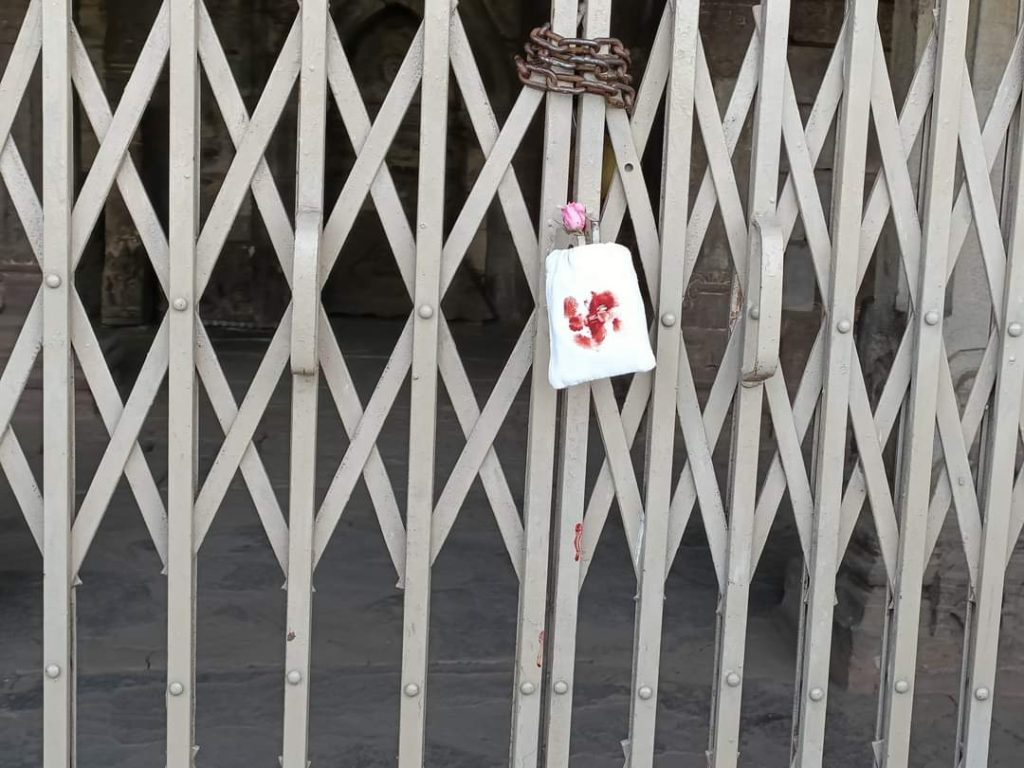
Madhya Pradesh is the land of antiquity. In the heart of Vidisha district in the state stands one of India’s most magnificent ancient temples – the Bijamandal Temple, also known as the Vijay Surya Mandir. Built in the 8th century CE by the Chalukya dynasty and later expanded by Paramara rulers, this colossal temple complex once rivaled the grandeur of Konark and exceeded the scale of Khajuraho. Yet today, this sacred Hindu monument remains locked behind iron gates, its true identity deliberately obscured by bureaucratic mislabeling that calls it a “mosque” in government records.
The magnitude of this injustice cannot be overstated. For over six decades, Hindu devotees have been denied their fundamental right to worship inside their own ancestral temple, forced instead to offer prayers to locked doors during the annual Nag Panchami festival. This systematic suppression of Hindu religious rights represents not just an administrative error, but a calculated assault on India’s civilizational heritage.
The Sun Temple That Touched the Sky
The Bijamandal Temple’s original splendor was so immense that the renowned 11th-century scholar Al-Biruni described it as having a height of 315 feet with a shikhara visible from five kilometers away. The temple complex stretched over half a mile in length and width, reaching a height of 105 yards, making it one of the grandest temples in medieval India.
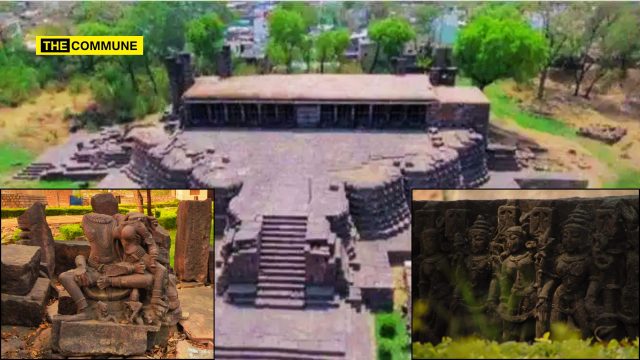
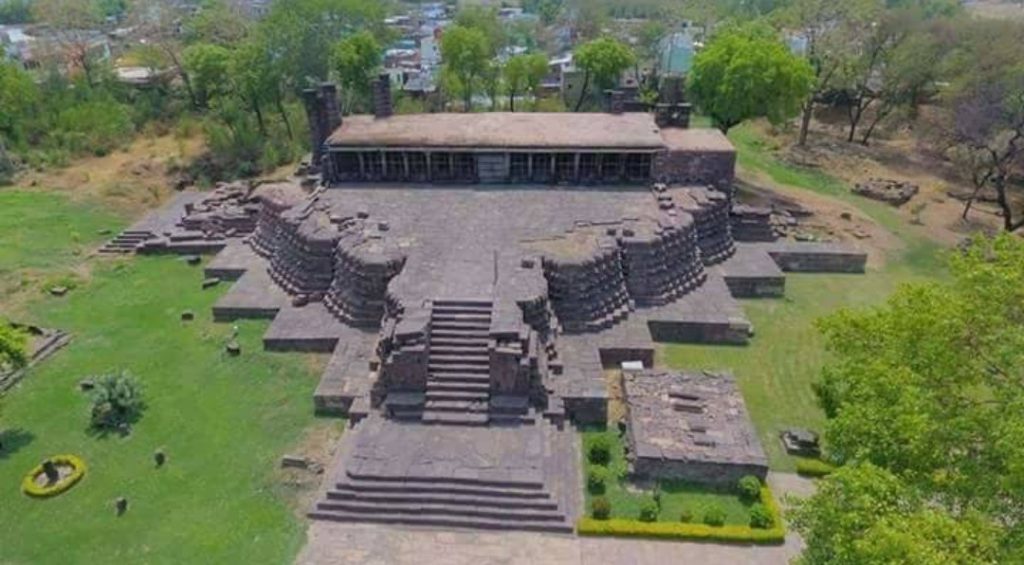
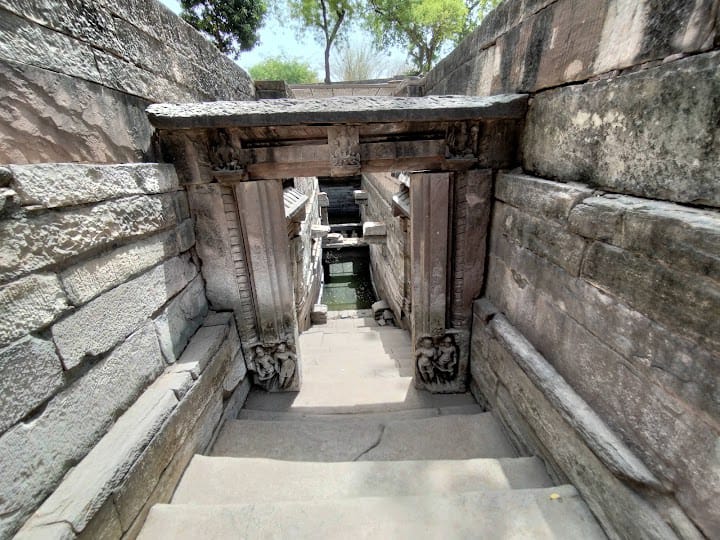
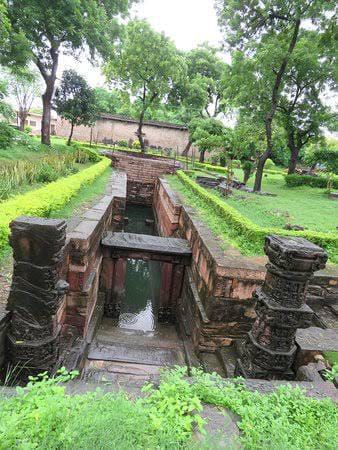
Ruins of Bijamandal temple in Vidisha, showcasing ancient Indian temple architecture preserved as an archaeological site
Historical accounts reveal that this was not merely a single deity temple, but a magnificent Panchayatan complex dedicated to multiple Hindu deities. Over its 300-year golden period from the 8th to 11th centuries, the temple evolved to house:
Surya Bhagwan (the primary solar deity)
Lord Shiva and Parvati
Lord Ganesha and various Devi manifestations
Saptamatrika and Ashtamatrika panels
64 Yoginis associated with tantric traditions
Goddess Charchika (established by Paramara King Naravarman)
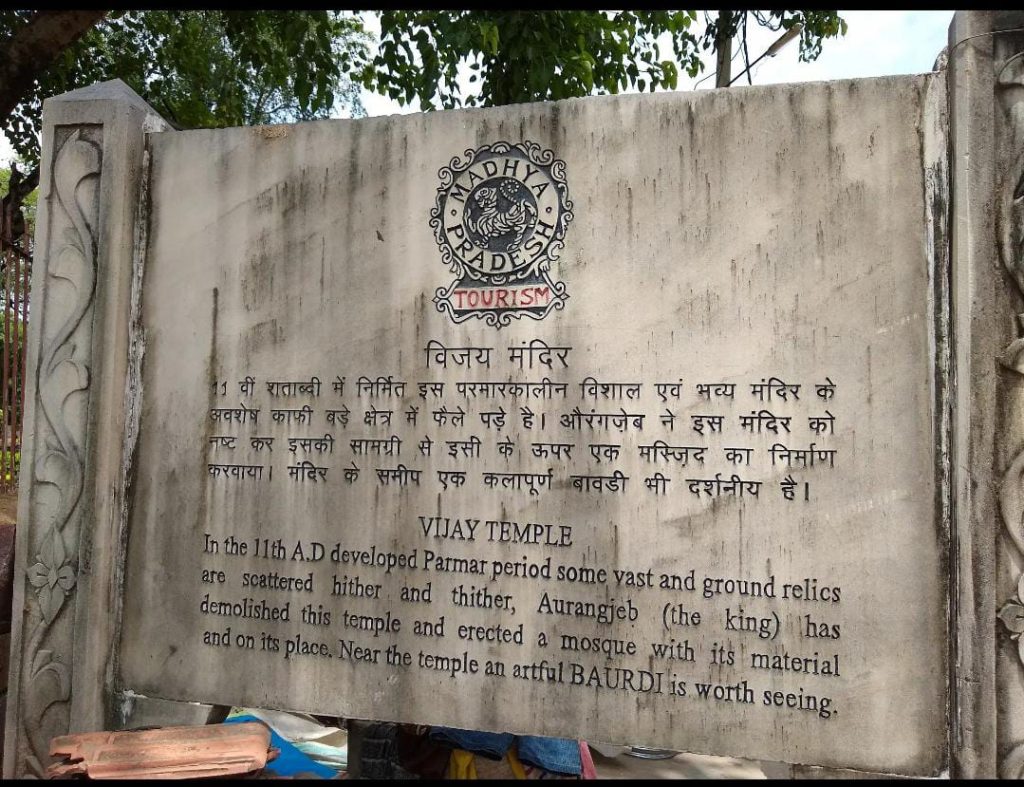
MP Tourism Plaque
A History of Repeated Destruction and Unyielding Rebuilding
Like many other temples across the country, Bijamandal has also seen its share of repeated destruction.
Systematic Destruction by Islamic Invaders
The temple’s tumultuous history exemplifies the broader pattern of Islamic iconoclasm against Hindu sacred sites. The destruction occurred in systematic waves:
1233-34 CE: Sultan Iltutmish first attacked and demolished the temple, looting its immense wealth and taking the main deity to Badaun mosque in Delhi, where it was deliberately placed on the entry steps for Muslims to trample upon as an act of religious humiliation.
1290 CE: Alauddin Khilji’s general Malik Kafur destroyed the rebuilt temple, stealing an eight-foot Ashta Dhatu idol and embedding it in the stairs of a Delhi Mosque for continued desecration.
1456-60 CE: Mahmud Khilji of Mandu obliterated both the temple and the entire town of Bhelsa (ancient Vidisha).
1532 CE: Bahadur Shah of Gujarat reduced the temple to near-complete ruins.
1682 CE: The final devastating blow came from Aurangzeb, who used cannons to pulverize the temple structure with the intent that Hindus should not worship – so he made it a “khandith” idol. He cemented the octagonal sections, converted them to quadrangular shapes, built a hall structure on top with two minarets, and declared it the “Alamgir Mosque.” Until 2000, the marks of twelve cannonballs remained visible on the temple walls as testimony to this act of religious vandalism.
Unwavering Hindu Resistance
Despite centuries of persecution, the Hindu community never abandoned their sacred site. After each destruction, devotees would return to worship among the ruins, demonstrating an unbroken spiritual connection spanning over a millennium. Following Aurangzeb’s death, Hindus immediately resumed worship of the scattered deity fragments, treating the site with the reverence due to their ancestral temple.
When the Marathas arrived in 1760 CE, they found the Islamic structure already in ruins and witnessed Hindus actively worshipping their deities. This continuous Hindu presence establishes an unbroken chain of religious practice that predates and outlasts any temporary Islamic occupation.
The Modern Betrayal: From Worship to Lockdown
Post-Aurangzeb, during the Maratha rule, the Islamic structure fell into disuse, and Hindus gradually resumed worship, considering it a temple of Charchika Mata or Bijasan Devi. This continued for centuries until a pivotal moment in 1922.
The 1922 Deception and Its Consequences
When floods destroyed the Muslim Idgah near the Betwa river, local Muslims approached the Scindia king requesting temporary permission to use the Bijamandal site for a single day’s Eid prayer. The king, unaware of the site’s significance as a Hindu temple, granted this one-time permission based on incomplete information. No official documentation exists for any permanent transfer.
However, Muslims violated this temporary arrangement by returning repeatedly for subsequent Eid celebrations. When Hindu organizations like the Hindu Mahasabha and Arya Samaj protested this unauthorized occupation, they faced government persecution instead of justice.
The Nehru Era: Institutionalized Anti-Hindu Bias
The situation deteriorated dramatically after 1947. When Muslims objected to Hindu Sharad Purnima celebrations in 1947, instead of protecting Hindu rights, Nehru’s government banned Hindus from entering their own temple. This marked the beginning of systematic state-sponsored discrimination against Hindu religious practices.
For 16 years, from 1948 to 1964, the people of Vidisha, supported by Hindu satyagrahis from across India, including groups from Uttar Pradesh, Delhi, Maharashtra, and Punjab, conducted continuous protests demanding restoration of worship rights. They endured lathi charges, imprisonment, and even the desecration of women satyagrahis in jail to reclaim their temple. The government’s response was to impose curfews during Hindu festivals while facilitating Muslim prayers, and to jail thousands of Hindu protesters.
The 1965 Agreement: Muslims Abandon Claims
The breakthrough came in 1965 when Prime Minister Lal Bahadur Shastri intervened directly. He called representatives of both communities and offered Muslims alternative land and ₹40,000 to construct a new mosque elsewhere in Vidisha – this mosque still stands today. Muslims accepted this offer and vacated the temple site, acknowledging through their actions that they had no legitimate claim to the Hindu monument.
By all legal and moral standards, the property should have reverted to its rightful owners, the Hindu community.
But tragedy struck. Shastri’s untimely death allowed anti-Hindu bureaucrats to perpetuate the injustice by maintaining the fraudulent “mosque” classification in official records.
Today, worship is permitted only once a year, on Nag Panchami. And even then, for the last 30-35 years, the garbhagriha (inner sanctum) has remained locked. Hindus are forced to worship a locked iron door – an insult and historical injustice to Hindus.
ASI’s Fraudulent Classification: A Bureaucratic Crime Against Heritage
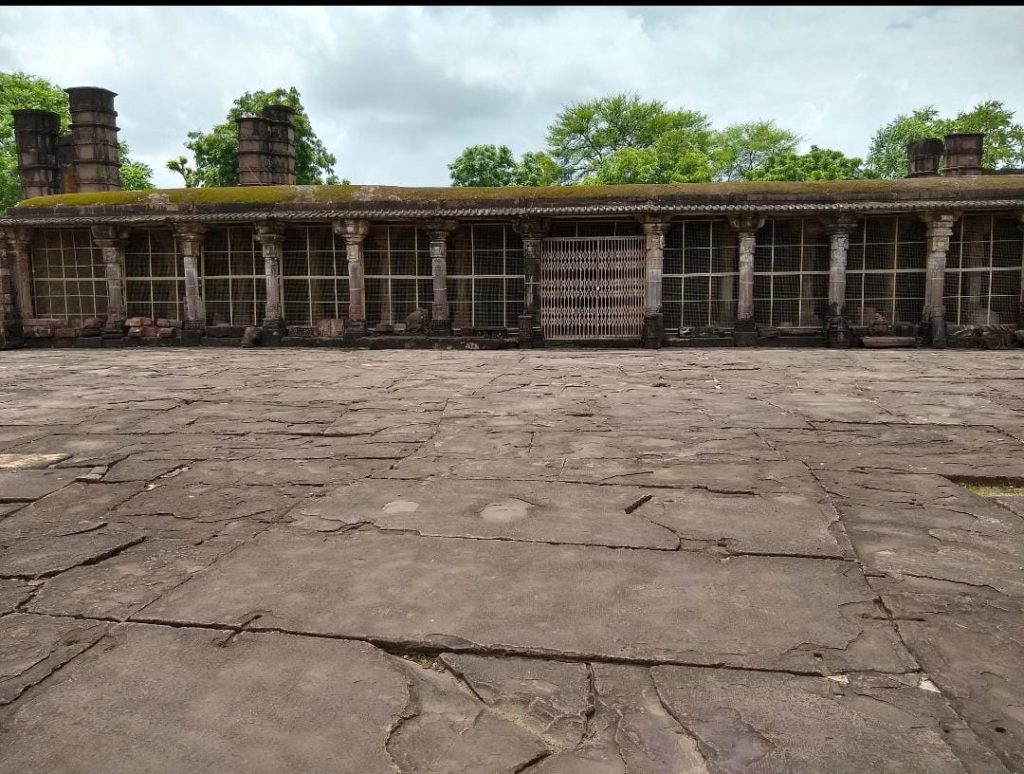
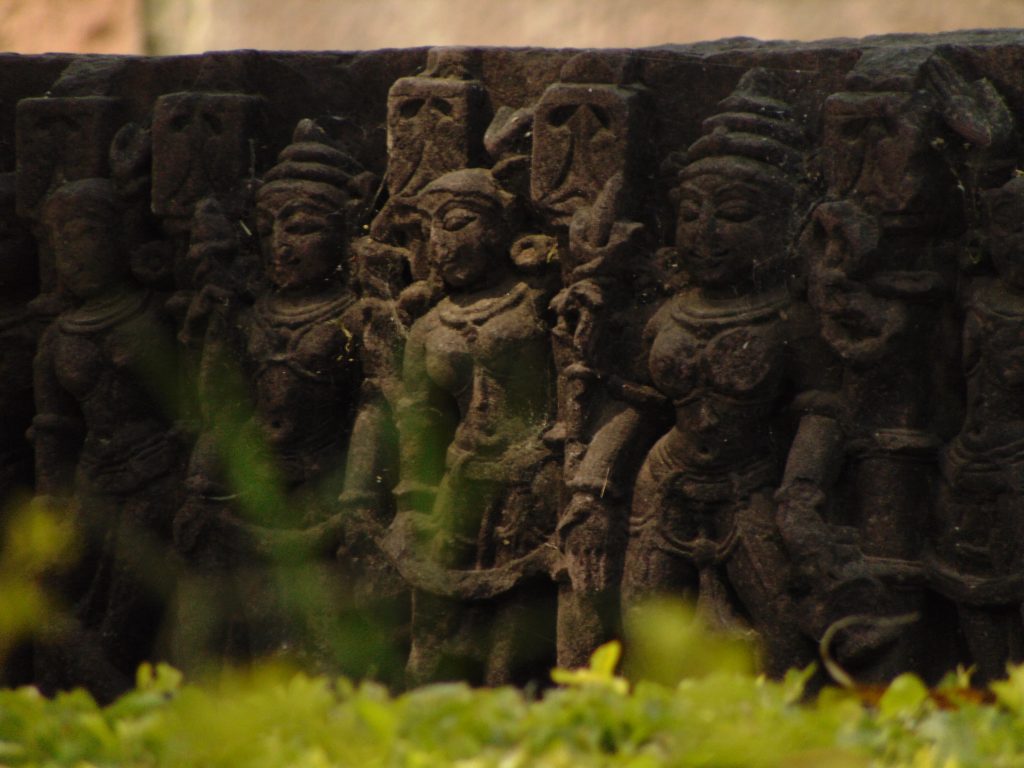
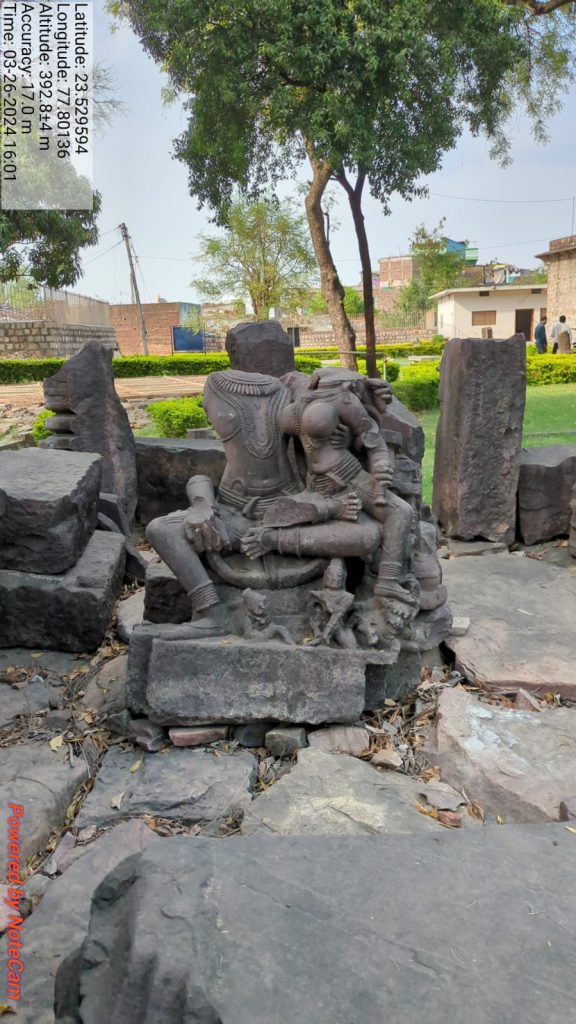
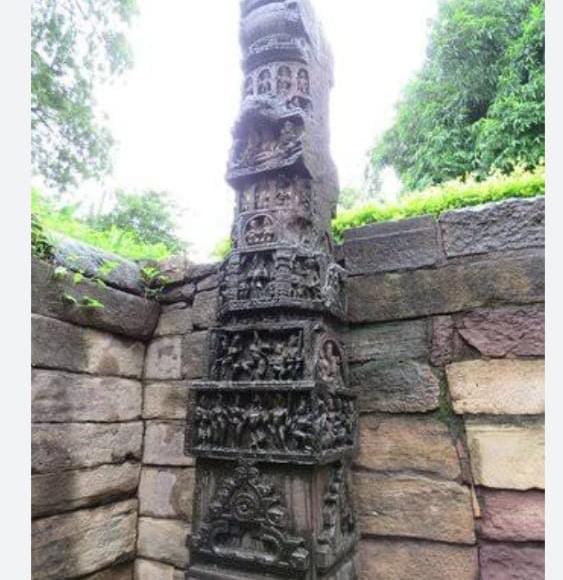
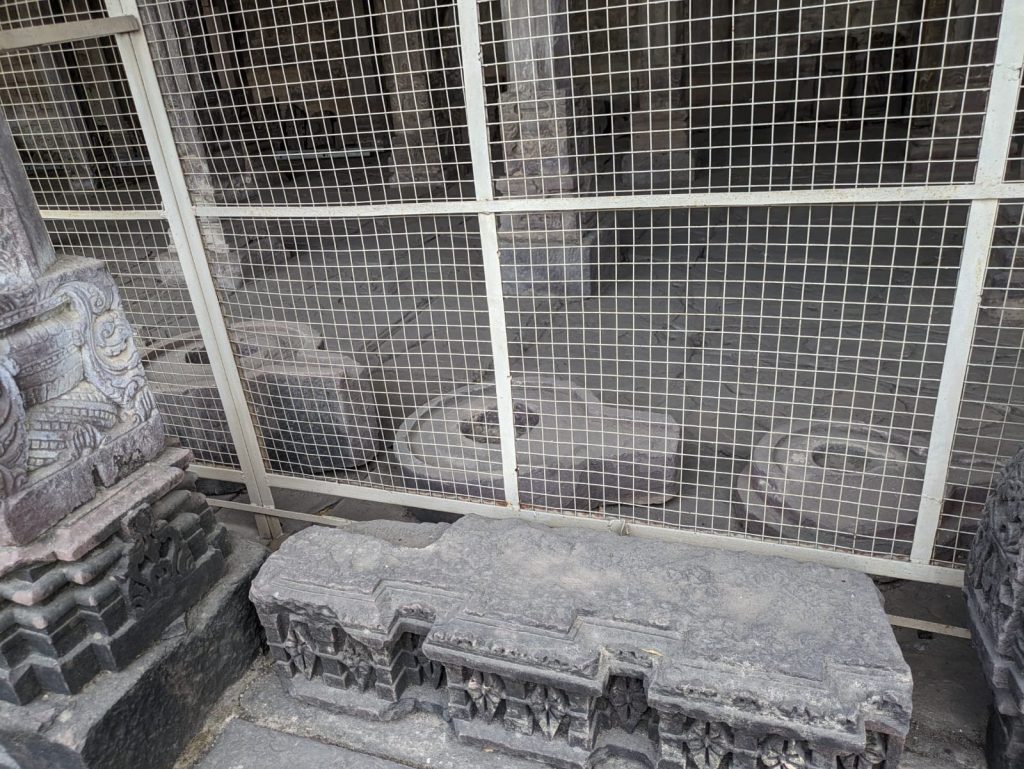
Now take a look at the images of the temple complex and the sculptures within the temple complex.
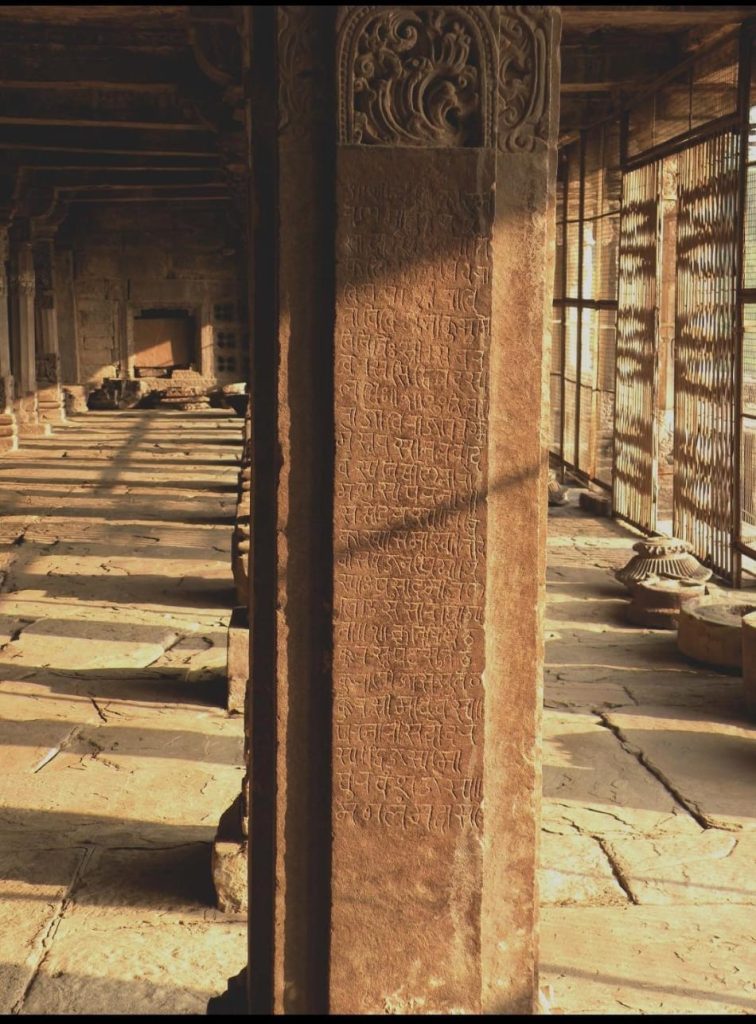
Pillar in Vijay Mandir with inscription of Naravarman – Source: Wiki
What do these tell you – do they indicate by any inkling that it is an Islamic establishment? But that is not what the ASI did.
The 1951 Gazette Deception
The Archaeological Survey of India’s classification of Bijamandal as a “mosque” in its 1951 gazette notification represents one of the most egregious examples of historical revisionism in independent India. This classification was made despite:
No documentary evidence of legitimate Islamic construction
Overwhelming archaeological proof of Hindu origins
Continuous Hindu worship for centuries
Absence of Islamic architectural elements in the original structure
When challenged under RTI queries, ASI officials admitted that historians recognize the site as a temple but claimed they were legally bound by the 1951 classification. This circular reasoning using a fraudulent classification to justify continued fraud exposes the bankruptcy of ASI’s position.
The “Non-Living Monument” Fraud
ASI’s designation of Bijamandal as a “non-living monument” represents another layer of administrative deception. This classification is used to deny Hindu worship rights while simultaneously allowing tourism and commercial exploitation. The hypocrisy becomes evident when considering that:
Multiple ASI-protected sites across India permit regular worship
Bhojshala temple in Dhar allows Hindu worship despite similar disputes
Jama Masjid in Delhi, also under ASI protection, permits Muslim prayers without restriction
This selective application of rules reveals the discriminatory intent behind ASI’s actions.
The Unlock Bijamandal Movement: A New Chapter in Hindu Resistance
Several locals from Vidisha began raising their voice for the temple. One of them is Dr Shubham Verma.
Dr. Shubham Verma’s Crusade for Justice
In 2018, frustrated by decades of humiliating “lock worship” ceremonies, local researcher and activist Dr. Shubham Verma launched the groundbreaking “Unlock Bijamandal” movement under the banner of Sakal Hindu Samaj. This movement marked a decisive shift from passive acceptance to active resistance against religious discrimination.
Hindu protesters holding a religious flag during a street demonstration associated with Bijamandal temple issues in Madhya Pradesh.
The movement gained massive momentum in 2024 when Hindu groups formally requested permission to worship inside the temple during Nag Panchami. When the then-collector Buddhesh Kumar Vaidya denied this request, citing ASI’s fraudulent “mosque” classification, the movement exploded into national prominence.
Government Response: Intimidation and Threats
The government’s response to peaceful Hindu demands revealed the extent of anti-Hindu bias in the administrative system. District authorities issued threatening letters warning Hindu devotees of two years’ imprisonment and ₹1 lakh fines for attempting to worship in their ancestral temple. Police forces from five districts were deployed to prevent Hindus from entering the temple during Nag Panchami 2024.
The intensity of this repression treating Hindu worship as a criminal act demonstrates how far the Indian state has strayed from its constitutional obligations to protect all citizens’ religious rights equally.
The Civilizational Stakes
This is not merely about one temple but about India’s relationship with its own civilization. When the Indian state protects structures built through Islamic conquest while denying rights to the indigenous Hindu community, it becomes complicit in legitimizing historical genocide and cultural destruction.
The Al-Biruni accounts themselves serve as historical testimony to both the temple’s magnificence and the Islamic strategy of deliberate religious humiliation. These primary sources from Islamic historians leave no room for doubt about the temple’s original Hindu identity and the calculated nature of its destruction.
A Call to Conscience and Courage
This is no longer about history. It is about justice. It is about the integrity of our nation to honour its own heritage.
Hindus must unite to see Bijamandal for what it represents. It is Ayodhya, Kashi, and Mathura playing out in silent, heartbreaking repetition. Hindu voices should join the chorus demanding its liberation.
The government must immediately correct all records to declare the site the “Vijay Surya Temple,”, unlock the sanctum sanctorum, end the grotesque spectacle of Hindus worshipping a locked door on Nag Panchami, apologize for decades of misclassification and willful ignorance, and also begin the process of restoring the temple to its rightful status as a living place of worship.
The sculptures of Bijamandal are speaking. They are testifying to their own identity. The only question that remains is whether we have the courage to listen and the will to act.
Subscribe to our channels on Telegram, WhatsApp, and Instagram and get the best stories of the day delivered to you personally.
In a shocking incident, the DMK panchayat president of Nariyampattu village in Tirupattur district has been arrested in connection with a jewellery theft case in Chennai.
The victim, Varalakshmi (50), a resident of Nelkundram near Koyambedu, was returning from Kanchipuram to Chennai in a government bus a few weeks ago. On reaching home, she discovered that a small pouch containing 5 sovereigns of gold jewellery was missing from her bag.
Following her complaint at the Koyambedu police station, officers launched an investigation and traced the theft to Bharathi (51), the serving panchayat president of Nariyampattu and a DMK supporter.
15-Year Habit of Stealing
Police said Bharathi had been systematically targeting women passengers on buses plying between Tirupattur and Chennai for more than 15 years. She would reportedly divert the attention of women by striking up conversations with children or fellow passengers before stealing their jewellery.
Investigators revealed that Bharathi had operated on buses across Ambur, Vellore, Vaniyambadi, Hosur, Krishnagiri, and Dharmapuri. The stolen valuables were allegedly sold, and the proceeds used to build commercial complexes in her hometown.
Despite being elected as panchayat president, Bharathi admitted to police that she continued stealing because of the “pleasure” she derived from it. “Even after gaining money, fame, and facilities, I could not give up the habit of stealing. Every time I vow not to steal again, I fail when I get the opportunity,” she confessed during interrogation.
Family members had reportedly urged him to abandon theft after entering politics, but he persisted, telling police that the thrill of stealing was irresistible.
Bharathi has been booked in connection with the Koyambedu theft case and further investigations are underway to trace his other alleged offences.
Subscribe to our channels on Telegram, WhatsApp, and Instagram and get the best stories of the day delivered to you personally.
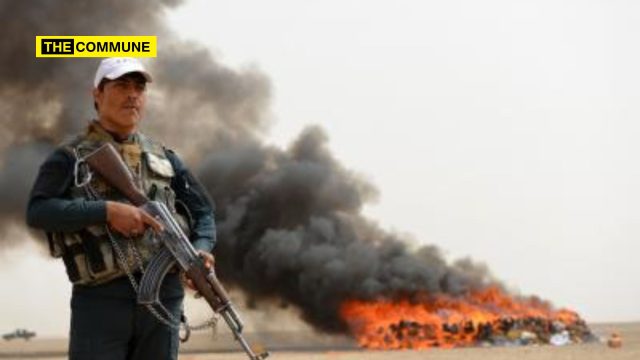
The police have discovered 145 kg of illegal drugs in the northern region of Afghanistan and took into custody 10 alleged drug smugglers, a statement of the Ministry for Interior Affairs said on 8 September.
In the drive against illicit drugs, counter-narcotics police arrested three persons and discovered 106 kg of opium poppy and 32 kg of hashish in Kunduz province on 7 September. Another man with 4 kg of hashish was arrested in the neighboring Baghlan and six persons with 3 kg of illegal drugs were detained in Balkh province, the statement of the ministry posted on X said. The police won’t allow anyone to produce or smuggle illegal drugs in the country, the statement further said, Xinhua News Agency reported.
Previously, police discovered 78 kg of opium poppy and arrested one person in the northern Takhar province on Thursday. Earlier on September 4, provincial police spokesman Nizamudin Omir said that police discovered 78 kg of opium poppy type in the northern Afghanistan Takhar province and took into custody an individual on charge of attempting to smuggle the contraband. The alleged drug smuggler placed 78 kg of opium poppy in the cavities of a car and wanted to take it from Takhar to an unknown location, but police, during a routine search, recovered the contraband and arrested its owner, the official said. This is the second discovery of an illegal drug in the northern region of Afghanistan over the past three days.
Earlier, police discovered 18 kg of opium poppy and detained two smugglers in the northern Baghlan province on September 2. Earlier in August, Afghan police set on fire 29.8 tonnes of illegal drugs seized during a series of operations in eastern Afghanistan’s Nangarhar province, according to a statement issued by the office of the Deputy Minister of Interior for Counter-Narcotics. The confiscated substances included 1,442 kg of methamphetamine (ICE), 588 kg of heroin, 15,714 kg of hashish, 460 kg of opium poppy, and other narcotics, along with materials used in drug production, said the statement issued on 25 August.
The contraband was uncovered during counter-narcotics operations in Jalalabad city and various districts of the province, it said. Without furnishing details on whether the narcotics had been discovered, the statement noted that 2,586 individuals were arrested for smuggling, purchasing, and selling the illicit drugs, and their dossiers were referred to the judiciary for further investigation. Additionally, police have rounded up 5,786 drug users in the province and shifted them to rehabilitation centres for treatment, it said. The Afghan interim government, which banned poppy cultivation, drug processing, and trafficking in April 2022, has vowed to fight the menace until the country becomes a drug-free nation.
-IANS
Subscribe to our channels on Telegram, WhatsApp, and Instagram and get the best stories of the day delivered to you personally.
For decades, Pakistan’s military establishment has fostered and harboured jihadist groups as tools of regional strategy to silence Baloch voices of resistance against Islamabad’s atrocities, a report said on 8 September.
The Islamic State Pakistan Province (ISPP), an offshoot of the terrorist organisation ISIS-Khorasan Province (ISKP), which claimed responsibility for the September 2 suicide attack on the Balochistan National Party-Mengal (BNP-M) rally in Quetta, exposed the alarming and serious security vacuum Pakistan has allowed to deepen in Balochistan, according to a report published in The Balochistan Post.
It further stated that the attack, which claimed at least 14 people and injured more than 30, is not an isolated incident but the result of years of Pakistan’s policies aimed at destabilising Balochistan and creating a breeding ground for global terrorist outfits.
“These same forces have now turned inward, directly targeting ethnic nationalists, progressives, and critics of the state. ISKP’s propaganda, particularly the booklet Qaumiyat Ka Fareb (The Deception of Nationalism), makes clear that Baloch, Pashtun, and progressive voices are seen as threats equal to, if not greater than, foreign powers,” the report read.
The report further stated that the “overlap between the ISKP’s declared enemies, which align with Pakistan’s own adversaries — BNP-M, BYC, Pashtun Tahafuz Movement (PTM), Pashtunkhwa Milli Awami Party (PKMAP) — raises the uncomfortable question: who benefits when these groups are silenced?” Calling the Quetta bombing the latest incident in the pattern, adopted by Islamabad to weaken Balochistan’s fight, the report noted, “From the March 2025 attempt on BNP-M leaders in Mastung, to ISKP’s explicit threats against the BLA, BLF, and BYC, the militant agenda appears increasingly aligned with Pakistan’s long-standing campaign to weaken Baloch resistance.”
The report cited documents recovered in Kabul during an operation against ISKP by Afghanistan’s General Directorate of Intelligence (GDI) last year, and said that these mentioned the terror outfit’s “hitlist” of prominent critics of Islamabad, including Akhtar Mengal and Dr. Mahrang Baloch. “It is difficult to ignore that these very individuals are also the central civilian opposition to Pakistan’s military dominance in Balochistan,” the report further added.
The Balochistan Post report also mentioned that Baloch fighters destroyed an ISKP camp in Mastung, killing dozens of terrorists, which it claimed, reflects that nationalist groups are “directly opposed to rather than aligned” with international jihadism. Rather than safeguarding its citizens, the report said, Islamabad has repeatedly placed greater emphasis on targeting nationalist movements over destroying transnational terrorist infrastructure.
It said that through this selective approach, space has been created for the terror organisation ISIS to gain a foothold in Balochistan, making it into a new theatre of conflict. According to the report, the Quetta attack is not just an act of terrorism, but a part of a “broader convergence of interests between Pakistan’s establishment and ISIS affiliates in silencing dissenting, pro-independence, and democratic Baloch voices.”“Unless this nexus is broken, Balochistan risks becoming not just a battleground between nationalists and the Pakistani military, but also a staging ground for international jihadists who exploit the very chaos Pakistan has engineered,” the report noted.
-IANS
Subscribe to our channels on Telegram, WhatsApp, and Instagram and get the best stories of the day delivered to you personally.
Speaking at a Congress conference in Tirunelveli, Girish Chodankar All India Congress Committee (AICC) in-charge for Tamil Nadu and Puducherry Congress Committees announced that the Indian National Congress is firmly committed to contesting 125 seats in the forthcoming Tamil Nadu Assembly elections.
During his address, Chodankar emphasized that the event was not just a state-level gathering but a significant message to the nation, showcasing the party’s grassroots strength in Tamil Nadu. He highlighted that the Congress has successfully established 22,000 village-level committees across the state.
“In a conversation with Rahul Gandhi, I told him that he could meet over two lakh dedicated members from these committees anytime he visits Tamil Nadu,” Chodankar said. He also added that both Rahul Gandhi and party president Mallikarjun Kharge have expressed their intent to visit the state and personally interact with these village committees.
“We are preparing with a focus on 117 constituencies, but our clear goal is to contest 125 seats in the assembly elections,” he said, urging party workers to begin organizing and identifying seats accordingly.
He further alleged that over the past decade, there have been consistent irregularities involving electronic voting machines during elections, claiming that Rahul Gandhi had exposed what he referred to as “vote theft.”
These remarks underscored the Congress party’s electoral ambitions and its ongoing efforts to strengthen its presence in Tamil Nadu ahead of the next assembly polls.
In a case that has sent shockwaves across Odisha, a 12-year-old student of a madrasa in the state’s Nayagarh district, was allegedly subjected to months of sexual abuse by his senior peers before being strangled to death and his body dumped in a septic tank after he threatened to expose them. Police have arrested five juveniles, aged between 12 and 15, in connection with the brutal crime.
The victim, a resident of Cuttack district, had been enduring repeated sexual assault for six months within the madrasa premises. The situation turned fatal on 2 September 2025 when the boy, who had remained silent out of fear and shame, was killed after he finally gathered the courage to threaten his abusers with revealing the ordeal to his parents.
According to the police investigation, the sequence of events was particularly gruesome. On 31 August 2025, two of the accused had attempted to kill the boy by pushing him into an abandoned septic tank, believing him to be dead. However, the victim survived the fall, managed to climb out despite injuries, and returned to the madrasa. Tragically, on 2 September 2025, he was lured by two of the students under the false pretense of help. He was then sexually assaulted again, strangled, and murdered by a group of five, who subsequently disposed of his body in the same tank.
The disappearance was reported by the victim’s father on the day of the murder. While the body was recovered soon after, initial assumptions of an accidental death were overturned by forensic evidence and CCTV footage, which pointed to murder.
Nayagarh Additional Superintendent of Police, Subash Chandra Panda, stated that the prime accused is a 15-year-old student who had been coercing and manipulating the victim for months. Police stated that the victim was subjected to an unnatural sexual act and torture for the past six months and that he was fearful of reporting the abuse due to social stigma.
The five accused were produced before the Juvenile Justice Board and have been remanded to a juvenile rehabilitation home in Angul. A case has been registered under relevant sections of the Protection of Children from Sexual Offences (POCSO) Act, 2012, and the Bharatiya Nyaya Sanhita, 2023 (for murder).
MADRASA MURDER SOLVED, 5 MINORS HELD
In a shocking incident in Odisha, a minor was brutally murdered by seven of his classmates at a Madrasa to prevent him from reporting their homosexual advances. pic.twitter.com/DZ31KdxntC
The madrasa, which houses around 16 students, has expelled the accused and is cooperating with the police investigation. The institution has been closed since the incident came to light.
Communal tension flared in Madhya Pradesh’s Burhanpur district late on 7 September night after a Ganesh idol immersion procession was reportedly targeted with stones, injuring three persons.
Police officials said that the situation was brought under control following the deployment of a heavy security force and a flag march in the area. At least three people were injured in the incident, and they have been admitted to the district hospital.
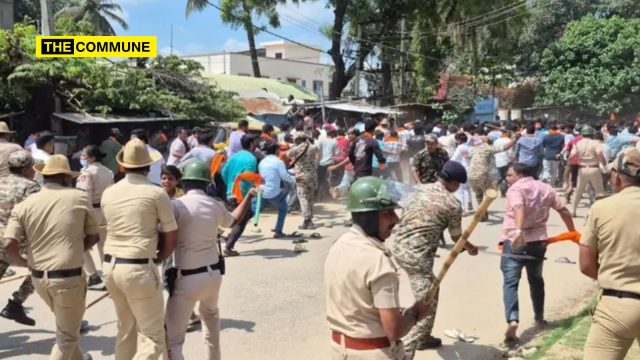
The incident occurred at Pratima village, about 20 km from the district headquarters, at around 10 p.m., when a procession was moving towards a local river for the immersion of Lord Ganesha idols. As the procession passed through Pathani Mohalla, an unidentified group of people began pelting stones, leading to a tense standoff between the two communities. Three individuals were injured and immediately shifted to the district hospital for treatment. The incident led to communal tension in the area as a large number of people from both communities gathered.
Senior administrative officials, including Additional Collector Veer Singh Chouhan and Additional Superintendent of Police Antar Singh Kanesh, rushed to the scene to bring the situation under control. A senior police official confirmed that the situation is now peaceful but that a substantial security presence remains in the area. The spot where the incident occurred has been declared a prohibited zone, and a flag march was carried out late in the night to prevent further escalation. “Although the situation is currently under control, a significant police presence has been deployed. Investigations into the incident are ongoing, and CCTV footage is being scrutinised to identify those responsible,” a senior police official told reporters on 8 September.
Burhanpur MLA Archana Chitnis visited the site, interacted with locals, and appealed to them not to engage in violence. She remained there until early Monday morning, considering the tense situation. The senior BJP leader stated that some anti-social elements attempted to disturb law and order and create communal tension. “In Burhanpur, we usually celebrate all festivals peacefully, and people have no issues with each other’s festivities. Unfortunately, yesterday a regrettable incident occurred during the immersion of Lord Ganesha’s idol, when stone pelting created a tense situation in the village,” Chitnis told IANS on 8 September.
She further said that a similar incident had taken place last year as well. “Last year, when stones were pelted during the immersion of Ganesh idols, I had demanded that those responsible be punished. That did not happen. The government must take strict action to prevent any such incidents in the future,” she said.
-IANS
Subscribe to our channels on Telegram, WhatsApp, and Instagram and get the best stories of the day delivered to you personally.