Home Blog Page 344

Tahawwur Rana Under NIA Custody May Spill Beans On Ishrat Jahan-Led Plot To Kill PM Modi In 2004

The ongoing questioning of Tahawwur Rana, a key conspirator of 26/11, is likely to go beyond the 2008 attack and extend to other Lashkar-e-Taiba terror plots, including the 2004 foiled suicide attack on Narendra Modi, the then chief minister of Gujarat who is now the country’s Prime Minister.

NIA investigators are looking to grill Rana on the Gujarat module as he had joined LeT around the time when the suicide attack was foiled. They believe Rana might spill the beans on insiders who played a role in the plot to kill Narendra Modi in 2004.

On June 15, 2004, the Gujarat Police stated that Ishrat Jahan, along with three other people, had been gunned down near Ahmedabad by a police team belonging to the Detection of Crime Branch (DCB) of the Ahmedabad City Police.

The four were on a mission to kill the then Gujarat Chief Minister Narendra Modi. There are strong reasons for NIA interrogators to believe that Rana may have got crucial information related to the Ishrat Jahan-led assassination plot from his friend and LeT associate David Coleman Headley, who was an active operative for the Pakistan-based terror group around 2004.

Headley, who joined LeT a few years before Rana did, had confirmed before US law enforcers that Ishrat Jahan was a part of LeT who was tasked to assassinate Narendra Modi.

While the Ishrat Jahan-led assassination bid was foiled in 2004, Headley later joined Pakistani-Canadian Rana to plot the 2008 Mumbai attack that left 166, including six US nationals, dead. Apart from questioning Rana on 26/11, NIA investigators hope to extract crucial information from him on LeT’s multiple plots and sleeper cells – active in the pre-2014 era – including the Ishrat Jahan module.

Immediately after the Ishrat Jahan module was neutralised in Gujarat in 2004, there was an alleged attempt by the then UPA government to brand the incident as a “fake encounter” and use it as a handle to settle political scores with then Gujarat Chief Minister Modi.

–IANS

Subscribe to our channels on TelegramWhatsApp, and Instagram and get the best stories of the day delivered to you personally.

First Insulted Kshatriya Community, Now Mocking Dalit Icon Kanshi Ram: BJP Slams Akhilesh Yadav

The Bharatiya Janata Party (BJP) on Sunday lashed out at Samajwadi Party (SP) chief Akhilesh Yadav for allegedly mocking Bahujan Samaj Party (BSP) founder Kanshi Ram and “insulting” the Dalit community. BJP IT Cell chief Amit Malviya took to the social media platform X and shared a video of Akhilesh Yadav, accusing him of disparaging Kanshi Ram to elevate SP founder Mulayam Singh Yadav’s legacy.

“Akhilesh Yadav first insulted the Kshatriya community by supporting the statement of an SP MP who called Rana Sanga a traitor. Now he is mocking the Dalit community’s guide, Kanshi Ram, only to make him look smaller than Mulayam Singh,” Malviya wrote. “Now it seems that you have started smelling foul smell from every section of Hindu society. There is no cure for this disease called ‘secularism,'” he added.

Kanshi Ram, who founded the BSP in 1984, dedicated his life to the upliftment of Dalits and marginalised communities. His political journey was marked by challenges in the early years before gaining wider recognition. The controversy arose after Akhilesh Yadav, while speaking at a recent event, said, “While this is history, it is also true that if anyone had got the founder of Bahujan Samaj Party to the Lok Sabha, then it was the voters of this place who had helped him get to the Lok Sabha. He was unable to win from anywhere.”

“It is recorded in history that at that time, if anyone had helped the founder of the party, Kanshi Ram, to win, then it was Netaji (Mulayam Singh Yadav) and the socialist people who had helped him get to the Lok Sabha,” he added.

Kanshi Ram was elected to the Lok Sabha for the first time in 1991 from Etawah under the SP-BSP alliance, which strategically benefited from the Samajwadi Party not fielding a candidate in Jaswantnagar. The alliance marked a major turning point in Uttar Pradesh politics, uniting backward castes and Dalits against the rising tide of the BJP.

However, the alliance collapsed after the infamous 1995 guest house incident, where SP workers allegedly attacked Mayawati. Despite the fallout, Kanshi Ram’s Lok Sabha win in 1991 cemented his political legacy and established BSP as a national political force.

–IANS

Subscribe to our channels on TelegramWhatsApp, and Instagram and get the best stories of the day delivered to you personally.

Bengal Is Burning: Shame On Mamata Banerjee For Making Hindus Flee Their Own Land

west bengal mamata banerjee persecution hindus

West Bengal, once a beacon of culture and intellect, has become a graveyard of justice under Mamata Banerjee’s Trinamool Congress (TMC). The ongoing horrors in Murshidabad and Samserganj—where Hindu families are reportedly fleeing their homes, their shops looted, and their lives shattered by Islamist mobs—lay bare the TMC’s complicity in a chilling campaign of targeted violence. Mamata’s rule, cloaked in the rhetoric of “Maa, Mati, Manush,” has morphed into a nightmare of appeasement politics that sacrifices Hindus on the altar of vote banks. This is not governance—it’s a deliberate surrender to chaos.


The violence in Murshidabad’s Suti, Samserganj, and Dhuliyan, sparked by protests over the Waqf (Amendment) Act, has claimed at least three lives, including a Hindu father and son, Hargobindo Das and Chandan Das, brutally hacked to death in Jafrabad.


Reports describe mobs torching vehicles, vandalizing Hindu-owned shops, and setting betel farms ablaze, with over 30 businesses targeted in areas like Dakbangla More and Kanchantala. BJP leader Suvendu Adhikari claims over 400 Hindus have been forced to flee Dhuliyan, crossing the Ganga by boat to seek refuge in Malda’s Par Lalpur, driven by fear of “religiously driven bigots.” Yet, Mamata’s response is a masterclass in evasion: a vague X post urging “peace” and a defiant refusal to implement the Waqf Act, as if stoking division absolves her of the blood on her hands.

Let’s not mince words—Mamata Banerjee is not a hapless bystander; she’s the architect of this crisis. Her decades of pandering to one community for electoral loyalty have emboldened lawlessness, turning Bengal into a tinderbox where Hindu lives are expendable. The Waqf (Amendment) Act, designed to bring transparency and curb land-grabbing, became her latest pretext to inflame tensions. Instead of fostering calm, she declared the law unwelcome in Bengal, signaling to rioters that they could act with impunity. Her police, politicized and paralyzed, stood idle as Hindu homes burned, forcing the Calcutta High Court to order BSF deployment—a stinging indictment of her administration’s failure.

The TMC’s hypocrisy is staggering. While Mamata postures as a champion of inclusivity, her silence on the targeted attacks—Hindu shops looted, a Durga pandal and Radha-Krishna temple desecrated—speaks volumes. Even her own party isn’t spared, with TMC offices ransacked and MLA Manirul Islam heckled, yet she refuses to name the perpetrators or condemn the violence unequivocally. Meanwhile, TMC MP Yusuf Pathan, representing Baharampur, posts about sipping “good chai” on Instagram as his constituents flee for their lives—a grotesque display of detachment that mirrors the party’s moral bankruptcy.

There is a threats of mass violence against Hindu women, forced exodus painting a picture of terror that Mamata’s government refuses to acknowledge. Her refusal to act decisively—coupled with TMC MP Saugata Roy’s limp excuse that “people’s sentiments are agitated”—is not just incompetence; it’s complicity.

This isn’t new. From Beldanga’s riots to Mothabari’s rampages, Bengal under Mamata has become a revolving door of anti-Hindu violence. Her administration’s pattern—ignore the victims, shield the perpetrators, and blame the Centre—has eroded trust in the state’s ability to protect its own. The exodus from Murshidabad evokes memories of Bengal’s dark past, with Hindus forced to flee like refugees in their own homeland. Mamata’s defenders might claim she’s preserving “harmony,” but enabling mob rule while Hindus are slaughtered is not harmony—it’s tyranny.

Bengal deserves a leader who governs for all, not a demagogue who thrives on division. Mamata’s legacy is now one of betrayal, transforming the land of Vivekananda into a battleground where Hindus live in fear. The people of Murshidabad and Samserganj aren’t statistics—they’re families torn apart by a government that chose votes over humanity. Shame on Mamata Banerjee and her TMC for orchestrating this tragedy—and shame on their silence as Bengal’s soul bleeds.

Subscribe to our channels on TelegramWhatsApp, and Instagram and get the best stories of the day delivered to you personally.

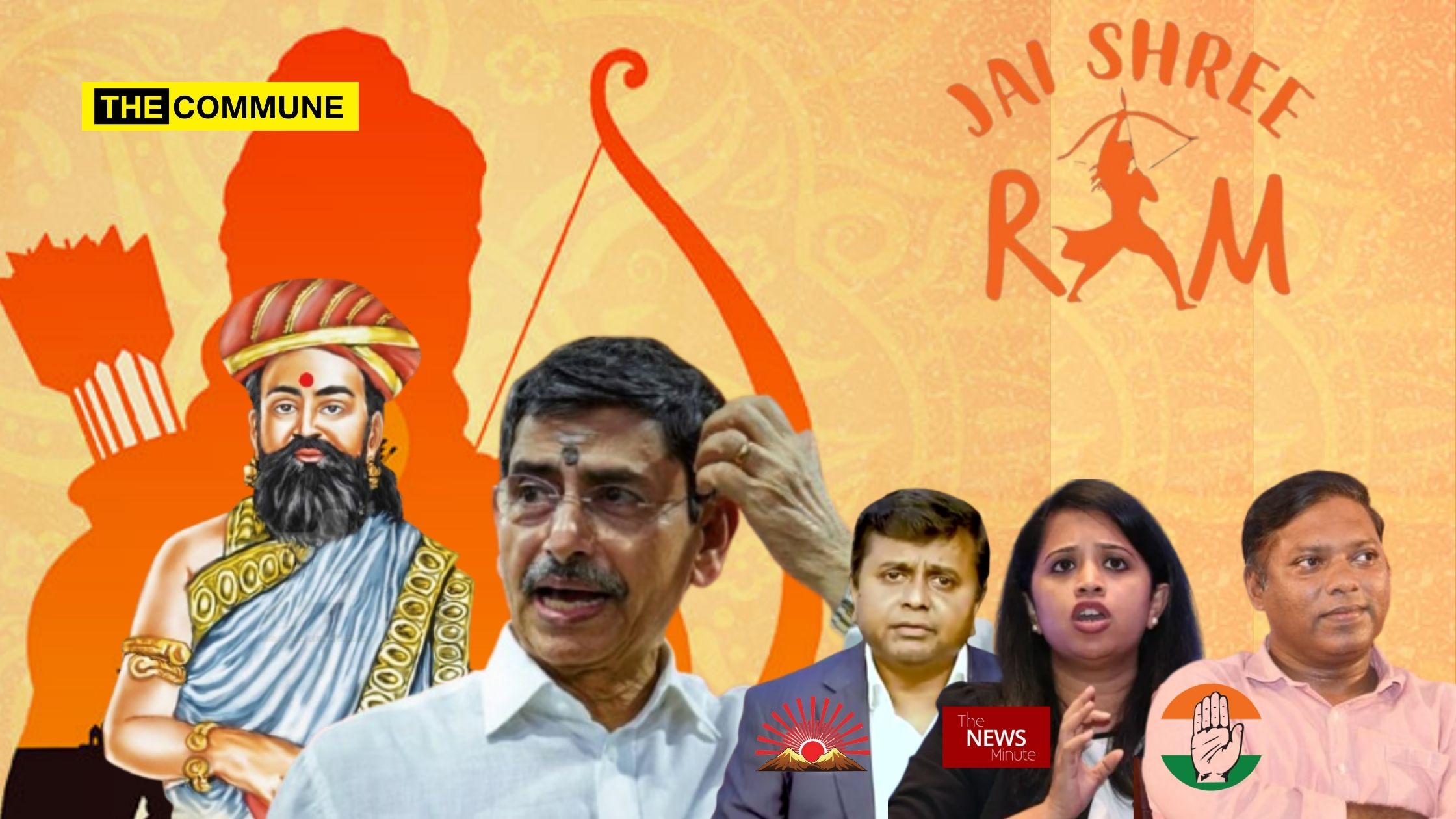
DMK, Congress Suffer Meltdown Over TN Governor RN Ravi Asking Students To Chant “Jai Sri Ram” At Event Marking Tamil Poet Kambar, TNM’s Dhanya Rajendran Calls For Abolishing Governor Post

Tamil Nadu Governor RN Ravi stirred a heated controversy at Thiagarajar College in Madurai on April 12 during a literary event honoring Tamil poet Kambar. As chief guest at the valedictory function of a speech competition titled “Kamban in the Educational Arena,” Ravi invited students to chant “Jai Sri Ram” as a tribute to Kambar’s devotion to Lord Ram, the central figure of his epic Kamba Ramayanam. “Let us pay tribute to Kambar by paying tribute to the one he was a great devotee of, Prabhu Sri Ram. I’ll say, and you say Jai Sri Ram!” Ravi exclaimed, eliciting enthusiastic responses from many students in attendance.

The gesture, however, has triggered a firestorm of criticism from the Congress, the Dravida Munnetra Kazhagam (DMK), and the leftist-Dravidianist outlet The News Minute, who have branded it a violation of secular principles. The State Platform for Common School System – Tamil Nadu (SPCSS), prominently featured in The News Minute’s coverage, demanded Ravi’s immediate removal as Governor, accusing him of breaching his oath of office by “urging students to chant the name of a God of a particular religion.” SPCSS emphasized that Thiagarajar College, a government-aided institution, is bound by secular educational norms, and Ravi, invited in his official capacity, had no mandate to introduce religious elements. “Education is a secular activity… students should not be instructed to chant the name of a God of a particular religion,” their statement read, claiming students complied “passively” to avoid embarrassment.

SPCSS further criticized Ravi for lacking understanding of Tamil Nadu’s academic framework, where Kamba Ramayanam is taught as literature, not scripture. They accused him of making “misguiding statements” that could “disturb peace and instigate one group against another,” while noting that the same event allowed extra time for a speech on Kamba Ramayanam by Comrade Jeevanandam, which they framed as evidence of the syllabus’s secular approach.

Congress MP Sashikanth Senthil amplified the outrage on X, accusing Ravi of resorting to “stunts” out of frustration after legal and political setbacks. “After being slammed by the Supreme Court and blocked by the State Government, he’s now making students chant ‘Jai Shri Ram’ just to irritate the system,” Senthil posted. He called it a “dangerous mix of arrogance and defiance” that undermines democratic institutions and constitutional principles, framing the chant as a deliberate provocation rather than a cultural gesture.

The DMK, Tamil Nadu’s ruling party, joined the chorus of condemnation. DMK spokesperson Saravanan Annadurai issued a scathing statement, calling Ravi’s actions “an affront to Tamil Nadu’s pluralistic ethos.” “The Governor is not a religious preacher but a constitutional figurehead. By coaxing students to chant slogans tied to one faith, he is sowing division in a state that prides itself on harmony,” Annadurai said. He further accused Ravi of “pandering to divisive forces” and demanded an apology, adding, “Tamil Nadu’s people study Kambar for his literary genius, not to be dragged into the BJP’s ideological battles.”

The News Minute’s Editor-in-Chief Dhanya Rajendran like a DMK spokesperson called for abolishing the Governor post.

Supporters of the Governor, however, argue the backlash is overblown and politically motivated. They contend that Kamba Ramayanam, the focus of the event, is inseparable from its devotion to Lord Ram, making the chant a fitting tribute to Kambar’s legacy. Social media reactions on X have highlighted the inconsistency of SPCSS praising Jeevanandam’s speech on Kamba Ramayanam while condemning Ravi’s reference to Ram. Others note that Tamil Nadu’s curriculum embraces diverse religious texts—from Saivite hymns to Christian poetry—without controversy, questioning why a chant rooted in Kambar’s work should spark such outrage. “Kambar’s Ram is Tamil Nadu’s pride. Why is celebrating him a crime?” one X user posted.

Subscribe to our channels on TelegramWhatsApp, and Instagram and get the best stories of the day delivered to you personally.

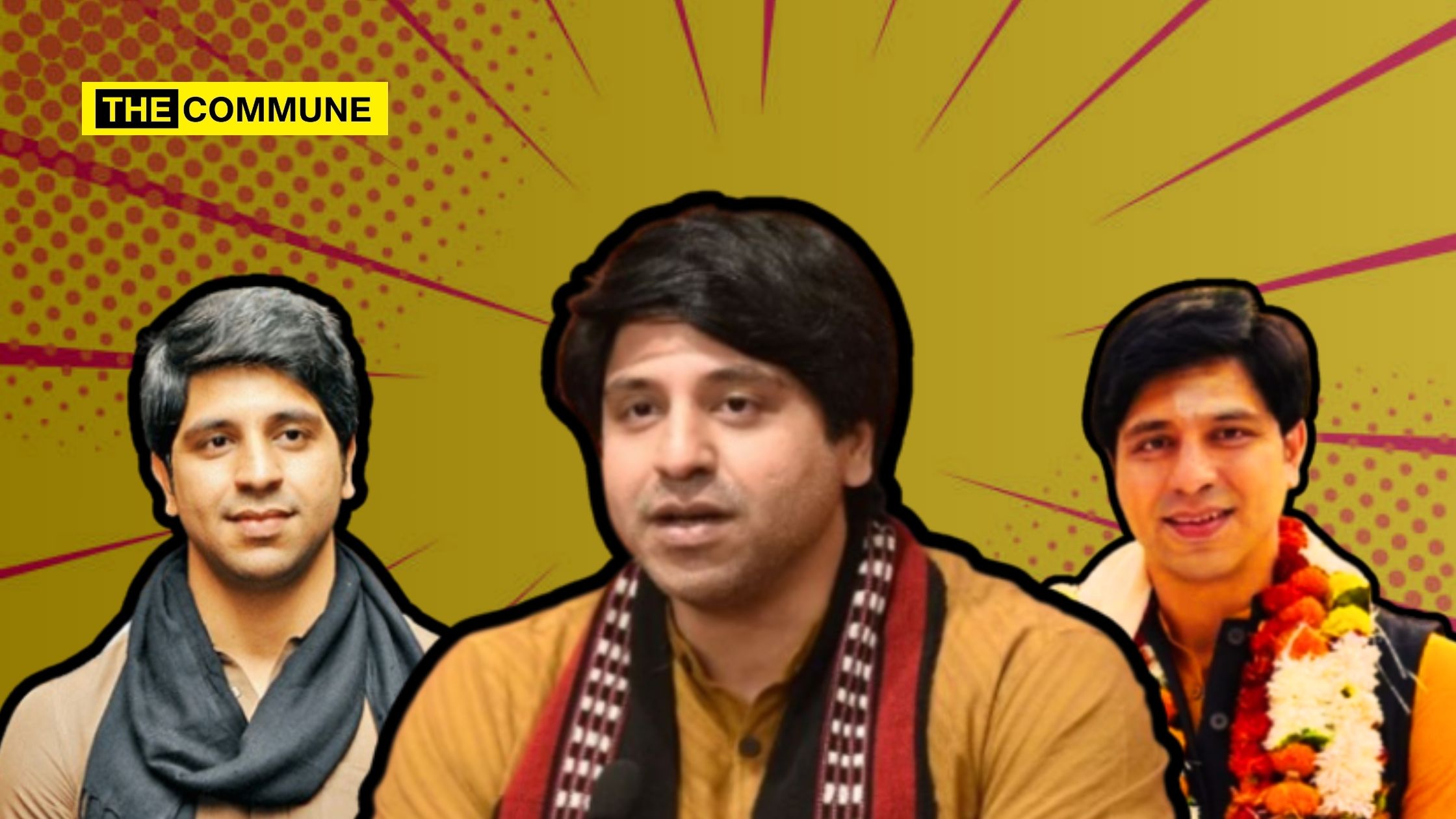
From Congress Insider To BJP Firebrand: Shehzad Poonawalla’s Candid, No-Holds-Barred Talk With The Commune

Fearless, fiery, and fiercely articulate—Shehzad Poonawalla has become a household name on Indian news panels for his no-holds-barred takedowns and sharp political commentary. Once a Congress insider, today he stands as one of the most prominent faces of the BJP’s media offensive, often seen dismantling narratives with precision and poise. In this freewheeling interview with The Commune, Poonawalla opens up about his political journey—from the sycophantic corridors of the Congress to the merit-driven ecosystem of the BJP, his take on Rahul Gandhi, the cultural politics of Tamil Nadu, and why the Waqf Amendment Bill is a watershed moment for social justice. True to form, he pulls no punches.

The Commune: You started with Congress back in 2008 — what’s the wildest memory you have from your early days in the party that you still laugh about today?

Shehzad Poonawalla: The answer to question number one. Well, I don’t have any wild memories from my early days in the party, but what I still laugh about today, what I laughed about even back then in the Congress Party, was how people could consider Rahul Gandhi as the leader. I used to always hear that Rahul Gandhi was a complete misfit, and even today, when leaders are forced to project Rahul Gandhi as some sort of a great leader, I know his potential and his capacity is nil, and therefore I can see through the sycophancy involved in that.

The Commune: How does the media cell of Congress work?

Shehzad Poonawalla: Well, the media set of Congress does not work. It only engages in blind criticism without application of mind. It only operates on pushing forward people in factions, and not necessarily people based on talent, and therefore, if you have ingratiated yourself to the head of the media department or some leader, then you get taken as a spokesperson and promoted, if you’re a dynast, you’re promoted. So there’s no real talent in the Congress’s media cell. It’s basically a collection of people who are good at sycophancy.

The Commune: During your Congress days, what was your go-to line to shut down a debate with a rival party worker — and does it still work now?

Shehzad Poonawalla: During my Congress days, also, I used to often tell, not rival party workers but generally everybody else, that we should put a premium on merit and performance, not on Parivaar. And I think I’ve been vindicated as far as that is concerned.

The Commune: You describe yourself as a Muslim by birth/faith and Hindu by culture. Explain it to us. Do you believe in Savarkar’s views about Muslims as espoused in Six Glorious Epochs of Indian History?

Shehzad Poonawalla: As far as that is concerned, just because one is born in a particular religion or follows a particular puja padhathi (method of worship) doesn’t mean that your culture is different. Our culture is common, and that is a Hindu culture. Hindu is a way of life. Sanatan is the only dharma. You can have different mazabhs (sect), you can have different panth, and you can have different puja padhathi. Somebody may be following the Islamic puja padhathi, and somebody follows the Christian puja padhathi but that doesn’t mean that their culture and civilization are different. In fact, even in Indonesia, even though they are Muslim, they continue to have reverence for Ram. So why is that? Because Ram and Krishna are part of our culture. They are not part of just one religion. They are our cultural icons. So one must accept that even if we have different forms of worship, our cultural ethos, our heritage, and our civilization, are all common, and that is why I say that our culture is Hindu. Hindu is a way of life, and that is the larger glue, the civilizational glue that binds all of us, irrespective of our faith or irrespective of our region.

The Commune: You worked with big names like Digvijaya Singh and Rajeev Shukla — what’s the most unexpected advice one of them gave you that stuck?

Shehzad Poonawalla: The most unexpected advice, well, it’s not unexpected, but it is good advice that Rajeev Shukla gave me. And Rajeev Shukla always advocated about how to put people and relations first above just petty partisan divisions and considerations. So in a sense, it is something that he himself espouses this spirit of bipartisanship, and he always said that there should be room for maintaining relations. So one should have political differences, but it should never transcend to personal differences.

The Commune: What is that one moment that made you say “Enough is enough” with Congress?

Shehzad Poonawalla: The one moment that made me say enough is enough with Congress is when Congress was trying to push Rahul Gandhi as the president of the party. So it was not an election, it was a coronation. It was a Taj Poshi. That was when I realized that from 2004 to 2017, all that Rahul Gandhi was giving us was to feel that he would reform the party and that the party would become more democratic, more merit-oriented. But in reality, it was far from the truth. And that was the straw that broke the proverbial camel’s back.

The Commune: According to you, why hasn’t the BJP been able to penetrate TN? Even in Kerala, you have an MP. But TN drew a blank in 2024.

Shehzad Poonawalla: Well, it’s a little complex as to why the BJP hasn’t been able to penetrate Tamil Nadu. I wouldn’t say that that’s the case. We’ve obviously been able to become a party to reckon with, because of the efforts of many leaders, including Annamalaiji, Prime Minister is hugely popular. Our organization hasn’t been able to come on the ground to the extent that it could capture or make the most of PM’s popularity. Also, the fact of the matter is that DMK is an old party because of the kind of language, regional, and emotional politics that it has played, and it has been able to capture the wings of the media, and popular culture like films. Because of that, making political inroads has been a little more difficult. So you can say that the DMK has basically been able to not only capture political power but has been able to impose its worldview in a very big way, very effective way, as far as cultural space is concerned. And therefore the challenge of the BJP is not only to get its organization going but also to break the sociocultural mould which has been created, which is artificial. Because if you see the people of Tamil Nadu, they have great reverence for their faith. They have great reverence for what Prime Minister Modi is doing. But because there is such a propaganda mechanism that is at work, along with a strong organizational mechanism of the DMK that is at work. Because of that, it becomes difficult to penetrate. But in the days to come, you will see that the BJP’s organization and its communication, its outreach, socioculturally, it’s improving. And therefore it won’t be long before the BJP becomes the center pole of Tamil Nadu politics as well. It already has, in a sense, become, because the DMK always attacks BJP. So in a sense, it also realizes that the BJP is a rising force, not just in Tamil Nadu, but in the entire south India.

The Commune: Who is your most favourite rival – Supriya or Shama? Also if you could name one from each party.

Shehzad Poonawalla: My favourite rival to spar with on debates is neither Supriya nor Shama. It’s Rajeev Sardesai. I think he’s the best unofficial spokesperson Congress has, and obviously Preeti Choudhury also. As far as spokespersons from each party are concerned, well, from the Congress, I like Avaid Dubey to spar off with him. Then, from the Samajwadi Party, Rajkumar Bhatti, from the Trinamool Congress, Riju Datta. From the Aam Aadmi Party, I like to expose the idiocy of all the spokespersons, particularly Priyanka Kakkar.

The Commune: Can a Muslim ever become BJP President?

Shehzad Poonawalla: Why not? Any karyakarta of the BJP can become its president. There’s no constitutional bar. It’s only a question of how committed you are and how much work and effort you can put in for the party. The BJP is a platform where only merit is recognized and merit comes first. Doesn’t matter where, which background you come from, who’s your father, who’s your mother, whose son you are, etc, etc. So even a chaiwala can become the prime minister, and a person who was working at Booth level can become the president. Anybody in the BJP can aspire to reach the highest positions, provided he has the support of the people and has put in that much hard work.

The Commune: What is the one argument that will convince people about the news for the Waqf Amendment Act?

Shehzad Poonawalla: Now that the Waqf law has been passed, the one argument I think that is important for people to remember is that Waqf is not a Hindu-Muslim issue. It is not a minority-majority issue. It is an issue of Saamaajik Nyay (social justice) to ensure that the Waqf properties are used for the poorest of the poor in the Muslim community and are not usurped by the Ashraf or the Syed Samaj in collusion with certain political elements who back them.

It’s for the benefit of the Pasmandas, for the Arhanis, for the Boras, for the women. Secondly, it is about Samvidhan Ki Suraksha (protection of the constitution), this unlimited land-grabbing power that was given to the Waqf in the name of vote bank politics, so it could capture any property it liked. It could lay claim to the parliament, lay claim on Eden Gardens, Mahakumbh lands, one 1500-year-old temple in Tamil Nadu, or Vijaypura farmers’ lands. This should stop because it gave it certain provisions by which it could make these unreasonable claims. Then the matter would go to the tribunal without any recourse to the courts. So now this entire unconstitutional arrangement has come to an end. And lastly, it is about Sushasan (good governance). Those huge corruption in the Waqf administration, and even the Muslims acknowledge this. Sachar committee report, Rahman Khan report, and many other Muslim scholars know that there was huge corruption. 3739 lakh acres of land and an income of just 166 crores. So if you calculate the income per acre and compare it with the incomes generated by other such properties or other such institutions, you will find that Waqf is woefully falling short of it. Therefore this is about Sushasan (good governance), Saamajik Nyay (social justice), and ensuring Suraksha of Samvidhan (protection of the constitution). It’s not a Hindu-Muslim issue. So those who are trying to incite in the name of Waqf, are basically the same Jamaat, that was trying to incite in the name of CAA, that nagrikta (citizenship) of Muslims would be in jeopardy if the CAA law was passed. That didn’t happen. Nor is the masjid or kabristan of Muslims going to be in jeopardy because of the Waqf Amendment Act. In fact, it has been supported by KCBC and CBCI Christian bodies, because even they have been the sufferers or the victims of the Waqf. I am an Agakhani and the Agakhani community too had certain issues with the Waqf Board of Maharashtra and others, and therefore we all are very happy that this amendment has been passed and has become law.

Subscribe to our channels on Telegram, WhatsApp, and Instagram and get the best stories of the day delivered to you personally.

Production Of Apple iPhones In India Surges 60% To ₹1.89 Lakh Crore In 2024-25

iphone apple india global smartphone manufacturing

Apple India has recorded a 60 per cent jump in iPhone production from its Indian supply chain with a turnover close to Rs 1.89 lakh crore during the financial year ended March 31, 2025, according to industry data. Of this total output, Apple exported Rs 1.5 lakh crore worth iPhones from India during 2024-25, Minister for Electronics and Information Technology (MeitY) Ashwini Vaishnaw Ashwinin Vasihnaw has stated.

Apple’s production in India is expected to accelerate further with the US-China tariff war breaking out, as a result of which the American tech giant’s exports from the communist country will take a hit. Since US duties are much lower on India-made smartphones, Apple has a distinct advantage in further expanding its production base in the country.

India’s smartphone exports crossed a staggering Rs 1.75 lakh crore ($21 billion) in 11 months of 2024-25 (April-February), which constitutes a 54 per cent jump over the corresponding figure for the same period of 2023-24, according to the India Cellular and Electronics Association. Around 70 per cent of the exports were contributed by Apple’s iPhone supply chain with Tamil Nadu-based Foxconn, accounting for close to 50 per cent of the overseas shipments.

Exports from the Foxconn factory registered an over 40 per cent jump over the same period of the previous financial year. Another 22 per cent of the exports came from iPhone vendor Tata Electronics, which has acquired the Wistron smartphone manufacturing factory in Karnataka. Another 12 per cent of the export consignments came from the Pegatron facility in Tamil Nadu, in which Tata Electronics acquired a 60 per cent stake towards the end of January. With the acquisition of the two Taiwanese companies, the Tata group has also emerged as a major producer of iPhones in the country.

South Korean tech giant Samsung contributed around 20 per cent of the total smartphone exports from India. Vaishnaw earlier said that he expected smartphone exports to reach $20 billion (Rs 1.68 lakh crore) during 2024-25, but the estimate has already been exceeded in 11 months of the current financial year.

India’s electronics goods exports, led by smartphones, have been accelerating in recent years on the back of government’s Production Linked Incentive (PLI) Scheme which has succeeded in attracting foreign tech giants such as Apple and its suppliers, looking to set up alternative supply chains outside China after the Communist country came under US sanctions.

The Centre’s production-linked incentive (PLI) scheme has boosted exports and reduced imports, as domestic production now meets 99 per cent of domestic demand. The Production Linked Scheme (PLI) for electronics manufacturing has succeeded in attracting a cumulative investment to the tune of Rs 10,213 crore till December 2024, leading to the creation of over 1.37 lakh direct jobs and boosting the country’s exports, according to information tabled in Parliament.

–IANS

Subscribe to our channels on TelegramWhatsApp, and Instagram and get the best stories of the day delivered to you personally.

Roof Collapses At Govt School In Tiruvarur: Four Students Injured, Parents Demand Accountability

In a disturbing incident on 7 April 2025, four students were injured when a portion of the roof collapsed at a government middle school in Sekalangiri village, Deepambalpuram, near Thiruthuraipoondi in Tiruvarur district.

The accident occurred shortly after the lunch break while regular classes were underway. Among the injured students, one sustained serious injuries and was rushed to Tiruvarur Government Medical College Hospital for advanced treatment. The other three students — identified as Kanishkar, Kaviyarasan, and Chandran Mohan — suffered minor injuries and are currently receiving medical care at the Thiruthuraipoondi Government Hospital.

Shocking many, the school building in question is less than a year old, raising serious concerns about construction quality and safety standards. Local residents and parents have voiced their outrage, demanding an immediate inquiry into the structural integrity of recently built government school buildings.

One parent said the negligence was unacceptable, especially when it endangered the lives of children, and added that the state government must take swift and strict action against those responsible for the substandard construction.

The incident comes just a day after a similar mishap was reported at a government school in Kanchipuram, where several students were injured. With such incidents occurring in quick succession, concerns are mounting about the safety of students in government-run schools across Tamil Nadu.

Parents and local residents are urging the state administration, led by the DMK government, to take urgent corrective measures. Many have expressed reluctance to send their children to school until assurance is given that safety standards will be strictly enforced.

Past Incidents

This is not an isolated incident; similar cases of government school ceilings collapsing on students have been recurring over the past few years under the DMK government.

  • On 3 March 2024, three students from a government school near Vaniyambadi were seriously injured when the roof of a newly inaugurated classroom gave way. The collapse occurred at a panchayat union primary school in Shankarapuram, Tirupattur district.
  • On 27 August 2024, three students were injured when a section of the ceiling plaster fell on them during class at a government-run school in Krishnagiri. The accident raised significant concerns about the safety and structural integrity of the building, which had only been opened two months ago with MPLADS fund.
  • In another similar incident July 2024, a ceiling of a newly constructed Panchayat Union Middle School near Kanchipuram collapsed, where the building, completed three months prior.
  • In August 2024, another ceiling of a classroom at a government school in Thiruporur collapsed, injuring five female students and sparking protests from parents who questioned the quality of the construction. 
  • Three students were seriously injured when the roof of a newly inaugurated classroom collapsed at a panchayat union primary school in Shankarapuram, Vaniyambadi, Tirupattur district, on 4 March 2025. The building, constructed in 2023–2024 at a cost of ₹21 lakh with funds from AIADMK MLA Senthilkumar, had been inaugurated in August 2024. The injured students—Praneeth (Class 1), Sudarsan (Class 3), and Vishek—were rescued and taken to a private hospital.
  • Seven students were injured on 7 March 2025 when the roof of a recently repaired fourth-grade classroom collapsed at Dindigul Corporation Middle School. The school, built in 2009 during the DMK government, has faced structural issues, prompting ₹1 crore worth of repairs, including the affected classroom. The incident sparked panic among parents and led to the suspension of Assistant Executive Engineer Thiagarajan. Former AIADMK Minister C. Sreenivasan blamed substandard construction, while DMK Minister I. Periyasamy defended government efforts, attributing the collapse to an older faulty repair.

Subscribe to our channels on Telegram, WhatsApp, and Instagram and get the best stories of the day delivered to you personally.
Supreme Court’s Decree On Tamil Nadu Bills Raises Questions On Judicial Overreach Over Executive Authority

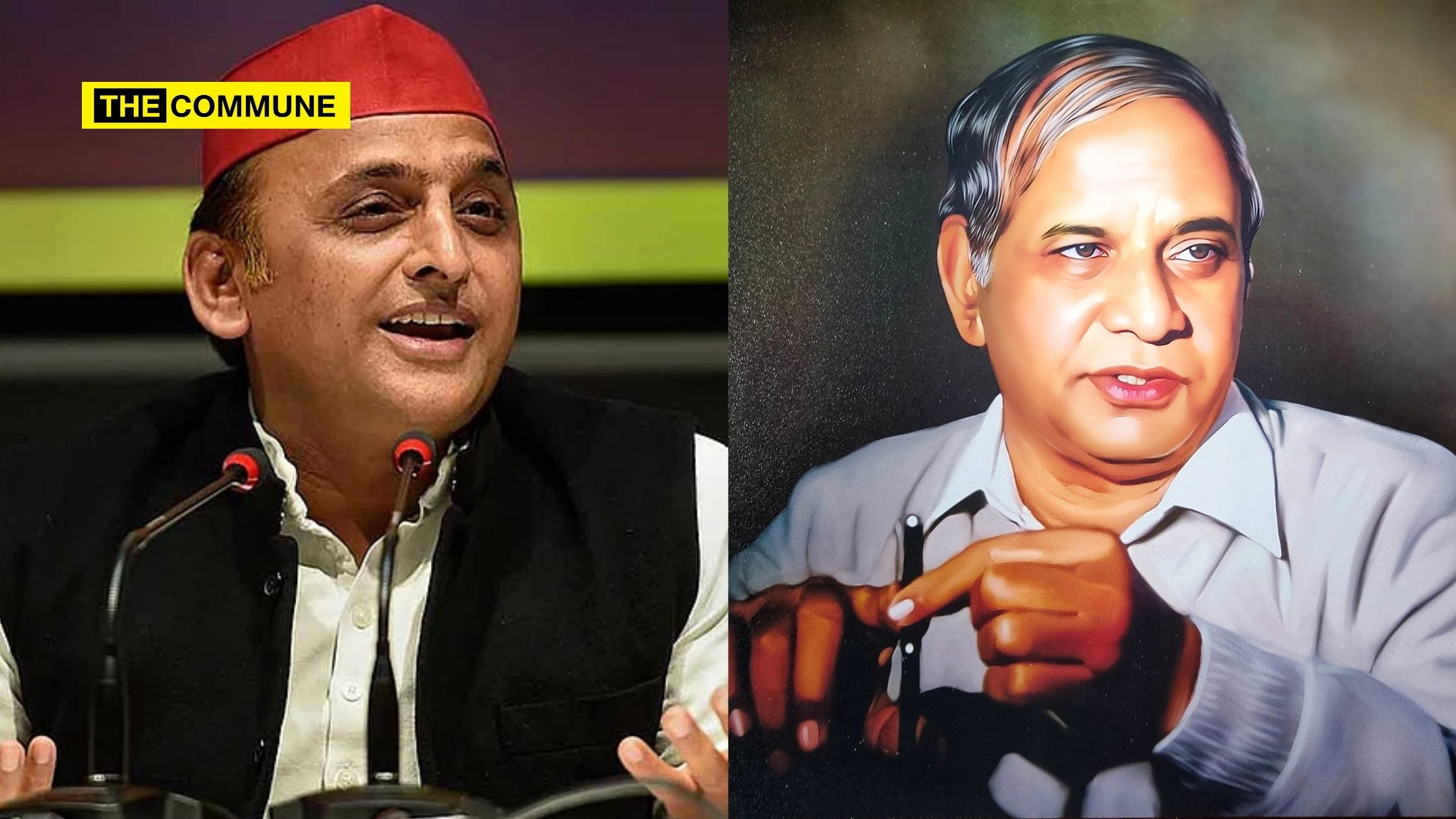
On 8 April 2025, the Supreme Court exercised its inherent powers and ruled that 10 Tamil Nadu Bills, which had been withheld assent by Governor R.N. Ravi for periods ranging from two to five years, are now deemed to have been assented to.

A bench comprising Justices J.B. Pardiwala and R. Mahadevan declared the Governor’s decision to reserve the 10 Bills for Presidential assent as “illegal” and subject to being overturned.

The Bills, mostly related to the appointment of Vice-Chancellors at state universities, were sent by the Tamil Nadu Legislature to the Governor for consent between January 2020 and April 2023. However, the Governor delayed action on them indefinitely. When the Tamil Nadu government approached the Supreme Court in November 2023 over the Governor’s lack of response, the Governor referred two Bills to the President and continued to withhold consent on the remaining 10.

In response, the Tamil Nadu Assembly re-passed the 10 Bills during a special session on November 18, 2023, and resubmitted them to the Governor. The Governor subsequently referred all of them to the President for approval. While the President assented to one of the Bills, rejected seven, and did not address the remaining two, the Supreme Court’s ruling has now granted assent to the 10 Bills.

The 10 Bills now deemed to have been assented to by the Supreme Court include:

  • Tamil Nadu Fisheries University (Amendment) Bill, 2020
  • Tamil Nadu Veterinary and Animal Sciences University (Amendment) Bill, 2020
  • Tamil Nadu Universities Laws (Amendment) Bill, 2022
  • Tamil Nadu Siddha Medical University Bill, 2022
  • Tamil Nadu Dr. M.G.R. Medical University, Chennai (Amendment) Bill, 2022
  • Tamil Nadu Agricultural University (Amendment) Bill, 2022
  • Tamil University (Second Amendment) Bill, 2022
  • Tamil Nadu Universities Laws (Second Amendment) Bill, 2022
  • Tamil Nadu Siddha Medical University Bill, 2022
  • Tamil Nadu Fisheries University (Amendment) Bill, 2023
  • Tamil Nadu Veterinary and Animal Sciences University (Amendment) Bill, 2023

Governor’s Mandate Followed

Regarding the Governor’s actions, as per constitutional mandates, Tamil Nadu Governor R.N. Ravi has followed the provisions outlined in the Indian Constitution. Under Article 200, the Governor has four options when dealing with a bill:

  1. Assent to the bill.
  2. Withhold assent to the bill.
  3. Return the bill (if it’s not a Money Bill) for reconsideration by the legislature. However, if the bill is passed again, with or without amendments, the Governor must give his assent.
  4. Reserve the bill for the consideration of the President of India.

Once a bill is reserved for Presidential consideration, the Governor plays no further role in the bill’s enactment. The Governor has the discretion to reserve a bill for the President’s consideration without needing the advice of the Council of Ministers. However, the Constitution does not specify a time limit within which the Governor must act, nor does it mandate automatic assent if the bill is passed again after being returned when bill reserved for Presidential consideration.

Is Judicial Overreach At Its Peak?

The Supreme Court’s decision to treat the Tamil Nadu Bills as passed, utilizing its powers under Article 142, is a rare instance of the provision being invoked. Article 142, typically sparingly used, was employed three times in 2024 alone.

Article 142 of the Constitution allows the Supreme Court to pass any decree or make any order necessary to ensure complete justicein cases before it. Such decrees and orders are enforceable throughout India, in accordance with laws made by Parliament or as prescribed by the President until such laws are enacted.

  1. In October 2024, the Court invoked this provision to allow a Dalit youth to be admitted to IIT Dhanbad after he missed the fee payment deadline.
  2. Earlier, in April 2024, Article 142 was used to grant a divorce under the Hindu Marriage Act in a case where one party opposed it, but the marriage had irretrievably broken down.
  3. In February 2024, the Court invoked Article 142 again to annul the results of the mayoral election in Chandigarh, citing evidence of electoral fraud.
  4. The Supreme Court’s intervention in the Chandigarh mayoral election was criticized by some as judicial overreach, with critics questioning the judiciary’s involvement in electoral matters.

Criticism and Debate Over Judicial Overreach

Critics argue that if the Supreme Court steps in to approve bills that the Governor has withheld, it raises questions about the appropriateness of this intervention. Some believe that the bills should have been examined carefully, with issues addressed and a clear timeline set for the Governor’s action, thus maintaining the judiciary’s dignity.

Instead, the Supreme Court’s swift intervention in assuming the President’s role is seen by some as an overreach, potentially abusing its power. The Court’s decision to act without input from the Central Government has been deemed unacceptable by critics.

Why is this objectionable?

The Chief Ministers and Governors are directly connected to the people, and it is the legislature’s role to decide what aligns with public interests, not the judiciary. If the Supreme Court wields excessive power, it might lose sight of more pressing issues. For instance, if the Court had intervened more swiftly in laws addressing rampant alcoholism, or the crisis of law and order, it could have made a greater societal impact.

Why hasn’t the Court addressed increasing crimes, jail overcrowding, child sexual abuse, or public health issues like untouchability and contaminated water? Critics question whether the judiciary has become selective in its intervention.

Furthermore, there are concerns about the Court’s role in investigations, particularly when it chooses to withdraw from cases involving politicians or public figures. Is this retreat opportunistic, or does it signal a lack of willingness to act?

Additionally, some question whether it is the Court’s role to step in on administrative matters such as appointing university chancellors, especially if those appointments are made by politicians who may not act in the public’s best interest. The Constitution has undergone several amendments over the past seventy years, but there’s still a lack of clarity on key issues, particularly regarding the implementation of laws.

There are also concerns about the credibility of the legal and political systems. For example, some wonder if the judicial appointment process, particularly the collegium system, is truly serving the best interests of the people, given the substantial financial influence at play.

The Tamil Nadu government’s decisions, instead of being guided by a well-formed committee with clear directives, should be scrutinized when they seem to disregard public welfare. If the ruling party displays injustice or cruelty, the public must not remain silent.

While the judiciary’s role is critical, its interference in areas that traditionally belong to other branches of government raises important questions about the boundaries of judicial power. When the Court oversteps its authority, it can undermine the democratic principles it is meant to protect.

Subscribe to our channels on Telegram, WhatsApp, and Instagram and get the best stories of the day delivered to you personally.
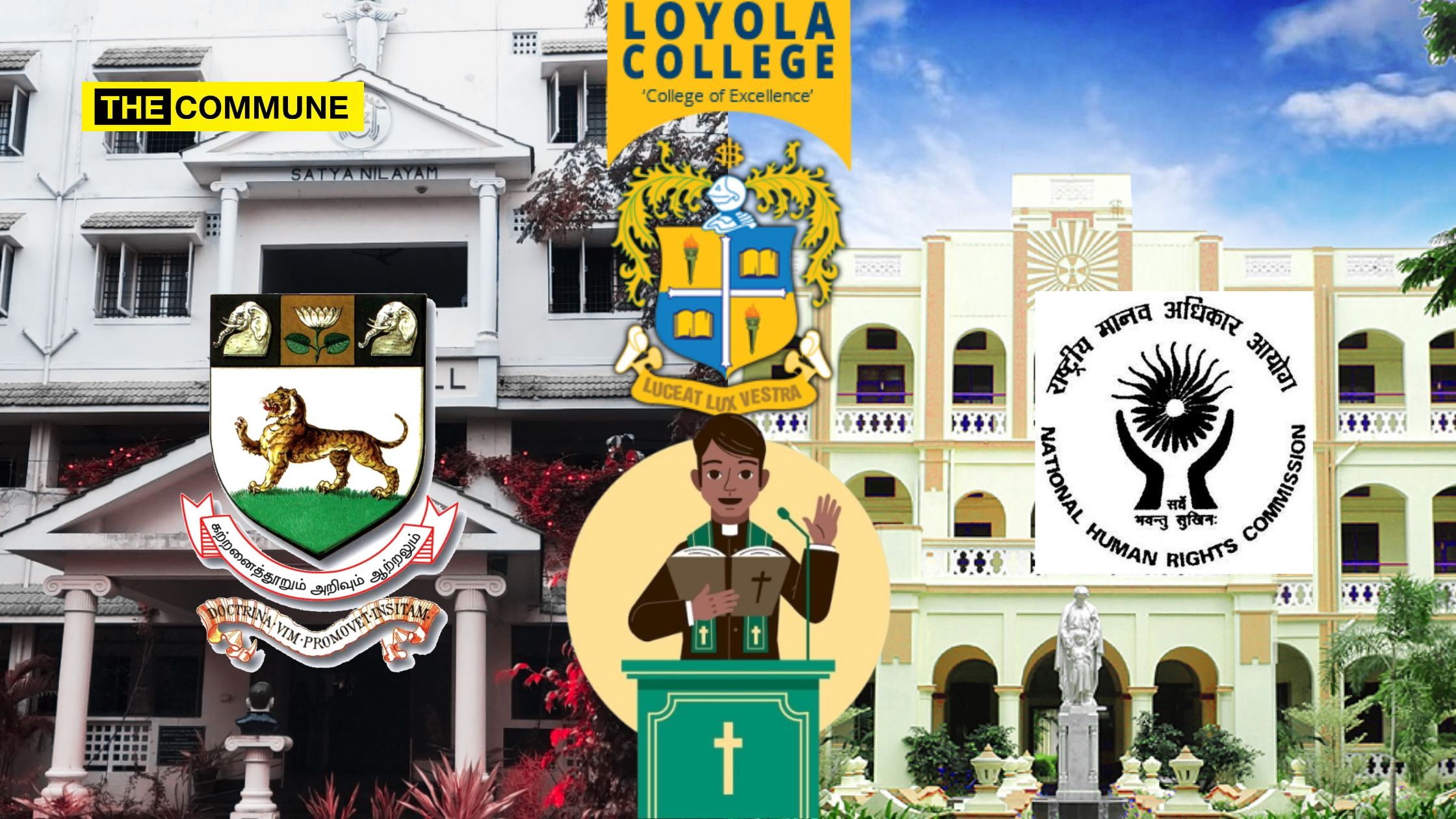
NHRC Issues Notice To UGC & Registrar Of Madras University Over Alleged Human Rights Violations at Loyola College, Chennai

The National Human Rights Commission (NHRC) has taken cognizance of serious allegations against Loyola College (Autonomous), Chennai, and has issued formal notices to the University Grants Commission (UGC) and the Registrar of the University of Madras. The Commission has demanded an Action Taken Report within four weeks, marking a significant intervention in the matter. A copy of the notice has also been sent to the Chief Secretary of Tamil Nadu for appropriate administrative follow-up.

The NHRC’s action stems from a detailed complaint filed by the Legal Rights Protection Forum (LRPF), a Hyderabad-based legal advocacy group. The complaint accuses Loyola College of operating its M.A. Philosophy program illegally through an off-campus Jesuit institution named Satya Nilayam, located approximately 12 km from the college’s main campus. According to LRPF, the program runs without mandatory approvals and in violation of University of Madras affiliation norms.

The complaint further alleges religious discrimination in student admissions to the program, claiming that non-Christian students have been systematically excluded. If substantiated, such practices would violate Articles 15(1) and 29(2) of the Indian Constitution, which prohibit discrimination in public educational institutions based on religion.

LRPF has also raised concerns over academic legitimacy, accusing Loyola College of misusing the name and official logo of the University of Madras to issue degrees under a program that may lack proper affiliation. This, the forum says, constitutes academic fraud and raises questions about regulatory oversight and potential collusion among officials.

The NHRC Bench, led by Priyank Kanoongo, invoked Section 12 of the Protection of Human Rights Act, 1993, and categorized the issue as a potential case of grave human rights violation. The Commission has called for a thorough and transparent inquiry, emphasizing that accountability must be ensured at all levels.

Additionally, LRPF has expressed concern over the role of officials at the University of Madras, alleging that they failed to carry out mandatory inspections of Loyola College’s academic operations, further contributing to the alleged violations.

The LRPF had previously submitted a similar complaint to the Governor of Tamil Nadu in March 2025, urging the withdrawal of both autonomous status and affiliation granted to Loyola College on grounds of unauthorized academic activity and religious discrimination.

The matter is now under formal review, with the NHRC monitoring developments closely.

(With inputs from Organiser)

Subscribe to our channels on TelegramWhatsApp, and Instagram and get the best stories of the day delivered to you personally. 
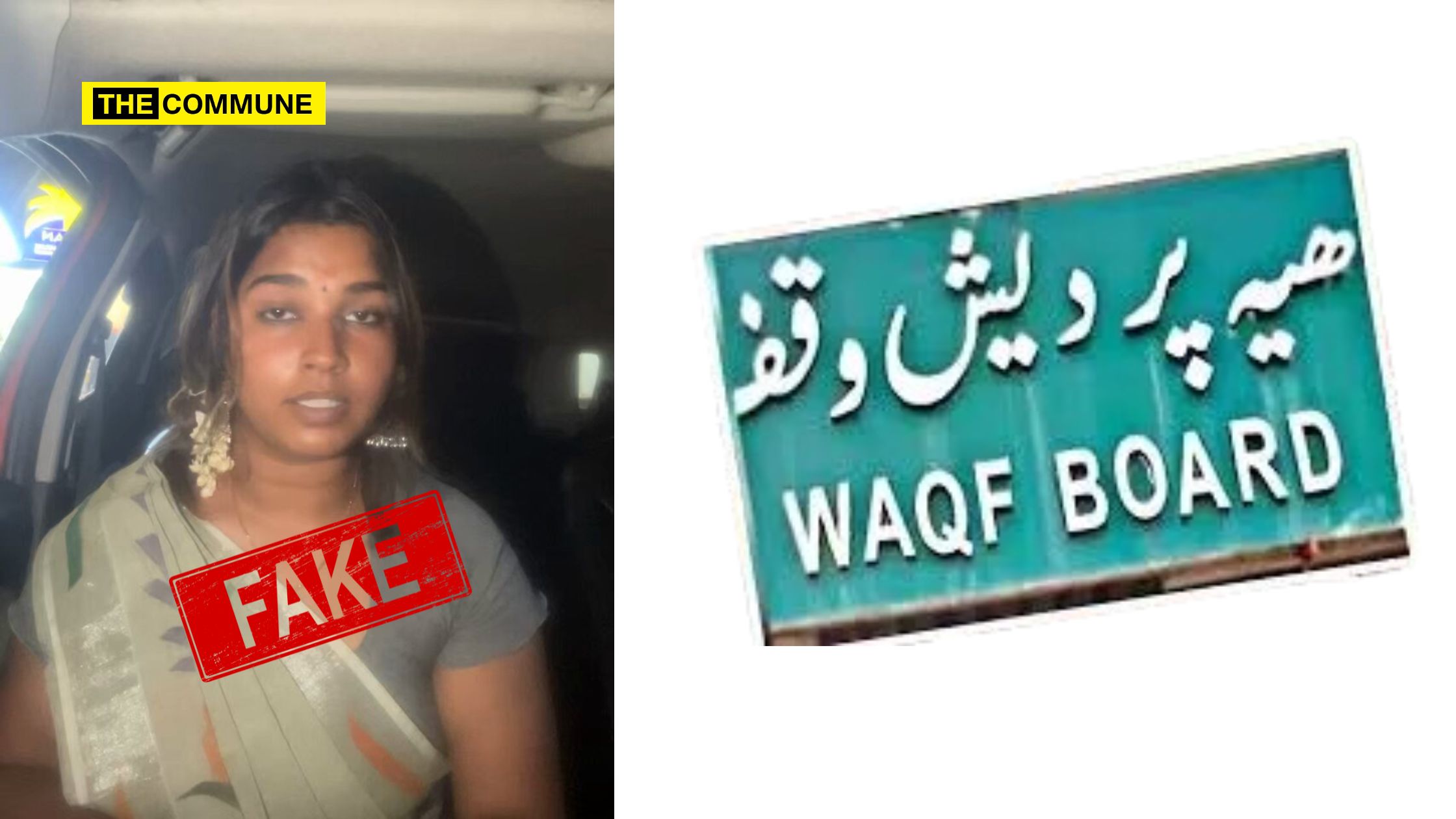
Alleged Social Media Influencer ‘Ranting Gola’ Caught Peddling Fake News Again – This Time On Waqf Amendment

Shamita Yadav, better known by her online persona ‘Ranting Gola’, has once again proven herself to be less of a commentator and more of a professional misinformation peddler. In her latest stunt, Yadav released a sensationalist video filled with lies and recycled footage, this time falsely claiming that the Waqf (Amendment) Bill would strip Indian Muslims of their right to bury their dead.

To “prove” her case, she shared an eight-year-old video from 2017 — a completely unrelated local protest — and presented it as evidence of the so-called aftermath of the Waqf Amendment. No context. No disclaimer. Just agenda-driven drama.

What makes this more shameful is that the amendment has nothing to do with religious rites or burials. It concerns administrative reforms related to Waqf properties. But for Yadav, facts clearly take a back seat when there’s outrage to be manufactured and propaganda to be peddled.

This is not the first time Yadav has landed in controversy for peddling scripted content under the pretense of personal opinion. In 2024, she faced backlash after a video targeting Samajwadi Party MLA Abu Asim Azmi went viral. In that clip, she had harshly criticized Azmi’s handling of issues in his Govandi constituency, including drug-related crimes and pollution. But after facing political and public heat, Yadav issued a statement claiming the video was merely a “trial recording” based on a pre-written script and that it was never meant for public release.

The episode earned her criticism for irresponsibly platforming unverified accusations and attempting to backtrack after the damage was done. Her clarification did little to quell concerns, especially as many began to question the authenticity of her other politically charged content. The fact that the earlier video also circulated widely right before the Maharashtra Assembly elections led many to believe it was part of a broader political ploy.

Yadav has also been accused in the past of making Hinduphobic remarks, adding to the growing scrutiny around her content. Worse, she operates under the shield of “secular concern” while spewing content that routinely targets Hindus, Hindu practices, and Hindu festivals. Ram Navami processions are labeled “provocative,” Hindu villages are “a threat to secularism,” and anyone opposing her narratives is met with abuse from her echo chamber. With her recent Waqf Amendment video, critics say she continues to weaponize misinformation to push polarizing narratives.

Observers note that her tactic remains consistent—deliver incendiary content on sensitive issues, use emotionally charged language, and later disown responsibility by calling it “scripted” or “leaked.” The pattern, they say, resembles a deliberate disinformation campaign more than an occasional lapse in judgment.

The latest video, in which she fear-mongers about Muslim burial rights using fake footage, crosses a new line — inciting communal paranoia over a law that has nothing to do with funeral rites. This is not just misleading; it’s a deliberate attempt to create unrest.

Ranting Gola has become a symbol of what’s wrong with influencer culture today: no accountability, no ethics, just viral rage for clout and clicks.

Subscribe to our channels on TelegramWhatsApp, and Instagram and get the best stories of the day delivered to you personally.