Home Blog Page 342

Tamil Manila Muslim League Backs Modi Govt’s Waqf (Amendment) Act 2025, Calls For Swift Implementation In Tamil Nadu

The Tamil Manila Muslim League (TMML), led by its Founder President S. Sheikh Dawood has expressed strong support for the President of India’s recent approval of the Waqf (Amendment) Act, 2025. Hailed as a pivotal reform, the new legislation is seen as a crucial step toward greater transparency and improved governance of Waqf assets across the country. TMML calls on both the Central and State governments to immediately implement the amended Waqf Act, especially in areas where properties have suffered from mismanagement, encroachments, and unresolved legal issues.

To complement this legislative milestone, TMML has launched a state-wide initiative in Tamil Nadu called “Waqf for the Ummah.” This campaign aims to educate communities, monitor the digitization of Waqf properties, and ensure that the revenue generated is directed towards the upliftment of society. The movement will also keep a close eye on how effectively the law is enforced on the ground.

In Tamil Nadu, numerous valuable Waqf lands are currently under dispute. Many have reportedly been sold illegally to private developers or are under unauthorized occupation. A lack of updated surveys, political interference, delayed court action, and weak enforcement mechanisms have all contributed to the poor state of Waqf property management in the state.

While certain opposition-led states may voice dissent against centrally passed laws as part of political posturing, they cannot obstruct their implementation. Such opposition is often more symbolic than legally binding. TMML emphasizes that parliamentary legislation must be enforced across all states, regardless of political differences.

TMML’s Appeal To Central And State Authorities

TMML urges both Central and State governments to initiate a comprehensive and digitized survey of all Waqf lands in Tamil Nadu. It is essential to protect historical and religious sites, respect individual rights, and ensure Waqf assets are used for the intended religious, charitable, and social welfare purposes.

TMML demands that the Waqf (Amendment) Act, 2025 be implemented without delay, with robust enforcement mechanisms in place. The party insists on a time-bound, digital mapping of all Waqf properties in Tamil Nadu to recover those illegally occupied and put them to use for educational and socio-economic development, especially for marginalized Muslim communities. The formation of fast-track courts is also essential to resolve lingering legal battles efficiently, and corrupt officials should be held accountable under the new provisions.

TMML appreciates the vision behind the Waqf (Amendment) Act, 2025 but stresses that true change lies in its execution. Legislation must be followed by decisive action to reclaim misused lands and prosecute wrongdoers. TMML suggests the formation of a community-led oversight body—comprising Islamic scholars and organizations such as the All India Muslim Personal Law Board—to monitor and guide the law’s implementation in line with both Shariah and constitutional rights.

To the Muslim community, TMML urges unity and resilience. Guided by the teachings of the Quran and the Prophet (PBUH), it’s time to stand together and reclaim Waqf as a tool for empowerment and justice. TMML also extends solidarity to secular parties like the DMK, Congress, and others, seeking their cooperation in overseeing these reforms and protecting community rights.

(With inputs from Express News)

Subscribe to our channels on TelegramWhatsApp, and Instagram and get the best stories of the day delivered to you personally.

‘Bussy’ Anand, The Man Who Will Bury Vijay’s TVK

Part-time politician Vijay, who launched Tamizhaga Vetri Kazhagam (TVK) with the ambition of becoming Tamil Nadu’s Chief Minister in 2026, appears to be more committed to his film career than politics. Despite founding a political party, he remains fully occupied with the shooting of his upcoming movie Jana Nayagan. His engagement with public issues has been limited to issuing social media statements — most of which align with the ruling DMK’s stance. This has led many to question his seriousness as a leader, branding him not as a true political figure but a “part-time politician.” His detached style of functioning, primarily through online posts, has even earned him the nickname “Work From Home Politician.”

With the party being over a year old and its founder showing little real political initiative, the burden of leadership has fallen on TVK’s General Secretary, Bussy Anand. A long-time care taker and ardent fan of Vijay for over 25 years, Bussy Anand was initially seen as nervous and tense during media appearances — understandable for someone lacking prior public or political experience. However, the question remains: how long can inexperience be used as an excuse?

Unfortunately, Bussy Anand has not just struggled with public speaking — he’s become the center of multiple controversies, one after another. In a party that already feels like a sinking ship with no steady captain, the second-in-command seems to be only making matters worse, punching more holes into an already fragile vessel.

Below are some of the major controversies triggered by Bussy Anand. If things continue this way, TVK might end up collapsing entirely — leaving behind disillusioned fans who had hoped this would be different from other failed political experiments like Kamal Haasan’s.

Loose Talk, Media Fumbles, Leadership Missteps Paint TVK As A Political Circus

Media Fumble

Back on 27 October 2024, during the buildup to TVK’s first-ever party conference at Vikravandi in Villupuram district, the spotlight turned unexpectedly onto General Secretary Bussy N. Anand — and not for the right reasons. Faced with a relatively routine round of media questions, Anand looked visibly startled, almost as if the press had shown up to sabotage the event. In truth, journalists were simply doing their job — gathering details and updates for the public.

But Anand’s reaction was telling. Flustered, he started pleading with reporters not to stir up trouble, creating an unnecessary scene. In the midst of this, his driver apparently moved the car without warning, which led to Anand snapping in anger, scolding the driver in front of cameras.

While the party was under immense pressure, especially with eyes from the ruling DMK watching closely, this moment exposed a concerning lack of composure from someone holding such a key position. His impulsive frustration and nervous energy painted a picture of a leader not quite ready for prime-time politics.

When asked about the preparations, Anand gave a vague, awkward response, “As you can see, everything is progressing properly, right?” Another journalist followed up, “Is the Chief (Vijay) coming to inspect things himself?” That’s when Anand appeared to panic again, “What can I even say if you ask like that?” he replied, almost begging. He then blurted out at his driver, “Will you stop it?” and added, “Look, I’m not some big-shot who just sits in the car and commands. If you keep doing this, I can’t get anything done.”

This brief meltdown upset some of the press, with a few even stating they didn’t want to be contacted by TVK again. Anand tried to smooth things over, offering explanations about the event setup — that things like CCTV, chairs, and water bottles were being handled by a private contractor under police guidance. As reporters walked away, he awkwardly requested they not be angry.

While such slip-ups aren’t unheard of in politics, there’s a stark contrast here. Tamil Nadu BJP chief Annamalai faced similar tough questioning from the media during his political debut and the 2024 Lok Sabha campaigns. But he handled it with poise and confidence, even calling out the press when they crossed boundaries. Anand, in contrast, appeared nervous, confused, and overwhelmed — traits that don’t bode well for someone navigating Tamil Nadu’s high-stakes political arena.

What’s more worrying is that these lapses haven’t stopped. A recent protest in Chennai organized by TVK against the Waqf Amendment Bill highlighted another glaring issue: Bussy Anand had no clue why they were even protesting.

A ‘Leader’ Who Has Zero Knowledge About The Bill He’s Protesting Against

During a press interaction at the protest, a reporter questioned the rationale, “The Centre says the Waqf Amendment Bill helps Muslims and brings transparency. Can you point to which clause is harmful to Muslims?” Instead of a factual rebuttal, Anand stumbled through a vague, baffling response, “You’re asking which clause Muslims are affected by it… Muslims are being affected by that, and they know what all those clauses are. In what way it is right to claim right and ask share in their property? This is not fair. So, we ask them to withdraw the bill.”

The reply didn’t just dodge the question — it made no sense, exposing that the party’s General Secretary was not even briefed properly on the legislation being opposed. For someone at the helm of a supposedly rising political force, this lack of awareness is both embarrassing and dangerous.

Backlash Over Incoherent Press Interactions

Not just that — when Bussy Anand was sent as TVK’s official representative to the Anti-Delimitation All Party Committee meeting organized by the DMK, things took another embarrassing turn. After the meeting, during the press conference, he couldn’t even articulate what had happened inside. He struggled to read the notes in Tamil — his own language — and what little he read was barely understandable, leaving journalists confused and unimpressed. The moment quickly turned into a social media roast, with many trolling TVK for wanting to oppose Hindi imposition while its own leaders struggle to speak and read Tamil properly.

These repeated moments — from getting flustered in front of the media to fumbling through basic policy questions — raise serious doubts about Bussy Anand’s capacity to lead or represent TVK in any meaningful way. While the party claims to be a serious contender for 2026, the general secretary’s on-ground presence paints a very different picture: unprepared, unaware, and uneasy under pressure.

Balloon Story 

One of the main highlights—or lowlights— in first ever general council meeting was General Secretary Bussy Anand’s speech, where he told a bizarre story about a party cadre’s obsession with retrieving a balloon featuring Vijay’s face, confiscated by the police. Instead of addressing real issues like governance, unemployment, or crime, Anand’s speech revolved around retrieving this balloon, which he claimed symbolized true loyalty. This anecdote sparked a wave of memes and trolling online, with critics pointing out how tone-deaf it seemed in a state grappling with serious problems.

While speaking at TVK’s first-ever general council meeting on 28 March 2025, Bussy Anand said, “I am truly indebted to the District Secretary, Brother Dhamu, at this moment. You must have noticed how well everything has been arranged, from banners to posters, put up on behalf of Tamilaga Vettri Kazhagam. I would also like to thank the executives with him for their efforts. Not only that, but he (Dhamu) had one particular concern. He said, “Brother, I let go of a balloon. Please get it back for me.” I told him, “It’s just a balloon, let it go.” But he responded, “If it were an ordinary balloon, I would have left it. But they (the police) took the balloon with my leader’s picture on it, and I want you to get it back for me.” I replied, “That’s what our lawyers are for. We can get it back whenever we want.” Yet, he insisted, “No, no! I need my leader’s balloon, get it for me immediately.” So, I would like to say that such an unwaveringly true and ardent cadre is Dhamu.”

Criticism From Within: Strategist John Arokiasamy’s Explosive Audio Leaks

Political strategist John Arokiasamy, who had been working closely with Vijay, has added fuel to the fire with leaked audio recordings that lay bare internal dissatisfaction. Arokiasamy bluntly stated that under its current leadership, TVK wouldn’t secure even 2% of the vote share in the 2026 elections. He criticized Bussy Anand for hijacking the party’s identity, pushing his own image to the forefront, and sidelining Vijay—the supposed face of the movement.

Arokiasamy compared the situation to putting Duraimurugan’s face in place of Stalin’s or Sasikala’s instead of Jayalalithaa. According to him, every party must have a clear central figure and diluting that identity is political suicide. He added that cadres now view Vijay as a figurehead, while Anand acts as the de facto leader—an arrangement that, in his words, is “a recipe for disaster.”

Vijay’s “Work-from-Home Politician” Tag

The strategist also criticized Vijay’s passive leadership style, calling him a “work-from-home politician.” According to Arokiasamy, Vijay has not been hands-on with party affairs and often allows Anand to take the reins. This lack of direct involvement has caused confusion and frustration among TVK’s base, who had hoped for a more engaged and proactive leadership after the October 2024 state-level conference.

A Second Audio Leak And Growing Paranoia

A second leaked recording surfaced shortly after, with Arokiasamy voicing deeper concerns about internal sabotage, miscommunication, and poor strategy. He warned that the inner circle is leaking plans, diluting focus on important issues like caste census and climate preparedness. He also recounted that even carefully designed strategies—like focusing on drug control—ended up backfiring, as TVK cadres were soon after implicated in narcotics-related cases.

He painted a picture of chaos within the leadership, describing Anand as a “split personality” who could be warm and helpful one moment and destructive the next. Arokiasamy further warned that continuing on this path would ruin not just TVK’s prospects but also damage Vijay’s carefully curated public image.

Cadres Cry Foul Over Favoritism and Bribery—All Roads Lead To Bussy Anand

Recently, the TVK, faced its most significant internal crisis. What began as a fan boy movement to a promising change and integrity for political entry mired in allegations of favoritism, power abuse, and pay-to-play politics—all pointed toward the party’s General Secretary, Bussy Anand.

Frustration brewed among grassroots workers, especially after controversial district-level appointments. One of the strongest voices to emerge was that of Sathya Nanthakumar, a long-standing cadre and loyal member of the Vijay Makkal Iyakkam. In an emotional video shared on social media, Sathya accused the leadership of overlooking her contributions and instead favoring individuals with personal ties to party insiders in Theni.

She claimed that Left Pandi, Prakash, and Ajitha Devendran—who were allegedly related or closely connected—played key roles in excluding her from recognition. The accusations made against her, she insisted, were completely baseless. She stated, “I was accused of having four police cases, but when I asked for proof, none was provided. I went to the police station and got a certificate confirming I had no cases. I showed it to Bussy Anand, but he didn’t even acknowledge it.”

Sathya believed she became a target after Admin Jagadeesan praised her work on social media. According to her, that simple gesture sparked envy and led to a smear campaign by rival factions within the party. “If Vijay himself were to appreciate my work one day, would that too become a reason to attack me?” she asked bitterly.

Bribery Allegations ‘Leadership Demanded It’

The crisis deepened when TVK executive Seeman Kumaresan held a press conference in Villupuram, leveling explosive allegations of bribery ‘Cash-for-posts’. According to Kumaresan, Kushi Mohan, the South Villupuram District Secretary, had demanded bribes ranging from ₹3 to ₹15 lakh for appointments to various positions within the party.

He alleged that longtime supporters and Vijay loyalists were being pushed aside in favor of newcomers—some even from rival parties like the DMK—who had paid their way in. “I’ve been a fan of Vijay since the Vishnu days in 1995. After decades of support, I was told to pay ₹4 lakh for the role of district executive. When I asked who was behind this, they said, ‘The leadership.’ I asked, ‘Do you mean Vijay?’ and they replied, ‘No.’ So who is this leadership?”

Kumaresan presented a demand draft cheque from another candidate as evidence—someone who was promised a position but was ultimately replaced. In a dramatic act of protest, party executives tore up the cheque in front of the press, calling it a symbol of betrayal and their disillusionment with the party’s inner workings.

All Cards Pointed Towards Bussy Anand 

A recurring theme in both Sathya’s and Kumaresan’s accusations was the role of Bussy Anand, TVK’s General Secretary and the party’s second-in-command. Both whistleblowers claimed that Anand not only ignored their complaints but might also have been actively enabling and protecting those involved in favoritism and bribery.

Their concerns echoed previous claims made by John Arokiasamy, the party’s strategist, who had been heard in a leaked audio accusing Anand of taking control of the party’s decision-making and deliberately keeping Vijay in the dark. With growing evidence and consistent testimonies, the real question no longer seemed to be whether corruption existed within TVK—but whether Vijay had the awareness or authority to confront it.

Bussy Anand’s Overreach Reportedly Sealed TVK’s Chances For Alliance With AIADMK

In what appears to be a decisive turning point, Tamilaga Vettri Kazhagam (TVK) found itself completely isolated on the alliance front—largely due to what sources describe as a miscalculated negotiation effort led by the party’s General Secretary, Bussy Anand.

TVK, spearheaded by actor-turned-politician Vijay, had initially shown willingness to enter coalition politics. During the party’s maiden conference, Vijay openly stated that TVK would explore alliance options for the 2026 elections, signaling ambitions to lead a coalition government. Among the potential partners, AIADMK and VCK were considered high on the list.

However, those hopes soon began to dim. The VCK, under Thirumavalavan, kept a noticeable distance. Even Vijay’s recent gesture on 14 April 2025, where he paid tribute to Dr. B.R. Ambedkar at a memorial draped in VCK flags and Thirumavalavan’s images, failed to warm the relationship. Despite the optics suggesting he sought their goodwill, VCK’s cold response made it clear that no alliance was in sight.

The final blow, however, came from the AIADMK, which, according to insiders, firmly shut the door on any future collaboration with TVK. The reason? A negotiation gone wrong—led by none other than Bussy Anand, sarcastically dubbed as the “negotiation king.

According to political sources, Anand approached the AIADMK with unrealistic demands, including over 120 seats (more than 50% of the total assembly) and even a proposal for rotational chief ministership, where Vijay would serve as CM for half the term. The AIADMK leadership, reportedly stunned by the audacity of these demands, saw it as nothing short of political overreach.

Many in the political sphere mocked the move, comparing it to a party that hasn’t even stood in an election acting like it’s ready to rule the state. Anand’s aggressive bargaining reportedly irritated the AIADMK so much that it chose to permanently walk away from alliance discussions with TVK.

In short, what could have been TVK’s entry into mainstream coalition politics ended in isolation—thanks, many believe, to Bussy Anand’s overplayed hand.

In the end, the TVK ship—launched just a year ago with grand ambitions to navigate the turbulent waters of Tamil Nadu politics—now appears to be drifting without a captain. With the winds constantly shifting and no steady hand at the helm, the party’s second-in-command behaves as though it’s a circus, steering the course with no sense of direction or responsibility. By the time the part-time politician finally arrives to take charge after wrapping up his film schedule, General Secretary Bussy Anand may have already played the final funeral tune for what could have been a promising political voyage.

Subscribe to our channels on TelegramWhatsApp, and Instagram and get the best stories of the day delivered to you personally.

“Truth Will Prevail” Says Robert Vadra As He Faces ED Questioning In Gurugram Land Scam Case

Congress MP Priyanka Gandhi’s husband and businessman Robert Vadra on Wednesday accused the government of stopping him from “doing good work and speaking about their unjust behaviour towards minorities”.

He said this a day after being questioned by the Enforcement Directorate (ED) in connection with a Gurugram land deal case. As per sources, he will again be questioned by the ED on Wednesday. Vadra has said that he is innocent and that ‘truth will prevail.’ In a Facebook post, Vadra said that his birthday week seva had been hampered by the ED summoning him.

“My Birthday Week Seva has been paused for a few days. Plans I have made for feeding the elderly and gifts for all the children in different areas will be continued as soon as I get over the “Government’s ways of stopping Me”, from doing good and speaking about their unjust behavior towards minorities, or if there are even wishes and talks of me being in politics,” wrote Vadra.

He said that nothing was going to deter him from fulfilling people’s wishes and needs. “I’m here for any kind of unjust pressure. I believe in the truth, and truth will prevail,” he said in the post.

On Tuesday, Vadra, husband of Congress leader and MP Priyanka Gandhi Vadra, marched to the ED office from his residence here and said it was a “political vendetta” and he had nothing to hide. He had been served a fresh summons in connection with its ongoing probe into a land deal case in Gurugram, Haryana. The 56-year-old businessman, who is the brother-in-law of Congress leader Rahul Gandhi, recorded his statement under the Prevention of Money Laundering Act (PMLA), as per reports.

The case pertains to a land purchase in February 2008 for Rs 7.5 crore by Vadra’s Skylight Hospitality in Shikohpur in Haryana’s Gurugram district. The mutation process, which usually takes months, was done the next day. Months later, he received a permit to develop a housing society on the land, and the value of the plot increased. He sold it to DLF in June at Rs 58 crore. Suspecting the proceeds to be part of a money laundering scheme, the ED has been probing the trail behind the windfall gains.

The deals were made when Congress was at the helm in the state, and Bhupinder Singh Hooda was the chief minister. He was earlier asked to appear before the agency on April 8 in this case, but he did not depose. Vadra had earlier been questioned by the ED in another money laundering case.

On Monday, Vadra welcomed the arrest of fugitive diamantaire Mehul Choksi and described it as a significant moment for the nation. He also emphasised the importance of the recovery of misappropriated funds from the fugitive businessman and compensating individuals who suffered because of the huge Punjab National Bank (PNB) scam. While speaking to IANS, he said, “This is very good news for everyone. If somebody has done wrong, he must be nabbed and brought to book.”

–IANS

Subscribe to our channels on TelegramWhatsApp, and Instagram and get the best stories of the day delivered to you personally.

MK Stalin Revives A Dead Horse: DMK’s Obsession With Separatist Fantasies Resurfaces Through ‘Rajamannar 2.0’

Some years ago, I was so engrossed in watching a movie titled “Theri” on Amazon Prime, my 3-year-old son’s favourite at that time, I suddenly had this déjà vu feeling, that this movie reminds me of another classic from 1990s – “Chatriyan” starring Vijayakanth. I then recollected that this observation i.e. Theri’s resemblance to Chatriyan was well documented in print and online media.

Today, when TN Chief Minister MK Stalin, made the bold announcement in the Assembly, about TN government’s decision to constitute a Committee headed by retired SC Judge Justice Kurian Joseph, to examine the state autonomy, and undertake a study on the relationship between Union Government and State Government, with the aim of safeguarding state autonomy, I was again reminded of the above feeling that I experienced while watching “Theri”. Have I not read something similar to this before?

That’s when I realized that it is another attempt at giving a modern twist to the now discarded recommendation of the Rajamannar Committee from 1970s. I am convinced that the recommendation of the new Kurian Joseph Committee in 2025/26 and the recommendations from the Rajamannar Committee in 1970s will be pretty much the same.

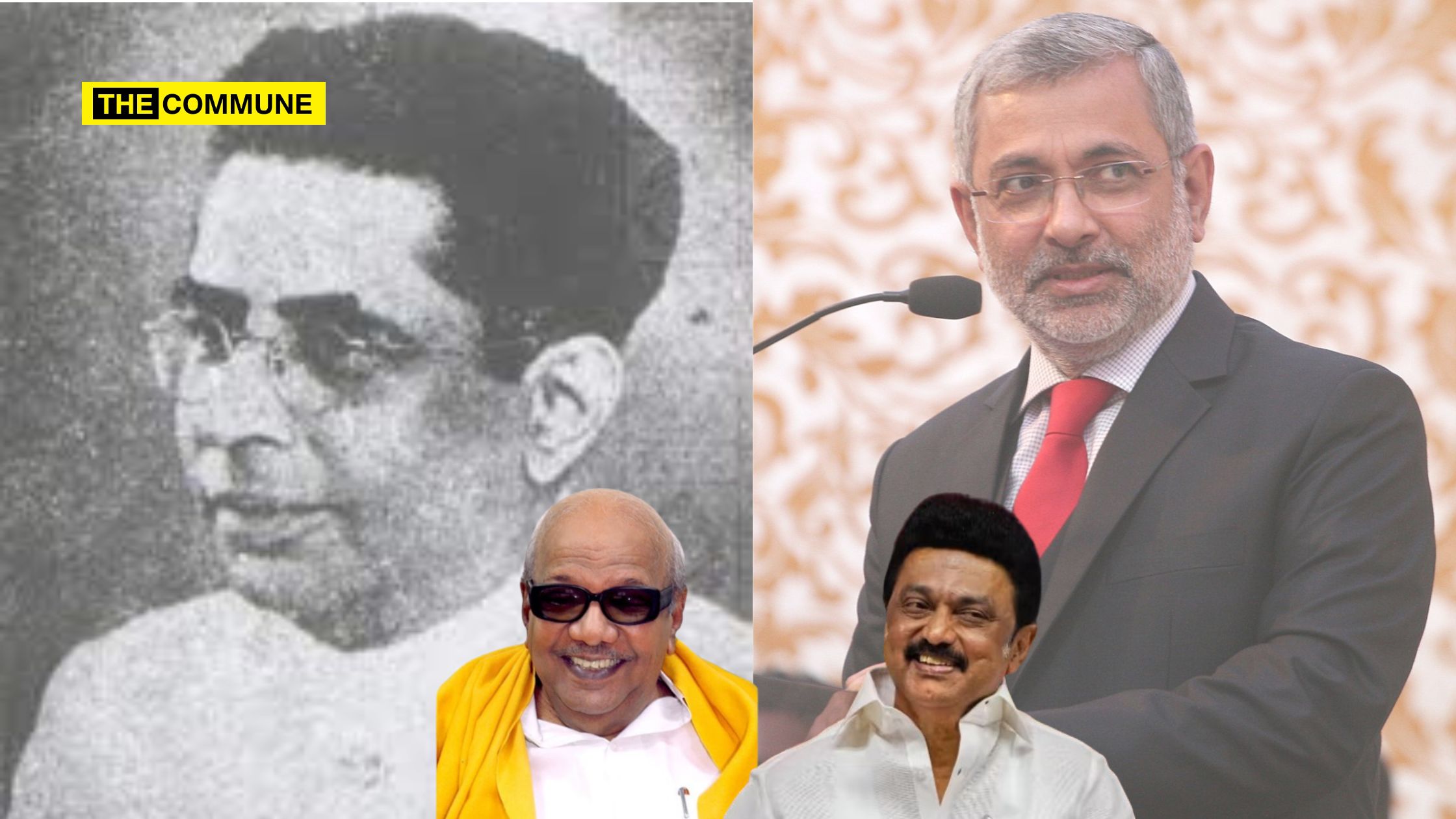
The Rajamannar Committee, officially known as the Centre-State Relations Inquiry Committee, was established in 1969 by the TN Government (under the DMK led by Chief Minister M. Karunanidhi) to examine centre-state relations in India and recommend measures to enhance state autonomy within the federal framework. It was headed by Dr. P.V. Rajamannar, former Chief Justice of the Madras HC, the committee submitted its report in 1971. Its recommendations aimed to address perceived centralization tendencies and promote a more balanced federal structure.

In this article, I have sought to give an overview of some of its key recommendation, with my observations on why they don’t fit the constitutional democracy India is. Some of its recommendations were so radical, that it was confined to its rightful home – the incinerator.

Establishment Of Inter-State Council

The committee recommended the formation of an Inter-State Council under Article 263 to facilitate consultation and coordination between the Centre and States. All major parliamentary bills or decisions affecting states should be referred to this council, and its opinions should be considered before decision-making.
This would only result in delays in legislation. For example, the 2016 GST Bill might have been delayed further if states like West Bengal opposed tax-sharing terms, slowing economic reforms. The council would have eventually become a political opposition platform, and nothing more. It’s structure also meant that larger states like UP might dominate, marginalizing smaller states like Goa.

Transfer Of Subjects To State List

The Committee recommended transfer of subjects like education, health, and social welfare to the State List, presumably to enhance State Autonomy in areas directly affecting local governance. This was to be undertaken by revising the 7th Schedule of the Constitution to transfer items from Union List and Concurrent List to the State List.

On surface, it looks like the right decision. However, it must be noted that States like Bihar, with weaker education systems, could fall further behind compared to Kerala, as seen in disparities in the recent Sarva Shiksha Abhiyan outcomes. Central Government’s control over health enabled India’s COVID-19 vaccination drive. State control might have led to uneven rollouts. Poorer States like Odisha lack funds to manage their health independently, as can be seen in their reliance on Central Schemes like Ayushman Bharat.

Residuary Powers Belong With Centre

One of the most radical recommendations was that residuary powers of legislation and taxation (not explicitly listed in the Union or State Lists) to be vested with the states, presumably to empower states to address local needs without excessive central interference. This would have resulted in legal fragmentation. For instance, States could pass conflicting laws on new issues like cryptocurrency. The most notable instance would have been the 1991 economic crisis. The central residual power enabled swift reforms. State control would have meant we would met the same fate as Venezuela or Greece. And I don’t want to step into the possibility of escalating militancy, since certain states might have used the residuary powers to fuel regional independence demands.

Abolition Of All India Services

Remember what Sardar Patel had stated about the Indian Civil Services? He had referred to them as the country’s Steel Frame. He believed that the civil servants were the executors of government policies, the backbone of governance, and a crucial pillar in India’s development. Rajamannar Committee proposed abolishing All India Services (IAS, IPS, IFS), arguing they undermine federalism and state autonomy by acting as agents of the Centre.

It would have led to administrative inefficiency, and political bias creeping in. States would have been infested with politicized bureaucracies, leading to lack of coordination between the State and the Centre. Classic example to highlight this is the 2008 Mumbai Attacks, which required IPS-Led NSG Co-ordination. State-only police services might delay such responses, risking lives.

And more importantly, the talent disparity across different states would mean serious governance gaps. How will a State like Arunachal Pradesh attract quality officers? Without them, as Sardar Patel had observed, there is no governance.

Abolition Of Planning Commission

The committee proposed disbanding the Planning Commission and replacing it with a statutory body of experts, with states having their own Planning Boards. This was supposedly to reduce central control over state development plans and allow states to tailor plans to their needs.

It would have led to fragmented development. Without a central planning, MGNREGA’s uniform rural job creation might vary. Poorer states like states like Chhattisgarh lack funds for independent boards, as seen in their reliance on central Smart City funds. And more importantly, it will lead to policy overlaps without any possibility for reasonable solutions in matters such as water-sharing agreements between States.

Mandatory Consultation With States

One of the more reasonable suggestions was that the states be mandatorily consulted on decisions affecting their interests, including legislative amendments by Parliament. This was done to ensure that States have a say in the national policies impacting them.

Even though on surface it seems perfectly fair, we need to understand that almost all security related laws and legislations, and national policies surrounding them will be understood to impact every state. Take for instance, the 2019 UAPA amendments for terrorism control. It might have been blocked, if States like Kerala or West Bengal had opposed them over petty partisan vote-bank politics, risking national security.

The Rajamannar Committee’s report, for all its radical recommendations, was completely ignored by the Central Government headed by the Congress, deeming them impractical and potentially divisive. Some of the recommendations, such as one against the misuse of Article 356 found judicial solutions at a later point in time, effectively, rendering the recommendation infructuous.

Given their radical nature, potential to disrupt national unity, and lack of practicality led to widespread criticism and non-implementation. It proposals were seen as prioritizing regional interests over national cohesion, making them a polarizing milestone in India’s constitutional history.

G Saimukundhan is a Chartered Accountant.

Subscribe to our channels on TelegramWhatsApp, and Instagram and get the best stories of the day delivered to you personally.

“Okk*la O*i, Omm*la”: Meet DMK Functionary Sujatha, A Female Version Of Sivaji Krishnamurthy Who Unleashed Verbal Diarrhea Against DMK Opponents At Event Marking MK Stalin’s Birthday

The DMK’s culture of toxic, no-holds-barred rhetoric by its star campaigners has once again come to the forefront—this time well ahead of the upcoming Tamil Nadu Legislative Assembly elections. While it’s not unusual to hear male campaigners from the party hurl abusive language at opposition leaders, what stood out recently was the intensely offensive tirade by Salem DMK functionary Sujatha during a public meeting in Tiruvottiyur, held to celebrate Chief Minister M.K. Stalin’s birthday. Shockingly, this unfolded in the presence of North Chennai MP Kalanidhi Veerasamy, lending official weight to the event.

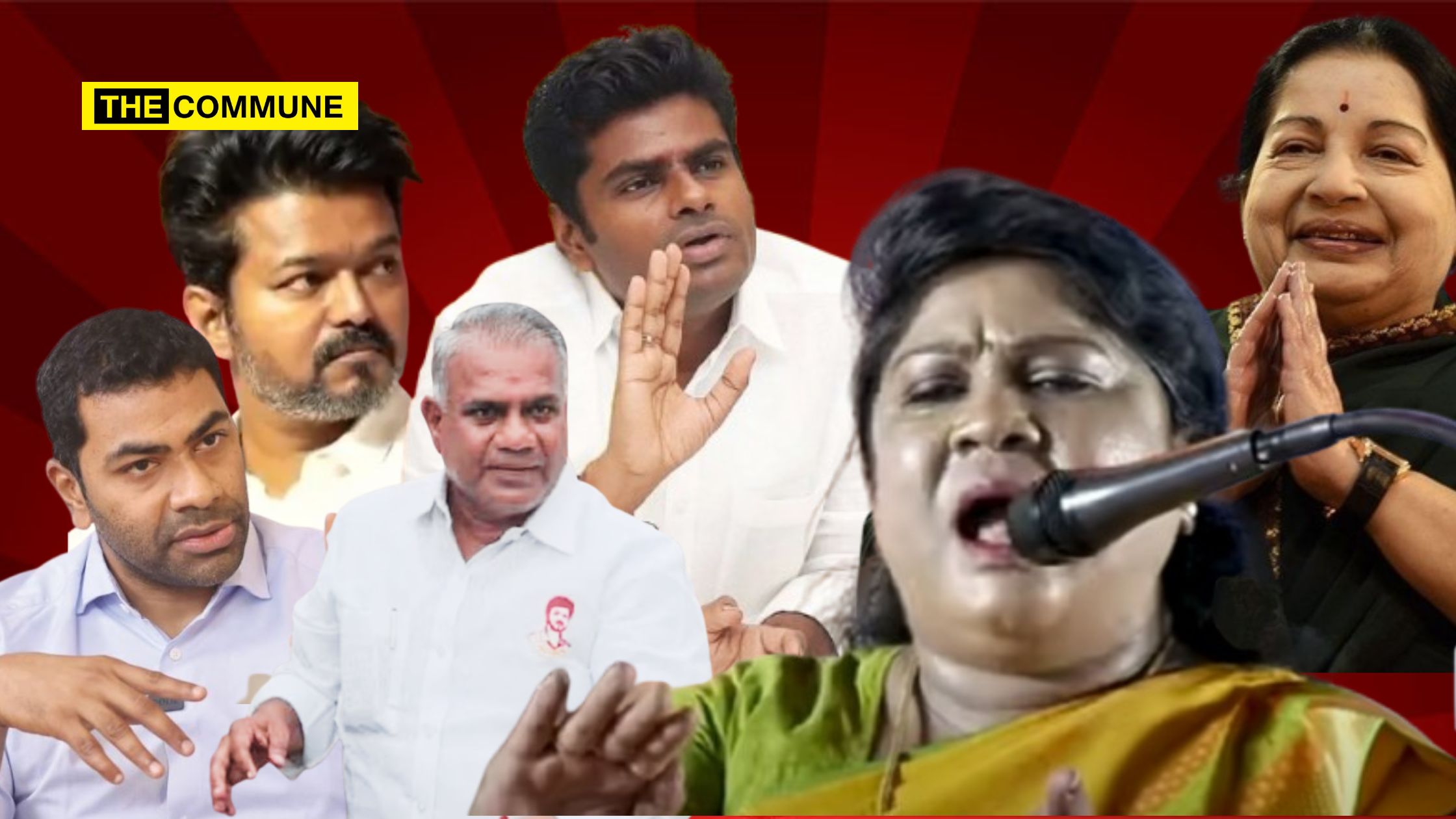
Sujatha’s speech was laced with abusive remarks and casteist slurs, targeting several opposition figures including TVK chief Vijay, general secretaries Aadhav Arjuna and Bussy Anand, former Tamil Nadu BJP president Annamalai, and even former Chief Minister J. Jayalalithaa.

This incident only reinforces the troubling reality that neither the DMK nor its prominent campaigners seem willing to dial down the hateful and toxic rhetoric in public forums — a trend that continues to degrade the quality of political discourse in the state.

Immediately beginning her speech, DMK functionary Sujatha launched an attack on Tamilaga Vettri Kazhagam (TVK) chief Vijay and one of the party’s general secretaries for campaign, Aadhav Arjuna. She openly mocked and ridiculed both leaders, questioning their stature.

She said, “If it was a general body meeting on that day, leaving all the things about what the cadres have said or what resolutions needed to be passed, instead of saying all that — this guy (Vijay) ‘Okkala Oli’ (S*ster f*cker) says, Muthuvel Karunanidhi Stalin, and 2,000 people get up and clap like Rajini said — just saying the name sends shockwaves isn’t it! But what have you actually done? This is a sacred platform but we’ve to drag you because you have talked about my leader M.K. Stalin in a singular tone!”

She then turned her fire toward Aadhav Arjuna, saying, “Another lunatic — born to a lottery ticket — Aadhav Arjuna asks, ‘Didn’t Kalaignar become Chief Minister at 42?’ Dei, will you even match the dust beneath Kalaignar’s feet? Aadhav Arjuna, born to a lottery ticket, what do you even know?”

Later, she continued her tirade, saying, “You’re the son of a runaway — yesterday in one party, today in another. You’ve lured away a woman who sells lottery tickets. With that you’re in no position to speak about my leader, the Kalaignar.”

Turning her focus back to Vijay, she asked, “I want to ask — what has Vijay done for the people of this country? So many crises have come— cyclones came, the Coroan came — What has he done? But do you know what, he won’t contest in the Parliamentary elections, will not even serve the people but straight away contest in the Legislative Assembly and become Chief Minister — and the rest of us are expected to suck on an ice stick? G*mmala (m*ther f*cker) What kind of justice is that?”

Later in her speech, she also took aim at TVK General Secretary Bussy Anand, mocking and verbally abusing him with derogatory language. She said, “And then there’s that parotta-head Bussy Anand, that ‘G*mmala’ Are you even human? He keeps shouting ‘Vijay will be the Chief Minister in 2026!’ — N*ttuva!”

 Continuing her speech made a shocking and insensitive remark, blaming the late Captain Vijayakanth’s death on his wife and caretaker, Premalatha — a outrageous statement in poor taste.

After taking on the TVK and Vijay, DMK’s star campaigner, Salem Sujatha, launched attack on former BJP Tamil Nadu president K. Annamalai, using derogatory language and name-calling during the parties public meeting .

Sujatha mockingly referred to Annamalai as a “goat,” saying, That goat Annamalai better learn to behave himself. She continued her tirade, stating, “This guy—he’s mad! A lunatic born to a lunatic! Don’t mistake me, MP, my stomach is burning! He says he’ll bring down the walls of Anna Arivalayam brick by brick. ‘Omala’… you couldn’t even pluck a single strand of hair from the heads there! Son of a sinner!”  In addition to targeting Annamalai, Sujatha also ridiculed renowned choreographer Kala, mocking her profession for campaigning alongside Annamalai during the 2024 Lok Sabha elections.

Sujatha then resorted to the usual, worn-out rhetoric by mocking Prime Minister Narendra Modi over the widely debunked claim that he had promised to deposit ₹15 lakh into every citizen’s account—a narrative that has been fact-checked and disproven numerous times.

 Then she took aim at former Tamil Nadu Chief Minister J. Jayalalithaa, using a thinly veiled innuendo by mimicking her voice and referring her with the term “Papathi”—a casteist undertone historically used to ridicule Brahmin women. Sujatha said mockingly, “Honourable Speaker, I’m a Papathi—you cannot change (atavum mudiyathu) or destroy me.”

Subscribe to our channels on TelegramWhatsApp, and Instagram and get the best stories of the day delivered to you personally.

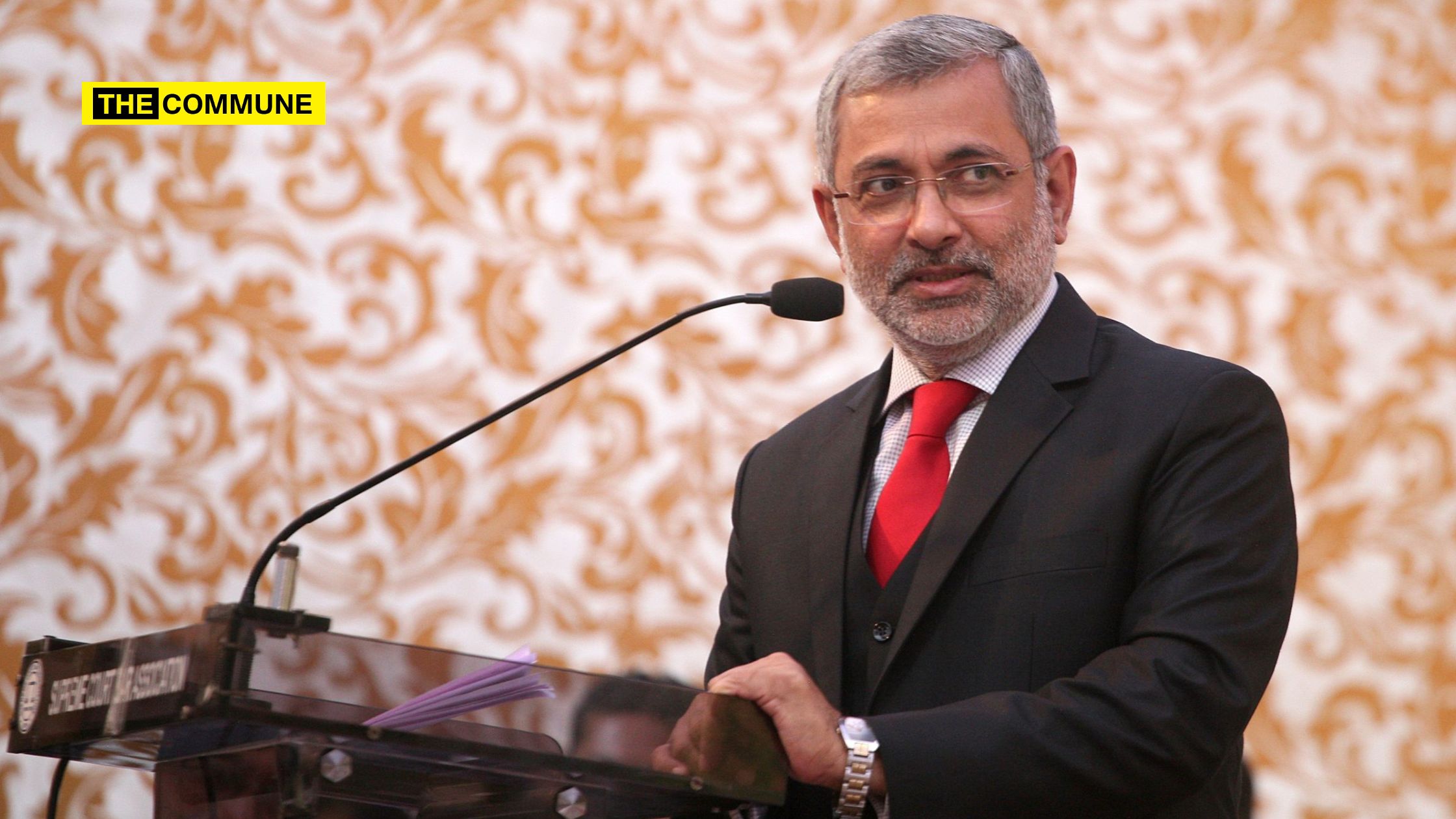
Kurian Joseph Once Opposed Post-Retirement Jobs For Judges, Now Is On MK Stalin’s Committee For State Autonomy. What Changed?

Image Source: SCCOnline

In 2018, just a day after his retirement from the Supreme Court, Justice Kurian Joseph made a striking public statement: former judges, he said, should not accept post-retirement posts from the government if these are offered as a form of “charity.” The only exception, he clarified, would be when a government “honourably” requests a judge’s service in a way that preserves institutional integrity and independence.

His remarks came at a time of intense scrutiny of judicial-government relations, shortly after he and three other senior judges had held an unprecedented press conference raising concerns about the functioning of the judiciary and its autonomy.

Fast forward to 2025, and Justice Kurian Joseph finds himself at the head of a high-level committee announced by Tamil Nadu Chief Minister M.K. Stalin. The panel has been tasked with examining Centre-State relations and recommending measures to protect the rights of states under India’s federal structure. It includes former IAS officer Ashok Vardhan Shetty and economist M. Naganathan, both with long-standing ties to the DMK government.

The timing and context of the appointment raise questions about how Justice Joseph now interprets his earlier position on post-retirement roles. While the committee’s objectives — safeguarding federalism and reviewing state entitlements — are framed as constitutional and apolitical, it is hard to ignore the overtly political setting in which it was announced. Stalin’s Assembly speech launching the panel was both a critique of the Union government and a declaration of political intent.

Critics have pointed out that this role places Justice Joseph in a potentially politicized arena, precisely the kind of post-retirement engagement he had once advised judges to avoid — unless approached with institutional neutrality and public confidence.

Justice Joseph has not publicly commented on this apparent shift. Whether he views this panel as falling within the exception he articulated — a role filled “honourably” in service of the Constitution — or as an evolution of his thinking on the role of retired judges, remains unclear.

What is clear, however, is that the lines between judicial retirement, public service, and political endorsement remain difficult to navigate — especially for those who once advocated for sharper boundaries.

Subscribe to our channels on Telegram, WhatsApp, and Instagram and get the best stories of the day delivered to you personally.

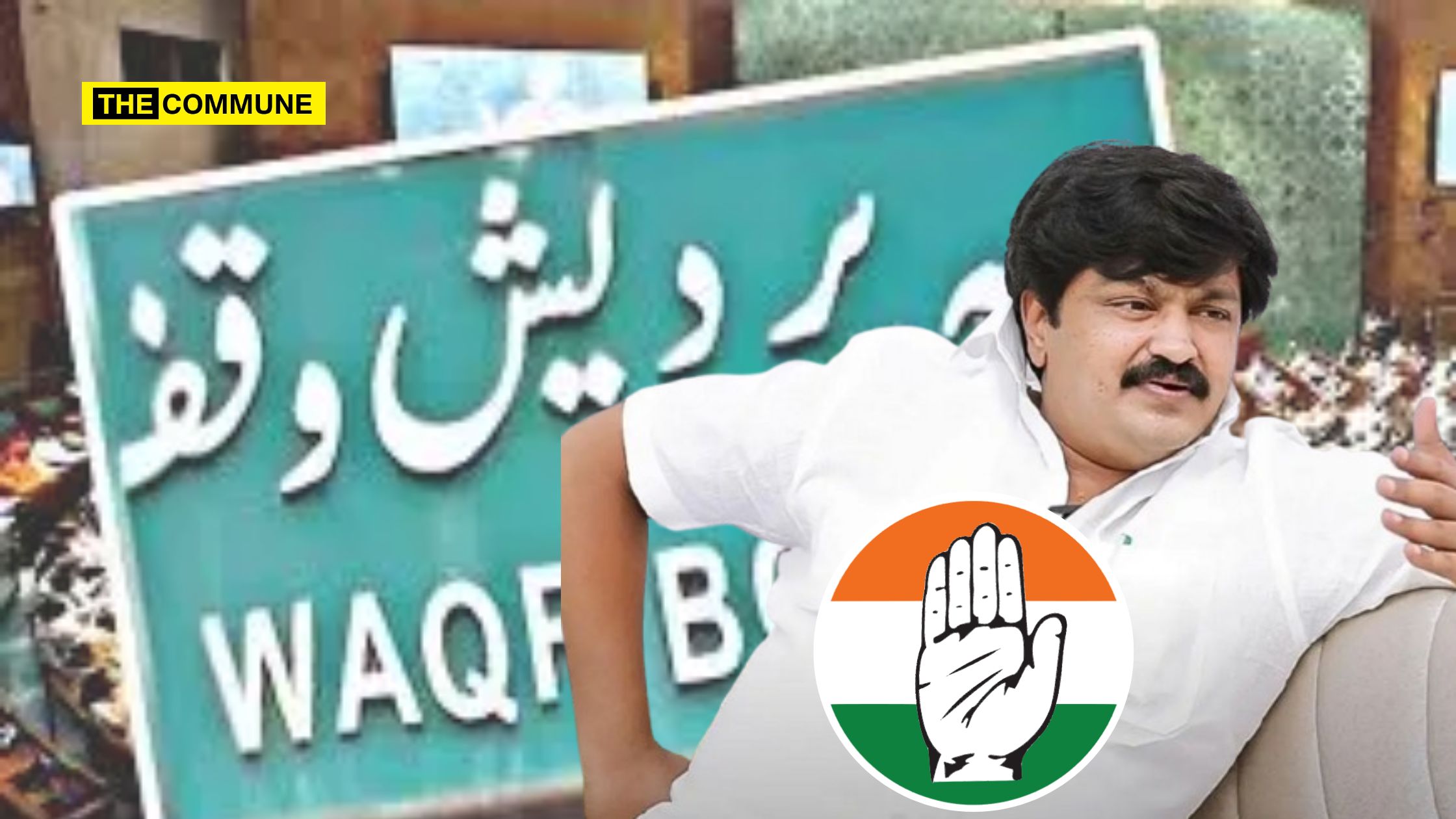
“Once A Waqf, Always A Waqf,” Says Cong MLA Aassan Maulaana As 150 Families In Vellore Village Face Eviction After Dargah Claims Land As Waqf Property

Around 150 families residing in Kattukollai village in Tamil Nadu’s Vellore district have received eviction notices after a local dargah claimed the land they occupy has belonged to the Waqf Board since 1954. The issue has sparked concern among villagers and prompted political and administrative responses.

The notices were issued by F Syed Sadam, the caretaker of the dargah, who alleges that the land—registered under survey number 362—belongs to the mosque and was officially recorded as Waqf property decades ago. Sadam, who took over as caretaker following his father’s death in 2021, has demanded that residents pay ground rent, seek permission to occupy the land, and comply with Waqf regulations or face legal action.

In one notice accessed by India Today, a resident named Balaji was accused of encroaching upon Waqf land by building a house and a shop. Sadam has stated that two more notices will be issued, and if residents fail to respond, the matter will be escalated to the High Court.
Sadam explained that his father, due to lack of formal education, did not collect rent from the villagers. Now, he says, the dargah intends to enforce its claim and collect dues. Sadam stated that he had the necessary documents proving this land was Waqf property.

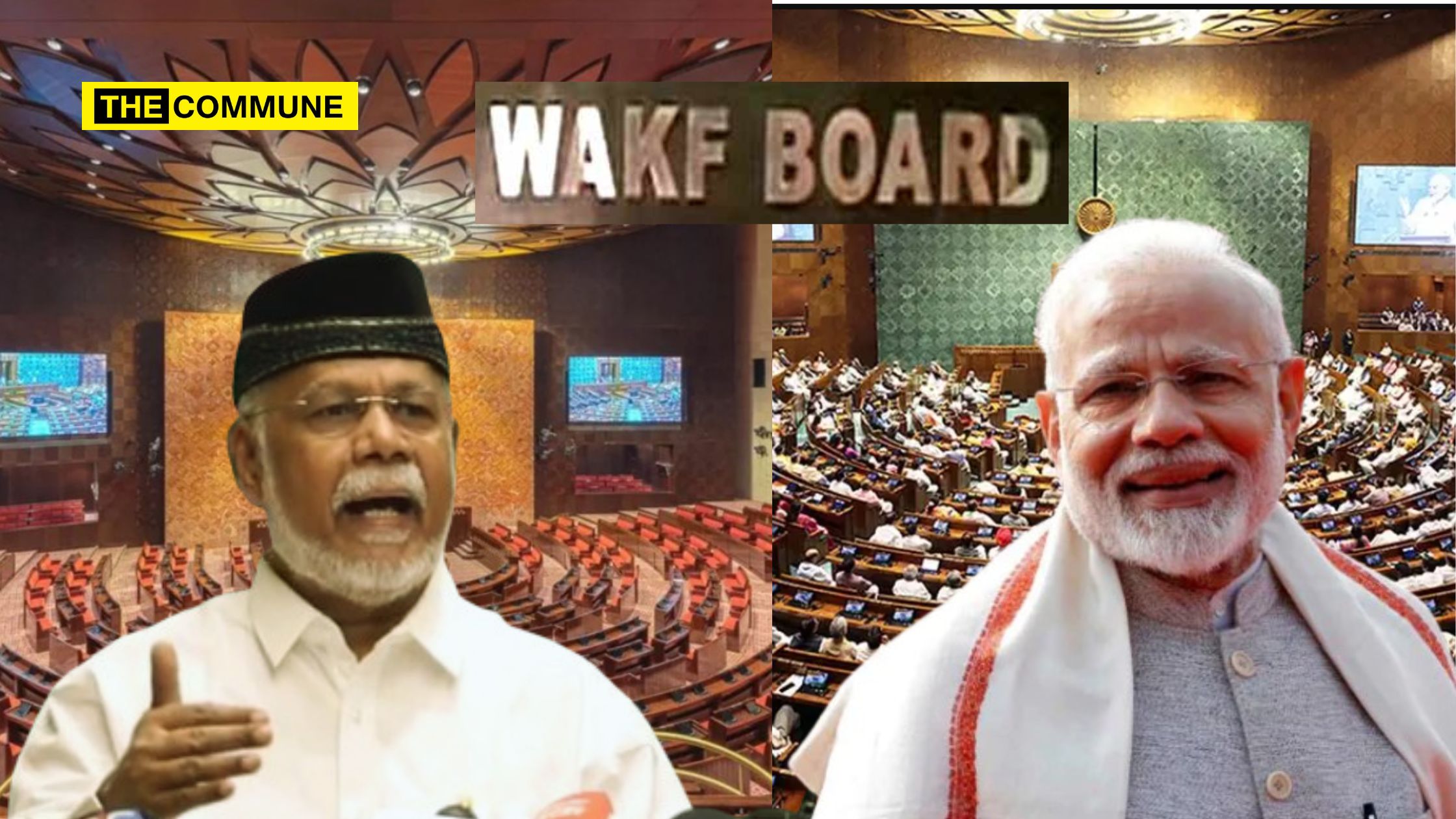
Amid growing anxiety among the villagers, Congress MLA Aassan Maulaana visited the area and assured residents that no one would be evicted. However, he noted that if the Waqf Board’s ownership claim is upheld in court, the residents would be expected to pay a nominal rent. “Once a Waqf, always a Waqf,” Maulaana stated, reiterating the legal standing of Waqf property under current law.

Residents of Kattukollai, many of whom say they have lived on the land for four generations, expressed shock at the sudden notices. They claim to have government-issued documents and have been paying panchayat taxes regularly.

Concerned over possible displacement, villagers gathered at the District Collector’s office to seek intervention. Praveen Kumar, Divisional Secretary of Hindu Munnani, who accompanied them, urged authorities to issue official land titles (patta) to the residents. “These families have lived here for decades with proper documentation. They should not be made to pay rent or face eviction,” he said.

According to locals, the Vellore District Collector has informally advised them not to pay any rent for now while the matter is being looked into.

(With inputs from India Today)

Subscribe to our channels on Telegram, WhatsApp, and Instagram and get the best stories of the day delivered to you personally.
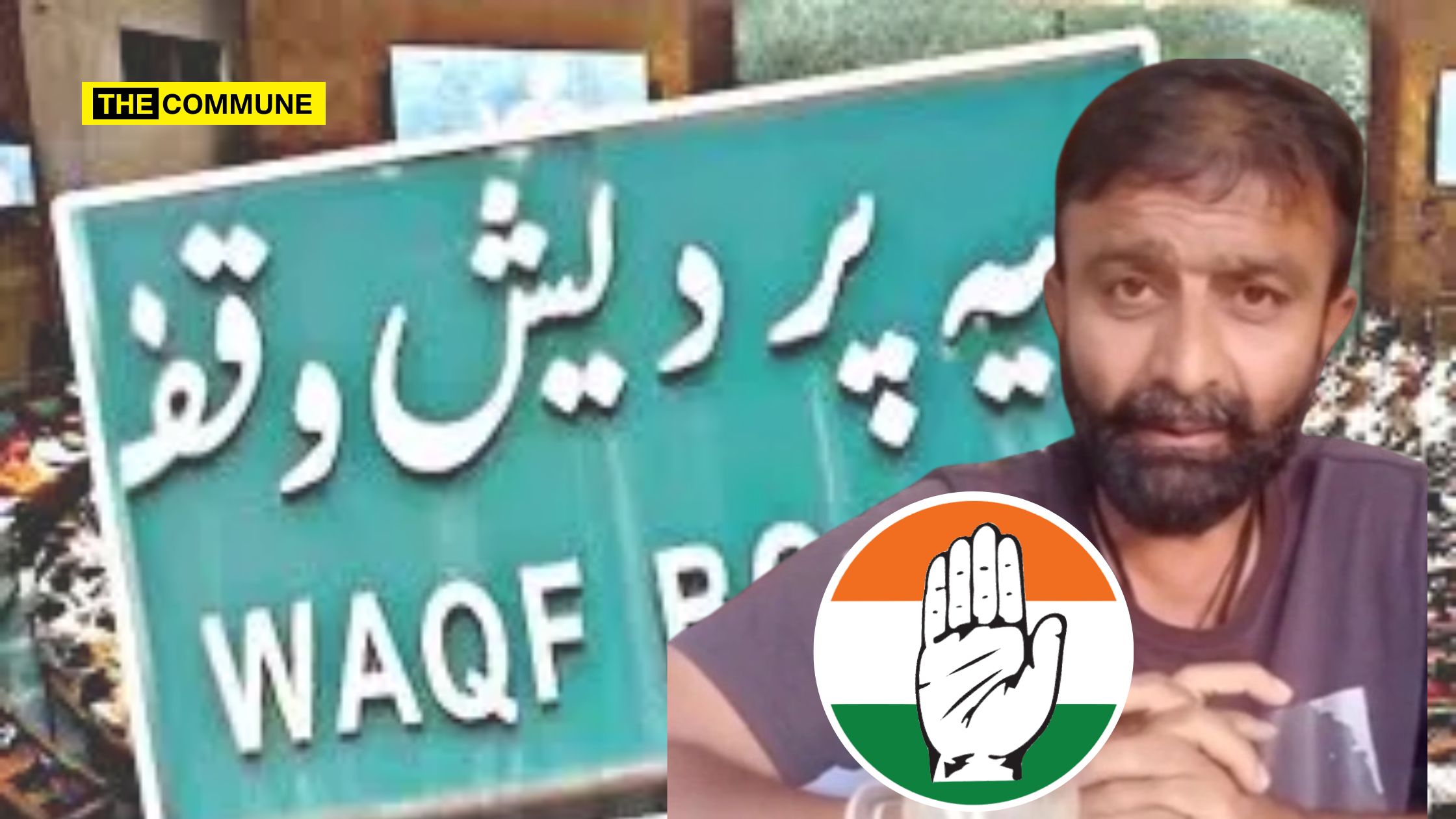
Karnataka: Congress Member Ahammad Kabir Khan Arrested for Inciting Violence Over Waqf Amendment

Karnataka Police on 13 April 2025 arrested former Davangere municipal corporator and Congress member Ahammad Kabir Khan for allegedly inciting violence over the recently amended Waqf Act. The arrest follows the circulation of a viral video in which Khan purportedly urged Muslims to engage in violent protests, including arson and attacks on public property, in opposition to the Waqf (Amendment) Act, 2025.

The video, which surfaced online on 8 April 2025, shows Khan delivering a provocative speech, dismissing peaceful demonstrations as ineffective and calling instead for “sacrifice” and “destruction” to make their voices heard. He reportedly said, “Let 8–10 die in every town,” and called for burning buses and trains as a form of protest.

In the two-minute clip, recorded at an undisclosed location, Khan criticised conventional protest methods such as submitting petitions and holding placards. Instead, he advocated for aggressive action, claiming that violent resistance was the only effective way to challenge the amended law.

He also suggested that such actions should be strategically planned rather than spontaneous, stating, “Heads must be broken, and everything must be destroyed. Do whatever you must, the Waqf will stand with you.”

Following the backlash, Khan went into hiding and switched off his phone. Police launched a manhunt and arrested him on April 14. He has since been remanded to judicial custody.

The FIR, accessed by OpIndia, was filed on 8 April 2025 at Azad Nagar Police Station, based on a complaint by police constable Venkatesha. It includes charges under Sections 3(5), 352, 353(1)(b), 353(1)(c), 353(2), and 54 of the Bharatiya Nyaya Sanhita (BNS).

The complaint alleges that Khan incited violence, encouraged mass destruction, and openly called for public disorder in response to the Waqf Amendment. He also allegedly urged people not to wait for leadership, claiming, “There are no real leaders left,” and suggested that bloodshed was the only means of reversing the legislation.

In response to the video, the Davangere police issued a public warning, urging citizens not to circulate the video or any similar inflammatory material. Authorities stated that strict legal action would be taken against individuals found sharing or forwarding provocative content related to the Waqf Bill or other sensitive issues. The investigation into the incident is ongoing.

(With inputs from OpIndia)

Subscribe to our channels on Telegram, WhatsApp, and Instagram and get the best stories of the day delivered to you personally.
TN CM Stalin Forms Committee For “Greater Autonomy” – To Satiate Secessionist Itch?

In a dramatic speech that appeared to blur the line between federalism and regional nationalism, Tamil Nadu Chief Minister M.K. Stalin on Tuesday announced the formation of a high-level committee to recommend measures for “state autonomy,” escalating tensions with the Union government and igniting fresh debate over the DMK’s long-standing flirtation with separatist sentiment.

Framing his announcement as a call for balance within India’s federal structure, Stalin declared that the committee would “safeguard the rightful entitlements of states” and rein in what he called the Union government’s “repeated infringement” of state powers. But behind the veneer of legal review lies a deeper political gamble — one that plays to the secessionist undercurrents that have long animated the Dravidian movement, especially as Tamil Nadu gears up for the 2026 Assembly elections.

The newly formed panel will be chaired by retired Supreme Court judge Kurian Joseph and includes former IAS officer Ashok Vardhan Shetty and DMK-affiliated economist M. Naganathan. Naganathan, known for his proximity to the late M. Karunanidhi, is seen as a reliable ideologue for Stalin’s renewed push for Tamil exceptionalism.

A Political Message Wrapped In Constitutional Language

While Stalin cloaked the move in constitutional rhetoric and historical references — invoking B.R. Ambedkar and even U.S. founding father James Madison — the unmistakable tone of his speech was one of confrontation. He accused the Centre of centralising power through taxation policy, education reforms like NEET and the National Education Policy (NEP), and fiscal devolution mechanisms that allegedly short-change southern states.

Using an emotive analogy, Stalin said, “It is the mother who knows best what food to give her starving child. But if someone from Delhi decides what a child should eat, what he or she should learn … won’t the compassion and motherly spirit of the mother rise in revolt?” The metaphor, while poetic, exposed what can be called calculated hostility.

The announcement also drew on the legacy of the Rajamannar Committee set up by Karunanidhi in 1969 — a time when the DMK had openly called for Dravida Nadu, a separate Tamil state. Though that secessionist demand was later dropped, echoes of it returned Tuesday under the more respectable guise of “autonomy.”

Stalin used the impending delimitation exercise as a rallying cry, suggesting that Tamil Nadu — due to its successful population control policies — would lose Parliamentary seats. “The proposed delimitation… poses a serious threat of significantly reducing Tamil Nadu’s representation — as if to punish this achievement,” he said.

This argument is not new, but in the context of a resurgent central government led by the BJP and a weakening AIADMK now aligned with the NDA, Stalin’s pitch appears aimed at cornering his rivals and monopolizing the “Tamil identity” vote.

Federalism Or Political Opportunism?

Critics say Stalin’s sudden push for a “high-level committee” is less about federal balance and more about preparing a charged ideological plank for 2026. In echoing the federalism debate, the DMK is seeking to dominate the narrative on state rights, autonomy, and representation — classic themes of Dravidian politics — and frame itself as the sole defender of Tamil interests.

Ironically, many of the issues Stalin raised — opposition to NEET, criticism of GST, and concerns about central interference — were once championed by AIADMK stalwarts like M.G. Ramachandran and J. Jayalalithaa. With the AIADMK now seen as tilting towards Delhi, Stalin is repositioning the DMK as the last bastion of Tamil pride — even if it means stirring separatist sentiments under the trappings of federal discourse.

The committee is expected to submit an interim report by January 2026 and a final report within two years. It will examine constitutional provisions, the shift of subjects from the State List to the Concurrent List, and broader issues of fiscal autonomy and institutional independence.

But the immediate impact is political. The DMK is laying the groundwork for a full-throttle campaign where state autonomy will be a central theme — potentially turning technical issues of governance into a full-fledged cultural and constitutional showdown.

“In today’s times, when dark clouds hover over the principles of democracy, the time calls for a ray of clarity and light. Tamil Nadu once again steps forward to fulfil its historic responsibility,” Stalin said — a line that sounded less like an administrator and more like a revolutionary.

Whether this ends in constitutional reform or a deeper polarisation between the Centre and states remains to be seen. But with this move, the DMK has signaled that it’s willing to revive old ghosts — and perhaps stir new ones — in the name of Tamil Nadu’s “historic role” in Indian federalism.

(With inputs from The New Indian Express)

Subscribe to our channels on Telegram, WhatsApp, and Instagram and get the best stories of the day delivered to you personally.
‘Serupu Pinjudum Da Naye’: BJP’s Alisha Abdullah Hits Back At Dravidianist Journo ‘Nakkeeran Prakash’ Over Misogynistic Remark Linking Her To Seeman

Tamil Nadu BJP State Secretary for Sports & Skill Development, Alisha Abdullah, has strongly condemned senior journalist Damodharan Prakash (also known as ) for making a sexist and inappropriate remark on social media regarding a photo she recently shared with Naam Tamilar Katchi (NTK) chief Seeman.

On 14 April 2025, Prakash, through his official X account, reposted Alisha’s picture with Seeman and commented, “It would be great if there were no complaints like Vijayalakshmi’s!”—an apparent insinuation referring to actress Vijayalakshmi’s past allegations against Seeman, suggesting a similar “relationship” might exist between Alisha and the NTK leader.

Alisha Abdullah hit back sharply, calling out Prakash’s derogatory and baseless remarks, and stated, “I’ll slap you with slipper, you dog💦” (Serupu Pinjudum da Naye)

The remark referenced a controversial past involving actress Vijayalakshmi, who had previously accused Seeman of cheating her after a long-term relationship and an alleged promise of marriage. She initially filed a police complaint in 2011, which was not pursued after she requested no further action. In February 2020, she filed another complaint seeking Seeman’s arrest, and later, in 2023, she revised her accusations once more. However, in each instance, the complaint was eventually withdrawn, citing harassment and personal distress. Critics argue that such allegations often resurface when Seeman gains political prominence, implying a pattern of attempts to tarnish his image.

Alisha, meanwhile, made it clear that such sexist and malicious attempts to defame women through innuendo and character assassination will not be tolerated. Her response has gained significant attention online, with many expressing support for her stand against misogyny in political and media circles.

Damodharan Prakash, a Dravidian journalist from ‘Nakkheeran’, has often stirred controversy through his provocative and derogatory remarks, seemingly in pursuit of attention and notoriety. In a recent private interview, he made a particularly offensive claim, alleging with clear malice that “priests pee near the Lingam, which devotees drink as Theertham (holy water).”

The two-bit Dravidianist journalist also derogated Triveni Sangam waters of Prayagraj and Prime Minister Narendra Modi saying “During bathing, if urine comes, where will Narendra Modi go? He’ll go in Triveni Sangam only, right? Someone else will drink that water, right? It goes inside another person’s mouth, right? How is the bacteria present in faeces found there? Only if someone had defecated there, it would come right?

This hateful speech, which attacked Hindus, desecrated the sanctity of temples, and insulted priests, went viral, sparking widespread anger and distress. As a result, the Hindu Munnani lodged a formal complaint with the Chennai Metropolitan Commissioner.

Hindu Munnani’s Chennai City Secretary Siva Vijayan submitted the complaint, condemning Nakkheeran Prakash’s remarks, which were made with a perverted mindset and malicious intent, severe action to be taken against him.

Prior to this incident, Damodharan Prakash, along with a few Dravidianist sympathizers, was involved in a deliberate attempt to tarnish the reputation of senior Tamil Nadu BJP leader H. Raja. They circulated a fake letter falsely suggesting that H. Raja was opposing the state leadership under former BJP president K. Annamalai, aiming to create internal rifts within the party. Following this, a case was registered against Damodharan Prakash.

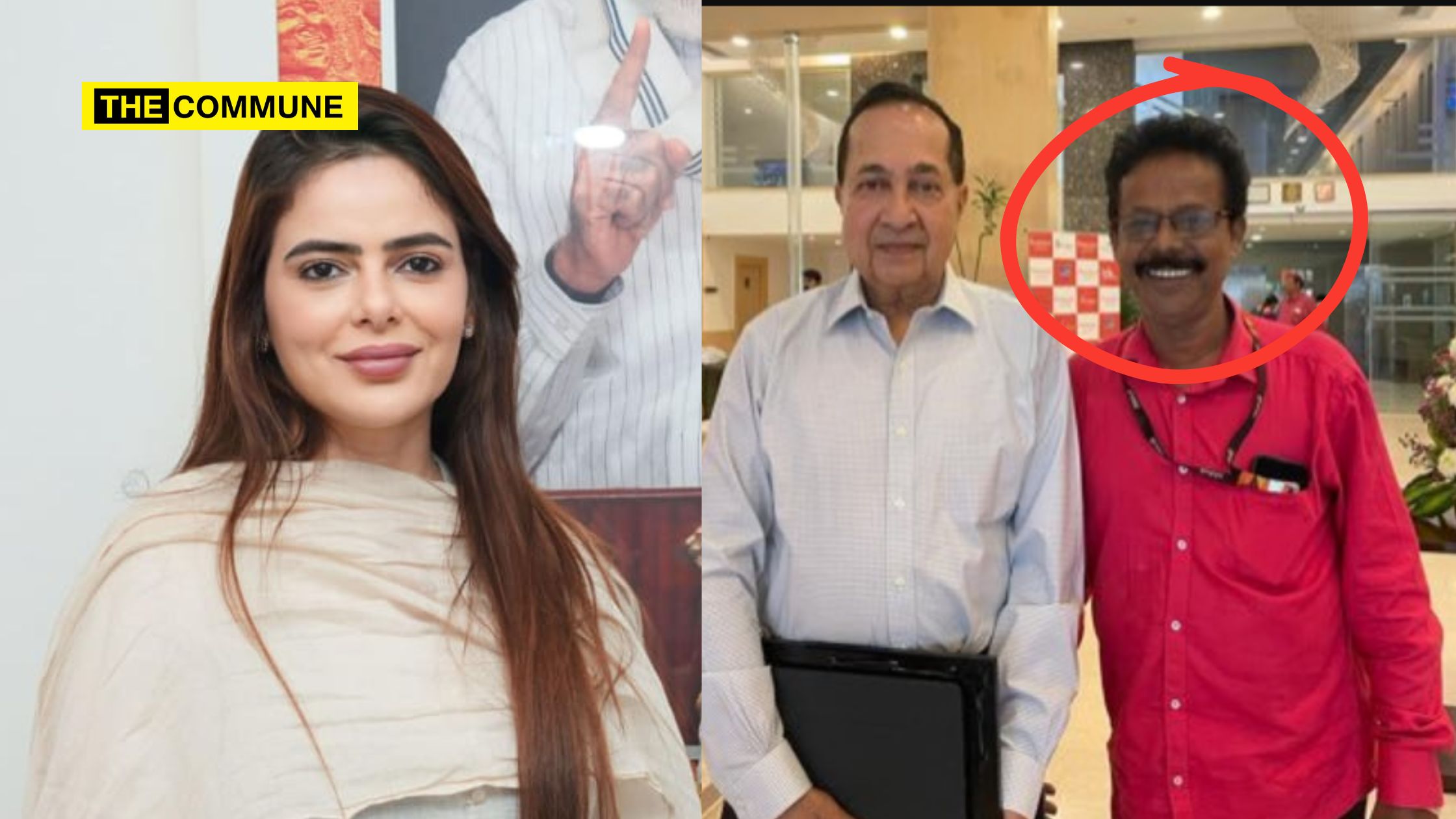
In conclusion, Damodaran Prakash is a rabid Dravidianist who works for Nakkheeran which is an unofficial mouthpiece of the DMK. He is known for engaging in ultra low-level discourse by gossiping about sleaze of prominent personalities. In his X profile picture, he is seen with leftist-Dravidianist N. Ram of The Hindu Group.

Subscribe to our channels on TelegramWhatsApp, and Instagram and get the best stories of the day delivered to you personally.