Home Blog Page 34

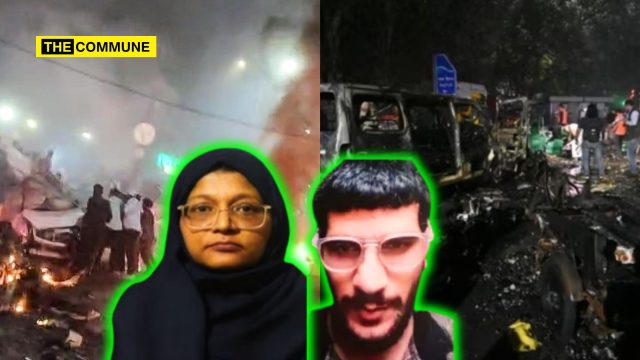
Terror Module Member, An Islamist Doctor From Kashmir, Linked To Delhi Blast Probe Reportedly Fled To Afghanistan In August: Reports

Terror Module Member, A Kashmiri Doctor, Linked To Delhi Blast Probe Reportedly Fled To Afghanistan In August: Reports

A senior member of the Kashmir-based terror module currently under investigation for the Red Fort blast is believed to have travelled to Afghanistan in mid-August, according to intelligence sources cited by The Print. Agencies suspect the group was preparing what could have been the largest coordinated terrorist attack in India since 1993.

Intelligence officials told the publication that Muzaffar Ahmad Rather, a 33-year-old paediatrician from Srinagar, left India earlier this year and was expected to act as a liaison between the Kashmir group and Afghanistan-based jihadist commanders for guidance on bomb-making and assault tactics. Muzaffar is the elder brother of Adeel Ahmad Rather, the 31-year-old doctor arrested by the Jammu and Kashmir Police from Saharanpur, Uttar Pradesh, as the alleged head of the module.

According to the J&K Police, a Kalashnikov rifle and ammunition were recovered from one of Adeel’s lockers during raids linked to the investigation. The case has also drawn attention to a network of Kashmiri doctors who were working at Al Falah Hospital in Faridabad.

Among them was Dr Umar un Nabi, who died in the 10 November blast near Delhi’s Red Fort metro station. Officials said he was driving a white Hyundai i20 that exploded while he was allegedly attempting to flee with explosives collected by the group.

The Rather family did not respond to The Print’s request for comment regarding Muzaffar’s current location.

Journey to Afghanistan

An intelligence officer told The Print that Muzaffar first travelled to Dubai before departing for Afghanistan. The officer said Muzaffar informed his family that he wished to “serve a truly Islamic society and state.” Intelligence assessments suggest Muzaffar had previously attempted to reach Afghanistan in March 2022 along with two other doctors, Faridabad-based senior resident Muzammil Ahmad Gani and his colleague Umar un Nabi via Turkey. The group reportedly failed in the attempt, which investigators believe may have been a turning point in their radicalisation.

Officials stated that extremist groups have increasingly relied on online platforms to deliver basic training in weapons use, combat tactics and improvised explosive devices.

A second intelligence officer said Muzaffar’s eventual departure to Afghanistan indicated that planning for the attacks had reached a critical phase.

Cleric’s Role and Funding Trail

Intelligence sources also told The Print that Kashmiri cleric Irfan Ahmad, who ran a study circle in Srinagar, introduced the doctors to jihadist commanders operating in the Kunar region of Afghanistan. The cleric is alleged to have facilitated access to assault weapons that had been hidden by Nadeem Muzaffar, a former member of the Al-Qaeda-linked Ansar Ghazwat-ul-Hind who was killed in 2018.

The study group was said to be influenced by a strain of Deobandi ideology associated with Hyderabad cleric Abdul Aleem Islahi, and by Ansar Ghazwat-ul-Hind’s rejection of militant factions tied to state intelligence networks.

Investigators alleged that Lucknow-based doctor Shaheen Saeed largely funded the group’s foreign travel and procurement of chemicals for the planned bombings.

According to the United Nations Security Council, Lashkar-e-Taiba and Jaish-e-Mohammad have operated training camps in southern Afghanistan in recent years, and several Kashmir-linked jihadists have held roles in these networks.

Background of the Suspects

A National Investigation Agency (NIA) official told The Print that investigators have sought to understand why Adeel and his associates established a terror cell after 2021. Adeel, the son of a local tehsildar from Wanpora village, studied at Crescent School and Yar Kushi Pora Government School before earning admission to the Government Medical College, Srinagar, in his first attempt. He completed senior residency in 2024.

Muzaffar, the eldest surviving brother, completed his medical degree two years earlier, while another elder brother, Zakir Ahmad Rather, is a veterinary scientist. Their sister, Gowhar Jan, holds a postgraduate degree in medicine and is married to a pharmaceutical businessman in Kulgam. She said it was “impossible to believe” that her brothers were involved in terrorism, describing them as deeply religious and compassionate.

Adeel married psychiatrist Syed Ruqaya in early October. Guests told The Print that Muzaffar’s absence at the wedding was attributed to employment in Dubai. After the ceremony, the couple took an eight-day trip to Kerala before returning to work.

Plans and Material Prepared

Intelligence officials said the group faced logistical difficulties in advancing its plan. While they managed to acquire timers, they reportedly had only three vehicles and struggled to source detonators. This led them to experiment with acid-based triggering mechanisms.

Investigators believe the group had accumulated several thousand kilograms of ammonium nitrate and other incendiary materials since 2022. Comparisons have been drawn to the 2006 Mumbai train bombings, in which seven IEDs packed with ammonium nitrate killed over 200 people.

The investigation into the Red Fort blast and the wider terror module remains ongoing.

(Source: The Print)

Subscribe to our channels on WhatsAppTelegram, Instagram and YouTube to get the best stories of the day delivered to you personally.

RSS Denies Hiring US Lobbying Firm

RSS Denies Hiring US Lobbying Firm After Alleged Disclosures Show $330,000 Payment

The Rashtriya Swayamsevak Sangh (RSS) on Thursday denied engaging any lobbying firm in the United States, following a report by non-profit newsroom Prism that claimed the organisation had indirectly hired one.

RSS leader Sunil Ambekar said in a post on X that the organisation “works in Bharat” and has “not engaged any lobbying firm in United States of America.”

The clarification came after lobbying disclosure statements, reviewed independently by Hindustan Times, showed that the US firm Squire Patton Boggs received $330,000 this year from One+ Advisers, another lobbying outfit, for work carried out “on behalf of the Rashtriya Swayamsevak Sangh.” The disclosures listed the objective of the contract as efforts to “introduce the Rashtriya Swayamsevak Sangh” to US officials.

It is, however, unclear from the documents who hired the lobbying firms. Both One+ Advisers and Squire Patton Boggs had not responded to HT’s requests for comment at the time of publication. Squire Patton Boggs is also known to lobby on behalf of Pakistan.

The report prompted a political reaction, with Congress spokesperson Jairam Ramesh alleging that the development marked another instance of the RSS “betraying national interest.”

(Source: Hindustan Times)

Subscribe to our channels on WhatsAppTelegram, Instagram and YouTube to get the best stories of the day delivered to you personally.

Did Sundar C Drop From Rajini Film Produced By Kamal Haasan Because Of This Reason?

Did Sundar C Drop From Rajini-Kamal Film Because Of This?

In a move that has sent surprised everyone in the Tamil film industry, director Sundar C has abruptly exited the much-hyped superstar project ‘Thalaivar 173’, just a week after it was officially announced. The film, which was set to star Rajinikanth and be produced by Kamal Haasan, was touted as a historic collaboration between the two icons after 46 years.

While the director cited “unforeseen and unavoidable circumstances” for his decision, industry insiders are speculating that the formidable combination of two strong-willed legends may have been the real reason behind his exit.

A “Dream” Project Cut Short

In an official press release, Sundar C stated he was stepping away from the project with a “heavy heart.” He called it a “dream come true” opportunity but added, “In life, there are moments when we must follow the path laid out for us, even if it diverges from our dreams.”

His statement, while diplomatic, has sparked intense debate. Sources close to the industry suggest that Sundar C, having previously directed Rajinikanth in ‘Arunachalam’ and Kamal Haasan in ‘Anbe Sivam’, is intimately familiar with their distinct and powerful working styles. This insider knowledge may have led him to foresee a potentially untenable situation.

The Clash of Titans: A Director’s Dilemma

According to analysts, the core of the issue lies in the contrasting approaches of the two superstars. Rajinikanth, in today’s market, is said to be extremely particular that a film he commits to must become “his” film, with his image and market demands taking precedence.

On the other hand, Kamal Haasan, a renowned filmmaker himself, is known for his hands-on involvement, a trait that is only amplified when he is also the producer. “If both stars pull in different directions, the director stuck in the middle suffers the most intense struggle,” a source commented.

The Rajini’s Touch

Possible reason being the superstar’s recent run of underwhelming performances at the box office. Though Rajinikanth remains a cultural icon, his last few films have struggled to deliver the massive commercial impact once taken for granted.

Adding to the hesitation is the perception that directors who recently worked with him—TJ Gnanavel, Lokesh Kanagaraj, Aishwarya Rajinikanth, and Siruthai Siva—have all faced setbacks or been labelled “jinxed” after delivering flops with the superstar.

For a director like Sundar C— who is known for giving runaway hits with balanced budgets, expectations, and market realities—signing on to a project already carrying the weight of consecutive flops may have seemed too risky. Industry insiders suggest he may have preferred stepping away rather than being tied to a venture facing heightened scrutiny and unpredictable returns.

A Strategic Exit

Faced with the prospect of navigating these two powerful creative forces, it is suspected that Sundar C made a calculated decision. Rather than risking a messy exit mid-way through production, he is believed to have chosen a clean break at the very outset to preserve his creative integrity and professional dignity.

His exit now leaves a major question mark over who will step into the director’s chair for this film being touted as a magnum opus, which is slated for a Pongal 2027 release.

Subscribe to our channels on WhatsAppTelegram, Instagram and YouTube to get the best stories of the day delivered to you personally.

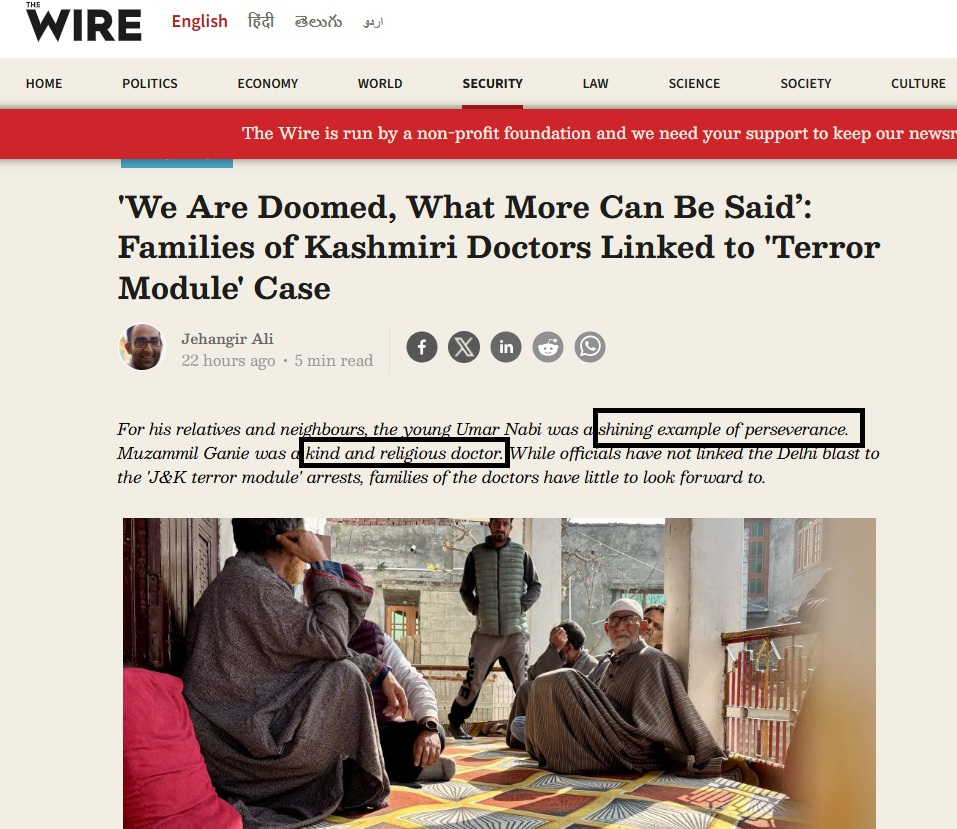
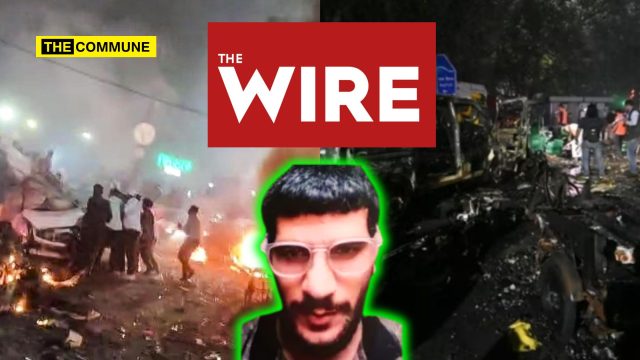
Hardworking Student, Intelligent Medico: Leftist Rag The Wire’s Profile Of Delhi Blast Terrorist Reads Like A Eulogy

Remember the time when the terrorist Burhan Wani was portrayed as a “headmaster’s son” or any other terrorist humanized as “fruit seller’s son”, right after the terror attack or when justice was served?

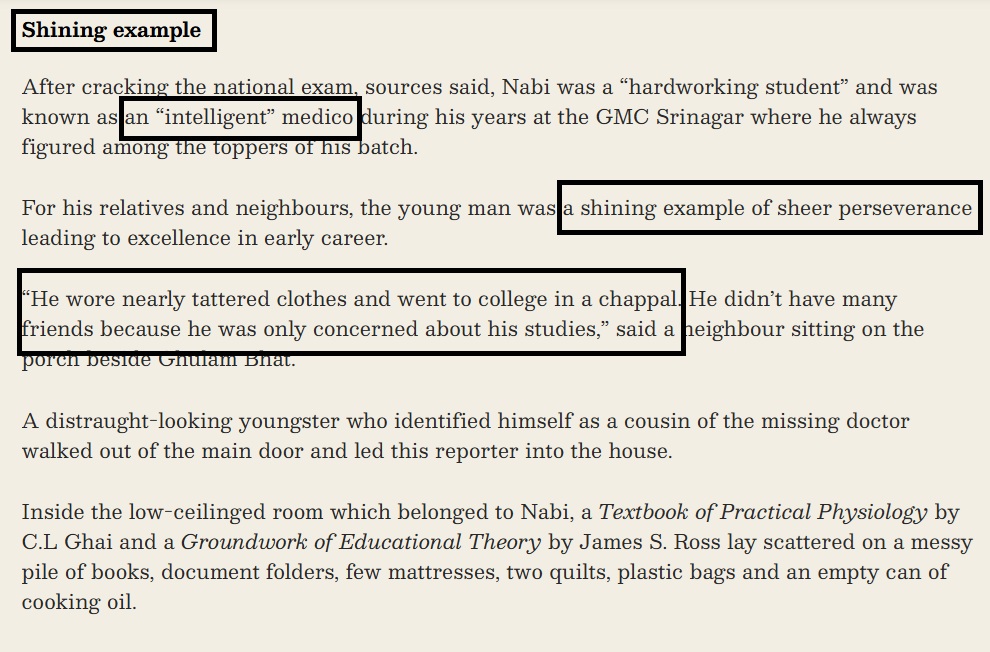
Well, if you had missed that, leftist rag The Wire will help you relive those days – they just added some extra toppings of sentiment to the Delhi Red Fort metro station blast terrorist Dr Umar Nabi – as a “hardworking student”, intelligent medico, – you name it, all the adjectives are there in the piece.

Dr Muzzammil was “kind and religious”! How touching, give them a Nobel Prize already!

Just days after the deadly explosion near Delhi’s Red Fort metro station, a terror incident that killed more than a dozen people and triggered a nationwide investigation, one would expect the media to maintain sobriety, neutrality, and journalistic discipline. But The Wire, in its usual ideological exuberance, has produced something else entirely: a sentimental, tear-jerking homage to the main perpetrator – the one who triggered the blast.

The article reads less like reportage and more like a eulogy delivered at a memorial service, complete with sepia-toned nostalgia, family hardships, moral testimonials, and poverty-porn backdrops constructed to evoke sympathy. At a time when investigators are piecing together facts, The Wire appears to have already chosen its role: emotional defence attorney.

A Narrative of Persecution, Not Terrorism

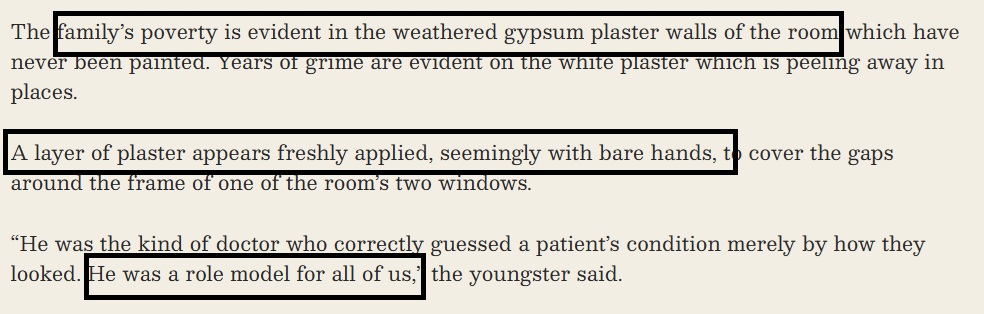
Instead of focusing on the victims of the blast or the national security implications of a medically trained professional turning to terrorism, The Wire chooses to meticulously detail Nabi’s alleged poverty, his “tattered clothes,” and his “sheer perseverance.” The report transforms a suspected mass-murderer into a tragic hero – a “shining example” for his community who “correctly guessed a patient’s condition merely by how they looked.”

The language employed is deliberately emotive and exculpatory. The family’s situation is described as a “dream” turning into a “nightmare,” and their home is painted as a scene of pathetic destitution, with detailed descriptions of peeling plaster and grime. The piece frames the security forces’ investigation not as a necessary response to a deadly terror attack, but as a disruptive raid that left his belongings in “chaos.”

Ignoring the Victims, Center-Stageing the Perpetrator

This approach is a classic tactic of apologist journalism: shift the focus from the crime to the supposed socio-economic grievances of the criminal. The article expresses more outrage over the fact that the suspect’s family was questioned than over the 13 people killed in the blast. It amplifies the family’s unverified claims of innocence without providing a countervailing perspective from investigating agencies, beyond a cursory mention that officials have not confirmed the reports.

They also give a virtual tour of the house and piggyback on poverty porn to humanize him even further.

This man was a role model to the other kids and could diagnose his patients so well – yeah, the same human and kind doctor did not think twice about blowing himself up in a crowded signal in the heart of the national capital.

Similarly, the piece profiles another arrested doctor, Muzzamil Ganie, describing him as “kind and religious,” and unquestioningly parrots his family’s denial of the allegations. The devastating potential of a terror module involving educated professionals is glossed over in favor of a narrative that suggests these individuals are the real victims.

This approach is not accidental – it is the reason rags like The Wire exist. It is their modus operandi – elevate the accused through glowing personal anecdotes, portray families as devastated victims of state action and poverty, and surround the suspect with a moral halo built on poverty, hard work and virtue. In doing so, the publication presents an unambiguous narrative; not that the allegations are unverified, but that the accused are inherently incapable of wrongdoing because they are too intelligent, too kind, too poor, too devout, too “grounded” to ever be involved in violence. It is rehabilitation through rhetoric.

The climax of this sentimental framing arrives in the final scene of the article, when the suspect’s uncle, overwhelmed by grief, declares, “We are doomed. What more can be said?” For The Wire, this becomes the emotional full stop, the natural closure to a story built not around evidence but around empathy, despair and helplessness. It is the perfect final note for an article whose purpose appears not to inform but to influence.

Rather than reporting, the article offers rehabilitation by storytelling. Rather than facts, it offers moral certificates. At a moment of national grief, it chooses ideology over objectivity.

Subscribe to our channels on WhatsAppTelegram, Instagram and YouTube to get the best stories of the day delivered to you personally.

“Aadhav Arjuna And John Arokiyasamy Have Been Planted Inside TVK By DMK”, Claims Lottery Martin’s Son Jose Charles Martin

“Aadhav Arjuna And John Arokiyasamy Have Been Planted Inside TVK By DMK”, Claims Lottery Martin’s Son Jose Charles Martin

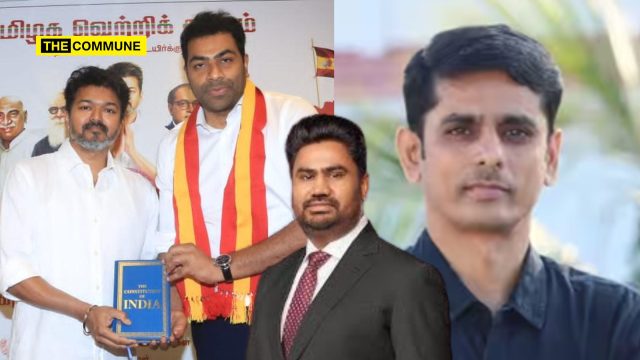
Aadhav Arjuna, initially known as the son-in-law of businessman Lottery Martin, has in recent years developed a separate political profile as an election strategist. After earlier stints with the DMK and later the Viduthalai Chiruthaigal Katchi (VCK), from which he was expelled following internal disputes, he is now active in actor Vijay’s Tamilaga Vettri Kazhagam (TVK). The party has appointed him as its General Secretary for Election Campaign Management.

As TVK intensifies preparations for the 2026 Tamil Nadu Assembly elections, party insiders described Aadhav Arjuna as a key figure in the campaign’s organisational structure. However, his long-running conflict with Lottery Martin’s son Charles Martin has resurfaced in public.

In an interview to a private television channel, Charles Martin stated that Aadhav Arjuna, along with John Arokiyasamy, had been sent with the intention of isolating Vijay within his own party and weakening TVK’s prospects.

Charles said some political observers believed the two were planted by the DMK to cause internal disruption. He said that the manner in which Aadhav Arjuna handled a recent interview ended up harming TVK’s public image more than that of the DMK.

Charles also alleged that Aadhav Arjuna initially appeared to be moving towards an alliance framework involving strategist Prashant Kishor but later announced that such an arrangement would not proceed. He suggested that the sudden involvement and withdrawal of Kishor created confusion and raised questions about Aadhav’s political intentions. According to him, such situations required caution, as political conspiracies were common.

Explaining the origins of his dispute with Aadhav Arjuna, Charles said tensions began when Aadhav married into the family and allegedly tried to position himself to control their business interests. He said this created a split between him and his father for two years. He further claimed that Aadhav attempted to create internal frictions within DMK leadership circles before being removed from the party.

Charles alleged that Aadhav Arjuna employed similar methods after joining VCK, where he was also expelled after disagreements with senior leaders. He further said Aadhav was now trying to assert dominance within TVK and that his past behaviour suggested a pattern of using positions of influence for personal advancement rather than ideological commitment.

He claimed Aadhav pursued political posts primarily for authority and financial gain and referred to allegations of attempts to acquire SIPCOT land during Aadhav’s brief stint with the DMK. Charles said such motives raised concerns about the direction in which TVK might move if it relied heavily on Aadhav’s political advice.

Charles Martin said Aadhav Arjuna was now using similar methods within TVK and alleged that his actions posed greater damage to TVK than they did to the DMK. He said that, based on Aadhav’s past conduct, TVK risked being weakened ahead of the 2026 elections.

When asked if Vijay will achieve his goal of becoming Chief Minister and rewrite history, and whether this will be possible under the guidance of Aadhav Arjuna, Martin said, “Honestly, frankly speaking, it’s not such an easy or possible thing. If you look at it, Chiranjeevi was a huge actor, a superstar in Telugu cinema, and he managed to get about 15–16% vote share at the time. Even though he secured that vote share, he still couldn’t form a government. I think he won just four seats—I’m not exactly sure. So, looking at that, even MGR didn’t win power in his first term. There is a step-by-step path for growth; only that process is feasible, not immediate power as some expect. That’s why I say these people are giving the wrong guidance—Aadhav Arjuna and John Arokiyaraj have probably been implanted. There are allegations against some people that they took money. And after taking the money, they have tried to distance and deceive [Vijay] in this field with such intentions, according to some conspiracy theories. Only if we analyse it further, we can tell for sure.”

(Source: Samayam Tamil)

Subscribe to our channels on WhatsApp, Telegram, Instagram and YouTube to get the best stories of the day delivered to you personally.

“India’s News Channels Worst In The World”, Say DMK-Communist Stooge N. Ram, The Goebbels Of Stalin’s Dravidian Model

N Ram, the ‘veteran journalist’ and chairman of The Hindu Group, and also a card-carrying Communist, recently delivered a scathing indictment of Indian television news during his interview with Karan Thapar for The Wire. With the air of a seasoned professor lecturing errant students, he catalogued its sins: sycophancy, biased coverage, lack of scrutiny, and a descent into becoming a propaganda machine. His analysis was sharp, his tone, dismissive. There’s only one problem: the mirror he so confidently holds up to “Hindi/national” media reflects a strikingly similar image in his own backyard – an image in which he is not a mere observer, but a central character.

His checklist of sins is precise. But this mirror he holds up to the Hind/national media reflects a damning image back at his own turf—the Tamil Nadu media space where Ram is not a critic, but an established pillar.

On Sycophancy and Nexus: The Pot Calls the Kettle Black

Ram scorns national media for cutting live to rallies with “sycophancy without a shadow of a doubt.” Where is this scrutiny for Tamil Nadu’s channels, which operate on a simple binary: fawning loyalty to the ruling DMK or slavish devotion to the opposition AIADMK?

The “nexus between big media houses and the government” he identifies in Delhi is a textbook definition of the Chennai media-political complex. To lament this nexus while being a central figure in a media group often perceived as leaning towards the state establishment is the height of selective outrage.

Guess who is TN CM Stalin’s walking partner? Well, you may have seen this image often.

On Failure to Criticize: A Local Silence He Chooses Not to Hear

Ram accuses national media of failing to challenge communal “dog whistles” and of being “soft on government, harsh on opposition.” In Tamil Nadu, the script is simply flipped when it comes to centre vs state and replicated when it comes to reporting on the state. The local media is often relentlessly critical of the BJP-led Centre, while the “purposeful interrogation” Ram demands for Narendra Modi is conspicuously absent for Tamil Nadu’s Chief Minister.

He asks why the media did not attack the Election Commission’s “arrogant” responses. But where is his own outlet’s relentless crusade against the Tamil Nadu government’s own institutional opacities or allegations of corruption? The bias is for a different team, but the failure of scrutiny is identical.

On Ignoring People’s Issues: The Tamil Nadu Blackout

Ram laments that national media focused on “Modi vs Rahul” instead of “unemployment” and “education.” Yet, Tamil Nadu media is often dominated by the same political soap operas – AIADMK’s internal squabbles, film star entries, and caste calculations. Where is the relentless focus on the state’s own unemployment crisis or the quality of its social schemes? The drama is local, but the neglect of public issues is just as profound.

On Poor Debates and Lack of Analysis: A Tamil Translation of Tutu-Mein-Mein

The “tutu-mein-mein” shouting matches he derides have a perfect Tamil translation. Tamil news debates are spectacles of high-decibel theatrics, where little light is shed. Well, he can talk to his fellow partners at the Press Club and get better debates organised. And on his point that media did not analyze party manifestos, where is the forensic analysis in Tamil media on the fiscal feasibility of the state’s notorious freebie culture?

The Unasked Question: Why Does Ram’s Critique Stop at the Vindhyas?

Ram says Indian media functions as a “propaganda machine rather than independent media” and is about “manufacturing consent.” This is not a Hindi/national media phenomenon; it is exactly the same in his backyard too. The consent is just manufactured for a different political project.

The most poignant question for Ram is the one his entire lecture avoids: Why did his profound critique stop at the banks of the Yamuna? Why not closer home, near the Cooum?

A true champion of journalistic integrity would have the courage to turn the lens inward. Until he does, his words are not a diagnosis—they are a performance of selective sanctimony. He is quick to point out the “sycophancy” in his neighbor’s house while ignoring the identical “nexus” in his own.

N. Ram’s tirade against “propaganda media” is the height of irony — a sermon on virtue from the pulpit of hypocrisy. A lifelong DMK-Communist stooge masquerading as a moral guardian of journalism, he has whitewashing Stalin’s draconian regime while sermonising about media ethics. In spirit and substance, he is Goebbels of the Dravidian Model.

Subscribe to our channels on WhatsAppTelegram, Instagram and YouTube to get the best stories of the day delivered to you personally.

How Halloween Is Choking The Planet

The Halloween Waste Audit: 11 Incidents Expose a Global Seasonal Pollution Problem

Behind the fun and fright of Halloween lies a growing environmental nightmare. From 2022 to 2024, celebrations have generated staggering amounts of plastic, textile, and food waste, creating a significant ecological footprint.

This report details 11 major incidents that expose how single-use costumes, discarded pumpkins, and plastic decorations are turning the festive season into a source of severe pollution and resource wastage across the globe.

#1 US Halloween Creates 5 Million kg of Textile Waste

Halloween 2025 in the US celebrations generated an environmental crisis, with an estimated 35 million discarded costumes contributing to over 5 million kilograms of textile waste — equivalent to 83 million plastic bottles. Most costumes were made from polyester and petroleum-based plastics, worn once and thrown away. Along with candy wrappers and plastic decorations, these non-recyclable materials have ended up in landfills, worsening pollution levels. Environmental experts blame single-use consumer habits and mass retail production of low-cost, synthetic costumes for driving the surge in waste, urging stricter recycling regulations and promotion of sustainable, reusable Halloween products.

#2 UK’s £1 Billion Halloween Market Fuels Plastic Crisis

The UK’s Halloween market, worth over £1 billion, generated an environmental crisis with 2,000 tonnes of plastic waste. Studies revealed that 83% of costumes contained non-recyclable, oil-based plastics, and 46 million disposable items were discarded after a single use, making Halloween the country’s largest source of plastic waste from a single annual event.

#3 Over 1 Billion Pounds of US Pumpkins Wasted

Post-Halloween 2024, the United States discarded more than 1 billion pounds of pumpkins, most of which ended up rotting in landfills. According to the U.S. Department of Energy, this decomposition process releases large amounts of methane, a potent greenhouse gas. Despite being edible, most pumpkins used for carving were thrown away instead of being composted or repurposed.

#4 Guernsey’s “Scary” Pumpkin Waste Problem

In Guernsey in 2025, thousands of pumpkins were discarded after Halloween festivities, with their edible parts needlessly thrown away. Local waste officials described a “scary amount” of organic waste, compounded by single-use plastics from sweets and costumes. Despite advisories to compost and reuse, most materials ended up as general waste.

#5 UK Wastes 18,000 Tonnes of Edible Pumpkins

The UK wasted approximately 18,000 tonnes of pumpkins after Halloween, as 95% of the 10 million pumpkins grown for decoration were discarded. These pumpkins, often carved into lanterns, decomposed in landfills and released methane gas. This trend highlighted a severe issue of seasonal food waste directly linked to the festival.

#6 Ireland’s €3.7 Million Halloween Food Waste

A survey in Ireland revealed that Halloween celebrations led to an estimated €3.7 million worth of food being wasted. Causes included food going off before use (45%), bulk buying (30%), and poor meal planning (24%). Despite rising grocery prices, significant food waste persisted, with 87% of consumers expressing concern.

#7 Australia’s Growing Halloween Waste Problem

Halloween 2024 in Australia generated significant plastic and food waste, with A$430 million spent on single-use costumes, sweets, and decorations. Environmental experts also warned that fake cobweb decorations posed threats to wildlife, underscoring the festival’s expanding ecological impact in the country.

#8 Illegal Bonfires Cause Toxic Pollution in Ireland

In Clare County, Ireland, illegal Halloween bonfires burned waste materials like wood and furniture, releasing toxic fumes and creating environmental pollution. These unregulated fires, fueled by household and business waste, resulted in significant illegal disposal and debris, challenging local authorities.

#9 Mounting Pumpkin and Plastic Waste in UK and US

Halloween 2024 saw 18,000 tonnes of pumpkins wasted in the UK and over 1 billion pounds in the US, releasing harmful methane in landfills. Plastic wrappers from sweets and decorations also contributed heavily to non-recyclable waste, with each trick-or-treating child generating about 0.5 kg of trash.

#10 Hazardous Battery Waste Surge in UK

The UK saw a dangerous surge in lithium battery waste from Halloween vapes and electronic decorations. Improper disposal caused 1,200 fires in waste facilities in 2023. Damaged lithium-ion cells can ignite, posing severe health, safety, and environmental hazards due to irresponsible post-festival disposal.

#11 £32.6 Million Pumpkin Waste in the UK

In the UK, 22.2 million out of 39.9 million pumpkins bought for Halloween were wasted, resulting in a £32.6 million food loss. Perfectly edible pumpkins rotted in landfills, emitting methane. Additionally, 800,000 apples were discarded daily, often after apple-bobbing, fueled by social media trends and limited food redistribution efforts.

Subscribe to our channels on WhatsApp, Telegram, Instagram and YouTube to get the best stories of the day delivered to you personally.

The New Face Of Terror In India: White-Collar Islamist Sleeper Cells

The recent Faridabad explosives haul and the Red Fort car blast are not isolated events. They are connected parts of a dangerous new strategy being used by Pakistan’s ISI to create terror within India. Instead of relying only on cross-border militants, they are now building secret “sleeper cells” inside the country, and they are deliberately recruiting educated professionals like doctors to lead them.

What is a Sleeper Cell?

Think of a sleeper cell as a secret team of terrorists that stays hidden and inactive for a long time, sometimes years. They live ordinary lives until they receive orders to carry out an attack.

Pakistan’s New Game Plan

After a successful Indian counter-terror operation (Operation Sindoor) in May against the group Jaish-e-Mohammed (JeM), Pakistan’s ISI and JeM have changed their approach. Intelligence reports reveal they are now building four specialized types of sleeper cells:

Logistical Cells: These handle fake IDs, SIM cards, and hideouts.

Financial Cells: These move money through charities and businesses to fund operations and buy materials like chemicals for bombs.

Ideological Cells: These use encrypted apps and social media to radicalize Indian youth. They spread propaganda about Muslims being suppressed to brainwash them.

Operational Cells: These are the action teams that carry out attacks. They now specifically recruit highly skilled people, like doctors and engineers, because they are the “least suspicious.”

The Faridabad-Red Fort Connection

The recent arrests show how this new system works.

Who are the Recruits?

The key arrested individuals are Indian nationals – doctors like Dr. Muzammil Sheikh, Dr. Adil Ahmed, Dr. Shaheen Shahid, and an Imam named Ishtiyaq.

What is the Process?

They were first slowly brainwashed online (cognitive conditioning) with propaganda. Their communication was kept secret through a “compartmentalization” method, meaning each person only knew a few others, so the whole network wouldn’t collapse if one was caught.

What were their Roles?

Dr. Muzammil used his position at a medical college to store huge amounts of ammonium nitrate for making bombs.

Dr. Shaheen handled the logistics, like arranging vehicles.

Imam Ishtiyaq was a recruiter, radicalizing other professionals.

The Attack?

The Red Fort blast was a “fidayeen” or suicide attack, which is the current preferred method to cause maximum damage.

The “White-Collar Terror” Ecosystem

This is the most alarming shift. Terror groups are now creating a “white-collar terror ecosystem.” They are targeting doctors and other educated professionals because:

They are smart and can handle complex tasks like building bombs.

They have access to dangerous chemicals and materials through their jobs.

No one would suspect a respected doctor of being a terrorist.

This raises a terrifying possibility: if they can get materials for bombs, they could also potentially get materials for biological weapons in the future.

Plausible Deniability: Hiding Behind Al-Qaeda

To avoid blame, Pakistan’s ISI is using a clever trick. They are using a group called Ansar Ghazwat-ul-Hind, which is linked to Al-Qaeda. This allows the ISI to say, “We are not responsible; it’s Al-Qaeda.”

In reality, this group is made up of former members of ISI-backed groups like JeM and Lashkar-e-Taiba (LeT). So, the ISI provides the logistics through JeM sleeper cells, while Ansar Ghazwat-ul-Hind handles the brainwashing and recruitment of Indians. This creates a “homegrown” terror module that Pakistan can deny any connection to.

What to Expect Next

The Red Fort attack is likely just the beginning. Security agencies warn that this new model of “homegrown, white-collar terrorism” is a major emerging threat. As the National Investigation Agency (NIA) continues its raids, more of these sleeper cells are expected to be uncovered. The danger is now increasingly coming from within, making it a more complex and challenging fight for India’s security forces.

Subscribe to our channels on WhatsAppTelegram, Instagram and YouTube to get the best stories of the day delivered to you personally.
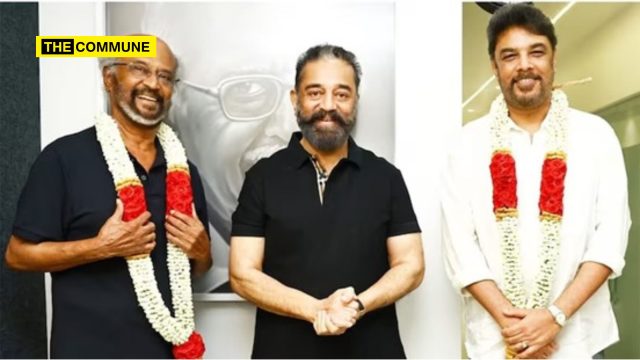
The 20 Biggest RDX & Ammonium Nitrate Seizures That Expose Deep Terror Web In India

In a joint operation, the Jammu & Kashmir and Haryana Police uncovered a major terror module in Faridabad, seizing over 2,900 kilograms of suspected ammonium nitrate along with a cache of arms and ammunition. The materials were traced to individuals linked to a local medical college, officials said.

Among those arrested were Dr. Muzamil Shakeel and Adil Ahmed, while a woman doctor was detained after investigators recovered a Krinkov rifle from her car. Authorities said the operation was part of an ongoing investigation into a wider network suspected of sourcing explosives and weapons for planned terror strikes.

In this report, we have compiled 20 major RDX and ammonium nitrate seizures in India between 2000 and 2025, involving Islamist and Naxal-linked groups. The dataset summarises dates, locations, quantities seized, and key operational details from police and counterterrorism records, highlighting persistent security vulnerabilities and the scale of explosive trafficking across states.

#1 Major Explosives Haul: 2,900 kg Chemical Seized from Faridabad Doctors – 09 November 2025

In a significant crackdown in Faridabad, Haryana, police busted a terror module linked to medical professionals. The operation led to the seizure of over 2,900 kg of suspected ammonium nitrate. Authorities arrested Dr. Muzamil Shakeel and Adil Ahmed, while Dr. Shaheen Shahid was detained after a Krinkov assault rifle was found in her car. The massive quantity of explosives, recovered from locations connected to the accused doctors, highlighted a sophisticated network operating within the country, raising serious concerns about the infiltration of terror elements into professional sectors.

#2 Punjab Police Thwart BKI Plot, Seize 2.5 kg RDX IED – 09 October 2025

Jalandhar police dismantled a Babbar Khalsa International (BKI) terror module, seizing a 2.5 kg RDX-based Improvised Explosive Device (IED), a remote control, and a motorcycle. The module was allegedly operated under the direction of UK-based handlers Nishan Jaurian and Adesh Jamarai, and BKI mastermind Harwinder Singh alias Rinda. Intelligence inputs indicated the IED was intended for a specific terror attack. The accused, Gurjinder Singh and Deewan Singh, were arrested and booked under the Unlawful Activities (Prevention) Act and the Explosive Substances Act.

#3 Rajasthan Police Uncover 2,075 kg of Explosives in Abandoned Vehicle – 11 May 2025

Police in the Bassi area of Jaipur Rural, Rajasthan, discovered a suspicious abandoned pickup truck near Mohanpura bridge. A search revealed a massive cache of 2,075 kilograms of explosive material, including ammonium nitrate and Opti Star explosive. The vehicle was registered to an individual from Bhilwara who, along with the driver, remained untraceable. The discovery of such a large quantity of explosives in a public area caused alarm, prompting police to seize the vehicle and inform the Petroleum and Explosives Safety Organisation (PESO).

#4 1.16 kg RDX IED Safely Defused in Haryana – 22 September 2022

A potentially devastating incident was averted in Katthal, Haryana, after a 1.16 kg IED packed with RDX was found placed inside an iron box near Kainchi Chowk. The discovery was made based on a tip-off. The Special Task Force immediately secured the area and summoned the bomb disposal squad, which safely defused the explosive. A case was registered under the Explosive Substances Act, though the perpetrators remained unknown, underscoring the persistent threat of hidden explosive devices in public spaces.

#5 Gurdaspur Police Seize 1 kg RDX, Uncover LeT Links – 01 December 2021

In an operation in Dinanagar, Gurdaspur, Punjab Police seized 1 kg of RDX. The accused, Sukhwinder Singh, revealed during interrogation that he had planted the explosive and admitted to having links with Pakistan-based entities. The highly explosive RDX was capable of causing destruction within a 50-meter radius. The arrest led to ongoing investigations to determine connections with other suspects and to verify the extent of the network’s links across the border.

#6 Major Cache of 71 Grenades, 24 kg RDX Destroyed in Reasi – 26 November 2021

Security authorities in Reasi, Jammu & Kashmir, safely destroyed a massive stockpile of explosives that had been seized over the years in anti-terror operations. The cache, stored in police custody, included 71 hand grenades, 24 kg of RDX, detonators, IED fuses, and remotes. After seeking necessary permissions from various courts, the police carried out a controlled destruction of the materials to prevent any accidental blast, drawing a line under several terror cases registered since 2009 in the Mahore-Chassana belt.

#7 12 kg RDX, Ammonium Nitrate Recovered from Jungle Hut in Palghar – 05 November 2016

A significant stock of explosives, including 12 kg of RDX, two packets of ammonium nitrate, 40 gelatin sticks, and 39 detonators, was unearthed from an abandoned hut in a jungle near Satavli village, Palghar. The materials, packed in black plastic bags, were found buried, suggesting long-term storage for potential large-scale blasts. The Mumbai Crime Branch and ATS recovered the cache based on specific intelligence and sent the evidence for forensic analysis to trace the source network.

#8 Over 40 kg Explosives Found Near Atomic Plant in Palghar – 27 October 2016

In a high-stakes operation, the Anti-Terrorism Squad (ATS) recovered over 40 kg of explosives, including RDX, gelatine, detonators, and white and black powder, from an abandoned Public Works Department building in Manor, Palghar. The location’s proximity to the Tarapur Atomic Power Station raised grave concerns, as the explosives were reportedly intended for terrorist activities. Acting on a tip-off, ATS teams used dog squads to locate and safely remove the materials, which were then sent for forensic examination.

#9 RDX from Udgir House Matches German Bakery Blast Evidence – 07 July 2012

Explosive material identified as RDX was seized from the residence of Mirza Himayat Inayat Baig in Udgir, Maharashtra. A sniffer dog confirmed its presence, and subsequent forensic analysis by the National Chemical Laboratory established that the seized RDX matched the components used in the infamous Koregaon Park German Bakery blast in Pune. This critical evidence was presented in court, linking the accused directly to the major terror attack.

#10 Maoist Hideout in Bihar Yields 1 kg RDX, 45 Grenades – 09 May 2012

Following a tip-off, police conducted a combing operation in the Banka forest of Bihar and discovered a Maoist hideout near Bagadhsawa village. The hideout contained a significant arsenal, including 1 kg of RDX, 45 grenades, 2 rifles, 2 can bombs, and empty cartridges. The Maoists managed to escape before the police arrival. All explosives and weapons were seized, and search operations continued in the surrounding forest areas to neutralize the threat.

#11 Security Forces Foil Attack on Kailash Yatra, Recover 3 kg RDX – 31 August 2008

Security forces averted a major tragedy on the Kailash Yatra route in Doda, Jammu & Kashmir, by busting a militant hideout in the Ramtandu area. The recovery included 3 kg of RDX, a .303 rifle, an AK magazine, ammunition, detonators, and 30 kg of ration. The materials indicated a planned attack on the annual pilgrimage, which attracts over 50,000 devotees. The timely sanitization operation prevented potential mass casualties.

#12 Delhi Police Nab LeT Trio with 2 kg RDX Near Red Fort – 20 December 2006

In a significant operation, Delhi Police’s Special Cell arrested three individuals from Manipur with alleged links to Lashkar-e-Taiba (LeT) near the Red Fort. The trio was found carrying 2 kilograms of RDX, two detonators, and a hand grenade after alighting from a Jammu-bound bus. Officials claimed they were planning blasts in crowded Delhi markets, marking a concerning instance of LeT recruiting from India’s northeastern states. The accused were arrested and the explosives seized.

#13 J&K STF Unearths Massive 200 kg RDX Cache in Ramban – 04 November 2006

A major terrorist hideout was unearthed by the J&K Special Task Force in Ramban, containing a massive 200 kg of RDX and 60 detonators, along with 25 kg of fuse wire. The hideout was strategically located near a school. In a separate recovery in Udhampur, additional weapons and 3 kg of explosives were found. Two militants were arrested, while a Hizb-ul Mujahideen commander absconded.

#14 1.5 kg RDX Recovered from LeT Terrorists in Delhi’s Mahipalpur – 11 December 2006

Delhi Police arrested two Kashmir-based Lashkar-e-Taiba terrorists, Guizar Ahmed and Mohd Amin, in the Mahipalpur area. A search led to the recovery of 1.5 kg of RDX, two detonators, and Rs. 2 lakh in cash from their possession. The duo was moving suspiciously when intercepted. The Special Cell took them into custody and began interrogations to uncover their plans and contacts within the national capital.

#15 Army Recovers 25 kg RDX Buried Near Kishtwar Temple – 09 October 2006

During a sanitization operation in Kishtwar, Jammu & Kashmir, army troops recovered 25 kg of RDX and detonators buried in a field near the Sukrala Temple. Intelligence suggested that terrorists planned to use the explosives to target the temple during its annual festival. The timely recovery by security forces ensured the festival proceeded without incident, averting a potential disaster.

#16 Joint Operation Nets 35 kg RDX, IEDs in J&K’s Doda and Kathua – 21 January 2006

In a coordinated effort, security forces recovered 35 kg of RDX in Jammu & Kashmir. In Doda’s Deribagh village, a furnished underground hideout yielded 25 kg RDX, AK rifles, and a remote-control IED. On the Budhi-Nagrota-Ghati road in Kathua, three IEDs containing 10 kg of RDX were found in a bag. Two individuals, Mohammad Subhan and Akhtar Nabaz, were arrested for aiding militants. The bomb squad neutralized the IEDs, preventing a major attack.

#17 76 kg RDX Recovered from Bus and Fields in Bhaderwah – 04 January 2006

A massive haul of 76 kg of RDX was recovered in Bhaderwah, Doda. During a routine check in the Pranu area, 48 kg was found hidden in a bag under a bus seat. Subsequently, based on a tip-off, another 28 kg was unearthed from nearby fields. The bus driver and conductor were arrested, and passengers were questioned, revealing a significant operation for moving and storing high-grade explosives.

#18 35 kg LeT RDX Consignment Unearthed in Gujarat’s Kutch – 18 December 2001

In Kutch, Gujarat, a joint team of police and Border Security Force personnel recovered a 35 kg RDX consignment buried in the Ram of Kutch, linked to Lashkar-e-Taiba. The cache also included an AK-56 rifle, detonators, grenades, and remote control devices. The arrested accused, Muzamil Shahnawaz Husain, disclosed that the explosives were buried by a four-man team, with two returning to Pakistan.

#19 CBI-ATS Joint Op Recovers 5.2 kg RDX, Grenades in Patan – 17 December 2001

A joint operation by the CBI and the Anti-Terrorist Squad in Patan, Gujarat, led to the recovery of 5.2 kg of RDX, 10 hand grenades, grenade-launching rifles, a rocket, mines, pistols, and electronic timers. The materials were buried in a pit near Santalpur. Incriminating evidence, including a ‘Lashkar-e-Taiba’ letterhead and Pakistani newspapers, pointed to a cross-border connection. All items were seized for investigation.

#20 ISI Agent Held in Delhi with 10 kg RDX, Secret Letters – 05 December 2000

Military Intelligence and Delhi Police’s Special Cell arrested Khalid Mehmud, an alleged ISI agent, in Badarpur, South Delhi. From his possession, they recovered 10 kg of RDX, two AB timers, two detonators, and several letters containing sensitive information written in secret ink. A native of Lahore, Mehmud had been gathering intelligence on army movements and infrastructure since 1999. He was taken into custody, and the explosives and letters were seized.

Subscribe to our channels on WhatsAppTelegram, Instagram and YouTube to get the best stories of the day delivered to you personally.
“Biryani Is Ready For Daawat”: Probe Uncovers Encrypted Code Used By Delhi Blast Terror Suspects

Delhi Blast Terror-Accused ‘Dr’ Shaheen Saeed Says Umar Discussed ‘Multiple Attacks’; Explosives Stockpiled For Two Years terror code biryani daawat

New details emerging from court records and investigative reports indicate that the suspects in the recent Delhi blast used food-related codewords to coordinate the attack. According to officials, the terms “Daawat” (feast) and “Biryani” were repeatedly used in encrypted chat exchanges to refer to the explosion and the explosives, respectively.

Investigators say the coded communication was allegedly orchestrated by Dr. Shaheen Saeed, a Lucknow-based woman who is now believed to have played a central role in the conspiracy. Agencies describe her as “highly cunning,” with evidence pointing to her involvement in planning and directing multiple aspects of the operation.

A key message recovered from the suspects’ chat box reads: “Biryani is ready for the Daawat,” which agencies say meant that the explosives had reached their intended location. This message, sent on 13 July 2025, is believed to be Shaheen’s final communication related to the plot. No replies were found after that point.


View this post on Instagram


A post shared by WION (@wionews)

Investigators assert that several other messages exchanged among the accused reveal details of ongoing preparations and movements leading up to the attack. Police teams and central agencies are currently interrogating the arrested suspects and tracing other individuals who may have been connected to them.

Searches are underway to determine whether additional codewords or communication channels were used. Authorities say further revelations are expected as the probe progresses.

Subscribe to our channels on WhatsAppTelegram, Instagram and YouTube to get the best stories of the day delivered to you personally.