Home Blog Page 337

Calling Out Part-Time Politician TVK Vijay’s Shameless Hypocrisy On Waqf Lands Vis-à-Vis Hindu Temple Lands

Tamilaga Vettri Kazhagam (TVK) leader Thiru. Vijay, a self-proclaimed champion of Tamil pride, stands exposed as a hypocrite while Tamil Nadu’s heritage burns under the weight of Waqf Board overreach. Despite TVK’s much-touted legal challenge against the Waqf Amendment Act, 2025, which Vijay hailed as a victory for constitutional justice, his silence on the Waqf Board’s insidious land grabs targeting Hindus, Christians, and Muslims alike is nothing short of a betrayal. As a Tamil citizen, I confront Vijay with five piercing questions that lay bare his selective activism and demand answers—answers that Tamil Nadu’s beleaguered citizens deserve.

Temple Lands Under Siege: Where Is Your Voice, Vijay?

Why has Vijay turned a blind eye to the Waqf Board’s illegal encroachments on temple lands, such as Kanchipuram’s 5,000 acres or Madurai’s Meenakshi Temple estates? Court orders for reclamation have languished, yet Vijay, who claims to champion Tamil heritage, remains mute. If the Waqf Board can overreach, what stops the HR&CE Department from asserting control over 36,000 Tamil Nadu temples—an act that violates the same principles Vijay claims to defend? His silence on this strangulating grip on Hindu sanctuaries is a slap in the face to Tamil Nadu’s spiritual legacy.

HR&CE’s Overreach and DMK’s Cultural Assault: Why No Outrage?

The HR&CE Department’s control over Tamil Nadu temples isn’t the only assault on the state’s identity. The DMK’s amendments to seize temple arts colleges and properties—vital to Tamil Nadu’s cultural heritage—have sparked no outrage from Vijay. Why does he remain silent while the DMK erodes Tamil Nadu’s spiritual legacy? His inaction contrasts starkly with his vocal opposition to the Waqf Amendment Bill, revealing a cherry-picked activism that prioritizes optics over substance.

Double Standards on Temple Boards: Hypocrisy Laid Bare

Vijay decried non-Muslims on Waqf Boards as unconstitutional, yet he has nothing to say about government-appointed non-practicing Hindus, Christians, and Muslims managing temple boards—a clear violation of religious self-governance. In Andhra Pradesh in 2018, 44 non-Hindu employees, including Christians, were found working in the sacred Tirumala Tirupati Devasthanams (TTD). In 2015, a Muslim served on the TTD Board, outraging devotees. These appointments flout TTD’s Hindu-only policy, yet Vijay, who claims to stand for justice, has offered no condemnation. His selective outrage mirrors the Waqf Board issue he opposes, exposing a glaring double standard.

Waqf’s Land Grabs: A Selective Crusade?

Has Vijay ever scrutinized the Waqf Board’s disproportionate land claims, annexing properties without transparent notification? Section 40 of the Waqf Act, 1995, empowered Waqf Boards to unilaterally declare any property as Waqf based on mere “reason to believe,” without requiring documentary proof. This unchecked power, fueled by the “Waqf by user” provision, enabled Waqf Boards to claim private, ancestral, and public lands, often ignoring legal titles and sparking communal tensions. Between 1913 and 2025, Waqf land holdings ballooned from 18 lakh to 39 lakh acres, with 21 lakh acres added post-2013 due to Section 40’s draconian reach. Critics, including Union Minister Kiren Rijiju, have called it “draconian,” yet Vijay’s crusade against the Waqf Amendment Bill ignores these prior abuses. Why this selective activism?

Three Egregious Cases Vijay Ignored

Section 40’s misuse fueled some of the most shameful Waqf claims, yet Vijay, the self-styled champion, remained mute:
Munambam, Kerala (2019): The Waqf Board claimed 400 acres in Munambam, Ernakulam, including a 300-year-old temple, homes, and schools, based on a flimsy 1950s donation claim. Over 600 families holding pattas since the 1960s were declared “encroachers” without a hearing, leaving them in despair. A temple predating the Waqf claim was targeted—an affront to Hindu heritage. Vijay, where was your outrage for Munambam’s Hindus?

Kattukollai, Vellore, Tamil Nadu (April 2025): Ancestral lands in Kattukollai were snatched by the Waqf Board, claiming them as Waqf property since 1954 under Section 40. The Syed Ali Sultan Shah Dargah issued eviction notices to 150 families with registered deeds, ordering them to pay rent or vacate. The Board’s inquiry ignored documentation, sparking protests and communal discord. Vijay, you tout constitutional fairness—why no word for Kattukollai’s Tamils?

Thiruchendurai, Tiruchirappalli, Tamil Nadu (2022): The Tamil Nadu Waqf Board claimed 1,500-year-old Chola-era Sundareswarar Temple land in Thiruchendurai, along with 480 acres, under Section 40. Farmer Rajagopal, seeking to sell his 1.2-acre plot, was told to get Waqf approval based on a 245-page circular claiming the village as an 18th-century “inam” gift. Villagers’ pattas and the temple’s sanctity were dismissed. Vijay, if Waqf’s overreach is unconstitutional, why no defense of this Hindu shrine?

A Legacy of Opportunism

Vijay’s crusade on Waqf Boards rings hollow when he ignores non-Hindus managing Hindu temples—Christians and Muslims in TTD and Bengal, where Mamata Banerjee appointed a Muslim to head the Tarakeshwar Temple Development Board, prioritizing politics over faith. Munambam, Kattukollai, and Thiruchendurai suffered under Waqf’s arbitrary claims, enabled by Section 40’s corruption, yet Vijay cherry-picks his battles. His selective activism fractures Tamil unity and betrays the heritage he claims to protect.

If Vijay truly stands for justice, he must confront all wrongs—non-Hindu temple appointees, Waqf’s overreach, and the DMK’s cultural seizures—with equal zeal. Otherwise, his legacy will be one of opportunism, cheering one victory while Tamil Nadu’s soul bleeds. The shame of his hypocrisy demands an answer.

S Sundar Raman is a Chartered Accountant and the Vice President of BJP Tamil Nadu’s Thinker’s Cell

Subscribe to our channels on TelegramWhatsApp, and Instagram and get the best stories of the day delivered to you personally.

DMK’s Federalism Push Through Kurian Joseph Committee: Stalin’s Soft Secessionist Gambit Disguised As Constitutional Reform?

Tamil Nadu Chief Minister MK Stalin recently announced the formation of a high-level committee headed by retired Supreme Court Justice Kurian Joseph to examine state autonomy and center-state relations. The panel includes former bureaucrat Ashok Vardhan Shetty, economist M. Naganathan, and official T.S. Tirunavukkarasu. Ostensibly created to “safeguard the rights of states” and “rebalance” India’s federal structure, the move reveals more about the DMK’s electoral strategy than any genuine desire for reform.
The committee is expected to submit its report by January 2026—just ahead of the Lok Sabha elections. This timing is no coincidence. The DMK appears to be laying the groundwork for a campaign narrative centered on “defending Tamil rights” against perceived central overreach.

Historical Context: The Rajamannar Legacy

Stalin explicitly referenced the Rajamannar Committee of 1969, established by his father and former Chief Minister M. Karunanidhi. That committee, headed by former Madras High Court Chief Justice P.V. Rajamannar, proposed a radical overhaul of India’s federal system, including the abolition of All India Services, dismantling of the Planning Commission, and deletion of constitutional provisions such as Articles 356, 357, and 365.

These weren’t prudent reforms but a blueprint for fragmentation – a systematic attempt to weaken central authority to the point of creating a confederation rather than a federation. Unsurprisingly, the Central government rejected these proposals as both impractical and dangerously divisive, recognizing them for what they were: not a strengthening of federalism but a fundamental assault on the Union itself.

Identity Politics Disguised As Federalism

Stalin’s metaphor in the Assembly—that “only a mother knows what to feed her child, not someone from Delhi”—resurrects the old Dravidian binary of Tamil Nadu versus India. His strategic highlighting of grievances—GST compensation, NEET, and funding disputes—is not about governance efficacy. It’s about recasting routine federal friction as existential victimhood.

Most revealing is Stalin’s portrayal of the impending delimitation process as a “punishment” for Tamil Nadu’s population control success. This mischaracterization frames a constitutional necessity as ethnic or regional persecution, further stoking Tamil exceptionalism. Every disagreement becomes a symbol of oppression; every policy debate is turned into a cultural grievance.

Political Motivations And Timing

It can be argued the committee’s formation is more about political positioning than constitutional reform. With the report due just before the 2026 Lok Sabha elections, the DMK seems to be setting up a potent campaign narrative centered on “defending Tamil rights” against perceived central overreach.

The political context is significant: the opposition AIADMK has aligned with the BJP, creating an opportunity for the DMK to position itself as the sole defender of Tamil interests against national parties. By establishing this committee with judicial backing, Stalin can elevate policy disagreements to constitutional grievances.

The Judiciary Cover

The appointment of Justice Kurian Joseph as committee chair adds a layer of judicial legitimacy—but also controversy. Joseph has publicly questioned the Supreme Court’s motto, “Yato Dharmastato Jayah,” suggesting instead “Satyameva Jayate.” His recent statements hint at ideological sympathies with the DMK’s framing of center-state issues. This bolsters the perception of a predetermined outcome: a panel set up to validate an already scripted political narrative.

What Powers Do States Actually Lack?

It’s worth asking: what autonomy do states genuinely lack today? Local governance remains under state control. State governments already enjoy significant powers over service appointments, legislation, and education. As with the recent Supreme Court orders, we can see that the President and Governors are increasingly being compelled to assent to state laws within specific time durations (which is not mentioned in the Constitution itself), and vice chancellor appointments in universities dictated by state governments. Now, the DMK wants more influence over judicial appointments too.

Ironically, decentralization at the panchayat and municipal levels—constitutionally mandated—has been weak, not because of central overreach, but due to state apathy. So, this latest push for autonomy appears less about empowering the people and more about concentrating symbolic power at the state level.

So, what exactly is this new demand for “autonomy”? If anything, the states have gained more institutional clout over time—despite the DMK’s portrayal of being cornered.

Soft Secessionism Under The Federalism Mask

This isn’t merely a demand for fiscal reform or local empowerment. It is soft secessionism—a rhetorical strategy that seeks to redefine Tamil Nadu not as a member of the Indian Union but as an exceptional entity forced to “tolerate” the Centre. It repackages secessionist sentiment in constitutional garb. Even the committee’s language—“rightful entitlements of states”—mirrors the Rajamannar era’s push for a confederal structure. This is not federal reform; it’s a slow drift toward parallel sovereignty.

This also exposes a deeper political irony. The DMK, allied with Congress, frequently accuses the BJP of trying to undermine the Constitution.

If the DMK accuses the BJP of undermining the Constitution, a question naturally arises: Who actually started eroding state rights? During the Emergency, it was the Congress—now a DMK ally—that moved education from the State List to the Concurrent List. If Rahul Gandhi claims the BJP wants to change the Constitution, how does he explain that his own party already did it when it suited them?

And now, Stalin—who regularly invokes Ambedkar’s legacy—is launching a campaign that implicitly critiques Ambedkar’s Constitution for giving the Centre too much power. The contradiction is clear: Is this about restoring federalism, or reinterpreting the Constitution to suit regionalist ambitions?

Constitutional Reform Or Campaign Strategy?

Let’s call this what it is: an election strategy dressed up as constitutional reform. With the AIADMK aligned with the BJP, the DMK is angling to portray itself as the lone Tamil bulwark against “Hindi heartland” domination. By using a committee led by a retired judge, the party preempts criticism—“It’s not us; the committee found the Centre is overreaching.”

But behind this legalistic smokescreen lies a stark political truth: this is not a movement to defend Ambedkar’s Constitution—it’s a plan to reinterpret, dilute, and eventually rewrite it through regional exceptionalism.

So the question remains: Who is truly threatening the spirit of the Constitution? The BJP with its centralizing instincts? The Congress, which mutilated federalism during the Emergency? Or the DMK, repackaging secessionist impulses as state rights advocacy?

Subscribe to our channels on TelegramWhatsApp, and Instagram and get the best stories of the day delivered to you personally.

After Saying “I’ll Urinate On Brahmins”, Left-Leaning Director Anurag Kashyap Offers Hollow Apology

The shameless Bollywood director Anurag Kashyap, who has openly expressed hostility toward the Hindu Brahmin community, has offered a half-hearted apology after facing backlash for his remark about urinating on Brahmins. In response to the outrage, he claimed the statement was taken out of context, though it appeared to stem from a long-standing resentment he harbors against the community.

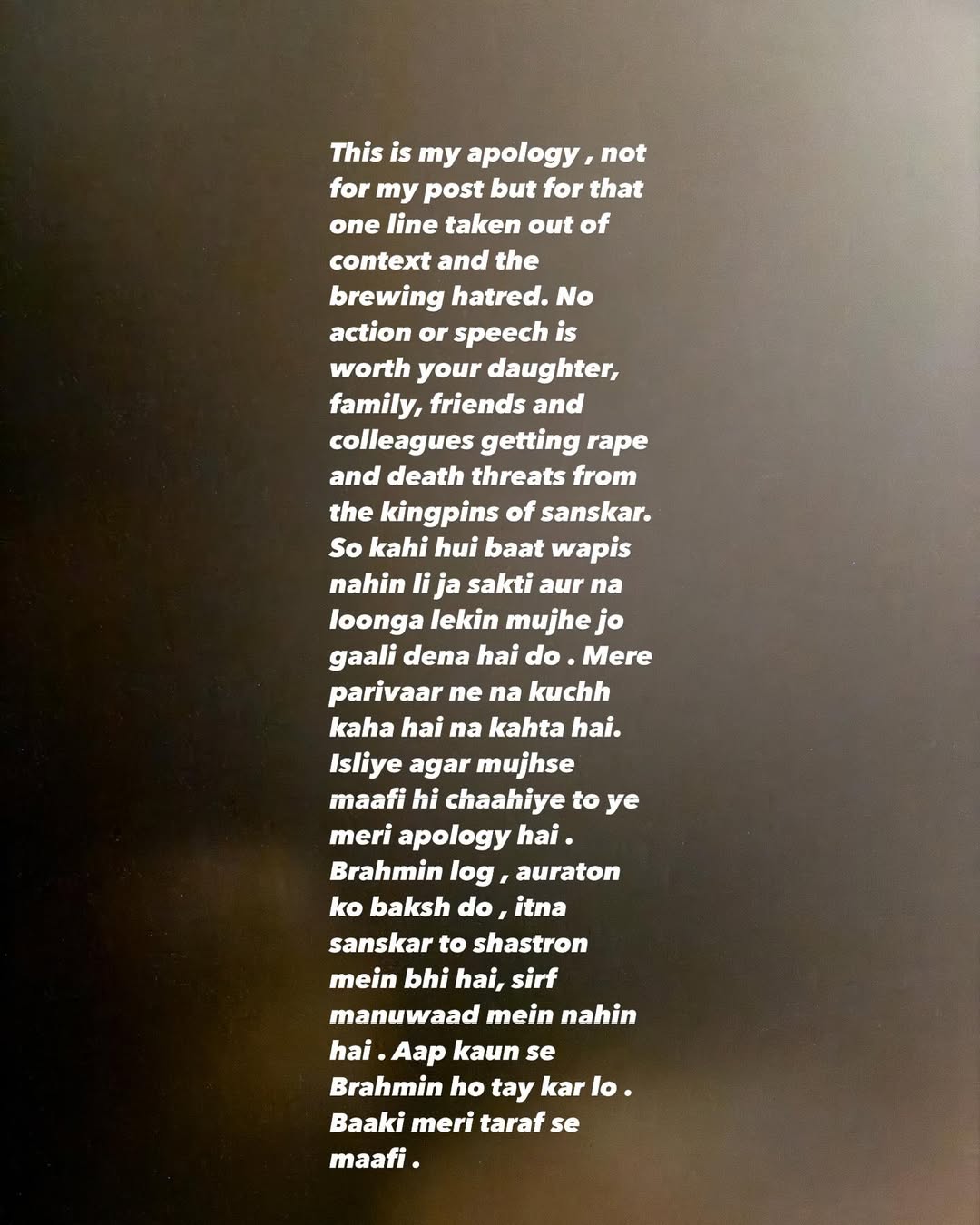
In a recent Instagram post, Kashyap attempted damage control by writing, “This is my apology, not for my post but for that one line taken out of context and the brewing hatred.” He also said that due to the backlash, his daughter, relatives, and friends were receiving threats. His apology, however, was far from sincere. Kashyap himself admitted that if an apology was expected, then that would be it—an evidently reluctant and dismissive statement.


View this post on Instagram


A post shared by Anurag Kashyap (@anuragkashyap10)

The controversy erupted on 17 April 2025, after Kashyap took to Instagram to vent his frustration about the delay in releasing Phule, a film directed by Ananth Mahadevan and featuring Prateek Gandhi and Patralekha as Jyotiba and Savitribai Phule. The delay, reportedly influenced by objections from some Maharashtrian Brahmin groups, led to a heated rant by the filmmaker.

In his Instagram story, Kashyap recounted that his first theatrical performance was based on Jyotiba and Savitribai Phule. He criticized caste-based inequality in India and questioned why Brahmins were offended by a film addressing such issues. His language was laced with expletives and contempt, accusing Brahmin communities of either being ashamed or living in denial about casteism in the country.

He further lambasted the film certification process, questioning how certain groups managed to access unreleased films. Kashyap accused the system of being corrupt and said that films addressing uncomfortable social realities, such as Punjab 95 and Dhadak 2, often faced unwarranted censorship. He claimed the government was too ashamed to face its own reflection and lacked the courage to confront the issues these films expose.

In a long instagram story, Kashyap wrote, “Meri zindagi ka pehla natak Jyotiba aur Savitribai Phule pe tha. Bhai agar casteism nahin hota is desh mein toh unko kya zaroorat thi ladne ki. Ab ye Brahmin log ko sharam aa rahi hai ya wo sharam mein mare ja rahe hain ya phir ek alag Brahmin Bharat mein jee rahe hain jo hum dekh nahin paa rahe hain, ch****a kaun hai koi to samjhave. (The first play I ever did in my life was on Jyotiba and Savitribai Phule. If casteism didn’t exist in this country, why would they have needed to fight against it? Now these Brahmin groups either feel ashamed, are dying of shame, or perhaps they’re living in some alternate Brahmin-only India that we’re unable to see. Someone please explain—who’s the real fool here? My question is, when the film goes for censoring, there are four members in the board. How the f**k the groups and the wings get access to films until and unless they are given access to it? The whole f**king system is rigged.”

He also lamented that, “I don’t know how many other films are blocked that exposes the agenda of this casteist, regionalist, racist government… so ashamed to see their own face in the mirror. So ashamed that they can’t even openly talk about what it is about the film that bothers them. f**king cowards.”

He also made a post on his Instagram where he wrote, “During the screening of Dhadak 2, censor board told us that Modiji has eradicated the caste system in India. On the same grounds, Santosh couldn’t be released in India either. Now, Brahmins are objecting to Phule. Brother, if there’s no caste system, how can you be a Brahmin? Who are you? Why are you getting worked up?” he questioned.


View this post on Instagram


A post shared by Anurag Kashyap (@anuragkashyap10)

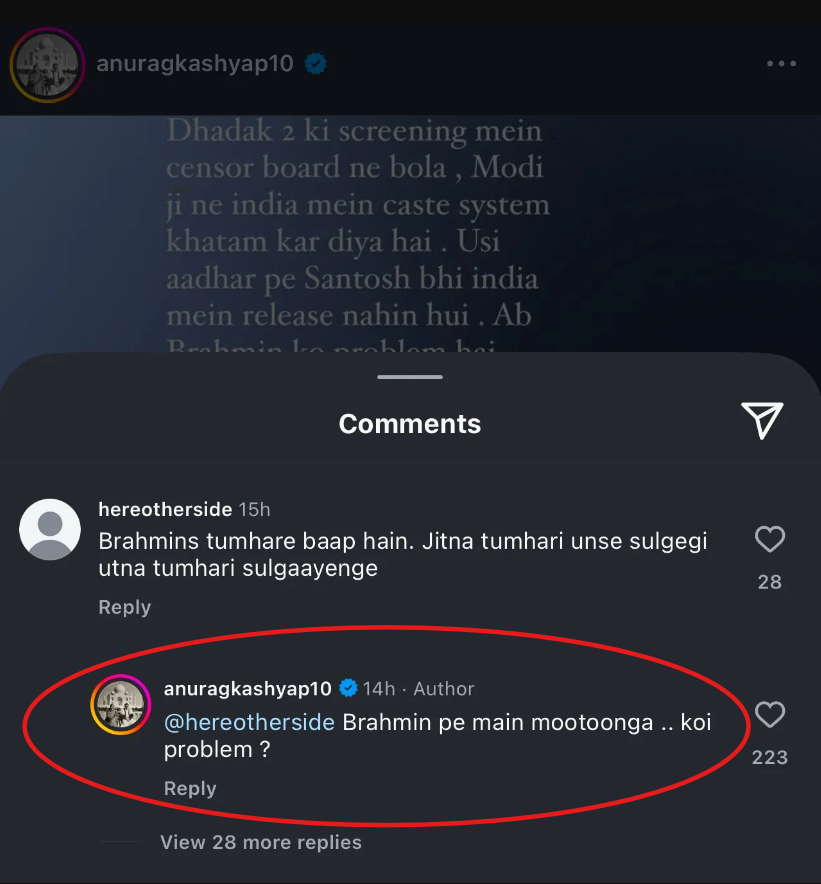
In a particularly aggressive response to a commenter who referred to Brahmins as Kashyap’s forebears, the director allegedly replied, “I’ll urinate on Brahmins… got a problem?” This crude and offensive comment has been widely condemned as hate speech and reflective of deep-seated hostility toward the Brahmin community.

(Image Credits: OpIndia)

Critics argue that Kashyap’s rhetoric goes beyond artistic dissent and veers into open hostility. Rather than fostering constructive dialogue on caste issues, his statements are seen as vilifying an entire community, reinforcing harmful stereotypes, and encouraging hatred. The film Phule itself, based on its trailer, is seen by some as offering a one-sided portrayal, casting Brahmins as the sole antagonists while ignoring their historical contributions to reform and education.

Moreover, Kashyap’s criticism of the BJP government—calling it casteist, regionalist, and racist—seemed to draw a line between present political ideologies and historical social issues, conflating the two to support his narrative. He questioned how a Brahmin identity can exist if casteism has supposedly been eradicated, citing a censor board comment claiming Prime Minister Modi had ended caste-based divisions in India.

The Bad Girl Connection

This isn’t the first time Anurag Kashyap has faced allegations of harboring anti-Hindu sentiments. Back in 2017, after filmmaker Sanjay Leela Bhansali was assaulted during the filming of Padmavat, Kashyap referred to the attackers as “Hindu terrorists.” Yet, he has remained conspicuously silent when it comes to religious extremism from other communities. But did his anti-Brahmin rhetoric end there? Not at all. The shameless director has continued to spread his animosity through different platforms. Most recently, he co-produced Bad Girl, a film by Vetri Maaran—another filmmaker who pushes Communism and anti-Brahmin agenda. The movie, like much of their work, seems to single out Brahmins as the sole villains. How convenient for these so-called ‘social justice warriors’ to mask targeted hate as progressive cinema.

Some observers have pointed out that criticism of Brahmins has increasingly become mainstream, particularly in Maharashtra, where Brahmins are often portrayed negatively despite being a minority. The history of anti-Brahmin sentiment in the state includes violent incidents like the 1948 Chitpavan Brahmin attacks and more recent social media-driven hate campaigns. Critics believe this pattern continues in modern cinema and political discourse, contributing to an environment where Brahmins are vilified for historical injustices they had no part in.

This pattern of targeting Brahmins isn’t limited to Maharashtra. In Tamil Nadu, Brahmins have faced hostility dating back to the mid-20th century, including symbolic acts like cutting the sacred thread (poonool). Political parties such as the DMK have made strong anti-Sanatana Dharma statements, which many interpret as veiled attacks on Brahminical traditions.

Despite being a relatively small community, Brahmins are increasingly subject to ridicule, stereotyping, and reverse discrimination. Their cultural identity, including practices such as vegetarianism and wearing the Janeu, is frequently mocked under the guise of progressive criticism.

A Marxist-Historian Myth Debunked Time and Again

Is what they preach against Brahmins actually true, or is it just a repetition of long-debunked narratives driven by bias and historical distortion? It’s exhausting to keep dismantling the same Marxist historian myths that have already been exposed over and over again. What’s ironic is that they likely know the truth themselves—but they continue to recycle colonial-era distortions, especially those pushed by the British to enforce their “Divide and Rule” policy.

One of the most compelling rebuttals to these falsehoods comes from the Gandhian thinker, historian, and political philosopher Dharampal. In his seminal work, The Beautiful Tree: Indigenous Indian Education in the Eighteenth Century, Dharampal meticulously studied original records from British colonial archives—surveys commissioned by the East India Company and preserved across the UK. His decade-long research uncovered a reality that flies in the face of the Brahmin-villain narrative.

His findings documented a vibrant and inclusive indigenous education system across the Madras and Bengal Presidencies and Punjab, with a curriculum that was far more advanced and accessible than what is commonly portrayed. In fact, nearly 30% of children aged 6–15 attended school daily. Surprisingly to many, students from so-called “lower” castes—including Shudras and those considered below them—made up a significant portion of the student body. In places like Kerala, even Muslim girls were well-represented in these institutions.

Anurag Kashyap’s claim that “Brahmins didn’t allow others to study” is flatly contradicted by this evidence. Data from the Madras Presidency and Bihar clearly shows that the majority of students were from non-Brahmin castes. The British records even show that Brahmins were a minority in many schools. While they did dominate fields like theology and law—understandably so, given those were areas of traditional scholarly focus—subjects like astronomy and medicine were studied and practiced by individuals from various communities. For example, in Malabar, out of 808 students learning astronomy, only 78 were Brahmins; similarly, out of 194 studying medicine, only 31 were Brahmins. Even barbers were recognized by British officials as the most skilled surgeons of the time.

https://twitter.com/vedant_bangad/status/1913224705990939127

This data dismantles the idea that Brahmins monopolized knowledge or oppressed others by restricting access to education. Yet, despite overwhelming evidence, people like Kashyap continue to push the same tired narratives, now repackaged through films and pop culture. And why? Because keeping Brahmins in a perpetual negative light is a lucrative formula—it sells outrage, attracts funding, and fuels a political agenda. It’s no coincidence that Kashyap co-produced Bad Girl by Vetri Maaran—another director often accused of peddling anti-Brahmin, far-left Communist rhetoric.

It seems the goal isn’t social justice but targeted vilification—distorting history, silencing nuance, and demonizing an entire community for profit and ideological gain.

In conclusion, Anurag Kashyap’s recent tirade is seen by many as less about advocating for social reform and more about perpetuating a hostile narrative against Brahmins. While caste-based inequality is a reality that must be addressed, critics argue that vilifying an entire community in the name of progress only deepens divisions. Kashyap’s language and attitude, especially his comment about urinating on Brahmins, have turned what could have been a meaningful discussion into an ugly and divisive controversy.

(With inputs from OpIndia)

Subscribe to our channels on TelegramWhatsApp, and Instagram and get the best stories of the day delivered to you personally.

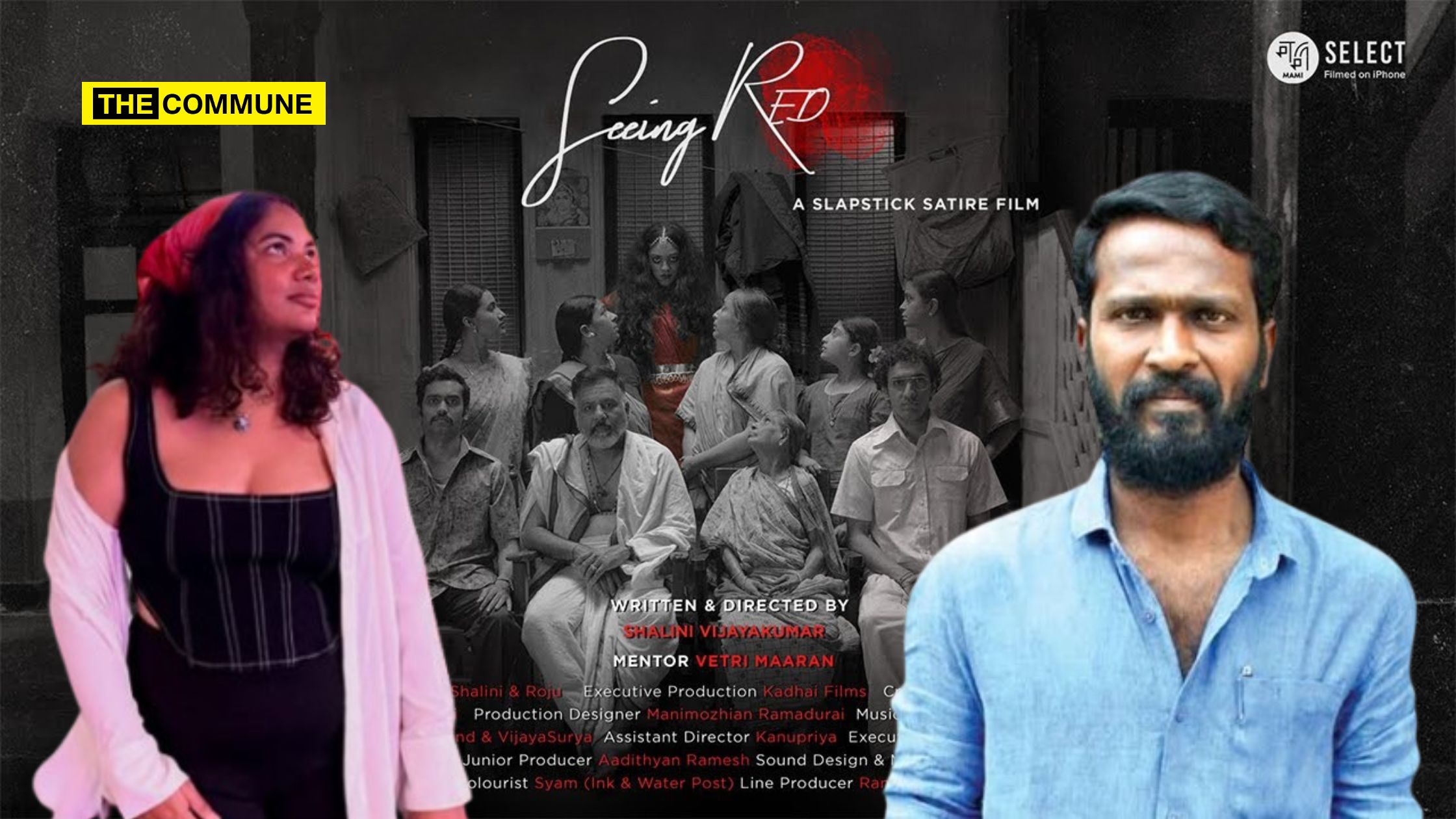
Seeing Red: Vetrimaaran’s Mentee Serves Up Brahmin-Bashing In The Name Of ‘Art’ & Feminist Cinema

Shalini Vijayakumar’s Seeing Red, a short film mentored by Vetri Maaran, claims to be a “comedic horror” about repressed women in a 1980s Tamil Brahmin household. Instead, it devolves into a lazy, exaggerated caricature that reduces an entire community to regressive tropes—patriarchal tyrants, bitter women, and a ghost who exists solely to amplify their grievances.

Poor Storytelling & Forced Agendas

The film revolves around the father, his wife, his mother who is bedridden, the two sons and their wives and the elder son’s daughter. There is an additional widowed sister who also stays in the same home. This ghost suddenly makes an entrance one day and becomes visible only to the women of the house. The director then tries to tell a story in a comedy horror format which fails even worse than RCB!

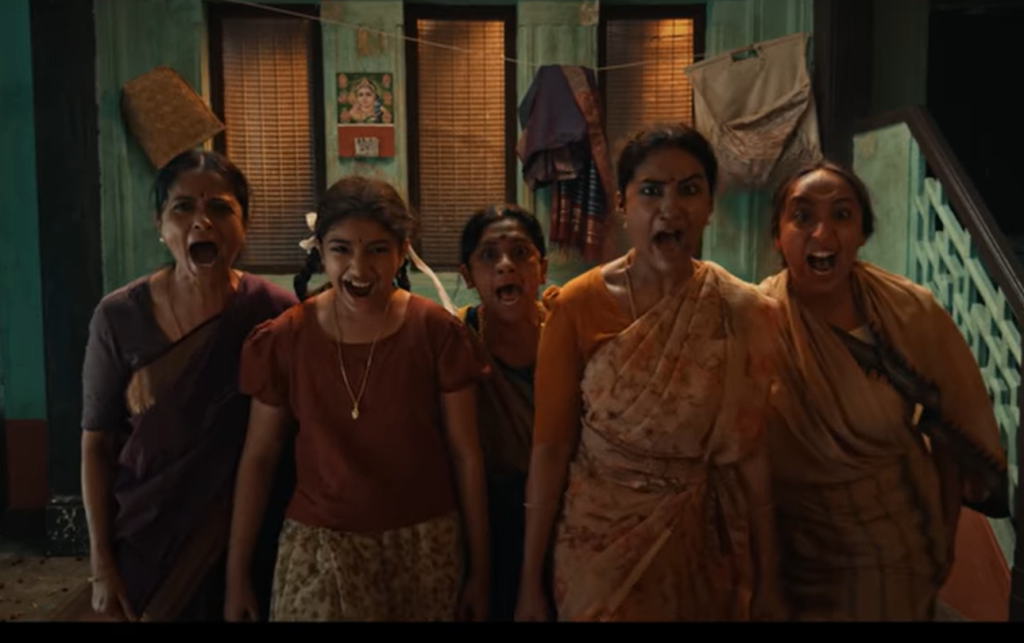
The film’s central premise—women screaming in fear, then screaming in “liberated” rage—feels less like social commentary and more like a juvenile tantrum.

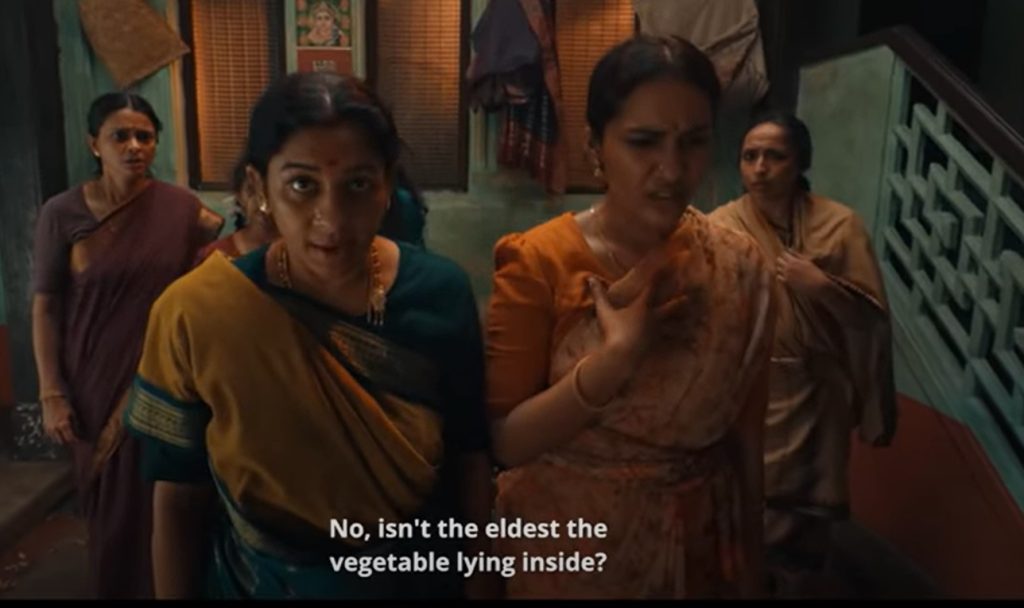
The ghost, far from being eerie, is comically inept, flailing around like a low-budget Halloween prop. When it possesses the wife, making her call her bedridden mother-in-law a “vegetable,” the message is unclear: Is the director advocating neglect of the elderly? Or is this just cheap shock value?

Equally baffling is the subplot about a father not hugging his daughter post-puberty—a cultural norm in many conservative households, not exclusive to Brahmins. The film frames this as oppression rather than tradition, raising the question: Is Vijayakumar suggesting that personal boundaries equal abuse? Or is she pushing the tired narrative that Brahmin men are inherently creepy?

Inaccuracies That We Note

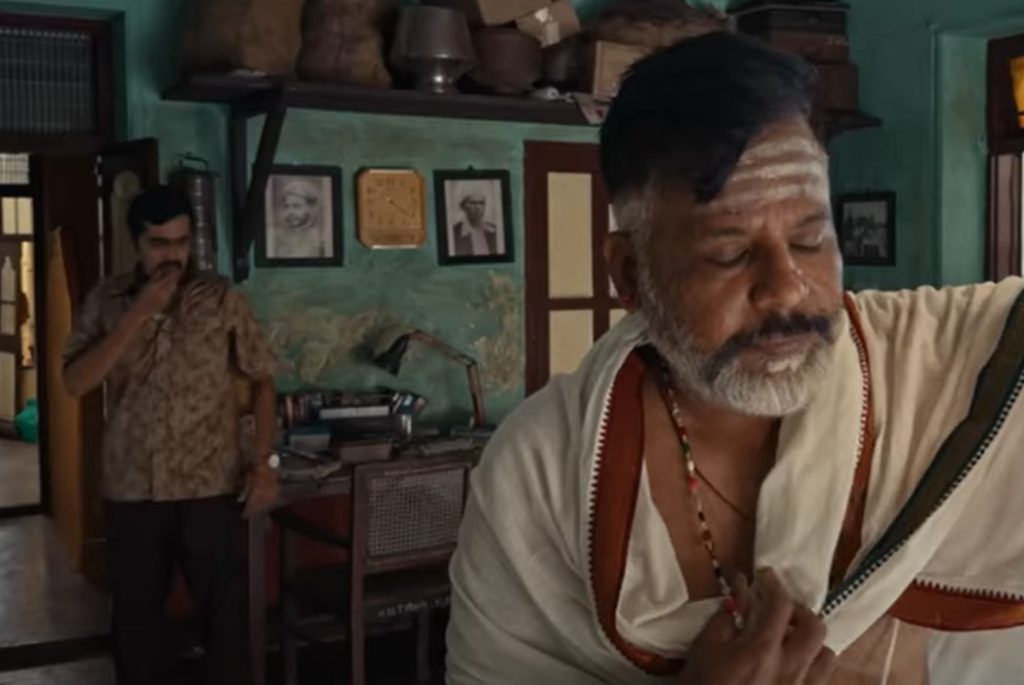
Set in 1986, Seeing Red fails miserably in period detailing. The father sports a modern haircut, and the walls feature freedom fighters like V.O. Chidambaram Pillai (VOC) and Tirupur Kumaran—unlikely decor in a traditional Tamil Brahmin home. Such sloppiness exposes the director’s lack of research, reducing the film to a series of staged gripes rather than a genuine exploration of familial dynamics.

Additionally, the father (played by Badava Gopi) sports a distinctly 2025 haircut as you can see above – so much for detailing?

The Vetri Maaran Connection & the Dravidian Playbook

Unsurprisingly, the film bears the fingerprints of mentor Vetri Maaran, who previously produced Bad Girl—another project that painted Brahmins as oppressive villains. The formula is predictable:

  • Portray Brahmin households as toxic patriarchy hubs.
  • Frame tradition as oppression and rebellion as liberation.
  • Offer no solutions, just rage—preferably screamed loudly.

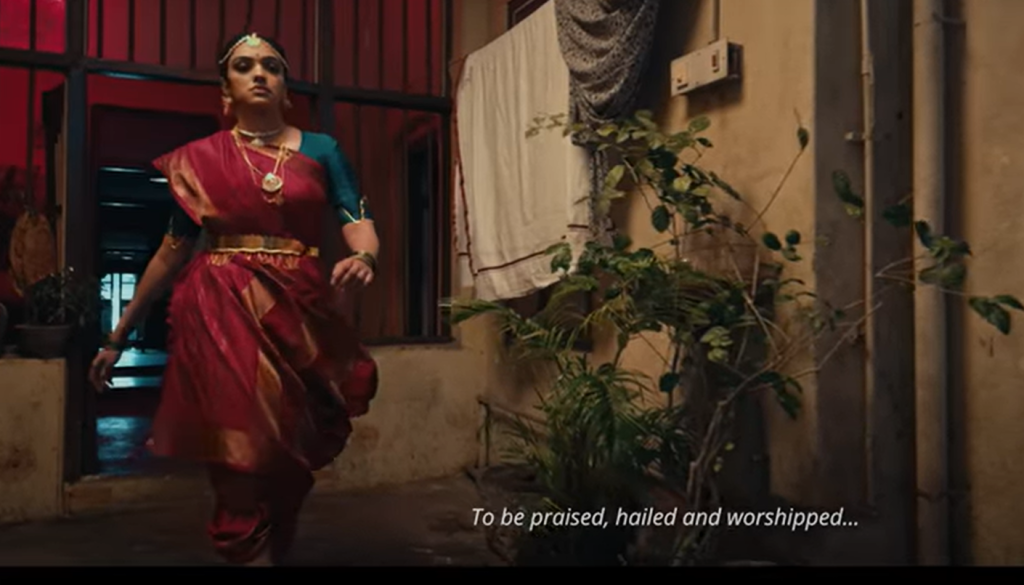
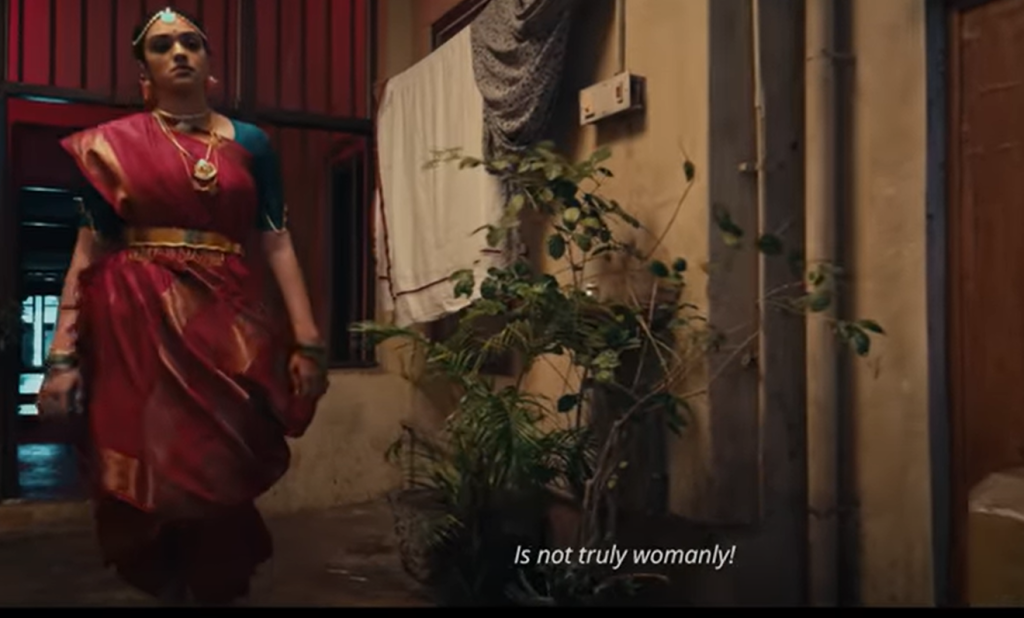
This isn’t art; it’s ideological conditioning. The closing song declares, “To be praised and worshipped is not truly womanly.” So, what is? Eternal victimhood? Unhinged screaming? What is this line supposed to convey? That society should stop honoring women? Or that traditional reverence for womanhood is another form of oppression? The film’s shallow feminism offers no answers, only resentment.

Shalini’s Seeing Red is mentored by Vetri Maaran. Notably, he also backed Bad Girl, another film that vilified Brahmin customs under the guise of feminist liberation. A pattern emerges: tie “toxic patriarchy” exclusively to “Brahminical oppression,” suggest that liberation is only possible by rejecting tradition and family and offer the ‘modern’ world as salvation.

The psychological strategy is clear:

  • Make young women feel victimised.
  • Turn them against their families and customs.
  • Offer an alternative identity that feels freer — and more aligned with Dravidian-Marxist ideology.

Propaganda Masquerading As Cinema

Seeing Red isn’t a commentary on gender—it’s a poorly constructed hit job on Tamil Brahmin culture, leveraging stereotypes to fuel division. If Shalini Vijayakumar wanted to critique familial repression, she could have done so with nuance. Instead, she delivers a 28-minute rant that’s as subtle as a sledgehammer.

For a film about “seeing red,” it’s ironic that the only thing it makes the audience see is its own agenda—loud, lazy, and utterly unconvincing – and probably the “Red” indicates the leftist ideology?

Subscribe to our channels on Telegram, WhatsApp, and Instagram and get the best stories of the day delivered to you personally.

RTI Reveals DMK Spent Crores Of Public Money On Dravidian Media Outlets For Anti-Addiction Campaign

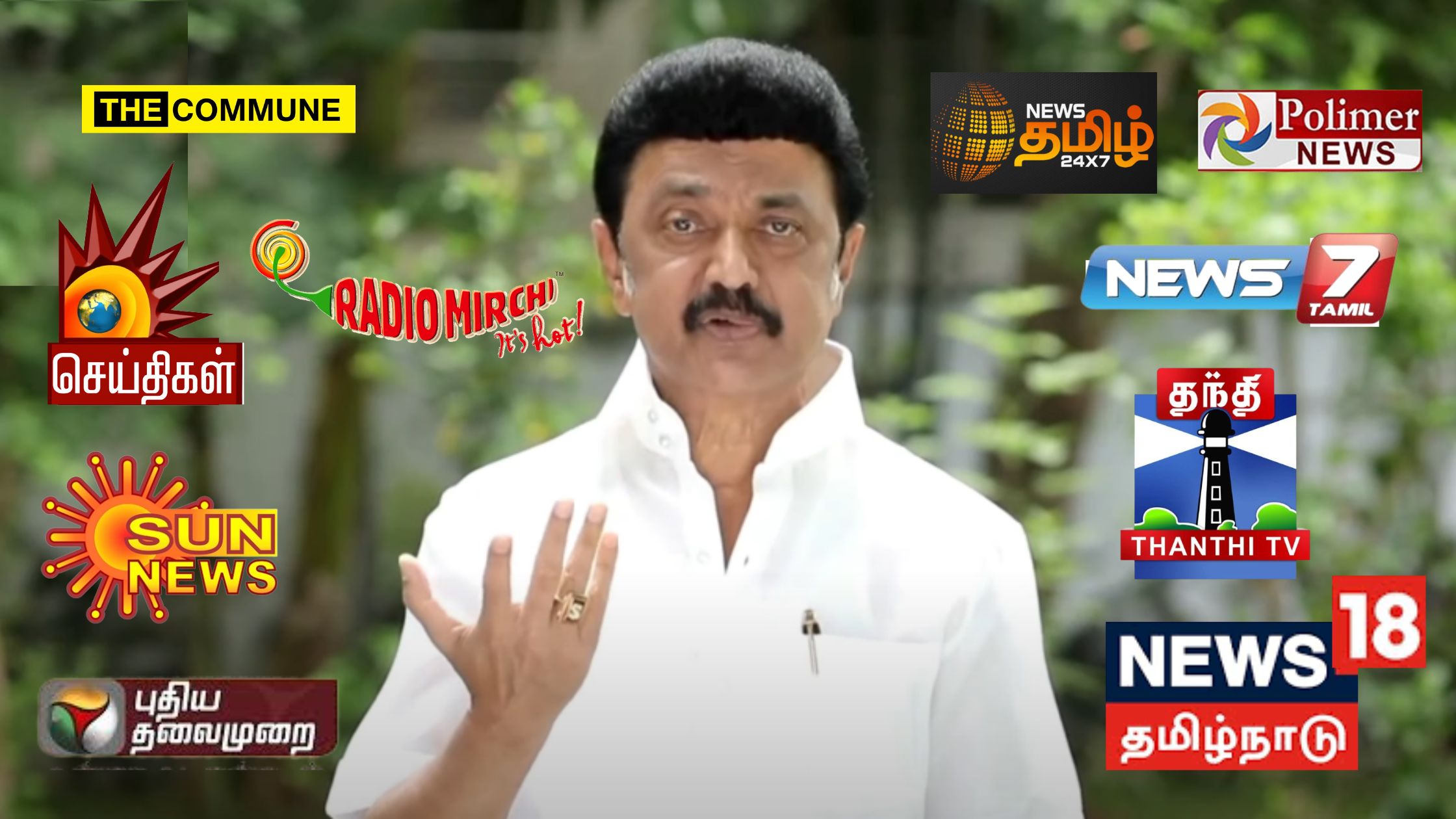
A new controversy has emerged surrounding the Tamil Nadu government’s “Drug free anti-alcoholism and anti-addiction campaign, with allegations of excessive public spending on media advertisements. According to an RTI (Right to Information) request filed by advocate ML Ravi, the government has allegedly funneled crores of rupees into media outlets sympathetic to the Dravidian ideology, including news channels closely associated with the DMK.

In October 2024, Chief Minister M.K. Stalin relaunched the state’s anti-drug initiative, reaffirming his commitment to eradicating narcotics from Tamil Nadu. In a video released by the government, Stalin appealed to the youth and student communities, urging them to avoid the lure of drugs. “As a member of your family and as your father, I implore you not to choose the path of drugs. Let us eradicate drugs and let our lives shine,” he stated. A similar campaign was also launched in August 2024 when the media spotlighted drug abuse and its associated issues.

However, the RTI request by advocate ML Ravi revealed shocking figures regarding the amounts spent on advertising the government’s anti-addiction schemes. The expenses were distributed among various news channels and media outlets, with significant sums directed towards those linked to the Dravidian movement. The details of the spending, which cover the period from October 2024 to January 2025, are as follows:

  • Polimer News: ₹81,01,703
  • Sun News: ₹39,13,393
  • Kalaignar Seithigal: ₹53,46,830
  • Puthiyathalaimurai: ₹47,11,033
  • News 7: ₹59,81,425
  • News 18: ₹35,06,086
  • Thanthi TV: ₹40,50,851
  • News Tamil 24×7: ₹38,42,581
  • FM Channel Radio Mirchi: ₹13,12,227

Total Disbursed So Far: ₹1,40,60,25* (*Disputed Number – As RTI record was not clear)
Amount Yet to Be Disbursed: ₹2.67 crore

What raised eyebrows, however, was the substantial sum directed towards channels affiliated with the DMK, such as Sun News (₹39,13,393) and Kalaignar Seithigal (₹53,46,830). Critics argue that these figures highlight an attempt to funnel public money into media outlets closely tied to the ruling party, fueling accusations of favoritism and cronyism.

Netizens were quick to raise concerns about the Tamil Nadu government’s approach. On one hand, the government is spending around crores on private television and radio advertisements for a drug-free Tamil Nadu. On the other hand, TASMAC liquor shops remain open, continuing to operate as usual. Critics argue that it seems contradictory to spend such large amounts on anti-drug campaigns while profiting from alcohol sales. Given this, many questioned how much this would cost annually and whether this approach is truly fair.

Subscribe to our channels on TelegramWhatsApp, and Instagram and get the best stories of the day delivered to you personally.

Milords Please Wake Up, Here Are 13 Instances Of Appointments Of Non-Hindus In Hindu Temples/Temple-Run Institutions Across India

In a recent hearing on the Waqf (Amendment) Act, 2025, the Supreme Court questioned the inclusion of non-Muslims in Waqf boards and councils, asking the Centre if Muslims would similarly be allowed in Hindu religious endowment boards. Chief Justice Sanjiv Khanna, heading the bench, criticized provisions allowing non-Muslims in Waqf governance while highlighting the absence of reciprocal inclusion in Hindu boards. “Say it openly—will Muslims be allowed in Hindu boards now?” the CJI asked Solicitor General Tushar Mehta, who defended the amendment but offered to clarify limits on non-Muslim members.

In this article, we list out 13 instances of non-Hindus appointed in Hindu temple trusts and boards.

#1 Bhumana Karunakar Reddy As TTD Chairman

In August 2023, Tirupati MLA Bhumana Karunakar Reddy was appointed as the Chairman of TTD. It is noteworthy that his first tenure as TTD chairman was from 2006 to 2008, during the Congress government led by Dr. YS Rajasekhar Reddy, father of the current Chief Minister, YS Jagan Mohan Reddy. At the time, Karunakar Reddy was a loyal member of the Congress and a close associate of the YSR family. In 2016, Karunakar Reddy’s daughter, Neeha Reddy, married Y.S. Sumadhur Reddy, a cousin of Jagan Reddy, strengthening his ties with the YSR family. The outgoing TTD Chairman, YV Subba Reddy, is also closely related to Jagan, being his uncle through marriage to Jagan’s maternal aunt.

Additionally, controversy escalated after a video surfaced in which ex-CM Y.S. Jagan Reddy’s mother stated, “We are a Christian family. We go to temples only for Hindu votes.”

There are images and videos of Bhumana Reddy’s daughter’s wedding circulating in social media where the bride and groom are seen to be wearing clothes pertinent to a Christian wedding.

 #2 Appointment Of Christian Teachers At Venkateswara School

In January 2023, the State School Education Department automatically appointed three surplus teachers of Christian faith to fill vacant positions at the Sri Venkateswara Higher Secondary School, which is managed by TTD in Vellore, Tamil Nadu. The principal, Napoleon, allowed the teachers to begin work without informing TTD, sparking protests from Hindu staff and local Hindus, as TTD mandates only Hindus can be employed. Following the backlash, the principal informed the District Chief Education Officer that the appointments would require TTD’s permission, and the teachers were sent back to their previous positions.

Hindu activists planned to raise the issue with TTD board members, but the School Education Department later withdrew the appointments after learning that non-Hindus cannot be employed by TTD institutions. The incident adds to ongoing concerns over TTD’s management, with accusations of non-Hindus being employed in its institutions, linked to alleged anti-Hindu actions under Andhra Pradesh Chief Minister Jagan Mohan Reddy’s government.

#3 AEO Of Sri Venkateswara Group Of Temples, A. Rajasekhar Rao’s Dual Identity

In February 2020, a media report revealed that A Rajasekhar Rao, Assistant Executive Officer (AEO) of the Sri Venkateswara (SV) Group of temples, was seen praying at St. Paul Lutheran Church in Puttur. Rao, who was in charge of overseeing the “Parakamani” (Hundi counting) at the Tirumala Mandir, had claimed to be a Hindu while acknowledging that his wife had converted to Christianity. He initially denied participating in any church prayers, stating that he had only entered the church premises with his wife. Following these allegations, Tirupati Tirumala Devasthanam (TTD) launched an inquiry on 20 April 2020 (Roc No. DA1/9968/2019) under the supervision of Shri Rajendradu, Special Grade Deputy Executive Officer, SV Group of temples, Vijayawada. The investigation concluded that the charges against Rao were proven. According to the GO 1060 of 1989, appointments to TTD institutions, except for teaching positions, are restricted to individuals professing the Hindu faith. This rule was further strengthened in 2007 by GO 1372, which mandates that all appointments across all categories in TTD-administered or funded institutions must be made exclusively among individuals professing the Hindu religion.

#4 Discovery Of Appointment Of 44 Non-Hindu Employees In AP (TTD)

In 2019, the Andhra Pradesh government under Chief Minister Y.S. Jagan Mohan Reddy sparked controversy by ordering that non-Hindus would not be allowed employment at the Tirumala Tirupati Devasthanam (TTD), which manages the Sri Venkateswara temple, one of the richest Hindu temples globally. The new directive stated that only those who converted to Hinduism could retain their jobs, while others would be dismissedSurprise checks were planned to verify the religious identities of employees.

The controversy was ignited by advertisements on state government bus tickets promoting pilgrimages to Jerusalem for Christians and Haj for Muslims, leading to significant backlash. Accusations against previous administrations also resurfaced, with claims that the proliferation of churches in Tirupati began during Y.S. Reddy’s tenure as Chief Minister.

A sting operation revealed that a senior TTD official regularly attended church, the TTD began identifying non-Hindu staff, ultimately finding 44 employees in violation of guidelines that prohibit non-Hindus from working in temple services. Although most were employed in non-religious roles, the TTD plans to reassign them to other state departments. New measures will require all TTD employees to wear “Thiru Namam,” a traditional Hindu mark, to ensure adherence to the temple’s religious identity and prevent further controversy over non-Hindu appointments.

#5 Alleged Christian Vangalapudi Anita On TTD Trust Board

In 2018, the appointment of Payakaraopet legislator Vangalapudi Anita, reportedly a Christian, to the then-newly constituted Tirumala Tirupati Devasthanam (TTD) Trust Board sparked controversy. A video of her confirming her Christian background went viral, prompting criticism from right-wing organizations. The Andhra Pradesh government, which reformed the board after the previous term ended, faced backlash, particularly for appointing chairman Putta Sudhakar Yadav, who was accused of attending Christian events, raising concerns about his suitability to lead an organization meant to uphold Hindu Dharma.

In the video, Anita admits to marrying a Hindu but maintains her Christian identity, stating, “I always keep a Bible in my bag.” This incident follows a previous controversy in January, when the TTD relocated 45 non-Hindu employees after a video of one staff member visiting a church went viral, highlighting ongoing tensions regarding non-Hindus in temple management.

#6 Dy Executive Office In TTD Welfare Dept Snehalatha’s Church Visits

In 2017, Snehalatha, a Deputy Executive Officer in TTD’s Welfare Department, was found to be in gross violation of service rules by regularly attending a Christian Lutheran church in an official car. Additionally, she reportedly never took ‘Prasadam’ but accepted gifts during Brahmotsavam, leading to questions about her adherence to TTD’s Hindu traditions.

The TTD is governed by the A.P. Charitable & Hindu Religious Institutions & Endowments Act (1987), which mandates that executive officers must be Hindu. Past investigations have highlighted similar issues, recommending thorough probes into the backgrounds of non-Hindu employees and prohibiting the propagation of non-Hindu religions within Tirumala. Despite a pledge by TTD employees to uphold Hindu Dharma, concerns persist about Christian proselytization and the presence of non-Hindus in key positions.

#7 Nawaz Appointed At Shri Avimukteshwara Swamy Temple

In 2024, a Muslim man named Nawaz was appointed to the committee responsible for organizing the Brahmotsavam festivities at the Shri Avimukteshwara Swamy Temple, located in the Bangalore Rural District of Karnataka. His appointment raised eyebrows, considering the religious significance of the temple and the traditional expectations surrounding its administration.

#8 Non-Hindu Employees At Maa Sharda Temple, MP, Removed

In 2023, the Madhya Pradesh government’s Department of Culture announced the removal of non-Hindu employees associated with the Maa Sharda Temple in Maihar, Satna district. The individuals affected by this decision included Abid Hussain, Ayub Khan, and Yusuf Khan. Till 2023, the Maa Sharda Management Committee had three Muslim employees, who had been working there since 1988 including legal advisor Abid Hussain, who faced criticism for the committee’s inability to win court cases. Following a memorandum from Hindu organizations demanding the removal of Muslim staff and the closure of meat and liquor shops, SDM Dharmendra Mishra announced a meeting to discuss potential actions.

#9 Non-Hindus Appointed At Maa Jwalamukhi Temple, Kangra

In 2021, in Himachal Pradesh, the state government appointed Jashan Deen and Shakeen Mohhamad, both from the non-Hindu community, as langar sevakars at the Maa Jwalamukhi Temple in Kangra. This decision faced opposition from the nine non-government members of the temple, who expressed their discontent with the appointments, emphasizing the importance of maintaining the temple’s Hindu identity.

#10 17 Non-Hindu Employees At Srisailam Devasthanams

In 2019, a shocking revelation came when it was reported that 17 non-Hindu employees were appointed at various levels within the administration of the Srisailam Devasthanams in Andhra Pradesh. Among these non-Hindu employees were Muslims like S. Khasim Vali, S. A. Wahab, and S. A. Rasool, alongside Christians including Ch. Yohan, D. Ibrahim, K. Yebu, M. Chandi Bai, Y. Israel, P.Daniel, K.Benjamin, C.Emanuel, Ch. Isak, D.Devaraju, G.Mery, J.Lazar, J.Mariyamma, K.K. Mariamma.

#11 Firhad Hakim’s Appointed To Tarakeshwar Temple Board, Later Resigned

In June 2017, West Bengal Chief Minister Mamata Banerjee appointed Urban Development Minister Firhad Hakim as the chairman of the newly formed Tarakeshwar Development Board (TDB) in Hooghly. The TDB was tasked with overseeing development of the historic 288-year-old Tarakeshwar Shiva temple and surrounding areas. The appointment sparked controversy, with opposition leaders accusing Banerjee of appeasement politics by placing a Muslim leader in charge of a major Hindu religious site. Amid sustained criticism and political pressure, Firhad Hakim resigned from the position in 2019.

#12 Kerala Govt Removes ‘Only Hindu’ Appointment Clause For Devaswom Board, Later Says Otherwise

On 16 October 2018, the Kerala government passed a bill in the state Assembly removing the clause that mandated only Hindus could head the Devaswom Temple Trusts. This sparked widespread controversy, with several petitions filed in the Kerala High Court challenging the constitutional validity of the amendment. Petitioners, including BJP state president PS Sreedharan Pillai, argued that appointing non-Hindus as Devaswom commissioners — who oversee Hindu religious institutions and manage temple funds — violated religious customs and legislative powers. In response, the Kerala government told the High Court that the removal of the Hindu-only clause was an error and assured it had no plans to appoint non-Hindus as commissioners of the Travancore or Cochin Devaswom Boards. The state clarified that the allegations suggesting otherwise were baseless and aimed at creating misunderstandings.

#13 SP Leader Azam Khan Appointed Kumbha Mela Chief In 2013

In 2013, Samajwadi Party leader and Uttar Pradesh Cabinet Minister Azam Khan was appointed as the in-charge of the Kumbh Mela, a major Hindu religious gathering in Prayagraj. His appointment sparked criticism, particularly from the RSS, which questioned why a Muslim minister was chosen to oversee a Hindu pilgrimage. On February 10, a tragic stampede at the Allahabad railway station during the Kumbh Mela led to the deaths of at least 36 people, mostly women and children. Although the incident occurred outside the Kumbh premises, Azam Khan resigned the next day, citing moral responsibility. However, the UP government rejected his resignation, stating he was not directly responsible.

So, milords, it is nothing new that non-Hindus are a part of Hindu temple boards, trusts and organizations. Additionally, the Waqf Board is not a religious board and hence there should not be a problem for a non-Hindu overseer. Is the court not interested in the welfare of the Muslim population and transparent upkeep of its assets? The judiciary has been repeatedly stoking the fire much worse than politicians when it comes to appeasement and flashing their “secular” credentials.

Subscribe to our channels on Telegram, WhatsApp, and Instagram and get the best stories of the day delivered to you personally.
 

“Gopalapuram Family’s Policy”: Annamalai Slams DMK’s Space-Policy Push, Says It Has Been Made To Benefit Stalin’s Son-In-Law Sabareesan’s “Space Venture”

BJP leader K Annamalai has strongly criticized the DMK government’s recently announced Space Industrial Policy, alleging that it is designed to benefit Chief Minister M.K. Stalin’s family—particularly his son-in-law, Sabareesan, who is linked to a newly established space-tech company.

In a post shared on his official X (formerly Twitter) account, Annamalai wrote, The Tamil Nadu Space Industrial Policy released yesterday was expected ever since TN CM Thiru @mkstalin’s son-in-law floated a space-tech startup. Thiru Sabareesan, the shadow CM of TN, is the designated partner of Vaanam Space LLP, incorporated on 22.07.2024. With this firm expected to receive a 20% capital subsidy, it would be appropriate to call this industrial policy the Gopalapuram family’s industrial policy. The State is suffering with lack of investments, struggling for fresh investments in FY25 and here’s an authoritarian govt releasing an industrial policy to benefit his family. Shame!” 

It is noteworthy that Vaanam, India’s first private space tech accelerator, is MK Stalin’s son-in-law Sabareesan’s brother, Hariharan Vedamurthy’s brainchild and has Padma Bhushan awardee Nambi Narayanan as its mentor.

On 17 April 2025, the Tamil Nadu government has approved its Space Industrial Policy, aiming to attract ₹10,000 crore in investments, create 10,000 high-value jobs, and develop a skilled space-tech workforce. The policy focuses on full-stack space innovation—beyond manufacturing to include services and downstream analytics—targeting startups, MSMEs, and major players through dedicated “Space Bays.” Incentives include wage subsidies and patent filing support.

This initiative aligns with ISRO’s new spaceport under construction in Kulasekarapattinam, Thoothukudi, designed for Small Satellite Launch Vehicle (SSLV) launches. Unlike Sriharikota, Kulasekarapattinam allows straight southward launches without risky maneuvers over Sri Lanka, improving cost-efficiency for small rockets.

Subscribe to our channels on TelegramWhatsApp, and Instagram and get the best stories of the day delivered to you personally.

NIA Files Fresh Charges Against Five In 2022 Coimbatore Bomb Blast Case; Terror Financing Via COVID Certificate Scam Uncovered

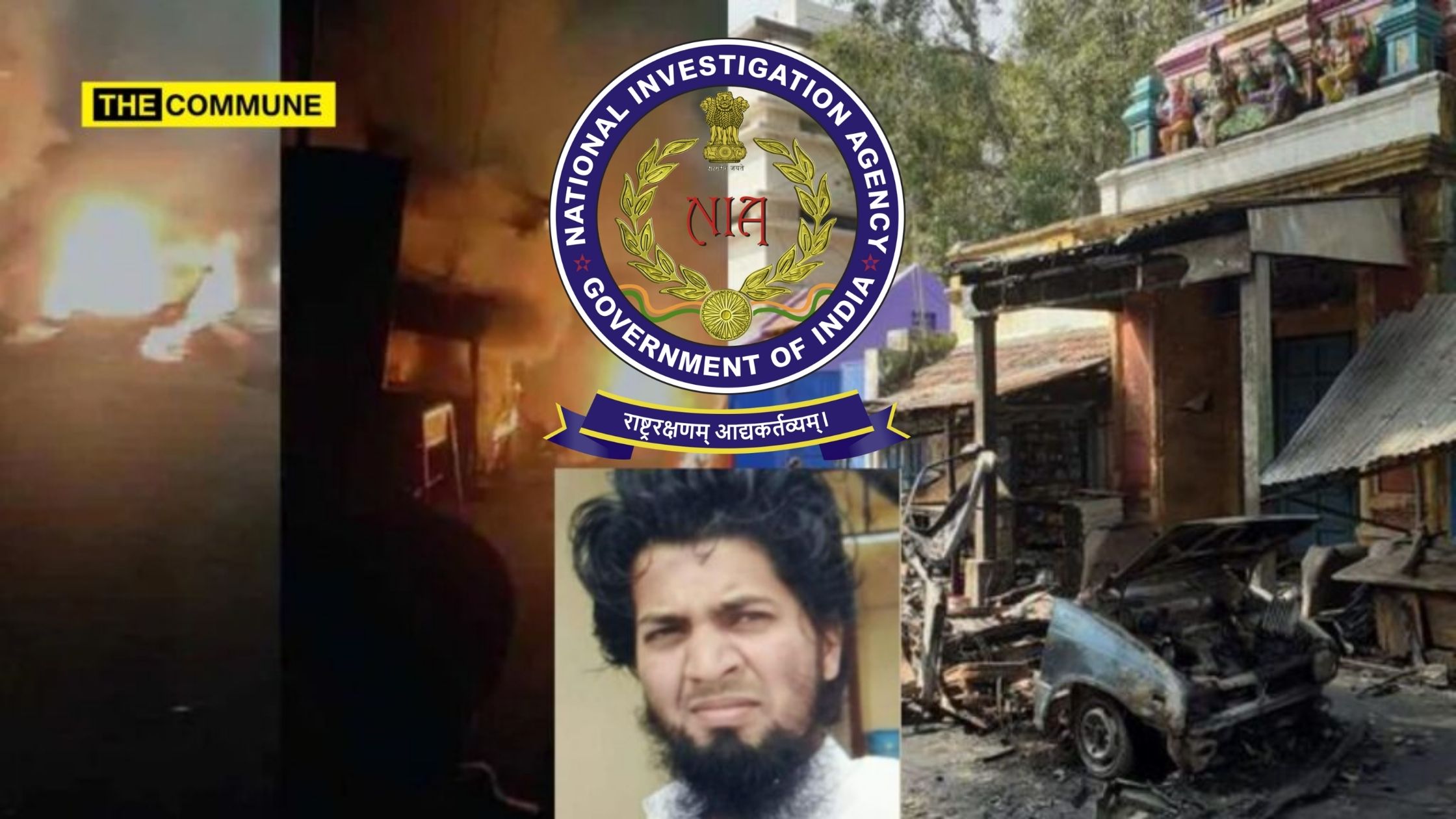
The National Investigation Agency (NIA) on Thursday filed a fourth supplementary charge sheet in the 2022 Coimbatore car blast case, formally charging five additional individuals for their involvement in the terror plot and associated financing activities.

The blast, which occurred in October 2022, killed the prime suspect and suicide bomber Jamesha Mubeen. The attack was allegedly aimed at the Kottai Sangameshwarar Temple in Coimbatore.

The five newly charge-sheeted accused are Sheikh Hidayathullah, Umar Farooq, Pavas Rahman, Sharan Mariappan, and Aboo Hanifa. According to the NIA, all five played critical roles in supporting and funding the attack. With the latest additions, a total of 17 individuals have now been charge-sheeted in connection with the case.

In a significant development, the NIA revealed that terror financing in the case was partly conducted through a fake COVID-19 vaccination certificate racket, orchestrated by some of the accused between 2021 and 2022.

Sheikh Hidayathullah, along with Umar Farooq and Amir (previously charge-sheeted), is accused of using the proceeds from the certificate scam to purchase materials used in the car bomb. The scam was reportedly facilitated by co-accused Pavas Rahman and Sharan Mariappan, while Aboo Hanifa provided financial assistance for the creation of the fake vaccine documents.

The funds generated from the fraudulent operation were used to acquire bomb-making components and support logistical preparations for the failed terror attack.

The investigation into the Coimbatore blast is ongoing, with the NIA continuing to probe deeper into the network of conspirators and financiers involved in the case.

(With inputs from The New Indian Express)

Subscribe to our channels on Telegram, WhatsApp, and Instagram and get the best stories of the day delivered to you personally.
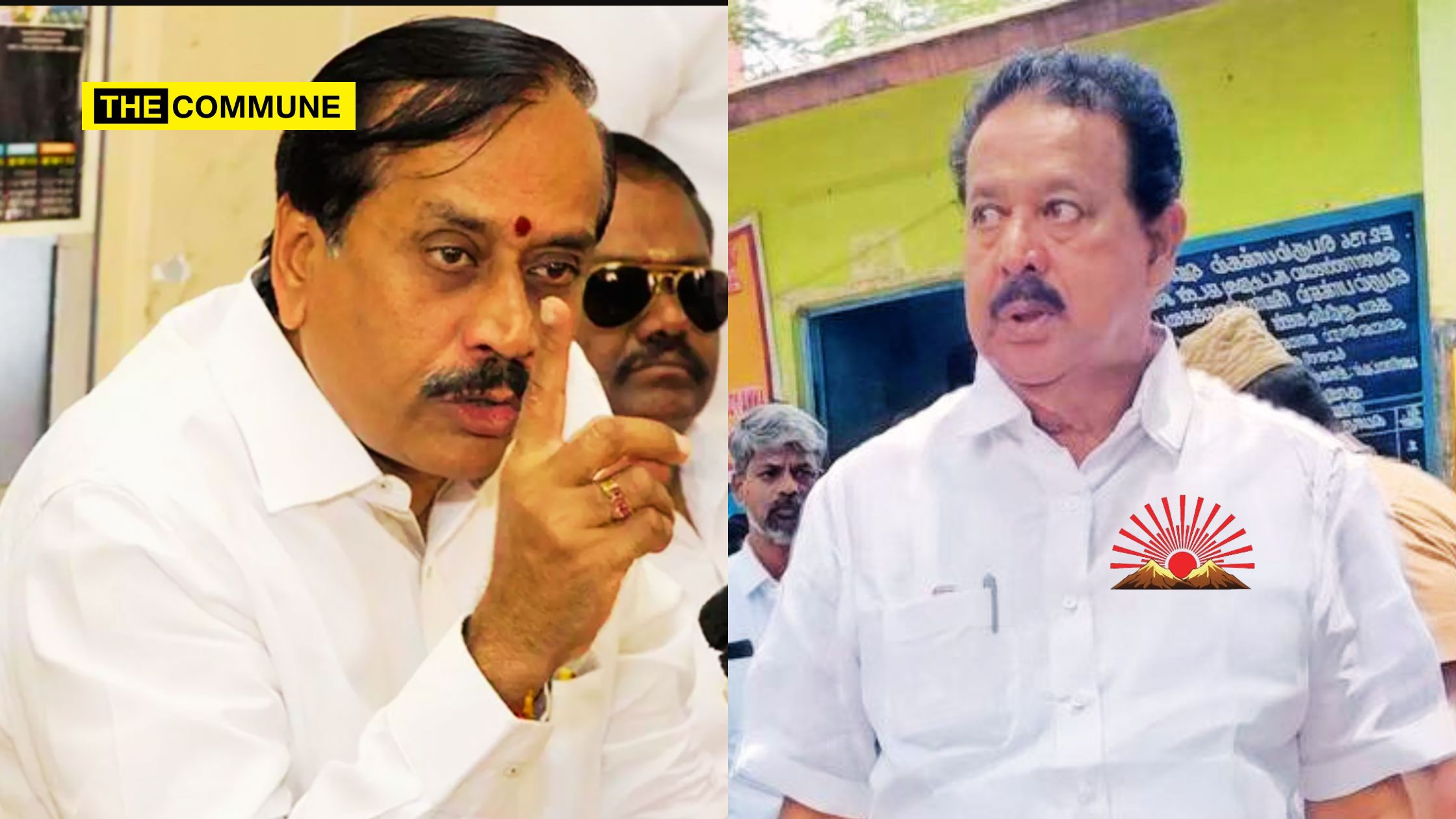
“Let Ponmudy Be The Last; No One Should Dare Speak Against Hinduism Again” – Sr BJP Leader H Raja Warns Anti-Hindu Elements In TN

Senior BJP leader and Tamil Nadu BJP Co-ordination Committee Convenor H. Raja has issued a stern warning against the growing anti-Hindu rhetoric in the state. Referring to the ongoing legal proceedings against DMK Forest Minister K. Ponmudy, Raja said this should be the last instance of any leader making derogatory remarks about Hindu beliefs.

Speaking at a BJP felicitation event in Chennai’s Royapettah YMCA Ground, organized to honor the newly appointed Tamil Nadu BJP President Nainar Nagendran, Raja congratulated him and condemned the state police for acting with political bias. He warned that if this partiality continues, officers responsible would face strict disciplinary action similar to the crackdown during the Emergency period under Indira Gandhi’s regime.

H. Raja stated, “Today, efforts are being made to take action against a minister who speaks ill of the Hindu community. Their DNA is like that. Since the very beginning, with EVR, it has become fashionable in Tamil Nadu to mock Hinduism.”

He declared, “Let Ponmudy be the last person to do so. From now on, no one should dare to speak against Hinduism. To such an extent that women are out on the streets. I tell you with certainty, Hindus, ‘Snakes should hiss; if not, they will strike.’ That is why I am saying that these Dravidian stocks, the vile forced degenerates, the evil anti-Hindu factions, should be uprooted from the political landscape of Tamil Nadu.”

Then, Raja expressed confidence in Nainar Nagendran’s leadership, describing him as an experienced and capable leader who previously held major portfolios such as Industries and Energy during his earlier political career.

Highlighting the BJP’s goal of establishing a strong foothold in Tamil Nadu, Raja urged party workers to act as if Prime Minister Narendra Modi himself were contesting from every constituency. “Every karyakarta must commit fully, like a student who is fully prepared for an exam,” he said.

Drawing inspiration from BJP founder Dr. Syama Prasad Mukherjee, Raja emphasized the spirit of selfless service and sacrifice for the nation. “Unlike other political dynasties, especially the Karunanidhi family, BJP leaders step forward first in service, not for personal gain,” he said.

He concluded by assuring Nainar Nagendran of full support from the party’s nearly 50 lakh members in the state, adding confidently that under Prime Minister Modi’s leadership, the BJP-led National Democratic Alliance (NDA) would form the government in Tamil Nadu in the near future.

Subscribe to our channels on TelegramWhatsApp, and Instagram and get the best stories of the day delivered to you personally.
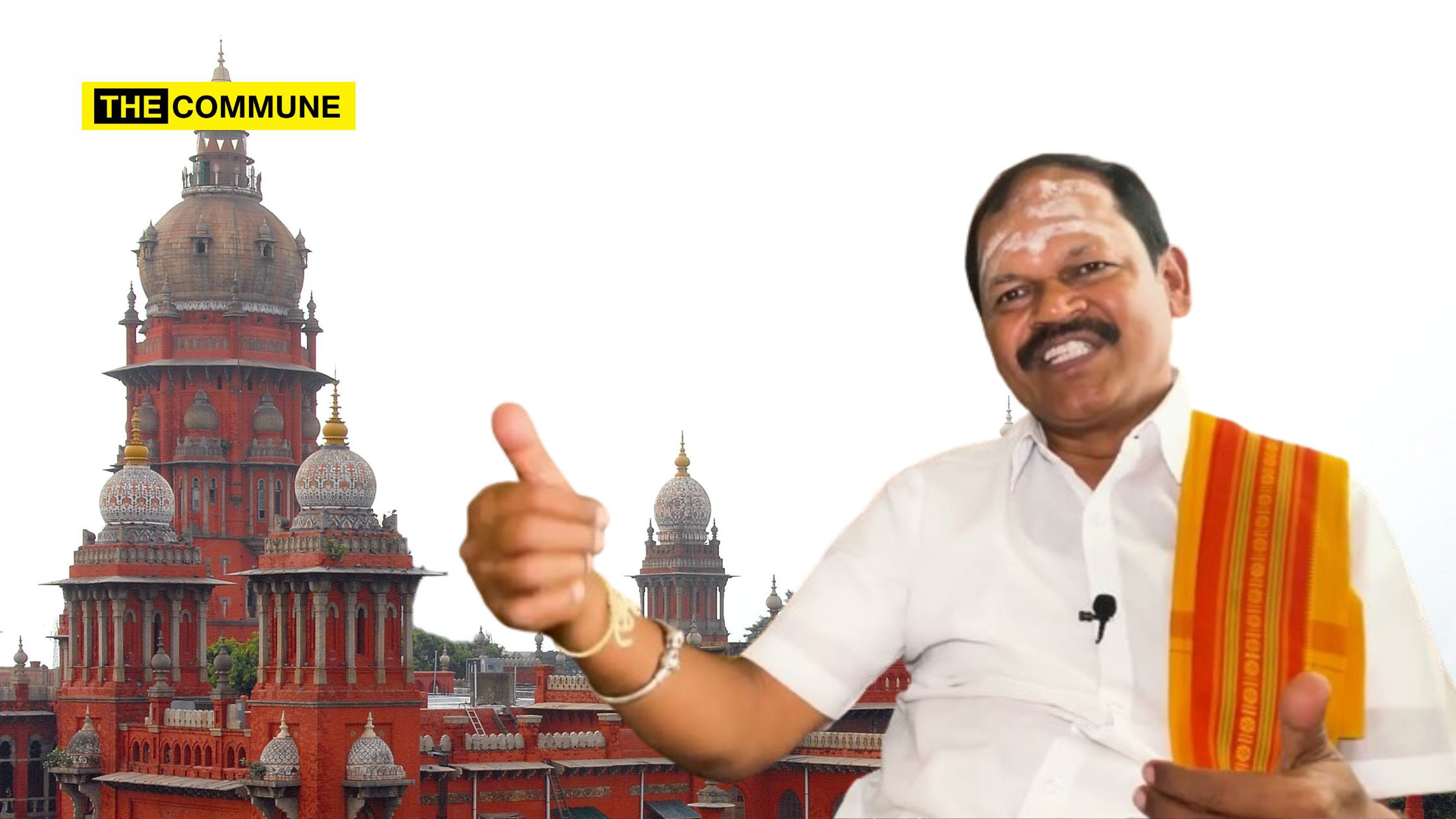
“Christian, Muslim Names Allowed – Why Ban Hindu Caste Markers?” IMK Leader Arjun Sampath Slams Madras HC Judgement

Indu Makkal Katchi (IMK) chief Arjun Sampath has voiced strong opposition to the recent Madras High Court ruling directing the removal of caste-based names from schools and colleges—both government and private—in Tamil Nadu. Taking to his official X account, Sampath posed a series of questions challenging the judgment and its implications for Hindu communities.

Sampath questioned the legitimacy of the court’s directive, stating, “How can the judiciary strip Hindus of constitutional rights?” He argued that caste-based identifiers in school names have historical and cultural roots, especially in the context of Hindu communities establishing their own institutions to counterbalance Christian dominance in education.

“Why Only Hindus?” Sampath Asks

Citing communities such as the Nadars, Kallars, Sengundars, and Vanniyars, Sampath said that these groups created educational services in response to a long-standing imbalance in access. He argued If Christian and Muslim institutions are allowed to operate under their religious identities, why are Hindu communities alone being restricted.

In his X post, Arjun Sampath questioned, “Will they also ban the worship of kula deivams (Clan deities)? To break the (historical) dominance of Christians in education, Hindu communities such as the Nadars, Kallars, Sengundars, and Vanniyars began establishing their educational services. Just as the government and politics that took over temples, is it fair to ban running educational institutions for Tamils? Minority status provided for education institutions in the name of Christ and Islam! then is it fair for Hindu Tamils to be barred from providing educational services? What justification does the court have to deprive the Hindu community of the fundamental rights granted by the Constitution?”

Background: Madras High Court Ruling

On 16 April 2025, the Madras High Court ruled that no educational institution in Tamil Nadu—government or private—should use caste-based titles in their names starting from the academic year 2025–26. Justice D. Bharatha Chakravarthy ordered that all schools and colleges with such appellations, whether explicitly stated or included in donor names, must remove them within four weeks. Institutions that fail to comply could face loss of recognition and forced transfer of students by 2026–27.

Additionally, the court instructed the State to implement recommendations by a committee headed by retired judge K. Chandru, including the removal of terms like ‘Kallar Reclamation’ and ‘Adi Dravidar Welfare’ from school names.

The ruling also extended to caste-based societies registered with the government. The Inspector-General of Registration was directed to identify societies named after specific castes, amend their bylaws to open membership to all, and remove caste references. This process must be initiated within three months and completed in six months.

Justice Chakravarthy remarked that the caste system is not confined to Hinduism and exists across religious communities, including among Christians. He added that caste-based organizations cannot expect legal recourse under Article 226 if they continue to promote exclusionary practices.

The verdict came in response to petitions filed by the South Indian Senguntha Mahajana Sangam (Chennai), Tiruchengode Vatta Kongu Velalar Sangam (Namakkal), and The Poor Educational Fund (Chennai)—the latter of which restricts membership to specific Christian sub-castes.

In a critical observation, the judge noted, “The caste system today is not about religion. It cuts across faiths. People carry this burden so stubbornly, they’d take it with them even to the moon.”

Subscribe to our channels on TelegramWhatsApp, and Instagram and get the best stories of the day delivered to you personally.