Home Blog Page 335

Actor Balakrishna’s ‘Daaku Maharaj’ Completes 100-Days Run In Theatres

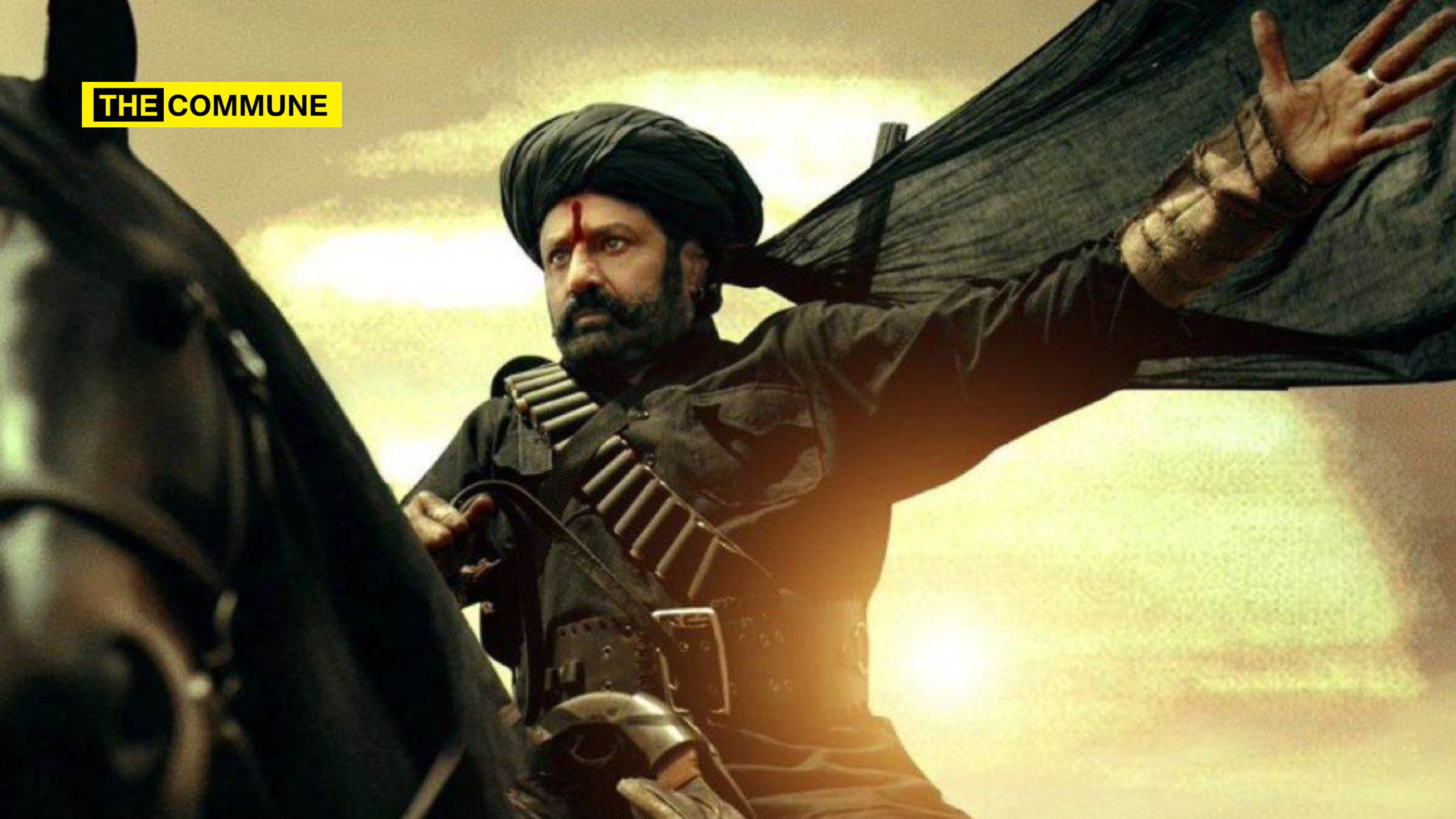
Director Bobby Kolli’s action entertainer ‘Daaku Maharaaj’, featuring Telugu star Balakrishna in the lead, has completed an impressive 100-day run in theatres. Music director Thaman S, whose music for the film played an important part in its success, shared a poster announcing the film’s completion of a 100-day run in theatres on his X timeline.

The film, which released on January 12 for the festival of Sankranti, is the fourth consecutive film of actor Balakrishna to have completed 100 days in theatres. The three other films of the actor that completed a 100 days in theatres prior to ‘Daaku Maharaj’ are ‘Akhanda’, ‘Veerasimha Reddy’ and ‘Bhagavanth Kesari’. ‘Daaku Maharaj’, which had cinematography by Vijay Kartik Kannan, was edited by Niranjan Devaramane and Ruben. Screenplay for the film was by K Chakravarthy Reddy while dialogues had been penned by Bhanu and Nandu. Stunts were choreographed by V Venkat.

It may be recalled that the actor, pleased with the music that Thaman had been providing for his recent films, which had all emerged blockbusters, had recently presented a brand, new Porsche car to the ace music director. Thaman, who is currently scoring the music for actor Balakrishna’s upcoming film Akhanda2, has become the actor’s favourite music director ever since he composed music for Balakrishna’s Akhanda 1. In fact, so Balakrishna was pleased with Thaman’s songs for all his films, that soon after ‘Daaku Maharaj’, he went to the extent of saying the music director was now considered like family during the course of an interview.

“People don’t call him Thaman, they call him as Nandamuri Thaman,” he said during an interview to a media entity. Thaman is now scoring music for Balakrishna’s ‘Akhanda 2: Thandavam’, which is to hit screens on September 25 this year for Dussehra.

–IANS

Subscribe to our channels on TelegramWhatsApp, and Instagram and get the best stories of the day delivered to you personally.

Captured Punjab-Origin Terrorist Harpreet Singh Behind Multiple Attacks, FBI Chief Reveals

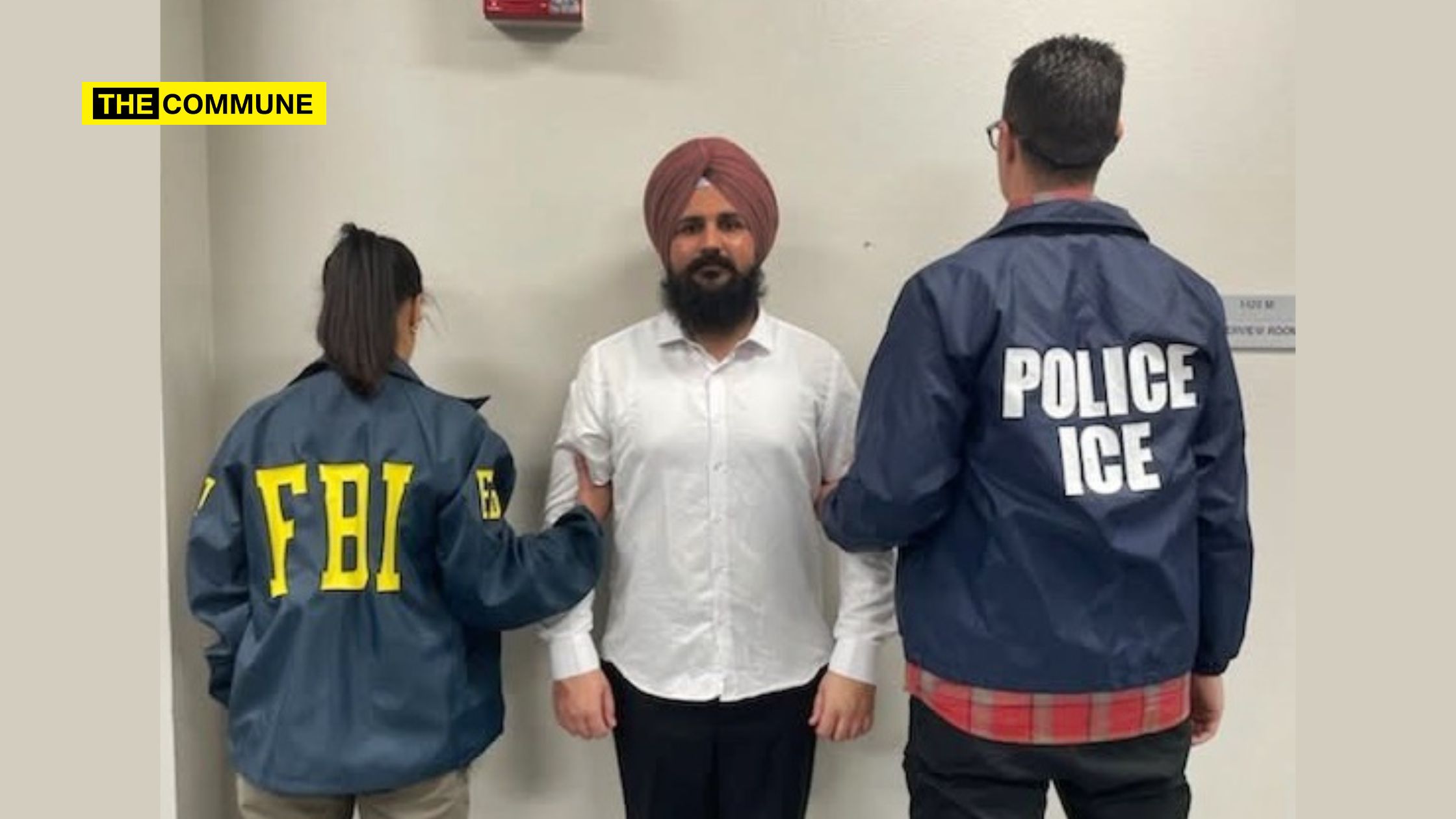
The captured Punjab-origin Harpreet Singh was part of an alleged foreign terrorist gang in America, who “we believe was involved in planning multiple attacks on police stations both in India and the US”, Federal Bureau of Investigation (FBI) Director Kash Patel has said.

“@FBISacramento conducted the investigation coordinating with our partners locally as well as in India,” he wrote on X on Tuesday (IST). “Excellent work from all, and justice will be done. The FBI will continue finding those who perpetrate violence — no matter where they are,” Patel added.

Punjab Police have said that their efforts led to the arrest of Harpreet Singh, alias Happy Passia, a key operative of the Pakistan’s ISI-backed Babbar Khalsa International (BKI) and close associate of Pakistan-based terrorist Harvinder Rinda, at Sacramento in the US. Director General of Police (DGP) Gaurav Yadav had termed it a major success.

Soon after the arrest was made public on April 18, he had said: “Today marks a major milestone in the sustained crackdown on ISI-backed terror networks, with the announcement of detention of Happy Passia by the US authorities. This is the outcome of excellent international cooperation and exchange of information between the United States and India.” I

n a statement, Yadav said the Punjab Police have consistently shared intelligence inputs with the Central agencies. DGP Yadav said Happy Passia, a native of Passia village in Amritsar, began his criminal career with gangster Jaggu Bhagwanpuria, and his US-based associates Darman Kahlon and Amrit Bal.

Later, Happy Passia became a key associate of Pakistan-based terrorist Harvinder Rinda, operating under the direct guidance of the ISI. He said Passia was the primary handler of ISI-backed terror modules in Punjab and played a central role in orchestrating targeted killings, grenade attacks on police establishments, and extortion across the state between 2023 and 2025.

“Our investigation has found direct involvement of Happy Passia in majority of terror acts, which took place in the state after September 2024,” said the DGP, while adding Passia was masterminding the terror activities sitting in the US, using a network of vulnerable youth struggling with addiction, recruiting them to carry out these acts in exchange for money and narcotics.

Punjab Police have meticulously tracked all the terror modules raised by Happy Passia and successfully dismantled them, said DGP Yadav, adding an extensive dossier on Passia’s activities was shared with Central agencies and subsequently with the US authorities, leading to his arrest. “Punjab Police has already taken up the matter with Central agencies to initiate the process for Passia’s extradition to India as per the law,” he added.

–IANS

Subscribe to our channels on TelegramWhatsApp, and Instagram and get the best stories of the day delivered to you personally.

“Why Panic?”: EPS Fires Back At DMK & Its Allies Over AIADMK-BJP Alliance

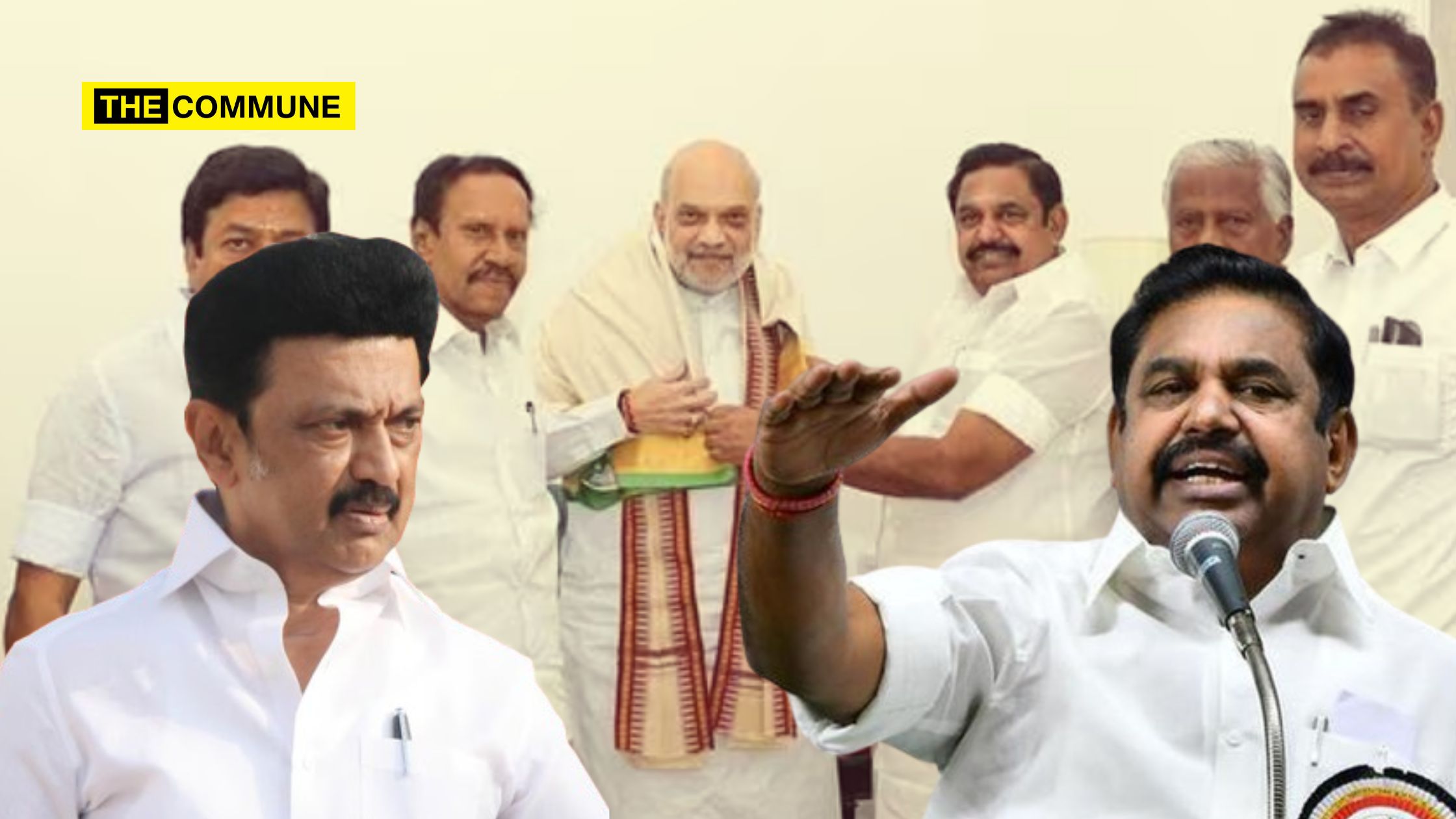
Leader of the Opposition and AIADMK General Secretary Edappadi K. Palaniswami (EPS) strongly criticized the DMK and its allies for repeatedly expressing concern over his party’s renewed alliance with the BJP as part of the NDA in Tamil Nadu. EPS accused the DMK-led bloc of issuing such statements out of fear, suggesting they are rattled by the AIADMK’s growing strength and the implications of the newly restructured alliance in the state.

During a heated exchange in the Tamil Nadu Assembly on 21 April 2025, Chief Minister M.K. Stalin and EPS locked horns over several issues, including NEET.

Addressing the Chief Minister directly, Palaniswami said, “NEET was introduced during the DMK-Congress regime. You are the ones responsible for its implementation.” In response Chief Minister MK Stalin challenged, “the AIADMK still has the power to resolve the NEET issue, by demanding  cancellation of NEET as a condition to remain in the alliance?”

Speaking to the media later in the Assembly complex, EPS elaborated further slamming the DMK on NEET exam, “The foundation for NEET was laid in December 2010 during the DMK-Congress rule. The AIADMK has always stood against NEET and has consistently worked to have it scrapped. I have spoken about this issue on numerous occasions.”

EPS also took aim at the DMK and its political alliances. “Every time you look at DMK members and the parties in their alliance, they keep bringing up the AIADMK’s alliance with the BJP. In all the statements, be it the Communist Party or the Viduthalai Chiruthaigal Katchi (VCK). Today, the Chief Minister himself is speaking with anxiety. If we have formed an alliance, why are you panicking in the assembly? Why this anger? What are you so afraid of? The AIADMK will form an alliance with anyone. That is our wish. Our parties focus is to win the 2026 Assembly elections. Every party is forming alliances with the intention of winning. Every time you claim you are a ‘strong alliance’ right? Likewise, we, the AIADMK too will form a strong alliance for the 2026 elections—and we will definitely win.”

Calling out the DMK’s double standards regarding political alliances, Edappadi K. Palaniswami (EPS) accused Chief Minister M.K. Stalin of reacting with visible fear and nervousness to the AIADMK-BJP alliance. “Looking at the Chief Minister’s anxiety and the way he spoke anxious, I could tell he was rattled. As he thought in mind that the AIADMK-led alliance will trigger a regime change in Tamil Nadu dethroning the DMK. It is clearly visible. In the Assembly, I saw it firsthand—his unease, his words, his tone,” EPS said.

He continued, “As far as the AIADMK is concerned, we will bring together all parties that are united in their goal of defeating the DMK. We will ensure there is no vote split. In the 2026 Assembly elections, we will decisively defeat the DMK-led alliance and AIADMK will form the next government.”

EPS then pointed out the DMK’s past alliance with the BJP, accusing the party of hypocrisy. “Let me remind you—when the DMK allied with the BJP in 1999, the late Karunanidhi himself said, ‘Religiosity is not more dangerous than corruption.’ That was his justification.”

In Parliament, Murasoli Maran, representing the DMK, defended the alliance, saying that despite past differences, including with the Congress during the Emergency, they had now come together with the BJP, the Jana Sangh, and the Marxist comrades to protect the rights of the marginalized and minorities.

EPS added, “In 1993, Murasoli article penned to the DMK cadres that, ‘some people were spreading false propaganda about the BJP being anti-minority and said that it was the responsibility of DMK youth to counter that narrative’. Back then, the BJP was considered a ‘good ally’ by the DMK.”

“And yet today, when the AIADMK aligns with the BJP, the DMK questions our choices. This is the DMK’s typical behavior—praise their alliances when it benefits them and criticize others when it doesn’t. That’s the political tradition they follow,” EPS concluded.

Subscribe to our channels on TelegramWhatsApp, and Instagram and get the best stories of the day delivered to you personally.

DMK Law Minister Rejects Proposal From Fellow DMK MLA For Anti-Superstition Law, Cites Constitutional Freedoms

On 21 April 2025, Tamil Nadu’s Law Minister S. Regupathy turned down a proposal from DMK MLA N. Ezhilan, who had urged the government to introduce a dedicated law aimed at eradicating superstitions in the state. Speaking in the Assembly, the Minister argued that enacting such a law would neither eliminate one belief nor safeguard another.

He emphasized that individuals are entitled to their personal beliefs, noting that what one person may see as superstition could be regarded as religious faith by another. “Under the Constitution, everyone has the right to protect their own beliefs. It’s not feasible to pass a law that either bans a belief or upholds another,” Regupathy stated.

Addressing Ezhilan’s concerns, the Minister added, “There is nothing wrong with adhering to one’s own principles. But we must consider whether imposing them on others is justifiable or acceptable.”

Earlier in the debate, Ezhilan cited Article 51A(h) of the Indian Constitution, which calls upon citizens to cultivate scientific temper, humanism, and a spirit of inquiry and reform. He questioned whether the State would consider bringing in legislation to eliminate superstitions and assist people in meeting these constitutional responsibilities.

(With inputs from The Hindu)

Subscribe to our channels on TelegramWhatsApp, and Instagram and get the best stories of the day delivered to you personally.

“Sham”: Autism Advocate Blasts DMK Govt For ‘Token Events’, Alleged ₹15 Crore Scam & Exploiting Parents For Photo-Ops

Dr. Rajalakshmi Kandaswamy, a doctor and author known for her work in autism therapy and advocacy, has publicly criticized the Tamil Nadu government, accusing it of paying lip service to the needs of children with autism while failing to offer meaningful support on the ground.

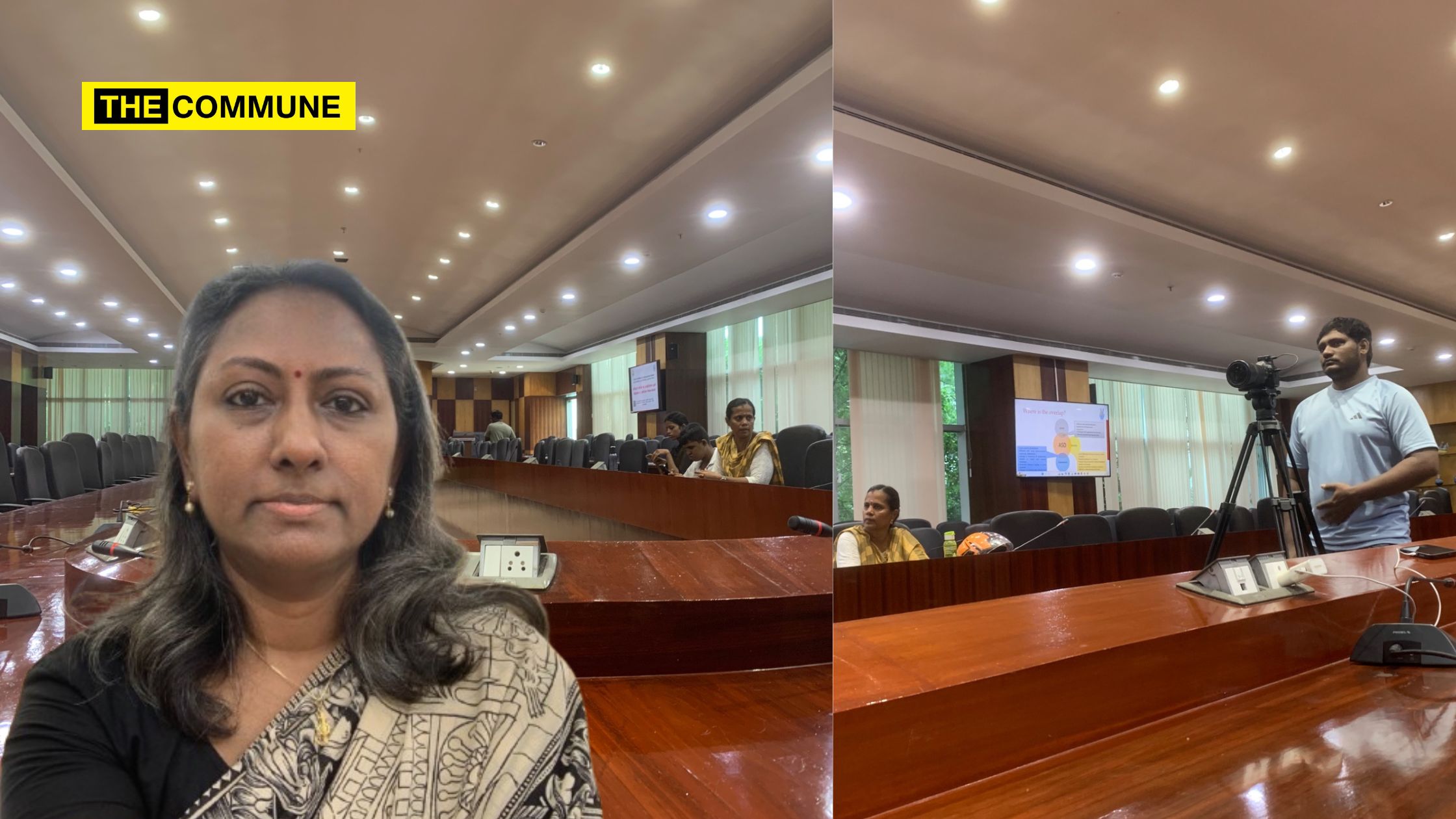
Her remarks come in the wake of an Autism Awareness Month event hosted by the state-run Centre of Excellence for Autism Spectrum Disorder at the Anna Centenary Library on 20 April 2025. Despite official promotion, the event witnessed dismal attendance—with only four parents reportedly present.

Taking to social media platform X, Dr. Rajalakshmi condemned the Dravidian Model government for what she called a “sham” event. In a strongly worded post tagging several officials including Chief Minister M.K. Stalin, Minister Geetha Jeevan, and Minister T.R.B. Rajaa, she wrote, What is this @CMOTamilnadu @geethajeevandmk @mkstalin @TRBRajaa @TheStartupTN @ptrmadurai ONLY 4 parents here at d #Annacentenrylibrary for your #AutismAwareness SHAM ! Why r u torturing d parents like this? Where is d 15 Crores being siphoned off?”

According to her account, the expert session scheduled for 10:45 AM had not begun even by 11:10 AM. Instead of a comprehensive awareness program, she claimed attendees were shown just six PowerPoint slides, which, in her words, could have easily been shared over a Zoom call. “For these 6 Slides parents & grandparents of Autistic children were FORCED to attend d PHOTO SHOOT hidden Agenda “event” & not even given Water. A Zoom Call would have been more than enough reaching more people. The total of 6 slides. LATEST & Updated info regarding Autism & it’s treatment that are WAY AHEAD of these slides were NOT presented. Fyi @NHM_TN”

She further alleged that updated, evidence-based information on autism treatment was missing from the presentation, calling the event outdated and inadequate.

In a follow-up post, Dr. Rajalakshmi accused the government’s Department for the Welfare of Differently-Abled Persons of being complicit in a larger network she termed the “Autism Mafia.” She alleged that one of the department’s members, Mr. Balaji (an advocate), along with The Startup TN CEO Sivarajah Ramanathan—who she claims is a trustee of an autism-related NGO—was involved in an “attempt to murder” plot against her. She linked to a prior post from 4 March making similar claims, and demanded a response from government and law enforcement agencies.

Highlighting the poor treatment of attendees, she recalled how a grandfather who traveled from Tiruvarur had to sit on the stairs outside the library and wait without access to water, food, or even seating. “Even dogs are treated better in Tamil Nadu,” she wrote. “The elderly man was so exhausted he fell asleep two minutes into the session. I’m withholding the photo to respect his privacy.”

Dr. Rajalakshmi ended her thread by calling out that this is a recurring pattern of government-orchestrated “photo-op awareness events” in air-conditioned halls across the state, accusing officials of dragging parents and children from various districts every weekend just to stage token programs with no real impact. “This is not autism awareness. It’s exploitation and cruelty,” she said.

(This article is based on an X Thread By Dr. Rajalakshmi Kandaswamy)

Subscribe to our channels on TelegramWhatsApp, and Instagram and get the best stories of the day delivered to you personally.

Supreme Court Imposes 3-Month Deadline On President/Governor While Sitting On 30+ Year-Old Cases

In what can be considered as judicial overreach, the Supreme Court recently mandated that the President of India must take a decision within three months on any bills referred by state governors—a move in line with the Ministry of Home Affairs’ existing timeline. This directive while aimed at reducing executive delays and ensuring smoother legislative processes, seems hypocritical. This sense of urgency stands in stark contrast to the Court’s own handling of long-pending cases. While it imposes deadlines on others, the apex court continues to sit on several cases for over decades without resolution.

In an effort to shed light on this paradox, a recent report based on a Right to Information (RTI) request filed by the Supreme Court Observer revealed startling data on cases that have remained pending in the Supreme Court for over 30 years. This was prompted by the Court’s decision to list certain significant constitutional bench matters, involving seven- and nine-judge benches, for preliminary directions in late 2023.

In response, the Supreme Court Registry provided a list of 24 cases—many of which are interconnected. A considerable number are tied to a 1986 amendment in Maharashtra, under which the state government took possession of private properties citing failure by owners to maintain them. This issue has sparked protracted litigation from property owners challenging the law.

Apart from these property-related matters, the list also includes several landmark cases:

  • M.C. Mehta’s Public Interest Litigations (PILs): These environment-related cases are held open by the Court for issuing ongoing directions on matters of public governance.
  • Dawoodi Bohra Excommunication Case: A critical case involving the legality of excommunication within the Dawoodi Bohra community, touching on Essential Religious Practices under Indian constitutional law.

Highlights of Key Cases:

1. Sambalpur Merchants Association v. State of Orissa

Seven-judge bench | Pending for over 30 years
This case questions whether Odisha had the legislative authority to levy an additional surcharge on sales tax. Conflicting earlier rulings in similar matters led to it being referred to a larger bench. A hearing is now scheduled for April 2024.

2. Arjun Flour Mills v. State of Odisha Finance Dept. Secretary

Seven-judge bench | Pending for over 30 years
The lead case in the sales tax surcharge dispute. It examines if such surcharges are state subjects or fall under the Union’s taxation authority. Hearing scheduled for April 2024.

3. Maharana Mahendra Singh Ji v. Maharaja Arvind Singhji

Division Bench | Pending for nearly 31 years
A property dispute among Mewar royalty following the death of Maharaja Bhagwat Singhji. A contempt petition concerning property possession is awaiting Supreme Court resolution.

4. Manju Kacholia v. State of Maharashtra

Nine-judge bench | Pending for nearly 31 years
One of several cases connected to the Property Owners’ Association litigation. It challenges the 1986 state acquisition of dilapidated buildings under the MHADA Act.

5. Abhiram Singh v. C.D. Commachen (Dead)

Five-judge bench | Pending for over 31 years
Relates to the interpretation of “corrupt practice” under the Representation of People Act. After a landmark 2017 ruling clarified the law, the matter awaits final adjudication.

6. Property Owners’ Association v. State of Maharashtra

Nine-judge bench | Pending for over 31 years
Central to a constitutional debate on whether private property qualifies as “material resources” under Article 39(b). The case questions the legality of the Maharashtra government’s acquisition of certain properties for public welfare.

7. Property Owners’ Association v. State of Maharashtra Chief Secretary

Nine-judge bench | Pending for over 31 years
A related case challenging the same amendment, with requests to halt acquisitions and return properties restored by private agreements.

8. Dr. Aspi Framroze Golwalla v. State of Maharashtra

Nine-judge bench | Pending for nearly 32 years
This writ petition contests a 1991 Bombay High Court ruling upholding the constitutional validity of Chapter VIII-A of the MHADA Act.

9–13. Five Related Petitions

All Nine-judge bench | Pending between 31 to 32 years
These include Dharamdas Hargovinddas, Krishanlal Mohanlal Thakar, Vinodray Harkishandas Sanghavi, Pramila Chintamani Mohandas, and Shivram Ramayya Yerala—all connected to the main Property Owners’ Association case and challenging the 1991 Bombay HC ruling.

14. Raichand Korshi Shah v. Malshi Meghji Charla

Nine-judge bench | Pending for over 32 years
Oldest pending criminal case in the SC. Part of the larger Dawoodi Bohra excommunication challenge.

15. All India Judges Association v. Union of India

Division Bench | Pending for nearly 35 years
Concerns service conditions of the lower judiciary. It led to the creation of the Shetty Commission and continues to impact service norms and promotions in the judiciary.

16–17. State of Assam v. Union of India

Division Bench | Pending for 35+ years
Multiple original suits addressing boundary disputes between Assam and neighboring states. A hearing is scheduled for April 2024.

18. Shamrao Bajirao Pawar v. Smt. Housabai (Dead)

Registrar | Pending for almost 36 years
Details are scarce due to the age of the case. Public contributions are invited to fill in missing records.

19. Central Board of Dawoodi Bohra Community v. State of Maharashtra

Nine-judge bench | Pending for over 38 years
Challenges a 1962 SC ruling that struck down a law banning excommunication. Although the original 1949 law has been repealed, the case continues due to its constitutional implications. It has been referred to the nine-judge bench in the context of the Sabarimala review.

Despite announcing a fresh case categorization system effective from 21 April 2025, the Supreme Court must also reflect on its growing backlog. Cases involving major constitutional questions, citizens’ rights, and property disputes continue to await resolution for decades. The gap between judicial urgency in governance matters and judicial delay in self-accountability remains a pressing issue.

(With inputs from the Supreme Court Observer)

Subscribe to our channels on TelegramWhatsApp, and Instagram and get the best stories of the day delivered to you personally.

Judiciary That Tells President & Parliament About How To Do Their Jobs, Allows Accused International Drug Kingpin To Walk Free; Madras HC Grants Bail To Jaffer Sadiq, Brother In PMLA Case

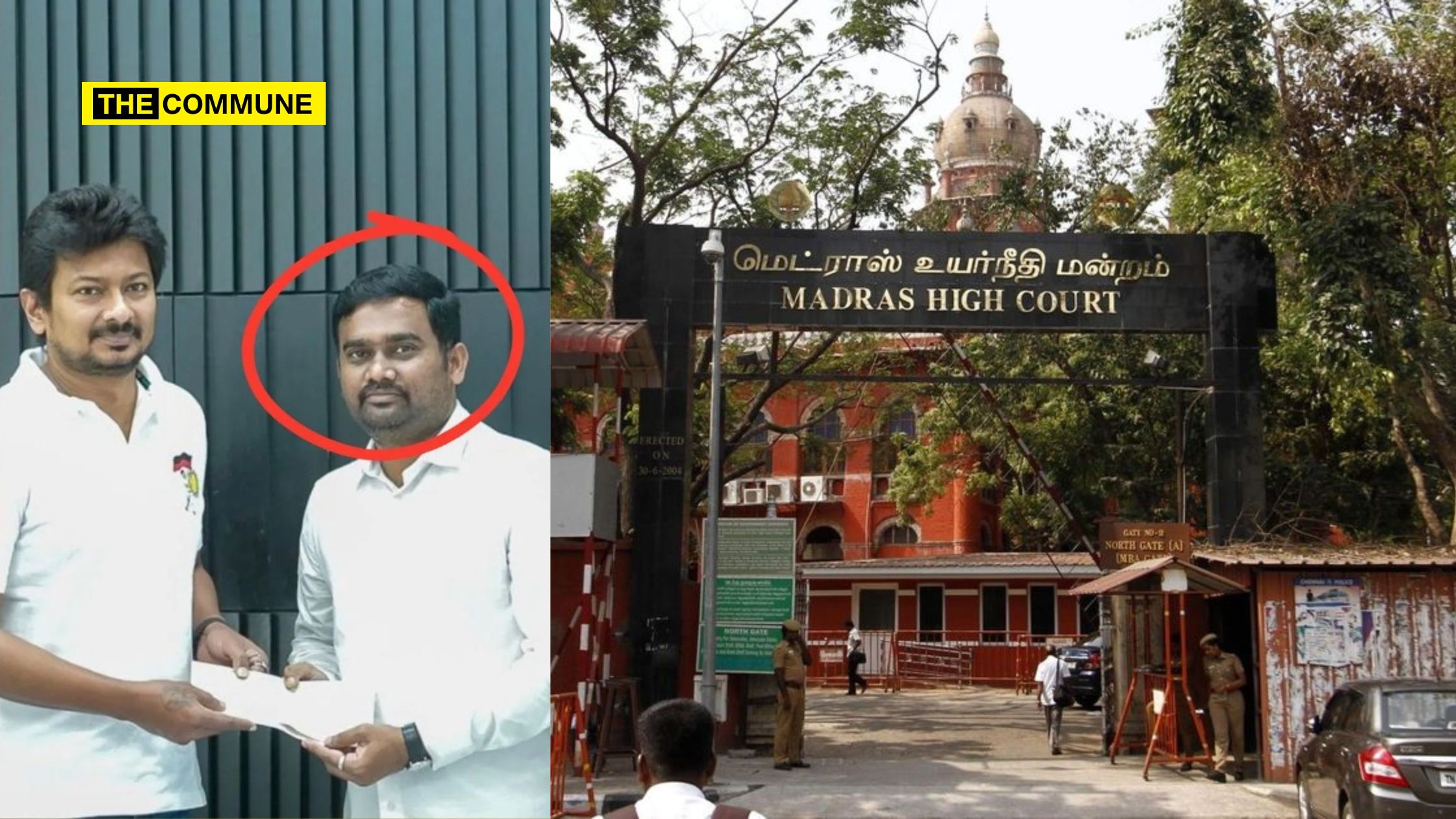
In a move drawing sharp criticism, the Madras High Court on Monday (21 April 2025) granted bail to alleged international drug smuggler Jaffer Sadiq alias “Bezos” and his brother Mohamed Saleem in a high-profile money laundering case.

The case, registered by the Enforcement Directorate (ED) under the Prevention of Money Laundering Act (PMLA), 2002, stems from allegations of a ₹2,000 crore pseudoephedrine drug trafficking operation linked to Australia and New Zealand.

Justice Sunder Mohan granted bail by invoking the precedent set by the Supreme Court in July 2024, where then-Justice B.R. Gavai and Justice K.V. Viswanathan granted bail to former Delhi Deputy CM Manish Sisodia in a PMLA case.

Ironically, the judiciary—which has in recent months aggressively asserted its authority by questioning the roles of Parliament and even issuing directives to the President and the Governor has now released individuals accused of grave transnational crimes. Critics argue that such decisions risk eroding public trust in the system, especially when the accused are allegedly linked to drug cartels and financial crimes of an international scale.

Initially arrested by the Narcotics Control Bureau (NCB), Sadiq was dubbed the mastermind of a major drug syndicate responsible for exporting massive quantities of pseudoephedrine. The ED later registered an Enforcement Case Information Report (ECIR) based on the NCB’s investigation and accused Sadiq and Saleem of laundering drug profits through film production and business fronts.

The High Court’s order is being viewed by many as a glaring example of judicial inconsistency. On one hand the judiciary encroaches on the powers of other institutions of democracy (President and Parliament) by lecturing them on how to do their jobs in a “time bound” manner while on the other hand it gives bail to people involved in international drug smuggling.

(With inputs from The Hindu)

Subscribe to our channels on Telegram, WhatsApp, and Instagram and get the best stories of the day delivered to you personally.

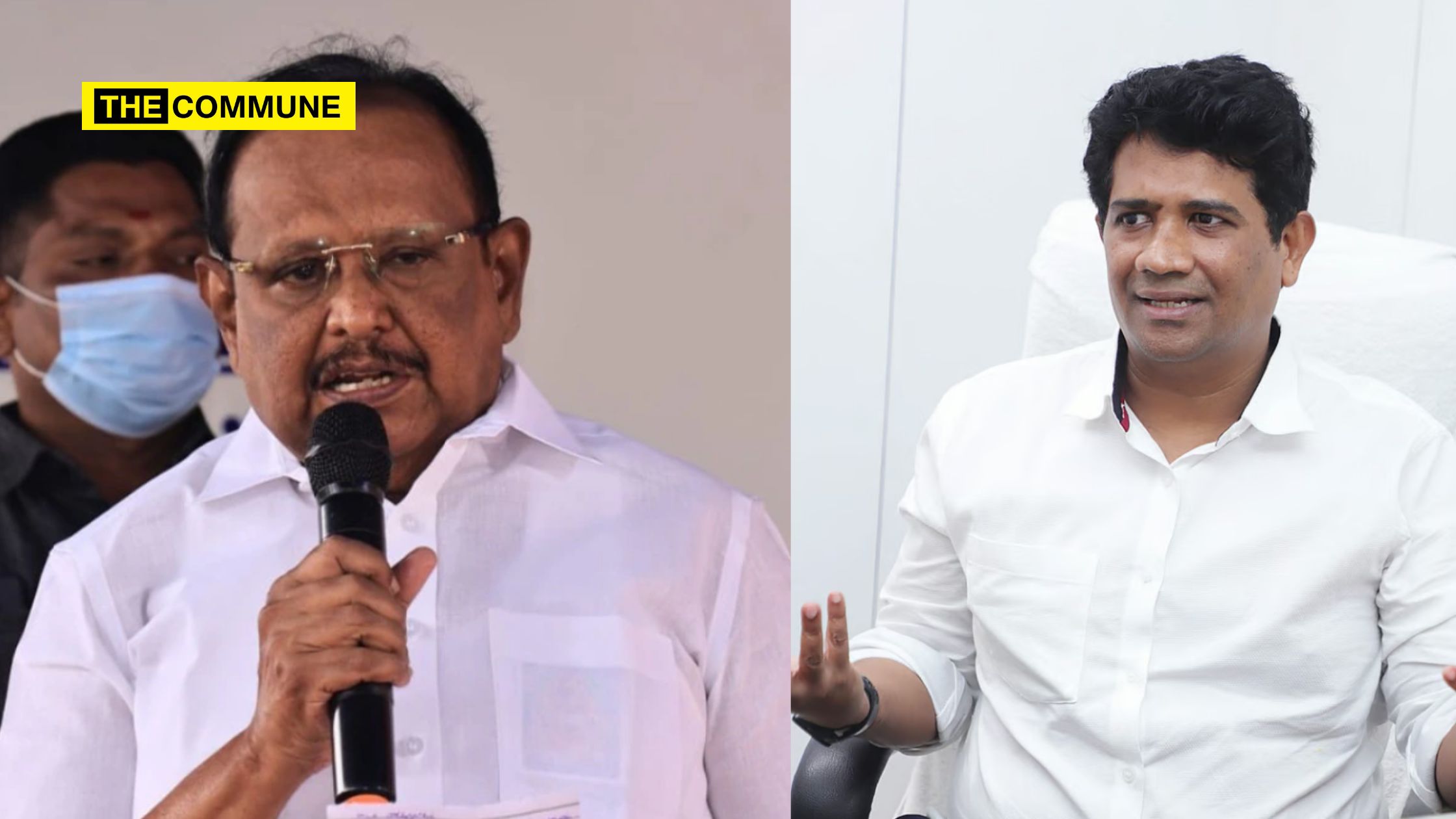
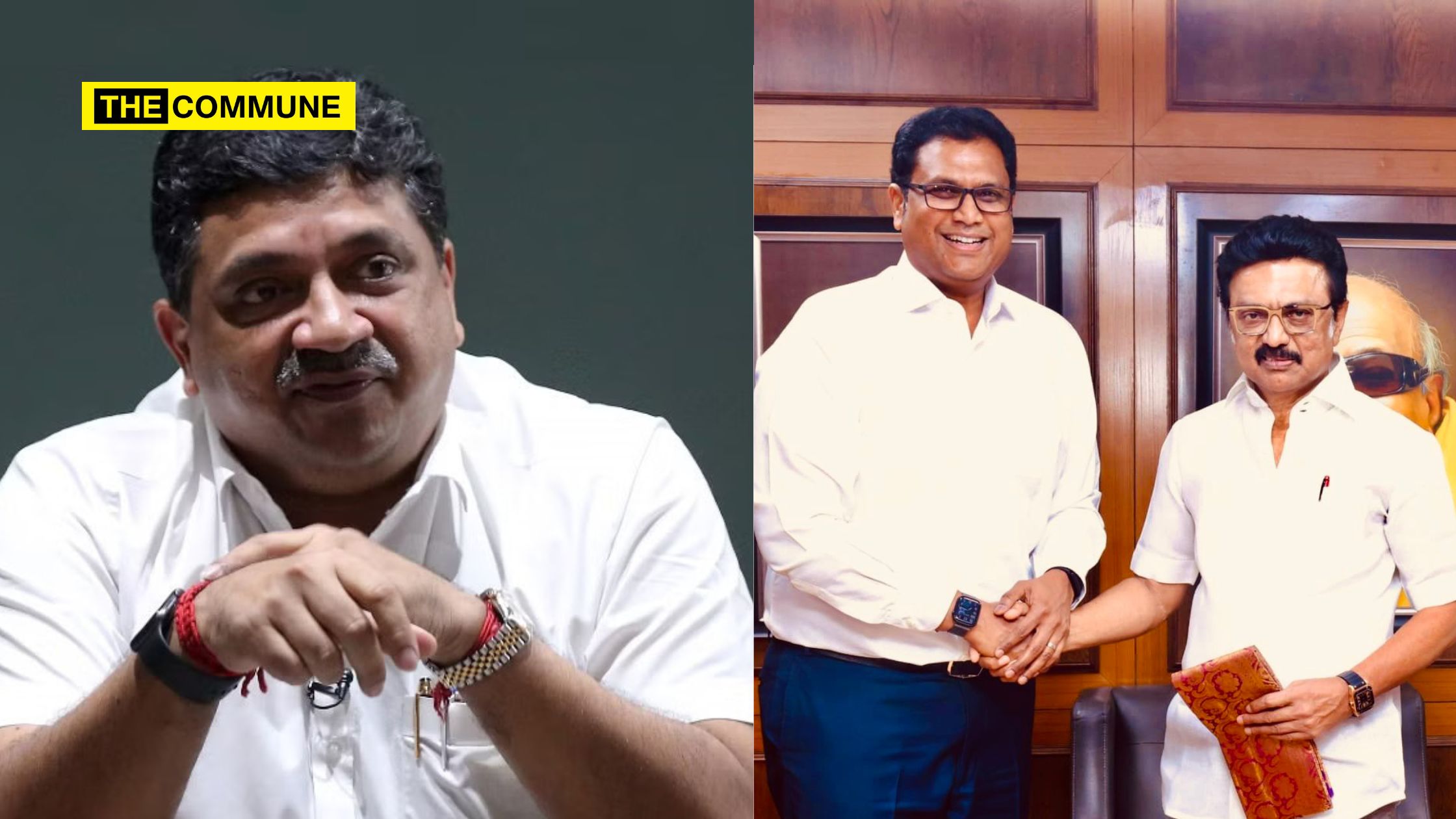
“We Don’t Have The Power”: DMK IT Minister PTR Laments On Fund Crunch, Hints At Inner-Party Power Centers

DMK Minister for Information Technology and Digital Services, Palanivel Thiaga Rajan (PTR), has stirred political controversy after expressing frustration in the state assembly over the limited budget allocated to his department. His comments, made during a legislative session, suggested that those seeking support should approach departments that have the “money, ability, and power“—a statement that has drawn criticism and raised eyebrows in political circles.

The remarks came during the Question and Answer session in the Tamil Nadu Assembly on 21 April 2025, when AIADMK MLA Pon Jayaseelan from Gudalur urged the government to establish an IT park in his constituency to create job opportunities.

Responding to the request, Minister PTR noted, “Honorable Speaker, in this very session, I have mentioned the problems in my department in this House. The funds allocated are very limited. Unlike other states, not all the technology parks are functioning in our sector. Only a small part of ELCOT is operational in our sector, while the rest—TIDAL and NEO TIDAL—are functioning in the industrial sector. Although this is an extraordinary situation, it has persisted in Tamil Nadu for 20 years. Therefore, if you ask who has the money, capacity, and power, I believe he will take action. Unfortunately, we do not possess these.”

Speaker Appavu intervened during the exchange, reminding the minister that inter-departmental issues should be resolved through discussions with the Chief Minister. He further advised that ministers should aim to provide constructive responses to queries raised by fellow legislators.

DMK IT Minister Palanivel Thiaga Rajan’s recent expression of dissatisfaction comes nearly two years after he was removed from the Finance portfolio and reassigned to the Information Technology department in May 2023. This shift followed the leak of an alleged audio recording in which PTR was purportedly heard accusing Chief Minister M.K. Stalin’s son, Udhayanidhi Stalin, and son-in-law, Sabareesan, of amassing wealth worth thousands of crores. The fallout from the leak reportedly led to his demotion to what many perceive as a less influential role within the cabinet.

PTR’s current grievances are viewed not just as complaints over limited departmental power, but also as indicative of deeper issues within the party’s internal dynamics. Critics see the situation as reinforcing the DMK’s pattern of dynastic politics—particularly as T.R.B. Rajaa, the Minister for Industries and son of DMK Treasurer and Sriperumbudur MP T.R. Baalu, continues to hold a key economic portfolio, consolidating influence under party’s spread.

Subscribe to our channels on TelegramWhatsApp, and Instagram and get the best stories of the day delivered to you personally.

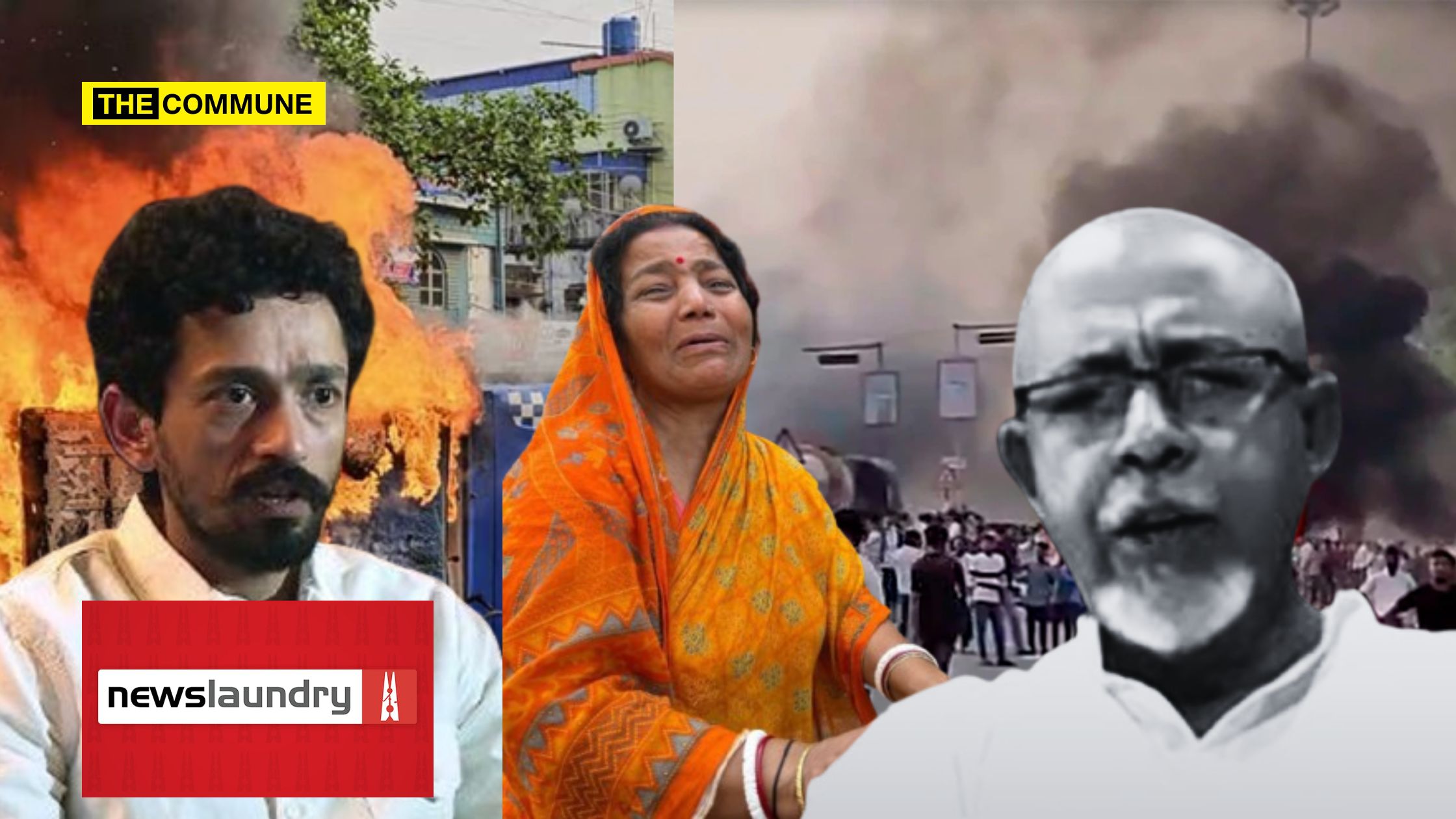
Newslaundry Gives Platform To Justify Islamist Mob, Murshidabad Violence Blamed On Hindu “Provocation”

On a recent episode of Newslaundry’s podcast, journalist Nirmalya, a columnist from Kolkata, stirred controversy with his analysis of the communal violence in Murshidabad. His remarks, which appeared to justify the Islamist-led attacks by framing Hindus as “provocators,” drew sharp criticism from listeners and commentators alike.

Violence In Murshidabad: A Clash Or One-Sided Pogrom?

The discussion began with host Abhinandan Sekhri of leftist portal Newslaundry seeking clarity on the ongoing violence in Murshidabad, where Hindu families have been forced to flee after targeted attacks by Muslim mobs. ‘Legacy media’ reports according to Newslaundry founder Abhinandan Sekhri, along with viral videos, show homes burned, temples vandalized, and ‘at least two Hindu men’ brutally lynched. However, Nirmalya downplayed the severity of the situation, arguing, “Suppose I’m living with you, you live next door to me suddenly one morning I come up and I kill you, so unless there is a provocation this never happens with certain interest and that provocation could be a state provocation, could be an international provocation and that the provocateurs are successful that they have been able to titillate these idiotic foolish political parties who do play religious games for their own benefit.” 

When pressed on whether Hindus were truly the instigators, he avoided direct condemnation of the Islamist violence, instead suggesting that political forces—particularly the BJP—had inflamed tensions. He said, “In Bengal this thing has emerged mostly in Bengal after BJP retained its almost 40% vote in two consecutive elections in 2021 and again in 2024, they were of almost 40% in 2019.”

Mamata Banerjee’s Role: Justification or Diversion?

Nirmalya defended Mamata Banerjee’s handling of the crisis, despite her administration’s failure to prevent the violence and her subsequent attempts to shift blame—first to Congress, then to the BSF, and finally to “Bangladeshi infiltrators.”

“Mamata is a very smart politician,” he said, “she immediately diverts things… she can even go to the moon if required.”

Critics argue that this deflection is a deliberate strategy to avoid accountability. Banerjee’s recent meeting with Muslim clerics, where she focused on attacking the BJP rather than addressing the victims, further reinforced accusations of appeasement politics.

Hindu Exodus: Media Blackout or Political Narrative?

When NL pointed out reports of Hindus fleeing their villages due to threats, Nirmalya dismissed the claims stating, “No, no, no, that’s a wrong view.”

This denial clashes with ground reports and survivor testimonies documenting systematic intimidation. Analysts note that under previous Left and Congress regimes, such incidents were suppressed as “clashes between miscreants,” but the scale of violence in Murshidabad—and its overtly communal nature—has made suppression impossible.

Elections & Polarization: A Deliberate Strategy?

With elections 10 months away, Nirmalya acknowledged that Bengal’s politics is now irrevocably polarized, “BJP is considered a Hindu party, and Mamata does Muslim politics… all four major parties in Bengal are, at their base, religious parties.”

However, his suggestion that Hindu consolidation—a reaction to Islamist aggression—is the “biggest curse” for Bengal drew ire. Critics argue that such framing ignores the reality of Muslim vote-bank politics, where Mamata’s welfare schemes (like Lakshmir Bhandar) and overt minority appeasement have cemented her support base.

A Dangerous Normalization of Violence?

Nirmalya’s remarks reflect a broader media tendency to rationalize Islamist violence by invoking “provocation” while ignoring state complicity. His claim that “Murshidabad is just the tip of the iceberg” suggests more unrest is likely as elections approach—with Hindus potentially facing further scapegoating.

Subscribe to our channels on Telegram, WhatsApp, and Instagram and get the best stories of the day delivered to you personally.
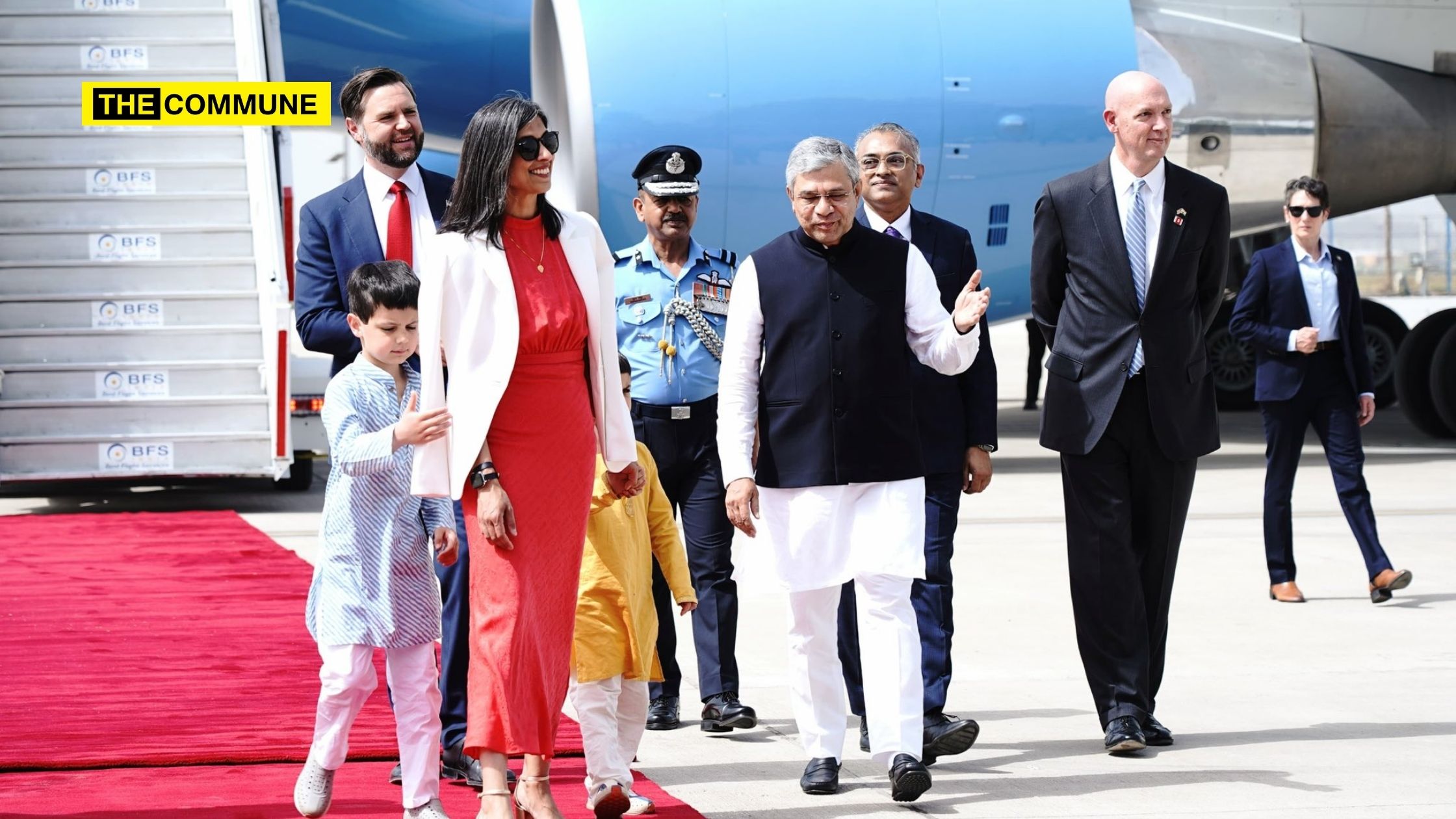
US Vice President JD Vance And Family All Set To Arrive In Jaipur

US Vice President J.D. Vance will be arriving in Jaipur on Monday at around 9 p.m., accompanied by his family during his four-day official visit to India, most of which will be spent in Rajasthan with a brief tour of Agra.

The family will be staying at the Rambagh Palace, where they are expected to arrive by 10 p.m. In view of the high-profile visit, the city is under strict security arrangements. Over 2,000 police personnel have been deployed across key locations. Also, officials, including eight IPS officers, 23 Additional SPs, 40 DSPs, and more than 300 Sub-Inspectors, ASIs, and other personnel, have been deployed to ensure strict security during the high-profile dignitaries’ visit to the Rajasthan capital.

As part of the preparations, a full-scale security rehearsal was conducted on Sunday from 3 p.m. to 6 p.m. across the Vice President’s scheduled route, including OTS, Rambagh Palace, Amer Fort, and the Rajasthan International Center (RIC). Due to the visit, Amer Fort will remain closed to tourists from noon on Monday until the same time on Tuesday.

Entry for visitors will be restricted during this 24-hour period to ensure security. According to officials, Vice President Vance will be welcomed by Rajasthan Chief Minister Bhajan Lal Sharma at Jaleb Chowk in Amer Fort on Tuesday morning.

Vance will then proceed to visit key sections of the fort, including Singh Pol, Diwan-e-Aam, Sattais Kacheri, Ganesh Pol, Sheesh Mahal, and Mansingh Mahal. From April 21 evening to April 24, the Vice President and his family will stay as royal guests in Rajasthan.

Their official schedule begins Tuesday morning, when they will travel to Amer at 9 a.m., accompanied by Chief Minister Sharma and Deputy Chief Minister Diya Kumari. They will visit Amer Fort, Panna Meena Ka Kund, and the Anokhi Museum, before returning to the hotel by noon after lunch. At 2.45 p.m. on Tuesday, Vance is scheduled to speak at the Rajasthan International Center on India-US trade relations.

He will return to the hotel around 4 p.m., where a meeting with VIP dignitaries may take place. On Wednesday at 9 a.m., he will depart Jaipur for Agra by special flight. After visiting the Taj Mahal, he will return to Jaipur by 1.25 p.m.. A visit to the City Palace is tentatively planned for 2 p.m., where Deputy CM Diya Kumari will receive him and host lunch, said officials, adding, “Vice President Vance and his family will conclude their visit and depart for Washington, D.C., at 6.30 a.m. on Thursday via a special aircraft.”

–IANS

Subscribe to our channels on TelegramWhatsApp, and Instagram and get the best stories of the day delivered to you personally.