Home Blog Page 322

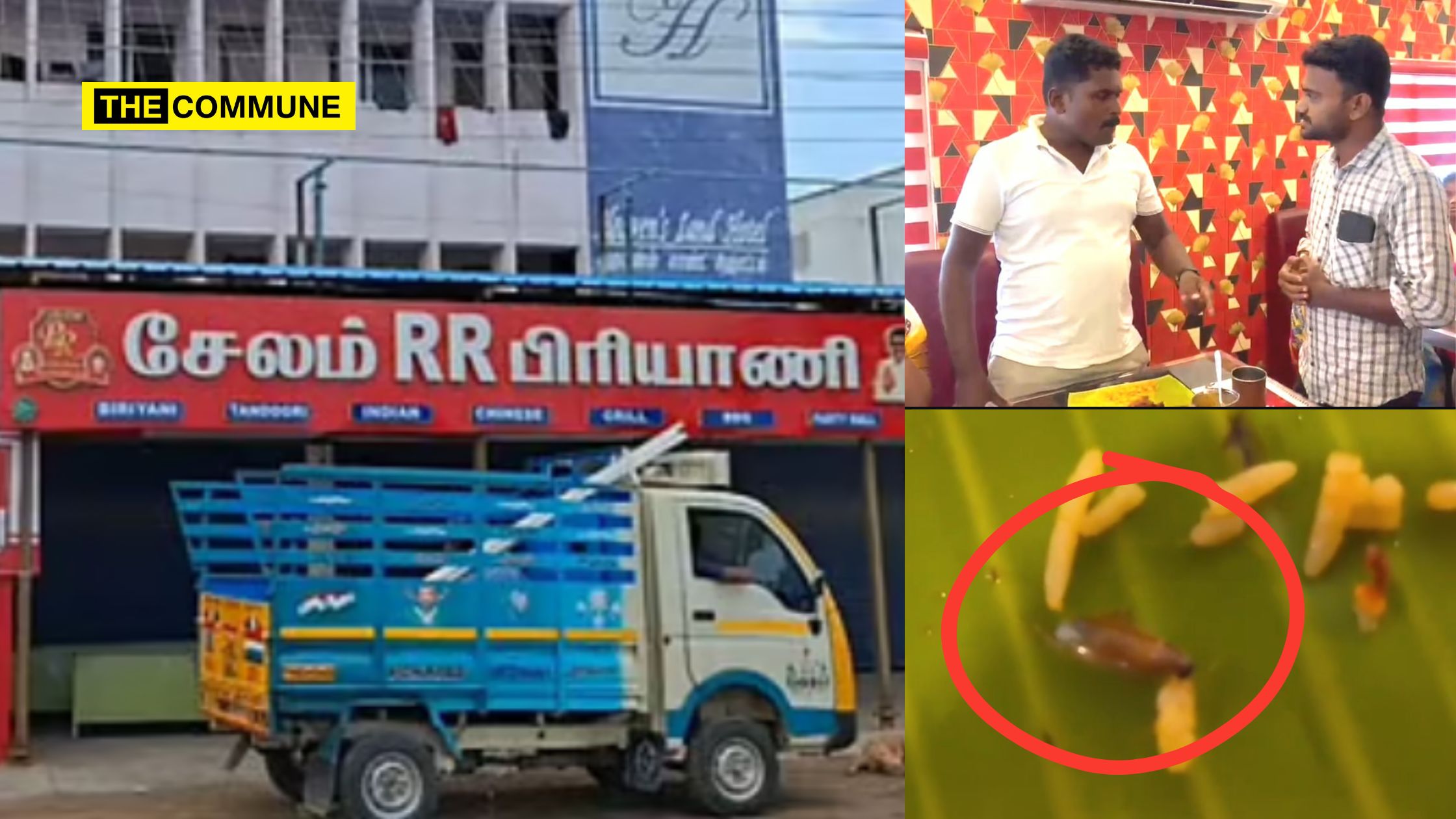
Cockroach Found In Biryani Served At Salem RR Biryani Eatery In Chidambaram; Video Goes Viral

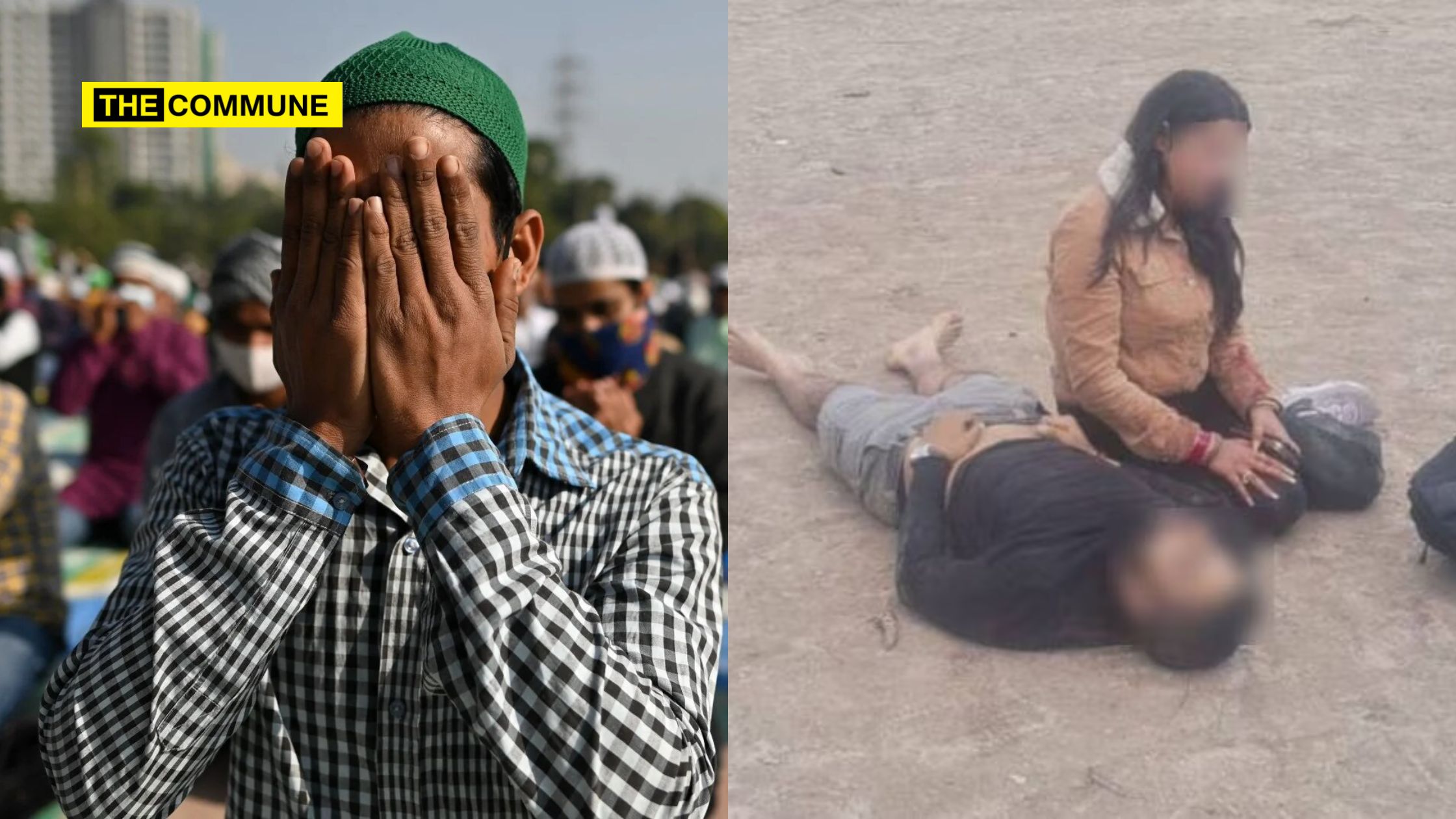
An unsettling incident unfolded at a well-known biryani outlet. Salem RR Biryani, in Chidambaram’s Vandigate area, where a customer reportedly discovered a cockroach in their food, leading to a heated dispute with the staff. A video of the confrontation has since gone viral across social media platforms.

The issue came to light when a couple from Virudhachalam visited the restaurant for lunch. While eating, they were horrified to find a cockroach in the biryani served to them. Tensions quickly escalated, and a verbal altercation ensued between the couple and the restaurant employees.

The situation became even more concerning when it was revealed that the woman involved is pregnant. Following the incident, she and nine others, including children, sought medical attention at the Government Medical College Hospital in Annamalai Nagar, Cuddalore. While most have since been discharged, the pregnant woman remains under medical observation.

The incident has caused alarm among local patrons, with many expressing concern over food safety standards. The viral video has sparked widespread criticism and raised questions about hygiene practices in popular eateries.

This is not the first time in recent months that such news have been coming out about unhygienic biryani shops. Earlier this month, Food Safety officials sealed Hotel Bilal Biryani in Triplicane after over 20 customers reportedly suffered food poisoning on 30 March 2025 from consuming beef biryani and beef rolls. Victims experienced vomiting and dysentery, with several hospitalized at the Communicable Diseases Hospital. Following customer protests and police complaints, officials inspected the premises and found food safety violations. A separate complaint was filed against Hotel Bilal’s Anna Salai branch after two college students fell ill following a family dinner. Both the Triplicane and Ice House police have registered cases against the respective outlets.

SS Hyderabad Biryani in Kodungaiyur, Chennai, was shut on 19 September 2024 after 40–45 people suffered vomiting and diarrhoea, reportedly after eating biryani. Some were treated at the Communicable Diseases Hospital, while others sought private care. Food safety officials found the kitchen unhygienic but couldn’t collect food samples as the restaurant had cleared them. Locals questioned the delay in sealing the outlet. A viral video showed distressed customers confronting police, citing hospitalised family members. Authorities confirmed the closure and ongoing investigation, though it’s unclear if food poisoning was the cause.

(With inputs from PTTV News)

Subscribe to our channels on Telegram, WhatsApp, and Instagram and get the best stories of the day delivered to you personally.

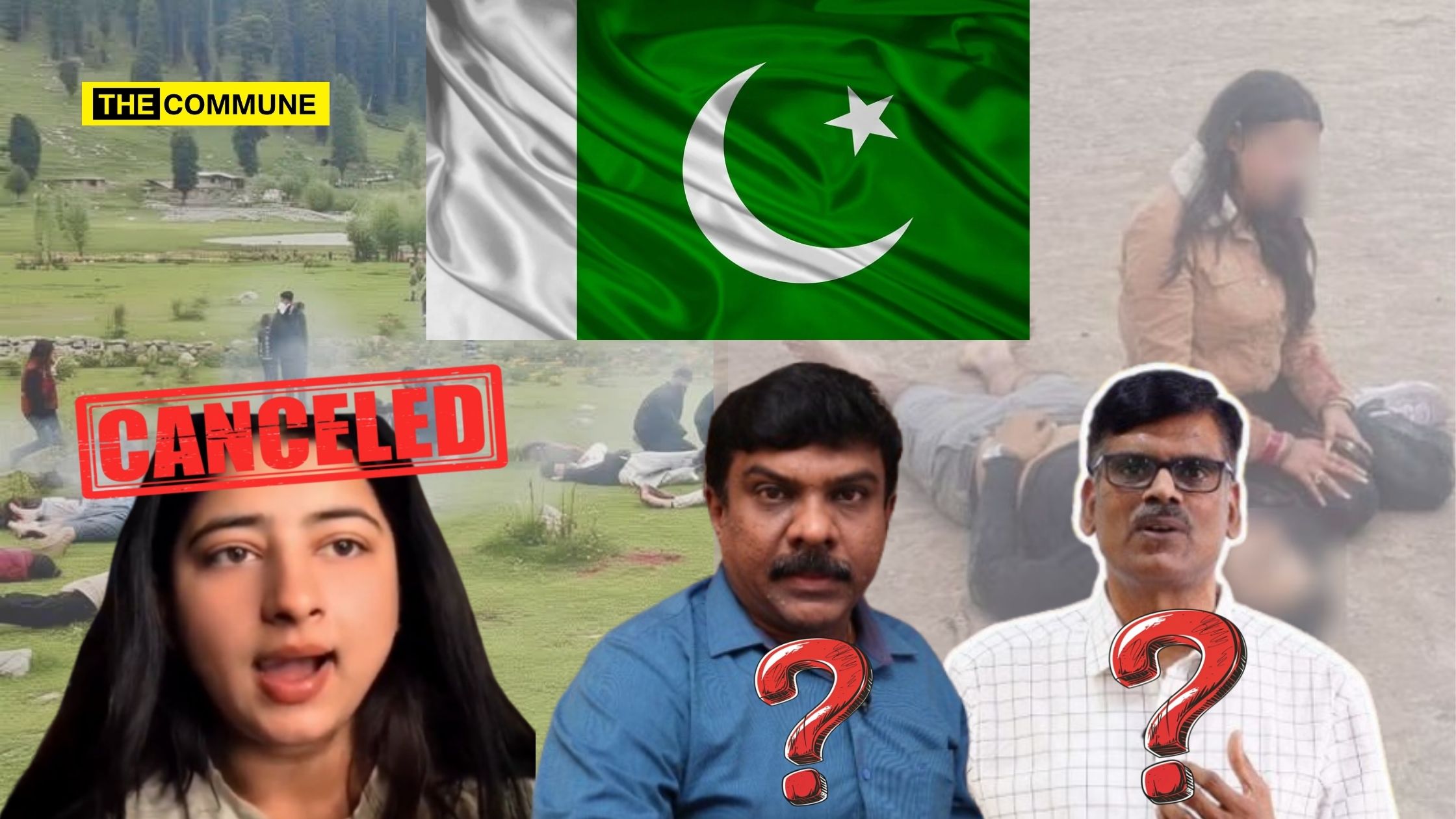
GOI Blocks Pakistani Channels, Withholds Indian Influencer Insta Account Amplifying Pak Narrative After Pahalgam Attack – When Will Tamil YouTubers Face Action?

In a major crackdown on anti-India propaganda, the Government of India has blocked 16 Pakistan-based YouTube channels and withheld access to few Indian accounts found amplifying Pakistan’s narrative after the Pahalgam terror attack.

Based on recommendations from the Union Home Ministry, the Modi government banned prominent Pakistani news channels and YouTube outlets — including Geo News, Dawn, Bol News, ARY News, Samaa TV, Raftar, and Suno News. These channels, collectively boasting over 63 million subscribers, were reportedly disseminating inflammatory content, spreading disinformation about India, and attacking the Indian Army and security agencies.

In addition to targeting Pakistani propaganda channels, the GOI also acted against domestic influencers found echoing similar narratives. Notably, the Instagram account of Shreshtha Jha (@shesh_diaries) — who had over 1.8 million followers, mostly Indian — was withheld after she accused the Indian government of orchestrating the Pahalgam attack.

Her posts, many of which allegedly circulated on Pakistani media, directly blamed India for the killings carried out by Islamic terrorists from The Resistance Force, an offshoot of Lashkar-e-Taiba.

Jha’s account takedown signals a broader shift in policy: the government is no longer limiting action to foreign sources of disinformation, but is moving against Indians who serve as domestic amplifiers of Pakistan’s propaganda.

Such posts not only insulted the victims of the Pahalgam massacre — where Hindus were specifically targeted — but also undermined national security at a critical time.

While the crackdown on Pakistani news outlets and social media propagandists has been welcomed by many, questions are now being raised as to when the government extend similar action to Tamil YouTubers and other regional influencers within India who are spreading identical anti-India narratives in local languages?

The Commune had reported on a few such channels which have been peddling an anti-India narrative and blamed the centre for the horrendous attack.

One notable example is Senthil Vel, who runs the Tamil Kelvi YouTube channel and former anchor for the Tamil news outlet Maalai Murasu. He controversially questioned why those calling the Pahalgam terrorists “Muslims” don’t also label espionage suspects arrested in India as “Hindus.” Another channel, Arakalagam, echoed this exact sentiment, further fueling confusion and deflection.

Claiming to expose links between BJP members and terrorism, Vel’s video quickly derailed into misinformation and casteist rhetoric. He cited outdated or misrepresented cases, such as Lashkar-e-Taiba terrorist Talib Hussain Shah—who was Muslim, not Hindu as implied—and espionage cases involving individuals from various backgrounds, falsely branding them as examples of “Hindu terrorism.”

Vel’s monologue, laced with hardline Dravidianist bias, included a caste-based attack on Brahmins, reflecting the deep-rooted animosity common in such circles. He leaned heavily on reports from known Congress sympathizers like Dhruv Rathee and Alt News’ Mohammed Zubair, raising questions about credibility and selective outrage.

Attempts to link journalist Ved Pratap Vaidik’s meeting with Hafiz Saeed to Hindu terror ignored the broader journalistic context, especially considering Tamil Nadu’s own precedent of using interviews with criminals like Veerappan.

Ultimately, Vel’s effort to dilute the religious motivation behind attacks like Pahalgam — where Hindus were specifically targeted — by invoking espionage cases involving Hindus failed. His false equivalence between terrorism and espionage sparked public outrage, exposing the political desperation behind the narrative.

Another Dravidianist masquerading as a financial influencer, PR Sundar, pushed the same narrative as Senthilvel did. A Singapore-based Tamil Dravidianist and stockbroker, sparked outrage with a video posted after the 22 April Pahalgam terror attacks, in which he appeared to indirectly accuse the Indian Army of collusion with terrorists. Using a poetic allegory, Sundar insinuated that internal corruption allowed the attack to happen, deflecting blame from the terrorists and shifting focus onto the Indian establishment. He ridiculed the Indian military’s capabilities by citing aircraft crash statistics and invoking the “flying coffins” trope, using corruption scandals to further undermine trust in India’s defense forces.

Echoing leftist and Dravidianist narratives, Sundar also pushed the “terror has no religion” line, even though reports confirmed the Pahalgam terrorists specifically targeted victims based on their religion. Despite these facts, Sundar avoided condemning the Islamic extremist nature of the attack, choosing instead to mock India’s counter-terrorism and diplomatic efforts, such as cutting trade with Pakistan or halting the Indus Water Treaty. He labeled these measures as unjust punishments of Pakistani civilians, ignoring their role in enabling terrorism.

Sundar’s commentary closely mirrors other known anti-India voices like journalist Senthilvel, who downplayed the religious targeting and human cost of the attacks. Although Sundar claimed to speak from a place of neutrality and concern for India, his arguments reveal a consistent bias against the Indian government and armed forces, while excusing or minimizing Islamic terrorism. His narrative ultimately serves to erode national unity and distract from the core issue: the threat of radical extremism.

Rather than highlighting national security threats seriously, influencers like Senthil Vel and Sundar appeared more focused on reinforcing the DMK-Congress line, shielding Islamist violence from scrutiny while stoking caste tensions — a move seen by many as politicizing a grave national tragedy.

Subscribe to our channels on TelegramWhatsApp, and Instagram and get the best stories of the day delivered to you personally.

Dravidian Model: Pharmacist At Salem Government Hospital Accused Of Distributing Wrong Medication While Intoxicated

In a disturbing incident at the Salem Government Medical College Hospital, patients collecting medicines were allegedly given incorrect prescriptions after a pharmacist on duty was found to be under the influence of alcohol.

According to reports, the hospital, which receives between 2,000 to 5,000 patients daily from various districts, faced a serious lapse on 28 April evening. Crowds had gathered at the dispensary, forming long queues at both counters. During this time, a 56-year-old pharmacist named Mathesh, who was overseeing one of the counters, was reportedly behaving erratically.

A concerned young man noticed the pharmacist staggering and accused him of altering the prescribed medications, potentially endangering patients’ lives. Despite his repeated pleas, no hospital staff initially intervened. The man stood in protest for over 20 minutes outside the pharmacy, demanding immediate action.

The incident was recorded on video, in which a young man can be heard saying, “We need a medical report on him.” The person filming then asked, “What happened?” The youth explained, “He switched the pills and gave them to me. We handed him our medical prescription receipt, but he set it aside and gave us a different one.” When asked, “What did he say when you questioned him?” the youth replied, “He just kept blabbering and wouldn’t respond properly. I realized as I read it, What about the people bought before me?”

Shortly afterward, Mathesh locked the counter and went inside the pharmacy. As a result, several patients and their relatives were left waiting for extended periods to receive their medication. Eventually, a head constable from the hospital police outpost arrived and took the pharmacist in for questioning. Preliminary tests reportedly confirmed that Mathesh had consumed alcohol while on duty.

Family members of patients expressed serious concern, stating that the situation could have turned tragic had the mistake gone unnoticed. They called for strict disciplinary measures and urged authorities to remove individuals under the influence from such critical roles.

(With inputs from Polimer News)

Subscribe to our channels on Telegram, WhatsApp, and Instagram and get the best stories of the day delivered to you personally.
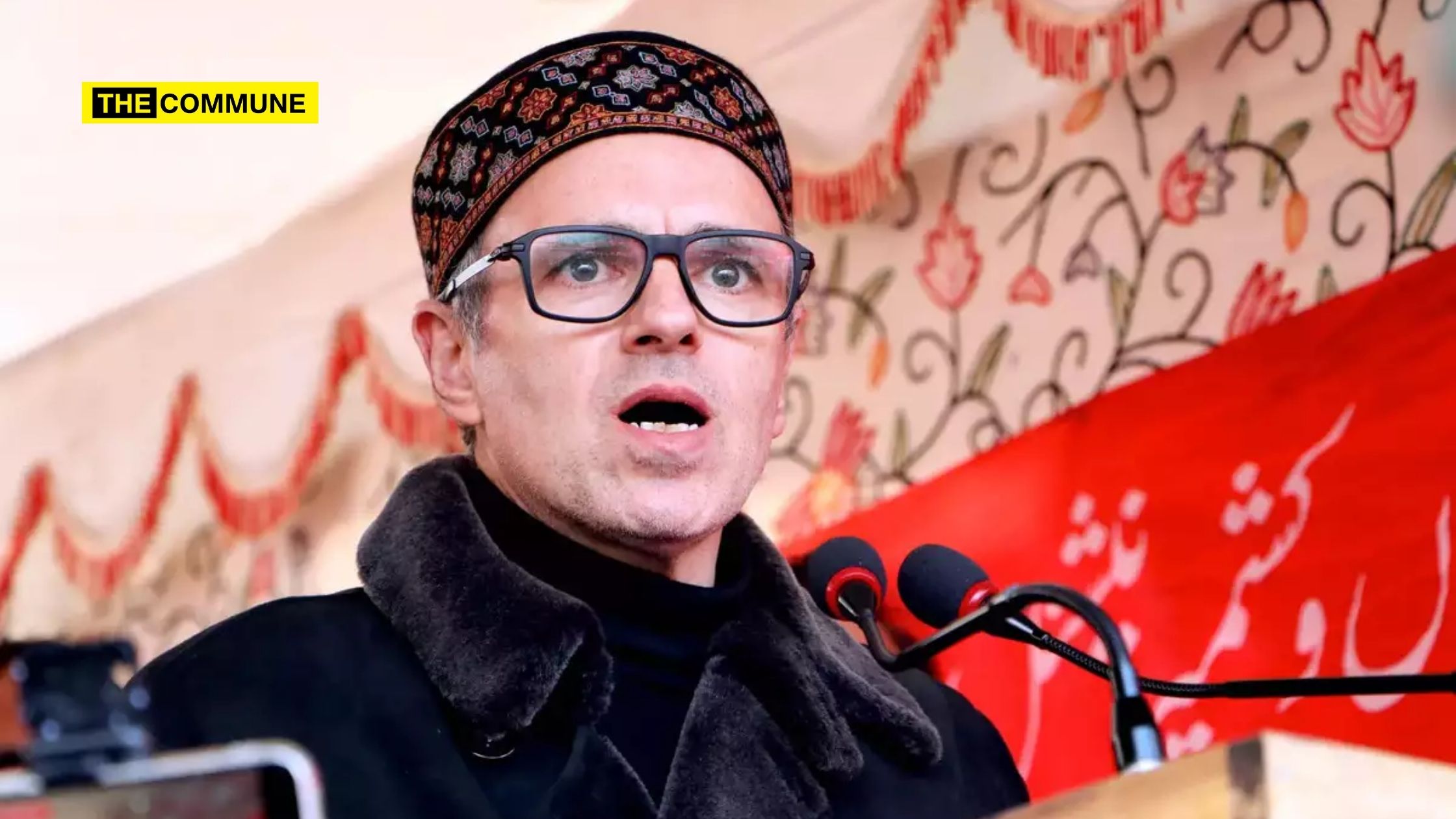
Pahalgam Terror Attack: Reading Between The Lines Of J&K CM Omar Abdullah’s Speech In Assembly

In the aftermath of the tragic Pahalgam terror attack that claimed 26 innocent lives, J&K Chief Minister Omar Abdullah delivered what many have called a “powerful” speech in the Assembly. However, to understand the real message behind Abdullah’s words requires careful parsing of his rhetoric and placing it within the context of his established communication patterns. This analysis attempts to decode what was truly being conveyed beneath the emotional appeals and apparent restraint.

The Artful Construction Of Victimhood

Abdullah begins by establishing a shared trauma narrative: “Neither the Parliament nor any other assembly of this country understands the pain of those 26 people of Pahalgam as much as this assembly of Jammu and Kashmir.” Reading between the lines, this statement does more than express solidarity—it creates separation between J&K and the rest of India, positioning the region’s political class as unique authorities on terrorism.

By meticulously listing assembly members who have lost family members to terrorism, Abdullah subtly shifts the narrative from one of governance accountability to one of universal victimhood. This framing cleverly transforms political leaders from potential subjects of scrutiny into fellow sufferers, deserving of sympathy rather than questioning.

The Disclaimer That Speaks Volumes

The most revealing sentence in Abdullah’s entire speech may be this seemingly innocent disclaimer: “I did not have words to say what to apologize to their families, knowing that the security of Jammu and Kashmir is not the responsibility of the government elected by the people of Jammu and Kashmir.”

Decode this statement and its true message emerges: while appearing to take moral responsibility, Abdullah is actually pointing a finger at the central government. Without naming names, he has effectively shifted the blame to New Delhi. This perfectly calibrated statement allows him to appear humble while simultaneously absolving his administration of responsibility—a masterful political maneuver hidden within an apparent admission of helplessness.

The Weaponization Of Public Sentiment

Abdullah’s focus on spontaneous public condemnation seems innocent enough: “From Kathua to Kupwara, there is hardly any city or village where people did not come out and condemn this attack.” Yet when decoded, this segment serves a sophisticated political purpose—it reframes Kashmir’s public as fundamentally anti-terrorism, while subtly suggesting that any security measures imposed by outside forces are unnecessary impositions on a population that already rejects violence.

His claim that “We made a vehicle ourselves, rode on it and took out a rally” reveals how quickly genuine public grief transforms into political capital. The message is clear: the Abdullah administration is not separate from the people but part of their organic response—a clever repositioning that blurs the distinction between government and governed, between those responsible for security and those demanding it.

The Non-Demand That Is Actually A Demand

Perhaps the most sophisticated rhetorical sleight of hand comes when Abdullah declares: “Shame on me if I go to Markaz today saying, 26 people have died, now give me statehood.”

When decoded, this ostentatious refusal to politicize tragedy accomplishes exactly what it claims to avoid. By mentioning statehood at all—even to declare he won’t demand it—Abdullah ensures the issue remains in the conversation. The message to his constituents is clear: I haven’t forgotten about statehood; I’m just being strategic about when to press for it. Meanwhile, to the broader Indian audience, he presents himself as refreshingly principled.

This single statement accomplishes four political objectives simultaneously:

  1. It portrays Abdullah as morally superior to opportunistic politicians
  2. It signals to his base that statehood remains a priority
  3. It implicitly criticizes the central government’s handling of J&K’s status
  4. It establishes moral high ground for more aggressive statehood demands in the future

The Unnamed Culprit

Reading between the lines reveals the most significant aspect of Abdullah’s speech: what remains unsaid. Neither Abdullah nor the Assembly resolution names any terrorist group or external state actor responsible for the attack. This conspicuous silence speaks volumes.

Instead, Abdullah notes this was the “biggest attack” in 21 years. The time reference is not accidental—it takes listeners back to a period before the current central government came to power. Without explicitly stating it, Abdullah has planted the suggestion that current central government policies have led to deteriorated security conditions.

Throughout the speech, Abdullah refers to nebulous forces behind the attack: “They say that they did it for our good” and whoever you did this for, you did not do it for me.” This vague attribution avoids naming specific terrorist organizations or addressing their ideologies, motivations, or support networks.

This ambiguity allows various interpretations depending on the audience. Some might interpret it as referring to Pakistan-backed terrorists, while others might read it as criticizing heavy-handed security policies. This calculated ambiguity enables Abdullah to appear tough on terrorism while avoiding alienating any constituency.

The Master Of Dual Messaging

To fully decode Abdullah’s Pahalgam speech requires understanding his established pattern of delivering different messages to different audiences. His most famous precedent came during the Amarnath agitation in Parliament in 2008, where he spoke in both English and Urdu.

In English—aimed at mainstream India’s liberal intelligentsia—he delivered the reassuring message: “I am an Indian and I am a Muslim and I see no contradiction between the two.” This statement earned widespread acclaim across India.

However, in Urdu—targeted at his Kashmiri constituents but largely untranslated for national audiences—he declared: “Woh hamari zameen ka mudda tha, apne zameen ke liye lade, aur marte dum tak apne zameen ke liye ladenge, pilgrim camp nahin banne denge” (It is our land, we will fight till our last breath, we will not allow pilgrim camps to be built). This directly opposed the central government’s plan to improve accommodations for Hindu pilgrims.

What mainstream commentators praised as a speech about national unity was simultaneously a speech about territorial resistance for his local audience. This sophisticated dual-messaging strategy—what one observer called “English for the useful idiots, Urdu for his people in Kashmir”—reveals Abdullah’s political sophistication.

The Pahalgam speech follows this established pattern. What appears as an apolitical expression of grief to casual listeners contains carefully encoded political messages for those who know how to decode them.

Reading between the lines reveals Abdullah’s true message: the central government has failed in its security responsibilities, J&K deserves statehood, and the Abdullah administration shares the people’s pain rather than responsibility for their protection. All this is communicated without a single explicit political demand or accusation.

The breathless commentary praising the speech’s “powerful” and “apolitical” nature demonstrates precisely how effective this strategy is. What appears as emotional authenticity to casual observers contains layers of political positioning visible only to those who parse each sentence carefully.

Subscribe to our channels on Telegram, WhatsApp, and Instagram and get the best stories of the day delivered to you personally.

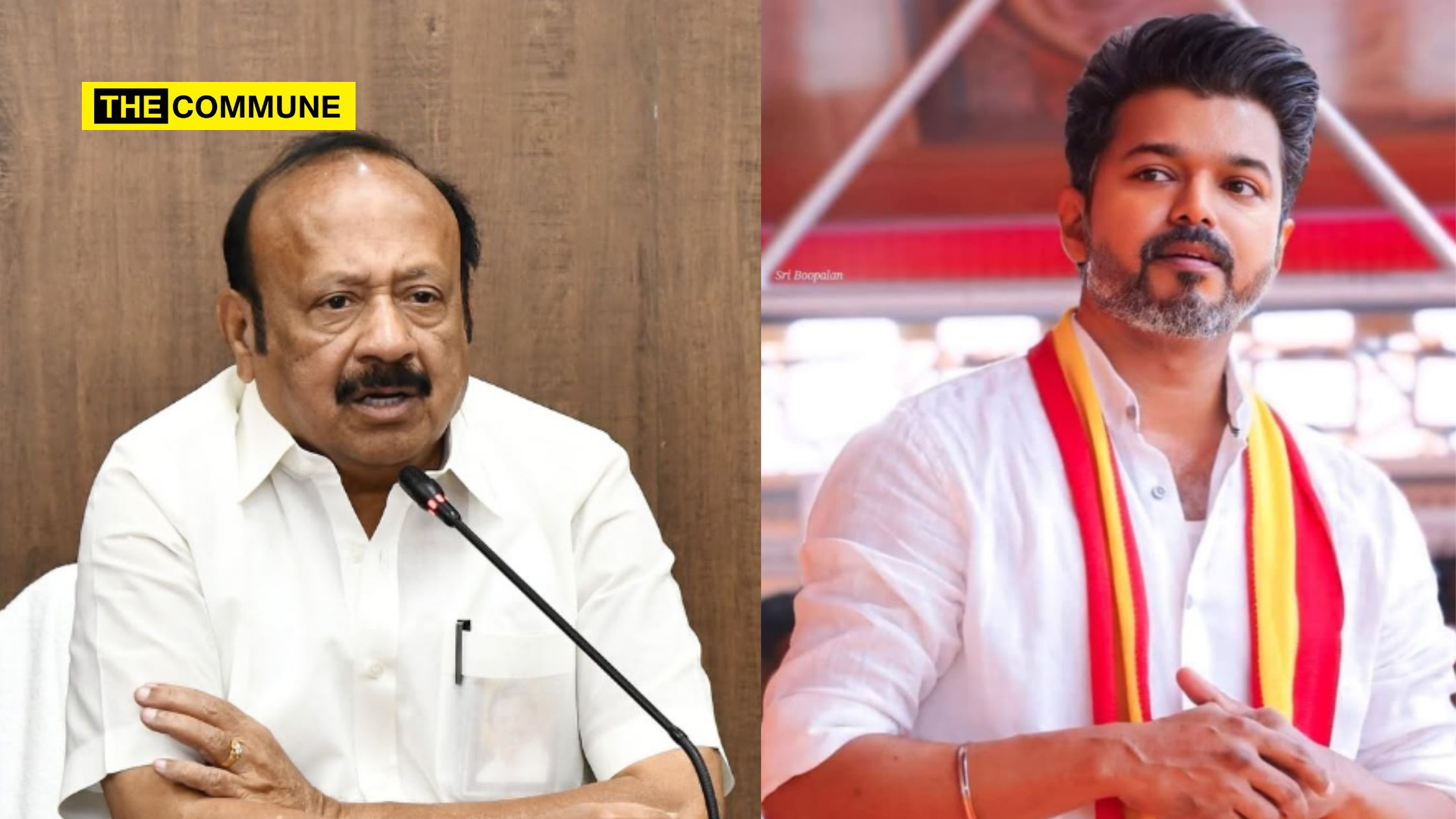
DMK Minister MRK Panneerselvam Says T And K In Vijay’s TVK Stands For Trisha And Keerthy Suresh, Questions Alleged Black Money Held By Vijay

On 27 April 2025, DMK Minister MRK Panneerselvam sparked controversy by taking a veiled swipe at part-time-politician Vijay, accusing him of hypocrisy by allegedly accepting undeclared income while criticizing corruption.

Addressing a public gathering, Panneerselvam remarked, “A person who once sold tickets illegally is now lecturing us on corruption. He takes his pay under the table and yet speaks of rescuing the state, despite being unable to maintain peace in his own family,” he said, without naming Vijay explicitly.

The Minister also poked fun at Vijay’s political outfit, Tamilaga Vettri Kazhagam (TVK), by joking with the crowd. When he asked them to interpret the initials ‘TVK’, audience members humorously shouted out the names of actresses Trisha and Keerthy Suresh.

During a recent event, the DMK Minister asked the cadres, “What does ‘T’ stand for?” One of the cadres mockingly replied, “Trisha,” which left the minister stunned. He responded, “You can say that, but I don’t know anything!” This prompted huge laughter from the audience. The minister continued, “Then what is ‘V’ stands for? you should say that, and also ‘K’?” Immediately, another cadre replied, “Keerthy Suresh.” The minister then exclaimed, “How genius is he!” followed by more laughter. Laughing, Panneerselvam praised the crowd’s humor, “We were thinking that only we know, it seems we are the idiots. Now this company believes it can take over the government and become the chief minister. Is this a movie?”

These comments come in response to Vijay’s speech at TVK’s inaugural general body meeting on 28 March, where he launched a strong attack on the ruling DMK. He declared that the 2026 Assembly election would be a direct face-off between TVK and DMK.

In his address, Vijay said, “Dear Muthuvel Karunanidhi Stalin, it’s not enough to carry courage in your name — it must reflect in your actions too.” He further accused the DMK government of operating in a manner akin to a fascist regime.

(With inputs from India Today)

Subscribe to our channels on Telegram, WhatsApp, and Instagram and get the best stories of the day delivered to you personally.
How ‘Tamil Thatha’ U Ve Swaminatha Iyer Embodied Timeless Bharatiya Values

When we write about the greatness of Tamil or the symbols and people we celebrate, it often becomes a hagiography. Many times, this is unintentional. In the preface of his book, “Sri Meenakshisundaram Pillai Sarithiram” (“The History of Sri Meenakshisundaram Pillai.” Sri. Pillai was ‘Tamil Thatha’ U. Ve. Sa.’s teacher), U. Ve. Swaminatha Iyer says, “(the authors/ publishers) attribute things to great people, thinking it will add to their fame. Thus, they impose blunders on the heads of these great people using this cheap tactic. They restructure great people’s history, life, and times according to their whims. There are instances when personal preferences of authors/ publishers have dictated the caste, religion, language, job, gender, time, and place of existence of these great men.”

Today is the day of remembrance of Mahamahopadhyaya U. V. Swaminatha Iyer. He passed away into glory on this very day in 1942. He was eighty-seven when he left us. Tamil would have been a richer language had he lived a couple of more centuries. As we remember him and his works, I wondered why we should only state and restate his great work for Tamil. Why not look at his life and works from the contemporary lens and explore how we can benefit by trying to emulate him?

Pancha Parivartan – The Five-Fold Transformations

This is the centenary year of the Rashtriya Swayamsevak Sangh, which started its work on Vijayadashami Day in 1925. One of the programs that Sangh is advancing in society in this centenary year is Pancha Parivartan, the five-fold transformation we must strive for. The five places we need reforms are Equality and fraternity (Samajik Samarasata), Promotion of familial values, Environmental protection, Advancing ‘Swa’ (selfhood) based on Bharatiya values, and Duties and responsibilities of citizens. In this essay, let us look at U. Ve. Sa’s contribution through the lens of “Swa” or selfhood based on upholding Bharatiya values in all aspects of his life.

Selfhood or “Swa” has many dimensions, the seven major being Swa Bhasha (upholding the glory of our language), Swadhyaya (our education system), Swa Bhoosha (our way of dressing), Swadharma (our Dharma), Swatantra (our principles), Swabhimana (our practices), and Swadesi (all things material and geographical belonging to my country). U. Ve. Sa.’s life is undoubtedly the best example of a person upholding all dimensions of ‘Swa’. Let us see a few examples from his life that illustrate why ‘Tamil Thatha’ is the beacon of how to uphold “Swa.”

Swa Bhasha – Upholding The Glory Of Our Knowledge

It is known that without Tamil Thatha’s untiring efforts, much of ancient Tamil literature would have disappeared from the face of the earth. While it would be unfair to attribute all the revival efforts to U. Ve. Sa, it is a fact that he was a pioneer who travelled extensively across Tamil Nadu looking for palm leaf manuscripts of old classics, retrieving them by making a copy, talking to scholars to find more and then publish them for posterity. G. U. Pope, a missionary who translated some Tamil classics into English, had this to say about ‘Tamil Thatha’ – “Swaminathayier, the Tamil Professor in Kumbakonam College, has published “Purananooru.” Anyone who wants to publish a Tamil book must follow in his footsteps. This is his fifth publication. If reviewers from the West look at his publications, they wouldn’t think twice about putting Iyer among the crème of intellectuals and fete his literary capabilities and the hard work he has put into this publication. Thanks to Iyer, the world will know that Tamil is second to none.”

Swadharma And Swabhimana – U. Ve. Sa’s Dharma Was Reviving Tamil Literature

“Tamil Thatha” U. Ve. Swaminatha Iyer’s sole focus was to search for the manuscripts of lost literature in Tamil and publish them in a way that would be useful to future generations. This was a tedious job that required seeking leads about the existence of palm leaf manuscripts, extensive travel across the nooks and crannies of Tamil Nadu, deciphering the manuscript, understanding the meaning, rearranging the text where required, and then publishing. This required a lot of time and money. Iyer wasn’t a rich man in the material sense. He was always looking for patrons who could support him in his effort, giving him monetary help to take his manuscripts to print and assisting him in locating palm leaf manuscripts. Iyer never looked to monetise his services for the language of Tamil. Two interesting instances stand testimony to Iyer’s Swadharma and Swabhimana.

U. Ve. Sa went to Ramanathapuram to condole the demise of the mother of Vallal Pandithurai Thevar, the Zamindar of Palavanatham, who had helped him publish a few classics, including Manimekalai. During his visit, the Raja of Ramanathapuram Samasthanam, Bhaskara Sethupathi, informed Pandithurai Thevar that he wanted to reward U. Ve. Sa with a village for his great work for the Tamil language. During his audience with Bhaskara Sethupathi, Iyer thanked him for his offer through Pandithurai Thevar. But he politely refused the reward, stating that he was being remunerated enough for his work as a college professor, and considering the state of Ramnad Samasthanam at that time, it wouldn’t be proper for him to accept the reward. It was another story that Ramnad Samastham was reeling under a lot of debt then.

The second instance was when the principal of the Kumbakonam College, Rao Bahadur C. Nagoji Rao, knew about Iyer’s struggle to publish Tamil Classics. He knew that Iyer was spending his own resources, and he wasn’t financially well off. Nagoji Rao was previously a school education inspector and had a good idea about pedagogy, syllabi, and school book publications. This well-paying and coveted job offered Iyer a second source of income. He offered to speak to the publisher, Longmans, Green & Co, who published all school books, and get U. Ve. Sa to contribute to their Tamil material for the first to third-form classes. U. Ve. Sa thanked Nagoji Rao profusely but politely declined the offer, stating that he spends much time researching and compiling the Tamil classics. If he also gets into designing school syllabi and books, he wouldn’t be able to do justice to both.

The ”Swa” (Selfhood) Lesson That U. Ve. Sa’s Life Offers

There can’t be a better icon for the Tamil society to learn about “Swa” than Mahamahopadhyaya U. V. Swaminatha Iyer. His love for Tamil, his single-minded focus on the mission he had taken up, and his unwavering commitment to the revival of ancient Tamil literature are unparalleled. There is much to learn from him on all things “Swa” from his life. On his Remembrance Day, I wish every one of us took a vow to learn and emulate the life and deeds of our beloved “Tamil Thatha” and contribute to the true renaissance of the Tamil society. If we do that, Valluvar’s words will come true.

தாமின் புறுவது உலகின் புறக்கண்டு
காமுறுவர் கற்றறிந் தார் (399)
Thaam Inburuvathu Ulagin Purakkandu
Kaamuruvar Katru Arindaar.

The learned man seeth that the learning that delighteth him delighteth also all that listen to him: and he loveth instruction all the more on that account – The Kural or The Maxims of Thiruvalluvar by VVS Aiyar.

Raja Baradwaj is a marketing communications professional who works with a leading technology multinational company. He is an avid reader, history buff, cricket player, writer, and Sanskrit and Dharma Sastra student.

Subscribe to our TelegramWhatsApp, and Instagram channels and get the best stories of the day delivered personally.

12 Instances Of China Supporting Pakistan-Based Terrorists (2009–2023)

After the brutal attack in Pahalgam on 22 April 2025, which was linked to terrorists operating from Pakistan, the Indian government responded by cutting off trade ties and severing the Indus Water Treaty. This retaliation came as a shock to Pakistan. In response, it has sought support from China, which condemned the attack through a collective statement in the UN Security Council (UNSC). Despite this condemnation, China has repeatedly blocked India’s attempts to designate key Pakistan-based terrorists as global threats, such as Masood Azhar and Hafiz Saeed, by citing technical holds at the UNSC. This report explores China’s role in obstructing India’s efforts to blacklist terrorists at the UNSC from 2009 to 2023.

Instances of China Blocking UNSC Sanctions on Pakistan-Based Terrorists

Sajid Mir (20 June 2023):

China blocked a proposal at the UNSC, supported by India and the US, to blacklist Sajid Mir, a senior Lashkar-e-Taiba (LeT) militant, who was the key handler in the 2008 Mumbai attacks.

Hafiz Talah Saeed (19 October 2022):

China again placed a hold on a proposal to blacklist Hafiz Talah Saeed, the son of LeT chief Hafiz Saeed, a move backed by India and the US.

Shahid Mahmood (19 October 2022):

On the same day, China obstructed a proposal to list Shahid Mahmood, another Pakistan-based LeT terrorist, as a global terrorist. Mahmood asserted in 2016 that attacking America and India should be LeT’s top priority.

Sajid Mir (17 September 2022):

China blocked an additional bid by India and the US to impose sanctions on Sajid Mir, despite his involvement in the deadly 2008 attacks in Mumbai.

Abdul Rauf Azhar (12 August 2022):

In a rare occurrence, while all other UNSC members agreed to impose sanctions on Abdul Rauf Azhar, a commander of Jaish-e-Mohammad (JeM), China single-handedly blocked the move. Azhar has been implicated in several major terror attacks, including the 1999 Indian Airlines hijacking.

Abdul Rehman Makki (17 June 2022):

China placed a hold on efforts to designate Abdul Rehman Makki, a key figure involved in the 26/11 Mumbai attacks, as a global terrorist. Makki is included on the UAPA list of designated terrorists and is sought after for his participation in the Red Fort attack in Delhi in 2000, the 26/11 Mumbai terror attacks, and assaults on security forces in Jammu and Kashmir.

Masood Azhar (Thrice: 13 March 2019, 2 November 2017, 12 April 2016):

China once again blocked India’s attempt to blacklist Masood Azhar, the leader of JeM and the mastermind behind the 2019 Pulwama attack, despite growing international pressure.

In 2017, India condemned China’s decision to block the listing of Masood Azhar, calling the move “counterproductive.”

In 2016, Azhar publicly thanked China for shielding him from sanctions at the UNSC after the Pathankot attack, which he orchestrated.

Hafiz Saeed (December 2010):

China blocked the UNSC’s bid to impose sanctions on Hafiz Saeed, the mastermind of the 26/11 Mumbai attacks and leader of Jamaat-ud-Dawa (JuD). Additionally, China blocked India’s attempts to have Syed Salahuddin, the head of Hizb-ul Mujahideen, added to the terrorist blacklist.

Syed Salahuddin (December 2010):

China also defended Syed Salahuddin, the leader of Hizb-ul-Mujahideen, preventing his listing on the UNSC terror sanctions list.

Masood Azhar (13 March 2009):

China first placed a hold on Masood Azhar’s listing at the UNSC after India moved the proposal following the 26/11 attacks.

China’s repeated actions to shield Pakistan-based terrorists from UN sanctions have raised concerns about its strategic alignment with Pakistan, particularly in the context of terrorism. Despite China’s condemnation of terrorist activities like the Pahalgam attack, its actions at the UNSC have been consistent in protecting key terrorists, undermining international efforts to hold these individuals accountable for their roles in acts of terror. This pattern has persisted from 2009 to 2023.

Subscribe to our channels on TelegramWhatsApp, and Instagram and get the best stories of the day delivered to you personally.
Muslims, the Pahalgam Attack, The Urgent Need For Deradicalization And The Role Of The Muslim Rashtriya Manch

The recent terror attack in Pahalgam, where innocent civilians and pilgrims were targeted, once again exposes the dangerous fault lines that extremist elements seek to exploit in Indian society. While India grieves yet another assault on its civilizational ethos, it becomes more urgent than ever to call out the radicalized actors who seek to derail national unity.

With Pakistan trying to radicalized and polarize the Muslim population in India, platforms like the Muslim Rashtriya Manch (MRM) emerge as beacons of hope—striving to bridge divides, foster a spirit of constructive nationalism among Muslims.

In India’s complex socio-political environment, Muslims have often been portrayed through a narrow lens—either as a marginalized minority or as a community detached from mainstream nationalism. The Muslim Rashtriya Manch (MRM), inspired by the ideology of the Rashtriya Swayamsevak Sangh (RSS), stands in sharp contrast to this binary. It strives to bring Muslims—especially Pasmanda and other marginalized sections—into the national fold through constructive dialogue, socio-economic empowerment, and cultural integration.

MRM strongly asserts that patriotism and Muslim identity are not contradictory. Historical figures like Ashfaqulla Khan, Dr. APJ Abdul Kalam, and Abdul Hamid serve as role models for young Muslims, proving that love for the country is intrinsic to Islamic values. MRM promotes national unity through symbols and practices such as flag hoisting, cultural celebrations, and participation in national discourse—challenging the narrative that Indian Muslims are disconnected from nationalism.

Critics often attack the BJP for not fielding a single Muslim candidate in the 2024 Lok Sabha elections. While this is factually accurate, it does not automatically imply neglect or exclusion. True empowerment cannot be measured merely by symbolic representation. In contrast, Congress and other so-called secular parties have historically fielded Muslim candidates—but primarily from elite Ashraf castes, ignoring the aspirations and needs of Pasmanda communities (Ansari, 2022).

For decades, these parties have used Muslim votes without empowering them, creating an illusion of representation. The secular leadership never shared real political space or social dignity with the backward sections. They maintained caste barriers in the name of unity and used Pasmandas only for vote-bank politics, denying them education, voice, and dignity (Ali, 2021).

The Muslim Rashtriya Manch (MRM) has consistently advocated for reforms aimed at uplifting marginalized sections within the Muslim community, particularly focusing on issues like triple talaq, women’s rights, and Waqf Board transparency. However, these initiatives have often been met with resistance from certain elite factions within the community, who perceive MRM’s efforts as threats to their established positions of influence.

MRM’s campaign against the practice of triple talaq garnered significant support, with over one million Muslim women signing a petition advocating for its abolition. Despite this grassroots backing, organizations like the All India Muslim Personal Law Board (AIMPLB) opposed the government’s legislation criminalizing triple talaq, labeling it as anti-women and an infringement on religious practices. Such opposition often stems from concerns over losing traditional authority rather than genuine apprehensions about community welfare.

The Waqf Amendment Bill, supported by MRM, aims to introduce transparency and accountability in the management of waqf properties. The bill proposes measures such as mandatory verification of waqf property claims and the inclusion of non-Muslim members in waqf boards to reflect the diverse contributions to these endowments. Critics argue that these changes threaten Muslim autonomy and could lead to the appropriation of religious properties. However, proponents, including MRM, contend that the reforms are necessary to curb corruption and ensure the equitable distribution of resources.

Certain political entities have been accused of exploiting these reform initiatives to instill fear among Muslims for electoral advantages. For instance, during election campaigns, narratives suggesting that the BJP and MRM aim to undermine Islamic practices have been disseminated to consolidate Muslim votes against perceived threats. Such strategies not only misrepresent the intentions behind the reforms but also hinder constructive dialogue within the community.

The resistance to MRM’s reformative efforts often reflects a reluctance to relinquish entrenched power structures rather than genuine concerns for community welfare. By promoting transparency, gender justice, and inclusivity, MRM seeks to empower marginalized Muslims and integrate them into the broader national framework. Recognizing and addressing the dissemination of misinformation is crucial to fostering an environment conducive to meaningful reform and social justice.

Reforms such as the criminalization of triple talaq and the Waqf Board amendments have been vocally opposed by elite Ashraf leaders—not because of concern for the poor or religious sanctity, but because these reforms would benefit Pasmanda Muslims and women, thus ending their hold over community resources and institutions (Engineer, 2023).

Such leaders have often spread fake narratives and fear-mongering among marginalized Muslims, trying to portray the nationalist regime as anti-Muslim. In truth, it is the Pasmanda Muslims who have the most to gain from these reforms—and the most to lose if they allow themselves to be misled by agents of old vote-bank politics (Sarkar, 2020).

Elite Muslim leaders never allowed social integration with lower-caste Muslims. The absence of “roti aur beti” (inter-dining and inter-marriage) between Ashraf and Pasmanda groups exposes the deep social exclusion that prevails even within the community. It is time for Pasmanda Muslims to introspect—how long will they allow themselves to be used without being given equality and dignity in return?

The Pahalgam attack was not merely an act of terror—it was an attempt to fracture the soul of India, to widen the chasm between communities that extremists have long sought to exploit. In this critical juncture, movements like the Muslim Rashtriya Manch represent a vision of hope and unity. By emphasizing patriotism rooted in faith, empowering Pasmanda Muslims, championing gender rights, and promoting transparency, MRM challenges both the radical elements and the entrenched elites who have for too long monopolized the narrative.

The urgent need today is twofold: not only to bridge historical divides but also to actively foster a process of deradicalization within vulnerable sections of the Muslim community. Extremist ideologies prey on feelings of alienation and injustice; the antidote lies in education, empowerment, cultural pride, and active national integration. Platforms like MRM, with their grassroots engagement and reformist agenda, can play a crucial role in steering young Muslims away from radical influences and toward constructive citizenship.

The future of India’s Muslim community—and indeed of India’s unity itself—lies not in succumbing to fear, but in embracing reform, dignity, and national integration. Pasmanda Muslims, especially, must recognize that true empowerment comes not from slogans and selective representation, but from genuine social, economic, and political participation in the Indian mainstream. It is time to break free from the chains of historical manipulation and forge a new destiny of equality, pride, and national belonging.

Imran has a degree from TISS Mumbai and is part of Rashtriya Muslim Manch.

Subscribe to our channels on TelegramWhatsApp, and Instagram and get the best stories of the day delivered to you personally.
The Pathetic State Of Pakistan: Unmasking the Toxic Core Of The Terrorist State

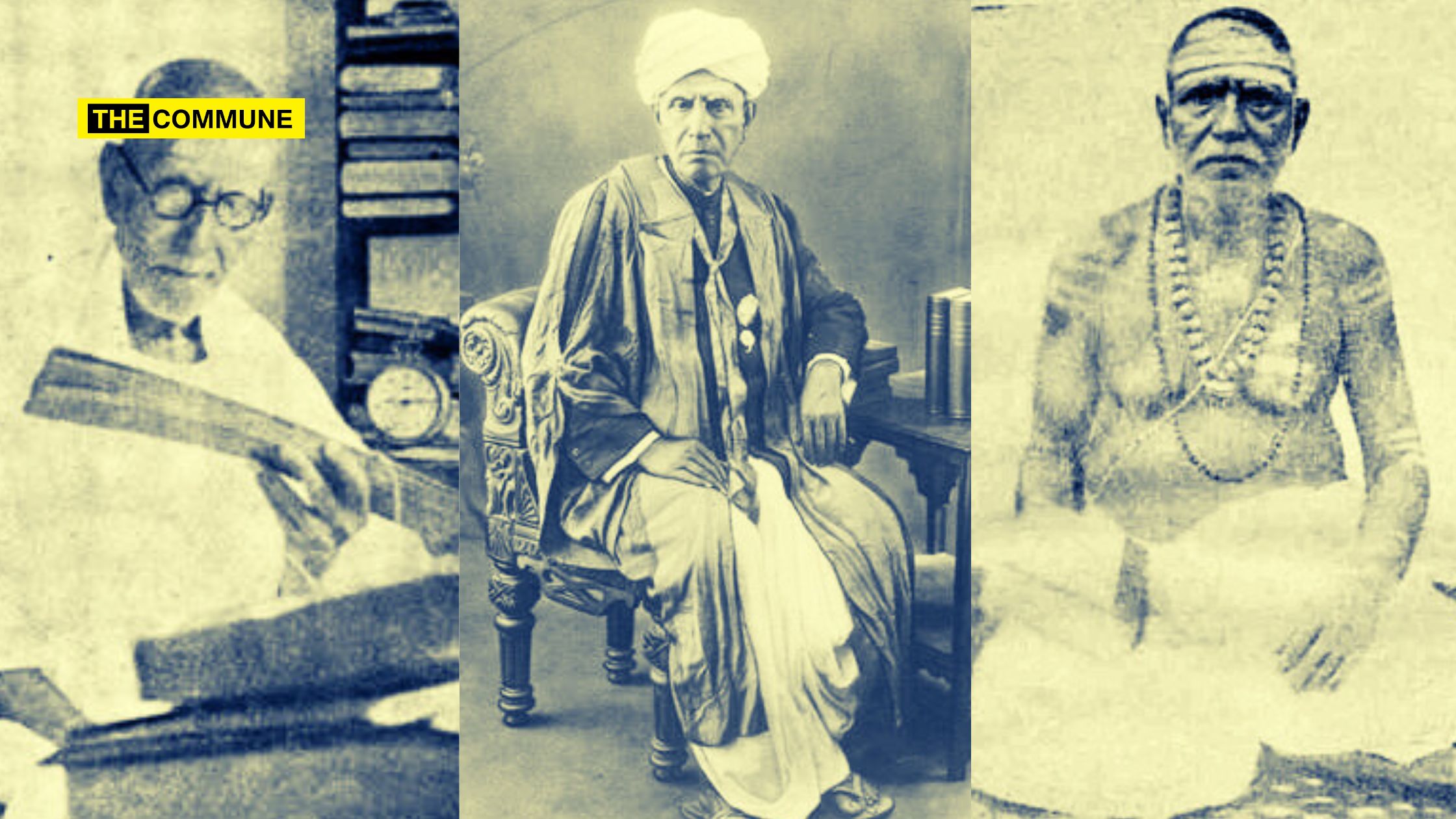
The rivalry between India and Pakistan, born in blood during the Partition of 1947, remains one of the most persistent and dangerous conflicts of the modern world. Beyond Kashmir, the hostility is rooted in deeper ideological, political, and societal dysfunctions within Pakistan. As an observer, I have sought to examine the five critical drivers of the perpetual conflict: Pakistan’s public, its military-intelligence complex, terror outfits, radical clerics (Maulvis), and the ideological manipulation of Islam itself — along with the unavoidable conclusion that reform within Islam is necessary for peace.

Five Elements Fueling The Conflict

1. The Pakistani Public: Trapped By State Lies And Religion

The Pakistani public is often caricatured as fanatically anti-India, but reality is more complex. While many ordinary Pakistanis seek better lives and peace, they are trapped between a toxic cocktail of forced jingoism, religious indoctrination, and manufactured hatred. School textbooks, media narratives, and mosque sermons portray India as an existential enemy (Ref: K.K. Aziz, The Murder of History, 1993). Economic hardship, rampant unemployment, and political instability fuel public frustration, which the state conveniently redirects toward India. Some, exposed to global ideas via social media, question the endless conflict, but they remain marginal voices — crushed under state censorship, blasphemy laws, and extremist societal pressure.

2. The Pakistani Government and Its Military/ISI: Merchants of Perpetual Conflict

Pakistan’s government has long been a façade for real power wielded by its military, particularly since the era of General Zia-ul-Haq (1977–1988). Under Zia, the military formally adopted the “Islamization” of the state and began using jihadist groups as tools of foreign policy, particularly against India (Ref: Husain Haqqani, 2005). The doctrine of “bleeding India with a thousand cuts” was not just strategy — it became national identity. Today, the Army and ISI continue to orchestrate covert operations, sponsoring insurgencies and terrorism in Kashmir and beyond. Meanwhile, generals and ISI officers enrich themselves off the country’s resources, running vast business empires under military control (Ref: Ayesha Siddiqa, Military Inc., 2007). War is not a cost for Pakistan’s military; it is a business model.

3. Terror Outfits: Proxy Warriors for the Pakistani State

Groups like Lashkar-e-Taiba (LeT), Jaish-e-Mohammed (JeM), and Hizbul Mujahideen function as semi-official arms of Pakistan’s “deep state.” Their existence is no accident — they receive financing, protection, and logistical support from the ISI (Ref: U.S. Department of State, Country Reports on Terrorism). They recruit and radicalize young men in training camps and madrassas, often masquerading as “charitable” organizations. Terrorism is marketed as “jihad” for Kashmir, but in reality, it serves to keep the Indian state off-balance, internationalize the Kashmir dispute, and justify Pakistan’s bloated military budget. As long as these terror factories operate freely inside Pakistan, peace will remain a fantasy.

4. Radical Clerics (Maulvis): Ideological Shock Troops

Pakistan’s religious clerics have become the amplifiers of hate. Instead of spiritual guidance, many Maulvis preach radicalism, intolerance, and violence, creating a fertile breeding ground for militancy. Mosques and madrasas, especially those funded by Saudi Wahhabi money during and after the Afghan jihad, serve as recruitment and indoctrination centers (Ref: Ahmed Rashid, Taliban, 2000). Political leaders and courts are either powerless or complicit — terrified of clerical mobs that can paralyze the country overnight. Blasphemy laws, vigilante justice, and public lynchings for alleged “offenses to Islam” demonstrate the complete breakdown of civil authority. These clerics are not fringe actors — they are mainstream.

5. Islam Itself: The Weaponized Ideology

It is no longer enough to pretend that extremism is just a “misinterpretation” of Islam. The fact remains: jihadist violence, supremacist ideas, and deceptive tactics like taqiyya (even if historically Shia-focused) have been reinterpreted and weaponized by radicals using Islamic texts. Certain Quranic verses — whether in their original historical context or not — are exploited to justify violence against non-Muslims and perpetual war until “global supremacy” is achieved (Ref: Maajid Nawaz, Radical, 2012).

Without reform — real, painful, structural reform — Islam will continue to be hijacked for political and military agendas. Moderation cannot be achieved without revisiting and either reinterpreting or critically filtering the problematic parts of the scripture. It is controversial, yes. But necessary.

Consequences: A Nation — And A Region — In Peril

The result is a vicious, self-sustaining cycle:

  • The military benefits financially from endless conflict.
  • Terrorists gain legitimacy as “freedom fighters.”
  • Radical clerics control societal thought.
  • The public remains brainwashed and economically crippled.

Meanwhile, Pakistan sinks into economic disaster — kept afloat only by IMF bailouts and handouts from China and Gulf states. The FATF gray-listing, growing international isolation, and plummeting foreign investment are direct outcomes of its policies. India too pays a heavy price: wasted military expenditure, human costs of terrorism, and constant strategic distraction.

Reforming Islam For The 21st Century: A Non-Negotiable Need

Moderation of Christianity during industrialization offers a blueprint. Urbanization, education, scientific inquiry, and democratic institutions forced Christian societies to re-interpret violent Biblical passages in favour of peaceful coexistence. Islam needs a similar internal upheaval.

Reform must involve:

  • Contextualizing or filtering violent Quranic verses.
  • Replacing madrasa education with modern schooling.
  • Empowering progressive Muslim scholars.
  • Systematic de-radicalization programs.
  • International economic incentives tied to religious reforms.

None of this can happen unless Islamic religious texts are no longer treated as the ultimate, unquestionable source for education and law. Someone from within Pakistan — with the gravitas of a Mohammed bin Salman — must lead this revolution. External pressure alone will not suffice.

Breaking The Cycle

The India-Pakistan conflict is not just territorial — it is ideological. It is the product of a militarized state, terror as policy, clerical radicalism, and the weaponization of religion. Without brutally honest introspection and reform, Pakistan will continue to bleed — and make others bleed — for generations.

It’s time to stop pretending peace can be achieved without confronting the ideological rot at the core. It’s time for the Muslim world especially those in the Gulf, to drive some sense into the pathetic, mindless Pakistani state before it turns into a hellhole.

G Saimukundhan is a Chartered Accountant.

Subscribe to our channels on TelegramWhatsApp, and Instagram and get the best stories of the day delivered to you personally.
DMK Govt To Establish MAKKU, (Mutthamizh Arignar Kalaignar Karunanidhi University); Becomes Butt Of Jokes

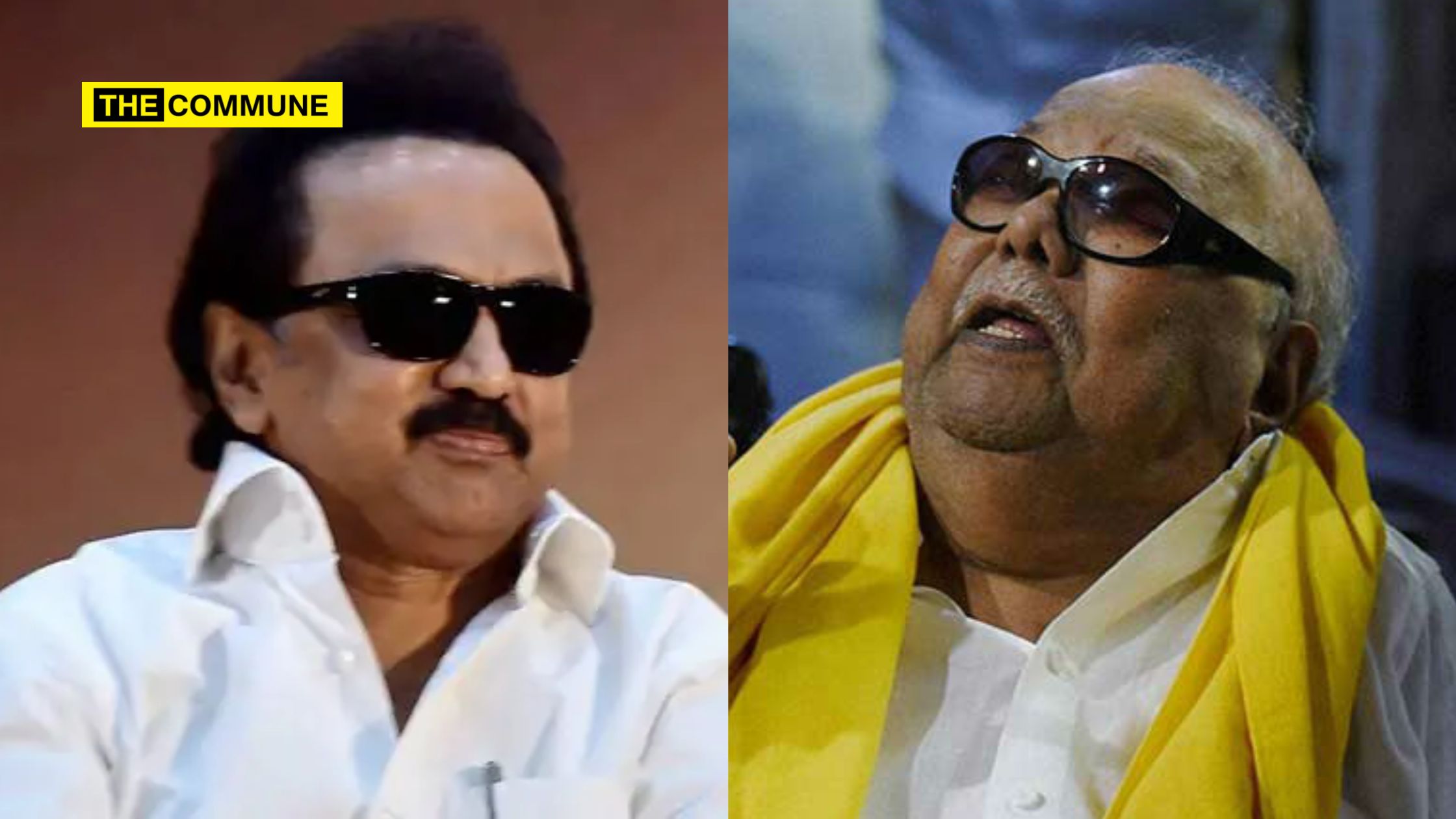
In a significant announcement, Tamil Nadu Chief Minister M.K. Stalin revealed plans to establish a new university in Kumbakonam, Thanjavur district, named after the late DMK patriarch and former Chief Minister, Muthamizh Arignar Kalaignar Karunanidhi.

The declaration was made during a session of the Tamil Nadu Legislative Assembly on Thursday (24 April 2025), highlighting Stalin’s commitment to honoring his father Karunanidhi’s legacy.

The announcement came as part of a special attention motion in the Assembly, where Chief Minister Stalin addressed the members, stating, “Without any hesitation, I firmly announce that a university named after Karunanidhi will be established in Kumbakonam.”

The university is expected to become a center for academic excellence, potentially focusing on futuristic subjects such as climate science, health informatics, agri-tech, waste management, and personalized education, as suggested by some supporters.

The proposal received widespread support from various political leaders, including Viduthalai Chiruthaigal Katchi MLA Sinthanai Selvan, Communist Party of India (M) MLA V.P. Nagaimaali, and Communist Party of India MLA T. Ramachandran, who endorsed the initiative during the session.

Karunanidhi, who served as Chief Minister for five terms and passed away on August 7, 2018, and is celebrated as a visionary leader by DMK cadres.

The announcement of the Muthamizh Arignar Kalaignar Karunanidhi University in Kumbakonam has inadvertently sparked a wave of humor online due to its abbreviation, “MAKKU,” which translates to “fool” or “idiot” in Tamil. Netizens quickly seized the opportunity, turning the abbreviation into a meme fest across social media platforms. Memes and witty remarks flooded X, with users poking fun at the irony of a prestigious institution’s acronym meaning “fool”.

Subscribe to our channels on TelegramWhatsApp, and Instagram and get the best stories of the day delivered to you personally.