Home Blog Page 306

Tamil scholar Kambavarithi Ilangai Jeyaraj Issues Scathing Response To DMK-Supporting Sexual Harassment-Accused Vairamuthu For Derogating Lord Ram

ilangai jeyaraj vairamuthu lord rama
Renowned Tamil scholar and spiritual orator Kambavarithi Ilangai Jeyaraj issued a pointed and intellectually rigorous rebuke of #MeToo-accused Tamil lyricist Vairamuthu, following the latter’s controversial comments about Lord Ram at a recent event in Mylapore. Vairamuthu, while speaking on poet Kamban’s Tamil epic Kambaramayanam, claimed that Kamban “saved” Lord Ram by depicting him as having was mentally unsound after being separated from Sita, a state Vairamuthu likened to legal insanity under the Indian Penal Code, which exempts individuals of unsound mind from criminal liability.

Ilangai Jeyaraj, who was present at the event, initially addressed the comment with restraint. However, he later followed up with a more thorough and unmistakably scathing response, published for a wider audience to make his position clear. His intent was not only to defend Hindu tradition but to call out a recurring pattern of disrespect toward Hindu deities by certain intellectuals and ideologues associated with the Dravidianist narrative.

In a social media post that balanced rhetorical civility with sharp criticism, Ilangai Jeyaraj began with the words, “Greetings to my beloved Kaviperarasu Vairamuthu! I pray for your well-being. You are once again embroiled in controversy. Before I get to the matter at hand, I must express my gratitude to you. At the Chennai Kamban Festival, you spoke very highly of me, and I am thankful for that affection. Beyond that sense of gratitude, I regret that I must say a few things. You, too, accept the teachings of Valluvan, and you know well the purpose behind placing the chapter on ‘Impartiality’ after the chapter on ‘Gratitude.’ It is in the spirit of that Valluvan’s wisdom that I attempt to write this letter.” 

Jeyaraj’s tone, though outwardly courteous, carried the weight of deep moral indignation. He criticized Vairamuthu’s long-standing habit of intellectual provocation disguised as poetry, accusing him of repeatedly using religious or cultural symbols to generate controversy for personal relevance or ideological signaling. He said, “Perhaps due to your highly imaginative nature, your writing and speeches are often filled with exaggeration. When you praise someone, you elevate them to the heavens, and when you disparage them, you drag them down to the depths. This exaggeration is what constantly lands you in trouble. It has happened again now. It seems as though you always want your writing and speeches to create controversy. That is what it feels like! Is this a manifestation of a desire for society’s attention to always be on you? If my guess is correct, you are making a mistake. Now, I will come to the point. During your speech at the recently concluded Chennai Kamban Festival, your statement that the divine Rama ‘lacked mental stability’ has ignited a firestorm of controversy in newspapers, on the internet, and on television.

Many are severely criticizing you now. These criticisms are escalating day by day. Yet you remain silent, as if nothing has happened. Is this all the respect you have for public opinion? It is a matter of concern. You cannot fault those who criticize you. Rama, whom they have revered as a deity for thousands of years, Rama, who is the reason for righteousness prevailing in this world, Rama, whom many learned scholars have held in high esteem – if you brand him a ‘madman’ with your tongue, who would not get angry?” 

He reminded the lyricist that Lord Ram is not merely a literary figure, but a central deity for millions, a moral exemplar, and a symbol of righteousness and dharma.

Ilangai Jeyaraj minced no words when addressing the implications of calling Rama ‘mentally unstable’, “I used the word ‘madman’ with great pain to make others understand the current meaning of the phrase ‘lacked mental stability’ that you used. Even as I write about you saying such a word about Rama, my hands tremble with unbearable pain. Think about it yourself. In a celebration held at your home for you, if someone were to come and call you ‘lacked mental stability,’ could you bear it? Leave aside you, would your family members have allowed that person to leave properly? The Kamban society allowed it – that is a sign of its greatness.”

He pointed out the deep irony of Vairamuthu speaking in such terms at a Kamban festival, a stage meant to honor one of Tamil’s greatest spiritual poets. By doing so, Jeyaraj argued, the lyricist did not merely misinterpret Kamban but he insulted the very spirit of the event, and worse, did so in a manner designed to avoid immediate confrontation while maximizing public outrage afterward.

He said, “There is a song in Naladiyar that says: ‘When an unlettered person with empty words speaks in a gathering of scholars, the kind-hearted scholars, feeling pity for him, listen to his words in silence so that he may not be embarrassed in front of many.’ This poem comes to my mind. You thought the Kamban festival gathering was an ordinary one. It has been almost a hundred years since the Kamban societies were started. A great man named ‘Kambanadippodi,’ who loved Kamban as his God, first started the Kamban society in Karaikudi. Later, he paved the way for many Kamban societies to be started in various towns. That seed sown by that great man has now grown into a vast tree, extending beyond Tamil Nadu, beyond India, and into many countries around the world. These are not unknown facts to you. I shudder to think what would have happened if the short-tempered Kambanadippodi had been in that gathering where you spoke.

Following the path laid by Kambanadippodi, countless Kamban festivals have been successfully held. In those festivals, many full-fledged scholars participated and polished the diamond that is Kamban’s epic with their intellect, making it shine. They are still doing so. Even the controversial dark passages within Kamban’s epic were illuminated by their wit, bringing respect to both Kamban and his work. That is the kind of gathering the Kamban festival is. It was due to that integrity that the gathering tolerated your controversial speech. However, without considering it a gathering of scholars, and without understanding the power of your words, you have defiled the Kamban festival gathering by insulting Rama, the ‘flawless hero.’ How great a mistake is that? Should we call this a mistake born of ignorance of tradition? Or a mistake born of ignorance of our land’s nature? Or a mistake born of ignorance of the feelings of the gathering? I do not understand. We have to find an excuse for your action, just as Vali told Rama, ‘You seem confused.’ I want to confirm here that I am not using the word ‘confused’ in the same sense as you did.”

By invoking the legacy of scholars and leaders across religious lines who had shown restraint and reverence at past Kamban events including Muslim judge M.M. Ismail and Dravidian leader R.M. Veerappan, Jeyaraj underscored just how far Vairamuthu had strayed from that legacy of respectful discourse. Instead, he alleged, Vairamuthu had reduced a sacred cultural platform to an ideological stage.

He continued, “You are aware of the history of the Chennai Kamban Society. The late Justice M.M. Ismail, a Muslim, and the late R.M. Veerappan, a ‘blessed man’ deeply immersed in Dravidian movement ideologies, once led this society. They both set aside their personal beliefs, not bringing their religion or ideology into Kamban, and protected the society. You, on the other hand, without understanding the path they showed, and keeping only your ideology in mind, have insulted Rama on Kamban’s stage. Due to your actions, the Chennai Kamban Society itself is now shaken, facing criticism from many. If you had known the difficulty of creating and organizing a society and a festival, you would not have spoken like that.

The current head of the society, ‘Nayavurai Nambi’ Jagathrakshakan, despite being a representative of a non-religious party, stands firm in his own religious beliefs without compromising with anyone. He has immersed himself in the hymns of the Alvars and has even established an organization called ‘Alvars Research Center,’ which holds annual festivals. Similarly, the current secretary of the society, ‘Doctor’ Sarada Nambiyaruran, is a great scholar who cherishes our Saivism and Tamil as her two eyes. She is a woman of dignity who is the daughter-in-law of Maraimalai Adigal. It was in deference to their invitation that the Chief Minister of Tamil Nadu graced this year’s Kamban festival. They must have thought of inviting the Chief Minister to grace the festival on the occasion of the society’s golden jubilee, and their good intention is understandable. Some criticize even that, but it is wrong! This is not a new issue for the society’s tradition. ‘Kambanadippodi’ honored the then Chief Minister of Tamil Nadu, ‘Kalaignar,’ by inviting him to the Karaikudi Kamban festival. Similarly, the elder M.M. Ismail also honored ‘Kalaignar’ by inviting him to the Chennai Kamban festival. It is in this line that the Chennai Kamban Society, on the occasion of its golden jubilee, honored ‘Chief Minister’ Stalin this year. It is an act that follows tradition.

Chief Minister Stalin, who attended the festival, not only spent a long time for Kamban but also had his ministers attend the festival. Furthermore, understanding the dignity of the gathering, he spoke in a civilized manner without hurting anyone’s feelings – you did not even take that as a lesson. With your speech, you have even subjected the Chief Minister’s visit to criticism. You have failed to even consider the headache such criticisms can cause the Chief Minister at a time when an election is approaching.

Despite being aware of the previous controversy regarding Andal caused by you, Jagathrakshakan, who reveres the Alvars as deities, out of his love for poetry, Tamil, and you, decided to award you the ‘Kamban Award,’ which the Alvars Research Center gives annually. How many people must have opposed this decision when they made it? How many must have disagreed? The society must have gone beyond all of them to decide to give you that award. They must have thought that through this award, they could bring you, a person of great ability, into a realm of spiritual service. However, without understanding their noble intention, you spoke in a way that has now made them appear as culprits in front of society. After all this, you are not an ordinary person you are Kaviperarasu! Is this title an ordinary one? You have received many high awards for your poetry. As such, I feel compelled to ask you something. If someone were to wrongly interpret a poem you wrote, contrary to your intent, how much would your heart hurt? Think about it. One could forgive a person who does not know poetic tradition for speaking this way. But it is because you, Kaviperarasu, spoke like this that everyone is seething with anger. It has become your job to drag the chariot out into the street. Why this negative tendency?

Kamban was not a poet who wrote for cinema like you. He was a great poet who sang for the establishment of righteousness. That is why our people cherish Kamban’s epic as a source of righteousness, love, culture, devotion, truth, and nobility. If you lay hands on that high treasure, how could they tolerate it? The great poet Kamban describes Rama as the ‘flawless hero’ at the very beginning of the epic. Rama is not just a hero of an epic; he is a hero of righteousness. He is also a divine hero worshipped by a specific religious group. Don’t you know how many temples there are for him in this land? How many hymns are there for him? How many devotees are there for him? Even though you knew all this, how could you say that he lacked mental stability?”

Throughout the post, Jeyaraj exposed Vairamuthu’s ideological opportunism, where Hinduism is regularly used as a soft target, while other faiths are treated with either caution or reverence not out of respect, but out of fear of reprisal. Jeyaraj gave a broader warning, that Hinduism’s tolerance is being mistaken for passivity, and that cultural provocation cloaked in artistry will no longer go unchallenged.

He wrote, “Hinduism is full of tolerance. It is a religion descended from Rama, who even forgave the one who abducted his wife. Many people today mistake the tolerance of such Hinduism for its weakness. It is worrying that even an intellectual like you thought that way. Dear friend! I want to ask you one thing. Can you criticize another religion and its divine figure in such an insulting way as you did with Hinduism? Could you say that a divine figure worshipped by people of another religion lacked mental stability? Forget saying it! Could you even think it? Before you could even think it, you would be punished. You know that yourself. Many people think that Hindus will always tolerate everything. Hindus have now well and truly understood the truth that, ‘a person who bows down every time when he is being hit is a fool, and a person who hits every time someone bows down is also a fool.’ Therefore, it is better for those who want to lay hands on the Hindu religion to think carefully before they act.” 

In closing, Jeyaraj urged both restraint and accountability. To the Hindu community, he appealed for dignity in the face of provocation. To Vairamuthu, he extended an olive branch urging him to issue a public clarification and acknowledge the hurt caused.

With this powerful statement, Ilangai Jeyaraj not only defended the honor of Lord Ram and the literary sanctity of Kamban’s work but also drew a sharp line against the cultural relativism and ideological excesses that continue to target Hindu faith under the banner of artistic freedom.

He said, “Through this letter, which I am writing to you, I want to say one thing to those who are criticizing you with harsh words. Friends! I understand the justice of your anger. However, we must first establish the greatness of our culture. We must realize the civilized nature of our language and religion. Some of the words you are using in anger over the poet’s words are grating to the ears. No matter what, he is one of our Tamil poets today. By releasing messages that speak ill of him, the civilized nature of our race will be questioned by others. I ask that you, who wish to fight for the greatness of our race, do not let your stand falter due to the actions of others. If one person steps down, and another also steps down, our culture will end up in the depths. It is your duty to understand this. This is my humble request. “

He added, “Finally, I would like to make one request to the poet as well. A mistake has happened, and it might have happened by accident. A “slip of the tongue” can happen to anyone. Please put an end to this problem by issuing a statement: “I did not intend to demean Rama. I intended to save him. The words I spoke have given a wrong meaning. I sincerely apologize to those whose hearts were hurt by my words.” Accept and act upon Valluvan’s couplet: ‘The mark of greatness is to take a loss even from those who are not worthy of it’ and his idea that ‘greatness always bows down.’ I pray that your poetry and greatness may rise. Thank you. Always happiness, no sorrow”

Subscribe to our channels on TelegramWhatsApp, and Instagram and get the best stories of the day delivered to you personally.

Nothing Original, Just Copied: How Dravidian Model Mirrors The Chinese Propaganda Playbook

Nothing Original, Just Copied: How Dravidian Model Mirrors The Chinese Propaganda Playbook

In 2017, a paper on “How the Chinese government fabricates social media posts for strategic distraction not engaged argument” was published. A closer look at this study reminds of something closer to home, the Dravidian model. First, let us take a finer look at the published study on Chinese propaganda.

The study, which analysed millions of posts linked to China’s infamous “50 Cent Party” (wumao), highlighted several key features of Beijing’s social media disinformation tactics.

Modus Operandi of Chinese Government Propaganda on Social Media

Nature of Propaganda Contrary to the myth of paid trolls arguing with critics, most Chinese government-directed posts avoided confrontation. Instead, they sought to cheerlead, distract, and flood platforms with pro-government messaging.

Scale of Operations – Researchers estimated 448 million fabricated posts annually, strategically timed around protests, anniversaries, and politically sensitive events to drown out dissent.

Goal of Propaganda – The central aim was not persuasion but “strategic distraction”—filling feeds with positivity and irrelevant chatter to sideline genuine criticism.

Coordination & Secrecy – Operations were centrally directed yet covert. Local governments and Party offices quietly mobilised state employees and agencies to generate content, without admitting it was propaganda. Instructions and credit for posts were managed through propaganda offices at multiple government levels (district, township, bureau, etc.).

Style of Posting – Posts avoided negativity or direct rebuttals, instead relying on banal slogans such as “China is great,” “Support the Party,” and appeals to unity. Many were deliberately cheerful to mask their orchestrated nature.

Was 50-Cent A Myth? – Contrary to belief, most propaganda workers were regular government employees, not freelancers earning 0.5 yuan per post. Participation in online propaganda was often part of their official duties.

Propaganda Warfare Logic – The deeper strategy was agenda control, using mass posting to drown out critics rather than to convince them.

Volume spikes in posting were the result of top-down directions, often after internal meetings or government initiatives.

Selective Targeting – The regime increased posting during periods of potential social unrest, emergencies, or politically sensitive anniversaries.

Posts appeared on both government platforms and popular commercial sites like Sina Weibo, Tencent, etc., mixing with genuine citizen content.

Surveys and Validation – The researchers used leaked emails, direct surveys, and statistical validation to confirm the identity and behavior of government propagandists.

Chinese social media propaganda relied on coordinated, non-confrontational, government-authored posts to flood digital spaces with cheerleading distraction, carefully timed to influence collective perception and quell dissent without engaging in open debate.

Dravidian Model Propaganda – Mirrors Chinese MO

Observers now note that these tactics used by the Chinese echoed the DMK’s “Udan Pirappus”, where party-aligned web warriors are allegedly paid around ₹200 per day to amplify pro-government narratives and stifle criticism. Like the Chinese wumao, these cadres reportedly avoid logical debate, instead relying on volume, positivity, and coordinated flooding of social media feeds. Well, akin to the Chinese machinery, the taxpayer funded “fact checking unit” has also been disseminating fake news over and over again.

Critics argue that this exposes the so-called Dravidian Model as a derivative copy of the Chinese Communist Party’s online propaganda playbook, not a unique or indigenous innovation.

By borrowing wholesale from Beijing’s disinformation strategy, the DMK’s digital apparatus, they say, has less to do with grassroots democracy and more to do with agenda manipulation and narrative control.

Subscribe to our channels on Telegram, WhatsApp, and Instagram and get the best stories of the day delivered to you personally.


VCK Functionary Held For Extortion Bid Linked To Party Chief Thirumavalavan’s Birthday

thirumavalavan birthday kumar vck functionary extortion

Thiruvallur police have arrested a district deputy secretary of the Viduthalai Chiruthaigal Katchi (VCK) for allegedly demanding money from a private gun factory in connection with the birthday celebrations of party chief Thol. Thirumavalavan.

Police said the accused, identified as Kumar, had approached a factory in the Nungambakkam area of Thiruvallur district and demanded money in the name of the party leader’s birthday. Following a complaint lodged by the factory manager at the Manavalanagar police station, officers registered a case and took Kumar into custody.

He is currently being questioned, and further investigation is underway.

Subscribe to our channels on Telegram, WhatsApp, and Instagram and get the best stories of the day delivered to you personally.
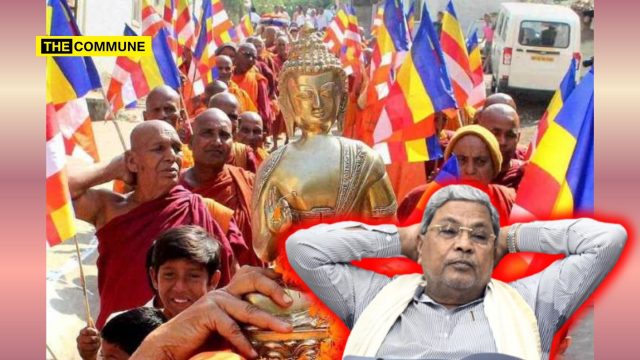
How CP Radhakrishnan Broke The Taboo Around Modi And Changed The Narrative After 2002 Gujarat Episode

Despite a long list of contenders from within the BJP for the Vice President’s post, Prime Minister Narendra Modi has nominated C.P. Radhakrishnan, fondly called CPR, the Governor of Maharashtra, signaling a decision driven by loyalty, legacy, and regional representation.

Born in 1957 in Tiruppur, Tamil Nadu, Radhakrishnan holds a bachelor’s degree in business administration. His political journey began as a grassroots activist with the Rashtriya Swayamsevak Sangh (RSS), and by 1974, he had become a member of the state executive committee of the Bharatiya Jan Sangh, the BJP’s ideological predecessor.

Why Modi Chose CPR 

Radhakrishnan’s selection is seen as a reward not just for his unblemished reputation and cross-party goodwill but also for his unwavering loyalty during challenging times in BJP’s history. Following the 2002 Gujarat riots, the then-Chief Minister Modi faced immense political pressure even from his own party. Even  then-PM Atal Bihari Vajpayee didn’t fully back Modi as the episode had cast Modi in negative light. It was only on Advani’s intervention that Vajpayee gave in allowed Modi to become the face of Gujarat elections in 2002. For that one year, many in the party distanced themselves and no BJP leader from any state would invite Modi for campaigns and rallies.

However, Radhakrishnan, then an MP from Coimbatore, went against the tide by organizing a massive public rally for Modi at VOC park just three months after the riots. This bold move is widely regarded as a pivotal moment that helped rehabilitate Modi’s public image nationally.

Modi has long valued loyalty as a cornerstone of leadership often prioritizing it over mere administrative performance and Radhakrishnan’s steadfast support during that turbulent period likely cemented his place as a trusted ally.

Southern Strategy and DMK Counterbalance

By nominating a leader from Tamil Nadu, the BJP sends a clear message of inclusivity and political reach into the southern states. Since assuming his role as Governor of Maharashtra, Radhakrishnan has made frequent visits to Tamil Nadu and Kerala, signaling increased political engagement in the South. His elevation is also seen as a calculated response to the DMK’s narrative in Tamil Nadu, aiming to project a strong southern face for the BJP at the national level.

CPR’s Track Record as Governor

Radhakrishnan becomes only the second sitting Governor to be nominated for the Vice Presidency the first being Shankar Dayal Sharma in 1987. While P.C. Alexander was once considered for the Presidency in 2002, his name was eventually withdrawn in favor of Dr. A.P.J. Abdul Kalam.

After taking charge as Governor on 31 July 2024, Radhakrishnan quickly set out on extensive state visits, engaging with a broad spectrum of society from elected officials and bureaucrats to business leaders and educators. As Chancellor of state universities, he was instrumental in enhancing educational quality and advocating for better living standards among tribal communities.

He also gained a reputation for being accessible to opposition parties, giving due attention to concerns raised on matters ranging from law and order to financial irregularities. His administration made headway in resolving long-pending nominations to the Legislative Council, demonstrating a proactive approach to governance. Notably, he maintained cordial relations not only with Chief Minister Devendra Fadnavis but also with Deputy CMs Eknath Shinde and Ajit Pawar, fostering unprecedented cooperation with the entire cabinet.

Praise from Maharashtra Leadership

Reacting to his nomination, Fadnavis stated, “Radhakrishnan’s deep understanding of constitutional and legislative matters, shaped by years of experience as an MP and governor, makes him an outstanding choice for Vice President. As Maharashtrians, we feel proud to see him elevated to such a distinguished position.”

(With inputs from Times Of India)
Subscribe to our channels on TelegramWhatsApp, and Instagram and get the best stories of the day delivered to you personally.

Two Indian-Origin Scientists, One From Tamil Nadu, Win 2025 Young Tall Poppy Science Awards

young tall poppy awards australia indian origin scientist

Two South Australian researchers of Indian origin have been recognised with the prestigious 2025 Young Tall Poppy Science Awards for their work in advancing workplace inclusion and promoting global health.

Dr Ashokkumar Manoharan, Senior Lecturer in Strategic Management at Flinders University and researcher at the Centre for Social Impact, received the award for his research on diversity, equity, and inclusion in the workforce. His studies focus particularly on migrant workers and people with intellectual disabilities in the hospitality sector.

Born in Madurai, India, Dr Manoharan trained as a chef before completing an MBA, an M.Sc. in Psychology, and later a doctorate in Management at the University of South Australia. His research, conducted with international collaborators, aims to provide employers with practical strategies to build more inclusive and accessible workplaces.

Dr Ben Singh, Postdoctoral Research Fellow at the University of South Australia’s ARENA research centre, was also honoured. With a background in exercise physiology, Dr Singh’s work focuses on the role of physical activity in cancer care and digital health. His research has been published internationally, presented at global conferences, and shared through mainstream media.

Dr Singh collaborates with healthcare organisations and NGOs to integrate exercise into oncology care, aiming to improve the health and wellbeing of cancer patients worldwide.

The awards will be formally presented at a ceremony at the South Australian Museum on Friday. The Australian Institute of Policy and Science (AIPS), which organises the Young Tall Poppy Science Awards, said the recognition highlights both research excellence and the public engagement of science.

(With inputs from Australia Today)

Subscribe to our channels on Telegram, WhatsApp, and Instagram and get the best stories of the day delivered to you personally.

Congress’ Shama Mohamed Accuses News Anchor Of Being BJP Member, Gets Schooled By BJP Spokie Shehzad Poonawalla

shama mohamed shehzad poonawalla

In yet another episode of political dram on live television, Congress spokesperson Dr. Shama Mohamed accused the anchor of a private TV channel’s prime-time debate of favoring BJP representative Shehzad Poonawalla. However, her claims failed to gain traction, and the narrative quickly unraveled. Despite this, she maintained her position on social media, continuing to allege bias.

The controversy erupted during a debate segment titled “Election Commission vs. Rahul Gandhi Controversy” The dispute began during the later segment when anchor Arunima paused Dr. Shama Mohamed’s remarks to allow BJP spokesperson Shehzad Poonawalla to speak. As he began his statement, Poonawalla said, “First of all, I want to take this opportunity to congratulate my colleague Anupriya for explaining things so well and more power to me.” The “colleague” he referred to was Anupriya Yadav, a spokesperson for the JD(U).

However, Dr. Shama Mohamed appeared to misunderstand the remark, questioning the anchor directly during the debate, “Are you a part of the Bharatiya Janata Party?” This implied she believed the anchor and the BJP spokesperson were aligned.

Adding to the heated exchange, Shehzad Poonawalla responded firmly, “She was preaching to my ally. Look at her behavior on She will not get away speaking to my ally like this, please be very clear, I understand that, but she has to be piped down, and she has to be taught how to behave and she is not going to speak down to Anupriya Yadav”

Following the incident, Dr. Shama Mohamed took to social media platform X, writing, The anchor from @CNNnews18 called Anupriya was addressed my Shahzad Poonawala as his colleague. That means she belongs to the BJP & acts as an independent anchor. Hence I had to leave the debate midway as I can’t be in a debate where the anchor is part of the bjp. She did not deny it either.

Shehzad Poonawalla swiftly responded, clarifying the situation,The CNN News 18 anchor was Arunima “Anupriya” who I referred to as my ally & colleague and praised – was the JDU spokesperson! You need some help! You had once called Rohit Sharma fat. @Jairam_Ramesh  pls get her some help!

Congress spokesperson Shama Mohamed had previously stirred controversy by making remarks about Indian cricket team captain Rohit Sharma on social media. In a post on X, which has since been deleted, she referred to Rohit as “fat for a captain” and labeled him as one of India’s most “unimpressive” leaders on the field. The comments sparked backlash, prompting the Congress party to intervene and advise her to remove the post and refrain from making such personal statements.

Subscribe to our channels on TelegramWhatsApp, and Instagram and get the best stories of the day delivered to you personally.

The Wire’s Marxist Whitewash: How Bangladeshi Writer Ahmede Hussain Justifies Hindu Genocide In Bengal Under The Guise Of “Class Struggle” & “Social Justice”

the wire whitewash hindu genocide bengal ahmede hussain bangladeshi social justice class struggle

The Leftist propaganda portal The Wire has once again exposed its grotesque disingenuousness by publishing a shamelessly revisionist article by Bangladeshi writer Ahmede Hussain, which distorts the bloody history of Partition and the genocide of Bengali Hindus under the fraudulent banner of “social justice” and “class struggle.”

Hussain’s piece is not just ahistorical; it is an insidious attempt to sanitize the religious fanaticism and ethnic cleansing that defined the creation of Pakistan, particularly in East Bengal. By framing the Pakistan Movement as some noble Marxist uprising against feudal oppression, he deliberately obscures the brutal reality: it was a movement steeped in Islamic majoritarianism, culminating in the mass slaughter of Hindus on Direct Action Day (16 August 1946) and the systemic extermination of Bengali Hindus during Partition.

The Big Lie: A “Class Struggle”?

Hussain’s argument hinges on the absurd claim that the demand for Pakistan in East Bengal was a “revolt” against zamindars and caste oppression, rather than a religiously motivated campaign for Muslim supremacy. This is Marxist sophistry at its worst.

The Nawab of Dhaka, Khwaja Nazimuddin, a feudal aristocrat and key architect of Partition, was no revolutionary fighting for the downtrodden. He was a wealthy elite who rallied Muslims under the banner of Islam to carve out a theocratic state.

Jogendra Nath Mandal, the Dalit leader Hussain selectively cites, was ultimately betrayed by the same Muslim League he supported. After Partition, Mandal fled Pakistan in 1950, disillusioned by the relentless persecution of Hindus and Dalits in the new Islamic state. His own experience demolishes Hussain’s fantasy of Pakistan as an egalitarian utopia.

Direct Action Day, orchestrated by Jinnah, was not a “class revolt” – it was a calculated pogrom where fanatic Muslim mobs, incited by the League, butchered Hindus in Calcutta and Noakhali. The violence was explicitly communal, not economic.

Even if we were to grant The Wire’s fantasy that Pakistan was born out of some egalitarian impulse, history laughs at the claim.

Land reforms collapsed.

Peasant poverty remained untouched.

Power was monopolized by the same feudal elites and religious aristocracy.

Minorities such as Hindus, Sikhs, Christians, Ahmadis, were persecuted, driven out, or reduced to second-class subjects.

What kind of “social justice” is it where minorities are slaughtered, and women are dishonored in the streets?

The Marxist Playbook: Weaponizing “Social Justice” to Erase Hindu Suffering

Partition was not a sterile chess game of classes. It was a blood-soaked jihad. Across Calcutta, Noakhali, Punjab, and Sindh, mobs marched under the Banner of the Prophet (rāyat al-`uqāb), shouting “Nara-e-Takbir, Allahu Akbar.” Hindus were forced at swordpoint to recite the kalma, eat beef, and watch their temples desecrated before being hacked down.

Direct Action Day (1946, Calcutta): Eyewitness Philip Talbot described bloated, mutilated bodies floating in the streets, women raped in front of families, children orphaned overnight. At least 4,000–10,000 were killed and 100,000 rendered homeless within 72 hours.

Noakhali (1946): Hindu homes looted, temples burnt, women abducted, mass forced conversions. At least 5,000 dead, thousands of women dishonored.

Moplah-led Massacre of Hindus (1921): Whitewashed as a “peasant revolt,” this was jihad in the rawest form. 2,500 Hindus butchered, tens of thousands displaced, women raped, temples razed. Mobs marched with the green Islamic flag, chanting Khilafat slogans, declaring jihad as their sacred duty. Gandhi called these jihadis “my brave Moplah brethren.”

Kashmir (1990): Echoes of the same slogans, “Raliv, Galiv, ya Chaliv” (convert, die, or flee), with Hindus driven out under threat of death and rape.

These were not “class wars.” These were religious pogroms, waged under the banner of faith, justified by promises of paradise for jihadists. To strip the violence of its religious character is to lie twice over: once about history, and again about the meaning of Hindu survival.

Hussain’s piece follows this sinister tradition, erasing Hindu victims while portraying their killers as oppressed revolutionaries. It is no coincidence that The Wire, a hub of Marxist-Leninist apologia, platformed this garbage. Their agenda is clear: demonize Hindu civilizational memory while absolving Islamist violence under the cover of “progressive” rhetoric.

Hypocrisy of Marxist Portals

The Wire and its ideological ilk never fail to expose their hypocrisy. They sermonise endlessly about “speaking truth to power,” yet they peddle narratives that excuse the worst atrocities against Hindus as “structural struggles.” They posture about “social justice” while justifying bloodshed carried out under religious banners. They weep crocodile tears for minorities everywhere, yet for the Hindu victims of Bengal, Malabar, or Kashmir, they have nothing but erasure and disdain.

When Hindus are slaughtered, the story becomes “class struggle.” When Hindus resist, the same portals deride it as “majoritarianism.” This double standard is not accidental. It is ideological warfare.

Civilizational Memory Cannot Be Erased

Sitaram Goel once warned of this very Marxist ploy: to recast Quran-ordained jihad as peasant uprising, to weaponize class struggle as a fig leaf for religious bigotry. That is exactly what Hussain’s essay attempts – and The Wire, ever eager to toe the Marxist line, happily amplifies it.

But history is not so easily rewritten. Civilizational memory runs deep. Hindus remember (and will continue to remember) the carnage of Direct Action Day. We remember the flight of millions of refugees from East Bengal. We remember the broken temples, the desecrated homes, the women who never came back.

And we refuse to let their sacrifice be trivialised by the sophistry of “class struggle.”

Ahmede Hussain and The Wire are just apologists for religious extremism, repackaging the Pakistan Movement’s butchery of Hindus as some noble “class struggle.”

Try telling that to the millions of Bengali Hindus slaughtered on Direct Action Day, or the families wiped out during Partition, the victims not of “feudal oppression,” but of Islamic majoritarianism. No Marxist jargon can whitewash the bloodstains of Noakhali, Calcutta, or the systemic cleansing of Hindus from East Bengal.

Hussain even forgot how his own people from East Bengali were massacred during Operation Searchlight in 1971 when the Pakistan Army and its allies perpetrated genocide against East Pakistanis, targeting Bengalis especially Hindus and intellectuals through mass killings, rape, and village destruction. Estimates of deaths range from 300,000 to 3,000,000, and hundreds of thousands of women were sexually assaulted. While Bengali Hindus were disproportionately affected, many Bengali Muslims were also killed, particularly those supporting independence or suspected of pro-liberation sympathies. The violence stemmed from efforts to suppress Bengali nationalism and identity, not just religious differences, making it one of modern history’s worst atrocities.

Partition in East Bengal was not a Marxist revolution; it was religious majoritarianism unchained, with Hindus as its primary victims. To call it anything else is not just bad history – it is moral depravity.

When Leftists whitewash jihad as ‘class struggle,’ they don’t just lie about the past. They arm the oppressors of the future.”

Subscribe to our channels on Telegram, WhatsApp, and Instagram and get the best stories of the day delivered to you personally.
Indian Army Recruitment Rally 2025 In Erode – A Remarkable Opportunity For Youth In South India

indian army recruitment agniveer recruitment rally

The Indian Army is set to host a large-scale recruitment rally from 27 August to 7 September 2025, at the VOC Park Sports Complex in Erode. This event offers a significant chance for young men from Tamil Nadu, Andhra Pradesh, Telangana, and the Union Territory of Puducherry to embark on a career of honor and service to the nation.

About the Rally

Organized under the guidance of HQ Recruiting Zone, Chennai, the ARO Coimbatore Recruitment Rally 2025 stands as one of the most expansive military recruitment events in southern India this year. It is designed to enlist eligible and capable candidates for various roles within the Indian Army.

Vacancies Available

Recruitment will be held for multiple Agniveer categories, including: Agniveer General Duty, Agniveer Technical, Agniveer Clerk/Store Keeper Technical, Agniveer Tradesman (for candidates who have passed 10th or 8th standard), Religious Teacher (Junior Commissioned Officer), Catering Junior Commissioned Officer, Sepoy Pharma, Nursing Assistant (Technical), Havildar (Education), Havildar (Surveyor Automated Cartographer)

Eligible Regions

The rally is open to candidates from the following areas:

  • Tamil Nadu: Coimbatore, Tiruppur, Erode, Salem, Nilgiris, Dindigul, Krishnagiri, Madurai, Namakkal, Dharmapuri, and Theni
  • Entire states of Andhra Pradesh and Telangana
  • UT of Puducherry, including Karaikal, Yanam, and Puducherry districts

Important Guidelines for Participants

All candidates must bring their Admit Cards and complete set of original documents for verification. Incomplete or missing documents will lead to immediate disqualification.

After clearing the physical fitness test, candidates may undergo random drug testing as part of the screening process.

The Indian Army has clearly stated that the recruitment will be conducted in a fair and transparent manner, based strictly on merit. To ensure this:

  • Candidates are warned against falling prey to fraudulent agents or touts promising guaranteed selection
  • Only official sources and platforms of the Indian Army should be trusted for information
  • Any suspicious activity or malpractice should be reported to the authorities without delay

A Proud Step Toward National Service

This rally is a unique platform for aspiring youth to serve the country while pursuing a respectable and rewarding career. Those who qualify will receive structured training, a competitive salary package, and the prestige of joining one of the world’s most respected defense forces.

The initiative underscores the Army’s commitment to drawing skilled individuals from various regions, offering equal opportunities to all eligible applicants.

The Indian Army invites motivated, disciplined, and patriotic youth to step forward and become part of an organization that stands for courage, integrity, and national pride.

Subscribe to our channels on TelegramWhatsApp, and Instagram and get the best stories of the day delivered to you personally.
Cash-For-Jobs 2.0? DMK Tourism Minister Rajendran, Salem DMK MPs Named In Alleged Job Scam

dmk job scam

In the latest wave of corruption and fraud allegations within the DMK, reports suggest that, yet another sitting minister & MPs may soon face charges similar to the cash-for-jobs scandal involving former DMK liquor minister Senthil Balaji.

These new accusations center around the recent appointment of ration shop executives across Tamil Nadu. According to reports, the allocation of posts was allegedly divided among ministers, district secretaries, and senior DMK officials. In Salem district, three key figures have come under the spotlight: Salem MP Selva Ganapathy, Rajya Sabha MP S. R. Sivalingam, and Tourism Minister R. Rajendran. They are accused of accepting bribes in exchange for job placements and then failing to deliver the promised positions.

It is alleged that Selva Ganapathy and Sivalingam split 140 available positions between themselves and distributed them unlawfully. Cadres claim they were instructed to collect money from ten applicants for every single post. “We acted on the minister’s orders,” some said, adding that many who paid bribes were ultimately denied jobs and left without recourse. These administrators reportedly revealed the full extent of the scheme to higher authorities.

When confronted, Selva Ganapathy and Sivalingam allegedly denied involvement, redirecting blame toward Minister Rajendran. The minister, in turn, insists he has no connection to the scandal. However, insiders claim that a formal complaint is likely to be filed against him soon, with comparisons being drawn to Senthil Balaji’s ongoing job fraud case. Minister Rajendran is said to be deeply unsettled by the developments but maintains his innocence.

Subscribe to our channels on TelegramWhatsApp, and Instagram and get the best stories of the day delivered to you personally.
Best Memes Of Coolie Disaster – A Compilation

coolie review disaster loki rajini

While hard core Rajinikanth fans still live in denial over the failure that Coolie has turned out to be, cinephiles have been having a field day coming up with memes to troll the disastrous multi-starrer offering by overrated director Lokesh Kanagaraj. In this article, we compile some of the most hilarious and best memes from the massive lot making the rounds on social media platforms.

As in our review of the film, there are several logical loopholes in the film, and this has been the base of all the memes that are floating on the internet.

Enjoy!


View this post on Instagram


A post shared by EvanoOruvan__ (@evanooruvan005)


View this post on Instagram


A post shared by Sujith Geevee (@sujith_geevee)


View this post on Instagram


A post shared by srmc_ parithabangal (@troll_srmc_)


View this post on Instagram


A post shared by Siva Somu MC (@siva_somu_mc.96)


View this post on Instagram


A post shared by zoro (@zoro.memes12)


View this post on Instagram


A post shared by @saaruhhhhhhhh


View this post on Instagram


A post shared by aahaan memes (@aahaan__memes)


View this post on Instagram


A post shared by Selva Vinayagam (@selvavinayagam96)

Subscribe to our channels on Telegram, WhatsApp, and Instagram and get the best stories of the day delivered to you personally.