Home Blog Page 3

Leftist ‘Aman Ki Asha’ Film Critic Anupama Chopra Pulls Down Her Dhurandhar Review After Getting Roasted By Netizens, Then Her Film Critics Guild Condemns Criticism Of Critics

Anupama Chopra who complained in her review that Dhurandhar film was “testosterone-heavy,” marked by “shrill nationalism,” and “anti-Pakistan narratives”, faced strong pushback online. After getting roasted left, right and centre, Anupama Chopra, made her review video private on her channel.

Shortly after this development, the Film Critics Guild (FCG) released an official statement condemning “targeted attacks, harassment, and hate” directed at film critics.

The statement read, “The Film Critics Guild (FCG) strongly condemns the targeted attacks, harassment, and hate directed toward film critics for their reviews of Dhurandhar. What began as disagreement has rapidly devolved into coordinated abuse, personal attacks on individual critics, and organised attempts to discredit their professional integrity. In recent days, several of our members have faced intimidation, including direct threats and vicious online campaigns aimed at silencing their perspectives, simply for expressing their professional assessment of a film. More concern­ingly, there have been attempts to tamper with existing reviews, influence editorial positions, and persuade publications to alter or dilute their stance. This comes on the back of frequent devaluing and ridiculing of film criticism by a broad spectrum of industry players in the recent past. Such interference strikes at the core of independent film criticism and undermines the editorial autonomy that a functioning cultural ecosystem relies upon. This willingness to police opinion sets a dangerous precedent. Claims that professional film critics have a bias or a political axe to grind are unsubstantiated and malicious. Film critics cannot be intimidated for doing their jobs, just as criticism cannot and should not be reduced to a one-line social media reaction or expected to align with promotional narratives. We are also deeply concerned about the safety and well-being of our colleagues from across the country. No professional should be subjected to personal vilification simply for doing their job. We urge the public, the industry, and all stakeholders to recognise that liking or disliking a film is your right but expecting critics to fall in line is not. This moment demands collective reflection. At stake is more than a single film. The integrity of cultural discourse depends on the ability of critics to speak freely and without fear. We call for restraint, respect, and a commitment to the principles that allow art, debate, and criticism to coexist.”

The statement, while not naming any critic, positioned the Guild as a neutral body defending the principle of independent criticism.

But here’s where the story takes a truly comedic turn.

The Film Critics Guild’s statement strikes a lofty tone about “independent criticism,” “safety of journalists,” and “silencing of perspectives.” It reads like a grand defence of the noble profession.

Except… the person at the centre of the backlash, the reviewer who removed her own Dhurandhar review, and the individual allegedly facing the heat is also the one heading the very organisation issuing this moral lecture.

Yes.
The Managing Committee of the Film Critics Guild is chaired by

Drumroll…

Anupama Chopra herself!

So, since Anupama Chopra couldn’t shield herself from criticism, she has made use of the Guild she helms, to release a solemn statement essentially saying:

“Don’t criticise Anupama.”
Signed,
Anupama.

This statement was shared by another leftist film critic who got upset with India entering the homes of the enemy and striking it down.

The entire episode reads less like a defence of free speech and more like a professional panic button pressed from the top floor.

When the critic becomes the criticised, and the organisation she leads issues a public decree against criticism, the irony does not just write itself, it performs a standing ovation.

Subscribe to our channels on WhatsAppTelegram, Instagram and YouTube to get the best stories of the day delivered to you personally.
Dharmasthala ‘Mass Burial’ Case Was Fabricated Conspiracy, SIT Tells Karnataka Court; TNM’s Propaganda Completely Shattered

The Special Investigation Team (SIT) has informed the Beltangady court that the alleged Dharmasthala mass burial case was a fabricated conspiracy orchestrated by anti-Dharmasthala activists. The findings were submitted in a preliminary report, in which the SIT stated that Dharmasthala authorities have received a clean chit based on the evidence examined so far.

The SIT has sought additional time to complete the investigation and file its final report.

Six Accused Named In The Case

The SIT’s preliminary report names six accused individuals:

  • A1: Chinnayya
  • Mahesh Shetty Thimarody
  • Girish Mattennavar
  • Jayanth
  • Vitthal Gowda
  • Sujatha Bhatt

Investigators stated that A1, Chinnayya, was allegedly paid, pressured, and coached to make false statements. The SIT said a false narrative of “mass burials” was constructed to target Dharmasthala, with the accused allegedly procuring a skull, staging evidence, and recording coached video statements to support the claim.

Conspiracy Meetings, Evidence Trails Recovered

According to the SIT, conspiracy meetings were held at the residence of accused Mahesh Shetty Thimarody. Investigators reported recovering video clips, bank transaction trails, electronic data, and witness statements – All of which, the SIT said, support the conclusion that the mass burial allegations were fabricated and part of a coordinated conspiracy.

SIT Seeks Permission To Arrest Five Accused

The SIT has sought the court’s permission to arrest five of the accused. If approval is granted, arrests are expected to take place immediately. The agency is preparing for custodial interrogation ahead of submitting its final report.

TNM Propaganda Shattered To Bits

The leftist “news portal” The News Minute finds its propaganda completely shattered to bits and has not yet apologised to the public or to the institution for carrying reports that was based entirely out of lies. TNM manufactured and amplified the “mass burial” lies and it stands exposed as a politically motivated smear against a revered Hindu institution. TNM published over two dozen reports this year, aggressively platforming an unverified “masked man” whose sensational claims were treated as gospel while basic journalistic scrutiny was abandoned.

Their videos, ‘ground’ reports, and podcasts framed speculation as fact, linked unrelated past tragedies to imply a pattern, and repeatedly undermined official explanations from the Panchayat. Reporters presented routine procedures for unclaimed bodies as sinister, avoided questioning the logistical impossibility of the allegations, and cast every legal restraint as evidence of a cover-up.

TNM’s coverage functioned less as reporting and more as ideological propaganda aimed at tarnishing a sacred Hindu institution. The facts have now buried the fiction.

Source: India Today

Subscribe to our channels on WhatsAppTelegram, Instagram and YouTube to get the best stories of the day delivered to you personally.
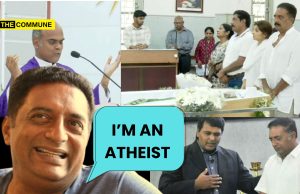
“Why Worship A Monkey God? Brahmins Destroyed Religiosity, Stop Going To Temples”, Says IPE Hyderabad Faculty Member In Lecture

"Why Worship A Monkey God? Brahmins Destroyed Religiosity, Stop Going To Temples", Says IPE Hyderabad Faculty Member In Lecture

A video recorded at the Institute of Public Enterprise (IPE), Hyderabad, has triggered controversy after a faculty member identified as Bhattacharya was seen making inflammatory remarks about Hindu deities, temple traditions, and Brahmin priests during an address to students.

In the video, which has since circulated widely on social media, the faculty member is heard criticising idol worship and questioning core aspects of Hindu religious practice. He is also seen using derogatory language in reference to Hindu Gods, temple rituals, and hereditary priesthood.

Content of the Remarks

In the footage, Bhattacharya repeatedly challenges why Hindus worship idols, asking students: “Why are you not teaching the Vedas? Why are you not teaching the Gita, which is mainstream Hinduism? Where are idols mentioned in the Gita and Vedas? Which deity or animal form is mentioned?”

He goes on to make disparaging comments about specific deities, including Ganesha, Hanuman, and Narasimha, and mocks traditional narratives from Hindu texts, questioning the depiction of divine intervention in episodes such as the killing of Hiranyakashipu.

The speaker further claims that Hindu temple priests, whom he repeatedly labels as “idiots” and “looters,” have misled devotees and weakened the religious foundations of the community. He asserts that people should avoid temples and pilgrimages, that Hindu scripture emphasises meditation rather than ritual worship, and that devotees are “ignorant” for standing in long queues at temples.

He also criticises the socio-religious influence of Brahmin temple priests, stating that they have “destroyed the country’s religiosity,” while saying other castes are “far better.” Although identifying himself as a Brahmin, he states he “hates temple Brahmins”.

He said, “Such people and give them a lash. Why are you not teaching Veda? Why are you not teaching Gita, which is the mainstream Hinduism? Why do you fool them to worship idols?
Where are the idols mentioned in the Gita and Veda? Which idol is mentioned in the Gita and Veda? Which Mata is mentioned? Which Pashu is mentioned? Why are you making them to worship Ganesha? Why are you making them to worship only monkey God? Why are you making them to worship Narasimha Swami? That fellow should come down to cut with his nails Prahlad’s father’s stomach. When we approach death, does God come here to give us death? God could not give death to Prahlad’s father sitting in the heaven. He had to come down to slaughter.
To kill the demon, God has to come down on earth and walk and take a Trishul and kill. God doesn’t have power sitting in the heaven to kill anybody. God should have power to give Mata a big Trishul to kill Asura here. He can’t kill the Asura from there. Look at this stupidity which has been spread by these idiots, Pandit, Purohits, Brahmin idiots of the temples. And looting money, looting mind of the people and looting money. People are ignorant.
They just go for five days, sit like this, worship before the Pandit, go away. You have to do meditation. You should tell people to do half an hour of meditation from home, not come to the temple. Gita says meditation all the time. Vedas says meditation all the time. I do meditation for half an hour every day. Don’t go to any temple, don’t go to any pilgrimage. I’m happy, healthy. Why can’t all of you be? Why people have to go to temple? Why they have to go to pilgrimage and get the sweat smell of the devotees? Standing in the line. You get sweat smell of the devotees.
Those ignorant fellows who are in the line for one hour, three hours, four hours. They sweat and exude that bad smell which we have to smell. Why? Do you see how certain constituencies are harassing and frustrating us, making an ass of us? And we say Hindutva; Hindu is a great religion. Muslims are bad. Christians are bad. We are the best. With these idiot Pandits, we are the best. With this idol worship, we are the best. With not knowing Bhagavad Gita, we are the best. With not doing Vedas, we are the best. Being idiots, we are the best, best of the nation. It’s not only this far. My parents did not know Bhagavad Gita and Vedas. None of your parents would know a shloka of Bhagavad Gita and Vedas. All your parents are also like my parents, brainless fellows who never read Gita, who never read Vedas because of the bad influence of the Brahmin Pandits. I’m myself a Brahmin, but I hate these temple Brahmins who have destroyed this country’s religiosity. Reddys are far better. Choudharis are far better. Kshatriyas are far better. BCs are far better. SCs are far better than these wretched Brahmins who are destroying our religiosity in the temple.”

As of now, the Institute of Public Enterprise has not issued an official statement regarding the video or the lecturer’s remarks.

Subscribe to our channels on WhatsAppTelegram, Instagram and YouTube to get the best stories of the day delivered to you personally.
DMK Leader MK Stalin To Attend IUML Mahalla Jamaat State Conference In Kumbakonam On 28 January 2026, Ahead Of TN Assembly Elections

CM Stalin To Attend IUML Mahalla Jamaat State Conference In Kumbakonam On 28 January 2026

The Indian Union Muslim League (IUML) has announced that Tamil Nadu Chief Minister and DMK President M.K. Stalin will participate in the Mahalla Jamaat State Conference scheduled for 28 January 2026, in Kumbakonam, Thanjavur district. The information was released in a statement by IUML National President Professor KM Kader Mohideen.

According to the statement as per a One India Tamil report, the IUML has been holding Mahalla Jamaat coordination conferences for several years, highlighting that the core organisational structure of the Islamic community is the mosque-centered Mahalla Jamaat. The party has been advocating the creation and maintenance of structured Jamaat systems in all villages, including the establishment of Baitul Mal (community funds), Sharia conciliation centers, and single-teacher schools, with the objective of developing model Jamaats.

The IUML also identifies high-performing Jamaats and presents them with the “Model Mahalla Jamaat Award” during its conferences.

Details

The 2026 Mahalla Jamaat State Conference, organised by the IUML Tamil Nadu State unit, will take place on Wednesday, 28 January 2026, at 4 p.m. at an open ground in the Swamimalai region along the Trichy–Kumbakonam highway. Chief Minister MK Stalin is expected to deliver a special address during the event.

More than 7,000 Mahalla Jamaat administrators from across Tamil Nadu are expected to attend. The conference will outline plans to strengthen the Mahalla Jamaat structure statewide and address issues facing the Muslim community. IUML leaders stated that the event will also help define the community’s political direction ahead of the 2026 Tamil Nadu Legislative Assembly elections.

Professor KM Kader Mohideen urged IUML functionaries to engage in extensive fieldwork to ensure the successful conduct of the conference.

Source: The Hindu

Subscribe to our channels on WhatsAppTelegram, Instagram and YouTube to get the best stories of the day delivered to you personally.
DMK Leader, Municipal Chairperson Under ED Probe After Raids Reveal ₹100 Crore Tax Evasion

DMK Leader, Municipal Chairperson Under ED Probe After Raids Reveal ₹100 Crore Cardamom Tax Evasion

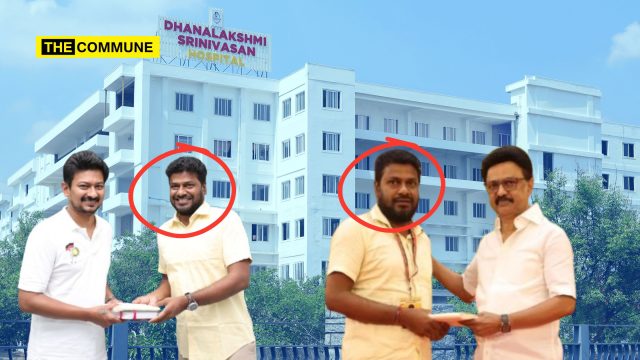
A significant tax evasion case involving a local DMK leader has come to light following coordinated raids by multiple central agencies last week. Enforcement Directorate (ED) officials have stated that seized documents indicate a DMK functionary from Bodinayakanur evaded taxes exceeding ₹100 crore by selling cardamom in northern states without proper documentation.

The case centers on Shankar, a councillor for the 29th ward in Bodinayakanur and a member of the DMK’s State Executive Committee, who also runs a cardamom trading company. His wife, Raj Rajeswari, is the chairperson of the Bodinayakanur Municipality in Theni district.

The investigation began after a complaint was filed against Shankar for alleged tax evasion connected to the shipment of several tons of cardamom to northern states. Based on this, a multi-agency operation was launched on 6 December 2025, with officials from the Enforcement Directorate (ED), Income Tax Department, and Commercial Tax Department conducting simultaneous searches at his warehouse, office, and residence.

During the four-day operation, which involved around 50 officials, various financial and trade-related documents were seized. Investigators broke open the lock of Shankar’s cardamom warehouse near the Bodi railway bridge to access evidence.

A key development in the probe occurred after Shankar had failed to appear for a prior inquiry despite receiving a summons from the Income Tax Department regarding the tax evasion complaints. Following the raids, Shankar, Raj Rajeswari, and their son Lokesh—who were initially unreachable—returned and were questioned by officials.

The investigation has expanded to include associates connected to Shankar’s business. More than 20 individuals have been interrogated, including Vedajeyaraj, the proprietor of a private school and a close associate of Shankar; Councillor Murugesan; former municipal chairman Palanirajan (who belongs to the OPS faction); and Shankar’s driver, Vadivelu.

Officials are currently examining a wide range of evidence, including details of bank transactions, money transfers, and the companies to which cardamom was supplied over the past seven months.

ED officials have indicated that the evidence collected so far is substantial. “Shankar has evaded taxes exceeding ₹100 crore,” stated an official.

Subscribe to our channels on WhatsAppTelegram, Instagram and YouTube to get the best stories of the day delivered to you personally.
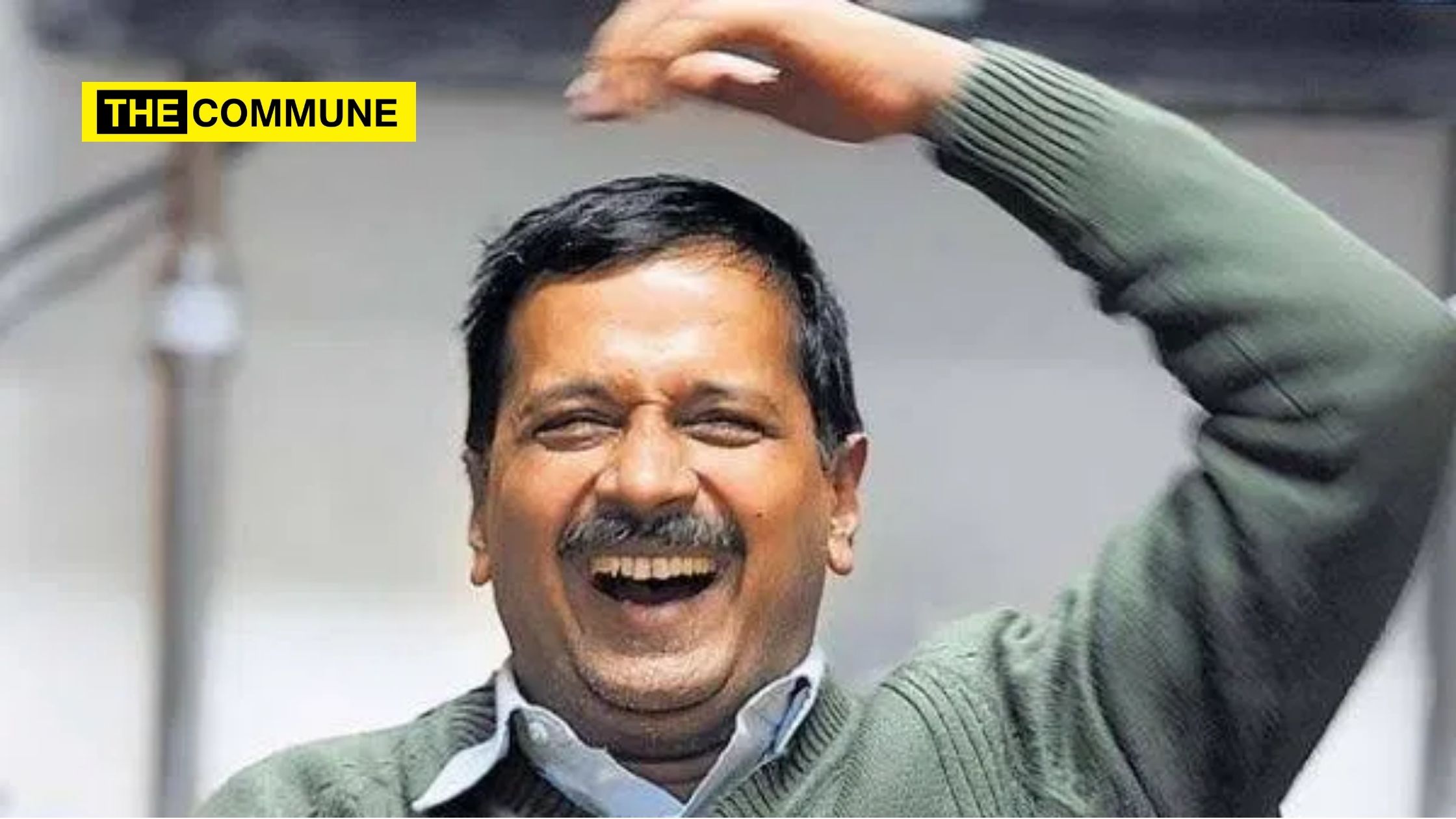
Welcome To Congress-Ruled Khatakhat Karnataka Where Forwarding A Satire Could Land You In Jail But Conversions Won’t, Courtesy The ‘Hate Speech Bill’

The Siddaramaiah-led Congress government tabled the Karnataka Hate Speech and Hate Crimes (Prevention and Control) Bill, 2025, in the state assembly on 8 December 2025, sparking immediate and intense controversy. While the government presented the legislation as a necessary framework to uphold “dignity,” “equality,” and “protection for all communities,” a detailed examination of the text has led to forceful accusations from critics and legal experts that the Bill is a precision-crafted instrument designed to suppress Hindu speech, festivals, and dissent under the guise of maintaining harmony.

The proposed law introduces broad and subjective definitions, unprecedented criminal liabilities for online activity, and sweeping powers for authorities, creating what opponents are calling a “digital weapon of mass destruction” aimed at the majority community.

A Sweeping Definition Of “Harm” That Criminalises Hindu Speech By Default

The Bill defines harm to include emotional, psychological, social or economic injury. This definition is deliberately vague and allows almost any Hindu assertion – religious, cultural or political to be reframed as an offence.

Hindu views on proselytisation, communal violence, doctrinal exclusivity or religious supremacism are already routinely labelled “hate-filled” or “majoritarian” in public discourse. With the Bill in place, these labels acquire criminal force. A Hindu questioning conversions could be accused of causing “emotional harm”. A Hindu highlighting violent patterns could be said to have inflicted “psychological harm”. A Hindu critiquing exclusivist creeds could be blamed for “social harm”.

The Karnataka government seems to have revived the same vague standards that led the Supreme Court to strike down Section 66A, but in an even more expansive form.

This could also lead to cross-state FIRs becoming a routine. As one scenario illustrates, a person in Delhi commenting on Islam or Christianity even within documented textual descriptions could face an FIR in Karnataka if any individual in the state claims emotional or psychological injury.

Let us take the example of former BJP spokesperson Nupur Sharma, whose life was upended after allegations of hurt sentiments – that case is a preview of how such provisions may operate in practice.

Criminalising Forwarding, Sharing And Even Unintentional Involvement

A key point of alarm is the Bill’s criminalisation of “unknowing assistance”. The term converts everyday digital behaviour into a legal minefield.

Under this clause, forwarding a WhatsApp message, sharing a news article, retweeting satire or circulating commentary could become an offence if someone alleges emotional or psychological harm. Intention becomes irrelevant; facts become irrelevant; context becomes irrelevant.

If one analyses FIR patterns, one can notice that online speech cases in recent years have largely targeted Hindus questioning conversion activities, radicalisation, demographic aggression or violent street mobilisation. Now this new Bill makes this process significantly easier and faster.

The provision seems to be creating a “digital weapon of mass prosecution aimed at the majority”.

A Mechanism That Allows Volatile Groups To Veto Hindu Festivals And Gatherings

The Bill grants District Magistrates sweeping authority to restrict gatherings, processions, loudspeakers and public events if any community raises “apprehension”. This clause seemingly hands disproportionate power to groups that threaten unrest.

One can observe the recurring tensions around Ramanavmi, Hanuman Jayanti and Ganesh processions. Under the new framework, instead of controlling those who threaten violence, authorities may simply cancel the Hindu procession.

Hence, the more volatile a group becomes, the more administrative power it gains; the more peaceful a Hindu festival is, the more vulnerable it becomes to cancellation. This is a statutory codification of Congress’ long-standing model of “peace” – a model that relies on silencing Hindus to avoid upsetting specific vote banks.

Exemption For Proselytisation – The Bill’s ‘Most Revealing’ Clause

Observers highlight a specific exemption protecting “bona fide interpretation and espousing of religious tenets”, explicitly including proselytisation. This is the single most telling provision in the Bill.

At a time when aggressive conversion campaigns in rural Karnataka have been linked to inducement, deceit and foreign-funded networks, the government has chosen not only to ignore these issues but to provide missionary activities a legal shield.

The exemption itself is proof that proselytisation generates emotional and social distress and that instead of addressing that distress, the Bill criminalises Hindu resistance to it.

This provision can be seen as giving a free hand to run conversion rackets without fear of consequence.

Immunity For Officials, Liability For Citizens

The Bill gives sweeping immunity to government officials for actions taken “in good faith”. Combined with vague definitions of harm, this creates total asymmetry: the state acts without accountability while the citizen faces limitless criminal exposure.

A police officer can book a Hindu social media user for satire or commentary without fear of consequences; an officer can restrict a Hindu procession citing “apprehension” from another community and remain protected.

This structure can be seen as producing fear-based governance, not law and order.

The Bill Will Likely Fail Any Serious Legal Test

Legal scholars opposing the Bill argue that it violates established constitutional principles. They point out that restrictions on speech must be narrowly defined, emotional or psychological harm is not grounds for restriction under Article 19(2), there must be a direct link to incitement of violence.

Critics warn of a severe chilling effect, arguing that fear of criminal complaints will push Hindus into silence long before any court evaluates the legality of the provisions.

The Bill seems to be designed less to secure convictions and more to cultivate hesitation, to make Hindus second-guess criticism of conversions, extremism or policy decisions.

Part Of A Long Ideological Pattern?

The Bill can be framed as a continuation of Congress’ historical approach to regulating speech. One can look at Nehru’s First Amendment restricting free expression, Indira Gandhi’s Emergency suppressing civil liberties, the UPA’s Section 66A disproportionately used against Hindu social media users.

Communities which riot over perceived slights are already empowered, while communities that do not resort to violence, primarily Hindus, become easier to silence.

A Potential Model For Other Congress-Influenced States?

Critics warn that if Karnataka implements this framework successfully, similar legislation may appear in other states where Hindu festivals face routine restrictions, including Tamil Nadu.

They argue that Congress has realised it can influence national discourse without controlling national law; a state-level sentiment-based policing model can deter Hindu speech across India.

The Karnataka Hate Speech and Hate Crimes (Prevention and Control) Bill, 2025 has been presented by the state government as a mechanism to promote “harmony”. However, it only comes across as a legal architecture that empowers those who threaten unrest, protects proselytisation, and converts subjective emotional discomfort into criminal liability. The Bill seems to institutionalise a hierarchy in which the state and certain communities gain sweeping protection, while Hindu speech, Hindu festivals and Hindu digital expression remain permanently exposed.

Overall, the Bill does not target hate, it targets the Hindu citizen, precisely because the Hindu community does not riot over cartoons or threaten violence over disagreement and therefore becomes the easiest constituency for the state to police.

Source: OpIndia

Subscribe to our channels on WhatsAppTelegram, Instagram and YouTube to get the best stories of the day delivered to you personally.
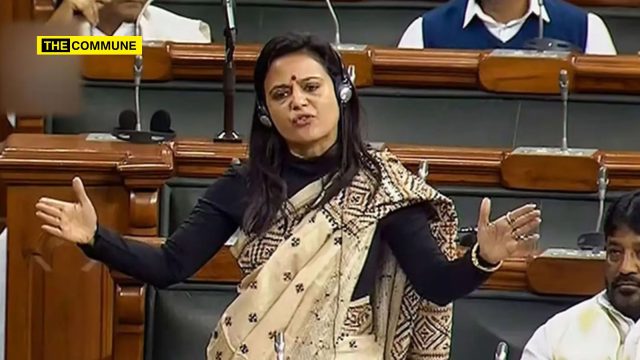
12 Cases Of Maulvis Held Nationwide Since 2015 For Terror, Radicalization Cases

On 7 November 2025, the Rajasthan Anti-Terrorism Squad (ATS) arrested Maulvi Osama Umar from Jalore for allegedly maintaining a four-year association with the banned outfit Tehrik-e-Taliban Pakistan (TTP) and attempting to radicalize Indian youth through online platforms, officials said.

Over the past decade, numerous Islamic clerics (Maulvis and Maulanas) across India have been apprehended by security agencies for their alleged involvement with banned terror outfits.

From links with global networks like Al-Qaeda and Tehrik-e-Taliban Pakistan to plots of assassination and radicalization, these arrests reveal a persistent pattern of extremist infiltration. This report details 12 such major incidents from 2015 to 2025, underscoring the ongoing challenges faced by India’s national security apparatus.

#1 Jalore Maulvi Held for TTP Links – 07 November 2025

The Rajasthan Anti-Terrorism Squad (ATS) arrested Maulvi Osama Umar from Sandkhor village in Jalore. Investigations revealed he had maintained links with the banned Pakistan-based terror group Tehrik-e-Taliban Pakistan (TTP) for four years. The cleric was accused of being in contact with handlers across the border and allegedly using online platforms to radicalize Indian youth and recruit them for anti-national activities.

#2 Trio of Clerics Nabbed in Joint Raid – 31 October 2025

In a coordinated operation across Jodhpur and Jaisalmer, the National Investigation Agency (NIA) and Rajasthan ATS arrested three maulvis—Ayub, Usman, and Masood. The clerics were alleged to have connections with international terrorist networks. Raids led to the seizure of documents, mobile phones, and laptops. Authorities are interrogating them to uncover funding sources and potential sleeper cell activities linked to their madrasas.

#3 PFI Revival Bid Leads to Mangaluru Cleric’s Arrest – 12 October 2025

Mangaluru Police arrested Maulana Syed Ibrahim Tangal for allegedly attempting to revive the banned Popular Front of India (PFI). The cleric had created a WhatsApp group named “Salman Salma” to mobilize former PFI members and coordinate activities. This case highlighted the continued efforts to re-establish the outlawed organization through digital means.

#4 Amreli Cleric in Pak-Linked WhatsApp Groups – 01 August 2025

Gujarat Police’s Special Operations Group detained Maulvi Mohammed Fazal Abdul Aziz Sheikh from a madrasa in Amreli’s Dhari taluka. The cleric was found to be part of eight suspicious WhatsApp groups with links to Pakistan, Afghanistan, and Bangladesh. His phone was seized after officials found deleted messages that coincided with the timing of a recent terror attack in Pahalgam.

#5 Locals Resist NIA During Jhansi Cleric’s Arrest – 12 December 2024

A joint team of the NIA and Uttar Pradesh ATS faced resistance from locals in Jhansi’s Super Colony area while attempting to arrest Maulvi Khalid Nadvi. The cleric was being investigated for his alleged role in foreign funding and online radicalization. The crowd formed a human barricade and scuffled with officers, temporarily obstructing the arrest.

#6 Surat Module Plotted Political Assassinations – 17 May 2024

Gujarat Police, in a joint op with the NIA, busted a terror module in Surat and arrested three individuals, including a maulvi named Sohail. The group was allegedly plotting the assassination of prominent political leaders across India to incite widespread unrest. Police recovered two voter ID cards from the accused during the operation.

#7 Cleric Arrested for Plot to Kill Nupur Sharma – 10 January 2024

Gujarat Police arrested 27-year-old Maulvi Sohail Abu Bakar Timol from Surat for allegedly plotting to assassinate former spokesperson Nupur Sharma and others. Investigations revealed he had handlers in Pakistan and Nepal, used a foreign SIM, and managed a transnational WhatsApp group. He was reportedly promised ₹1 crore for the killings.

#8 Al-Qaeda Linked Cleric Held in Assam – 26 August 2022

Assam Police arrested Maulvi Hafizur Rahman from Bongaigaon district for his links to Al-Qaeda in the Indian Subcontinent (AQIS) and Ansarullah Bangla Team (ABT). The cleric was involved in radicalization and recruitment, marking the fourth arrest of an Al-Qaeda-linked individual in Assam within a week, highlighting concerns about active sleeper cells.

#9 Delhi Maulana Aided Al-Qaeda Recruitment – 17 November 2021

Delhi Police’s Special Cell arrested Maulana Anzar Shah, a madrasa teacher from Bengaluru, for recruiting youths for Al-Qaeda. Shah brainwashed individuals and sent them to Pakistan and Afghanistan for terror training. His role in AQIS emerged from the interrogation of another operative, Abdul Rehman. Shah used VOIP calls and hate speeches to motivate recruits.

#10 Faridabad Cleric Accused of Forced Conversion – 24 September 2021

An FIR was filed against Maulana Kaleem Siddiqui in Faridabad, Haryana, after a youth alleged he was coerced into converting to Islam as a minor and changing his name to Noor Mohammad. Siddiqui and five associates were charged with forced religious conversion, and police confirmed the registration of the case.

#11 NIA Raids in Srinagar Target Terror Funding – 26 February 2019

The NIA raided seven locations in Srinagar, targeting separatist leaders including Yasin Malik and clerics Maulvi Manzoor and Maulvi Shafat. The searches were part of an investigation into Pakistan-based terror funding networks accused of financing militancy and stone-pelting activities in Jammu and Kashmir.

#12 Odisha Cleric Recruited for Al-Qaeda – 16 December 2015

In a joint operation, Odisha and Delhi Police arrested Maulvi Abdul Rehman from Cuttack for his links with AQIS. The 37-year-old cleric was involved in recruiting operatives in Jharkhand, Uttar Pradesh, and Karnataka. Devices and his passport were seized, revealing possible foreign links to Saudi Arabia, Pakistan, and Dubai.

Subscribe to our channels on WhatsAppTelegram, Instagram and YouTube to get the best stories of the day delivered to you personally.
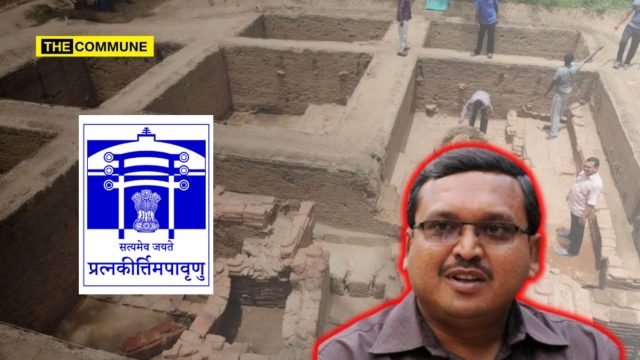
Pratap Bhanu Mehta Admits Indira Gandhi’s Emergency-Era Pact With Communists On History Textbooks Was A Mistake

Political theorist Pratap Bhanu Mehta has triggered fresh debate over his long-standing role in India’s intellectual ecosystem.

The short clip, taken during his interaction with students at JNU after a lecture on “Reflections on Global Political Thought”, shows Mehta acknowledging a controversial episode from the Emergency period.

In the video, Mehta is seen saying or rather admitting, “When I talk about history, the pact made during Emergency by CPI and Indira Gandhi with regard to Indian history department, history textbooks, it was a disaster for academic life in India. The left was also quite happy with it, quite complicit with it.”

While Rahul Gandhi complains about ‘RSS capturing institutions’, Pratap Banu Mehta reveals how Congress and Communists captured India’s academic space for indoctrination.

Who Is Pratap Bhanu Mehta?

Mehta, a former Vice-Chancellor of Ashoka University and ex-president of the Centre for Policy Research (CPR), is a part of the global networks linked to billionaire philanthropist George Soros. CPR has partnered with Namati Inc., an organisation that receives funding from the Open Society Foundations (OSF); Soros sits on Namati’s advisory council. Mehta himself is listed on Namati’s Board of Directors.

It is a known fact that Soros-funded NGOs have cultivated a class of intellectuals consistently opposed to the Modi government, naming figures such as Harsh Mander, Indira Jaising, Amartya Sen, and Mehta among them.

Mehta has repeatedly drawn backlash for his columns, including his reaction to the Ram Temple inauguration, in which he wrote that Ayodhya’s Ram Mandir was the “first colonisation of Hinduism by political power.”

Image Source: OpIndia

His commentary on the hijab dispute also stirred debate. In his Indian Express column, Mehta argued the controversy should be viewed as a test of constitutional values, liberty, dignity, and non-discrimination. According to him, “the hijab does not interfere with education, holding a job, voting, participating in public life, or achieving anything in life,” and excluding students or teachers on that basis represented “a moral and constitutional failure.”

He further wrote that the moment reflected “an attempt to visibly erase Muslims from India’s public culture” and that portraying the hijab as a challenge to equality was misguided. Mehta framed the issue as one of state overreach and societal intolerance, warning that current actions “normalise hostility towards minorities” and weaken democratic principles.

Mehta’s disclosure has given the shot in the arm for the long-alleged ideological capture of Indian academic institutions, a charge often levelled by critics who say that key universities, research bodies and textbook committees were steered for decades by tightly knit ideological circles. The comment has reopened scrutiny of how historical narratives were shaped, appointments influenced, and academic ecosystems consolidated during and after the Emergency, issues that have typically been dismissed or downplayed in mainstream discourse.

Subscribe to our channels on WhatsAppTelegram, Instagram and YouTube to get the best stories of the day delivered to you personally.
Bharatanatyam Meets The Bhagavad Gita: How Pavithra Srinivasan’s Gita Natyam Unites Dance, Storytelling, And Pedagogy

Bharatanatyam Meets The Bhagavad Gita: How Pavithra Srinivasan’s Gita Natyam Unites Dance, Storytelling, And Pedagogy

A new artistic-pedagogical experiment is gaining traction across schools, cultural centres, spiritual institutions, and universities: Gita Natyam, a format that uses Bharatanatyam to teach the Bhagavad Gita chapter by chapter. At the centre of this growing ecosystem is Bharatanatyam artiste, educator, Vedanta practitioner Pavithra Srinivasan, whose three-decade journey in the shastriya arts has culminated in a method that blends scripture, storytelling, and movement in a format aimed especially at young learners.

A recent milestone came this month when Padma Seshadri Bala Bhavan (PSBB) in Chennai invited Pavithra, an alumnus of the school, to present Gita Natyam: Chapter 1 of the Bhagavad Gita at the Dr (Mrs) YGP Centenary Festival of Music and Dance. 

A Workshop Model That Treats Natya as Pedagogy

Unlike conventional dance classes or lectures on scripture, Gita Natyam workshops are interactive learning environments. Each session unpacks a chapter of the Gita through adavus and classical movement, abhinaya and expressive mime, storytelling and songs, chanting and verse explanation, visual presentations, group reflection, and public performance.

Designed for participants above the age of 12, the workshops position Bharatanatyam not as ornamentation or just a cultural programme but as a teaching tool. Children chant verses, interpret ideas such as self-awareness and right action, and eventually express them in movement on stage. A 10-day programme conducted at Bharatiya Vidya Bhavan, Coimbatore, documented on video, shows schoolchildren progressing from first exposure to a public recital, an indication of the format’s adaptability for schools and colleges.

Gita Natyam describes its outcomes in contemporary terms – self-awareness, purposeful living, clarity of goals, mapping life-skills training onto Vedic knowledge, and traditional aesthetics.

Beyond school and sabha spaces, Gita Natyam is now being trialed in higher-education environments. Notably, a workshop was recently conducted at Rishihood University, introducing undergraduate and young adult learners to the Gita through Bharatanatyam. This expansion signals serious ambition: to integrate classical arts and scriptural wisdom into modern campus education. 

By opening such a workshop to the youth at university level, the model attempts to reach beyond conventional audiences for classical dance or religious education, offering a structured gateway for urban, educated youngsters to engage with the Gita in a dynamic, embodied way.

At the Centre: Pavithra Srinivasan’s Lifelong Tapasya

Pavithra Srinivasan’s artistic journey forms the backbone of Gita Natyam. Trained under many stalwarts, including Padma Bhushan The Dhananjayans and spiritually guided by Swami Dayananda Saraswati of Arsha Vidya Gurukulam, she describes her practice as a “lifelong tapasya” in Bharatanatyam, Carnatic music, and Vedanta.

She is the founder of Arsha Kala Bharati, an arts school, and has also served as a research fellow with the Centre for Public Diplomacy & Soft Power. Over the years, her thematic solo productions have centred on Hindu scriptures; Gita Natyam is the culmination of that trajectory, an attempt to make the Gita accessible “chapter by chapter, value by value” as live Natya performance, interactive workshops, talk shows/lec-dems, educational films with animation, graphics, visual effects, stories, life lessons, natya & sangeeta, laya & more – all in unison, chapterwise as a sequel.

Recently, Gita Natyam won an award for the Lokarangam Immersive Arts category at the Adani Global Indology Conclave in partnership with IKS, Ministry of Education.

Her digital presence via YouTube films, Instagram reels, and interactive school and university sessions has helped the project find a growing audience of parents, teachers, students, and young adults.

A Growing Ecosystem of Dance-Based Scriptural Learning

Gita Natyam’s digital footprint suggests a rapidly expanding community. Instagram reels promote “Bhagavad Gita in Natya” workshops; YouTube channels feature interactions with school students and university participants; Facebook and LinkedIn pages highlight collaborations with Dharmic networks, cultural bodies, and youth institutions.

Across platforms, the message remains consistent: the Bhagavad Gita becomes more relatable when experienced through movement, melody, and narrative, when it is not only learned but lived.

To know more about Gita Natyam’s journey, you can check out https://gitanatyam.com/

Subscribe to our channels on WhatsAppTelegram, Instagram and YouTube to get the best stories of the day delivered to you personally.

Jindal Global Law School Has Hired A Trans ‘Scholar’ Who Says “There Is Nothing Nice About Being Hindu Or Indian”

Jindal Global Law School—India’s most expensive, self-proclaimed “world-class” private law university has quietly hired Vikramaditya Sahai (a.k.a. Vqueeram) as Clinical Assistant Professor of Law, despite a well-documented record of making sweeping, inflammatory, and openly derisive comments about Hindus, Indians, men, and the very idea of national belonging.

Sahai’s appointment in February 2025 has triggered outrage not because of their gender identity, as supporters disingenuously argue, but because the said words, conduct, and ideology that raise serious questions about the standards of institutions that shape India’s next generation of lawyers, judges, and policymakers.

This is not about who Sahai is. This is about what Sahai has said, what Sahai has done, and why premier academic institutions keep rewarding it.

A Pattern Of Derision: Sahai’s Public Statements

Sahai’s public record is not murky, it is crystal clear, documented on videos, posts, and interviews stretching back years. In a 2017 public event, Sahai said, “There is nothing nice about being Hindu. There is nothing nice about being Indian. There is nothing nice about being a man. As long as you are Hindu, you exercise power over Dalits, Muslims, Christians. As long as you are Indian, you occupy territories. Your existence is implicated in the murder of Junaid.”

These are not stray remarks. They are ideological claims framed as universal truths, flattening all nuance and branding entire communities as inherently oppressive.

Yet today, the same individual is teaching at a law school and teaching it at one of India’s highest-fee, most aspirational institutions.

From Activism To Academia Without Accountability

Sahai’s CV is impressive, but heavily ideological:

  • Faculty at Ambedkar University Delhi, Gender Studies
  • Consultant at TISS Mumbai, Centre for Women’s Studies
  • Senior Research Associate at CLPR Bengaluru, an organisation known for its activist-driven jurisprudence
  • External member of the NCERT Gender Manual drafting team
  • Law & Justice Scholar at Jindal Global University (2024–25)

Every academic posting is positioned in and shaped by an explicitly ideological ecosystem. But here’s the problem: ideological activism is not the issue; ideological extremism is.

Sahai did not just advocate gender inclusion. Sahai publicly argued that:

Image Source: Sensei Kraken X handle


Opposed life imprisonment for trafficking, calling it harmful because it “criminalises trans identities.”

Image Source: Sensei Kraken X handle

Referred to Rohith Vemula’s suicide note as “beautiful.”

These are extreme, absolutist formulations, not grounded in scholarship, but in activism turned into dogma.

And institutions absorbed this without question.

The NCERT Controversy: When Personal Conduct Meets Public Responsibility

When Sahai surfaced in the NCERT Gender Training Manual controversy, journalists and parents raised concerns on two fronts:

#1 Sahai’s ideological statements open disdain for major religious communities, the nation-state, gender roles, and legal structures.

#2 Sahai’s public posting of semi-nude photographs on Instagram – on a profile that was completely open to the public, even while contributing to documents for school-level teacher training.

Image Source: Sensei Kraken X handle

Instead of accountability, critics were attacked as “transphobic,” even though the criticism targeted content, conduct, and public suitability, not identity.

The NCERT eventually withdrew the manual. Sahai faced no consequences.

The Jindal Appointment: A Case Study in Institutional Capture

In early 2025, Sahai was brought into JGLS, a law school where tuition exceeds ₹8–10 lakh per year and which markets itself as India’s gateway to global legal careers.

So the question asks itself: How does a person who has said “there is nothing nice about being Hindu or Indian” get hired to teach Indian constitutional law, social justice, or gender law?

The answer is uncomfortable: India’s elite academic institutions have blurred the line between scholarship and activism so thoroughly that ideological extremism is not a red flag, it is a credential.

This is not an isolated case. It reflects a pattern across universities, where statements that deride an entire faith community, the dismissal of “Indianness” as inherently violent, open political activism, publicly posted semi-nude images, radical views on crime and justice, blanket characterisations of entire genders, associations with far-left activists such as Umar Khalid and repeated contempt for national identity.

Image Source: Sensei Kraken X handle

…are not seen as disqualifications for teaching law or influencing educational policy. Instead, they become stepping stones.

Why Does This Matter?

Because educational institutions do not merely hire faculty; they legitimise them. They certify that these individuals are fit to shape young minds.

And here lies the core concern: If Sahai’s statements had targeted any other religious community in the same way, would elite universities still hire them? The answer writes itself.

If Sahai had described any other nationality as fundamentally oppressive, would they be appointed to teach law? Again: the answer writes itself.

Subscribe to our channels on WhatsAppTelegram, Instagram and YouTube to get the best stories of the day delivered to you personally.