Home Blog Page 298

VCK-Linked Union Secretary Held For Alleged Sexual Harassment Of College Student

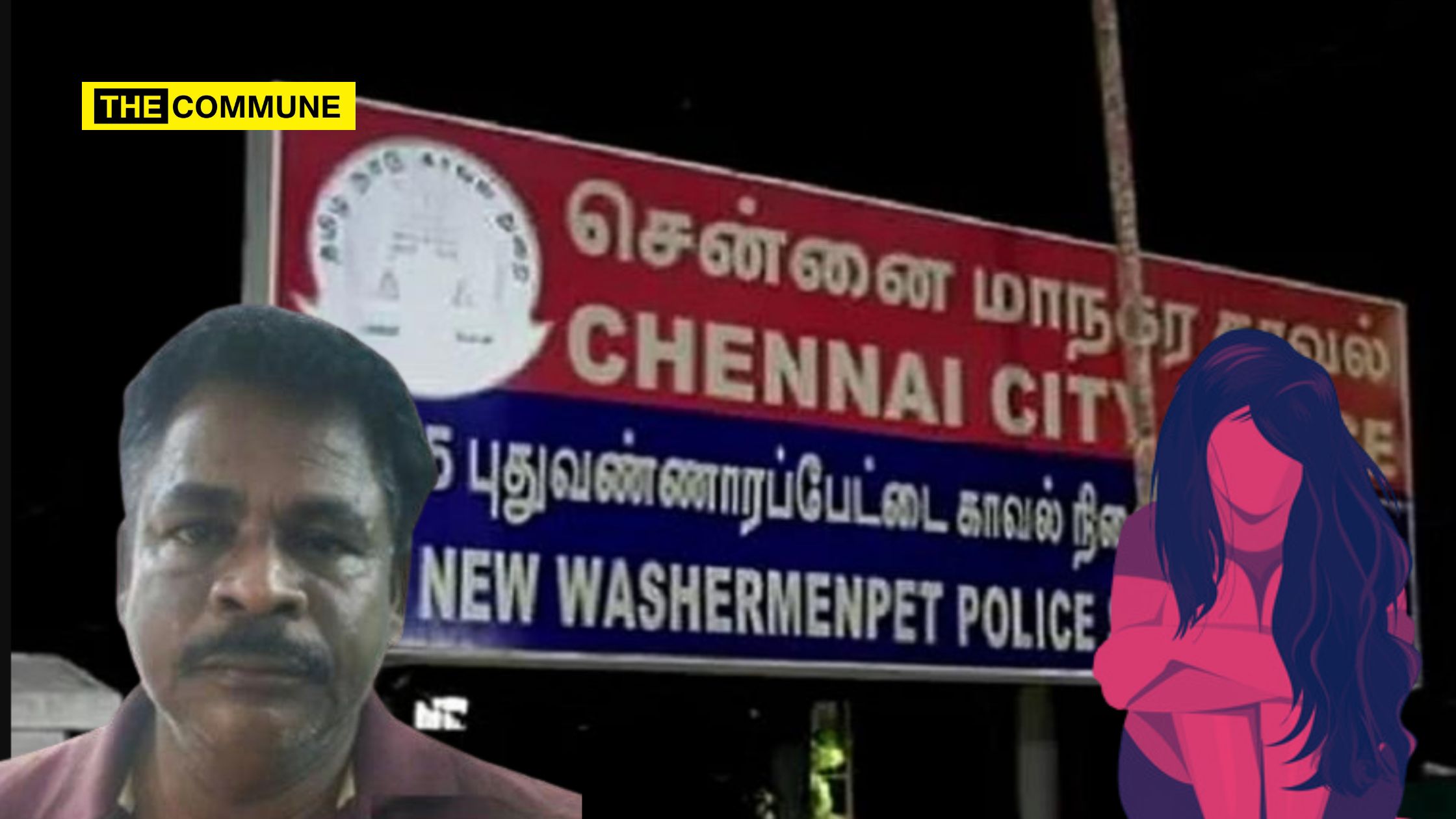
A senior official of a labour union was arrested earlier this week after a complaint of sexual harassment was filed by a local resident at the new washermanpet Police Station.

The accused, Nanmaran (63), General Secretary of the Chennai Port and Shipyard Workers’ Union affiliated with the Viduthalai Chiruthaigal Katchi (VCK). He resides in the Tondiarpet Port Housing complex, where the incident reportedly took place.

According to police sources, the complaint was lodged by the mother of a college-going student who resides in the same housing complex. Following preliminary inquiries, a case was registered against Nanmaran under relevant sections of the law.

He was subsequently arrested, produced before a magistrate at the George Town Court, and remanded to judicial custody at Puzhal Central Prison.

Authorities have stated that further investigation is underway.

(With Inputs From Dinakaran)

Subscribe to our channels on TelegramWhatsApp, and Instagram and get the best stories of the day delivered to you personally.

Thoothukudi Locals Urge DMK MP Kanimozhi To Push For Sterlite Copper Reopening

Representatives from the Thoothukudi People Livelihood Protection Association, along with residents from nearby villages, submitted a formal request to Member of Parliament Kanimozhi on 13 May, appealing for the reopening of the Sterlite Copper plant.

In their plea, the group highlighted that for over two decades, the Sterlite Copper facility had provided direct and indirect employment to more than 20,000 individuals from Thoothukudi and over 50 neighboring villages. Additionally, 64 contractors depended on operations at the plant. Many had invested heavily in infrastructure—purchasing and customizing trucks solely for transporting copper concentrate from the VOC Port to the SIPCOT Industrial Estate.

The abrupt shutdown of the smelter not only stripped thousands of their livelihood but also pushed several contractors into financial ruin. Having taken substantial loans—often secured by mortgaging personal properties—many were left with no choice but to sell their vehicles at a loss after the closure.

According to S. Thiyagarajan, president of the association, the plant was unfairly targeted by a campaign that falsely linked it to a rise in cancer cases, branding Thoothukudi the “cancer capital.” He stated that environmental tests from multiple independent agencies found no basis for such claims. Nevertheless, the narrative persisted, leading to unrest and ultimately the closure of the facility. This move, he added, forced India to shift from being a copper exporter to a copper importer.

The petitioners also pointed to Sterlite’s humanitarian efforts during the COVID-19 crisis. The company produced and distributed 2,266 tonnes of medical oxygen at no cost, providing life-saving support across 32 districts.

Despite incurring massive losses following the shutdown—estimated in thousands of crores—the plant has continued its corporate social responsibility (CSR) efforts. These include scholarships for over 10,500 children whose families lost income during the pandemic, financial aid for women-led self-help groups, and funding for development initiatives in rural areas around Thoothukudi.

Given the scale of its socio-economic impact and the continued demand for employment, the petitioners urged the government to take immediate steps toward reopening the Sterlite Copper plant for the betterment of workers and local communities alike.

(With Inputs From The Hindu)

Subscribe to our channels on TelegramWhatsApp, and Instagram and get the best stories of the day delivered to you personally.

How Pakistan Faked A Rafale Kill To Win The Narrative War

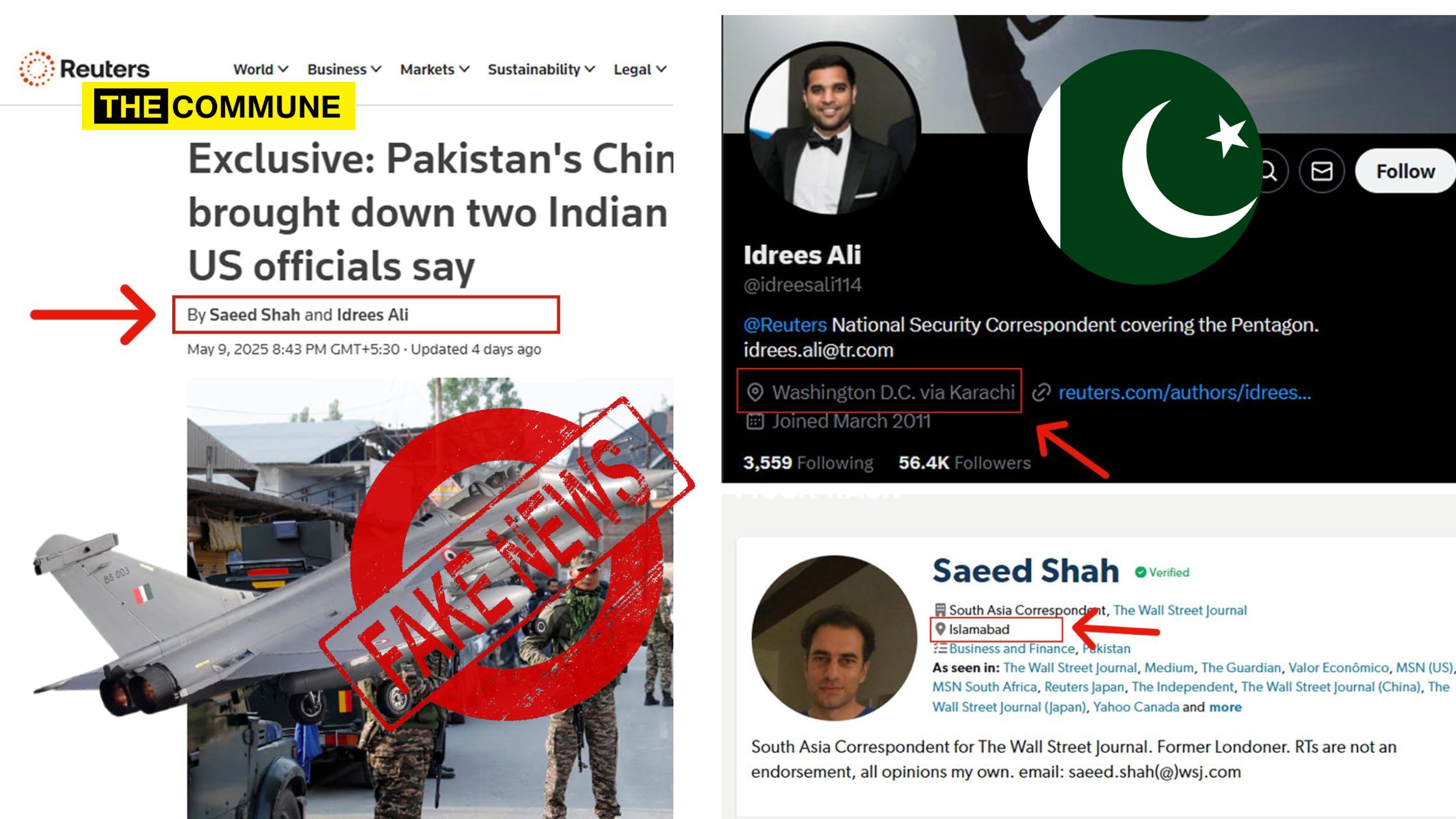
This time, Pakistan went to extreme lengths to fabricate and push its false “Rafale shot down” narrative—strategically planting the story in so-called international media using its own journalists. By disguising state-sponsored propaganda as independent journalism, Pakistan attempted to lend credibility to its baseless claims and mislead both domestic and international audiences.

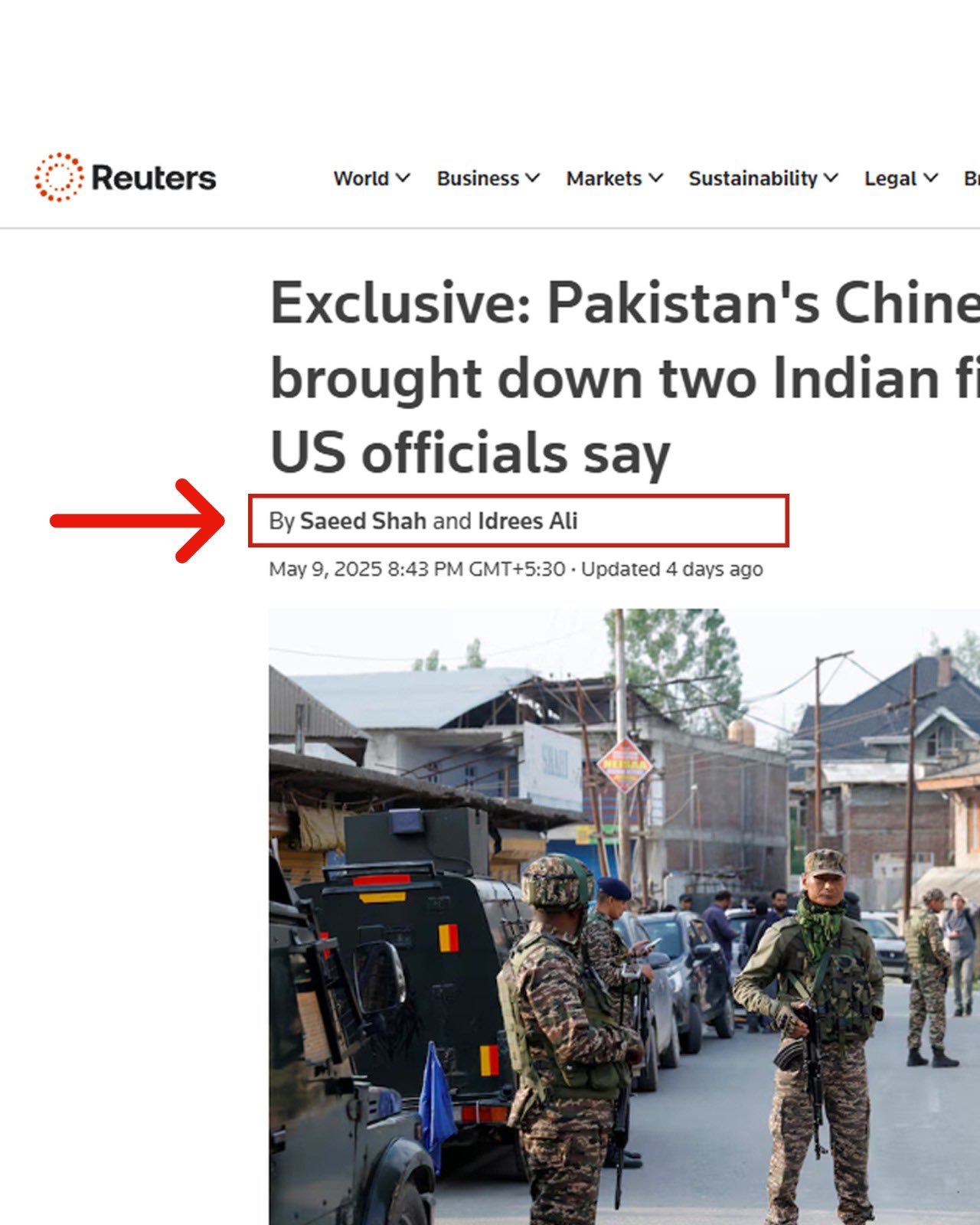
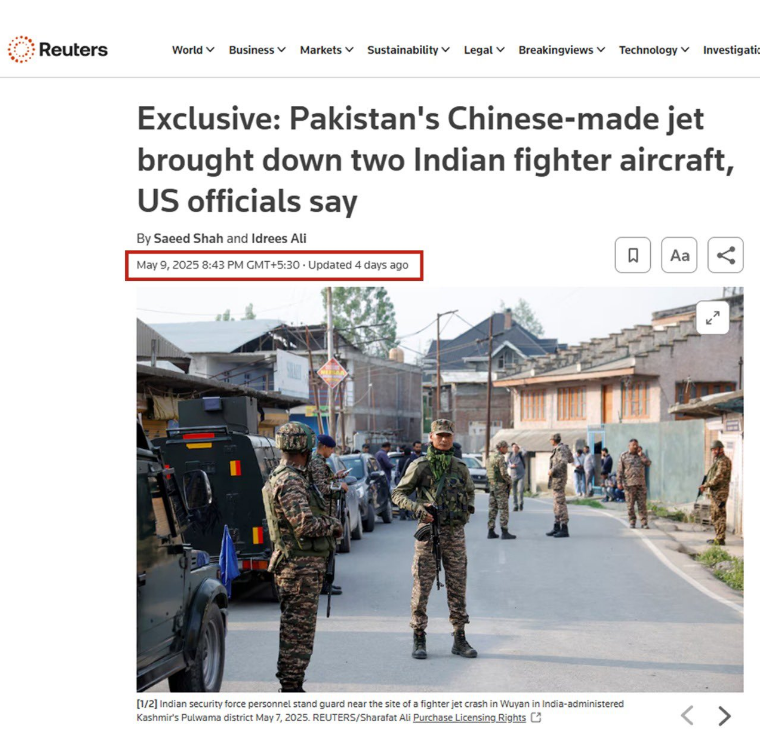
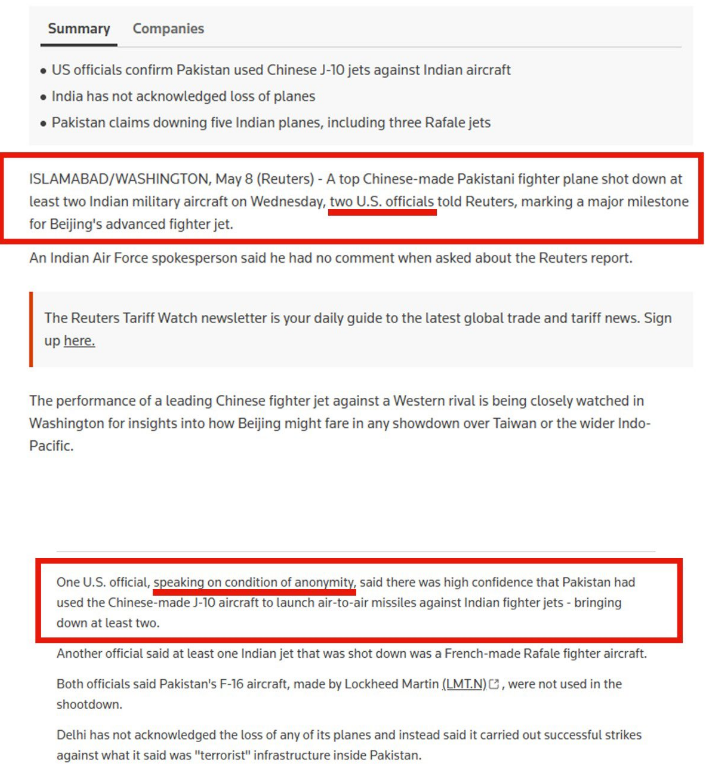
On 9 May 2025, a Reuters article titled “Pakistan’s Chinese-made jet brought down two Indian fighter aircraft, US officials say” claimed that a Chinese-manufactured Pakistani J-10 fighter jet had shot down at least two Indian military aircraft, including a French-made Rafale. However, the report lacked verifiable evidence and relied solely on anonymous statements from “two US officials.”

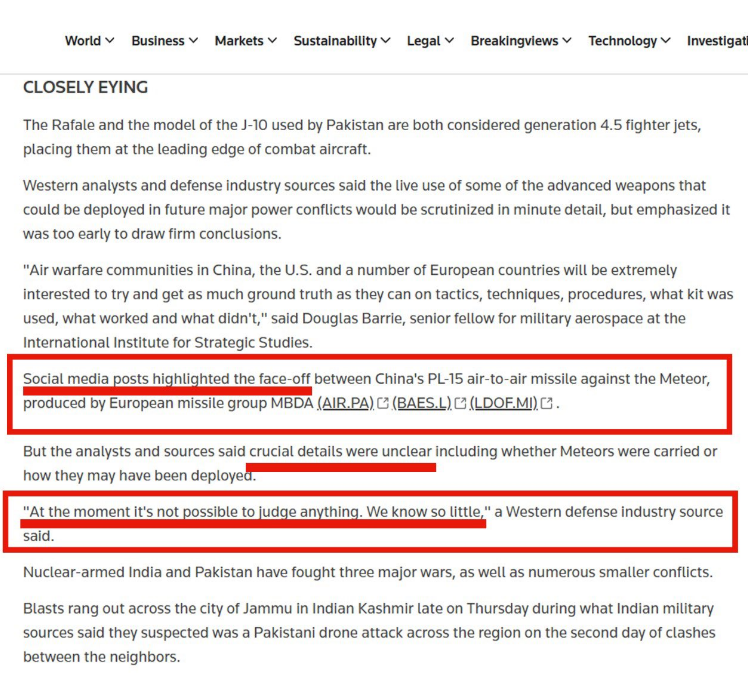
The identities of these officials remain undisclosed, and the article acknowledged that “crucial details were unclear,” with “social media posts highlighting the face-off.” This vague sourcing raises questions about the credibility of the claims. Notably, Pakistan’s Defence Minister also referred to evidences on social media during a television interview, further emphasizing the reliance on unverified online content.

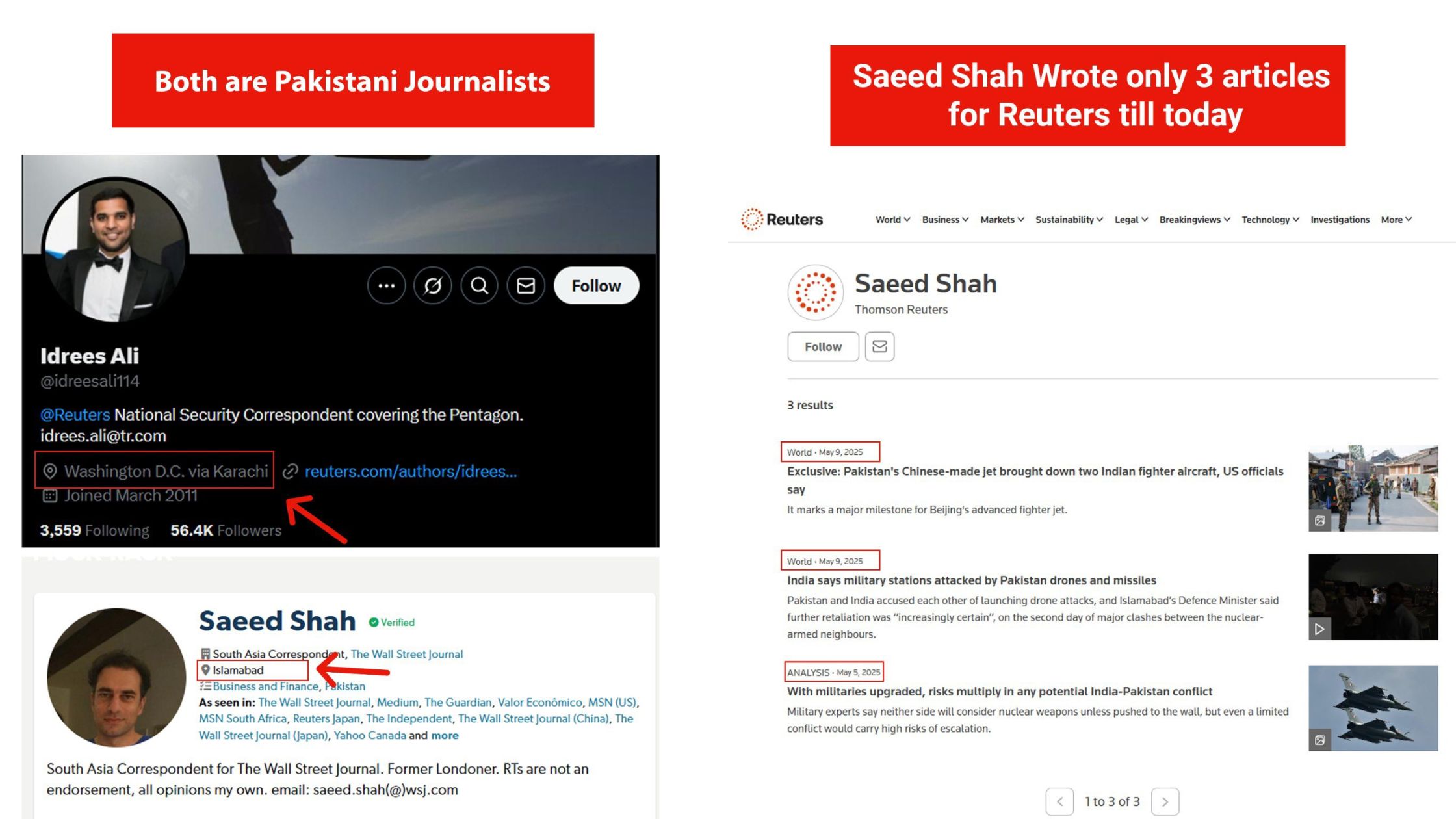
Upon closer examination, it was revealed that the article was authored by two journalists, Saeed Shah and Idrees Ali, both from Pakistan. Saeed Shah had written only three articles for Reuters, all published between 5 May and 9 May 2025, and all presenting a pro-Pakistan perspective. This pattern suggests a deliberate effort to propagate a specific narrative through an international news platform.

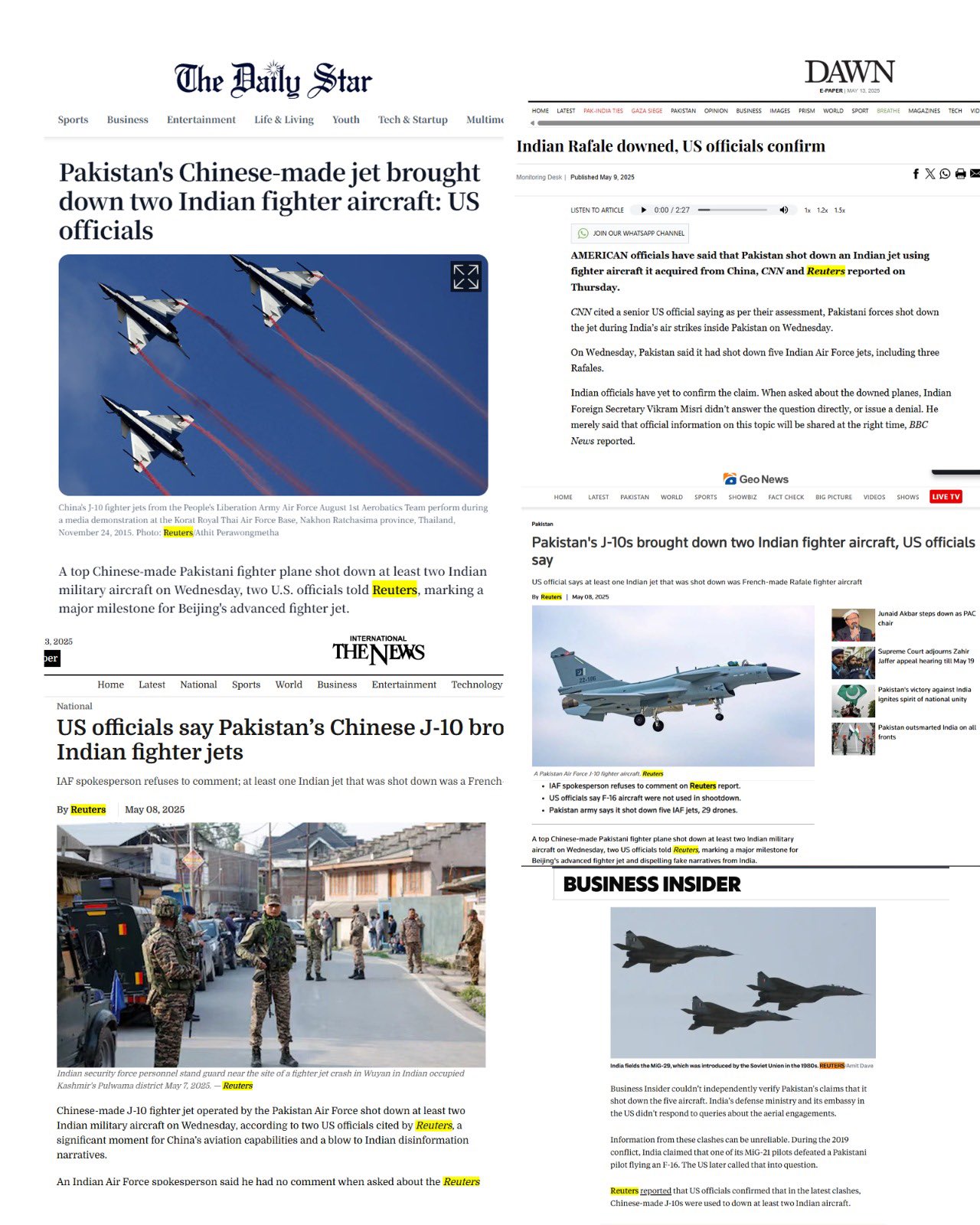
The article was widely disseminated across media outlets, particularly in Pakistan and China, and became a cornerstone of Pakistan’s military reports, reinforcing their narrative of shooting down Indian jets. However, the lack of concrete evidence and reliance on anonymous sources have led to skepticism regarding the authenticity of these claims.

In contrast, Indian authorities have consistently denied any aircraft losses, stating that “losses are a part of combat” and that all pilots returned safely. The Indian military also presented wreckage of a Mirage III or Mirage 5, claiming its interception during the conflict.

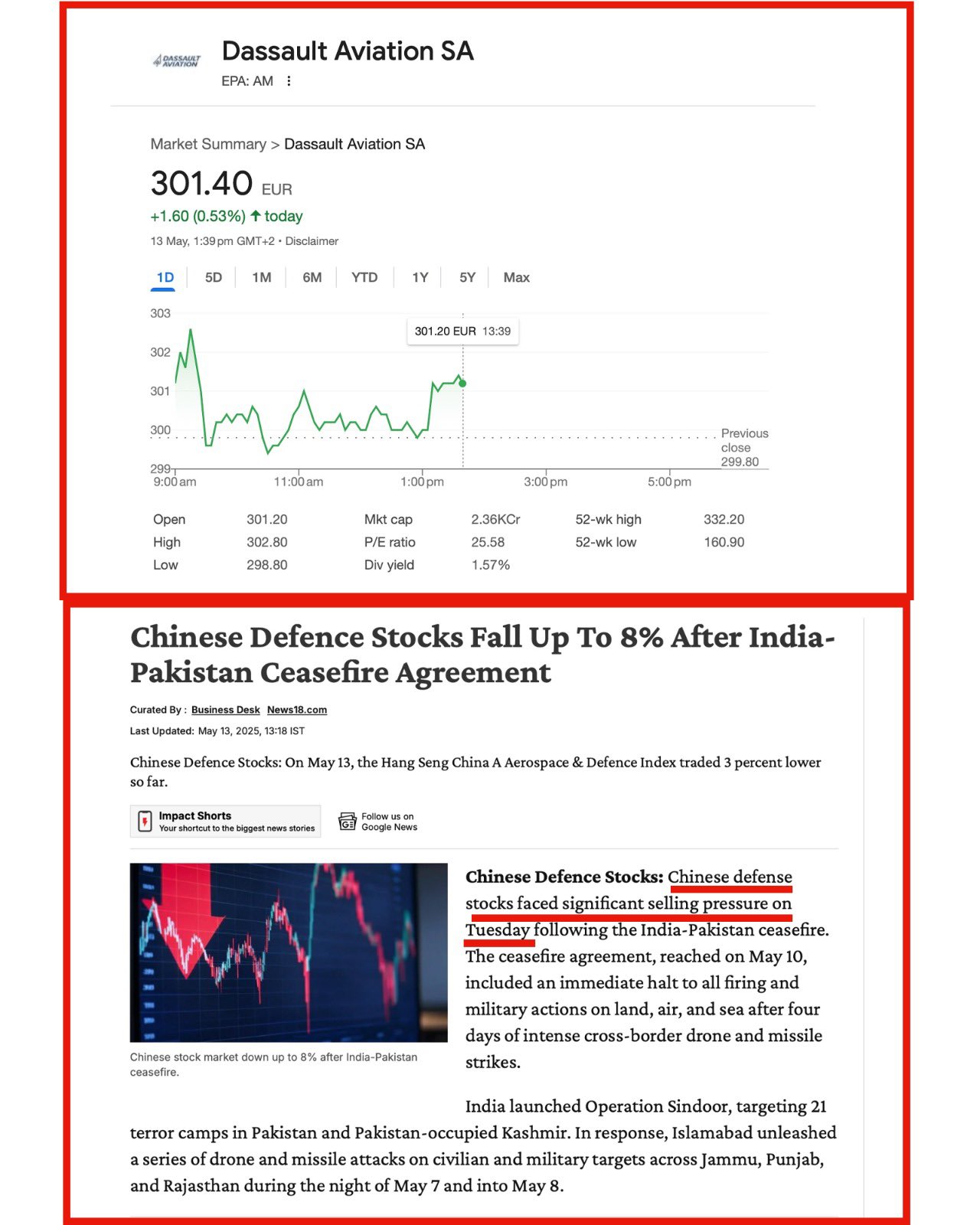
Lies may be loud, but truth always finds its way to the surface. Market reactions alone have dismantled Pakistan’s fabricated tales. As their false Rafale narrative spread, the real world responded: Chinese defense stocks plummeted by up to 8%, while Indian defense equities rose 4.12% and Dassault Aviation saw a 1% uptick. The contrast couldn’t be starker.

Only a country that suffered the destruction of 9 terror camps, the decimation of 11 airbases, the collapse of its air defense systems, over 100 casualties, and the suspension of the Indus Waters Treaty (IWT) could delude itself into celebrating defeat through fake news and social media memes.

The propagation of the “Rafale shot down” story underscores the challenges of information warfare in modern conflicts, where narratives can be shaped and spread rapidly, often without regard for factual accuracy. It serves as a reminder to critically evaluate sources and seek verified information amidst the deluge of content in the digital age.

(This article is based on an X Thread By Ashok Singhal)

Subscribe to our channels on TelegramWhatsApp, and Instagram and get the best stories of the day delivered to you personally.

A State Within A State: How The Pakistan Military Dominates Politics, Business, And The National Story

The recent press briefing by Pakistan’s military, filled with unfounded allegations against India, once again exposes their ongoing attempt to position themselves as victims of terrorism. But in an age of technological transparency, these propaganda-laden claims—often backed by doctored images and zero credible data—fail to hold up on international platforms. The global community is no longer swayed by baseless rhetoric without verifiable evidence.

Is the Pakistan Army Truly “Professional”?

Pakistan often presents its military as a professional institution, but its conduct and deep entanglement in the country’s economy tell a different story. Far from being a purely defense-oriented organization, the Pakistan Army operates what is arguably one of the world’s largest military-run business empires. Through a web of ostensibly civilian-run but military-controlled organizations, serving and retired officers oversee a vast commercial enterprise.

Key Military-Controlled Business Entities in Pakistan:

  • Fauji Foundation: Established in 1954, this foundation runs over 18 companies in sectors including fertilizers, cement, food, energy, and healthcare. While profits are officially designated for veteran welfare, transparency remains questionable.
  • Army Welfare Trust (AWT): Involved in industries such as real estate, banking, insurance, aviation, and manufacturing, AWT is another major arm of military-led commerce.
  • Shaheen Foundation (Pakistan Air Force): Manages interests in media, education, and real estate under the guise of welfare for air force personnel.
  • Bahria Foundation (Pakistan Navy): Operates in education, shipping, and property development.
  • Defence Housing Authority (DHA): Arguably the most controversial, DHA oversees luxury housing projects in major cities and has been accused of land grabbing and displacing local communities.

This military-run economic empire raises several serious concerns. Foremost is the lack of transparency—these military-controlled businesses operate outside the purview of public audits and civilian accountability, making it nearly impossible to scrutinize their financial practices. Additionally, there’s a clear conflict of interest, as serving officers often reap personal benefits from these ventures, blurring the lines between military service and private profit. The army’s deep involvement in commerce also distorts the economy, crowding out private sector competition and discouraging both local entrepreneurs and foreign investors. Perhaps most troubling is the political influence that stems from this economic dominance; the military’s financial power translates into significant sway over civilian policymaking, undermining democratic institutions and weakening civilian oversight.

Renowned scholar Ayesha Siddiqa, in her landmark book “Military Inc.: Inside Pakistan’s Military Economy”, coined the term “Milbus” (military business) to describe this phenomenon. According to her, the Pakistan Army functions more like a sprawling corporate conglomerate than a conventional defense force—prioritizing profits, power, and political leverage over professionalism and national duty.

According to a report by Ayesha Siddiqa in 2007, the total estimated value of the Pakistan Army’s business empire stood at around $20 billion. However, current estimates suggest that this figure may now range between $40 billion to $100 billion (approximately ₹8,47,28,17,08,000). Experts attribute this staggering growth to the expansion of military-controlled enterprises, particularly the Defence Housing Authority (DHA), which operates lucrative real estate projects in major cities such as Karachi, Lahore, and Islamabad. DHA alone is believed to be worth several billions of dollars, reflecting the scale and economic dominance of the military’s commercial ventures.

Pakistan Army abides by commitment?

Since the 2003 ceasefire agreement between India and Pakistan, there have been numerous instances where Pakistan has been accused of violating the terms of the truce. These violations have escalated over the years, leading to increased tensions and casualties.

Notable Ceasefire Violations by Pakistan

  • 2014: Pakistan committed 583 ceasefire violations, averaging one incident every 15 hours. These actions resulted in the deaths of four Indian army soldiers, one Border Security Force (BSF) jawan, and 13 civilians. Additionally, 101 civilians and 33 security personnel were injured, and 128 private structures were damaged.

  • 2019: There were over 2,050 unprovoked ceasefire violations by Pakistan, leading to 21 Indian casualties. The Indian Ministry of External Affairs highlighted concerns over these violations, including cross-border terrorist infiltration and targeting of Indian civilians and border posts.

  • 2021: Pakistan violated the ceasefire approximately 600 times, continuing the pattern of increased violations observed in previous years.

  • 2025: In May, following a ceasefire agreement sirens wailed and explosions rang out across India’s border regions on Saturday evening, as Pakistan violated the ceasefire agreement merely hours after it was announced by sending drones into Indian airspace. Reports of loud blasts came in from Srinagar, while air raid alerts were triggered in Udhampur and several areas of the Jammu region.

Does the Pakistan Army follows the orders of Government? A Laughable Claim

When Lt. Gen. Ahmed Sharif Chaudhry claimed that the Pakistan Army “follows the orders of the government,” it was almost impossible not to laugh. The statement stands in stark contrast to decades of history, evidence, and ongoing realities. The truth is: the Pakistani military—especially the army—has long been the most dominant force in the country, far outweighing the influence of elected governments. Below are well-documented instances and facts that lay bare the extent of this control.

Military Coups and Direct Rule

Pakistan has experienced major military coups, resulting in more than 34 years of direct military rule:

  • 1958 – Gen. Ayub Khan imposed martial law and suspended the constitution.

  • 1977 – Gen. Zia-ul-Haq overthrew PM Zulfikar Ali Bhutto and ruled until his death in 1988.

  • 1999 – Gen. Pervez Musharraf ousted PM Nawaz Sharif and held power until 2008.

Even during periods of civilian rule, the military has operated from behind the scenes, crafting what analysts call hybrid regimes—governments that appear democratic but are steered by the army.

Election Engineering and Political Manipulation

  • 2018 Elections: Widely believed to be rigged in favor of Imran Khan, with the military using media control and judiciary pressure to sideline rivals like PML-N.

  • 2022 Ouster of Imran Khan: After a rift with Gen. Qamar Javed Bajwa over ISI appointments, Khan was ousted via a no-confidence vote—allegedly orchestrated by the military.

  • Suppression of Opposition: Prior to the 2024 elections, thousands of PTI leaders and supporters were jailed, the party symbol was removed from ballots, and Khan himself faced over 180 legal cases—all widely viewed as politically motivated.

  • President Arif Alvi’s 2023 Revelation: He claimed military-backed staff bypassed his authority to pass controversial bills—underscoring just how powerless elected officials can be.

From direct coups to political engineering, from monopolizing foreign policy to running a multibillion-dollar economic empire—the Pakistan Army has repeatedly shown that it does not take orders; it gives them. Civilian governments, while elected

Pakistani Claims of Celebrating Peace?

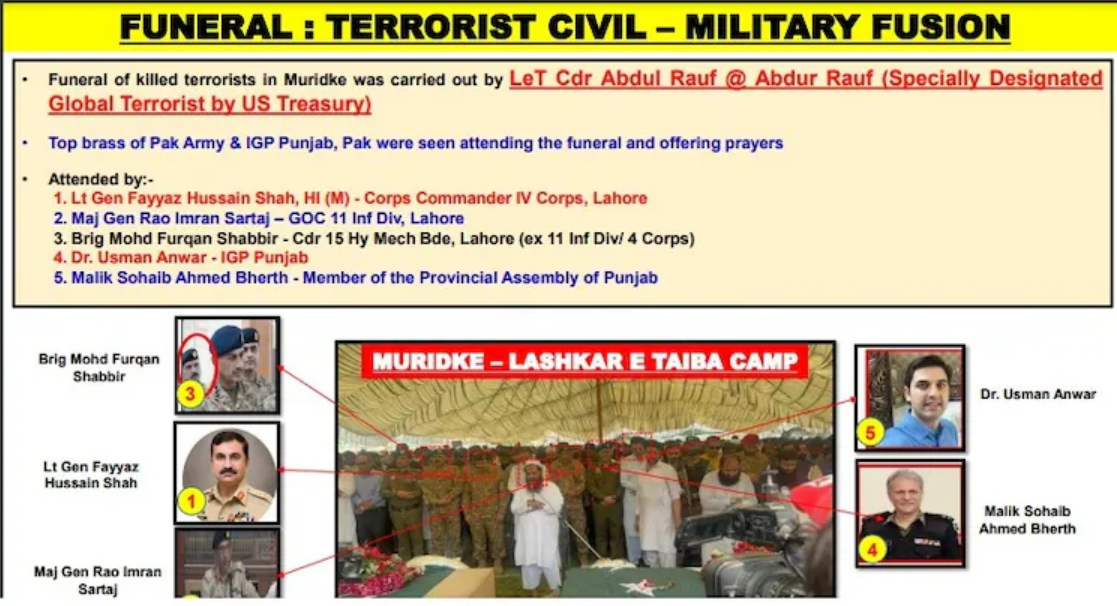
Lt. Gen. Ahmed Sharif Chaudhry recently claimed that Pakistanis were celebrating peace following the escalation between India and Pakistan. However, the situation tells a different story. While Pakistan’s government insists on peace, disturbing images surfaced showing terrorists being mourned with Pakistani Army officers present at the funeral rites.

Following India’s precision strikes on May 7, which killed over 100 terrorists as part of Operation Sindoor, videos and photographs emerged from the funerals of these militants. The visuals showed several Pakistani Army officials and personnel attending the last rites in various border areas.

On Sunday, the Indian Armed Forces identified the Pakistani officials who were seen offering prayers at the funerals. Among those named were:
(Image Credit: India Today)
  • Lieutenant General Fayyaz Hussain Shah, Commander of the IV Corps of Lahore
  • Major General Rao Imran Sartaj, of the 11th Infantry Division, Lahore
  • Brigadier Mohammad Furqan Shabbir
  • Dr. Usman Anwar, Inspector General of Punjab Police
  • Malik Sohaib Ahmed Bherth, Member of the Provincial Assembly of Punjab

Despite Pakistan’s repeated claims of not harboring or supporting terrorism, these images and videos contradict such statements.

One particularly concerning incident was the funeral of Hafiz Abdul Rauf, a prominent Lashkar-e-Taiba (LeT) terrorist, who led prayers for three militants killed in the Indian airstrike on a terror camp in Muridke, near Lahore. Notably, civil officials and members of the banned Jamaat-ud-Dawah (JuD), founded by Hafiz Saeed, were also in attendance. The individuals killed, Qari Abdul Malik, Khalid, and Mudassir, were reportedly associated with JuD, serving as prayer leaders and caretakers at a mosque destroyed during the strike.

Rauf, a globally designated terrorist by the US Treasury, was seen leading the ceremony, highlighting Pakistan’s ongoing connections with militant groups. Following the funeral, disturbing footage emerged showing Pakistan Army personnel carrying the coffins of these terrorists, draped in the Pakistani flag, further deepening suspicions of the army’s complicity in supporting terrorism. This sequence of events paints a stark contrast to the narrative of peace that Pakistani officials try to project, raising questions about the true extent of their involvement in terror activities.


Pakistan’s Military Capability: Claims vs. Reality

One of the most questionable narratives during the recent India-Pakistan conflict came from the Pakistani military’s claims about its air and naval readiness.

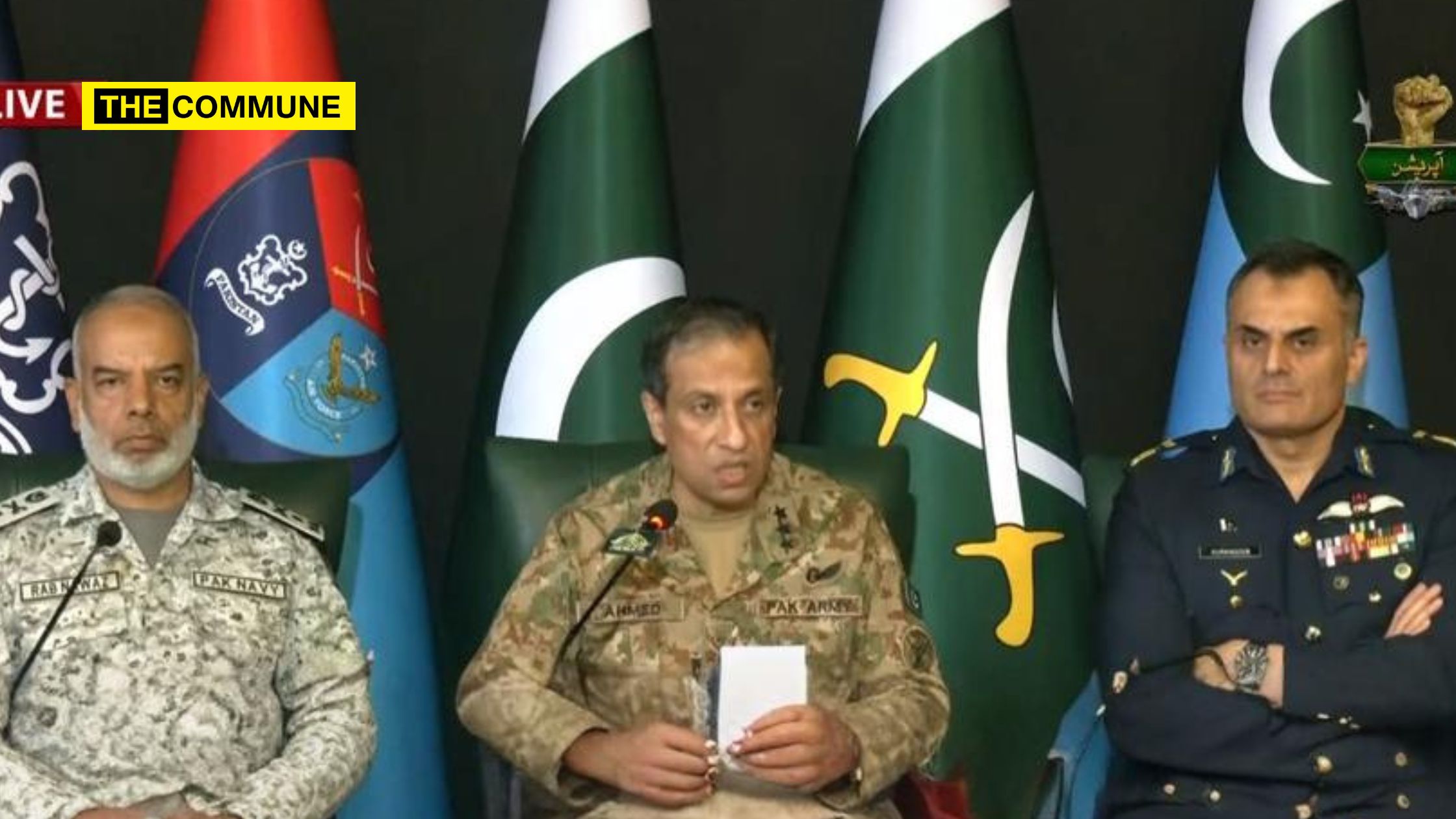
In a press briefing, DGPR PAF Aurangzeb Ahmed asserted that Pakistani radar systems successfully detected all Indian drones during the escalation. He even presented video footage to support this. Similarly, DG ISPR Ahmed Sharif Chaudhry claimed that Pakistan had intercepted and shot down 12 Indian drones, including Israeli-made Harop loitering munitions, allegedly in areas like Lahore, Karachi, and Rawalpindi.

However, these bold claims do not hold up to scrutiny. Various reports and open-source intelligence suggest that multiple Indian drones successfully penetrated Pakistani airspace, with some reaching deep into urban areas such as Lahore and Karachi. Even Pakistani media outlets noted explosions and unusual aerial activity in these regions. Despite claims of shooting down between 12 to 25 drones, no verifiable evidence has been provided by Pakistan’s defense establishment. If their air defense system truly detected all incoming drones, it raises a critical question—why couldn’t they intercept them effectively and prevent the resulting damage? The outcome instead revealed significant lapses in air defense, with notable losses on the Pakistani side.

The exaggeration didn’t stop there. Commodore Raja Rab Nawaz made a public statement asserting that Pakistan’s Navy was fully prepared and that submarines were on standby for any escalation at sea. However, the reality paints a far less impressive picture. Out of the five submarines that Pakistan claims to have in its arsenal, only two are currently operational. This revelation significantly undermines the navy’s stated readiness and casts doubt on the credibility of their maritime deterrence posture.

In summary, while Pakistan’s military officials made sweeping claims about their ability to detect and neutralize threats from India, the available evidence—and the results on the ground—tell a different story. These contradictions only further highlight the gap between Pakistan’s rhetoric and actual capability.

Subscribe to our channels on TelegramWhatsApp, and Instagram and get the best stories of the day delivered to you personally.

First Wanted Peace With Pakistan, Then Shifted To Patriot Mode: Who Is Ranveer Allahbadia Trying To Be?

How far can someone go to protect their public image, even if it means appearing shamelessly inconsistent? A striking example is YouTuber Ranveer Allahbadia, who recently found himself at the center of multiple controversies. Once riding high on his social media fame, Allahbadia sparked outrage with a tasteless incestuous joke, which led to public backlash and even legal issues. In an apparent attempt to deflect criticism, he pivoted sharply to more politically charged territory, posting a “peace message” directed at Pakistan during a period of heightened India-Pakistan tensions.

In that now-deleted post, Allahbadia addressed “Dear Pakistani Brothers and Sisters,” claimed he held no hatred for the people of Pakistan, and even apologized if any Indians had spread negativity. Though he quickly took down the post, screenshots had already circulated widely, triggering a wave of criticism. Many Indians viewed the message as a betrayal, especially to the Indian Armed Forces, and accused him of virtue-signaling to gain sympathy from left-leaning audiences. Ironically, no prominent figures from that space came to his defense.

Split Personality – Ranveer Allahbadia

But the story didn’t end there. Just days later, Allahbadia appeared on Piers Morgan Uncensored in a panel discussing India-Pakistan relations. His fellow panelists included journalist Barkha Dutt, former Pakistani Foreign Minister Hina Khar, and Pakistani podcaster Shehzad Ghias Shaikh.

In a dramatic turn, Allahbadia adopted a confrontational tone, challenging the Pakistani side with pointed remarks. Holding up a photo of Osama Bin Laden, he reminded viewers that the terrorist leader had been found just 800 meters from a Pakistani military base. He then displayed an image of Abdul Rauf, a UN-designated terrorist, being honored by Pakistani military personnel.

“I’m here to present facts,” he said. “This is the narrative the world needs to hear. Even President Trump once said he facilitated a ceasefire between India and Pakistan, and yet Pakistan broke it within an hour.

He went on to defend India’s military actions, describing them as “precision-oriented, moderate, and purely retaliatory“, emphasizing that India has never been an aggressor. “We export vaccines, philosophy, engineers, and global leaders. That’s why our economy is eleven times larger than Pakistan’s,” he added.

When asked by Piers Morgan about his deleted post, Allahbadia explained that he removed it because Pakistan had once again violated the ceasefire, reinforcing his distrust. “Even genuine efforts at dialogue are met with denials, like questioning the evidence in the Pahalgam attack. India is not provoking violence; we are defending ourselves against a state that sponsors terrorism,” he said.

Ranveer Allahbadia’s abrupt transitions—from facing backlash over an offensive joke, to posting a peace message aimed at Pakistan, and then adopting a strong nationalist stance on an international news panel—have sparked widespread skepticism about the sincerity of his public image. Many netizens weren’t convinced, calling him out for inconsistency and double standards. Whether he’s being calculated, opportunistic, or simply unsure of his stance, one thing is clear: his actions highlight how public figures often tread a precarious path between reputation management and outright hypocrisy—and sometimes end up on the wrong side of it.

Some of the netizen criticisms given below:

https://twitter.com/KnightHindutva/status/1922187468016631965

Subscribe to our channels on TelegramWhatsApp, and Instagram and get the best stories of the day delivered to you personally.
India’s Air Defence – The Unsung Genius Of Dr. Prahlada Rama Rao

India’s air defence network is a sophisticated, multi-layered system designed to protect against threats ranging from low-flying drones to high-altitude ballistic missiles. Its strategic architecture features the powerful S-400 Triumf, the indigenous Akash Missile System, and close-range defences like the L-70 anti-aircraft guns. Compared to this, Israel’s Iron Dome excels in intercepting short-range rockets and artillery shells, especially in dense urban scenarios, but lacks the broader range India’s defence possesses.

The S-400, acquired from Russia, is one of the world’s most advanced surface-to-air missile systems. It can track threats as far as 600 km and intercept targets up to 400 km away, defending against aircraft, cruise missiles, and even ballistic projectiles. The system combines a powerful radar array with multiple missile types, forming a near-impenetrable shield around vital assets.

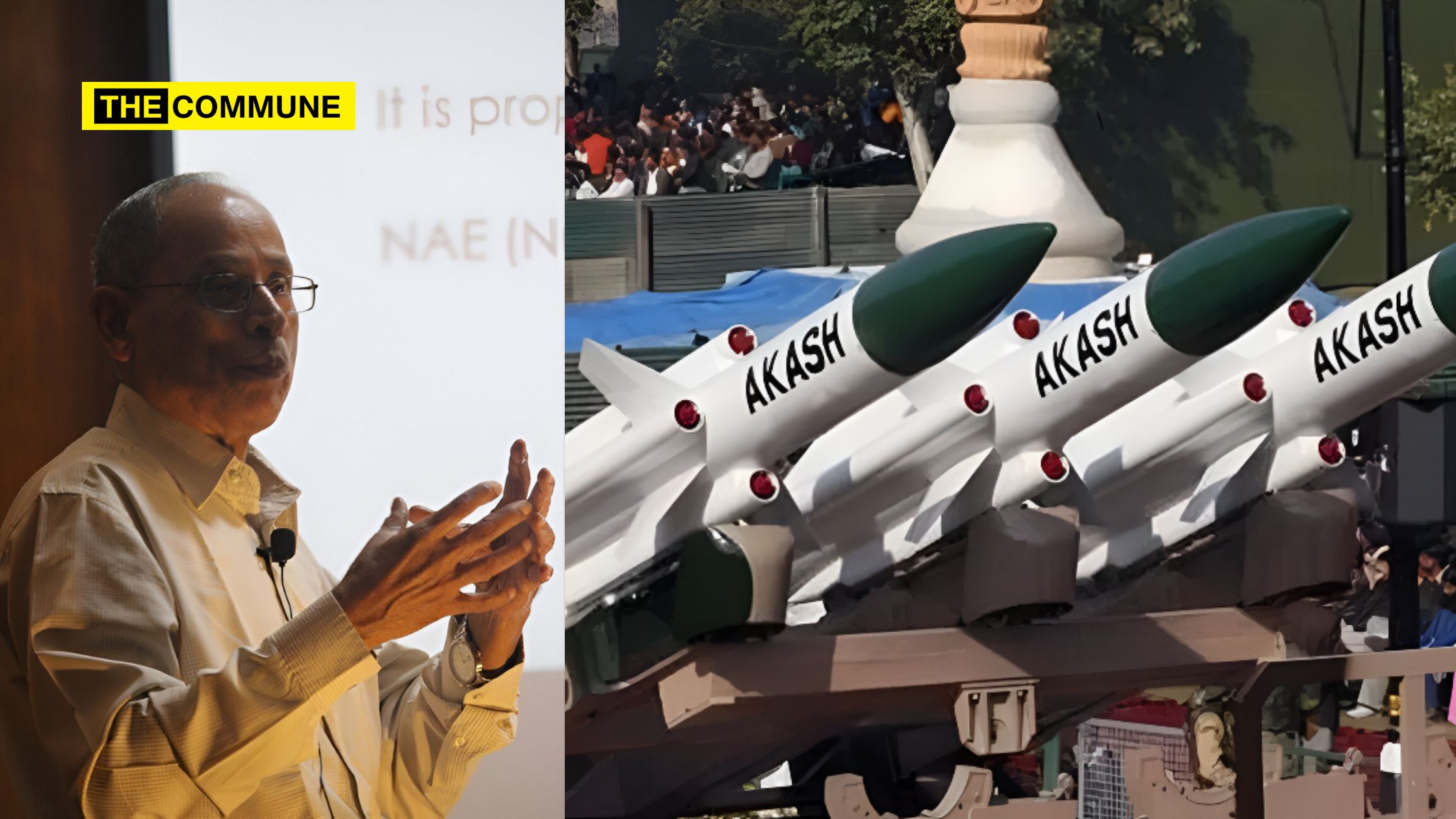
At the mid-range tier, India relies heavily on the Akash Missile System, developed by the Defence Research and Development Organisation (DRDO). With a range of around 30 km, Akash can track and engage multiple aerial targets simultaneously. Its integration with the Rajendra radar ensures precision targeting and real-time threat analysis. The system has evolved into newer versions like Akash-1S, Akash Prime, and Akash-NG, with each bringing greater range, mobility, and accuracy.

For low-altitude defence, India uses the L-70 anti-aircraft gun, a Swedish-origin system upgraded indigenously. These 40mm guns are effective against drones, helicopters, and other low-flying threats, especially when paired with modern fire-control systems.

While Israel’s Iron Dome is a technological marvel with a proven track record of over 90% success in neutralizing short-range rockets, it’s optimized for short distances (4–70 km) and is primarily designed for urban defence. It calculates whether a rocket will hit a populated area and only intercepts those that pose an actual threat — making it efficient and cost-effective. However, it does not offer the long-range, layered protection India’s systems provide.

India’s recent defensive response to Pakistan’s large-scale drone and missile attack on the night of 8 and 9 May showcased the synergy of its air defence architecture. As Pakistani drones and missiles targeted 15 locations across northern and western India, including cities like Jammu, Amritsar, and Chandigarh, Indian forces activated systems such as Akashteer ADCRS, Barak 8, and Akash. The Akashteer, often dubbed India’s “Iron Dome,” is an indigenous command-and-control system that fuses data from radar sources to track and destroy aerial threats with precision. The Indian Air Force and Army’s joint response included the use of HARPY drones, anti-aircraft artillery like L-70 and Zu-23, and short-range SAM systems like SAMAR and SPYDER.

The Pakistani assault was effectively neutralized — Indian forces reportedly intercepted more than eight missiles and over two dozen drones, with minimal or no damage on Indian soil. Surface-to-air missile systems and integrated C-UAS grids proved vital in taking down threats, including two Pakistani fighter jets — one of which was an American-made F-16. The comprehensive defence effort highlighted India’s multi-domain preparedness and technical superiority.

Dr. Prahlada Rama Rao

India’s air defence system is more layered and versatile, designed for battlefield and strategic defence across a variety of altitudes and ranges. This complexity owes a great deal to the visionary leadership and scientific excellence of Dr. Prahlada Rama Rao, a legendary DRDO scientist.

Born in Karnataka into a humble family, Dr. Prahlada’s life journey is the stuff of inspiration. After completing his engineering degree, he had job offers from BEL and VSSC, but at his mother’s insistence, he went on to pursue higher studies at the prestigious IISc Bangalore. While at IISc, another offer came—this time from DRDL Hyderabad, a DRDO missile lab. There, he met Dr. A.P.J. Abdul Kalam, the man who would become a lifelong mentor and collaborator. In the late 1970s and early 1980s, Dr. Kalam and a team of brilliant minds, including Dr. Prahlada, proposed an audacious plan: the Integrated Guided Missile Development Program (IGMDP). It envisioned the development of five missile systems—Agni, Prithvi, Akash, Trishul, and Nag—with a then-unimaginable budget of ₹300 crore.

Thanks to the support of Defence Minister R. Venkataraman and Scientific Advisor Dr. V.S. Arunachalam, the program was fully approved in 1983. This was a turning point in India’s defence history. Dr. Prahlada, then in his early 30s, was handpicked to lead the Akash missile project, a testament to Kalam’s trust in his abilities. Akash, due to its complexity, was allotted a significant portion of the IGMDP budget. With years of relentless R&D, Akash became India’s premier surface-to-air defence system. In trials beginning in 1990, it began to demonstrate its power. By 2005, it had successfully intercepted fast-moving aerial targets, and by 2023, it was capable of simultaneously neutralizing multiple threats.

Dr. Prahlada often referred to Akash as his “baby,” and witnessing it in action was one of the proudest moments of his life. After retiring from DRDO in the 2000s, he became Vice-Chancellor of a defence technology university in Pune and started working on a Cold Fusion Reactor—a potentially revolutionary solution to global energy challenges. Cold fusion, long considered a scientific frontier, has eluded most nations due to its complexity and secrecy. Yet Dr. Prahlada, driven by the same passion that defined his missile work, is leading this breakthrough effort, now awaiting support and funding.

Today, Dr. Prahlada stands as one of India’s greatest unsung scientific heroes. He played a central role not just in Akash, but also contributed to the BrahMos missile, among others. Awarded the Padma Shri in 2015, he is a beacon of what one determined mind can achieve for a nation. As India continues to modernize its military, it builds upon the legacy of scientists like him—visionaries who transformed India from a technology importer to a missile superpower. A grateful nation salutes Dr. Prahlada Rama Rao—the man who not only dreamed of India’s defence self-reliance but made it a reality.

(With inputs from OpIndia)

Subscribe to our channels on TelegramWhatsApp, and Instagram and get the best stories of the day delivered to you personally.

“We Will Enter And Strike”: PM Modi Declares New Anti-Terror Doctrine, Warns Pakistan Of Total Destruction

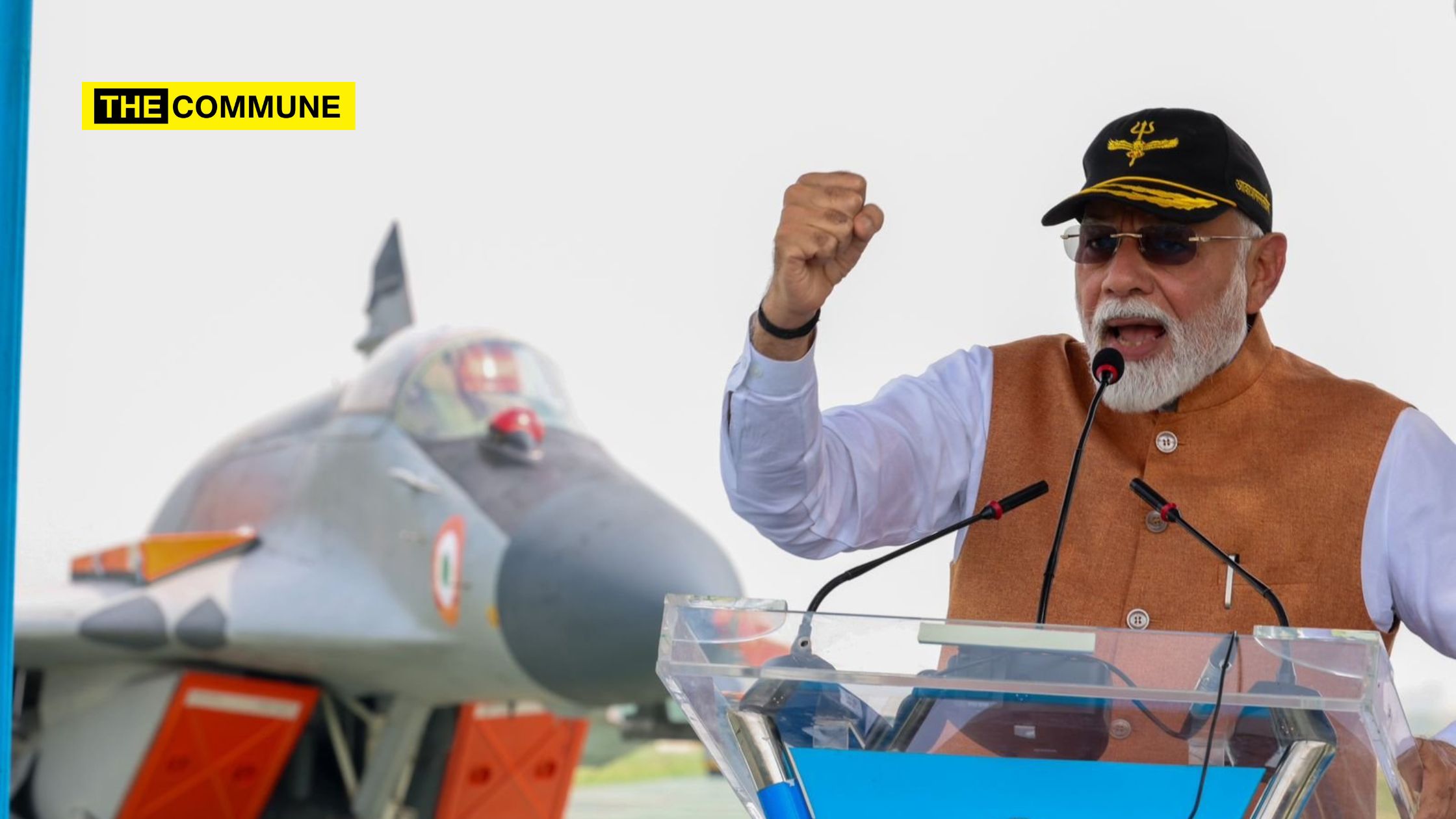
Prime Minister Narendra Modi on Tuesday issued a sharp warning to Pakistan and its supported terror groups, declaring that India’s new doctrine on terrorism involves striking at the source, deep inside enemy territory.

Hum ghar mein ghus kar marenge aur bachane ka ek mauka tak nahi denge,” (We will enter your home and strike, and won’t even give you a chance to defend yourself) the Prime Minister thundered during his address to air warriors at the Adampur Air Force base in Punjab. He praised India’s armed forces for their massive response to last week’s Pahalgam terror attack, in which 26 people were killed by terrorists from a Lashkar-e-Taiba proxy.

‘Operation Sindoor’—India’s swift, coordinated military response — targeted nine terror bases in Pakistan and Pakistan-occupied Kashmir, which was followed by hostilities that saw India repelling Pakistani missile and drone retaliation. “This is our new normal,” PM Modi said, referring to Operation Sindoor, which he described as India’s first tri-service combat operation since the 1971 war. “India’s ‘Laxman Rekha’ against terrorism is crystal clear now. If another terror attack occurs now, India will give a reply – a solid reply. We saw this during the surgical strike, during the air strike. Now, Operation Sindoor is India’s new normal,” he asserted.

Taking aim at Pakistan’s military support for terror outfits, PM Modi declared: “Jis Pakistani sena ke bharose ye aatanki baithhe the, Bharatiya sena, Bharat ki Air Force aur Bharatiyon ne us Pakistani sena ko bhi dhool chata di hai. (The terrorists who were relying on the Pakistani Army — the Indian Army, the Indian Air Force, and the people of India have made that Pakistani Army bite the dust).” He added that India’s growing military strength should serve as a deterrent.

“Our drones, our missiles, just thinking about them will keep Pakistan sleepless for days.” The Prime Minister used the moment to express deep gratitude to the armed forces. “Every Indian is proud of you… you have written history. I have come for your blessings. You are an inspiration for this and the coming generations. I want to salute the Army, Navy and Air Force.”

“The terrorists dared us… but you hit them front-on. You wiped out their terror bases and killed 100 terrorists. They have now realised that if they try to attack us, the result will be their destruction… massive destruction,” PM Modi said.

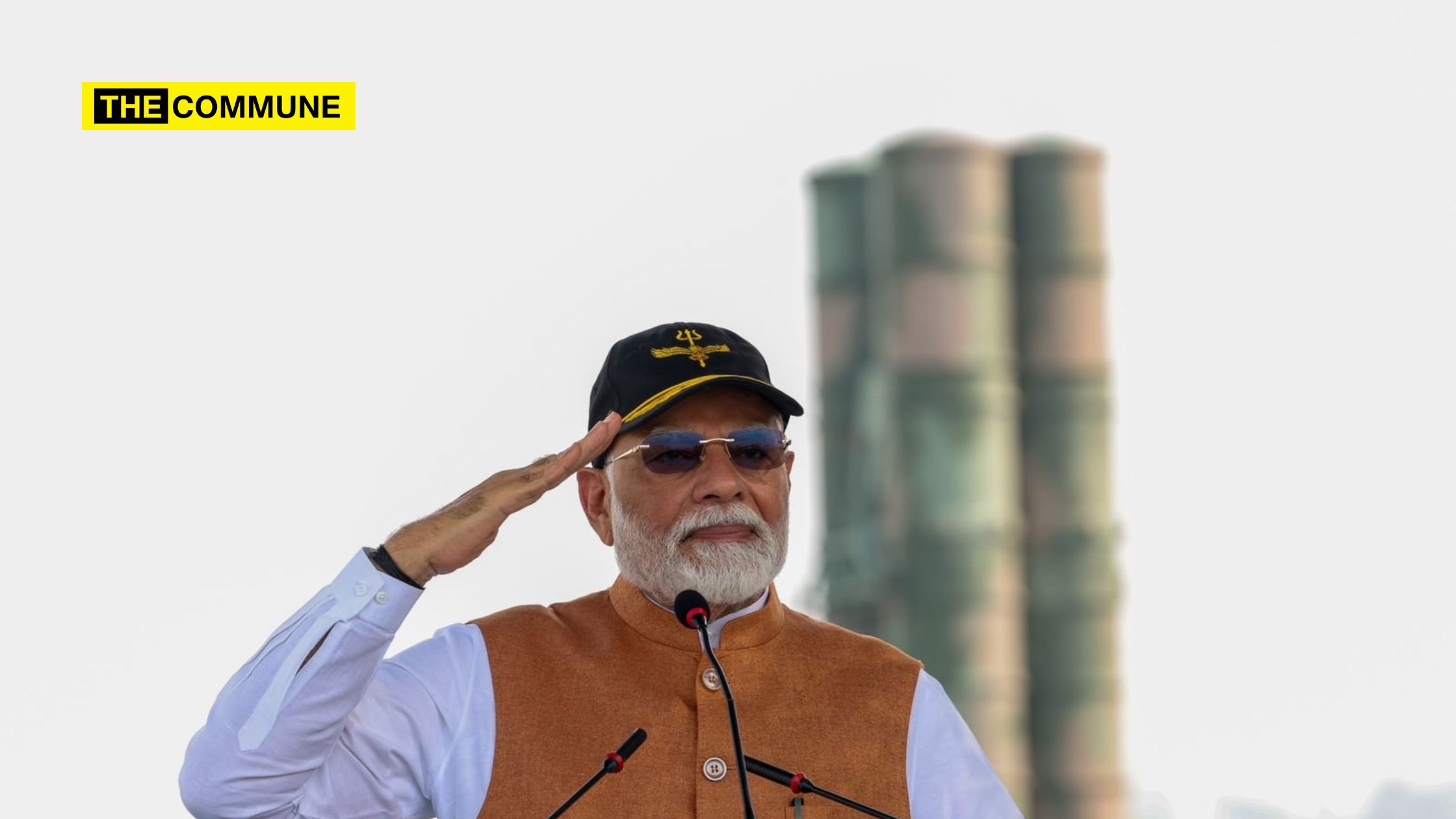
The Adampur Air Force base itself was at the centre of the recent military escalation, and also the target of a Pakistani disinformation campaign. Islamabad falsely claimed that its China-made JF-17 jets had destroyed the base and knocked out one of India’s Russian-origin S-400 air defence systems. India responded by releasing a photograph of PM Modi saluting soldiers at Adampur, with a fully operational S-400 system in the background silencing claims from across the border and reinforcing India’s military credibility. As the speech ended with chants of “Bharat Mata ki Jai”, the message was clear: India will no longer tolerate cross-border terrorism and will respond not just in defence, but with pre-emptive precision.

-IANS

Subscribe to our channels on TelegramWhatsApp, and Instagram and get the best stories of the day delivered to you personally.
India Hits Back At Pakistan’s Adampur Claim With PM Modi’s Photo Beside Operational S-400

modi defence

Pakistan claimed it destroyed India’s premier airbase in Adampur. It also claimed that its China-made JF-17 jets wiped out the Russian-origin S-400 missile defence system stationed there. It claimed it took out fighter jets, radar stations, and killed 60 Indian soldiers. But one image from this morning has silenced all of it.

A photo of Prime Minister Narendra Modi standing at Adampur Air Force Station  saluting soldiers with a fully operational S-400 system clearly visible behind him came as India’s most direct rebuttal to Pakistan’s disinformation campaign. “This isn’t just a picture. It’s a message. A takedown. A fact check Pakistan wasn’t prepared for,” said sources.

Sources added that Islamabad’s claims were based on morphed satellite imagery. The truth is that Adampur played a key role last week in intercepting waves of missiles and drones fired by Pakistan in retaliation for Operation Sindoor — India’s tri-service strike against terrorist bases across Pakistan and Pakistan Occupied Kashmir (PoK). “Earlier this morning, I went to Air Force Station Adampur and met our brave air warriors and soldiers. It was a very special experience to be with those who epitomise courage, determination and fearlessness,” PM Modi posted on X.

Officials said this is likely the first time India has publicly released a photograph showing its S-400 system, widely regarded as one of the most advanced missile defence platforms in the world. In last week’s 100-hour escalation, Pakistan targeted multiple military installations across Punjab, Jammu & Kashmir, Rajasthan, and Gujarat.

It also launched attacks on civilian areas in Ferozepur, Punjab. Indian forces, however, reported minimal damage. Meanwhile, India backed its own precision strikes with evidence — satellite visuals confirming hits on at least 11 Pakistani military installations, including the Nur Khan airbase in Rawalpindi, just 10 km from Pakistan’s army headquarters. As for Pakistan’s claims? Government sources had one word: “Lies.” And the image from Adampur — the Prime Minister saluting the soldiers, the S-400 standing tall in the background — says everything else.

-IANS

Subscribe to our channels on TelegramWhatsApp, and Instagram and get the best stories of the day delivered to you personally.
“Don’t Stick Your Label On It, Stalin!” – EPS Slams DMK After Pollachi Verdict

eps stalin thoothukudi college blast

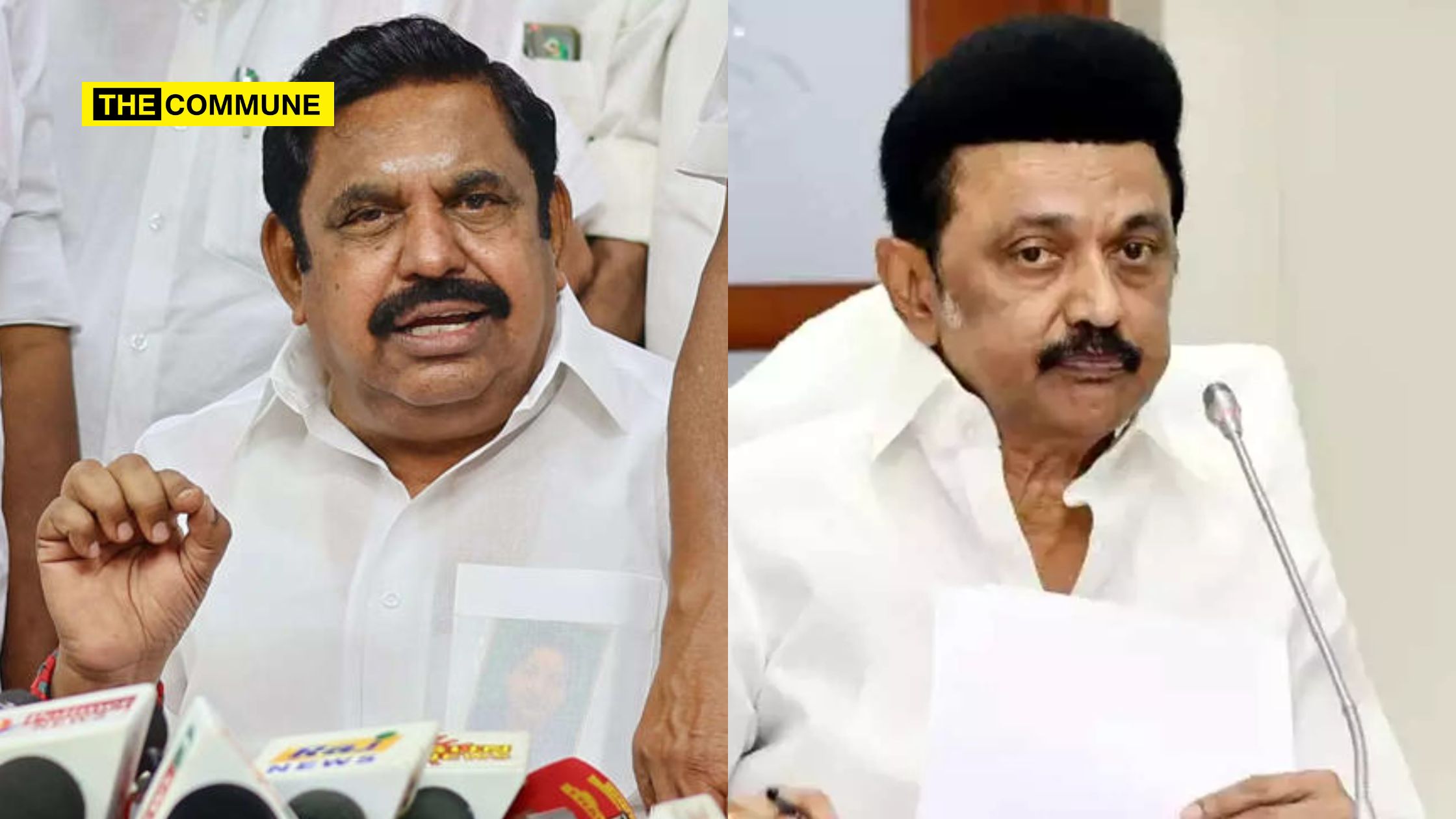
The Coimbatore Women’s Court has sentenced all nine accused in the infamous Pollachi sexual assault case to life imprisonment—marking a significant moment in a case that had outraged the nation. However, the verdict quickly reignited a political war of words between Tamil Nadu Chief Minister M.K. Stalin and AIADMK General Secretary and Leader of Opposition Edappadi K. Palaniswami (EPS).

Following the court’s decision, Chief Minister Stalin took to X (formerly Twitter), claiming the verdict as a win for justice and took a swipe at the AIADMK. He wrote, “Justice has been served for the crimes committed by the immoral AIADMK functionary and other culprits. Those ‘sirs’ who tried to shield that political tent of criminals should hang their heads in shame—if they have any.”

EPS Response

In response, Edappadi Palaniswami hit back sharply, accusing Stalin of attempting to claim credit for a process initiated under the previous AIADMK government. In his own post on X, EPS reminded the public that it was his administration that acted decisively.

“It was my government that arrested those criminals. Unlike you, I did not try to protect anyone because of political loyalty to the DMK. I ordered a CBI probe to ensure impartial investigation. Now that justice has been served. Don’t stick your label on it as you always do @Stalin! Who should put down their heads in shame?

EPS continued his attack by listing the DMK’s failures and hypocrisy:

  • You, who are unable to conduct an investigation into your minister and the Chennai deputy mayor, who ate biryani while sitting at the house of Gnanasekaran, the accused in the Anna University sexual harassment case, should put down your heads in shame!
  • You, who have not answered the question of #Who_is_that_SIR to this day and are trying to protect that SIR, should put down your heads in shame!
  • You, who went all the way to the Supreme Court against the CBI investigation into the sexual assault case of the 10-year-old girl in Anna Nagar, wasted public tax money on appointing senior lawyers and argued against the justice that should be given to the 10-year-old girl and her parents, should put down your heads in shame!
  • When you and your son deceived students by talking about the NEET secret, it became clear that you have no shame or dignity.

However, if you have even a shred of conscience, you should at least put down your head in shame at the plight of women in your government, where they cannot even come out, and at the POCSO cases that are being filed every day!”

The Pollachi case, which came to light in 2019, involved a gang accused of sexually assaulting and blackmailing multiple women over several years. The AIADMK government initially faced criticism over delays and mishandling but later transferred the case to the CBI. The DMK, then in opposition, had used the incident to attack the AIADMK for allegedly shielding the accused.

Subscribe to our channels on TelegramWhatsApp, and Instagram and get the best stories of the day delivered to you personally.
After Pahalgam, India Hit Back; After 26/11, UPA Held Back

In the immediate aftermath of the horrifying Pahalgam massacre, where dozens of innocent Hindu tourists were brutally killed, the Indian government responded with unprecedented force. Operation Sindoor, a deep-strike campaign launched by the Indian Armed Forces, destroyed key terror launchpads and military installations across Pakistan-administered territory. It wasn’t just retaliation—it was a strategic message to both terrorists and their state sponsors.

But as India mourned its dead and applauded the armed forces for their swift and decisive response, a familiar pattern re-emerged in the Indian political landscape: Congress sympathizers, liberal media and opposition influencers began to downplay the significance of Operation Sindoor.

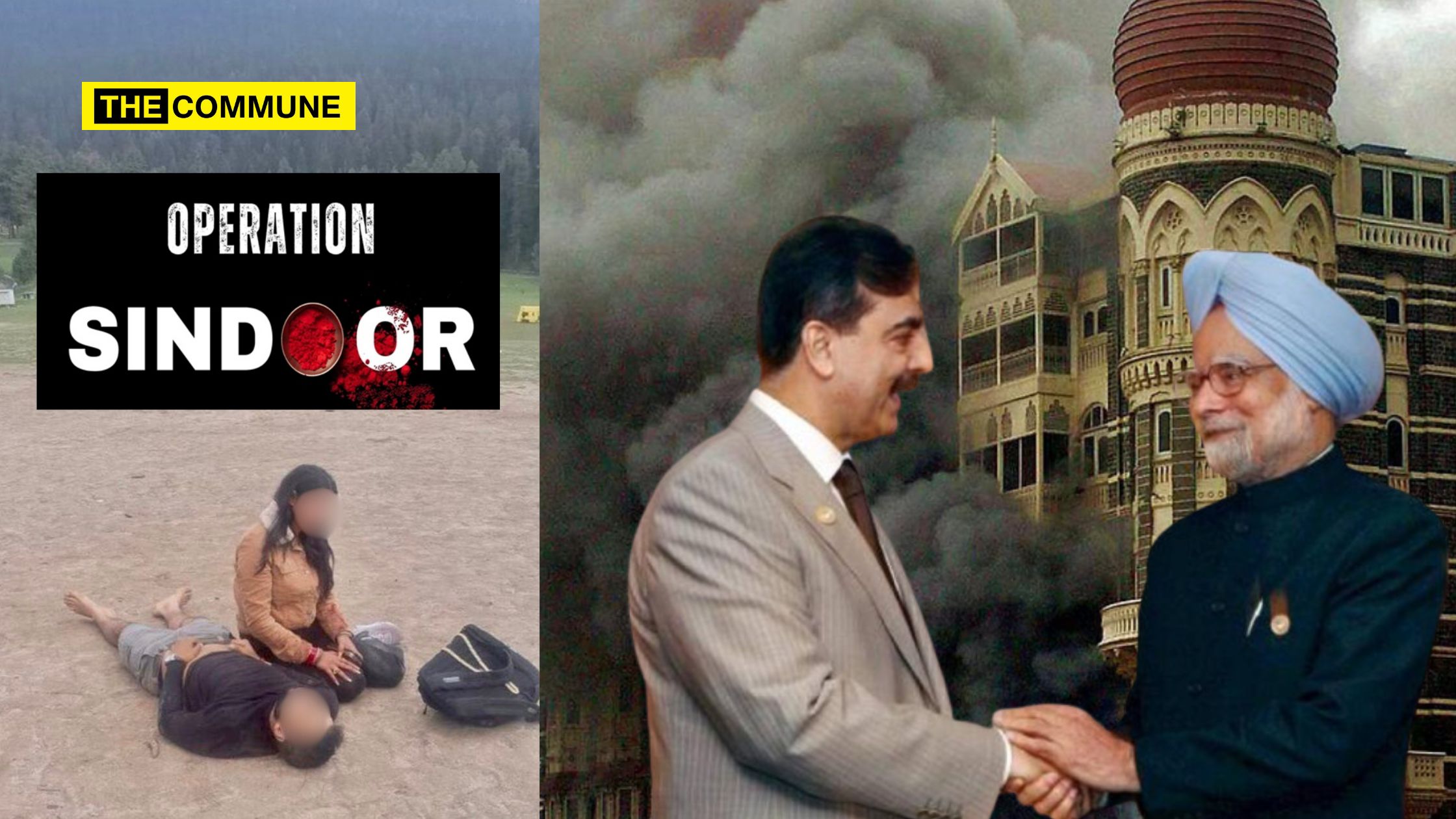
Instead of standing united in the face of terror, many chose this moment to resurrect nostalgia for the Congress era, particularly invoking Dr. Manmohan Singh’s “measured” diplomacy after the 26/11 Mumbai attacks. They hailed his restraint, his silence, and the now-infamous Sharm el-Sheikh Joint Statement (2009) as examples of “mature leadership.” But is this nostalgia rooted in reality—or a convenient rewriting of history?

What Did the UPA Actually Do After the Mumbai Attacks?

On 26 November 2008, ten heavily armed Pakistani terrorists unleashed three days of carnage in Mumbai, killing 166 people and wounding hundreds more. The evidence of Pakistani involvement was overwhelming. Yet, no military response followed.

Instead, the Congress-led UPA government, under Prime Minister Manmohan Singh, opted for diplomatic engagement. Within eight months of the attacks, Singh signed the Sharm el-Sheikh Joint Statement with Pakistan’s PM Yousaf Raza Gilani. The document delinked dialogue from terrorism, allowing talks to resume even as Pakistan failed to act decisively against perpetrators like Hafiz Saeed.

To make matters worse, for the first time ever in a bilateral document, India acknowledged Pakistan’s mention of Balochistan—a move that gave Islamabad international ammunition to accuse New Delhi of meddling in its internal affairs, despite no credible evidence.

Far from holding Pakistan accountable, the UPA government gave it diplomatic breathing space.

Operation Sindoor vs. UPA’s Inaction: A Stark Contrast

Compare this to the Modi government’s approach post-Pahalgam. Within days of the terror strike, India:

  • Carried out airstrikes and drone attacks on high-value targets in Pakistan.

  • Hit radar sites, ammunition depots, and terrorist training facilities.

  • Reportedly disrupted strategic assets near Kirana Hills—believed to house nuclear infrastructure.

This was not just about retribution—it was a doctrine shift. For the first time, India pre-emptively hit strategic assets and stood its ground internationally, refusing to bow to pressure or diplomatic hedging.

And yet, Congress loyalists continue to question it, calling it “provocative” or “chest-thumping,” all while pointing fingers back to an era where terrorists walked free, and India appeared hesitant to act.

Congress sympathizers argue that diplomacy is strength. But diplomacy without deterrence is just appeasement. The 26/11 aftermath saw zero military pushback, even as Kasab’s confessions were televised and Pakistani links confirmed.

Today, when India demonstrates military precision and resolve, these same voices ask, “But what about civilian casualties?” or “Isn’t this risking war?”

The truth is: peace isn’t maintained by weakness, especially when confronting a state that harbors terrorists. Operation Sindoor was a demonstration that India’s red lines exist—and they will be enforced.

In conclusion, it’s easy to romanticize the past when facts are inconvenient. But let’s not forget: post-26/11, the Congress-led UPA took no military action, signed questionable diplomatic agreements, and ultimately allowed Pakistan to dodge accountability.

Today, the Modi government has not only avenged a brutal massacre but sent a message that terror has a price. Those who choose to overlook this in favor of stale Congress-era talking points may be more interested in political point-scoring than national security.

Subscribe to our channels on TelegramWhatsApp, and Instagram and get the best stories of the day delivered to you personally.