Home Blog Page 294

DMK Will Be ‘Shut Down’: BJP’s SG Suryah Calls Out DMK’s Hypocrisy On Laptop Scheme As Election Gimmick

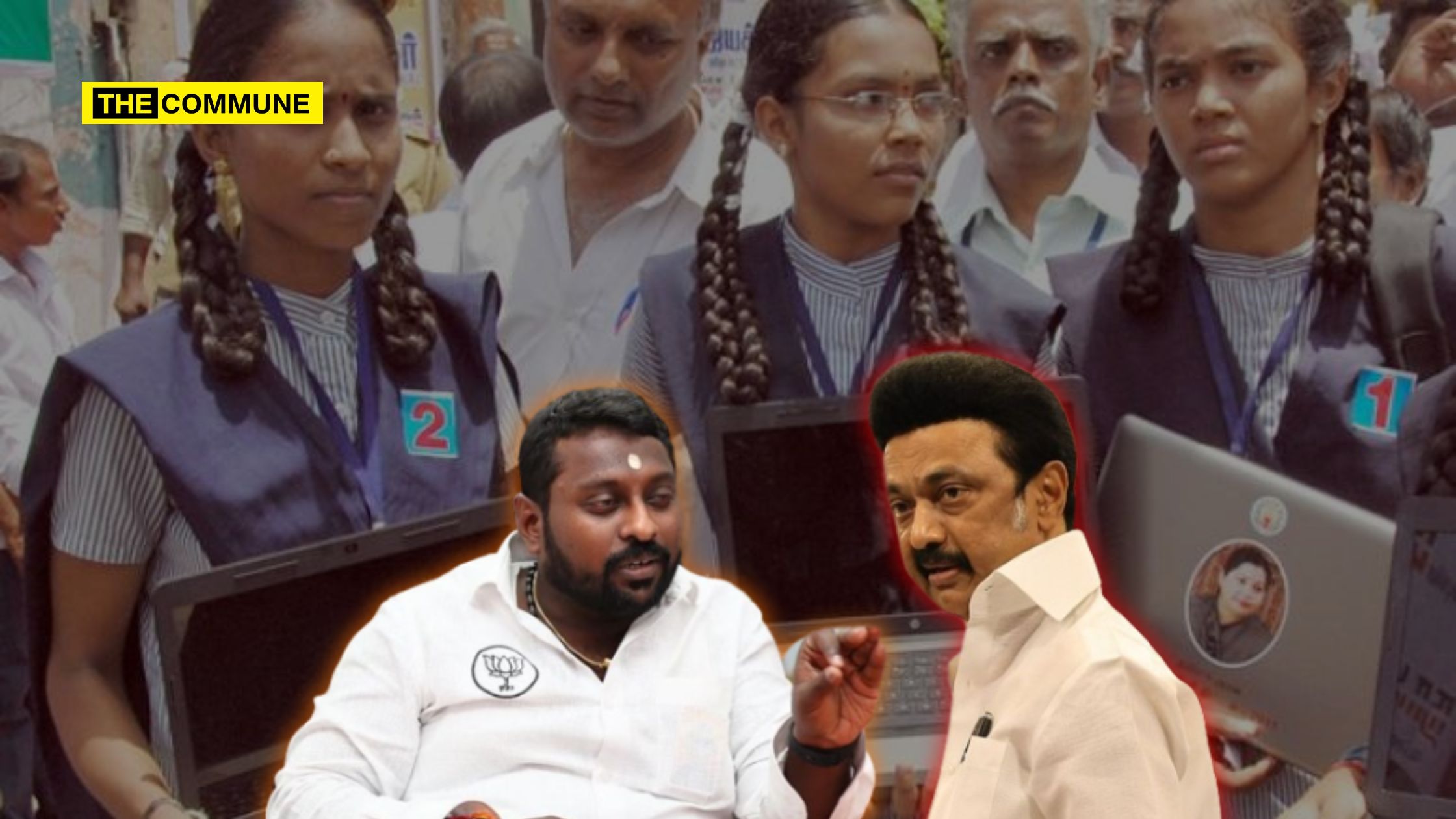
The DMK government in Tamil Nadu, led by Chief Minister M.K. Stalin, has announced the revival of the Free Laptop Scheme for students, as the state gears up for Assembly Elections in 2026. The decision has drawn sharp criticism from opposition leaders, who allege that the scheme is being reintroduced as an electoral tactic to lure first-time voters.

In a statement shared on X by Tamil Naud BJP State Secretary Dr. S.G. Suryah, the revival of the scheme was labeled a desperate move by DMK government.

The statement detailed the history of the Free Laptop Scheme and criticized the DMK for its inconsistent policies.

The Free Laptop Scheme was initially launched on September 15, 2011, under the All India Anna Dravida Munnetra Kazhagam (AIADMK) government led by then-Chief Minister J. Jayalalithaa. The scheme aimed to provide free laptops to students in Tamil Nadu to bridge the digital divide and enhance educational opportunities. It continued successfully until 2019, benefiting numerous students across the state and was discontinued temporarily during the COVID-19 pandemic when industries across the world were shut down.

Suryah said that the Stalin-led DMK government had stopped the scheme just because it was introduced during the AIADMK period.

The statement further highlighted that when the DMK came to power in 2021, it justified the discontinuation of the laptop scheme by stating that the government was instead providing ₹1,000 monthly assistance to students. Suryah pointed out that despite students, parents, parties and academicians urging the government to reintroduce the scheme, it fell on deaf ears with the DMK government pointing out the weak fiscal situation. However, four years later, in 2025, the DMK government has decided to restart the Free Laptop Scheme, a move that Dr. Suryah alleges is motivated by the upcoming elections rather than genuine concern for students’ welfare.

Suryah also pointed out item number 163 of the DMK in its 2021 Assembly Election manifesto which promised that tablets with internet facility would be provided to higher secondary and college students.

“But, Stalin remained mute to this for the last four years. Now this 2025-26 academic year also being an election year, the DMK government has announced the scheme and has also floated tenders for the same. After saying, ‘Instead of free laptops, we are giving ₹1,000 per month!’ the DMK has suddenly developed a newfound affection for students. The youngsters of Tamil Nadu have realized. The DMK has ‘restarted’ the free laptop scheme having realized that their ‘vidiyal’ gimmicks won’t work anymore. With just days left for the academic year to start, when will tender be out, when will the procurement happen and it is highly improbably that the students will get laptops.”, Suryah said.

“Be it first-time voters or veterans, they’re for sure to ‘shut down’ the Stalin government.”, Suryah said.

Subscribe to our channels on TelegramWhatsApp, and Instagram and get the best stories of the day delivered to you personally.

How Congress Entered Into A Pact With Pakistan To Share Info On India’s Military Exercises, Manoeuvres, And Troop Movements

On 17 May 2025, Congress leader Rahul Gandhi accused the central government of compromising national security by allegedly informing Pakistan in advance about planned strikes on terror targets under Operation Sindoor. Terming the act a “crime,” Gandhi demanded accountability, asking, “Who authorized this?”  

In a post on X, Gandhi, as Leader of the Opposition in the Lok Sabha, took a direct swipe at External Affairs Minister S. Jaishankar. He referenced a undated video in which Jaishankar appears to say that India had notified Pakistan before launching the operation. “Informing Pakistan at the start of our attack was a crime. EAM has publicly admitted that GOI did it. Who authorised it? How many aircraft did our airforce lose as a result?,” Gandhi claimed in his post. He also questioned the consequences of this move, asking, “How many Indian aircraft did we lose because Pakistan knew? This wasn’t a lapse. It was a crime. And the nation deserves the truth.”

However, the Press Information Bureau (PIB) swiftly responded through its Fact Check Unit, stating that Jaishankar had been misquoted. According to PIB, the minister did not say that India had alerted Pakistan prior to Operation Sindoor, and any such claims were misleading.

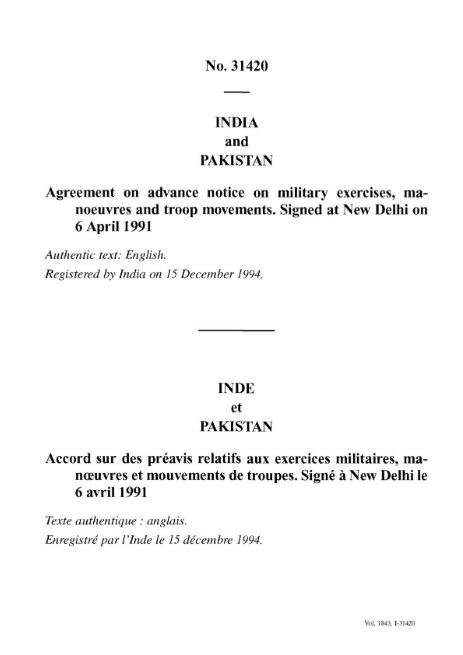
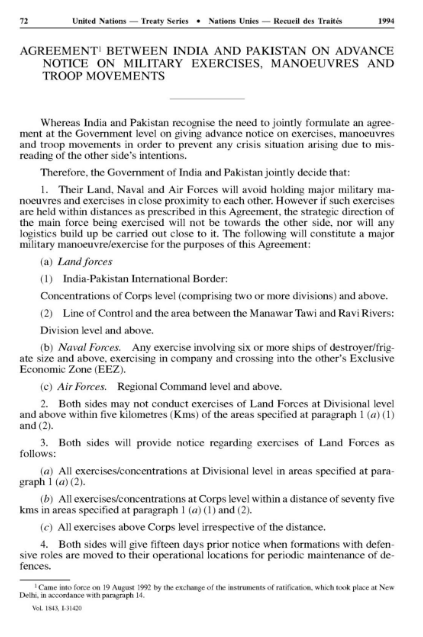
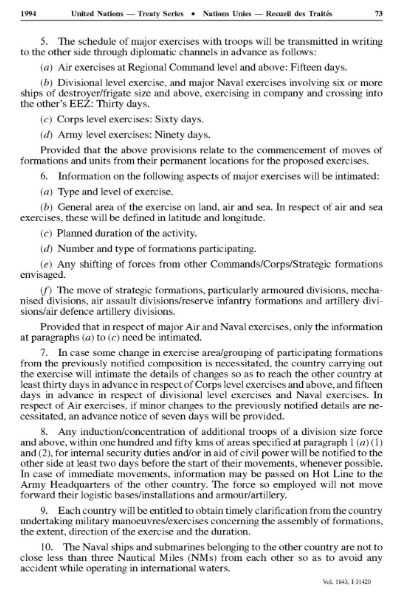
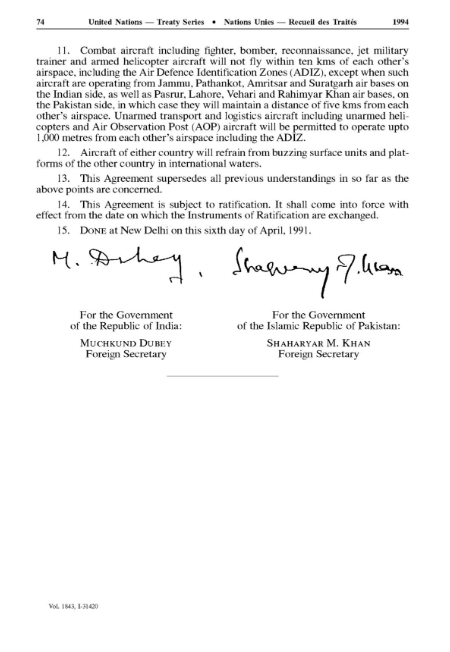
Rahul Gandhi may have forgotten or have chosen to hide this fact but on 6 April 1991, both countries signed an agreement in New Delhi aimed at preventing misunderstandings and potential conflict through prior notifications about military activities. This agreement was officially registered by India on 15 December 1994.

Who Authorized the Agreement?

The pact was formulated during the tenure of Prime Minister Chandra Shekhar, who led a short-lived minority government from 10 November 1990, to 21 June 1991. His administration, a splinter faction from Janata Dal, received outside support from the Indian National Congress. Interestingly, Chandra Shekhar was the first Indian Prime Minister with no prior experience in any government role. Although signed under his leadership, the agreement was officially registered during P. V. Narasimha Rao’s Congress-led government.

What was the Agreement?

The Agreement was on Advance Notice on Military Exercises, Manoeuvres, and Troop Movements between India and Pakistan was designed to ensure transparency and avoid unintended escalation

Key Provisions of the 1991 Agreement

  1. Avoiding Provocative Exercises: Both India and Pakistan agreed to avoid major land, naval, or air exercises near the border or the Line of Control (LoC). Exercises were not to be aimed strategically at each other or involve significant troop or logistics buildup near the border.
  2. Definition of Major Exercises:
    • Army: Corps-level or larger near the international border; division-level near the LoC.
    • Navy: Exercises involving six or more destroyer/frigate-class ships crossing into the other’s Exclusive Economic Zone (EEZ).
    • Air Force: Regional Command-level exercises or larger.
  3. Prior Notifications:
    • 15 days for divisional-level land exercises.
    • 30 days for major naval exercises and divisional-level land exercises.
    • 60 days for corps-level movements.
    • 90 days for full-scale army exercises.
  4. Specific Notification Requirements:
    • Details such as type and scope of the exercise, location (with geographic coordinates for air and naval operations), duration, and participating units must be shared in advance.
    • Any changes to previously notified exercises must be communicated at least 30 days in advance for corps-level or above, and 15 days for divisional-level or naval drills.
    • Emergency troop movements (e.g., for internal security) within 150 km of the border must be notified at least two days in advance or immediately via military hotline if urgent.
  5. Operational Conduct:
    • Military aircraft must maintain at least a 10-kilometer distance from the other’s airspace, except under agreed conditions for certain bases.
    • Buzzing of ships or submarines in international waters was strictly prohibited.
    • Naval vessels were not allowed within 3 nautical miles of one another.
  6. Supersession and Ratification:
    • This agreement replaced previous bilateral understandings related to military activities near the border.
    • It came into force once both countries exchanged instruments of ratification.

The 1991 agreement highlights that prior notification of troop movements between India and Pakistan was a policy supported by a Congress-backed government. Yet, in a seemingly contradictory stance, Congress leader Rahul Gandhi conveniently accuses the current government of committing a “crime” by allegedly informing Pakistan ahead of military action. However, if such transparency is now being labeled a crime, it raises questions about the Congress party’s own role in authorizing a similar policy in the past.

Subscribe to our channels on TelegramWhatsApp, and Instagram and get the best stories of the day delivered to you personally.

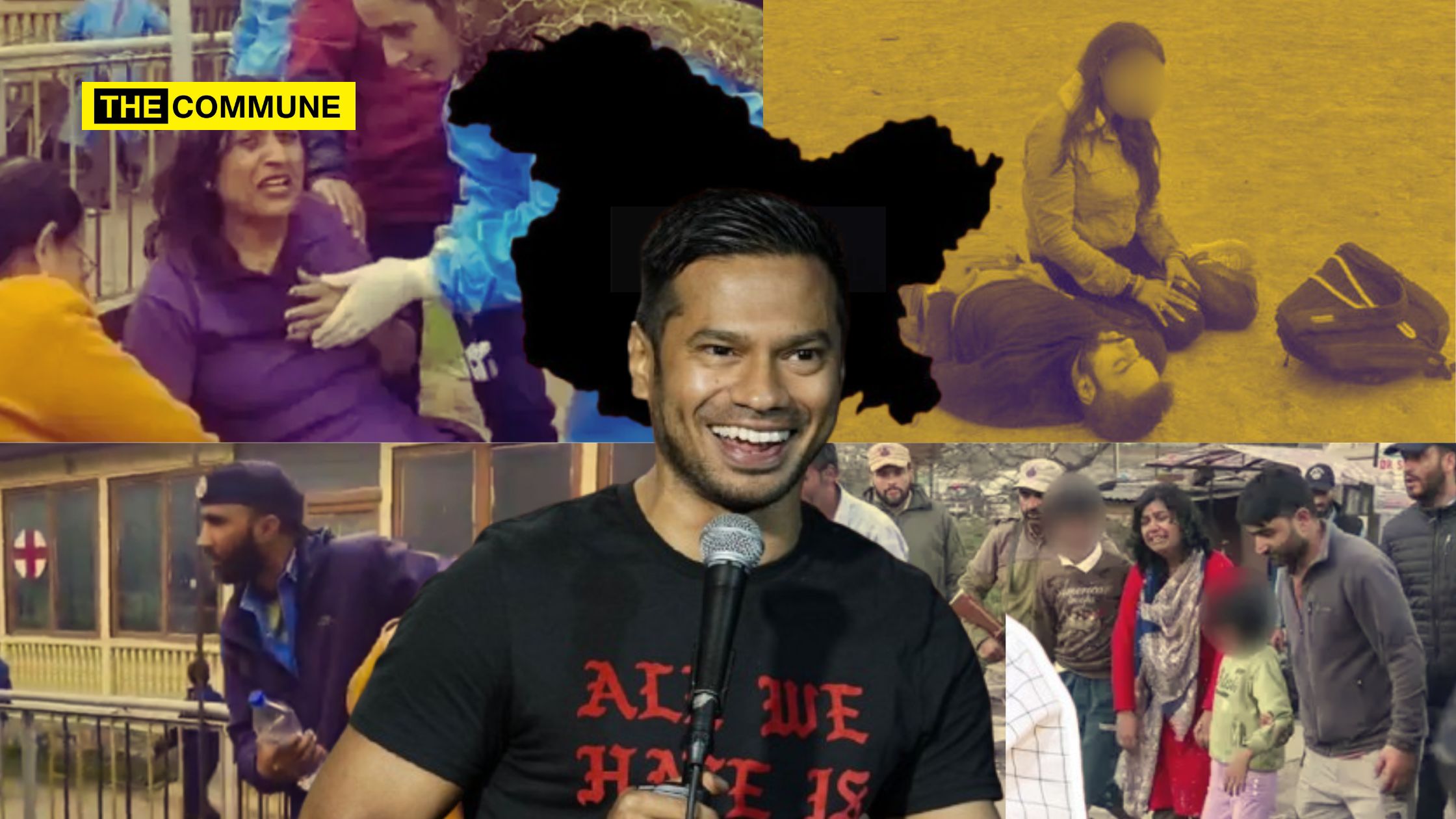
Provocative ‘Comedian’ Daniel Fernandes Mocks Plight Of Pahalgam Terror Victims, Calls Indian Retaliation To Pak After Operation Sindoor A “Military Offense”

Self-styled ‘comedian’ Daniel Fernandes, who has previously been criticized for making controversial remarks targeting Hindu and Jain communities, has once again found himself at the center of a storm—this time for accusing Indians of harboring hate after a deadly terrorist attack in Pahalgam that claimed the lives of 26 innocent civilians.

In his new YouTube special titled “The Kashmir Terror Attack,” released on 22 May 2025, Fernandes appeared to equate public anger and calls for justice with hatred and bigotry, provoking sharp backlash. Many took issue with his mocking tone and insensitivity, especially as he framed Indians demanding accountability for the attack as being motivated by hatred towards Pakistanis.

In the video, Fernandes states, “Anger and fear are the two very powerful emotions and these emotions are very valid during a conflict. But the answer to how one must conduct themselves in times like these is located right in the middle. And that is what I felt was missing in our discourse. There was no middle ground. And if you are unable to find a middle ground between anger and fear, it will most likely turn into hate. And oh Lord, we don’t need more of that in this country, do we? India has too much hate already. Don’t you agree? We have a surplus of hate. India has so much hate right now. We can export it. We can export it to countries like Norway and Finland. Too much happiness over there, right? I think we need to just calm down with the hate, dude. Like today a lot of people are saying things like if you are a true Indian, you must hate all Pakistanis, which was very confusing for me because for the last 11 years, I thought you were a true Indian if you hated other Indians. I did not know that there was a software update. If you saw the rhetoric online, it was very aggressive, right? It was like Pakistan should be wiped out. Kill all of them. Destroy that entire country.”

Fernandes also drew criticism for his misogynistic joke, trivializing the situation by referring to the attractiveness of Pakistani women as a reason not to hate the country and also went on to sarcastically question the current definition of patriotism, “And I was like, but there are hot women there, right? A lot of them, you know, like I understand, okay, if Pakistan was full of uglies, I’ll be like, yeah, I’ll press the button. You know, but why, right? Like ladies, even you know what I’m talking about, right? A bunch of you are following a lot of these Pakistani men simply because they have fluorescent pink eyes or some like that right beautiful people need to live like I don’t understand how hating another country has become the barometer for patriotism.”

He concluded his monologue with a message that further angered many, equating online anger directed at Pakistan with terrorism, “I can unequivocally support the Indian army condemn the Pakistani army and their government for aiding and abetting terrorists without wishing for the death of innocent civilians on the other side. That is the textbook definition of empathy. Wishing for the death of innocent people and mass is the textbook definition of terrorism.”

What shocked many even further was Daniel Fernandes characterizing the Indian Army’s response—following Operation Sindoor, which targeted terrorists and provoked retaliation from the Pakistani military—as a “military offense.” This framing drew widespread criticism for seemingly equating India’s counter-terror operation with aggression, rather than a legitimate act of defense.

In his own words, Fernandes stated, “I have very few friends, and I recently got into an argument with one of them about the same thing. We were discussing the conflict, and the conversation was about whether India should escalate or deescalate its military offense. My friend believed India should escalate. I was of the opinion that we should deescalate because I felt that with Operation Sindoor, we had already made our point.”

Daniel Fernandes further inflamed public outrage by making distasteful remarks about the victims of the terror attack, appearing to mock their deaths with an ill-judged joke about being “lucky” to have a Ghibli-style tribute.

During his performance, Fernandes said, “He was like, Dan, what if one of your family members was killed by a terrorist? Would you still want peace? And I thought to myself, who doesn’t have one or two family members they wouldn’t mind seeing shot… Obviously, I didn’t say that because it’s insensitive. I’m only sharing it with you because I trust you. But that is a very valid question and I think that is a question every Indian should ask themselves. What if one of your family members was killed by a terrorist?” He then added, sarcastically, “I would be heartbroken. I would be devastated. I would be a wreck. But if I was lucky, somebody would create a Ghibli image of my dead relative so I can have a memento—because who doesn’t like one during a tragedy, right?”

This attempt at dark humor, aimed at portraying grief through satire, was met with visible discomfort from the audience, who largely withheld laughter. Many critics have condemned the segment as insensitive and tasteless, accusing Fernandes of trivializing the pain of the victims’ families and using mockery in the face of national tragedy.

Critics contend that Daniel Fernandes’ comments minimize the seriousness of terrorist threats and discredit the Indian Armed Forces’ legitimate actions by portraying their retaliatory response as unwarranted aggression rather than justified self-defense. Furthermore, his insensitive and crude jokes about the victims who lost their lives in the attack have been widely condemned as deeply disrespectful and in poor taste, with many accusing him of crossing the line between satire and sheer insensitivity.

Subscribe to our channels on TelegramWhatsApp, and Instagram and get the best stories of the day delivered to you personally.

Despite Women-Led Protests, Heavy Police Deployed To Open New TASMAC Outlet In Tiruvallur

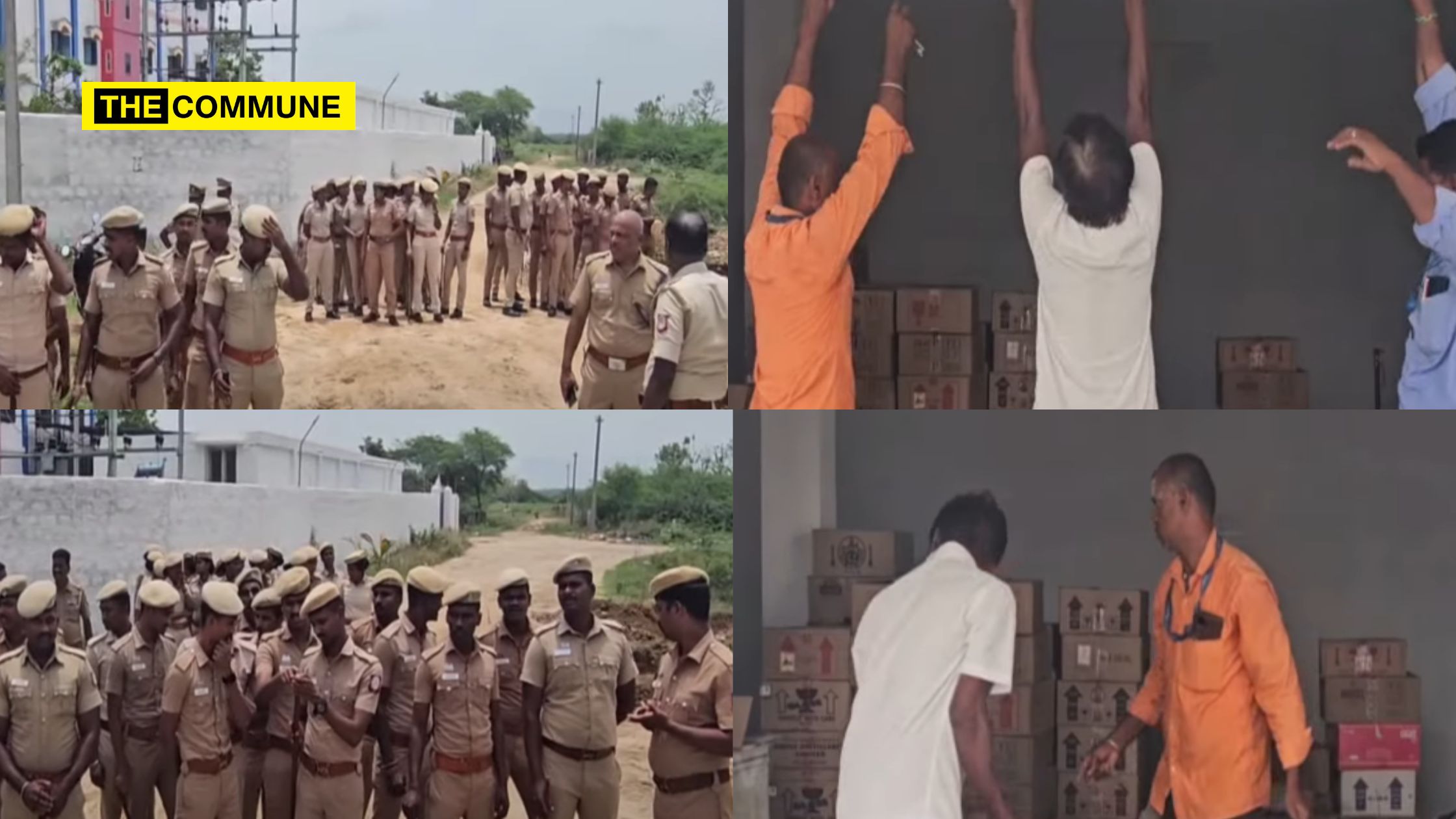
Locals have expressed strong resistance to the opening of a new TASMAC outlet in the town, yet the Dravidian model government has deployed substantial police forces to ensure the shop’s inauguration proceeds smoothly.

A new facility was built for the TASMAC outlet in Pattapiramapuram panchayat, situated along the Chennai National Highway near Tiruttani in Tiruvallur district. Residents of the area have voiced significant opposition to the establishment, with women notably leading protests over recent days.

Members of the PMK party have also been vocal in their objection. Despite this opposition, the TASMAC shop was opened under heavy police protection, with around a hundred officers led by Tiruttani DSP Kandan present to maintain order.

Police have additionally managed traffic in the vicinity to prevent disruptions caused by the demonstrations. Meanwhile, patrons have been purchasing liquor under the watchful presence of law enforcement.

(With Inputs From Nakkheeran)

Subscribe to our channels on TelegramWhatsApp, and Instagram and get the best stories of the day delivered to you personally.

Pakistan’s Drones Sourced From China And Turkey Failed Miserably As India’s Air Defence Shot Them Down Like Fireworks During Operation Sindoor: Report

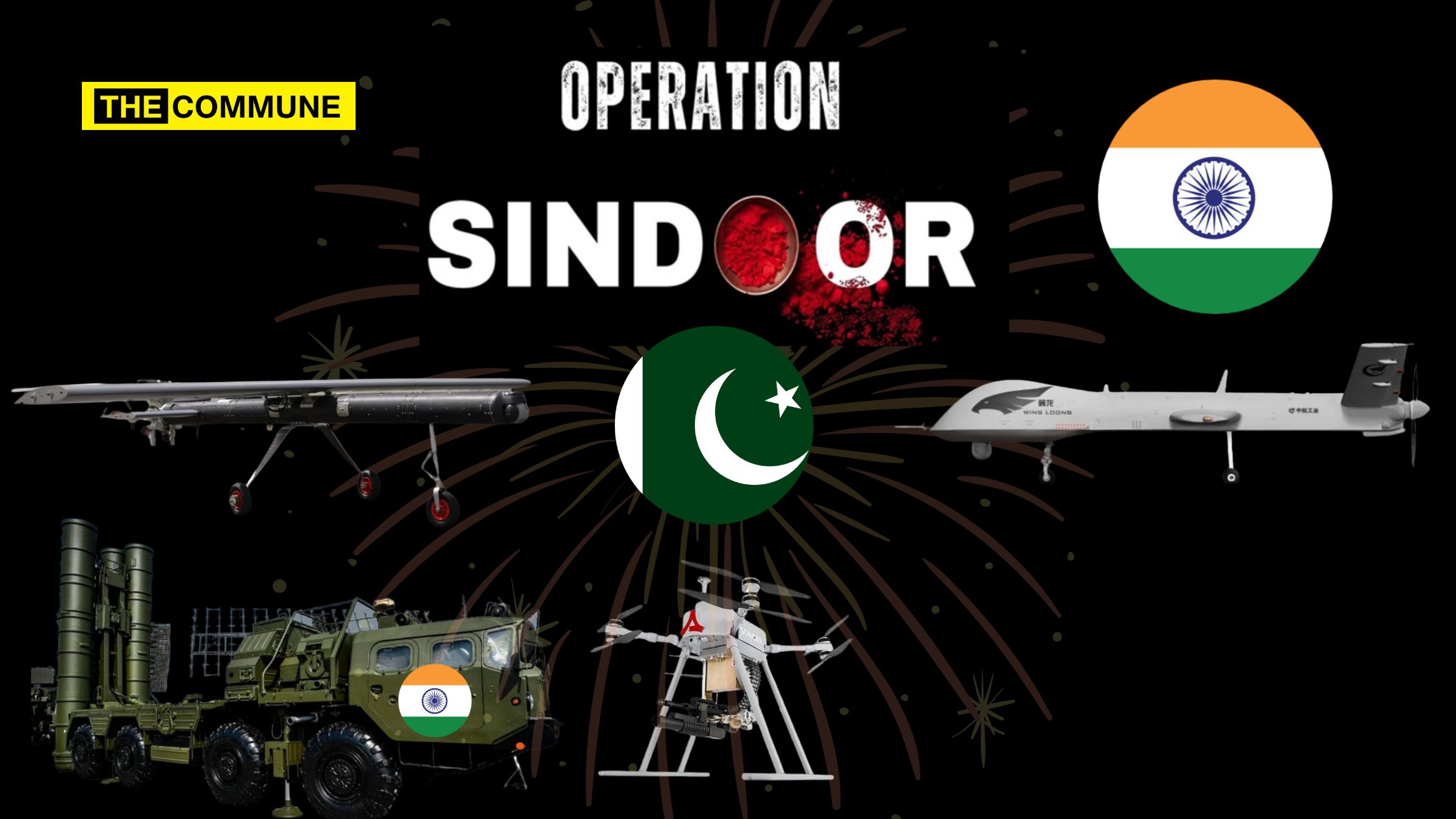
Following the aftermath of India’s Operation Sindoor, a comprehensive defense analysis has revealed a significant gap in drone warfare capabilities between India and Pakistan. The report highlights that nearly all of Pakistan’s drone deployments during recent military skirmishes with India failed to achieve their objectives. In contrast, Indian drones demonstrated high levels of accuracy, successfully striking several Pakistani military installations.

The failures of Pakistani drones, primarily sourced from Turkey and China, have been described as a major setback for Islamabad. Many of these unmanned aerial vehicles (UAVs) either crashed or were intercepted by India’s robust air defense systems, leaving debris scattered across Indian territory.

During the cross-border tensions that followed the deadly attacks on Indian tourists by Pakistan-based militants, both countries engaged in drone and missile exchanges. According to foreign correspondents present during the escalation, Pakistani drones—often appearing as brief flashes in the sky—were routinely shot down by Indian interceptors before they could inflict damage.

James Patton Rogers, a drone warfare specialist at Cornell University, emphasized India’s technological edge, noting that its UAV capabilities extend across land, air, and maritime platforms. In contrast, Pakistan’s limited drone inventory—heavily reliant on Turkish and Chinese imports—proved ineffective.

Notably, Turkey’s Bayraktar YIHA III kamikaze drones were neutralized by Indian quick-reaction air-defense units almost immediately after breaching Indian airspace. Alarmingly for Pakistan, some of these drones crashed on home soil before even reaching their intended targets. Paul Antonopoulos, a fellow at the Centre for Syncretic Studies in Belgrade, remarked that Turkish drones, while effective against insurgent groups, lack the sophistication to challenge a nation with even moderate air defense capabilities.

Despite a large-scale deployment of drones by Pakistan, they largely missed critical military targets and instead caused minor damage in civilian zones. According to the Indian Ministry of Defence, all threats were promptly countered, resulting in no casualties or significant losses.

Conversely, Indian drones—many modeled on Israeli reconnaissance UAVs—successfully hit strategic Pakistani locations, leading to heightened concern and unrest within Pakistan. Colonel Sofiya Qureshi of the Indian Army reported that between 300 and 400 Pakistani drones were intercepted across 36 locations, with initial forensic assessments identifying many of them as Turkish-made Asisguard Songar drones.

The vulnerability of Turkish drones is not a new revelation. Past incidents in conflict zones such as Syria (2019) and Libya (2021) have shown similar weaknesses, where Bayraktar TB-2 drones were easily destroyed by ground-based defense systems like the Pantsir S-1, as documented in a UN report.

Pakistan’s drone program also includes UAVs developed by China’s Chengdu Aircraft Industry Group. However, these units reportedly suffered from critical technical issues, including malfunctioning GPS systems, defective synthetic aperture radar, nitrogen leaks in camera systems, and faulty SATCOM antennas—making them unreliable in operational scenarios.

India has also accused Pakistan of using drones for smuggling contraband, including weapons, drugs, and IEDs. In 2024, Indian security forces reportedly neutralized around 90 such drones using mobile and handheld anti-drone technologies. Most of these UAVs were traced back to Chinese manufacturers, particularly the DJI line, according to former BSF Director General Nitin Agrawal.

Despite some progress in indigenous drone development, Pakistan’s program remains hampered by its reliance on imports. Zohaib Altaf, a research officer at the Centre for International Strategic Studies (CISS) in Washington, noted that this dependency could become a significant weakness in a prolonged conflict with India. He added that India’s deployment of advanced systems like the S-400 further diminishes the effectiveness of Pakistan’s UAV capabilities.

(With Inputs From Directus)

Subscribe to our channels on TelegramWhatsApp, and Instagram and get the best stories of the day delivered to you personally.

IMF Approves $1 Billion Loan To Pakistan Despite India’s Objections Over Terror Links After Pahalgam Attack

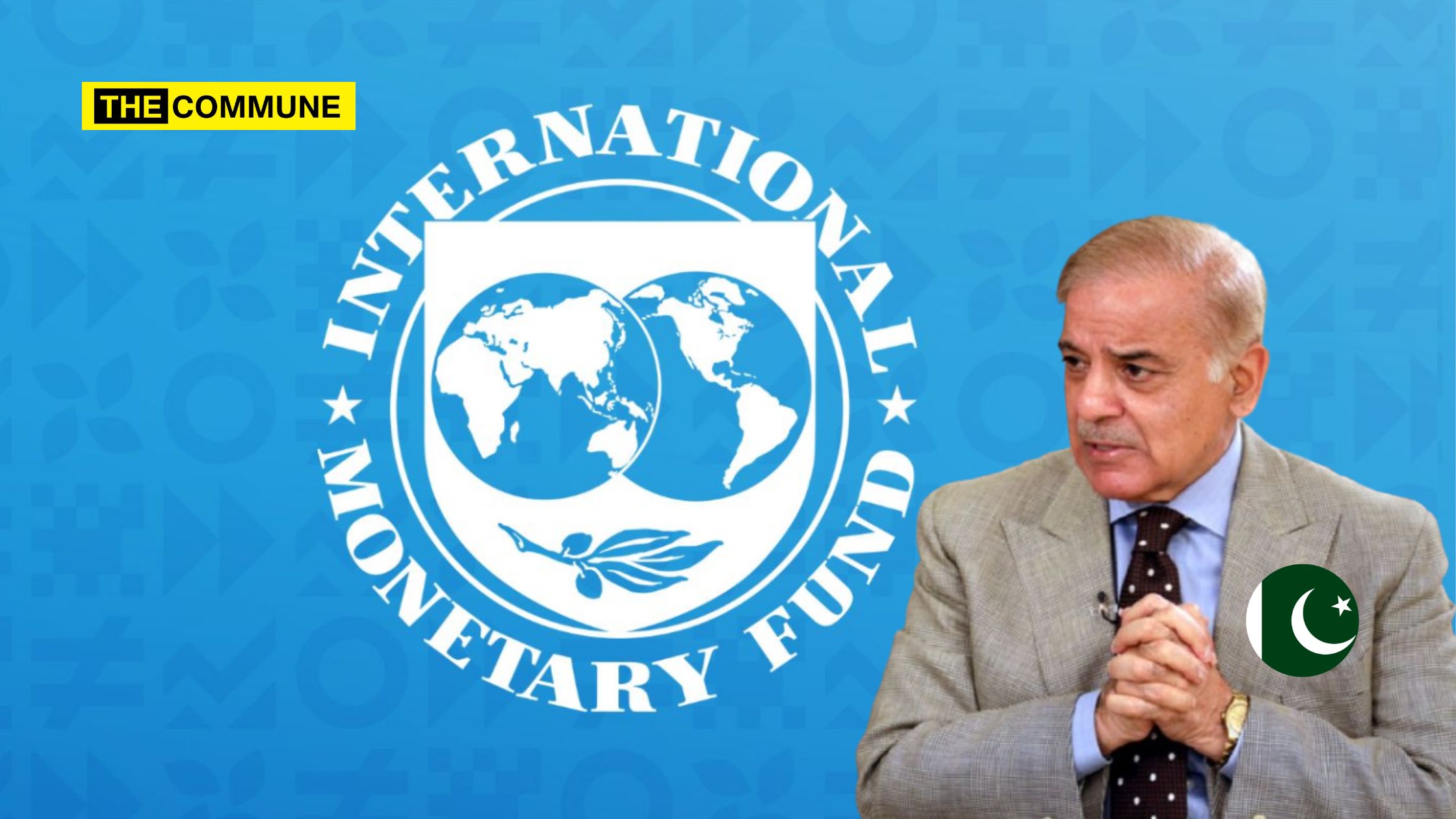
Amid India’s objections to the International Monetary Fund bailout package to Pakistan, the IMF has said the debt-ridden country “met all the required targets” to receive the latest loan instalment. The IMF recently gave the nod to a $ 1 billion (over Rs 8,000 crore) bailout package to Pakistan even as India expressed reservations.

The bailout came when Pakistan was retaliating to India’s Operation Sindoor — a military strike on terror infrastructure in Pakistan and Pakistan-Occupied Kashmir (PoK). India had asked it to reconsider the bailout as Pakistan allows terrorists to use its soil for launching state-sponsored attacks against Indian citizens. Last week, Defense Minister Rajnath Singh said that the aid to Pakistan is a “form of indirect funding to terror” and had cautioned the international agencies, including the IMF.

The global lender disbursed $2.1 billion to Pakistan in two tranches under its Extended Fund Facility (EFF) programme. The IMF and Pakistan last year signed a deal for $7 billion under the EFF. Defending its loan, IMF’s director of the communications department, Julie Kozack, said on 22 May, “Our Board found that Pakistan had indeed met all of the targets. It had made progress on some of the reforms, and for that reason, the Board went ahead and approved the programme.”

Kozack also made a short statement with regards to the conflict between India and Pakistan and hoped for a peaceful resolution between the two countries. “With respect to Pakistan and the conflict with India, I want to start here by first expressing our regrets and sympathies for the loss of life and for the human toll from the recent conflict. We do hope for a peaceful resolution of the conflict,” she said.

She said the IMF Executive Board had approved Pakistan’s EFF program in September of 2024. And the first review at that time was planned for the first quarter of 2025. “Consistent with that timeline, on March 25th of 2025, the IMF Staff and the Pakistani authorities reached a Staff-Level Agreement on the First Review for the EFF. That agreement, that Staff-Level Agreement, was then presented to our Executive Board, and our Executive Board completed the review on 9th May. As a result of the completion of that review, Pakistan received the disbursement at that time.” She said it was part of a standard procedure under programmes that the IMF Executive Board conducts periodic reviews of lending programs to assess their progress.

“And they particularly look at whether the program is on track, whether the conditions under the program have been met, and whether any policy changes are needed to bring the program back on track. And in the case of Pakistan, our Board found that Pakistan had indeed met all of the targets. It had made progress on some of the reforms, and for that reason, the Board went ahead and approved the program,” she said. Kozack said that there was a sufficient consensus at the Board to allow the IMF to move forward or for the Board to decide to move forward and complete Pakistan’s review. She, however, added that any deviation from the established programme conditions would impact future reviews for Pakistan.

-IANS

Subscribe to our channels on TelegramWhatsApp, and Instagram and get the best stories of the day delivered to you personally.

India Asserts Zero-Tolerance Against Terrorism In Japan: All-Party Delegation Rallies Global Support Post-Operation Sindoor

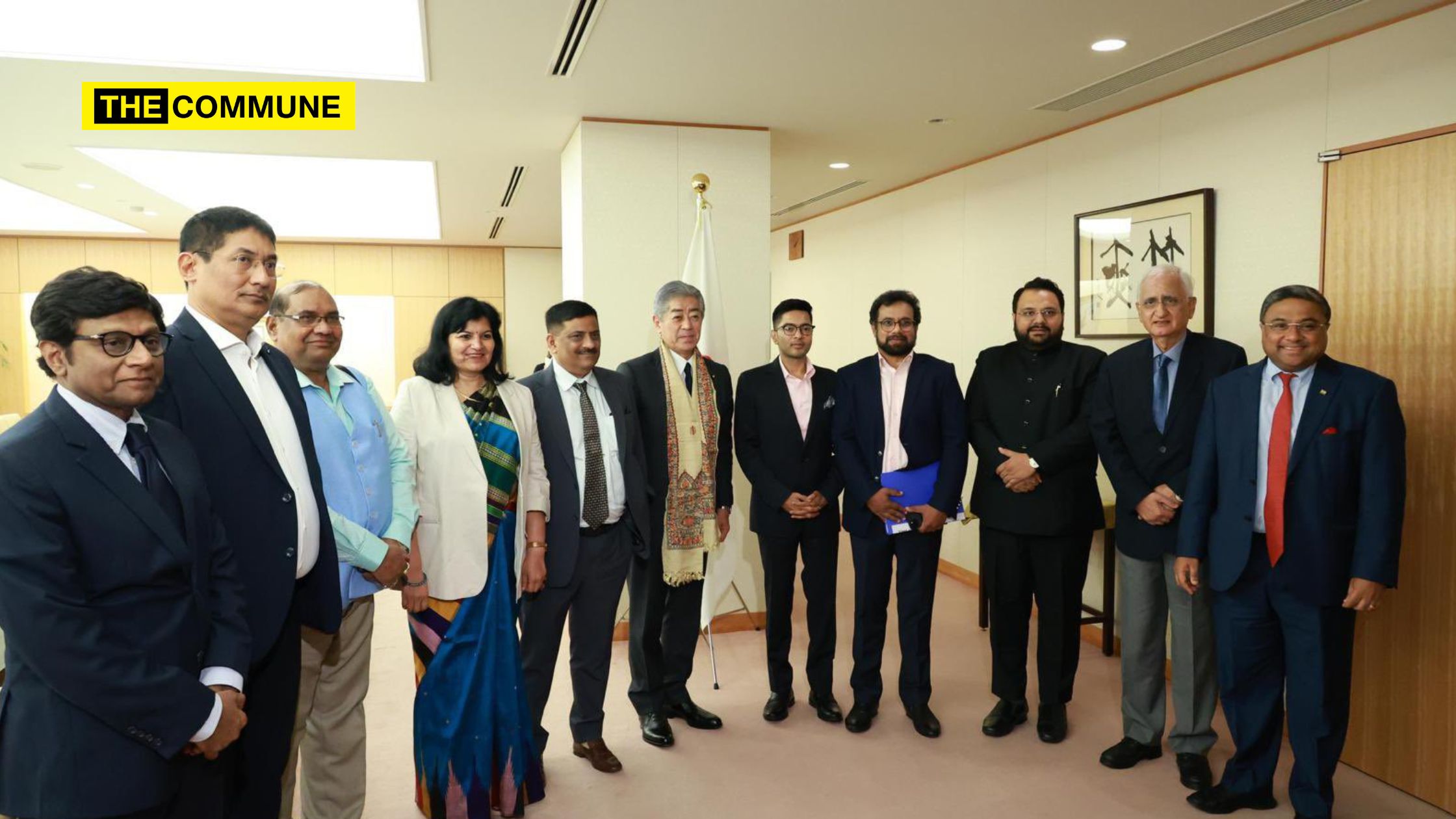
The Indian all-party parliamentary delegation led by Janata Dal (United) MP Sanjay Jha on 23 May 2025 held a meeting with Yasuhiro Hanashi, Acting Chairperson of the Research Committee on Counter-terrorism of the Liberal Democratic Party (LDP) and Former Minister of Justice highlighting India’s firm stance against terrorism under the global outreach campaign.

“All-Party Delegation from India met Yasuhiro Hanashi, Acting Chairperson of the Research Committee on Counter-terrorism of the Liberal Democratic Party (LDP) and Former Minister of Justice. India’s unified and determined stance against terrorism in all its forms was highlighted. Both sides reiterated their zero-tolerance approach to terrorism,” Embassy of India in Japan posted on X.

Earlier in the day the delegation actively engaged with the Diplomatic Corps in Tokyo at the Indian Embassy, reaffirming India’s steadfast commitment to combating terrorism. “Proactive engagement by the All-Party Delegation from India with the Diplomatic Corps in Tokyo at the Embassy of India in Japan reaffirms India’s unwavering national resolve against terrorism. United in voice, firm in action,” Embassy of India in Japan posted on X.

The delegation led by Sanjay Jha includes BJP MPs Aparajita Sarangi and Brij Lal, Trinamool Congress MP Abhishek Banerjee, CPI(M) Rajya Sabha member John Barittas, and senior Congress leader Salman Khurshid. Their visit marks the beginning of India’s unprecedented diplomatic campaign to expose Pakistan’s sustained role in cross-border terrorism following the 22 April Pahalgam attack. Earlier on Thursday the Indian delegation attended the Inaugural Session of Raisina Tokyo 2025, joining leaders and experts from India, Japan, and across the Indo-Pacific region.

The speakers at the session reiterated Japan’s support for India’s fight against terrorism. The delegation also held key talks with Takashi Endo, Chairman of the Japanese House of Representatives Committee on National Security, and conveyed India’s unified and resolute stance against terrorism in all its forms. Endo expressed Japan’s strong solidarity with India in its fight against terror, according to the Indian Embassy.

The delegation also met Japanese Foreign Minister Takeshi Iwaya, who reiterated Tokyo’s support and praised India’s restraint in the face of provocation. Iwaya emphasised the need to bring perpetrators of terror to justice and voiced strong support for India’s response to the Pahalgam attack. “Reiterated our national resolve to act firmly against terror and those who support it. Grateful for Japan’s support and for calling for justice against perpetrators of such acts,” Sanjay Jha posted on X after the meeting.

Later, the delegation called on former Japanese Prime Minister Yoshihide Suga, currently Vice President of the ruling LDP and Chairman of the Japan-India Association. Suga reaffirmed Japan’s commitment to support India in combating terrorism. The delegation also interacted with prominent Japanese think tanks, briefing them on India’s zero-tolerance policy and presenting detailed accounts of Pakistan’s support for terrorist groups like Lashkar-e-Taiba (LeT) and Jaish-e-Mohammad (JeM). The session saw strong expressions of support for India’s stance on regional security and combating state-sponsored terrorism.

-IANS

Subscribe to our channels on TelegramWhatsApp, and Instagram and get the best stories of the day delivered to you personally.

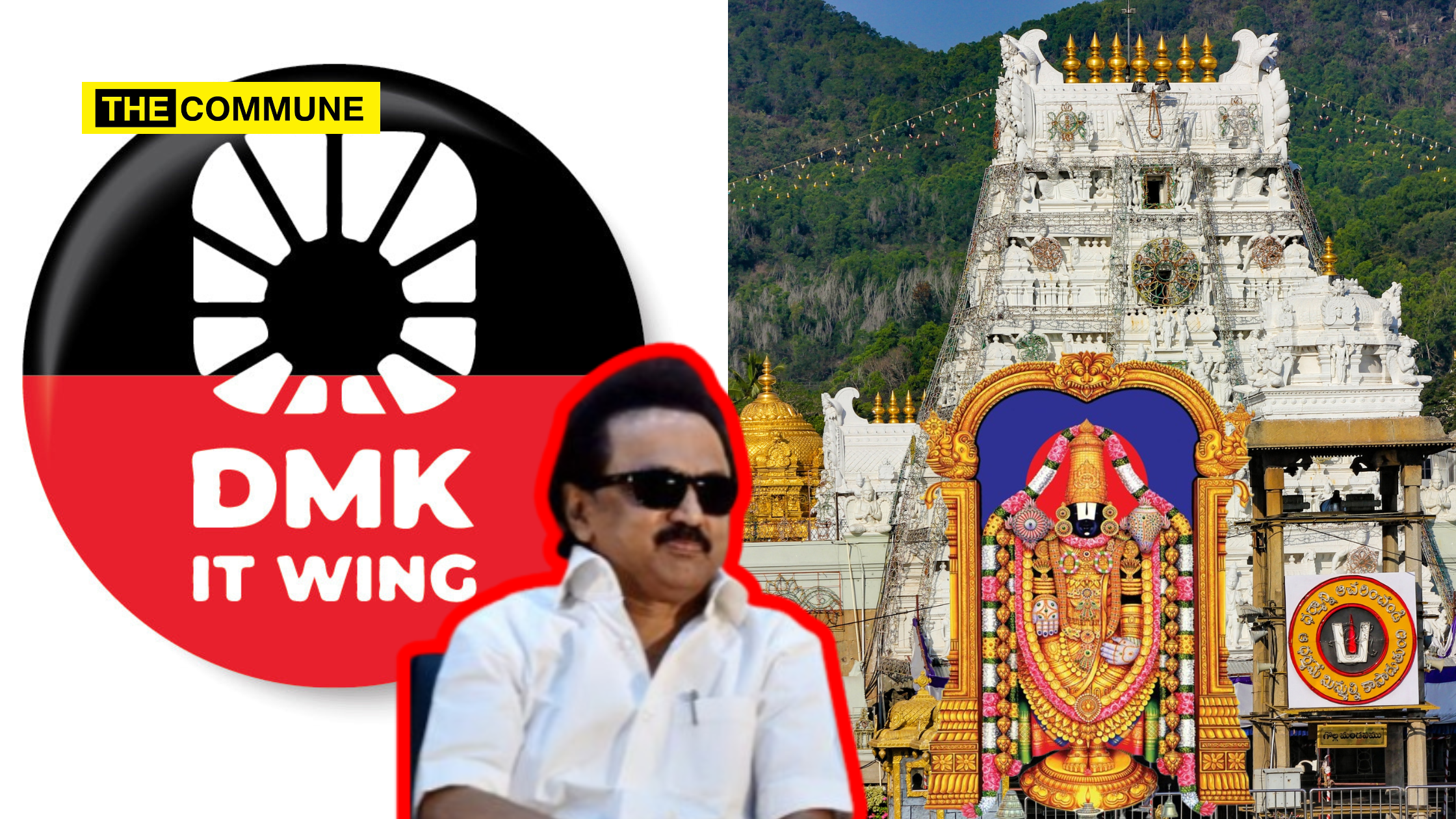
Anti-Hindu DMK Misuses Tirupati Perumal Song For Political Propaganda

In the wake of the Supreme Court’s rebuke of the Enforcement Directorate (ED) over its raids on TASMAC, which reportedly unearthed irregularities worth ₹1,000 crore, the DMK’s IT wing has stirred controversy once again — this time for mocking Hindu sentiments by misusing a song dedicated to Tirupathi Balaji for political propaganda.

Through its official X handle, the DMK IT wing posted a video remixing the devotional Tirupati Perumal chant “Srinivasa Govinda” in a manner found disrespectful. The status featured the caption, 
“If you try playing politics with us, or even mess with us just a little… We’ll come down and hit hard like Batista!”

The video has sparked backlash, with critics accusing the DMK of continuing its pattern of insensitivity toward Hindu beliefs.

This isn’t the first time the DMK has been targeting Hindu beliefs. Over the years, several party leaders have made controversial statements that many consider to be mocking Hinduism. Below are some notable instances.

In 2018, DMK MP Kanimozhi made remarks about Lord Balaji of Tirupati that sparked outrage. She reportedly said, “Why would we require a god who can’t save the poor?.. There is no need.” She went on to criticize the disparity in temple access, stating, “People talk about morals that everybody is equal before God but the rich people are getting special treatment through special darshan. The poor people had to wait hours together for his darshan every day. He is a god to the people who give crores of rupees.” Kanimozhi further added, “How could he save us who can’t even protect his own Hundi?”

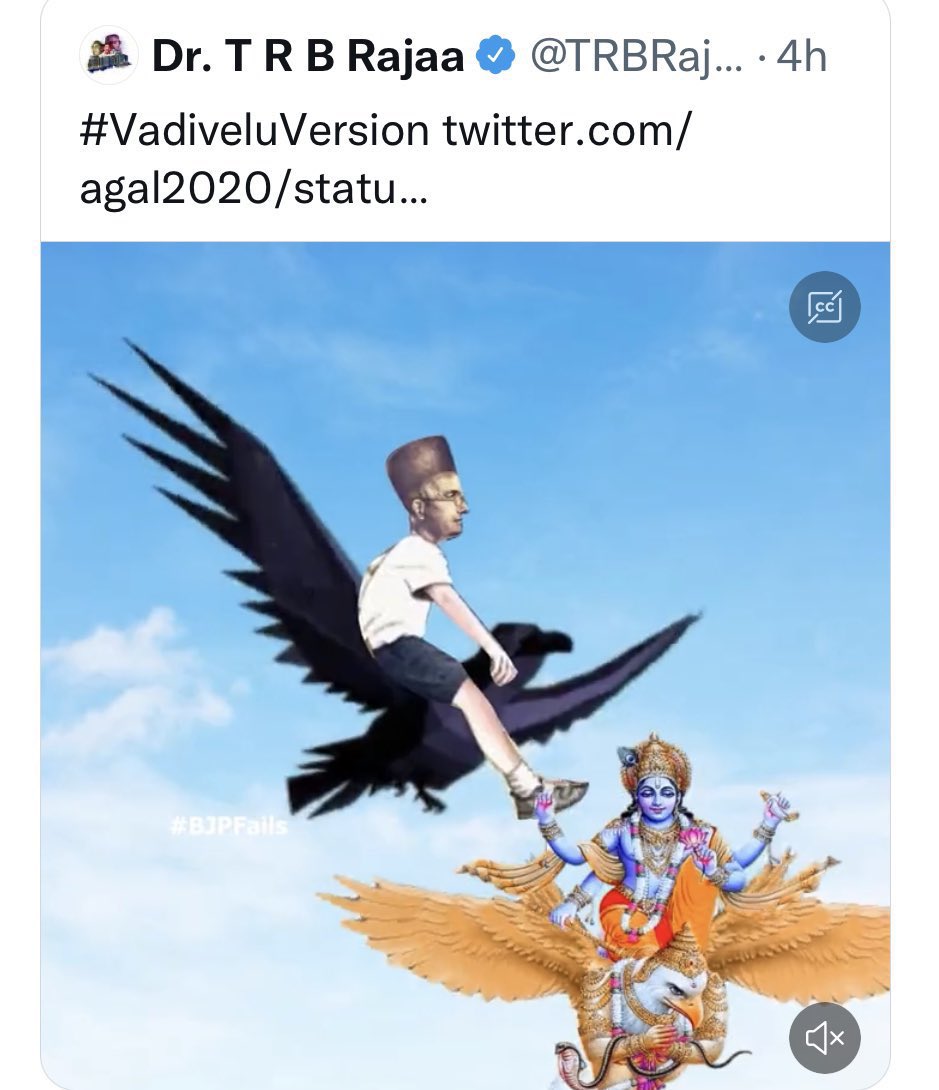
In another incident, DMK IT wing head and MLA TRB Rajaa, son of Lok Sabha MP T.R. Baalu, posted a tweet disrespectful to Hindu sentiments. The tweet featured an image depicting Veer Savarkar as a black bird hitting Lord Vishnu, who was shown mounted on his divine vehicle Garuda.

On 2 September 2023, Udhayanidhi Stalin, DMK leader and son of Tamil Nadu Chief Minister M.K. Stalin, participated in a conference organized by the Tamil Nadu Progressive Writers and Artists Association titled “Eradicate Sanatana Conference“. During the event, he made a controversial analogy, “The title of this conference has been excellently coined. You’ve named it as ‘Abolish Sanatanam Conference’ and not ‘Oppose Sanatanam Conference’, so my best wishes to that.”

He went further, comparing Sanatanam (Hinduism) to diseases, “Mosquitoes, dengue, flu, malaria, corona – we should not oppose these things. They’ve to be eradicated completely. Same is the case with Santanam (Hinduism). Our first work should be to abolish/eradicate Sanatanam instead of opposing it. So, my appreciations to you all for giving an apt title to the meeting.”

The speech drew widespread criticism, with many seeing it as part of a broader agenda against Sanatana Dharma by the I.N.D.I alliance, of which the DMK is a member.

Likewise, Tamil Nadu Education Minister Anbil Mahesh Poyyamozhi stated the government’s intention to revise school textbooks to remove certain references to Hinduism. He said, “The part about Sanathana is found in the textbook printed in 2018. As the syllabus is changed every five years, textbooks will be altered next year. We have appointed a committee to look into the issue.”

Why is the DMK IT Wing Mocking Hinduism Now?

The DMK IT Wing has recently come under criticism for using the sacred chant “Srinivasa Govinda”, a name deeply associated with Lord Venkateswara, in a mocking and sarcastic manner. What is traditionally a revered devotional chant was repurposed as a rhetorical expression of defeat or doom, which many have found deeply disrespectful. This move, coinciding with the Supreme Court’s verdict against the Enforcement Directorate (ED) raid), is widely seen as an attempt to ridicule Hindu beliefs under the guise of political satire or commentary.

The Supreme Court of India has put a temporary stop to the Enforcement Directorate’s (ED) ongoing investigation and searches related to the Tamil Nadu State Marketing Corporation (TASMAC), citing concerns over the infringement of the federal structure enshrined in the Constitution. The directive effectively suspends the ED’s actions under the Prevention of Money Laundering Act (PMLA), 2002, in connection with the case.

Chief Justice of India BR Gavai voiced serious concerns over the ED’s conduct, suggesting that the agency had “overstepped its boundaries.” The bench observed that the ED’s approach could be deemed excessive and inconsistent with constitutional norms, as law and order falls under the purview of state governments.

This intervention by the apex court followed an appeal by the Tamil Nadu government against a recent ruling from the Madras High Court that allowed the ED probe to continue. The state’s legal challenge came just days after the High Court upheld the ED’s authority on 23 April.

The ED has alleged a ₹1,000 crore liquor scam, claiming that private distilleries paid under-the-table cash to secure contracts for liquor distribution. However, Tamil Nadu’s counsel told the Supreme Court that the state had already taken action between 2014 and 2021, with the Directorate of Vigilance and Anti-Corruption registering 41 FIRs against individual retail operators.

The Tamil Nadu government accused the ED of acting beyond its jurisdiction and engaging in speculative and unfounded investigations without evidence of a predicate offence — the crime that typically precedes a money laundering case. The state further claimed that TASMAC staff, including women employees, faced prolonged questioning, device seizures, and personal intrusions during ED raids, raising serious privacy concerns.

The ruling DMK government also alleged that the central agency’s involvement was politically motivated. They asserted that the BJP-led Union government was using the ED to undermine opposition parties, particularly ahead of the upcoming general elections.

The DMK known for its anti-Sanatana Dharma (aka Hinduism) has once again exposed it’s Hindu hate by misusing a sacred song.

Subscribe to our channels on TelegramWhatsApp, and Instagram and get the best stories of the day delivered to you personally.

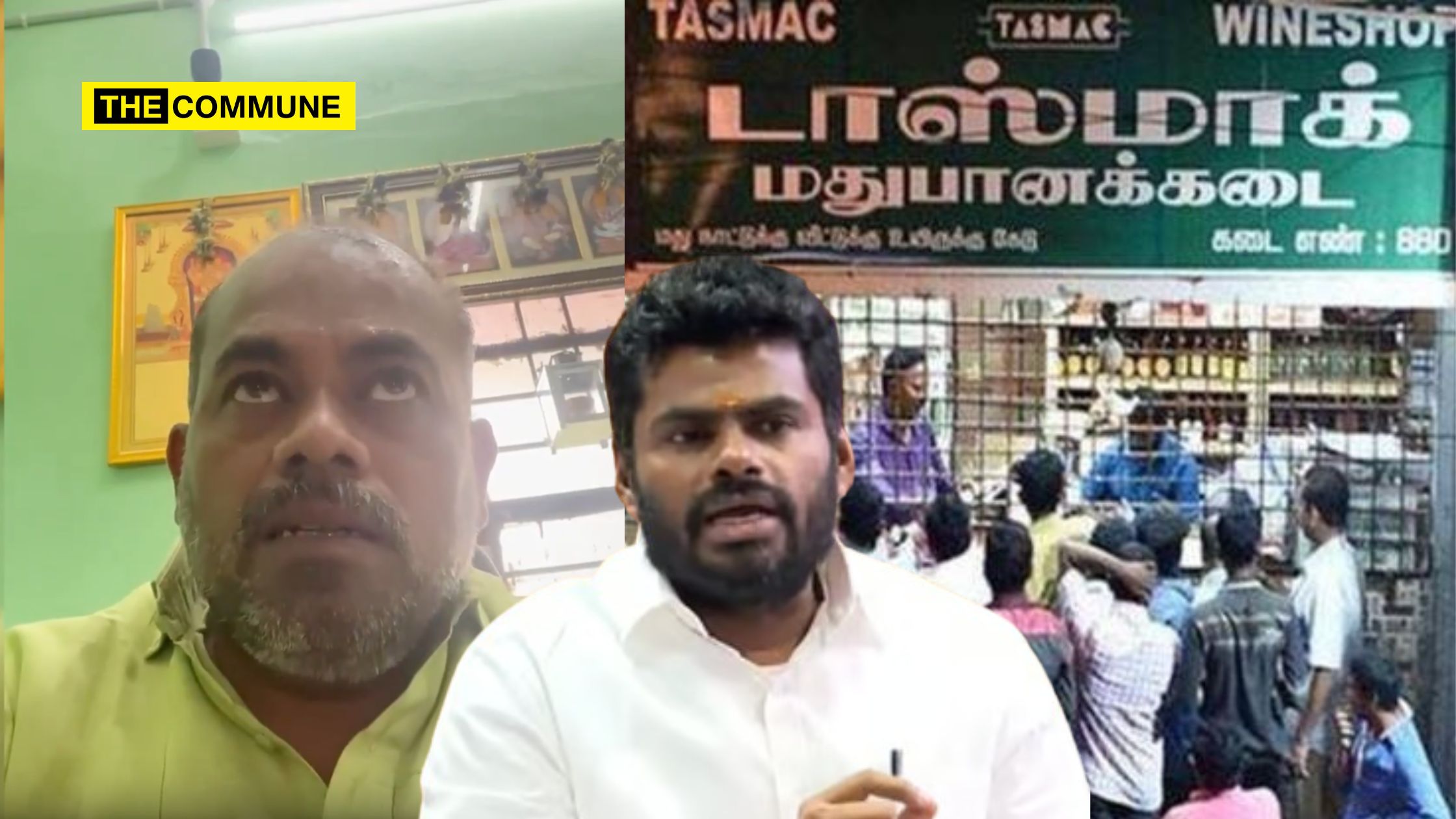
“How Many More Lives?”: Annamalai Slams DMK After Bar Owner’s Suicide Attempt Due To Harassment By TASMAC Officials

Former Tamil Nadu BJP president K. Annamalai has launched a scathing attack on the DMK-led state government following a shocking incident involving a TASMAC bar owner who attempted suicide, allegedly due to continuous harassment and extortion by TASMAC officials.

Taking to social media, Annamalai accused the DMK government of exploiting the state’s liquor distribution system for profit, while pushing the common man to the brink of despair. “How many more lives will your government destroy before you stop looting the poor?” he asked. “TASMAC’s sole aim is to ensure that common people remain inebriated, and the DMK profits at their expense.”

Annamalai’s full statement read, “TASMAC is a Tamil Nadu state-run corporation whose sole aim is to ensure that common people remain inebriated, and the DMK profits at their expense. Sales through illegal bars, unaccounted billing running to lakhs from every shop, and several thousand crores end up in the coffers of DMK Ministers every month. And here’s a TASMAC bar owner, unable to handle the pressure of being bullied by every officer in the system, wanting to take his life. TN CM Thir @mkstalin, how many more lives will your government destroy before you stop looting the poor and start acting like the Chief Minister of the State?”

The controversy erupted after Balakrishnan, a 50-year-old runs a TASMAC outlet near the Thennur Uzhavar Market in Trichy, attempted to take his own life by taking poison. His family managed to rescue him in time and admitted him to a private hospital, where he remains under intensive care. In the aftermath, a video surfaced online showing Balakrishnan revealing the reasons behind his drastic step, and the footage has since gone viral.

In the video, a visibly distressed Balakrishnan names several TASMAC officials whom he holds responsible for his mental anguish and suicide attempt. He accuses the Trichy District Manager, Accounts Assistant Manager Arjun, PWD Inspector Balakrishnan, and PWD writer Aravind of repeatedly demanding ₹50,000 in bribes every month, under the threat of registering false cases against him and his employees. He alleges that they even threatened to invoke the Goondas Act to force his staff into quitting if they continued working with him.

Balakrishnan claims he regularly paid bribes to AM Arjun, including ₹1.25 lakh for a liquor shop tender. Despite his compliance, he says his six shops were deliberately targeted, with officials threatening to shut them down. He alleges that this harassment took place publicly, in front of his office, humiliating him and tarnishing his reputation. According to him, while he was being squeezed for money, several unauthorized bars operated freely with the knowledge—and blessings—of the same officials.

He went on to describe the extent of unaccounted profits made from the liquor trade. The shop he worked at reportedly sold around 12,000 bottles daily, including quarter and half bottles, generating an excess revenue of ₹22,000 to ₹23,000 each day. He accused the TASMAC DM of pocketing this illegal income, collecting between ₹15 to ₹20 lakh per month from various shops, with the AM also taking a share. A man named JP was allegedly in charge of collecting these bribes and distributing them, not just in Trichy but across other districts like Tanjore, Pudukkottai, Villupuram, Perambalur, and Nagapattinam.

Balakrishnan also recounted an earlier incident where 150 liquor cases reportedly went missing from a TASMAC warehouse. According to him, the DM paid ₹3 lakh to cover part of the loss, while other TASMAC officials contributed the remaining ₹12 lakh. He questioned the fairness of this arrangement and suggested it pointed to deep-rooted corruption. He further claimed he paid a monthly bribe of ₹1.18 lakh to a police officer named Balakrishnan and said he had video proof of recent payoffs—including one taken that very morning near Velan Hospital, which he planned to send to his wife as evidence.

He described how his shops were raided for three consecutive days, with five cases threatened and two already filed. Three cases of liquor were seized, though he alleged only a few bottles were officially documented. His frustration was evident as he stated that those who work hard and follow rules are forced into suffering, while corrupt officials enjoy a life of luxury, shielded by their powerful connections. He concluded by lamenting that the real loss to TASMAC comes not from honest shopkeepers, but from the very officials who exploit the system.

This disturbing revelation has intensified scrutiny over TASMAC’s operations and reignited the opposition’s criticism of the DMK’s handling of the state-run liquor monopoly. Annamalai’s remarks have drawn sharp attention, with many demanding a full-scale investigation into the allegations raised in the video.

In the video the Balakrishnan said, “The persons responsible for my death are Trichy TASMAC’s DM, Accounts AM Arjun, PWD inspector Balakrishnan and PWD writer Aravind. They are the reason for my death. I was doing my business well without issues. They continuously demand ₹50,000 every month or else file case against me and intimidate me on continuing my business and cases as well intimidating my employees too warned the of Goondas act if they work for me. They keep intimidating me continuously. TASMAC accounts AM Arjun has been getting money from me always, I had been giving money always. I have been giving money every month. Besides this, he got ₹1.25 lakhs from me for a (TASMAC) tender. I gave him that money too. I did not demand money from anyone else. He deliberately keeps picking on my 6 shops and warned me of dire consequences saying he will issue closing order. He intimidating me in front of my office bringing me to streets. Both TASMAC DM and AM said this. I said take action against me, I would not oppose but there are many illegal bars operating and they get money from many illegal bars. The TASMAC shop I work in sees business of 15,000 bottles a day. Sorry, not 15,000 but 12,000 bottles per day. 2,000 number of quarters bottles, it does excess business of ₹17,000 per day adding beer and half bottles it does an excess of ₹22,000 to ₹23,000. The TASMAC DM owns all these excess income. He gets about ₹15 to ₹20 lakh per month this way from all the shops. The TASMAC AM also has a share in this, there is a person called JP allocated to collect the money as well. Apart from this, to the SRM, from all districts Trichy, Tanjore, Pudukkottai, Villupuram, Perambalur from all these districts including Nagapattinam they are collecting money like brokerage. The person JP is collecting all the money. Who is creating loss for TASMAC? is it them or us? Last time, Senthil Balaji (ex minister) took the (TASMAC) tender. He was the one who took tender all over we operated TASMAC shops on rental basis. I have paid tender amount even for bars that were closed. I have incurred huge loss, so much has been done before this too. Few days ago 150 cases of liquor was missing from TASMAC godown. The DM paid ₹3 lakh for the lost liquor. Other TASMAC officers paid the remaining ₹12 lakh was it correct and fair? If they claim what they do is correct then I earned through hard work, I give them bribe. To the police balakrishnan sir I gave ₹1.18 lakh every month as a bribe. They sucked the blood out of my hard work and lead a life seems to be dignified but I got money for interest and going through depression. They raided my shops for 3 days said they will file 5 cases against me and filed 2 cases already. They have confiscated 3 cases of liquor too for name sake they handed 4 or 5 bottles to us. I have video proof of him getting money from me. The PC got money from me this morning underneath Velan hospital and I have the video on my phone. I’ll send it to my wife take it as a proof. Apart from this there are many irregularities in TASMAC like DM, AM, JP, SRM. SRM gets money from all the districts the inspector also gets money. We who toil hard should die and these guys should live a luxurious life. You don’t know their net worth, we are working hard to bribe them but they doing such atrocities.”
Subscribe to our channels on TelegramWhatsApp, and Instagram and get the best stories of the day delivered to you personally.

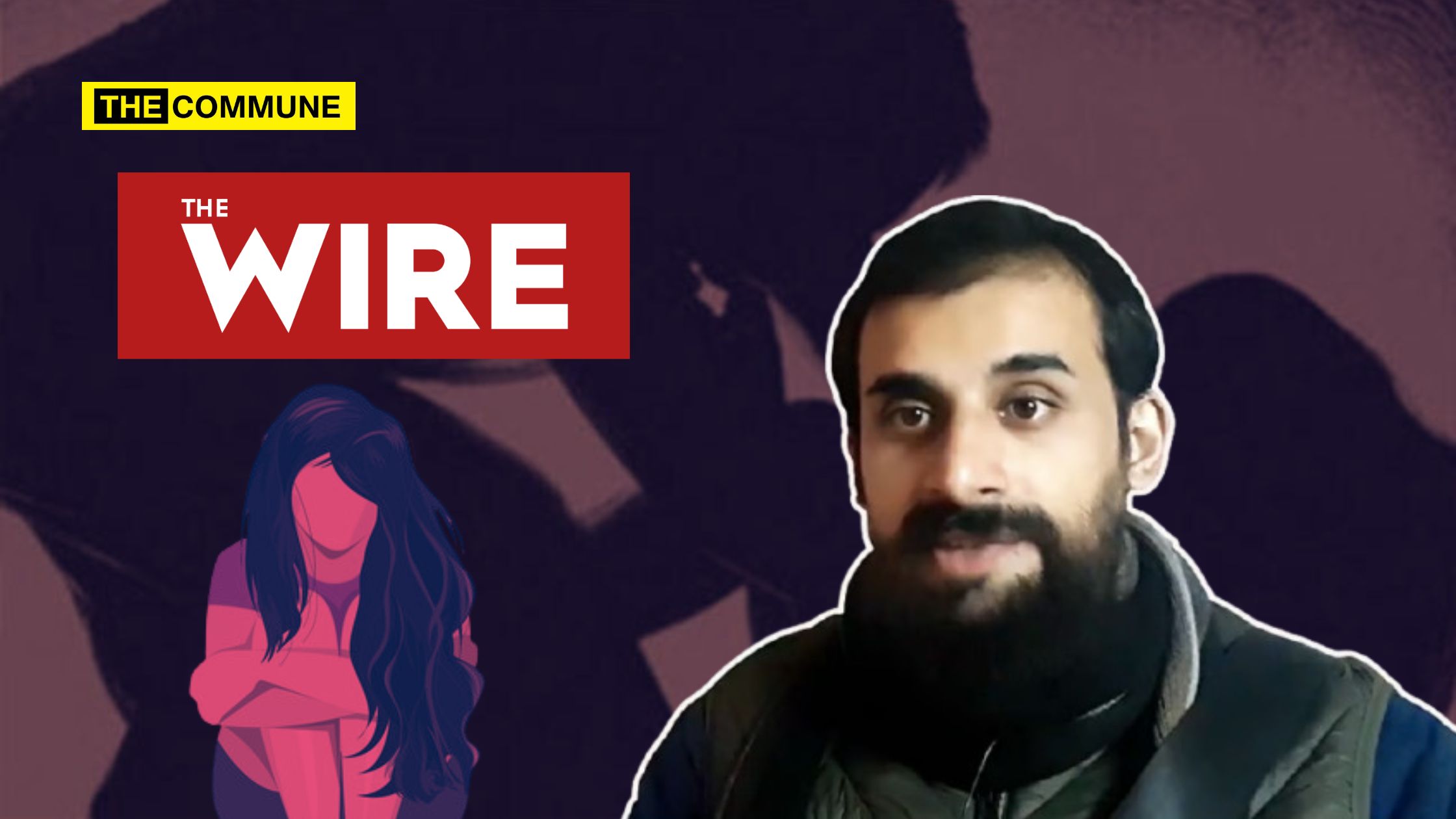
Leftist Rag The Wire’s Journo Omar Rashid Allegedly Raped And Forcefully Fed Beef To His ‘Non-Muslim’ Colleague, Victim Denies Love Jihad Angle

omar rashid

The so-called “left-liberal” news portal The Wire, has consistently sought to downplay or outright reject the notion of ‘Love Jihad’ in India, now finds itself embroiled in a disturbing controversy involving one of its own contributors. A woman has come forward with harrowing allegations of sexual violence, psychological torment, and repeated physical abuse at the hands of Omar Rashid, a journalist associated with the platform.

In a now widely circulated Instagram post, the unnamed woman details her traumatic experiences, alleging that Rashid—significantly older and well-connected in Delhi’s liberal media ecosystem—groomed her under the guise of progressive ideals. She claims he initiated contact by discussing politics and sharing curated walks in Delhi’s Lodhi Gardens, a tactic she believes he has used with multiple women. Portraying himself as a sensitive, progressive Muslim man—an animal lover, foodie, and a grieving son—Rashid allegedly used this facade to manipulate and trap victims.

She alleged, “This is a public call-out of Omar Rashid, who is a violent serial assaulter and rapist masquerading as a progressive journalist. Having worked for reputed news outlets like The Hindu and the Outlook, and currently at The Wire, he has a pattern of using his position to get into relationships with women and indulge in intimate-partner violence and extreme forms of misogynistic and anti-women sexual behavior. I am attempting to ensure that no crucial details of the incidents are missed out, so that other women reading this are aware of the pattern of abuse employed by this person and stay safe in the future. I am crying as I write this and my hands are trembling, as I relive every detail of those horrifying days and nights with Omar. But after internalizing immense guilt and shame, and understanding that another woman has lived and might be living through this as I am writing this, I want to put out the most shameful and crass details of the hell that he put me through. I have learnt that he baits women through a very specific pattern, the same pattern which he employed to bat me. He uses his social media to portray a very progressive, emotionally considerate image of him. On his social media he has build an image of him as a charming, progressive, pet lover, foodie guy who has lost his mother. He starts his game by inviting women to walks to the Lodhi Garden, something which I have got to hear from several women. I am ashamed to confess that I too am a victim of these manipulative tactics, which i came to realize at a much later stage. When I first got to know him through Instagram, it was days of chatting about progressive politics and how nice of a guy Omar is. It was followed by conversations about love, emotional intimacy, and the mega concept of romance found in literature. As a woman new to the city, and much younger than him, I relied on him to navigate through the progressive spaces and Delhi. He used to take me to Press Club events, as his “trophy friend” (not trophy wife, since he refused to publically acknowledge our relationship), and a token progressive feminist acquaintance.” 
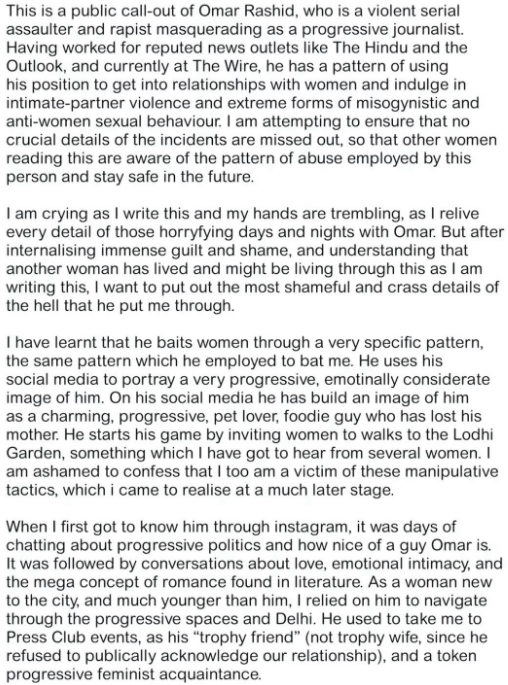
Describing him as a habitual abuser and serial rapist, the woman recounts being repeatedly beaten, slapped, kicked, and subjected to violent sexual assaults. Throughout the course of their so-called relationship, she says she endured unrelenting sexual humiliation, brutal beatings, and rape that often left her bloodied and bruised. The victim further alleges that Rashid consistently refused to use protection during intercourse, leading to multiple gynecological issues, including repeated visits to doctors for abortions and treatment for STIs—consequences she links to Rashid’s sexual involvement with numerous other individuals.

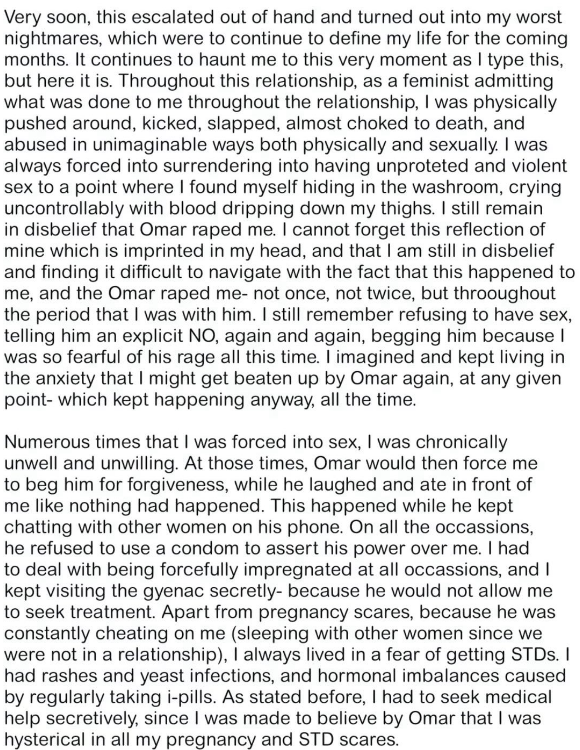
She further added, “Very soon, this escalated out of hand and turned out into my worst nightmares, which were to continue to define my life for the coming months. It continues to haunt me to this very moment as I type this, but here it is. Throughout this relationship, as a feminist admitting what was done to me throughout the relationship, I was physically pushed around, kicked, slapped, almost choked to death, and abused in unimaginable ways both physically and sexually. I was always forced into surrendering into having unprotected and violent sex to a point where I found myself hiding in the washroom, crying uncontrollably with blood dripping down my thighs. I still remain in disbelief that Omar raped me. I cannot forget this reflection of mine which is imprinted in my head, and that I am still in disbelief and finding it difficult to navigate with the fact that this happened to me, and the Omar raped me- not once, not twice, but throoughout the period that I was with him. I still remember refusing to have sex, telling him an explicit NO, again and again, begging him because I was so fearful of his rage all this time. I imagined and kept living in the anxiety that I might get beaten up by Omar again, at any given point- which kept happening anyway, all the time.”

Despite her repeated pleas and explicit refusals, including during times of illness, Rashid allegedly continued to rape her, at times forcing her to hide in the bathroom to escape. One particularly disturbing allegation involves him coercing her into eating beef, despite her aversion and physical reaction to it—actions she says were part of his insistence on asserting his Kashmiri Muslim identity and her status as a “non-Muslim.”

She said, “Numerous times that I was forced into sex, I was chronically unwell and unwilling. At those times, Omar would then force me to beg him for forgiveness, while he laughed and ate in front of me like nothing had happened. This happened while he kept chatting with other women on his phone. On all the occasions, he refused to use a condom to assert his power over me. I had to deal with being forcefully impregnated at all occasions, and I kept visiting the gynec secretly- because he would not allow me to seek treatment. Apart from pregnancy scares, because he was constantly cheating on me (sleeping with other women since we were not in a relationship), I always lived in a fear of getting STDs. I had rashes and yeast infections, and hormonal imbalances caused by regularly taking i-pills. As stated before, I had to seek medical help secretively, since I was made to believe by Omar that I was hysterical in all my pregnancy and STD scares.

She claimed, “The most evil thing that happened every time that I got brutally beaten up, was Omar taking out his phone and recording me in that moment, my clothes and hair disheveled- to portray me as a hysterical woman. All this while he constantly surveilled me, where I went, whom I talked to, censored my social media, moral policing my daily life, my dietary choices- while constantly telling me how ugly I looked. He used to degrade me by dictating every aspect of my life, in the ways as that Omar pleased. He had a problem with my diet, with what I eat and what I don’t. He used to regularly force me to consume beef- as some weird test of secularism. I used to puke every time I was forced into it, and he derived a sadistic pleasure out of that- the same way in which he derived pleasure from seeing me beg on his feet, so that he does not describe the imagery of he having sex with my mother. He also used to make me imagine having sex with my male friends and colleagues- especially the older ones. It was more traumatizing because those men were the age of my grandfather.”
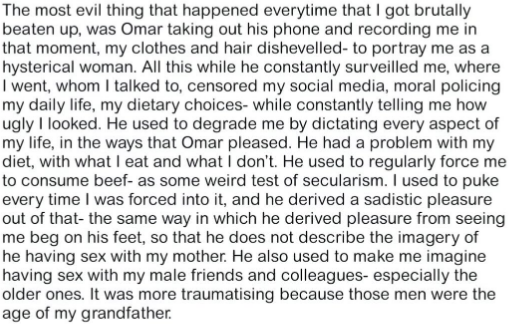
She also claims he deliberately destroyed her possessions, including irreplaceable family heirlooms, knowing she was financially vulnerable. The post describes scenes of abject degradation—being made to grovel, subjected to degrading comments involving her family, and physically attacked.

She alleged, “He broke my most expensive possessions, some of which were a gift from my father and closest friends, all this while knowing that I lived hand-to-mouth, and as a power move to torture me. I kept begging for him to stop smashing my things on the floor and the wall, but he would proceed to do smash them harder to make me cry and beg even more (also followed by recording me cry and beg on the camera). I am ashamed that I kept grabbing his feet, begging Omar not to do this, and asking what he was getting out of breaking.” 

While the survivor explicitly states she does not wish to communalize her ordeal, she emphasizes that her story reflects a broader, systemic problem—of powerful men, especially in media and professional spaces, preying on younger, vulnerable women.

She said, “Omar always kept reminding me of my identity as a “non-muslim” in the hindu rashtra, and how this relation needed to be kept secret for the greater good of the muslim men, and the idea of this being seen as love jihad. This was what made me keep quiet for the longest time, since I knew the hindutva brigade’s possible reaction to it. However, I recently got to know that there are more women than me-that it makes it a #WeToo, not really a #MeToo. I want to make this clear that this is not to be seen as a communal or ethnic issue- what Omar kept repeating throughout by proclaiming his kashmiri muslim identity, but rather an account of one person who chose to weaponise all of this to get sadistic pleasure out of this by tormenting young progessive women, while guilt-tripping them into silence because they would play into the hindutva hands by calling him out. He always used to say that he will destroy me, my family, anything little that I have earned- but he has made sure that now, I have nothing left to lose. To all the young women reading this, it is not #MeToo, this has always been #WeToo.” 

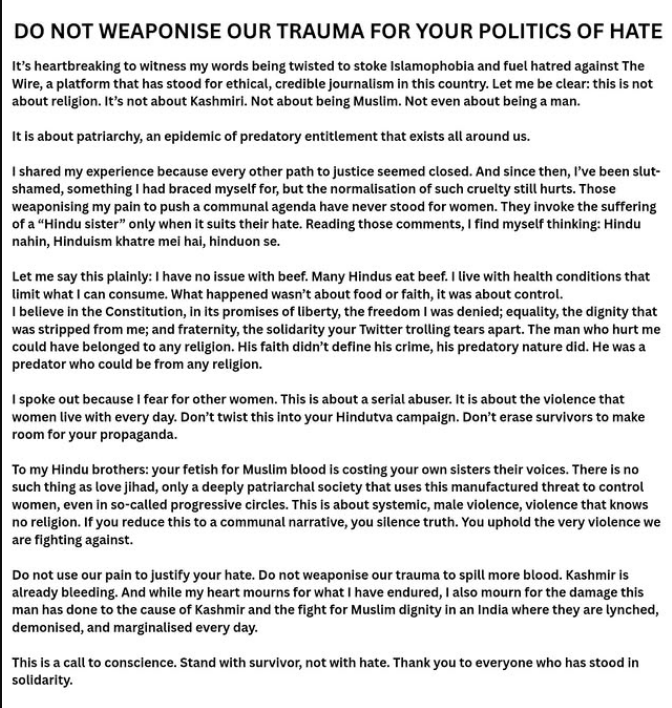
Please Stop Turning Our Pain Into Fuel for Your Hate-Filled Politics

In a recent heartfelt message, the survivor expressed deep anguish over how her words are being distorted to inflame Islamophobia and direct hostility toward The Wire, a media outlet she still regards as committed to ethical journalism in India. She made it unequivocally clear: her ordeal is not about religion. It’s not about being Kashmiri. It’s not about being Muslim. It’s not even about gender alone. It’s about patriarchy — a deeply ingrained culture of male entitlement that permeates every layer of society.

She chose to speak out because all other avenues for justice seemed blocked. Since coming forward, she has faced vicious slut-shaming — something she anticipated, but which still stings because of how normalized such cruelty has become. Those now exploiting her trauma to push a communal narrative, she said, were never truly concerned about women. They conveniently use the image of a “Hindu sister” only when it serves their agenda of hate.

She reflected bitterly on the toxic reactions, saying: “It’s not Hinduism that’s under threat — it’s being threatened by Hindus.” She clarified that she has no issue with beef consumption, pointing out that many Hindus eat beef. Her dietary choices are dictated by health conditions, not belief. What she suffered was not rooted in religious or culinary identity — it was about control, coercion, and dominance.

She reaffirmed her belief in the Indian Constitution — in liberty, the freedom she was denied; in equality, the dignity taken from her; in fraternity, the solidarity that online trolls are tearing apart. The man who abused her could have been from any faith. His religion did not cause his violence — his predatory mindset did. He was an abuser, plain and simple.

Her decision to go public was driven by a fear for the safety of other women. This, she emphasized, is about a repeat offender, a man who exploited and harmed — and about the daily violence that countless women endure. She urged people not to hijack her story for Hindutva propaganda or erase her experience to make space for political narratives.

Addressing Hindu men directly, she condemned the obsession with Muslim identity that has come at the cost of silencing Hindu women. There is no such thing as “Love Jihad,” she argued — only a deeply patriarchal society that uses invented threats to control women, even within so-called progressive spaces.

This issue is not religious — it’s systemic. It’s male violence, and it exists across communities. Reducing it to a communal battle distorts the truth and perpetuates the very brutality women are trying to escape. Using survivors’ trauma as a political weapon only adds to the bloodshed.

Kashmir, she added, is already suffering. And while she mourns what she personally went through, she also grieves the broader damage — to the cause of Kashmir, to the struggle for dignity of Muslims in India, who face daily threats, discrimination, and violence.

Her message is a plea to conscience: stand with survivors, not with hatred. And to those who have shown solidarity — she offers heartfelt thanks.
The Wire’s Response

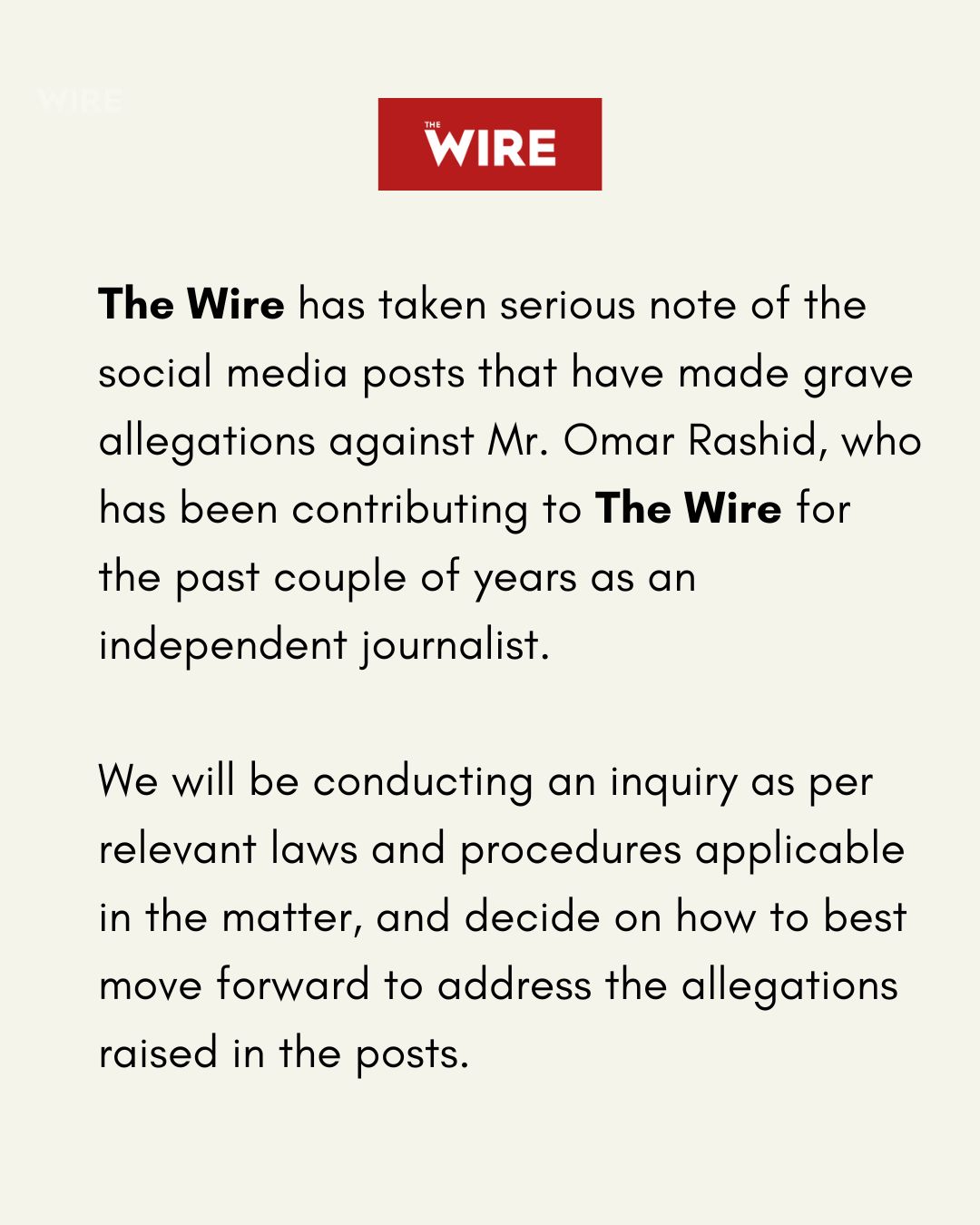
In response to the allegations, The Wire issued a public statement acknowledging the seriousness of the accusations against Omar Rashid. The statement clarified that Rashid had been contributing to the outlet as a freelance journalist and confirmed that an internal investigation, in line with applicable legal procedures, is currently underway.

The Wire stated, “The Wire has taken serious note of the social media posts that have made grave allegations against Mr. Omar Rashid, who has been contributing to The Wire for the past couple of years as an independent journalist. We will be conducting an inquiry as per relevant laws and procedures applicable in the matter, and decide on how to best move forward to address the allegations raised in the posts.”
For years, The Wire and similar ideologically aligned outlets have vehemently denied the existence of what is commonly referred to as “Love Jihad—a term used to describe the alleged targeting of Hindu and Christian women by Muslim men under false pretenses, often resulting in forced conversions, abuse, and long-term trauma. Critics argue this pattern is rooted in extremist interpretations that regard non-Muslim women as subhuman, fit only for subjugation and exploitation.

This disturbing case has reignited debates around such issues, especially given the backdrop of historical and ongoing incidents—ranging from the UK’s grooming gang scandals and the Yazidi women enslaved by ISIS, to the infamous Ajmer abuse case and the Islamist conversion rackets operating in Kerala. Observers claim that far from being relics of the past, these patterns persist in today’s world—often enabled or ignored by the very same liberal institutions that claim to champion justice and equality.

Subscribe to our channels on TelegramWhatsApp, and Instagram and get the best stories of the day delivered to you personally.