Home Blog Page 270

Malayalam Biography Of Former RSS Chief Rajju Bhaiya Released On Sangh’s Centenary

As the Rashtriya Swayamsevak Sangh (RSS) celebrates its centenary, the life story of former RSS chief Prof. Rajendra Singh, popularly known as Rajju Bhaiya, has been brought out in Malayalam for the first time. The book, seen as a guide for swayamsevaks, reflects on his vision and principles that shaped the Sangh’s expansion across India.

Originally authored in Hindi by noted writer Dr Ratan Sharda under the title ‘Prof. Rajendra Singh: A Successful Journey of Life’, the work has been translated into Malayalam by senior RSS pracharak S. Sethumadhavan.

The first copy was released by RSS Sahsarkaryavah C.R. Mukunda, who handed it to Dakshina Kerala Pranth Sanghchalak Prof. M.S. Ramesan. The edition has been published by Kurukshetra Prakashan. Kerala, which is among the states with the highest number of RSS shakhas, has been chosen as the launch pad for the Malayalam edition.

A chapter in the book focuses on strengthening the shakha system and attracting more participants, underscoring the organisation’s centenary goal of reaching villages yet untouched by the Sangh’s influence. The book highlights five key principles that Rajju Bhaiya consistently emphasised for shakha functioning ensuring strong attendance, nurturing a disciplined cadre, imparting cultural values to the youth, maintaining direct contact with households, and fostering selfless affection through collective activities.

These, he believed, were the foundation of effective nation-building. Beyond organisational matters, Rajju Bhaiya’s thoughts on the economy and politics found space in the book. He cautioned against over-reliance on multinational corporations, urging Indian entrepreneurs to maintain quality and affordability to win public support. Politically, he encouraged leaders to work across ideological lines for national interest, while personally maintaining a distance from active politics.

Rajju Bhaiya was also the first RSS chief to travel abroad, visiting nearly 40 countries to strengthen overseas Indian organisations. His final trip to Japan focused on building Hindu-Buddhist cooperation, which he argued could benefit not only India and Japan but the wider world. With personal insights from current RSS chief Mohan Bhagwat, who worked closely with Rajju Bhaiya during the Emergency, the book offers both – historical perspective and a vision for the Sangh’s role in a changing global order.

-IANS

Subscribe to our channels on TelegramWhatsApp, and Instagram and get the best stories of the day delivered to you personally.

Jatiya Party Office Torched For Second Time In 10 Days Under Yunus-Led Interim Government In Bangladesh

Bangladesh’s Jatiya Party (JaPa) central office in Dhaka has once again been vandalised and set ablaze by miscreants for the second time in ten days, local media reported on 6 September 2025.

The incident occurred late 5 September evening, hours after leaders of another political party, the Gono Odhikar Parishad, held a rally at Shahbagh in the capital, demanding a ban on JaPa.

Confirming the development, Rozina Akhter, duty officer at the control room of the Fire Service and Civil Defence headquarters, said, “We were informed around 7:00 p.m. that some people hurled bricks and stones at the Jatiya Party office and then set it on fire.”

This marked the second such attack within a week amid a growing political violence across Bangladesh under the Muhammad Yunus-led interim government. “Suddenly, a few miscreants launched an attack on the Jatiya Party office. They vandalised some furniture inside and set fire,” Bangladesh’s leading newspaper, Dhaka Tribune, quoted Ramna police station Sub-Inspector (SI) Sajjad Hossain as saying. JaPa Secretary General Shameem Haider Patwary strongly condemned the attack and said the party holds Gono Odhikar Parishad responsible for it.

“The government should launch a judicial inquiry into the incident. If found guilty, Gono Odhikar’s party registration should be cancelled,” he stated. Addressing reporters, JaPa Praesidium Member Rezaul Karim took an indirect dig at Gono Odhikar Parishad, stating that those who organised the rally at Shahbagh were behind the attack.

He also alleged that the interim government has failed to provide security and prevent mob attacks. “Jatiya Party was here in Bangladesh, and it will remain in the future,” he added. However, Gono Odhikar Parishad has refuted the allegations. Reports suggest that in a similar attack, JaPa’s central office was vandalised and set on fire on 30 August, a day after violent clashes broke out between its activists and those of Gono Odhikar Parishad in Kakrail.

Following that attack, the Awami League strongly condemned the vandalism, looting, and arson at the JaPa office. It also alleged that the incident took place with the direct support of the Yunus regime, under which, mob terrorism is running rampant in Bangladesh. Since the ouster of the democratically elected government of Awami League led by Sheikh Hasina, Bangladesh has been gripped by violence and extreme lawlessness under the Yunus–led interim government.

-IANS

Subscribe to our channels on TelegramWhatsApp, and Instagram and get the best stories of the day delivered to you personally.

Canada Formally Acknowledges Khalistani Extremist Fundraising on Its Soil, Cites Terror Links In Official Report

The Canadian government has officially flagged concerns over terror financing linked to Khalistani extremists and admitted for the first time that such groups have been operating from its soil and receiving financial support an issue repeatedly raised by India for years.  The admission has come through a fresh assessment by Canada’s Department of Finance on money laundering and terrorist financing risks.

According to the report, several terrorist entities, including Khalistani violent extremist groups, continue to receive financial backing from within Canada for activities tied to politically motivated violence.

Canada has long been considered a base for Khalistani outfits such as Babbar Khalsa, the International Sikh Youth Federation, and Sikhs for Justice. For the first time, Ottawa has formally acknowledged the extremist group’s presence and the financial activities linked to it.

The report titled ‘2025 Assessment of Money Laundering and Terrorist Financing Risks in Canada’, released by its Finance Department, observed that these groups continue to attract funds for “activities linked to politically motivated violence.” It further stated that the Khalistani group is “suspected of raising funds in a number of countries, including Canada.” “These groups previously had an extensive fundraising network in Canada but now appear to consist of smaller pockets of individuals with allegiance to the cause but seemingly no particular affiliation to a specific group,” the assessment said.

It also underlined that “several terrorist entities listed under the Criminal Code in Canada that fall under the Politically Motivated Violent Extremism (PMVE) category, such as Hamas, Hezbollah, and the Khalistani violent extremist groups Babbar Khalsa International and the International Sikh Youth Federation, have been observed by law enforcement and intelligence agencies to receive financial support originating from Canada.”

The report further emphasised that Canadian law enforcement and intelligence agencies have documented financial backing for these extremist groups, including Hamas and Hezbollah, from sources within the country. This formal acknowledgement is being seen as a major development, especially in light of India’s repeated warnings that Canada has become a safe haven for anti-India elements. Former Prime Minister Justin Trudeau faced strong criticism for his perceived inaction on the matter, which also contributed to strained relations with New Delhi.

The report also pointed out that beyond Hamas and Hezbollah, “Khalistani violent extremist groups have also been known to use networks to solicit donations from diaspora communities to raise and move funds, including through NPOs.” The findings mark the first time Canada has formally admitted to the scale of fundraising activities by Khalistani extremist groups on its soil, a matter that has long been a point of contention between Ottawa and New Delhi.

-IANS

Subscribe to our channels on TelegramWhatsApp, and Instagram and get the best stories of the day delivered to you personally.
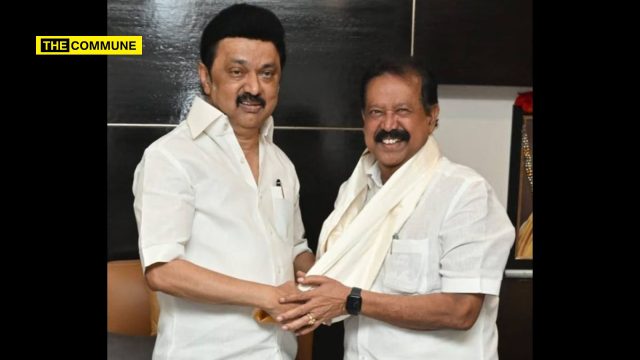
Hubballi Riot Case Withdrawal Lays Bare Congress’s Long Record Of Going Soft On Terror

manmohan singh sonia gandhi upa surgical strikes rti congress terror

The Congress party has often been criticized for supporting extremist ideologies and offering sympathetic leniency a pattern that recent developments in Karnataka seem to reinforce. Reports indicate that the Congress-led state government has withdrawn 60 criminal cases, many of which involve party affiliates, individuals tied to communal unrest, and activists associated with Ambedkarite movements.

On 4 September 2025, Karnataka officially approved the dismissal of cases related to the 2019 Chittapur stone-pelting incident, as well as protests that followed the Enforcement Directorate’s arrest of Deputy Chief Minister D.K. Shivakumar. Similarly, cases stemming from violence during Ganesh Chaturthi festivities and recent demonstrations in Shivamogga were also dropped.

This sweeping action has sparked controversy, principally because it was undertaken despite pronounced objections from the Home Department, senior police leadership, and legal advisors. Authorities including the Director General of Police, the Director of Prosecutions, and the Law Department warned that many of these cases lacked sufficient grounds for dismissal and served no public interest. Nevertheless, the government proceeded.

One particularly contentious case involved a 2019 Chittapur incident in which young men allegedly attacked police after Hindu activists tipped them off regarding illegal cattle transport this case was reportedly withdrawn at the request of IT and BT Minister Priyank Kharge. Charges were also dropped against Shivakumar’s supporters who damaged public property in Kanakapura during protests against his arrest, as well as accusations against his brother D.K. Suresh’s supporters, who had protested their exclusion from a ceremony honoring Dr. B.R. Ambedkar in 2012.

The pattern of leniency extended to dismissals of cases linked to disruptions during Ganesh Chaturthi processions in districts like Ramanagara and Koppal, where accusations included disorderly conduct and organization of unauthorized ram fights. Former Home Minister Araga Jnanendra is believed to have played a role in advocating these withdrawals. Further removals involved cases from Shivamogga’s Shikaripura region related to 2023 protests over a BJP government’s reservation policy triggered by petitions from Home Minister Dr. G. Parameshwara and Assembly Chief Whip Ashok Pattan.

Law and Parliamentary Affairs Minister H.K. Patil confirmed that approximately 60 government-initiated cases including those against farmers, students, and Kannada activists were annulled across different police jurisdictions.

This is not an isolated instance. In October 2024, under Siddaramaiah’s leadership, the Karnataka government attempted to withdraw cases against AIMIM leaders and others implicated in the 2022 Hubballi riots. Mass rioting had reportedly occurred, involving an attack on the Old Hubballi police station and nearby property destruction. Yet, following a PIL by advocate Girish Bhardwaj, the Karnataka High Court overturned the proposed withdrawals.

This is not the first time; there are additional episodes where the Congress has been “soft on terror.” Notably:

  • In 2010, the UPA government released 25 terrorists some affiliated with Lashkar-e-Taiba, Hizb-ul-Mujahideen, and JeM as a “goodwill gesture” toward Pakistan. Included was JeM operative Shahid Latif, previously sought by the IC814 hijackers; he later orchestrated the 2016 Pathankot airbase attack.
  • In 2013, state-led governments dropped numerous cases against terrorist organizations such PFI and SDPI members tied to communal flare-ups, allowing these organizations to strengthen their influence in Karnataka.
  • Post-2008 Mumbai terror attacks, reports claim that the UPA failed to authorize retaliatory airstrikes against terror camps in Pakistan, despite such proposals from the IAF.
  • There were notable efforts to dilute key anti-terror laws TADA and POTA due to political considerations, as described by late Arun Jaitley.
  • High-profile incidents, like the Batla House operation, were cast in a controversial light by senior Congress figures, undermining public confidence in anti-terror efforts.

In sum, the recent case withdrawals in Karnataka reflect a broader pattern of leniency and political expediency in handling serious criminal and terror-related matters, reinforcing the narrative that Congress, at times, adopts a permissive stance toward extremist elements.

Subscribe to our channels on TelegramWhatsApp, and Instagram and get the best stories of the day delivered to you personally.
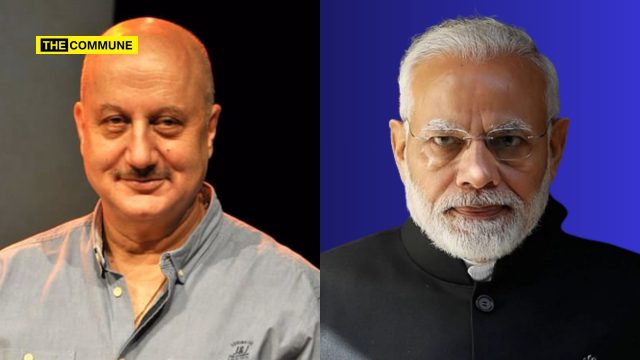
MEA Slams White House Advisor Navarro Over ‘Brahmins Profiting’ Comment

navarro brahmins russian oil

The Ministry of External Affairs (MEA) on Friday rejected the White House Senior Advisor Peter Navarro’s continuous tirade against India, terming his remarks as “inaccurate and misleading statements”.

“We have seen the inaccurate and misleading statements made by Mr. (Peter) Navarro and obviously, we reject them”, MEA Spokesperson Randhir Jaiswal said during a weekly media briefing while responding to a question on Navarro’s “Brahmins profiting” remarks.

The trade advisor’s controversial remarks, made while defending US President Donald Trump’s 50 per cent tariff on Indian goods, were labelled as “casteist” and “sinister” by analysts and caused a massive outrage in India. The MEA spokesperson, however, reiterated that the relationship between India and the United States remains “very important” for New Delhi.

“India and the United States share a comprehensive global strategic partnership which is anchored in our shared interests, democratic values, and robust people-to-people ties. This partnership has weathered several transitions and challenges before. We remain focused on the substantive agenda that the two countries have committed to, and we hope that the relationship will continue to move forward based on mutual respect, and shared interests,” said Jaiswal.

Earlier this week, Navarro had criticised India’s foreign policy, questioning Prime Minister Narendra Modi’s recent engagements with the Russian and Chinese leaders at the Shanghai Cooperation Organisation (SCO) Summit in Tianjin, and declaring that “India needs to be with us, not Russia”.

In an interview with IANS, Edward Price, a political economist and former head of Economic Policy in the British Consulate General in New York, had slammed Navarro’s continuous tirade against India, calling it a “shame”.

Price asserted that Navarro’s attempt to “instruct” a sovereign nation like India entirely misses the point of diplomacy. “It is also historically illiterate. India has always gone its own way, culturally, politically and otherwise. It is a unique country with a unique statecraft. We shouldn’t be telling India what to do. We should be making it a fair and friendly offer,” he added.

-IANS

Subscribe to our channels on TelegramWhatsApp, and Instagram and get the best stories of the day delivered to you personally.

Modi Govt Greenlights Nuclear Warships, Stealth Drones, Space Warfare Tech In Defence Overhaul

modi defence

Four months after Operation Sindoor, which showcased the Indian Security forces apt planning and measured targets, the Modi government has now prepared a 15-year roadmap during which India’s armed forces will be transformed through the infusion of billions of dollars and cutting-edge technology.

According to a report by NDTV, the roadmap includes the “addition of nuclear-powered warships, next-generation battle tanks, hypersonic missiles, stealth bomber drones, AI-powered weapons, and space-based warfare technology to India’s arsenal.”

As per this report, the Indian Army will induct nearly 1,800 future tanks to replace the Soviet era T-72 fleet, 400 light tanks for mountain warfare, 50,000 tank-mounted anti-tank guided missiles, and over 700 robotic counter-IED systems. Similarly, the Navy will get a new aircraft carrier, 10 next-generation frigates, 7 advanced corvettes, and 4 landing dock platforms.

“Nuclear propulsion for warships has been greenlit, as well as electromagnetic aircraft launch systems,” the report claimed. The Air Force will also acquire 75 high-altitude pseudo-satellites, 150 stealth bomber drones, hundreds of precision-guided munitions, and over 100 remotely piloted aircraft.

This roadmap is being seen as a major and bold step to enhance India’s security warfare apparatus, which includes AI, space warfare and other critical domains which have become a necessary tool in the present context, given the lessons being learnt from the ongoing wars between Russia-Ukraine, Israel-Gaza and the concluded war between Israel-Iran-America.

In the past few years, notably after Operation Sindoor, the debates in the Indian security apparatus have gathered pace on the changing structures of warfare tactics and on how India should prepare herself for the 21st-century threats. Notably, CDS Anil Chauhan, on Friday, delivered a speech in Gorakhpur, highlighting six security challenges that India faces.

Amongst them were the unresolved border dispute with China, which he termed as India’s “biggest challenge,” recalling that such conflicts have sparked wars in 1947, 1962 and 1965, and the other challenge stems from Pakistan’s proxy war strategy of “bleeding India by a thousand cuts.”

-IANS

Subscribe to our channels on TelegramWhatsApp, and Instagram and get the best stories of the day delivered to you personally.

GST Rate Cut To Boost Growth, Cushion Impact Of US Tariffs: Union Finance Minister Nirmala Sitharaman

gst nirmala sitharaman

Finance Minister Nirmala Sitharaman said on Friday that the GST rate cut would spur growth in the economy which would offset the drag due to the adverse impact of the US tariff hike on Indian exports.

She also said that India would continue to buy Russian oil because of economic considerations as crude was the costliest item in the country’s import bill. “The government’s main focus would now be on ensuring that the GST rate cuts on various goods and services, that will kick in from Sept 22, are passed on to consumers,” Sitharaman said in a media interview.

“We have a lot of work post-22nd September. It is a big vigilance exercise and we are confident the benefits will reach the common man,” the Finance Minister noted. FM Sitharaman also said the government was speaking to different stakeholders and parties to monitor rate reduction and all industry leaders were on board for lowering prices on goods to pass on the benefit of the GST rate cut to consumers.

The Finance Minister said, “After the GST Council’s decision to cut GST rates, MPs are also taking up the responsibility of monitoring the rate reduction on the ground.” On the issue of western pressure on India to stop buying oil from Russia, the Finance Minister said the government’s purchases of oil were based on economic considerations such as the price and logistics costs.

She pointed out that “since oil is a big ticket foreign exchange-related item and the costliest item in India’s import bill, we will undoubtedly be buying Russian oil.” On the impact of the USA’s 50 per cent punitive tariff on the Indian economy, the Finance Minister said that the cut in GST rates would drive up domestic demand and spur growth which would offset the adverse impact on exports.

She also said that the government would come out with measures to support those who have been hit by the tariff hike. The two-slab GST system of 5 per cent and 18 per cent, removing the earlier 12 per cent and 28 per cent rates, will reduce the prices of most goods and services.

At the same time, a 40 per cent tax on luxury and sin goods such as pan masala, tobacco, aerated drinks, high-end cars, yachts, and private aircraft ensures fairness and revenue balance. Alongside, registration and return filing have been simplified, refunds made faster, and compliance costs reduced, easing the burden on businesses, especially MSMEs and startups.

Sitharaman also mentioned that Prime Minister Narendra Modi had contacted her eight months ago to explore ways of revamping the GST framework. PM Modi had emphasised the need to simplify the system with a strong focus on easing the burden for the middle class, she added. She further explained that GST 2.0 has been designed to minimise disputes and ensure clarity for both businesses and states.

-IANS

Subscribe to our channels on TelegramWhatsApp, and Instagram and get the best stories of the day delivered to you personally.

CBI Brings Back Fugitive From UAE In Gujarat Money Laundering Case

CBI money laundering fugitive

The CBI, in collaboration with Gujarat Police and Central government Ministries, has succeeded in bringing back a fugitive from the UAE in connection with a money laundering and tax evasion case registered in Gujarat, an official said on Friday.

Harshit Babulal Jain, wanted by the Gujarat Police in a case of tax evasion, illegal gambling and money laundering, was deported from the UAE and handed over to the Gujarat Police on Friday at Ahmedabad International Airport, the official said.

Earlier, the Central Bureau of Investigation (CBI) got the Red Notice published against Jain through Interpol on August 9, 2023, at the request of the Gujarat Police. Red Notices published by Interpol are circulated to all law enforcement agencies globally for tracking wanted fugitives.

The CBI, as the National Central Bureau for Interpol in India, coordinated with the Ministry of External Affairs and the Ministry of Home Affairs to get Jain back from the UAE to face criminal proceedings in the country, said a statement. The CBI coordinates with all law enforcement agencies in the country through Bharatpol for assistance via Interpol channels.

More than 100 wanted criminals have been brought back to the country in the last few years through coordination via Interpol channels, the CBI said in the statement. Earlier this week, the CBI coordinated the return of fugitive Mainpal Dhilla alias Sonu Kumar from Cambodia.

Mainpal Dhilla alias Mainpal Badli alias Sonu Kumar is a notorious criminal wanted by the Haryana Police in several cases. He was convicted and sentenced to life imprisonment for murder, attempt to murder, illegal use of firearms and criminal conspiracy on March 29, 2013, in a case registered at Police Station Sadar Bahadurgarh in 2007.

He was also previously convicted in two more cases. While he was serving a sentence in jail, he was released on six weeks’ parole from Hisar Central Jail. “He was to return to jail by August 29, 2018, but he did not report back to jail and absconded,” the CBI said in its press release.

-IANS

Subscribe to our channels on TelegramWhatsApp, and Instagram and get the best stories of the day delivered to you personally.
“Spreading Hatred, Not Unity”: Maulana Shahabuddin Razvi Barelvi Slams Sukoon Empire ‘Halal Housing’ Project Near Mumbai

Maulana Shahabuddin Razvi Barelvi sukoon empire halal lifestyle

An upcoming housing society project in Neral, about 100 km from Mumbai, has evoked strong reactions from the netizens over its ‘halal’ and ‘exclusively Muslim’ character and also ignited a political firestorm.

Maulana Shahabuddin Razvi Barelvi, the leading Muslim cleric from Uttar Pradesh, is the latest to condemn and call out the township project and its developers for promoting and selling ‘halal lifestyle’, apparently to those belonging to a certain community.

The All India Muslim Jamaat (AIMJ) president decried the touting of the project as ‘the one for like-minded people with a halal lifestyle’ in a promotional video and termed it a brazen act of spreading hatred and creating division in society. “By using such a word ‘Halal’, an attempt is being made to send out a particular kind of message.

The builders and people involved in this are not working to unite society, but rather to spread hatred and create division,” he said. He also went to urged people to stay cautious and not fall into the trap of those igniting animosity among people and poisoning the minds, in the garb of property business. Notably, the housing project titled ‘Sukoon Empire’ in Karjat is being marketed as a residential colony, tailored to meet the needs of a specific community.

Its promotional video, soon after landing on social media, triggered anger and outrage, with many raising serious objections to its ‘religious’ character. In the promotional video, a woman is seen wearing a hijab and portraying the township as a haven for ‘authentic community living’ for like-minded families and emphasising a safe ‘halal environment’ for children.

Priyank Kanoongo, member of the National Human Rights Commission (NHRC), took exception to the society and called it a ‘nation within the nation’ while many leaders from the BJP and Shiv Sena frowned upon the open ‘linkage’ of religion with residence. VHP national spokesperson Vinod Bansal also reacted to the housing project. Labelling it a mini-Pakistan, he said, “the Hindu society and Mother India have suffered many such wounds. Now, they can no longer be tolerated.”

-IANS

Subscribe to our channels on TelegramWhatsApp, and Instagram and get the best stories of the day delivered to you personally.
Bengaluru: Complaints Filed Against Organisers Of Meelad-un-Nabi Conference Over Possible Visa Violation; Karnataka Congress Minister Says “No Foreigners Will Be Allowed To Preach”

Bengaluru: Complaints Filed Against Organisers Of Meelad-un-Nabi Conference; KA HM Says "No Foreigners Will Be Allowed To Preach"

A major controversy erupted over the two-day International Meelad-un-Nabi Conference scheduled to begin today at Palace Grounds in Bengaluru, with Hindu organisations alleging violations of visa norms and raising concerns about national security.

The event, organised to mark Eid-e-Milad, has allegedly invited several foreign Islamic clerics, including Al Habib Ummar Bin Hafid (Yemen), Sheikh Muhammad Uptad As Shamshiri (Saudi Arabia), Sheikh Abdual Kabir Al Madina (Saudi Arabia), and Sheikh As Syed Hashim Abdul Khadeer Al Jeelani (Iraq). Posters for the event project them as keynote speakers and prayer leaders.

Hindu activists argued this amounts to a breach of Indian visa regulations, which prohibit foreigners on tourist, missionary, or conference visas from delivering religious discourses or engaging in preaching.

Activist Girish Bharadwaj lodged a complaint with the Foreigners’ Regional Registration Office (FRRO) and city police, demanding verification of the clerics’ visa categories and action against the organisers.

The Hindu Janajagruti Samiti (HJS) also submitted memoranda to the FRRO, the Police Commissioner, and the Ministry of Home Affairs, warning that the event undermines “India’s sovereignty and security.” “Posters prove these clerics are not mere attendees but advertised as religious propagandists. If they hold tourist or conference visas, this activity is illegal under Indian law,” HJS stated.

Government response

Home Minister Dr. G. Parameshwara confirmed that authorities have instructed organisers not to allow foreign nationals to preach. “Indian law does not permit foreigners to deliver religious discourses. Police and FRRO officials will monitor the programme closely. Any violation will invite strict action,” he said.

Parameshwara added that Chief Minister Siddaramaiah and Deputy CM D.K. Shivakumar are scheduled to attend the event, and additional security and intelligence teams have been deployed.

Housing Minister Zameer Ahmed Khan, associated with the organising committee, dismissed the allegations, saying foreign clerics were visiting as guests but would not preach. “We are aware of visa conditions. There is no scope for violation. Rumours on social media are misleading,” he told reporters.

Despite assurances, opposition parties remain unconvinced. BJP leaders accused the Congress government of “appeasement politics” and warned of protests if the event proceeds with foreign clerics delivering sermons.

Political observers say the controversy has come at a sensitive time for the Siddaramaiah administration, already facing criticism over debt, welfare schemes, and law-and-order issues.

Legal experts note that under the Foreigners Act, 1946, foreigners engaging in religious propagation without valid permits risk deportation, blacklisting, and prosecution.

The conference is underway as in the below video:

(With inputs from HinduPost)

Subscribe to our channels on Telegram, WhatsApp, and Instagram and get the best stories of the day delivered to you personally.