Home Blog Page 265

Congress MP Jairam Ramesh Lies Again – Uses Jan 2025 US Readout To Attack PM Modi

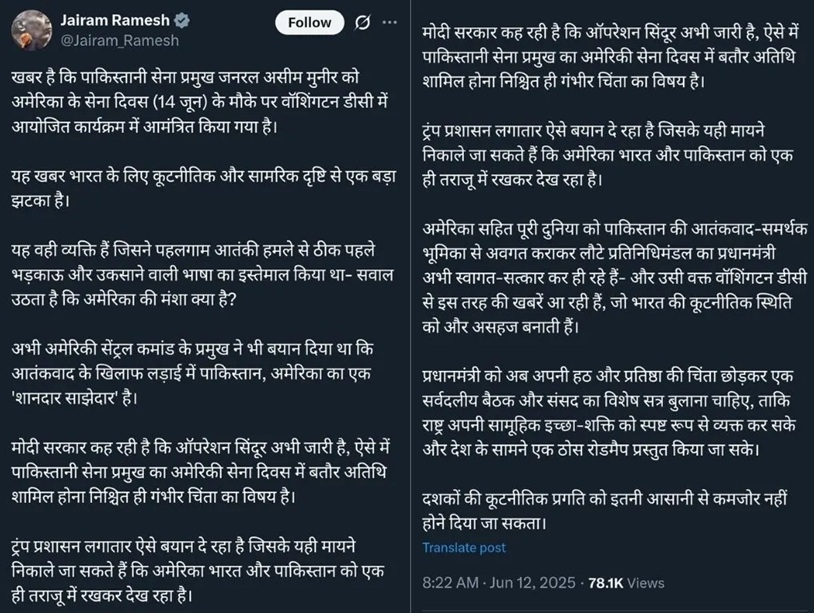
A few days ago, Congress MP Jairam Ramesh amplified a misleading claim on social media platform X alleging that Pakistan Army Chief General Asim Munir was invited to the U.S. Army Day parade in Washington, D.C.

Image Source: OpIndia

Ramesh suggested this was a diplomatic failure for India and a blow to Prime Minister Narendra Modi. However, the narrative quickly unraveled when the White House clarified that no such invitation had been extended, exposing the claim as false.

The April 22 terrorist attack in Pahalgam, Jammu and Kashmir, which claimed 26 lives, came days after General Munir, on 16 April 2025, declared in Islamabad, “Our stance is absolutely clear, it was our jugular vein, it will be our jugular vein, we will not forget it. We will not leave our Kashmiri brothers in their heroic struggle,” referring to Kashmir.

Following President Trump’s rushed departure from the G7 Summit back to the US, Ramesh alleged, “Field Marshall Asim Munir, the man whose inflammatory, incendiary and provocative remarks were linked directly to the April 22 Pahalgam terror attacks, is having lunch today with President Trump in the White House. Is this why President Trump abandoned the G7 Summit a day early denying Mr. Narendra Modi a huge hug? President Trump himself has trumpeted 14 times that he brought about a ceasefire berween India and Pakistan meaning he ended Operation Sindoor. Gen. Michael Kurilla, the US Central Command Chief calls Pakistan a ‘phenomenal’ partner in counter-terrorism operations. This is triple jhatka to Howdy Modi by Namaste Trump! Indian diplomacy is being shattered and the PM is totally silent. And tomorrow is the fifth anniversary of his (in)famous clean chit to China.”

Speaking to ANI, Ramesh said, “… the statement given by Asim Munir about setting fire is directly related to the terrorist attack that took place in Pahalgam on April 22. Today, this very person (Asim Munir) has received a special invitation to dine with President Donald Trump… Our delegation could only meet the Vice President, but Asim Munir has met the President… Today, news came that Prime Minister Modi and US President Donald Trump spoke on the phone for 35 minutes… There is a world of difference between what President Trump said about the conversation and what we were told… Prime Minister Modi, why don’t you call an all-party meeting? Why don’t you (Prime Minister Modi) invite the opposition?… In an all-party meeting, tell us what was discussed with them (US President Donald Trump)…”

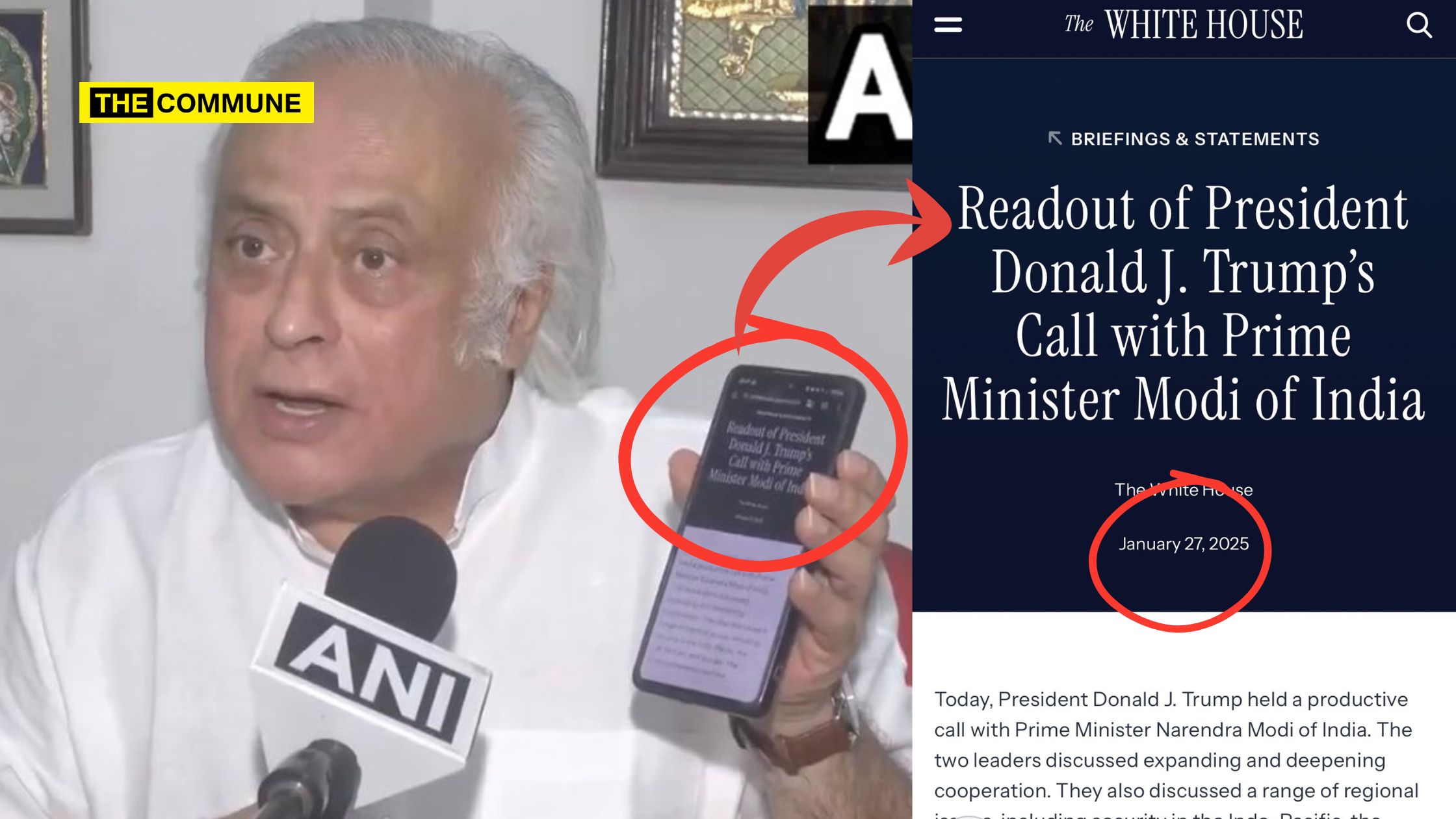
As he was speaking to ANI, Ramesh also waved his phone dramatically, accusing the government of contradicting the US readout of a phone conversation between PM Modi and President Trump.

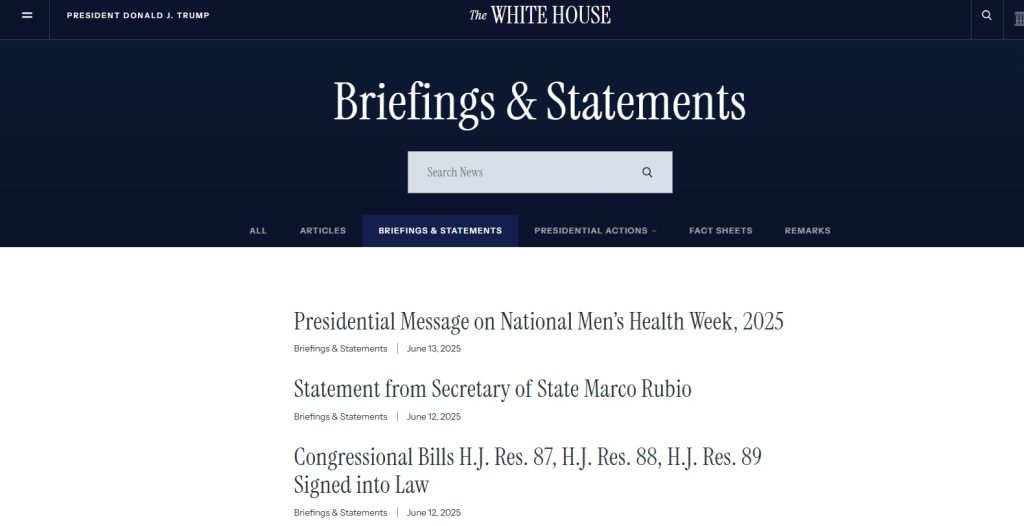
However, it was revealed that the readout he cited was from January 2025, not the latest conversation. No official U.S. release has yet been issued for the recent call. The last updated message is from 13 June 2025.

Foreign Secretary Vikram Misri confirmed that Prime Minister Modi had a 35-minute phone conversation with President Trump, where the PM briefed him on Operation Sindoor. During the call, PM Modi briefed President Trump on Operation Sindoor, firmly stating that no trade-related topics were discussed in connection with the operation.

Reaffirming India’s long-standing position, the Prime Minister made it clear that India has never accepted and will not accept any form of third-party mediation. He further emphasized that India now views acts of terrorism not as proxy warfare, but as direct acts of war.

President Trump extended an invitation for an in-person meeting during his current U.S. visit, but PM Modi was unable to accept due to prior commitments. Both leaders, however, agreed to meet in the near future.

Once again, Jairam Ramesh has egg on his face for peddling lies and misinformation against PM Modi and India.

(With inputs from Live Mint)

Subscribe to our channels on Telegram, WhatsApp, and Instagram and get the best stories of the day delivered to you personally.

Instances When Church Opposed Infrastructure And Development Projects In India (2001–2025)

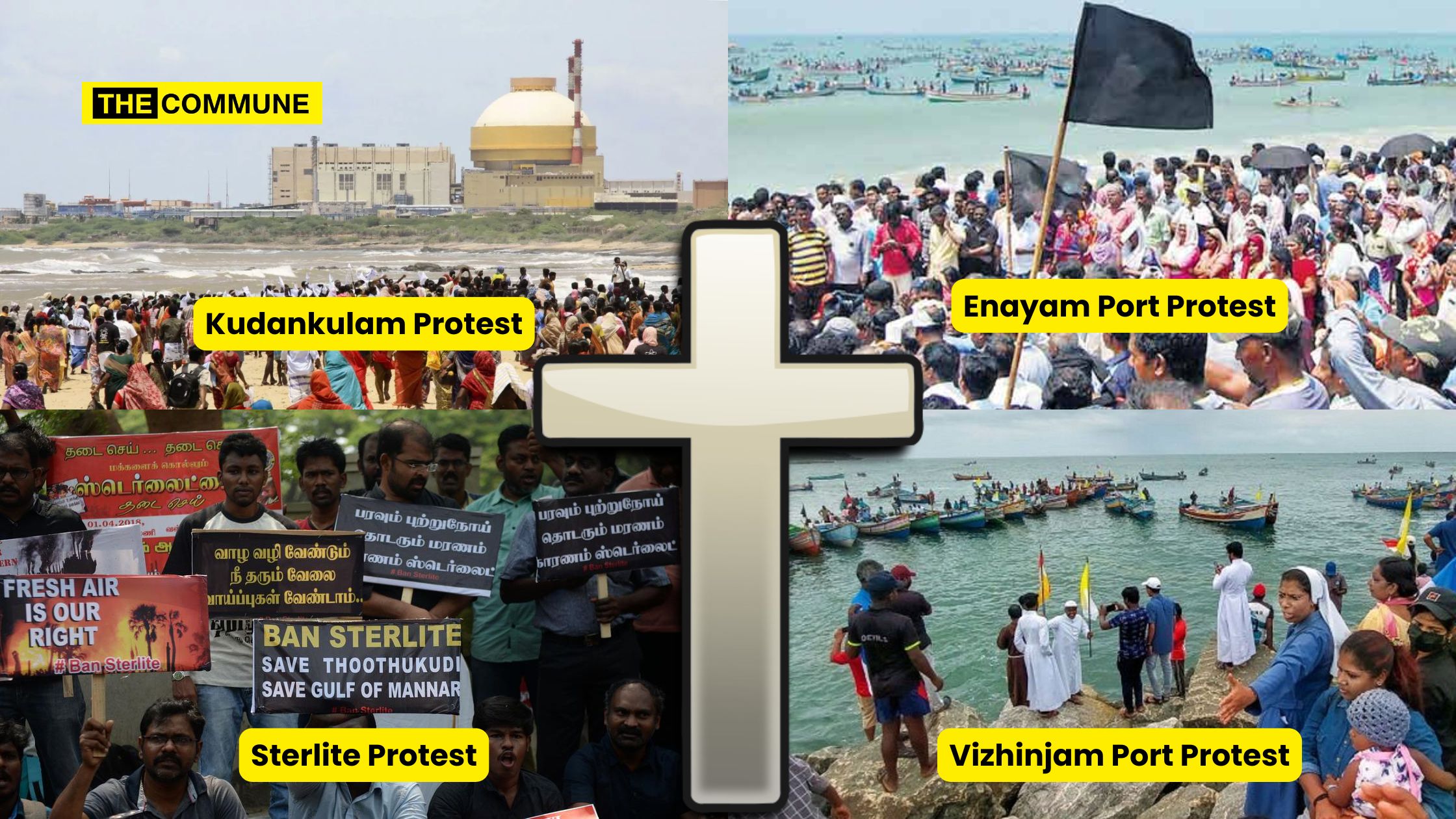
A few days ago, a viral video on social media led The Commune to report about how DMK supporting Christian priest Jegath Gaspar had once instigated the people of a village in Kanyakumari to not allow the construction of the Enayam port there. In this report, we will look at 13 documented incidents between 2001 and 2025 in which church leaders or church-affiliated organizations have opposed major infrastructure and development projects across India.

#1 India’s First Deepwater Seaport Could’ve Been in Tamil Nadu, Opposed by Priest Jegath Gaspar “In the Name of Jesus”

As Kerala celebrated the arrival of MSC Irina at the newly launched Vizhinjam International Seaport, questions arose in Tamil Nadu about what could have been. The Enayam deepwater port project, once backed by the Centre, promised to transform Tamil Nadu’s coastal economy. However, it was stalled due to local opposition, prominently led by Christian priest Fr. Jegath Gaspar Raj, who invoked religious sentiments to rally resistance, calling the project a threat to divine creation and coastal heritage. His emotionally charged speech at a church festival framed the port as a danger to both livelihoods and sacred land. Now, as Vizhinjam positions itself as a global transshipment hub rivaling Colombo, many in Tamil Nadu reflect on how a mix of religious rhetoric and political resistance may have cost the state a game-changing economic opportunity.

https://twitter.com/mattmurock123/status/1932299887603077618

#2 Church-Led Protests Stall Vizhinjam Port, Spark Communal Tensions

On 26 November 2022, church-led protesters, primarily from the Latin Catholic community, blocked construction vehicles and clashed with police at the Vizhinjam International Seaport site in Kerala. Despite prior assurances to the Kerala High Court, demonstrators blocked roads, halted over 20 trucks, and erected barricades, stalling a project halted for over 100 days. The Adani Group, executing the project, expressed frustration over repeated disruptions despite favorable court rulings. While protestors cited environmental and livelihood concerns, critics argue the port’s strategic importance outweighs objections. Hindu organizations, including NSS and SNDP, launched counter-protests demanding swift completion. The standoff took on communal tones as both sides engaged in stone pelting. The Vizhinjam port, once completed, is expected to challenge Colombo, Dubai, and Singapore as a key transshipment hub, with deep natural draft and global trade proximity.

#3 Church-Run Daily Slams Kerala’s SilverLine Project As “Rail of Tears”

On 23 March 2022, Deepika, the Catholic Church-run daily in Kerala, published a sharp critique of the state’s SilverLine (K-Rail) semi-high-speed rail project. The article, penned by Fr. Michel Pulickal of the Kerala Catholic Bishops Council (KCBC), accused the government of prioritizing a flashy, costly venture over real infrastructural needs. Titled “Does development only mean K-Rail?”, the piece warned of mass displacement, environmental harm, and rampant corruption. It highlighted failed promises like the Kochi Metro and unscientific projects such as the Vyttila and Edappally flyovers. Fr. Pulickal described the SilverLine as a “rail of tears,” referencing past evictions like Moolampilly, where victims still await rehabilitation. The article questioned the state’s financial capacity to fund such a mega-project, urging focus instead on road and KSRTC upgrades. The Church’s intervention amplified growing public skepticism over the project’s social and economic costs.

#4 All Saints Church Protests Bangalore Metro Land Acquisition

On December 12, 2021, members of Bengaluru’s All Saints Church congregation staged protests against the Bangalore Metro Rail Corporation Limited (BMRCL) for acquiring 883 square meters of church land for the Vellara Junction Metro Station. The heritage church, over 150 years old, is located at the Richmond Road–Hosur Road junction. Congregants, supported by environmental groups, held daily sit-in protests citing concerns over heritage loss, environmental impact, and damage to a sacred site. Protest leader Ebenezer Prem Kumar stated that BMRCL’s proposed construction poses a threat to the church’s structural safety. He suggested using an alternative government-owned plot—103 meters of defence land already acquired by BMRCL—located directly opposite the church. Despite repeated appeals, BMRCL did not issue a response.

#5 Orthodox Bishop Slams K-Rail As Anti-People, Anti-Nature

On 11 August 2021, Geevarghese Mor Coorilos, metropolitan of the Niranam diocese of the Malankara Jacobite Syriac Orthodox Church, publicly opposed Kerala’s SilverLine (K-Rail) semi-high-speed rail project. In a strongly worded Facebook post, the bishop criticized the plan to evict around one lakh people and warned of irreversible environmental damage. Calling the project “against people and nature,” he highlighted the unpredictability of climate due to unchecked exploitation and questioned how the government, already deep in debt, could justify a project expected to cost over ₹1 lakh crore. The bishop stressed that real development should not come at the cost of human displacement and ecological harm. He urged the government to heed global climate warnings and scrap the project altogether, questioning how a Leftist administration could promote such destructive development.

#6 Church Opposes Coal Mining Auction in Tribal Jharkhand

On 15 July 2020, Church leaders and tribal activists, including Father Vincent Ekka of the Jesuit-run Indian Social Institute, strongly opposed the central government’s plan to auction 41 coal blocks—nine of them in Jharkhand—for commercial mining. They warned that the move would displace indigenous communities, destroy biodiversity, and devastate farmland and forests vital to tribal livelihoods. Father Ekka questioned government claims of job creation, noting that mining has historically failed to prevent mass migration. He emphasized that tribals are the true custodians of the environment and should not be sacrificed for economic gains. Jharkhand’s Chief Minister Hemant Soren also criticized the Centre’s decision, calling it a violation of federal principles and filed a petition in the Supreme Court demanding environmental and social impact assessments.

#7 Church-Backed Protests and Closure of Sterlite Copper Plant in Thoothukudi

In 2018, Vedanta’s Sterlite Copper plant in Thoothukudi, Tamil Nadu, was shut down following mass protests, heavily influenced by local Catholic churches and religious leaders like Brother Mohan C. Lazarus. Declaring Sundays as “Protest Day,” church groups mobilized villagers using unverified claims of pollution and health hazards. Despite NEERI and NGT reports showing Sterlite’s emissions were within legal limits, misinformation spread rapidly. Post-closure, many locals regretted participating, acknowledging they were misled by external agitators. Sterlite had provided jobs, scholarships, and women’s welfare schemes. Later studies disproved many health allegations. Intelligence reports suggest foreign interests and political agendas were involved in fueling unrest. Many now seek Sterlite’s reopening, recognizing its crucial role in India’s copper supply and local economy.

#8 Christians Protest BMC Move to Demolish Heritage Cross and Graves

On 22 May 2016, over 15,000 Christians protested in Mumbai against the BMC’s road-widening plan that threatened to demolish a 450-year-old heritage cross and part of the graveyard at Our Lady of Remedy Church, Kandivali. Christian NGOs Save Our Land (SOUL) and Watchdog Foundation led the protest, alleging collusion between builders and BMC officials to clear religious structures obstructing real estate projects. Protesters highlighted that the church, built in 1550, holds historical and religious significance, with graves containing semi-decomposed bodies. The community warned that demolition could hurt religious sentiments and cause unrest. SOUL criticized BMC’s failure to provide a cemetery for Mumbai’s 3 lakh Christians despite years of promises. They demanded preservation under heritage laws, citing the Church’s inclusion in BMC’s proposed Heritage Category II A list and protections under the Archaeological Sites and Remains Act, 1958.

#9 Church-Backed Protests Stall Kudankulam Nuclear Project

Between 2011 and 2012, the Kudankulam Nuclear Power Plant in Tamil Nadu faced large-scale protests allegedly orchestrated by Church leaders and Church-funded NGOs, including the Tuticorin Diocese Association. The St. Lourdes Church in Idinthakarai was turned into a protest hub, with pastors reportedly selecting protestors under bishops’ guidance. Villagers feared a Fukushima-like disaster, but government agencies and a 2012 IB report later alleged foreign funding and Church involvement aimed at stalling India’s nuclear progress. In 2017, a Republic TV sting revealed a parish priest coordinating funds and protestors in Idinthakarai, allegedly under the direction of Bishop Yvon Ambroise. NGOs linked to the protests had their FCRA licenses revoked, and cases were filed by the CBI and Tamil Nadu police. Reports suggested protest participation was incentivized monetarily, raising questions about the movement’s true motives.

#10 Church Opposes POSCO Project Over Displacement Fears in Odisha

On 19 May 2010, Church leaders in Odisha, including Fr Ajay Kumar Singh and Bishop Lucas Kerketta of Sambalpur, publicly opposed the $12 billion POSCO steel project, arguing it threatened the livelihoods of tribal and Dalit communities. The Church criticized the government’s plan to forcibly acquire land, especially from fertile villages like Dhinkia, Nuagaon, and Gadakujanga. While the state promoted the project as a path to economic growth and employment, the Church emphasized the need to protect marginalized communities from eviction and ecological harm. Fr Singh condemned industrialization “on the backs of locals,” accusing the state of acting as a corporate agent. Bishop Kerketta urged the government to prioritize people’s needs over profits and seek amicable solutions for resettlement and employment. The Church backed peaceful protests as villagers blocked access to their land, defending their rights against what they saw as forced and unjust displacement.

#11 Church-Backed Opposition Halts Vedanta’s Niyamgiri Mining Project

In 2009, Vedanta’s bauxite mining project in Odisha’s Niyamgiri Hills faced strong resistance from tribal communities, supported by Church-backed NGOs and international activists. These groups warned that the project would displace over 8,000 Dongria Kondh tribals and devastate the local ecosystem. The protests drew global attention, with figures like Bianca Jagger and Arundhati Roy voicing opposition. The Church of England also withdrew its £3.8 million stake in Vedanta. Accused of funding and organizing the agitation, the Church and associated NGOs played a significant role in pressuring authorities. In 2012, Vedanta announced the closure of its Lanjigarh refinery, which was constructed to process the 78 million tonnes of bauxite found in the hills. This episode is often cited as an example of how foreign-funded activism, under the pretext of tribal rights and environmental concerns, stalled a major industrial initiative with national economic implications.

#12 Catholics Protest BMC’s Plan to Demolish Orlem Cemetery

On 18 December 2004, Mumbai’s Catholic community protested the Brihanmumbai Municipal Corporation’s (BMC) road-widening project that proposed demolishing part of the historic Orlem Church cemetery in Malad. Parishioners, led by Fr. Alex Carvalho, objected on religious and emotional grounds, highlighting the sanctity of graves and limited burial space. While BMC claimed the move was necessary to ease traffic congestion, residents argued that the cemetery section being targeted wouldn’t solve the issue and accused the BMC of selecting the wrong area for expansion. Some community members supported development, citing an alternative burial ground at Asmita Jyoti Cross. However, many demanded that the BMC provide replacement burial space. Church leaders stated they would consult parishioners before deciding. The BMC agreed to continue discussions with the church, seeking a peaceful resolution while emphasizing the importance of infrastructure development.

#13 Hyderabad Church Members Protest Commercial Use of School Land

On 27 July 2001, over 15,000 members of the Methodist Church in Hyderabad staged a peace rally opposing a clergy-backed plan to convert the Methodist Boys High School premises in Abids into a commercial complex. The rally, organized by the Hyderabad Regional Conference, began at the Centenary Methodist Church and ended at the school site. Protesters accused church authorities of misusing church funds and violating the religious and educational purpose of the property. B.S. Abraham Lincoln, convener of the regional conference, revealed that demolition work began despite state education authorities and the Education Minister publicly opposing the project. A resolution was passed demanding accountability from church officials and the protection of the school premises. The protesters also submitted a memorandum to then Chief Minister N. Chandrababu Naidu, urging government intervention and calling for autonomy from the central Methodist Church of India.

#14 Don Bosco-Affiliated NGOs Involved In Aarey Metro Protest Reveals Expose

The Legal Rights Observatory (LRO) has alleged that the Bombay Salesian Society, affiliated with Don Bosco, is funding and orchestrating protests against government infrastructure projects. The NGO claimed the Society received ₹176 crores over the past decade, including ₹10.19 crores last year, and used shadow groups like ‘Vana Shakti’ and ‘Greenline’ to oppose the Mumbai Aarey metro car shed. Greenline operates from Don Bosco School, Matunga. LRO further accused Saint Stanislaus School in Bandra of coercing parents and students to participate in protests, prompting an NCPCR-directed probe. The LRO also highlighted past Church opposition to Konkan Railways and accused Caritas India, a Salesian-linked NGO, of conversions.


Subscribe to our channels on Telegram, WhatsApp, and Instagram and get the best stories of the day delivered to you personally.
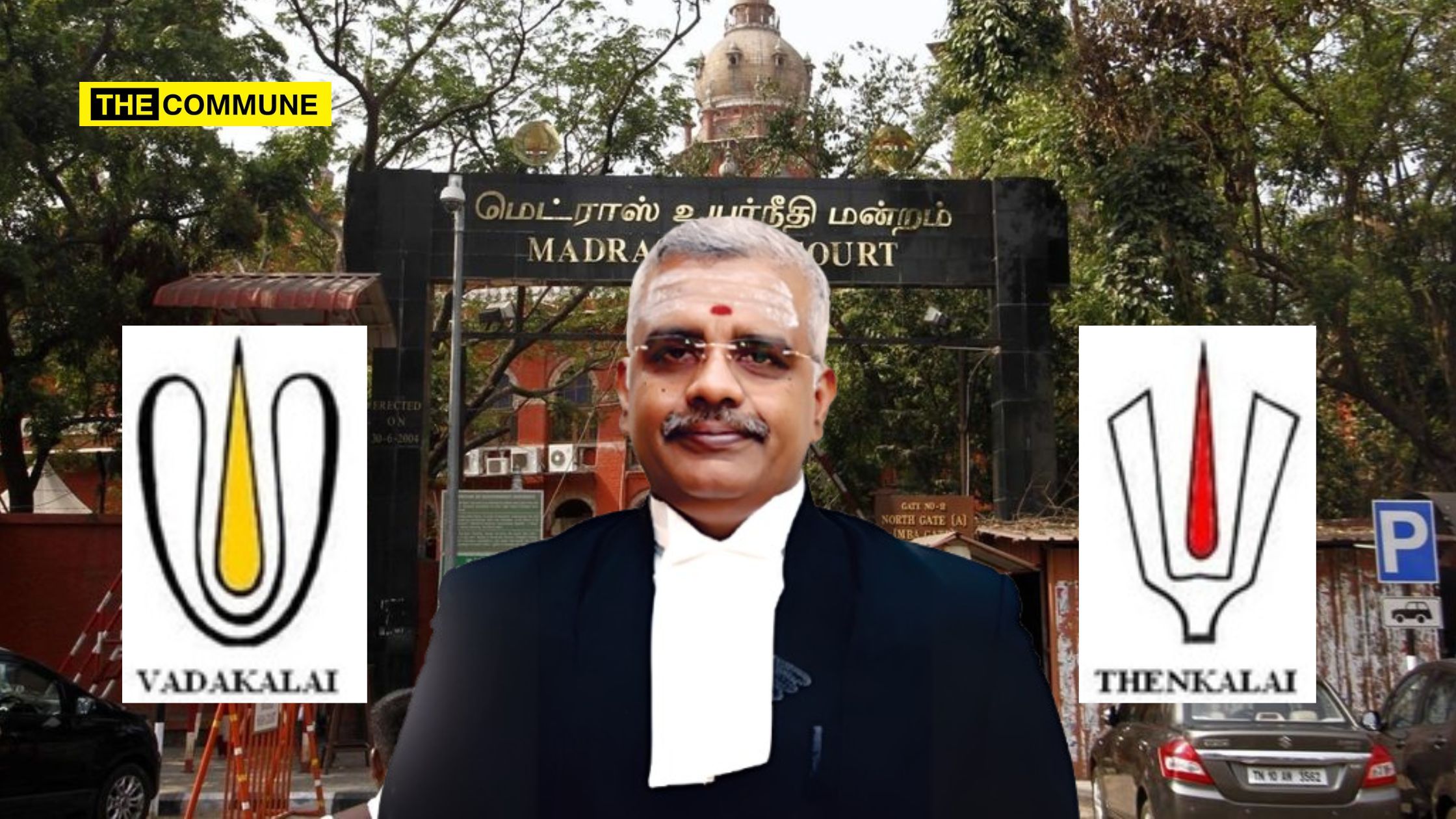
Madras High Court Urges Unity Between Tenkalai & Vadakalai Sects, Ends Order With Poetic Plea For Peace

madras high court tenkalai vadakalai

Justice N. Anand Venkatesh of the Madras High Court has made a heartfelt appeal for harmony between the Tenkalai and Vadakalai branches of the Vaishnavite tradition—sectarian divisions that have persisted since the 15th century. In an unusual but powerful gesture, the judge concluded his order with a poem, calling on both groups to put aside their differences and embrace peace.

Emphasizing the core principles of religion—lawfulness and unity—Justice Venkatesh observed that both sects should focus on the peaceful conduct of temple festivals and refrain from elevating their respective religious preceptors, Manavala Mamuni and Vedanta Desikar, above Lord Venkateswara himself.

This sentiment was expressed while the court dismissed a writ petition filed by T.A.P. Srirangachari and K.B. Srinivasan, both followers of the Tenkalai sect. The petition challenged a 28 May 2024 directive issued by the Executive Officer (EO) of the Vilakoli Perumal Sri Vedanta Desikar Temple in Kancheepuram. According to the petitioners, the EO had prohibited the Tenkalai community from chanting Tengalaimantram and Tengalaivazhithirunamam—hymns dedicated to their Acharya—even during temple processions conducted outside the temple premises.

The petitioners claimed that a legal battle over these chants date back to 1811 and that a favorable verdict for the Tenkalai sect was delivered by the Conjeevaram Munsif Court in 1915, later upheld by the Madras High Court in 1918.

However, the EO argued that for decades, the Tenkalai sect had voluntarily refrained from hymn recitations inside the temple. The Vadakalai sect had been exclusively reciting the Divyaprabandham and other devotional hymns for over 50 years. He also pointed out that a similar petition filed by the Tenkalai sect in 2006 had been dismissed in 2014, and the ruling was upheld by both a Division Bench of the High Court and the Supreme Court.

Justice Venkatesh concluded that a writ petition could not be used to enforce a civil decree. The petitioners would need to seek remedy through an execution petition before the appropriate civil court. He further clarified that the police should not be involved in enforcing civil decrees unless there’s a threat to public order.

The judge also proposed a possible solution: the Tenkalai sect could consider joining their Vadakalai counterparts in reciting only the Divyaprabandham during processions. However, should they insist on reciting their specific Acharya hymns, their only legal course would be through civil execution proceedings.

Justice Venkatesh encapsulated his message of unity in a poignant poem:

Vadakalai and Thenkalai, two petals on one stem,
Both seek Lord Venkateswara Perumal, both belong to Him.
In the name of Acharyas, the quarrels still ignite,
Yet, those wise souls now bask in the Lord’s pure light.
Their journeys ended at His lotus feet so grand,
While we, their children, still draw lines in the sand.
Let us honour their path, let old divisions cease —
And walk together united in faith and peace.

(With inputs from The Hindu)

Subscribe to our channels on TelegramWhatsApp, and Instagram and get the best stories of the day delivered to you personally.

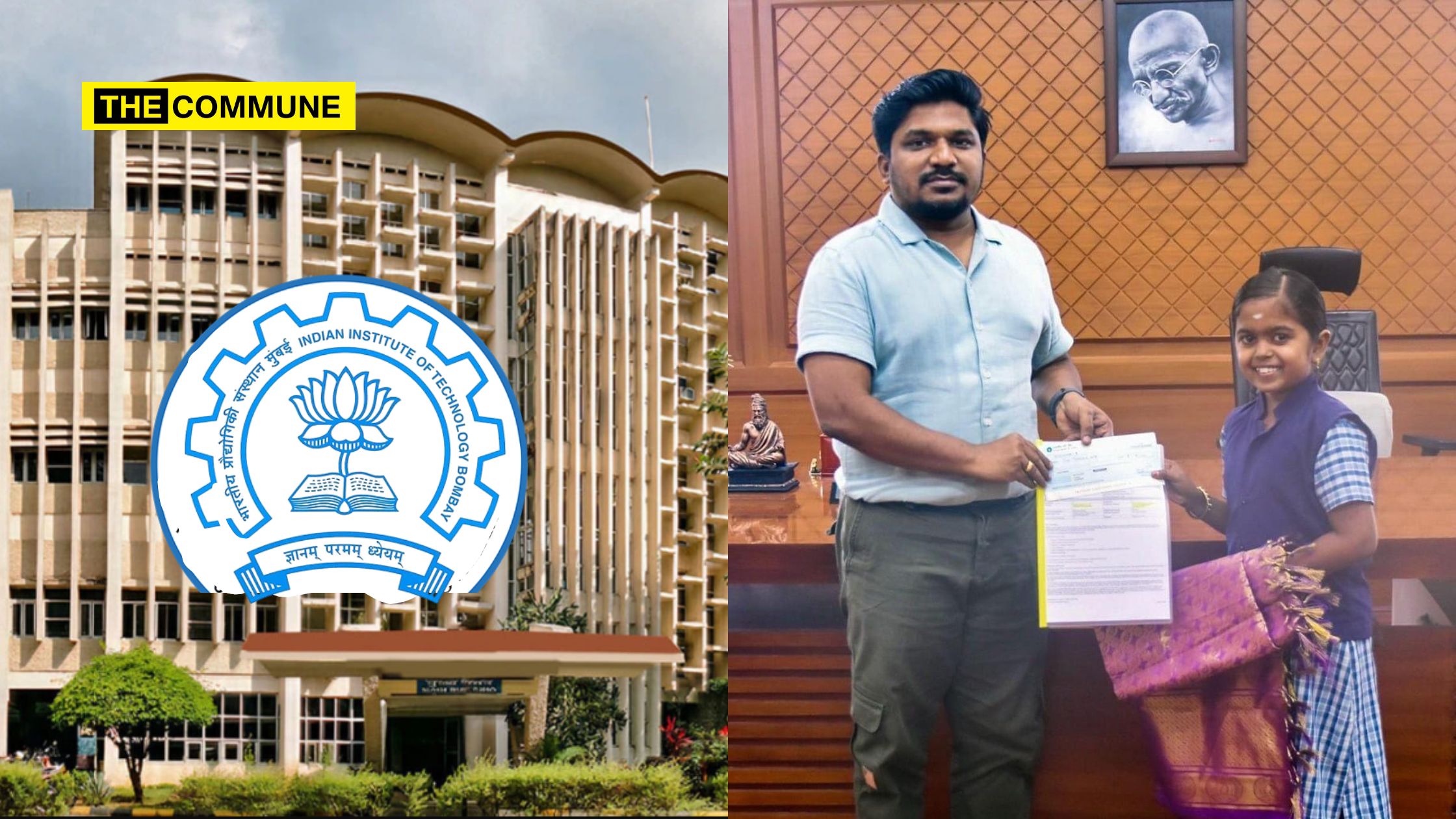
Tamil Nadu’s Tiny Giant: Virudhunagar Govt School Girl Makes It To IIT Bombay To Pursue Aerospace Dreams

virudhunagar iit bombay aerospace

Yogeshwari Selvam, a student from Government Higher Secondary School in Padanthal, Virudhunagar district, Tamil Nadu, has beaten the odds to earn a seat in the prestigious aerospace engineering program at IIT Bombay by securing a high rank in JEE (Advanced).

Though not considered an exceptional student early on—just above average by her own admission—Yogeshwari’s interest in aerospace engineering sparked in Class VII. “Somehow, I became fascinated with the subject,” she recalled. That passion became her driving force, helping her rise above personal and financial challenges.

Her father works at a tea stall, and her mother is employed in a fireworks manufacturing unit. Despite the family’s modest income, her parents were determined to support the education of all their children, including their daughter.

Yogeshwari only learned about the IIT entrance process when she attended a session under the Kalloori Kanavu initiative, part of the Tamil Nadu government’s Naan Mudhalvan scheme, in her final year of school. “That was when I first heard about the JEE exam and realised that IIT could be within reach if I put in extra effort,” she said.

She was further encouraged after attending the ‘Coffee with Collector’ event, where Virudhunagar Collector V.P. Jeyaseelan interacted with students and inspired them to aim high.

With no access to private coaching, Yogeshwari’s preparation came through a special 40-day training program in Erode after her Class XII board exams, organised under the Naan Mudhalvan scheme. She was one of 230 government school students selected for this focused support. An educational consultant with the Virudhunagar Educational Trust identified her potential, especially her strength in Mathematics.

Initially, her parents were reluctant to send her far from home for the training, but they eventually agreed, recognising it as a chance for a brighter future. Despite studying in Tamil medium throughout school, she adapted quickly during training, picking up essential English vocabulary to tackle the highly competitive exam.

Yogeshwari’s hard work paid off—she secured the 75th rank in the differently-abled category (as she suffers from dwarfism) within the non-creamy layer of the OBC community. In recognition of her success, Collector Jeyaseelan presented her with ₹5,000 from discretionary funds and assured her that the Tamil Nadu government would cover her IIT education expenses.

Looking ahead, Yogeshwari is determined to join the Indian Space Research Organisation (ISRO) after completing her degree, staying true to the dream that took root years ago in a small government school classroom.

(With inputs from The Hindu)

Subscribe to our channels on TelegramWhatsApp, and Instagram and get the best stories of the day delivered to you personally.

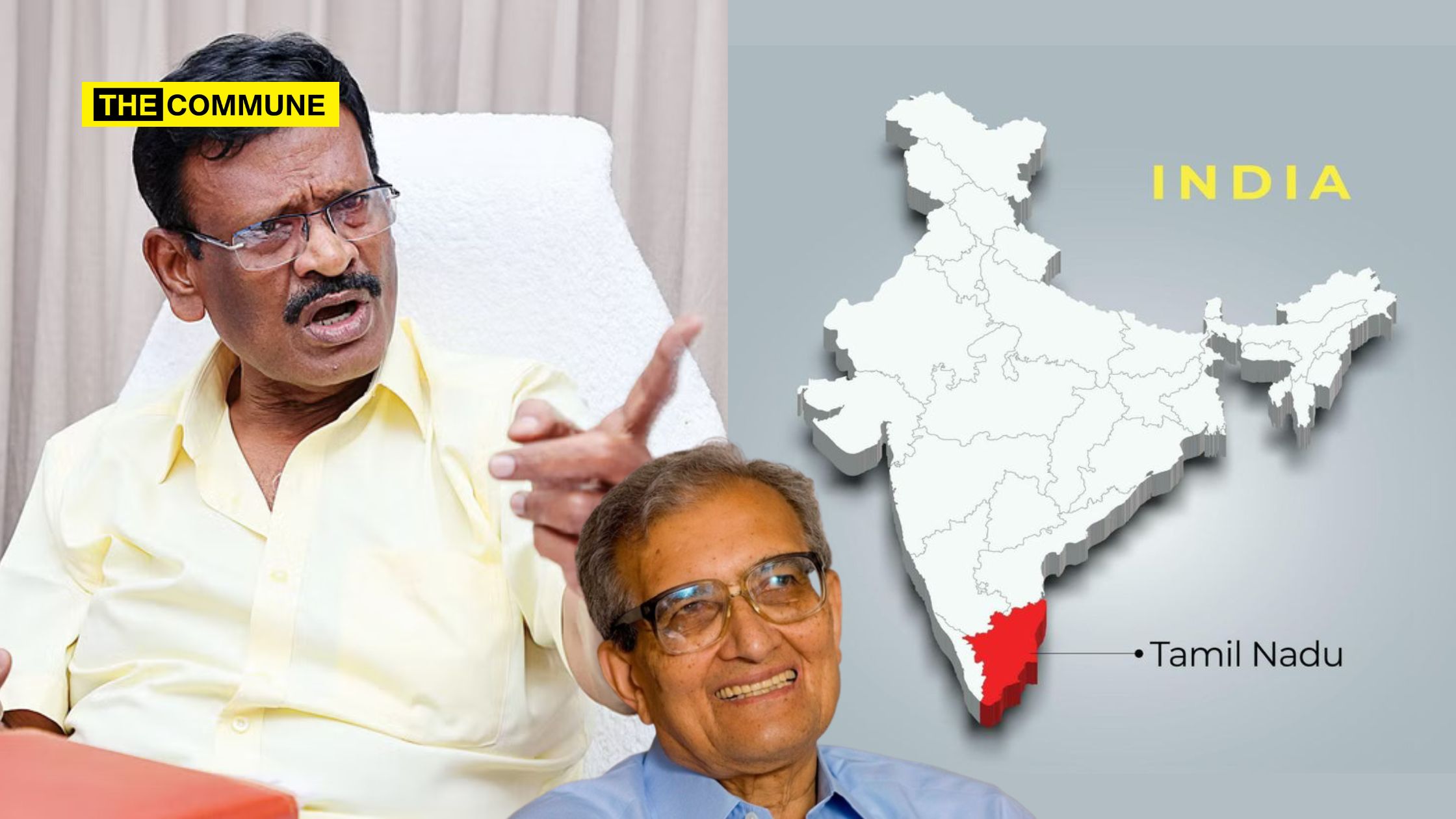
DMK Minister SM Nasar Revives Separatist Rhetoric, Falsely Claims Amartya Sen Said TN Would Be A Global Superpower If It Were A Separate Country

The ruling DMK, whenever it spots an opportunity, seems eager to revive its outdated rhetoric of a “separate Tamil Nadu”—an ideology rooted in separatism that was constitutionally suppressed through the 16th Amendment and officially abandoned by the DMK in 1963. Yet, every now and then, the party appears to dust off this old narrative, using it as a tool to keep the embers of separatist sentiment alive.

In line with this tendency, DMK Minister for Minorities Welfare and Non-Resident Tamils Welfare, SM Nasar, stirred controversy during the launch of a website and the release of a conference report at the 12th World Tamil Economic Conference. The event, held on 16 June 2025, at Hotel Le Royal Meridien, was jointly organized by the World Tamil Economic Institute and the Chennai Development Corporation. In his special address, Nasar claimed, “Amartya Sen said if Tamil Nadu were a separate country, it would become a superpower and rank 18th among global powers.”

He said, “To tell the truth, an economist named Amartya Sen, recognized on the world stage. He is a Bengali, not even a Tamil. This Bengali man born in Shantiniketan. He studied at Oxford University and at Yale University. He has been a professor at two universities. Among students worldwide, he is known as a brilliant student—ranked among the top three. Such a person has also received the Bharat Ratna Award. Even after receiving many awards, he says in a research, “I have prepared research reports for development of many countries. If geographic details of the country is given based on a country’s economic growth, the goods it produces and grows. I would submit a Detailed Project Report (DPR) for 5, 10 and 15 years. I have submitted such reports for many countries, and I have seen with my own eyes the growth they have achieved. In that context, I have seen every state in India. I have studied the economic development of many states—from Kashmir to Kanyakumari.” And when he sees that, he says… He is not a Tamil. If someone like Sambath here said this, we might assume he’s saying it to flatter us because he’s Tamil. But that’s not the case here. The economist Amartya Sen who said, “If Tamil Nadu had been a separate country, it would have ranked as the 18th superpower in the world economically.”

This assertion, however, is a long-standing myth circulated by Dravidianists. The truth is: Amartya Sen never made such a statement. While he has indeed acknowledged Tamil Nadu’s achievements—particularly in public health, education, and innovative governance he never suggested that the state would be a “superpower” if independent.

In his book An Uncertain Glory, co-authored with Jean Drèze, Sen commends Tamil Nadu’s social progress and efficient service delivery, noting that if compared separately from India, Tamil Nadu and Kerala would top the charts among South Asian nations in terms of social indicators. But at no point does he advocate secession or label Tamil Nadu a potential global superpower. The Minister’s statement is a distortion—another example of how separatist narratives are occasionally revived under the guise of cultural or economic discourse.

Subscribe to our channels on TelegramWhatsApp, and Instagram and get the best stories of the day delivered to you personally.

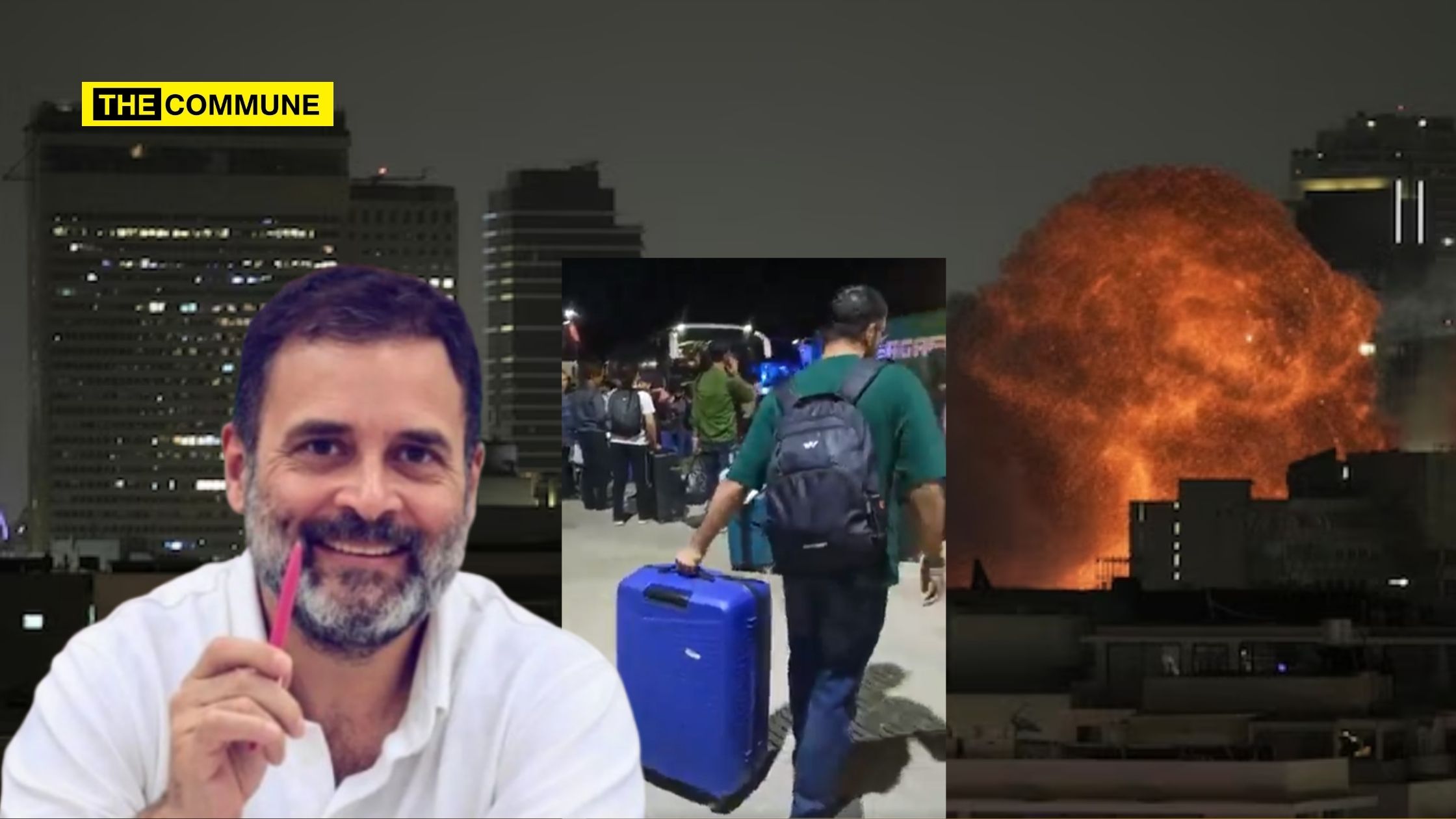
Congress Puts Indians In Danger: Party’s Youth Wing Makes False Claims About Indians Getting Arrested In Iran For Spying For Israel

The Indian National Congress is once again facing political heat after a post from its affiliated youth wing handle, ‘India With Congress’ (@UWCforYouth), caused a stir on social media. The controversial post claimed that “73 Indian nationals have been arrested in Iran on charges of spying for Israel.” It also referred to Israel as a “terrorist state” and used the hashtag #IranIsraelWar—further fueling tensions amid ongoing conflict in the region.

The post quickly attracted backlash, especially from the ruling Bharatiya Janata Party (BJP). Amit Malviya, who heads the BJP’s National Information & Technology Department, slammed the Congress for circulating unverified and inflammatory information on a sensitive diplomatic issue. He shared a screenshot of the now-deleted post, overlayed with the word “FAKE” in red, calling out Congress for irresponsibility.

Amit Malviya said, “Congress Desperation Knows No Limits! In just under 24 hours, the Congress has twice resorted to spreading Fake News from its official platforms.

  • First, they blatantly lied about the caste census.
  • Now, they are peddling misinformation on the sensitive Iran-Israel conflict.

This is what Rahul Gandhi’s weak and directionless leadership has reduced the Congress to — a party led by lazy mandarins with no achievements and zero credibility, entrusted with key responsibilities they clearly don’t deserve. No wonder the Congress is fast slipping into political oblivion. It has earned it.”

What’s The Truth?

Despite the viral claim, there is no verified report of 73 Indians being arrested by Iran for espionage. Iranian authorities recently confirmed the arrest of a few individuals accused of collaborating with Israel’s Mossad, but none of the suspects were identified as Indian nationals.

  • On 15 June, Iran arrested two individuals in Savojbolagh County for suspected ties to Mossad.
  • On 15 June, five others were detained in Yazd for alleged collaboration awith Israeli agencies.
  • On 16 June, Iran executed a man named Esmaeil Fekri, arrested in 2023, for spying for Mossad.
  • Iran’s judiciary also revealed that 28 individuals across 15 espionage cases had been referred to Tehran’s Security Prosecutor. However, their nationalities were not disclosed.

The Congress youth wing’s post appears to have grossly misrepresented these developments, attributing the espionage arrests to Indian citizens without basis.

The episode has once again highlighted the perils of political parties using sensitive global developments for point-scoring without verifying facts. With diplomacy and citizen safety at stake, spreading misinformation risks not just reputational damage, but also international embarrassment and security concerns.

Subscribe to our channels on Telegram, WhatsApp, and Instagram and get the best stories of the day delivered to you personally.
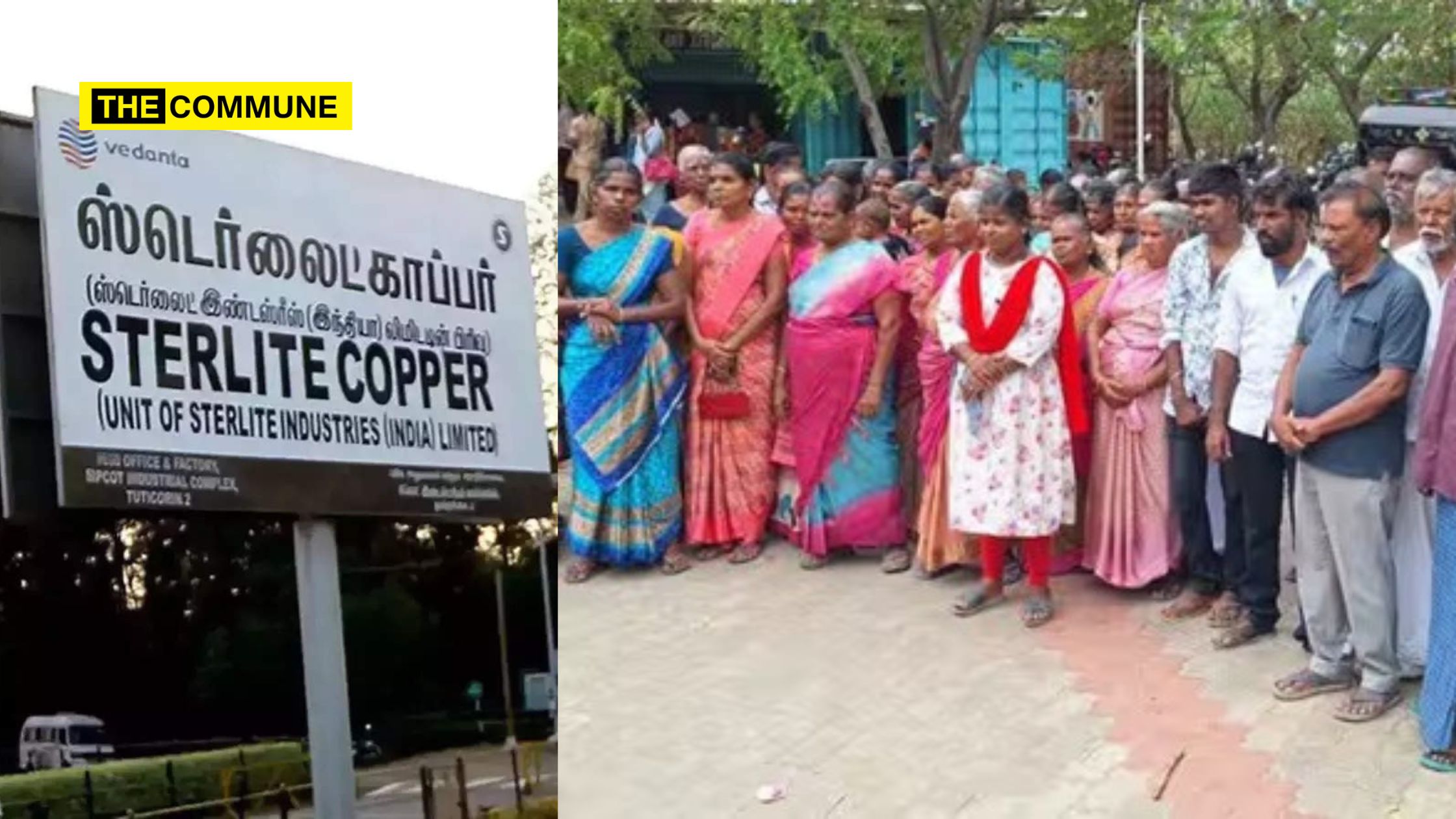
Thoothukudi Villagers Storm Collector’s Office, Demand Sterlite Plant Reopening To Restore Livelihoods

sterlite reopening thoothukudi protest

Villagers from South Veerapandiapuram, Saminatham, Pandarambatti, and nearby areas besieged the Thoothukudi District Collector’s Office on 16 June 2025, urging the state government to reopen the closed Sterlite Copper Plant and its associated Thermal Power Station in Thoothukudi.

Hundreds of villagers — many of them previously employed by the copper plant — said their livelihoods have been severely affected by its shutdown. According to the villagers, nearly 300 youths from their community were employed at the plant, but after its closure, many have been forced to work as daily wage laborers with low pay and poor employment prospects.

The petition presented to the Collector stressed that the reopening of the plant would enable locals to find employment matching their education and skills. The villagers also demanded that the government pass a special resolution in the Legislative Assembly to facilitate the reopening, stating that many related industries would create much-needed employment for Thoothukudi’s youth.

The delegation further alleged that while the government had recently cleared other manufacturing companies’ operations in Tamil Nadu, the Sterlite plant remained closed, adding to the financial struggles of the community.

The petition was received by the District Collector’s Office, which is currently experiencing a shortage of officers to handle the growing number of complaints and appeals. The villagers remain hopeful that their livelihoods will be restored if the plant is allowed to restart.

These protests to reopen Sterlite have been going on for quite some time. In December 2024, Indian National Trade Union Congress (INTUC), the age-old workers’ union of Congress, held a protest in Chidambaranagar, calling on the state government to reopen the Sterlite Copper plant in Thoothukudi and to focus on increasing employment opportunities in the region.

In February 2025, following calls from the INTUC, Namakkal Lorry Owners’ Association, and Namakkal Trailer Owners’ Association, the Thoothukudi Contractors’ Association urged for the reopening of the Sterlite Vedanta copper smelting plant, which was shut down in 2018.

In May 2025, representatives from the Thoothukudi People Livelihood Protection Association, along with residents from nearby villages, submitted a formal request to Member of Parliament Kanimozhi, appealing for the reopening of the Sterlite Copper plant.

Subscribe to our channels on TelegramWhatsApp, and Instagram and get the best stories of the day delivered to you personally.

How Nehru Insulted Sardar Vallabhbhai Patel In Death

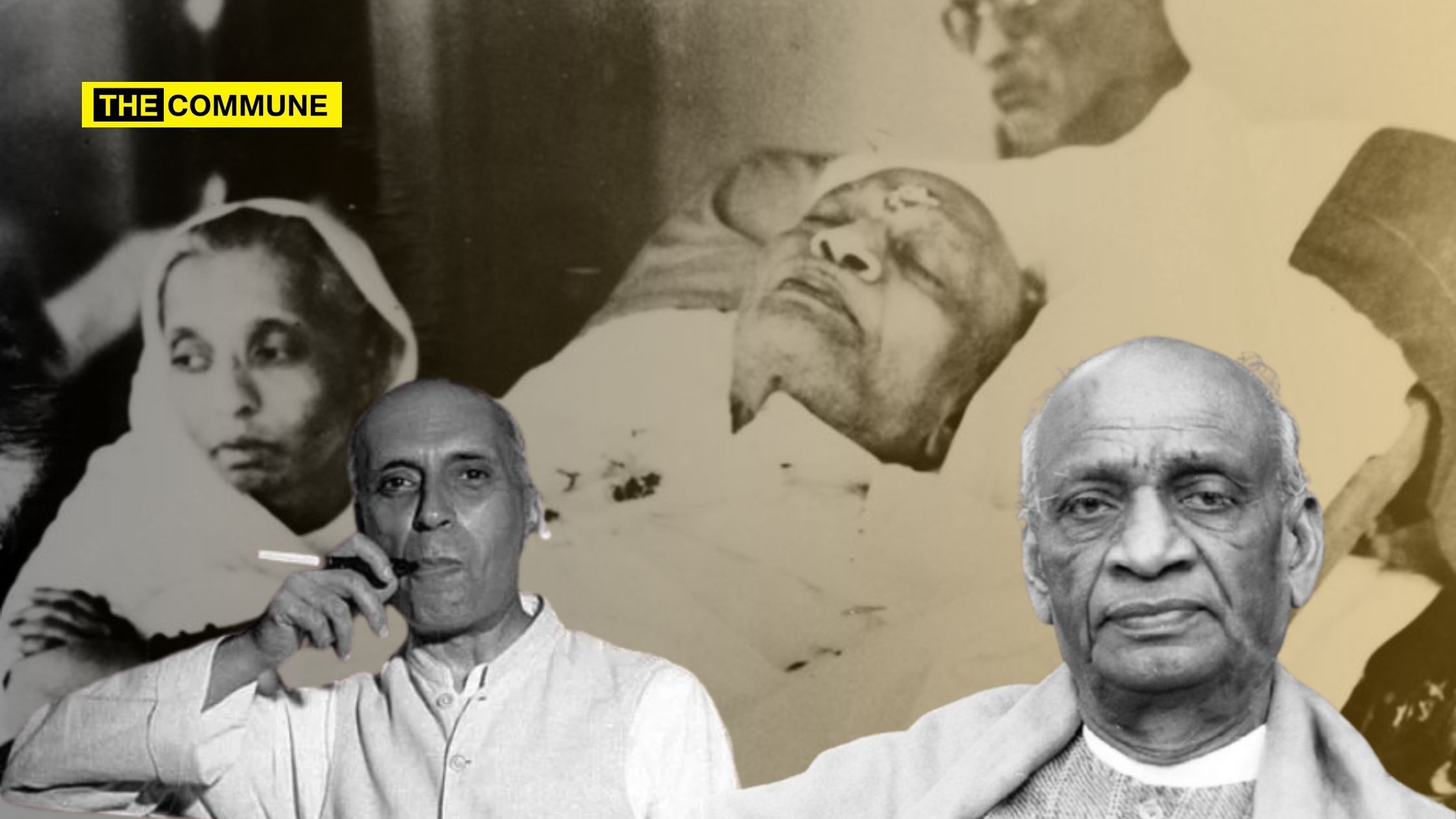
Sardar Vallabhbhai Patel, one of India’s greatest leaders, is often remembered for his unwavering nationalism and silent yet formidable presence. Known as the Iron Man of India, Patel’s decisive actions united 562 princely states, giving India its territorial integrity after independence. He warned the nation about threats from Kashmir and China, but tragically, his contributions were overshadowed by years of silence and posthumous disrespect that, astonishingly, began even in death, by none other than Nehru.

The Dark Side of Congress’s Legacy

When Sardar Vallabhbhai Patel passed away on 15 December 1950, his death exposed a disturbing side of Indian politics one that Congress, particularly Jawaharlal Nehru, would rather keep buried. Within an hour of Patel’s passing, Nehru, perhaps driven by political rivalry or jealousy, issued a chilling government order with two critical directives:

  1. Immediately withdrew the official car assigned to Sardar Patel.
  2. Any Home Ministry officials attending his funeral in Bombay would have to cover their own travel expenses.

This heartless order was kept hidden from the public by India’s Home Secretary, V.P. Menon, who was deeply disgusted by Nehru’s petty actions. Menon quietly made arrangements for senior officers to attend Patel’s funeral at their own cost. There were no state funeral arrangements, no national mourning—just political spite.

Shunning the ‘Iron Man’ at His Final Moment

But the humiliation didn’t end there. Nehru’s Cabinet sent an official request to President Dr. Rajendra Prasad, asking him not to attend Patel’s funeral. In a shocking move, the Cabinet actively tried to prevent India’s first President from honoring the Iron Man of India. However, Dr. Rajendra Prasad, a man of his own convictions, rejected this advice and chose to attend the funeral. When Nehru learned of this, he acted swiftly sending C. Rajagopalachari with an “official letter of condolence,” bypassing the President entirely.

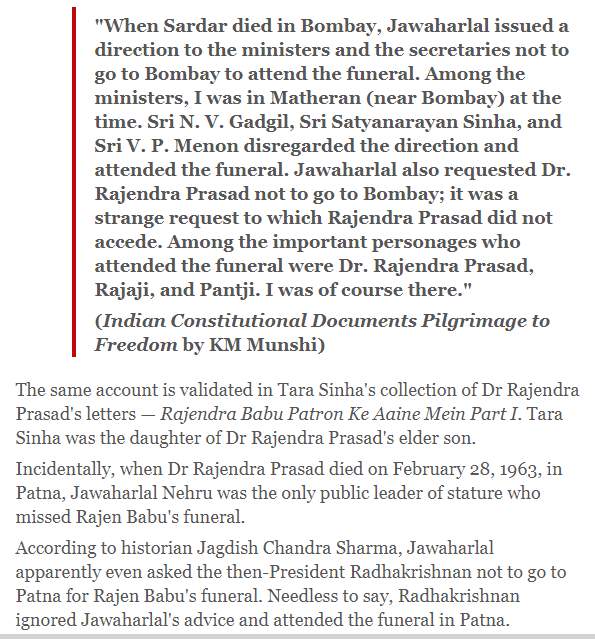
KM Munshi wrote in his Pilgrimage to Freedom, “When Sardar died in Bombay, Jawaharlal issued a direction to the ministers and the secretaries not to go to Bombay to attend the funeral. Among the ministers, I was in Matheran (near Bombay) at the time. Sri N. V. Gadgil, Sri Satyanarayan Sinha, and Sri V. P. Menon disregarded the direction and attended the funeral. Jawaharlal also requested Dr. Rajendra Prasad not to go to Bombay; it was a strange request to which Rajendra Prasad did not accede. Among the important personages who attended the funeral were Dr. Rajendra Prasad, Rajaji, and Pantji. I was of course there.” 

A Mockery of Patel’s Legacy

Even when Congress members and the public rallied for a memorial to honor Patel, Nehru initially opposed the idea. Later, in an act of mockery, Nehru sarcastically suggested that since Patel was a “farmer’s leader,” the government should consider building wells in rural areas in his memory. The memorial proposal never materialized.

Adding insult to injury, Purushottam Das Tandon, a senior Congress leader who had once supported Patel over Nehru for leadership, was later expelled from the party. This wasn’t just political maneuvering—it was personal vengeance.

Today, when Congress leaders invoke Sardar Patel’s name, it’s important to remember the truth of history. These same leaders were the ones who erased his legacy, disrespected him in life and death, and undermined his ideals—all because he was a leader they could never control.

The True Tribute: The Statue of Unity

It took nearly 70 years, and a government with the courage to stand tall, to finally give Sardar Patel the tribute he deserved—the Statue of Unity. This is not just a statue; it is a reminder that Sardar Patel’s contributions to the nation will never be forgotten, even if some tried to bury them.

Let us never forget: Sardar Patel—not as a forgotten plaque on a wall, but as the tallest statue on Earth, standing as a symbol of unity, strength, and integrity.

(This article is based on an X Thread By Manisha Singh)

Subscribe to our channels on Telegram, WhatsApp, and Instagram and get the best stories of the day delivered to you personally.
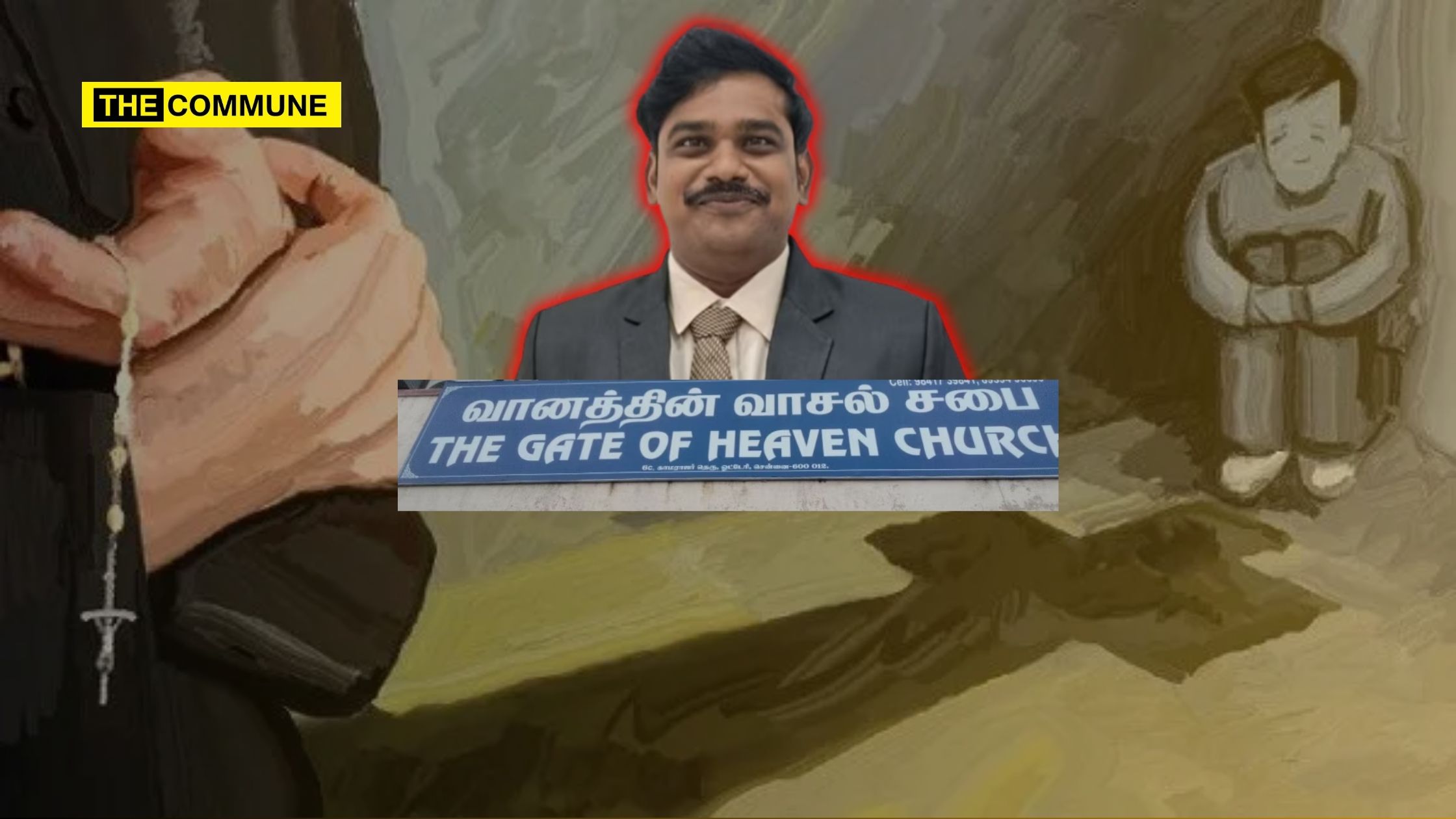
Chennai: Church Worker Yesudas Arrested For Sexually Abusing 3 Minor Boys Over Several Months, Exposed Them To Porn Videos

In a disturbing incident in Chennai’s Ambattur area, a church assistant named Yesudas was apprehended by local authorities under the Protection of Children from Sexual Offences (POCSO) Act for the alleged sexual assault of three minor boys, who are cousins, over a period spanning five months. The accused, employed as an assistant to a Church Father, reportedly exploited his position to engage in illicit activities with the teenage boys, who were regular visitors to the church where he worked.

According to reports, a church named Vaanathin Vasal (Gate of Heavens Church), located in Madhamuppam, Ambattur, attracts over a thousand worshippers every Sunday. The victims — all minor boys from Vyasarpadi in Chennai — regularly attend Sunday prayers alongside their families. The church worker had befriended the kids through messages on WhatsApp.

The case came to public attention when the father of one of the victims, concerned by noticeable changes in his son’s behavior, decided to investigate further. His suspicions led him to discreetly follow his son, only to uncover a shocking scene: his son was accompanying Yesudas to a room at an OYO hotel, a budget hotel chain. Alarmed and distressed, the father approached the Church Father to discuss the matter and seek guidance. However, he was reportedly advised to proceed cautiously and received little actionable support from the church authority, leaving him dissatisfied with the response.

Determined to seek justice, the boy’s father lodged a formal complaint with the Ambattur Police Station. Following a preliminary investigation, law enforcement officials arrested Yesudas and charged him under several provisions of the POCSO Act, including Bharatiya Nyaya Sanhita (BNS) sections 3A, 3D, and 4(1), which specifically address penetrative sexual assault on minors. These charges reflect the severity of the alleged offenses, which carry significant legal consequences under India’s child protection laws.

According to police sources cited by India Today, Yesudas allegedly manipulated the boys by exposing them to pornographic videos as a precursor to the assaults. The investigation revealed that the abuse began with one boy and subsequently extended to his two cousins, drawing them into the cycle of exploitation. Statements provided by the victims to the police corroborated that the assaults took place in hotel rooms booked by the accused. The three boys, all minors, confirmed the incidents of abuse, providing consistent accounts that have strengthened the case against Yesudas.

The Ambattur Police are continuing their investigation to uncover additional details, including whether there are other victims or if the accused had a broader pattern of predatory behavior. As the investigation progresses, the police are likely to examine the role of the church in addressing the initial complaint and whether any lapses contributed to the delay in bringing the matter to light.

Inspector Geetha of the All Women Police Station is currently investigating the case and is making efforts to identify and arrest the suspects.

Subscribe to our channels on TelegramWhatsApp, and Instagram and get the best stories of the day delivered to you personally.
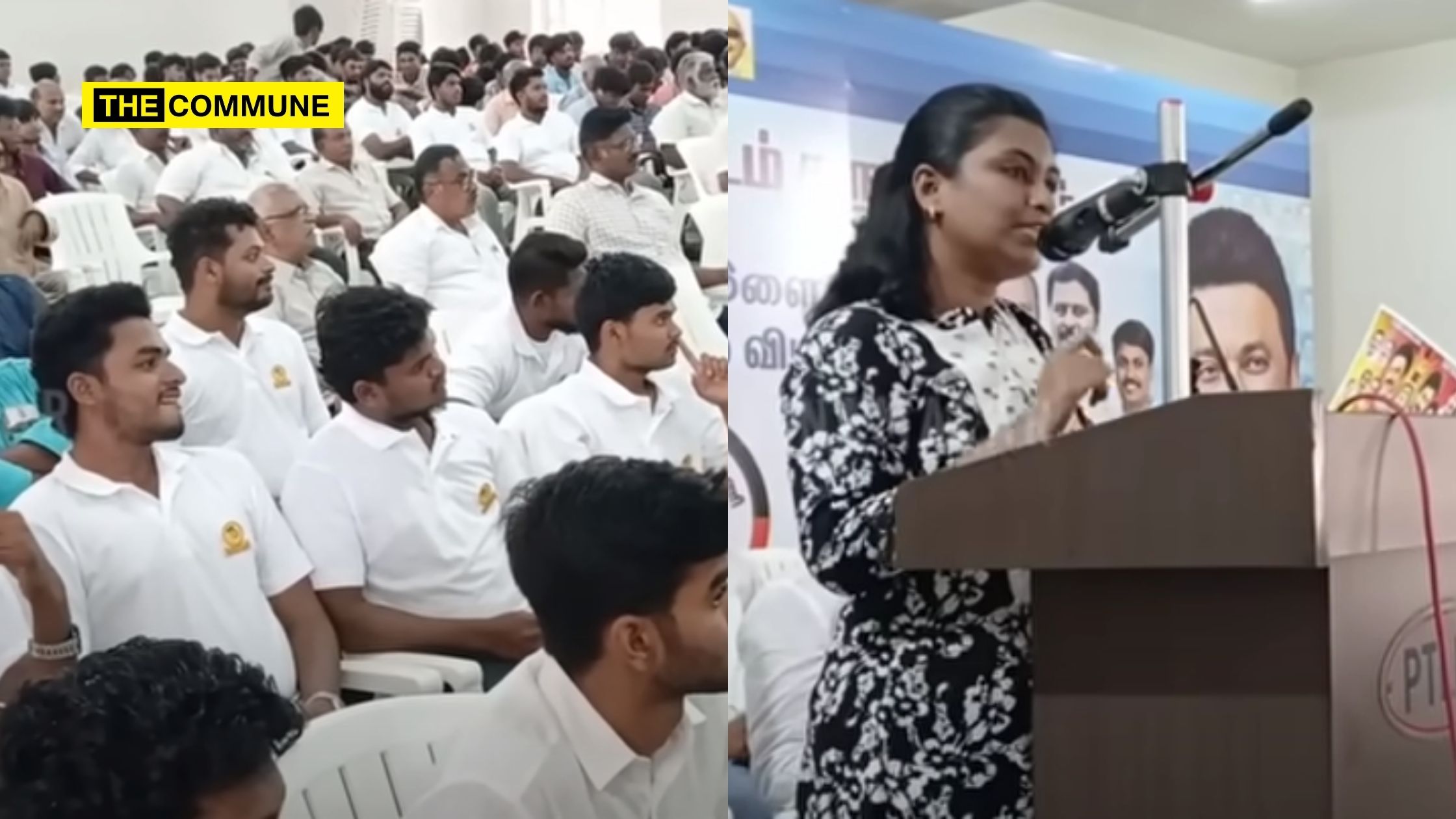
Pollachi School Students Duped Into Attending DMK Youth Wing Event Under Guise of Naan Muthalvan Initiative

The Dravida Munnetra Kazhagam (DMK) allegedly called upon students from Samathur Municipal School in Pollachi to attend a party-related event conducted by the DMK Youth Wing under the guise of a government education program, causing controversy and concern among parents and educators.

The incident came to light after the school’s headmaster Gopalakrishnan received a request from municipal officials to send Plus-1 and Plus-2 students to attend what was described as the Naan Muthalvan career guidance initiative. Students were directed to a local hall where, upon arrival, they reportedly encountered a DMK youth wing seminar titled “Dravidam in All Directions” featuring political recruitment activities and party flag installations. The event saw Dravidianist speaker Mathivathani speaking about how to ensure Dravidianism is spread across.

The Naan Muthalvan scheme is a state government initiative for student career development, making its alleged misuse for political recruitment particularly contentious. With youth demographics being a significant factor in Tamil Nadu politics, such incidents attract heightened scrutiny.

When Gopalakrishnan became aware of the true nature of the event, he promptly turned the students away and sent them back home. Subsequently, several shocked parents called him to inquire about the incident, and their phone conversations with the headmaster have been made public.

In a phone call, Gopalakrishnan explained, “We were told it was a guidance workshop for higher education. I even asked for the names of interested students. But upon arriving, I saw DMK flags and political messages instead. So I turned the children away. This was a big mistake, and we assure it won’t happen again.”

Some parents alleged that their children were used for political purposes without consent, fueling growing resentment. The incident comes amid growing controversy over political interference in educational institutions. The headmaster insisted he was kept in the dark and that he would not allow students to be used in this manner in the future.

Subscribe to our channels on Telegram, WhatsApp, and Instagram and get the best stories of the day delivered to you personally.