
Home Blog Page 234

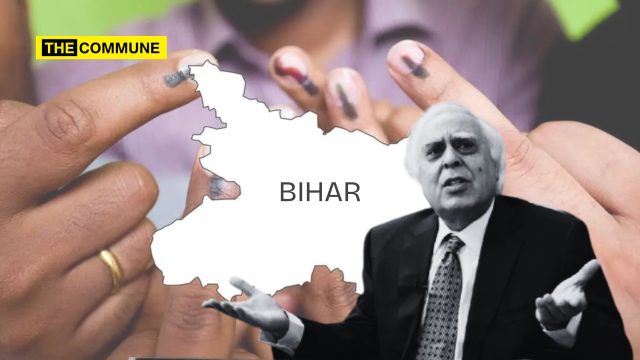
“Burden Not On Me But On ECI To Prove Citizenship”, Argues Kapil Sibal; Opposes ECI’s Fake Voters Purge Ahead Of Bihar Polls
supreme court bihar elections voter list kapil sibal

The Supreme Court today questioned the Election Commission of India (ECI) over its special drive to verify citizenship in Bihar’s electoral rolls ahead of the upcoming Assembly elections. The move, aimed at weeding out non-citizens, has drawn sharp criticism from Senior Advocate Kapil Sibal, who argued that the burden of proving citizenship should not fall on voters.

The ECI’s Special Intensive Revision (SIR) exercise, initiated on 24 June 2025 under the Representation of the People Act, 1950, seeks to ensure only Indian citizens remain on the voter list. However, Sibal, representing RJD MP Manoj Jha, claimed that the exercise unfairly targets genuine voters while ignoring the practical difficulties in furnishing documents.

Sibal vehemently opposed the ECI’s move, stating, “The burden is not on me to prove citizenship. Before removing anyone from the electoral roll, the ECI must show documents proving they are not citizens.” He further claimed that many common identity proofs such as Aadhaar, MNREGA cards, and ration cards were excluded from the ECI’s list of acceptable documents, making compliance difficult for ordinary citizens.

It is argued that Sibal’s stance undermines efforts to identify and remove illegal Bangladeshi and Rohingya migrants who have fraudulently enrolled as voters. Government sources estimate that lakhs of such immigrants reside illegally in states like Bihar, West Bengal, and Assam, often with fake documents.

The ECI defended its exercise, stating that its duty under the law is to ensure only citizens can vote. Senior Advocate Rakesh Dwivedi, representing the ECI, argued that while Aadhaar can verify identity, it does not confirm citizenship, a distinction that necessitates stricter scrutiny.

Justice Sudhanshu Dhulia questioned the timing of the exercise, asking, “Isn’t it too late now?” He expressed concern that genuine voters could be disenfranchised if forced into lengthy appeals just before elections. However, Justice Joymalya Bagchi noted that even existing documents like passports or birth certificates do not conclusively prove citizenship.

The debate comes amid growing concerns over illegal migrants influencing elections. The Bihar government’s own survey revealed that only a negligible percentage of people possess citizenship certificates, raising doubts over the legitimacy of many voters.

Sibal’s argument that the ECI should not demand proof of citizenship has sparked backlash, with critics accusing him of protecting illegal voters. BJP leaders allege that opposition parties benefit from such irregularities, hence their resistance to verification.

The Supreme Court directed the ECI to include Aadhaar, voter ID, and ration cards as acceptable documents for verification but emphasized that the process must not disenfranchise legitimate voters. The next hearing is scheduled for 28 July 2025.

(With inputs from Live Law)

Subscribe to our channels on Telegram, WhatsApp, and Instagram and get the best stories of the day delivered to you personally.
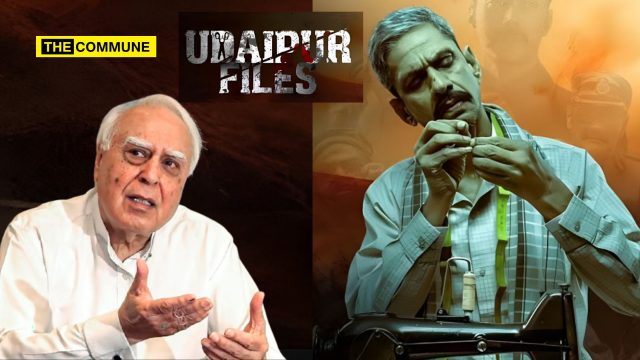
“Vicious, Cinematic Vandalism, Harmful To The Country”: Kapil Sibal Argues Against ‘Udaipur Files’ Film Based On Kanhaiya Lal’s Murder By Islamists

kapil sibal udaipur files

In a last-minute decision on 10 July 2025, the Delhi High Court issued a stay on the release of the film Udaipur Files, which was set to premiere on 11 July 2025. The stay will remain in effect until the central government evaluates petitions calling for a permanent ban on the film due to concerns it may incite social unrest.

The decision was issued by a division bench comprising Chief Justice D.K. Upadhyaya and Justice Anish Dayal, who instructed the petitioners to submit their concerns to the central government within two days. The court noted that the petitioners had not yet pursued this formal route.

“Until the central government reviews the interim relief request submitted along with the revision petition, the release of the film shall remain stayed,” the bench ruled.

During the proceedings, senior advocate Kapil Sibal urged the court to preview the film, which is based on the 2022 murder of Udaipur tailor Kanhaiya Lal. Sibal described the film as “vicious” and referred to it as “cinematic vandalism,” arguing that it has the potential to reignite communal tensions.

Among the petitioners is Maulana Arshad Madani, president of the Jamiat Ulama-i-Hind and principal of Darul Uloom Deoband. The petitions contend that the film’s trailer, released on 26 June, contains provocative content and language similar to elements that contributed to communal unrest in 2022.

Sibal strongly criticized the film, stating, “This is harmful to the country. Please don’t allow such destructive content to reach the public. This is not art; it’s an incitement.

He also claimed that the film’s producer has a history of creating content that promotes hate.

The court observed that the film’s trailer included content previously ordered to be removed. Additional Solicitor General Chetan Sharma, representing the Central Board of Film Certification (CBFC), assured the bench that appropriate legal action would be taken if necessary.

The bench instructed the petitioners to file a formal revision petition with the central government by the following Monday. It further directed the government to make a decision within a week after hearing both sides, including the producer.

The court emphasized that approving films is primarily the responsibility of expert bodies, and that judicial involvement should be minimal in such matters.

The ASG argued in defense of the film, stating it is a fictionalized account inspired by real events and grants limited artistic freedom. According to him, the movie is not aimed at any particular community but rather exposes how communal unrest is allegedly orchestrated from across the border.

“This film is a warning showing how foreign elements attempt to disturb India’s peace,” Sharma said. “It’s crime-oriented, not community-targeted.”

In response to the court’s questioning of its relevance, Sharma reiterated, “It’s a crime drama that encourages harmony and warns against division. If that’s controversial, I have no further comments.”

The film’s producer maintained that the narrative aligns with common India-Pakistan themes and accused the petitioners of misrepresenting the film by quoting dialogue out of context. Earlier, on 9 July, the court had directed the filmmakers to organize a private screening for the petitioners.

The film centers around the murder of Kanhaiya Lal, a tailor from Udaipur who was killed in June 2022. The assailants, Mohammad Riyaz and Mohammad Ghous reportedly targeted him for allegedly supporting a controversial statement made by former BJP spokesperson Nupur Sharma on social media. The attackers released a video claiming responsibility for the killing. The case is under investigation by the National Investigation Agency (NIA), and the suspects are being prosecuted under the Unlawful Activities (Prevention) Act and relevant sections of the Indian Penal Code. The trial is ongoing in the NIA special court in Jaipur

(With inputs from Business Standard)

Subscribe to our channels on TelegramWhatsApp, and Instagram and get the best stories of the day delivered to you personally.

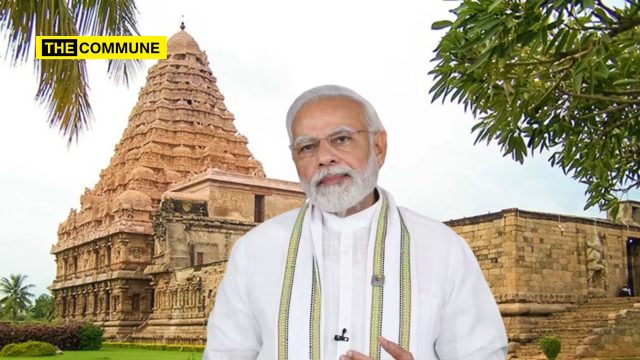
PM Modi To Attend Aadithiruvathirai Festival At Gangaikonda Cholapuram

pm modi gangaikonda cholapuram aadithiruvathirai festival

Prime Minister Narendra Modi will attend the Aadithiruvathirai festival at the Brihadeeswarar Temple in Gangaikonda Cholapuram on 27 July 2025 as the guest of honour, marking a significant moment for the annual state-sponsored celebration.

The Aadithiruvathirai festival, held on the birth star of Chola emperor Rajendra I in the Tamil month of Aadi, has grown in national prominence since being declared a government-sponsored event by the Tamil Nadu government in 2021. The Brihadeeswarar Temple, a UNESCO World Heritage Site built by Rajendra I, serves as the focal point of the celebration.

Ahead of the Prime Minister’s visit, security and logistical preparations are underway. Senior officials from the Special Protection Group (SPG), the Archaeological Survey of India (ASI), the Hindu Religious and Charitable Endowments (HR&CE) Department, and the Tamil Nadu Police have arrived in the temple town to oversee arrangements.

Ariyalur District Collector S. Rathinasamy and Superintendent of Police Deepak Sivas have conducted on-site inspections of the temple complex. Coordination meetings with central and state agencies are ongoing to finalise the venue layout, crowd control strategies, and emergency response protocols.

Authorities are preparing for a large turnout of devotees. Drinking water facilities, medical aid kiosks, and sheltered waiting areas will be set up to accommodate the public. Traffic diversions and shuttle transport services from nearby towns will be announced in the days leading up to the festival.

The event will include traditional rituals, a special abhishekam and alankaram for the temple deity, cultural performances, and a public address by the Prime Minister. Set against the historic backdrop of the Chola capital, the festival aims to showcase Tamil Nadu’s cultural heritage on a national platform.

(With inputs from News Today)

Subscribe to our channels on TelegramWhatsApp, and Instagram and get the best stories of the day delivered to you personally.
Vetrimaaran-Backed Anti-Brahmin Dravidianist Propaganda Film ‘Bad Girl’ That Glamorizes Promiscuity Set For Theatrical Release On 5 September 2025

vetrimaaran bad girl madurai bench of madras high court varsha bharath

Highly controversial Dravidianist propaganda movie Bad Girl, certified U/A by the Censor Board, is set to hit theatres on 5 September 2025. Directed by Varsha Bharath and backed by Dravidianist filmmaker Vetrimaaran in collaboration with Bollywood director Anurag Kashyap, the film has faced backlash since its teaser release on 26 January 2025.

Critics argue that Bad Girl is less a coming-of-age story and more an ideological statement meant to reinforce anti-Brahmin narratives under the guise of empowerment. The teaser introduces audiences to a Tamil Brahmin girl, played by Anjali Sivaraman, who openly expresses her desire for a boyfriend, setting off a journey through her adolescence and college years marked by societal judgment and emotional conflict. The teaser culminates in a scene reminiscent of the 2020 “Thaali Bajao” ritual during the COVID pandemic, depicting traditional Brahmin practices—seemingly to ridicule them.

Produced under Grass Root Film Company, Bad Girl has been labeled by detractors as another attempt to push Dravidian ideological propaganda, particularly targeting Brahmin culture.

Backlash From The Film Industry

Actress and former Bigg Boss Tamil contestant Sanam Shetty strongly condemned the film, accusing it of glamorizing rebellion, promiscuity, and substance abuse among minors. She noted that the portrayal sends an unhealthy message to impressionable adolescents and slammed the industry for overlooking deeper gender inequality issues.

Taking to X on 18 February 2025, she stated, “#BADGIRL Teaser is NOT a BOLD Example.. It’s a #BAD Example! #Freedom of choice and #GenderEquality concepts are wrongly portrayed in case of #Minors here! #Legally#Ethically and even #Medically it sends a terribly #wrong message to the already influenceable adolescent children! Extremely disappointed with the so called Responsible Film Makers funding and supporting this Film. Do you agree with me?”

Later speaking to reporters, she said, “Equality doesn’t mean sleeping with multiple people, smoking cigarettes or ganja. Equality means asking us with equal opportunities. If you ask whether there’s equal opportunity between men and women, the answer is no. Take our industry, for example. Are the salaries given to male and female actors the same? No. Is the way male and female actors are approached the same? No. I’m speaking from personal experience. When we think they call us to act in movies, instead they call us for sleeping with them. This is the approach. Equality is needed here and you should speak for this. If you’re suggesting schoolgirl to sleep with ten people, smoke cigarette, ganja and  consume alcohol what kind of thinking is that? Hair”

Similarly, Director Mohan G Kshatriyan, known for films like Bakasuran and Draupathi, also weighed in, accusing Vetrimaaran and Kashyap of recycling anti-Brahmin tropes for cinematic appeal. In a sarcastic post, he said, Portraying a brahmin girl personal life is always a bold and refreshing film for this clan. What more can be expected from vetrimaran, Anurag kasyap & Co.. Bashing Brahmin father and mother is old and not trendy.. Try with your own caste girls and showcase it to your own family first.

Legal Pushback

The Tamil Nadu Brahmin Association (THAMBRAAS) has issued a legal notice to Vetrimaaran, asserting that the film insults their community and contributes to cultural erosion. According to their complaint, the film’s protagonist a Tamil Brahmin schoolgirl is portrayed engaging in relationships, alcohol consumption, and other behaviors the group deems derogatory and misleading.

The notice alleges that Bad Girl violates Article 19 of the Indian Constitution, which allows freedom of expression but with reasonable restrictions. It further cites Section 294 of the Bharatiya Nyaya Sanhita (BNS) Act, 2023, for obscene representation, especially concerning the use of “Iyer Bashai” (Brahmin dialect) and the depiction of Brahmin rituals in a negative light.

The association urged the Central Board of Film Certification (CBFC) in Chennai to deny certification to the film, calling its content culturally divisive and offensive. The Nadar community has also voiced concerns, stating that the teaser normalizes immoral behavior among schoolgirls and spreads a misleading message to youth.

Subscribe to our channels on TelegramWhatsApp, and Instagram and get the best stories of the day delivered to you personally.
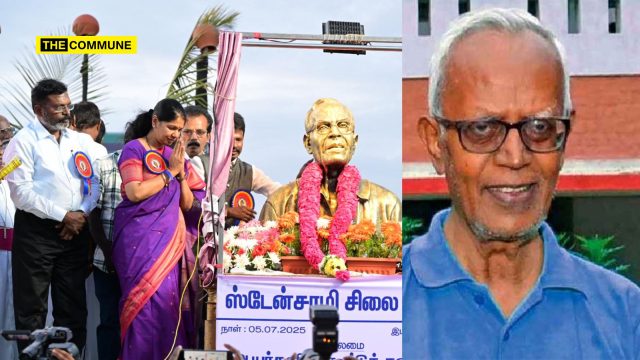
Maoist Becomes Martyr: DMK Along With Church Leaders Unveil Statue Of Terror-Accused Pastor Stan Swamy At His Birthplace

DMK members and several church dignitaries—including Bishop Jeevanandam of Kumbakonam and Archbishop Francis Kalist of Pondicherry-Cuddalore—unveiled a statue of Stan Swamy to mark the fourth anniversary of his death. Held in Viragalur, Swamy’s birthplace, the ceremony drew over 5,000 attendees, turning it more into a beatification of the late Jesuit than a simple memorial.

Swamy was celebrated by the crowd as a tribal rights advocate. DMK MP Kanimozhi described him as a victim of state oppression, arguing that questioning the government invites accusations of being anti-national or pro-Naxal.

She also stated that in prison, Swamy was deprived of basic necessities and branded unfairly. Fellow politician Thirumavalavan even alleged that evidence was planted on Swamy’s devices in order to trap him in a fabricated assassination plot targeting Prime Minister Modi.

However, official records from 2021 tell a different story. An NIA-special court, while denying him bail, noted that Swamy appeared to be substantially involved with the banned CPI (Maoist) group and its agenda. This court finding challenges the portrayal of him as merely a benign activist.

What the DMK-led gathering and other similar nationwide commemorations underscore is a clear effort to recast Swamy as a heroic advocate for the oppressed—even as legal documents suggest his active role with a recognized terrorist organization.

Subscribe to our channels on TelegramWhatsApp, and Instagram and get the best stories of the day delivered to you personally.
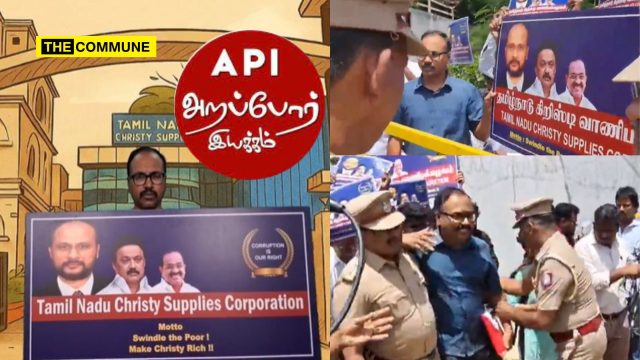
Arappor Iyakkam Activists Detained For Protesting Against ₹992 Crore Food Supply & Transport Scam

The Dravidian model government in Tamil Nadu has arrested Jayaram Venkatesan, convener of the anti-corruption NGO Arappor Iyakkam, along with several members of the organization, following their protest against alleged corruption involving the Tamilnadu Civil Supplies Corporation. The protest was symbolic, with activists demanding the body be renamed “Tamil Nadu Christy Supplies Corporation,” pointing to alleged favoritism and irregularities tied to the Christy Friedgram Group.

The protest took place outside the Koyambedu Metro Administrative Complex in Chennai, where the activists raised slogans highlighting corruption in government contracts. They accused the association of operating with political and corporate collusion. However, the peaceful demonstrators were detained reportedly 12 of them and confined in a private wedding hall in Nerkundram, raising further concerns over suppression of dissent.

The protest was sparked by the inaction of the DMK government and the Directorate of Vigilance and Anti-Corruption (DVAC) over a major scandal first reported in March 2025. Arappor Iyakkam accused a ₹992 crore scam in Tamil Nadu’s food supply and transport sector.

In a 40-page complaint accompanied by 565 pages of documentation the NGO outlined how inflated transportation tenders awarded to firms allegedly linked to the Christy Friedgram Group led to massive losses for the public exchequer. The complaint was submitted to agencies including the CBI, ED, DVAC, and Income Tax Investigation Wing, as well as to top state and central officials including Chief Minister M.K. Stalin.

Jayaram Venkatesan alleged that three companies Muruga Enterprises, Kandasamy & Co., and Karthikeya Enterprises bagged tenders at rates over 107% higher than market prices, with direct ties to Christy Friedgram Group’s T.S. Kumarasamy. These tenders were cleared shortly after the BJP returned to power in 2024, raising suspicions of bipartisan collusion.

The contracts, intended for transporting paddy across 38 districts, were priced at ₹598 per metric ton, up from previous rates of ₹200–250 for short-distance hauling. In 2020, the Zinc Foods group allegedly another Christy Friedgram subsidiary had already been awarded a tender at ₹640 per ton, leading to a profit margin of ₹350–400 per ton at the cost of taxpayers. That contract was scrapped in three years, but the group’s reappearance in 2023 sparked further backlash.

The NGO argues that these inflated contracts have real-world consequences: ration shortages, public hardship, and budgetary strain. Many citizens, particularly ration card holders, face frequent stockouts of essential goods, often within the first week of the month. The NGO contends that this corruption directly siphons funds away from vital services like education and food security.

Notably, this isn’t Arappor Iyakkam’s first exposé on the Christy Friedgram Group. In 2021, they revealed another massive scam worth ₹2,028 crore involving procurement irregularities, which is still under investigation.

Subscribe to our channels on TelegramWhatsApp, and Instagram and get the best stories of the day delivered to you personally.
#JustAsking: What’s Up With Prakash Raj And All These Scams?

prakash raj

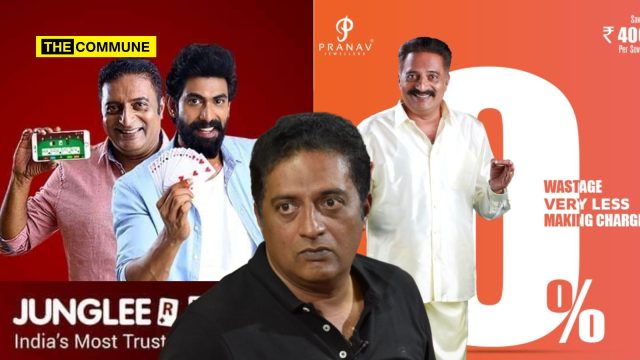
He never misses a chance to lecture the nation. He questions the Prime Minister, ridicules government policies, and postures as a fearless voice of truth on social media. But when it comes to his own backyard, pro-Congress and DMK simp actor Prakash Raj seems to have a lot to answer for — and very little to say.

From illegal land encroachments in the eco-sensitive Kodaikanal hills to his name surfacing in a ₹100-crore Ponzi scam and now a betting app racket under ED scanner — the so-called conscience-keeper of the nation is drowning in allegations.

While he’s quick to tweet #JustAsking at the BJP, today the nation is flipping the script.

Scam #1: Encroachment In Kodaikanal Hills

One of the major controversies dogging Prakash Raj involves illegal construction and encroachment in the scenic Kodaikanal Hills.

In August 2023, at a farmers’ grievance meeting, Bharatiya Kisan Sangh State Secretary Asokan accused Raj of illegally building a house exceeding the 600 sq. ft limit without proper permissions. The structure, located near the Pethuparai Aravi Waterfall, allegedly encroached on the Varangatu stream and obstructed a public road used by local farmers. Reports claim Raj had even erected a solar electric fence, limiting access at night and preventing farmers from reaching their fields or safeguarding crops from wild animals.

The Vilpatti Panchayat President, Bhagyalakshmi, confirmed that a notice had been issued over the unauthorized construction. Raj reportedly claimed he had applied for permissions online. Kodaikanal District Development Officer Prabhakaran and Tehsildar Karthikeyan acknowledged ongoing complaints and stated that further action would be taken after proper investigation and measurement.

In a related matter, the Madurai Bench of the Madras High Court, in January 2024, sought a report from the Tamil Nadu government following a petition by Muhammad Junaid of Dindigul. The plea alleged that Prakash Raj and fellow actor Bobby Simha had encroached on government land to build luxury homes without necessary municipal permissions, using heavy equipment to alter the terrain.

Critics have accused Raj of benefiting from his proximity to the DMK-led government, suggesting that while ordinary citizens face demolitions, politically aligned public figures enjoy impunity.

Scam #2: ₹100-Crore Ponzi Scheme Link – Pranav Jewellers

The second serious charge against Prakash Raj ties him to Pranav Jewellers, a Tiruchirapalli-based jewellery firm at the center of a ₹100 crore fraud and money laundering case. Raj had served as brand ambassador for the company for several years.

The ED raided Pranav Jewellers’ offices on 20 November 2023, seizing ₹23.7 lakh in cash and gold jewellery. The firm is accused of defrauding thousands of investors through an elaborate gold investment scheme, promising high returns and offering bonuses for investments above ₹5 lakh.

Complaints surfaced when promised interest payments were not made. The situation worsened on 17 October 2023, when multiple showrooms, including those in Chennai, Madurai, Erode, Kumbakonam, and Puducherry, shut down unexpectedly. Investors could not reach the company owners, prompting mass protests and a police intervention.

The ED has since summoned Prakash Raj to appear before officials in Chennai, seeking clarification on payments received from Pranav Jewellers and financial transactions tied to the brand’s alleged scam.

In what many interpreted as a cryptic response to the summons, Raj posted “#KhelaHobe 💪💪💪 #justasking” on X (formerly Twitter), further fueling online debates over his perceived political bias and moral grandstanding.

Scam #3: Promoting Illegal Betting Apps For Money

The Enforcement Directorate (ED) has registered an Enforcement Case Information Report (ECIR) against 29 individuals including Prakash Raj for allegedly promoting illegal online betting applications. Many of these platforms reportedly posed as skill-based gaming apps but allegedly facilitated illegal gambling activities.

According to investigators, the individuals allegedly received substantial financial compensation for endorsing these apps. Some promotions were reportedly masked as entertainment or social service initiatives, prompting backlash and formal complaints. One complainant alleged a loss exceeding ₹3 crore after acting on YouTube advertisements featuring some of the named personalities.

 #JustAsking Backlash

The allegations have given fresh ammunition to critics of Prakash Raj. While he has often used his platform to question BJP policies, many now question his silence on issues involving his own name is being linked to financial scandals. As the ED investigation unfolds, we’re #JustAsking, will Prakash Raj first introspect himself before talking about saving the nation?

Subscribe to our channels on TelegramWhatsApp, and Instagram and get the best stories of the day delivered to you personally.

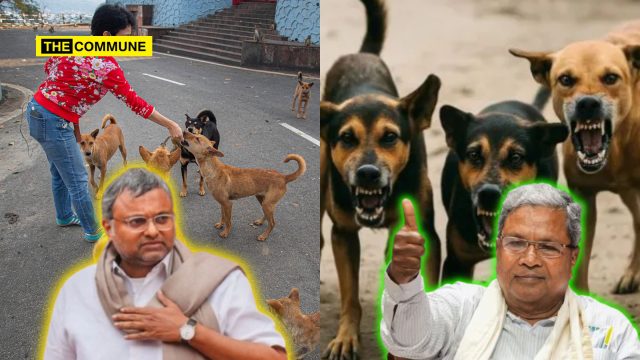
Karnataka Congress Govt Rolls Out ₹2 Cr Stray Feeding Plan Amidst Rising Stray Dog Menace, Karti Chidambaram Slams Saying “Dogs Have No Place In Streets”

Sivaganga MP and Congress leader Karti Chidambaram has voiced strong concern over the Karnataka Congress government’s decision to expand its stray dog feeding initiative, managed by the Animal Husbandry Department of the Bruhat Bengaluru Mahanagara Palike (BBMP). The program, which initially tied up with hotels and restaurants to provide food for street dogs, is now moving towards a vendor-based model, with a proposed budget of ₹2 crore to feed over 5,000 stray dogs daily across Bengaluru’s eight zones.

Taking to his social media platform X, Karti expressed his disapproval, stating, “Is this true? Dogs have no place in the streets. They need to be relocated to shelters, where they can be fed, vaccinated & sterilised. Feeding & keeping them in a free roaming state in the streets is a huge health & safety hazard.”

His comments came in response to BBMP’s reported success with the first phase of its ‘Bite-Free Locality’ campaign, launched on 17 October 2023. The initiative began by feeding around 150 stray dogs across ten city locations and soon scaled up to 28 constituencies and 135 feeding points, with over 100 hotels and eateries collaborating with BBMP to provide food.

Now, BBMP plans to shift from restaurant partnerships to third-party vendor-cooked meals, designed by veterinarians to meet nutritional needs. Special Commissioner Suralkar Vikas Kishore confirmed that an action plan has been submitted to the BBMP Commissioner and once approved, tenders will be floated within a month.

“We aim to scale the program by ensuring consistency through vendor-prepared food across all zones,” Kishore stated.

The earlier model relied on BBMP marshals collecting leftover food from hotels and handing it over to pourakarmikas (sanitation workers) for distribution. In the upcoming phase, PKs will handle food delivery directly, creating a more streamlined system. Signboards at feeding locations will continue to display food and water stations for community awareness.

Sadhana Hegde, founder of Sahavarthin Animal Welfare Trust, which supports BBMP in the project, acknowledged that while the restaurant-based model helped build community involvement, logistical issues surfaced in certain localities. The switch to centralized food preparation is expected to improve monitoring and ensure regular feeding, especially in areas where local feeders allegedly face harassment.

BBMP’s direct involvement sets a strong precedent. The goal is to make feeding efforts more reliable and to support volunteers working in challenging environments,” Hegde noted.

Despite initial success, the expansion has triggered debates, particularly around safety concerns and the increasing number of stray dogs in urban areas. Karti Chidambaram’s remarks have reignited the conversation about whether feeding free-roaming dogs on the streets is a sustainable solution or whether shelter-based care and sterilization should take priority.

Subscribe to our channels on TelegramWhatsApp, and Instagram and get the best stories of the day delivered to you personally.

Rana Ayyub Exposed: ₹2.7 Crore COVID Fund Used For FDs And Personal Expenses, Not Relief – IT Tribunal Slams Misuse

Delhi Court Orders FIR Against Alleged Journalist Rana Ayyub Over Allegations Of Insulting Hindu Deities And Anti-India Sentiment

The Income Tax Appellate Tribunal (ITAT), Mumbai, has ruled that journalist Rana Ayyub’s COVID-19 donation campaigns raised over ₹2.7 crore in taxable income, rejecting her claim that the funds were used entirely for charitable purposes. The Tribunal upheld the tax department’s invocation of Section 56(2)(x) of the Income Tax Act, 1961, and supported the swift action taken under Section 175 to prevent asset disposal.

The amount in question, ₹2.69 crore, including ₹80.5 lakh in foreign contributions, was collected through crowdfunding platform Ketto between 2020 and 2021. The stated intent was to provide pandemic relief, support migrant workers, and aid healthcare and flood relief efforts. However, the Tribunal found that the funds were not handled transparently.

The ITAT highlighted that the donations were routed through Ayyub’s personal savings account and those of her father and sister, without the involvement of any registered charitable trust or legal entity. Of the total sum raised, only ₹28 lakh could be directly linked to relief efforts, while ₹50 lakh was invested in a fixed deposit in her name, and ₹19 lakh was reportedly spent on personal expenses.

The tax department, citing possible evasion, invoked Section 175 of the Act in July 2021, which allows for immediate tax assessment if there’s risk of asset concealment. Ayyub’s lawyers argued that the tax should apply only to income received before the notice was issued. The Tribunal, however, disagreed, stating the department’s action was justified due to the “intermingling of personal and donation funds.”

The bench observed, “If the intention of the assessee was pious then, what explanation she could offer for purchasing fixed deposit receipts of ₹50,00,000/- in her personal name. From the first campaign, the assessee raised ₹1,23,12,484/- out of which ₹68,84,560/- was in Indian currency and ₹54,27,924/- in foreign currency converted into INR.”

The Tribunal noted that nearly ₹2.4 crore remained unutilized in personal accounts at the time of the probe. “When the assessee realised that she has been cornered in the tax net, she returned funds received from foreign reserves from Ketto platform but even after the passage of almost one year from the first donation campaign in which the assessee garnered ₹1.23 Crores approximately, she could only produce evidence of ₹18,00,000/- of relief expenditure,” it said.

Ayyub has denied misusing the funds, claiming a portion was spent on returning migrant workers home and providing medical and food assistance. After being summoned under Section 131 of the Act, she returned ₹70 lakh in foreign donations through Ketto, stating these were not withdrawn personally. However, the Tribunal concluded that the refund appeared to be a response to the investigation and did not negate personal benefit.

The ITAT also flagged a possible violation of the Foreign Contribution Regulation Act (FCRA), 2010, noting that “journalists are not allowed to receive foreign contributions” under Section 3(1)(h). It stated that “by using her father’s and sister’s accounts to accept international donations, the assessee appeared to be circumventing this restriction.”

Furthermore, the Tribunal said, “When confronted with this, the assessee took a plea that the same has been kept in reserve for constructing a hospital which was never mentioned during the fund-raising campaign.”

All three of Ayyub’s appeals for the assessment years 2021–22 and 2022–23 were dismissed. The ruling adds to ongoing scrutiny around crowdfunding transparency and tax obligations for individuals raising large sums for public causes.

(With inputs from Lawbeat)

Subscribe to our channels on TelegramWhatsApp, and Instagram and get the best stories of the day delivered to you personally.
Remembering Vellore Rebellion: Tamil Nadu’s Forgotten Prelude To India’s First War Of Independence

vellore rebellion

There is no doubt that Tamils played a crucial and courageous role in India’s freedom struggle sacrificing their lives, wealth, and spirit for the country’s liberation. We remain deeply indebted to their contributions, which laid the foundation for the freedoms we enjoy today.

One of the earliest and most valiant uprisings against British colonial rule emerged from Tamil Nadu, ‘the Vellore Rebellion of 1806’. Regrettably, this historic event has often been diminished by Dravidianists and particularly Marxist historians, who termed it simply as a “sepoy mutiny” a term originally coined by the British to downplay its significance.

However, Indian nationalist thinkers like Vinayak Damodar Savarkar recognized the rebellion’s true importance, calling it a “prelude to the First War of Indian Independence.” Savarkar acknowledged the Vellore uprising as a vital, early example of resistance that came decades before the more widely known revolt of 1857.

What Triggered the Vellore Rebellion?

On 10 July 1806, the Indian sepoys at the Vellore Fort rose in armed rebellion against the British. But the seeds of this revolt were sown a year earlier in 1805, when General John Craddock introduced a controversial dress code for Indian soldiers. This code banned Hindu sepoys from wearing religious symbols such as vibhuti or thiruman, and ordered Muslim soldiers to shave their beards. In addition, sepoys were issued a new leather headdress—made from cattle hide, offending Hindu religious sentiments.

Many Indian soldiers perceived these changes as deliberate attempts at forced cultural assimilation or even religious conversion. Discontent quickly spread throughout the ranks. In May 1806, some soldiers who protested were flogged or dismissed, further aggravating tensions.

The Outbreak of Rebellion

By June, unrest had reached a boiling point. Plans were made to launch a mutiny. Although a sepoy named Muhammad Beg warned British officials of the plot, his claims were dismissed as drunken rambling. Fearing that the plan had been exposed, the sepoys advanced their attack date.

In the early hours of 10 July 1806, sepoys inside the Vellore Fort launched a surprise assault. They killed many British soldiers, including Colonel John Fancourt, and captured the fort by dawn.

However, British officer Major Coopes, who was stationed outside, raised the alarm. Reinforcements led by Major Robert Gillespie arrived from Arcot. Facing stiff resistance at the gates, Gillespie ordered the use of galloper guns to blast them open. Once inside, British troops brutally retaliated killing around 350 Indian soldiers. Many were executed publicly either shot, hanged, or blown away by cannons. Several wounded sepoys who attempted to flee were court-martialed and executed.

In the aftermath, the rebellious battalions were disbanded, and the controversial dress code was revoked. Madras Governor William Bentinck was recalled, indicating the deep shock the uprising had caused within the British administration.

A Legacy Worth Honoring

Though often overshadowed in mainstream historical narratives, the Vellore Rebellion of 1806 was a landmark in India’s struggle for independence. It marked the first organized, armed uprising by Indian soldiers against British colonial rule long before 1857. It remains a powerful symbol of early resistance and the indomitable spirit of Tamil fighters who rose in defense of their faith, dignity, and homeland.

Let us remember and honor their courage on this day, the anniversary of the Vellore Rebellion 10 July.

(This article is based on an X Thread by T S Krishnan)

Subscribe to our channels on TelegramWhatsApp, and Instagram and get the best stories of the day delivered to you personally.