Home Blog Page 223

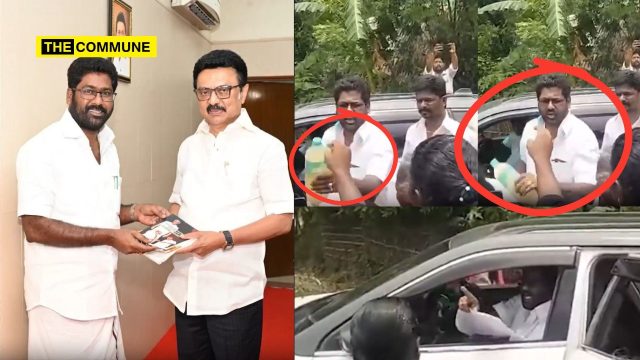
Residents Confront Jayankondam DMK MLA Over Contaminated Water Supply, He Angrily Grabs The Bottle And Throws It Away

Former Tamil Nadu BJP president K. Annamalai has strongly condemned DMK’s Jayankondam MLA, K.S.K. Kannan, following a viral video that sparked public outrage. The footage shows villagers confronting the MLA with a bottle of visibly contaminated drinking water, highlighting the poor water quality in their area. In response, Kannan is seen angrily grabbing the bottle, tossing it aside, and driving away, an act that has drawn widespread criticism from both the public and political figures.

Reacting to the incident, Annamalai took to his official X account to call out the MLA’s behavior. He stated, “For the past four years, residents of South Thadampettai Pudutheru village, located within the T. Palur Panchayat in Ariyalur District, have been supplied with extremely contaminated drinking water. Despite numerous petitions submitted by the public, even reaching the Member of Legislative Assembly (MLA), no action has been taken so far to provide clean drinking water. In this situation, when Mr. K.S.K. Kannan, the Jayankondam MLA, visited a nearby village today, some residents from the village attempted to show him the contaminated water from their village by bringing a bottle of it. However, the MLA humiliated the public, snatched the water bottle, threw it away, and drove off in his car. The public elected these representatives to fulfill their basic needs, not to humiliate them. What other job does Mr. K.S.K. Kannan have besides listening to the pleas of the public who have been suffering without clean drinking water for four years? Immediate action must be taken to provide clean drinking water to the villages under T. Palur Panchayat. Mr. K.S.K. Kannan should remember that without the votes of the people, there would be no position or respect before he humiliates them.”

Subscribe to our channels on TelegramWhatsApp, and Instagram and get the best stories of the day delivered to you personally

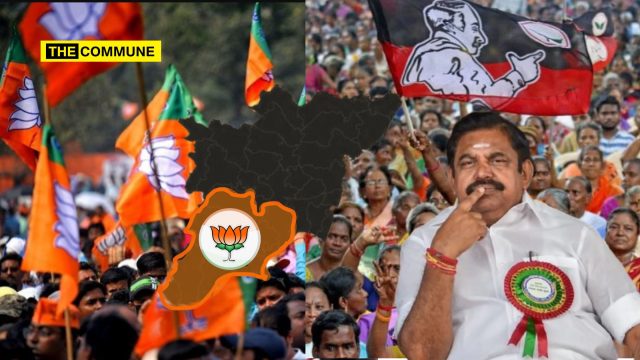
Coalition Is About Cooperation: AIADMK Needs BJP’s Help In Southern Districts And Vice Versa

eps bjp coalition

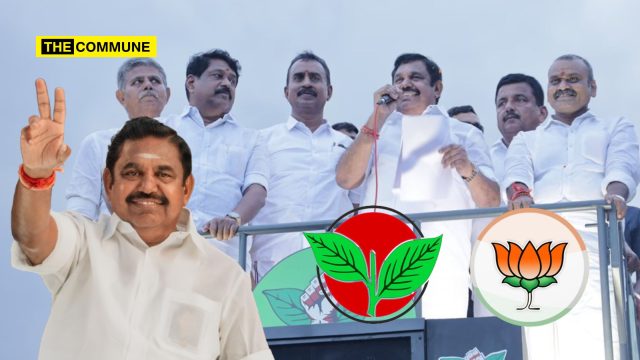
AIADMK General Secretary and Leader of the Opposition Edappadi K. Palaniswami (EPS) recently stirred debate with a remark during his speech, “Mr. Stalin, we are not fools. AIADMK will win with a majority and form the government independently. We will decide if we want an alliance or not. Though EPS later clarified that the alliance is intact 100% and will continue to be so, the comment has nonetheless created ripples potentially weakening the broader objective of unseating the DMK in the 2026 Assembly elections.

Edappadi K. Palaniswami of the AIADMK appears to be overlooking some crucial political realities of the recent past. Under his leadership, the party no longer has the influential figures who once played a key role in unifying the AIADMK cadres at the ground level during the 2021 elections. Leaders like O. Panneerselvam, T.T.V. Dhinakaran, and V.K. Sasikala, who, under Jayalalithaa’s guidance, helped maintain the party’s stronghold in the southern regions of Tamil Nadu.

The results of the 2024 Lok Sabha elections made it clear that the BJP has made significant strides in the southern belt, in many cases surpassing the AIADMK and relegating it to third place. In this context, for Palaniswami to assume that the large crowds attending his rallies are a reflection of his personal popularity or the continued appeal of MGR and Jayalalithaa’s legacy is a misreading of the ground reality. Mistaking this enthusiasm as a signal of guaranteed support could be a strategic misstep, especially when the party’s vote base is clearly shifting.

A Fragmented Past And The Missing Pillars

Since the 2021 Assembly elections, AIADMK has not been the unified force it once was under J. Jayalalithaa. Key leaders like O. Panneerselvam, T.T.V. Dhinakaran, and V.K. Sasikala once instrumental in holding the southern vote base together are now either sidelined or in opposition to the EPS-led faction. The absence of these Thevar community heavyweights has severely weakened AIADMK’s hold in the south.

In the 2024 Lok Sabha polls, the consequences of this fragmentation became evident. The BJP, allied with OPS and Dhinakaran, made significant inroads in southern districts, often pushing the AIADMK to a distant third position in constituencies such as Tirunelveli, Theni, Kanyakumari, and Madurai.

EPS’s interpretation of the large public turnout at his rallies as a direct endorsement of his leadership or the AIADMK’s legacy (through MGR and Jayalalithaa) is misleading. The political landscape has changed, and crowd size does not necessarily reflect electoral strength especially when party structure, leadership appeal, and social coalition have become fractured.

AIADMK’s Shrinking Footprint Down South 

The erosion of support in the south is not accidental it’s structural. The AIADMK, under EPS, is increasingly perceived as a Gounder-dominated party, alienating the Thevar community that once formed the party’s southern backbone. EPS’s refusal to reconcile with leaders like OPS and Dhinakaran despite internal calls from veterans such as K.A. Sengottaiyan, Natham Viswanathan, SP Velumani, and C.V. Shanmugam has only deepened the divide.

On 7 July 2024, six senior leaders reportedly met with EPS in Salem, urging him to reunify the party and reconcile with estranged factions. However, EPS firmly rejected any merger or reconciliation, choosing instead to chart a solo course. This decision, critics argue, risks ceding further ground to rivals in southern Tamil Nadu. This naturally positions the AIADMK to rely on an alliance with the BJP whose influence in the south is steadily growing along with the supportive alliance of O. Panneerselvam and T.T.V. Dhinakaran, to regain its footing and remain competitive in the southern regions of Tamil Nadu.

BJP’s Strategic Rise In The South

The 2024 general elections proved to be a wake-up call for the AIADMK. While the DMK-led alliance swept all 39 Lok Sabha seats in Tamil Nadu and Puducherry, it was the BJP not the AIADMK that emerged as the runner-up in several southern constituencies. The saffron party’s ability to consolidate anti-DMK votes thanks to its alliance with OPS, Dhinakaran’s AMMK, and the PMK allowed it to outperform the AIADMK in at least a dozen southern and central constituencies.

The BJP secured 11.24% of the vote share on its own, and the NDA collectively pulled in 18.27%, pushing the AIADMK to third and even fourth position in districts where it once dominated. The AIADMK’s overall vote share dropped from 30.56% in 2019 to 20.46% in 2024, and it lost deposits in seven key constituencies, including South Chennai, Kanyakumari, Puducherry, and Thoothukudi.

This vote drift has made one fact abundantly clear, in the south, the BJP is fast becoming the primary opposition force, while the AIADMK continues to bleed support.

Anti-Incumbency Against DMK: A Wasted Opportunity?

Public dissatisfaction with the ruling DMK government has been steadily growing. The anti-incumbency mood presents a ripe opportunity for the opposition but only if it unites. If the anti-DMK vote continues to splinter among AIADMK, BJP, NTK, and emerging players like Vijay’s Tamilaga Vettri Kazhagam (TVK), the ruling party could retain power despite the public mood.

EPS’s comments that seemed to downplay or distance the BJP his party’s strongest ally in the south risk diluting the alliance’s collective impact. Many within the AIADMK see the alliance with the BJP as critical, not just tactically but strategically, to prevent vote division and challenge the DMK’s dominance.

Even prominent AIADMK figures like former Chennai Mayor Saidai Duraisamy have called for a return to MGR-style politics forming pragmatic alliances to defeat a common political opponent. Given the current scenario, that common enemy is clearly the DMK.

The Path Ahead

EPS finds himself at a critical juncture. His refusal to engage with former allies and his ambiguous remarks about AIADMK’s need for an alliance could jeopardize the party’s chances in 2026. While projecting strength and independence may resonate with party loyalists, the numbers show that without a broader alliance especially with the BJP and southern powerbrokers like OPS and Dhinakaran AIADMK’s chances of regaining power are slim.

The question isn’t whether AIADMK wants the BJP. The question is: can it afford not to?

In southern Tamil Nadu, the reality is stark the AIADMK needs the BJP and its allies far more than the BJP needs them. If EPS fails to recognize this and continues to alienate potential partners, the party risks further decline, ceding its traditional strongholds to both the BJP and the DMK.

Subscribe to our channels on TelegramWhatsApp, and Instagram and get the best stories of the day delivered to you personally

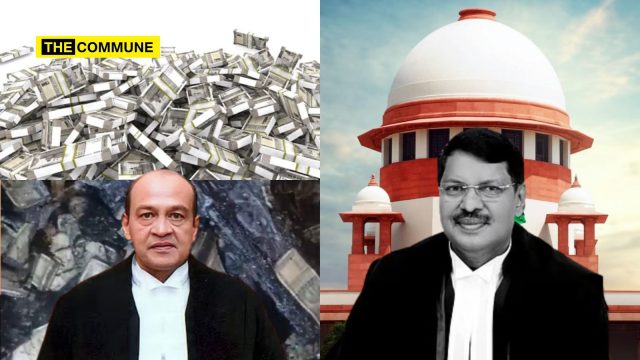
“Have Some Decorum, He’s Still A Judge”: Chief Justice Of India Warns Lawyer While Dismissing Petition Against High Court Judge Yashwant Varma Who Faces Impeachment For Hoarding Piles Of Cash At His Home

On 21 July 2025, the Supreme Court expressed strong disapproval after a lawyer referred to Justice Yashwant Varma currently serving in the Allahabad High Court and facing serious allegations in a cash seizure case without using the formal title of “Justice.”

Justice Varma is at the center of a controversy stemming from a fire at his official residence in March, where large amounts of cash were reportedly recovered. Following the incident, he was transferred from the Delhi High Court to the Allahabad High Court and is currently facing proceedings related to his possible removal.

During the 21st July hearing, advocate Mathews J. Nedumpara mentioned a petition seeking the registration of an FIR against Justice Varma before a bench comprising Chief Justice of India B.R. Gavai and Justice K. Vinod Chandran.

However, while making his submissions, Nedumpara repeatedly referred to the judge simply as “Varma,” prompting a sharp response from the bench. When Nedumpara attempted to proceed with his arguments, saying “This is the third writ petition,” the court interjected, warning, “You want it to be dismissed right now?” and added,Have some decorum… Is he your friend? He is still Justice Verma. How do you address him? Have some decorum. You are referring to a learned judge. He is still a judge of the court,” it said.

Despite the warning, Nedumpara insisted that an FIR must be filed in connection with the case. The bench, however, remained firm on the need for maintaining courtroom etiquette and respectful references to judges.

Solicitor General Tushar Mehta also echoed the court’s sentiments, stating that Justice Varma must be addressed with the appropriate title, regardless of the allegations. Nedumpara’s petition seeks directions to the Delhi Police to initiate a criminal investigation into the cash haul, arguing that a formal FIR and subsequent probe are necessary.

Justice Varma, for his part, has filed a plea in the Supreme Court challenging the actions taken against him. He contends that the initiation of removal proceedings was unconstitutional, pointing out that it was launched without any formal complaint. He is also contesting the letter sent on 8 May 2025, by then Chief Justice Sanjiv Khanna to the President and Prime Minister recommending his removal.

Earlier, on 22 March 2025, CJI Khanna had constituted a three-judge panel to examine the matter. The committee, led by Justice Sheel Nagu (Chief Justice of the Punjab and Haryana High Court), included Justice G.S. Sandhawalia (Chief Justice of the Himachal Pradesh High Court) and Justice Anu Sivaraman (Judge, Karnataka High Court).

Justice Varma’s plea seeks to invalidate the committee’s formation and the subsequent recommendation, calling both actions procedurally flawed and unconstitutional. Meanwhile, the Lok Sabha and Rajya Sabha have reportedly received notices initiating impeachment proceedings against him.

(With inputs from Deccan Herald)

Subscribe to our channels on TelegramWhatsApp, and Instagram and get the best stories of the day delivered to you personally

The Forgotten Firebrand: Subramania Sivam, The Selfless Son Of Bharat

subramanya siva subramania sivam freedom fighter india bharat independence

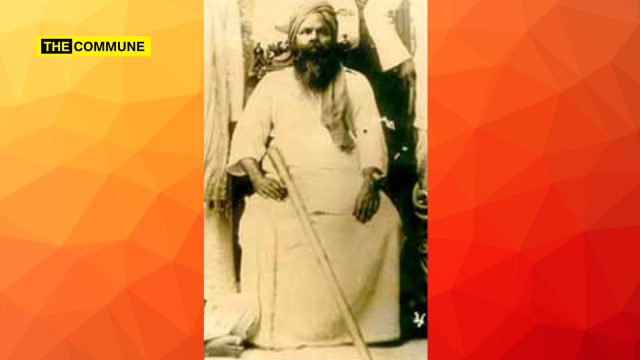
Let us dust and ready the portrait of VVS Aiyer For today, we need to remember Subramania Sivam

Today, July 23, is the Remembrance Day of one of the most selfless sons of Bharata Mata, Subramania Sivam. If so, why that convoluted headline bringing VVS Aiyer into the reckoning? Because these two leaders are always remembered together, four times a year, by a handful of people. Painful, yet true, it is their beard that gets recognised and not them. Therefore, their pictures are used interchangeably.

This article aims to highlight a few aspects of Sri. Subramania Sivam’s life, which we may not be aware of, is worth celebrating for his contributions to liberating Bharata Mata from foreign occupation.

Quick Recap of What We Might Know About Subramania Sivam

Born in Batalagundu, in the foothills of Kodaikanal on October 4, 1884. His childhood and poverty were synonymous. He did his early education in Madurai and moved to Thiruvananthapuram. In his own words, the Oottampirai (free dining hall for the poor) in Thiruvananthapuram kept him nourished. As was the custom in those days, he married Smt. Meenakshi when he was 15 years of age and lost her when he was 18. Meeting Sudhanandha Swamigal in Thiruvananthapuram was a turning point. He obtained Mantra Upadesam and named himself Swatantrananda. From there, he dedicated his life to Bharata Mata. He was a close friend and associate of V.O. Chidambaram Pillai and Subramania Bharathi. We can say that Sivam was one of the first to promote Bharatiyar’s poetry.

First Political Prisoners In Madras Province

12 March 1908, District Collector Winch of Tirunelveli got Subramania Sivam and V.O. Chidambaram Pillai arrested for sedition. The crime was taking out a rally celebrating the release of another freedom fighter, Bipin Chandra Pal (one of the Lal-Pal-Bal trio). These two great men thus became the first political prisoners in Madras Province. As there was no precedent, they were treated as any other prisoner and subjected to all hardships of Rigorous Imprisonment. Being firebrand leaders, they were subjected to more hardships than others.

Jail, The Place Of Penance

Undergoing innumerable hardships wasn’t a big thing for Sivam. In a booklet titled “Jail Life”, he describes his experience in jail humorously. He says, “Brothers! In this world, happiness and misery alternate. The jails we are imprisoned in for the sake of the ideal of Swatantra are really places of penance for us. We shall with bold dignity accept the jail term which is given as a prize for endeavour to bring freedom to humanity.”

“In the prison cells, there will be a bell at 5 a.m. Fifteen minutes later, there will be a second bell. By this time, all prisoners would have to get up, come out of their opened cells, and stand before their cell doors. By 5:30 a.m., the third bell will be rung, and the doors of the ward will be opened. After the jail officials had inspected the prisoners, we ran towards the lavatories. It will be a hell of a place, most unclean, with past refuse not properly cleaned. We have to clean the refuse pots that we use. After that, we will ‘clean’ our teeth with sand or dirt, whichever might be available.

Breakfast will be ready by now. Kanji made from ragi with a little something called chutney. At 11 AM, there will be a ragi meal, a solid mass with sambhar, both dropped into our meal pot. The sambhar will be truly tasteless. Twice a week, we will be treated with rice with no vegetables to go with it. All vegetables grown in jail would have gone to the houses of the jail officials. Every Wednesday and Sunday, non-vegetarian food would be served. For those not taking non-vegetarian food, a small quantity of Gingelly oil would be given.”

He had this to say about Sundays, the day of compulsory shaving for the prisoners. “If only one were not compelled to undergo the shave, prisons would be declared heavenly abodes. For shaving, they will have some sharpened iron blades. It will be a real torture to be shaved by this implement. According to the intractable jail rules, hair in excess of half an inch anywhere on the body of the prisoners will encourage accumulation of dirt and lead to ill-health.”

The rigorous imprisonment he underwent included hard labour. Sivam was put on wool cleaning. Wool reared from sheep was an arduous task. First, it was soaked in lime and dried. While twanging, particles of wool and lime will enter the cleaner’s nose and eyes, resulting in tearing and nonstop hiccups. Thanks to this ordeal, Sivam fell prey to leprosy.

Sivam was a writer par excellence. He ran a monthly magazine called Gyanabhanu (1913). Later, he had to discontinue Gyanabhanu and started a weekly magazine called Prapancha Mitran (1916).

Sivam On Social harmony

Sivam fully understood that social harmony starts with educating all the sons and daughters of Bharata Mata. In an essay he wrote in November 1914, he says, “Everyone born here is a child of the same mother. Any misery we undergo is contagious. We need to provide education to everyone so that they understand that the misery of one easily catches the other. Misery is collective. The aim of education should be to broaden the hearts and minds of the people. Selflessness is the only way people will become society-oriented and people-centric. We should teach our children that selflessness is national interest. We need to ensure that our children are educated for Bharata, that nationalism is infused in them. Children should be made aware that Bharata was once the world’s Gyana Guru. They should be taught that shunning arrogance, seeing good in keeping others happy, are the qualities of a true hero. We should help children develop three essential attributes: tolerating pain, maintaining a calm demeanour, and bravery.”

In May 1914, he wrote an essay “Vidhya Anubhava Vishesham” about Thirukural. In that he says, “Unity is strength. Why should we create a divide between ourselves by saying one is high and the other is low? Knowledge that doesn’t lead people in the right direction is of no use. It would be better if we didn’t acquire such knowledge. A wider and open heart is much better than a deeper brain. We should see Ishwara in the form of all creatures. They are all his creation after all. Serve them all. For that is happiness.”

He closes this article with a verse from Thayumanava Swami.

கற்று மென்பலன் கற்றிடு நூன்முறை சொற்ற சொற்கள் சுகாரம்பமோ நெறி நிற்றல் வேண்டும்

Which translates to, what is the use of learning from reams and reams of paper if we can’t stand by what is learnt? This is precisely what Tiruvalluvar says in Kural 391, (கற்க கசடற).

In an article he wrote in January 1915, he says, “For a tree to grow, you water its roots. Likewise, for the community to grow, Gyana (Knowledge) is the foundation. As our ancient knowledge suggests, we must ensure that every life on earth lives in happiness and harmony.”

He brings the social angle in an essay he wrote on religion (June 1915). “Whether you are cutting wood or ploughing, consider whatever you do as Ishwara Pooja. Our Dharma doesn’t ignore worldly life. It encompasses every sphere of life – the welfare of the community, matters of polity and state governance, trade and commerce. Brother, there isn’t any difference between the Ishwara in you and others. Ishwara Prakasha is one and can’t be split or seen differently. There is no caste or creed or any difference in Ishwara Prakasha. Everything on earth is a manifestation of Ishwara.”

See Swadeshi In Everything

In another essay (the date is unclear; this should also be around 1915), he says the call for Swadeshi should encompass all walks of life, including the games and sports we play. “We should encourage and grow sports like wrestling, kusti.” He has written extensively about the Mallars (wrestlers) and the rings (Godha) where the fights happen. He talks very fondly of Gada (mace) and Mudgar (Karla Kattai) and the need for training with these implements. He says, becoming fit and developing your body is an easy way to attain a happy mind. He says, “Reclaim the glory of Silambam. Don’t ignore the treasures like Kabaddi (Sadugudu), it isn’t enough screaming on top of your lungs about being Swadeshi when you ignore these Swadeshi treasures.”

Tamil, Thy Name Is Nectar

He discusses the importance of maintaining the purity of Tamil, free from English contamination (in contrast to another individual who advocated for writing Tamil in the English script). At the same time, he acknowledges that we cannot wish away the use of Sanskrit words from the Tamil language. He takes pride in saying that Tamil is a unique and well-developed language. He says that research has proved the legacy and beauty of our language. Often, he would challenge people, asking them to provide an English word they thought didn’t have an equivalent in Tamil. He says, “We should remember that up north, even the English speak in Hindi. Language is the lifeblood of society.”

He ends this essay with this short poem.

Let your tongue soak in Tamil.

Pen glide through Tamil,

May your heart seek out and be filled with Tamil

May the damsel, Tamil, give you love and protection.

The Man Who Gave Without Prejudice

Subramania Sivam had a very tough life. But difficulties never bothered him, be it the poverty during childhood, losing his wife at a very young age, the hardships in prison, the deadly disease of leprosy he contracted in prison, and what came after – he wasn’t allowed to board any public transport. He was single-minded; he wanted to free Bharata Mata and wanted to build a temple for Bharata Mata where everyone, irrespective of caste or creed, can come and celebrate their mother.

In 1923, he purchased land in Papparapatti, near Dharmapuri, to construct a temple dedicated to Bharata Mata. He had another great son of Bharata Mata, Chittaranjan Das, who laid the foundation for the temple. It was rather unfortunate that the temple wouldn’t be complete and opened before he passed away into history on 23 July 1925. He was all of forty-one.

He lived true to one of his favorite Thirumanthiram (250) by Thirumoolar, providing us with the message of social harmony, Swadeshi, and much more. Just that, we are not reading him. It is time we woke up.

ஆர்க்கும் இடுமின் அவர் இவர் என்னன்மின்

பார்த்திருந்து உண்மின் பழம்பொருள் போற்றன்மின்

வேட்கை உடையீர் விரைந்து ஒல்லை உண்ணன்மின்

காக்கை கரைந்துண்ணும் காலம் அறிமினே

Aarkkum Idumin Avar Ivar Ennanmin

Paarthirundhu Unmin Pazhamporul Potranmin

Vetkai Udaiyeer Viraindhu Ollai Unnanmin

Kaakkai Karaindhunnum Kalam Arimine

Provide food (knowledge) without prejudice.

Don’t eat when the hungry are waiting.

Let go of the past; don’t hold on to old things.

Learn from the crows, how they call each other before they eat the morsels available to them.

Raja Baradwaj is a marketing communications professional who works with a leading technology multinational company. He is an avid reader, history buff, cricket player, writer, and Sanskrit and Dharma Sastra student.

Subscribe to our TelegramWhatsApp, and Instagram channels and get the best stories of the day delivered personally.

EPS Says AIADMK-BJP Alliance Will Continue Intact 100%, Extends Invite To All “Like-Minded” Parties For A United Anti-DMK Front

eps aiadmk bjp

Amid the propaganda peddled by the DMK and its allies about friction within the AIADMK-BJP alliance, AIADMK General Secretary and Opposition Leader Edappadi K. Palaniswami (EPS) firmly dismissed the claims, asserting that the alliance remains unbroken and intact. In an exclusive interview with The Hindu on 21 July 2025, during his “Makkalai Kappom, Thamizhagathai Meetpom” campaign in Tiruvarur, EPS reiterated the AIADMK’s determination to secure an outright majority in the upcoming 2026 Assembly elections, reflecting the people’s desire for stable governance.

On the Statewide Tour’s Reception

EPS described the public response to his roadshow, which began on July 7 in Mettupalayam, as highly enthusiastic. Massive crowds at every stop, he said, reflect the growing discontent with the current DMK government.

On the Dravidian Model and Chief Minister Stalin

He criticized Chief Minister M.K. Stalin as a “media-centric” leader who, despite presenting a polished image, has failed to deliver meaningful development or welfare to the people. According to EPS, his remarks merely echo the public’s disappointment.

On Smaller Parties Demanding More Seats

EPS said that it is not unusual for regional allies to negotiate based on their political standing, but in the case of the DMK, its declining popularity is prompting allies to demand a greater share. This situation could pressure the ruling party into conceding more seats.

On Possible Cracks in the DMK Alliance

While stopping short of predicting a breakup, EPS noted that internal differences among DMK’s allies are becoming more visible. He cited recent statements by Congress and CPI(M) leaders criticizing the DMK’s unfulfilled promises and power-sharing hesitations as signs of growing discord.

On the AIADMK-BJP Alliance and Power-Sharing Rumors

Clarifying a comment made during his Thiruthuraipoondi roadshow, EPS denied suggesting any reluctance to share power with the BJP. He accused the DMK and its allies of spreading false narratives to undermine the alliance. He emphasized that there is no internal contradiction and reaffirmed that the AIADMK-BJP alliance is strong and will remain united.

On Forming the Next Government

EPS insisted that Tamil Nadu voters have historically favored majority governments and will again seek a single-party rule in 2026. He expressed full confidence that the AIADMK would return to power independently and fulfill the people’s aspirations.

On Possible Alliances with TVK or NTK

While confirming that there had been no discussions with actor Vijay’s Tamilaga Vettri Kazhagam (TVK), EPS welcomed all like-minded parties including TVK and Naam Tamilar Katchi (NTK) to join the fight against the DMK. He emphasized the importance of a broad coalition to remove an “anti-people” government.

On BJP-AIADMK Grassroots Synergy

EPS dismissed narratives suggesting that the AIADMK has lost ground in southern and delta regions. He said there is strong support across the state and pointed to enthusiastic participation from BJP workers in his campaign as proof of grassroots unity. He listed AIADMK’s past contributions, such as declaring the delta an agricultural protected zone, ensuring Cauvery water availability, and providing disaster relief, to show the party’s commitment to farmers and rural communities.

On the PMK Leadership Conflict

EPS refrained from commenting deeply on the internal conflict between S. Ramadoss and Anbumani Ramadoss over leadership in PMK, expressing hope for an amicable resolution.

On Law and Order, Corruption, and ED Investigations

He accused the DMK of being the root cause of corruption in the state and claimed the law enforcement system is compromised under its rule. EPS said that crimes involving DMK members are often shielded and that women and children no longer feel safe. He also criticized the DMK’s failure to abolish NEET and blamed them for the tragic suicides of 25 medical aspirants.

On Women’s Welfare and Government Schemes

Responding to claims that DMK has won over women voters through welfare schemes like the Kalaignar Magalir Urimai Thogai, EPS countered by highlighting that the DMK scrapped earlier AIADMK-led initiatives like Thalikku Thangam and marriage assistance. He predicted that women voters would hold the DMK accountable.

On AIADMK’s Future

EPS said his vision for the party is to see it return to power and continue serving the people. He described himself as a grassroots leader who works closely with the cadre and claimed that unity and strength at the party’s core would drive their victory in 2026.

On PM Modi’s Upcoming Visit

EPS said details about a possible meeting with Prime Minister Narendra Modi during his upcoming visit to Ariyalur would be announced soon.

(With inputs from The Hindu)

Subscribe to our channels on TelegramWhatsApp, and Instagram and get the best stories of the day delivered to you personally.

Part-Time Politician Vijay’s TVK Uses Children For Political Propaganda Again In Blatant Violation Of Law

tvk vijay votes children party tamilaga vettri kazhagam

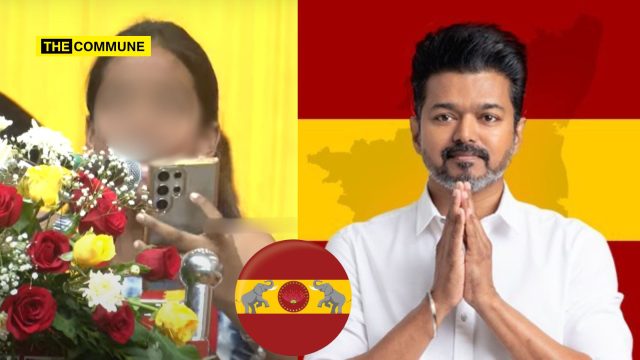
A recent political event by Tamilaga Vettri Kazhagam (TVK) has drawn attention after a child named by party founder and actor Vijay appeared on stage and delivered a speech praising him. The girl, identified as Nethra, addressed the audience, referring to Vijay as “Thalaivar” and stating that he gives hope to students and rewards high achievers.

She said, “Elders! Mothers! and state administrators! Volunteers who live in the heart of the Thalapathy! Today our flag is flying all over Salem. Tomorrow our flag will fly at the fort too. Our Thalapathy is the only leader who celebrates people be they farmers or scientists. Our Thalapathy is the one who gave hope to all the students that if they get good marks, they can get a prize from his hands. Thank you everyone for coming here.”

It is noteworthy that the child Nethra was originally named by Vijay himself.

Election Commission of India and quasi-judicial bodies, including the National Commission for Protection of Child Rights (NCPCR), has made it clear that parading children during election or political campaign is a clear violation of children rights.

Not The First Time

This is not the first time Vijay and TVK are seen having children on their platforms.

February 2025 – TVK Meeting

The event follows a pattern observed earlier in February 2025 during a TVK meeting held in Mahabalipuram, where several children were seen participating actively. Toddlers and young children were reported running around with party flags and shawls in TVK colours. Vijay was seen lifting a toddler, identified as Ilam Siddharth from Madurai, and engaging with him on stage. Multiple parents present had told reporters they had brought their children due to their admiration for the actor and to show support for the party.

According to reports, the children in attendance were wearing party symbols and, in some cases, reportedly mimicked Vijay’s movie dialogues and gestures. One woman functionary from Dindigul had said she intended to raise her toddler daughter as a party cadre. Another, from Erode, stated she brought her three-year-old daughter to see the actor in person.

The incident had also led to speculation about the formation of a children’s wing within the party. When asked, TVK spokesperson Loyola Mani stated that the children’s wing was not intended to include children as members. He said it was created to address child-related issues and to work towards protecting children’s rights. He also clarified that some children may have been present at events due to personal circumstances, adding that even he had brought his daughter on occasion.

Despite these explanations, questions have continued to emerge regarding the visibility of children at political events, the use of minors in stage programs, and the broader implications of such participation. Legal observers and child rights activists have pointed to existing child protection laws in India that discourage the political use of children in rallies, campaigns, or media promotion by parties.

April 2025 – Booth Committee Conference

In April 2025, Vijay faced criticism for allegedly allowing minors to participate in the party’s Booth Committee Zonal Conference in Coimbatore on April 26–27, 2025. This violates Election Commission of India (ECI) rules, which prohibit under-18s from any election-related roles. Reports claim that minors received entry tokens for the booth-level meeting, meant strictly for eligible voters. The ECI maintains a zero-tolerance policy against using children in political activities, though passive presence with guardians is not a violation.

Children should not be involved in politics until they reach the age of 18. On 5 February 2024, the Election Commission of India issued a press note making it clear that it maintains a zero-tolerance policy towards the use of children in election-related work or campaign activities. The Commission directed political parties, candidates, and election officials to refrain from involving children in any aspect of political campaigns or rallies.

However, the Commission clarified that the mere presence of a child with a parent or guardian near a political leader, as long as the child is not involved in campaign activities, does not violate these guidelines.

Diamonds & Cash For Achievers – Bribe In Disguise?

Vijay held a high-profile award ceremony in Mahabalipuram on 13 June 2025, where he distributed certificates, cash prizes, and even gold rings to Class 10 and 12 toppers from 16 districts. While presented as a celebration of academic excellence, the event is seen by many as a calculated political move ahead of the 2026 Tamil Nadu Assembly elections. This was the third such ceremony, with past editions featuring extravagant gifts like diamond jewelry. Analysts argue these events blend civic recognition with subtle voter inducement, using photo ops and emotional appeals to build loyalty among families. Though Vijay asked attendees to focus on student success, the recurring nature and media coverage suggest a larger voter outreach campaign. Critics say these events cross the line between encouragement and electoral strategy, turning student accolades into tools for political consolidation.

Subscribe to our channels on Telegram, WhatsApp, and Instagram and get the best stories of the day delivered to you personally.

‘Dalit’ Christians Go On Hunger Strike Alleging Caste Discrimination At Century-Old Church Festival In Trichy

dalit christians caste discrimination

A group of Dalit Christians from Kottapalayam village near Thuraiyur held a hunger strike outside the Tiruchy Collectorate on Monday, alleging that they had been subjected to caste-based discrimination during the ongoing annual festival of the St Mary Magdalene Church, which comes under the Roman Catholic Diocese of Kumbakonam.

The protestors claimed they had been consistently excluded from participating in key aspects of the festival, which began on 14 July 2025. They stated that they were not permitted to pay subscriptions to the church and had been left out of planning committees. They further alleged that the church’s chariot procession was deliberately routed to avoid their locality, despite the presence of seven chariots in the festival.

According to them, attempts to contribute to the church through standard subscriptions had been refused, and they were instead asked to make donations, which they believed was intended to prevent them from gaining any say in church matters. The protestors accused dominant caste Christians of controlling festival decisions and maintaining discriminatory practices.

They also submitted a petition to the District Revenue Officer during the weekly grievances meeting, seeking action against the parish priest and others who, they claimed, had threatened them and used caste-based slurs during a festival planning meeting held on 6 July 2025.

A human rights lawyer who participated in the protest said the situation reflected a systemic denial of equality and called for dismantling caste-based divisions within the religious institution. The protestors demanded the formation of an inclusive parish council, equal participation in religious and festival events, and legal action against those responsible for caste-based discrimination.

Bishop Jeevanandam Amalanathan of the Diocese of Kumbakonam announced that he would not participate in the chariot procession scheduled for 22 July 2025. He cited persistent caste discrimination within the parish as the reason for his decision and reportedly expressed concern that dominant caste Christians continued to oppose equal rights for Dalit Christians. However, the church officially denied any discriminatory practices.

Sources in the revenue department stated that the petitions had been forwarded to the local authorities, and instructions had been given to conduct an inquiry into the matter.

(With inputs from The New Indian Express)

Subscribe to our channels on Telegram, WhatsApp, and Instagram and get the best stories of the day delivered to you personally.

Court-Ordered Demolition Of Maduranthakam Saneeswaran Temple Leaves Devotees In Tears

Maduranthakam Saneeswaran Temple

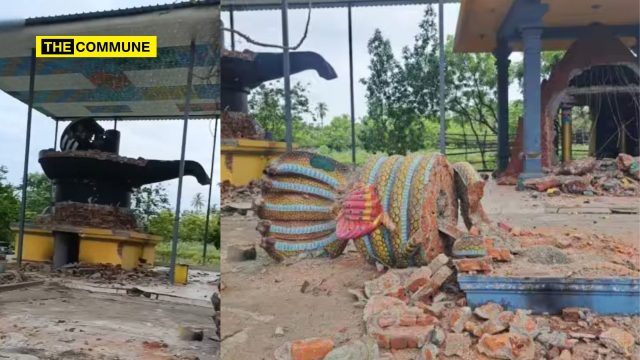
Devotees and local residents were left deeply saddened after temples constructed on government land in the Mettupalayam area near Maduranthakam were demolished following a court directive. The temple administrator also ensured that the idols were safely taken into custody.

The sannidhis, dedicated to deities such as Saneeswaran, Easwaran, Amman, Ayyappan, and Vinayagar, had been maintained by 55-year-old Murugaiyan.

The legal dispute began when Raja, a social activist from Sothupakkam, filed a petition in the Madras High Court, claiming that the temples were unauthorized structures built on public land. About six months ago, the court directed the revenue department to take action and remove the encroachments.

Subsequently, officials from the Maduranthakam revenue department issued multiple notices to Murugaiyan, urging him to comply with the court’s order and clear the site.

In response, Murugaiyan voluntarily dismantled the temples during the night and ensured the idols were preserved safely. When devotees arrived the following day, they were heartbroken to find the temples no longer standing and left the site in sorrow.

(With inputs from Dinamalar)

Subscribe to our channels on TelegramWhatsApp, and Instagram and get the best stories of the day delivered to you personally.

Tamil Nadu BJP Chief Nainar Nagenthiran Slams DMK Govt After Viral Video Shows Illegal Liquor Sale In Mayiladuthurai

Nainar Nagenthiran dmk bjp

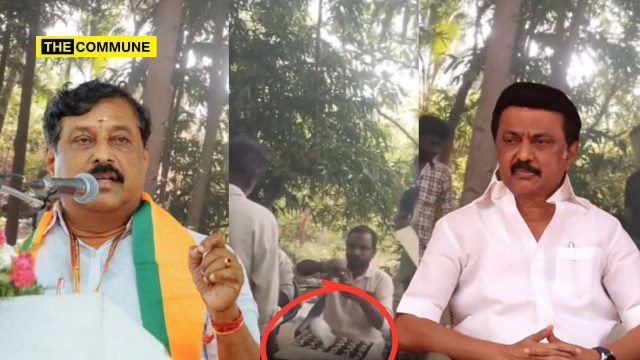
Tamil Nadu BJP president Nainar Nagenthiran has launched a strong criticism against the DMK government following the circulation of a viral video of allegedly selling illegal liquor that has sparked outrage across the state. The footage allegedly shows individuals openly purchasing illegal liquor using GPay on farmland in Mayiladuthurai. The incident surfaced shortly after the suspension of Sundaresan, Deputy Superintendent of Police of the District Prohibition Enforcement Wing.

Sundaresan, who had taken charge of the prohibition wing in November last year, had led a relentless campaign against illicit liquor trade. His tenure saw the closure of 23 unauthorized TASMAC outlets and the booking of over 1,200 offenders, leading to more than 700 arrests. His firm actions had earned him widespread public appreciation, prompting concerns that his suspension may be politically motivated and aimed at silencing honest enforcement.

Taking to his official X account, Nainar Nagenthiran posted a fiery response, stating, “A video has been released showing illicit liquor being sold in Mayiladuthurai immediately after the suspension of Sundaresan, the Deputy Superintendent of Police, District Prohibition Enforcement Wing. Did the @arivalayam government suspend an honest officer with false accusations specifically to facilitate such rampant illegal liquor sales with digital transactions in broad daylight, in public? Does Davidson Devasirvatham, Additional Director General of Police, aware of this illegal liquor trade?”

He went on to question the government’s motives, asked, “Today it’s black-market liquor sales, what’s next? Is it the grand opening of the 23 illegal bars that was shut down by Sundaresan? As long as this Dravidian Model government, which promotes social justice on stages but harasses honest police officers, secretly encourages illegal liquor sales, and aims only to destroy law and order, remains in power, there will be no bright future for Tamil Nadu!”


Subscribe to our TelegramWhatsApp, and Instagram channels and get the best stories of the day delivered to you personally.

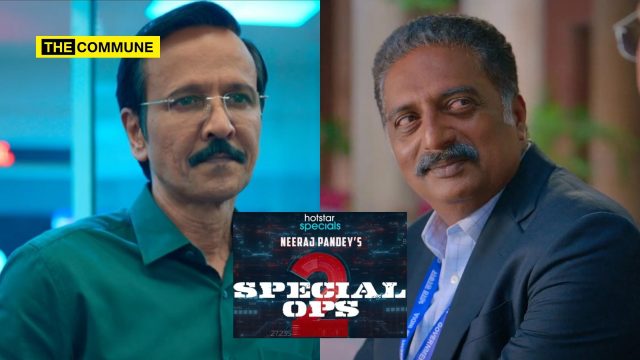
Special Ops Season 2 Review: Kay Kay Menon Performance Is Fire But Prakash Raj’s Cringe & Preachy Propaganda Make You Tired

The much-anticipated second season of Special Ops lands with a thud, failing to match even the basic thrills of its earlier installments. There are positive reviews floating everywhere and there is a truth farther from this.

What started as a taut espionage thriller in Season 1 and even a fairly well-made Season 1.5, unravels into an overblown, incoherent sequel that drowns in its own excess. Season 2 has a storyline of AI, cyberwarfare, international missions (one might want to think of “unknown men”). But there are unnecessary additions in the form of propaganda and preaching that is shoved down the viewers’ throats as if to say, we have the main story going on but this side story also has to be added to please our bosses.

Warning – Spoilers ahead

Direction & Screenplay: Confused and Cluttered

The direction is uninspired, and the screenplay feels stitched together from a patchwork of unrelated ideas. What should have been a tight techno-thriller quickly devolves into a bloated soapbox lecture laced with jingoism, bizarre subplots, and cringe-worthy attempts at emotional manipulation. The pacing suffers immensely, and none of the seven episodes manage to deliver real suspense or narrative payoff. Whatever worked in Season 1 is absent here.

Acting: One Man Army

Kay Kay Menon is the only standout, delivering a dignified and intense performance as R&AW officer Himmat Singh. The rest of the Indian cast is average, the foreign actors are wooden, and Vinay Pathak is criminally underutilized. Farooq’s constant smirking, limp love angle, and overused screentime are plain annoying.

The villain, played by Tahir Bhasin, is solid to some extent but the way they build up his character just falls like a fizzled-out balloon, all of a sudden. He is shown to be a great fighter MMA expert who can down a champion with a single punch. But his end happens so suddenly and at the hands of someone who has even worse footwork and defence skills.

Prakash Raj’s Arc: Deranged and Dumb

Coming to the elaichi in the kheer or that rogue clove in the biryani that ruins a perfect bite – Prakash Raj. Cast as a bitter, disgruntled ex-bureaucrat (an R&AW handler in fact), he plays a man so enraged by the RBI sanctioning a Gujarati-run bank (clearly modeled on Nirav Modi’s saga) that he decides the rational response is… to blow up the Ministry of Defence! This character is not just laughably written but absurdly cast. It feels less like a performance and more like Prakash Raj simply playing his usual ranting self from social media and TV interviews/debates. Supposedly a retired top official with access to sensitive intelligence, he acts like a petulant man-child whose sulking turns to terrorism because one bank account was frozen and he couldn’t arrange money for his wife’s surgery and because of which she passes. His backstory is riddled with inconsistencies: a son martyred in Kargil (which automatically entitles him to lifelong military healthcare), other child/children settled abroad who could easily support him, yet he acts as if he’s been wronged by the nation itself. The final touch? Mughal-era portraits on his bedroom walls.

This Jignesh Dholakia character has a ‘Mota Bhai’ supporter who helps the fugitive that he is, peppering conversations with chants of “Jai Shri Krishna” – it is not clear what this was intended to portray. Did the director really want to take a dig at the Gujratis and given the Mota Bhai reference, at Union Home Minister Amit Shah himself? Did he want to prove that criminals are Hindus, those who chant names of deities every second of their lives? To add to the whole thing – Prakash Raj’s plot was not even part of the main one – totally unconnected. It’s not just lazy writing -pure, plain manufactured, agenda-driven farce. Reel Prakash Raj is every bit as pompous, hypocritical, and dumb as the real one.

Despite Himmat Singh telling him, trying to convince him that he is in the middle of a crisis, Prakash Raj’s character keeps throwing tantrums all through the episodes.

Action: Painfully Bad

The action choreography is downright pathetic. Sequences lack intensity, logic, and realism – they are just lazy. Trained soldiers fall like dominoes in the very first episode to a mercenary group. In one climax, two agents scale a dam and blow up a server room in under 15 minutes under the watch of trained guards. The Sudheer-MMA fighter boxing scene is so poorly done, it feels like school theatre.

Fighting is extremely slow, as if the show is hinting at you to watch it in 1.5x. Even kids at a Karate school can do better action than what we saw in S2.

Technical Nonsense: AI, Cybersecurity & WTF Moments

The show desperately tries to appear tech-savvy but ends up embarrassing itself. It throws around jargon like MITM attacks, IP spoofing, the cyber guy just connects to the “Dark Web through what seems like some app or messenger called “Dark Hub”. Then there’s Dr Bhargav, an “AI genius” who somehow doubles as India’s top cybersecurity expert – logic be damned – he has only 4-5 dialogues in the entire season – till episode 6 he keeps repeating the same 2 sentences and then in the final 2 episodes he preaches about patriotism. Add to this his imagination of a nuclear blast is AI-generated or was it pathetic CGI? Gosh!
In the final episode, we also get to see two pathetic CGI wolves who appear out of nowhere to attack 2 special agents who are looking to capture Dholakia. But guess what, these wolves are outrun by the 2 agents!
In yet another disappointment, there is a bomb blast scene which fails even basic CGI criteria.

Other Waste Of Time Subplots

Not sure why another character named Ruhani is present in the story. She is caught by her husband as she is to head into an op. She does nothing qualitative in the series, just accompanies the other agent Farooq in the boat and does something on the computer in the finale episode – that’s it.

The love story/flirting between Dr Harminder and Farooq are another waste of time, especially if you are watching with family.

Dr Harminder’s partying in Athens for vacation is another useless subplot. So is the hawala transaction enabler Salim. He only serves on purpose – a chance for Himmat to take a dig at a Muslim, but that alone is not enough to carry the series forward.

Pakistani Asset Helping At Crucial Moments

While the series successfully undermines the quality and intelligence of Indian agents, it also seems to cement the thought that India always needs a Pakistani to help them at crucial times. This is shown twice in the series – once to get location coordinates of India’s own agent who got kidnapped and once to get the location coordinates of the fugitive Dholakia.

Apart from these, there are several other logical inconsistencies – the less spoken about them, the better.

The message that seems apparent from this series is this – Indians are traitors, especially Hindus, they are also criminals while Muslims make for great special agents and save the day for Himmat Singh and the country. Yes, all this is imaginary, but there is absolutely no need to hammer this on to the audience.

Background Score/Music

Along with Kay Kay Menon’s acting and screen presence, the other saving grace is the music/background score that match the sentiments. Unfortunately, this is not enough to salvage the series.

Verdict

What started as smart espionage has devolved into self-parody – Special Ops 2 is a puffed up, propaganda-heavy mess.
Rating: ★☆☆☆☆ (1/5)

Subscribe to our channels on Telegram, WhatsApp, and Instagram and get the best stories of the day delivered to you personally.