Home Blog Page 209

How Acharya Manoj Ji & Aarsha Vidya Samajam Are Rescuing Youth From Radicalization In India & Beyond
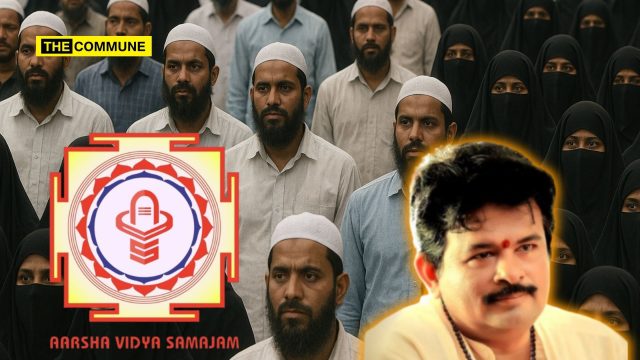
In a region increasingly grappling with ideological extremism and religious radicalization, Aarsha Vidya Samajam (AVS), a Kerala-based socio-spiritual organization founded in 1999 by Acharya Shri K.R. Manoj ji, has quietly emerged as a beacon of hope. Over the past two decades, the institution has rescued and rehabilitated more than 8,000 individuals, many of them youth who were on the brink of full radicalization or religious conversion through psychological manipulation and ideological grooming.

Aarsha Vidya Samajam – Who Are They? 

AVS is more than a cultural or religious institution; it is a grassroots counter-radicalization movement. The organization is rooted in Sanatana Dharma and offers structured educational and counseling programs for youth who have been manipulated by extremist ideologies, primarily through religious conversion tactics.

AVS’s core mission is fourfold:

  1. Adhyayana (Study) of Dharma and comparative religion.
  2. Anushtana (Practice) of spiritual and cultural values.
  3. Pracharana (Propagation) of accurate knowledge.
  4. Adhyapana (Teaching)
  5. Samrakshana (Protection) of individuals and society from ideological exploitation.
Yogacharya KR Manoj Ji

Yogacharya Sri K.R. Manoj Ji is the founder and director of Aarsha Vidya Samajam, established in 1999 under the guidance of his Guru, Sri Sankara Gurudev. Beginning his spiritual journey at age four, he trained in Sanathana Dharma, Yoga Vidya, and Tantra Vidya across three major Guru Paramparas: Aathreya, Kriya Yoga, and Tantra. His work integrates teachings from legends like Mahavatar Babaji and Paramahansa Yogananda. Manoj Ji also founded several affiliated institutions including Sivasakthi Yogavidya Kendram and Bouddhikam Books. He has studied under renowned masters and institutions such as Bihar School of Yoga and Sivananda Yoga-Vedanta University. In 2023, he was honored with the Aurobindo Samman for his service to Sanathana Dharma.

The Threat: How Youth Are Radicalized

Today, we commonly come across the term “radicalized youth”, radicalization. But many are not aware what it means or how it works and how youth are radicalized. Let’s understand this.

The Mechanism of Radicalization

This information has been shared by those who were once victims themselves. They all have chillingly similar stories.

Radicalization often begins in schools, colleges, hostels, and workplaces, where students encounter peers who pose seemingly innocent questions about Hindu customs.

These questions are deliberate traps, exploiting the lack of robust religious or cultural education among Hindu youth.

Over time, through whitewashed narratives, manipulated theology, and emotional exploitation, youth are led to believe their own culture is backward or false.

Groomers often supply Tafsir translations, videos of radical preachers like Zakir Naik, and doomsday theology involving hellfire and divine punishment to instill fear.

Islamic dress codes and behavior are introduced slowly, often framed as moral superiority.

Converts are taught to hate their own families, religion, and nation, with many even adopting new names and becoming hostile to any dissent.

Common Signs of Radicalization

Some of the common signs of radicalization include:

  • Sudden disinterest in family, festivals, or familiar traditions.
  • Abrupt change in clothing, adopting strict modesty rules beyond what their peers follow.
  • Isolation from long-time friends and family.
  • Use of religious terms or ideas not typically found in their upbringing.
  • Open contempt for Hindu practices, deities, or cultural expressions.
  • Withdrawal from music, dance, or other art forms considered “impure.”

Stories of Recovery: Real People, Real Battles

Here are some real experiences of youth who were deradicalized by AVS. Today, all these women are full-timers at the organisation.

Anagha – The Doctor Who Nearly Left Everything

Anagha, a medical doctor, was radicalized over six years through college roommates and colleagues. She began to believe Hinduism was wrong and even considered converting her family. When her family pleaded with her, she responded with complete disdain. She was brought to AVS where a single three-hour discussion with Acharya Manoj ji dismantled six years of ideological conditioning.

Shri Lakshmi – From Khadija Sana to Sanatana Defender

A student of architecture, Shri Lakshmi fully adopted Islamic ideology, changed her name, and covered herself head to toe in a burqa. Her transformation included total disdain for her parents and hatred for Sanatana Dharma. After undergoing AVS’s courses and personal debates with the Acharya, she regained her clarity and now studies law while working full-time for AVS.

Krishna Priya – From Gita Reciter to Radical Islamist

Even though she studied in a Hindu school and had memorized the Bhagavad Gita, Krishna Priya was radicalized through peer pressure and eventually became anti-national. Nothing worked – temple visits, court interventions, or counseling, until AVS brought her back through structured intellectual and scriptural reasoning.

Shruti – The First Woman Full-Timer

Once an educator and a convert, Shruti was so radicalized that she physically attacked her mother for interrupting her prayers. After being retrieved from a conversion center, a short session with Acharya Manoj ji dismantled the blind faith she held, leading her to dedicate her life to AVS and become its first female full-time teacher.

The AVS Approach: Systematic De-Radicalization

AVS’s success lies in its scientific, scriptural, and rational curriculum, which is built around the following core courses:

Adhyatmika Shastra – Foundation course in Sanatana Dharma, covering theology, terminology, and comparative religion.

Bharatiya Samskriti – A deep dive into India’s undistorted cultural, political, and historical legacy.

Yoga Vidya – Scientific understanding of Yogic principles for physical, mental, and spiritual development.

Sudarshanam Course – A flagship de-radicalization program aimed at identifying and dismantling root causes of extremism.

Vidyajyothi Scholarship Program and Students’ Excellence Program – Tailored for students and educators to develop resilience against ideological manipulation.

Classes are held online weekly, with dedicated Q&A sessions, debates, and scriptural study – all grounded in authenticity, reason, and dialogue, not coercion.

AVS Is Not Just A Movement – It’s A Shield

Aarsha Vidya Samajam is doing what few have dared: facing ideological radicalism head-on, with reason, compassion, and clarity. It is a sobering reminder that education without rootedness can make even the most intelligent youth vulnerable to ideological hijacking.

By restoring spiritual literacy and grounding youth in their cultural heritage, AVS is not merely de-radicalizing individuals, it is healing families, rebuilding communities, and safeguarding the civilizational fabric of Bharat.

How to Seek Help or Learn More

Parents, teachers, and guardians noticing sudden shifts in their children’s behavior should reach out early. AVS offers free courses and counseling, available both offline and online. Visit their official website or contact their local centers to enroll in Sudarshanam or other foundational courses.

This isn’t just about stopping conversions; it’s about reclaiming clarity, pride, and purpose in one’s life and lineage.

Subscribe to our channels on Telegram, WhatsApp, and Instagram and get the best stories of the day delivered to you personally.
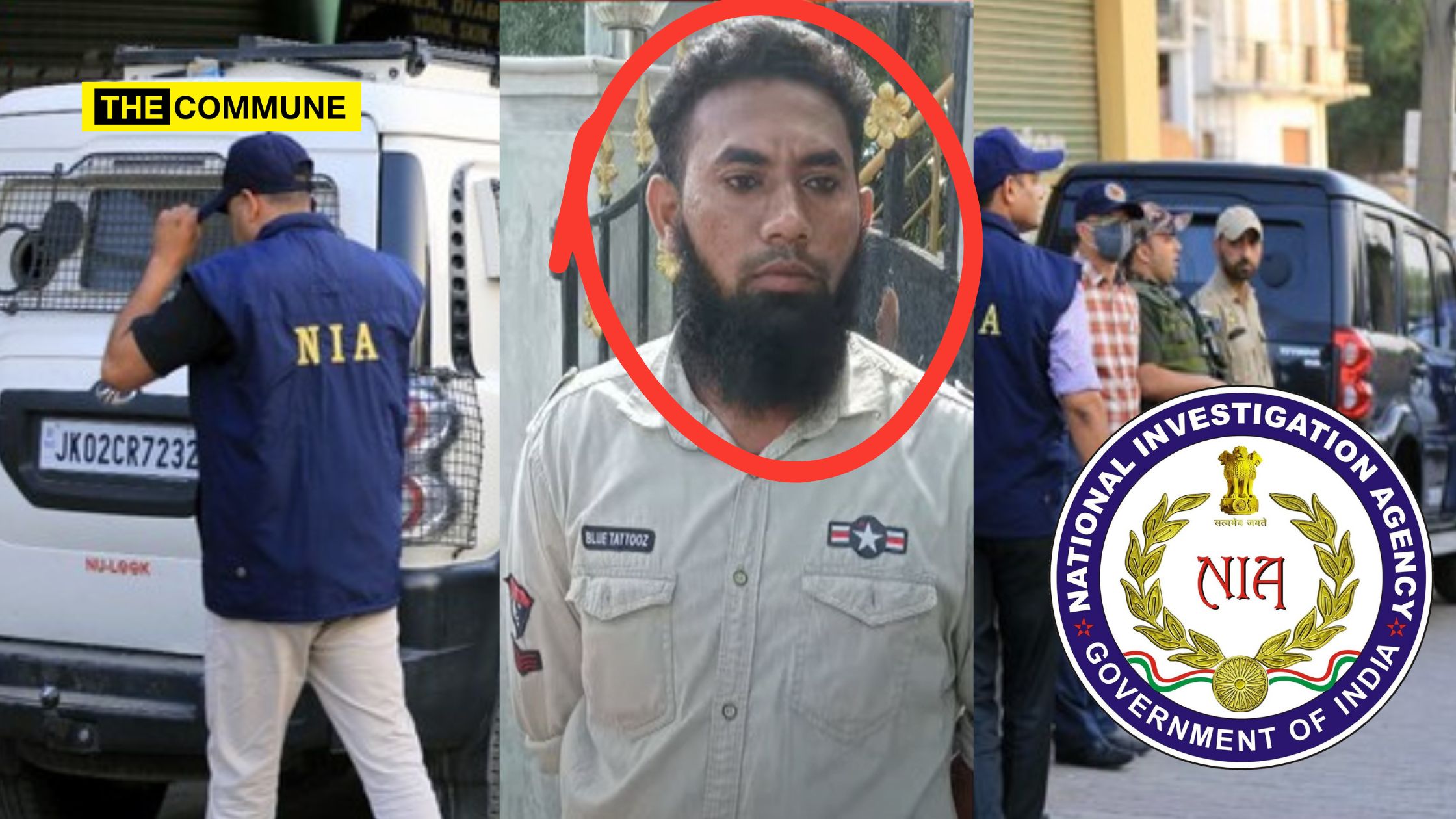
NIA Charges Ambulance Driver ‘Alfasith’ From Tamil Nadu For Spreading ISIS Propaganda Via Telegram, WhatsApp In Radicalisation And Recruitment Case

NIA isis

The National Investigation Agency (NIA) has filed a chargesheet against A. Alfasith, a resident of Mayiladuthurai, in connection with a case involving Islamic State (IS) radicalisation and conspiracy. He was arrested in 28 January 2025.

According to the agency, Alfasith is an active member of the banned terrorist organisation and was found in possession of extremist videos and documents downloaded from a Telegram channel named ‘nashida33’ (Al Wala Wal Bara), which is linked to ISIS propaganda.

Alfasith, who was employed as an ambulance driver, was apprehended earlier this year in Tirumullaivoyal after the NIA conducted raids in Chennai and Mayiladuthurai. The agency alleges that he, along with others, distributed ISIS propaganda materials videos, documents, and images through platforms like WhatsApp and Telegram. Groups such as ‘Islamic State’ and ‘Black Flag Soldiers’ were reportedly created by the accused to disseminate extremist content and lure young Muslim men into radical ideologies. The NIA stated that these actions were intended to disrupt national unity, public safety, and communal harmony.

The investigation also revealed Alfasith’s links to ‘Needur’ Sathik Batcha, also known as ICAMA Sathik, who had been arrested in 2022 for threatening police officers with a firearm in Mayiladuthurai. Sathik, identified as a martial arts trainer, had allegedly conducted recruitment meetings in Chennai and Thiruvananthapuram. These sessions aimed to enlist members for the Khilafah Party of India and similar radical groups.

(With inputs from Times Of India)

Subscribe to our channels on TelegramWhatsApp, and Instagram and get the best stories of the day delivered to you personally.

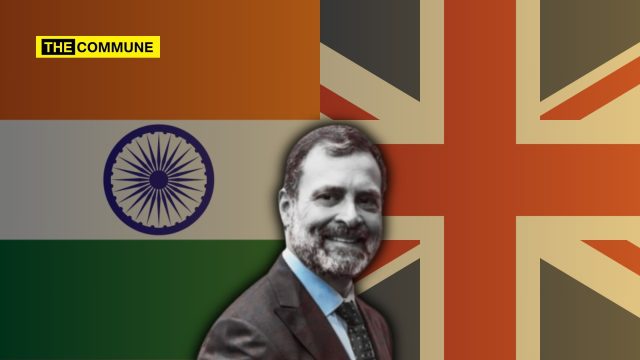
Is Congress Scion Rahul Gandhi Really Indian Or British? Passport Records Handed To India Reveals Details

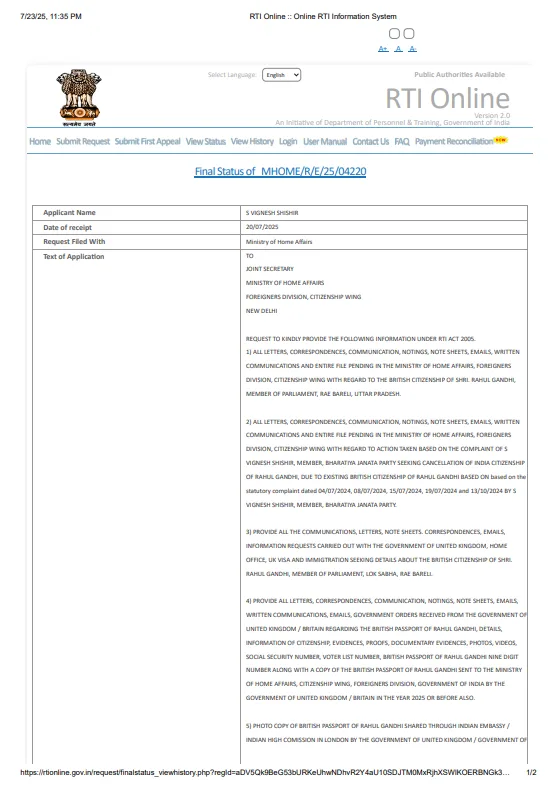
In a significant development unfolded in the ongoing Rahul Gandhi citizenship case S. Vignesh Shishir, a member of the Bharatiya Janata Party (BJP), officially filed a Right to Information (RTI) application requesting a complete copy of all communications between the Indian and UK governments concerning Rahul Gandhi’s British passport and citizenship records on 20 July 2025.

                                                        [Image Credit: Organiser]

This comes shortly after the United Kingdom reportedly shared Rahul Gandhi’s passport details and citizenship status with the Indian government. The documents were forwarded to the Ministry of Home Affairs (MHA), specifically its Foreigners Division and Citizenship Wing in New Delhi which follows directives issued by the Allahabad High Court on 11 July 2025, during a hearing in the review petition connected to the Rahul Gandhi British Citizenship and Lok Sabha Election Cancellation Case.

The petitioner, S. Vignesh Shishir, had earlier brought this issue to court, alleging that Rahul Gandhi had declared British citizenship—potentially rendering him ineligible to contest elections under Indian law, which prohibits dual citizenship. Based on a previous High Court order (WPIL No. 471/2025), the Indian government initiated diplomatic outreach to the UK, requesting verification of Gandhi’s citizenship status.

In response, UK authorities are said to have provided a comprehensive set of documents, including passport information and citizenship details. As per court direction, these materials are being handed over to the petitioner to be submitted as evidence in the legal proceedings.

Background of the Citizenship Controversy

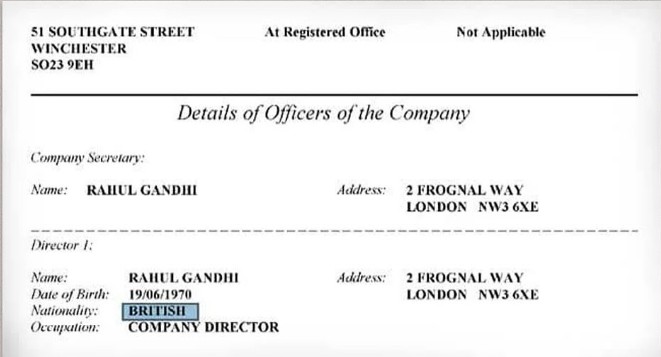
The dispute stems from long-standing allegations that Rahul Gandhi may have once held British citizenship while serving as a director of the UK-based company Backops Limited. Petitioner Vignesh Shishir argues that such a declaration made in company filings renders Gandhi ineligible to hold Indian public office under Section 9(2) of the Citizenship Act, 1955, as India does not allow dual citizenship.

Although the case was previously dismissed by the High Court due to delays by the central government in submitting a conclusive report, the court had allowed the petitioner to seek further legal remedies. The latest review petition was filed after new evidence was reportedly acquired by Shishir from London, Vietnam, and Uzbekistan, including documents and videos that allegedly confirm Gandhi’s foreign citizenship.

On 19 December 2024, the High Court had instructed Additional Solicitor General (ASG) Suryabhan Pandey to obtain verification from the MHA. The MHA subsequently reached out to UK authorities via the Indian Embassy in London, requesting Gandhi’s citizenship records. After repeated delays and requests for extensions, the Centre’s initial responses were deemed “insufficient” by the court. During a hearing on 21 April 2025, the bench issued a stern directive giving the MHA 10 days to present definitive proof of Gandhi’s citizenship status.

Notably, Rahul Gandhi has not appointed legal representation in the case so far, a fact that has drawn attention amid mounting political speculation.

Involvement of Central Agencies

What underscores the seriousness of the case is the involvement of the Central Bureau of Investigation (CBI), specifically its Anti-Corruption Branch-II, which is now actively examining aspects of the case. This includes probing allegations that Gandhi may have violated constitutional norms or misled voters by failing to disclose foreign citizenship in his election filings.

The petitioner maintains that the use of a British passport, or any formal claim to British nationality, automatically invalidates Gandhi’s Indian citizenship and disqualifies him from Parliament. These claims, if upheld, could have far-reaching implications for Gandhi’s political future and the Congress party at large.

It’s worth recalling that the Supreme Court had earlier dismissed a similar petition in 2019, with then Chief Justice Ranjan Gogoi noting that a company’s internal records showing Gandhi as a “British citizen” were not conclusive evidence of actual citizenship. However, the current review petition claims to bring forward more substantial and verifiable evidence.

As the case returns to the spotlight with fresh momentum, all eyes are now on the Allahabad High Court’s next steps. Whether the new documents provided by the UK government will prove decisive remains to be seen but their emergence marks a crucial turning point in a controversy that blends legal scrutiny, political stakes, and questions about constitutional integrity.

(With inputs from Organiser)

Subscribe to our channels on TelegramWhatsApp, and Instagram and get the best stories of the day delivered to you personally.

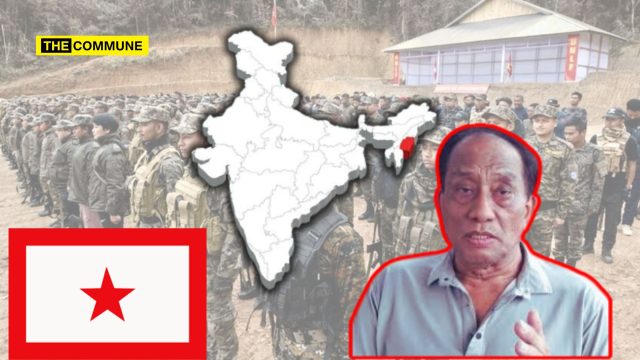
“Manipur Was Never Indian”: Former Chairman Of Banned UNLF, RK Meghen, Who Called For UN Plebiscite, Says India’s Disintegration “Inevitable”

rk meghen manipur unlf plebiscite india secessionist

RK Meghen, the former chairman of the banned United National Liberation Front (UNLF), a Manipur-based terror group fighting for an “independent socialist Manipur,” recently gave a dangerous interview to The Lungleng Show.

In the conversation, he made several alarming statements undermining India’s sovereignty, predicting its breakup, and endorsing secessionist movements in Tamil Nadu, Punjab, and Bengal. UNLF is an organization banned by NIA in India, it is also listed as a terrorist organization as per the Ministry of Home Affairs in the First Schedule of the UAPA.

Meghen, who spent years in jail under the Unlawful Activities (Prevention) Act (UAPA) before being released in 2019, remains unrepentant. His remarks are not just ideological rhetoric; they are a direct challenge to India’s constitutional integrity and internal security.

In the first 10-15 minutes of The Lungleng Show interview with RK Meghen (alias Sana Yaima), lays out his historical and ideological grievances against the Indian state. He begins by asserting that Manipur was a sovereign nation prior to its merger with India in 1949 and claims the annexation was neither voluntary nor democratic. Meghen says that the Indian Constitution was imposed on the people of Manipur without their consent and argues that the current federal structure is a façade masking centralized control from Delhi.

He repeatedly calls for the right of Manipur to reclaim its sovereignty and have its own constitution. Dismissing India’s nationhood as a colonial construct, he insists that people of the Northeast never identified as Indian in the first place. Meghen also draws parallels between Manipur’s situation and international conflicts like Ukraine-Russia, portraying both as struggles for freedom. Notably, he references political voices in Tamil Nadu that have questioned their continued participation in the Indian Union, claiming such sentiments show that Manipur is “not alone.” While Meghen avoids directly calling for violence, he defends armed resistance as a historically necessary path when democratic options are blocked by coercive state power.

Problematic Statements That Are A Threat To National Security

Through the 54-minute podcast, Meghen makes some very inflammatory statements that are secessionist, that attack India’s sovereignty and also rejects Indian constitution.

“The idea of India historically is a very very weak idea. A very young nation in that sense. Manipur is older nation than India. I remember a remark by Mountbatten who said, India will not last 100 years. I think he a historical remark. What’s happening in India today? India is boiling inside and the Dravidian south, the Aryan north and the in the east the Bengal and the rise of Maratha nationalism and Punjab Sikh nationalism, the Khalistan is there these factors I see may be weak today, it’s going to become stronger and sour.”

He cited “rising regional nationalism” in Tamil Nadu, Punjab, and Maharashtra as signs of India’s impending fragmentation. Such rhetoric fuels secessionist narratives and emboldens anti-India forces.

By legitimizing these movements, he indirectly supports forces that India has long fought to neutralize.

“Bengal they are a nation by themselves. The East Bengal is now Bangladesh West Bengal. Mamata Banerjee wants Bengal to be renamed as Bangla, but centre is not allowing because from Bangla, Bangladesh is not far, The joining of the two Bengals. Just like you know East German and East Germany and West Germany. Okay. It was artificially divided. I see. And Bengal same thing. East Bengal and West Bengal was divided during British rule. The sharpening of internal contradictions within India will lead to its breakup. Just like East and West Germany reunited, Bengal will too.”

Meghen claimed that Bengal is a single nation divided by colonial rule and compared it to the division of East and West Germany. He suggested that the renaming of West Bengal to “Bangla” was being blocked by the Centre to prevent symbolic closeness with Bangladesh and predicted that India’s internal contradictions would eventually lead to its breakup and Bengal’s reunification.

“… it is an existential threat and survival not just about sovereignty independence sovereignty independence is a very vague term to the people common people okay but now the reality is that we are being swamped by outsiders whether from Bangladesh Nepal or mainland India”

Makes secessionist statements by framing India as “mainland India” and calling Indians as “outsiders”, clubbing them with actual foreign nations like Bangladesh and Nepal, implicitly treating India as an external entity rather than a national home. By describing the presence of these groups as an “existential threat,” Meghen portrays Manipur’s identity as under siege from within the Indian state. Additionally, dismissing the idea of “sovereignty and independence” as vague while immediately decrying Indian influence suggests a coded attempt to legitimize ethno-nationalist grievances without an outright call for secession.

“Nobody has regained sovereignty dependence through a negotiation process. definitely the talks process uh weakens the struggle. I strongly feel that the government of India has always used the talks process as a tool to divide the revolutionary struggles and finish one by one. It has happened. It’s happening right there. It is happening and it will happen.”

Meghen dismisses peace talks as a government tactic to divide and weaken “revolutionary struggles,” suggesting that sovereignty cannot be regained through negotiation. This framing delegitimizes democratic processes and implicitly endorses armed resistance. By portraying the Indian state as deceitful and revolutionary groups as justified, his statement reinforces a secessionist worldview and encourages continued insurgency rather than political resolution.

“They picked me up from Bangladesh… I was kept under detention in Dhaka for 60 days… with the help of the Bangladesh government. Hasina’s government was directly involved in that. Not just me, also Tripura and Bodo leaders… We knew it would happen. But this new dispensation, I think, looks at our struggles as a freedom struggle.”

Meghen openly admits to using Bangladesh as a base for revolutionary activity, framing Indian operations to capture insurgents as hostile acts enabled by a foreign ally. He expresses hope that the new government in Bangladesh will support “freedom struggles” in India, thereby legitimizing secessionist militancy and seeking international political backing for it – a direct challenge to Indian sovereignty.

“The Manipur Merger Agreement was forced, not voluntary. It was an annexation, not integration.”

Meghen denied Manipur’s accession to India in 1949. This false historical revisionism is a staple of insurgent propaganda, used to justify armed struggle against the Indian state.

“Talks with India are a trap to weaken revolutionaries. Nagaland’s peace talks have failed, and Manipur’s struggle will continue.”

Meghen asserted that “sovereignty cannot be negotiated” and that armed struggle is the only way. His dismissal of democratic dialogue and advocacy for violence is a direct threat to India’s internal stability.

When questioned, if he “looked forward to the day where India will be disintegrated that all these regional powers can gain back their independence? “, Meghen replied, “I’m not looking forward like that, but the inevitable historical process will happen.”

While he tried to wriggle himself out of the tight spot the host put him in, Meghen’s words only reflect his true feelings – secessionism and a disintegrated India.

Meghen has consistently called for a plebiscite under UN supervision in Manipur to decide, “whether the people of Manipur would like to be part of the Indian Union or not.” He regards the Manipur-India political conflict as unresolved and accuses the Indian government of denying Manipuris the right to self-determination. He has publicly accused Indian security forces of racism, claiming anti-terror operations in the North East are conducted with a “racist attitude.” He asserts that alleged excesses by Indian security forces are based on ethnic profiling, which not only deepens divisions but also fuels anti-India narratives. In statements to the media after his release, Meghen declared he “would give [his] life for the people of Manipur,” portraying separatism as a noble struggle and himself as a martyr ready to inspire future generations. Meghen’s continued rhetoric risks reigniting dormant separatist tendencies not just in Manipur, but across the Indian Union by referencing other regions like Tamil Nadu. By presenting India as an unnatural union, he actively undermines the constitutional and territorial integrity of the country.

Subscribe to our channels on Telegram, WhatsApp, and Instagram and get the best stories of the day delivered to you personally.
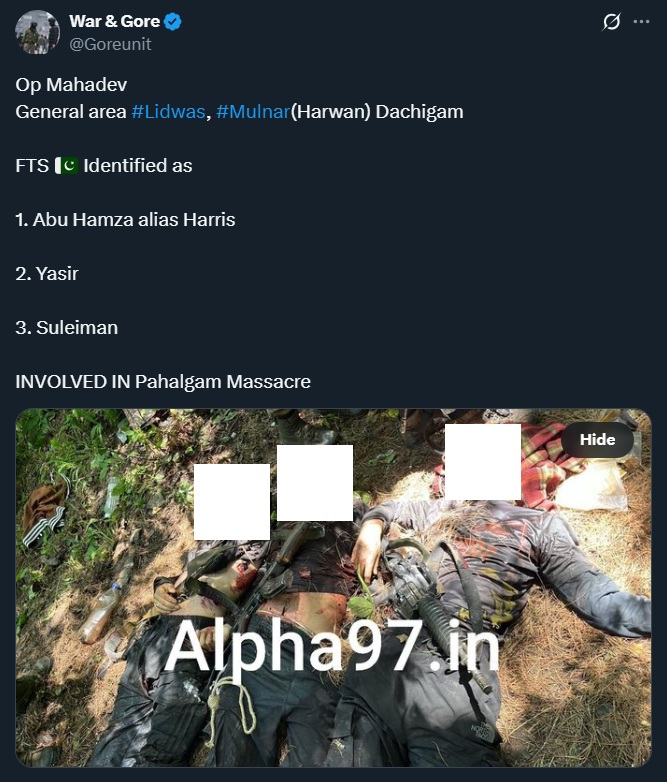
After Chidambaram’s ‘No Pakistan Link’ Claim, 3 Pakistani Terrorists Suspected To Be Behind Pahalgam Terror Attack Killed In Operation Mahadev

Cover Pic Source: Gore Unit Telegram Channel

In light of Congress MP Chidambaram’s statement giving a clean chit to Pakistan for the Pahalgam terror attack, the Indian Army’s Chinar Corps announced the launch of Operation Mahadev in General Area Lidwas, Kashmir. They wrote, OP MAHADEV Contact established in General Area Lidwas. Operation in progress.”

An hour or so later, the update stated, “OP MAHADEV – Update Three terrorist have been neutralised in an intense firefight. Operation Continues.”

OSINT handles indicated that the 3 Pakistani terrorists suspected to be involved in the April 22 Pahalgam terror attack were killed in the encounter in Srinagar’s Dachigam area during a joint operation carried out by the Army and Jammu and Kashmir Police under Operation Mahadev.

The latest post from the OSINT handle shows the dead terrorists.

Image Source: GoreUnit
Operation Mahadev

Security forces recovered a cache of arms and ammunition from the militants’ hideout, including 17 grenades, one M4 carbine, and two AK-47 rifles.

A senior official told India Today there was a strong possibility that the slain terrorists were connected to the deadly attack in the Baisaran Valley of Pahalgam, in which several security personnel were targeted. The identities of the militants are being confirmed, and their possible role in the Pahalgam incident will be ascertained following forensic and intelligence verification.

The operation was launched after the Army intercepted suspicious communication in early July in the Dachigam forest area. Intelligence inputs indicated the presence of a joint group of Lashkar-e-Taiba and Jaish-e-Mohammed operatives, who were subsequently tracked for nearly two weeks with assistance from local nomadic communities.

On Monday at around 11:30 AM, a team comprising 24 Rashtriya Rifles and 4 PARA engaged the terrorists near Mount Mahadev, successfully neutralising all three. The operation name “Mahadev” was reportedly chosen due to the encounter’s location between the Zabarwan and Mahadev ridgelines. Last month, the National Investigation Agency (NIA), which is leading the probe into the Pahalgam attack, arrested two local residents, Parvaiz Ahmad Jothar and Bashir Ahmad, for allegedly providing shelter to the attackers. OSINT handles identify that the terrorists as Abu Hamza (a) Harris, Yasir and Suleiman.

The Indian Army has not yet officially confirmed (at the time of publishing this article) if these terrorists killed are indeed the much-wanted Pahalgam terror attack perpetrators.

If they are, the centre and the Army stand vindicated for their actions following the terror attack, namely Operation Sindoor and negate the clean chits given by the likes of Chidambaram.

What Did Chidambaram Say?

He asked, “Why do you assume that the attackers came from Pakistan?” – a question that conveniently aligns with Pakistan’s standard propaganda playbook. His remarks have sparked a massive backlash, with the BJP accusing him of providing rhetorical cover to India’s enemies and trivializing the cross-border nature of jihadist terror.

Have they (NIA) identified the terrorists or where they came from? For all we know, they could be homegrown terrorists. Why do you assume they came from Pakistan? There is no evidence of that.”, he said in an interview to Congress-supporting leftist portal The Quint.

Pahalgam Terror Attack

The killing of three Pakistani terrorists in Srinagar has brought renewed attention to the April 22 Pahalgam massacre, one of the deadliest terrorist attacks in Kashmir in recent years. The development comes as Parliament prepares to discuss the attack and Operation Sindoor, India’s ongoing military and intelligence response.

The opposition has repeatedly criticised the government over its failure to swiftly identify and apprehend those responsible for the carnage.

The brutal assault took place in the Baisaran Valley area of Pahalgam, a popular tourist destination often referred to as “mini Switzerland”. The Resistance Front (TRF), believed to be a proxy of Pakistan-based Lashkar-e-Taiba, had claimed responsibility for the attack.

According to eyewitness accounts and initial investigations, the terrorists targeted male picnickers and specifically executed those identified as non-Muslims, making it a targeted communal attack.

Sources had earlier named Suleiman Shah, a known Lashkar operative, as a possible key figure in the assault. Shah is also suspected of being involved in the killing of seven workers linked to the Z-Morh tunnel construction project along the Srinagar-Sonmarg highway in 2023.

(With inputs from India Today)

Subscribe to our channels on Telegram, WhatsApp, and Instagram and get the best stories of the day delivered to you personally.
Tripura CM Orders Crackdown After BJP Workers Attacked During ‘Mann Ki Baat’; Main Accused Arrested

Upon the directive of Tripura Chief Minister Manik Saha, police swiftly apprehended the primary suspect involved in an assault on BJP functionaries. The incident occurred on Sunday, 27 July 2025, during Prime Minister Narendra Modi’s ‘Mann Ki Baat’ program, when workers from the Tipra Motha Party (TMP) attacked the functionaries. The arrest was made just hours after the incident.

Khowai District Superintendent of Police Ranaditya Das said that so far, the main accused Rintu Debbarma has been arrested and an intensive search was on to nab the other attackers named in the FIR.

“There were 30 people named in the FIR. Several police teams are conducting a search operation to nab all the accused named in the FIR,” the district police chief told IANS on Monday morning. Large contingents of security personnel led by senior police officials are camping in the Asharambari Assembly constituency in Khowai district to prevent any escalation of tensions.

The TMP headed by former royal scion Pradyot Bikram Manikya Debbarma is a junior partner of the ruling BJP and it has two ministers in the Cabinet headed by Chief Minister Saha. The Chief Minister, who holds the Home portfolio, after visiting three of the nine injured BJP functionaries at the government-run Govind Ballabh Pant Medical College and Hospital here on Sunday night, had said that the police have been directed to take appropriate actions against the attackers.

“On Sunday, the manner in which Tipra Motha Party workers carried out the violent attack at Asharambari Assembly constituency during the ‘Mann-Ki-Baat’ program of Prime Minister Narendra Modi is utterly dangerous and undemocratic,” he had told the media. Saha said that in this attack, many BJP Karyakartas were injured, three of whom are currently undergoing treatment at GBP Medical College and Hospital.

“I visited the hospital to enquire about the condition of the injured workers and gave necessary instructions to the doctors to ensure their speedy recovery,” he said. The Chief Minister said that instructions have already been given to the police administration to take legal action against those involved in the heinous attack. “The government wants to make it clear, no such shameless and violent attacks would be tolerated in any way,” he cautioned.

A local BJP leader said, “When the ‘Mann Ki Baat’ programme was going on, a large number of TMP workers attacked the gathering injuring nine BJP functionaries. Local people took the injured to the Khowai district hospital.” The TMP attackers also damaged eight bikes and two cars belonging to the BJP functionaries.

BJP Mandal President Jayanta Debbarma said around 100 unruly youths of the TMP attacked the party gathering. “The attackers vandalised my vehicle too and also attacked the owner of the house where the ‘Mann-Ki-Baat’ programme was being heard. They also vandalised many bikes and several other vehicles.”

Bipin Debbarma, state BJP’s General Secretary, said that a delegation of BJP leaders from Agartala visited Khowai district. Asharambari Assembly Constituency is represented by senior TMP leader and Forest Minister Animesh Debbarma. According to Bipin Debbarma, the Chief Minister spoke with Minister Animesh Debbarma over the incident. The attackers used lathi, ‘dao’ (a sharp-edged weapon) and other locally made sticks to attack the BJP functionaries and members, Bipin Debbarma said, and demanded immediate arrest and punishment of all the attackers.

-IANS

Subscribe to our channels on TelegramWhatsApp, and Instagram and get the best stories of the day delivered to you personally.
UP ATS Arrests Maulana Jalaluddin In Multi-State Forced Conversion Racket, Luring And Coercing Vulnerable Women

up ats chhangur baba

The arrest of Maulana Jalaluddin alias Chhangur Baba in connection with a religious conversion racket has exposed how deeply this problem is rooted. Baba was arrested by the Uttar Pradesh Anti Terrorist Squad after it was found that he ran a massive conversion racket and minted money in crores.

Preliminary investigations showed that Chhangur Baba and his associates were involved in illegal conversion activities only in UP. However, as the probe progressed, it was found that Baba and his aides were involved in similar activities in Uttarakhand as well. The probe has found that Chhangur Baba and his associates had set up a huge network whereby women would be trapped and then converted.

They used social media platforms such as Instagram to post religious content through which these women would be brainwashed. These issues came to light following the arrest of Abdul Rehman from Dehradun and Abu Taleb from Muzaffarnagar. They allegedly trapped two women through posts on social media.

During their questioning, they revealed that they would first establish casual contact with young women. Over time, the women would be exposed to religious content, and this is when the propaganda and brainwashing would begin. The accused would mostly target vulnerable women who have financial constraints or family problems. These accused would offer them emotional support and also promise them financial benefits. However, all this was subject to the condition that they would convert.

One of the accused in the case, Abdul Rehman, is said to have been involved in this racket for a long time. He has been living in Dehradun for nearly ten years and operated under the name Rupendra Yadav. During interrogation of the accused, it was found that a love jihad wing was being headed by one Rashid, a resident of Balrampur in UP. He was entrusted with running this wing. The men working under him were tasked with identifying vulnerable women and then getting them to convert.

The police learnt that the specific targets were the Scheduled Castes, vulnerable Hindu women and girls, and the economically backward. Some of the victims trapped had health issues, and they were promised that once they converted, their health issues would be gone. With the busting of this racket, more women have been approaching the police seeking action.

Earlier this month, a man from Uttar Pradesh accused Chhangur Baba of brainwashing him. He told the police that he was threatened that his two daughters would be killed if he did not convert.

The complainant, Jyotirgmay Rai (35), said that he had married a woman called Ishita through an Arya Samaj ceremony. He later realised that her real name was Afreen. He said that they have two daughters, and after the marriage of the second one, he was being pressured to convert. This case does not restrict itself to India alone. The Enforcement Directorate is probing the massive money trail.

The case that has been registered under the Prevention of Money Laundering Act (PMLA) says that this syndicate has received funds to the tune of Rs 106 crore, mainly from the Middle East. This gang has been in operation for nearly 15 years now and may have converted hundreds of people, the police suspect.

The UP ATS during its probe found that the syndicate headed by Chhangur Baba and his associate Neetu alias Nasreen operated 40 different bank accounts. The money coming in from abroad would be deposited in these accounts. The UP administration has started demolishing the illegally procured properties by this syndicate. The money coming in from abroad was used to purchase these properties.

-IANS

Subscribe to our channels on TelegramWhatsApp, and Instagram and get the best stories of the day delivered to you personally.
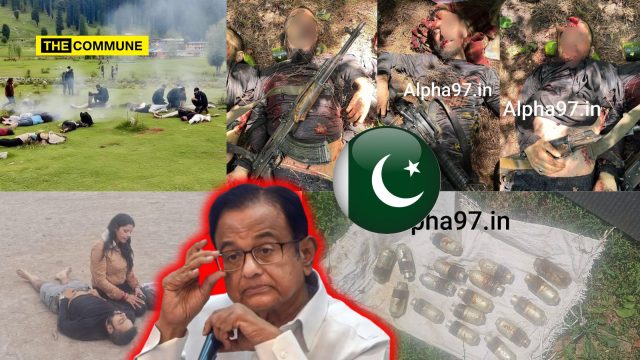
Speaker Om Birla Calls Out Opposition U-Turn On Operation Sindoor Discussion

The Lok Sabha convened amid heightened anticipation for the scheduled debate on Operation Sindoor, India’s military response to the 22 April terror attack in Pahalgam, Jammu and Kashmir.

The session opened with Krishna Prasad Tenneti in the Chair, who informed members that the adjournment motion had not been admitted. He then invited ministers to lay official papers and reports on the floor of the House. Among those who tabled documents were Gajendra Singh Shekhawat, Jayant Chaudhary, Pankaj Choudhri, Shobha Karandlaje, Raksha Khadse, Sukanta Majumdar, Harsh Malhotra, and Kiren Rijiju. The ministers represented portfolios spanning higher education, finance, MSME, youth affairs, and corporate affairs.

The House also received the tenth report of the Committee on Government Business, dated 25 July, outlining the legislative agenda for the week. Under Rule 377 of the Rules of Procedure and Conduct of Business in the Lok Sabha, members were allotted a 20-minute window to raise matters of urgent public importance. This segment, often used to surface constituency-level issues, was expected to reflect a broad spectrum of concerns from across the country.

At 12.06 pm, Speaker Om Birla entered the chamber and addressed the escalating disruption over the proposed discussion on Operation Sindoor. He reminded members that the Business Advisory Committee had unanimously agreed to schedule the debate and that opposition leaders had given verbal consent during a meeting in his chamber. Expressing dismay, Birla noted that some members were now reneging on that commitment.

Opposition MPs, however, continued to raise slogans demanding an immediate discussion not only on Operation Sindoor but also on the Special Intensive Revision (SIR) of electoral rolls in Bihar. The phrase “SIR par charcha karo” echoed through the chamber as Speaker Birla repeatedly urged members to adhere to parliamentary procedure. He asked pointedly whether the House wished to proceed with the debate, emphasising that such discussions must follow the framework laid out by the Business Advisory Committee and not through shouting slogans in the Bell of the House. Unable to restore order, Birla adjourned the House until 1 p.m.

The backdrop to this tension is the high-stakes debate on Operation Sindoor, India’s calibrated military response to the Pahalgam terror attack, which claimed 26 civilian lives. Between 7 and 10 May, Indian forces targeted nine terrorist camps in Pakistan and Pakistan-occupied Kashmir, in what the government has described as a “strong, successful and decisive” operation.

The opposition, led by Congress and INDIA bloc leaders, has demanded accountability for intelligence lapses preceding the attack and clarity on international mediation claims, particularly those made by US President Donald Trump, who has repeatedly asserted that he brokered a ceasefire between India and Pakistan.

The Lok Sabha is slated to hold a 16-hour debate on Operation Sindoor, with Defence Minister Rajnath Singh opening the discussion. Home Minister Amit Shah and External Affairs Minister S Jaishankar are expected to present the government’s position, while Rahul Gandhi will lead the opposition’s response. Congress has issued a whip for full attendance, underscoring the political weight of the debate.

-IANS

Subscribe to our channels on TelegramWhatsApp, and Instagram and get the best stories of the day delivered to you personally.
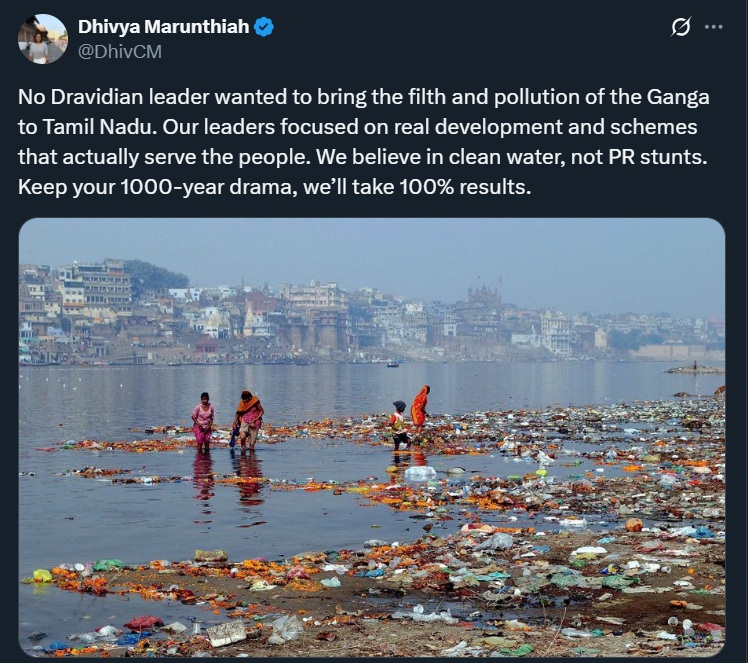
TN Congress Leader Who Simps For Pakistan Calls Ganga As Polluted And Dirty River Which No Dravidian Leader Wants

tn congress ganga

The consistent narrative pushed by the left and Dravidian sympathizers is that leaders from the North, have little regard for Tamil language, culture, and identity. But whenever such efforts to bridge divides are made, they quickly jump to their next propaganda sowing division and perpetuating a North-South divide by maligning the efforts.

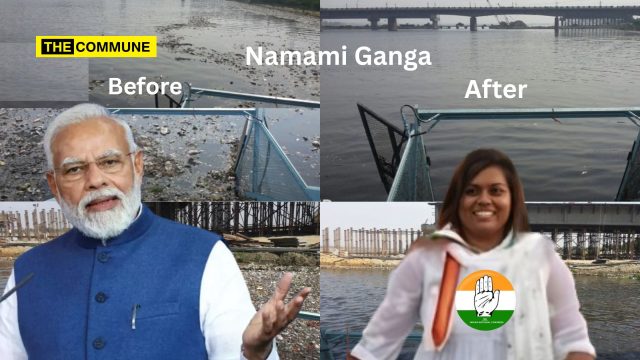
Prime Minister Narendra Modi’s conscious effort to celebrate and honor Tamil culture, particularly with his gesture of bringing holy water from the Ganga for the Gaṅgaikoṇḍa Chōḻapuram 1000th-year celebrations, has drawn a dismissive response from the likes of TN Congress functionary Dhivya Marunthiah. It is noteworthy that the same Dhivya had earlier simped for Pakistan royally and accused the Indian government of religious bias in its military action during Operation Sindoor, despite the targeted nature of the operation against known terrorist camps.

She peddled the claim, “No Dravidian leader wanted to bring the filth and pollution of the Ganga to Tamil Nadu. Our leaders focused on real development and schemes that actually serve the people. We believe in clean water, not PR stunts. Keep your 1000-year drama, we’ll take 100% results.” This statement, made while using an old, outdated picture of the Ganga’s pollution, conveniently ignores the larger context and the progress made under the ‘Namami Ganga Programme,’ which aims to clean and rejuvenate the river.

In reality, Modi’s gesture wasn’t just a “PR stunt,” but a tribute to the rich cultural history of Tamil Nadu itself the Gangaikonda Choḻapuram temple, one of the finest examples of Chola architecture, symbolizes the grandeur of an empire that once stretched from the banks of the Ganga in the north to Southeast Asia. Yet, instead of celebrating the connection between this ancient glory and modern-day India, the Congress chose to criticize and politicize the situation, turning a moment of national pride into a cynical attempt to dismiss the Prime Minister’s outreach to Tamil culture.

 This is deeply hypocritical. While they criticize the river as “polluted,” they fail to recognize the ongoing efforts under the Namami Ganga Programme, launched in 2014 under Modi’s government. This initiative aims at the rejuvenation and conservation of the Ganga with a ₹20,000 crore budget. As part of the program, over 200 sewage treatment projects have been sanctioned, and 116 projects have already been completed. The program has also initiated the cleaning of ghats and crematoria, with significant progress in river surface cleaning and waste disposal.

In contrast, the situation in Tamil Nadu remains concerning. Despite spending ₹529 crore of the allocated ₹750 crore for the restoration of the Cooum River, the river remains highly polluted and unchanged, while the state continues to focus on criticism rather than action.

The contrast is clear, while Congress seeks to undermine efforts to revive India’s holy river, the reality of the ongoing restoration work speaks for itself. What they label as “drama” is, in fact, a well-planned, actionable mission to protect and rejuvenate one of India’s most significant rivers, a vision that clearly surpasses the limited progress in Tamil Nadu’s own environmental efforts.

Subscribe to our channels on TelegramWhatsApp, and Instagram and get the best stories of the day delivered to you personally.
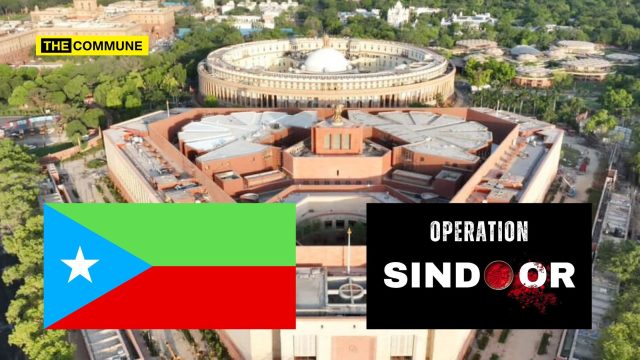
Balochistan Extends Support To Indian Parliament Debate On Operation Sindoor

balochistan support parliament debate operation sindoor

Leading Baloch human rights defender Mir Yar Baloch on 28 July 2025 wrote to Lok Sabha Speaker Om Birla, commending the unity of the Indian people and the government’s steadfast stance against Pakistan-sponsored cross-border terrorism.

This letter came ahead of the debate on Operation Sindoor, scheduled to be held post-noon later in the day in Parliament.

In the letter, Baloch wrote, “We, the sixty million Baloch people of the Republic of Balochistan, extend our heartfelt message to our 1.4 billion Indian brothers and sisters. On the occasion of today’s parliamentary debate on Operation Sindoor, we express our profound admiration for the unwavering unity of the Indian people, the resolute and principled stance of the Government of India against Pakistan’s state-sponsored terrorism, and the visionary decision by the opposition to stand in solidarity with the government and armed forces at this critical juncture.”

Mir Yar Baloch also appreciated the extraordinary courage and professionalism of the Indian Armed Forces, the “responsible and patriotic role” of the Indian media, and the nation’s collective success in confronting and overcoming “Pakistan’s military and psychological aggression.”

Stressing the “enduring India-Balochistan bonds of friendship,” the human rights activist urged recognition of the “invaluable historical relationship” in the Indian Parliament.

“This sentiment is not only a testament to our shared past but also echoes the aspirations and convictions of the Indian populace,” the letter added.

Mir Yar Baloch highlighted that in the aftermath of the temporary pause in Operation Sindoor, “Pakistan’s occupying forces have unleashed a renewed wave of brutality” upon the people of Balochistan.

The letter mentioned that these brutal actions carried out by the Pakistani forces are a “direct reprisal” for the principled stance of the Baloch people, who have “chosen to stand in solidarity with the citizens of India”.

“Our letter is a powerful reminder of India’s role in standing up for oppressed people and resisting tyranny in our neighbourhood. The Baloch people have consistently looked toward India as a beacon of hope, and their unwavering support for our sovereignty, particularly during events like Operation Sindoor, deserves a principled response from your leadership,” said the human rights activist.

He also detailed a series of strategies that Balochistan can help India with, including ending Pakistan’s access to the Arabian Sea via Gwadar and disrupting the China-Pakistan Economic Corridor (CPEC), which he called “a direct threat to India’s sovereignty and security.”

The letter also mentioned that Balochistan is rich in resources and can offer India direct trade routes to Central Asia, the Middle East, and Europe through an independent corridor.

Mentioning Balochistan’s sacred Hinglaj Mata Mandir, one of the 51 Shakti Peethas and one of the most revered Hindu pilgrimages, the human rights leader said, “The Baloch people have protected it despite Pakistani attempts to radicalise the region, showcasing their commitment to pluralism and cultural respect.”

He also stated that the Baloch oppose the same terrorist groups that target India.

In the letter, Mir Yar Baloch mentioned the history of Balochistan, highlighting its transition from an independent country in 1947 to its “forcible annexation” by Pakistan in 1948.

He explained that since that time, the Baloch population has endured immense suffering, including mass abductions, extrajudicial killings, aerial bombardments, and systemic cultural repression. However, he said that people there “remain grounded in secular, democratic, and nationalist principles.”

Balochistan seeks “not only freedom from oppression but a future of peace, equality, and cooperation with democratic neighbours, most importantly, India,” the human rights activist mentioned.

Highlighting India’s message of ‘Vasudhaiva Kutumbakam’ (the world is one family), the human rights defender called on Speaker Om Birla to raise this issue during the Parliamentary session on Monday and lend support for the freedom and dignity of the Baloch people.

(With inputs from IANS)

Subscribe to our channels on Telegram, WhatsApp, and Instagram and get the best stories of the day delivered to you personally.