Home Blog Page 198

Delhi-NCR Records Cleanest July Air In Over A Decade After Week Of Rain
Delhi-NCR Records Cleanest July Air in Over a Decade After Week of Rain

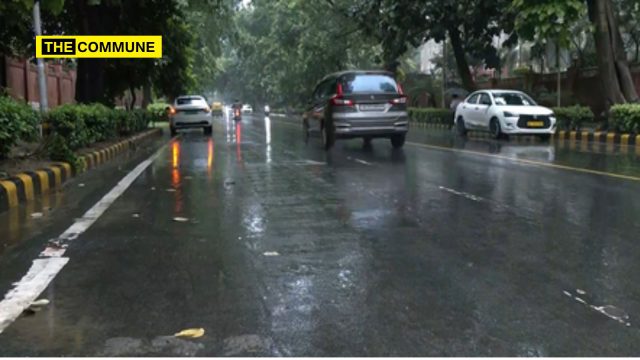
Continuous rainfall in Delhi-NCR on Thursday has brought much-needed respite from the sweltering heat, while simultaneously delivering a remarkable improvement in air quality. According to data from the Central Pollution Control Board (CPCB), July 2025 has recorded the cleanest air in over a decade, with Air Quality Index (AQI) readings falling below 50 in several parts of the region — a level categorised as “very good”.

This drastic improvement is largely attributed to the frequent rain showers over the past week, which have significantly reduced dust and airborne pollutants. However, while the rains have cleansed the atmosphere, they have also led to waterlogging and traffic congestion, posing a major challenge for the municipal authorities and daily commuters.

As of July 31, many monitoring stations across Delhi-NCR reported AQI levels in the 20s and 30s. Prominent locations such as Alipur (28), Major Dhyan Chand National Stadium (38), Bawana (36), Narela and Nehru Nagar (both 48), Indirapuram in Ghaziabad (31), and Noida’s Sector 62 and Sector 1 (both 34) registered some of the cleanest air seen in the capital in recent memory — often even cleaner than hill stations. According to the India Meteorological Department (IMD), the region is expected to remain under a cloud cover with light to moderate rainfall continuing until August 5.

Heavy showers accompanied by thunderstorms are likely between August 1 and 3, potentially bringing further relief from heat and pollution. Forecasts for the next few days indicate a maximum temperature hovering between 33-35 degrees Celsius and a minimum of 24-26 degrees Celsius.

Humidity levels may peak at around 95 per cent, contributing to the discomfort. Meanwhile, persistent rain since late Wednesday night continued through Thursday morning, especially in the Lutyens’ zone of central Delhi, where intermittent showers created a rhythmic pattern of drizzle and pause.

The IMD has also predicted the possibility of thunderstorms with lightning throughout the day. However, the city’s infrastructure continues to struggle under the weight of monsoon downpours. Waterlogging has crippled major roads, leading to long traffic jams across Delhi-NCR.

Office-goers and daily commuters faced significant delays as several arterial routes were submerged, highlighting the persistent urban planning and drainage challenges. Still, the rare combination of cool weather and sparkling clean air offered a silver lining — giving Delhiites a breath of fresh air, quite literally, in what has become the city’s cleanest July in over 10 years.

-IANS

Subscribe to our channels on TelegramWhatsApp, and Instagram and get the best stories of the day delivered to you personally.

J&K CM Omar Abdullah Praises Sabarmati Riverfront, Urges Gujarati Tourists To Return To Kashmir

omar abdullah sabarmati riverfront

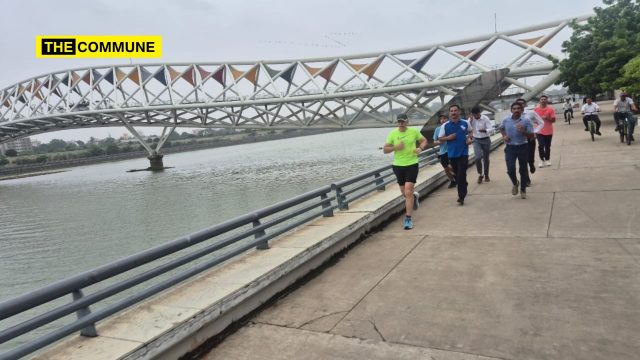
Jammu and Kashmir Chief Minister Omar Abdullah, currently on a two-day visit to Gujarat to promote tourism in the Union Territory, took to social media to praise Ahmedabad’s Sabarmati Riverfront, calling it “one of the nicest places” he has run.

CM Abdullah, who went for a morning jog along the popular promenade, is in the state to engage with tour operators and reconnect with a key domestic travel market following the April 22 Pahalgam terror attack that deeply impacted tourism in Kashmir. He wrote on X: “While in #Ahmedabad for a tourism event I took advantage of being here to get my morning run at the famed Sabarmati River Front promenade. It’s one of the nicest places I’ve been able to run & it was a pleasure to get to share it with so many other walkers/runners. I even managed to run past the amazing Atal Foot Bridge.”

The tweet set a lighter tone to a visit marked by a serious mission: rebuilding tourist confidence in Jammu and Kashmir following the April terrorist attack in Pahalgam that claimed 26 lives, including several from Gujarat.

The J&K CM, in the city for a major tourism outreach event, said the visit is part of efforts to restore Jammu and Kashmir’s standing as a safe and welcoming destination.

“Gujarat, along with Maharashtra and West Bengal, has always played a major role in Kashmir’s tourism economy,” said CM Abdullah, expressing hope that Gujarati tourists would soon return in large numbers. However, the visit also carried a strong political undertone.

Addressing the media on July 30, Abdullah sharply criticised the Centre and the Jammu and Kashmir administration over intelligence and security lapses linked to the Pahalgam attack. “Even the Lieutenant Governor has admitted there was a failure. If that’s the case, someone must be held accountable,” he said. While the three terrorists responsible have been eliminated, CM Abdullah pointed out that no action has yet been taken against the officials responsible for the lapses. He also questioned the Centre’s claims post-Article 370 abrogation.

“They said terrorism would end after 370 was removed. It’s been five years. Terrorists are still being killed. So what happened to those promises?” he asked.

Earlier on Wednesday, he met Gujarat Chief Minister Bhupendra Patel in his office in Gandhinagar. The meeting focused on deepening inter-state relations, promoting tourism and sharing best practices for inclusive development.

-IANS

Subscribe to our channels on TelegramWhatsApp, and Instagram and get the best stories of the day delivered to you personally.

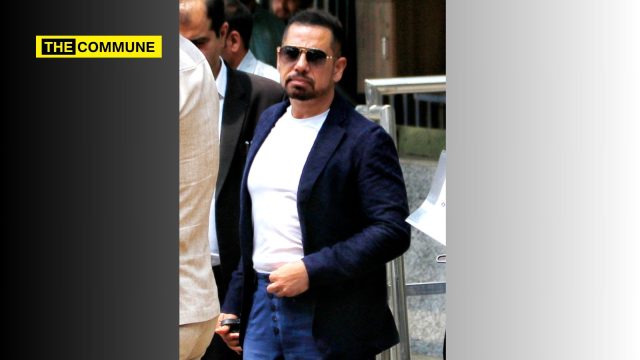
Delhi Court Defers Order On Robert Vadra In Haryana Land Deal Case

robert vadra haryana land deal case delhi

A Delhi court on 31 July 2025 deferred till 2 August 2025 the pronouncement of its decision on issuing a notice to businessman Robert Vadra, son-in-law of former Congress President Sonia Gandhi, in connection with a money laundering case linked to a land deal in Haryana’s Shikohpur.

The Enforcement Directorate (ED) had filed a prosecution complaint under the Prevention of Money Laundering Act (PMLA), claiming that Vadra’s Skylight Hospitality “fraudulently” purchased 3.53 acres of land situated in the village of Shikohpur in Haryana’s Gurugram district through “false declaration”.

The Rouse Avenue Courts, which was slated to deliver the verdict on Thursday, deferred the pronouncement till August 2. Last week, the trial court had reserved its order regarding the issuance of a notice to Vadra, the husband of Congress MP Priyanka Gandhi Vadra.

During the hearing, advocate Zoheb Hossain, appearing for the ED, stated that the sale deed falsely declared a payment of Rs 7.5 crore, whereas in reality, no such payment was made. This amount was paid at a later stage to evade stamp duty, a fact that has been confirmed by key witnesses, added Hossain. Further, the federal anti-money laundering agency claimed that Vadra, “through his personal influence”, obtained a commercial license on the land purchased.

As per the ED, the land was later sold to DLF at a higher price, and this aspect of the case is still under investigation. In April this year, Vadra was questioned in multiple rounds by the ED, during which his statement was also recorded. The land purchase deal in question was executed in February 2008 when Congress was at the helm in Haryana, and Bhupinder Singh Hooda was the Chief Minister.

The mutation process, which usually takes months, was done the next day. Months later, Vadra received a permit to develop a housing society on the land, and the value of the plot increased. He sold it to DLF in June at Rs 58 crore. Suspecting the proceeds to be part of a money laundering scheme, the ED has been probing the trail behind the windfall gains.

In October 2012, IAS officer Ashok Khemka (now retired), who was then posted as the Director General of Land Consolidation and Land Records-cum-Inspector-General of Registration of Haryana, cancelled the land purchase deal, citing procedural irregularities. Later in 2013, an in-house government panel gave a clean chit to both Vadra as well as DLF. When the BJP-led government came to power, an FIR was registered by the Haryana Police against former Chief Minister Hooda, Vadra, and others.

-IANS

Subscribe to our channels on Telegram, WhatsApp, and Instagram and get the best stories of the day delivered to you personally.
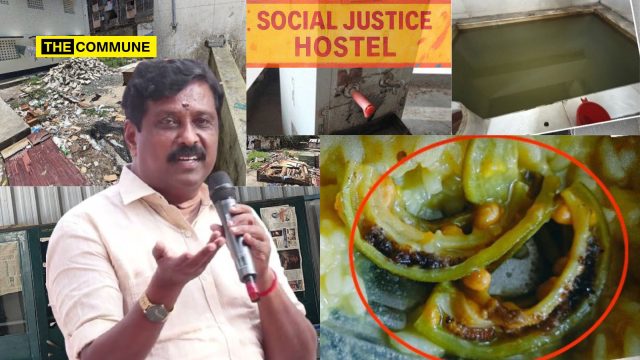
“Worms In Food, Foul Water, No Books, Govt Hostels Have Become A Breeding Ground Of Disease” TN BJP Chief Nainar Nagenthiran Slams DMK’s ‘Social Justice Hostels’

nainar nagenthiran hostel dmk

Tamil Nadu BJP President Nainar Nagenthiran has strongly criticized the DMK government, accusing it of using the label “Social Justice Hostels” as a smokescreen while failing to address the appalling living conditions in government-run hostels. Highlighting the situation in Chennai, he pointed out that 36 college hostels under the government’s purview are in a deplorable state lacking basic infrastructure and posing serious health risks to students.

Nagenthiran alleged that students are being served worm-infested food and are forced to consume foul-smelling water. The hostels, he claimed, suffer from crumbling infrastructure, unhygienic toilets, and a complete lack of cleanliness. In many cases, due to staff shortages, students themselves are made to clean the toilets.

Taking to social media platform X, Nagenthiran mocked the DMK’s claims of promoting social justice, suggesting the name change of these hostels was simply an attempt to mask financial mismanagement. He questioned whether public funds were being misappropriated under the guise of welfare programs.

He further criticized the government’s announcement of having spent ₹21 lakh to establish libraries in 23 hostels, stating that several of these so-called libraries lack essential books and functional internet access. In addition, he pointed out that evening snacks meant for hostel residents are not being provided, and the ₹150 supposedly allocated per student for health and nutrition improvements is not reaching its intended recipients.

Nagenthiran concluded his remarks by raising concerns about the condition of hostels in rural areas if such severe neglect is evident in the state capital. He warned that the public would soon reject what he called a “fake social justice model” that prioritizes propaganda over genuine student welfare.

His full statement read, “It’s shocking to learn that the 36 government “Social Justice Hostels” for college students in Chennai have become breeding grounds for disease and uninhabitable residences, lacking even basic amenities. The DMK government’s renaming of these government hostels, which are plagued by worm-infested food, foul-smelling water, poorly maintained toilets, and dilapidated buildings as “Social Justice Hostels” while claiming to uphold social justice for poor students has raised suspicion that was this merely a cover-up for embezzling public funds? For instance, while the DMK government boasts about spending ₹21 lakh on establishing libraries in 23 government hostels, many of these libraries lack books or proper internet facilities. Furthermore, the evening snacks meant for students are not being provided, and even the ₹150 allocated for students’ health improvement isn’t reaching them. Making the matter worse, due to a lack of sufficient staff, students are even forced to clean the hostel toilets themselves. If the condition of government hostels in the state capital is so dire, what would be the  plight of those in the remote corners of Tamil Nadu? It’s certain that the public will soon reject this fake social justice model government, which prioritizes self-promotion over student welfare and perpetrates injustice.”

Subscribe to our channels on TelegramWhatsApp, and Instagram and get the best stories of the day delivered to you personally.

An Army Of Senior Advocates Including Kapil Sibal Queue To Save Judge Verma Who Had Stashed Piles Of Cash At His Residence

kapil sibal justice yashwant varma

On 30 July 2025, the Supreme Court witnessed an exceptional assembly of senior lawyers in the high-profile case ‘XXX vs Union of India and Others’. Note: Varma hid his identity as XXX.

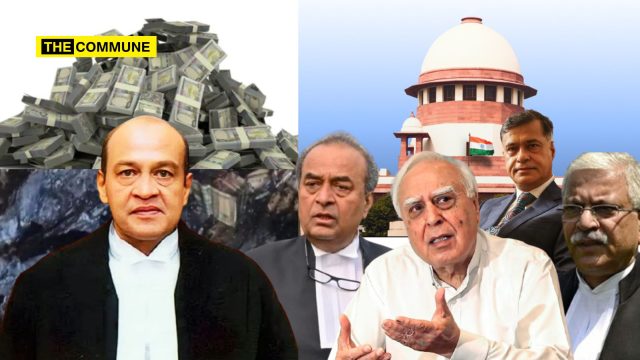
The case centers on Justice Yashwant Varma, a former Delhi High Court judge, who is challenging an in-house committee’s report that led to the recommendation for his removal after a large quantity of cash was allegedly found at his official residence in New Delhi earlier this year.

Prominent senior advocates, including Kapil Sibal, Mukul Rohatgi, Rakesh Dwivedi, Siddharth Luthra, Siddharth Aggarwal, and Jayant Mehta, appeared in support of the petitioner, whose identity remains undisclosed in official filings. The case is seen as a significant test of judicial accountability and the integrity of internal mechanisms designed to discipline sitting judges.

The Supreme Court bench comprising Justices Dipankar Datta and Augustine George Masih emphasized that while the Chief Justice of India (CJI) has the authority to recommend initiating removal proceedings when there is credible evidence of serious misconduct, the final decision lies with Parliament. “The Chief Justice cannot be reduced to a mere messenger. As the guardian of the judiciary, he holds responsibilities not just to the institution but to the nation,” the bench remarked. They added that while they could have issued a ruling without further comment, silence would have been a disservice to justice.

The court has now reserved its verdict on the writ petition filed by Justice Varma, who disputes the legality of the recommendation to remove him based on the in-house panel’s findings. He argued that the internal probe lacked transparency and due process, especially because he was not allowed to cross-examine witnesses or formally respond to allegations.

Justice Varma’s transfer from the Delhi High Court to the Allahabad High Court followed the discovery of unaccounted cash at his government residence in March 2025. He claims that the inquiry was launched without a formal complaint, based instead on a report from the Chief Justice of the Delhi High Court. The in-house procedure, according to him, violated his right to a fair hearing under the Constitution.

Advocate Kapil Sibal, arguing for Justice Varma, questioned whether an in-house process without evidentiary safeguards, could validly initiate impeachment proceedings. He maintained that Article 124 of the Constitution envisions a more robust process before a judge can be removed, including opportunities for cross-examination and full defense.

However, the bench clarified that in-house inquiries are preliminary in nature and not punitive. “Cross-examination is not a requirement in such proceedings. These are fact-finding efforts to determine if further action is necessary,” the judges explained. They added that the findings are not binding on Parliament, which retains full discretion in deciding whether to act on the recommendations.

The bench also expressed concern that Justice Varma participated in the in-house inquiry and only challenged its validity after unfavorable conclusions were drawn. “Why now? If you believed the process was flawed, you should have raised these objections earlier,” the court observed. It suggested that Justice Varma may have been hoping for a favorable outcome and only raised procedural objections after the inquiry turned against him.

Regarding the media coverage and public commentary triggered by a Supreme Court press release on 22 March 2025, which disclosed allegations against Justice Varma, the court acknowledged the resulting reputational damage but emphasized that legal avenues remain open for redress. “You had an opportunity before the committee, and you’ll have another before Parliament,” the bench stated, dismissing concerns that public statements by ministers prejudged the case. “Statements by politicians carry little legal weight,” the judges noted.

The court also addressed the leak of a purported tape, acknowledging it was inappropriate but irrelevant to the legal process underway. “While such disclosures are regrettable, Parliament is not bound by them,” the bench asserted.

Justice Varma further argued that the in-house committee did not determine ownership of the cash allegedly recovered, nor did it provide him an opportunity to contest the facts. The judges reminded counsel that the in-house panel’s role is limited and does not extend to full criminal or evidentiary analysis.

Senior advocates Rohatgi, Dwivedi, and Luthra also supported Justice Varma’s plea, arguing that the internal mechanism lacked constitutional safeguards. Advocate Mathews J. Nedumpara, who intervened to seek registration of an FIR, was questioned by the bench about whether any formal complaint had been filed.

Ultimately, the court emphasized that the in-house procedure, though not equivalent to a trial, is constitutionally valid under precedents and serves a necessary function in maintaining judicial standards. It reaffirmed that Justice Varma’s conduct and timing in raising objections were relevant factors in assessing his petition under Article 32.

With judgment now reserved, the outcome of this case could have far-reaching implications for judicial accountability and the scope of internal disciplinary procedures in India’s higher judiciary.

(With inputs from Deccan Herald)

Subscribe to our channels on TelegramWhatsApp, and Instagram and get the best stories of the day delivered to you personally.

Inspector Kasi Pandian Allegedly Tipped Off Killer, Threatened Kavin A Week Before ‘Honour Killing’

kavin dalit kasi pandian tirunelveli honour killing

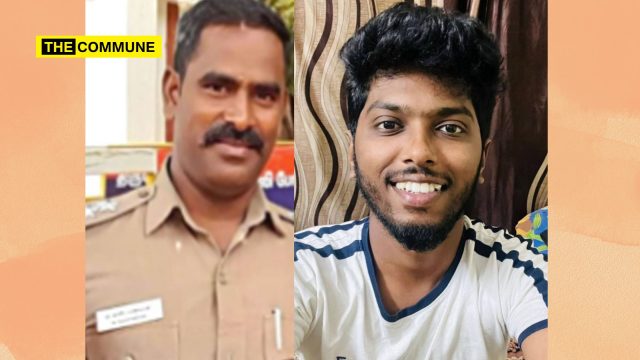
Shocking allegations have emerged in the case of the ‘honour killing’ of 27-year-old Kavin, an IT engineer from Chennai who was murdered while visiting his hometown. The victim’s family has accused a local police inspector, Kasi Pandian, of facilitating the crime and shielding the accused due to caste affiliations.

Kavin, who belonged to a Scheduled Caste community, was allegedly murdered by Surjith, the son of Special Police Force Sub-Inspector Saravanan, in a case believed to be motivated by caste and opposition to Kavin’s relationship. The murder sparked widespread condemnation, prompting the Tamil Nadu government to transfer the case to the Crime Branch-CID (CBCID). Surjith has since been arrested and booked under the Goondas Act, while his father Saravanan has also been taken into custody and remanded to judicial custody on 8 August 2025.

In a serious accusation, Kavin’s father alleged that Palai Inspector Kasi Pandian played a direct role in enabling the murder. According to the family, it was Inspector Kasi Pandian who first warned Kavin a week before the murder, reportedly threatening him to end his relationship. The family claims that Kasi Pandian told Kavin, “You should give up this love,” during a confrontation.

Kavin was murdered within a week of this alleged threat.

The family further alleges that Inspector Kasi Pandian provided Surjith with information about Kavin’s movements specifically, that he was coming to Tirunelveli from Chennai, which facilitated the ambush. Moreover, it was reportedly the same inspector who ensured Surjith surrendered to police immediately after the crime.

The victim’s father claims that the accused and the inspector share a caste affiliation and history of association, having served or trained together in units such as the Manimutharu Battalion. He alleged that a “katta panchayat” (kangaroo court) had been held prior to the murder and accused the inspector of operating more like a “mercenary leader” than a law enforcement officer. He demanded that Kasi Pandian be dismissed from service.

Adding weight to the allegations, Kavin’s relative Muthuvalvan also came forward in a video interview, confirming that Inspector Kasi Pandian had threatened Kavin days before the murder and accusing him of siding with the accused family.

The allegations have sparked public outrage, particularly over the role of police officials in enabling or failing to prevent caste-based violence. Videos and images circulating online show Surjith posing with weapons, raising further concerns about the environment in which the crime was committed.

It has also been alleged that Inspector Kasi Pandian was previously linked to the controversial murder of BJP functionary Jagan in 2023, under similar circumstances involving threats and caste tensions.

The matter is now under the purview of the CB-CID.

(With inputs from Malai Malar)

Subscribe to our channels on TelegramWhatsApp, and Instagram and get the best stories of the day delivered to you personally.

Dravidianist Director Pa. Ranjith Gets Bail After Stuntman’s Death Halts ‘Vettuvam’ Filming

pa. ranjith bail

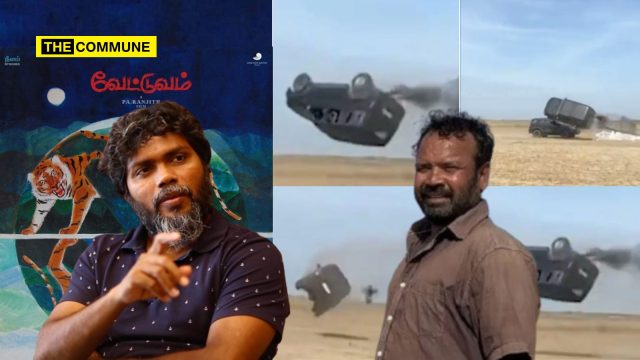
Dravidianist and Kollywood film director Pa. Ranjith was granted bail following legal proceedings initiated after a tragic accident on the set of his film Vettuvam. The incident, which occurred during filming in Keezhayur, Nagapattinam district, involved the death of stuntman Mohanraj, who reportedly died after falling while performing a high-risk action sequence. Authorities initially suspected lapses in safety protocols, leading to a case being filed against the director and three crew members.

The accident halted the production of Vettuvam, a film backed by Ranjith’s banner, Neelam Productions. Reports suggest that Mohanraj suffered a fatal heart attack after falling from a vehicle during a stunt. Although he was taken to a nearby hospital promptly, he could not be saved.

Following the incident, the Keezhayur police filed a case against Pa. Ranjith, along with crew members Rajkamal, Vinoth, and Prabhakaran, citing negligence in enforcing safety measures on set. While the three crew members secured anticipatory bail earlier, Pa. Ranjith appeared in person at the Keezhayur court on 31 July 2025 to submit his statement and was subsequently granted bail.

Despite the controversy, filming has recently resumed. Vettuvam stars Arya and ‘Gethu’ Dinesh in lead roles and features several well-known actors in significant parts. In a gesture of support, Ranjith provided ₹20 lakhs in financial aid to the family of the deceased stuntman. Additionally, members of the Tamil film fraternity have extended their condolences and support to Mohanraj’s family during this difficult time.

(With inputs from Times Of India)

Subscribe to our channels on TelegramWhatsApp, and Instagram and get the best stories of the day delivered to you personally.

“You Want The Trial To Never End In The Minister’s Lifetime, A Complete Fraud On The System”, Supreme Court Tears Into DMK Govt In Senthil Balaji Cash-For-Jobs Case

senthil balaji dmk tn govt stalin supreme court

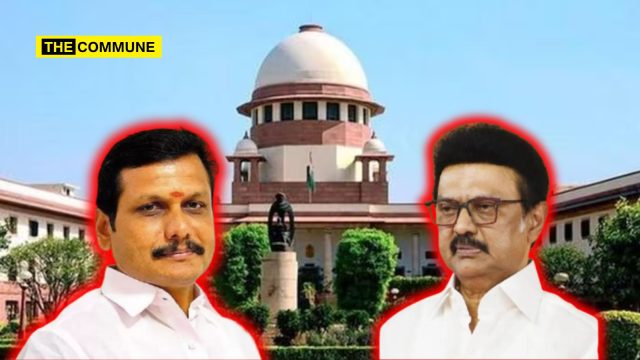
The Supreme Court on 30 July 2025 sharply criticised the Tamil Nadu government over its handling of the trial in the cash-for-jobs scam involving former state minister V Senthil Balaji, saying the case had been allowed to balloon to unmanageable proportions.

A Bench of Justices Surya Kant and Joymalya Bagchi was hearing a plea challenging a March 2024 order of the Madras High Court, which had dismissed objections to the clubbing of multiple charge sheets in the matter. The Court was informed that over 2,300 people had been named as accused in the scam.

“We want from you clearly and definitely what is your prosecutorial plan. It seems to be a very rudderless ship…With 200 witnesses summoned in a court hall, it will perhaps be one of the most populated trials in India… You’ll need a cricket stadium,” Justice Bagchi remarked, questioning how a trial of such magnitude could be conducted without a proper plan.

Justice Kant also expressed disbelief at the logistics of such a trial, stating, “Almost impossible task will be to mark their presence. There will be 100s of AI-generated accused on that day.”

The Bench took note of the State’s conduct in the matter, suggesting that the prosecution strategy was designed to delay proceedings and protect the main accused.

“You are more keen to prosecute them so that in the entire lifetime of the minister, the trial proceedings never come to an end. This is your modus operandi. This is a complete fraud being committed on the system,” the Court said.

The judges directed the State to identify the key individuals involved in the scam apart from Balaji, including intermediaries, public officials, and members of selection committees.

“We would like to know besides the minister, who were the alleged brokers or middlemen? Who were the officers who acted on the recommendations of the minister? Who were the members of the selection committee? Who were the authorities who gave the appointment?” Justice Kant asked.

Senior Advocate Gopal Sankaranarayanan, appearing for the petitioner, alleged that the State was colluding with the ex-minister and had wrongly framed victims of the scam.

“The best approach is to see who are the genuine accused such as the minister, his brother, his PA, and the other people around him who solicited this. The others who are now arrayed as accused saying they are bribe givers, whether they are prime accused or whether they can be treated like witnesses is a call that can be taken,” he submitted.

Sankaranarayanan also suggested the appointment of a special public prosecutor to ensure independent prosecution.

However, appearing for the State, Senior Advocate Abhishek Manu Singhvi opposed the proposal, arguing that the Supreme Court had earlier rejected similar requests.

“It sends the wrong signal. That we don’t trust our own prosecution and judiciary. That we need to get someone from Kerala or Bengal to prosecute our case,” Singhvi said, warning that it would create an impression of external distrust in the Tamil Nadu legal system. He also accused the petitioner of “forum shopping.”

The Court, while not immediately accepting the request, said it could appoint an additional special public prosecutor if necessary to support the current legal team.

Justice Bagchi expressed surprise that the prosecution had no plan to classify accused individuals based on their culpability.

“How would you achieve clubbing until and unless we gave a suggestion that you see the witnesses with regard to their degree of marginal culpability and prime culpability? Why should it come from us? This thought never crossed your prosecutor’s mind,” he asked.

The Court also criticised earlier Madras High Court orders that had quashed FIRs in the case.

“All the FIRs were quashed at the High Court level thanks to a kind of a friendly match made there. Because of the judicial intervention of this Court, the matters have been revived,” Justice Kant observed.

The Bench directed the State to submit a detailed list of all accused and witnesses to identify overlaps and streamline the process of clubbing cases.

“Give a list of witnesses also so that we can see how many accused and witnesses are overlapping,” Justice Kant said.

“In fact, create Venn diagrams,” Justice Bagchi added in a lighter tone.

The matter has been posted for further hearing on 11 August 2025. The Court also said it would list all other pending cases involving Senthil Balaji on the same date.

Balaji was arrested by the Enforcement Directorate (ED) on 14 June 2023, in connection with a money laundering case linked to FIRs registered in 2018. The FIRs pertain to allegations that, during his tenure as Transport Minister in the AIADMK government between 2011 and 2015, he orchestrated a large-scale recruitment scam by accepting bribes in exchange for jobs in state-run transport corporations.

In September 2024, the Supreme Court granted Balaji bail, observing that the trial was unlikely to conclude soon due to the large number of accused and the slow pace of proceedings.

(With inputs from Bar and Bench)

Subscribe to our channels on Telegram, WhatsApp, and Instagram and get the best stories of the day delivered to you personally.
UK Air Traffic Glitch Disrupts Over 100 Flights Across Major Airports

UK Air Traffic Glitch Disrupts Over 100 Flights Across Major Airports

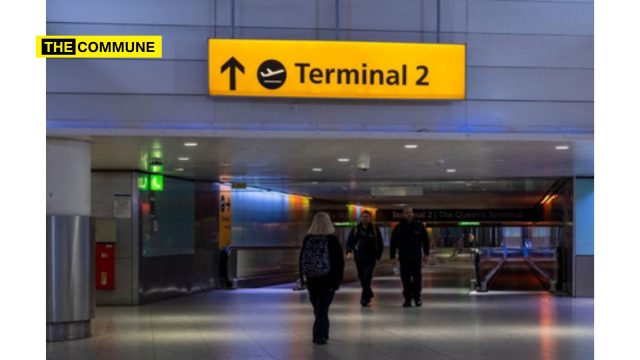
More than 100 flights were cancelled and several others delayed after a technical glitch in the UK’s air traffic control system led to widespread disruption at key airports across the country. The issue, identified as radar-related by the National Air Traffic Services (NATS), temporarily halted departures from major hubs including Heathrow, Gatwick, Manchester, Birmingham, Cardiff, Edinburgh, and London City airports on Wednesday (local time).

Although the malfunction was reportedly resolved within 20 minutes through a switch to a backup system, cascading delays and cancellations continued for several hours, leaving thousands of travellers stranded or rerouted, according to local media reports.

NATS later issued a statement confirming that systems were “fully operational” again and that air traffic capacity was returning to normal levels. The agency acknowledged the inconvenience caused and issued an apology for the disruption. Low-cost airline Ryanair emerged as one of the worst-hit carriers, claiming the incident triggered more than four hours of operational chaos, local media reports suggested.

The airline drew comparisons with a similar system failure in August 2023 that had also resulted in major disruptions, sparking criticism over the air traffic authority’s preparedness. Neal McMahon, CEO of Ryanair, strongly criticised the management of the latest disruption and called for the resignation of NATS chief executive Martin Rolfe.

“It is outrageous that passengers are once again being hit with delays and disruption,” McMahon said. “It is clear that no lessons have been learnt since the August 2023 NATS system outage,” the Ryanair CEO added. Airports and airlines urged passengers to contact their respective carriers before heading to the airport, as recovery efforts were expected to continue through the evening.

-IANS

Subscribe to our channels on TelegramWhatsApp, and Instagram and get the best stories of the day delivered to you personally.
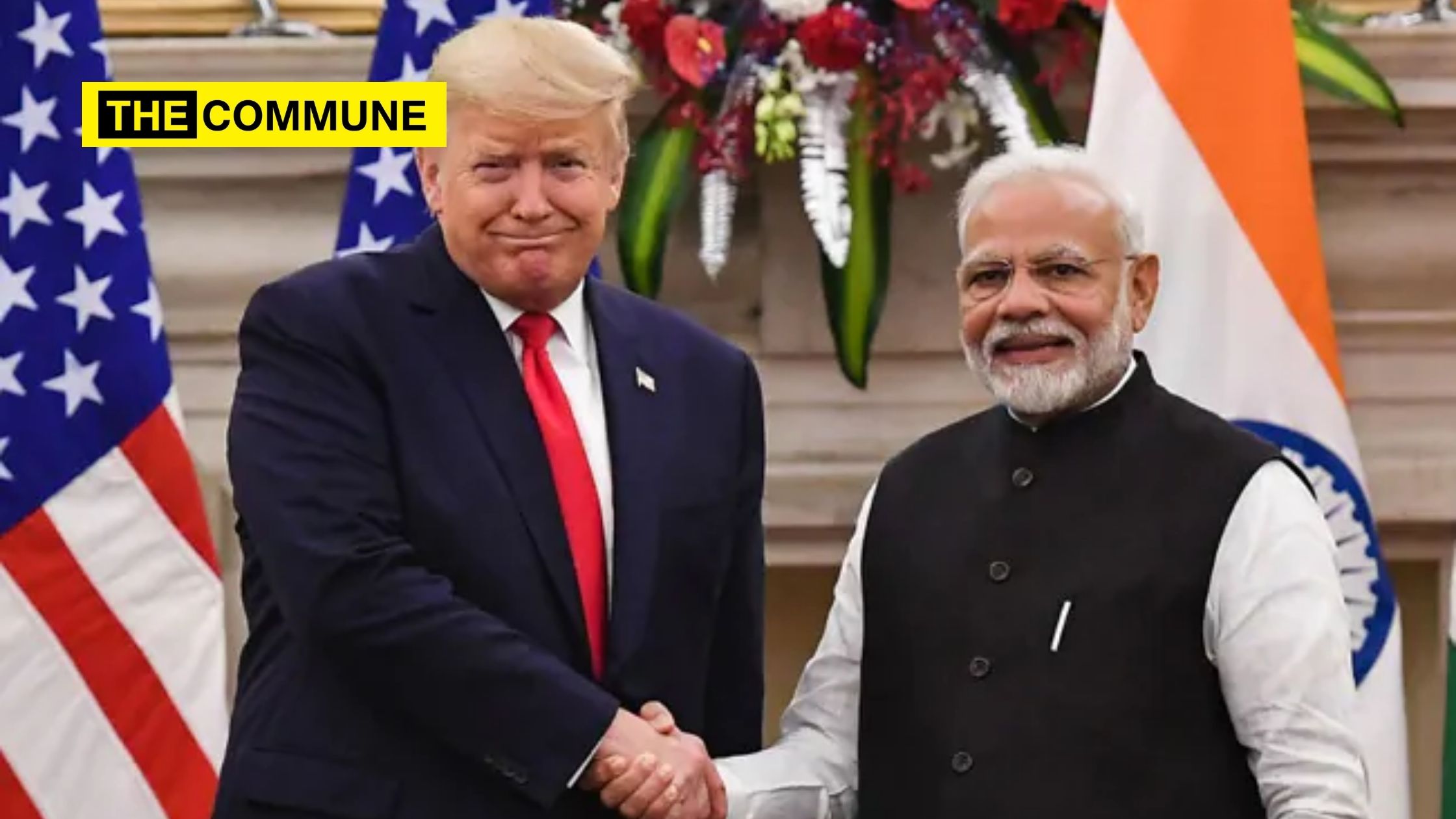
India, US Continue Trade Negotiations As Trump Threatens 25% Tariff

What Can India Expect from Donald Trump’s Second Term? trump india tariff pm modi

President Donald Trump has said that India and the US were still negotiating a trade deal despite his threat to impose a 25% tariff, and a final decision may be known by the end of the week.

“We’re talking to India now, we’ll see what happens,” he said on Wednesday, hours after he had threatened the 25 per cent tariffs and the 100 per cent penalty for buyers of Russian energy he had proposed. He said that India, which he asserted has one of the highest tariffs in the world, was now “willing to cut it very substantially.”

However, he was silent on the Russian penalty when asked by a reporter and instead spoke of the 10 per cent penalty he had proposed for BRICS members. Since he says negotiations are continuing, the morning threat appears to be a negotiating ploy and gives both countries wiggle room to reach an accord. He has also not issued a formal letter on the tariffs, as he has to some other countries. India had replied defiantly to the threat, saying the government “will take all steps necessary to secure our national interest.” India indicated that agriculture was likely a sticking point in the negotiations.

The statement said, “The government attaches the utmost importance to protecting and promoting the welfare of our farmers, entrepreneurs, and MSMEs (Micro, Small, and Medium Enterprises).” The US wants India to open its markets to US agriculture and dairy, which could impact its vast agriculture sector.

Trump and his officials, like Commerce Secretary Howard Lutnick, had spoken optimistically that India would be among the first to make a deal, but it hasn’t materialised. India was among the first countries to start trade negotiations with Washington on tariffs, and Trump had repeatedly said that an agreement was imminent, most recently last week.

The negotiations were making “fantastic” progress, India’s Commerce Minister Piyush Goyal said last week in a media interview in London. “I do hope we’ll be able to conclude a very consequential partnership,” he said. In its response, India’s Commerce Ministry said, “India and the US have been engaged in negotiations on concluding a fair, balanced and mutually beneficial bilateral trade agreement over the last few months.” “We remain committed to that objective,” it added.

Speaking to reporters at the White House, Trump called Prime Minister Narendra Modi “a friend of mine,” as he usually prefaces differences on tariffs. He said, nonchalantly, “It doesn’t matter too much whether we have a deal or whether we charge them a certain tariff, but you’ll know at the end of this week.” He repeated his tirade about India’s high tariffs, saying that while the US buys a lot from India, the US doesn’t sell as much there because of the tariffs.

India had the highest or one of the highest tariffs in the world, with levies going as high as 175 per cent, he said. When a reporter asked him about the penalty for buying Russian energy, he did not answer that and, instead, veered off into talking about BRICS and how it was “anti-United States.”

“India is a member of that, if you can believe it,” he said. “It’s an attack on the dollar, and we’re not going to let anybody attack the dollar,” he said. So, when it comes to India, he said, “It’s partially BRICS, and it’s partially the trade.” In the Truth Social post, Trump had said India has “always bought a vast majority of their military equipment from Russia, and are Russia’s largest buyer of energy, along with China, at a time when everyone wants Russia to stop the killing in Ukraine.”

“All things not good! India will therefore be paying a tariff of 25 per cent, plus a penalty for the above, starting on August first,” he wrote, capitalising parts of the post in his style.

-IANS

Subscribe to our channels on Telegram, WhatsApp, and Instagram and get the best stories of the day delivered to you personally.