Home Blog Page 1819

Sri Lanka Polls postponed due to COVID-19

A

The Sri Lankan Election Commission has postponed the general elections for the country that was scheduled to happen on April 25 to June 20, in view of the prevailing situation due to the Wuhan virus.

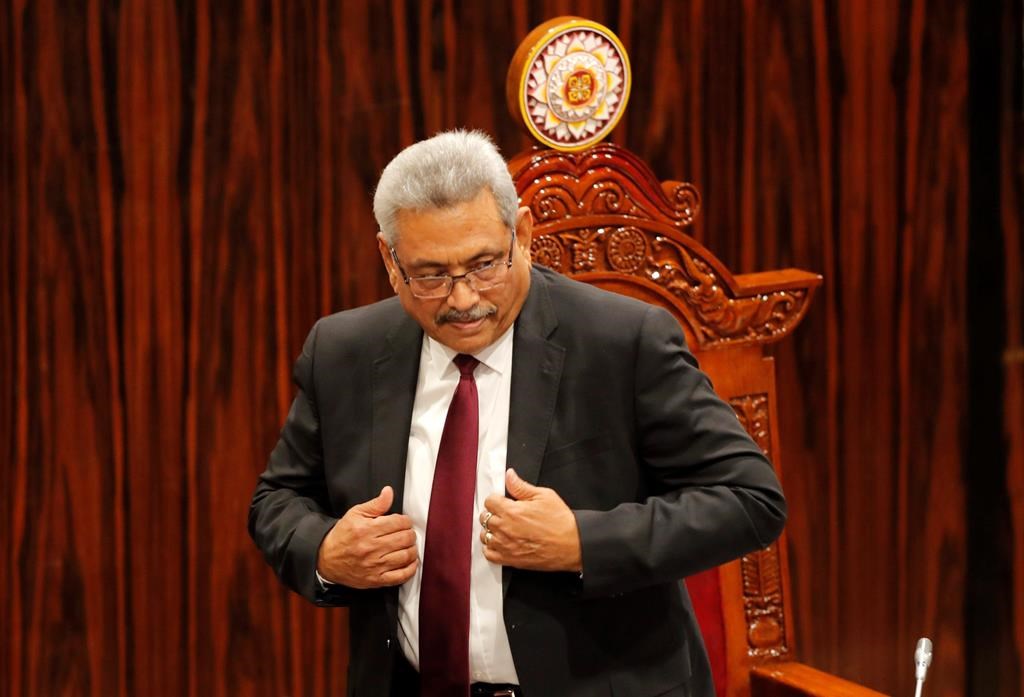
The Sri Lankan Parliament was dissolved exactly 2 months ago on March 2 by President Gotabaya Rajapaksa who was elected in November 2019.

Opposition parties have objected to the new date citing public health risks. It is to be noted that the new poll date poses the risk of an imminent constitutional crisis as the Sri Lankan Constitution mandates that Parliament be summoned not later than 3 months after dissolving the House.

But President Rajapaksa had earlier mentioned that the said poll date was the Election Commission’s prerogative.

Sri Lanka has virtually been under lockdown since March 20. The government has imposed curfews in high risk districts which includes Colombo, the district with highest number of positive cases (157 as of May 2) in the country.

In light of this, President Rajapaksa on Friday ruled out the possibility of reconvening the dissolved Parliament. This comes days after leaders of opposition wrote to President Rajapaksa to reconvene the Parliament. They had evoked Article 70 (7) of the Sri Lankan Constitution that says that if the President is satisfied that an emergency has arisen of such a nature that an earlier meeting of Parliament is necessary, he may summon the dissolved legislature by proclamation. However, President Rajapaksa said that the requirement to abide by the said article didn’t arise.

Revisiting the Highway in lockdown

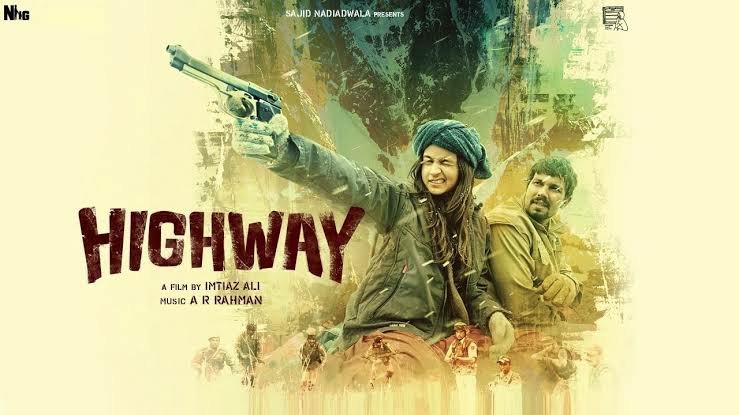
What happens when a man who is as tough as a rock, who is without any remorse, encounters an unexpected and unexplainable love from a girl who he has been held captive? Mahabir Bhati is one such man who discovers that life is not what he had imagined it to be and what he had believed to be all these years. The next few paragraphs break down the character and psyche of the character played by Randeep Hooda.

When a group of local gangsters kidnaps the daughter of a rich business tycoon, unlike others in his gang, Mahabir isn’t afraid of the kidnapping. He isn’t afraid of the rich, he isn’t afraid of dying like a dog in the hands of them.

Mahabir is a man who had made peace with himself and is ready for death.


When they decide to keep Veera in an abandoned place by providing her with just food and water for survival, he isn’t least bothered about anything else for her. After all, he is a kidnapper, why would someone even care about the person’s well-being?

Mahabir is a man who feels no remorse for his fellow beings.


When Mahabir catches one of his men trying to misbehave with Veera, he says to the guy – “She is just a consignment. Not a girl.”. After all, he sees her not more than a package that has to be delivered.

Mahabir is a man who is only focused on the work at hand, does not feel the need to protect/show pity for anyone around him.


When Veera describes the horrors of her uncle molesting her multiple times when she was young, he doesn’t know how to react, he just listens to her wailing and walks away from that place. Later, when Veera hugs him, he realizes that the struggles of being a woman in this world is not just confined to the poor, but also to the rich.

Mahabir is a man who is disturbed by the words of Veera, realizes the reason why Veera wants her freedom.


During their journey on the Highway, Mahabir discovers the other side of Veera, a side that Veera herself discovers for the first time. He lets her walk into open fields, lets her climb trees, lets her enjoy the rain, lets her enjoy the water flowing from the pumps.

Mahabir is a man who is confused to see Veera enjoying her newly found freedom.


When Mahabir and co. reach a dilapidated warehouse in Bengal to hold Veera captive, he vents out the anger on all the rich men who use the poor women for their pleasures. He is appalled at the class difference in society with respect to crimes committed.

Mahabir is a man who hates the rich completely, despises them to the core that he considers Veera as a representative of the rich and selling off her to a brothel is the perfect revenge he can take on the rich.


When Veera asks Mahabir about the song that he had been humming, he refuses to say anything about the song, that he even shouts her to go back to her room. After continuous pestering from Veera, he says that it was a song that his mother would sing when he cried. Veera is surprised to even imagine that Mahabir could cry. This moment reminds him of his mother and the song she would sing for him when he was small.

Mahabir is a man in whom there is a yearning that keeps reminding him for what he wants to be, but his current life keeps pulling him back to what it needs him to be.


When Veera dances her heart out right in the open, he is initially confused as to what has gotten into Veera, but later realizes that she has become a little too comfortable around him. A sense of fear, then engulfs around him as he sees himself as a bad man, who may even harm Veera. Hence, he decides to reluctantly drop her off to the police.

Mahabir is now a man who does not like being a good guy, who tries to return to being the so-called bad man that his life wants him to be.


The moment when Veera comes back to him at the bus station is the moment he realizes he has this unique, unusual affection towards Veera. He feels genuinely happy about her being with him.

Mahabir is a man who finds happiness inside of him with this newly found love. He also becomes a man has let himself go from the clutches of his past life.


When they find a place on top of the mountains and when Mahabir sees Veera cooking and cleaning their “house”, all that yearning he had for his mother’s affection has vanished in these moments with Veera. He was a man who believed that the days of someone showing him affection is well behind him and the fact that there is someone else other than his mother who genuinely cares for him, breaks him down completely.

Mahabir has been a man who has had a past that he never wants to forget, at least his mind never lets him. Earlier, when Veera asks that whether one bullet is enough to end a man’s life, Mahabir replies back saying that it kills two people – The person who is shot and the person who shoots. He feels that his life was over the moment he killed three people.

He has always been a seemingly fearless man all his life, who has been devoid of any kind of emotions/affection all these years. When someone starts doing the things that reminds of his mom, he does not know how to handle the feeling of being loved again after 20 years. He realizes what love can do to a person, that he has been dead for all these years, that he has lived a life devoid of all the emotions that a man has to go through in his life.

In this journey with Veera, Mahabir becomes free and Veera shows him how.

How the humble Kadalamittai got the GI tag

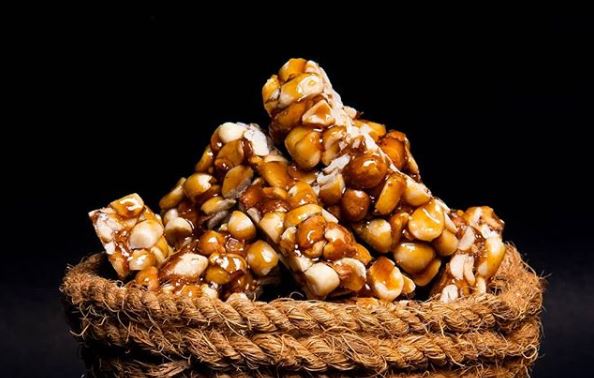
Roasted peanuts and crushed jaggery is all it takes to make Kadalamittai, an Indian sweet delicacy, but not everybody can give the traditional touch and the crispiness that Kovilpatti gives. The Kovilpatti Kadalamittai was granted the GI tag recently by the Office of the Controller General of Patents, Designs and Trademarks. But the humble dish had to wade through several obstacles to get this recognition. Just like its appearance, this sweet dish also has a humble journey to it.

The ‘sweet’ history of Kovilpatti Kadalamittai

Manufactured in and around Kovilpatti and other villages of Thoothukudi district, the dish was first prepared by Ponnambala Nadar who had a grocery store in the Bazaar area in 1940s. He decided to put the extra peanuts that he had in his store to make Kadalamittai. The dish in itself was not something new as back in those days, villagers used to make balls of peanut crushed with jaggery. However, it would stay fresh for not more than 3 days. Krishnamoorthy, a 75 year old resident of Kovilpatti recalls that his uncle (father’s brother) Ponnambala Nadar improvised on this by caramelizing the jaggery which enhanced its shelf life and voila, the Kovilpatti Kadalamittai was born. Later, Ponnambalam Nadar started a separate unit to manufacture Kadalamittai under the brand “Baby”, named after his daughter. Sweet.

The ‘bitter’ struggle of Kovilpatti Kadalamittai

The process for acquiring GI started back in 2014. Mr. Vijayakarthikeyan IAS, currently leading the fight against COVID-19 in Tirupur, took mission of getting the GI tag for Kadalamittai when he was the Sub Collector of Kovilpatti. He convened a meeting that was attended by more than 15 manufacturers of Kadalamittai in the region and made them realize the importance of having the GI tag. He explained to them that the GI tag was necessary to preserve the authenticity and also to boost the market value of the product. He also made the manufacturers realize how other manufacturers outside Kovilpatti are selling off their Kadalamittai as Kovilpatti’s, thereby affecting local manufacturers, their sales and market. So, in 2014, Mr. Vijaykarthikeyan filed an application for the GI tag from his side. However, the application was returned in 2015 citing that individuals, organizations or government servants cannot apply and that only associations were eligible to do so. After his transfer, the cause was put in the backseat.

The issue again gained momentum, thanks to GST. Initially, Kadalamittai attracted a GST rate of 18% as it was considered as an item under confectionaries and not under sweet meat that had a 5% GST rate. The issue became a talking point after memes that compared GST rates of pizza and kadalamittai went viral. Manufacturers then formed an association in 2016 to lobby for a reduction of GST rates. Nirmala Sitharaman, the then Minister for Commerce and Industry gave clarity and created a separate item called Kadalamittai with 5% GST.

As Kadalamittai made news, it grabbed the attention of Sanjay Gandhi, a nodal advocate for GI in Chennai. He took it up and reached out to the manufacturers. The manufacturers formally registered themselves as Kovilpatti Kadalamittai Manufactureres and Retailers Association and filed a fresh application in 2017. Dhinesh Rodi, the CEO of Namo Candy and the Treasurer of the association said that they produced evidences that would strengthen the case. People like Krishnamurthy and other documentary evidences like photos, old news articles, advertisements, were used as evidences.

But it doesn’t matter if you are living human or a Kadalamittai, you have to pass through the firewall of Indian bureaucracy. The process was getting delayed due to several bureaucratic procedures. Later, the association met Kadambur Raju, the ADMK MLA for Kovilpatti who pursued the matter with the current Minister for Commerce and Industry Piyush Goyal.

The arduous journey came to an end a few days back when it was notified in the gazette that Kovilpatti Kadalamittai had been given the GI tag.

What makes Kovilpatti Kadalamittai unique?

The Kovilpatti Kadalamittai comes in the form of rectangular cuboids. Groundnuts grown in native black soil, vellam (jaggery) from the cottage industries in around the district and water from the Thamirabarani river enhances its taste naturally.

How will GI tag help?

With the dish getting the GI tag, no other individual or manufacturer can sell their product as Kovilpatti Kadalamittai. This will help in adding brand value to the Kadalamittais coming out of Kovilpatti and will also help the local manufacturers of the region tap into national and international markets thereby boosting the local economy.

In Karnataka, Davanagere turns from green to red zone after 4-week respite

With eight new cases of COVID-19 being reported from Karnataka’s Davanagere district within a week, the district has lost its “green” status and has now become a “red zone”. According to sources, the administration is facing difficulties in tracing the travel history and contacts from the infected persons due to a lack of cooperation.

Earlier, the district had not reported a single new case of COVID-19 for 30 days. Three people who had tested positive for the coronavirus, including the daughter of former Union Minister GM Siddeshwar, had been discharged after their recovery. Considering the improvement in the situation, the administration had begun easing restrictions on movement and commercial activities.

But things turned for the worse this week when a fresh case emerged on Wednesday. This was a 35-year-old nurse serving at the urban health centre in Davangere with no travel history. Deputy commissioner Mahantesh Bilagi told newspersons that 20 individuals who had primary contact with the nurse had been identified. These people have been subsequently quarantined. Health and police officials are now broadening the search to determine the secondary contacts.

On Friday, the district reported its first COVID-19 death. The deceased is a 69-year old man who died of a cardiac arrest in the district hospital after complaining of breathing difficulties. Prior to being tested positive for COVID-19, he had been receiving treatment for hypertension and diabetes. The deceased’s son, three daughters-in-law and grandson have tested positive for COVID-19 as well.

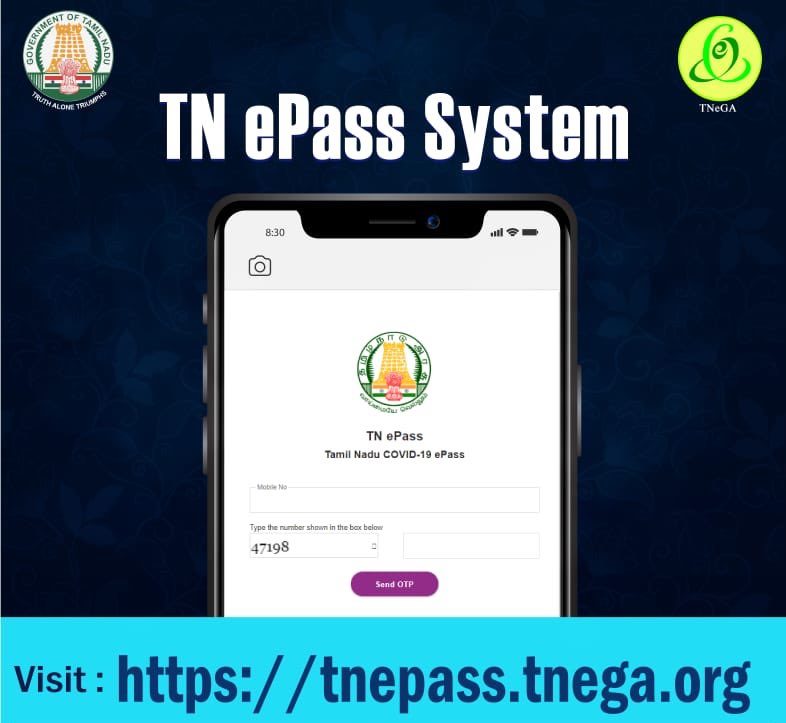
TN Govt launches ‘TN ePass System’

tnepass

The Tamil Nadu government has launched the Tamil Nadu COVID-19 ePass portal to issue passes for intra-district, inter-district and inter-state movement of people.     The portal which is now live at www.tnepass.tnega.org enables individuals and organizations to apply for travel pass.

The portal states that individuals can apply for passes in case of marriage, medical emergency or death of a close relative only. The portal also gives a detailed list of services for which passes are not required which includes all farming and allied activities, fisheries and supply of essential goods (general stores, kiranas, single shops, and carts).

The portal has been developed and powered by the Tamil Nadu e-Governance Agency (TNeGA).

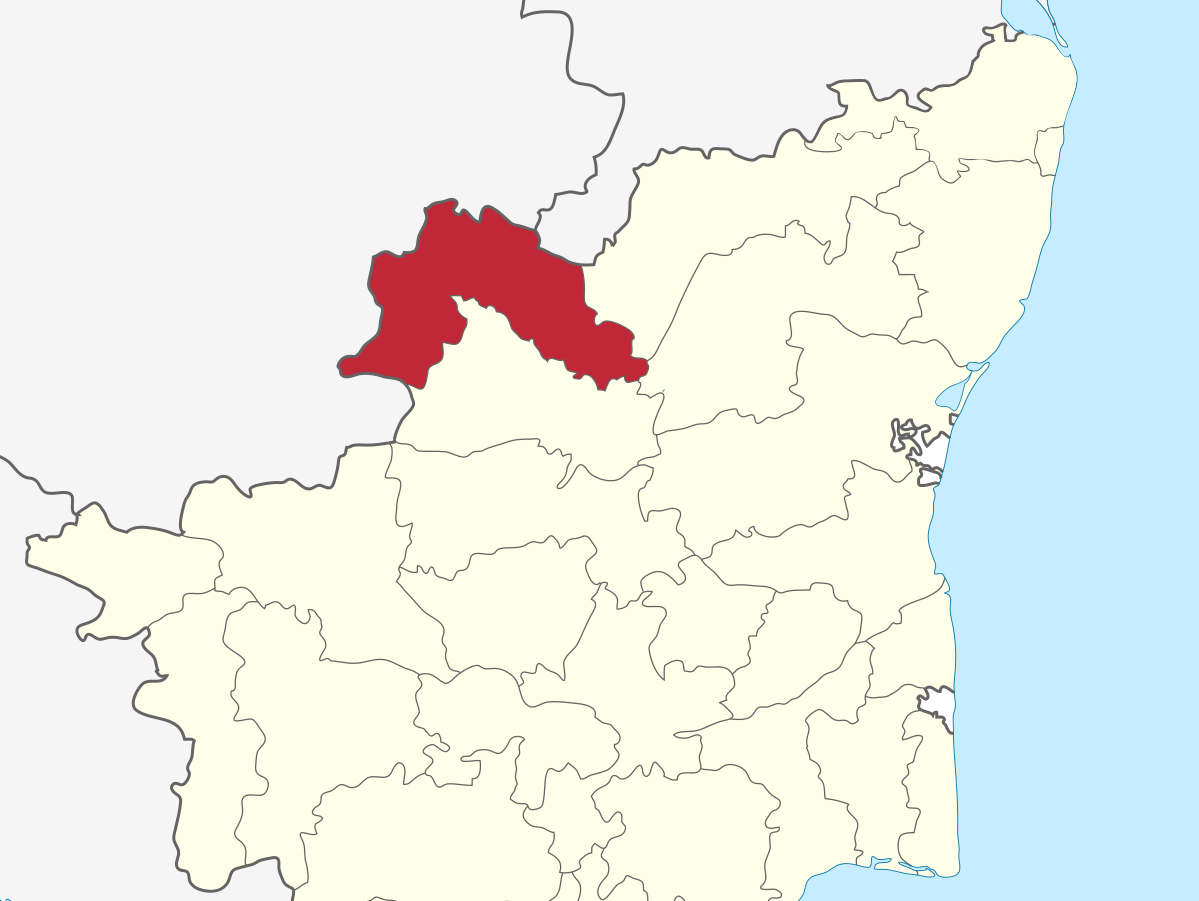
Krishnagiri in Tamil Nadu reports 1st COVID-19 case

Krishnagiri, which until now was in the green zone with zero cases, reported its first case today after a 67 year old patient tested positive for COVID-19. The man hailing from Vepanahalli went to Puttaparthi in Andhra Pradesh along with four other persons. Among the 4 members, three of them are from Krishnagiri town and one from Kaveripattinam. These 4 members have tested negative.

In light of this, the district has moved from the green zone to the orange zone. Krishnagiri town and Kaveripattinam would now come under containment zones which will be sealed and disinfected.

District Collector S Prabhakar noted that all of them were screened at the border check post and were asked to remain in home quarantine. Samples taken from the sexagenarian, which was sent to the Institute of Vector Control and Zoonoses in Hosur, returned positive on Saturday.

Following this, samples from eight of his family members have been taken and sent to Hosur for testing.

The five members had obtained a vehicle pass from the authorities in Puttaparthi. They had gone on a pilgrimage before the 21 day nation-wide lockdown was announced.

Existence of COVID – 19 Viral RNA in sewage water of Chennai

Chennai has emerged into a COVID-19 hotspot in Tamil Nadu. The city has been registering hundreds of Corona cases everyday. On Friday, a staggering 176 new cases of the Wuhan virus were reported taking the total cases in the city to 1082 with 843 of them being active.The cases were expected to spike in coming days.

The Greater Chennai Corporation has been taking necessary steps to contain the spread of the virus.

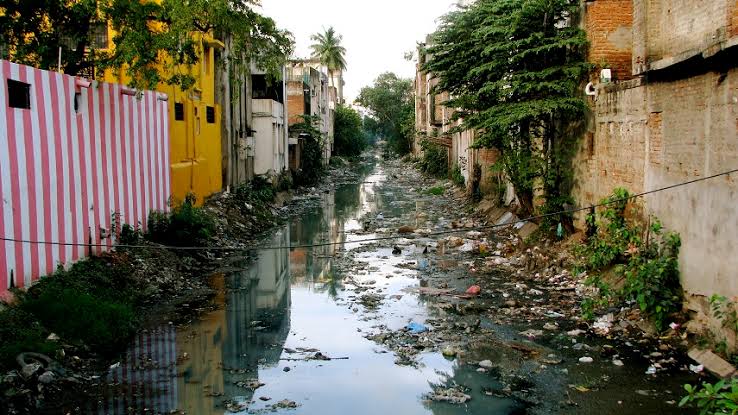
In light of this, the presence of COVID-19 RNA was detected in the sewage samples collected by Chennai Metro water for a study. The samples were collected from five sewage pumping stations in the city and tested for Viral RNA. RT-PCR technique was used to detect the viral RNA strand.

COVID-19 Viral RNA was found in two samples and the area from which those samples were taken has high incidence of corona cases. However, the presence of virus in sewage is not bound to cause infection as the virus gets destroyed during the sewage treatment process. Nevertheless, this will help the officials in finding the areas affected the most by the virus.

J. Radhakrishnan appointed as Special Nodal Officer to tackle COVID-19 in Chennai

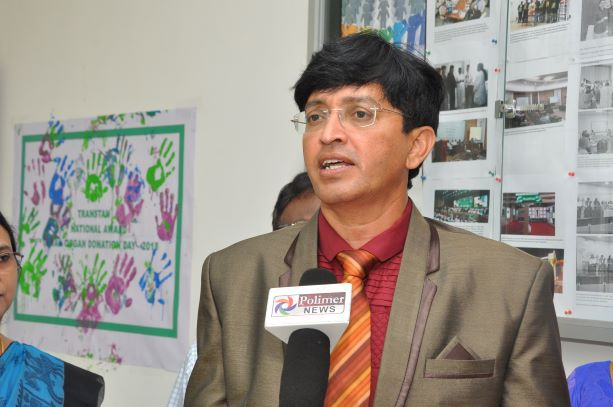
With Chennai becoming the epicentre of COVID-19 cases in Tamil Nadu, senior bureaucrat Dr. J. Radhakrishnan has been appointed as the Special Nodal Officer by the state government to coordinate the efforts against the pandemic. He will be assisted by 5 senior IPS officers.

Chief Secretary K Shanmugam released a government order regarding the same that read “The Government appoints Dr J Radhakrishnan, IAS, Principal Secretary / Commissioner, Revenue Administration, Disaster Management and Mitigation, Chennai as Special Nodal Officer for the Greater Chennai Corporation to co-ordinate the COVID-19 related issues with the Commissioner of GCC and other Teams constituted for the specific purpose of containing the spread of the disease further in Chennai District and to ensure effective implementation of various guidelines issued by the Government.”

Chennai on Friday reported a staggering 176 new cases of the Wuhan virus taking the total cases in the city to 1082 with 843 of them being active.

A 1992 batch IAS officer, Dr. Radhakrishnan is currently serving as Principal Secretary and Commissioner for Revenue Administration, Disaster Management and Mitigation. Known for his work during the 2004 Tsunami and the Kumbakonam school fire accident that happened in June the same year, Dr. Radhakrishnan has become the face of disaster management in the state. In November last year during Diwali, he was coordinating the rescue of the child Sujith Wilson who had fallen into a borewell and met with an unfortunate end.

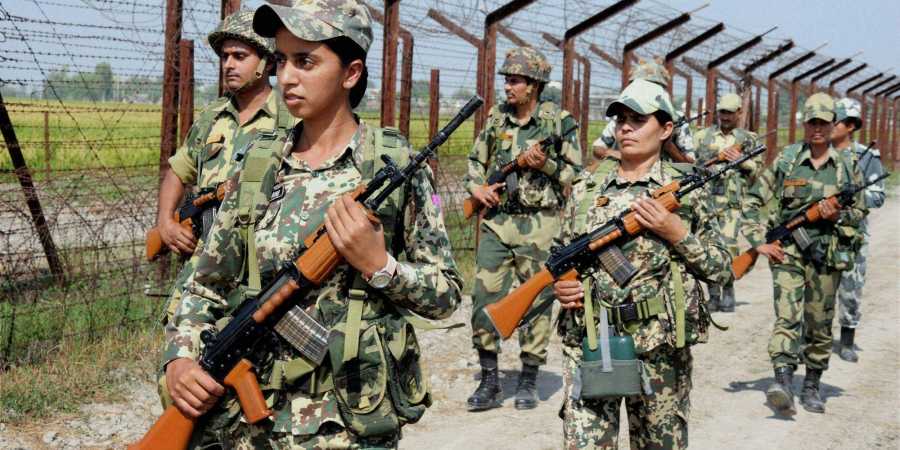
Illegal activities along India’s border with Pak and B’desh drop

Infiltration attempts, cattle smuggling, drug smuggling, human trafficking, counterfeit currency market, along the India-Pakistan and India-Bangladesh border has seen a sharp drop in the wake of COVID-19, heads of Border Security Force (BSF) and Indo-Tibet Border Force said on Thursday.

Director General of BSF Surjeet Singh Deswal said that the priority during the lockdown period has been to stop the carriers of the virus from crossing the border while maintaining a tight vigil on other activities. He added that a high level of alertness is being maintained at the borders which have been completely sealed with no movement of any kind.

Mr. Deswal also said that mischievous acts along the border and Line-of-Control have been responded by the Indian side with double impact.

BSF data for the period from January 1 to March 24 shows that over 20000 cattle were smuggled to Bangladesh. Post lockdown, the number has reduced to 300. During the same period, 97 kg of heroin was seized along the border in Punjab while only 17 kg was seized from March 25 to April 12.

BSF guards the 2289 kms border with Pakistan and 4092 kms border with Bangladesh.

However, ceasefire violations and shelling along the LoC continue to keep happening. 1400 ceasefire violations have been reported just this year. A Pakistan soldier was killed in a retaliatory response on April 29. On Friday, an Indian national was killed due to an unprovoked firing from the Pakistan side. India has registered a protest with Pakistan on the same.

TN launches portal for NRIs stuck abroad

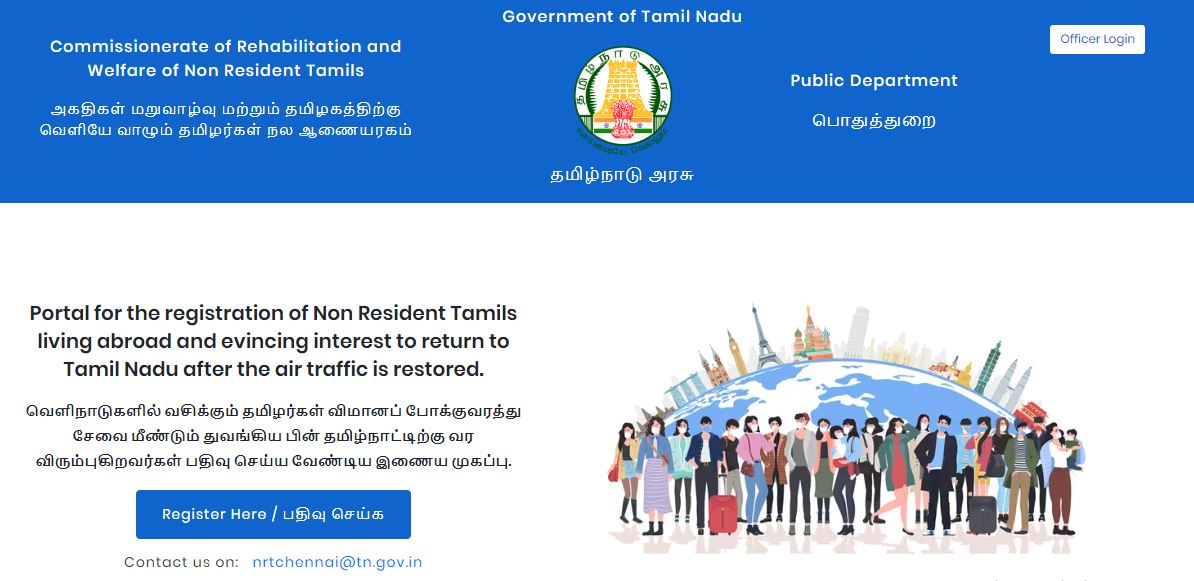
The Tamil Nadu government has launched an exclusive portal www.nonresidenttamil.org for NRIs of the state who wish to come back once air travel is restored.

The government has requested the non-resident Indians hailing from the state of Tamil Nadu to register themselves on the above portal. The portal has been launched by the Commissionerate of Rehabilitation and Welfare of Non Resident Tamils that falls under the Public Department of Government of Tamil Nadu.